
Topic
Pottery
Pottery made on Cyprus from the first Neolithic vessels to the painted wares of the Iron Age: its fabrics, shapes, decoration and dating.
63 entries in 8 sections
Pottery
44 entriesSection overview
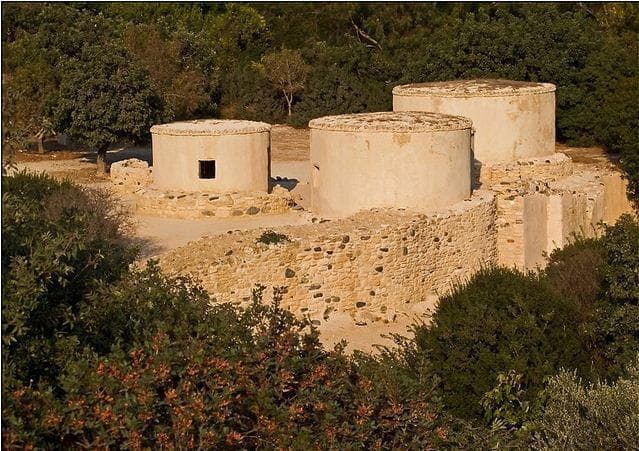 Combed WareThe red-slipped pottery of the Cypriot Ceramic Neolithic whose slip was scraped with a comb-like tool while wet to expose pale bands, c. 4500–3900 BCE.Neolithic
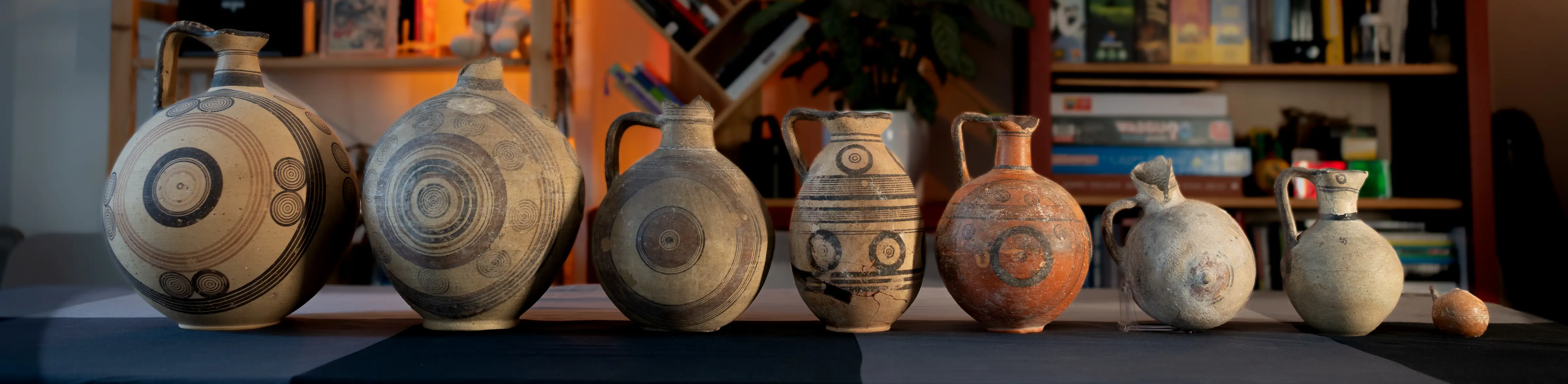 Red-on-White WareRed-on-White is the hand-built painted pottery of Chalcolithic Cyprus, with red geometric patterns on a pale marl or slipped ground.NeolithicChalcolithic
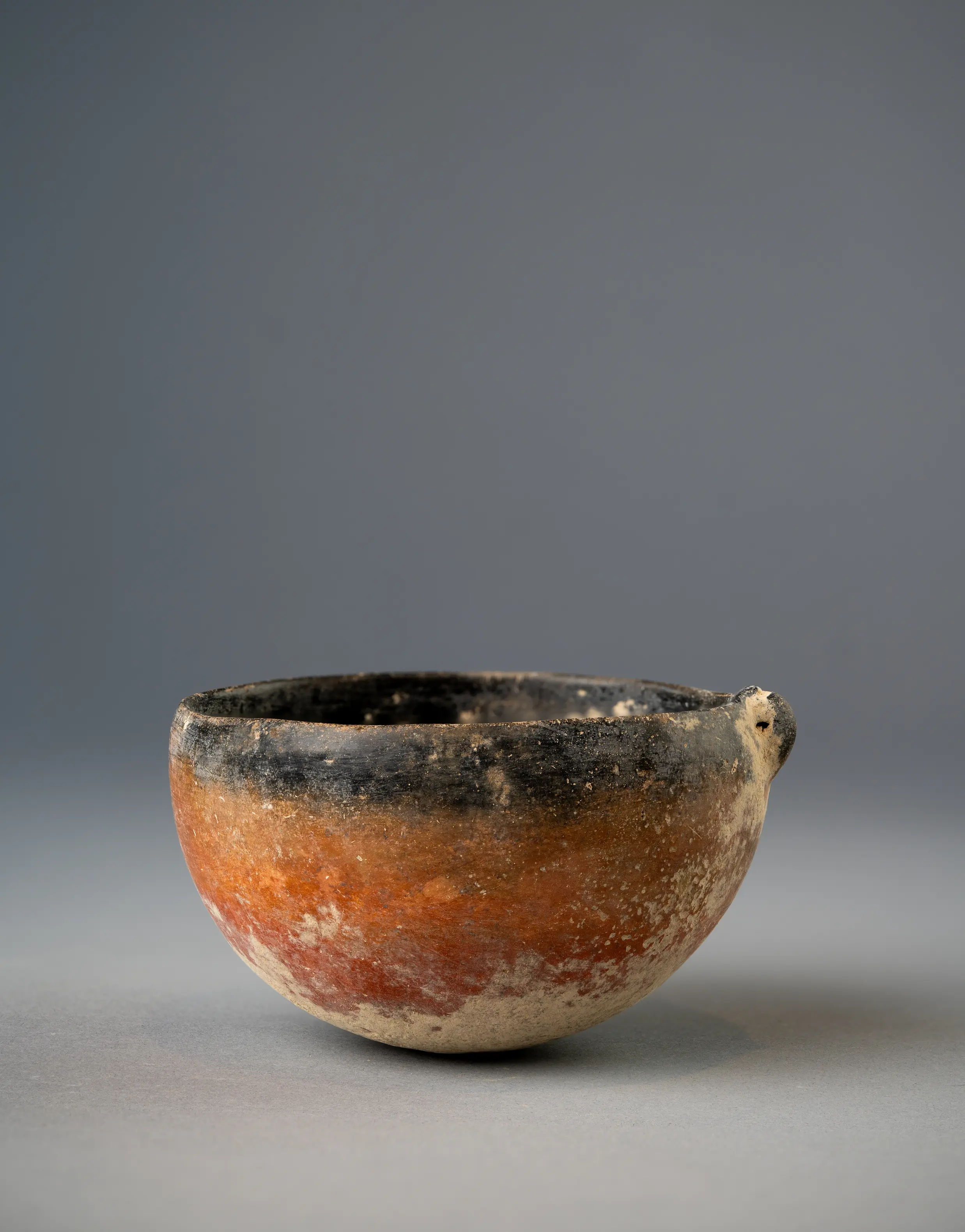 Red Polished Philia WareThe hand-made, red-slipped and polished pottery of the Philia facies, strikingly uniform across Cyprus at the opening of the Bronze Age.Early Bronze Age
- Red Polished WareRed Polished is the hand-made, red-slipped and burnished pottery that dominated Cyprus in the Early and Middle Bronze Age.Early Bronze AgeMiddle Bronze Age
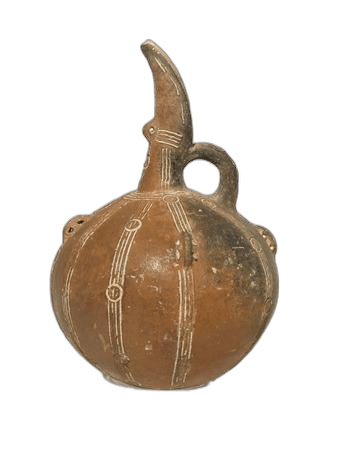 Drab Polished WareDrab Polished is a hard-fired Bronze Age ware of western and south-western Cyprus, often with a blue-grey core, and a technological forerunner of Base Ring.Early Bronze AgeMiddle Bronze Age
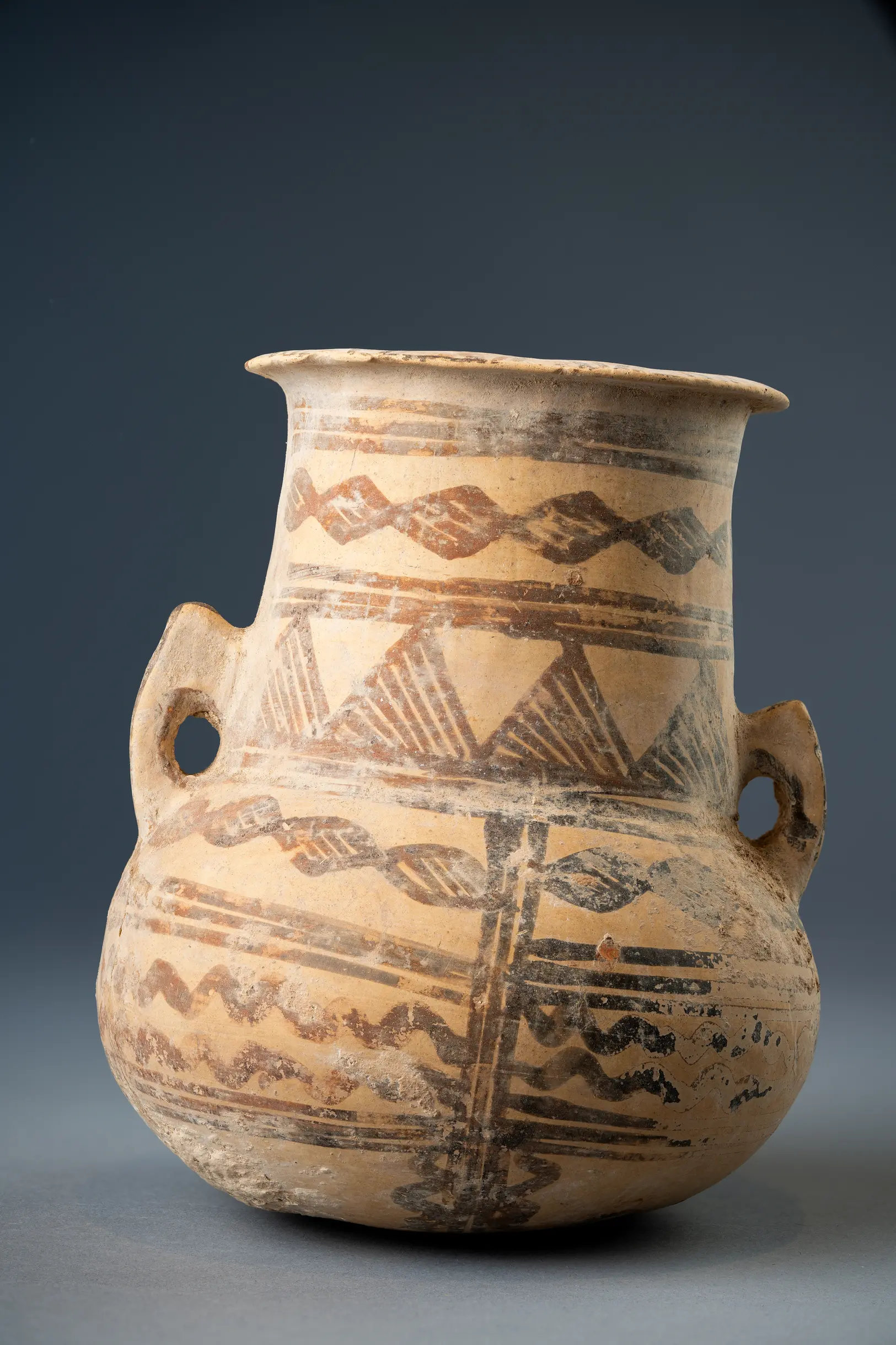 White Painted WareThe hand-made, pale-slipped Bronze Age pottery of Cyprus painted with dark matt geometric motifs, flourishing in the Middle Bronze Age as WP I to VI.Early Bronze AgeMiddle Bronze Age
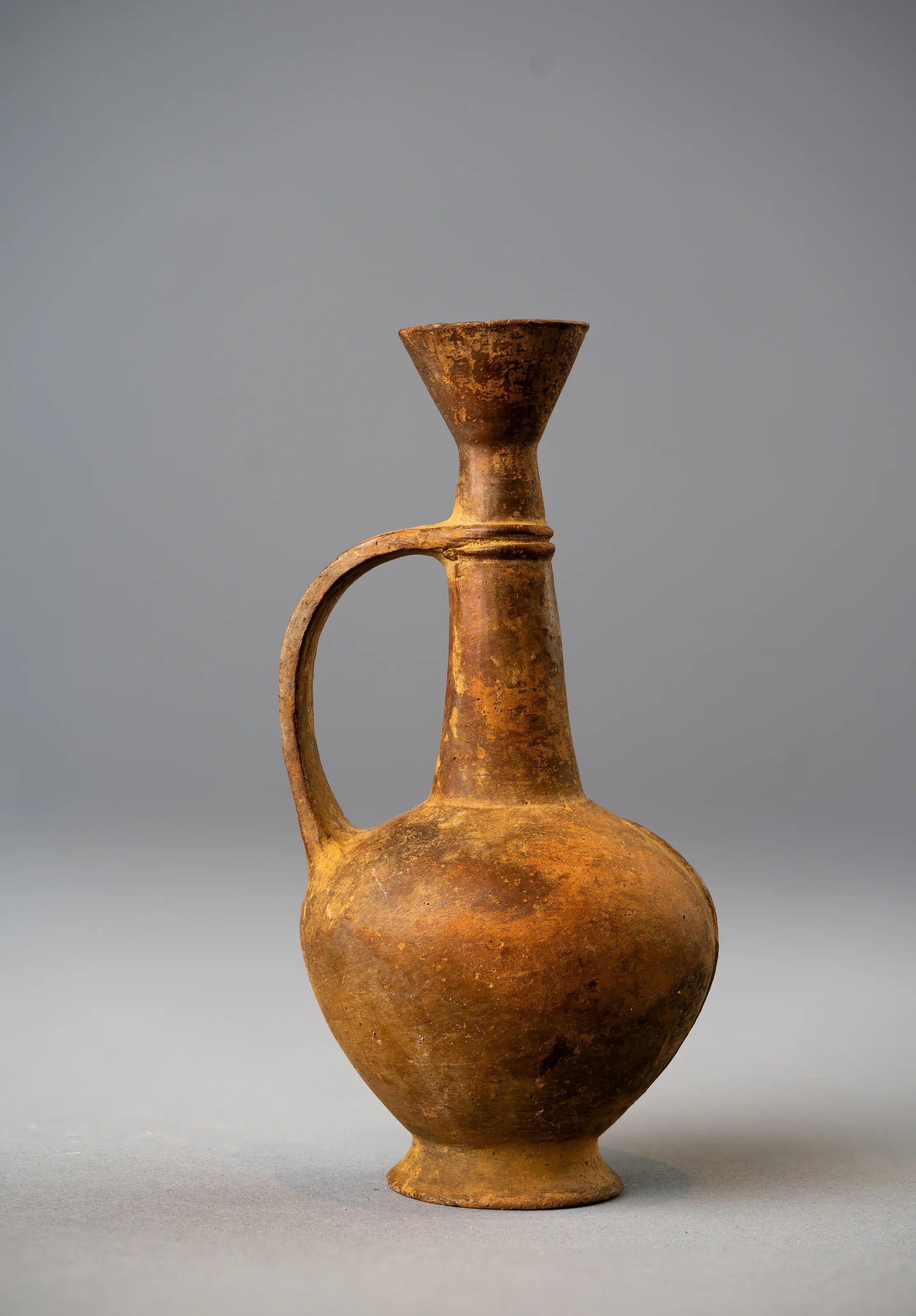 Base Ring WareThe thin-walled, hand-made Late Bronze Age pottery of Cyprus with dark lustrous surfaces imitating metal, widely exported as jugs and juglets.Late Bronze Age
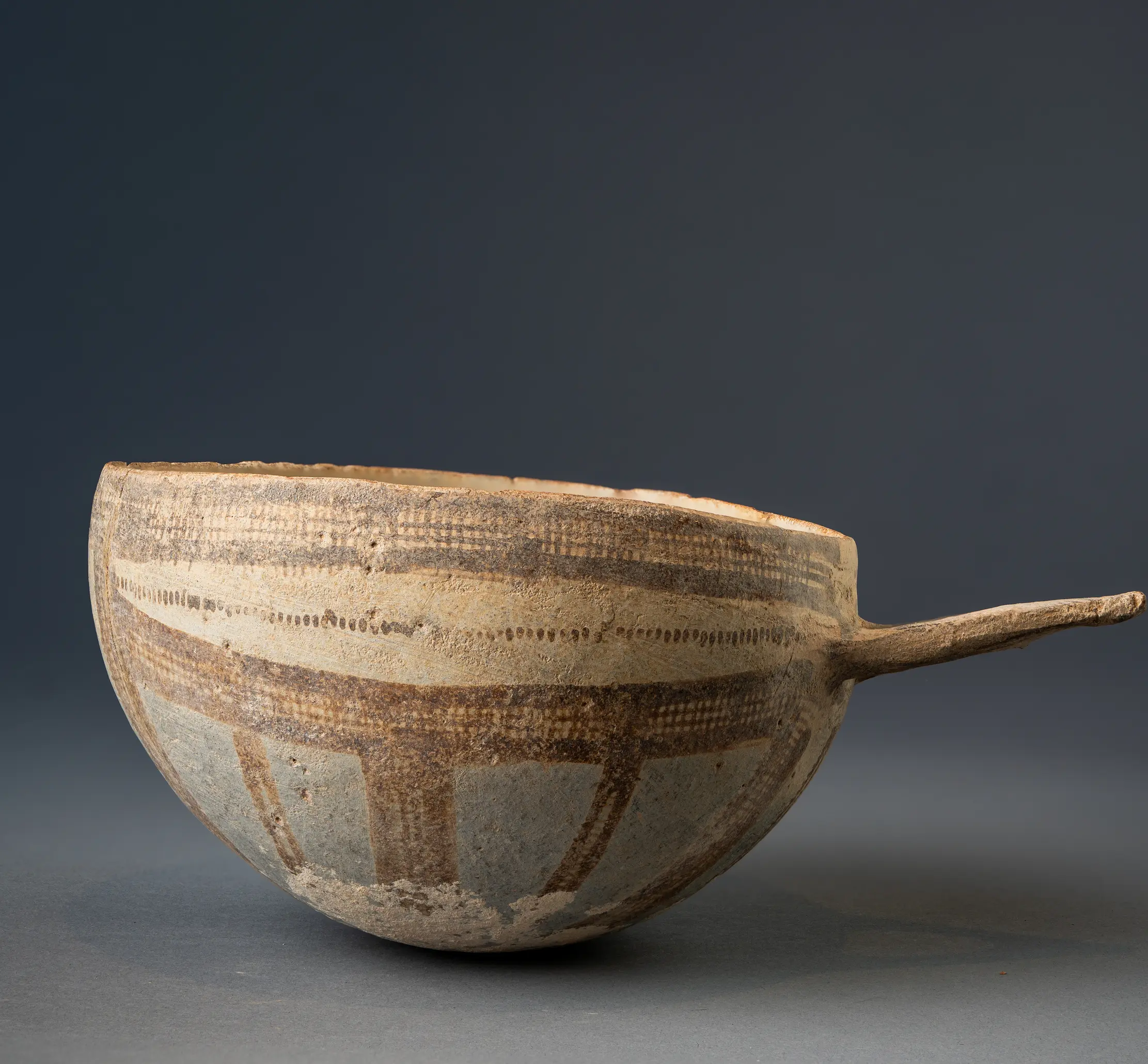 White Slip WareThe hand-made Late Bronze Age tableware with a thick white slip and dark painted decoration, mostly hemispherical bowls, widely exported from Cyprus.Late Bronze Age
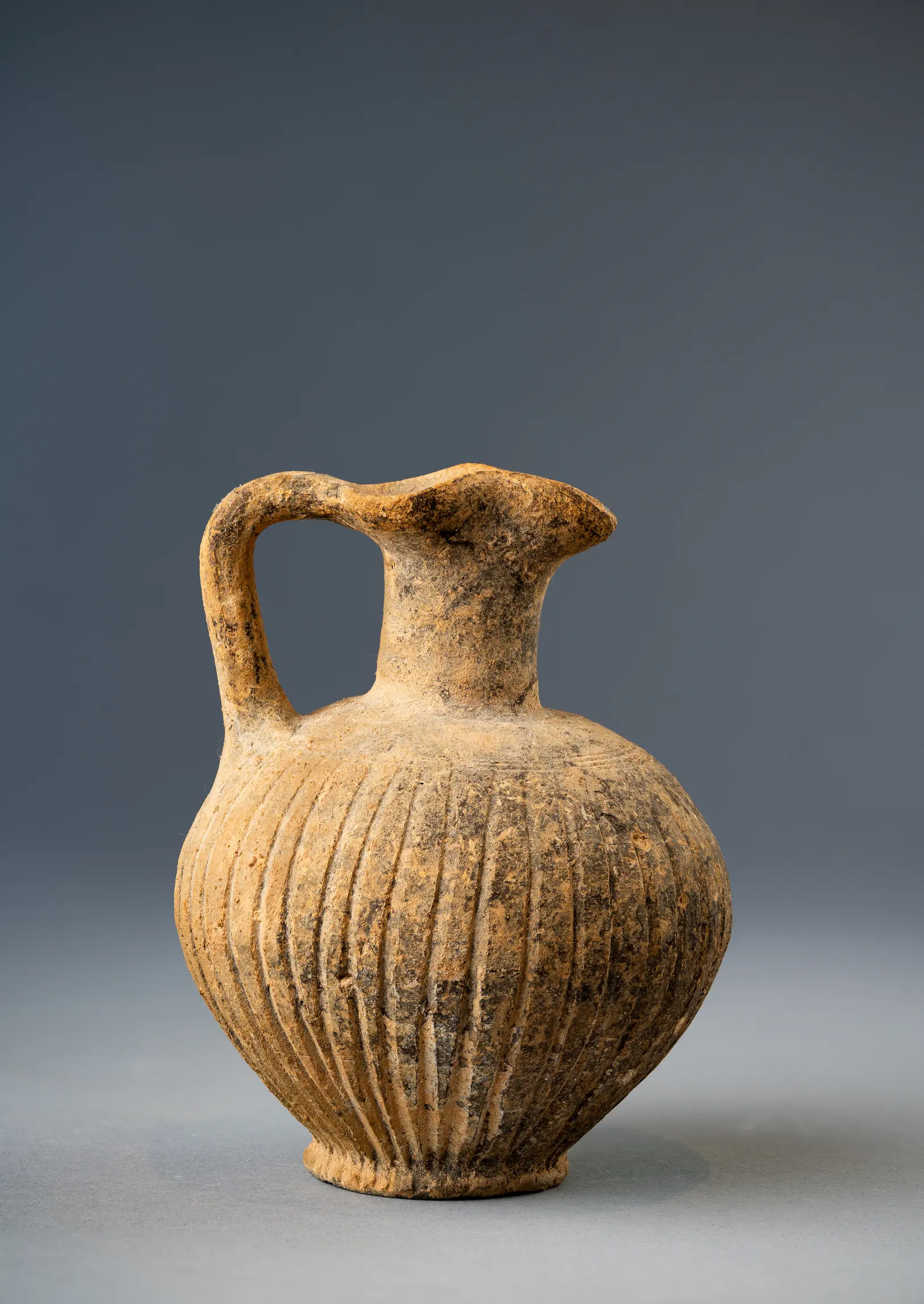 Plain White WareThe undecorated, pale-surfaced pottery of Middle and Late Bronze Age Cyprus, made by hand and later wheel-shaped, the first Cypriot ware formed with the wheel.Middle Bronze AgeLate Bronze Age
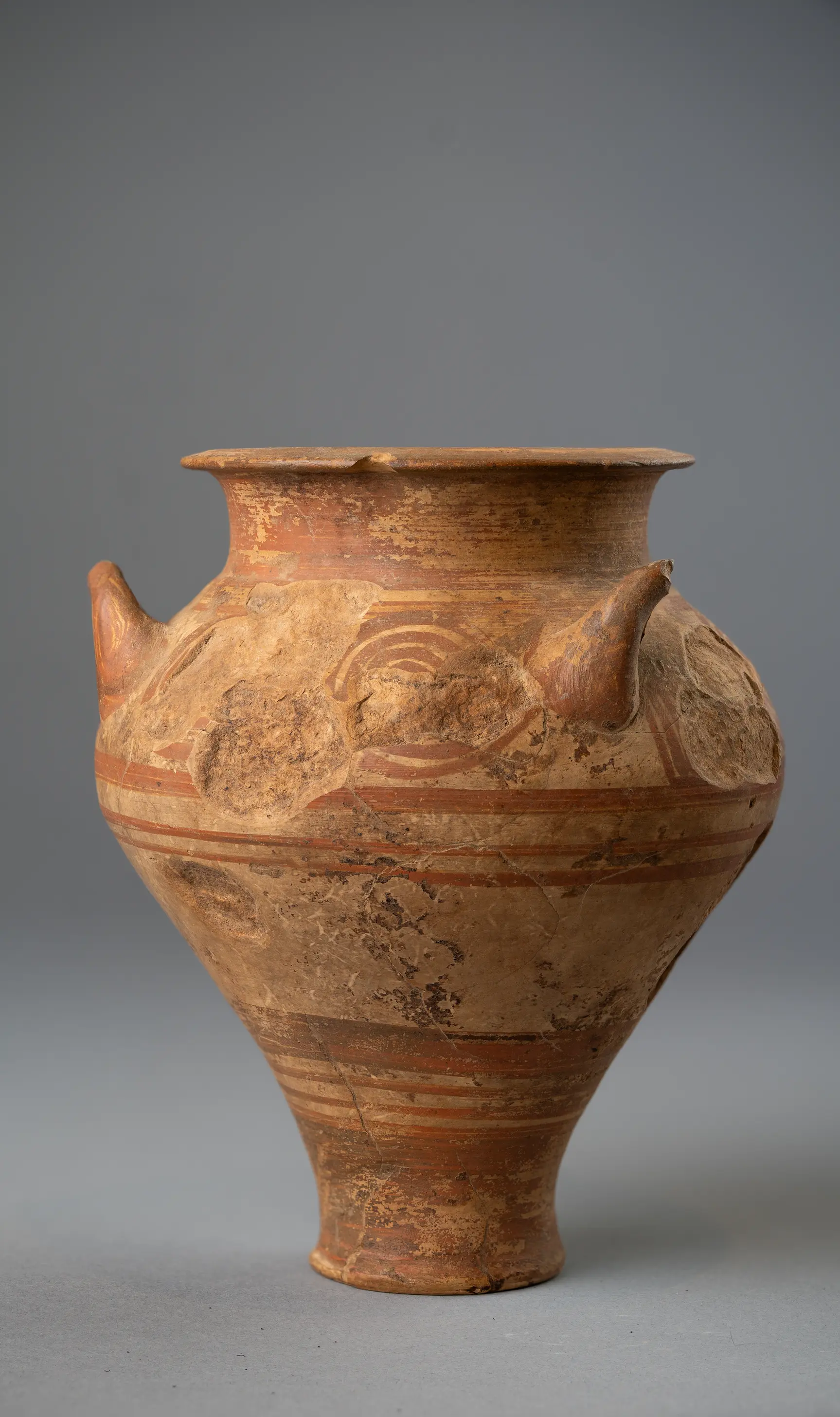 Mycenaean Imports and Local ImitationsMycenaean pottery, mostly made in the north-east Peloponnese, was the largest body of imported fine ware in Late Bronze Age Cyprus, and Cypriot potters copied some of its shapes.Late Bronze Age
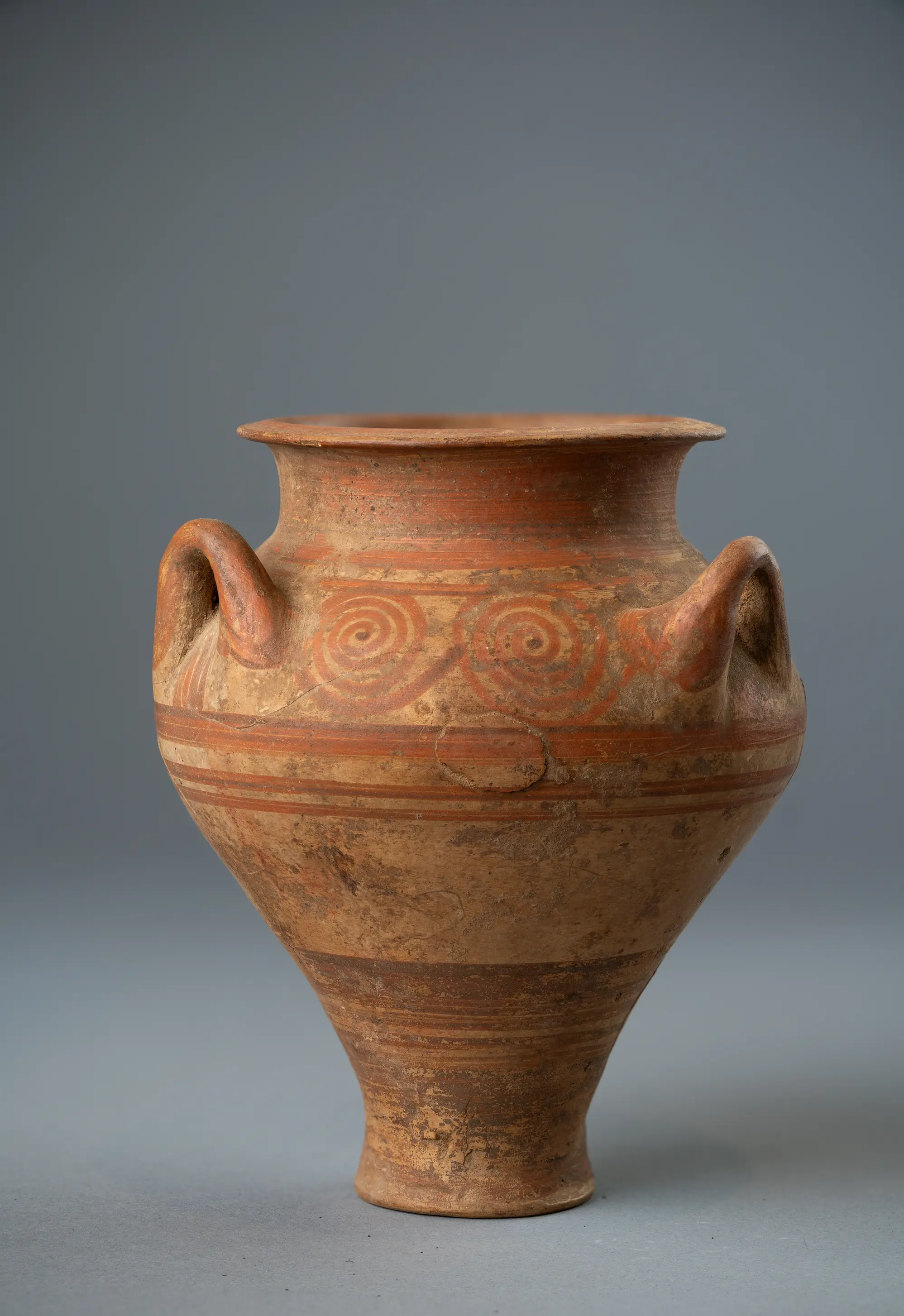 White Painted Wheelmade WareThe locally made, wheel-thrown, matt-painted pottery of Aegean inspiration that became the standard Cypriot tableware in Late Cypriot IIC and IIIA.Late Bronze Age
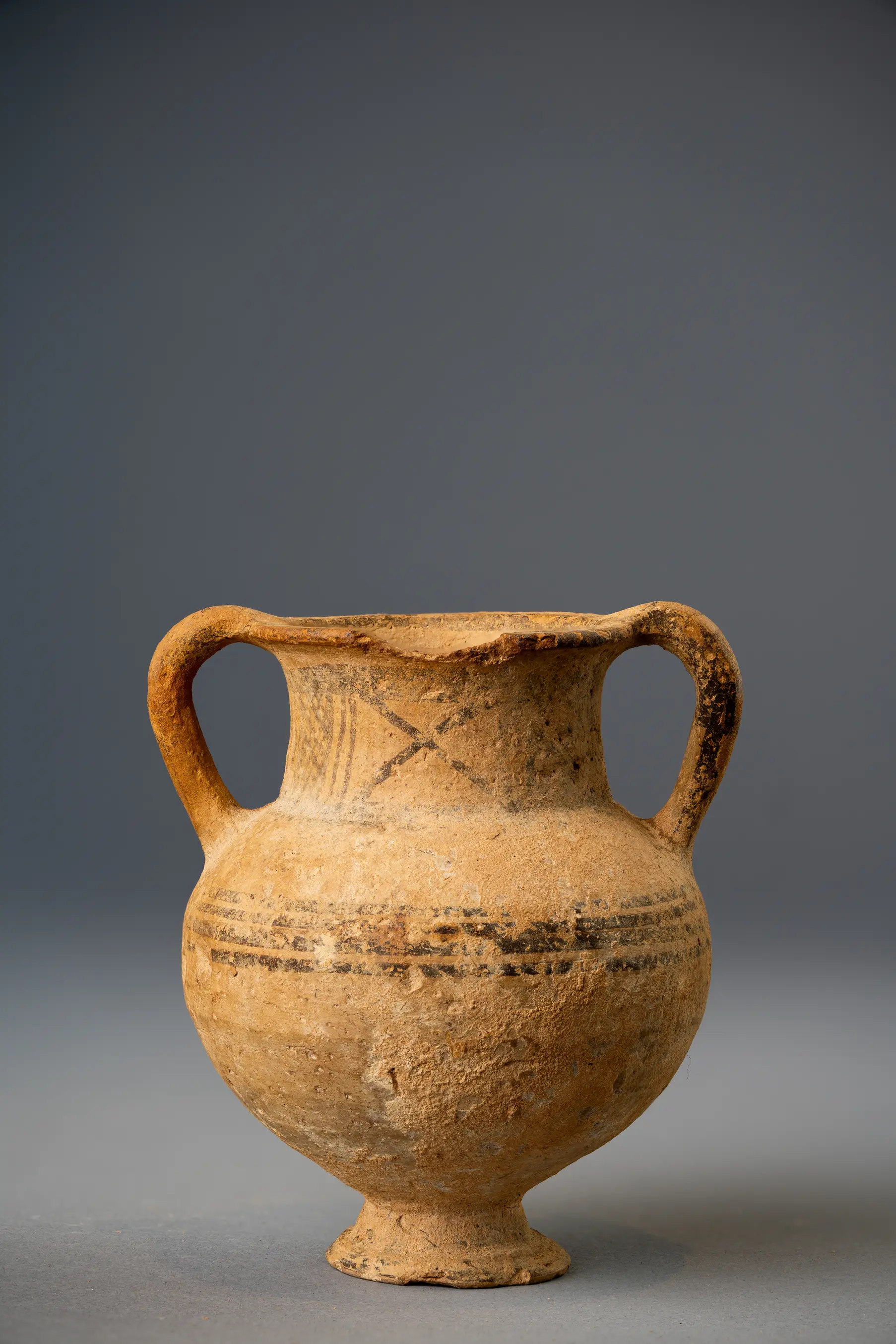 Proto-White Painted WareThe wheel-thrown, matt-painted pottery of Late Cypriot IIIB, c. 1125–1050 BCE, which merged earlier Aegean-style wares and led into Iron Age White Painted I.Late Bronze AgeCypro-Geometric
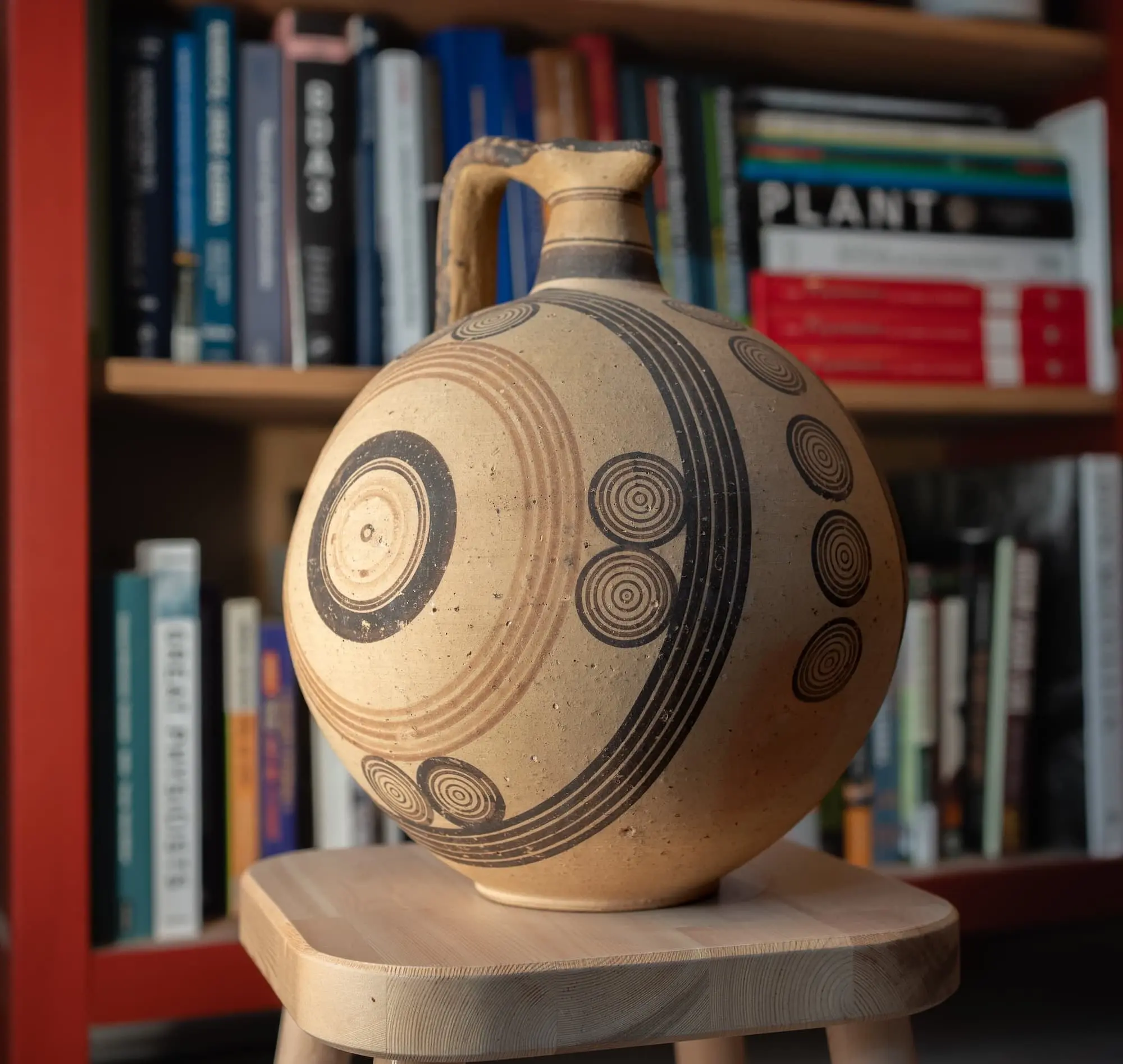 Bichrome WareBichrome is Cypriot pottery painted in black and red on a light surface, first a Late Bronze Age export ware and later a long-lived Iron Age class.Late Bronze AgeCypro-GeometricCypro-Archaic
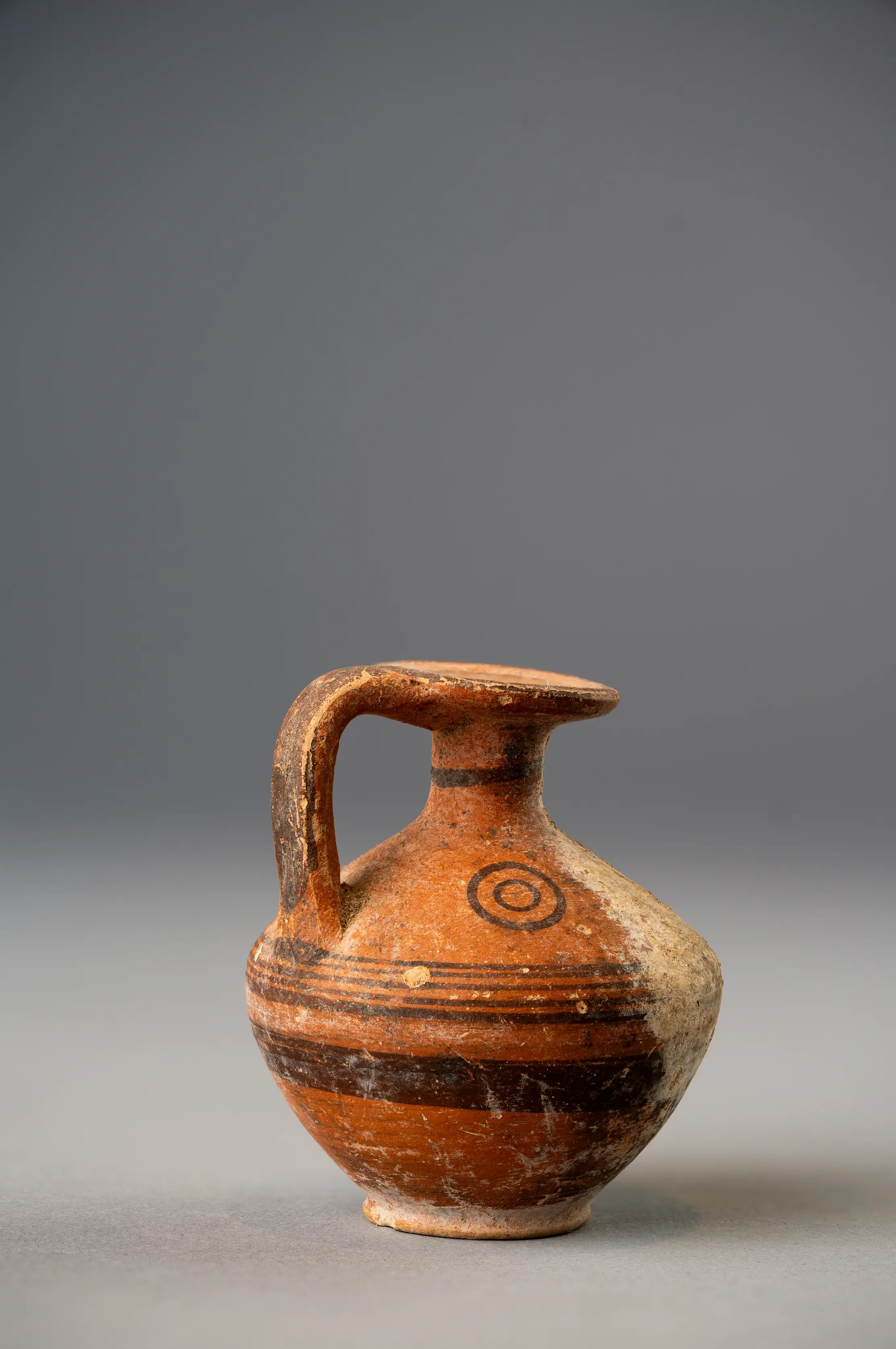 Black-on-Red WareBlack-on-Red is a Cypriot Iron Age wheel-made fine ware with black geometric decoration on a burnished red slip, widely exported from about 900 BCE.Cypro-GeometricCypro-Archaic
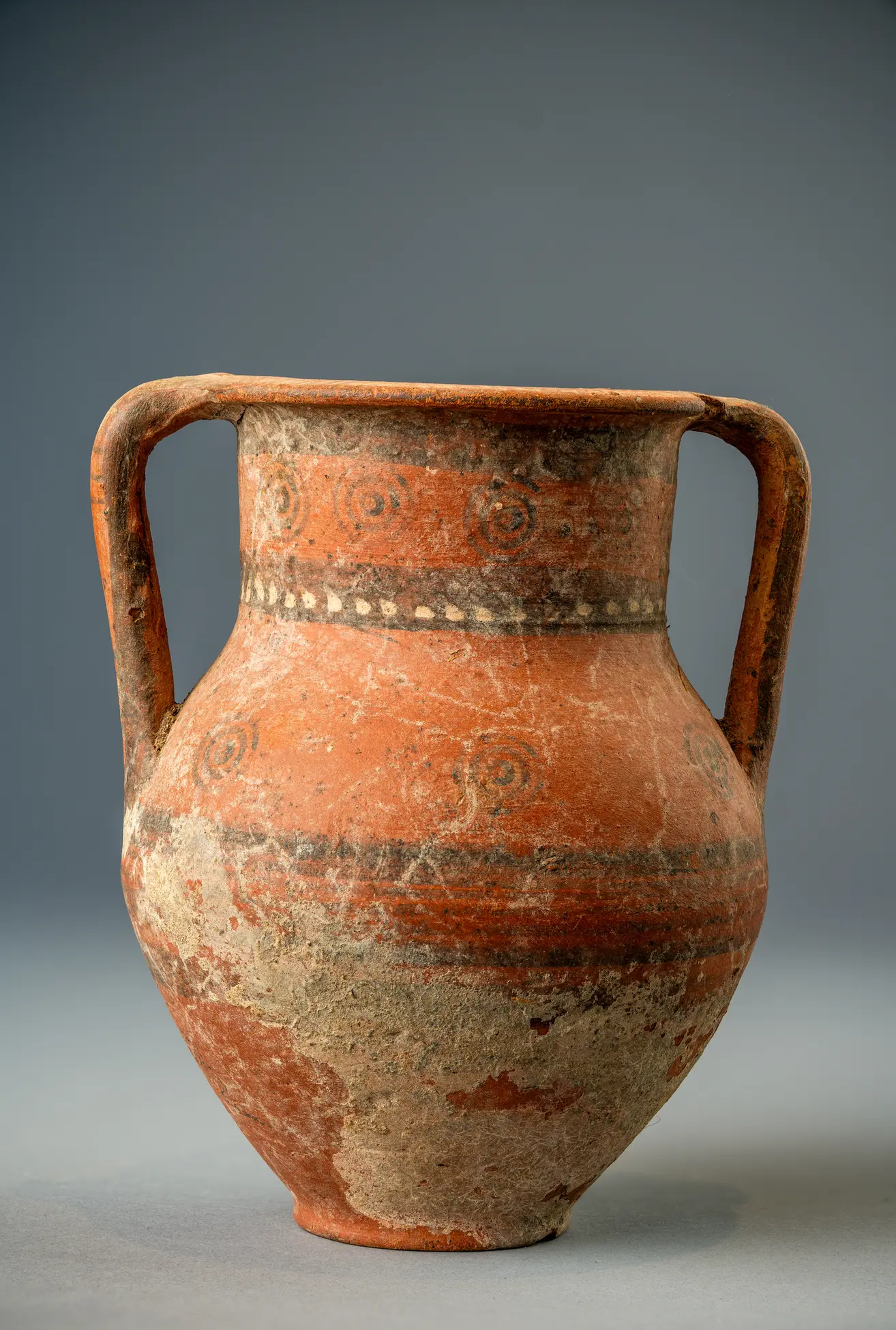 Bichrome Red WareBichrome Red is the Cypriot Iron Age wheel-made ware with black and added white paint on a red slip, the sister ware of Black-on-Red.Cypro-ArchaicCypro-Classical
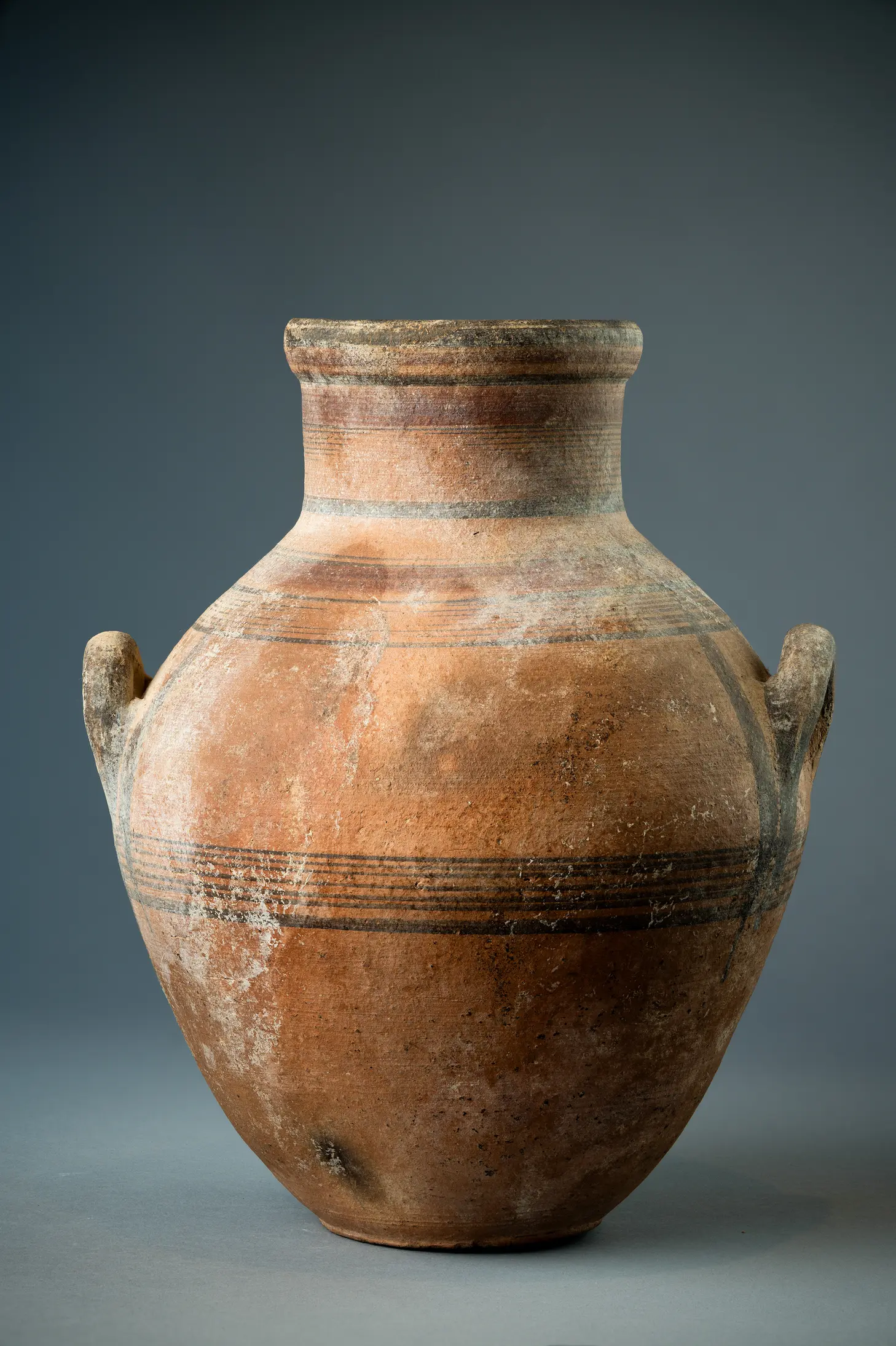 AmphoraA closed jar with two opposed handles, made in Cyprus in belly-handled and vertical-handled painted series and as a basket-handled transport jar.Late Bronze AgeCypro-GeometricCypro-Archaic
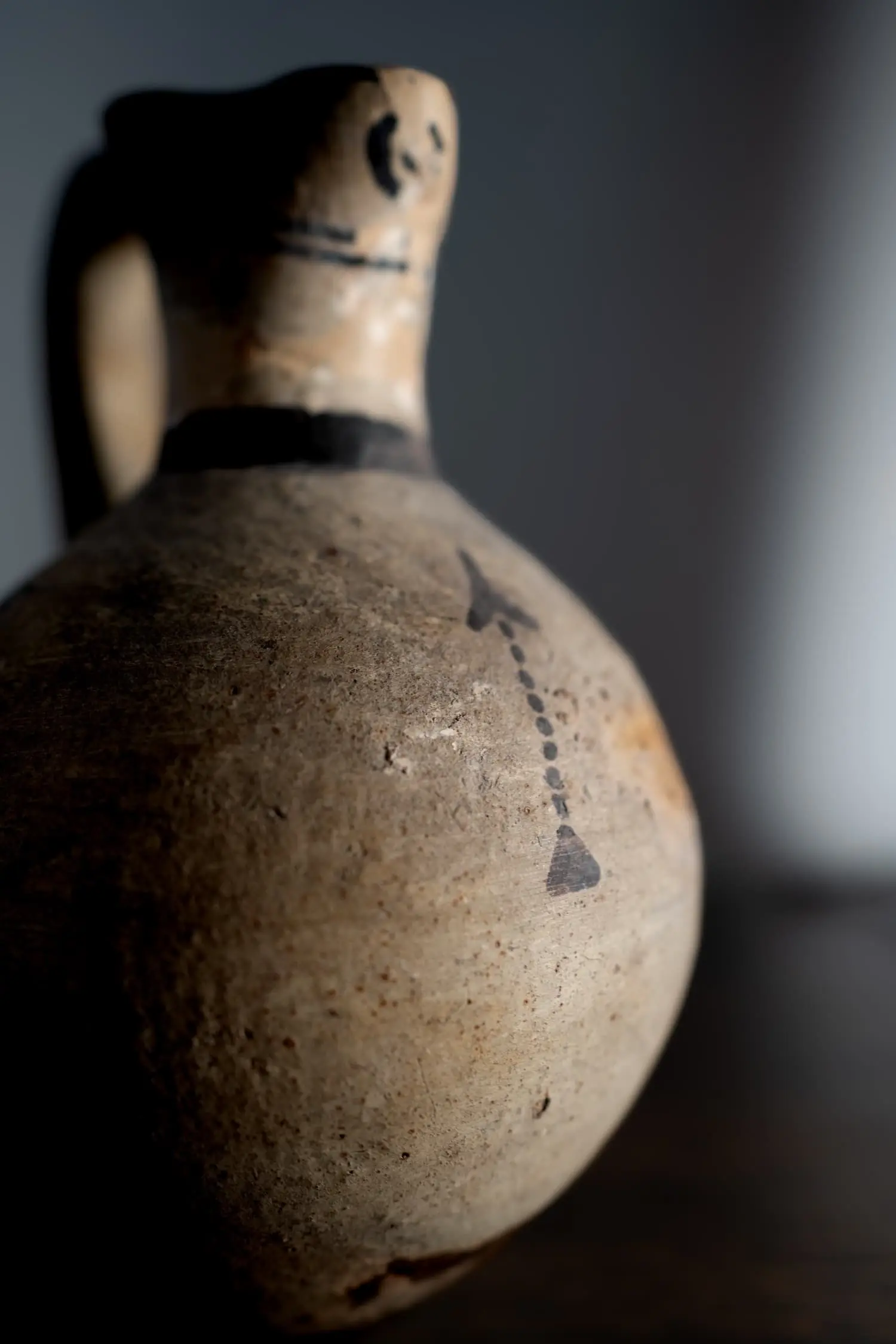 Arrows and Chevron Arrows on Cypriot Iron Age PotteryA vertical chain of chevrons ending in a point, painted as a small stock ornament on Cypriot White Painted and Bichrome jugs of the Iron Age.Cypro-GeometricCypro-Archaic
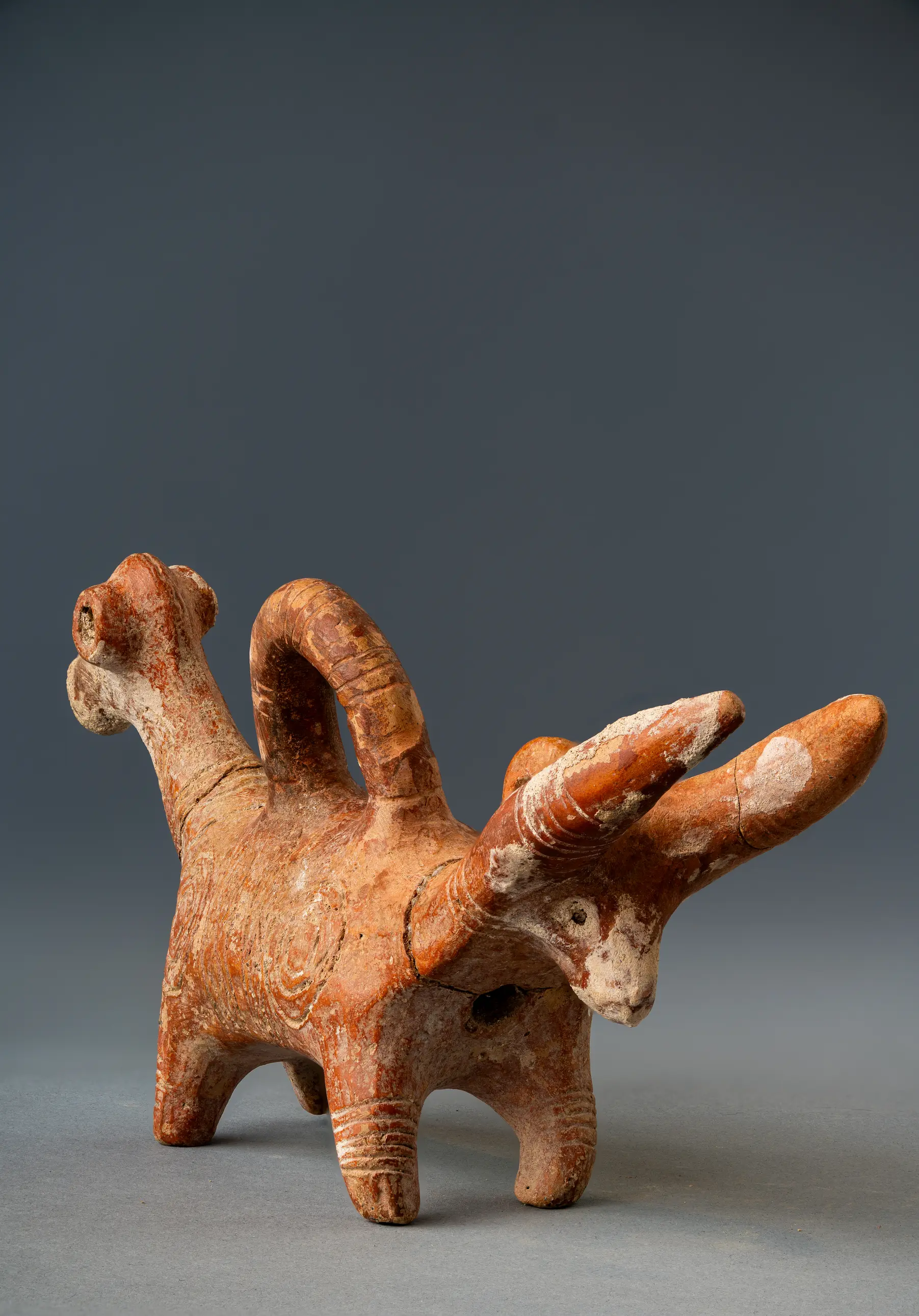 Baskets and Basket-Handled VesselsNot a standard Cypriot vessel class, "basket" names the arched basket handle, vessels that carry it, the kalathos and a few openwork bowls.Late Bronze AgeCypro-GeometricCypro-Archaic
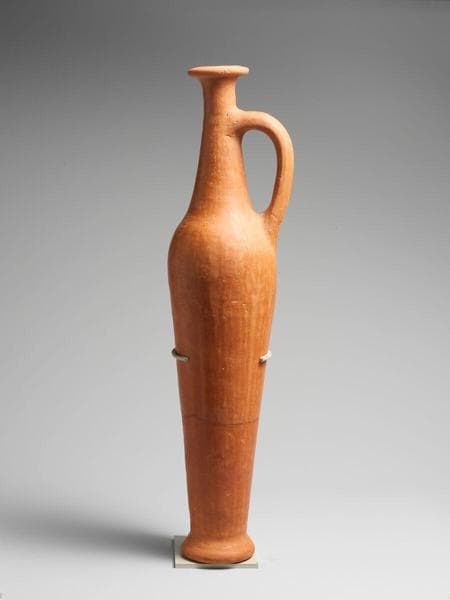 BottlesSmall, narrow-necked closed containers for valuable liquids, from Red Polished bottles to Late Bronze Age spindle bottles and Iron Age barrel jugs.Early Bronze AgeMiddle Bronze AgeLate Bronze AgeCypro-GeometricCypro-Archaic
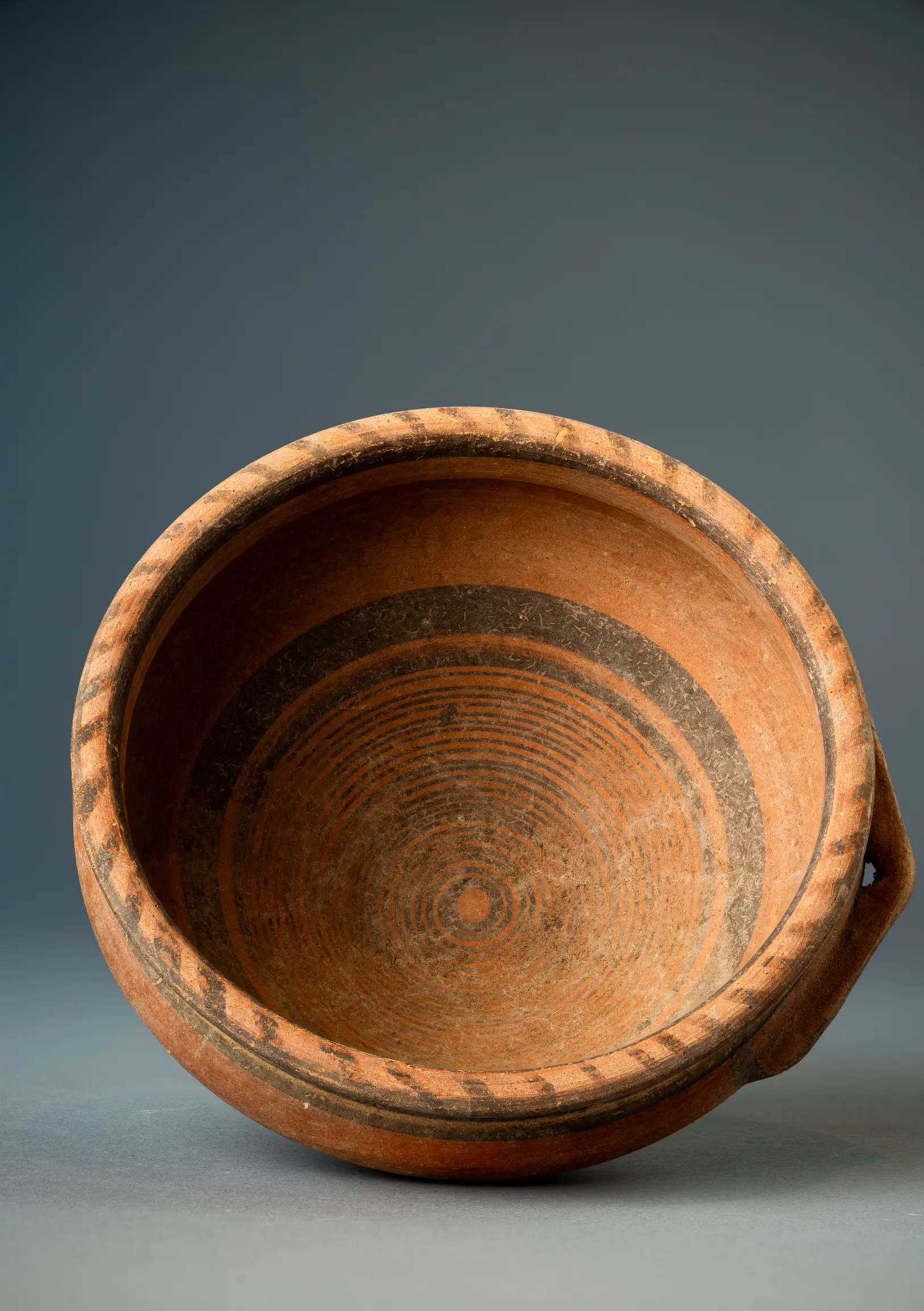 BowlsThe open vessel deeper than a plate and without a pouring neck, the one Cypriot pottery shape made without a break from the Neolithic to the Iron Age.NeolithicChalcolithicEarly Bronze AgeMiddle Bronze AgeLate Bronze AgeCypro-GeometricCypro-Archaic
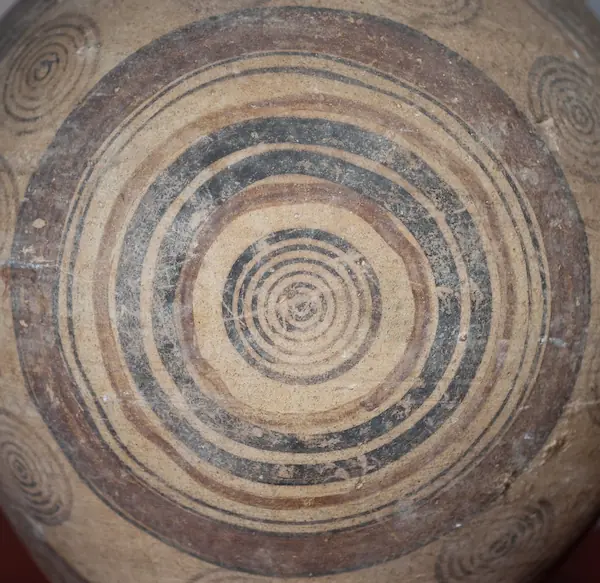 CirclesConcentric circles, disks, spirals and pendent semicircles, the leading geometric motif of Cypriot Iron Age painted pottery and of Gjerstad's Western style.Cypro-GeometricCypro-Archaic
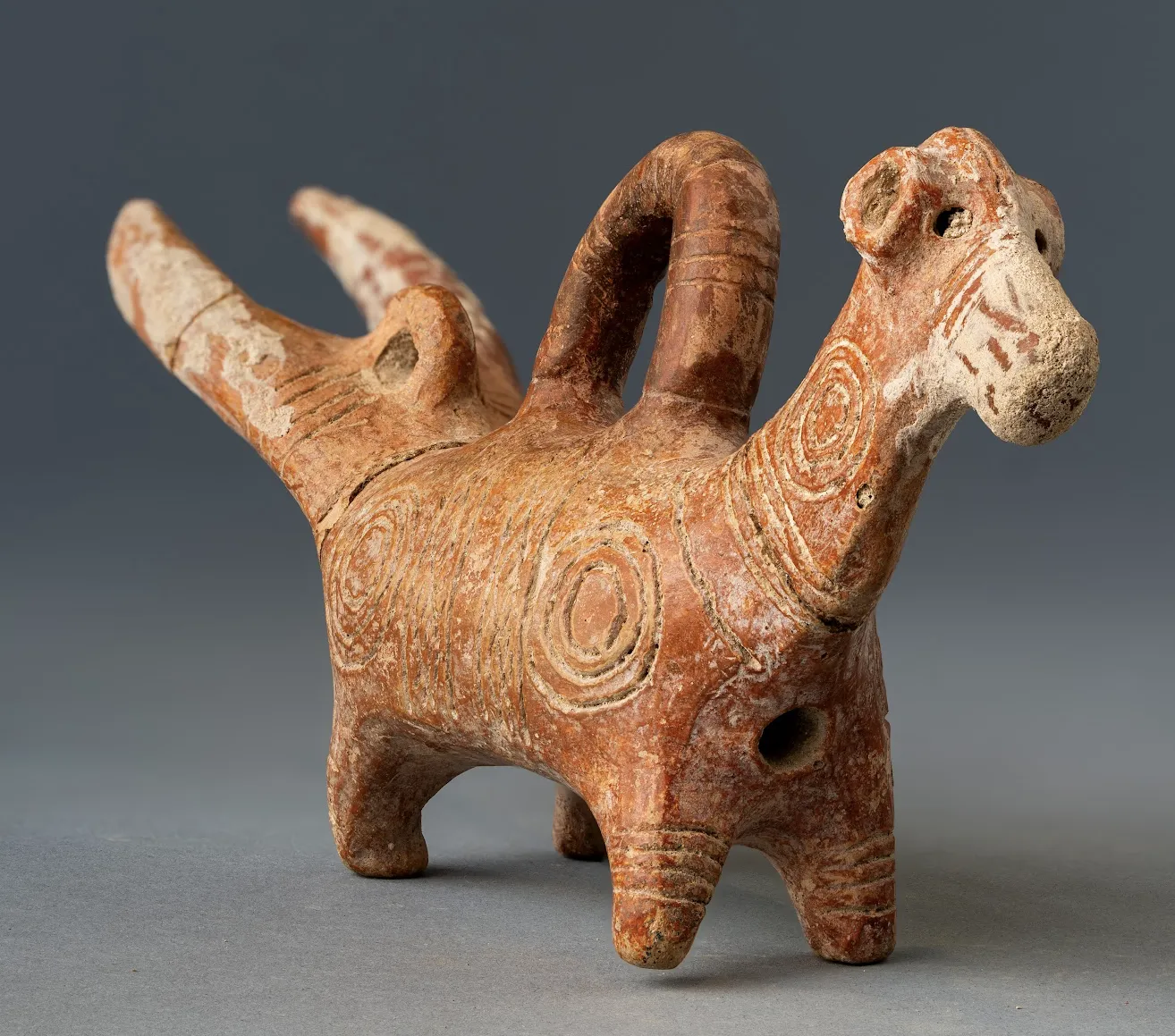 Complex VesselsComposite, multiple and ring vessels built by multiplying or joining ordinary shapes, mostly Early and Middle Bronze Age Red Polished tomb pieces.Early Bronze AgeMiddle Bronze AgeLate Bronze AgeCypro-GeometricCypro-Archaic
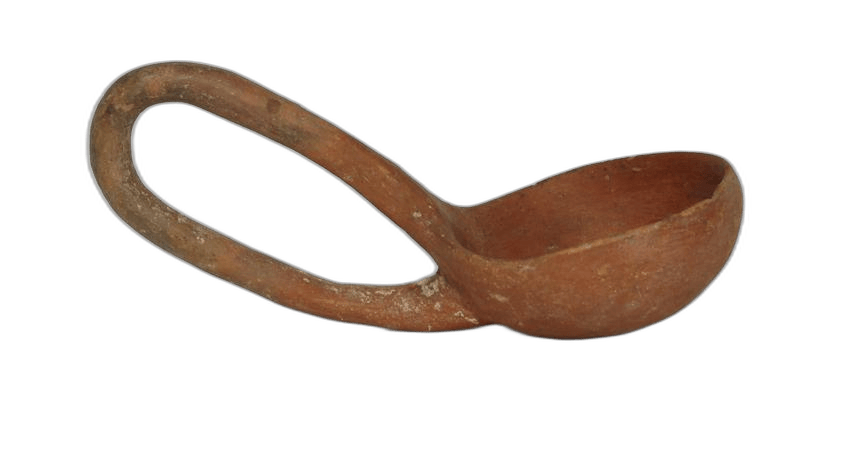 Dippers and LadlesA small vessel with a single handle set high above its body, made to be lowered into a larger container and lifted out full.Early Bronze AgeMiddle Bronze AgeLate Bronze AgeCypro-Geometric
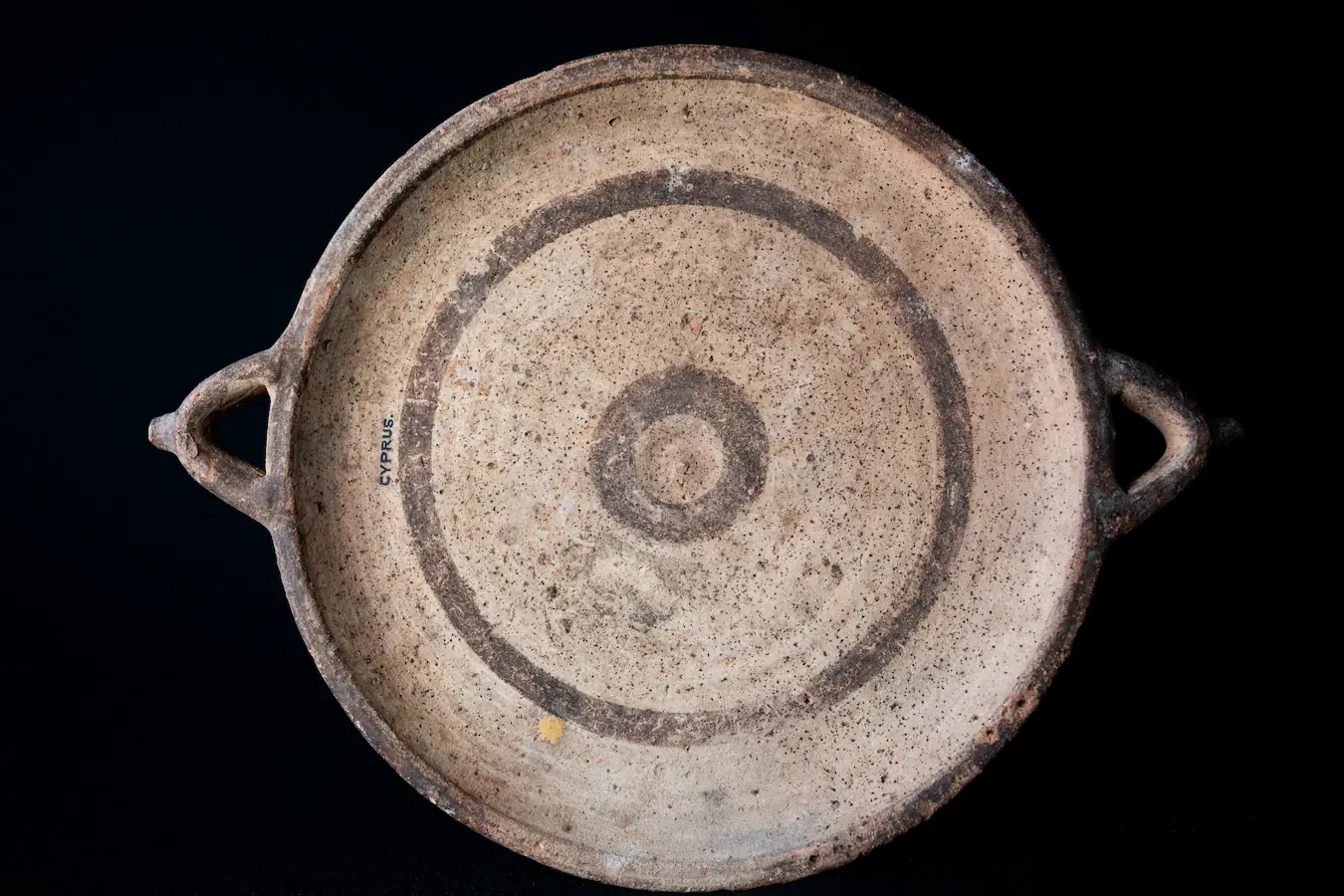 Dishes and PlatesThe flat two-handled plate, absent from the Bronze Age repertoire, that appears in advanced Cypro-Geometric I and carries its main decoration on the underside.Cypro-Geometric
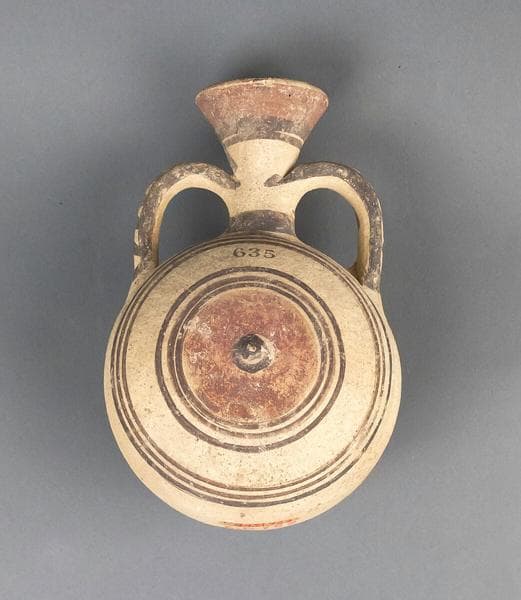 FlasksA small, often flattened narrow-necked container for valuable liquids, made in Cyprus from the Chalcolithic onward and widely exported in the Iron Age.ChalcolithicEarly Bronze AgeLate Bronze AgeCypro-GeometricCypro-Archaic
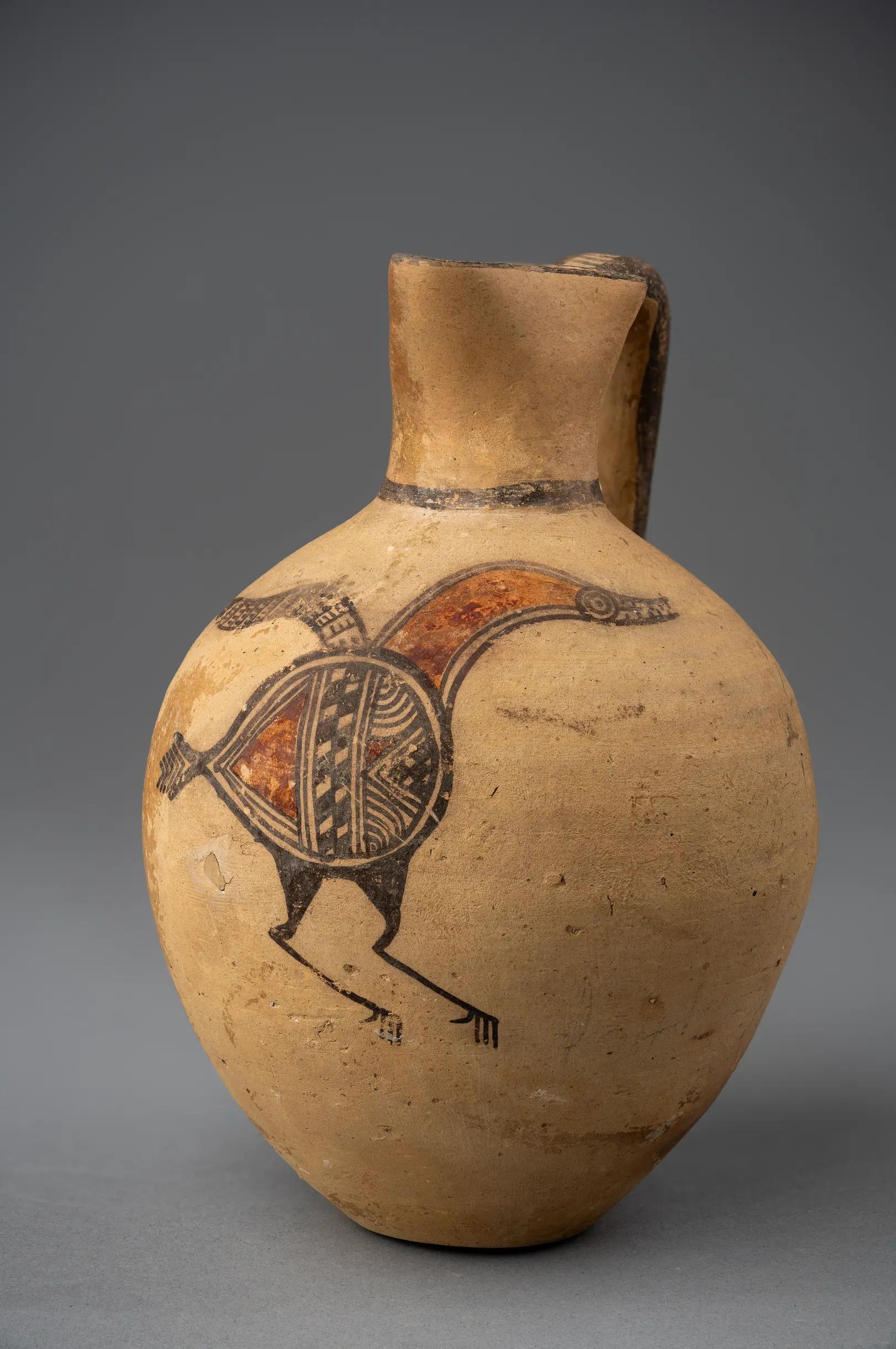 Free-Field Style: Birds, Bulls and Lotus on Cypro-Archaic JugsA layout of Cypriot Iron Age vase painting in which a single figure or motif is set on the bare, unframed body of a jug, usually opposite the handle.Cypro-GeometricCypro-Archaic
- From Bronze to Iron: Cypriot Pottery c. 1300–950 BCEThe change in Cypriot fine pottery between c. 1300 and 950 BCE, from handmade Base Ring and White Slip to wheelmade White Painted and Bichrome.Late Bronze AgeCypro-Geometric
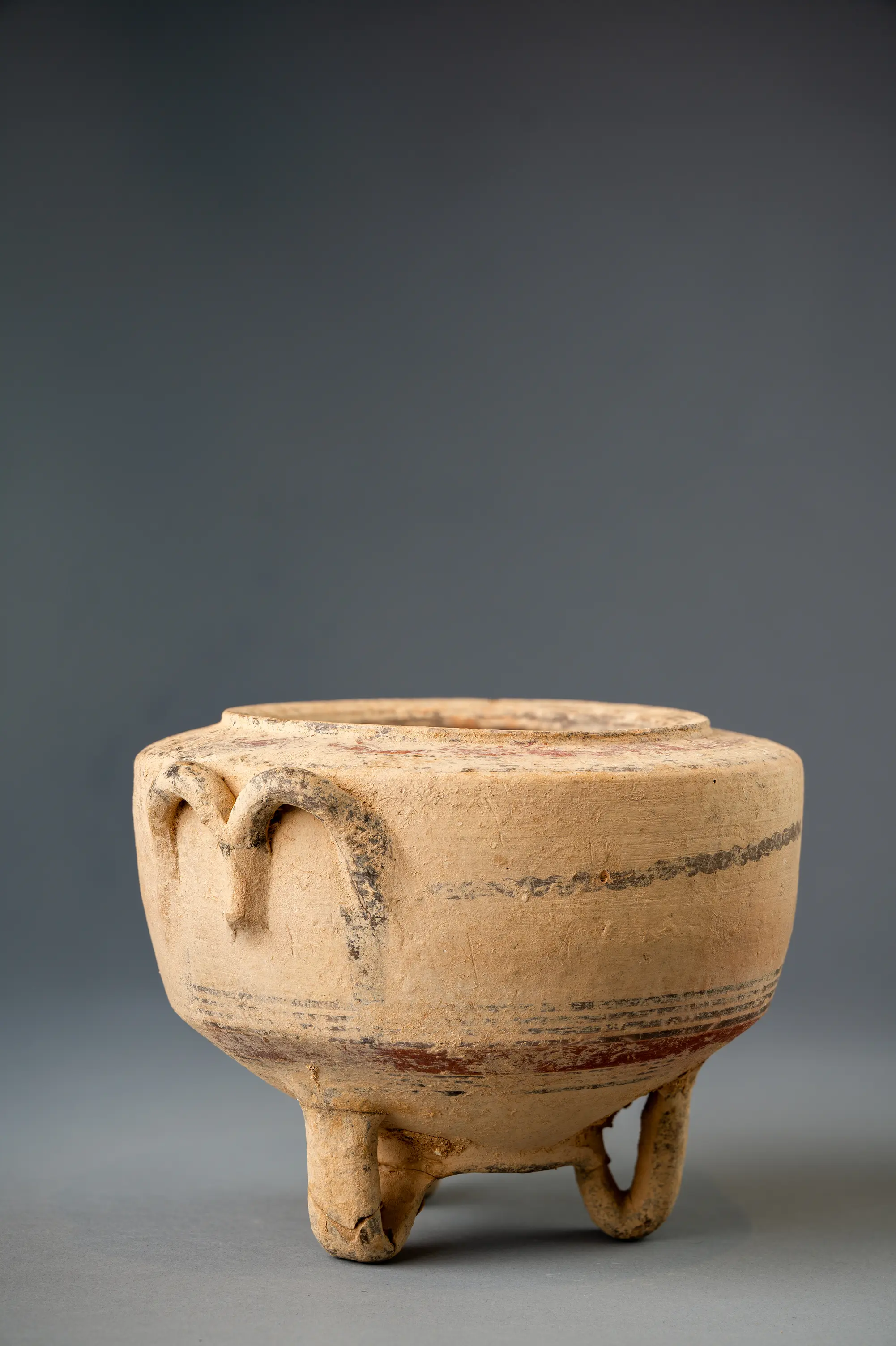 Jars (Amphora)Large storage and transport containers of Cyprus, from Bronze Age pithoi and imported Canaanite jars to the island's own Iron Age transport amphoras.ChalcolithicMiddle Bronze AgeLate Bronze AgeCypro-GeometricCypro-Archaic
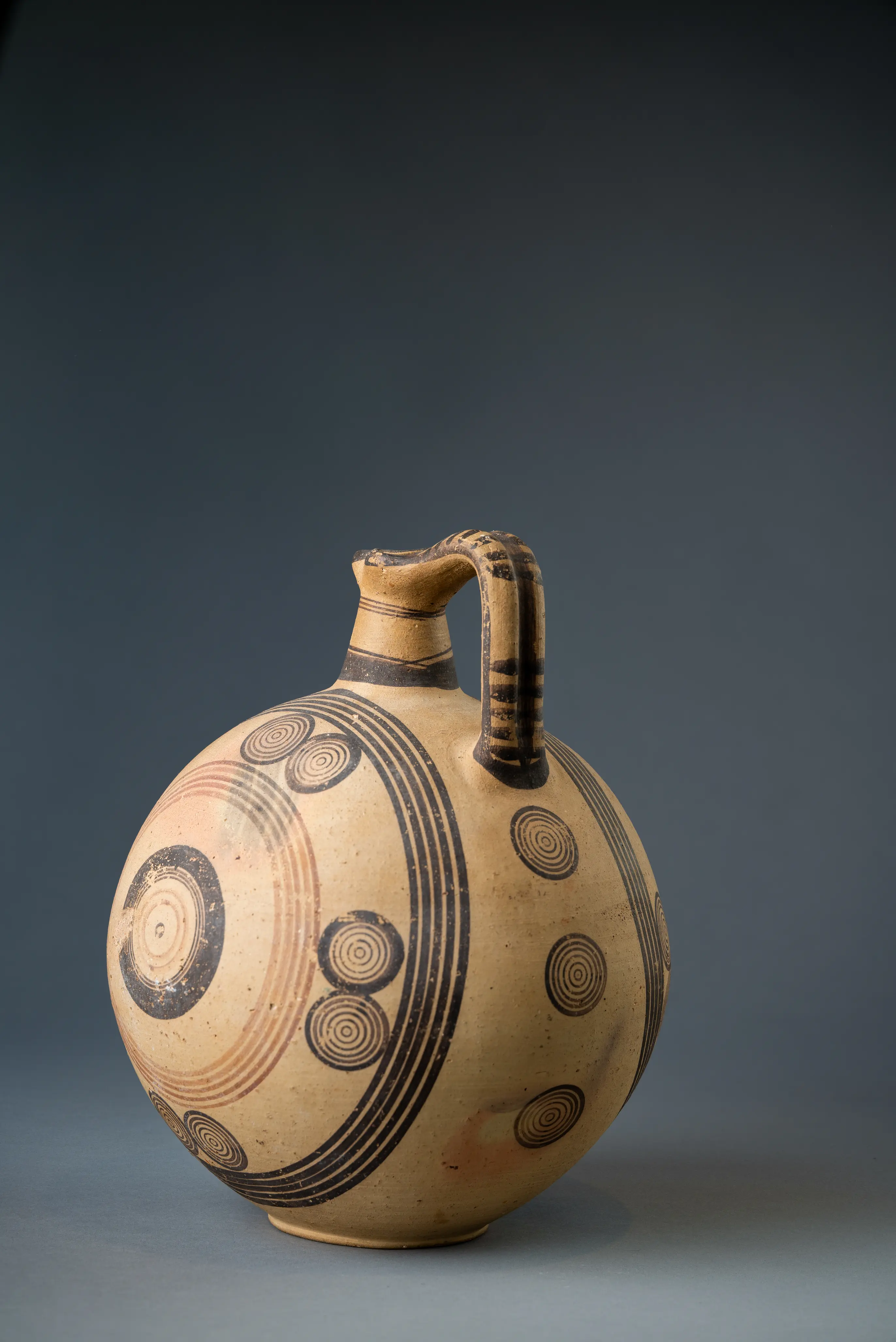 Jugs (Oinochoe)The Iron Age Cypriot pouring jug or oinochoe, a painted wheelmade vessel for liquids made in regional workshops and widely exported around the Mediterranean.Cypro-GeometricCypro-ArchaicCypro-Classical
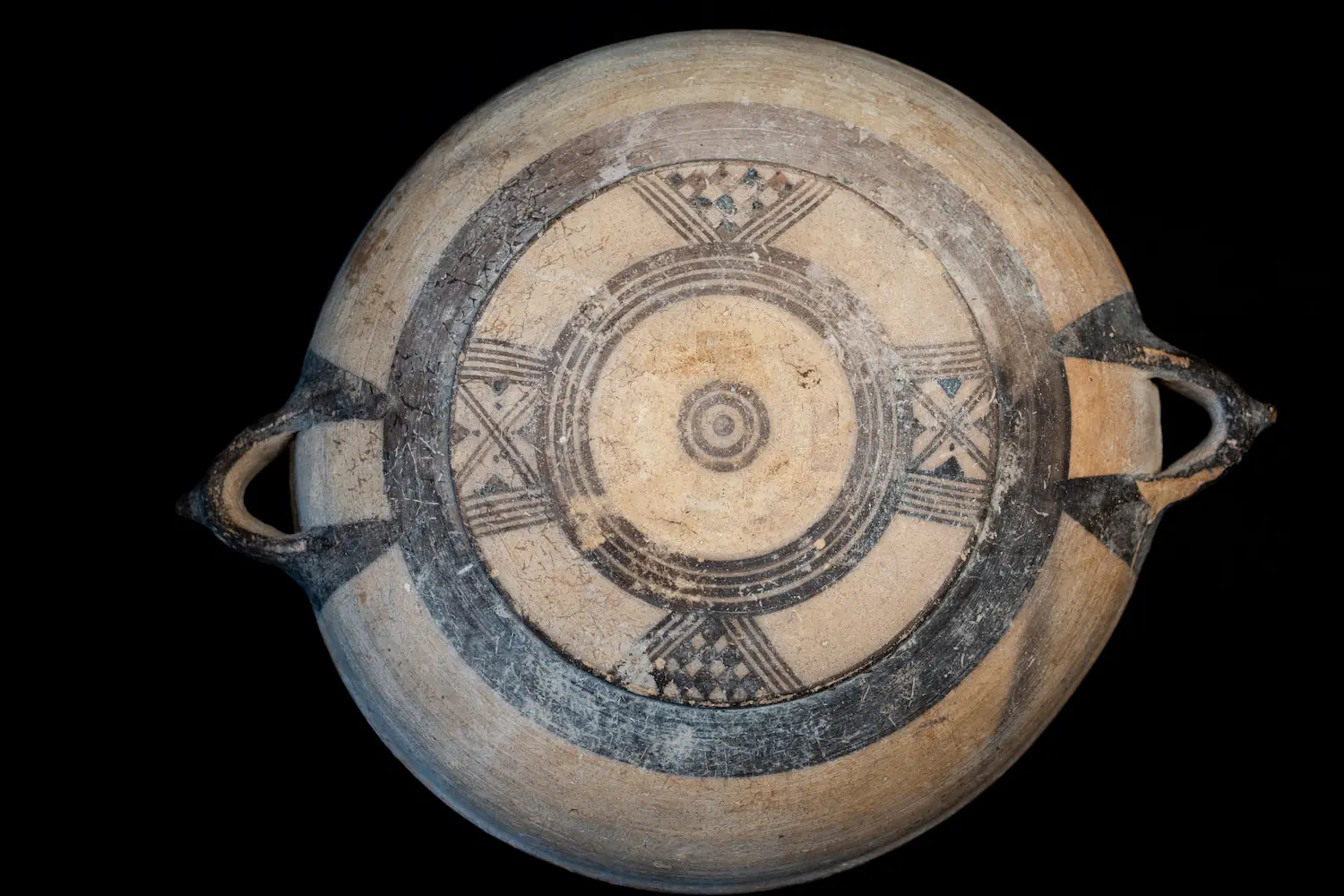 Lattice, Chequers and Checkerboards on Cypriot PotteryLattice (a net of crossed lines) and chequers (alternating dark and light squares) used to fill triangles, lozenges, bands and panels on Cypriot pottery.Middle Bronze AgeCypro-GeometricCypro-Archaic
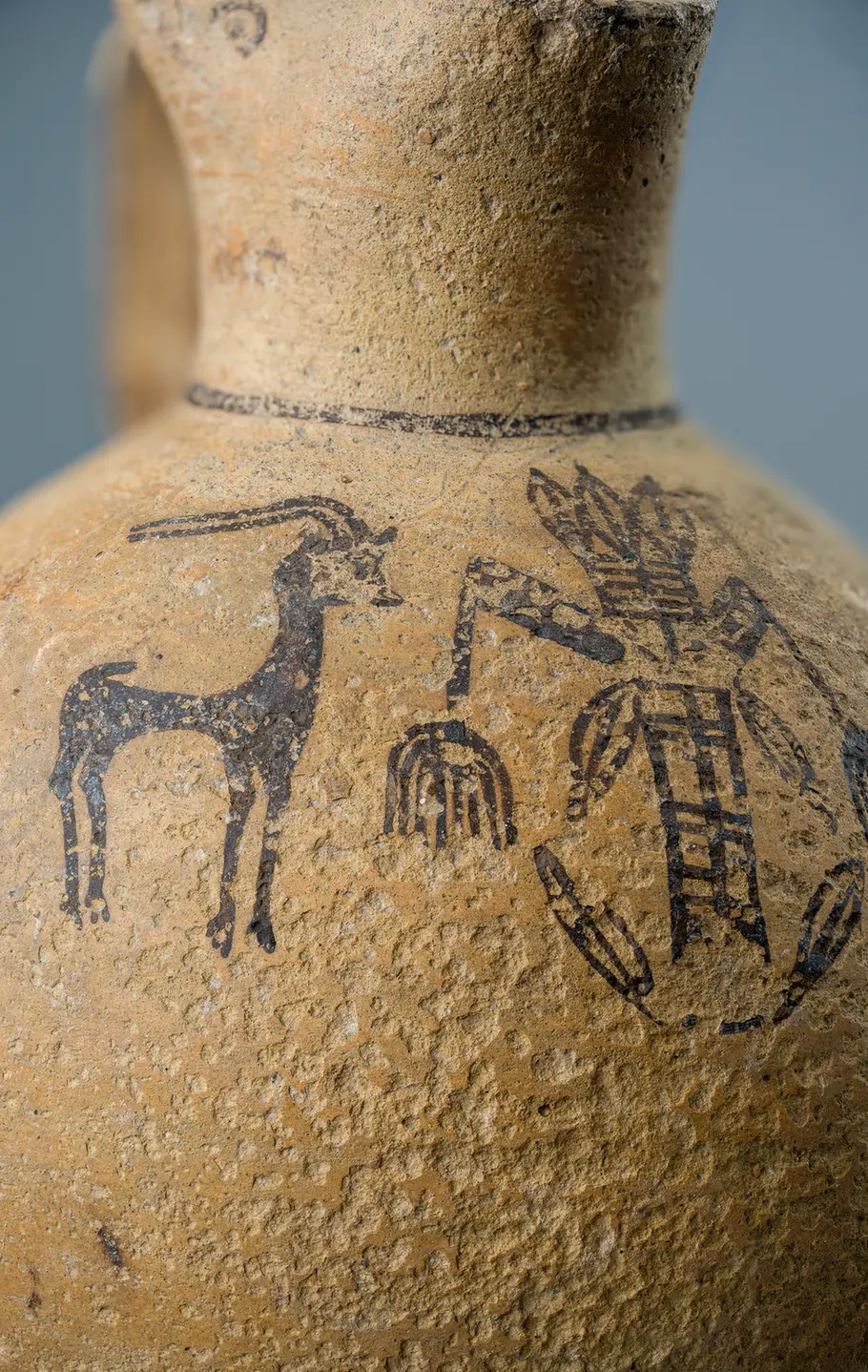 Lotus Flowers and Lotus Friezes on Cypriot Iron Age PotteryThe lotus flower and lotus-and-bud frieze, the chief plant motif of Cypriot Iron Age painted pottery, of Egyptian and Phoenician derivation.Cypro-GeometricCypro-ArchaicCypro-Classical
- Motifs of Cypriot PotterySectionThe recurring patterns and figures painted, incised or modelled on Cypriot pottery, from Neolithic combing to the Cypro-Archaic free-field style.NeolithicChalcolithicEarly Bronze AgeMiddle Bronze AgeLate Bronze AgeCypro-GeometricCypro-Archaic
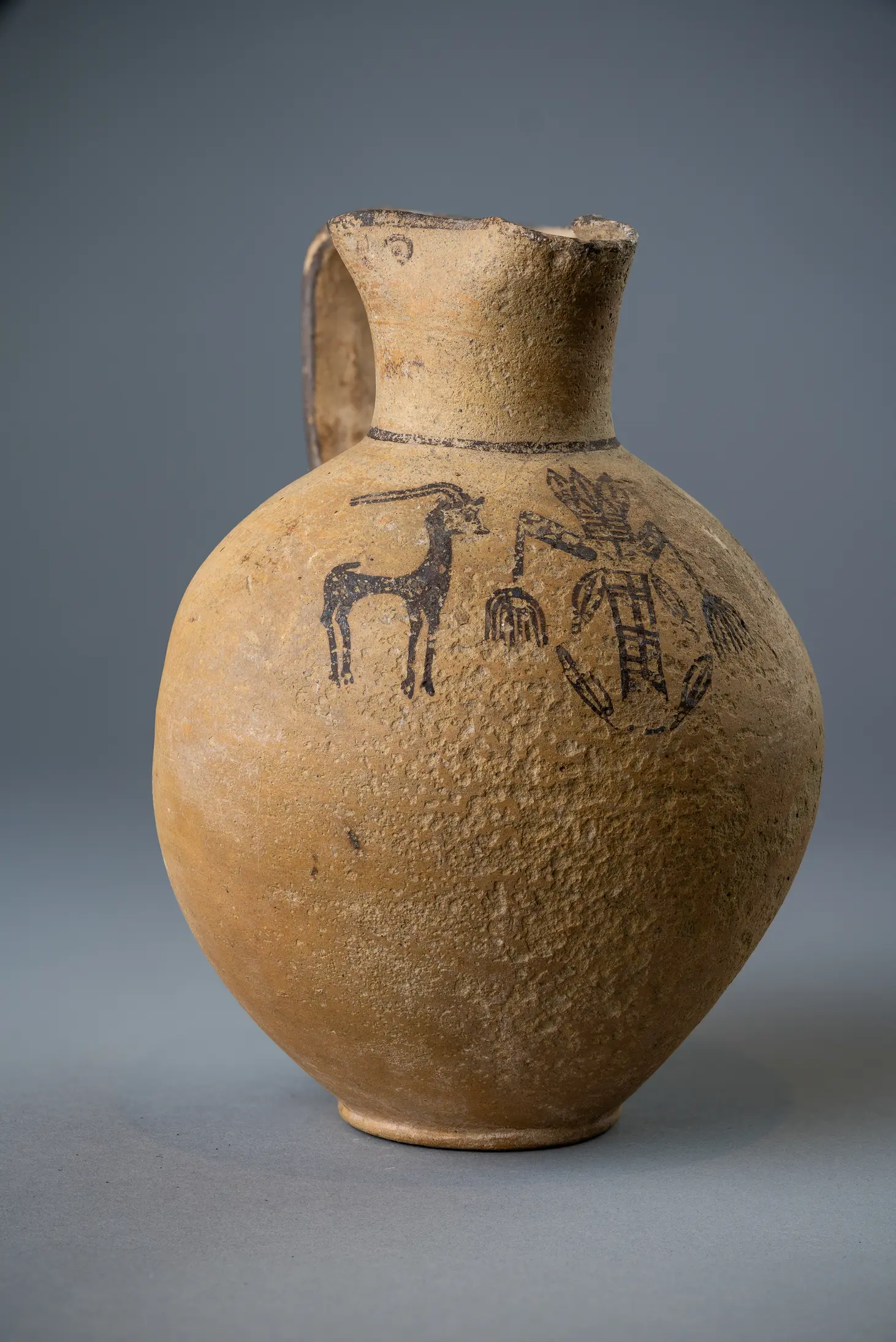 Plants, Trees and Palms on Cypriot PotteryTrees, date palms, branches and the goat-and-tree or sacred-tree composition on Cypriot pottery and related media, from the Late Bronze Age to the Cypro-Archaic period.Late Bronze AgeCypro-GeometricCypro-Archaic
- Pottery ShapesSectionThe classification of Cypriot pottery by vessel form rather than ware, grouped into ten shape families from bowls and jugs to composite vessels.Early Bronze AgeMiddle Bronze AgeLate Bronze AgeCypro-GeometricCypro-Archaic
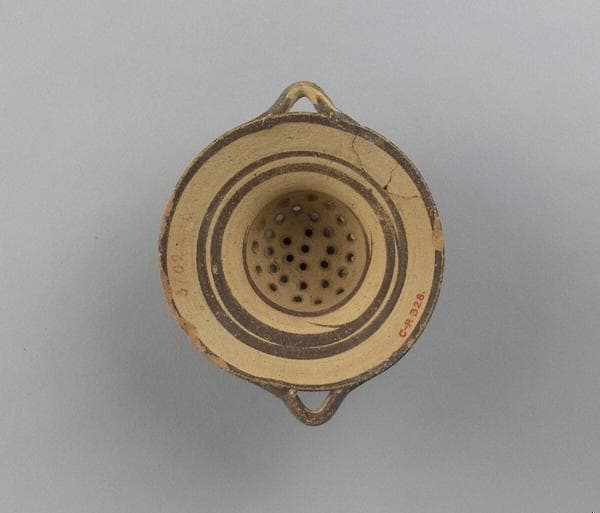 StrainersAny vessel with deliberate perforations that let liquid through and hold solids back, from Base Ring strainer jars to Iron Age strainer jugs and bronze strainers.Middle Bronze AgeLate Bronze AgeCypro-GeometricCypro-Archaic
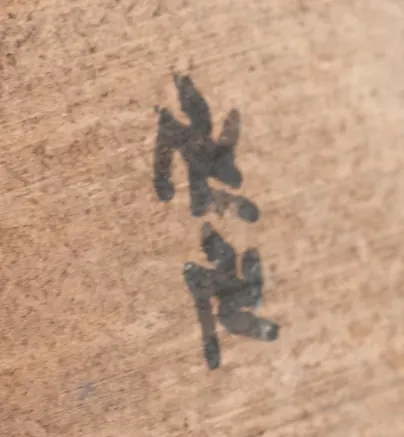 SwastikasA cross with arms bent at right angles, a frequent painted ornament on Cypriot Iron Age pottery whose meaning is still debated.Early Bronze AgeLate Bronze AgeCypro-GeometricCypro-Archaic
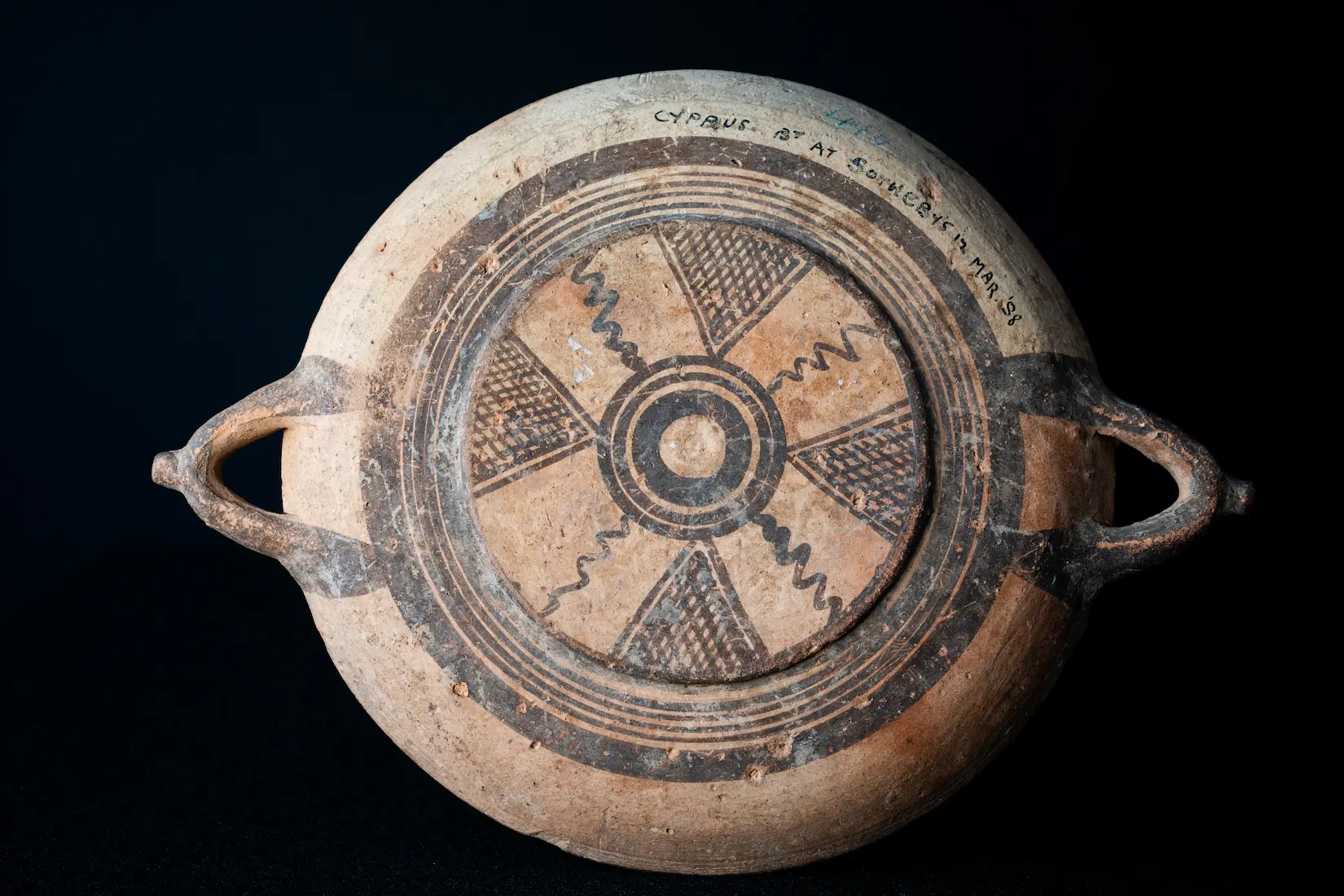 The Maltese Cross on Cypriot PotteryA cross of four triangles meeting at their points, painted on the bases of Cypriot bowls and dishes and inside concentric circles on jugs.Late Bronze AgeCypro-Geometric
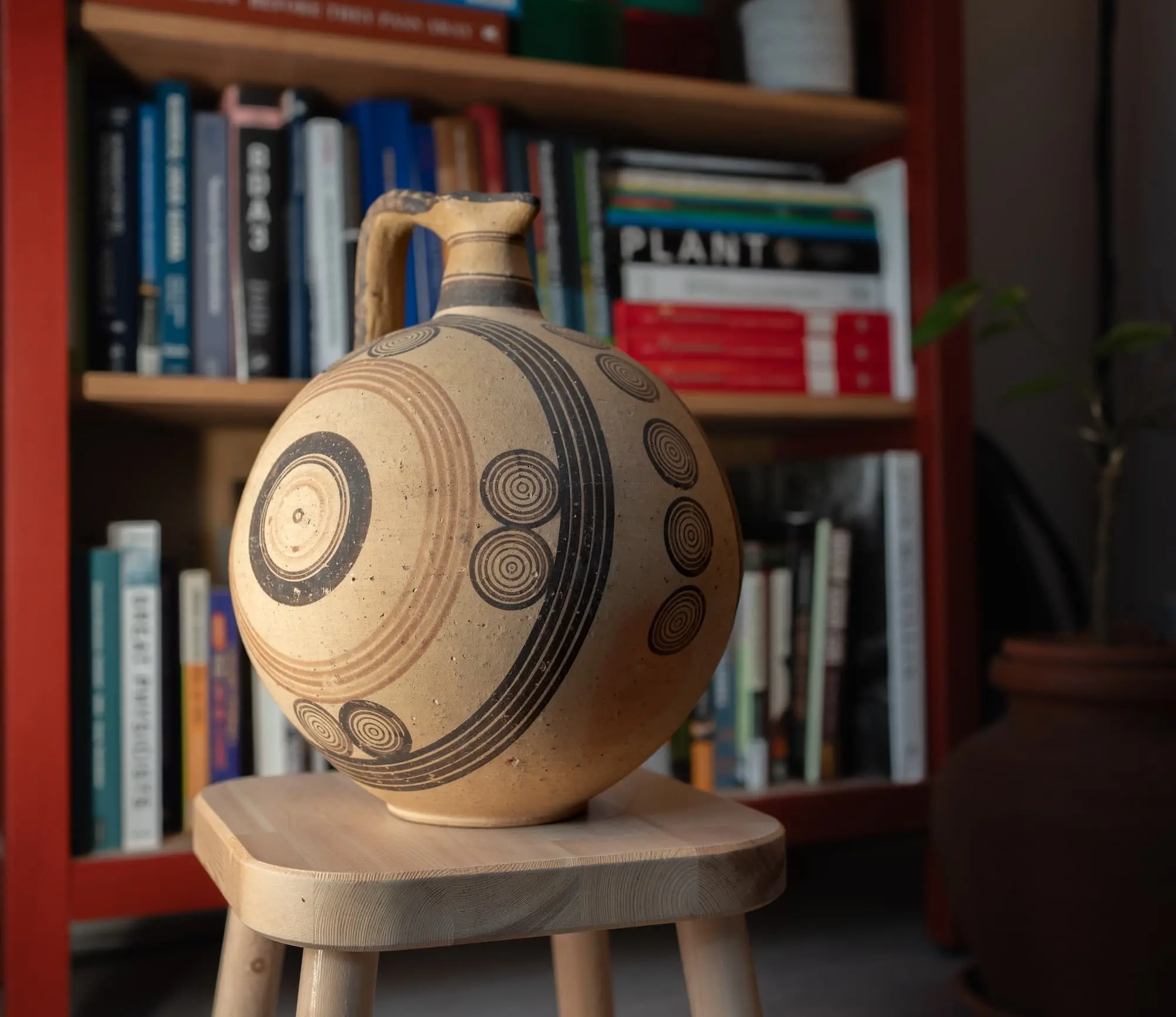 The Pottery of Ancient CyprusSectionThe pottery made and used in Cyprus from the Ceramic Neolithic onward, the island's most abundant artifact class and the basis of its chronology.NeolithicChalcolithicEarly Bronze AgeMiddle Bronze AgeLate Bronze AgeCypro-GeometricCypro-ArchaicCypro-ClassicalHellenisticRoman
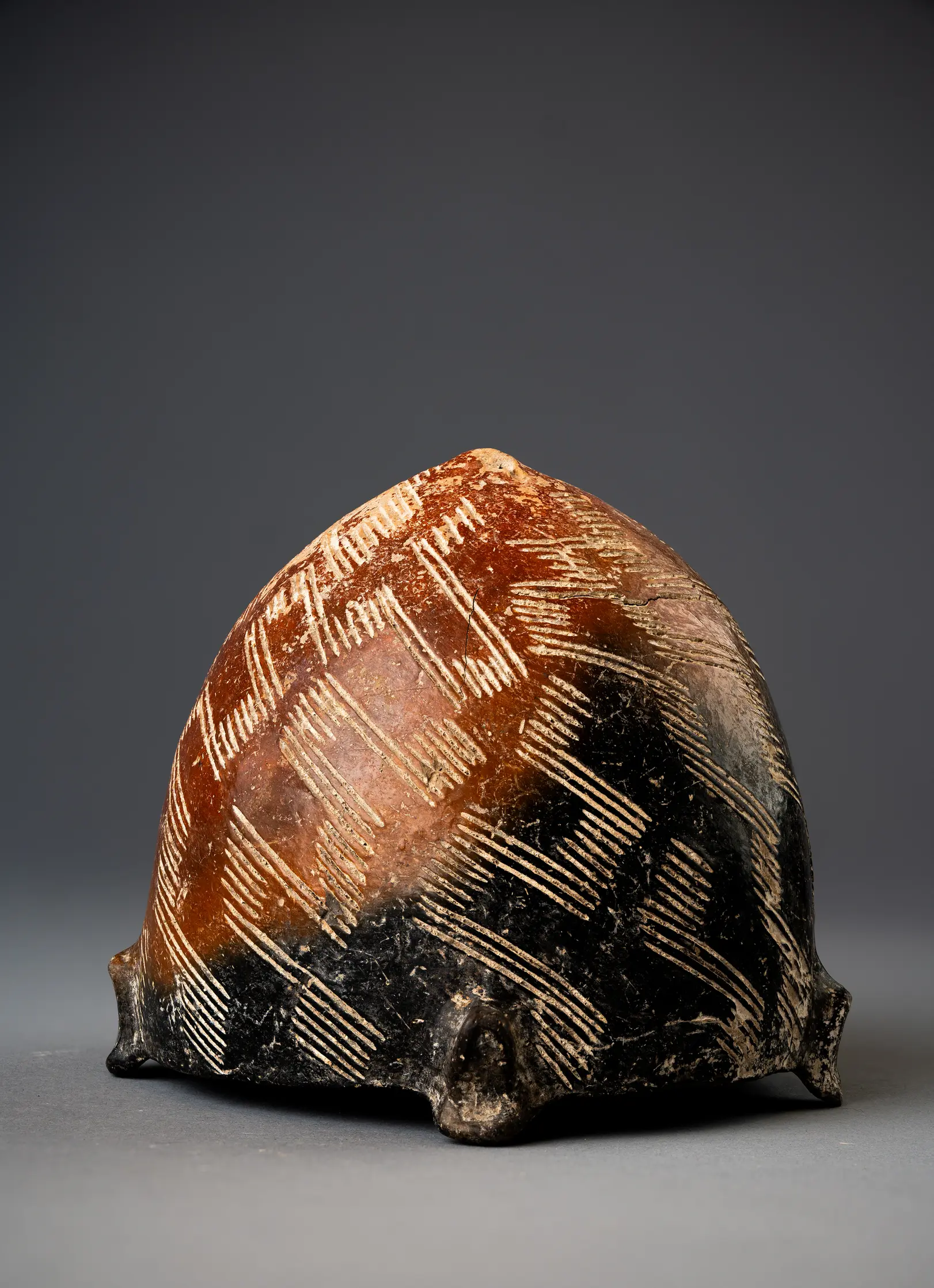 Triple Crossing LinesGroups of parallel painted lines laid obliquely so that they cross one another, the defining motif of the Middle Bronze Age White Painted Cross Line Style.Middle Bronze Age
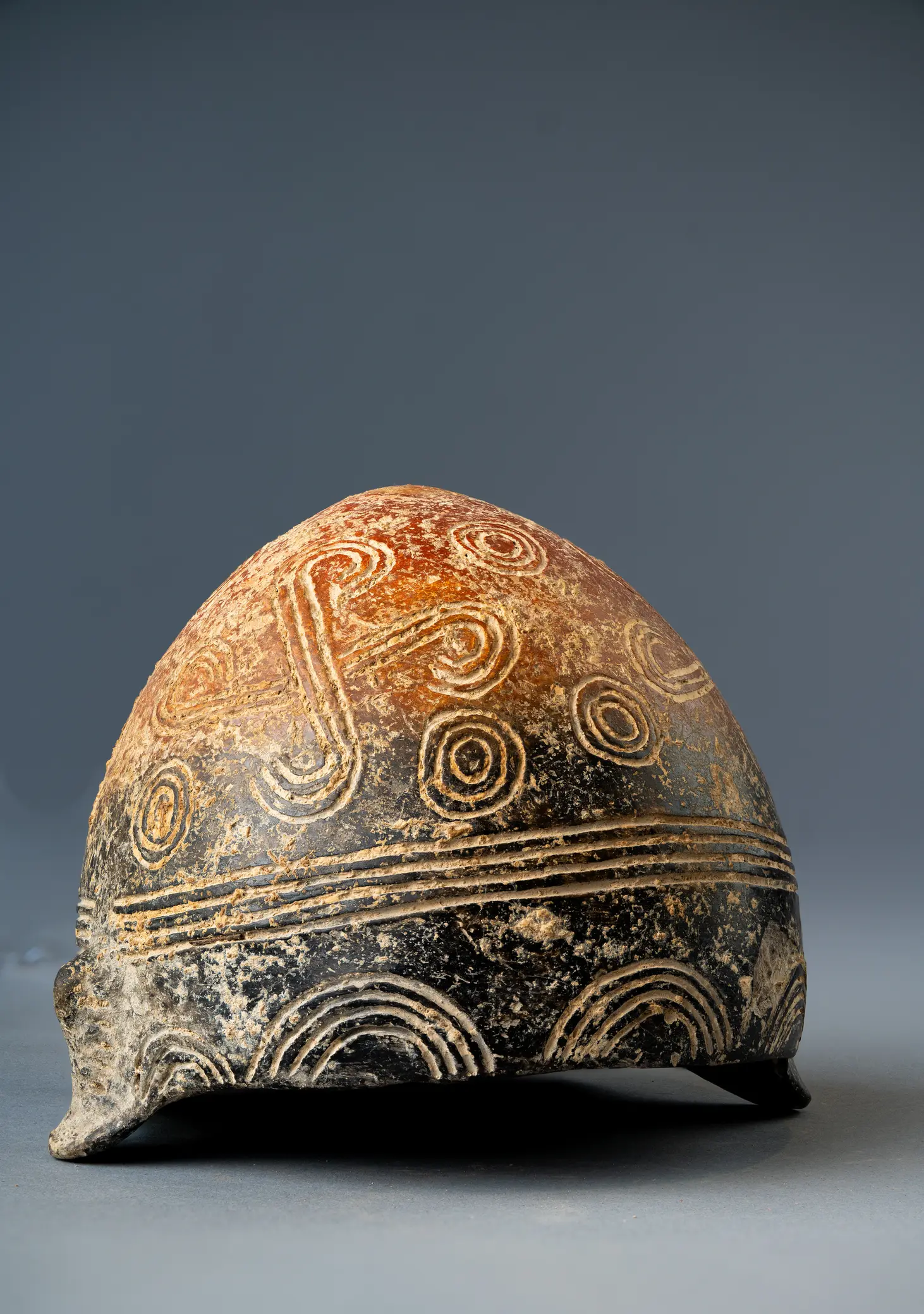 Tulip Bowls and Cult VesselsDeep, conical, black-topped Red Polished bowls of Early Cypriot I–II, and their elaborate protome-rimmed form, known mostly from the tombs of Vounous.Early Bronze Age
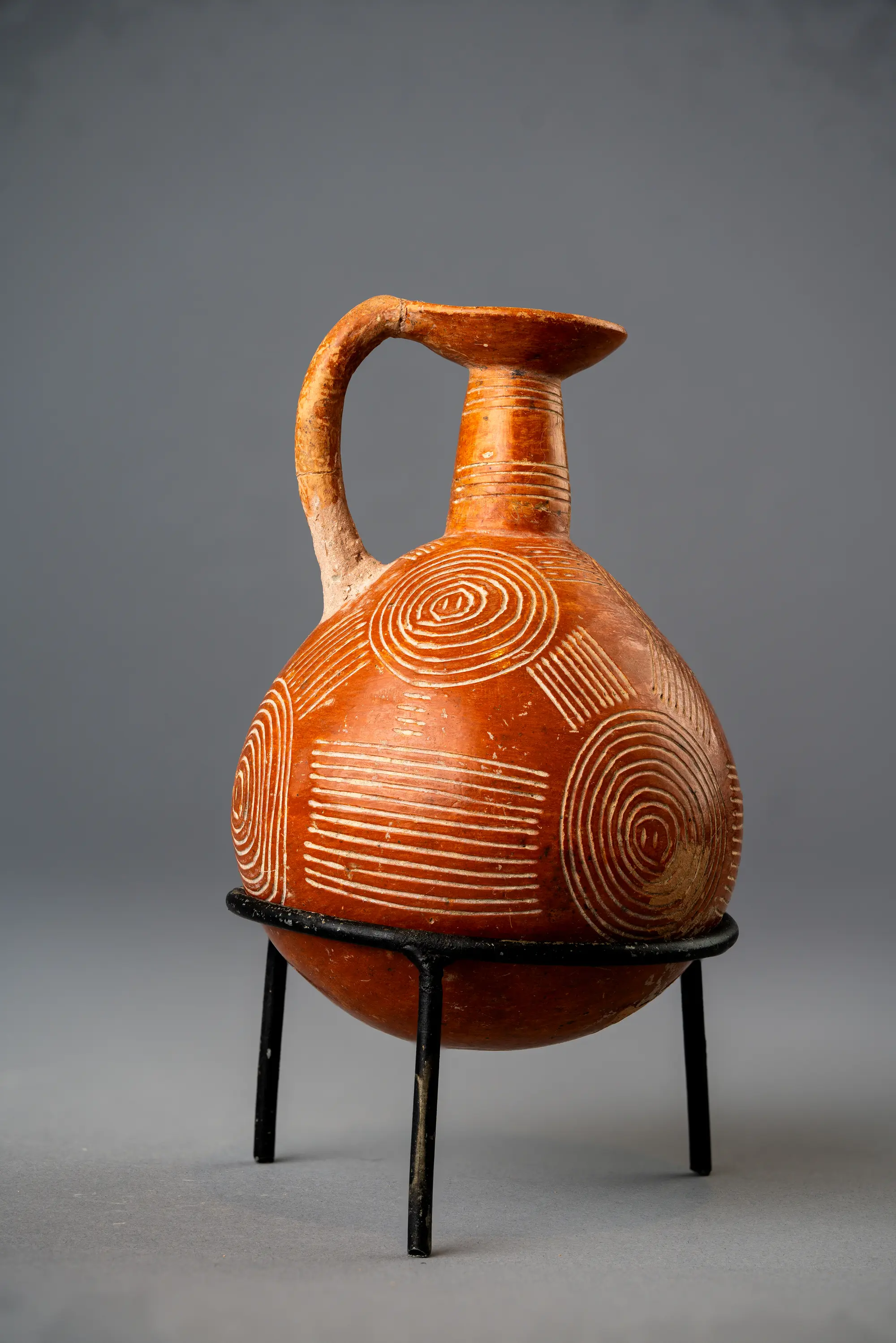 Types of WareSectionThe families of Cypriot pottery, grouped by clay, surface finish and decoration, from Neolithic Combed ware to Iron Age Black-on-Red.NeolithicChalcolithicEarly Bronze AgeMiddle Bronze AgeLate Bronze AgeCypro-GeometricCypro-ArchaicCypro-Classical
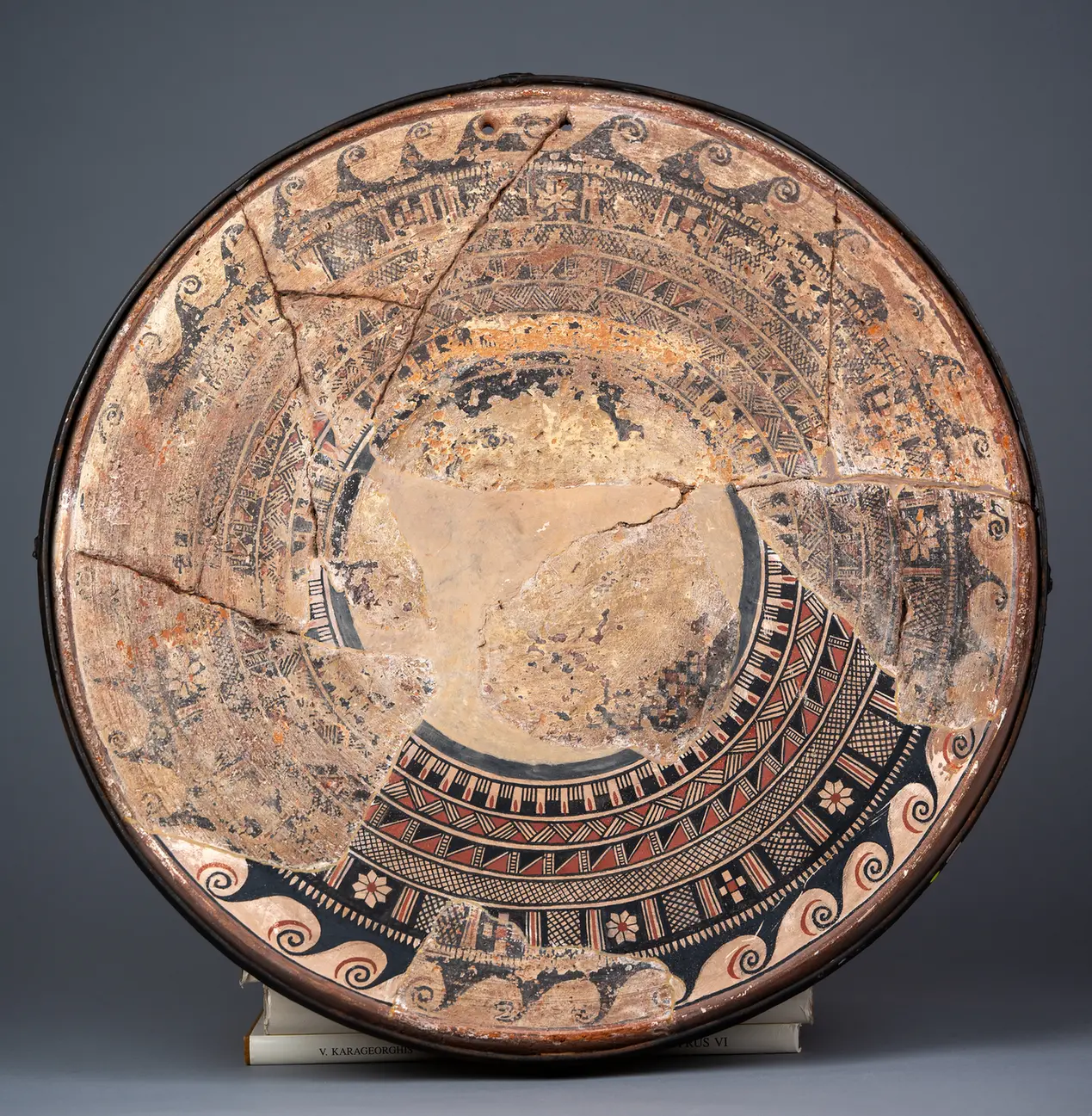 Wavy HooksWavy lines ending in a hook or spiral, found on Mycenaean imports at Enkomi, Cypro-Archaic White Painted IV juglets and Bichrome plates.Late Bronze AgeCypro-Archaic
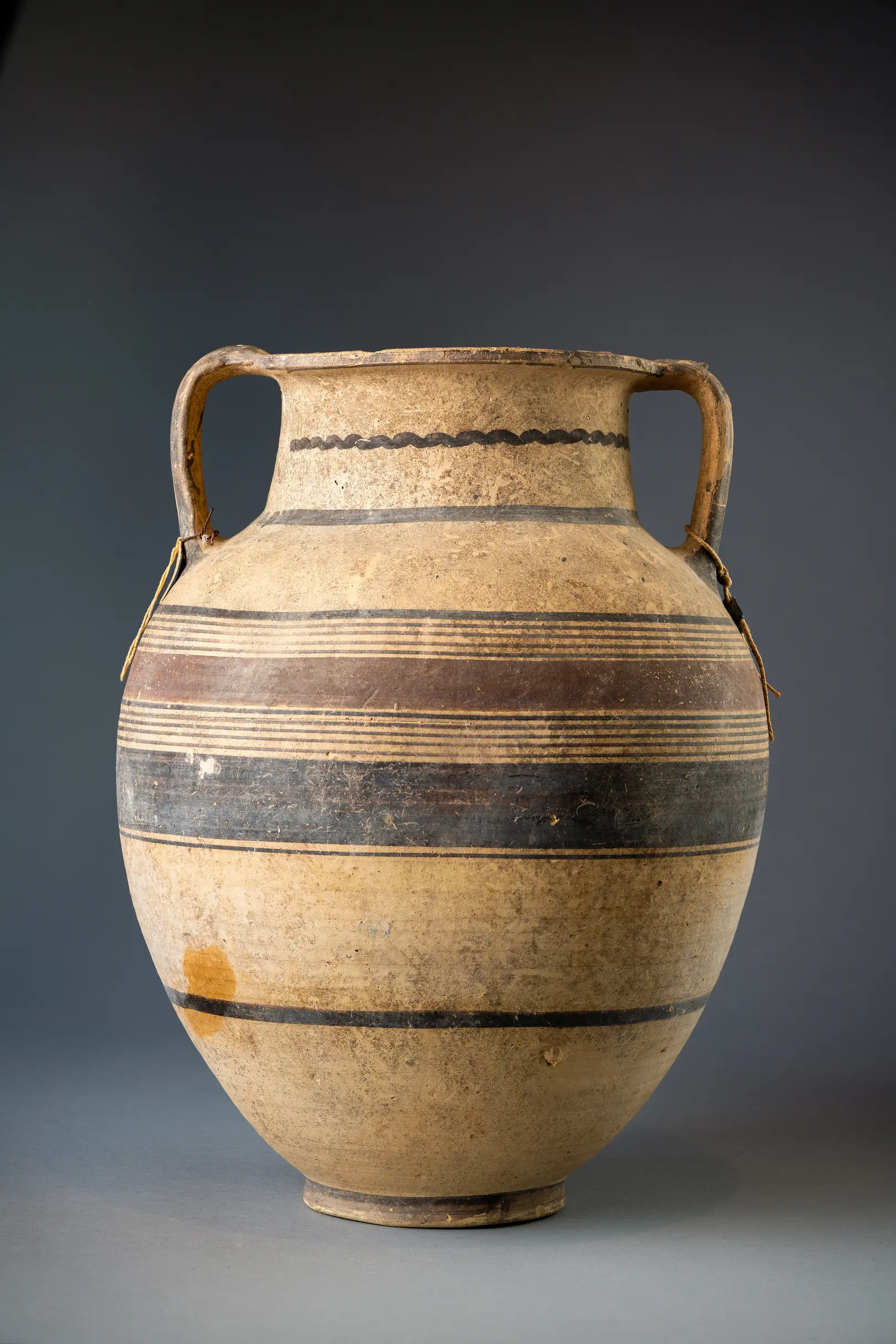 Wavy LinesA continuous line swinging in rounded curves, incised or painted on Cypriot pottery from Early Bronze Age Red Polished to Cypro-Archaic amphorae.Early Bronze AgeMiddle Bronze AgeLate Bronze AgeCypro-GeometricCypro-Archaic
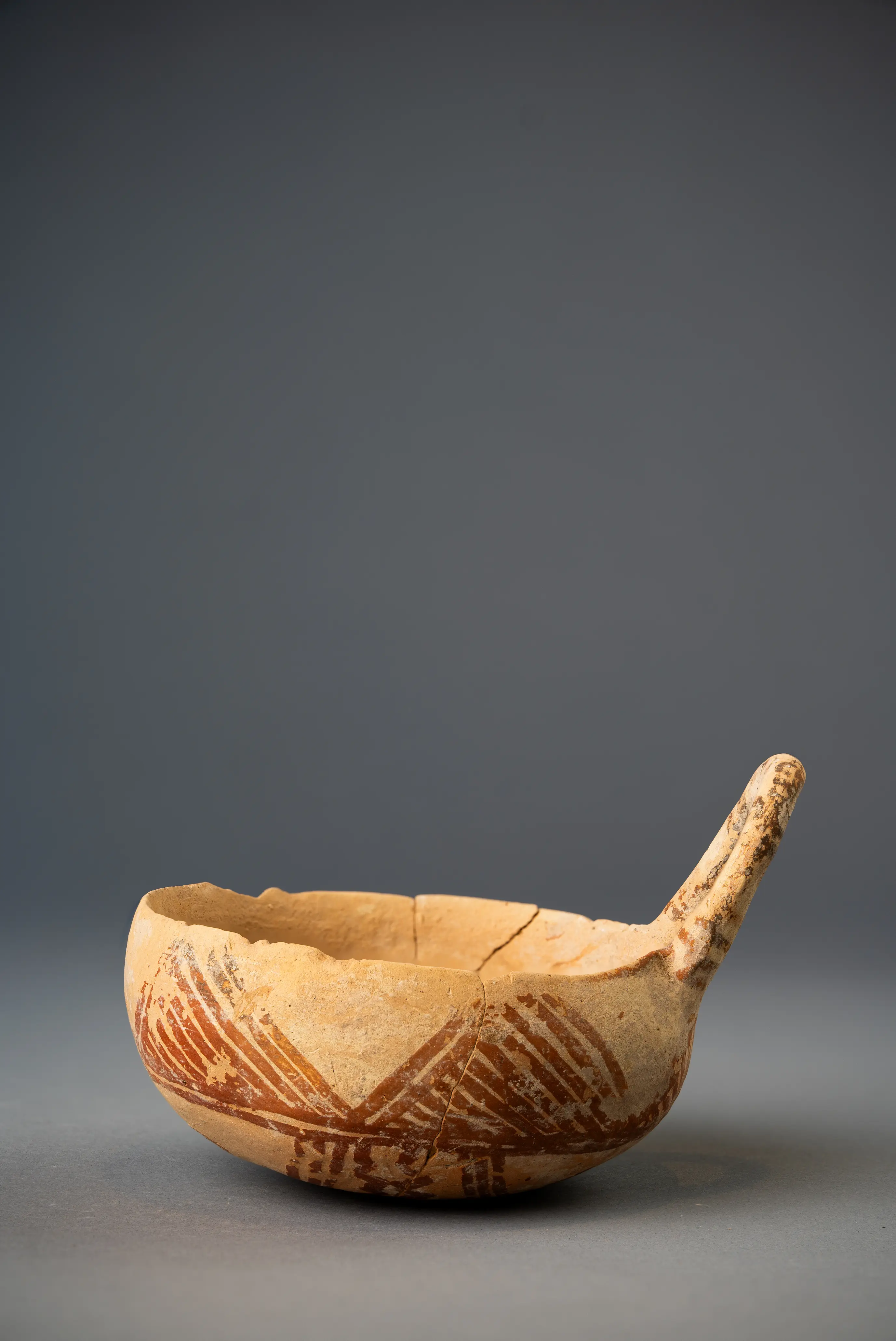 Zig-ZagsA continuous line changing direction at sharp angles, incised or painted on Cypriot pottery from Early Bronze Age Red Polished to Cypro-Archaic handles.Early Bronze AgeMiddle Bronze AgeLate Bronze AgeCypro-GeometricCypro-Archaic
Statues
2 entriesSection overview
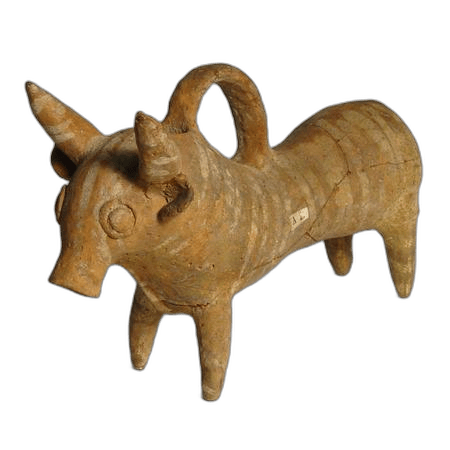 Base Ring Bull VesselsHand-built Base Ring ware pouring vessels in the form of a bull, made in Late Bronze Age Cyprus and found in tombs, settlements and sanctuaries.Late Bronze Age
- Red Polished Zoomorphic Vessels and Animal FigurinesRed Polished ware animal figurines, animal protomes applied to vessels, and animal-shaped askoi of Early and Middle Bronze Age Cyprus, mostly from tombs.Early Bronze AgeMiddle Bronze Age
Tools and Technologies
2 entriesSection overview
- Pottery Kilns and Firing in Ancient CyprusHow Cypriot potters fired their wares, mostly in open fires and pits until the Late Bronze Age, when the first kilns and the potter's wheel appear.ChalcolithicEarly Bronze AgeMiddle Bronze AgeLate Bronze Age
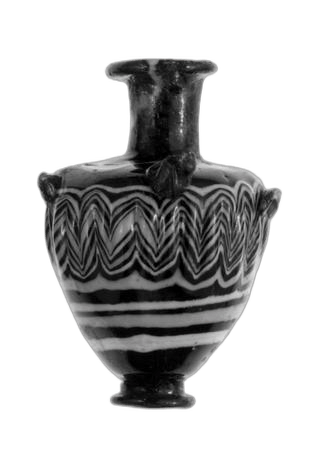 Tools and Technologies of Ancient CyprusSectionThe crafts and technologies of ancient Cyprus, from Neolithic stone and bone toolkits through copper metallurgy and the potter's wheel to early iron.NeolithicChalcolithicEarly Bronze AgeMiddle Bronze AgeLate Bronze AgeCypro-Geometric
Cultures
4 entriesSection overview
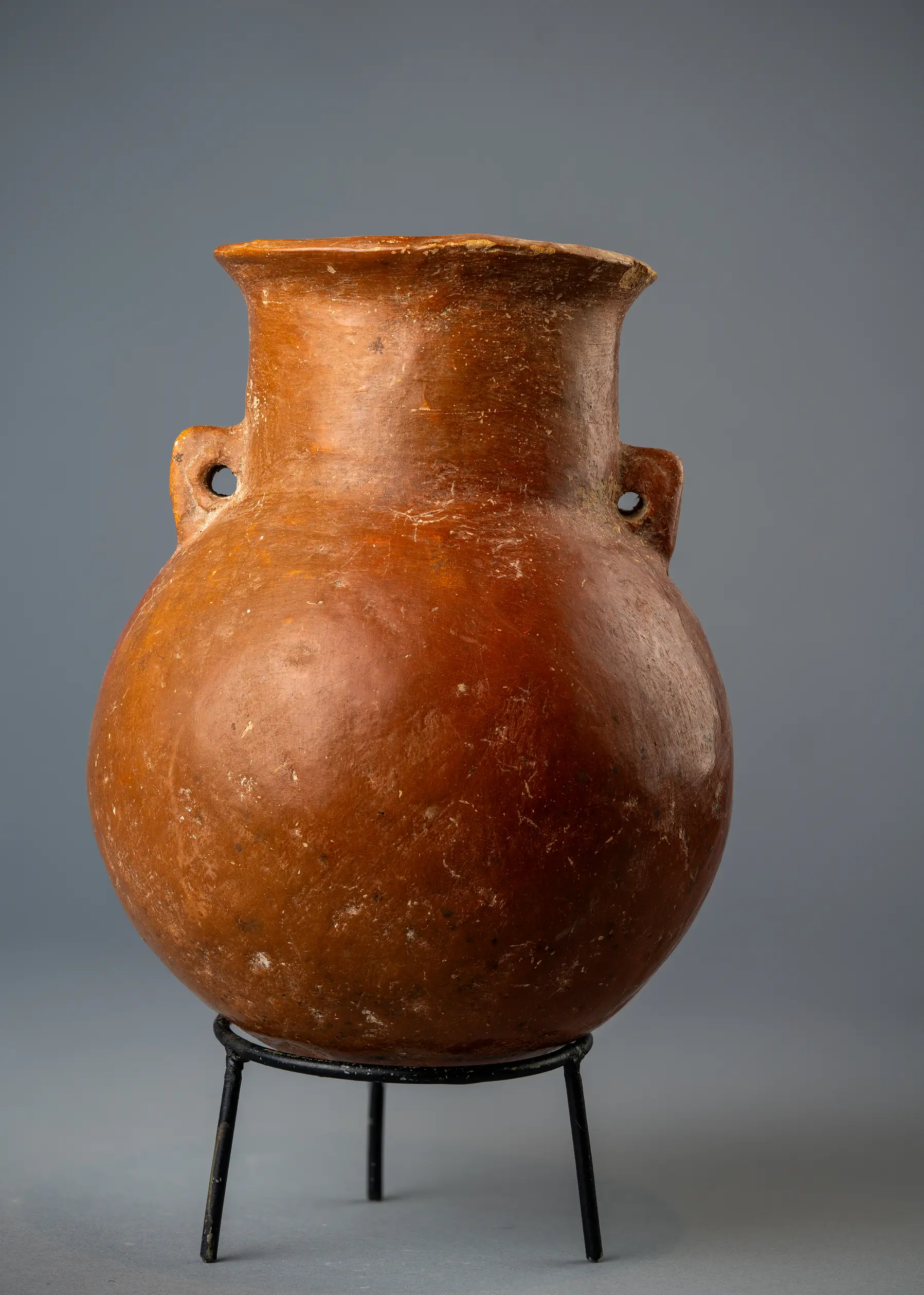 The MinoansThe palatial Bronze Age civilization of Crete, which took Cypriot copper and passed writing to Cyprus in the early Late Bronze Age.Early Bronze AgeMiddle Bronze AgeLate Bronze Age
- The Mycenaeans and CyprusThe palatial Late Bronze Age societies of mainland Greece, whose pottery flooded Cypriot coastal towns in the 14th and 13th centuries BCE.Late Bronze Age
- The PhilistinesThe 12th-century BCE newcomers to the southern Levantine coast, whose Aegean-style pottery, hearths and houses derive most directly from Cyprus.Late Bronze Age
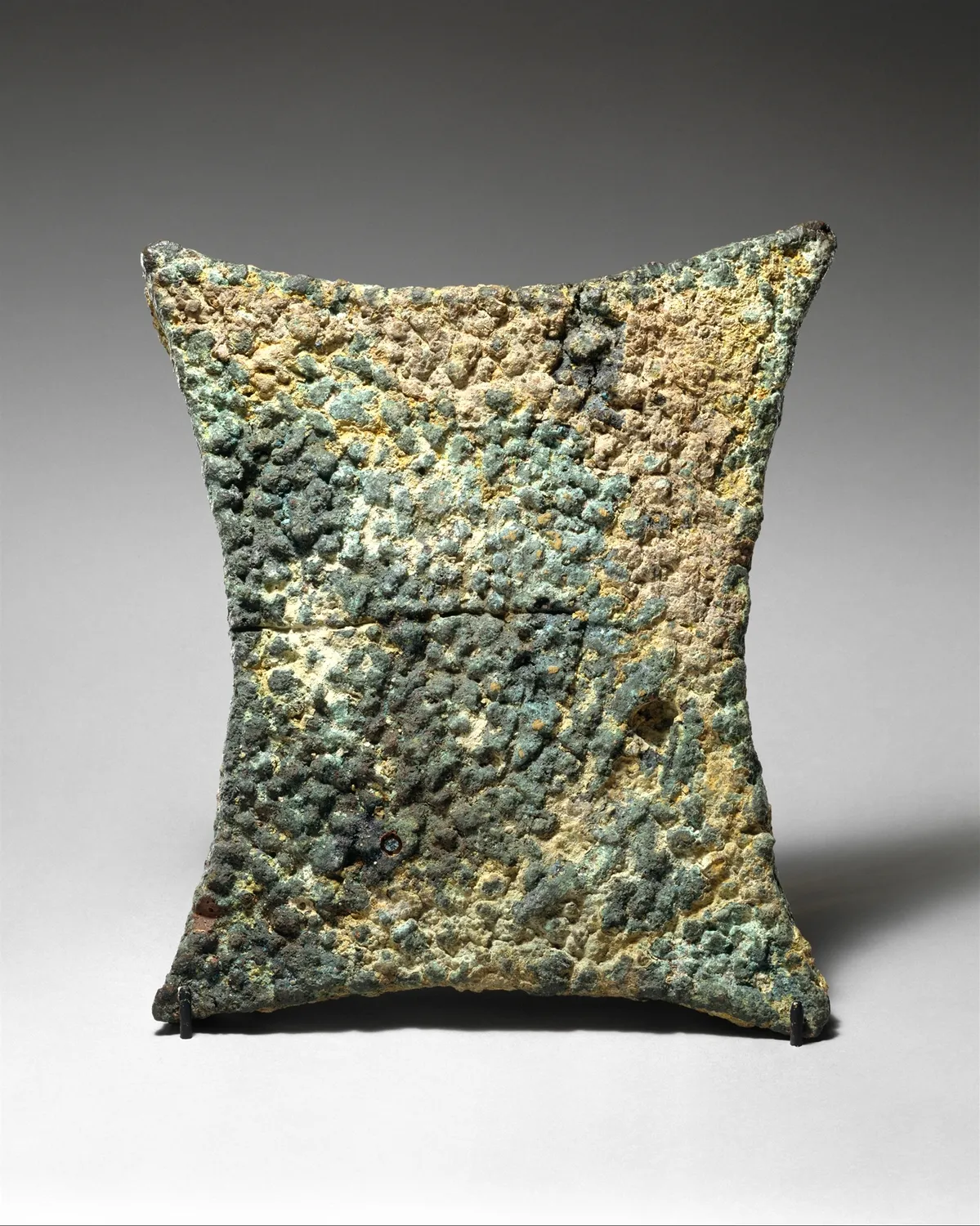 Ugarit and the LevantThe Syrian port kingdom of Ugarit and the wider Levantine coast, Cyprus's closest Bronze Age trading partners across the water.Middle Bronze AgeLate Bronze AgeCypro-Geometric
Mortuary Practices
1 entrySection overview
Daily Life
3 entriesSection overview
 Food and Diet in Ancient CyprusWhat Cypriots grew, herded, hunted, cooked and drank from the first Neolithic villages to the end of the Cypro-Archaic period.NeolithicChalcolithicEarly Bronze AgeMiddle Bronze AgeLate Bronze AgeCypro-GeometricCypro-Archaic
 Food Storage in Ancient Cyprus: Pits, Pithoi and StoreroomsHow Cypriots stored grain, oil and wine, from Chalcolithic pits and household jars to the great pithos halls of the Late Bronze Age towns.NeolithicChalcolithicEarly Bronze AgeMiddle Bronze AgeLate Bronze AgeCypro-GeometricCypro-Archaic
 Medicine and Healing in Ancient CyprusDisease, drugs, doctors and healing cults in ancient Cyprus, from Neolithic skeletons to the physician Onasilos of Idalion in the early fifth century BCE.NeolithicLate Bronze AgeCypro-GeometricCypro-ArchaicCypro-Classical
Environment
1 entrySection overview
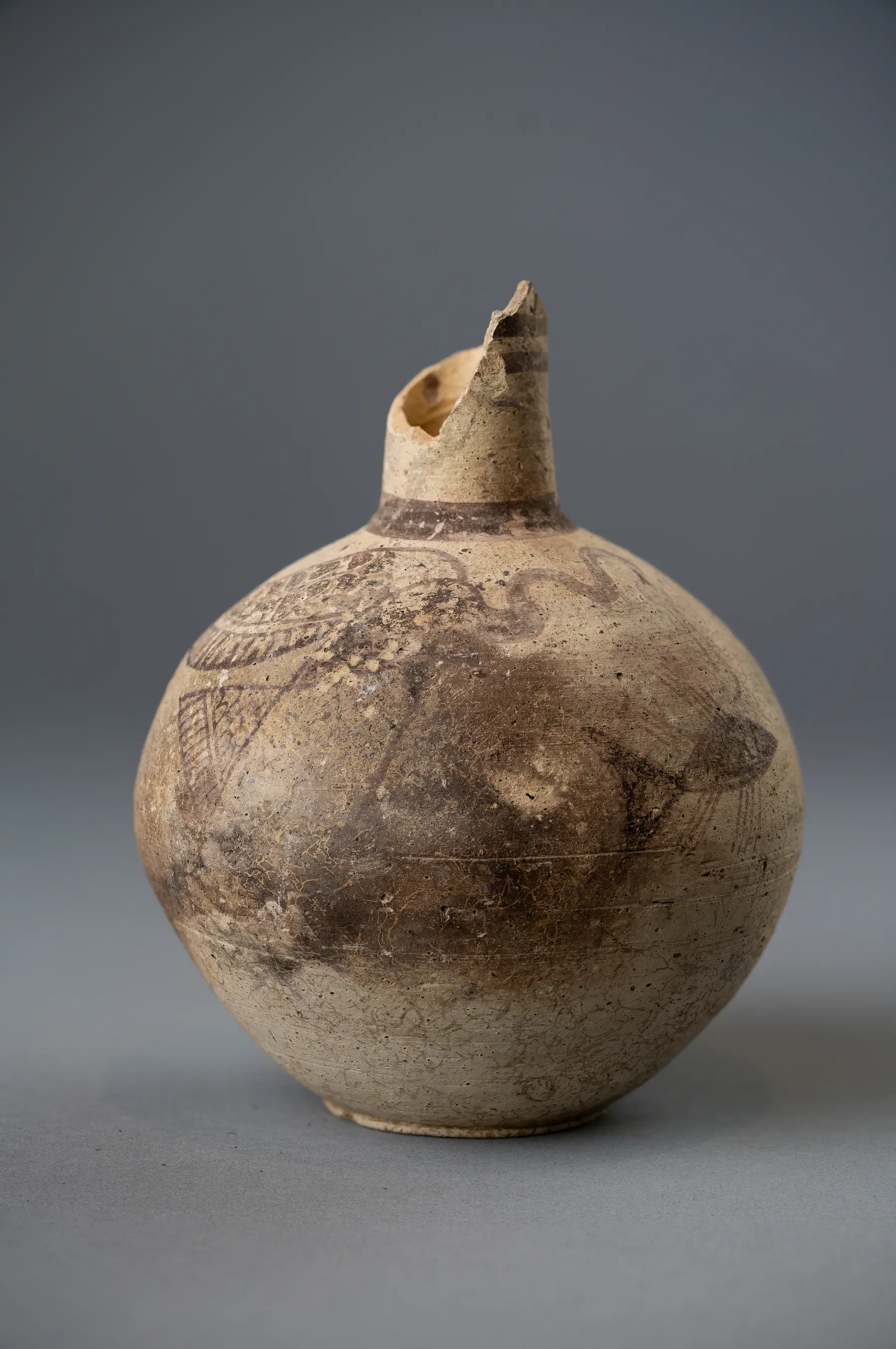
Chronology
6 entriesSection overview
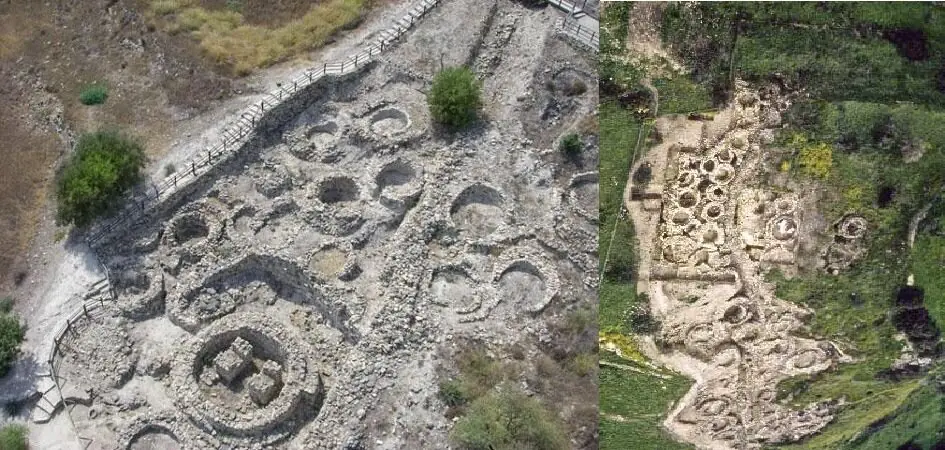 Neolithic CyprusThe period c. 9000–3900 BCE in which farmers from the mainland settled Cyprus, built villages of circular houses, and later adopted pottery.Neolithic
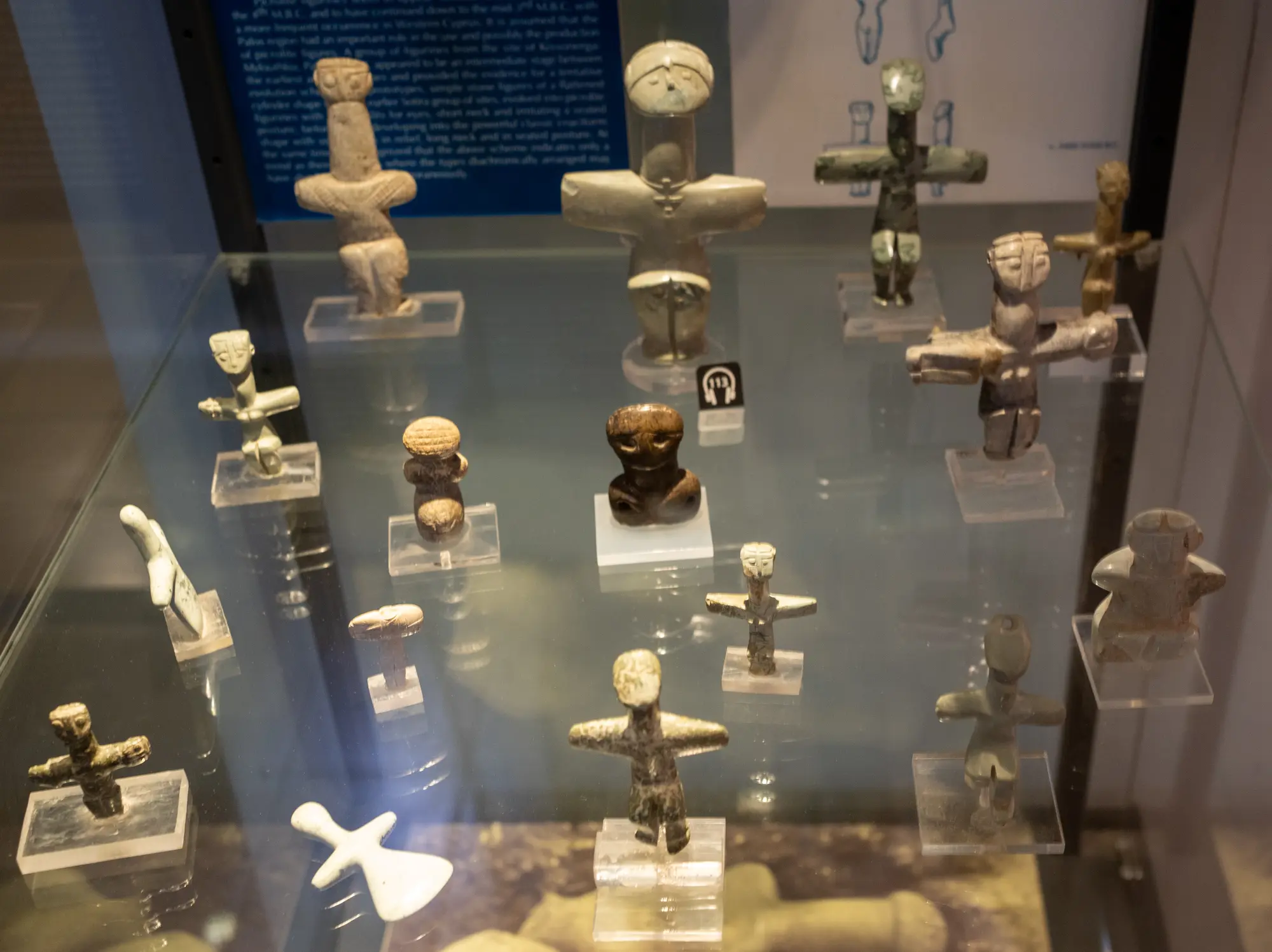 Chalcolithic CyprusThe period c. 3900–2500 BCE of circular villages, Red-on-White pottery, picrolite cruciform figures and the island's first small-scale copper working.Chalcolithic
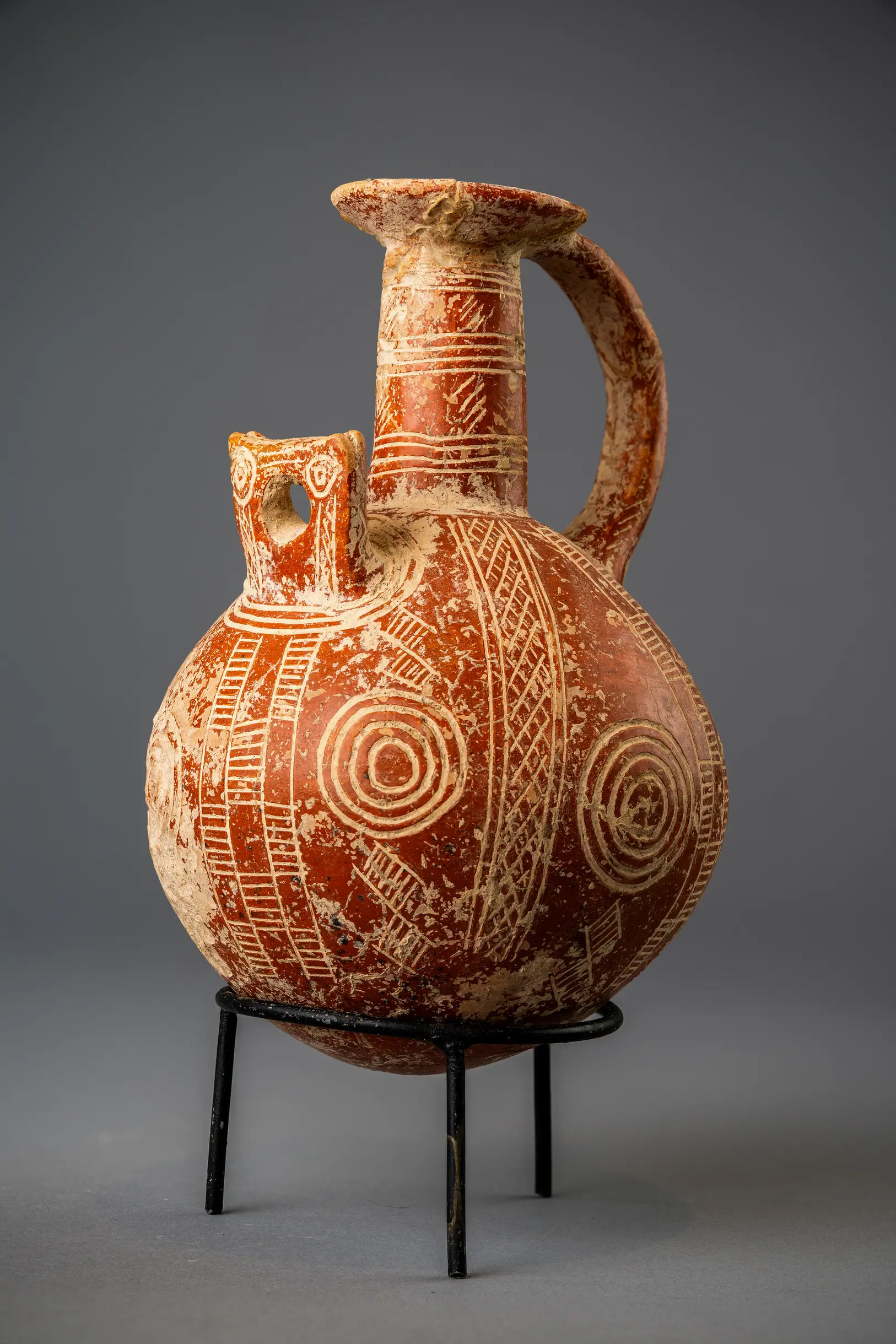 Early Bronze Age CyprusThe period c. 2500–1950 BCE, from the Philia phase through Early Cypriot I–III, of rectilinear villages, Red Polished pottery and chamber-tomb cemeteries.Early Bronze Age
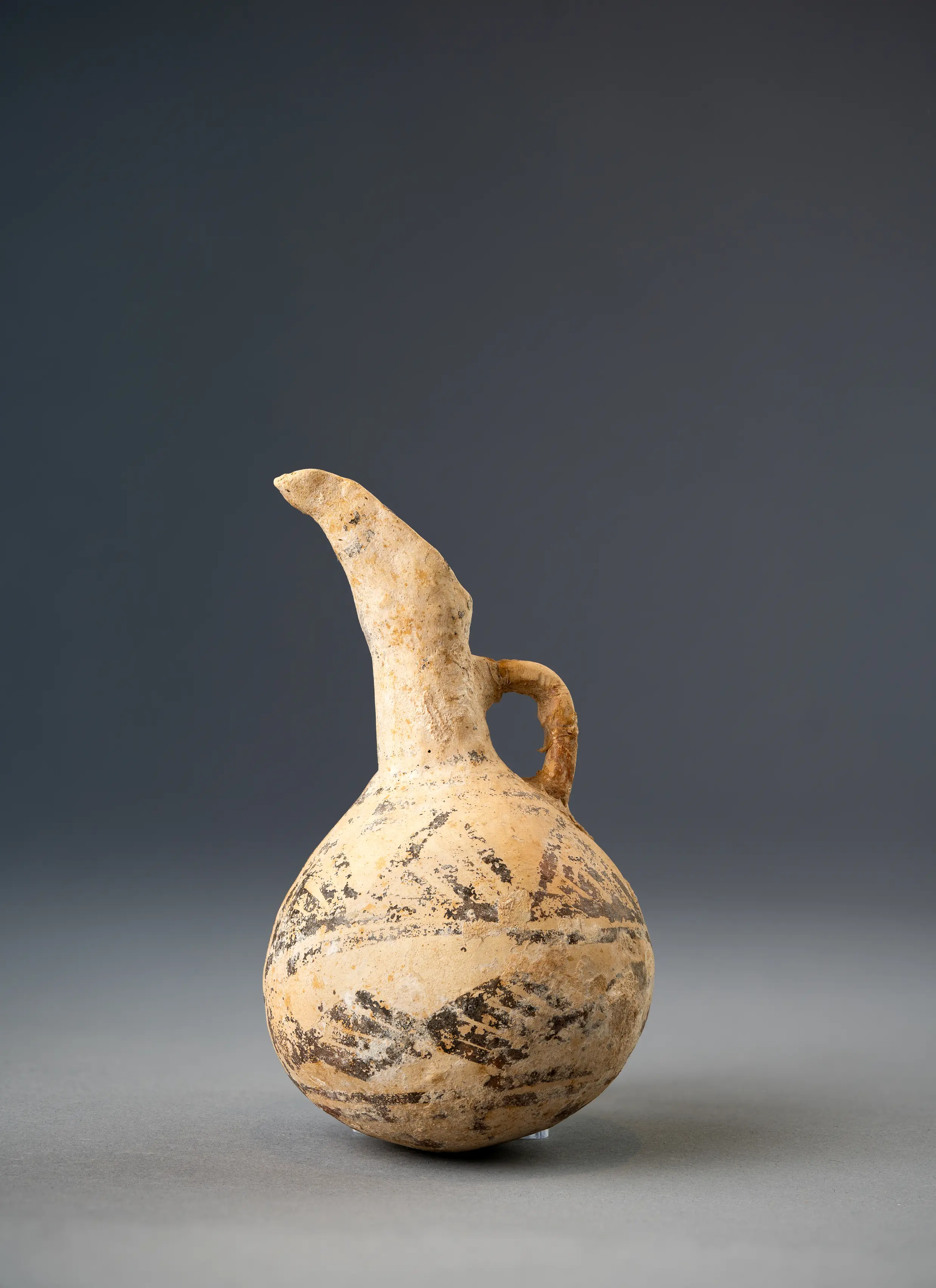 Middle Bronze Age CyprusThe Middle Cypriot period, c. 1950–1650 BCE, of multi-roomed village houses, White Painted pottery, growing copper production and the first overseas trade.Middle Bronze Age
- Late Bronze Age CyprusThe Late Cypriot period, c. 1650–1050 BCE, when copper exports made Cyprus an urban, literate trading power before the crisis around 1200 BCE.Late Bronze Age
- Cypro-Archaic CyprusThe age of the Cypriot city-kingdoms, c. 750–475 BCE, under Assyrian, Egyptian and Persian overlordship, with rural sanctuaries and regional pottery styles.Cypro-Archaic