
Types of Ware
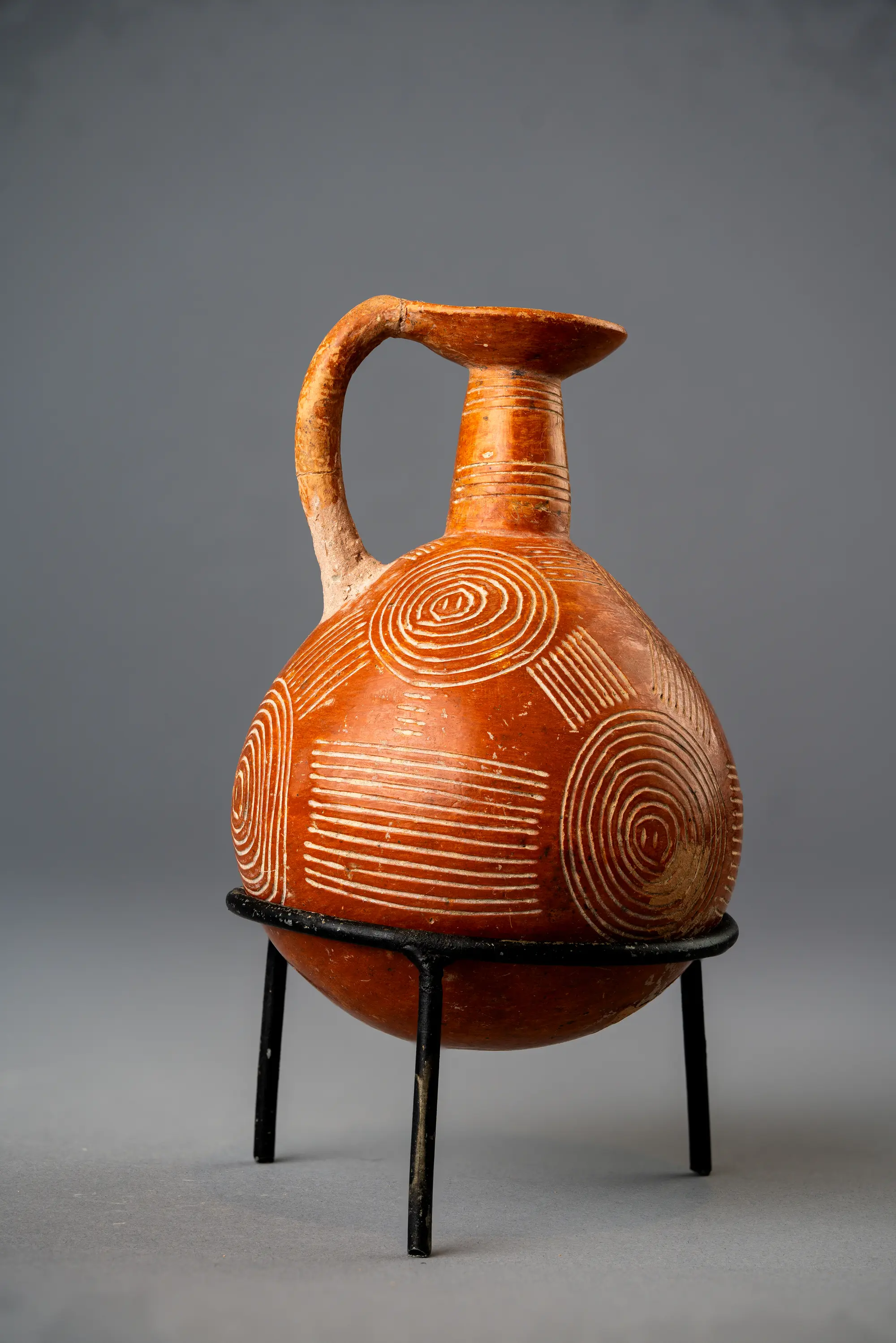
A ware is a family of pots that share a clay, a surface finish and a way of decorating. This section describes the main Cypriot wares from the Neolithic to the Cypro-Archaic period, how archaeologists came to name them, and where each one sits in time.
Cypriot archaeologists sort pottery by ware first and by shape second. A ware is a class of vessels that look and feel alike because they were made the same way: similar clay, the same surface treatment, the same approach to decoration. Robert Merrillees, who set out the principles of the system in 1991, pointed out that nobody knows how the ancient potters named their own products, so the modern ware names are "titles of academic convenience" [1, p. 238]. Nearly all of them describe the surface: Red Polished, White Painted, Black Slip, Bichrome, Monochrome, White Slip. Base Ring is named after the ring foot that most of its jugs and bowls carry, though Merrillees stressed that the foot is only one of several features that together identify the ware [1, p. 238]. The Red Polished jug at the top of this page shows why the surface matters: the red slip, the burnish and the incised circles are what place it, long before anyone measures its shape.
How the system was built
The scheme is older than scientific archaeology on the island. Thomas Sandwith, British vice-consul at Larnaca, read a paper to the Society of Antiquaries in London in May 1871 that sorted pottery from tombs by colour, decoration and shape and separated the Bronze Age wares from the Iron Age ones [2, pp. 232-233]. John Myres and Max Ohnefalsch-Richter's catalogue of the Cyprus Museum (1899) listed the Bronze Age wares in nearly Sandwith's order, beginning with Red Polished and running through Black Slip, Base Ring and White Slip [2, p. 232]. Einar Gjerstad kept these names in his 1926 thesis, Studies on Prehistoric Cyprus, because "nothing is so meaningless and confusing as a continual changing of pottery names" [1, p. 237].
The Swedish Cyprus Expedition of 1927 to 1931, directed by Gjerstad, then gave Cypriot archaeology its periods, its terminology and its categories of description [3, p. xxix]. In its final volumes J. R. Stewart classified the Early Bronze Age pottery and Paul Åström the Middle and Late Bronze Age [4, p. 45; 1, p. 238]. Both worked mainly from tomb vessels: the Early and Middle Bronze Age typologies rest chiefly on the north-coast cemeteries of Lapithos and Bellapais-Vounous, and the Base Ring typology on tomb finds in 95 per cent of cases [4, p. 45; 5, p. 119]. Gjerstad classified the Iron Age himself in 1948 [3, p. xxix].
Why the names confuse
Three habits of the Swedish system trip up newcomers. The first is the Roman numerals. Stewart admitted that each Red Polished class contained several fabrics, but he arranged his corpus by shape and date, so Red Polished I, II and III follow Early Cypriot I, II and III rather than any measurable technical difference; the long-lived hemispherical knob-lug bowl ended up as Red Polished II although most examples are technically Red Polished III or IV [1, p. 239]. Black Slip II and III are technically the same as Black Slip IV and V and were separated only because the first pair comes from Middle Cypriot deposits and the second from Late Cypriot ones [1, p. 239]. Sarah Vaughan made the same complaint about Base Ring: the labels Proto, I and II imply a straight line of development that stratified settlement deposits do not support, and excavators regularly find Base Ring I shapes carrying the white paint supposed to mark Base Ring II [5, p. 119].
The second habit is the reuse of names. Gjerstad's Iron Age wares carry the same names as Middle and Late Cypriot ones (White Painted, Bichrome, Black Slip, Plain White) although the vessels are completely different [3, p. xxix]. He also numbered them on one scale in which the numeral stands for the period. White Painted and Bichrome run from I to VII; a ware that begins later takes its own number with the period number in brackets, so Black-on-Red runs from I (III) to V (VII) [3, p. xxix]. That is why a Cypro-Archaic jug with a strainer spout in the Cesnola Collection is catalogued as Black-on-Red II (IV) Ware [6, p. 92]. Stager and Saltz remarked that Gjerstad meant by "ware" above all the surface decoration of a vessel, and that archaeologists used to Near Eastern pottery found this concern with surface at the expense of form a shock [3, pp. xxix-xxx].
The third habit is names that preserve an old theory. Proto-White Painted was called "Cypriote Submycenaean" by H. B. Walters, and by Gjerstad in 1926, before Gjerstad renamed it in 1944 [7, p. 199]. Black-on-Red was long called "Cypro-Phoenician" because its origin was uncertain. Analysis has since shown that it was made on Cyprus from the late tenth century BC and exported to the Levant, and the old term is now regarded as misleading [8, p. 158]; the article on the origins of Black-on-Red ware follows that argument.
Regions and revisions
Later excavations in the south, east and west showed that before the Late Bronze Age regional variety was the norm, and new names such as Red Polished Mottled, Red Polished Punctured and Drab Polished Blue Core were coined for pottery that would not fit the north-coast scheme [4, p. 45]. At Kissonerga-Ammoudhia, the largest western cemetery assemblage, Drab Polished ware appears to be a local western tradition and starts well before the late Middle Bronze Age date first given to it [9]. Some teams, such as Cornell's at Alambra, abandoned the Swedish subdivisions while keeping the broad names [2, p. 233]. Merrillees's view was that the system can absorb new material provided the names describe visible features; he objected to "Apliki Ware" and "Episkopi Ware" because site names say nothing about the pottery [1, p. 238]. The entries below use the broad ware names and give numbered subclasses where they help with dating.
The main wares in order
| Ware | Period | Approximate date | Notes |
|---|---|---|---|
| Combed | Late Neolithic | from c. 4500 BC | Combed wavy bands; upper levels of Khirokitia and Sotira-Teppes |
| Red-on-White | Late Neolithic to Chalcolithic | c. 4600 to 2500 BC | Red paint on a white ground; northern Neolithic sites, then Erimi |
| Red Polished Philia | Philia phase, start of Early Cypriot I | soon after 2500 BC | Stewart's Red Polished I (Philia) |
| Red Polished | Early Cypriot I to Middle Cypriot | c. 2500 to 1600 BC | Red slip, burnished, often incised with lime-filled lines |
| Drab Polished | Early and Middle Cypriot, west | debated | Western tradition, a precursor of Base Ring |
| White Painted (Bronze Age) | end of Early Cypriot III to Middle Cypriot III | c. 2000 to 1600 BC | Linear painted patterns over the whole surface |
| White Slip | Late Cypriot I to II | c. 1600 to early 12th century BC | Thick white slip, painted; the milk bowl |
| Base Ring | Late Cypriot I to II | c. 1600 to early 12th century BC | Thin, hard, dark and metallic; relief decoration |
| Proto-White Painted | Late Cypriot IIIB | 11th century BC | Aegean shapes and motifs; parent of Iron Age White Painted |
| White Painted and Bichrome (Iron Age) | Cypro-Geometric I to Cypro-Classical | c. 1050 to 325 BC | Gjerstad's types I to VII; Bichrome adds red to black |
| Black-on-Red | Cypro-Geometric to Cypro-Classical | from the late 10th century BC | Gjerstad's I (III) to V (VII); formerly 'Cypro-Phoenician' |
The dates follow Karageorghis's surveys for the Neolithic and Chalcolithic wares [10, pp. 27, 32, 39] and for the Bronze Age and early Iron Age ones [6, pp. 27, 33, 36, 39, 53, 78], Iacovou for the end of Proto-White Painted [7, p. 204], Stager and Saltz for Gjerstad's Iron Age scale [3, p. xxix] and Kotsonas for Black-on-Red [8, p. 158]. Each ware has its own entry: Combed, Red-on-White, Red Polished Philia, Red Polished, Drab Polished, White Painted, White Slip, Base Ring, Proto-White Painted, Bichrome and Black-on-Red. For the periods themselves see the chronology section.
The Drakopoulos collection has examples of several of these wares, among them a Neolithic Combed ware bowl fragment, a Middle Bronze Age White Painted III–IV juglet, a White Slip II milk bowl, a Base Ring II jug, a Cypro-Archaic Bichrome IV jug and an Iron Age Black-on-Red juglet. The Metropolitan Museum's Cypro-Archaic I kylix, 74.51.467, is a footed bowl of Bichrome IV Ware with a stylized lotus in a panel on each side, a type Karageorghis describes as typical of Cypro-Archaic I [6, p. 91].
Types
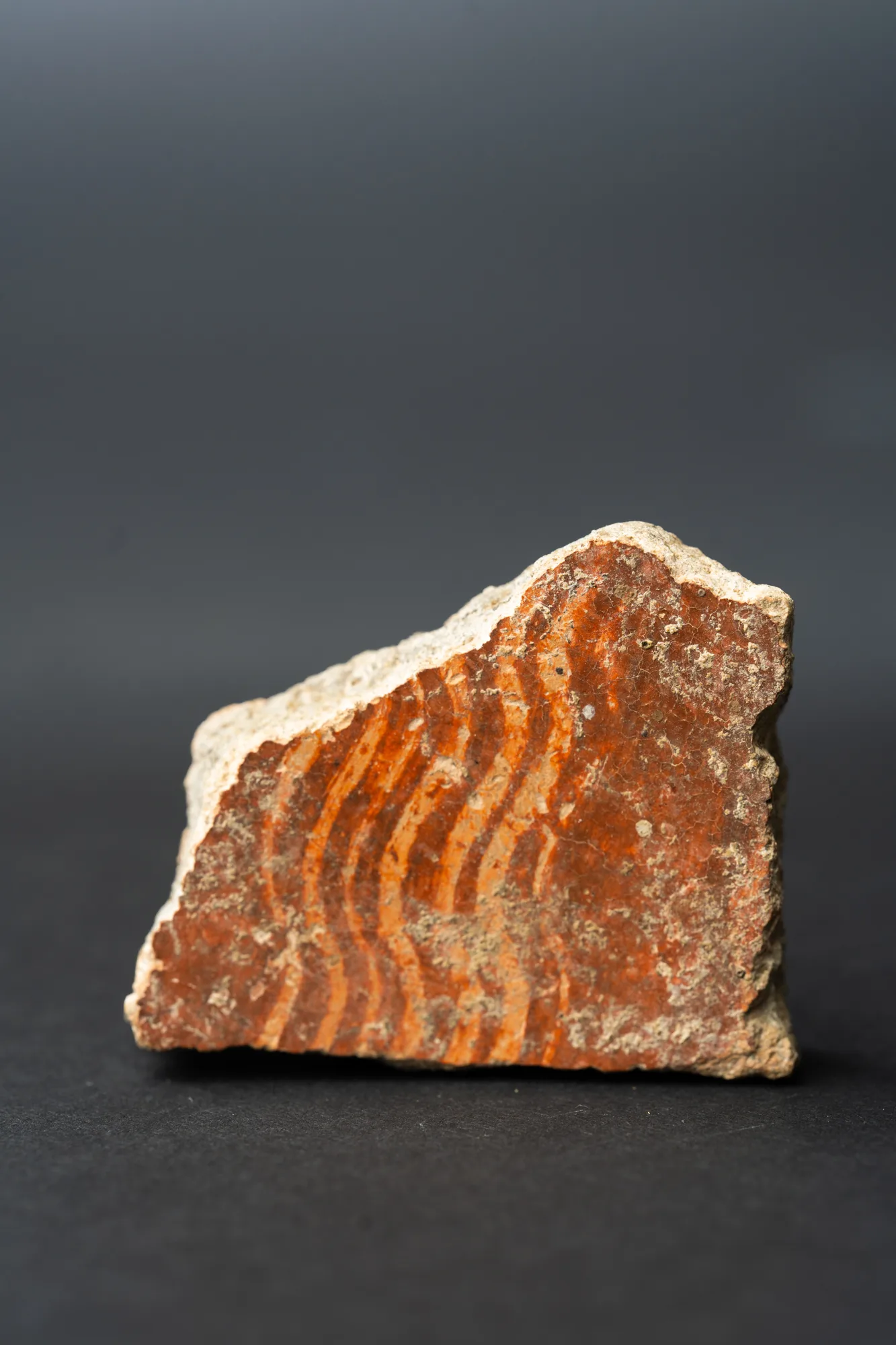
Combed Ware
Combed ware is the signature pottery of the Cypriot Ceramic Neolithic, c. 4500 to 3900 BCE: a red...
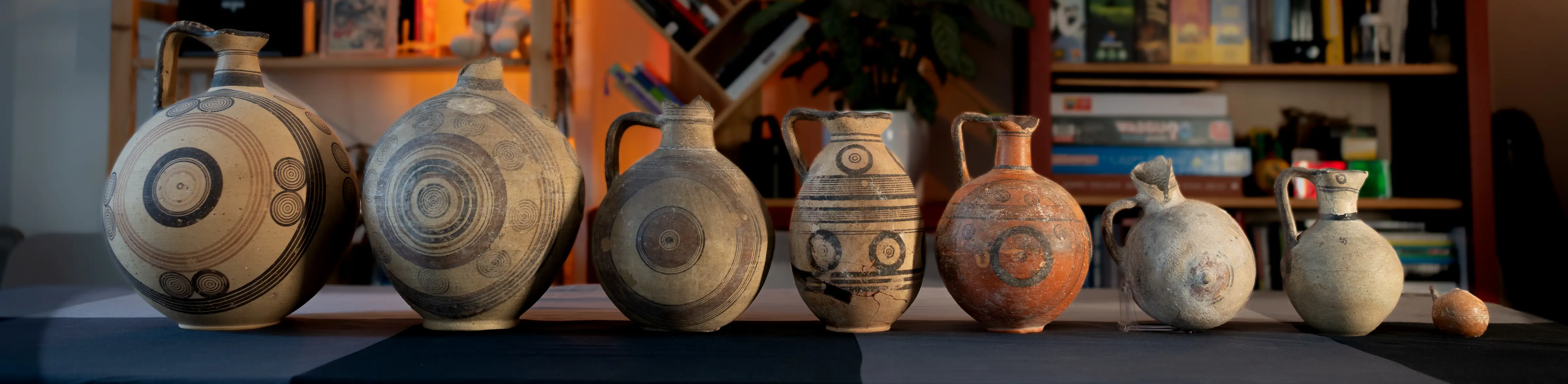
Red-on-White Ware
Red-on-White ware is the painted pottery of Chalcolithic Cyprus, c. 3900 to 2500 BCE: red geometric...
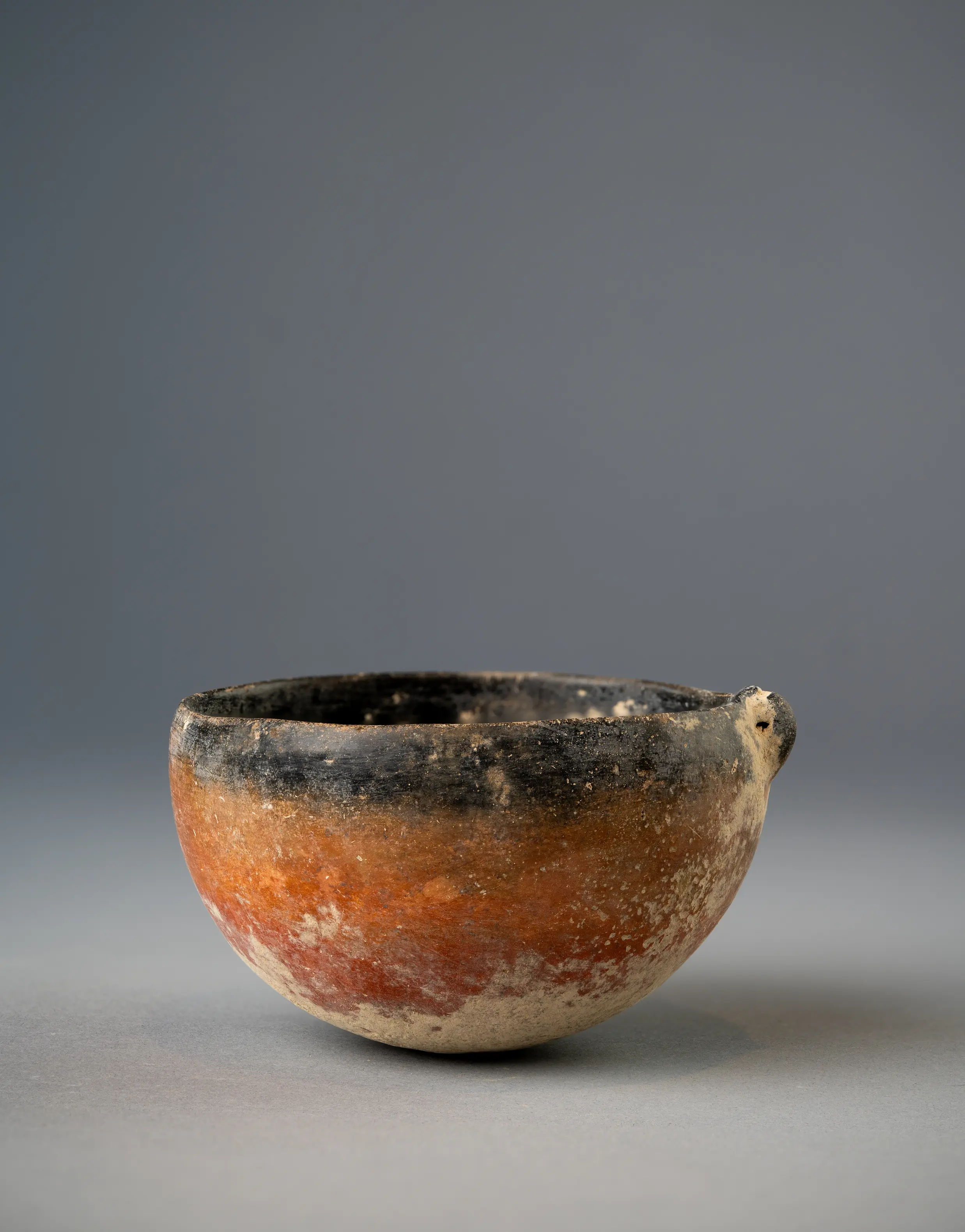
Red Polished Philia Ware
Red Polished Philia ware, the pottery of the Philia facies that opens the Cypriot Bronze Age in the...
Red Polished Ware
Red Polished ware, the handmade, burnished red pottery of Early and Middle Bronze Age Cyprus from...
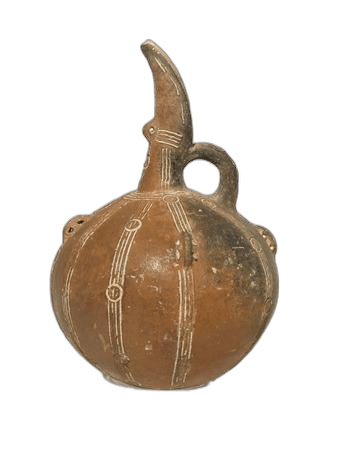
Drab Polished Ware
Drab Polished ware is a distinct ceramic tradition from Bronze Age Cyprus, characterized by its...
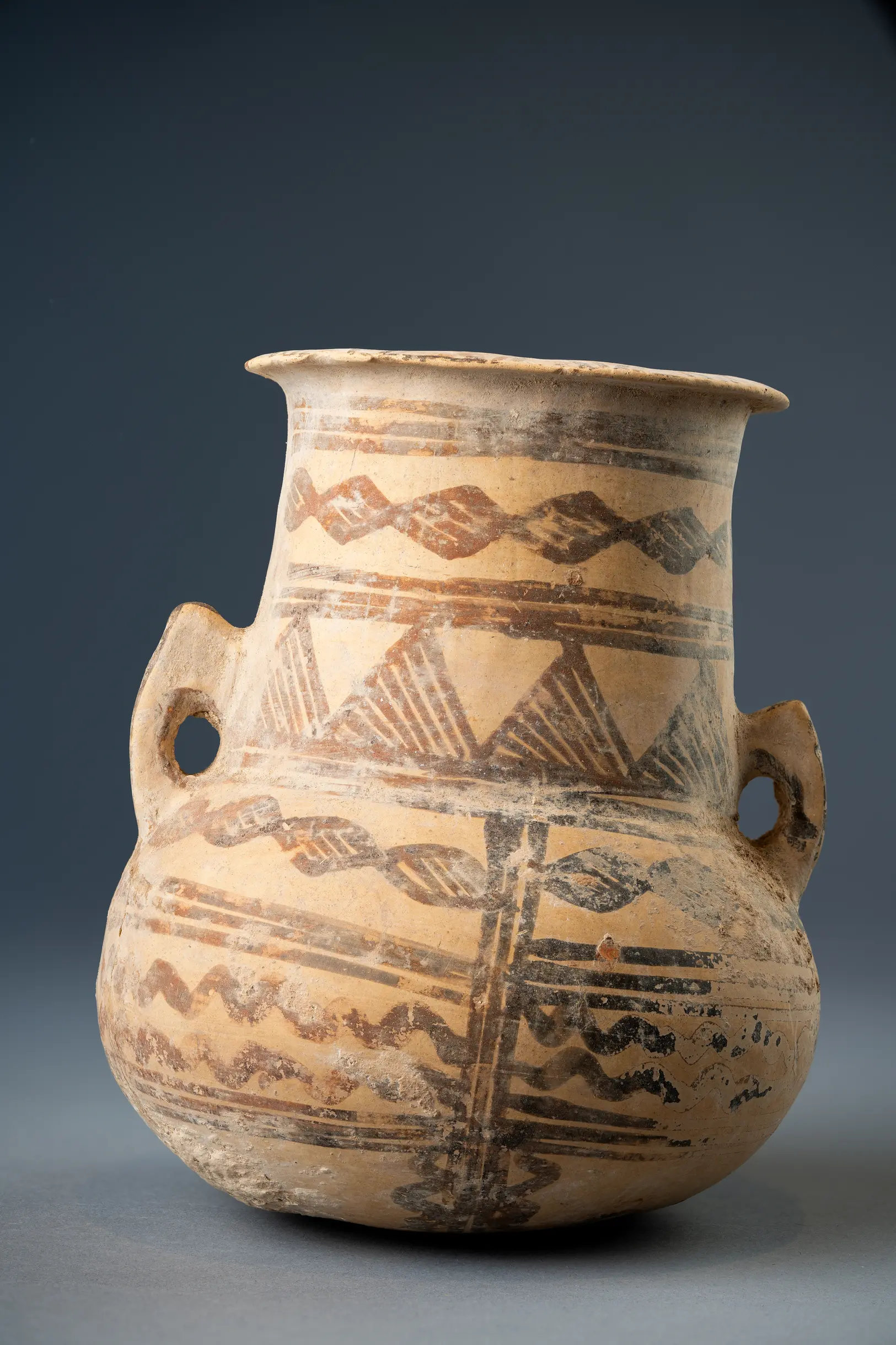
White Painted Ware
White Painted ware, handmade Cypriot pottery with dark matt geometric paint on a pale slip, at its...
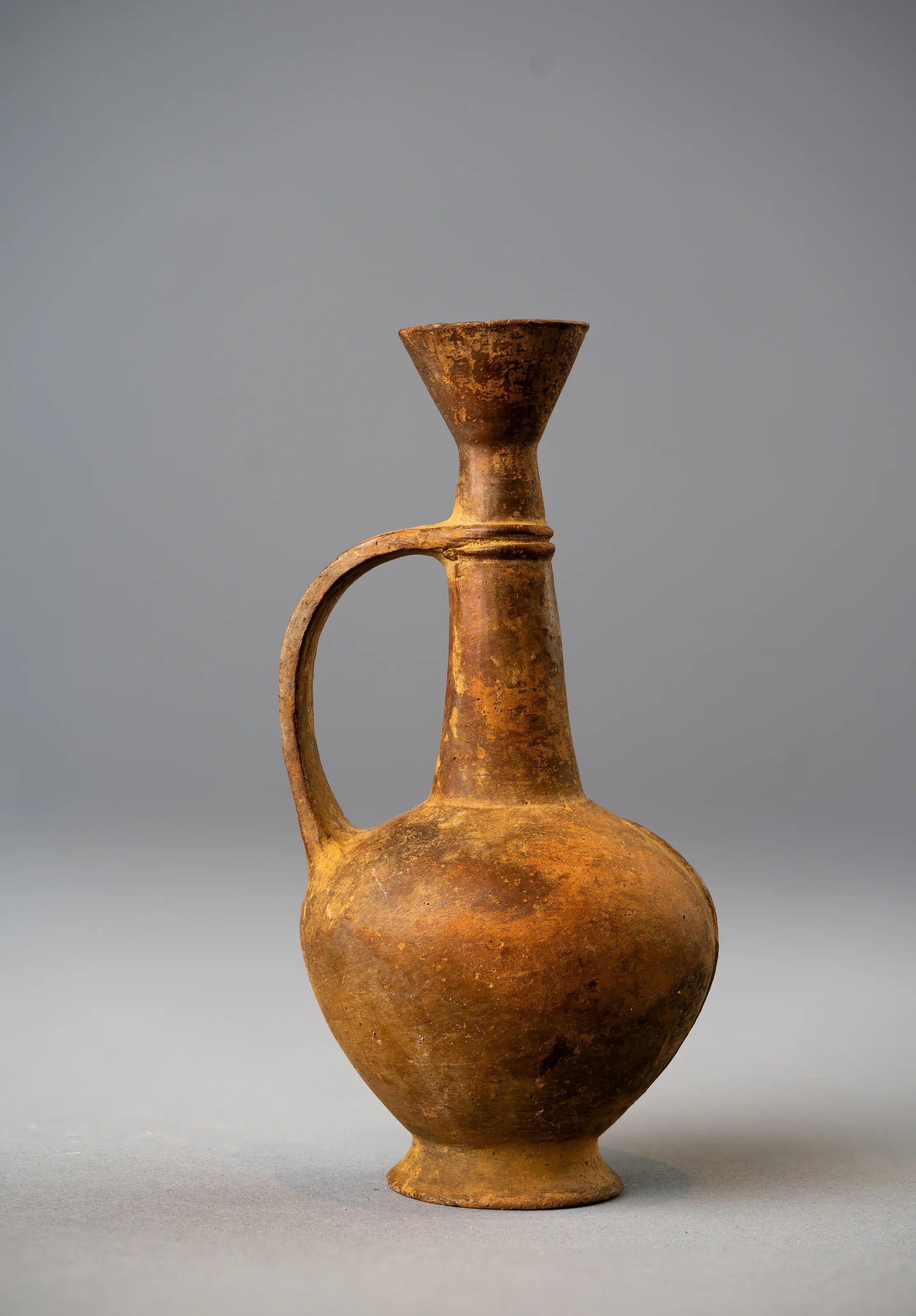
Base Ring Ware
Base Ring ware, thin-walled handmade ware of Late Bronze Age Cyprus (17th to late 13th c. BCE) with...
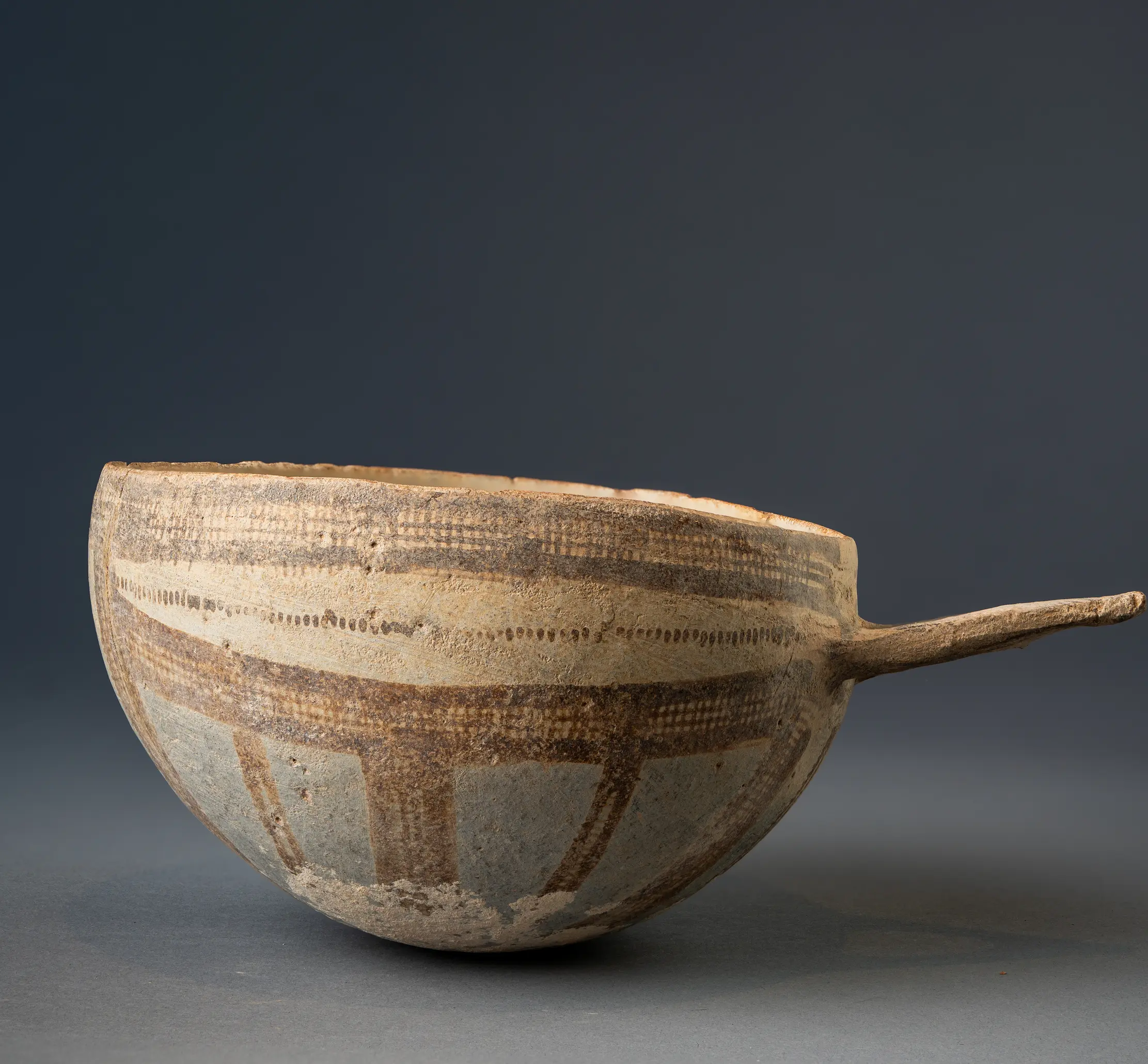
White Slip Ware
White Slip ware, the handmade tableware of Late Bronze Age Cyprus (c. 1650 to early 12th c. BCE):...
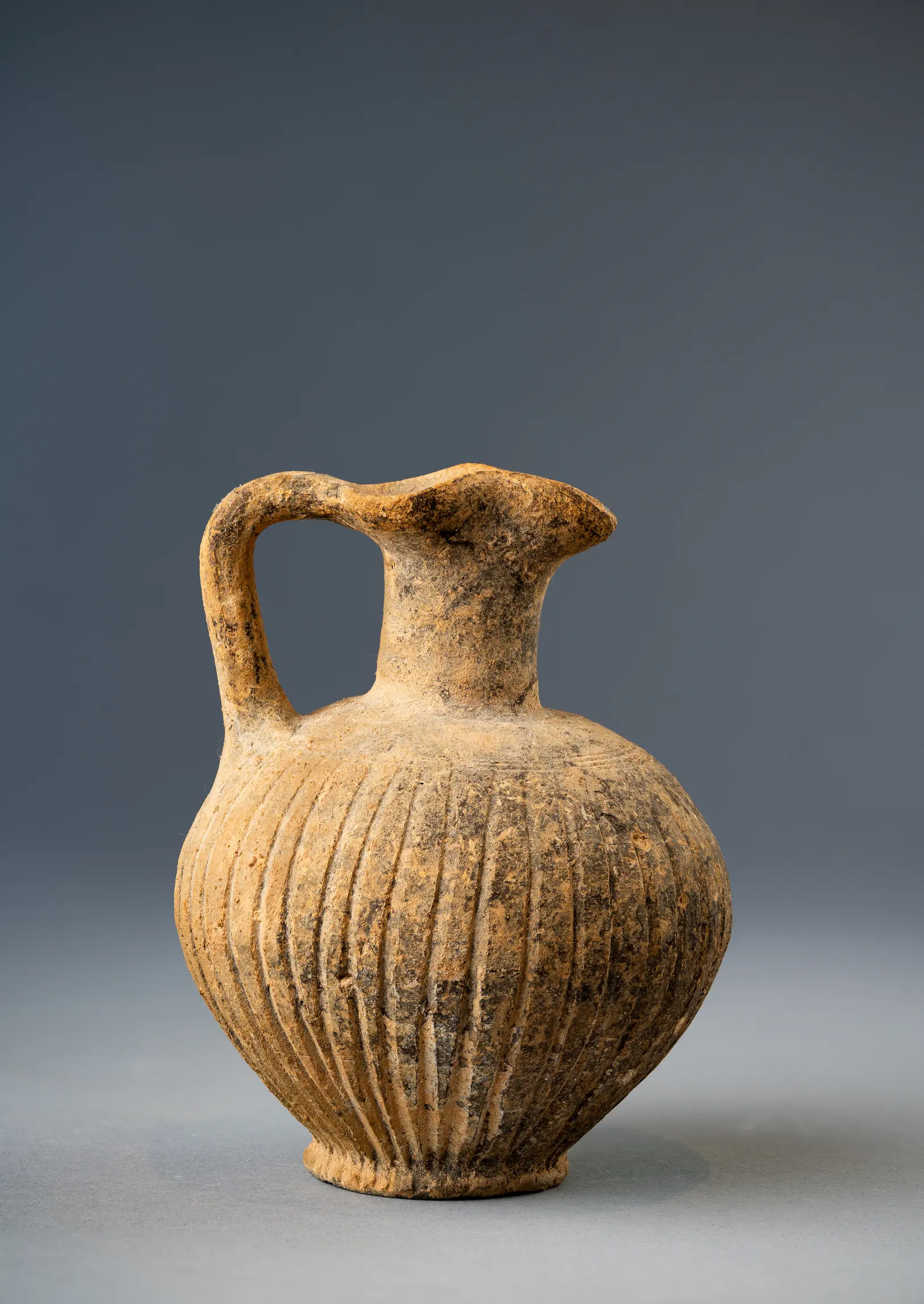
Plain White Ware
Plain White Handmade and Wheelmade wares of Middle and Late Bronze Age Cyprus: fabrics, shapes, the...
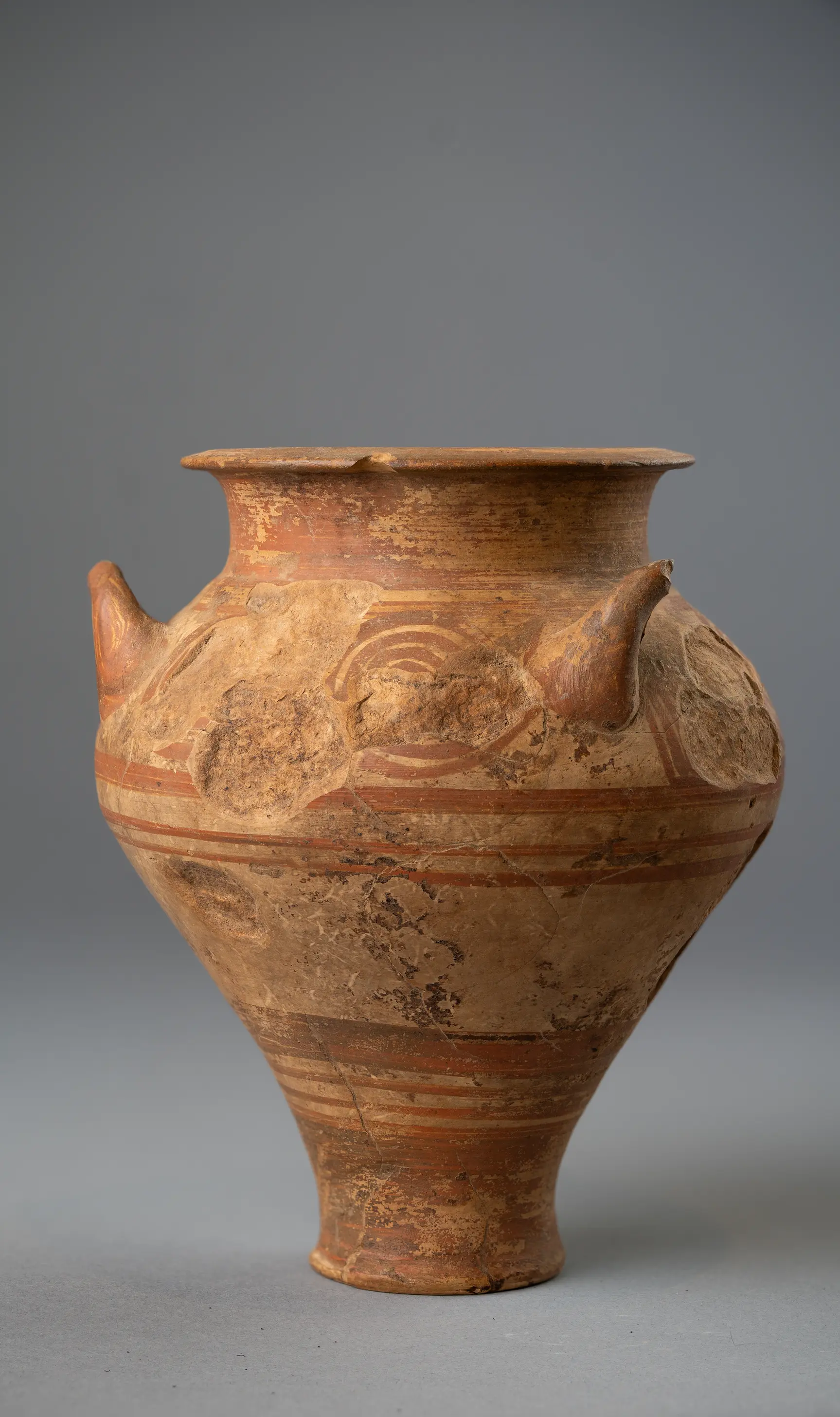
Mycenaean Imports and Local Imitations
Mycenaean pottery reached Late Bronze Age Cyprus by the hundreds, from chariot kraters to perfume...
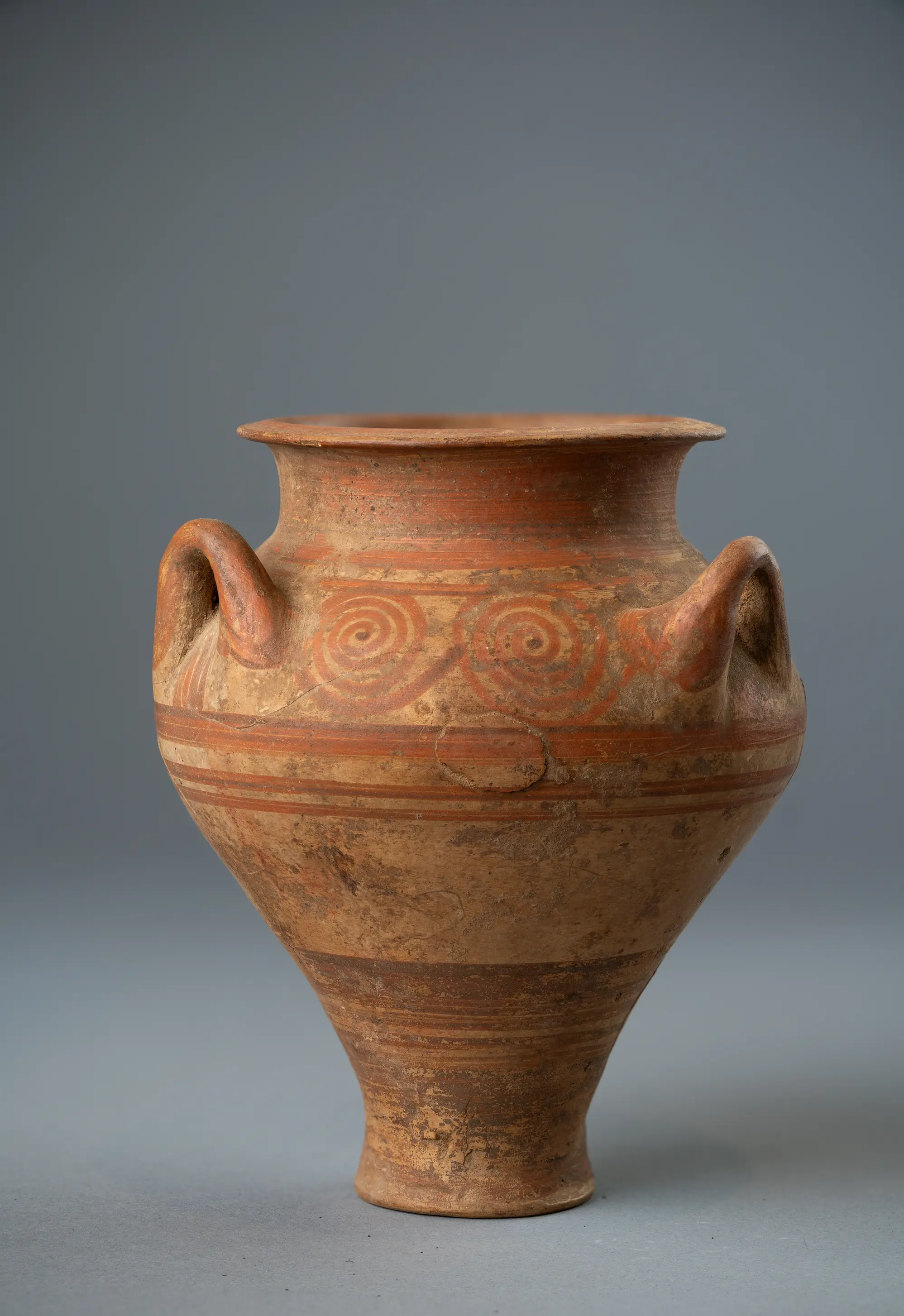
White Painted Wheelmade Ware
White Painted Wheelmade III is the umbrella term for the locally made, matt-painted Aegean-style...
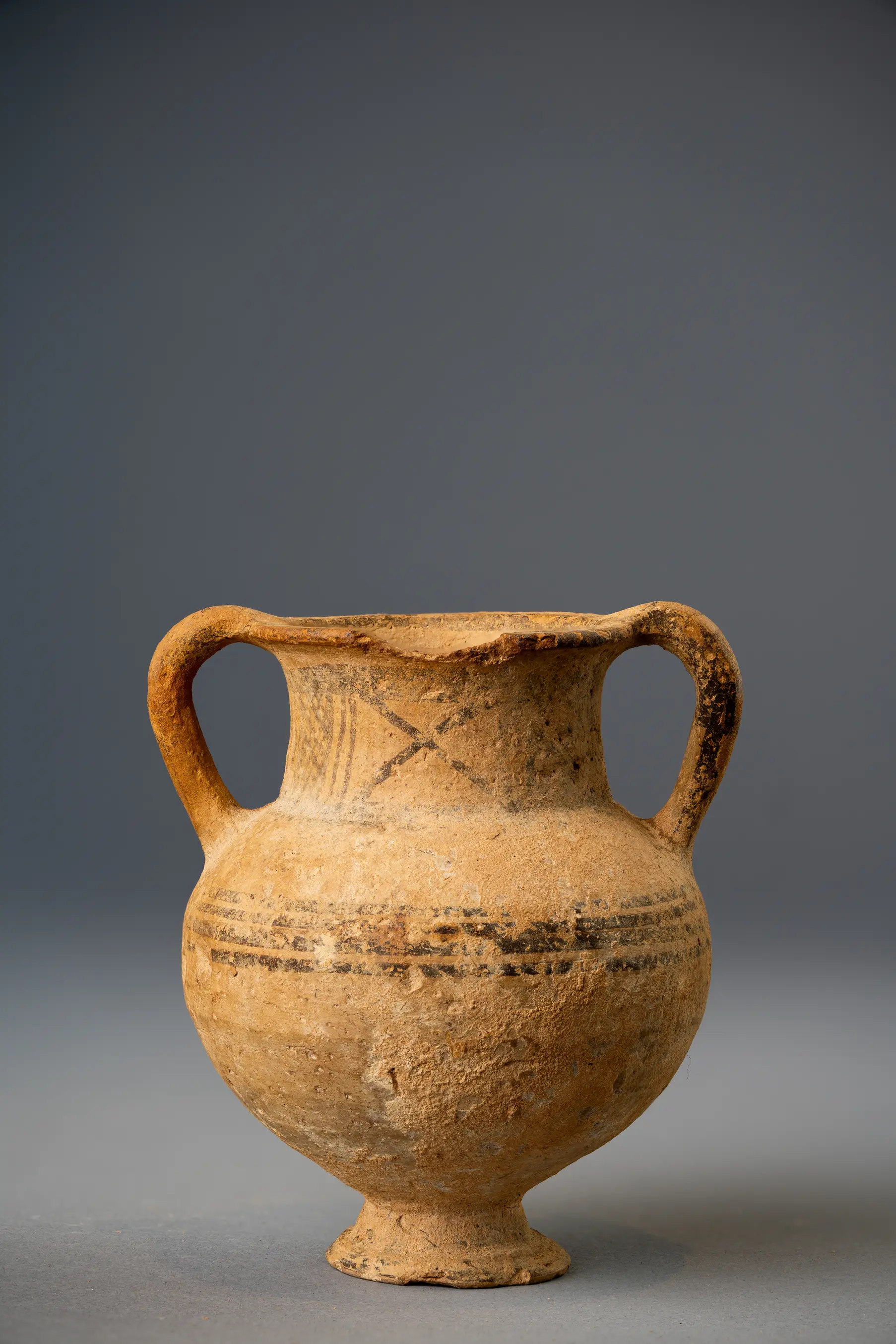
Proto-White Painted Ware
Proto-White Painted ware is the wheelmade painted pottery of Late Cypriot IIIB, c. 1125 to 1050...
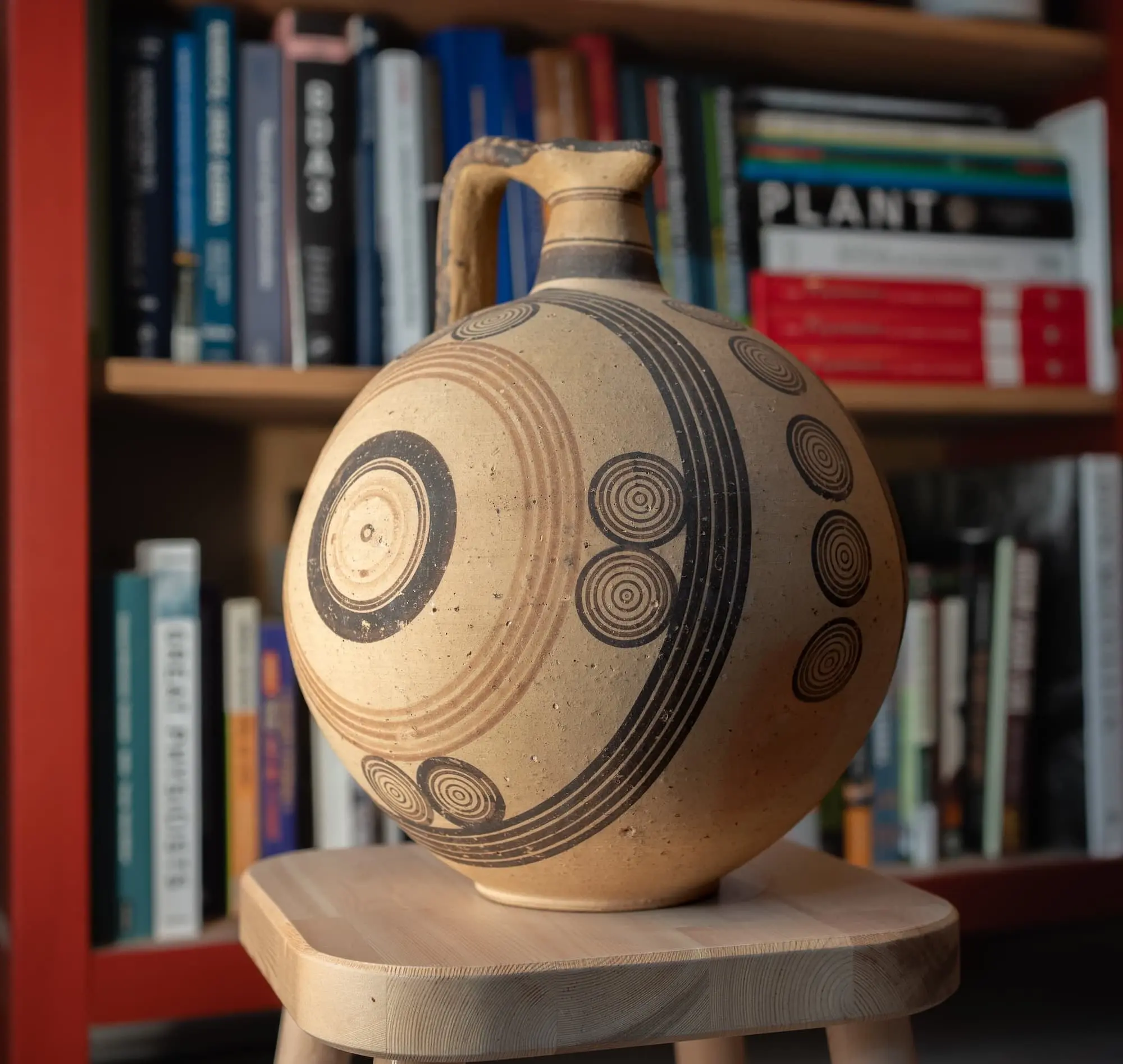
Bichrome Ware
Bichrome ware, Cypriot pottery painted black and red on a pale ground, from a Late Bronze Age...
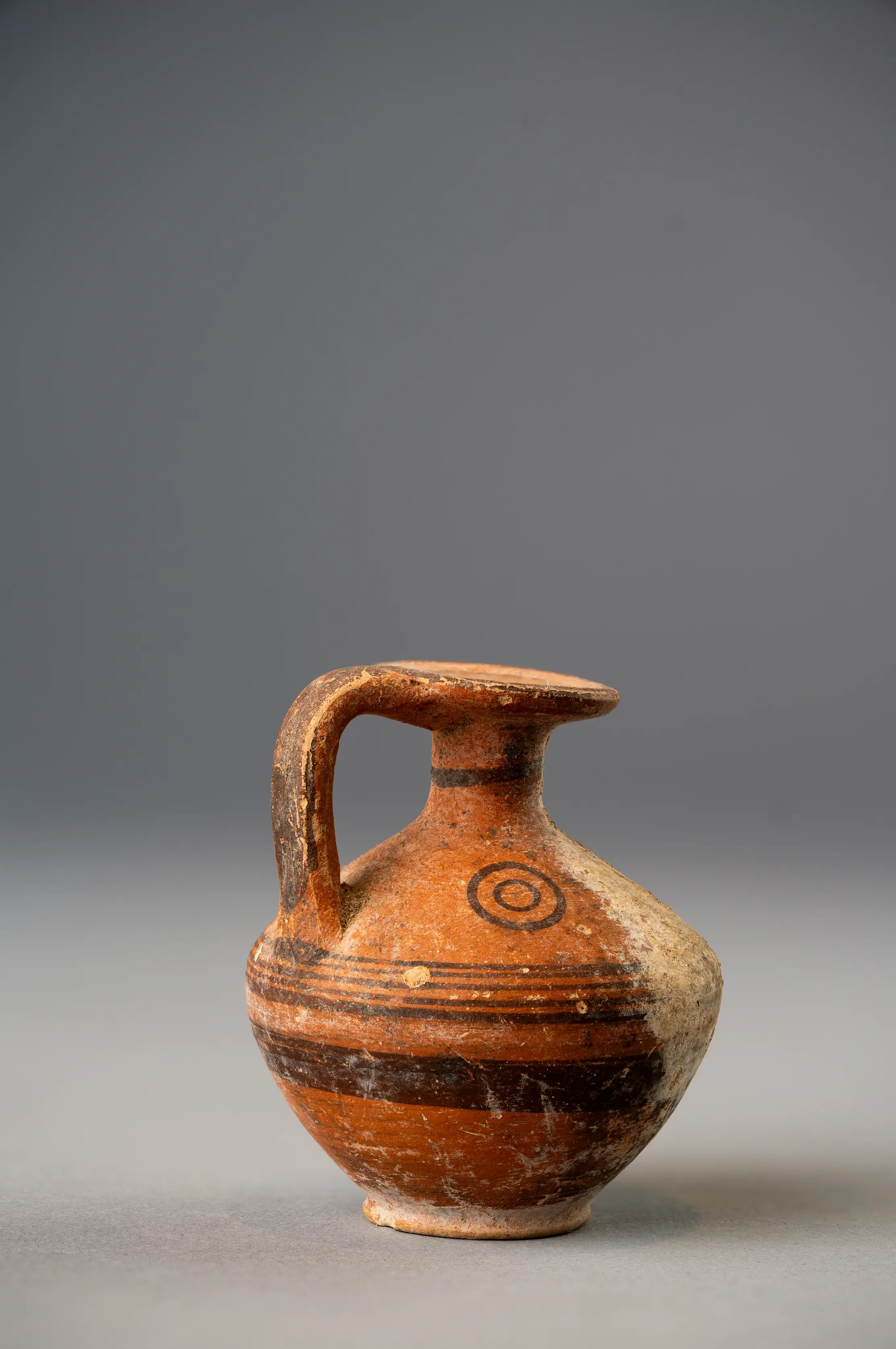
Black-on-Red Ware
Black-on-Red, the wheel-made Cypriot fine ware of c. 900 BCE onward: black lines and circles on...
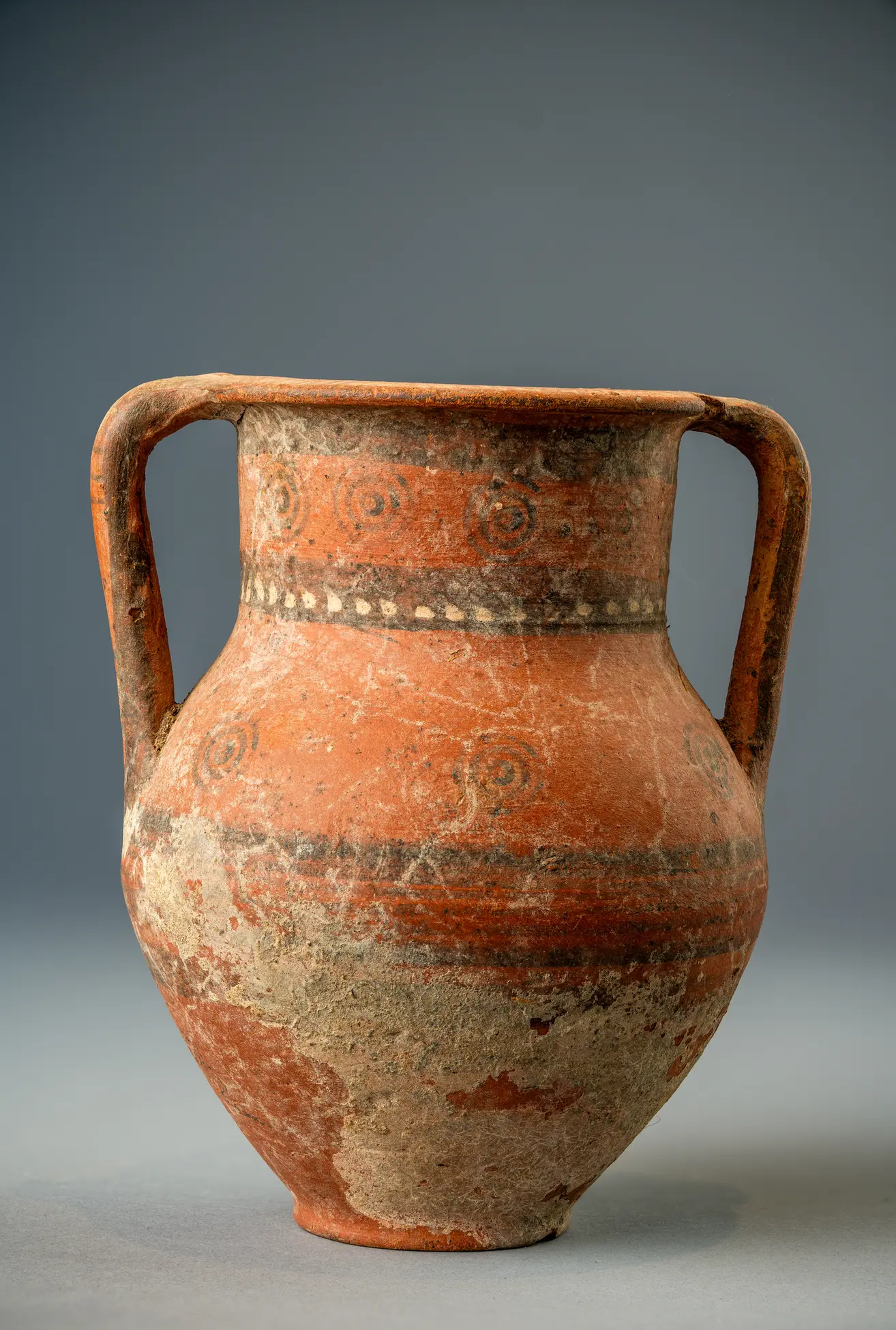
Bichrome Red Ware
Bichrome Red is the Cypriot Iron Age ware with black and added white paint on a red slip: Gjersta...
From the collection
- Combed Ware Bowl Fragment with Multiple Wavy BandsNeolithic · 4500–3900 BC
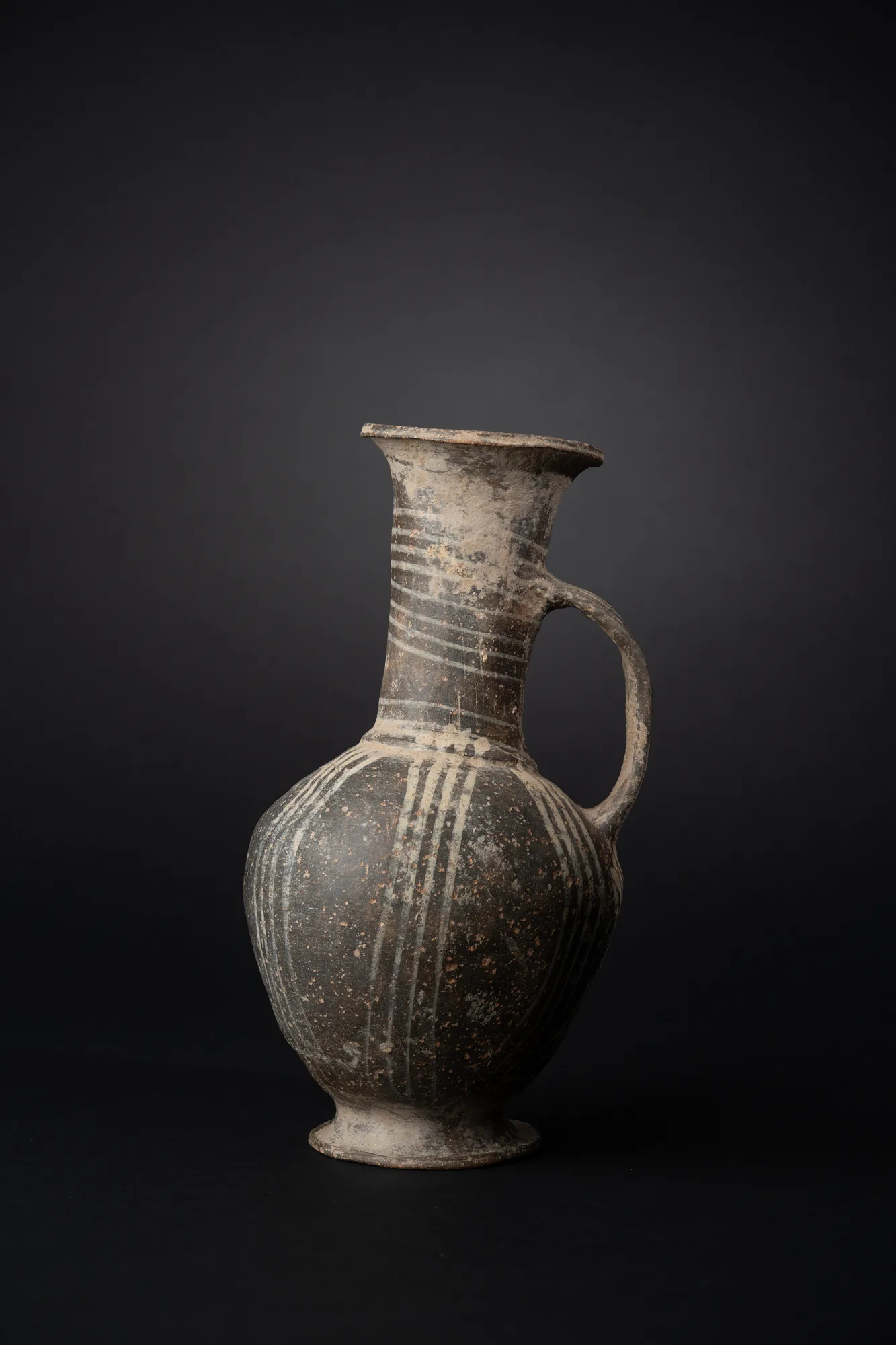 Base Ring II Jug with White-Painted Lattice BandsLate Bronze Age II · 1450–1200 BC
- Black-on-Red Biconical Juglet with Disc MouthArchaic II · 700–475 BC
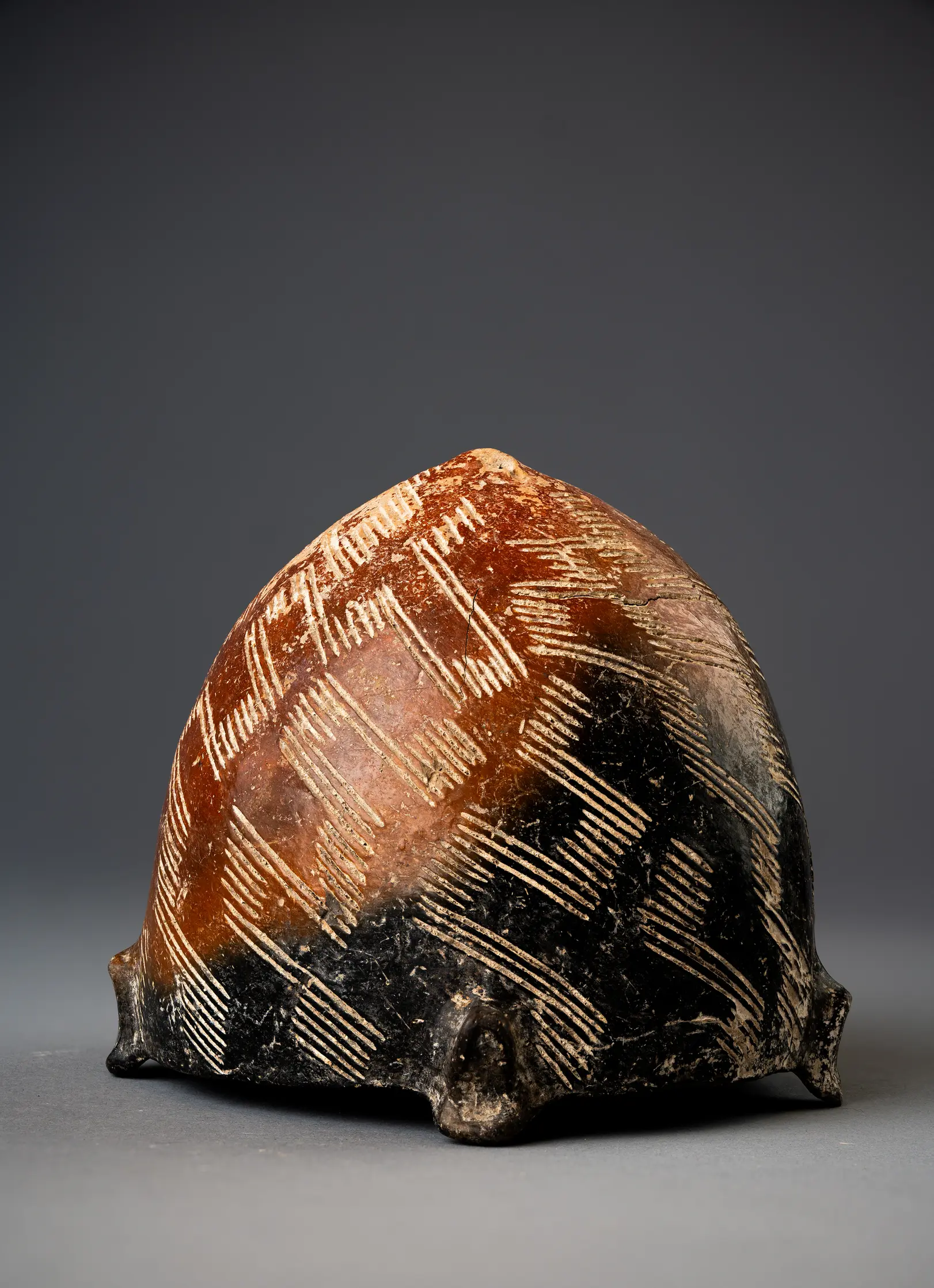 Black-topped Red Polished Tulip Bowl with Incised Hatched LatticeEarly Bronze Age II · 2300–2000 BC
- Cypriot Three-Handled Jar in the Mycenaean Style with Running SpiralsLate Bronze Age II · 1375–1300 BC
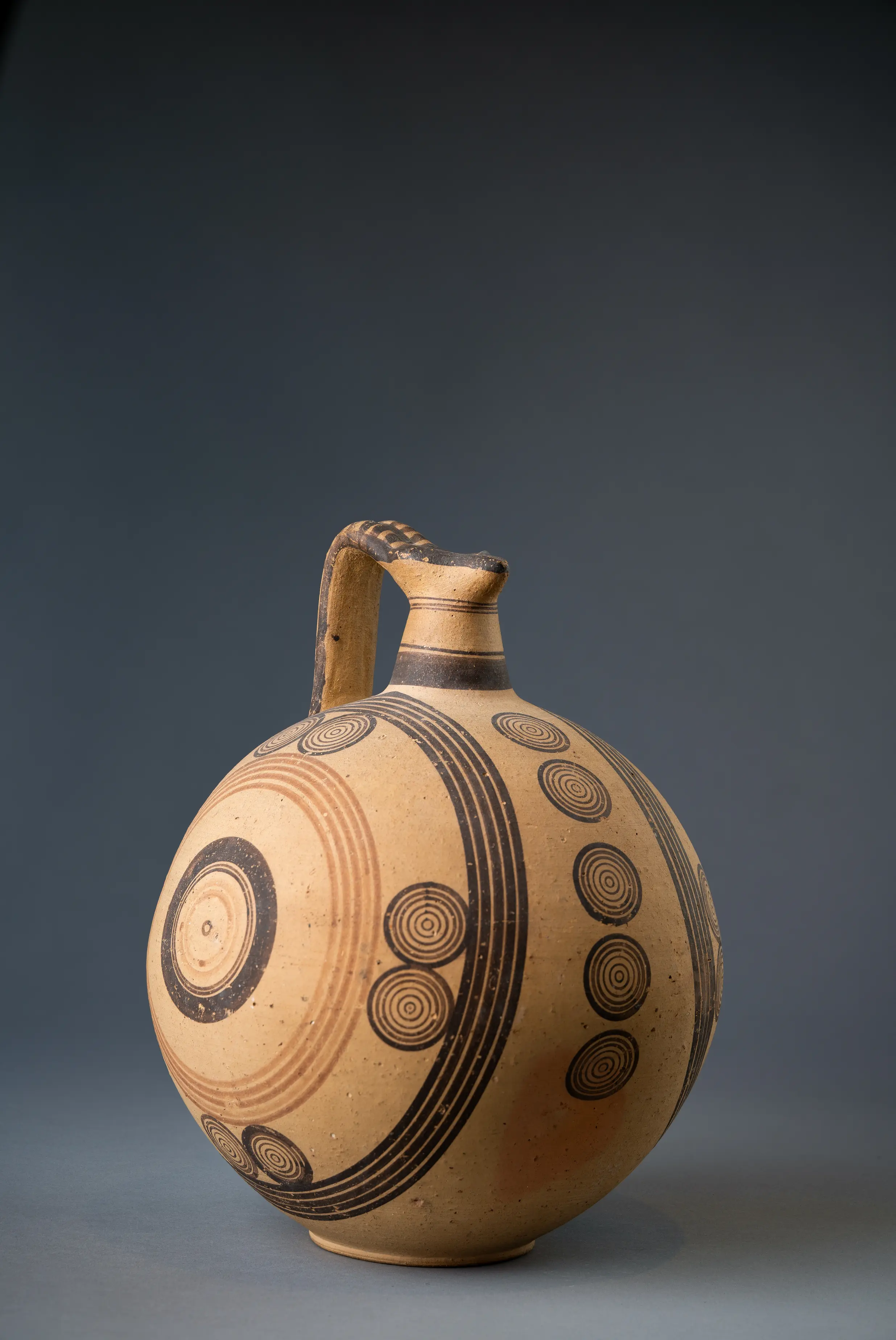 Large Bichrome IV Jug with Vertical Circle SystemsArchaic I · 750–600 BC
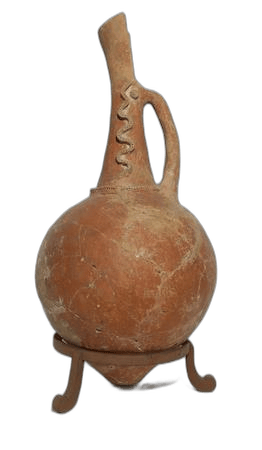 Red Polished Snake JugEarly Bronze Age II · 2300–2100 BC
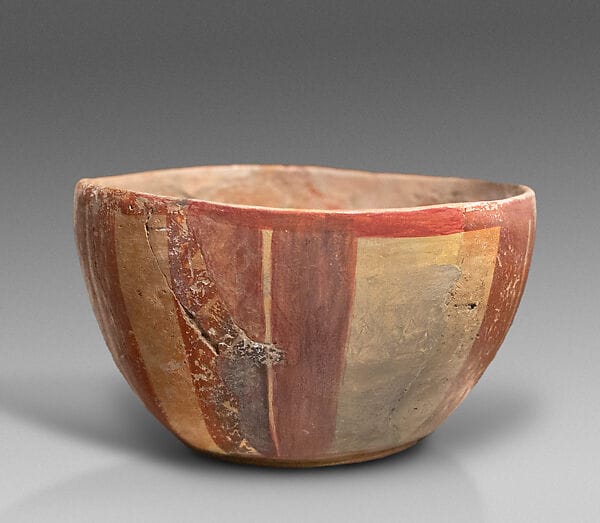 Terracotta bowlChalcolithic · 3900–2500 BC
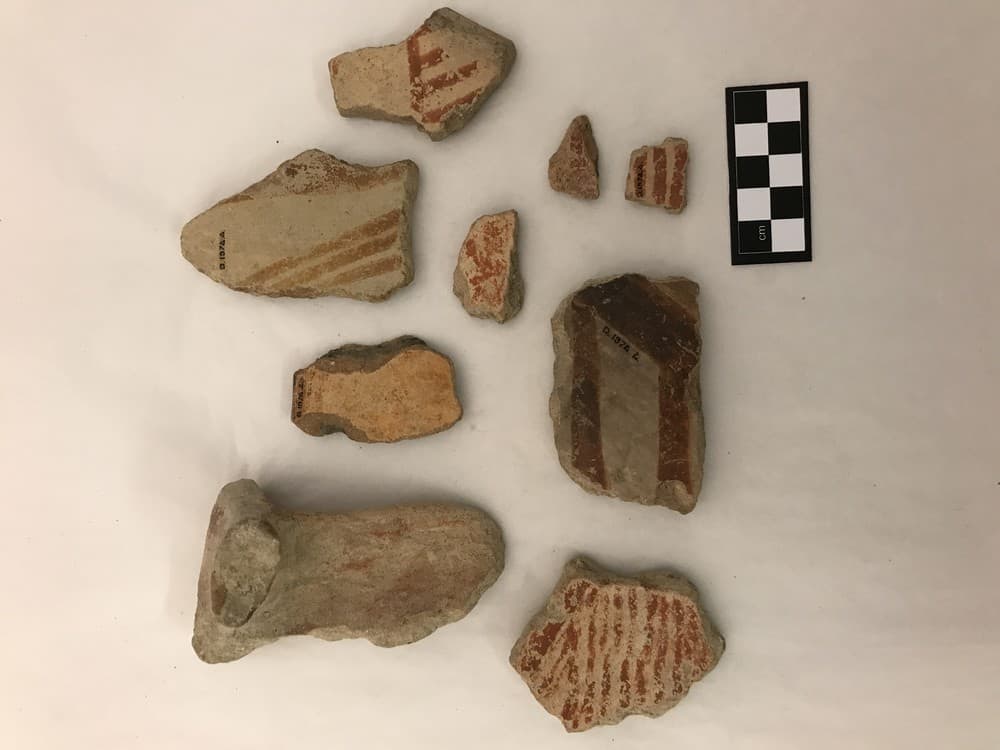 vesselNeolithic · 5500–4000 BC
- White Painted Amphoriskos on a Conical FootGeometric I · 1050–850 BC
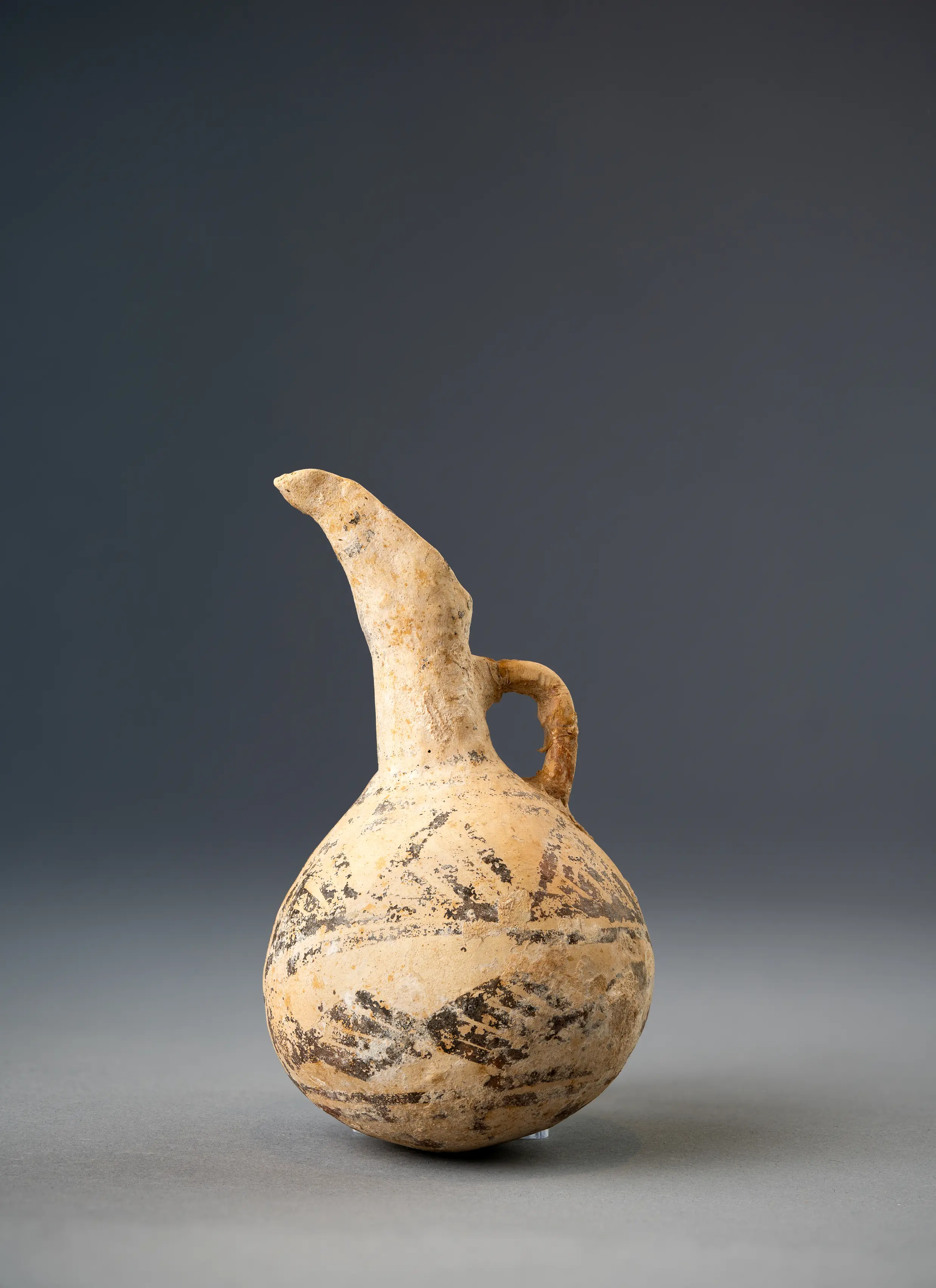 White Painted III-IV Juglet with Cut-away NeckMiddle Bronze Age II · 1850–1650 BC
- White Slip II Hemispherical Bowl with Wishbone HandleLate Bronze Age II · 1450–1200 BC
and 73 more objects linked from these pages
References
- 1.Merrillees, R. S. (1991). The principles of Cypriot Bronze Age pottery classification. In J. A. Barlow, D. L. Bolger, & B. Kling (Eds.), Cypriot ceramics: Reading the prehistoric record (University Museum Monograph 74, pp. 237-240). The University Museum, University of Pennsylvania.
- 2.Merrillees, R. S. (2001). T. B. Sandwith and the beginnings of Cypriote archaeology. In V. Tatton-Brown (Ed.), Cyprus in the 19th century AD: Fact, fancy and fiction. Papers of the 22nd British Museum Classical Colloquium, December 1998 (pp. 222-238). Oxbow Books.
- 3.Stager, L. E., & Saltz, D. L. (1974). The Swedish Cyprus Expedition, 1927-1931. In L. E. Stager, A. Walker, & G. E. Wright (Eds.), American Expedition to Idalion, Cyprus: First preliminary report, seasons of 1971 and 1972 (pp. xxix-xxx). American Schools of Oriental Research.
- 4.Herscher, E. (1991). Beyond regionalism: Toward an islandwide Early and Middle Cypriot sequence. In J. A. Barlow, D. L. Bolger, & B. Kling (Eds.), Cypriot ceramics: Reading the prehistoric record (University Museum Monograph 74, p. 45). The University Museum, University of Pennsylvania.
- 5.Vaughan, S. J. (1991). Material and technical characterization of Base Ring ware: A new fabric typology. In J. A. Barlow, D. L. Bolger, & B. Kling (Eds.), Cypriot ceramics: Reading the prehistoric record (University Museum Monograph 74, pp. 119-120). The University Museum, University of Pennsylvania.
- 6.Karageorghis, V. (2000). Ancient art from Cyprus: The Cesnola Collection in the Metropolitan Museum of Art. The Metropolitan Museum of Art.
- 7.Iacovou, M. (1991). Proto-White Painted pottery: A classification of the ware. In J. A. Barlow, D. L. Bolger, & B. Kling (Eds.), Cypriot ceramics: Reading the prehistoric record (University Museum Monograph 74, pp. 199-205). The University Museum, University of Pennsylvania.
- 8.Kotsonas, A. (2012). 'Creto-Cypriot' and 'Cypro-Phoenician' complexities in the archaeology of interaction between Crete and Cyprus. In M. Iacovou (Ed.), Cyprus and the Aegean in the Early Iron Age: The legacy of Nicolas Coldstream (pp. 155-181). Bank of Cyprus Cultural Foundation.
- 9.Graham, L. (2013). The necropolis of Kissonerga-Ammoudhia: Techniques of ceramic production in Early-Middle Bronze Age western Cyprus [Doctoral dissertation, The University of Edinburgh].
- 10.Karageorghis, V. (1982). Cyprus: From the Stone Age to the Romans (Ancient Peoples and Places 101). Thames and Hudson.