
Late Bronze Age II
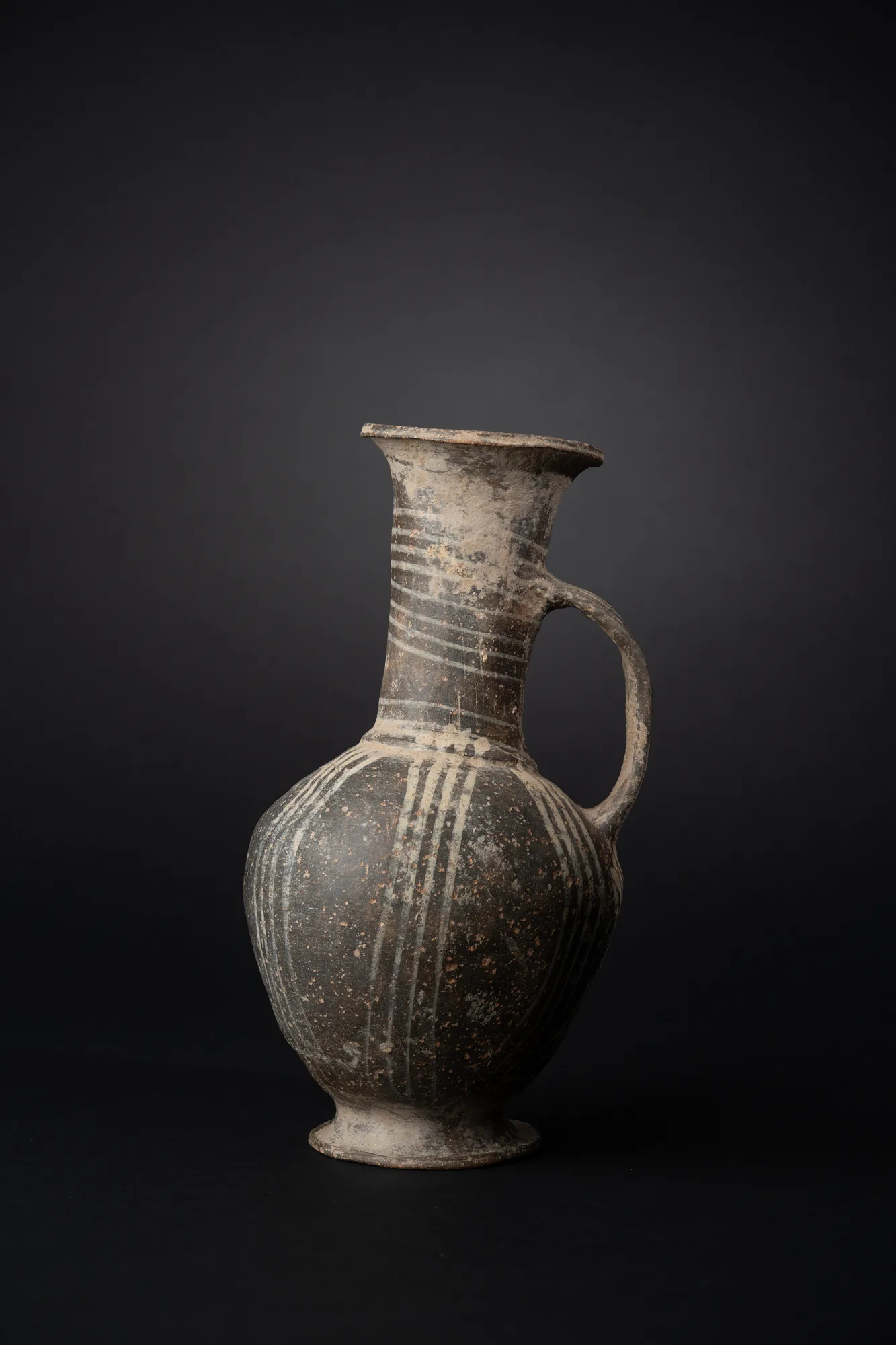
Base Ring II Jug with White-Painted Lattice Bands
Handmade Base Ring II jug with a tall flaring neck and grooved handle, painted in white with bundles of lines that cross into a lattice on a dark matt body.
Date
1450 - 1200 BC
Accession No.
JUG-BA-021
Collection
Alexis Drakopoulos
Late Cypriot II, c. 1450–1200 BCE · Base Ring II ware · Handmade
A tall jug with an ovoid body set on a splayed ring foot, a long cylindrical neck that opens into a broad, flaring rim, and a strap handle running from the upper neck to the shoulder. The handle's outer face is cut with two longitudinal grooves. The surface is a matt dark grey-black, flecked all over with small rust-coloured spots of encrustation. Decoration is in thin white paint laid on with a loose, quick hand. Groups of four or five horizontal lines ring the neck at intervals. On the body, groups of parallel lines run from the shoulder towards the foot; on one side they are drawn vertically, and on the other two oblique groups cross to form a lattice. The paint is worn in places but the scheme reads clearly. The ring foot is intact.
Commentary
The fabric, the handmade build and the white-painted linear decoration on a dark matt ground identify this as Base Ring II, the later of the two main phases of the Late Cypriot Base Ring tradition defined by Åström [1]. Base Ring is a thin-walled, hard-fired ware, formed without the wheel and finished on a turntable; petrographic study has shown a fairly standard set of fabrics across the island [2]. In the earlier Base Ring I style, vessels were ornamented with relief ridges and applied snakes; in Base Ring II, relief largely gives way to white paint, usually in groups of parallel lines like those here. The two styles overlapped in time, so the division is stylistic and only loosely chronological. White-painted jugs of this kind belong to Late Cypriot II, conventionally c. 1450–1200 BCE.
The shape, with its tall neck, wide flaring mouth and grooved handle, is the standard Base Ring II jug. The closest named parallels are three painted Base Ring II jugs in the Ashmolean Museum from Larnaka-Laxia tou Riou, of which AN1896-1908.C.91 (H. 23.7 cm) shows the same dark body divided by crossing bundles of white lines [3]. A smaller jug in the Cesnola Collection at the Metropolitan Museum, 74.51.1131, pairs horizontal neck lines with oblique body stripes in the same manner [4]. The body profile of this piece sits a little off the vertical, a common trait of Base Ring jugs, which were built by hand [5].
Base Ring II was one of the most widely exported Cypriot wares. Juglets and jugs reached the Levantine coast, Syria and Egypt in large numbers during the fourteenth and thirteenth centuries BCE [6][7]. The larger jugs are less often exported than the small juglets, and in Cyprus they turn up chiefly as tomb goods, where they probably held liquids for the funeral or for the dead. Their contents are unknown.
The lattice formed by the crossing line groups is a recurring motif on Base Ring II, and the painter here has varied the scheme between the two faces of the pot, giving one side plain vertical bundles and the other a crossed panel. Without a recorded find-spot, the jug cannot be assigned to a particular workshop or region; misfired Base Ring II pots from Enkomi show that the ware was made there, and it was probably produced at other centres as well [7].
References
- 1.Åström, P. (1972) The Swedish Cyprus Expedition IV:1C. The Late Cypriote Bronze Age: Architecture and Pottery. Lund: Swedish Cyprus Expedition, pp. 137–198 (Base Ring ware).
- 2.Vaughan, S.J. (1991) 'Material and technical characterization of Base Ring ware: a new fabric typology', in Barlow, J.A., Bolger, D.L. and Kling, B. (eds) Cypriot Ceramics: Reading the Prehistoric Record. Philadelphia: University Museum.
- 3.Ashmolean Museum, Oxford, AN1896-1908.C.91, Base Ring II painted jug, from Larnaka-Laxia tou Riou, H. 23.7 cm; with AN1896-1908.C.89 (H. 26.8 cm) and C.92 (H. 23.9 cm) from the same site.
- 4.Metropolitan Museum of Art, New York, 74.51.1131, terracotta jug (Base Ring ware with white-painted decoration), Late Cypriot II, c. 1450–1200 BCE, H. 16.2 cm (Cesnola Collection).
- 5.Morris, D. (1985) The Art of Ancient Cyprus. Oxford: Phaidon, p. 31.
- 6.Merrillees, R.S. (1968) The Cypriote Bronze Age Pottery Found in Egypt. Studies in Mediterranean Archaeology 18. Lund: Åström.
- 7.Åström, P. (1972) The Swedish Cyprus Expedition IV:1D. The Late Cypriote Bronze Age: Relative and Absolute Chronology, Foreign Relations, Historical Conclusions. Lund: Swedish Cyprus Expedition.
More from the Catalogue
Browse related objects
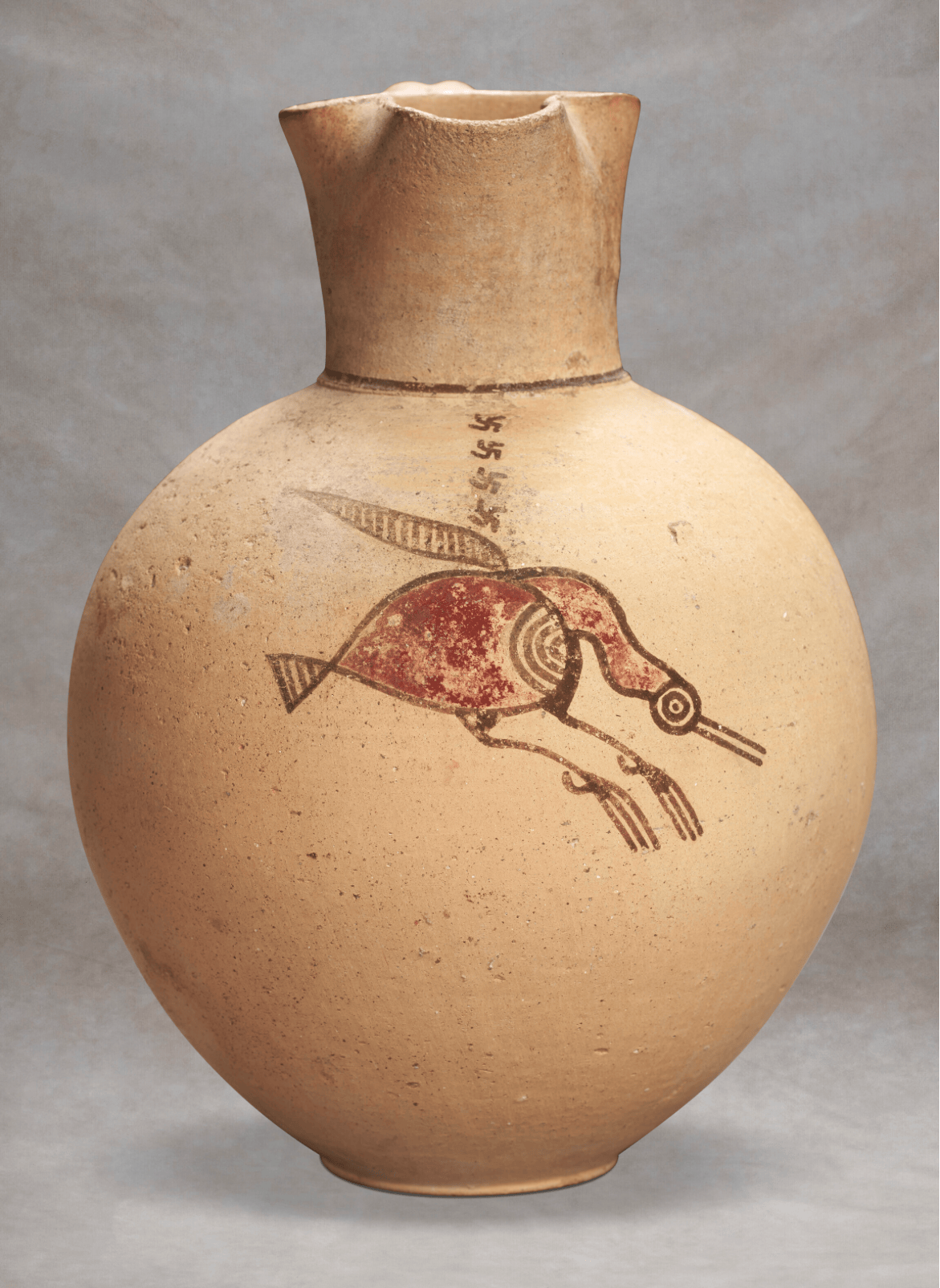
Bichrome Oinochoe
Archaic I
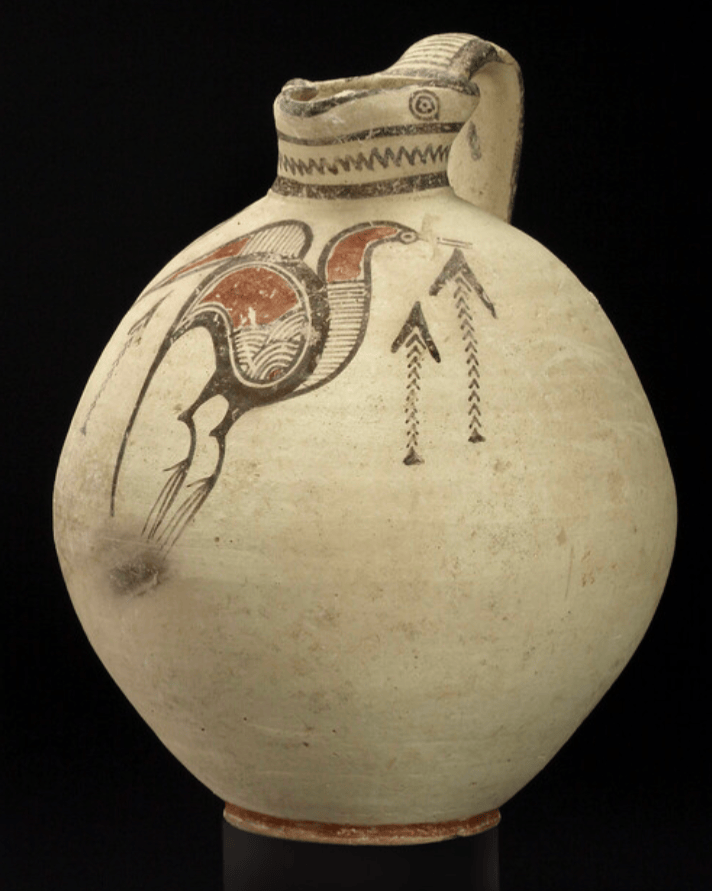
Free-field bichrome jug with image of an Ibis bird and reeds
Archaic
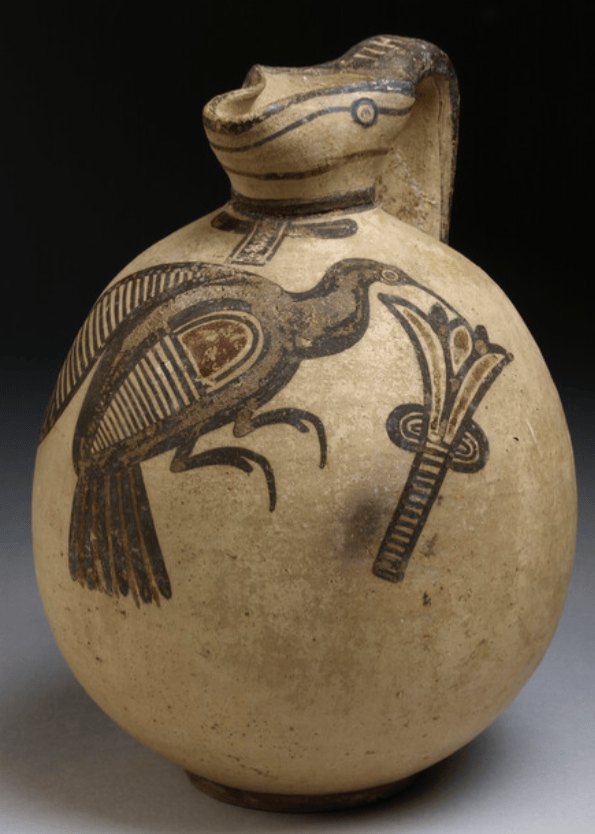
Squat bichrome jug in free-field style with image of bird picking a lotus flower
Archaic
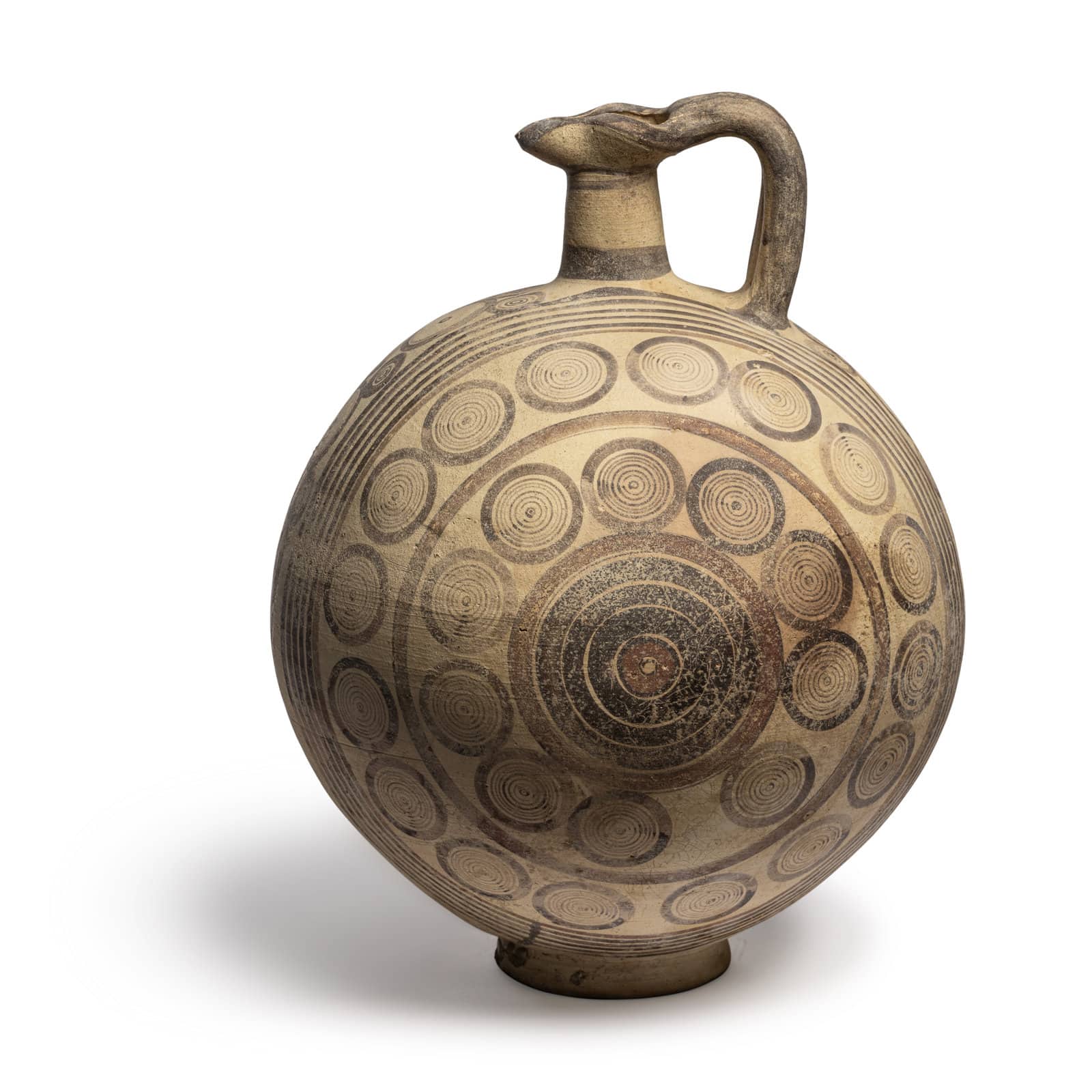
A Cypriot Bichrome-Ware Oinochoe Jug
Archaic I
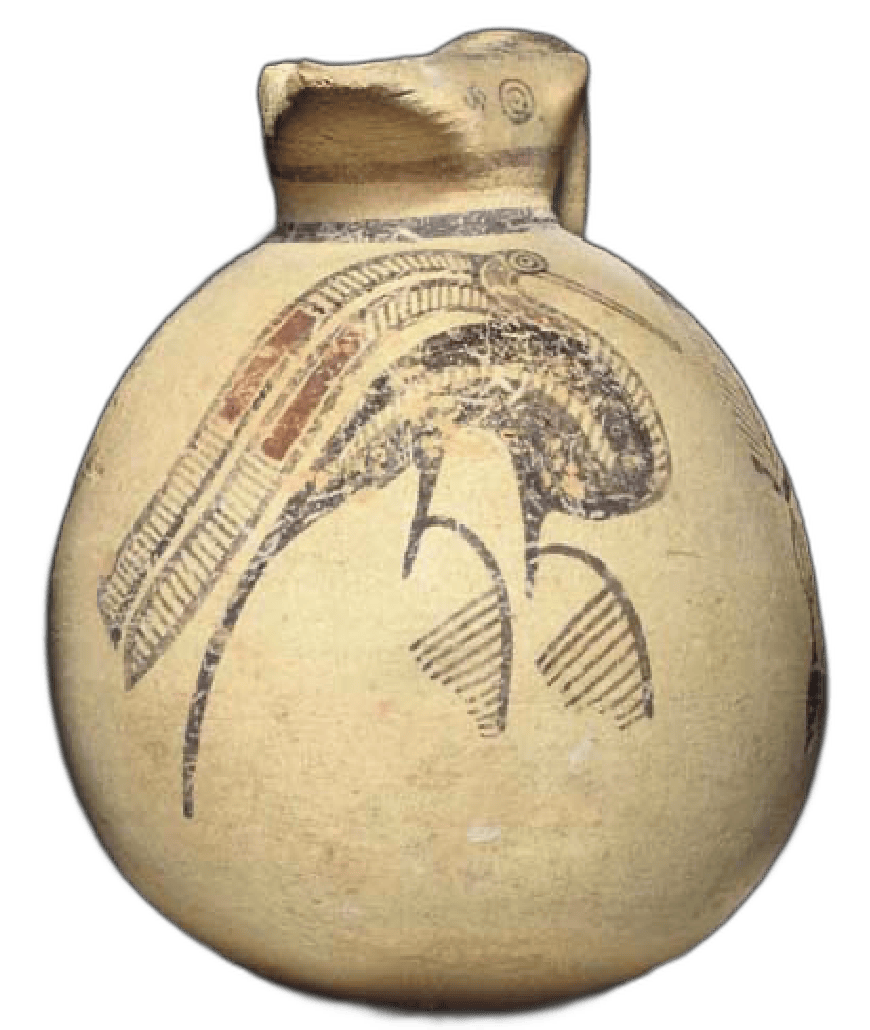
Oinochoe with Free Field Bird
Archaic I
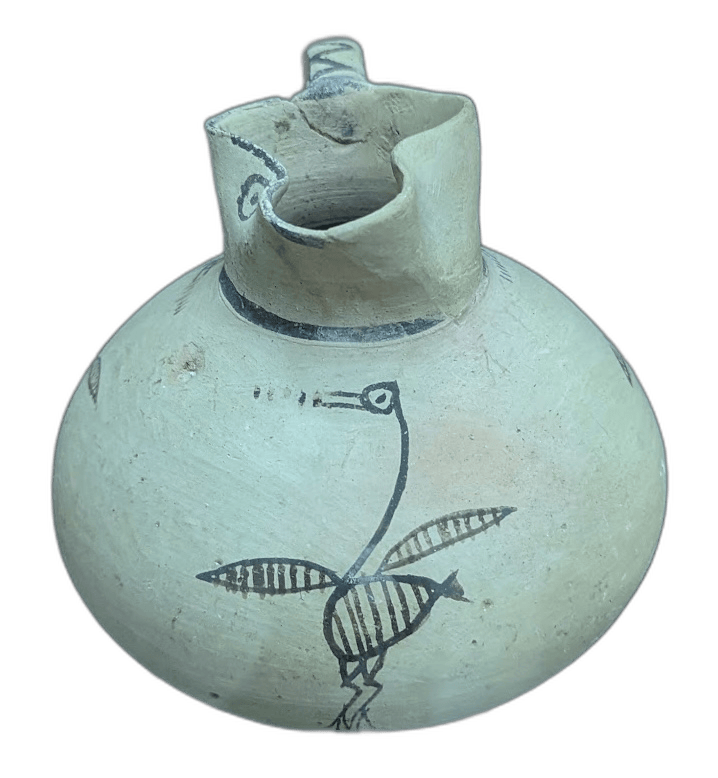
Small Oinochoe with Free Field Bird
Archaic I
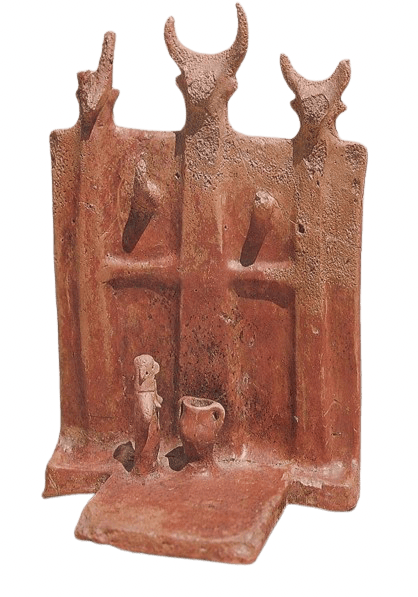
Red Polished Shrine
Middle Bronze Age I
Black-On-Red Geometric Jug Sherd
Geometric II
Bichrome Jug
Geometric
Bichrome Juglet
Geometric
Bichrome Oinochoe
Geometric
Juglet
Archaic II
Oinochoe
Geometric III
Jug
Archaic I
Juglet
Archaic I
Jug
Geometric I
Terracotta jug
Early Bronze Age I
Juglet
Geometric I