
Late Bronze Age II
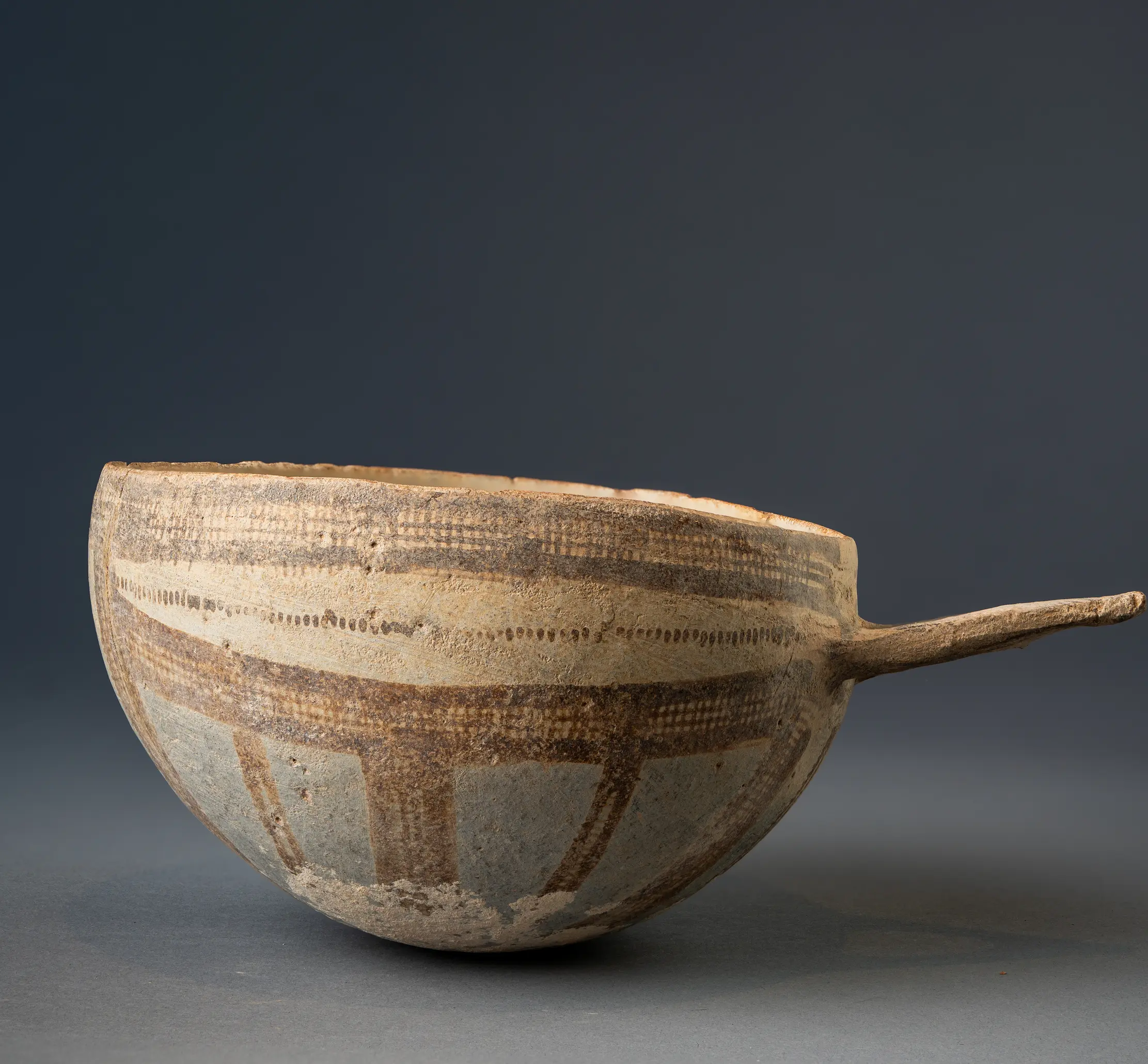
White Slip II Hemispherical Bowl with Wishbone Handle
Handmade White Slip II 'milk bowl' with a wishbone handle, painted in brown with lattice bands, a row of dots and hanging ladders and solid bands.
Date
1450 - 1200 BC
Accession No.
BWL-BA-017
Collection
Alexis Drakopoulos
Provenance
- 1965–1969, acquired by The Goodman Collection
- 2025–present, Alexis Drakopoulos, London
Late Cypriot II, c. 1450–1200 BCE · White Slip II ware · Handmade
A deep hemispherical bowl with a rounded base and a plain rim, carrying a single wishbone handle set just below the lip. Seen in profile, the handle projects as a slender horizontal prong ending in a small swelling. The bowl is covered in a thick white slip, cream on the upper body and cooler blue-grey towards the base. Decoration is in matt brown paint. Below the rim runs a band of fine lattice between framing lines, then a single row of neat dots. Beneath this, a broad band of lattice between heavy lines encircles the body, and from it hang vertical bands to the base, some solid, some drawn as open ladders. The slip has flaked away in a patch at the base, and the rim has small chips.
Commentary
The thick white slip, the brown matt paint and the hemispherical shape with a wishbone handle place this bowl in White Slip II, the most common and most widely traded Late Cypriot fine ware. Popham's classification remains the standard; this piece belongs to his normal White Slip II group, with its lattice and ladder patterns and rows of dots [1]. The modern nickname "milk bowl" comes from the milky slip, and says nothing about use. What these bowls held is unknown [2]. The wishbone handle is also found on Base Ring and Monochrome bowls, so the ware is identified from the slip and paint.
White Slip II is dated to Late Cypriot II, c. 1450–1200 BCE. The careful lattice, the evenly spaced dots and the ordered "frame" of horizontal band with hanging verticals match the standard phase of the ware. In the latest White Slip II, of the late thirteenth and early twelfth centuries BCE, painters reduced the scheme to hasty horizontal and vertical bands, and nothing on this bowl points to that stage. A date within the fourteenth or thirteenth century BCE is most likely, though a single bowl cannot be pinned to one generation.
The best parallel is a bowl from Enkomi in the British Museum, 1897,0401.954, whose catalogue entry describes "row of dots at rim above lattice pattern" and a "horizontal row of dots above lattice with pendant alternating ladder and lattice patterns to base", almost the same arrangement as here [3]. Further White Slip II bowls of the same shape come from Enkomi Tomb 10A, excavated by the Swedish Cyprus Expedition and now in Stockholm, one of them with the same dotted row [4], and from Kourion-Bamboula Tomb 12, now in the Penn Museum [5]. Such bowls were made in large numbers across Cyprus and exported to Egypt, the Levant, Anatolia and the Aegean [2].
The shift in slip colour from cream to blue-grey towards the base is common on White Slip bowls and probably reflects uneven firing, which left the lower wall greyer. The bowl's find-spot is not recorded.
References
- 1.Popham, M.R. (1972) 'White Slip Ware', in Åström, P. The Swedish Cyprus Expedition IV:1C. The Late Cypriote Bronze Age: Architecture and Pottery. Lund: Swedish Cyprus Expedition, pp. 431–471 (White Slip II, pp. 447–456).
- 2.Åström, P. (1972) The Swedish Cyprus Expedition IV:1D. The Late Cypriote Bronze Age: Relative and Absolute Chronology, Foreign Relations, Historical Conclusions. Lund: Swedish Cyprus Expedition.
- 3.British Museum, London, 1897,0401.954, White Slip II hemispherical bowl with wishbone handle, from Enkomi, H. 9.7 cm, D. 17.4 cm.
- 4.Medelhavsmuseet, Stockholm, E. 010A:006, White Slip II bowl, from Enkomi Tomb 10A (Swedish Cyprus Expedition), Late Cypriot II, H. 10.8 cm, D. 20.9 cm.
- 5.Penn Museum, Philadelphia, 8018, White Slip II bowl, from Kourion-Bamboula Tomb 12, Late Cypriot IIA, H. 10.8 cm, D. 17.8 cm.
More from the Catalogue
Browse related objects
Bichrome Kylix with Bird Free Field Art
Geometric III
Milk bowl
Bronze Age
Bowl
Geometric III
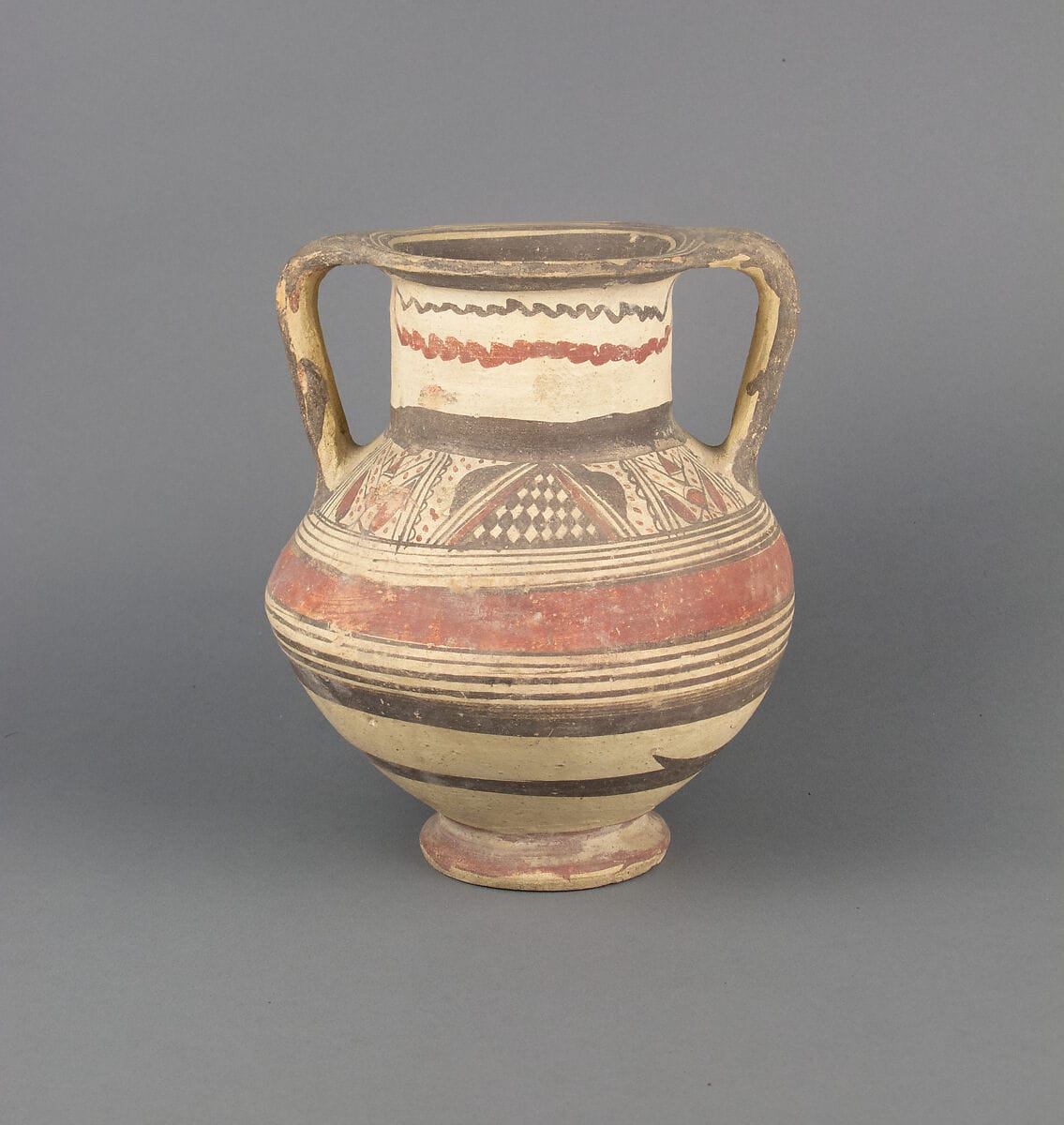
Krater
Archaic I
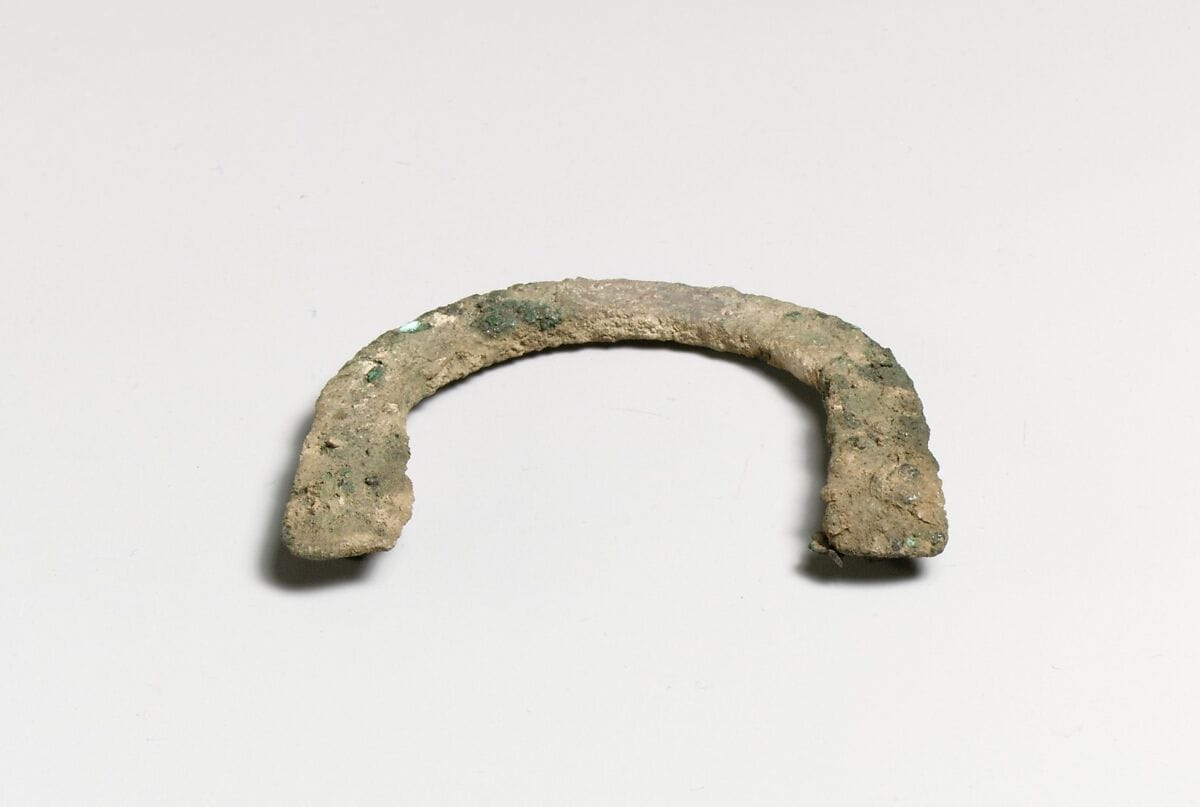
Handle of a bowl
Bronze Age
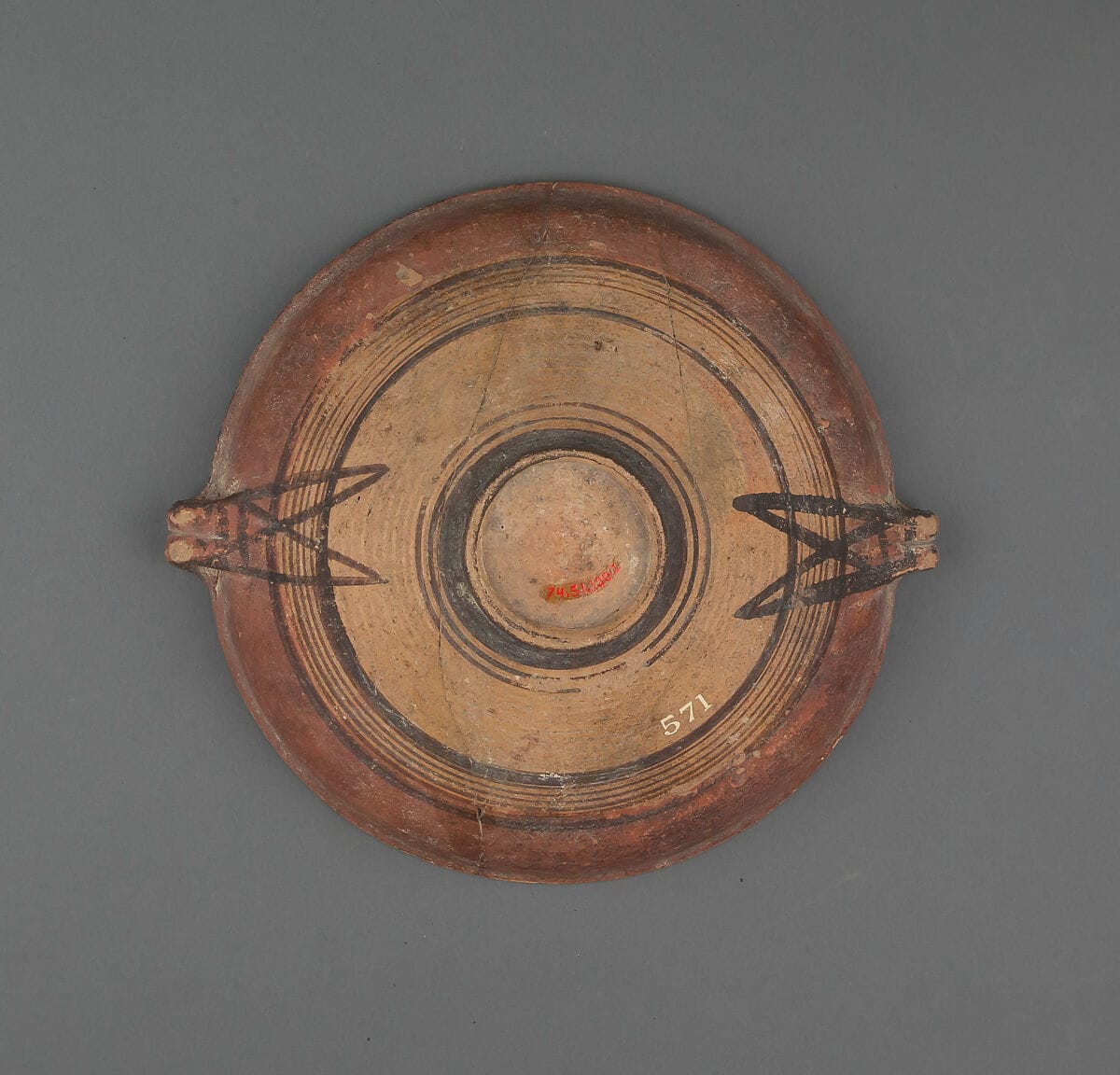
Bowl
Geometric I
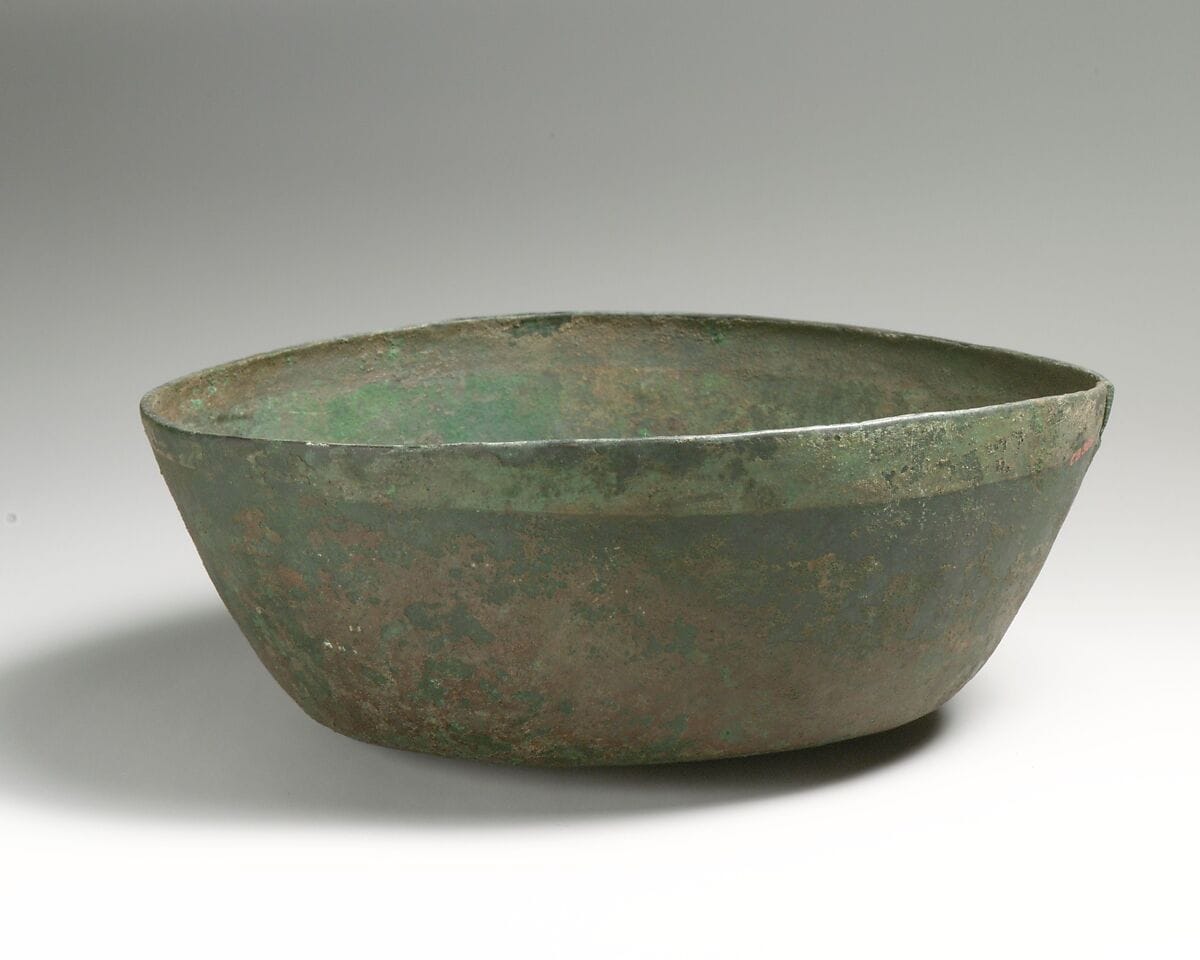
Bowl
Bronze Age
Terracotta bowl
Chalcolithic
Silver bowl
Archaic I
Alabaster bowl
Classical
Bronze phiale (libation bowl)
Archaic II
Bowl fragment, inscribed
Archaic II
Bowl
Bronze Age
Bowl
Archaic I
Bowl
Late Bronze Age II
Bowl
Geometric III
Terracotta footed bowl
Archaic I
Marble bowl fragment with Phoenician inscription
Classical