
Topic
Burial
Graves, tombs and cemeteries: how the dead were treated and what was buried with them, from Neolithic burials beneath houses to Iron Age royal tombs.
39 entries in 9 sections
Pottery
16 entriesSection overview
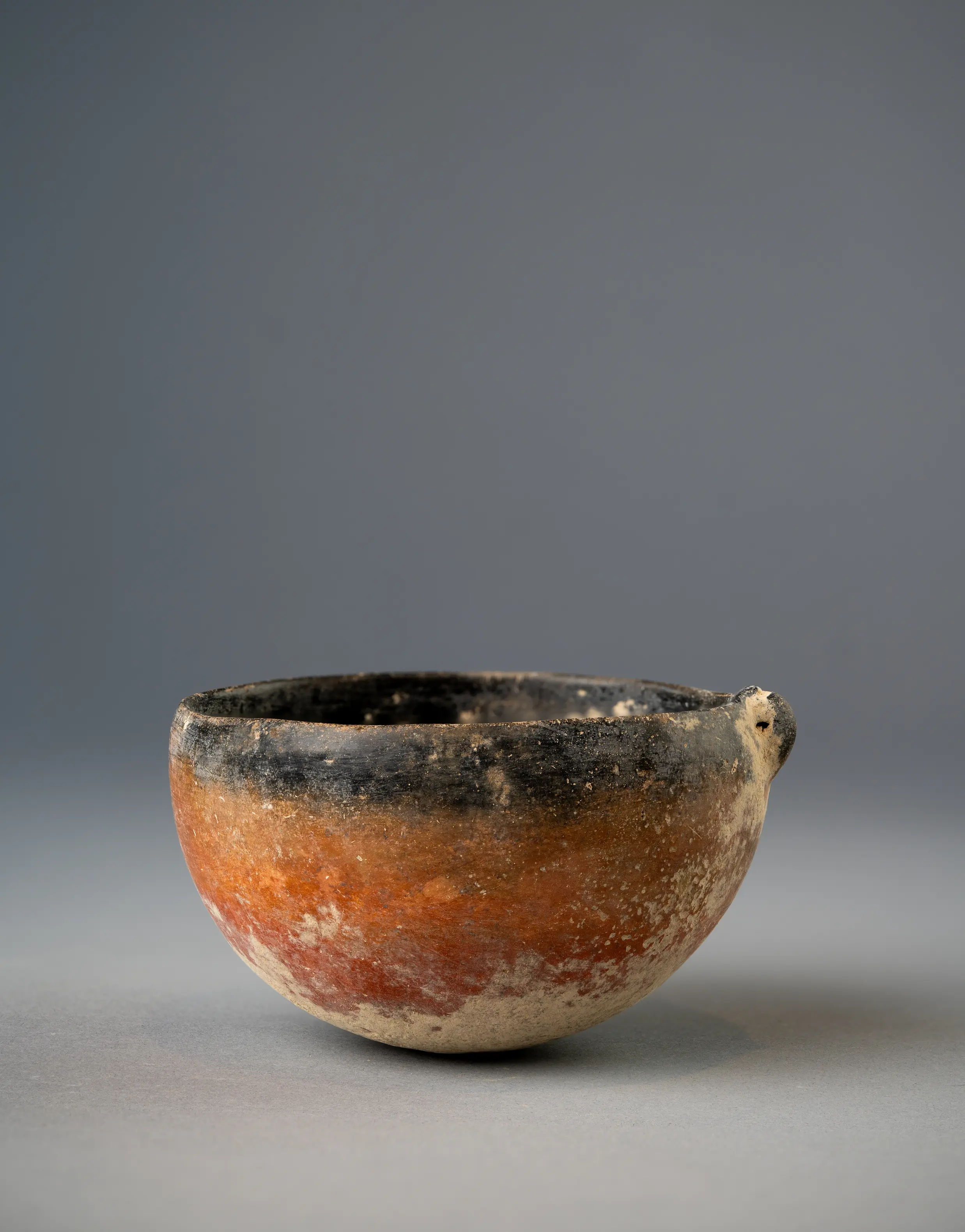 Red Polished Philia WareThe hand-made, red-slipped and polished pottery of the Philia facies, strikingly uniform across Cyprus at the opening of the Bronze Age.Early Bronze Age
- Red Polished WareRed Polished is the hand-made, red-slipped and burnished pottery that dominated Cyprus in the Early and Middle Bronze Age.Early Bronze AgeMiddle Bronze Age
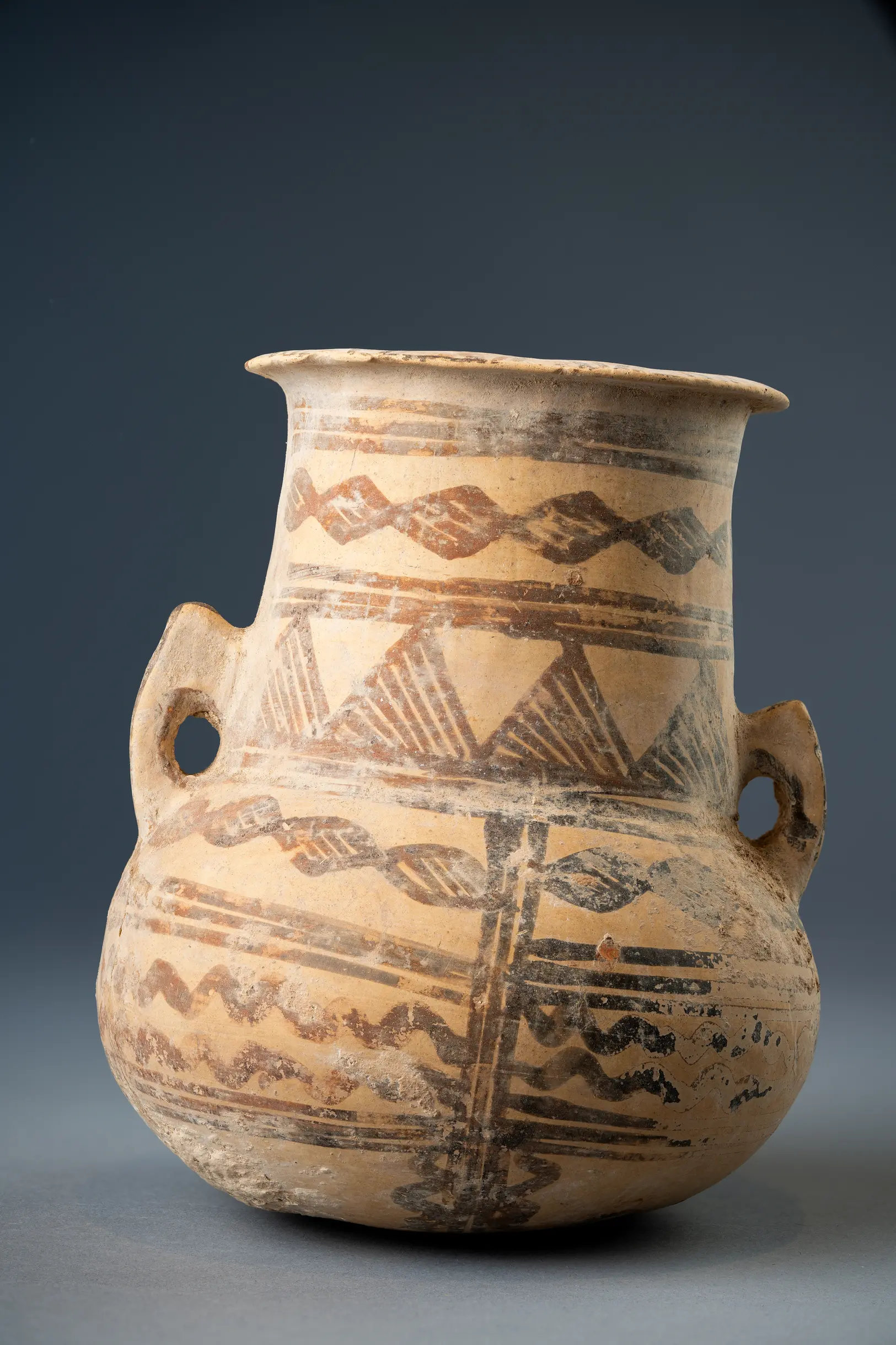 White Painted WareThe hand-made, pale-slipped Bronze Age pottery of Cyprus painted with dark matt geometric motifs, flourishing in the Middle Bronze Age as WP I to VI.Early Bronze AgeMiddle Bronze Age
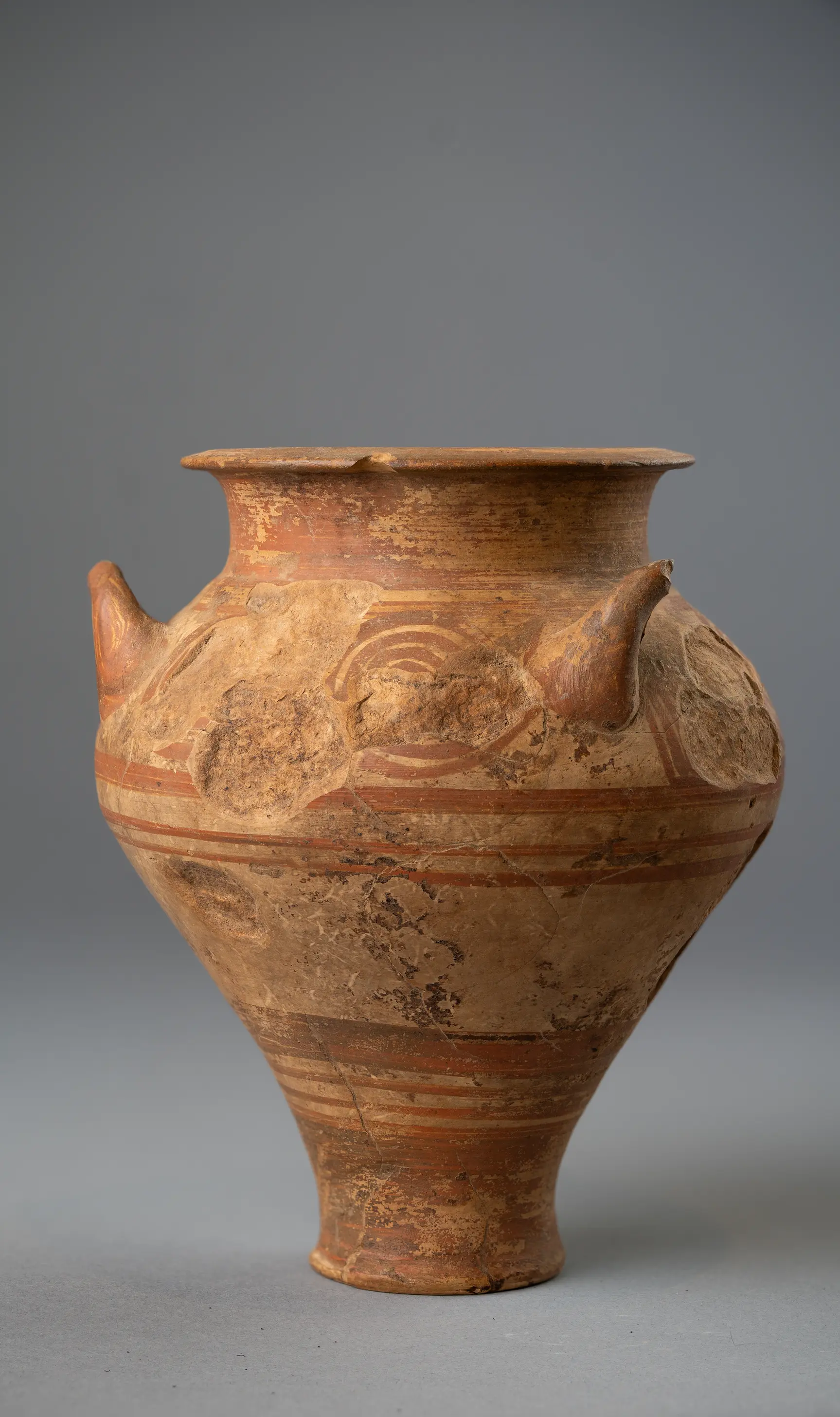 Mycenaean Imports and Local ImitationsMycenaean pottery, mostly made in the north-east Peloponnese, was the largest body of imported fine ware in Late Bronze Age Cyprus, and Cypriot potters copied some of its shapes.Late Bronze Age
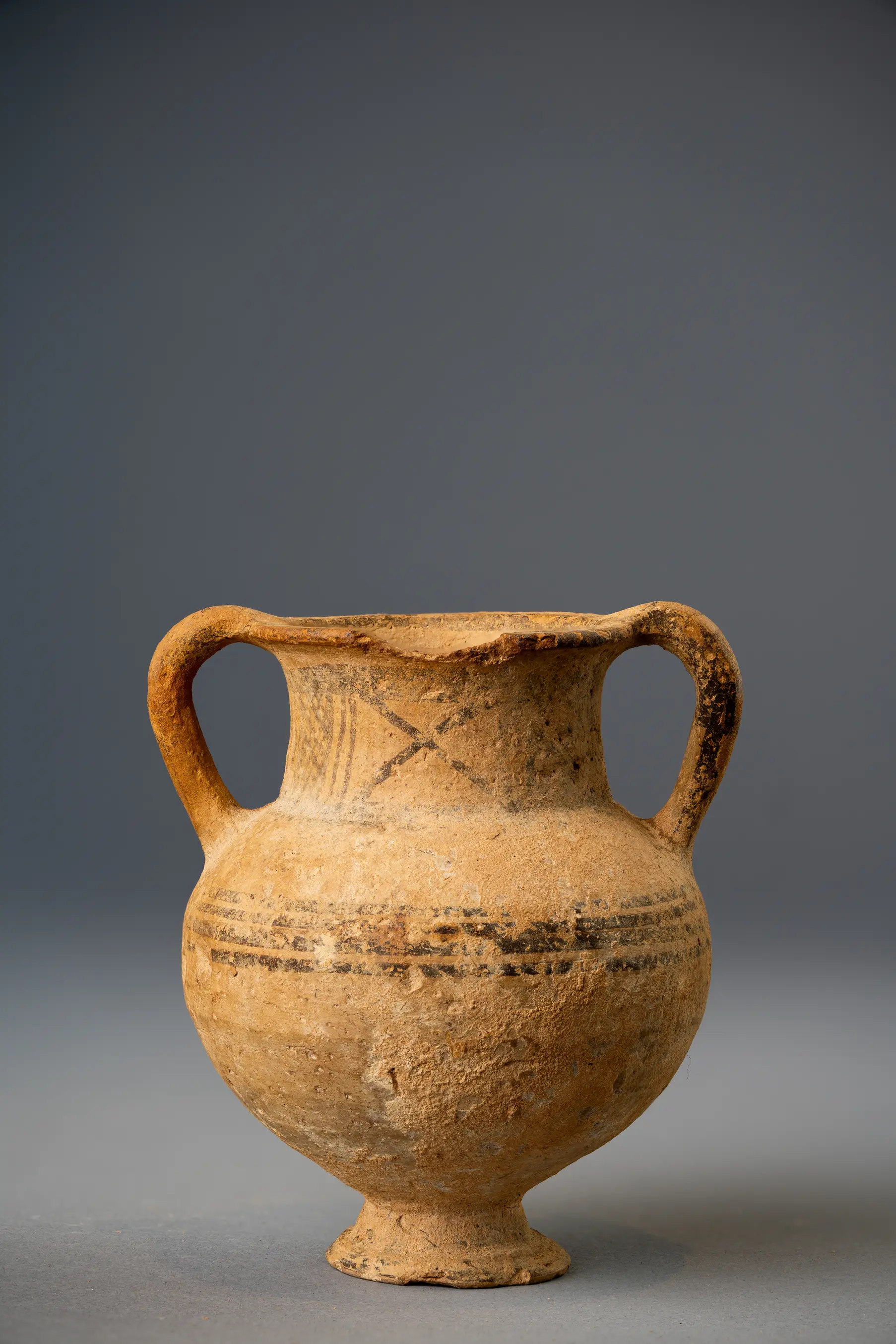 Proto-White Painted WareThe wheel-thrown, matt-painted pottery of Late Cypriot IIIB, c. 1125–1050 BCE, which merged earlier Aegean-style wares and led into Iron Age White Painted I.Late Bronze AgeCypro-Geometric
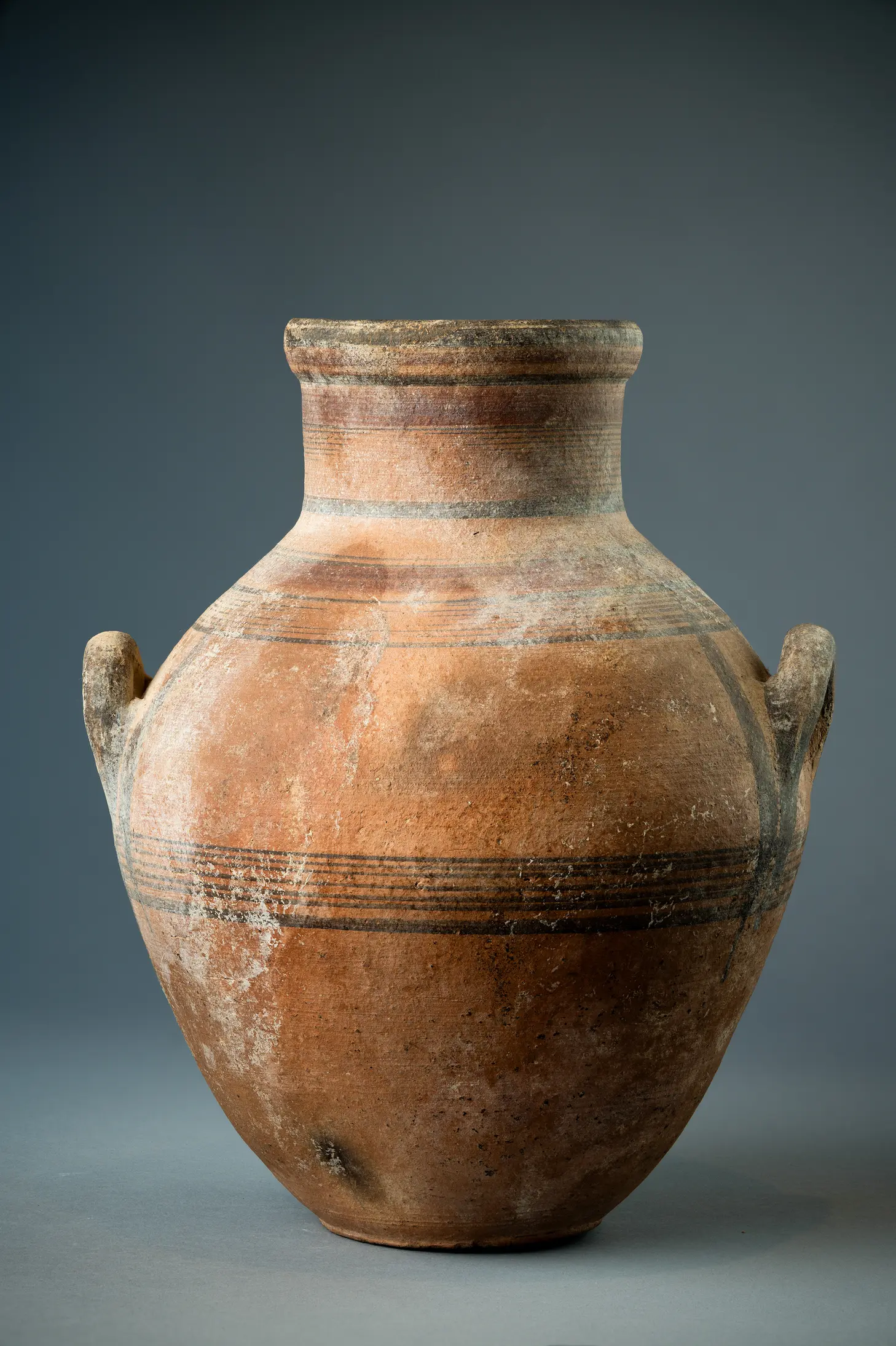 AmphoraA closed jar with two opposed handles, made in Cyprus in belly-handled and vertical-handled painted series and as a basket-handled transport jar.Late Bronze AgeCypro-GeometricCypro-Archaic
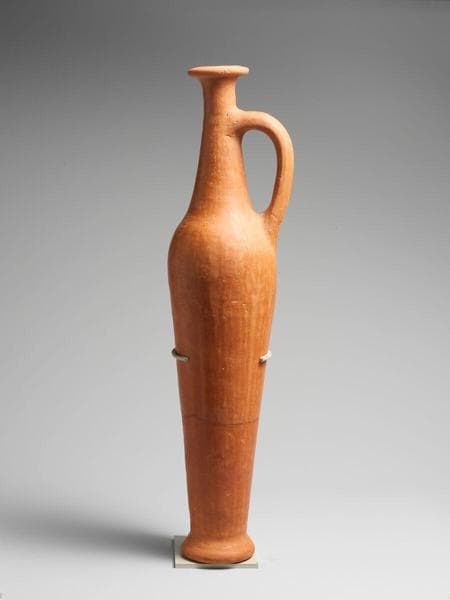 BottlesSmall, narrow-necked closed containers for valuable liquids, from Red Polished bottles to Late Bronze Age spindle bottles and Iron Age barrel jugs.Early Bronze AgeMiddle Bronze AgeLate Bronze AgeCypro-GeometricCypro-Archaic
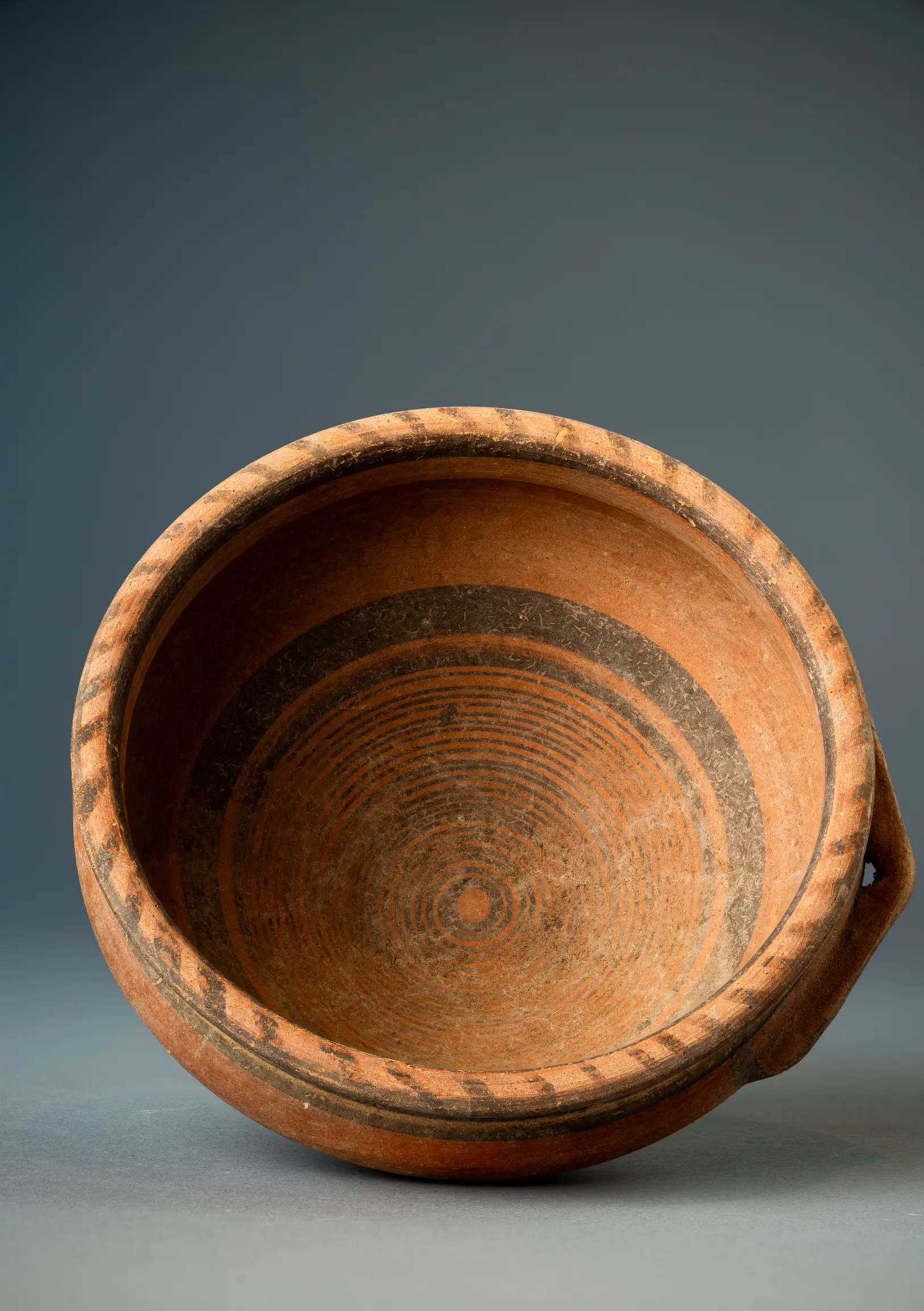 BowlsThe open vessel deeper than a plate and without a pouring neck, the one Cypriot pottery shape made without a break from the Neolithic to the Iron Age.NeolithicChalcolithicEarly Bronze AgeMiddle Bronze AgeLate Bronze AgeCypro-GeometricCypro-Archaic
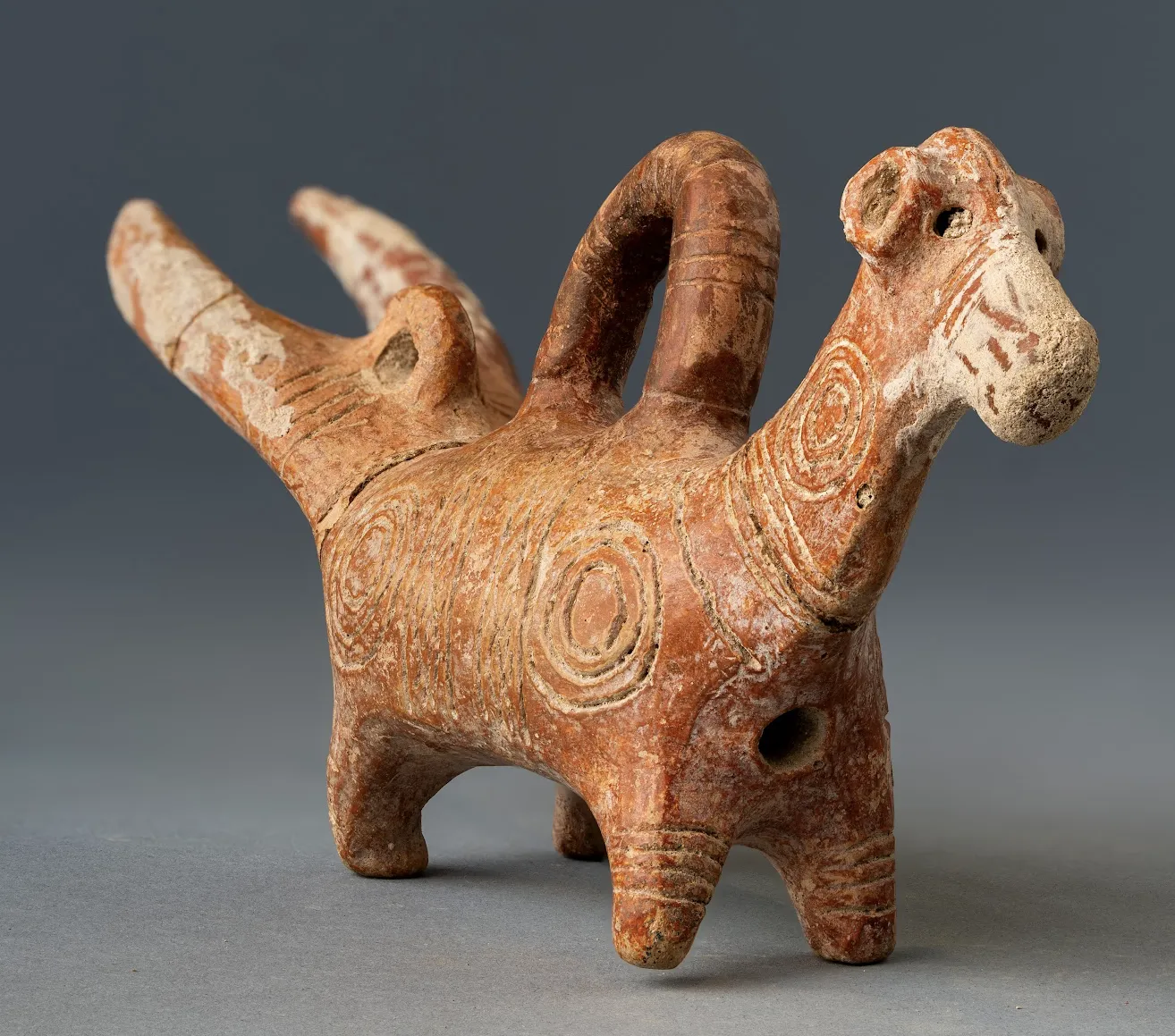 Complex VesselsComposite, multiple and ring vessels built by multiplying or joining ordinary shapes, mostly Early and Middle Bronze Age Red Polished tomb pieces.Early Bronze AgeMiddle Bronze AgeLate Bronze AgeCypro-GeometricCypro-Archaic
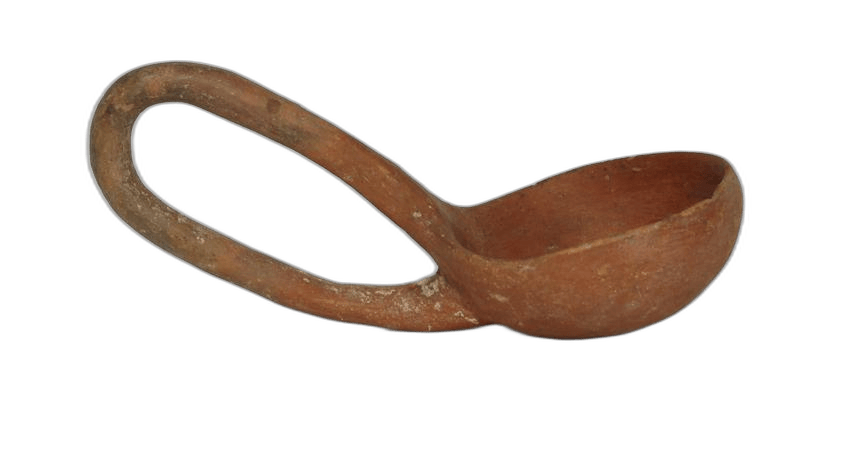 Dippers and LadlesA small vessel with a single handle set high above its body, made to be lowered into a larger container and lifted out full.Early Bronze AgeMiddle Bronze AgeLate Bronze AgeCypro-Geometric
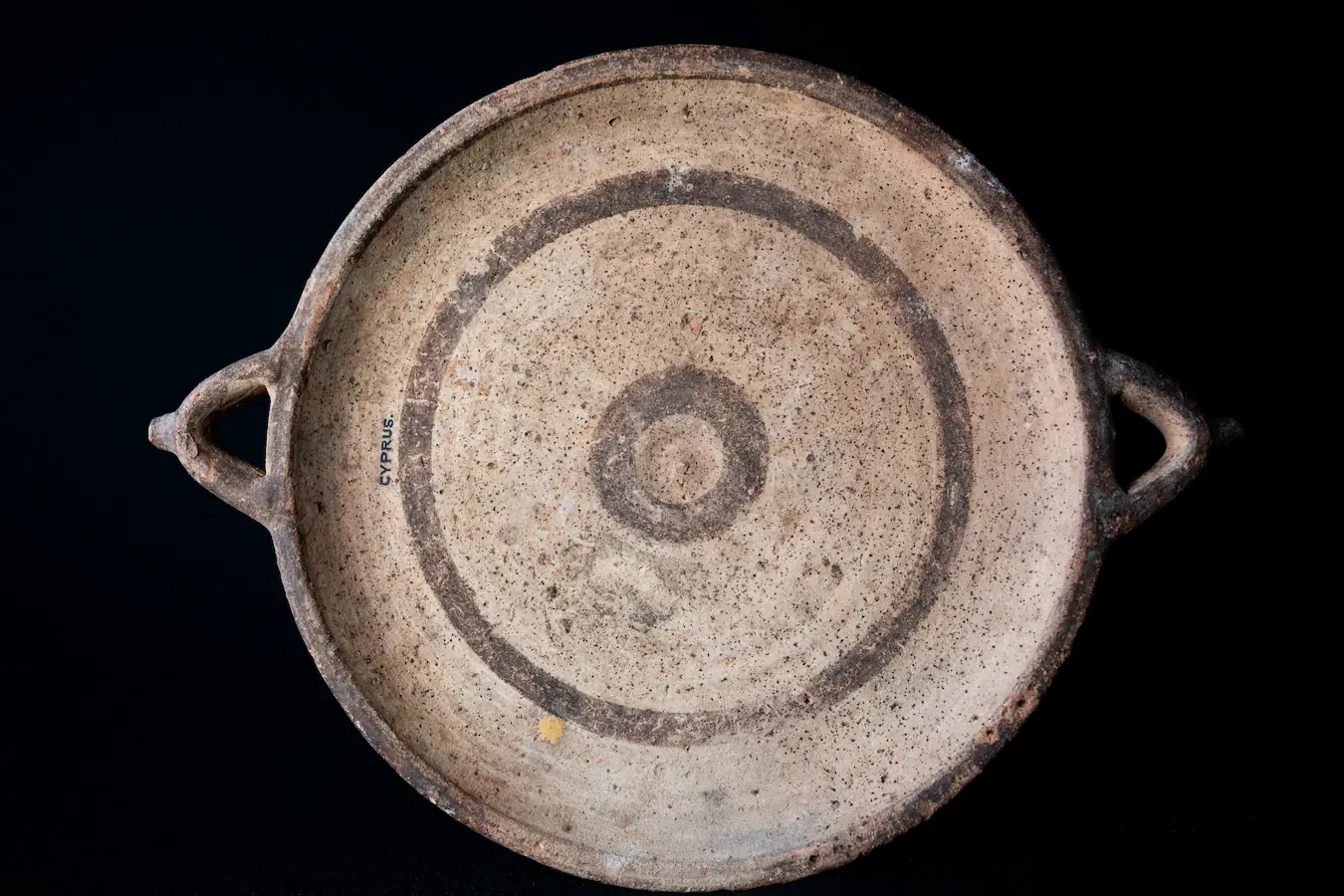 Dishes and PlatesThe flat two-handled plate, absent from the Bronze Age repertoire, that appears in advanced Cypro-Geometric I and carries its main decoration on the underside.Cypro-Geometric
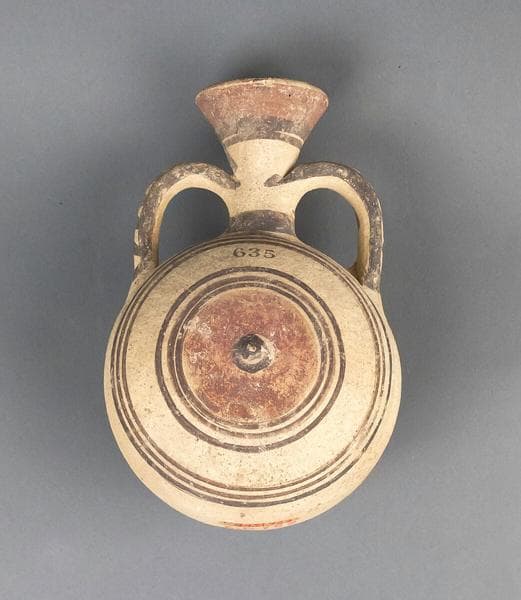 FlasksA small, often flattened narrow-necked container for valuable liquids, made in Cyprus from the Chalcolithic onward and widely exported in the Iron Age.ChalcolithicEarly Bronze AgeLate Bronze AgeCypro-GeometricCypro-Archaic
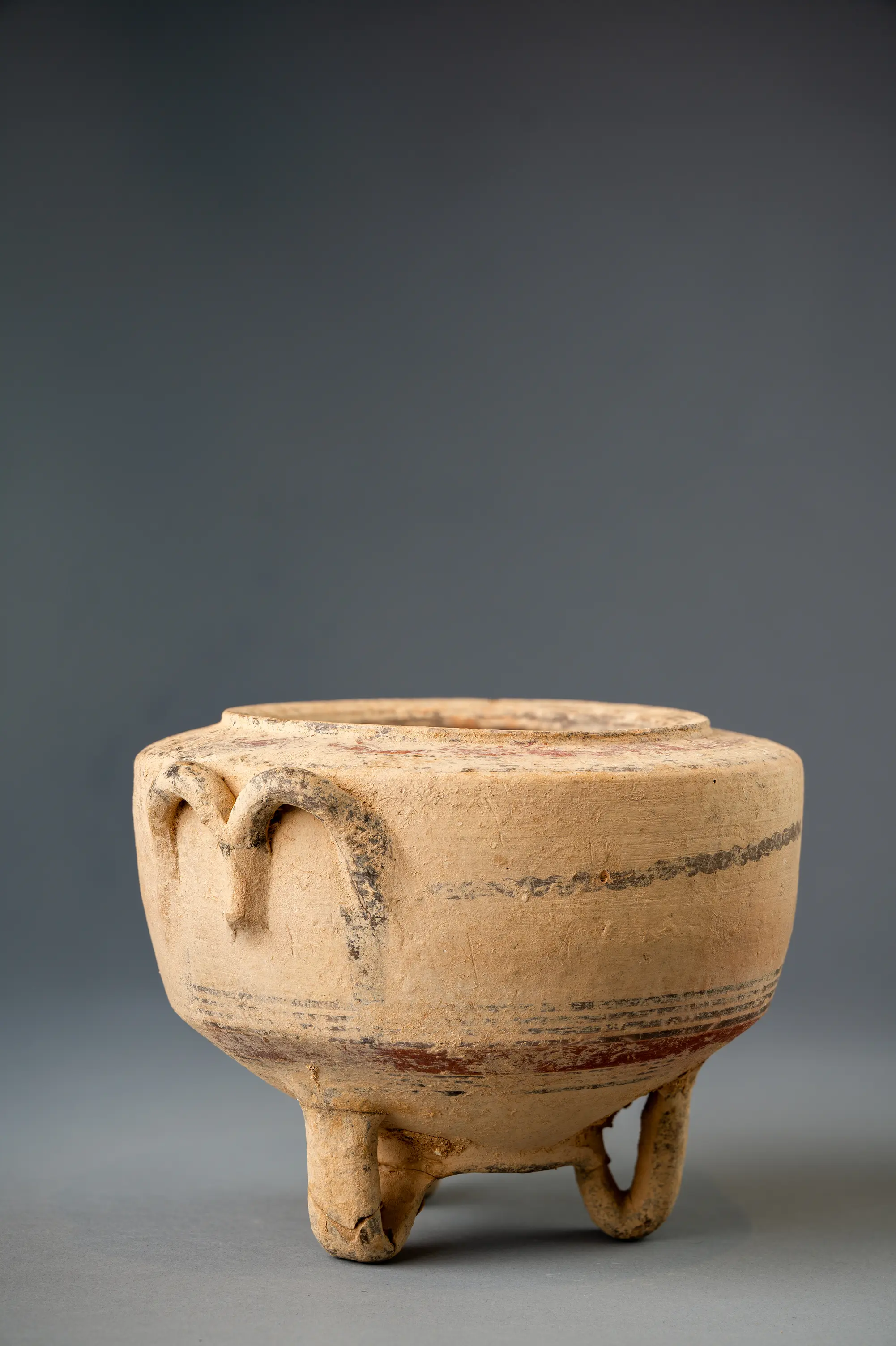 Jars (Amphora)Large storage and transport containers of Cyprus, from Bronze Age pithoi and imported Canaanite jars to the island's own Iron Age transport amphoras.ChalcolithicMiddle Bronze AgeLate Bronze AgeCypro-GeometricCypro-Archaic
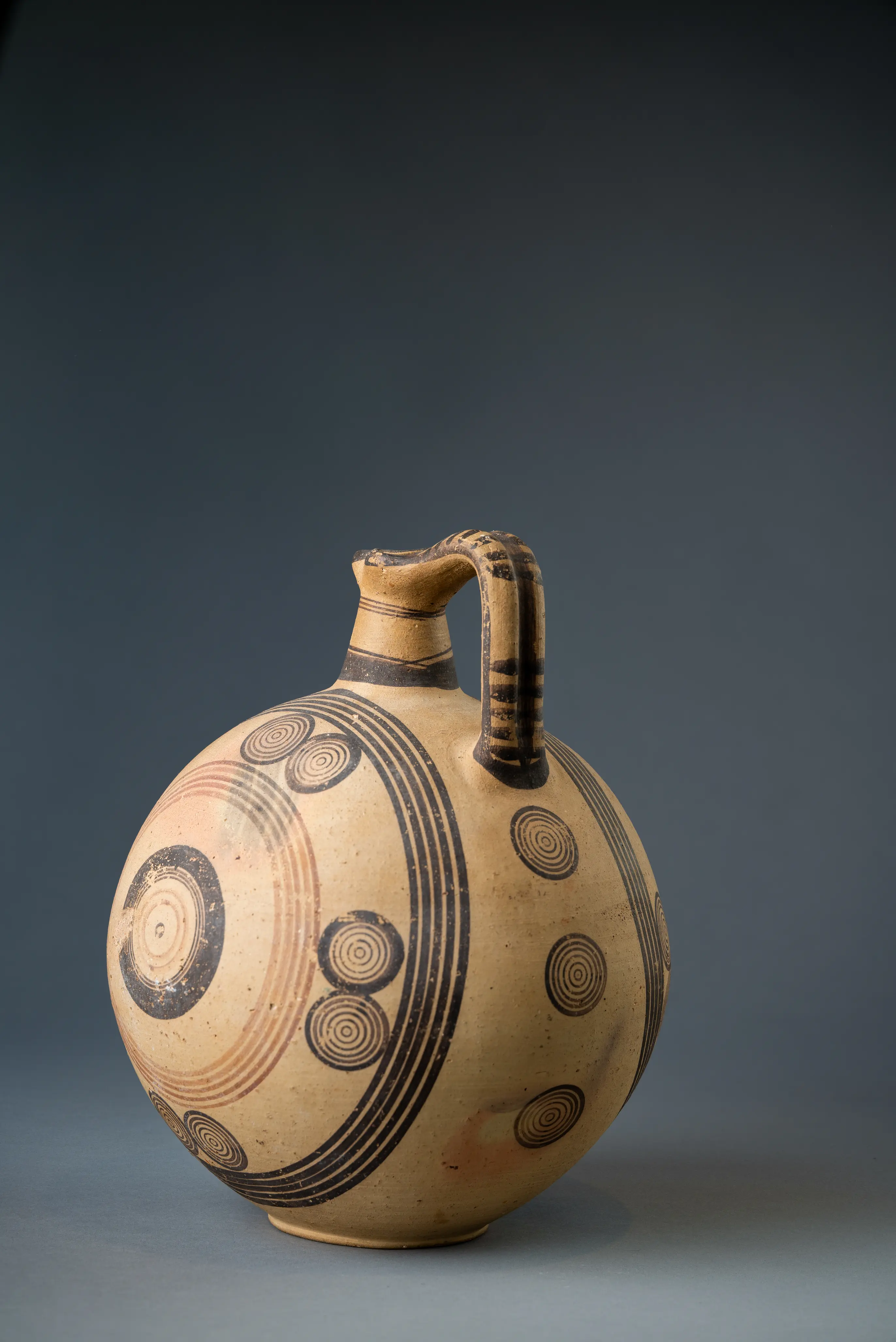 Jugs (Oinochoe)The Iron Age Cypriot pouring jug or oinochoe, a painted wheelmade vessel for liquids made in regional workshops and widely exported around the Mediterranean.Cypro-GeometricCypro-ArchaicCypro-Classical
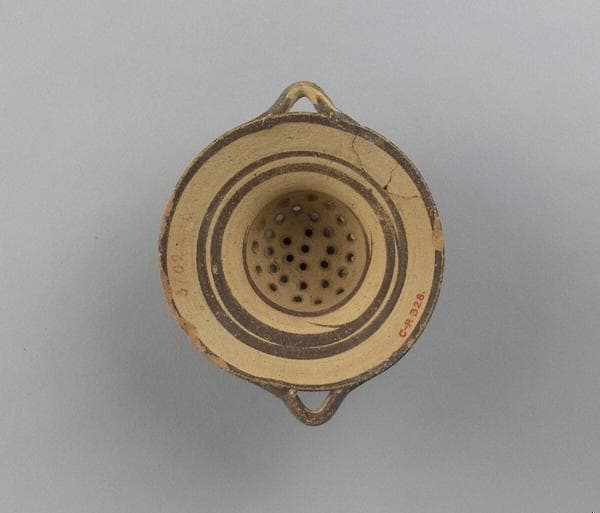 StrainersAny vessel with deliberate perforations that let liquid through and hold solids back, from Base Ring strainer jars to Iron Age strainer jugs and bronze strainers.Middle Bronze AgeLate Bronze AgeCypro-GeometricCypro-Archaic
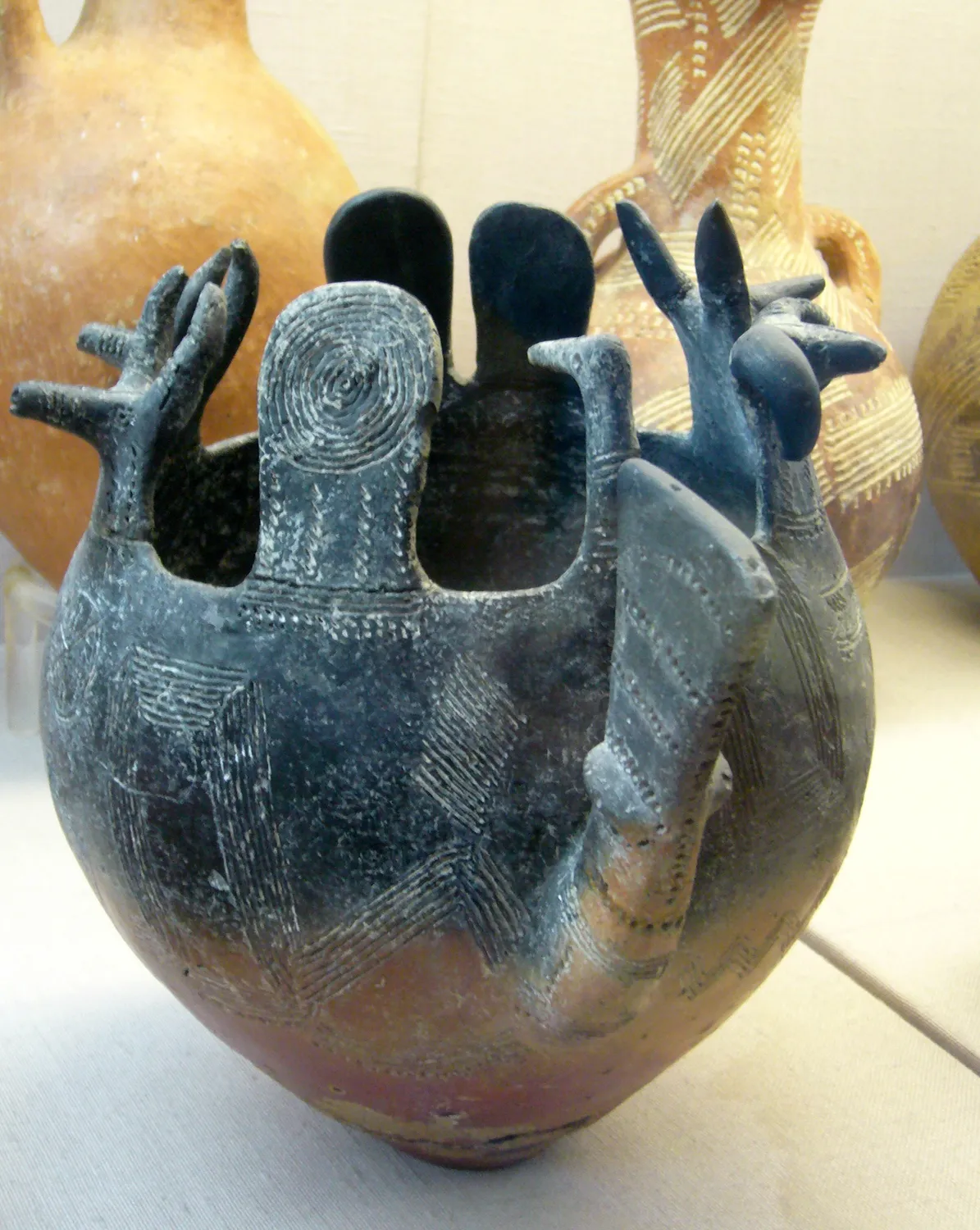
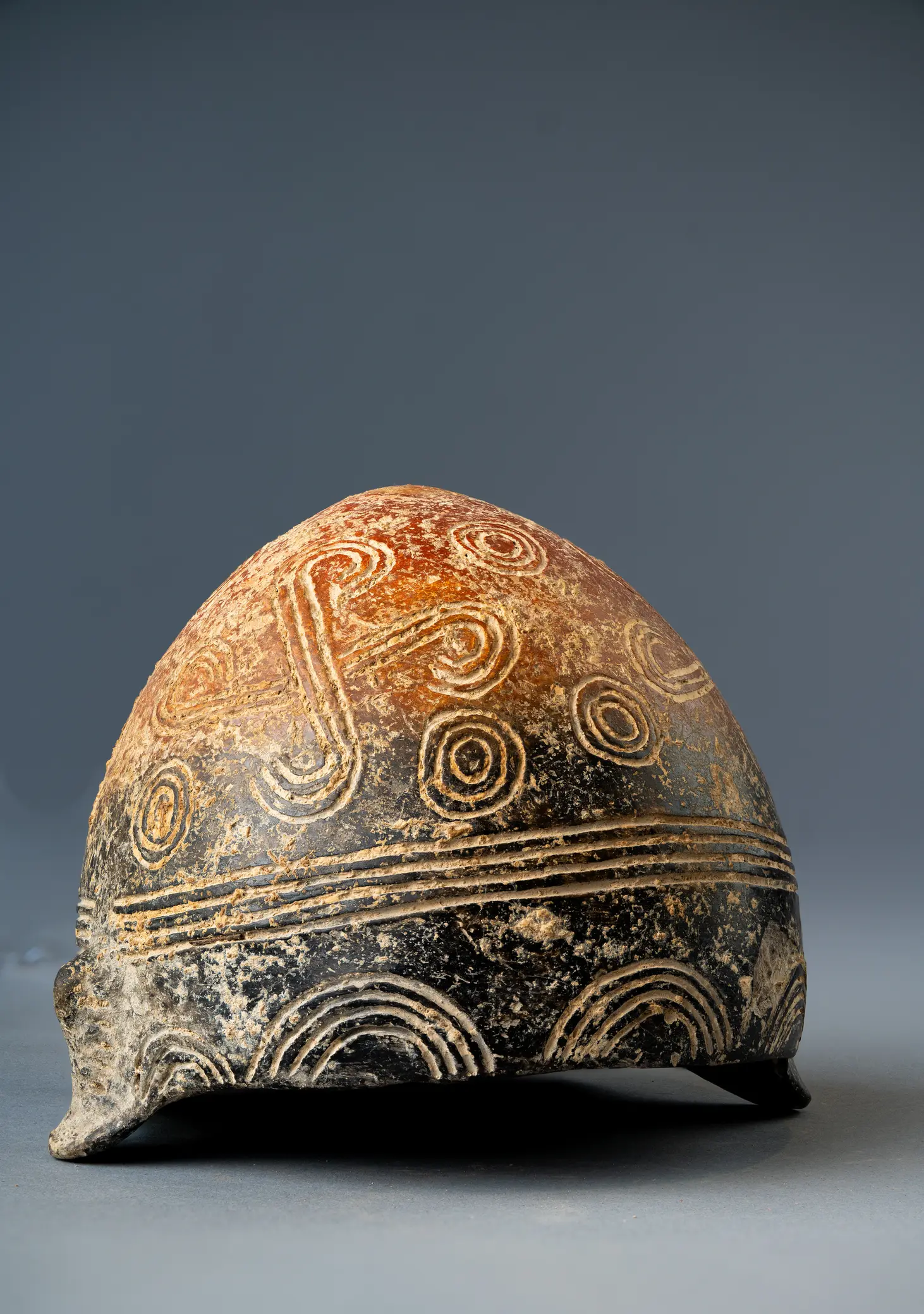 Tulip Bowls and Cult VesselsDeep, conical, black-topped Red Polished bowls of Early Cypriot I–II, and their elaborate protome-rimmed form, known mostly from the tombs of Vounous.Early Bronze Age
Statues
8 entriesSection overview
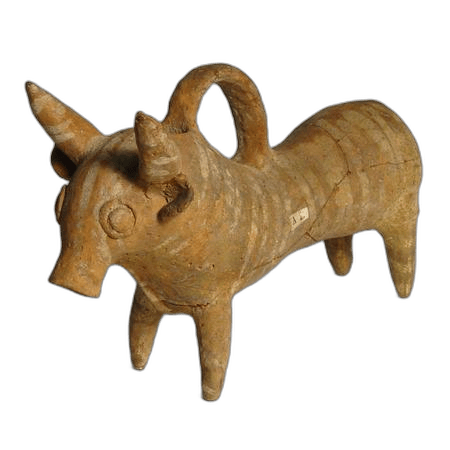 Base Ring Bull VesselsHand-built Base Ring ware pouring vessels in the form of a bull, made in Late Bronze Age Cyprus and found in tombs, settlements and sanctuaries.Late Bronze Age
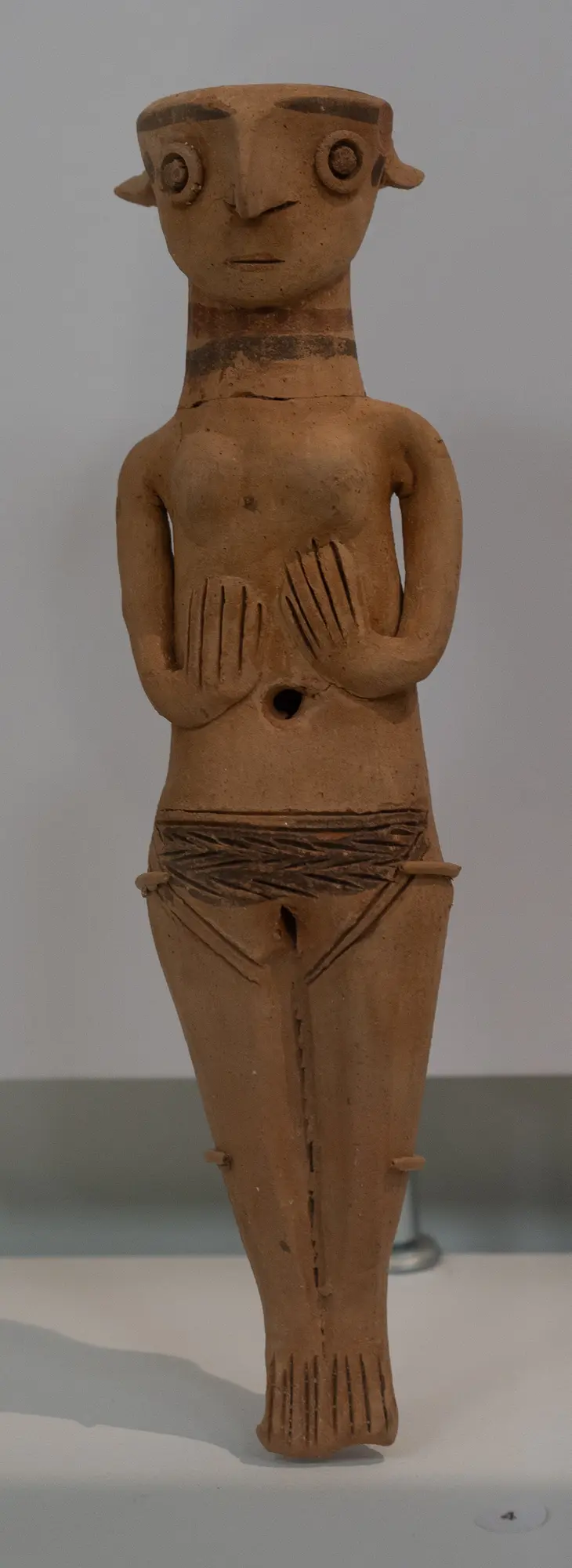 Base Ring Figurines (Astarte Type)Handmade Base Ring ware terracotta figurines of nude women from Late Bronze Age Cyprus, found in tombs and houses and often linked to Astarte.Late Bronze Age
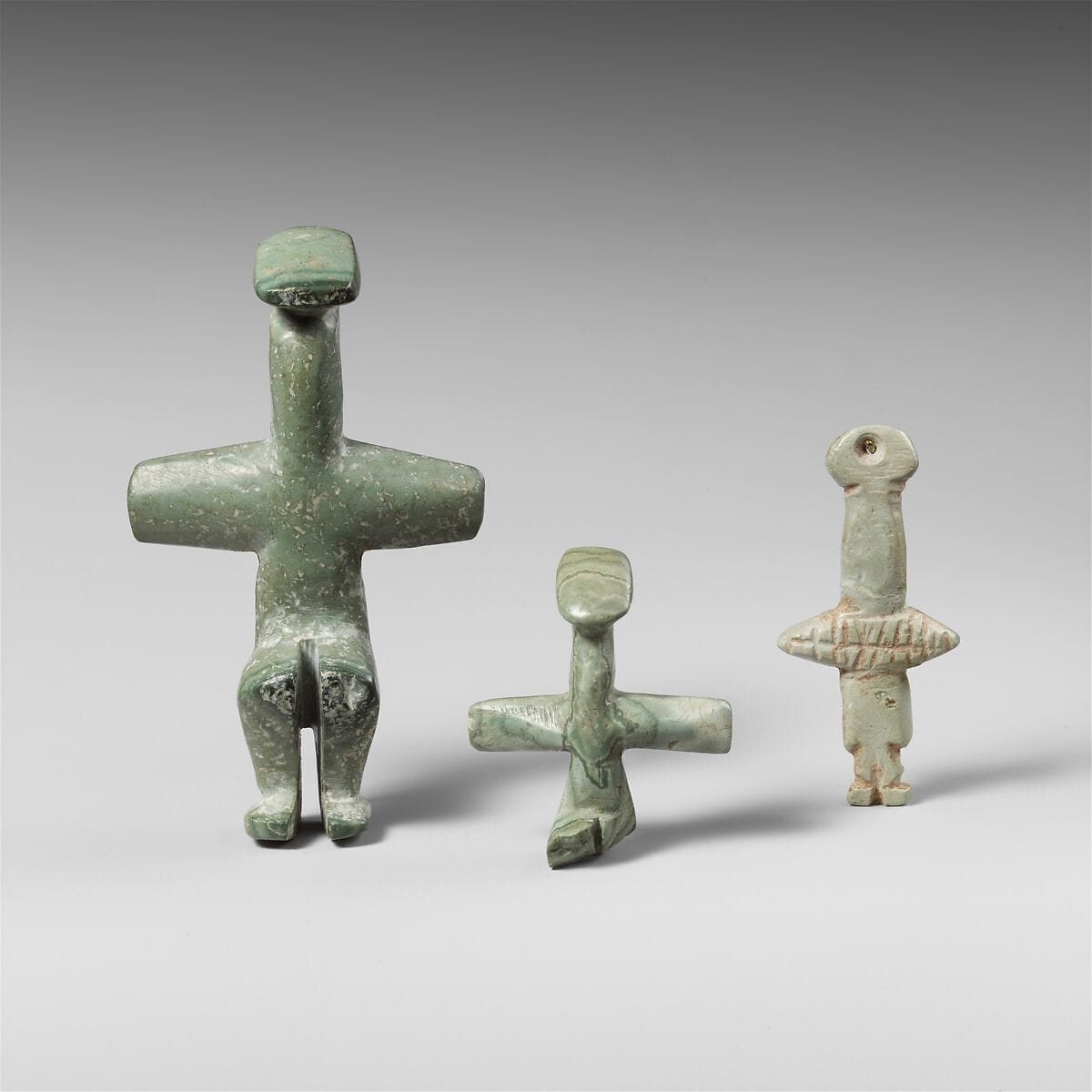 Cruciform FigurinesSmall stylised human figures with outstretched arms and bent legs, carved mostly in picrolite in Chalcolithic Cyprus and often worn as pendants.Chalcolithic
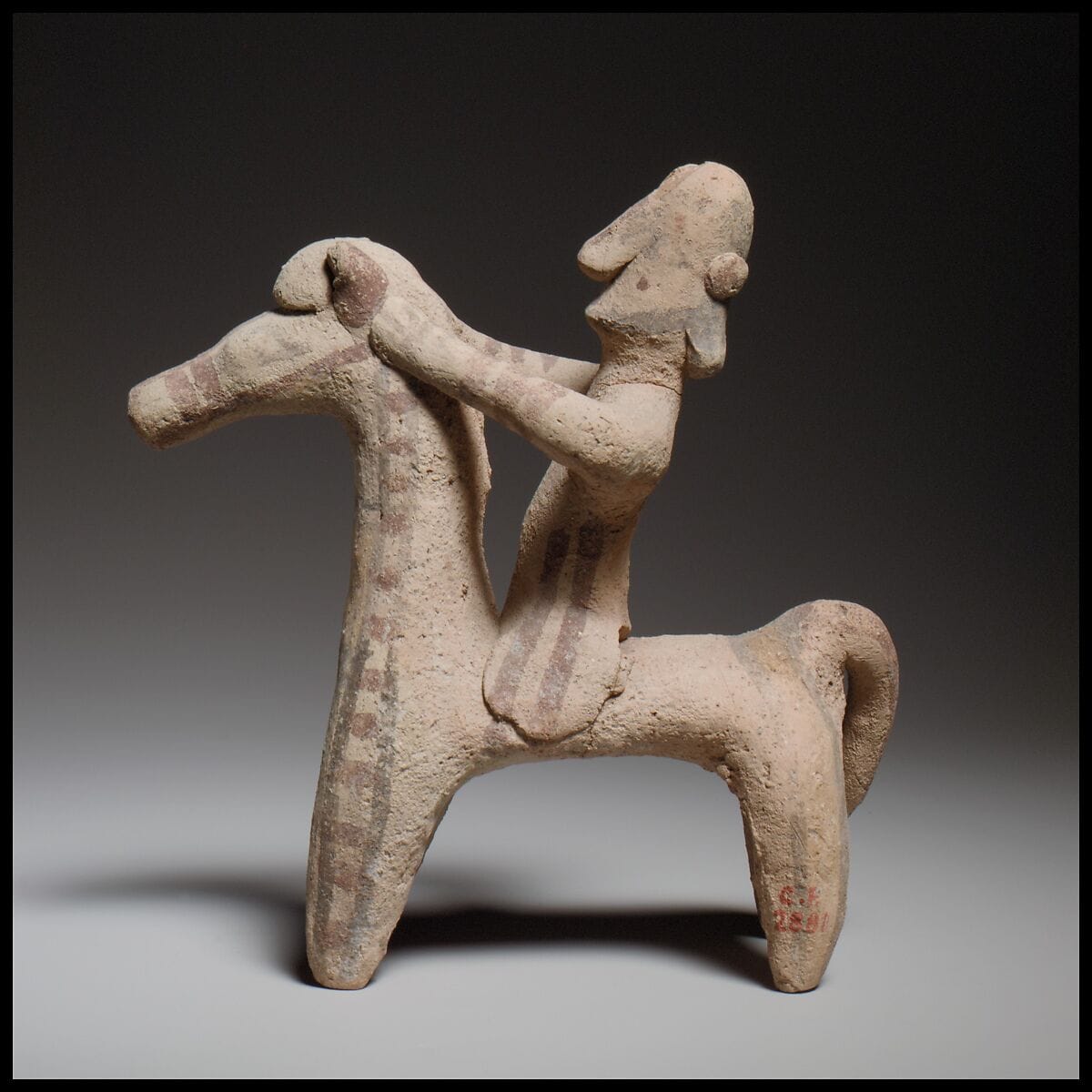 Horse and Rider FigurinesTerracotta figurines of a mounted rider, dedicated in sanctuaries and placed in tombs across Iron Age Cyprus, most abundantly in the Cypro-Archaic period.Cypro-GeometricCypro-Archaic
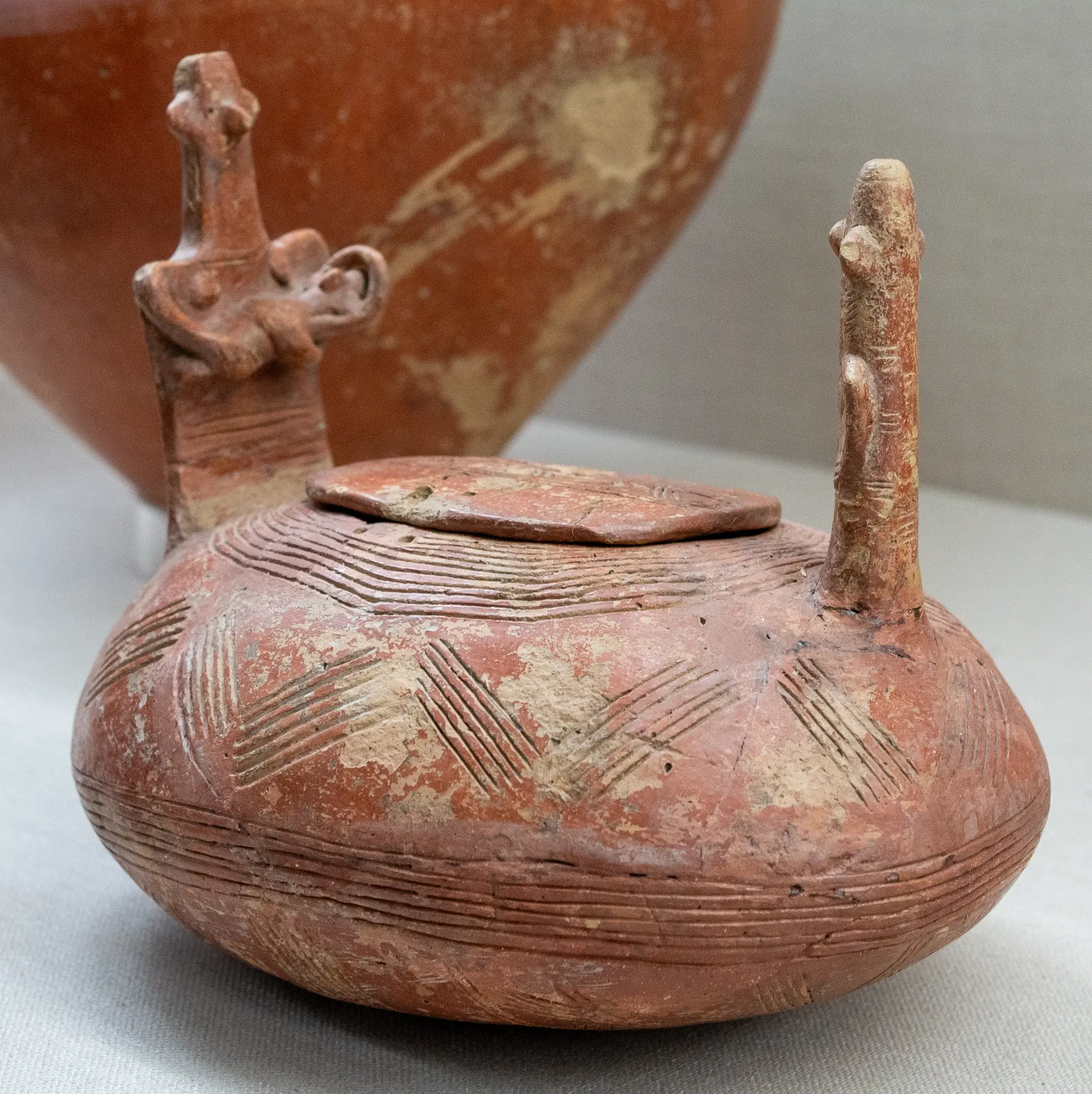 Plank FiguresFlat, rectangular, stylised human figures, mostly in incised Red Polished clay, made in Cyprus from Early Cypriot IIIA to Middle Cypriot II.Early Bronze AgeMiddle Bronze Age
- Red Polished Zoomorphic Vessels and Animal FigurinesRed Polished ware animal figurines, animal protomes applied to vessels, and animal-shaped askoi of Early and Middle Bronze Age Cyprus, mostly from tombs.Early Bronze AgeMiddle Bronze Age
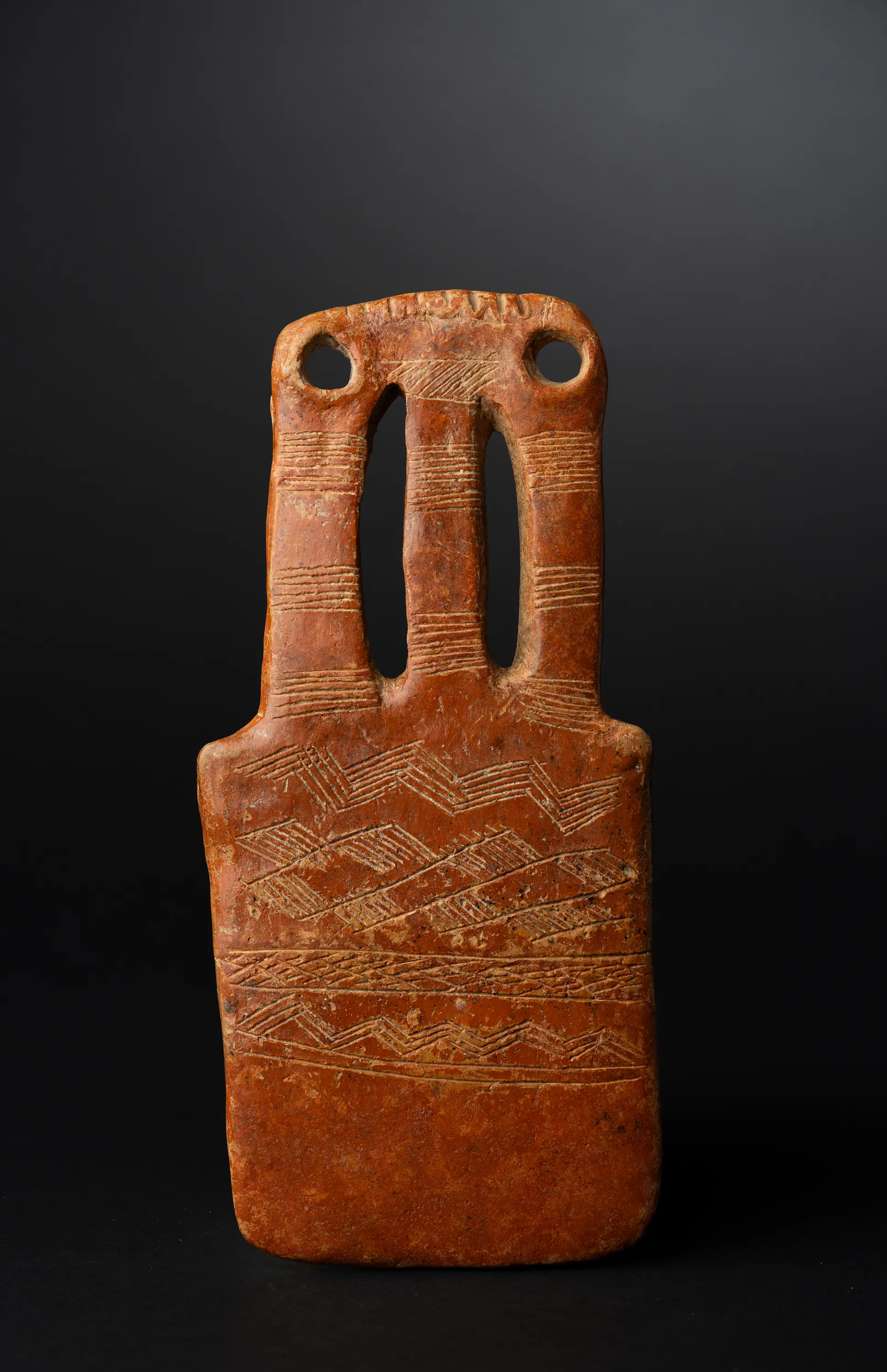 Stone Plank FiguresA rare class of about fourteen Bronze Age Cypriot plank figures carved in gypsum, chalk or limestone, most of them without a recorded find-spot.Early Bronze AgeMiddle Bronze Age
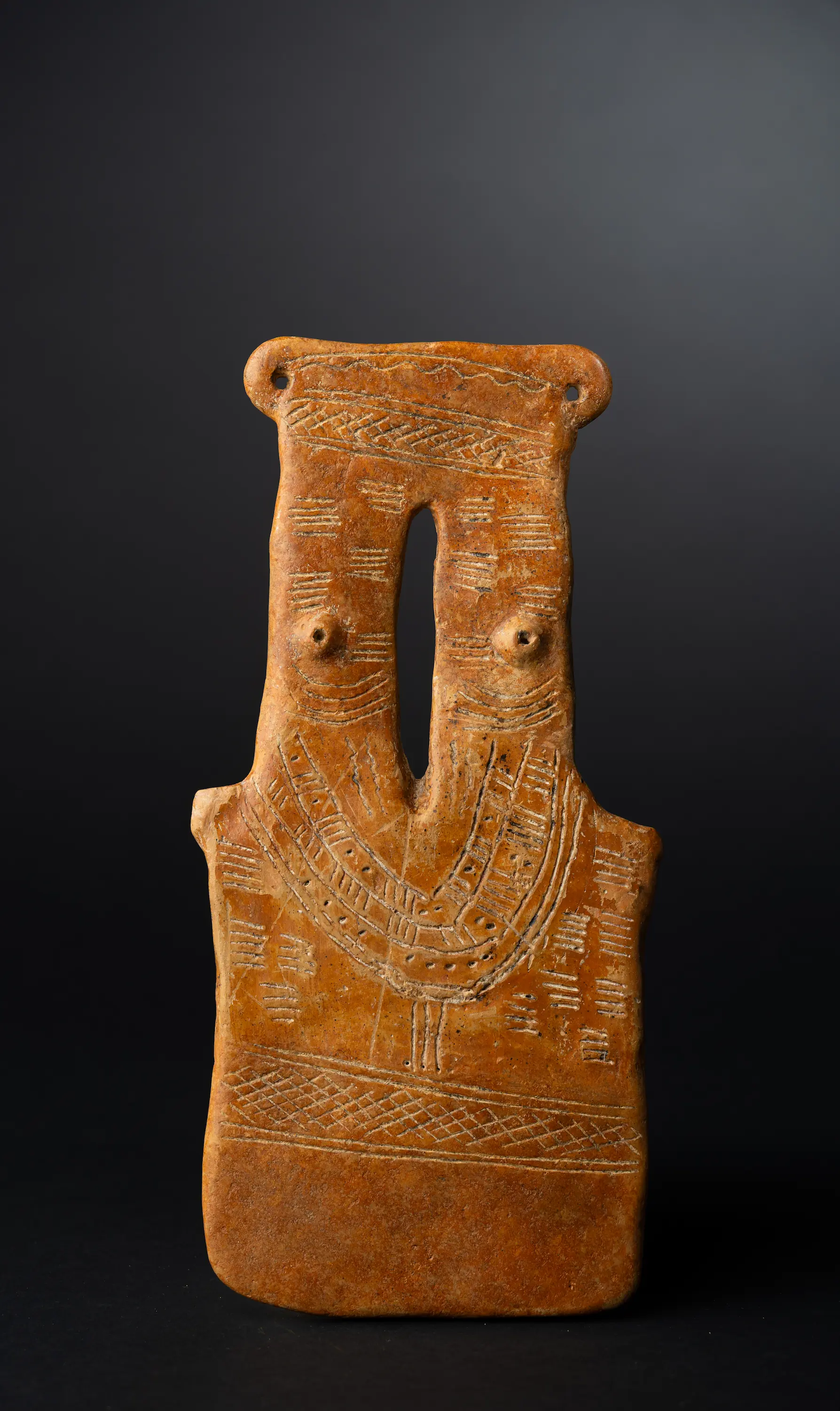 The Statues of Ancient CyprusSectionThe statues and figurines of ancient Cyprus, in stone, clay and metal, from Neolithic pebble figures to Hellenistic and Roman limestone votives.NeolithicChalcolithicEarly Bronze AgeMiddle Bronze AgeLate Bronze AgeCypro-GeometricCypro-ArchaicCypro-ClassicalHellenisticRoman
Jewelry
1 entrySection overview
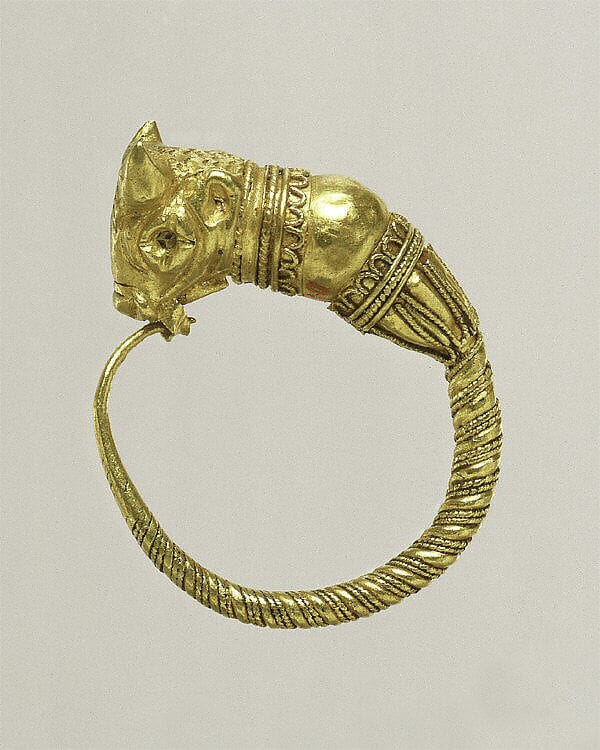
Weapons and Armour
2 entriesSection overview
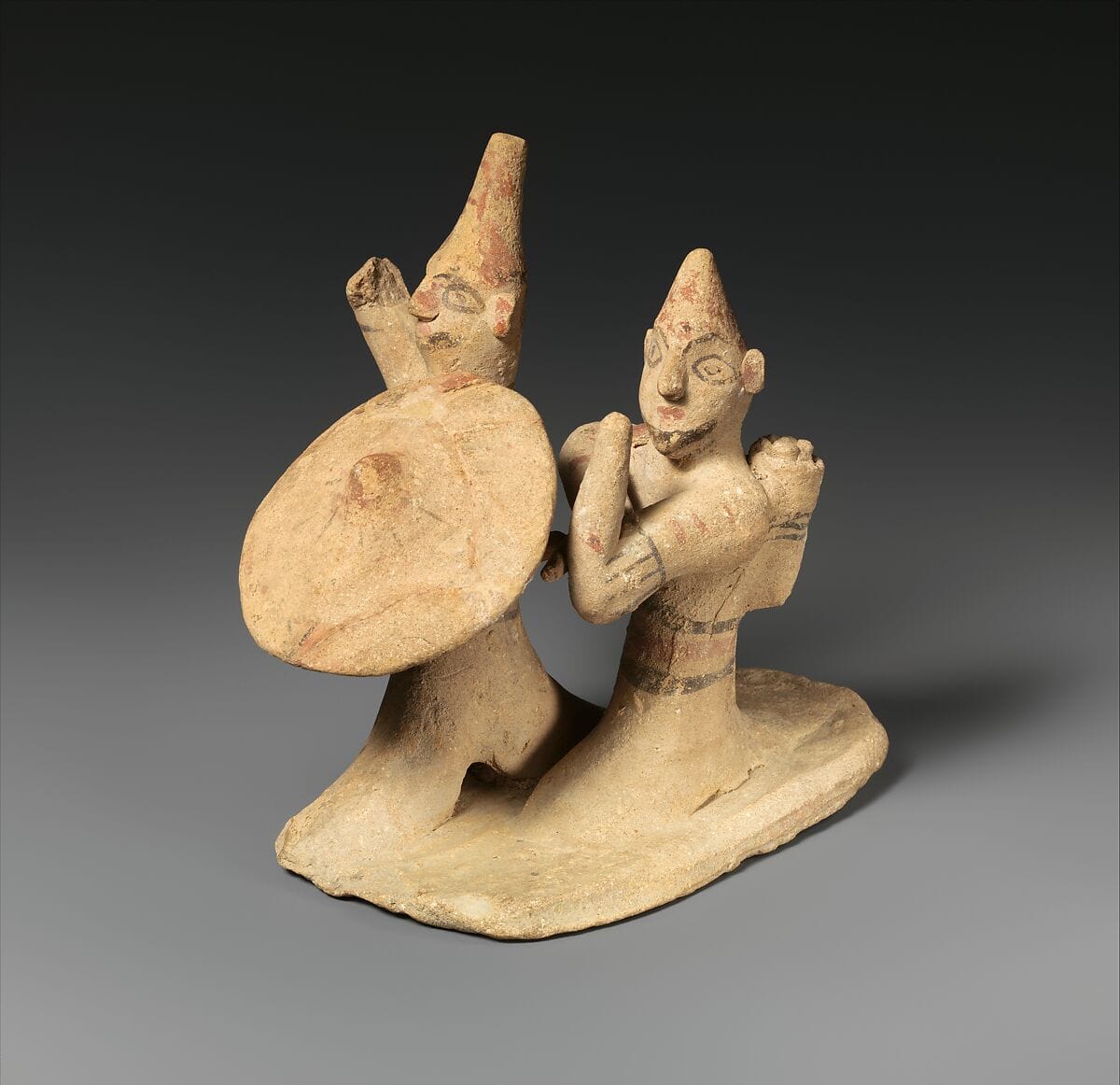 Arms and Armour of Iron Age CyprusThe iron and bronze weapons, armour and chariots of Cyprus from the first iron daggers of c. 1100–1050 BCE to the end of the city-kingdoms around 310 BCE.Cypro-GeometricCypro-ArchaicCypro-Classical
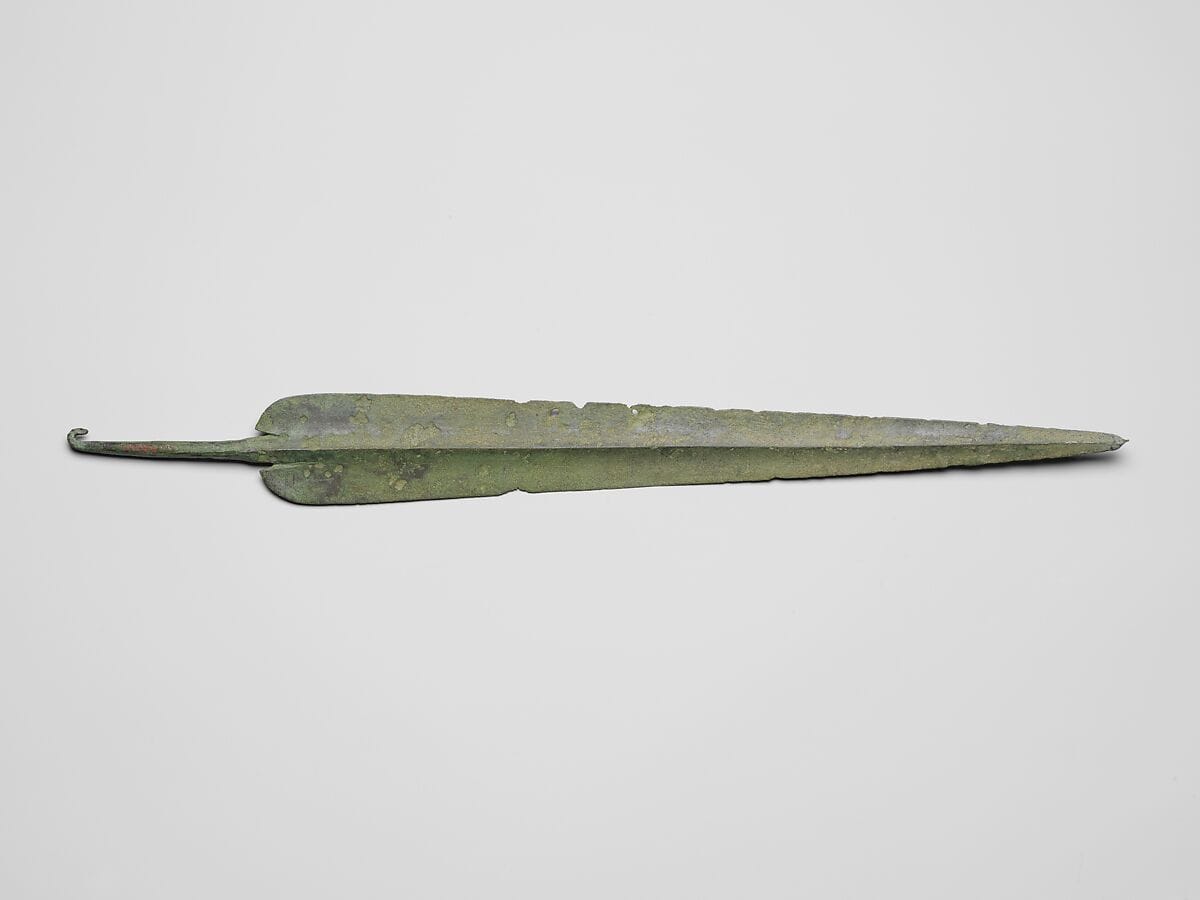 Weapons of Bronze Age CyprusThe copper and bronze weapons of Bronze Age Cyprus, from Philia hook-tang spearheads and riveted daggers to the Naue II swords and greaves of Enkomi.Early Bronze AgeMiddle Bronze AgeLate Bronze Age
Tools and Technologies
2 entriesSection overview
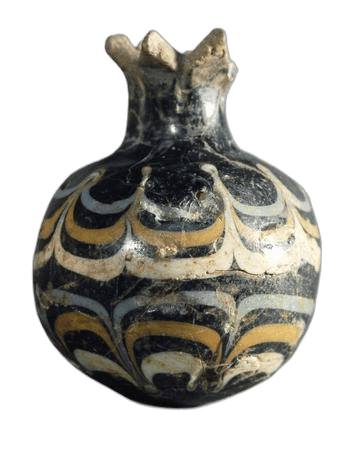 Glass in Ancient CyprusGlass vessels found on Cyprus from the Late Bronze Age to the Roman period, mostly from tombs, with local workshops argued but never excavated.Late Bronze AgeCypro-ClassicalHellenisticRoman
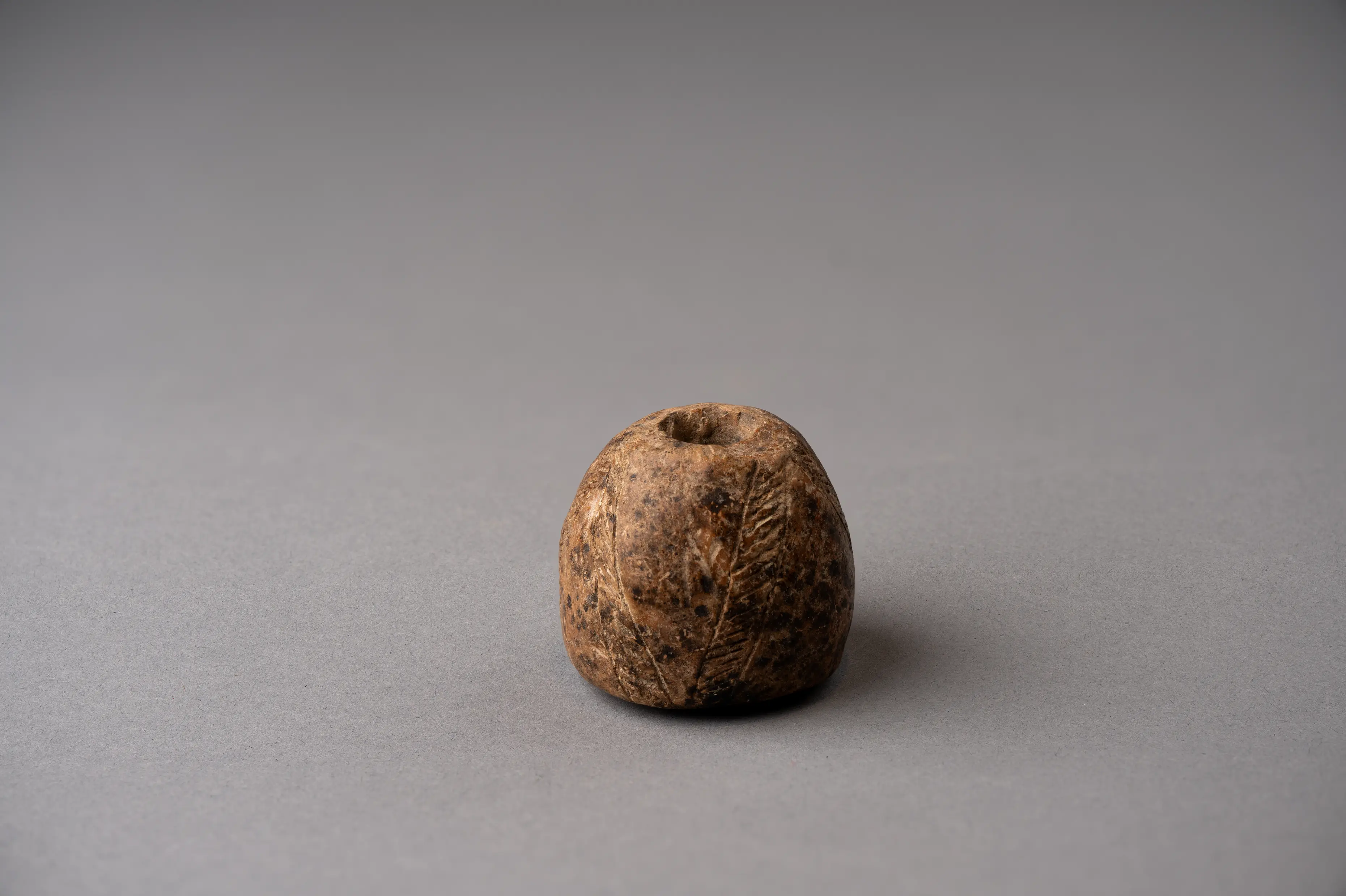 Spindle Whorls and Textile Tools in Ancient CyprusThe tools of spinning, weaving and dyeing in ancient Cyprus, from Neolithic bone needles to the terracotta whorls and loom weights of the Bronze Age.NeolithicChalcolithicEarly Bronze AgeMiddle Bronze AgeLate Bronze Age
Architecture
1 entrySection overview
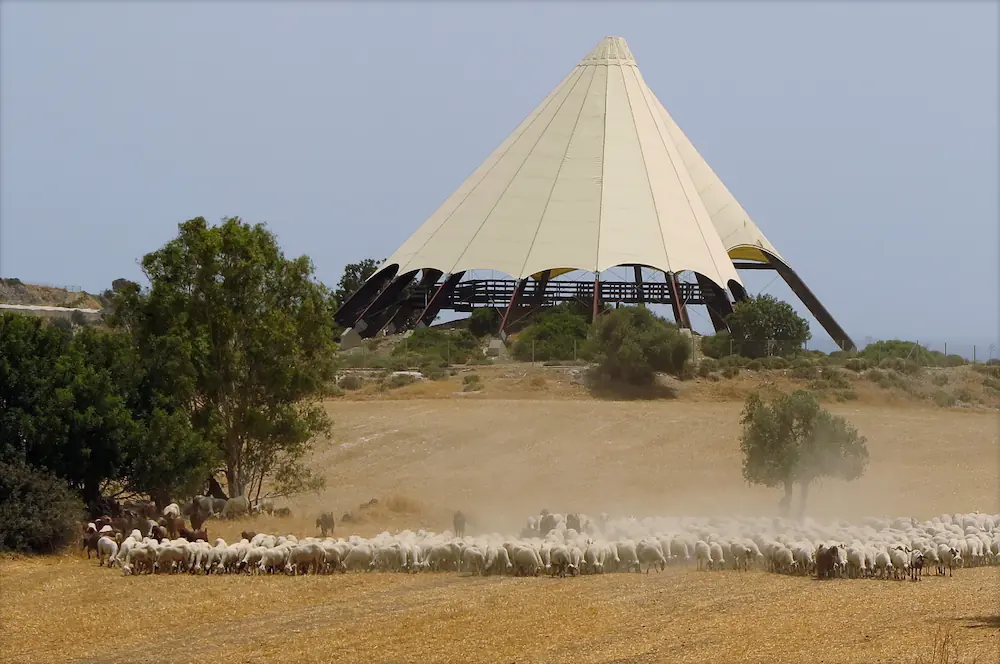
Mortuary Practices
4 entriesSection overview
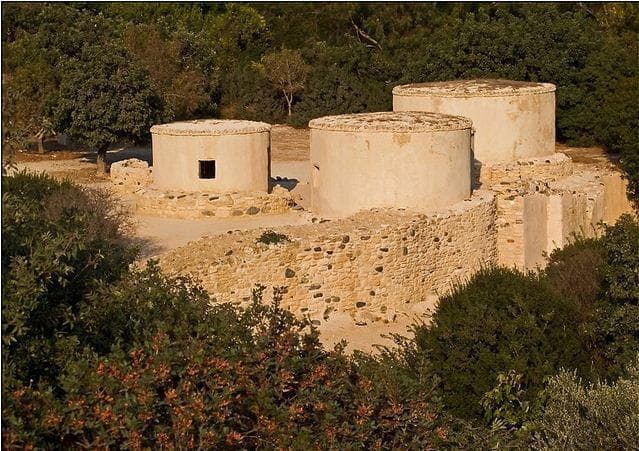 Neolithic and Chalcolithic Burial in CyprusBurial on Cyprus from the first farming villages to the eve of the Bronze Age, mostly contracted bodies in pits beneath or beside houses.NeolithicChalcolithic
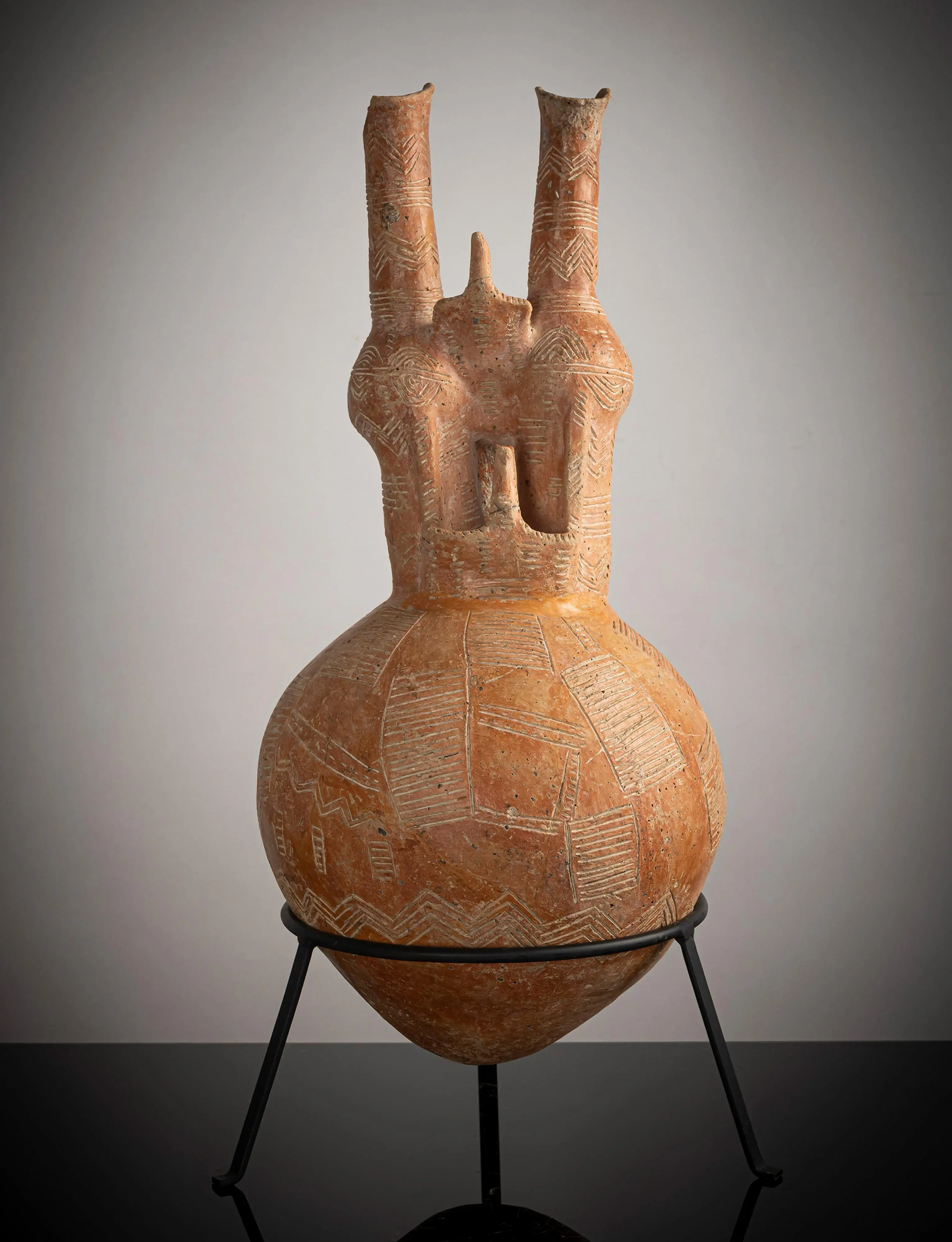 Vounous and Early Bronze Age BurialBellapais-Vounous is a north-coast cemetery of rock-cut chamber tombs whose figured Red Polished grave goods define Early Bronze Age burial in Cyprus.Early Bronze AgeMiddle Bronze Age
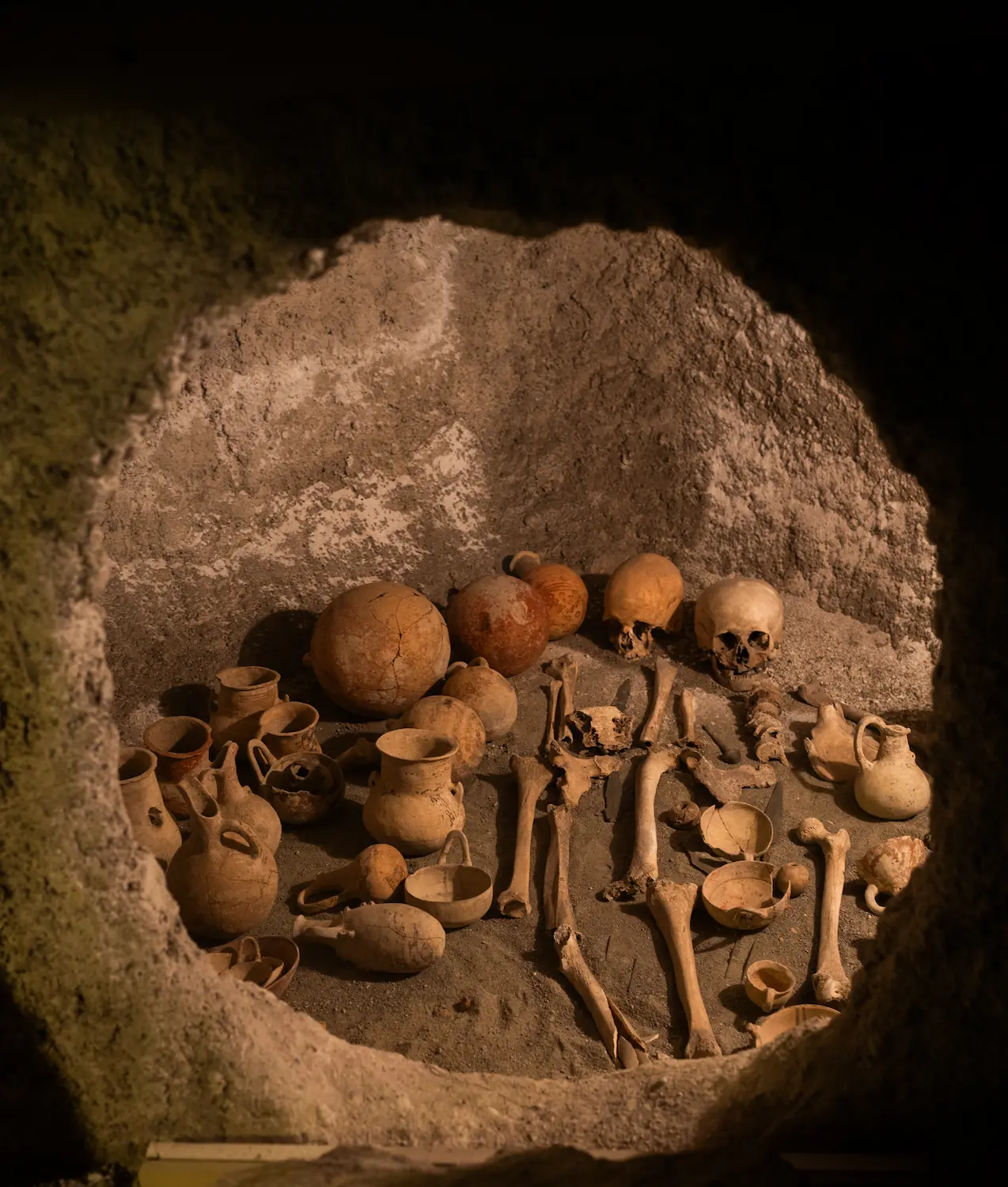
 Bronze Age Chamber TombsRock-cut chambers entered by a dromos and reopened for successive burials were the standard Cypriot grave from the Philia phase to the end of the Bronze Age.Early Bronze AgeMiddle Bronze AgeLate Bronze Age
 Society, Ritual, and Identity in Ancient Cypriot Mortuary PracticeSectionHow the people of ancient Cyprus buried and remembered their dead, from graves beneath Neolithic houses to rock-cut chamber tombs and Iron Age royal tombs.NeolithicChalcolithicEarly Bronze AgeMiddle Bronze AgeLate Bronze AgeCypro-Geometric
Daily Life
2 entriesSection overview
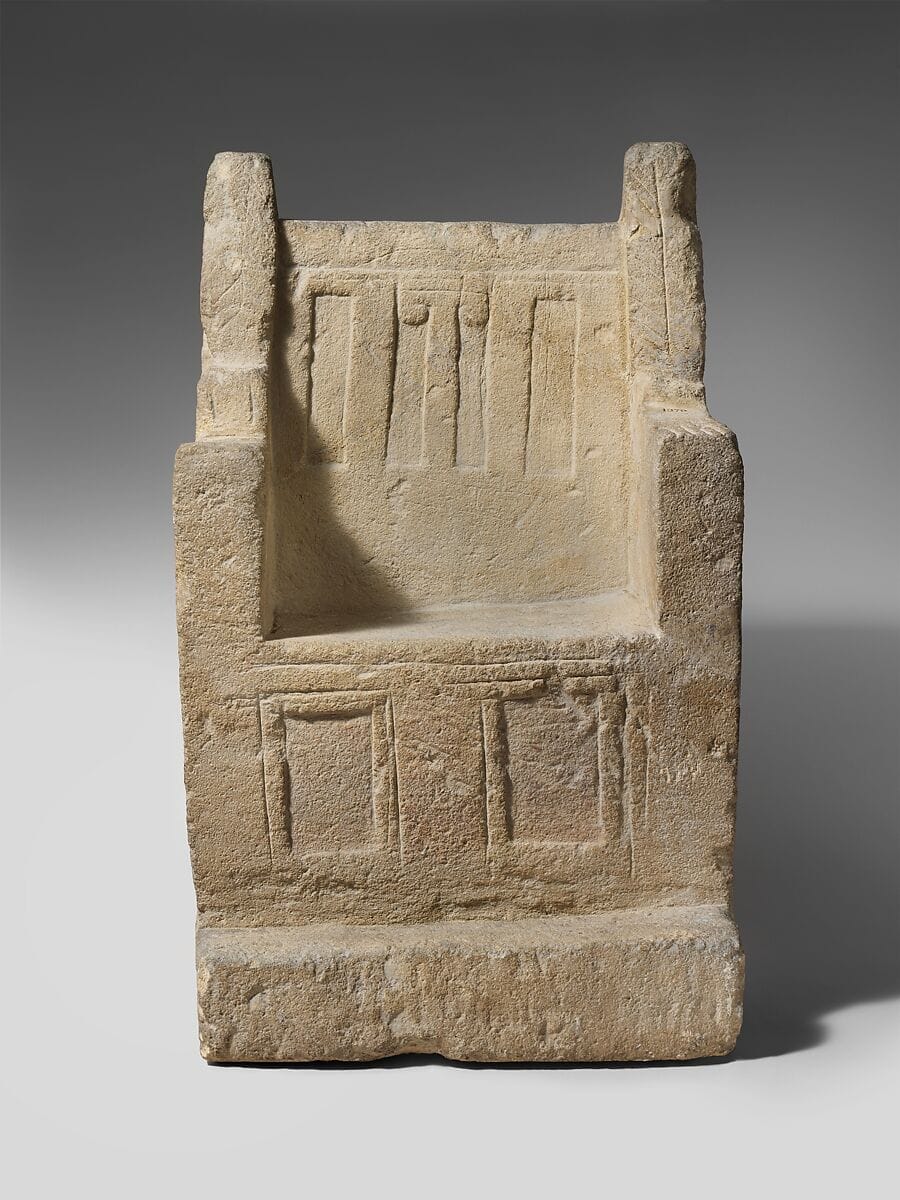 Furniture in Ancient CyprusHow Cypriots sat, slept and stored goods from the Neolithic to the Archaic kingdoms, known almost entirely from built benches, clay models, seals and royal tombs.NeolithicChalcolithicEarly Bronze AgeMiddle Bronze AgeLate Bronze AgeCypro-Archaic
- Population and Demography in Ancient CyprusThe methods and published estimates for how many people lived in ancient Cyprus, from Neolithic Khirokitia to the Classical kingdoms, where every figure is a model.NeolithicChalcolithicMiddle Bronze AgeLate Bronze AgeCypro-ArchaicCypro-Classical
Chronology
3 entriesSection overview
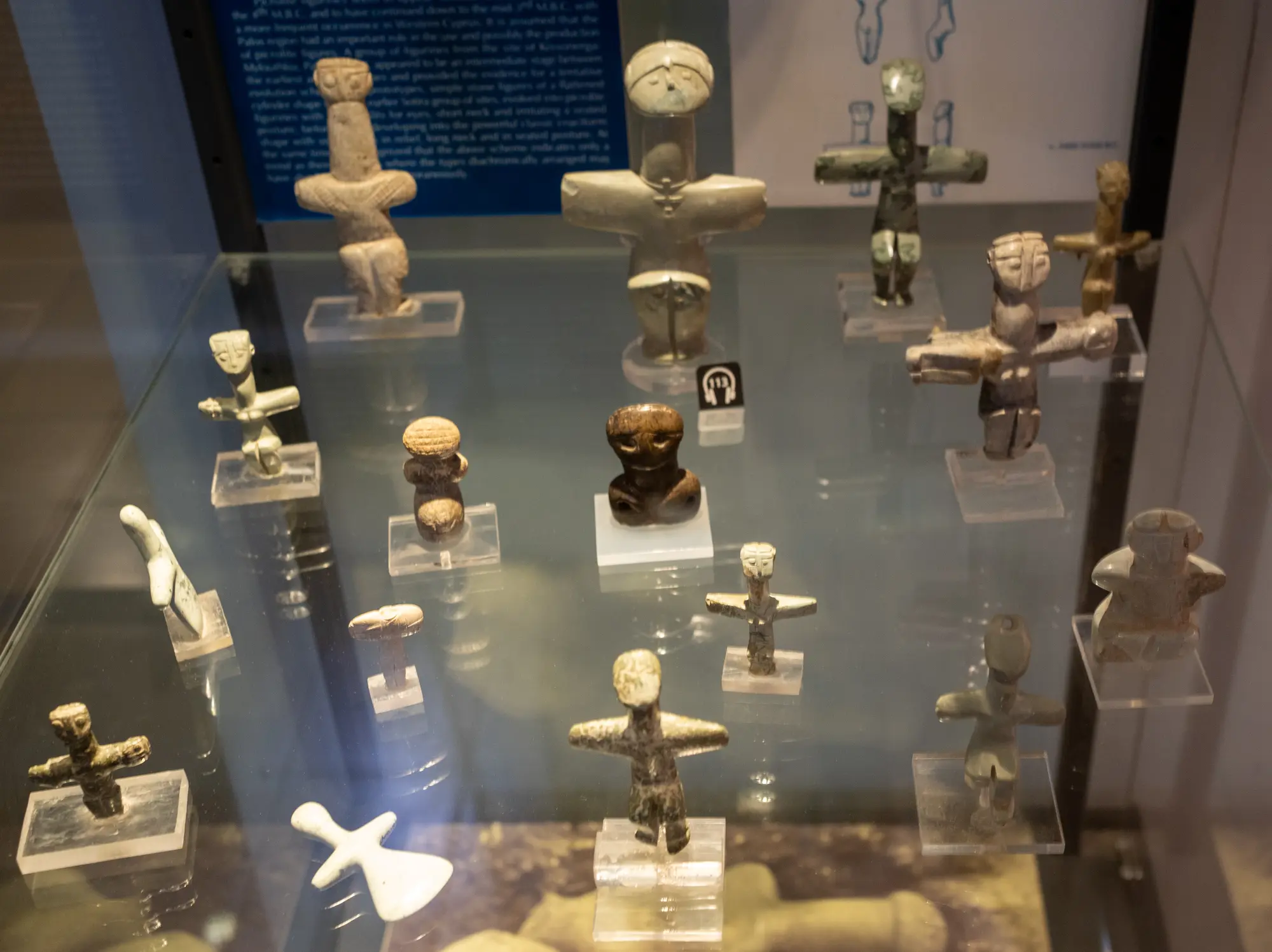 Chalcolithic CyprusThe period c. 3900–2500 BCE of circular villages, Red-on-White pottery, picrolite cruciform figures and the island's first small-scale copper working.Chalcolithic
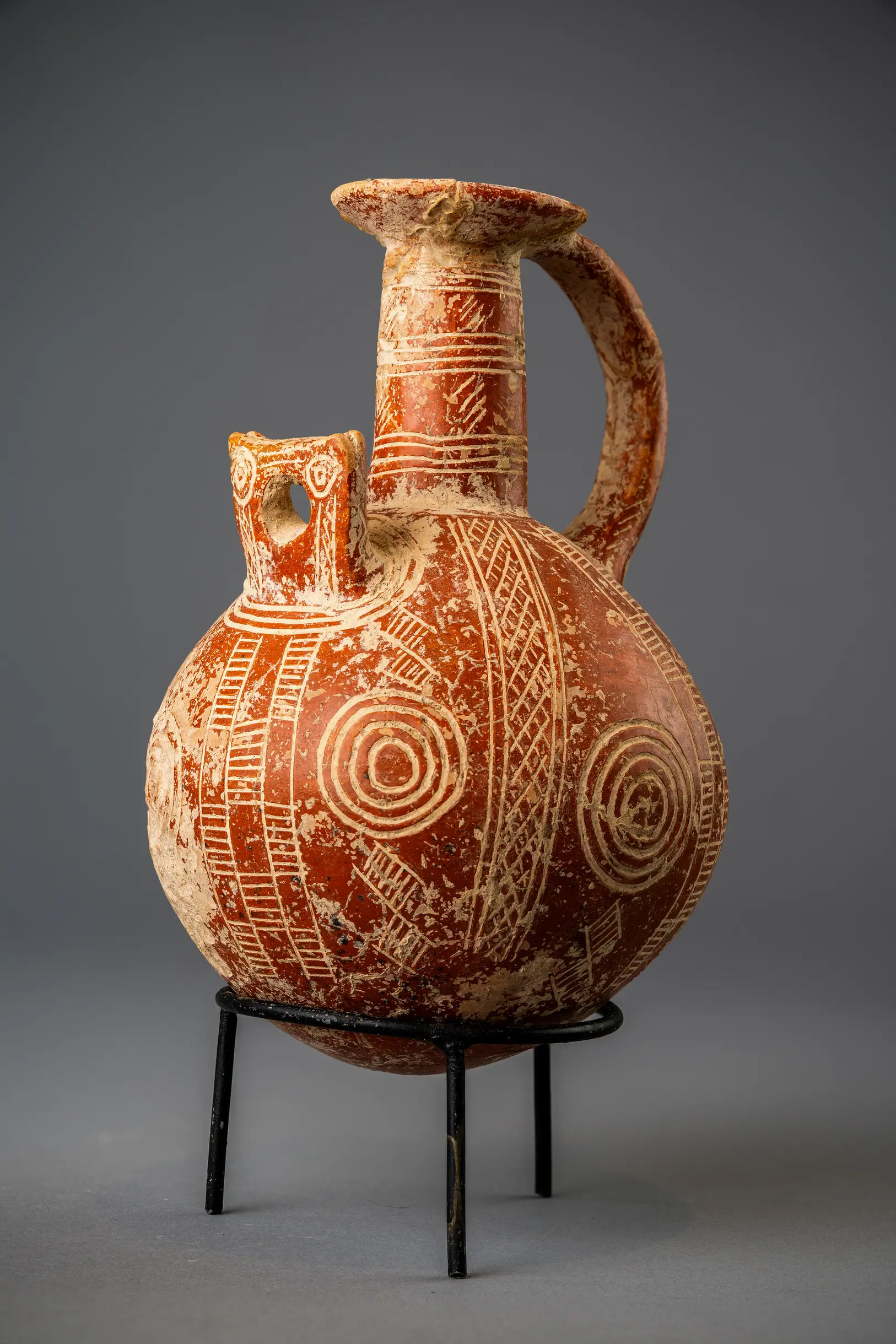 Early Bronze Age CyprusThe period c. 2500–1950 BCE, from the Philia phase through Early Cypriot I–III, of rectilinear villages, Red Polished pottery and chamber-tomb cemeteries.Early Bronze Age
- Cypro-Geometric CyprusThe Early Iron Age of Cyprus, c. 1050–750 BCE, of new dromos tombs, early ironworking, the Cypriot Syllabary and the debated origins of the city-kingdoms.Cypro-Geometric