
The Statues and Figurines of Ancient Cyprus
The production of statues and figurines in ancient Cyprus spans millennia, creating a rich and complex archaeological record that reflects the island's internal social developments and its extensive connections across the Mediterranean [1, p. 217]. Crafted from materials like local limestone, terracotta, and occasionally metal, these objects range from highly schematic prehistoric figures to life-size classical statues, offering profound insights into the ritual practices, social organization, and cultural identity of Cypriot society from the Neolithic period through the Roman era [2, p. 13; 1, p. 20].
The Neolithic and Chalcolithic Periods (c. 9000–2500 BC)
Figurine production in Cyprus begins in the Aceramic Neolithic period, though finds from this era are scarce [3, p. 35; 4, p. 116]. The earliest examples, dating to the Cypro-Pre-Pottery Neolithic A and B (Cypro-PPNA/B), show considerable variety in form and function despite their small numbers [4, p. 403]. These initial figurines, found at both coastal and inland sites like Ayia Varvara Asprokremnos and Parekklisha, were predominantly made of stone, with only a few examples in baked clay [2, p. 120; 4, p. 92]. The repertoire includes simple, schematic "pebble figurines," created by modifying waterworn stones with notches to suggest a human form, as well as more detailed anthropomorphic representations [2, p. 95]. Their contexts suggest they were used by the living, possibly in foundation or closure rituals, with a broader mortuary function generally ruled out [2, p. 115]. The origins of these earliest figures are debated, but some may represent imported designs from the mainland, such as the Southern Levant, rather than purely local inventions [4, p. 120].
The subsequent Chalcolithic period saw a significant increase in figurine production and variety [3, p. 35; 5, p. 155]. While stone remained an important medium, the use of clay became more common, with fabrics and painted motifs often shared with contemporary pottery vessels [5, p. 155; 6, p. 72]. This period is renowned for its distinctive cruciform figurines, a type largely restricted to Cyprus, often carved from picrolite and depicting figures with outstretched arms and bent legs [2, p. 347; 4, p. 13]. Chalcolithic figurines are typically more individualistic than their Bronze Age successors, with a strong emphasis on female characteristics, though sexually ambiguous and male figures also exist [7, p. 8; 4, p. 145]. They have been found in a greater variety of contexts than their Neolithic predecessors [4, p. 403].
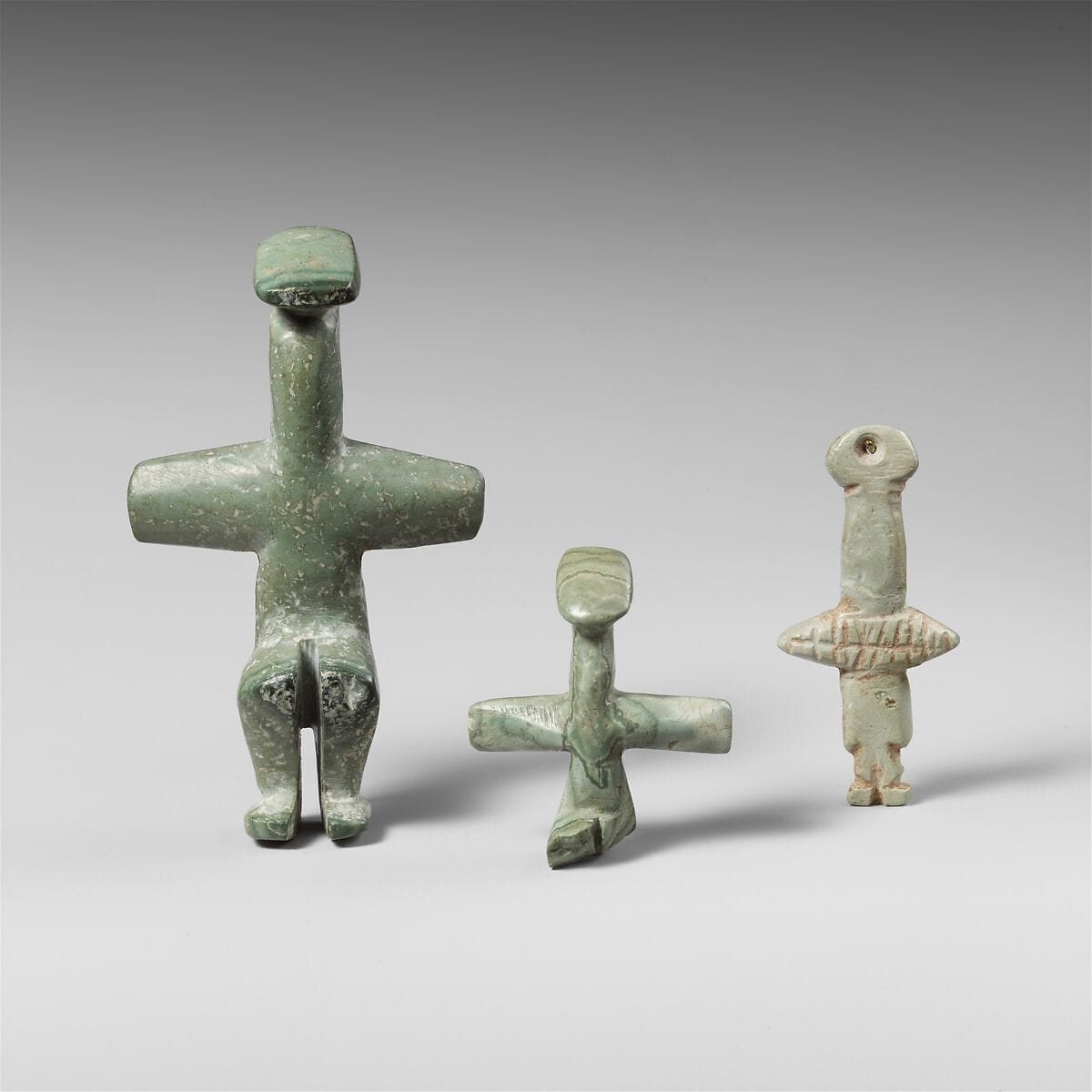
Cruciform Figurines
Cruciform figurines of Chalcolithic Cyprus: picrolite figures with outstretched arms and bent legs,...
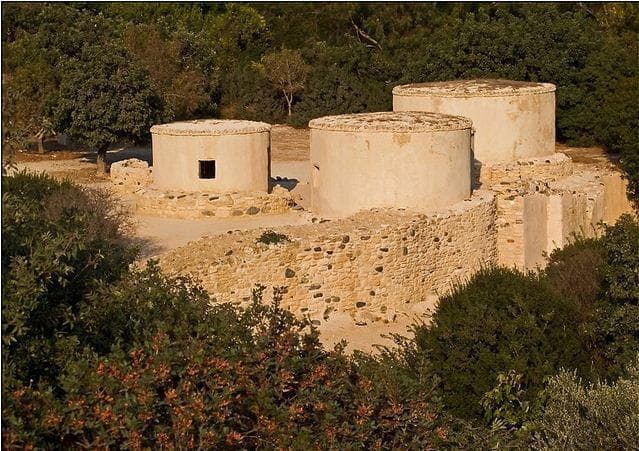
Neolithic and Picrolite Figurines
The stone and clay figurines of Neolithic Cyprus, the Khirokitia heads, the Sotira figure, and the...
The Bronze Age (c. 2500–1100 BC)
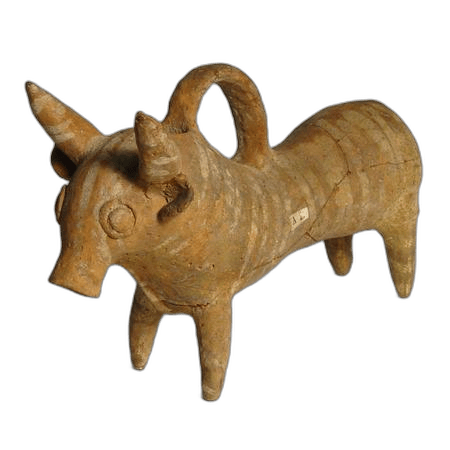
Base Ring Bull Vessels
Base Ring bull vessels: hand-built Late Bronze Age pouring vessels shaped as bulls, c. 1450–1100...
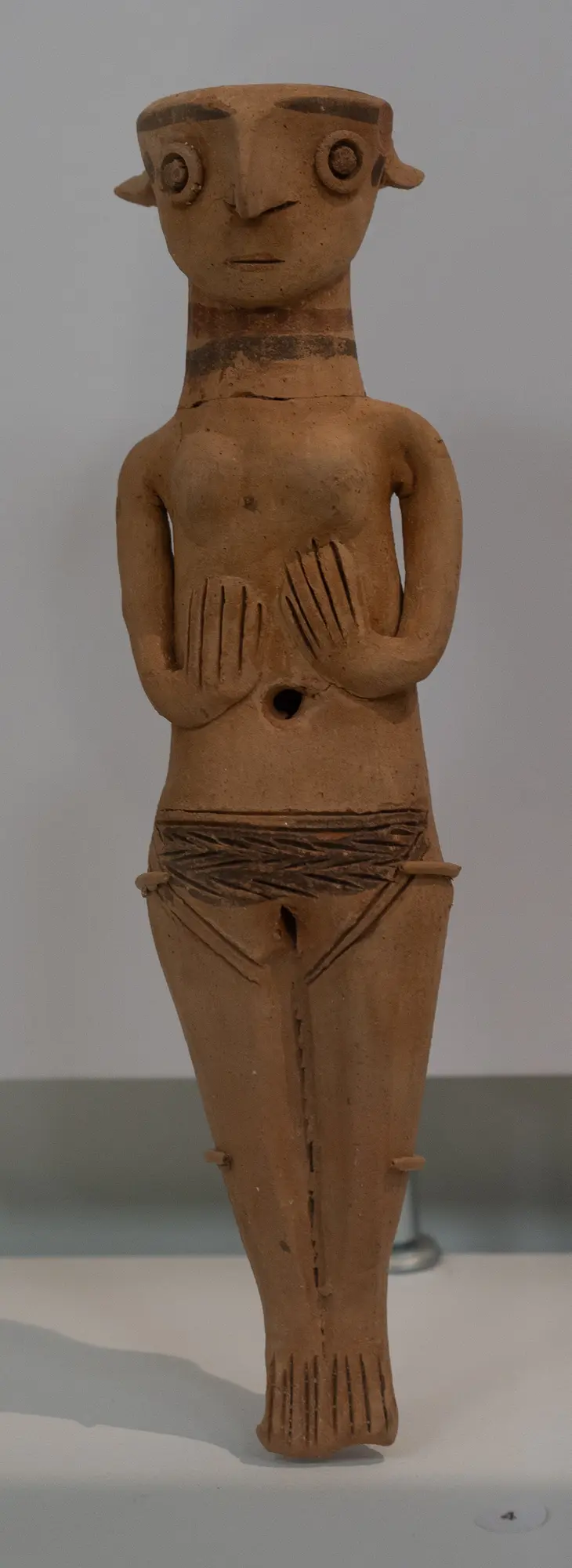
Base Ring Figurines (Astarte Type)
Handmade Base Ring terracotta figurines of nude women from Late Bronze Age Cyprus, often linked to...
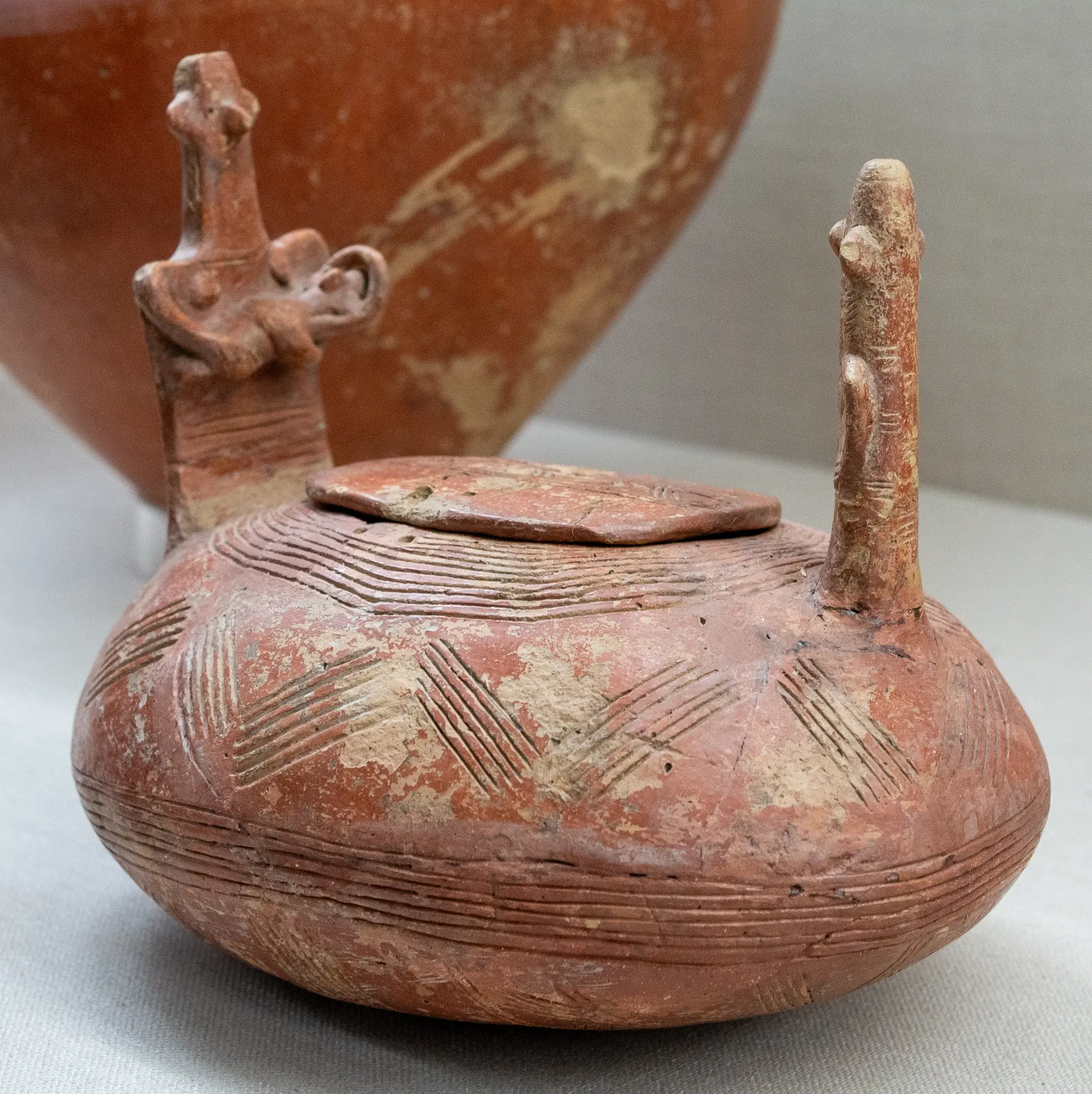
Plank Figures
Plank figures: flat, incised Red Polished human figures made in Cyprus from Early Cypriot IIIA to...
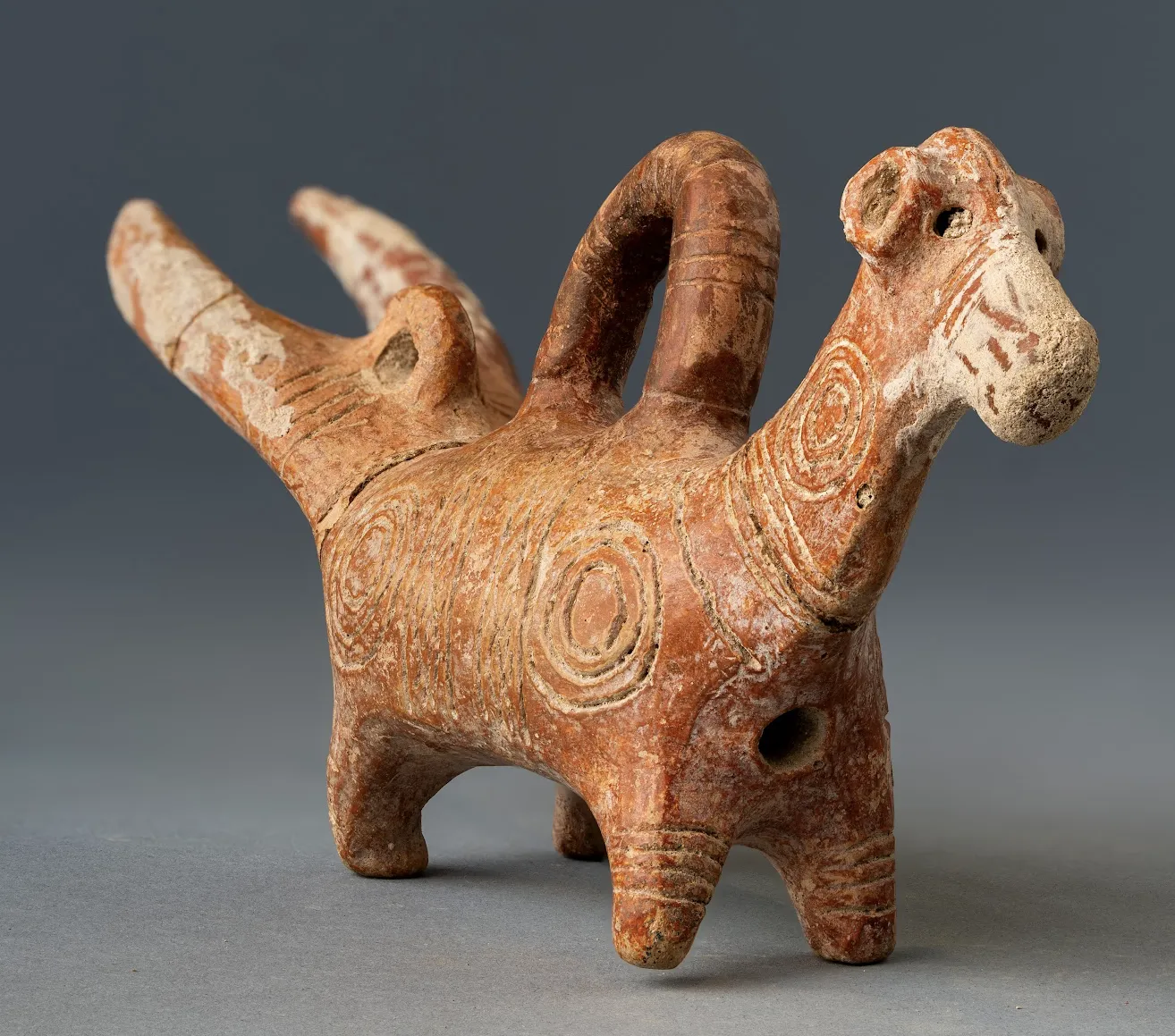
Red Polished Zoomorphic Vessels and Animal Figurines
Animal figurines, bull and bird protomes, and animal-shaped askoi in Red Polished ware, c. 2400 to...
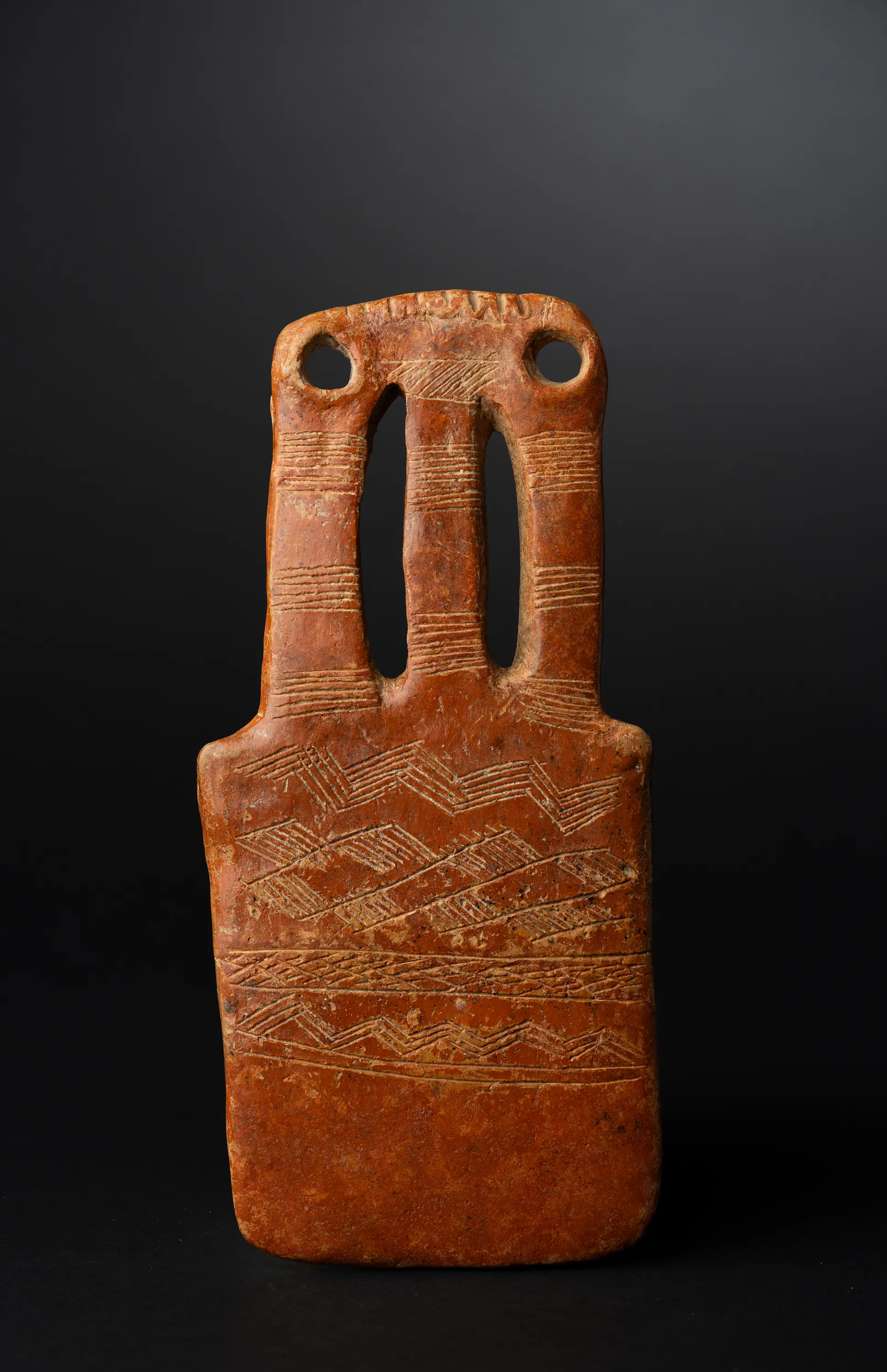
Stone Plank Figures
The rare plank figures of Bronze Age Cyprus carved in gypsum, chalk and limestone: a corpus of...
The beginning of the Early Bronze Age (EBA) marks a distinct cultural break, characterized by the appearance of the plank-shaped figurines [4, p. 13]. These highly stylized, flat figures are made almost exclusively of clay, typically in Red Polished Ware, and feature incised linear and geometric decorations that may represent clothing and ornamentation [3, p. 35; 8, p. 19]. While some scholars suggest a connection to Anatolian prototypes, the plank figures developed a uniquely Cypriot character [8, p. 19; 9, p. 59]. Found in both settlements and tombs, they are often discovered deliberately broken in funerary contexts [8, p. 19]. Though frequently interpreted as female, many lack explicit gender markers, and their ambiguity has been seen as a medium for exploring broader social issues [1, p. 34]. The Drakopoulos collection has two Red Polished examples of Early Cypriot III to Middle Cypriot I date, a two-necked plank figure and a three-necked plank figure.
In the Middle Bronze Age (MBA), the standardized plank figure tradition gave way to greater coroplastic diversity, with figures becoming less flat and more difficult to classify into specific types [3, p. 35; 10, p. 3]. The bull, an animal of cultic importance since at least the MBA, becomes a significant subject, represented in terracotta figurines and on sanctuary models [11, p. 186]. While most MBA figurines come from tombs on the north coast, particularly at Lapithos, examples from settlements like Ambelikou-Aletri and Politiko-Troullia have been found near pottery and textile workshops, hinting at their integration into daily life and craft production [10, p. 3; 12, p. 1].
The Late Bronze Age (LBA) witnessed a notable increase in production and a return to standardization, likely linked to urbanization and increased trade [13, p. 298]. The dominant terracotta types were female figurines, often with prominent pierced ears and bird-like faces, and bull figurines, many made in Base-Ring ware [3, p. 35; 1, p. 174]. These mass-produced clay figures are found predominantly in funerary contexts and were symbols of a local tradition with deep roots in the island's prehistoric past [3, p. 42].
In contrast to the standardized terracotta figures, a small number of unique metal figurines (bronze, silver, and gold) appear in the LBA, almost all with distinctive non-Cypriot features [3, p. 41]. These include figures in Levantine, Hittite, and Aegean styles, such as the "Ingot God" and "Horned God" from Enkomi [3, p. 41]. Found in elite urban centers and cult buildings, these metal figures are interpreted as elite markers, reflecting the cosmopolitan culture of the LBA elite and their control over resources like copper [3, p. 42].
During this period, Cypriot figurines were also exported, with examples found at sites in the Levant and Egypt [3, p. 41; 1, p. 205]. Conversely, Cyprus imported a small number of Mycenaean-type figurines, which are the only imported figurine type found on the island during the LBA [1, p. 195]. This interaction also brought Aegean artistic and religious ideas, such as the "goddess with upraised arms" type, which was introduced from Crete and adapted by Cypriot coroplasts [16, p. 203; 17, p. 21].
Iron Age to Roman Period (c. 1100 BC onwards)
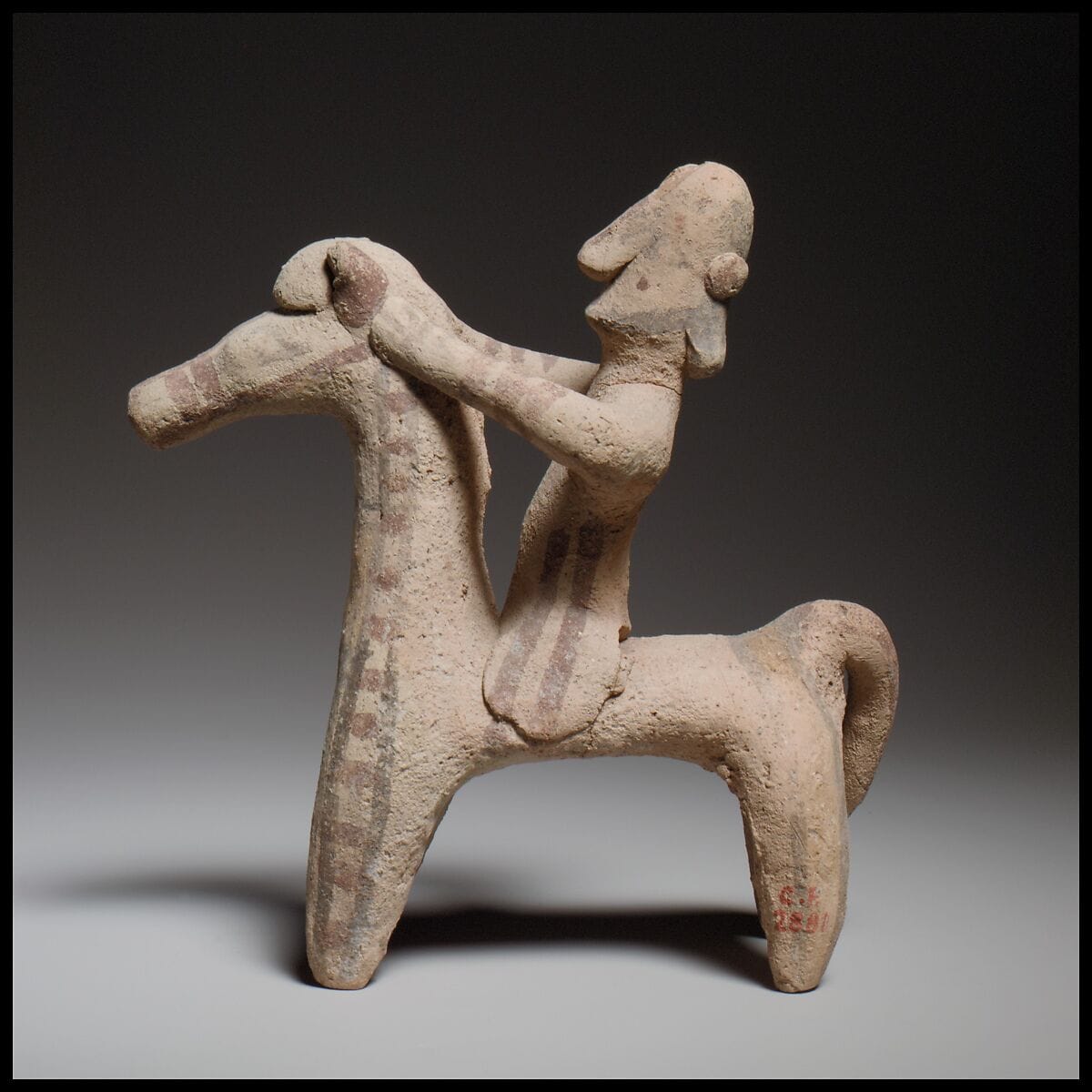
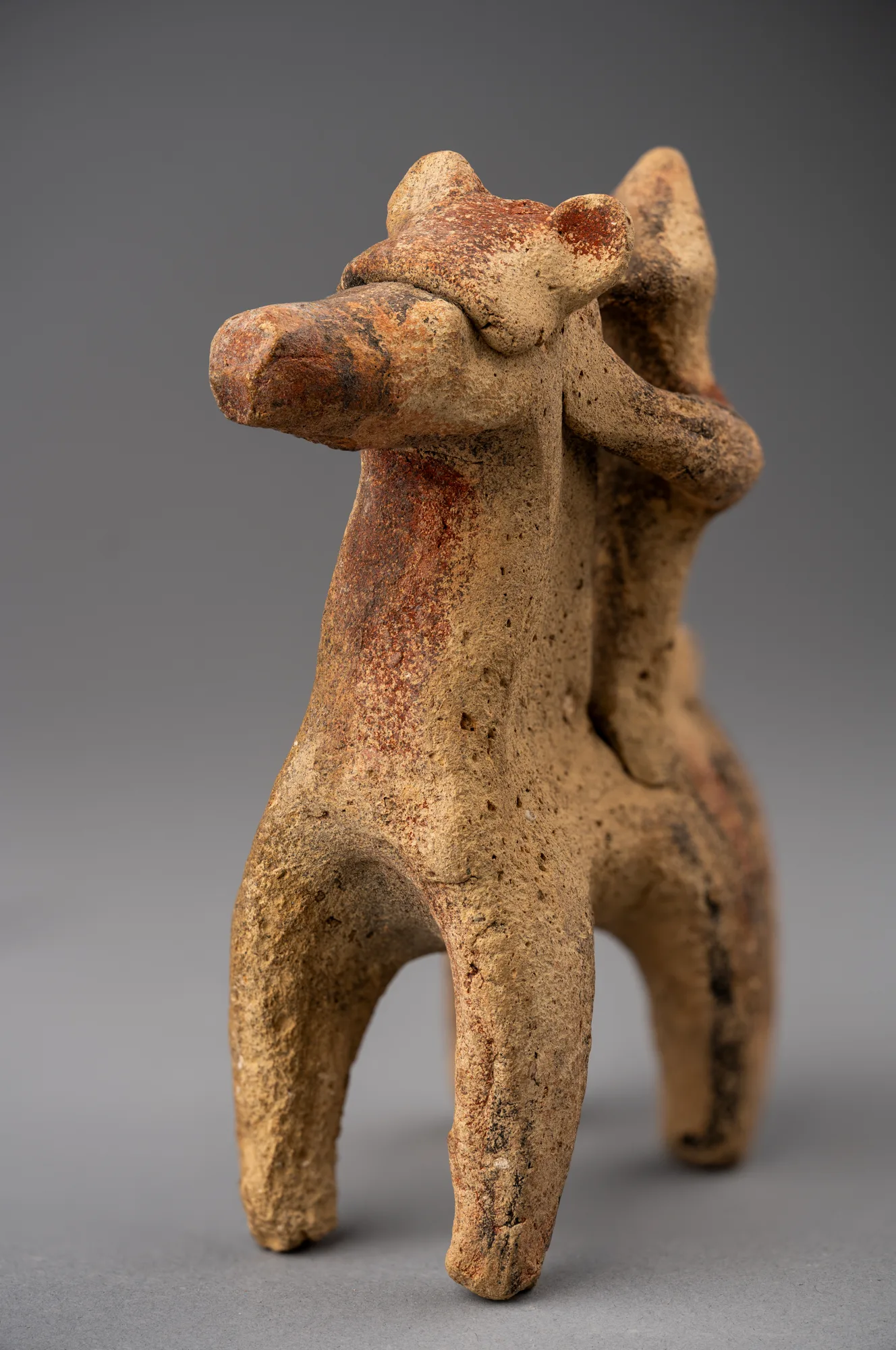
Horse and Rider Figurines
Terracotta horse-and-rider figurines of Iron Age Cyprus, made from c. 1050 BCE and commonest in the...
Figurine and statue production increased dramatically during the Cypro-Archaic period, driven by a new demand for votive offerings for the many urban, suburban, and rural sanctuaries established with the rise of the Cypriot city-kingdoms [18, p. 11]. Sanctuaries became repositories for hundreds or even thousands of votives, as exemplified by the discovery of some 2,000 terracotta statues and statuettes arranged in a semicircle around an altar at the rural sanctuary of Ayia Irini [19, p. 6; 20, p. 7].
Materials and Techniques Terracotta remained a primary medium, but large-scale statuary in local soft limestone also became widespread from the late 7th century BC [21, p. 36]. The production of large terracotta statuary actually predates limestone carving and likely had a significant impact on its development [18, p. 17]. Terracotta manufacturing techniques were varied; figures could be entirely handmade, often using the "snowman technique" where the body is a simple, abstract form, or made with wheel-turned cylindrical bodies [22, p. 263; 23, p. 2]. Molds, an innovation from the Levant, were introduced in the 7th century for mass-producing faces or entire plaque figures [18, p. 11]. Limestone from local quarries, particularly the soft, chalky limestone of the Pachna formation, was favored for carving [24, p. 3; 3, p. 401].
Types and Iconography The Iron Age repertoire is exceptionally diverse. Common types include standing male and female votaries, warriors, musicians, horse-and-rider figurines, and models of chariots [25, p. 4; 26, p. 273]. Bull figurines continued to be a popular dedication at almost every sanctuary, attesting to the animal's widespread cultic significance [27, p. 229]. A significant development was the introduction of Near Eastern types, such as the nude Astarte plaque figurine and the seated pregnant dea gravida, which were adopted and adapted by Cypriot workshops [28, p. 306; 28, p. 309]. Figures wearing bull masks also appear, suggesting their use in specific ritual performances, primarily in sanctuaries dedicated to male deities [30, p. 23; 30, p. 21].
Styles and Foreign Influences Cypriot sculpture of the Iron Age is characterized by a dynamic synthesis of local traditions and foreign influences. Various styles have been identified, including a "Proto-Cypriote" style with Syro-Anatolian parallels, a "Cypro-Egyptian" style reflecting contact with Egypt, and later, "Cypro-Greek" styles showing influence from Ionia, Aegina, and Attica [22, p. 217; 32, p. 78]. These influences are visible in dress, posture, and facial features, such as the adoption of the archaic Greek smile [22, p. 95; 33, p. 256]. This stylistic blending created a distinct Cypriot artistic identity, recognizable even in works exported across the Mediterranean [34, p. 112]. Cypriot-style limestone statuettes have been found in sanctuaries in the Aegean at sites like Samos, Rhodes, and Cnidos, as well as in the Levant at Sidon and Byblos, and in Egypt at Naukratis [35, p. 20; 22, p. 201]. Scientific analyses have confirmed that the vast majority of these were carved from Cypriot limestone and exported from the island, though a local workshop producing Cypriot-type statuettes has been identified at Cnidos [3, p. 401].
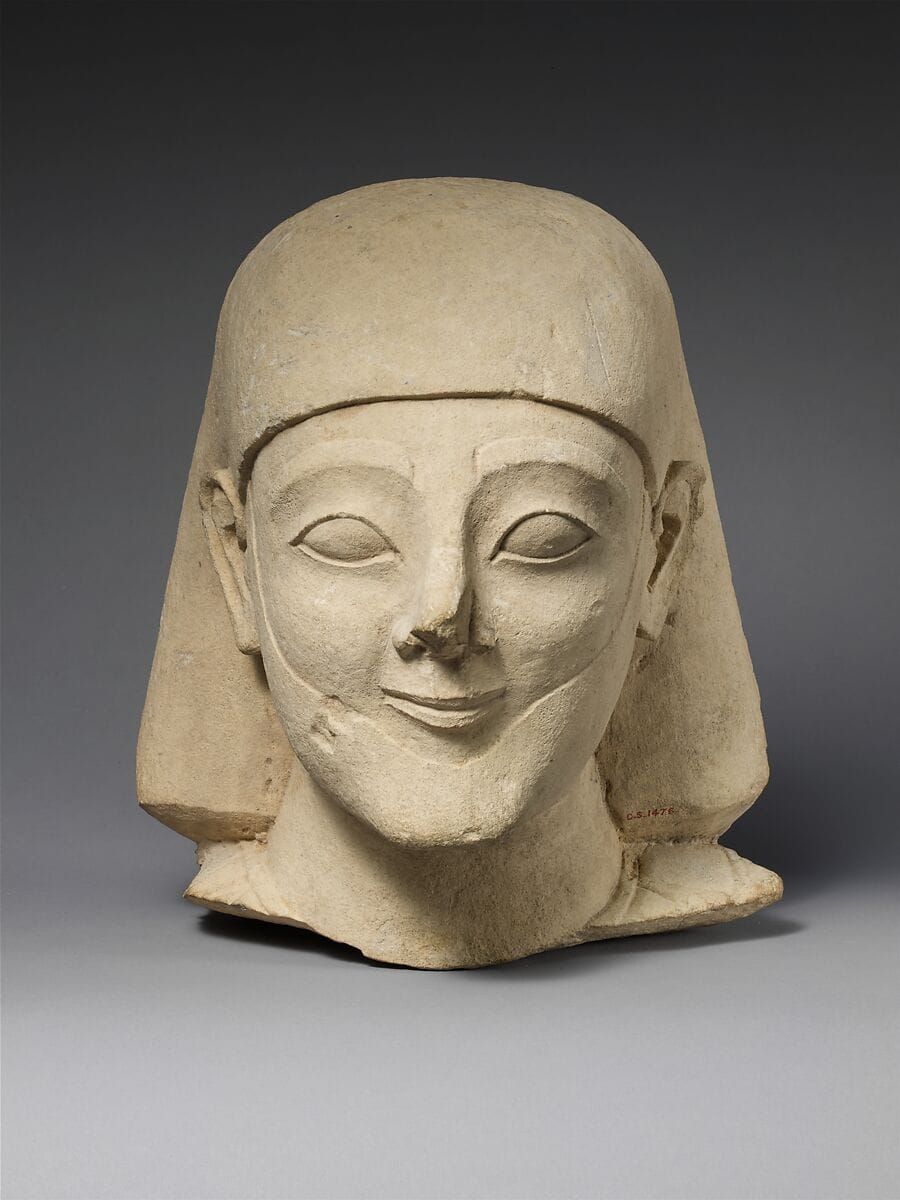
Archaic Limestone Statues
Cypro-Archaic limestone votive statues from the later 7th century BCE: Egyptianizing kilts, Proto-...
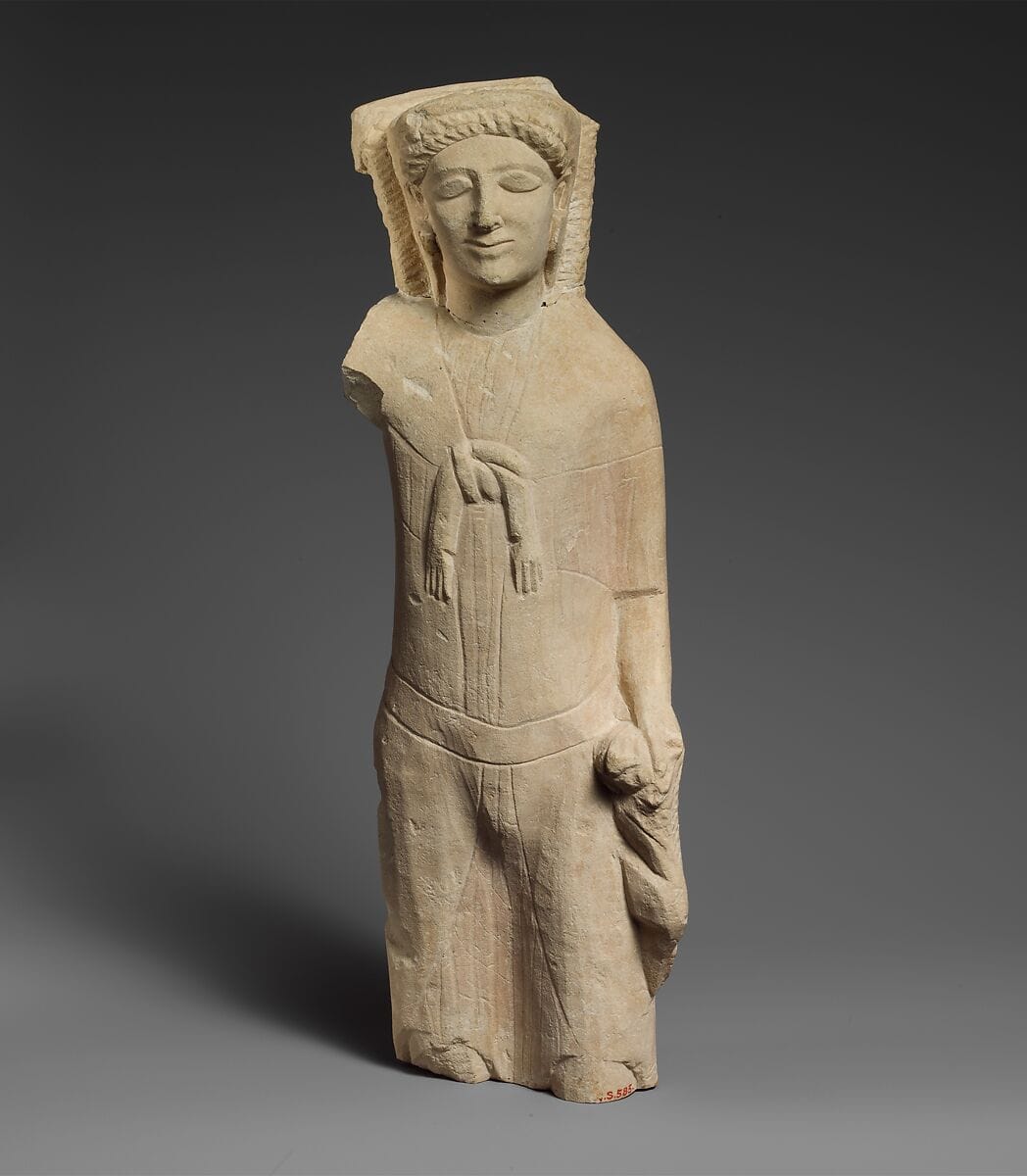
Herakles-Melqart
Herakles-Melqart in Cypriot limestone, late 6th to 4th century BCE: a god in a lion skin with a...
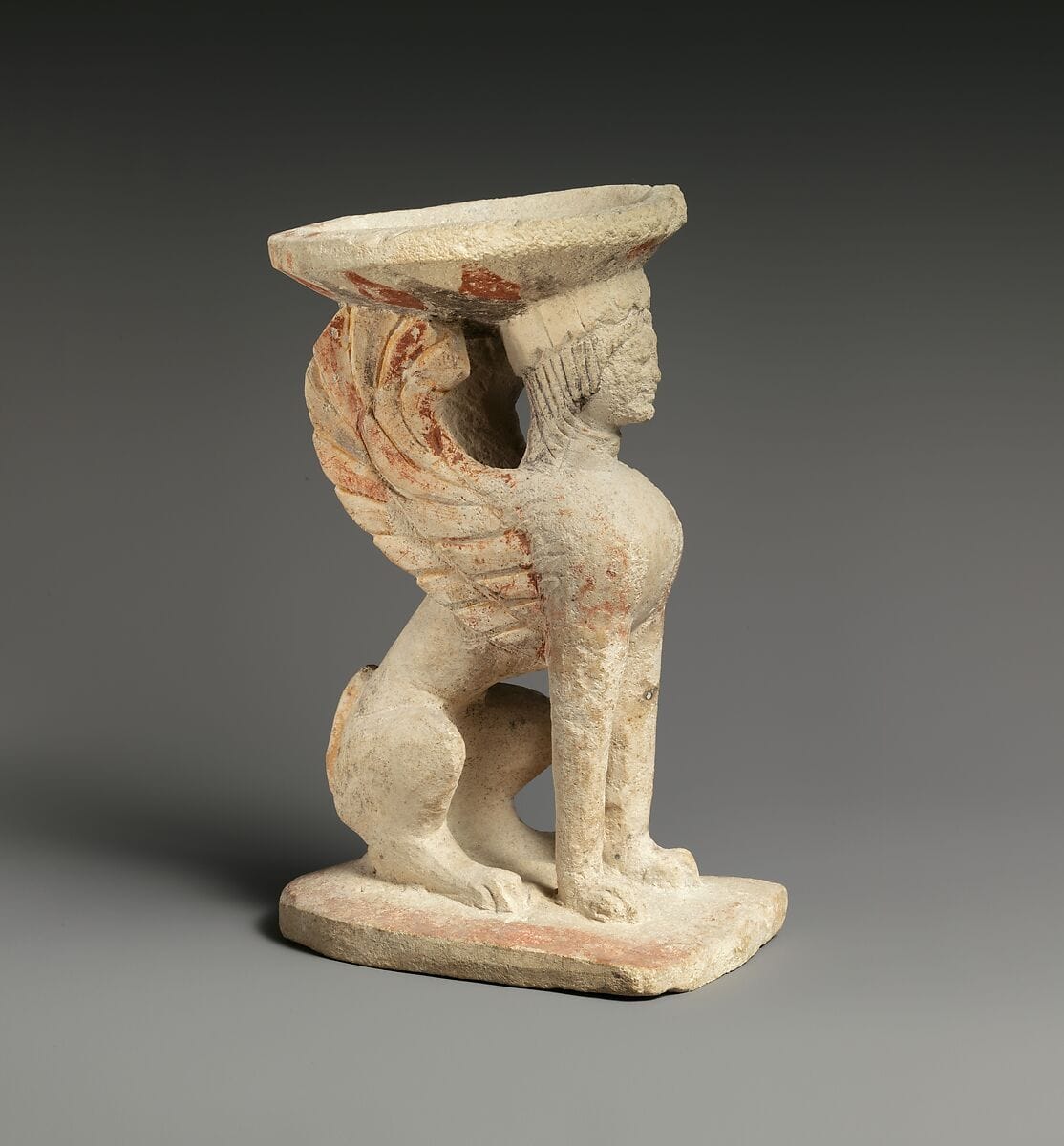
Painted Stone: Colour on Cypriot Limestone Sculpture
Cypriot limestone statues were painted. What survives of the red, black, yellow, green and blue,...
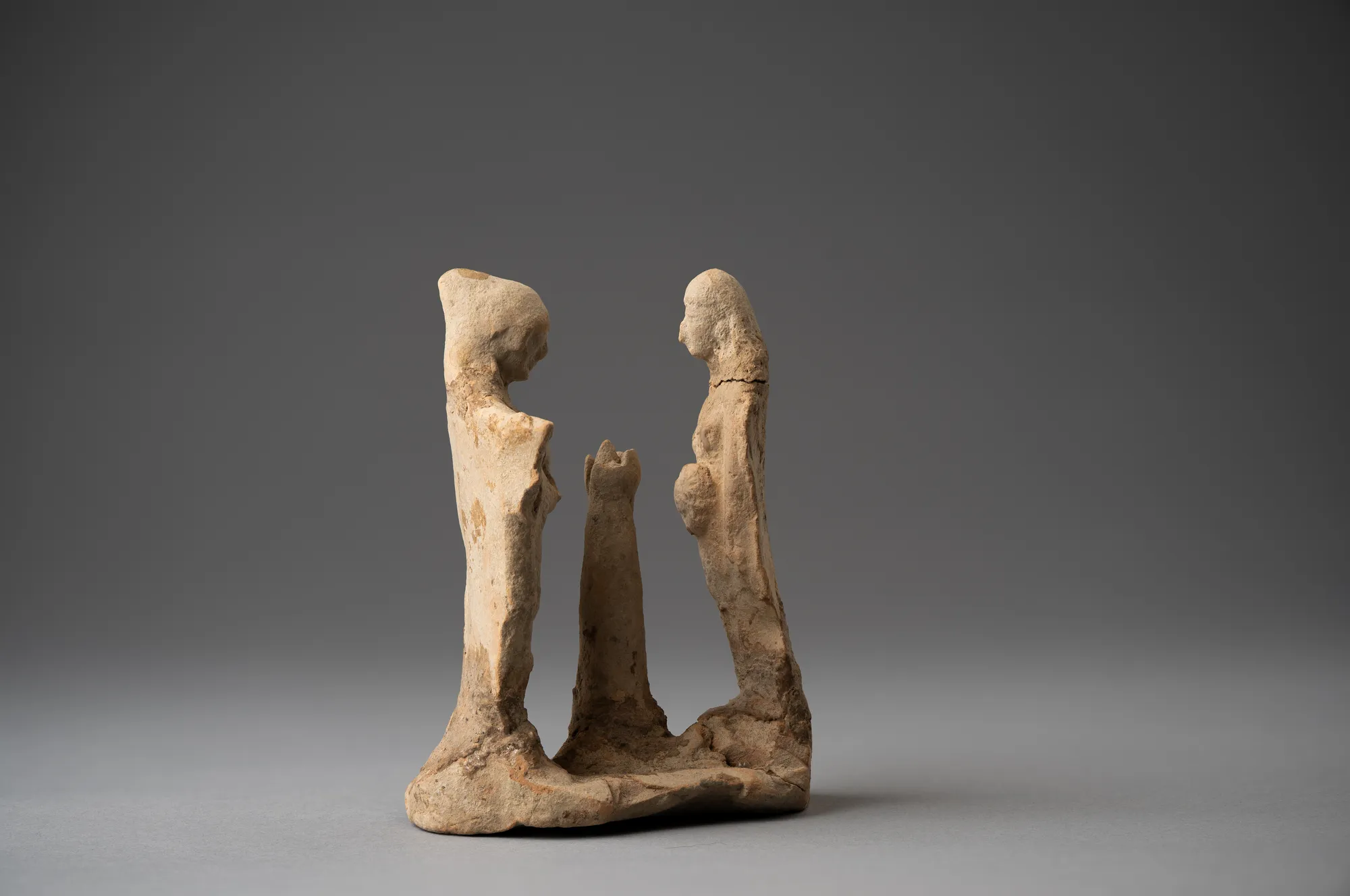
Ring-Dance Groups
Cypriot clay and limestone groups of dancers circling a piper, a lyre player or a sacred tree, c....
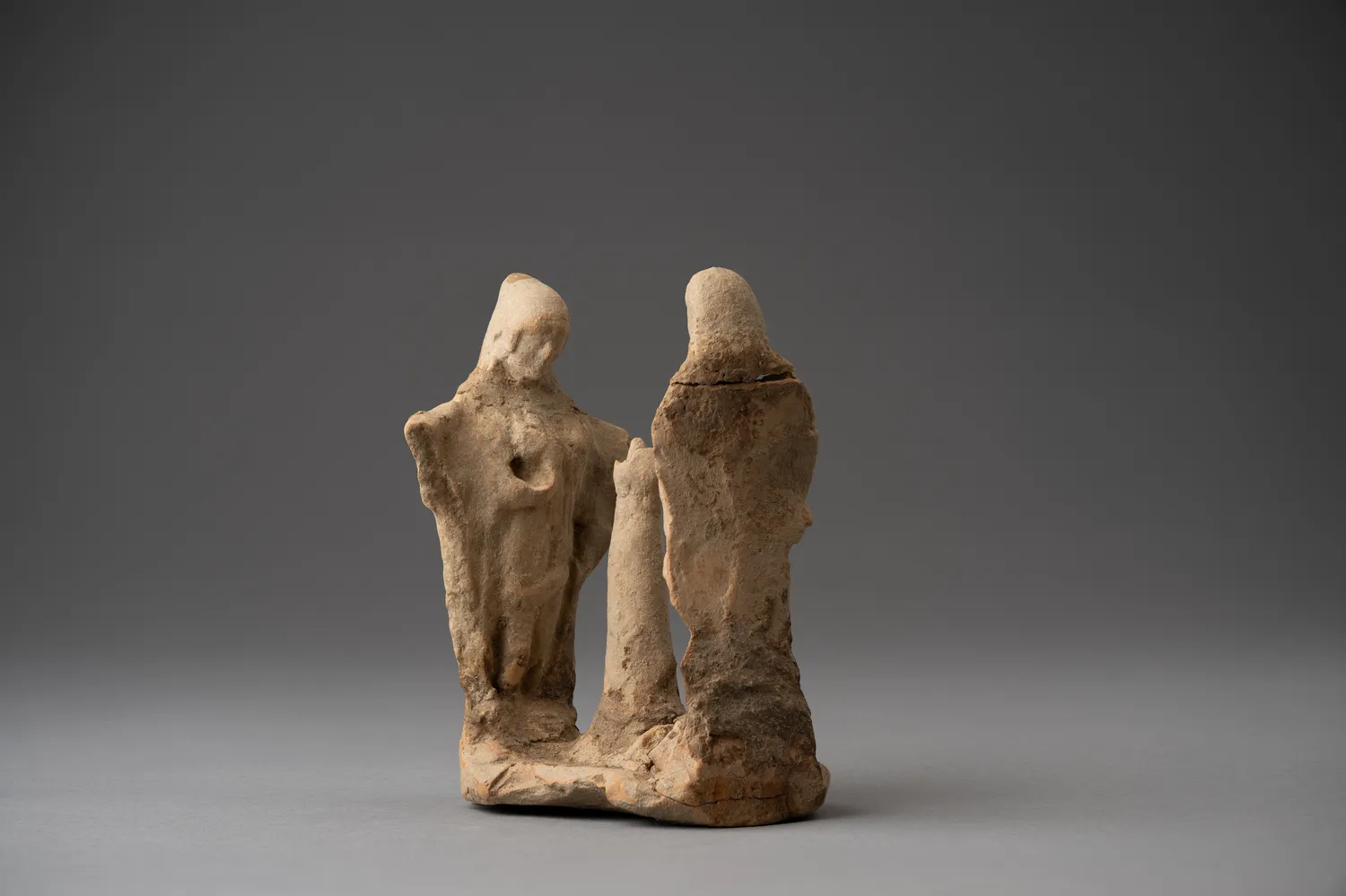
Snowman Figurines
Hand-modelled terracotta votaries and musicians of Iron Age Cyprus, c. 1050 to 310 BC: the snowman...
The Hellenistic and Roman Periods
The tradition of dedicating statues and figurines continued into the Hellenistic and Roman periods, but with significant stylistic and typological shifts [36, p. 3]. The local tradition of carving votives in soft limestone persisted on a very large scale, but it increasingly assimilated features from Hellenistic art, particularly from Ptolemaic Alexandria [37, p. 219; 36, p. 3]. While some statues were once identified as portraits of Ptolemaic rulers, most scholars now see the numerous limestone heads with individualized features as "portrait-like" but generic representations of local Cypriot votaries, reflecting their accommodation of the prevailing Hellenistic culture [38, p. 342; 39, p. 341].
True royal portraiture appears to have been rare and largely restricted to imported marble, such as the heads of Ptolemaic queens and a unique limestone head of Alexander the Great from the site of Soloi-Cholades [39, p. 342; 38, p. 343]. The use of marble, which the island possesses but had previously been ignored by sculptors, became more common in these periods for high-status commissions and imperial works [37, p. 219; 40, p. 90]. In terracotta, the repertoire expanded to include figures wearing Greek-style theatrical masks, reflecting the introduction of Greek dramatic performances to the island [30, p. 23].
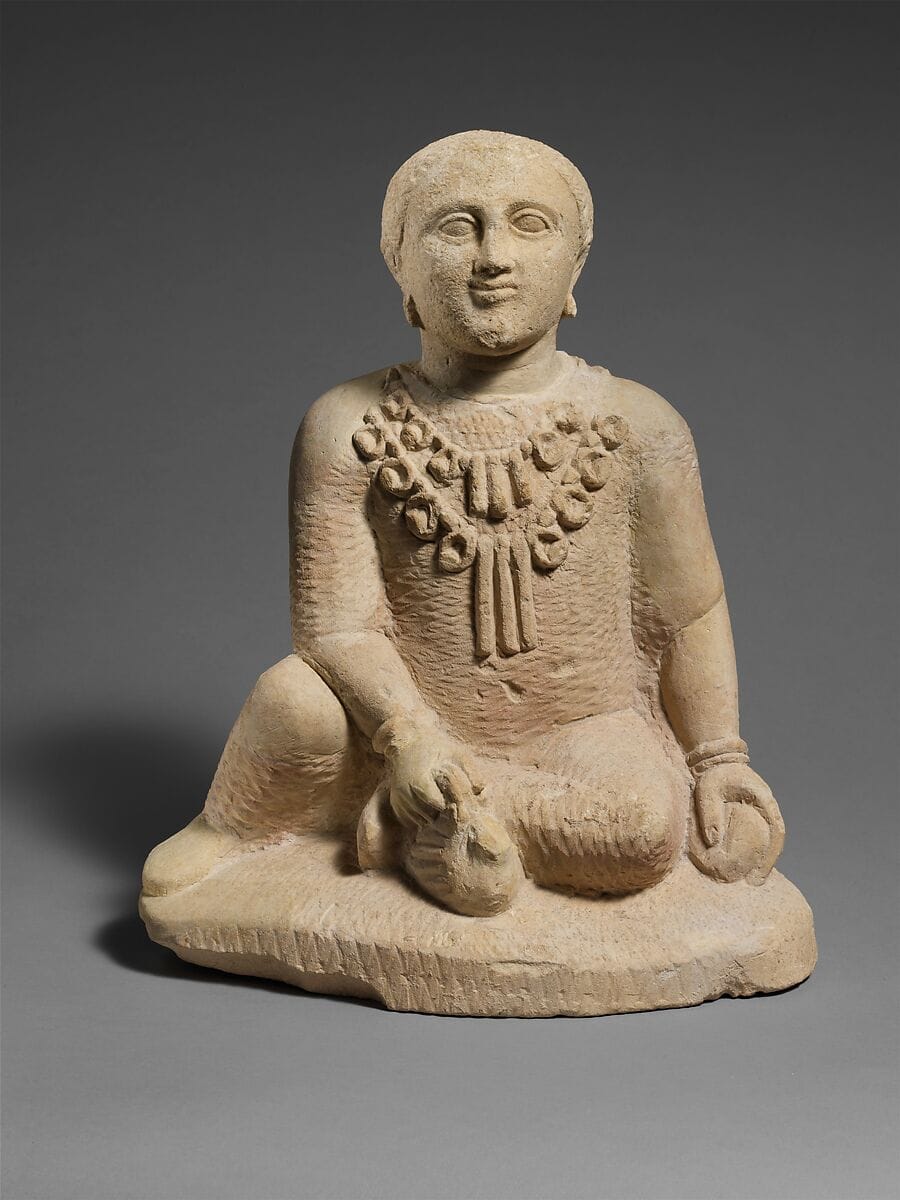
Temple Boys
Temple boys are small limestone votive statues of crouching young children, dedicated in Cypriot...
Function and Use
Across all periods, statues and figurines served multiple, often overlapping, functions. While some may have been children's toys or served profane purposes, their primary role appears to have been within the ritual and symbolic sphere [41, p. 127; 2, p. 115]. They could function as amulets, items for domestic cult, or burial gifts [38, p. 109]. In the Bronze Age, their deposition in tombs suggests a role in funerary rites, perhaps as companions for the deceased or representations of ancestors [8, p. 19; 42, p. 259].
In the Iron Age, the vast majority of figures were votive offerings dedicated in sanctuaries [43, p. 1]. These offerings were a primary means of communication with the divine, representing the worshipper standing in perpetual prayer before their god [44, p. 6; 38, p. 360]. The repetition of standardized types may have reflected a "communal prayer" by the community of worshippers [38, p. 360]. The size and quality of the offering often correlated with the social status of the donor, with wealthy patrons dedicating large-scale statues while others offered smaller, mass-produced figurines [41, p. 41]. The coroplastic and sculptural traditions of Cyprus provide a tangible record of the island's evolving beliefs, identities, and interactions with the wider ancient world [1, p. 198].
From the collection
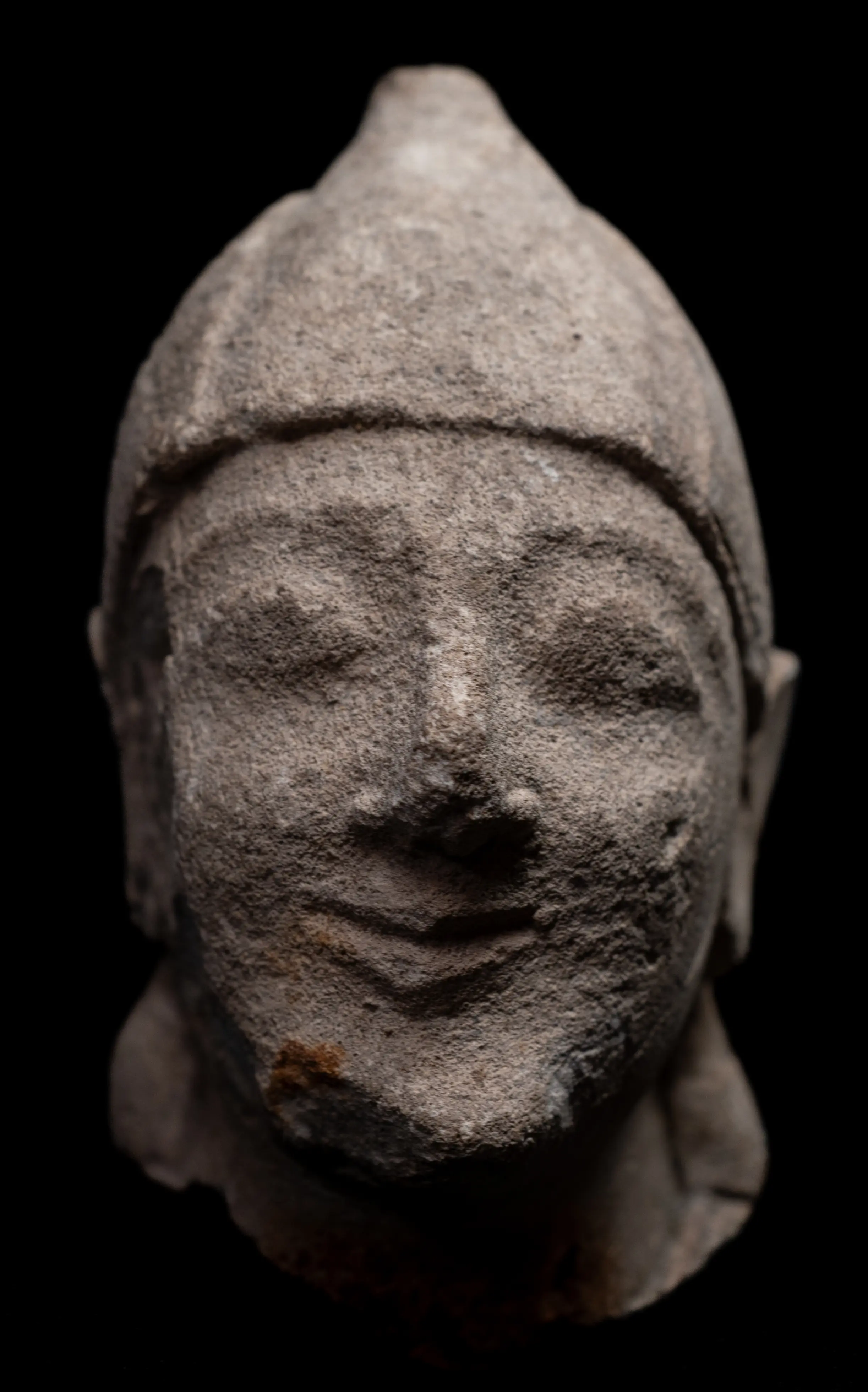 Limestone Head of a Beardless Votary in a Conical HelmetArchaic II · 600–500 BC
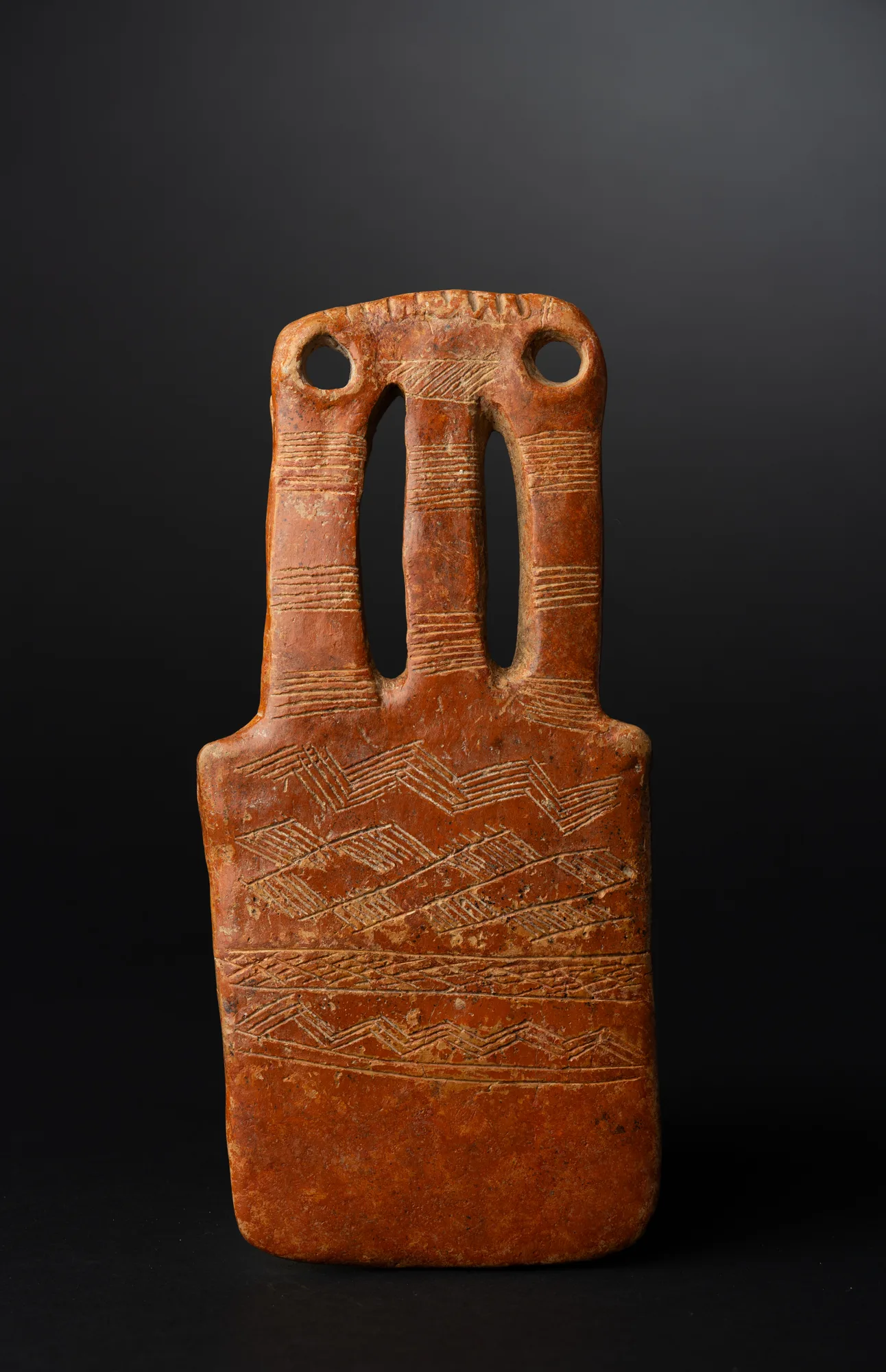 Red Polished Three-Necked Plank FigureMiddle Bronze Age I · 2000–1800 BC
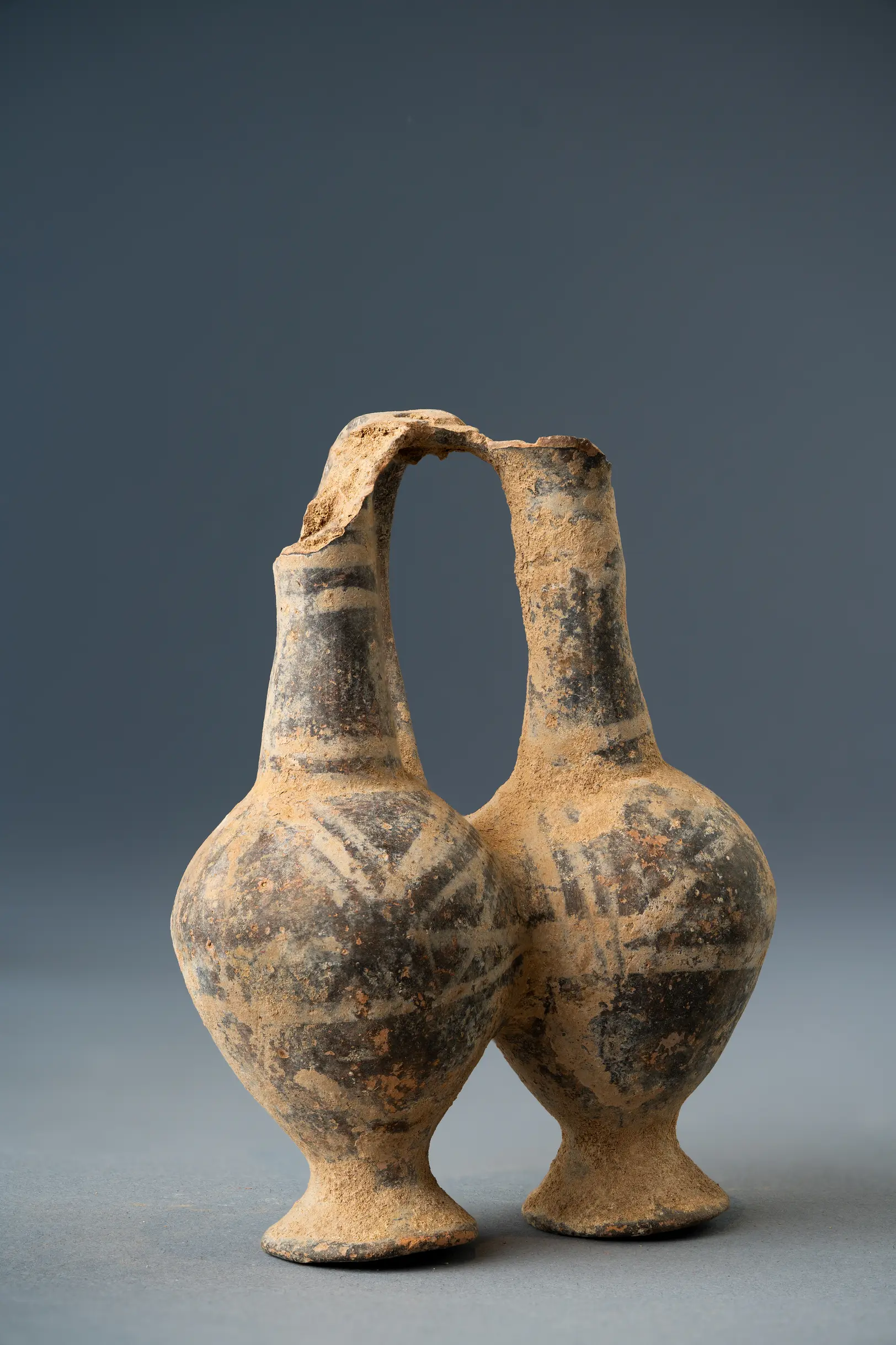 Base Ring II Double Juglet with White-Painted DecorationLate Bronze Age II · 1450–1200 BC
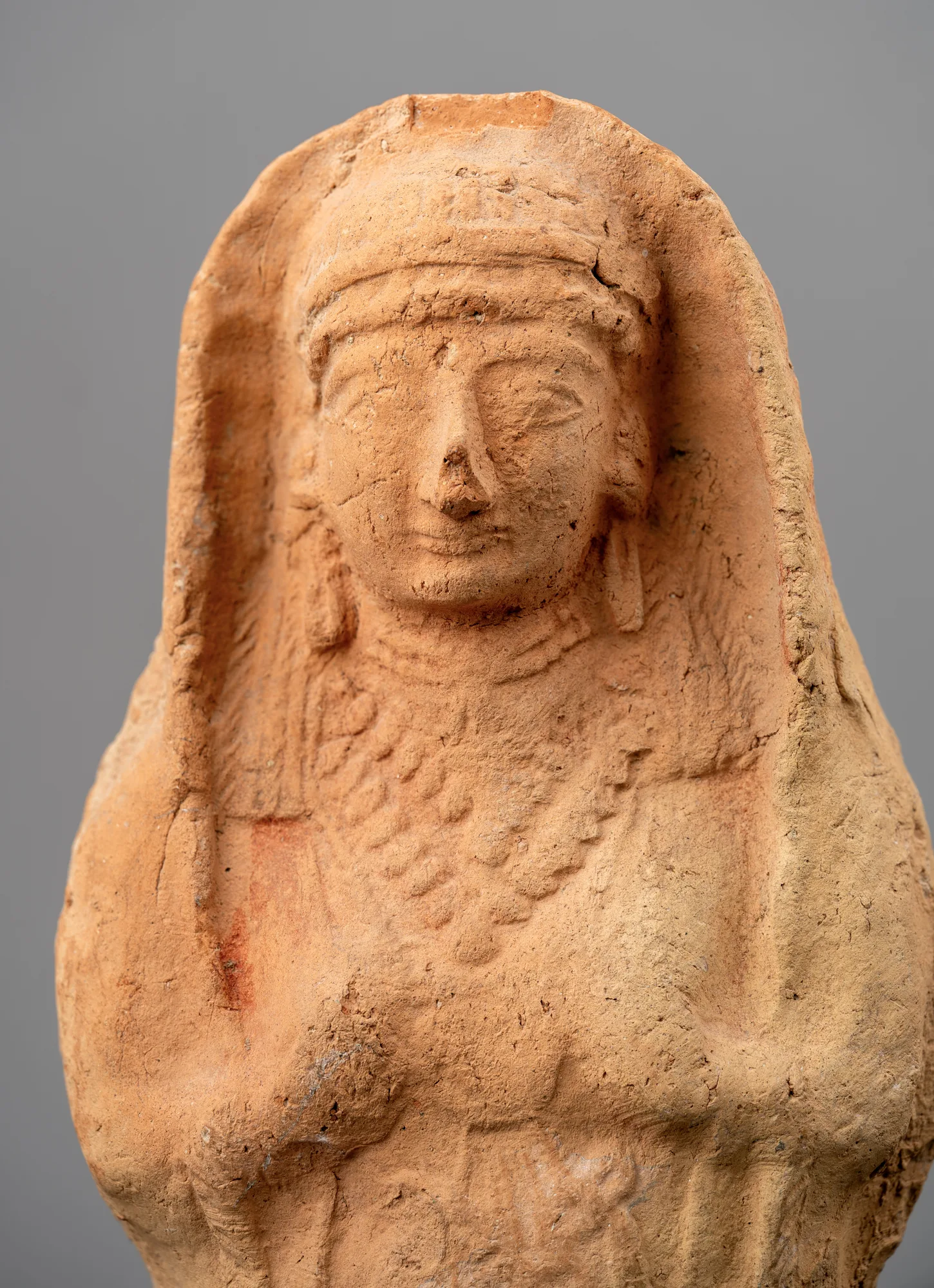 Hollow Mould-Made Female Votary of the Achna Type, Hands to the BreastsArchaic II · 600–480 BC
- Picrolite figureChalcolithic · 3900–2500 BC
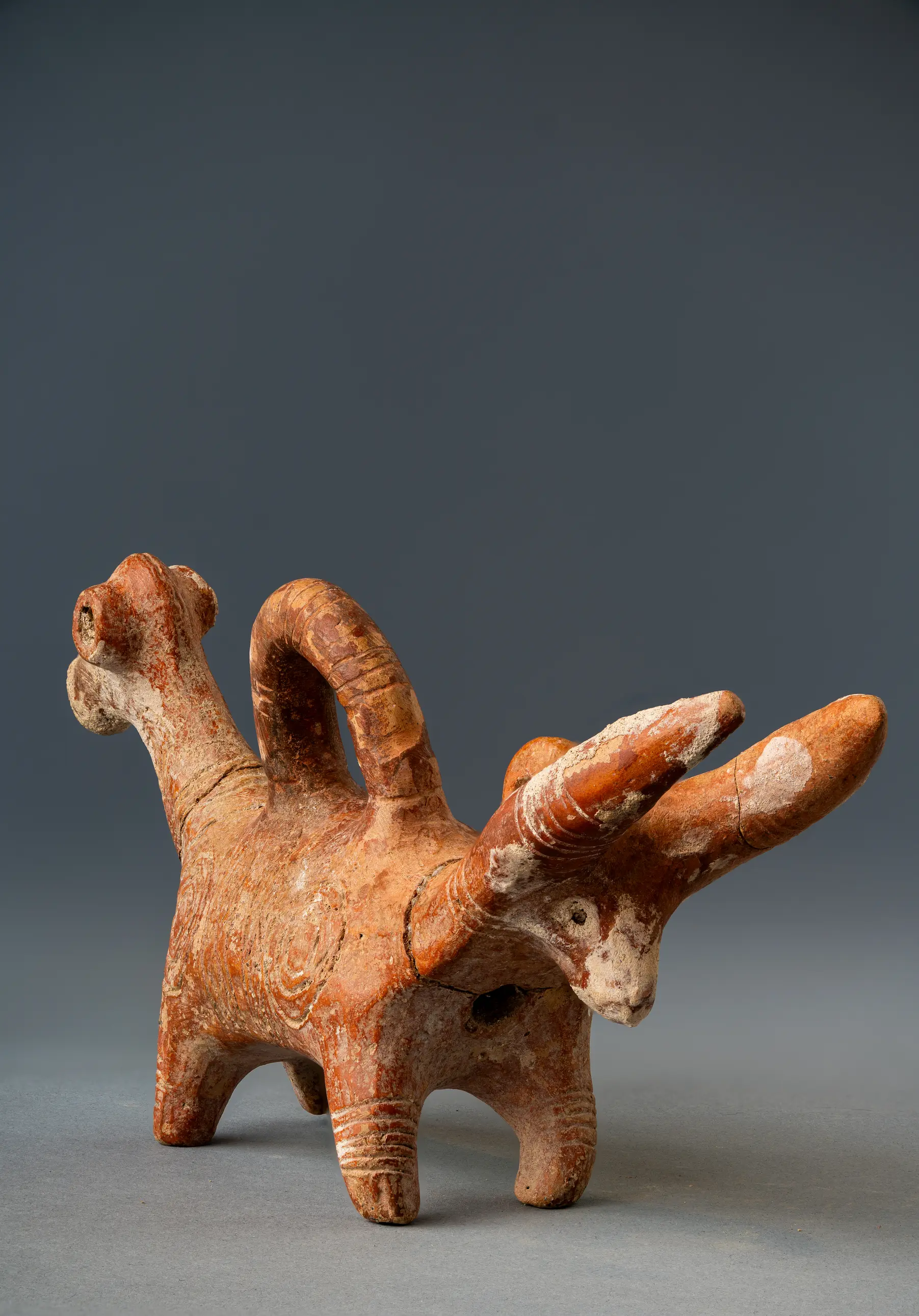 Red Polished Two-Headed Zoomorphic Askos with a Bull and a Long-Eared HeadEarly Bronze Age III · 2100–1850 BC
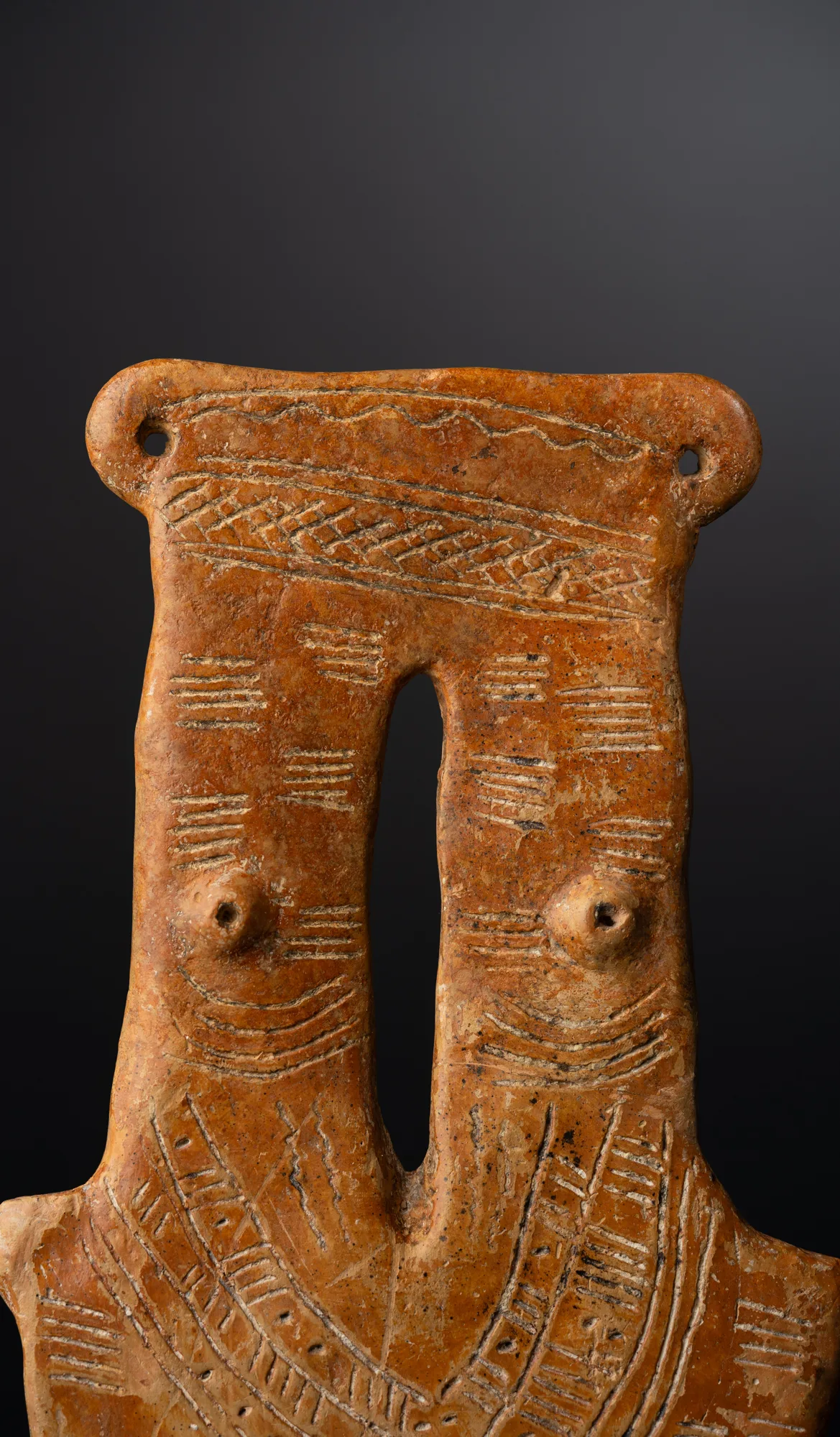 Red Polished Two-Necked Plank FigureMiddle Bronze Age I · 2000–1850 BC
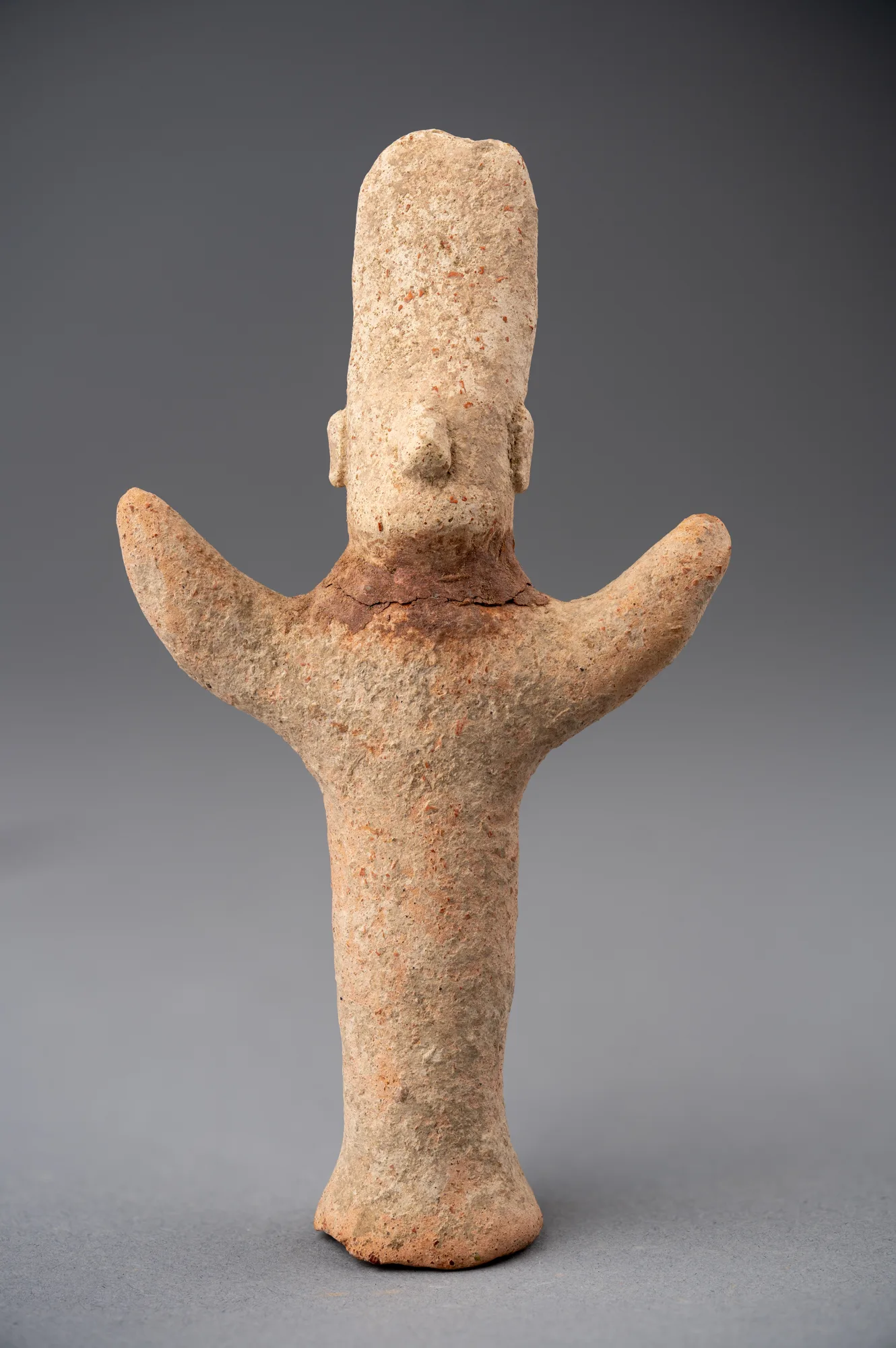 Terracotta Figure with Upraised Arms and Tall Cylindrical HeaddressArchaic · 750–480 BC
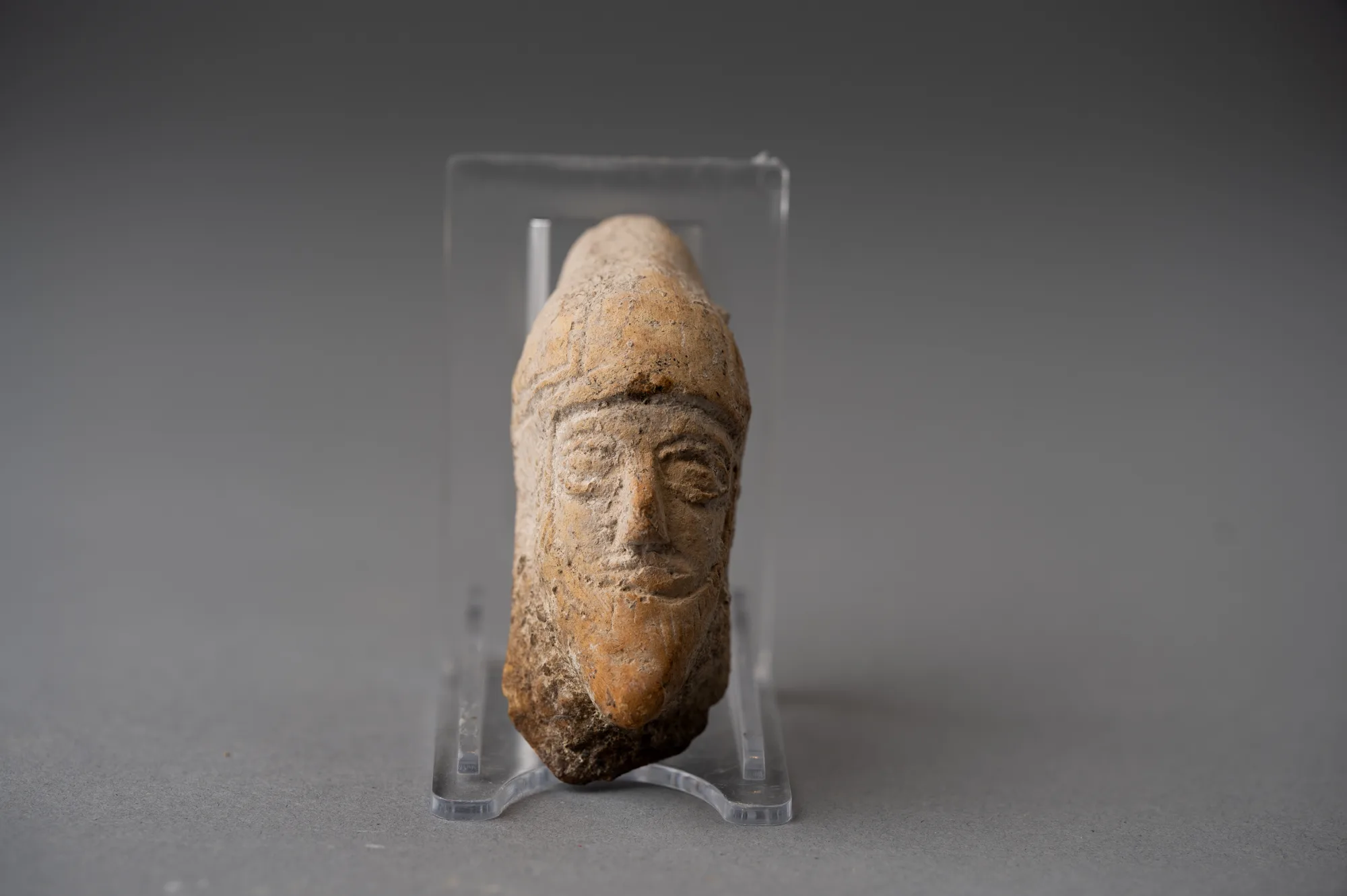 Terracotta Head of a Bearded Votary in a Pointed CapArchaic II · 650–500 BC
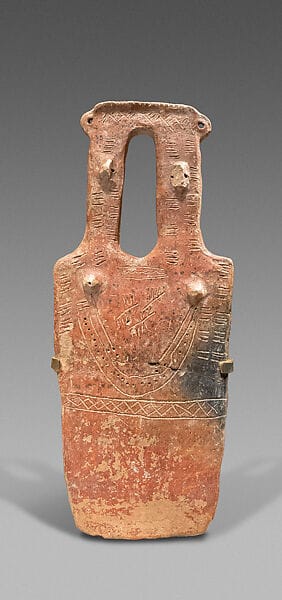 Terracotta two-headed, plank-shaped figurineMiddle Bronze Age I · 2000–1900 BC
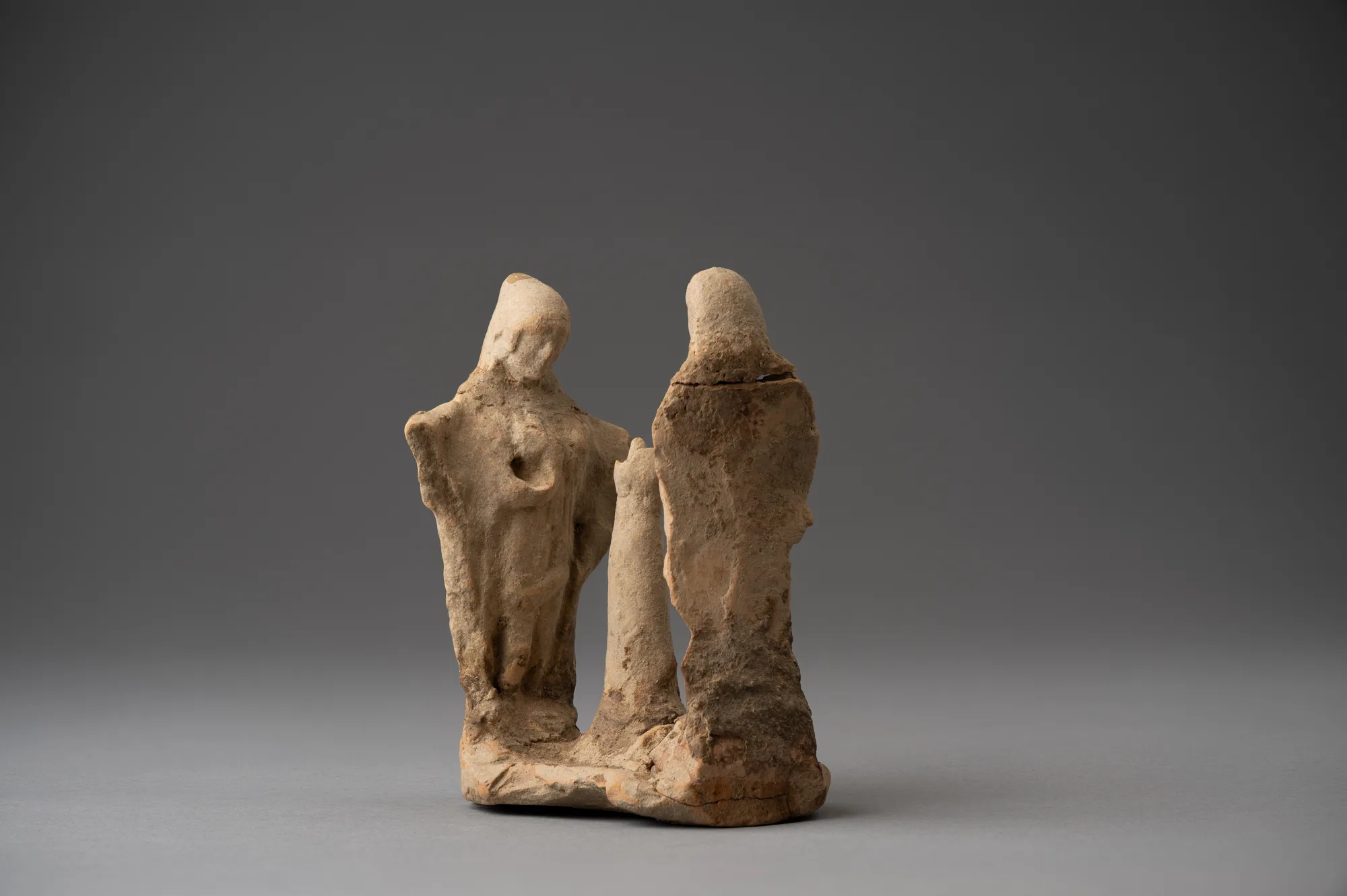 Two Veiled Figures from a Terracotta Ring-Dance Group, with the Stump of the Central TreeArchaic · 750–480 BC
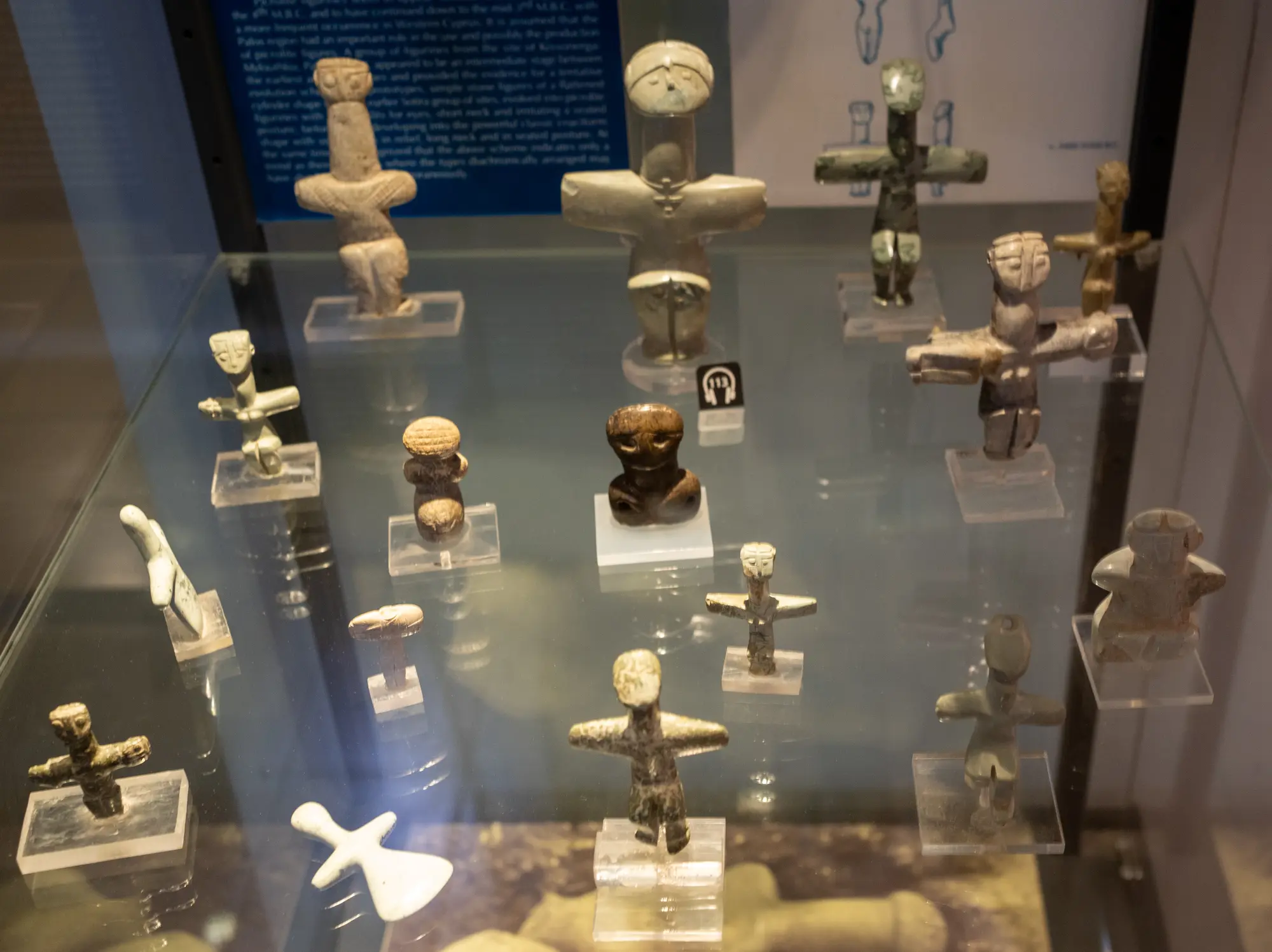 Assorted Picrolite FigurinesChalcolithic · 5500–2500 BC
and 58 more objects linked from these pages
References
- 1.Knox, D.-K. (2012). Making sense of figurines in Bronze Age Cyprus: A comprehensive analysis of Cypriot ceramic figurative material from EC I – LC IIIA (c.2300BC – c.1100BC) [Doctoral dissertation, The University of Manchester].
- 2.Winkelmann, C. (2020). The Neolithic and Chalcolithic Figurines of Cyprus (Studien zur Vorderasiatischen Archäologie, Bd. 2). Zaphon.
- 3.Bourogiannis, G. (Ed.). (2022). Beyond Cyprus: Investigating Cypriot connectivity in the Mediterranean from the Late Bronze Age to the end of the Classical Period (AURA Supplement 9). Faculty of History and Archaeology, National and Kapodistrian University of Athens. https://doi.org/10.26247/aurasup.9
- 4.Winkelmann, C. (2020). The Neolithic and Chalcolithic Figurines of Cyprus. Zaphon.
- 5.Karageorghis, V., & True, M. (Eds.). (1991). Chalcolithic Cyprus. J. Paul Getty Museum.
- 6.Bockman, P. (2015). The painted motifs of Cypriot ceramic art: A study of iconography & identity (Master's thesis, University of Nevada, Las Vegas). http://dx.doi.org/10.34917/8220087
- 7.Falconer, S. E., Monahan, E. M., & Fall, P. L. (2014). A Stone Plank Figure from Politiko-Troullia, Cyprus: Potential Implications for Inferring Bronze Age Communal Behavior. Bulletin of the American Schools of Oriental Research, 371, 3–16.
- 8.Horejs, B., Schwall, C., Müller, V., Luciani, M., Ritter, M., Giudetti, M., Salisbury, R. B., Höflmayer, F., & Bürge, T. (Eds.). (2018). Proceedings of the 10th International Congress on the Archaeology of the Ancient Near East, Volume 1. Harrassowitz Verlag.
- 9.Christou, S. (2012). Sexually ambiguous imagery in Cyprus from the Neolithic to the Cypro-Archaic Period (BAR International Series 2329). BAR Publishing. https://doi.org/10.30861/9781407309125
- 10.Webb, J. M. (2016). Anthropomorphic figures from Middle Bronze Age Cyprus: Who or what do they represent? Iris: Journal of the Classical Association of Victoria, 29(2), 6–?
- 11.Georgiou, A. (Ed.). (2012). Cyprus: An island culture: Society and social relations from the Bronze Age to the Venetian period. Oxbow Books.
- 12.Akkuzu, Z. (n.d.). Understanding Belief System and Social Dynamics of the Early and Middle Bronze Age Cyprus Societies by Examining Figurative Art. (Unpublished master's thesis or doctoral dissertation). İhsan Doğramacı Bilkent University.
- 13.Darby, E. D., & de Hulster, I. J. (Eds.). (2022). Iron Age Terracotta Figurines from the Southern Levant in Context (Vol. 125). Brill.
- 16.Knapp, A. B. (2008). Prehistoric and protohistoric Cyprus: Identity, insularity, and connectivity. Oxford University Press.
- 17.Hermary, A. (Ed.). (2017). Hommage à Antoine HERMARY: Colloque « Chypre et les grandes îles de Méditerranée ». Édition-Diffusion De Boccard. (Cahiers du Centre d’Études Chypriotes, Vol. 46).
- 18.Averett, E. W. (n.d.). The Iron Age Terracotta Figurines from Cyprus.
- 19.Leriou, A. (2018). Re-positioning ‘rural’ sanctuaries within the Cypro-Archaic societies: Some considerations. In G. Vavouranakis, K. Kopanias, & C. Kanellopoulos (Eds.), Popular religion and ritual in prehistoric and ancient Greece and the eastern Mediterranean (pp. 97-104). Archaeopress.
- 20.Senff, R. (2016). The early stone sculpture of Cyprus in the archaic age: Questions of meaning and external relations. Cahiers du Centre d'Etudes Chypriotes, 46, 235-252. https://doi.org/10.3406/cchyp.2016.1687
- 21.Papantoniou, G., Fitzgerald, A., & Hargis, S. (Eds.). (2008). Postgraduate Cypriot Archaeology: Proceedings of the Fifth Annual Meeting of Young Researchers on Cypriot Archaeology, Department of Classics, Trinity College, Dublin, 21-22 October 2005. BAR Publishing. https://doi.org/10.30861/9781407302904
- 22.Gjerstad, E. (1948). The Cypro-Geometric, Cypro-Archaic and Cypro-Classical Periods (The Swedish Cyprus Expedition, Vol. IV, Part 2). The Swedish Cyprus Expedition.
- 23.O'Bryhim, S. (1997). The sphere-bearing anthropomorphic figurines of Amathus. Bulletin of the American Schools of Oriental Research, (306), 39-45.
- 24.Polikreti, K., Maniatis, Y., Bassiakos, Y., Kourou, N., & Karageorghis, V. (2004). Provenance of archaeological limestone with EPR spectroscopy: The case of the Cypriote-type statuettes. Journal of Archaeological Science, 31, 1015–1028. https://doi.org/10.1016/j.jas.2003.12.013
- 25.Herscher, E. (2000). Review of The Coroplastic Art of Ancient Cyprus, Vols. V–VI by V. Karageorghis. Bulletin of the American Schools of Oriental Research, 317, 81–84.
- 26.Caubet, A. (2014). Chypre entre l’Assyrie et l’Ibérie. À propos d’une exposition. Cahiers du Centre d'Etudes Chypriotes, 44, 431-436. https://doi.org/10.3406/cchyp.2014.1564
- 27.Dissinger, A. M. (2017). Cypro-Archaic bird iconography: Types, uses, and meanings (Doctoral dissertation, University of Virginia).
- 28.Thuesen, I. (Ed.). (2002). Proceedings of the 2nd International Congress on the Archaeology of the Ancient Near East (Vol. 1). Eisenbrauns.
- 30.Averett, E. W. (2015). Masks and ritual performance on the island of Cyprus. American Journal of Archaeology, 119(1), 3–45. https://doi.org/10.3764/aja.119.1.0003
- 32.Reyes, A. T. (1994). Archaic Cyprus: A study of the textual and archaeological evidence. Oxford University Press.
- 33.Pilides, D., & Papadimitriou, N. (Eds.). (2012). Ancient Cyprus: Cultures in dialogue. Department of Antiquities, Cyprus.
- 34.Durugönül, S. (2003). Archaic Cypriote Statuary in the Museum of Adana. OLBA, VII, 93-.
- 35.Muşkara, Ü., Bakırdere, S., Tuna, N., & Ataman, O. Y. (2021). Provenance Study of Votive Figurines from the Sanctuary of Apollon in Emecik. CEDRUS, 9, 109-129. https://doi.org/10.13113/CEDRUS.202106
- 36.Kiely, T., & Higgs, P. (2009). Four unpublished marble sculptures of Hellenistic date from Cyprus in the British Museum. Cahiers du Centre d'Etudes Chypriotes, 39, 403-424. https://doi.org/10.3406/cchyp.2009.936
- 37.Hill, G. F. (1940). A history of Cyprus, Vol. 1: To the conquest by Richard Lion Heart. Cambridge University Press.
- 38.Papantoniou, G. (2012). Religion and social transformations in Cyprus: From the Cypriot basileis to the Hellenistic strategos (Mnemosyne Supplements. History and Archaeology of Classical Antiquity; Vol. 347). Brill.
- 39.Papantoniou, G. (2016). Rethinking the portrait-like sculpture of Hellenistic Cyprus. In G. Papantoniou (Ed.), <em>Ancient Cyprus today</em> (Studies in Mediterranean Archaeology Pocket-book 184, p. 339). Astrom Editions Ltd.
- 40.Sorensen, L. W., & Jacobsen, K. W. (Eds.). (2006). Panayia Ematousa II: Political, cultural, ethnic and social relations in Cyprus: Approaches to regional studies (Monographs of the Danish Institute at Athens, Vol. 6, No. 2). Aarhus University Press.
- 41.Karageorgi, S. (2012). The re-creation and transformation of the archaic art of Cyprus (8th-5th c. BCE) to contemporary art [Doctoral dissertation, De Montfort University].
- 42.Hermary, A. (Ed.). (2015). Kypromedousa: Hommage à Jacqueline Karageorghis. (Cahiers du Centre d’Études Chypriotes, Vol. 45). Édition-Diffusion de Boccard.
- 43.Averett, E. W. (2011). The ritual context of the Malloura terracotta figurines. In M. K. Toumazou, P. N. Kardulias, & D. B. Counts (Eds.), Crossroads and boundaries: The archaeology of past and present in the Malloura Valley, Cyprus (Annual of ASOR 65, pp. 133–148). American Schools of Oriental Research.
- 44.Counts, D. B. (2008). Master of the Lion: Representation and Hybridity in Cypriote Sanctuaries. American Journal of Archaeology, 112(1), 3-27. http://www.jstor.org/stable/40037242