
Middle Bronze Age I
Red Polished Three-Necked Plank Figure
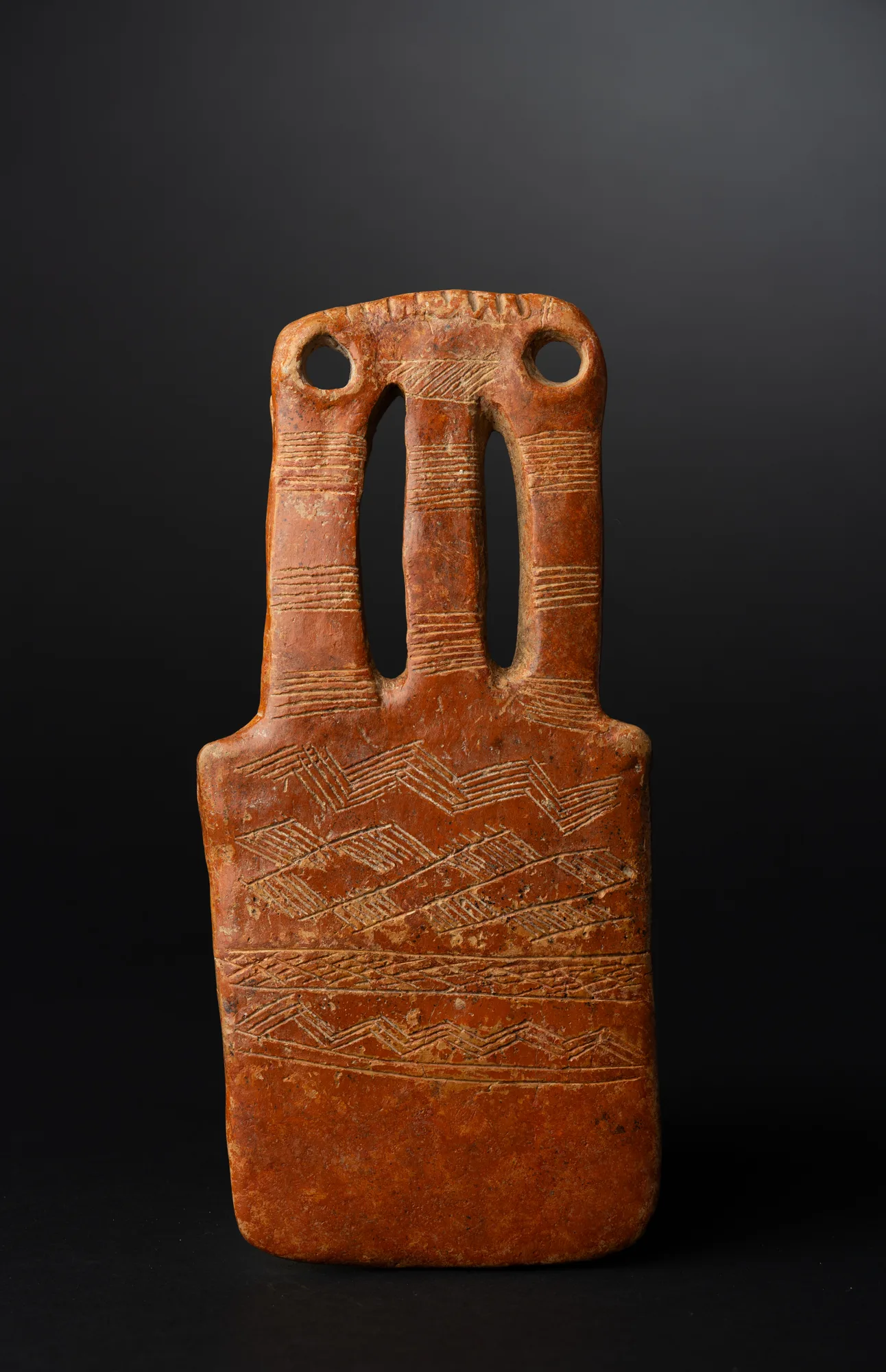
A Red Polished plank figure from Early Bronze Age Cyprus with three necks, pierced ears and incised lozenge and zigzag bands. It is one of only about three three-necked planks known.
Date
2000 - 1800 BC
Accession No.
STA-BA-004
Collection
Alexis Drakopoulos
Provenance
- 1960s, James Alfred Brew (1923–2008), acquired in Cyprus; his list no. 115
- 1972–2025, on long-term loan from J. A. Brew and his heirs to the Ashmolean Museum, Oxford (LI1100.81), on display
- 2025–present, Alexis Drakopoulos, London
Early Cypriot III–Middle Cypriot I, c. 2000–1800 BCE · Red Polished ware · Handmade, incised · H. 23.2 cm as restored
A flat, rectangular slab of red-slipped clay, burnished to a soft lustre and worn to an orange mottle where the slip has thinned. The upper third rises in three narrow necks, separated by two long slots that close at the shoulder line and bridged across the top by a band whose upper edge is nicked with short vertical grooves. A large pierced ear sits at each upper corner. There is no face. On the front, each neck is ringed with groups of horizontal lines; the shoulders carry two chains of hatched lozenges, then a lattice band, a hatched zigzag and parallel lines, all cut sharply into the leather-hard clay and still holding traces of white fill. The back is worked with a hatched band between the ears and a zigzag running down each neck. The right neck and the plain lower quarter of the body are modern restoration.
Commentary
This is a Red Polished plank figure of the rare three-necked kind, Karageorghis's group Bf, "shoulder figurines with three necks and two ears", and is catalogued there as Bf.2 [1]. It had already been published by the Ashmolean in its 1975 handbook and in Frankel's catalogue of the museum's Early and Middle Bronze Age holdings, and it appears in Belgiorno's study of Bronze Age anthropomorphic figures and in Morris's survey [2][3][4][5]. Among forty complete or near-complete planks studied by a Campo there were twenty-nine single-headed, nine double-headed and one triple [6]. The Berlin Antikensammlung, publishing its own three-necked plank from Lapithos (Misc. 8105,14), counts three such figures known in all [8]. This piece is one of only about three three-necked plank figures on record.
The Berlin figure is the nearest comparison and makes the difference clear. It is built on the same scheme, three necks bridged at the top with an ear at each corner, but a face is marked on the middle neck with a relief nose, a mouth line and eye hollows, and a pair of breasts sits on the chest [8][4]. This figure has neither face nor breasts. Its closest companion in decoration is the two-necked plank that shared its history (STA-BA-003), with the same notched crest, horizontal neck bands and lozenge chains.
The date rests on style and class. Brew's 1972 loan list called it Early Cypriot III; the Ashmolean later dated it to Middle Cypriot I. Knox argues that multi-headed planks are a late development within a class that runs from Early Cypriot III into Middle Cypriot II [7]. On the radiocarbon-based chronology now in use, that places it about 2000–1800 BCE. The fine white-filled incision on a soft, even fabric is the manner of the north-coast workshops, and most planks come from the tombs of Lapithos, so a north-coast origin is likely on style; no find-spot was ever recorded [6].
Two readings have been proposed. Belgiorno took the central element as the only true neck and the flanking two as heavy locks of hair, a coiffure framing a face that was never carved; she made the piece the sole example of her Tipo H [3]. Karageorghis found this "difficult to accept" and preferred to see the third neck as an extension of the two-necked scheme, made "without having any specific iconographic intention" [1]. The back, where each of the three uprights carries its own zigzag, the device used for hair on the necks of single planks, is consistent with either view, and the question remains open.
Planks were handled objects. Knox records figures that stood upright long enough to mark the clay, repairs made in antiquity, and a recurrent break across the torso [7]. The loss of this figure's lower body falls where that break usually occurs, though whether it happened by design or in a reused tomb cannot now be known. Karageorghis gives the preserved height as 19 cm, against about 23 cm as restored [1].
References
- 1.Karageorghis, V. (1991) The Coroplastic Art of Ancient Cyprus I: Chalcolithic–Late Cypriote I. Nicosia: A. G. Leventis Foundation, group Bf ('Shoulder figurines with three necks and two ears'), no. Bf.2, pl. XL:2.
- 2.Frankel, D. (1983) Corpus of Cypriote Antiquities 7: Early and Middle Bronze Age Material in the Ashmolean Museum, Oxford (SIMA XX:7). Göteborg: Paul Åström, no. 152, pl. 12.
- 3.Belgiorno, M. R. (1984) Le statuette antropomorfe cipriote dell'età del bronzo (I parte), in Studi Ciprioti e Rapporti di Scavo. Rome: CNR, fig. 12:2 ('Tipo H').
- 4.Morris, D. (1985) The Art of Ancient Cyprus. Oxford: Phaidon, fig. 227 (this figure) and fig. 226 (the Berlin three-necked plank).
- 5.Brown, A. C. and Catling, H. W. (1975) Ancient Cyprus. Oxford: Ashmolean Museum, fig. I, b-7.
- 6.a Campo, A. L. (1994) Anthropomorphic Representations in Prehistoric Cyprus: A Formal and Symbolic Analysis of Figurines, c. 3500–1800 BC (SIMA-PB 109). Jonsered: Paul Åström.
- 7.Knox, D. (2012) Making Sense of Figurines in Bronze Age Cyprus. PhD thesis, University of Manchester.
- 8.Brehme, S. (2012) in Die Antikensammlung. Altes Museum, Neues Museum, Pergamonmuseum, 4th ed. Berlin: Staatliche Museen zu Berlin, pp. 283 f., no. 162 (Antikensammlung Misc. 8105,14).
More from the Catalogue
Browse related objects
Horse and rider figurine
Archaic II
Seated female figurine of the dea gravida type
Archaic II
Terracotta rattle in the form of a pig
Hellenistic
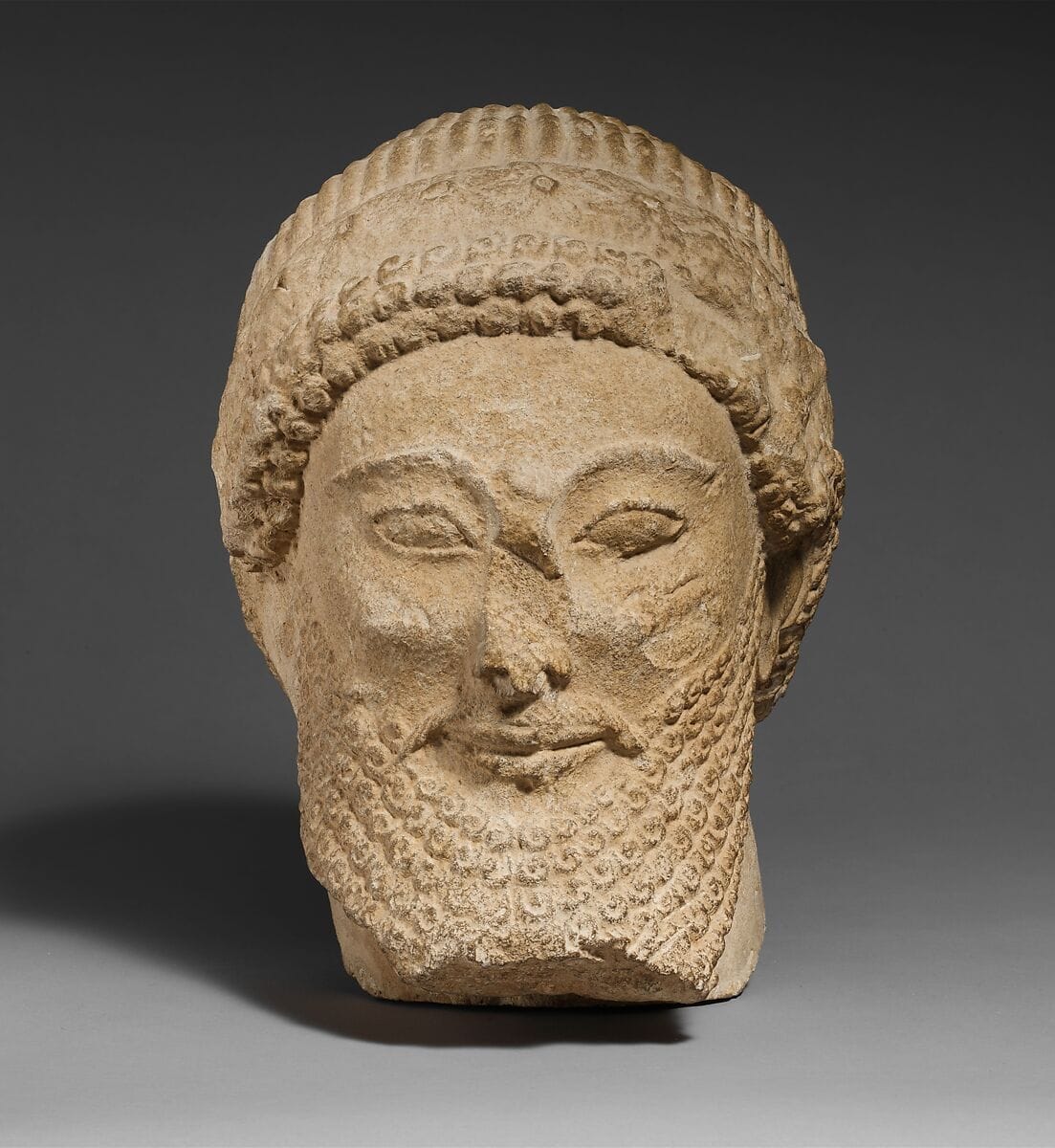
Limestone head of a bearded male with a wreath of flowers
Archaic II
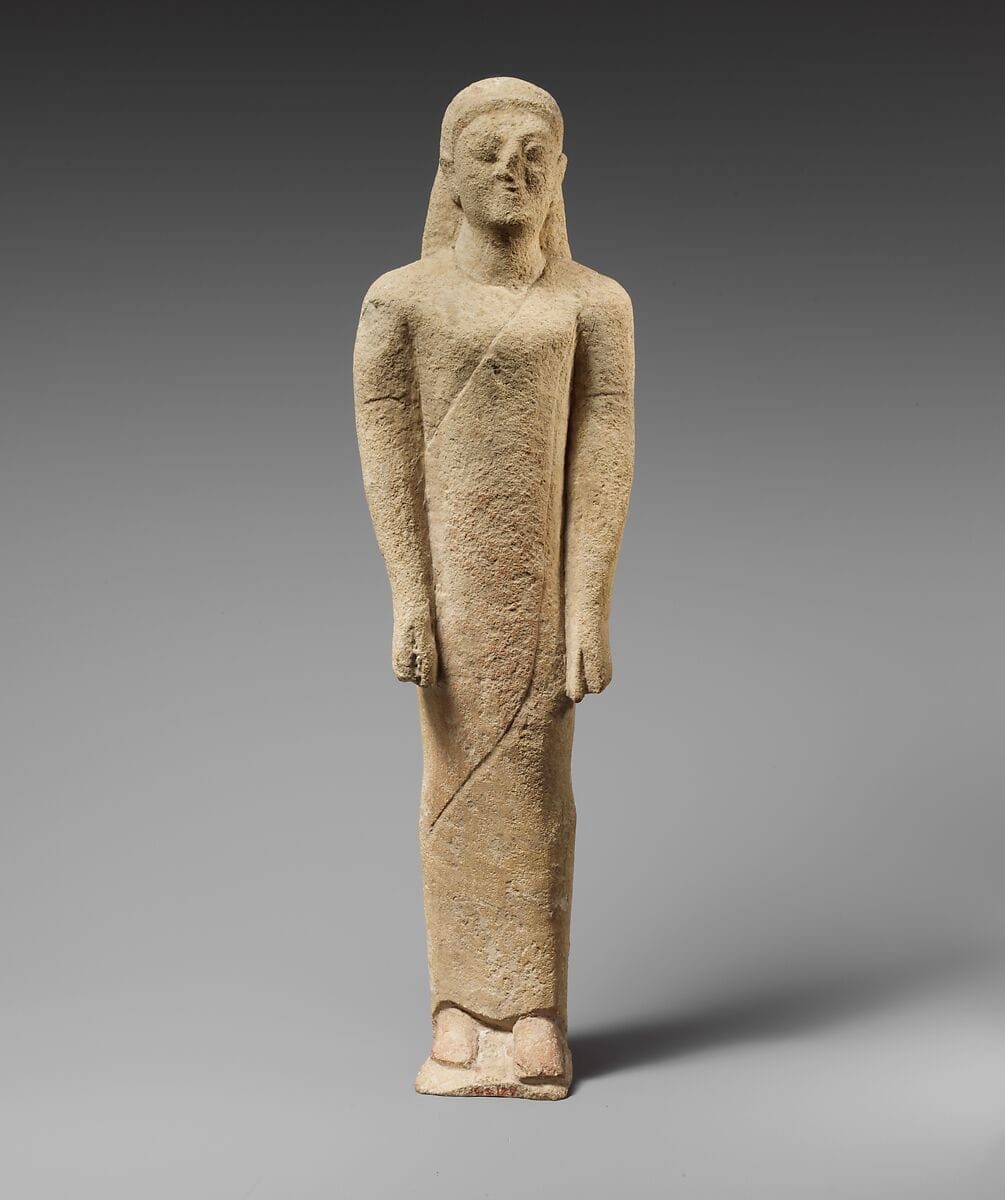
Limestone statuette of a beardless male votary in Greek dress
Archaic II
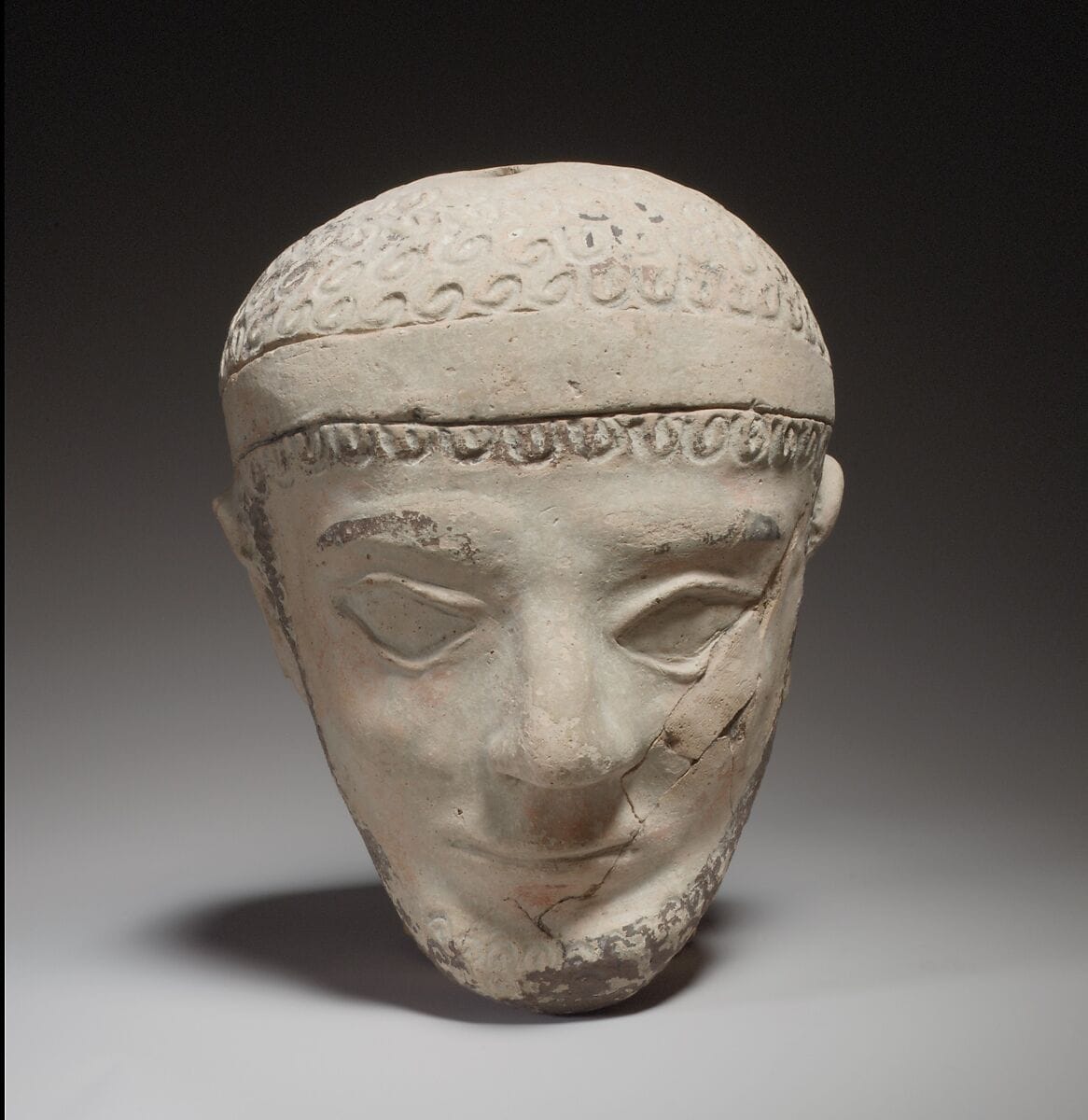
Terracotta head of a man
Archaic II
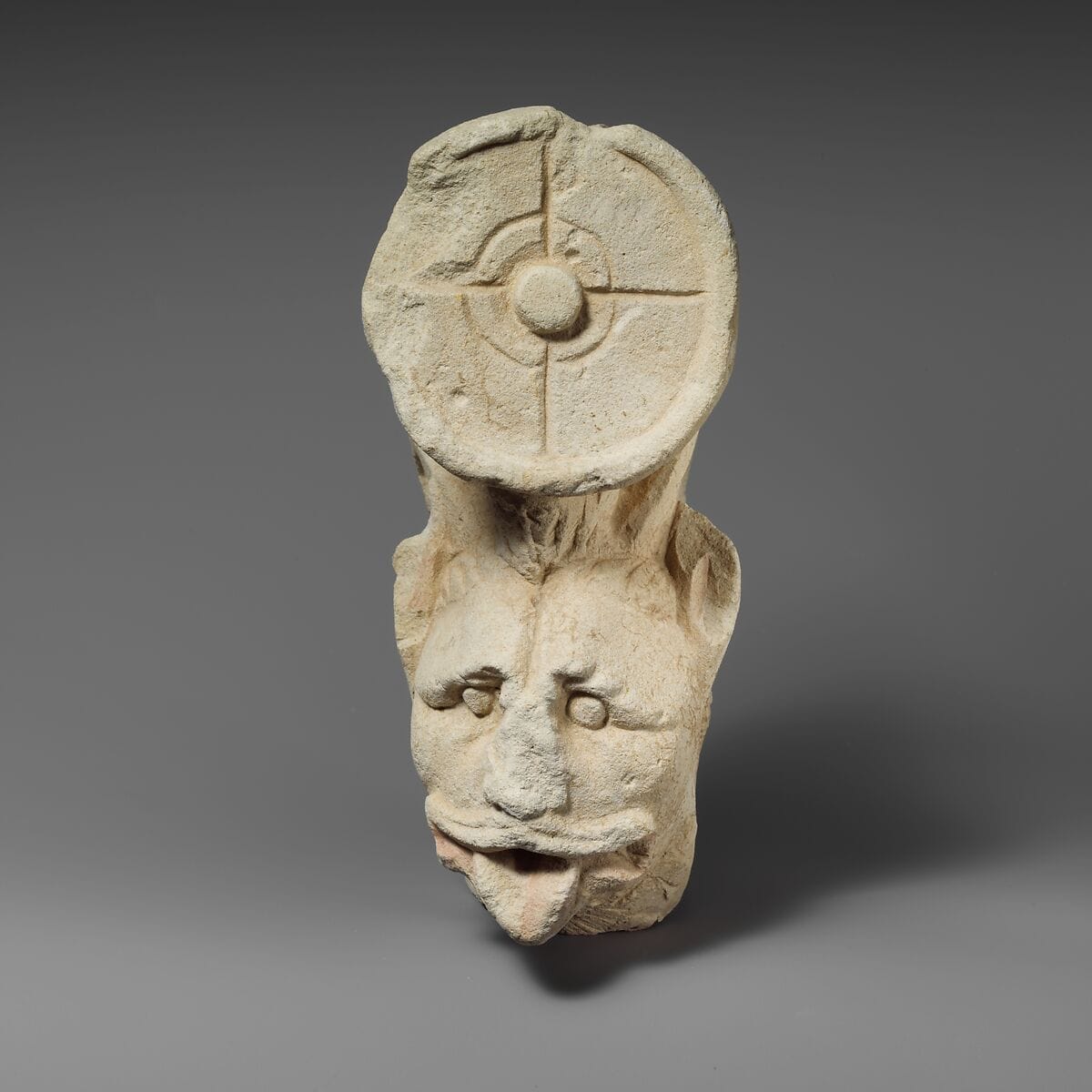
Fragment of a limestone throne (?) with the head of a horned lion
Roman
Head of a comic figurine
Hellenistic
Limestone statuette of a female votary of the kore type
Archaic II
Limestone head of Apollo
Hellenistic
Standing female flute player
Classical
Standing female figurine
Archaic II
Horse's head with harness
Archaic II
Limestone statuette of a mourning siren
Hellenistic
Standing female figurine
Archaic II
Terracotta statuette of Silenos (?) drinking
Hellenistic
Limestone head of beardless male votary with wreath of leaves
Hellenistic
Limestone statuette of a beardless male votary with a wreath of leaves
Classical