
Archaic II
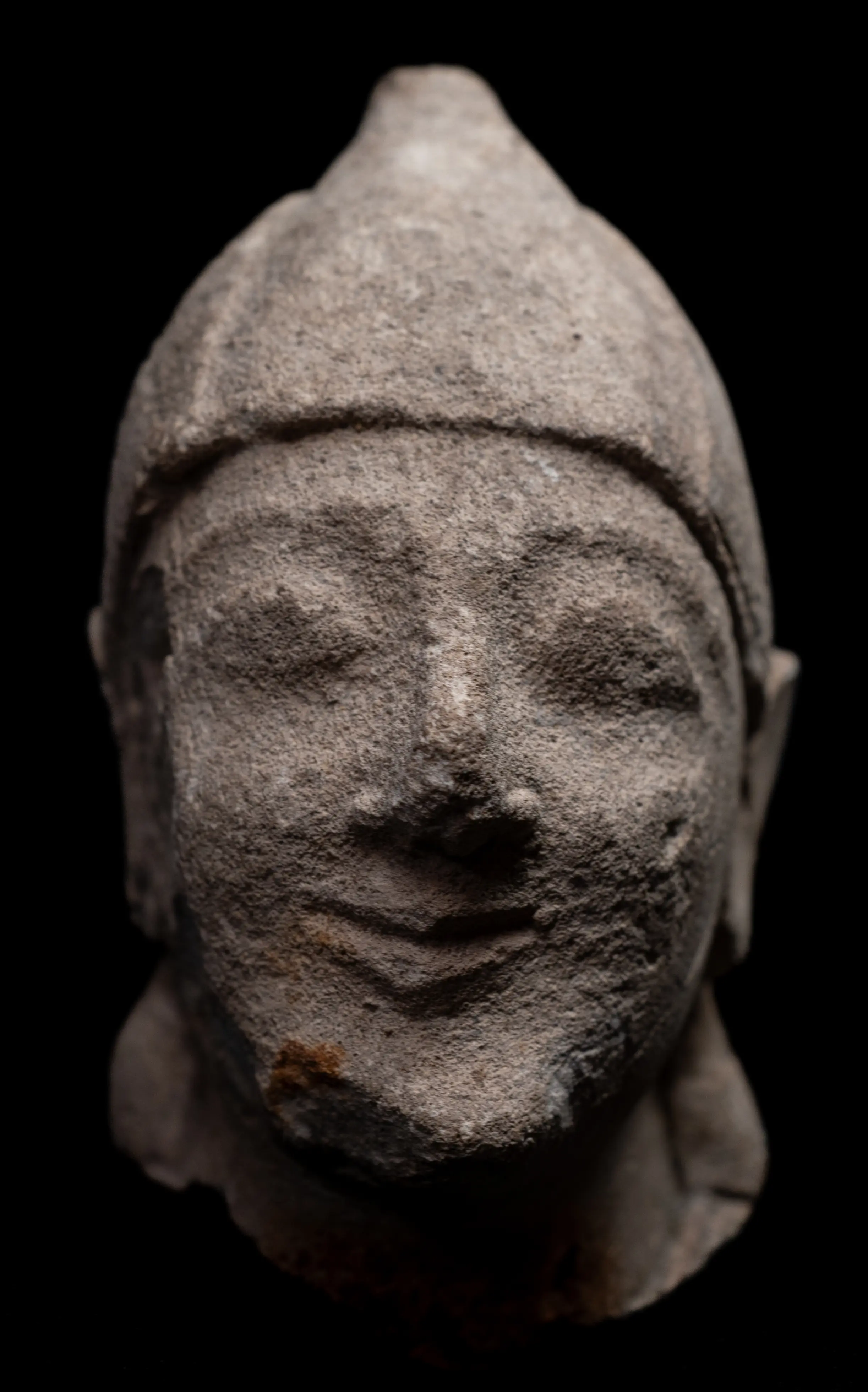
Limestone Head of a Beardless Votary in a Conical Helmet
Cypro-Archaic limestone head of a smiling beardless votary wearing a tall ribbed conical helmet, with projecting ears; 6th century BCE.
Date
600 - 500 BC
Accession No.
STA-AR-002
Collection
Alexis Drakopoulos
Provenance
- Before 1969, Victor Emile Gabriel Chevallier (1889–1969) and Marguerite Jeanne Verel (1887–1962), Paris
- 1969–2024, private collection, Paris, by descent through two successions
- 12 December 2024, Aponem, lot 70
- 2024–present, Alexis Drakopoulos, London
Cypro-Archaic II, c. 600–500 BCE · Limestone · Carved
A small head of a beardless man, broken at the neck, carved in soft pale limestone that has weathered to a fine, granular surface. He wears a tall conical helmet ending in a blunt knob. A raised band runs across the brow, and two low ribs climb the sides of the cone toward the tip. The ears are cut in relief outside the helmet and stand away from the head, and a smooth mass of hair drops behind them to the nape.
The face is a broad oval. The eyes are almond-shaped with swollen lids, the nose short and straight, and the lips are drawn up at the corners into a clear smile that lifts the cheeks. The back is summarily worked. There is orange iron staining at the neck break and a small spot of the same on the chin.
Commentary
The head comes from a votive statuette of a male worshipper, the commonest subject in Cypriot sanctuary sculpture of the 6th century BCE. Such figures stood in open-air sanctuaries as permanent stand-ins for the men who dedicated them. The complete type is known from larger statues: the Metropolitan Museum's lifesize votary 74.51.2474 wears the same conical helmet with a long, plain garment, its right arm wrapped in a cloak, and has the hair gathered in a smooth mass at the back [1]. Heads survive far more often than bodies, because the neck is the weakest point of a soft-stone figure.
The helmet, often called the Assyrian cap, belongs to a phase when Cypriot votive dress drew on Near Eastern models. Ulbrich places beardless and bearded votaries in this conical helmet with top-knob from the late 7th into the 6th century BCE, before Greek hairstyles and dress took over from the middle of the 6th century [2]. Stone statuettes of this kind hardly occur before about 600 BCE. The lively smile and the fuller modelling of cheeks and chin fit the 6th century rather than the late 7th, and the closest dated museum heads all fall in that century. A date of c. 600–500 BCE, probably around the middle of the century, is the most defensible.
The nearest parallel in scale and detail is a head in the Fitzwilliam Museum from Salamis (GR.3c.1891), H. 12.6 cm, with a ribbed cap, projecting ears and hair at the sides, dated 600–501 BCE [3]. A head in the Royal Ontario Museum (958.61.217), probably from Tamassos-Frangissa and dated about 600–550 BCE, shows the same helmet [4]. A still smaller head in Stockholm (K. 461), found by the Swedish Cyprus Expedition in the Kition sculpture deposit, combines a smiling mouth, myrtle-leaf eyes, a short conical cap and side locks at the back of the neck [5]. Two heads from Golgoi in the Metropolitan Museum carry the type to larger scale: 74.51.2543, of the first half of the 6th century, where cheekpieces cover the ears [1], and 74.51.2557, of the middle or third quarter of the century, with a smiling face and schematic ears [6]. On this head the ears are left free of the helmet, as on the Fitzwilliam piece.
Workshops at Golgoi, Idalion, Tamassos, Salamis and Kition all produced the type, and the head carries no feature that ties it firmly to one of them. The helmet is sometimes read as military, but the same headgear is worn by votaries in sanctuary contexts, and whether it marked a rank or office for the dedicant remains open.
References
- 1.Hermary, A. and Mertens, J.R. (2014) The Cesnola Collection of Cypriot Art: Stone Sculpture. New York: The Metropolitan Museum of Art, cat. 7 (74.51.2474) and cat. 9 (74.51.2543).
- 2.Ulbrich, A. (2020) 'Adoption and Adaptation of Greek Iconography in Cypriot Votive Sculpture of the Late Archaic and Classical Periods.' In M. Christidis, A. Hermary, G. Koiner and A. Ulbrich (eds), Classical Cyprus (Kypriaka 5). Vienna: Holzhausen, section 'Male and Female Votaries'.
- 3.Fitzwilliam Museum, Cambridge, GR.3c.1891, limestone head of a man wearing a cap, from Salamis, 600–501 BCE (collection record).
- 4.Royal Ontario Museum, Toronto, 958.61.217, male head with conical helmet, about 600–550 BCE, probably made at Tamassos-Frangissa (collection record).
- 5.Medelhavsmuseet, Stockholm, K. 461, limestone head with conical cap from the Kition sculpture deposit, Swedish Cyprus Expedition (collection record).
- 6.The Metropolitan Museum of Art, New York, 74.51.2557, head of a votary in Assyrian cap, middle or third quarter of the 6th century BCE (collection record).
More from the Catalogue
Browse related objects
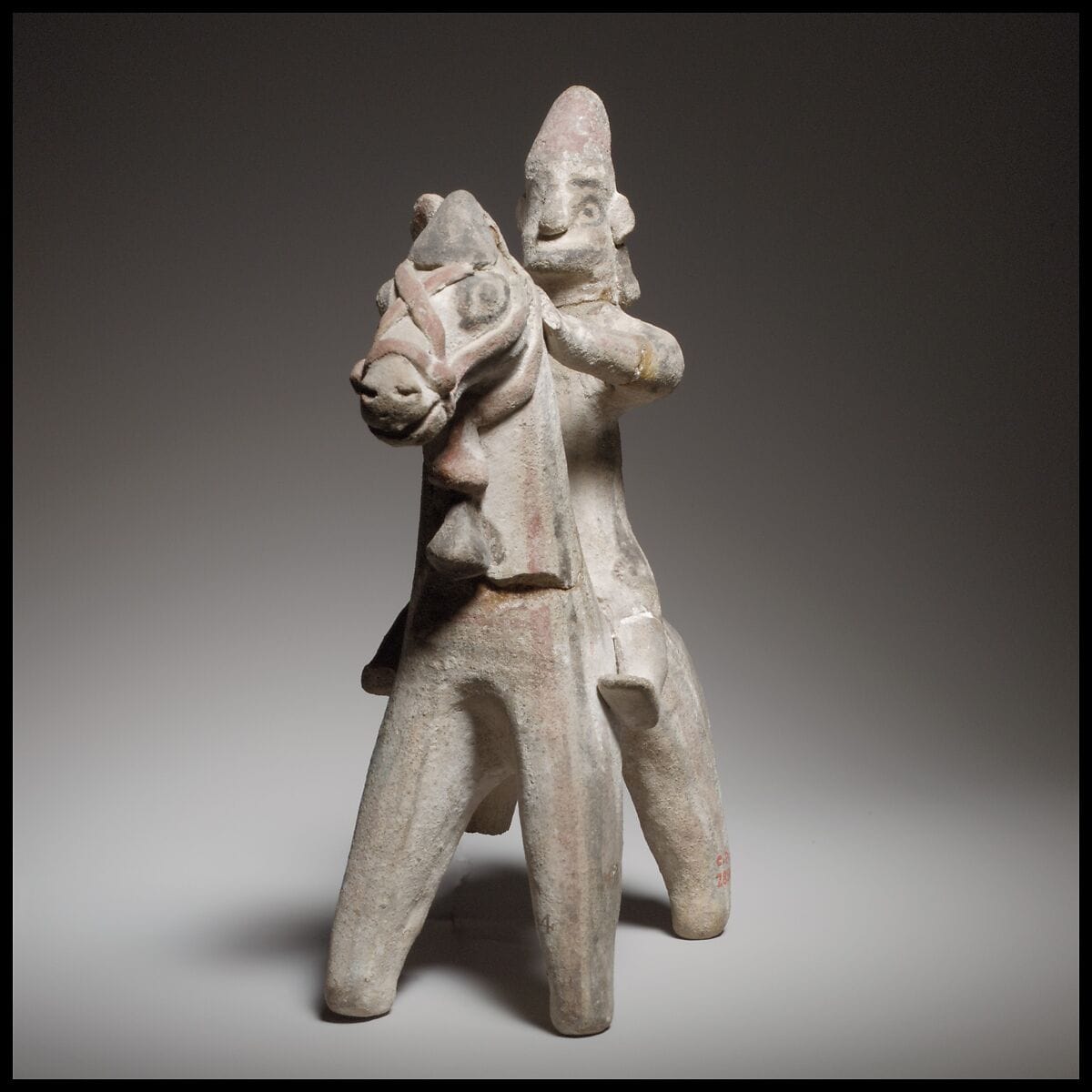
Horse and rider figurine
Archaic II
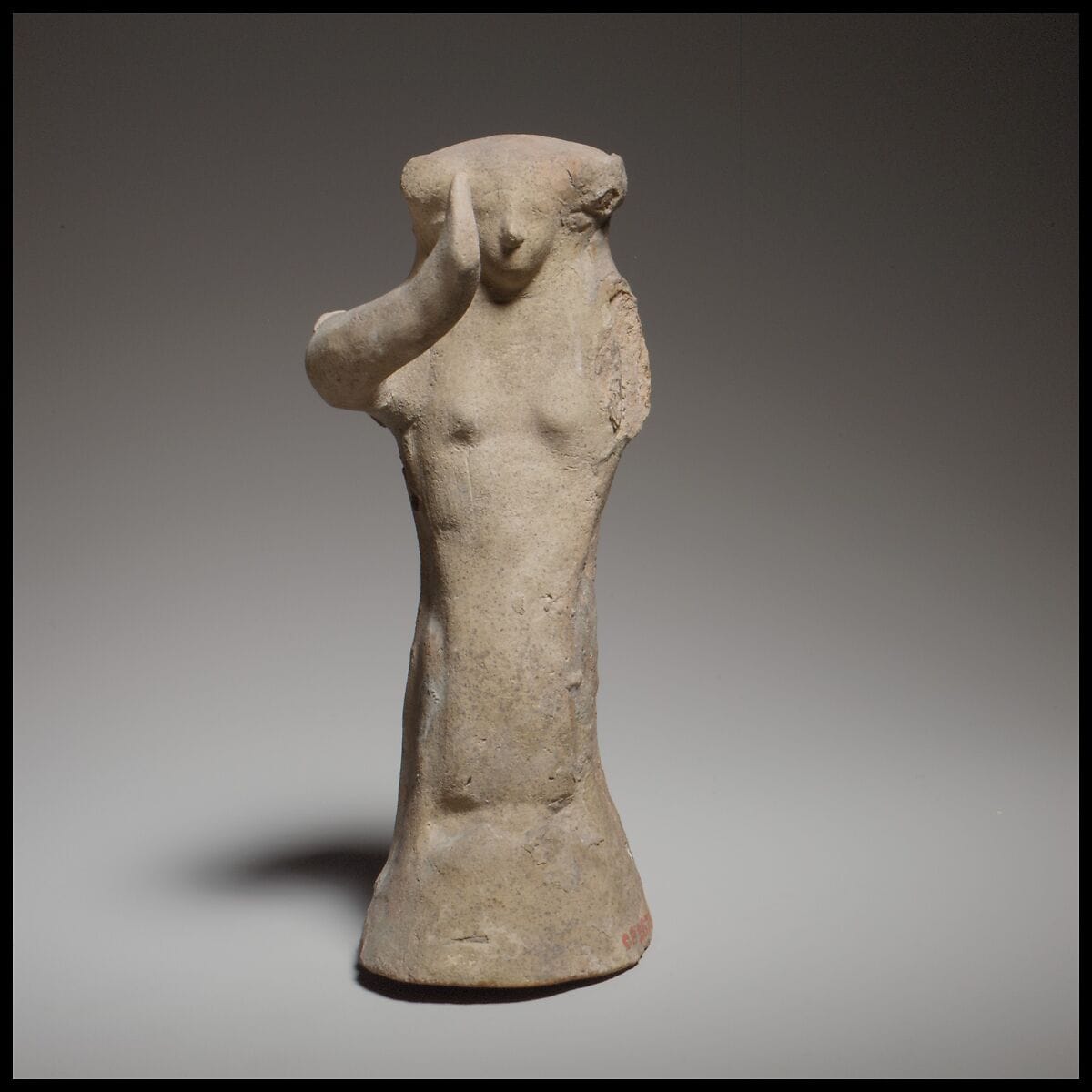
Seated female figurine of the dea gravida type
Archaic II
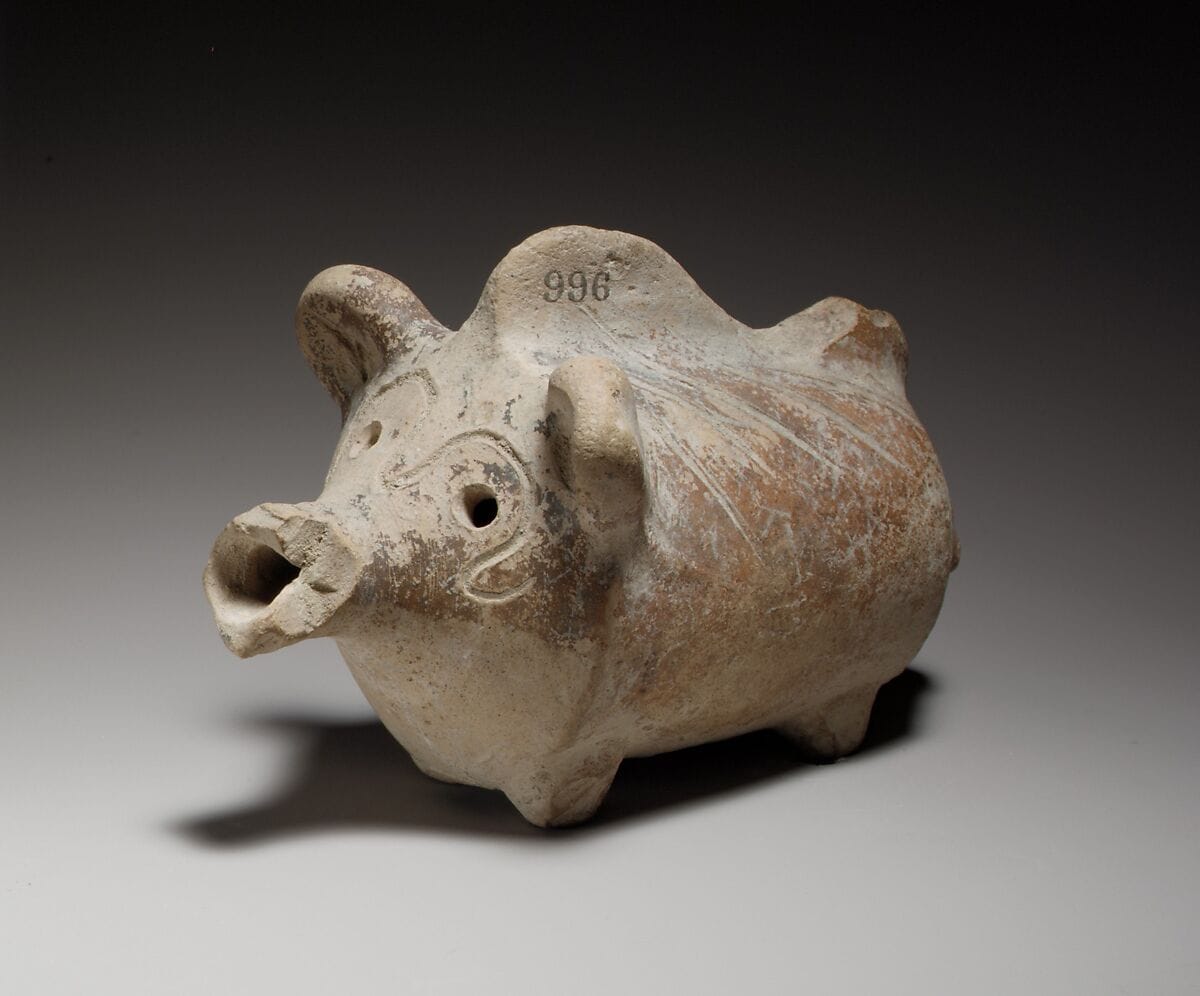
Terracotta rattle in the form of a pig
Hellenistic
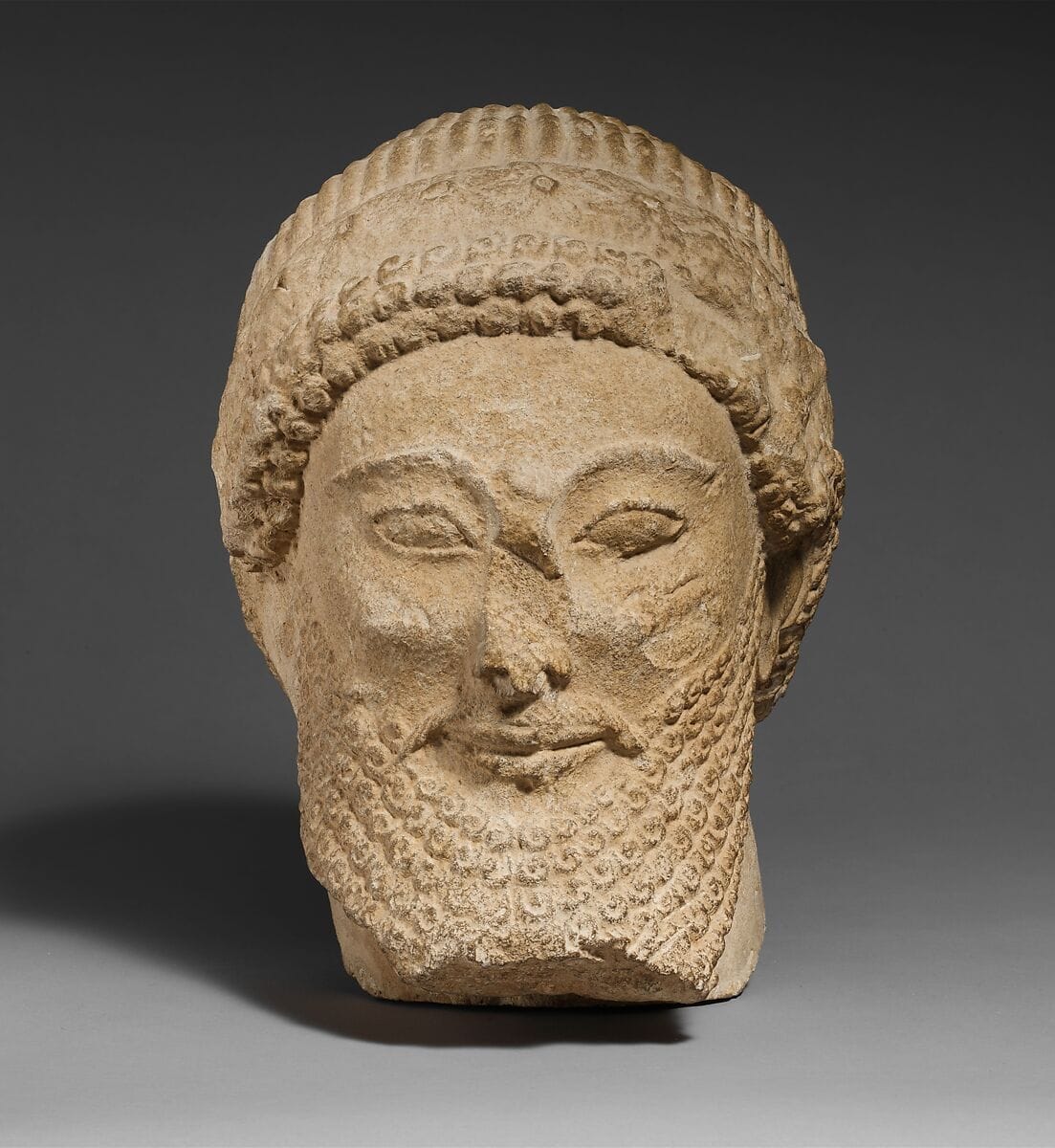
Limestone head of a bearded male with a wreath of flowers
Archaic II
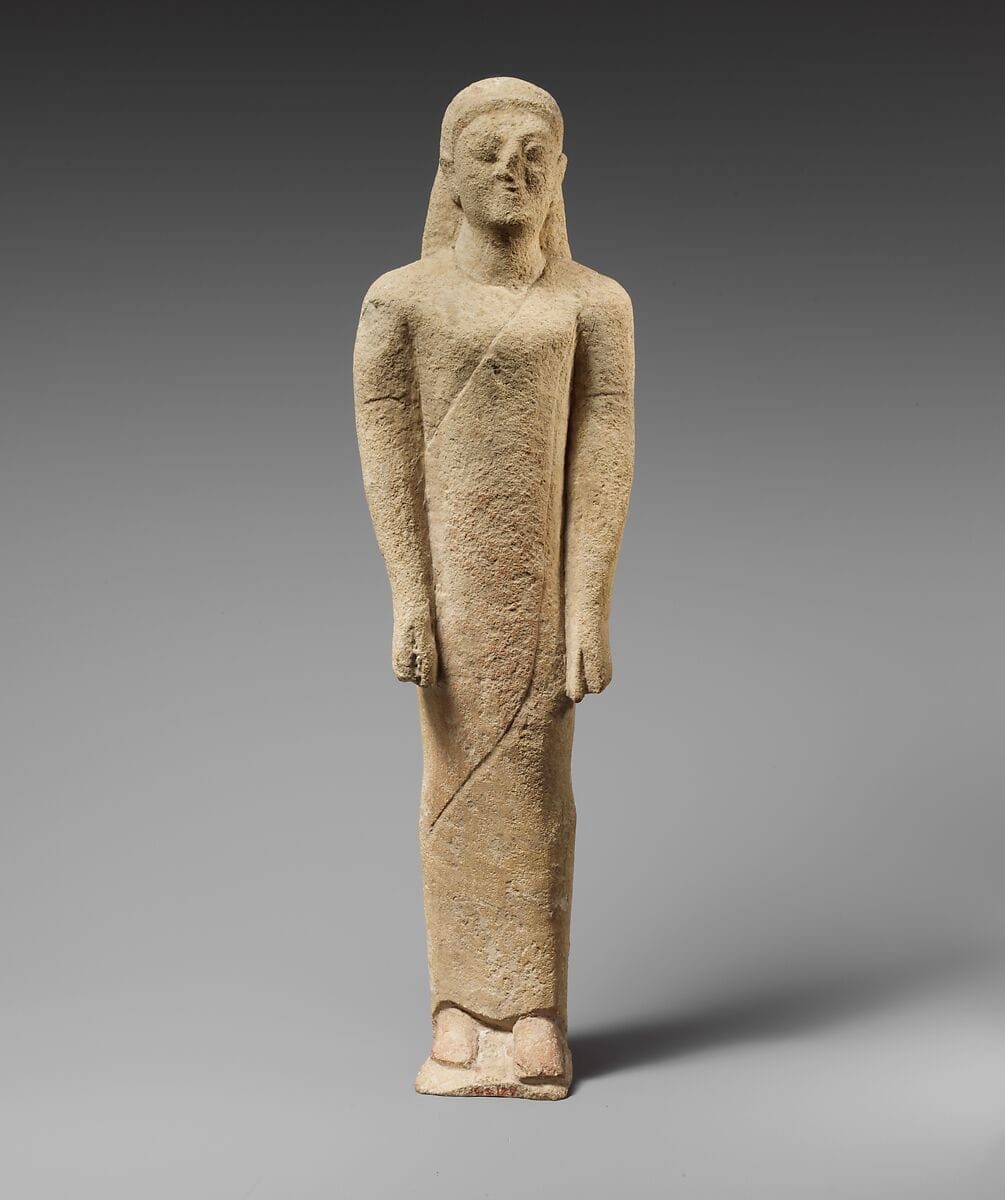
Limestone statuette of a beardless male votary in Greek dress
Archaic II
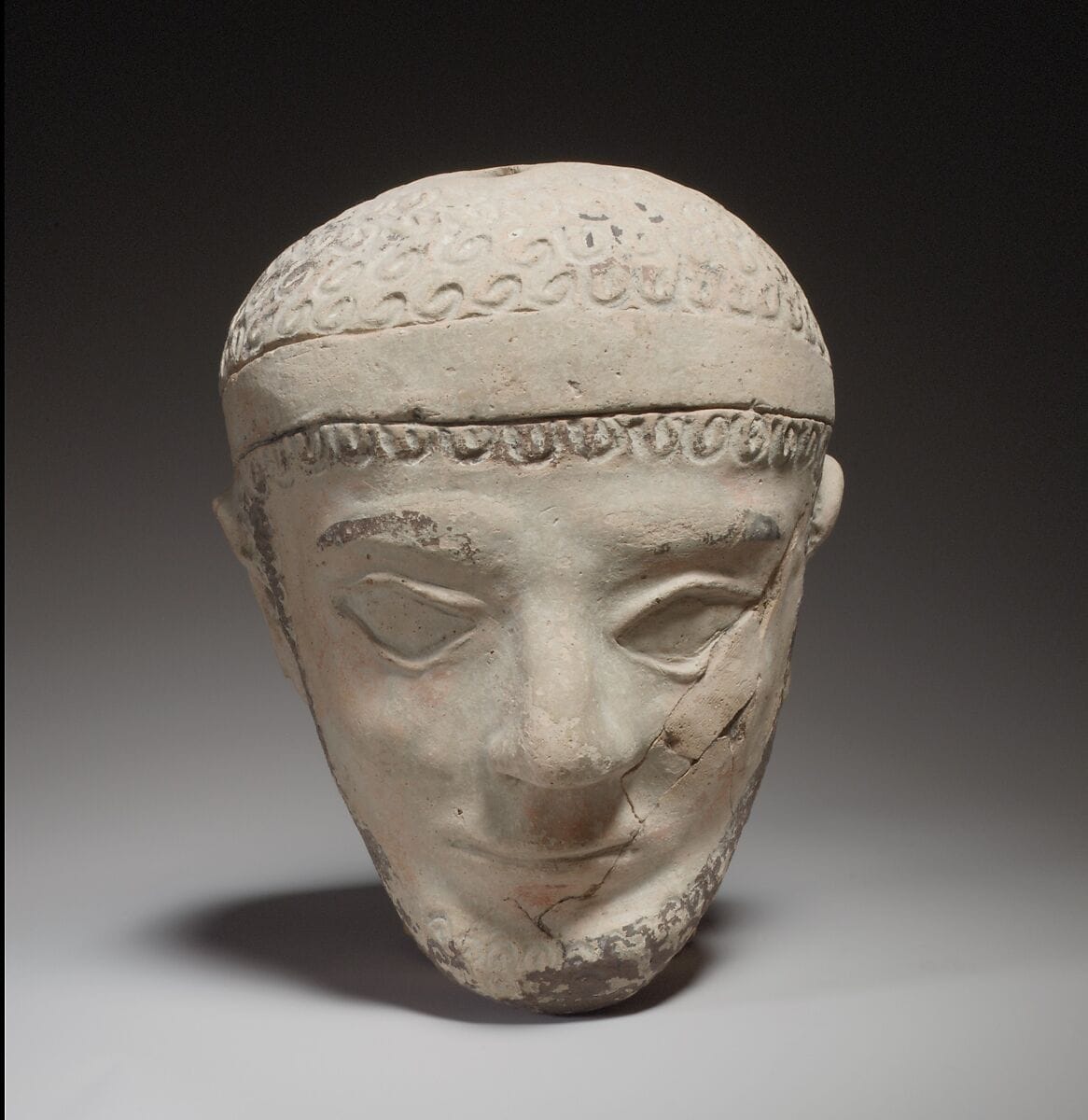
Terracotta head of a man
Archaic II
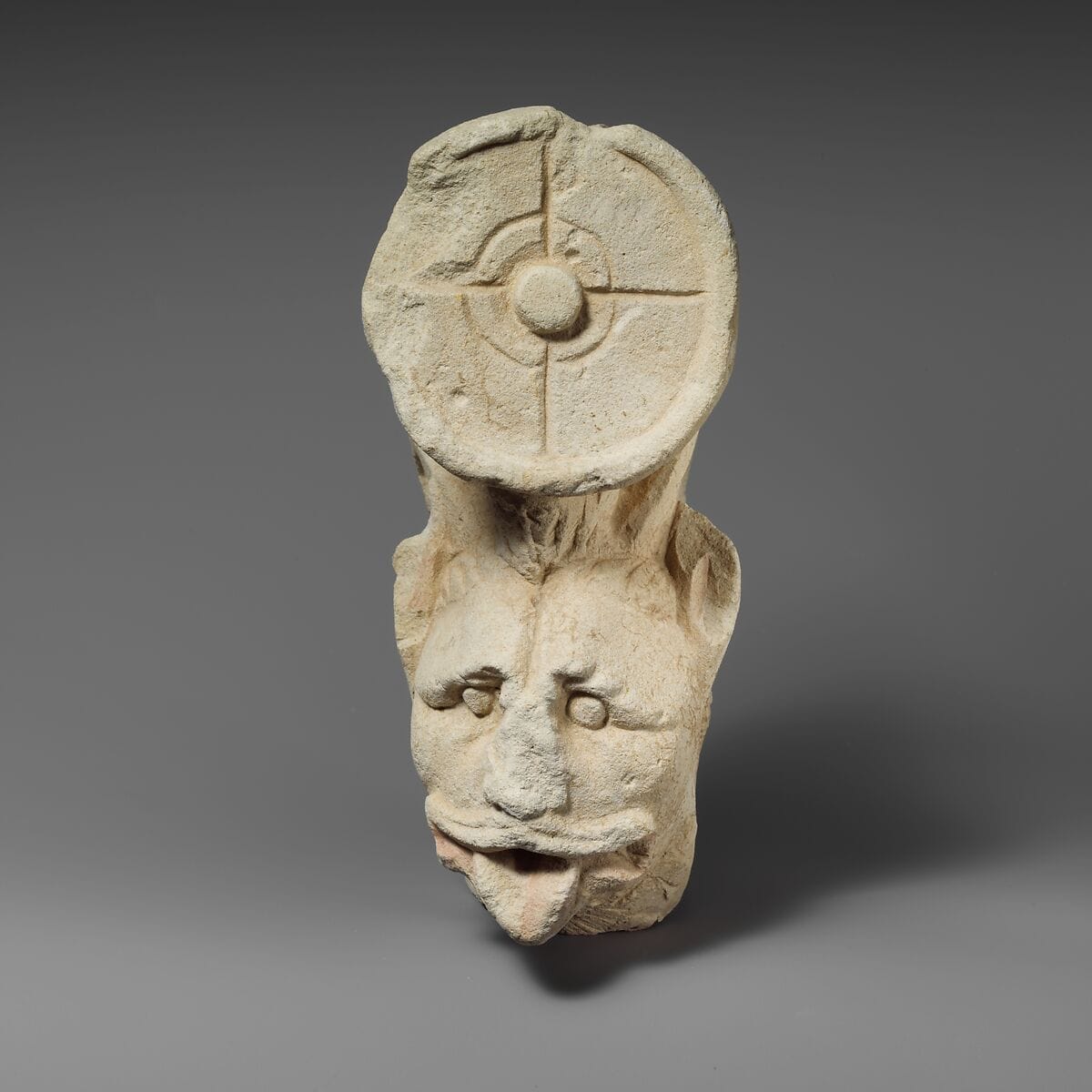
Fragment of a limestone throne (?) with the head of a horned lion
Roman
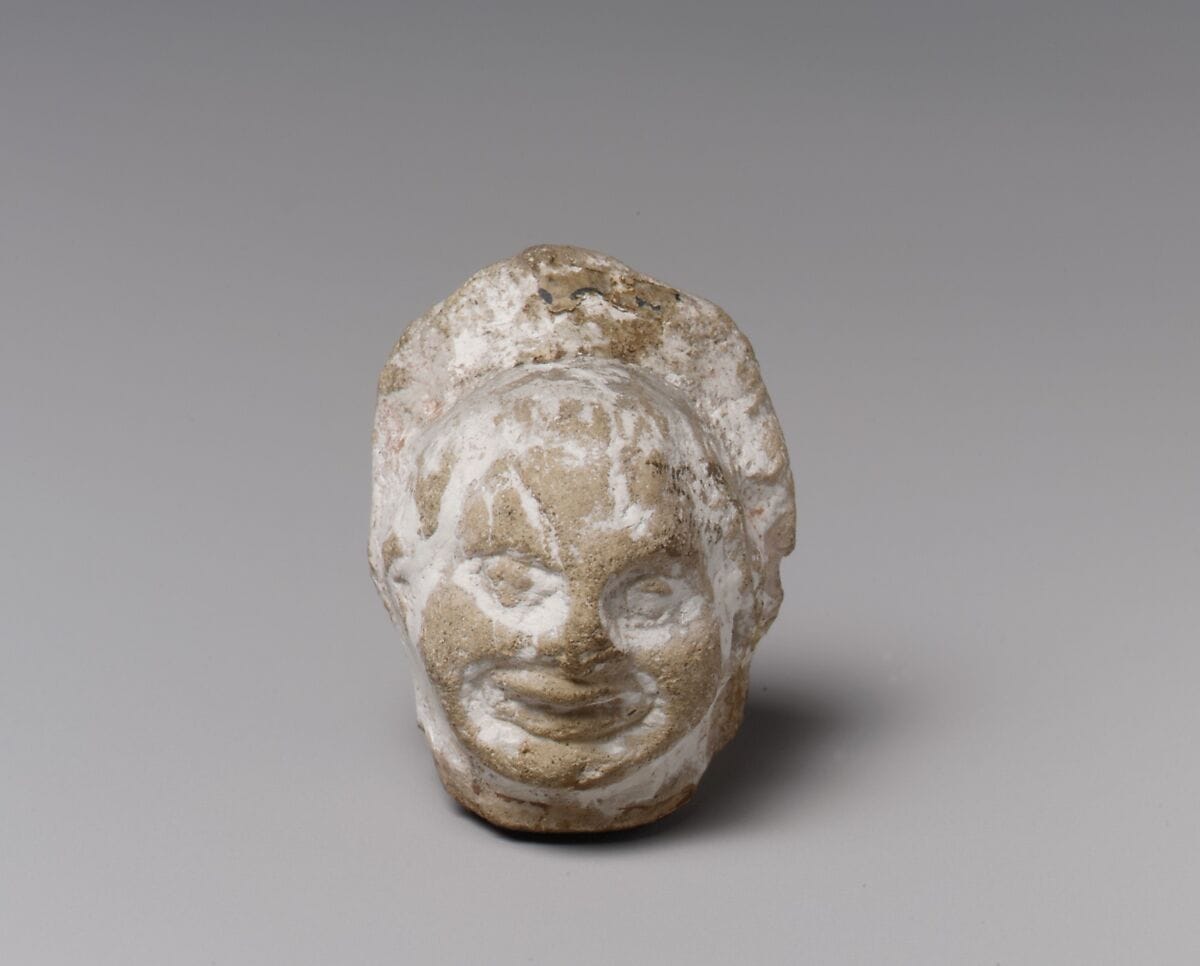
Head of a comic figurine
Hellenistic
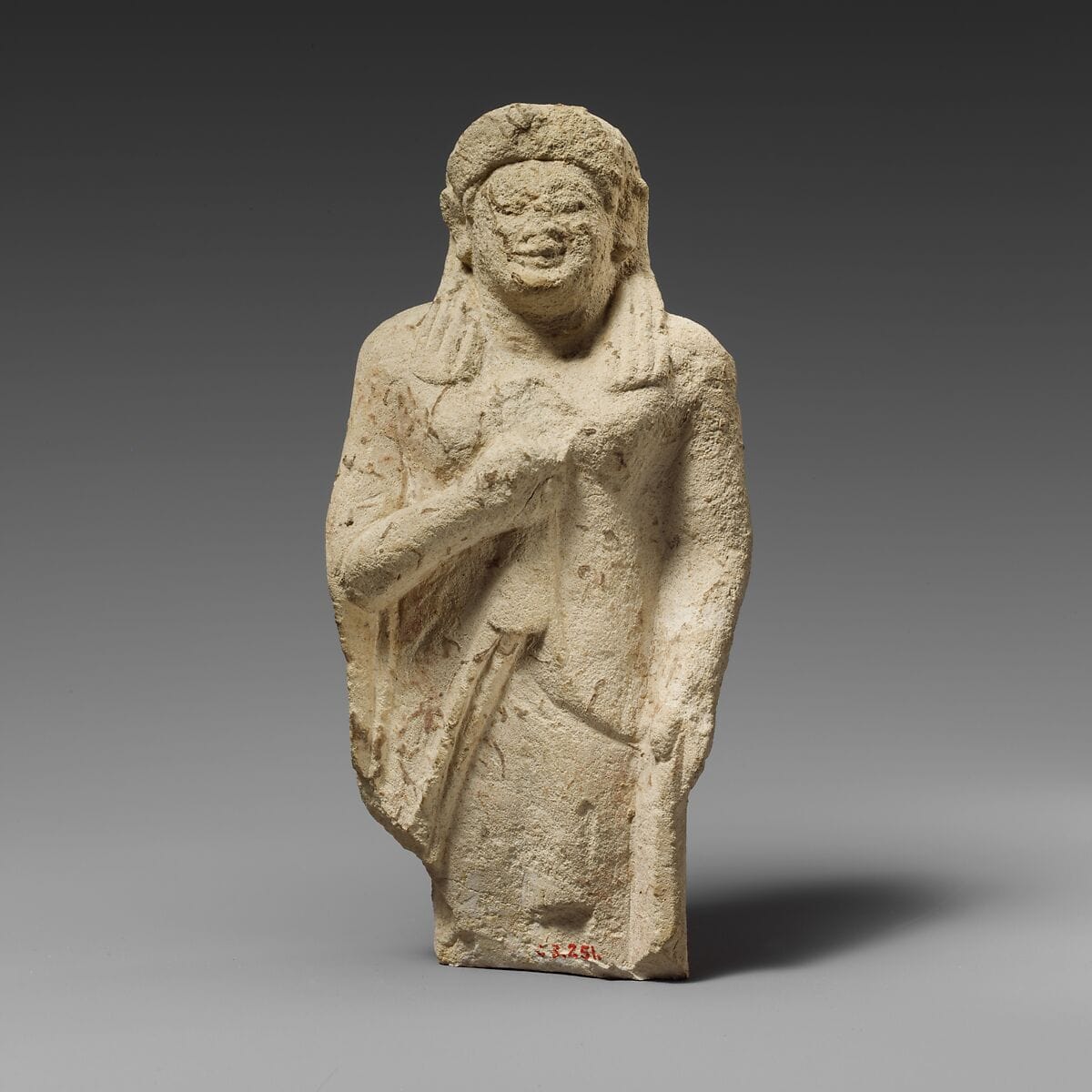
Limestone statuette of a female votary of the kore type
Archaic II
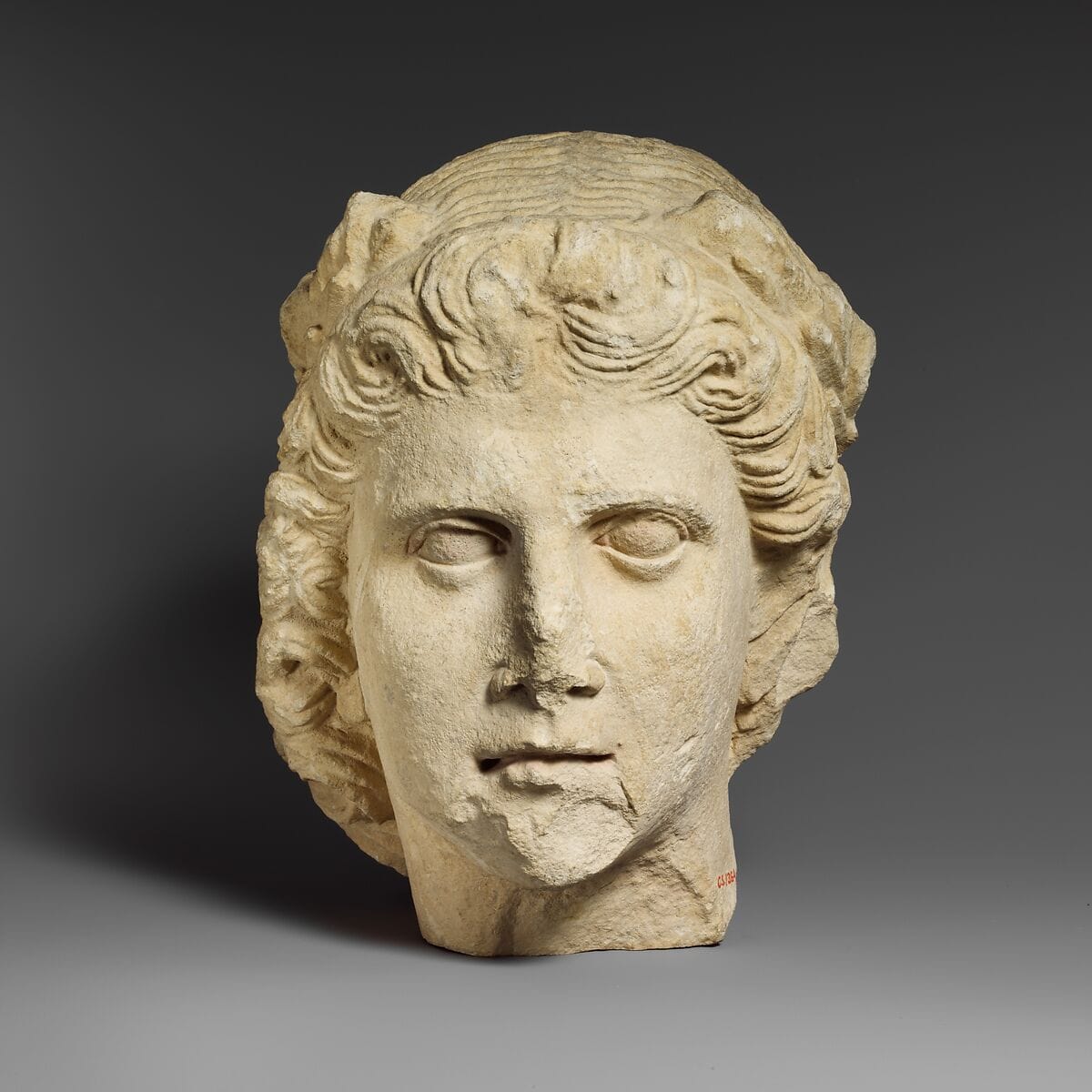
Limestone head of Apollo
Hellenistic
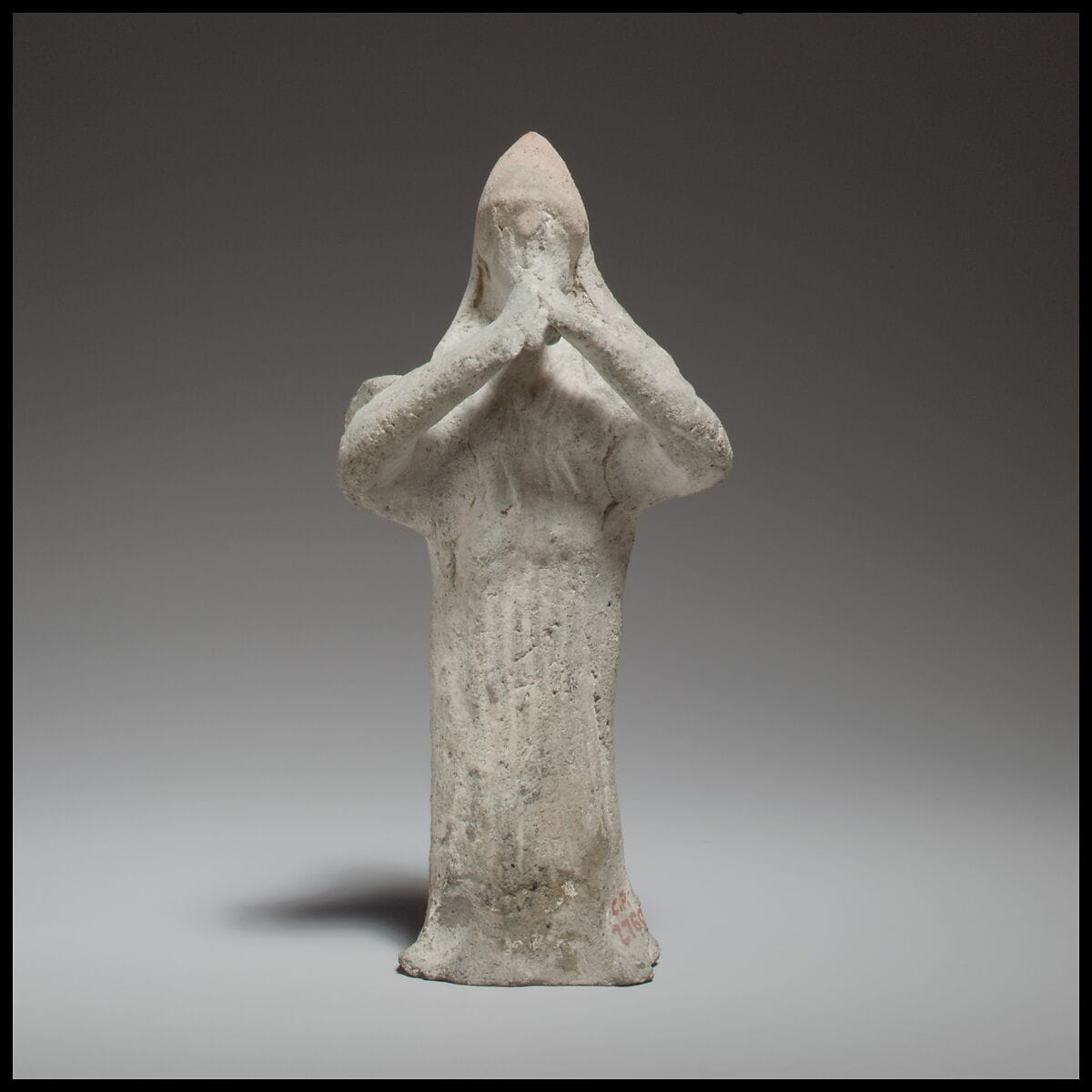
Standing female flute player
Classical
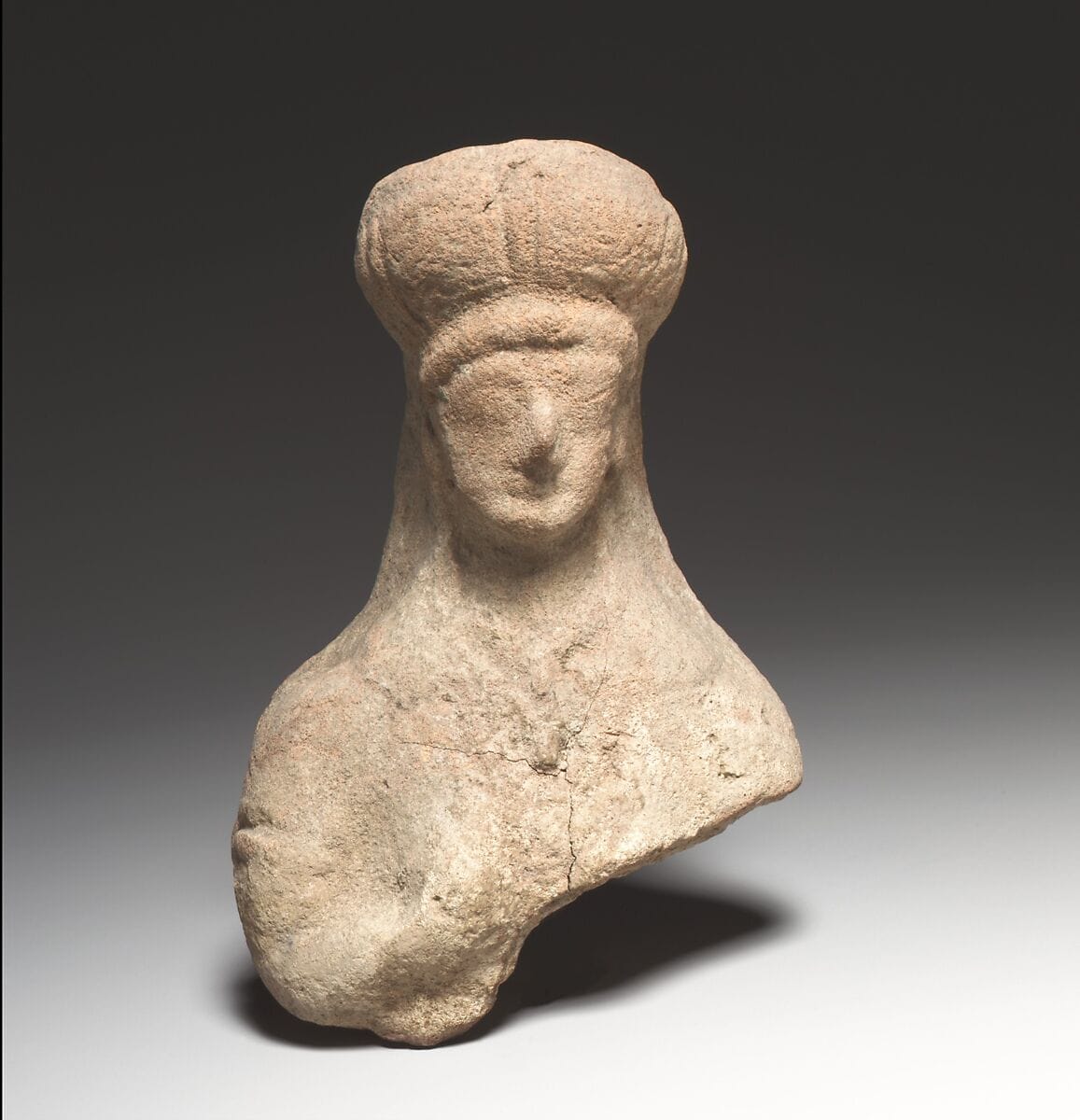
Standing female figurine
Archaic II
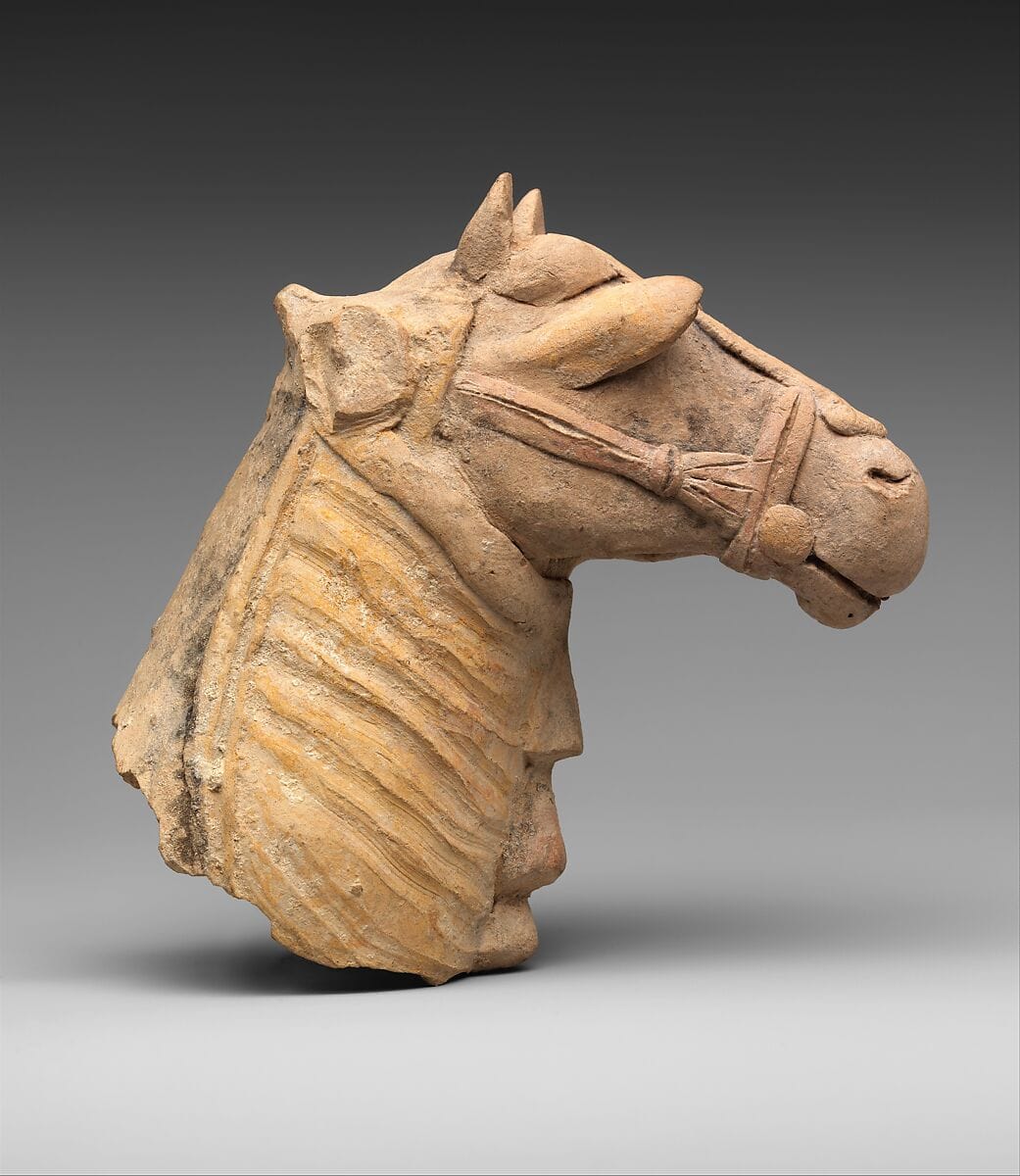
Horse's head with harness
Archaic II
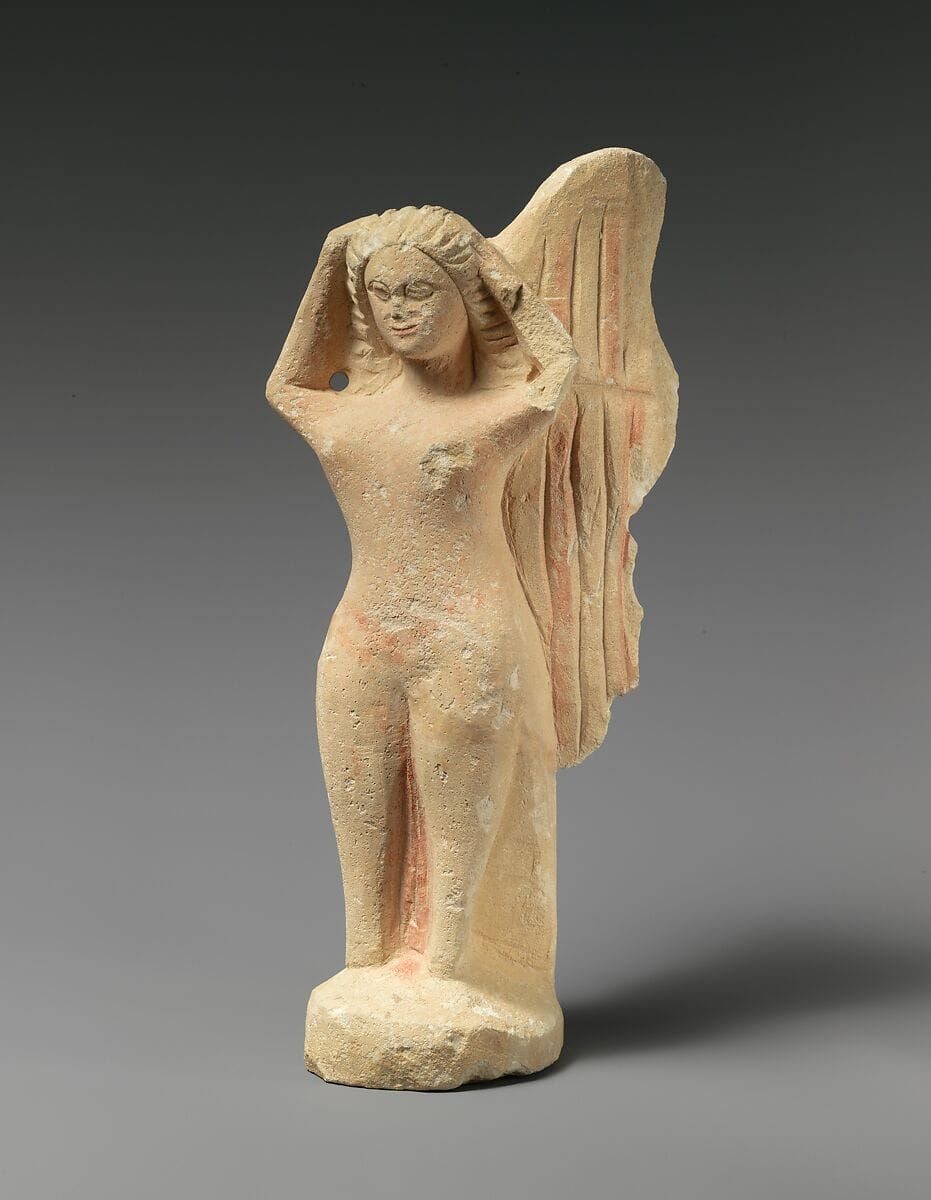
Limestone statuette of a mourning siren
Hellenistic
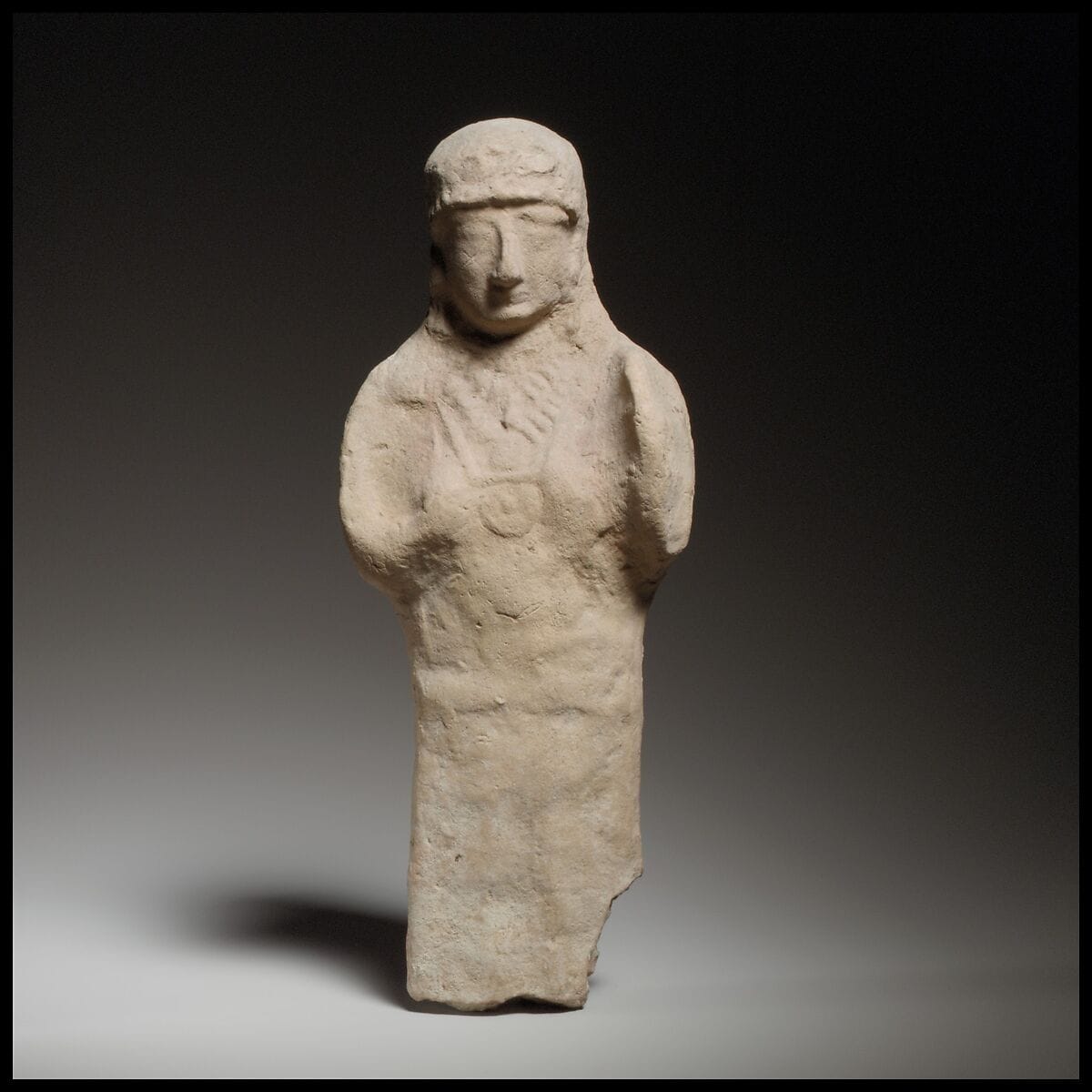
Standing female figurine
Archaic II
Terracotta statuette of Silenos (?) drinking
Hellenistic
Limestone head of beardless male votary with wreath of leaves
Hellenistic
Limestone statuette of a beardless male votary with a wreath of leaves
Classical