
Archaic II
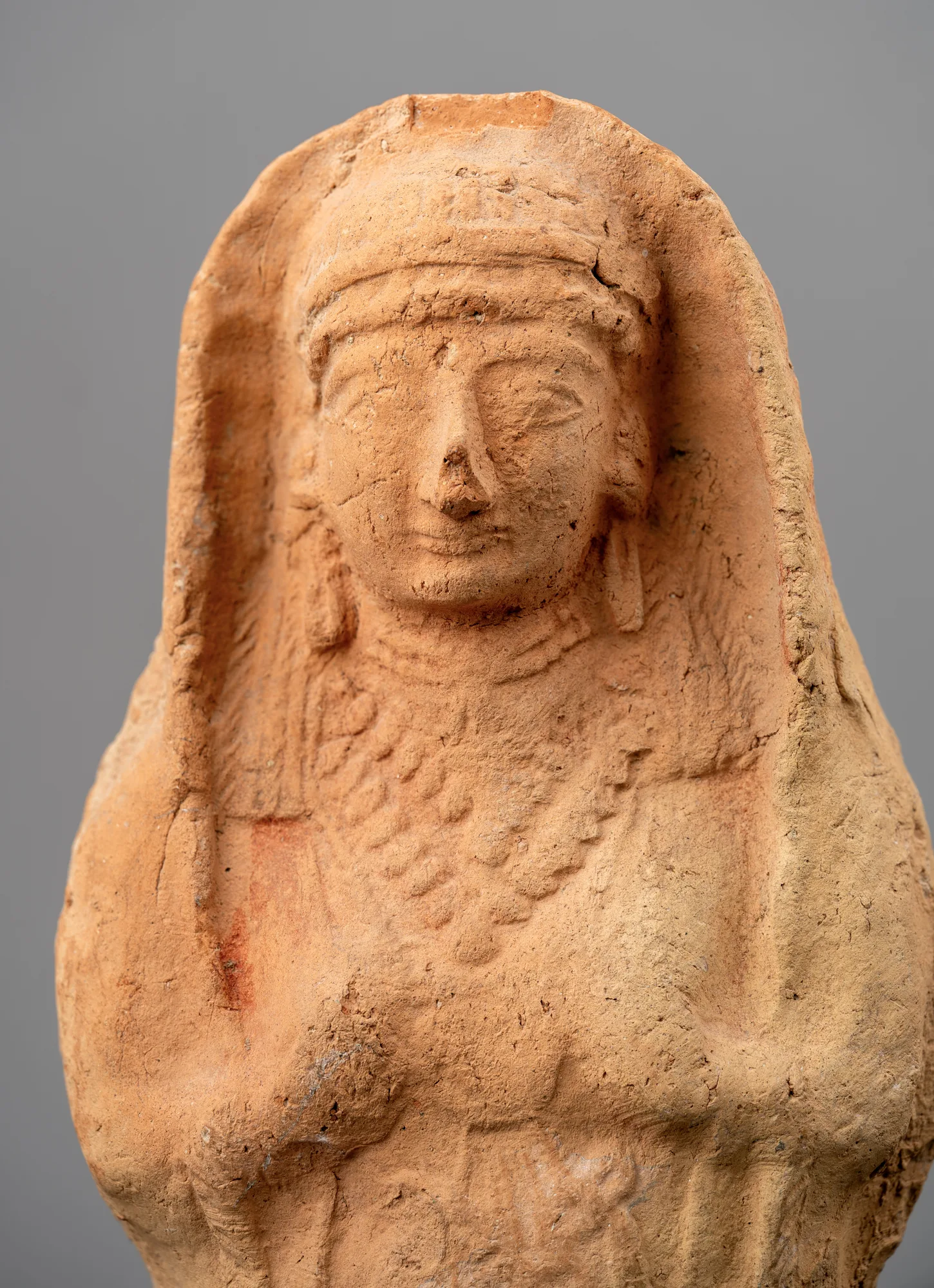
Hollow Mould-Made Female Votary of the Achna Type, Hands to the Breasts
Hollow Cypro-Archaic II terracotta votary from a two-part mould, veiled and heavily jewelled with hands raised to the breasts, in the style of the Achna sanctuary.
Date
600 - 480 BC
Accession No.
STA-AR-017
Collection
Alexis Drakopoulos
Provenance
- 1950s–1960s, Sten Törnblom (1909–1989), Enköping, Sweden, acquired during travels to Greece, Crete and Cyprus
- Thereafter private collection, Sweden
- Alexis Drakopoulos, London
Cypro-Archaic II, c. 600–480 BCE · Terracotta, orange-buff fabric · Hollow, bivalve mould
A standing woman, frontal and symmetrical, pressed in a two-part mould in a warm orange-buff clay. A veil rises in a tall rounded arch above the head and falls in a broad frame to the hips. Beneath it a beaded fillet crosses the brow. The face is a full oval with heavy-lidded almond eyes, a straight nose now chipped at the tip, and a small closed mouth. Drop earrings hang at either cheek. Round the neck is a close beaded collar, and below it a deep necklace of pointed pendants in several strands spreads across the chest. Both hands are raised beneath the breasts. At the waist a large rounded ornament bears a small figure in relief, flanked by cords hanging to the hips, one ending in a pendant. A broad overfold crosses the hips above a long skirt with shallow vertical folds; the hem rests on a low rounded base. Traces of red paint survive inside the veil, on the figure's right shoulder and on the chest. The back is simpler and pierced by two vent holes. Mounted on a modern wooden base.
Commentary
The figure belongs to a well-defined class of hollow mould-made female votaries associated with the sanctuary at Achna, in the Salamis sphere of eastern Cyprus, excavated in 1882 and recorded by the British Museum as a sanctuary of Artemis [2]. The class is characterised by the veil worn over a fillet, several necklaces, rings on the fingers, hands brought up to the breasts, and a cluster of objects hanging at the waist. Stella Lubsen-Admiraal named the type "Heptastolos", after its many-layered costume, and observed that the combination of a seal and an anthropomorphic pendant at the waist occurs only on statuettes of this Achna group [1]. That feature appears here, and it is the main reason for attributing the piece to an Achna workshop. The attribution is stylistic; no find-spot is recorded for this figure.
The closest museum parallels are three figures from the 1882 Achna excavation in the British Museum, all dated Cypro-Archaic II: 1883,0106.29 (hands to breasts, veil over head and shoulders, necklaces, seal and amulet at the waist; H. 25.3 cm), 1883,0106.27 (hands to breasts, fillet and veil, red wash; H. 30.5 cm) and 1883,0106.24 (veil and four necklaces). The Zintilis Collection figure published by Lubsen-Admiraal (inv. 359, H. 35 cm, said to come from Achna) is also hollow, made in a bivalve mould with a vent at the back, and has ringed hands touching the breasts from below [1]. An Achna-type votary pressing her breasts in the Ashmolean Museum (AN1949.291, H. 34 cm) is of the same class, and further Achna-attributed pieces are in the Louvre [4]. Fourrier places the style within the coroplastic production of the Salamis kingdom [3].
The date follows from these parallels. Moulds reached Cyprus from the Levant in the 7th century BCE and became widespread in the 6th [5]; large hollow figures pressed in front and back moulds with a firing vent are a developed Cypro-Archaic II technique. A range of about 600–480 BCE is appropriate.
The gesture of hands to the breasts has a long Near Eastern history and is often labelled the "Astarte" gesture [6], but the name is a modern convenience. Figures like this were dedicated in large numbers in sanctuaries, and whether they represent the goddess, a priestess or the dedicant herself is not settled by any inscription.
The height given previously for this figure, about 40 cm, is greater than any of the verified Achna parallels (25–35 cm). The lower body and the rounded base, which looks paler than the rest of the figure in photographs, should be examined closely to confirm that the figure is complete and without made-up sections.
References
- 1.Lubsen-Admiraal, S.M. (2002) 'The goddess of Achna: Heptastolos', Cahiers du Centre d'Études Chypriotes 32, pp. 257–274.
- 2.Caubet, A. (1992) 'Achna 1882. Réflexion sur les découvertes du sanctuaire chypro-archaïque et classique', in Ioannides, G.C. (ed.) Studies in Honour of Vassos Karageorghis. Nicosia: Society of Cypriot Studies, pp. 261–267.
- 3.Fourrier, S. (2007) La coroplastie chypriote archaïque: identités culturelles et politiques à l'époque des royaumes. Lyon: Maison de l'Orient et de la Méditerranée.
- 4.Caubet, A., Fourrier, S. and Queyrel, A. (1998) L'art des modeleurs d'argile: antiquités de Chypre, coroplastique. Paris: Réunion des Musées Nationaux, nos. 445–446, 454.
- 5.Reyes, A.T. (1994) Archaic Cyprus: A Study of the Textual and Archaeological Evidence. Oxford: Clarendon Press.
- 6.Ulbrich, A. (2008) Kypris: Heiligtümer und Kulte weiblicher Gottheiten Zyperns von der kyprogeometrischen bis zur hellenistischen Zeit. Alter Orient und Altes Testament 44. Münster: Ugarit-Verlag.
More from the Catalogue
Browse related objects
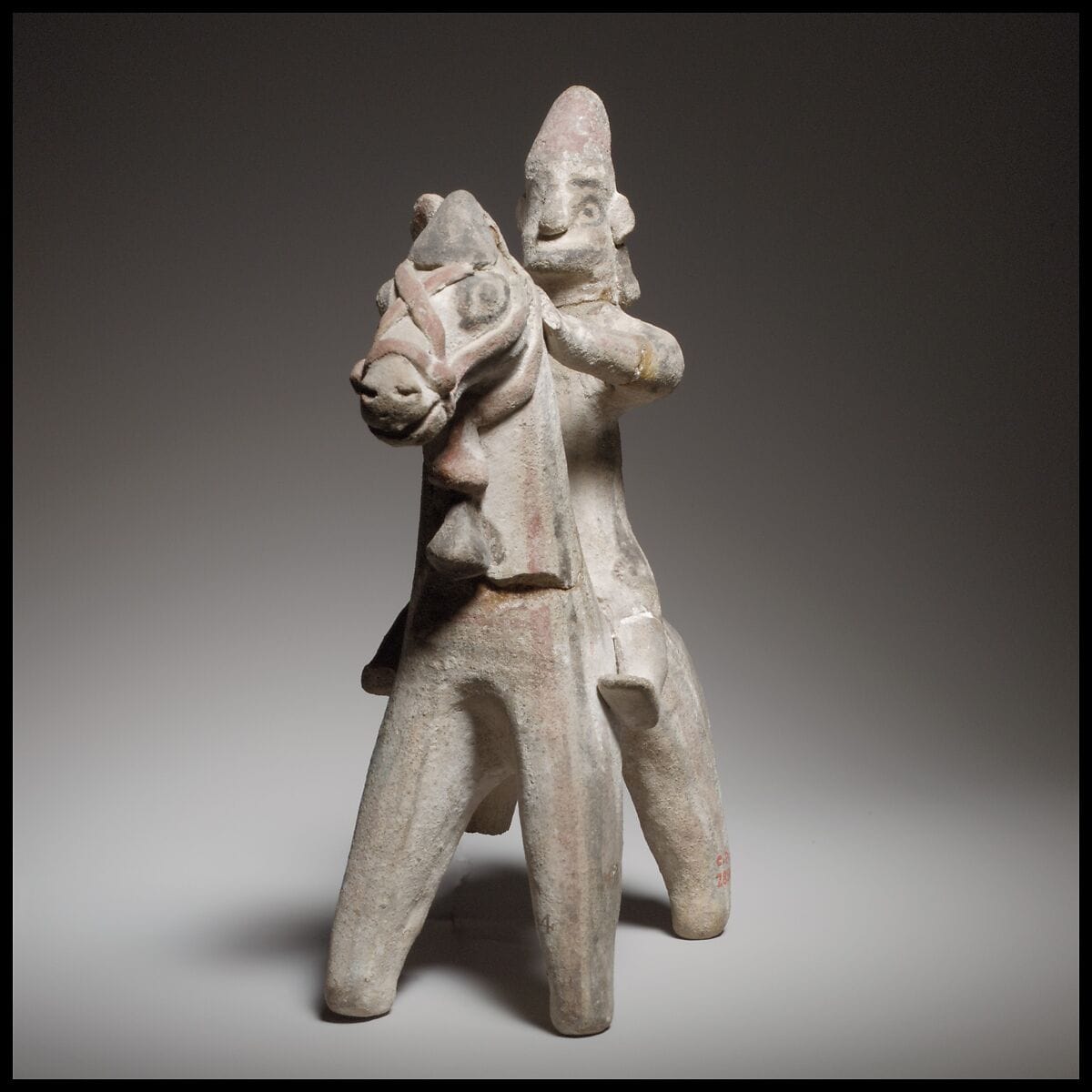
Horse and rider figurine
Archaic II
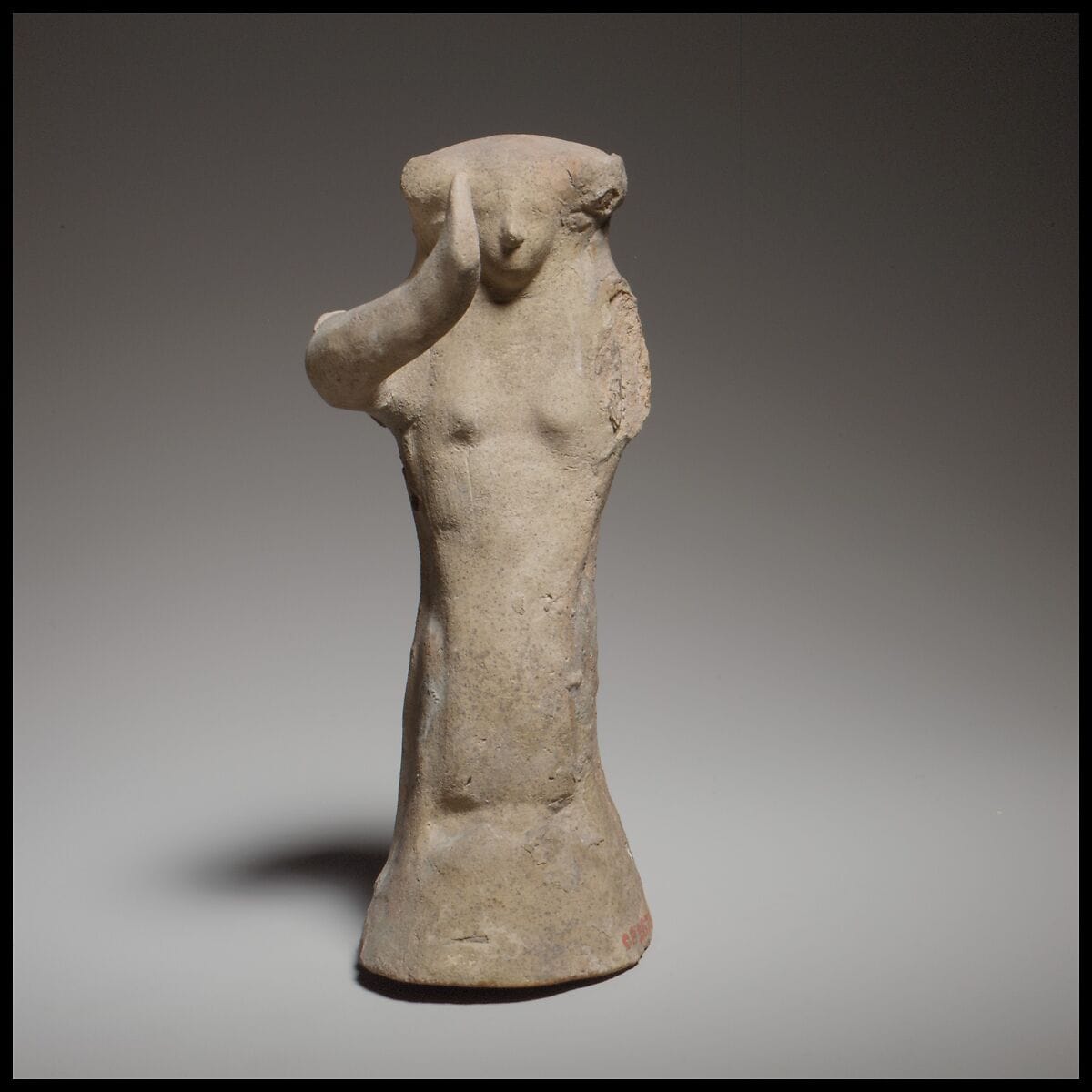
Seated female figurine of the dea gravida type
Archaic II
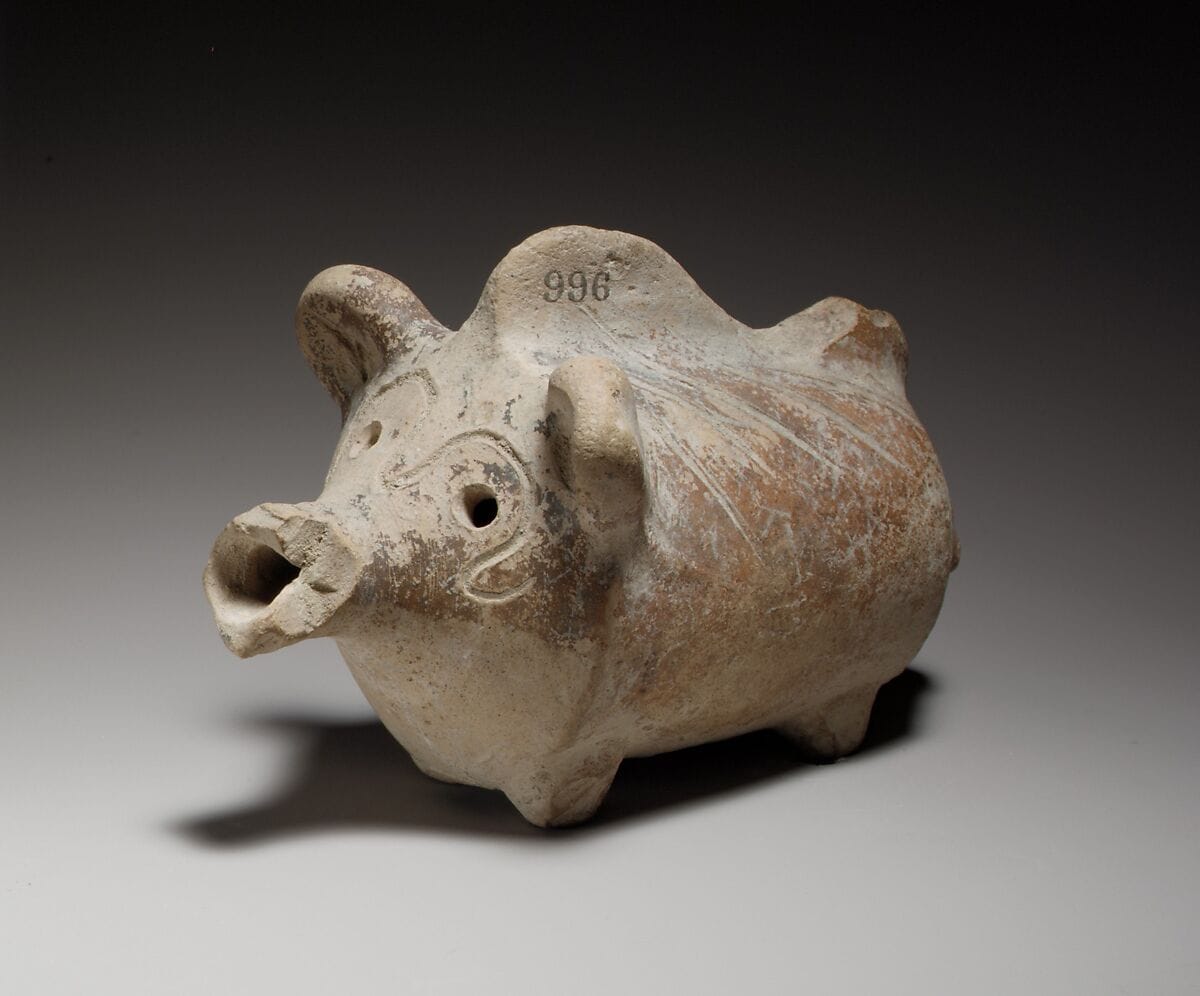
Terracotta rattle in the form of a pig
Hellenistic
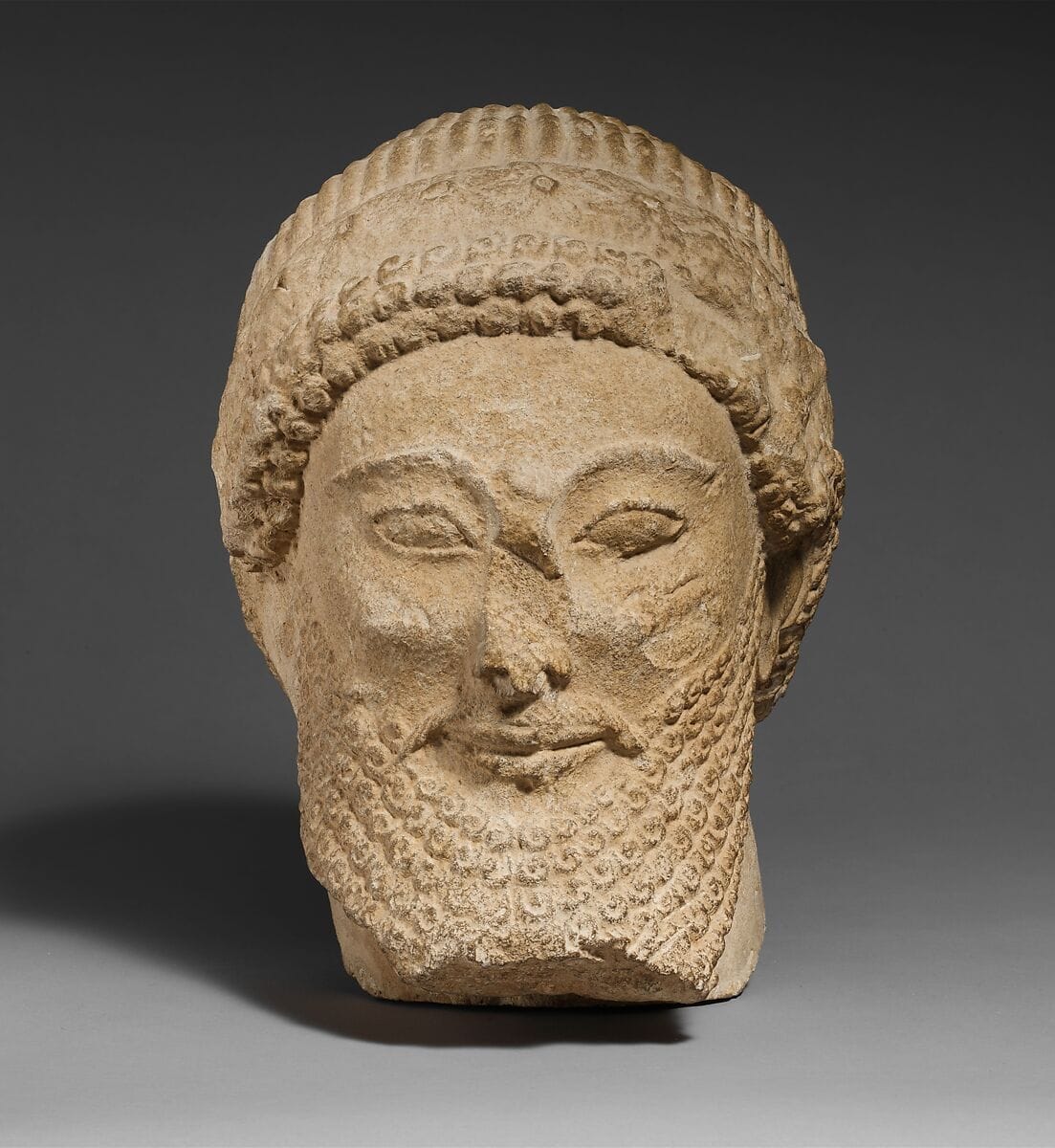
Limestone head of a bearded male with a wreath of flowers
Archaic II
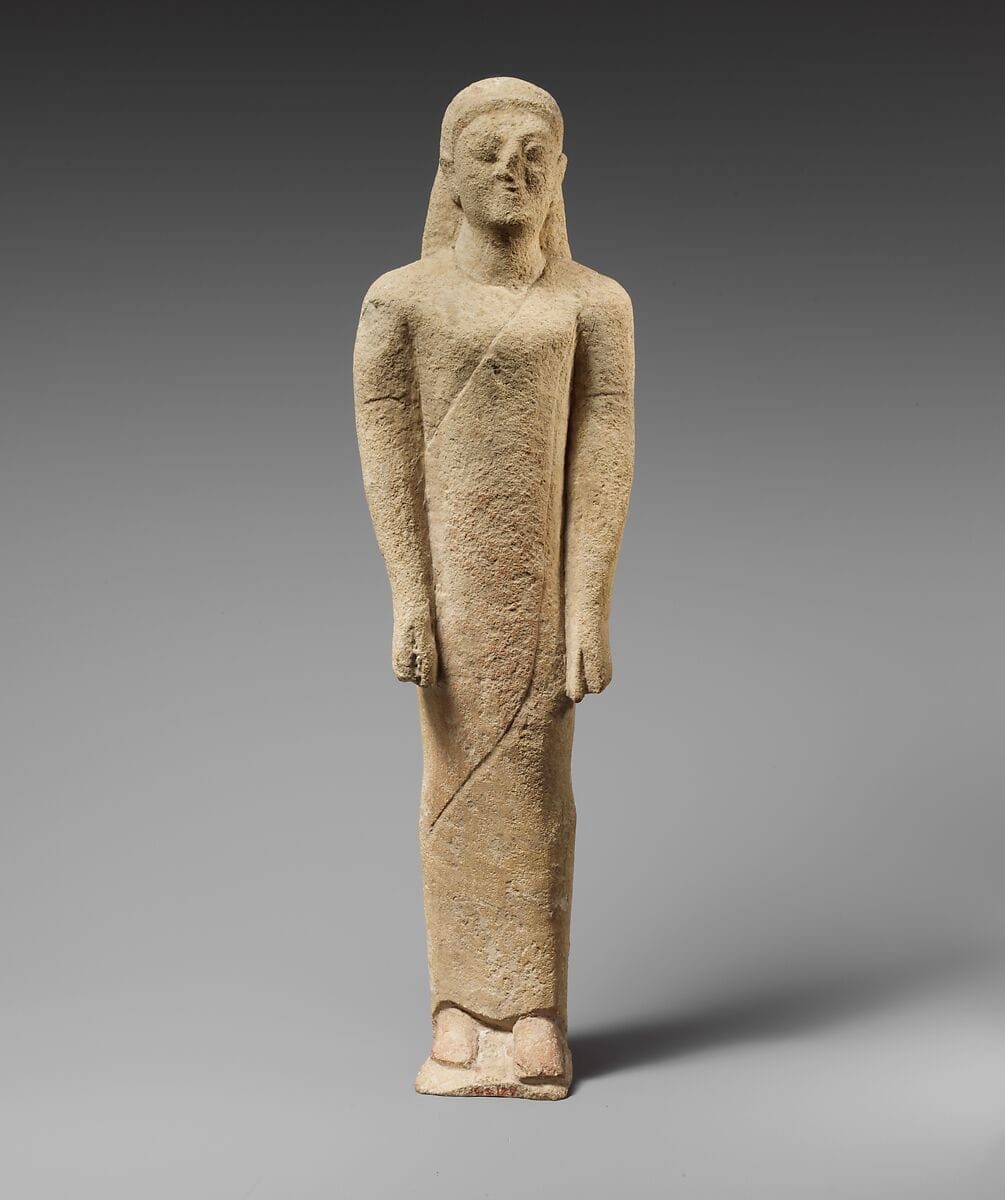
Limestone statuette of a beardless male votary in Greek dress
Archaic II
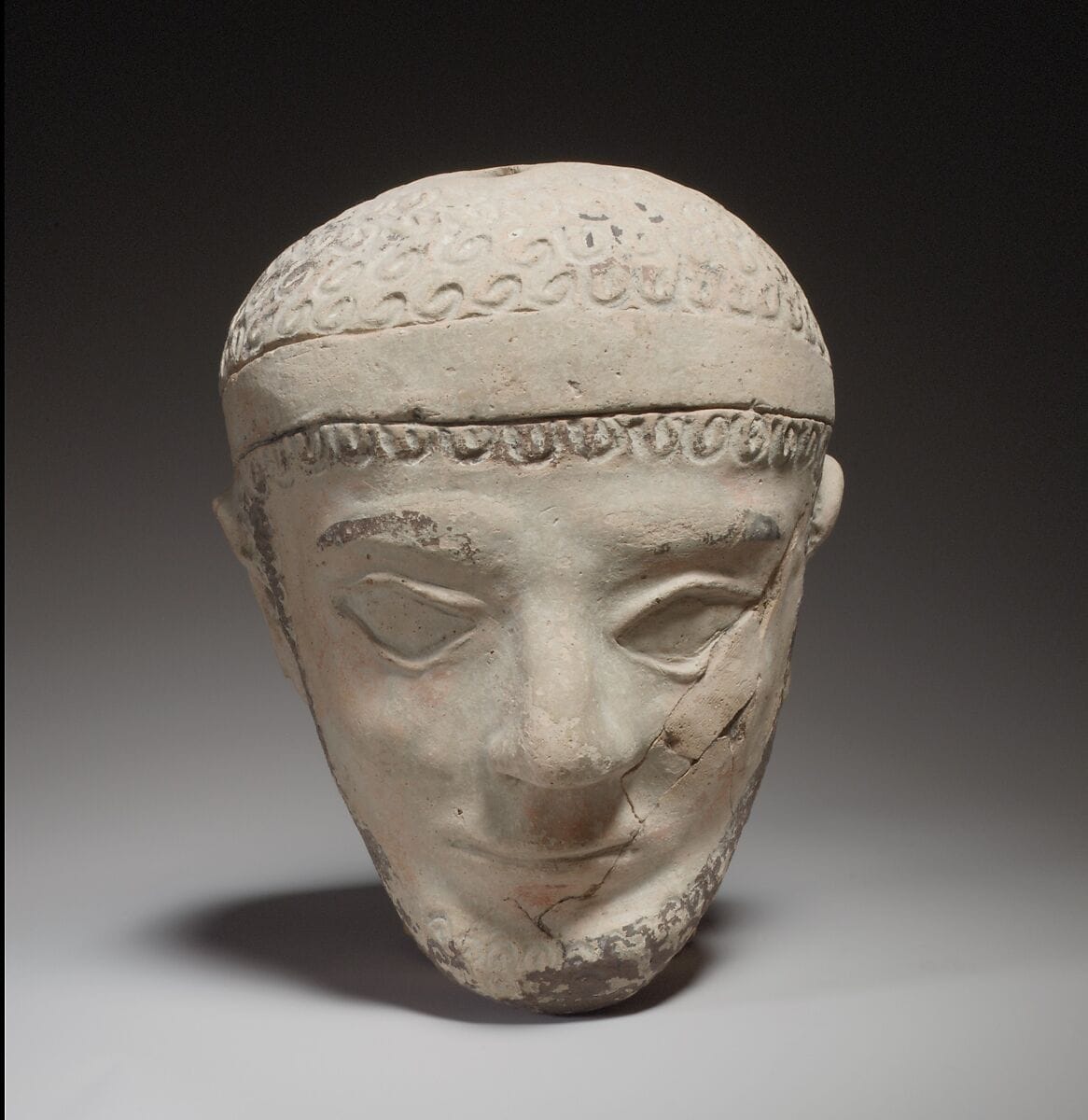
Terracotta head of a man
Archaic II
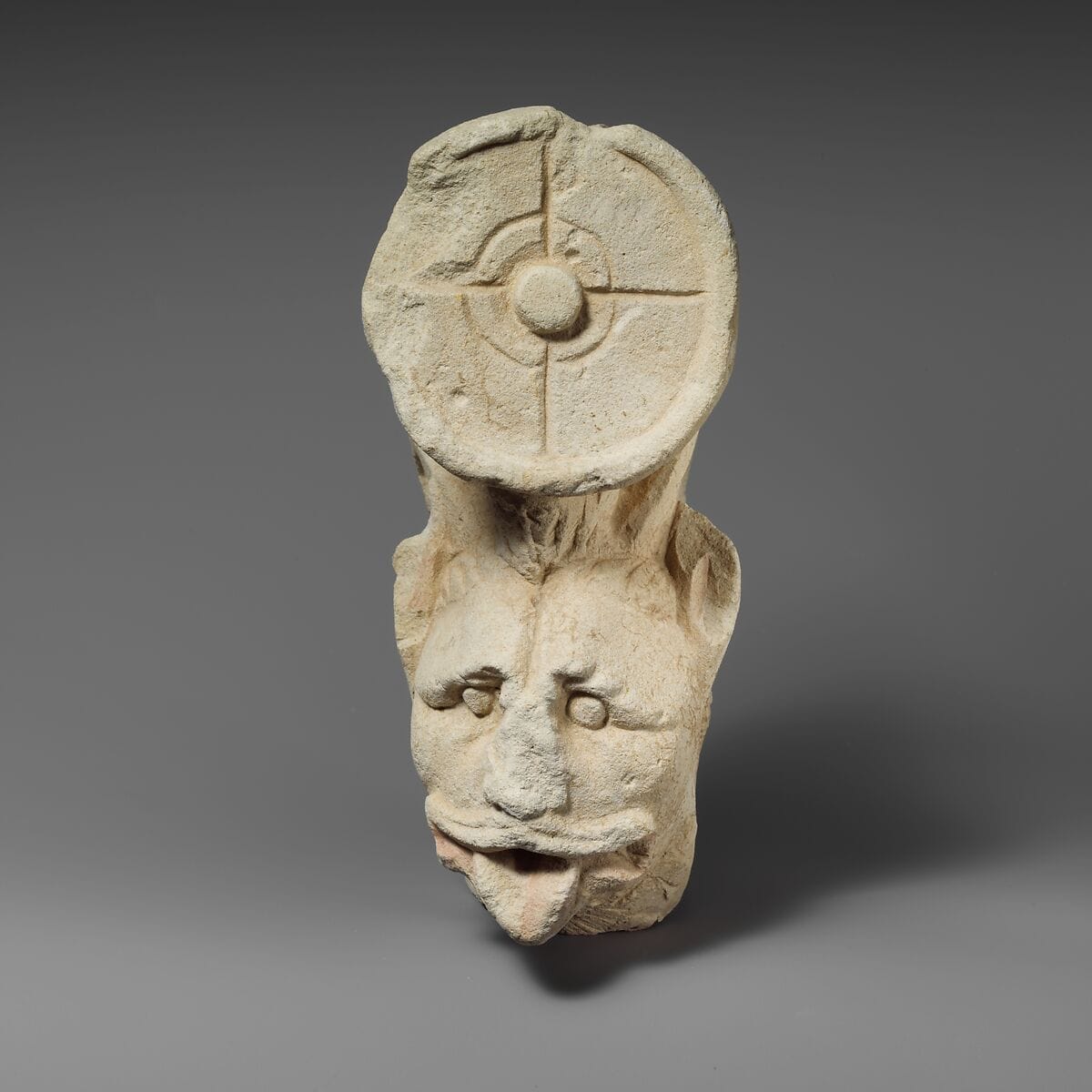
Fragment of a limestone throne (?) with the head of a horned lion
Roman
Head of a comic figurine
Hellenistic
Limestone statuette of a female votary of the kore type
Archaic II
Limestone head of Apollo
Hellenistic
Standing female flute player
Classical
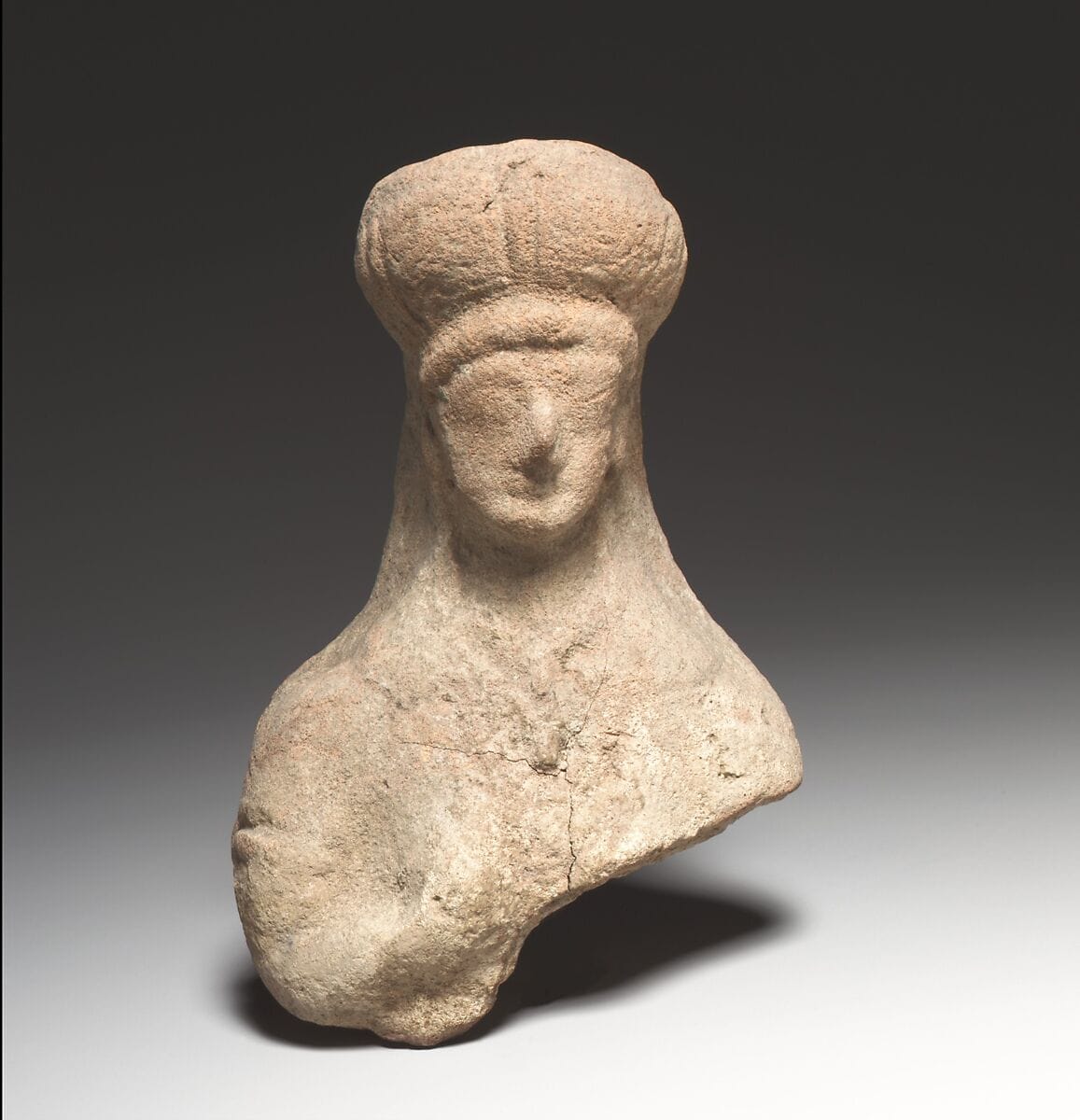
Standing female figurine
Archaic II
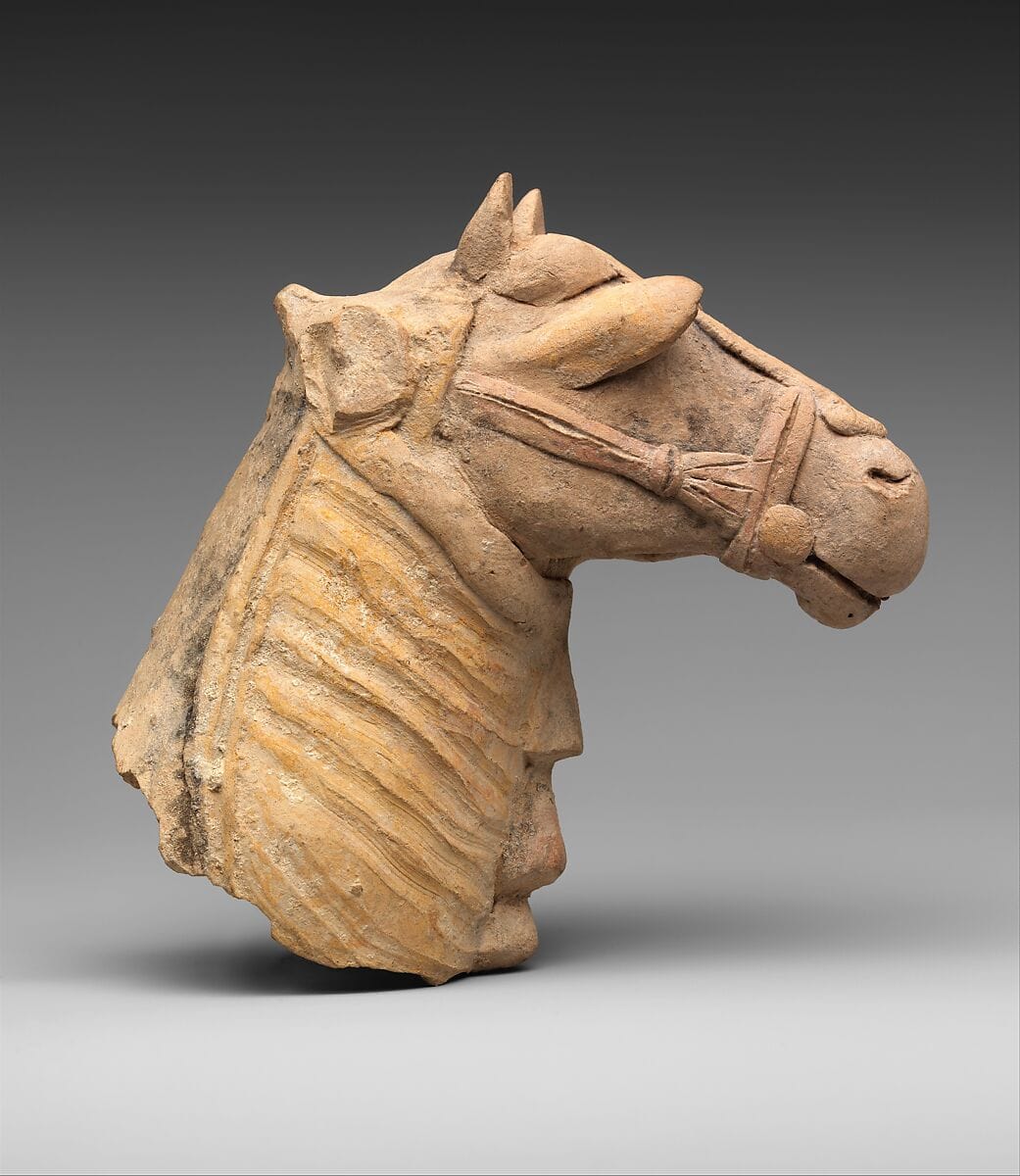
Horse's head with harness
Archaic II
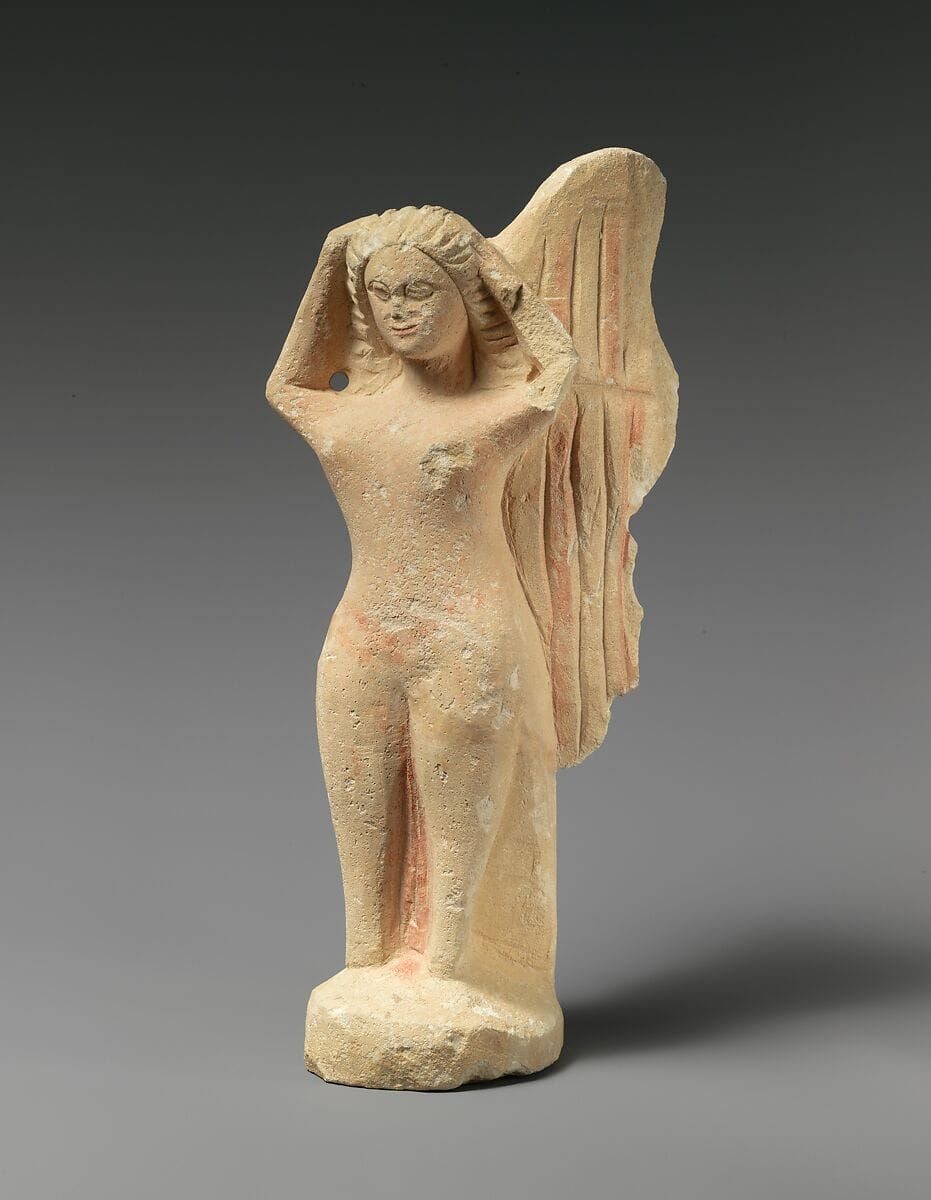
Limestone statuette of a mourning siren
Hellenistic
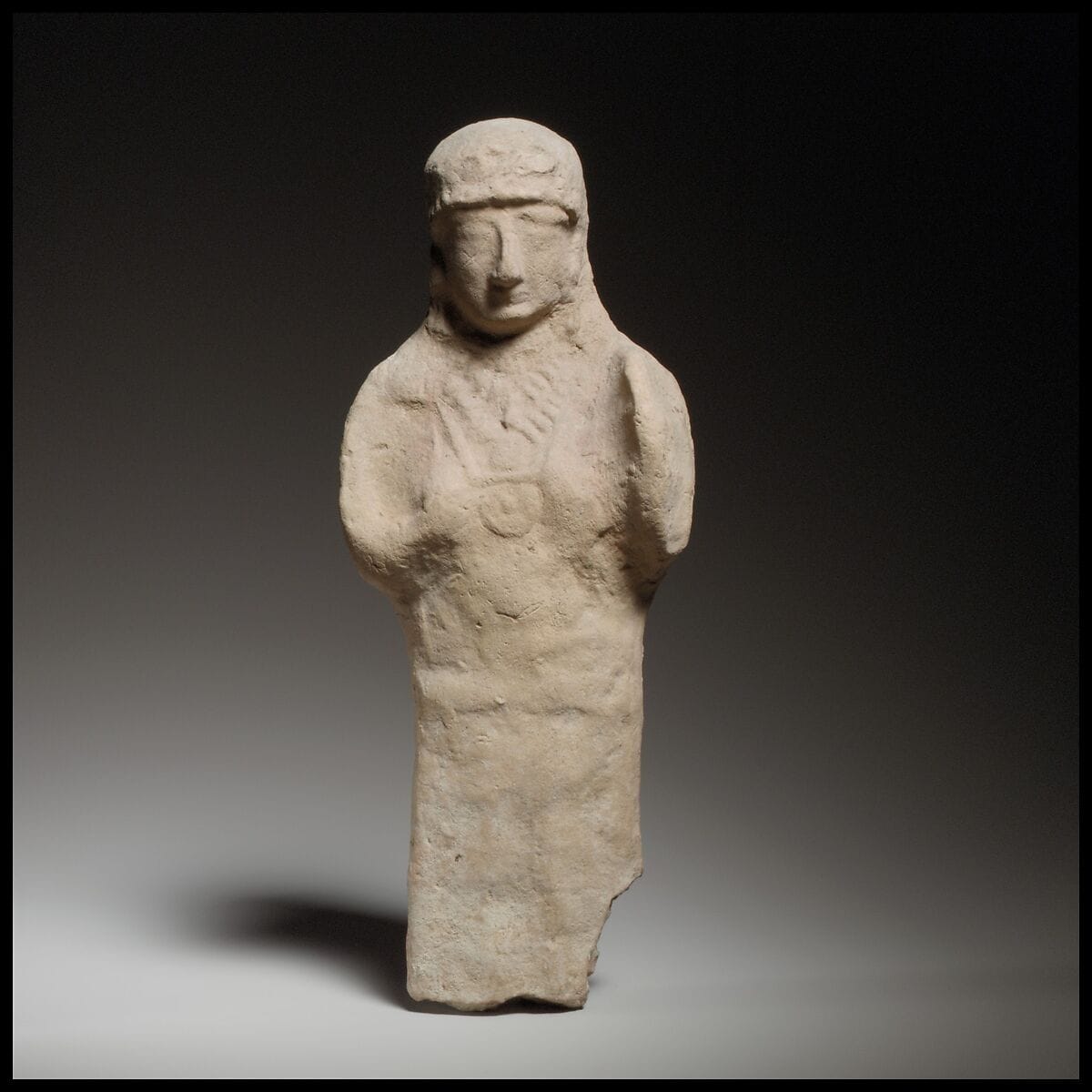
Standing female figurine
Archaic II
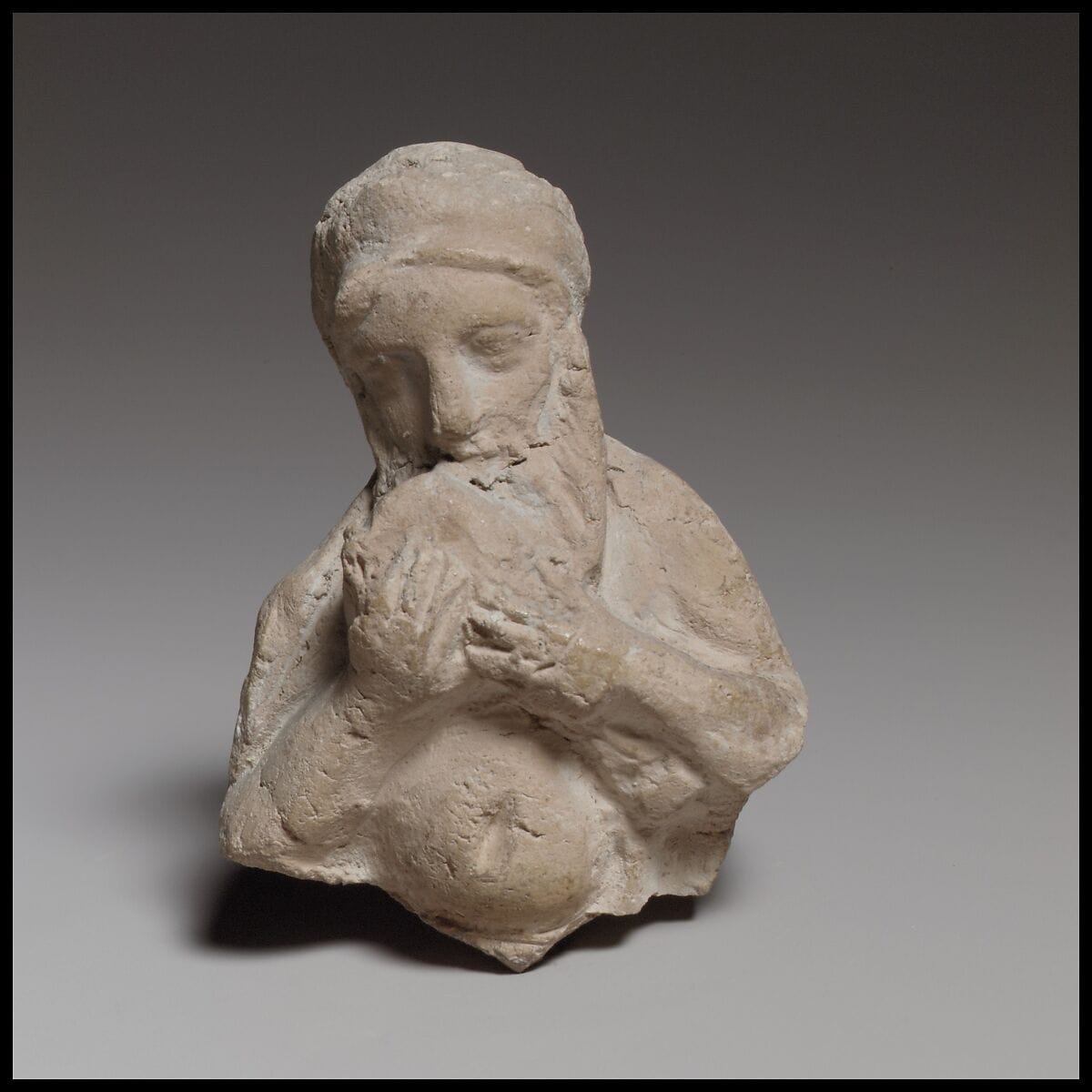
Terracotta statuette of Silenos (?) drinking
Hellenistic
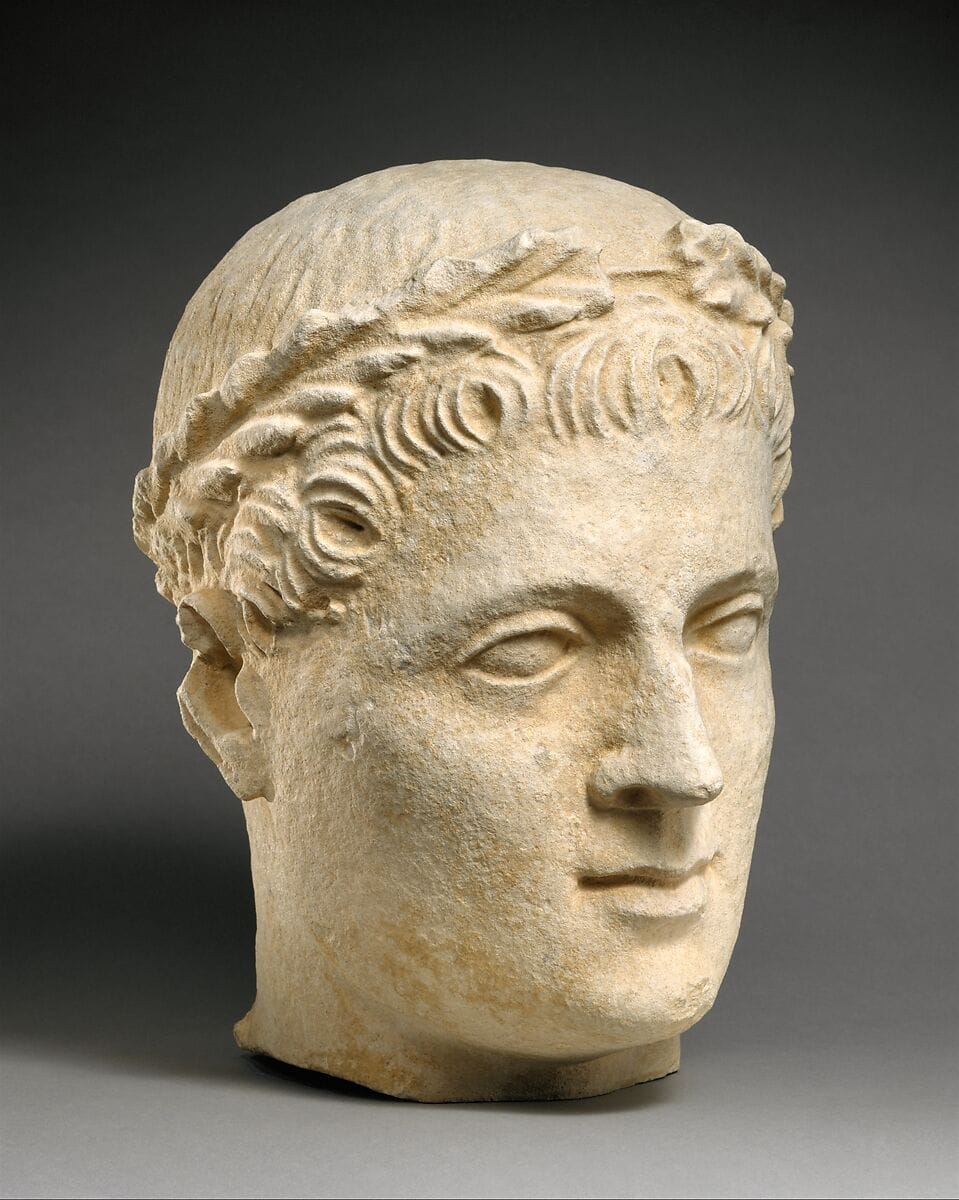
Limestone head of beardless male votary with wreath of leaves
Hellenistic
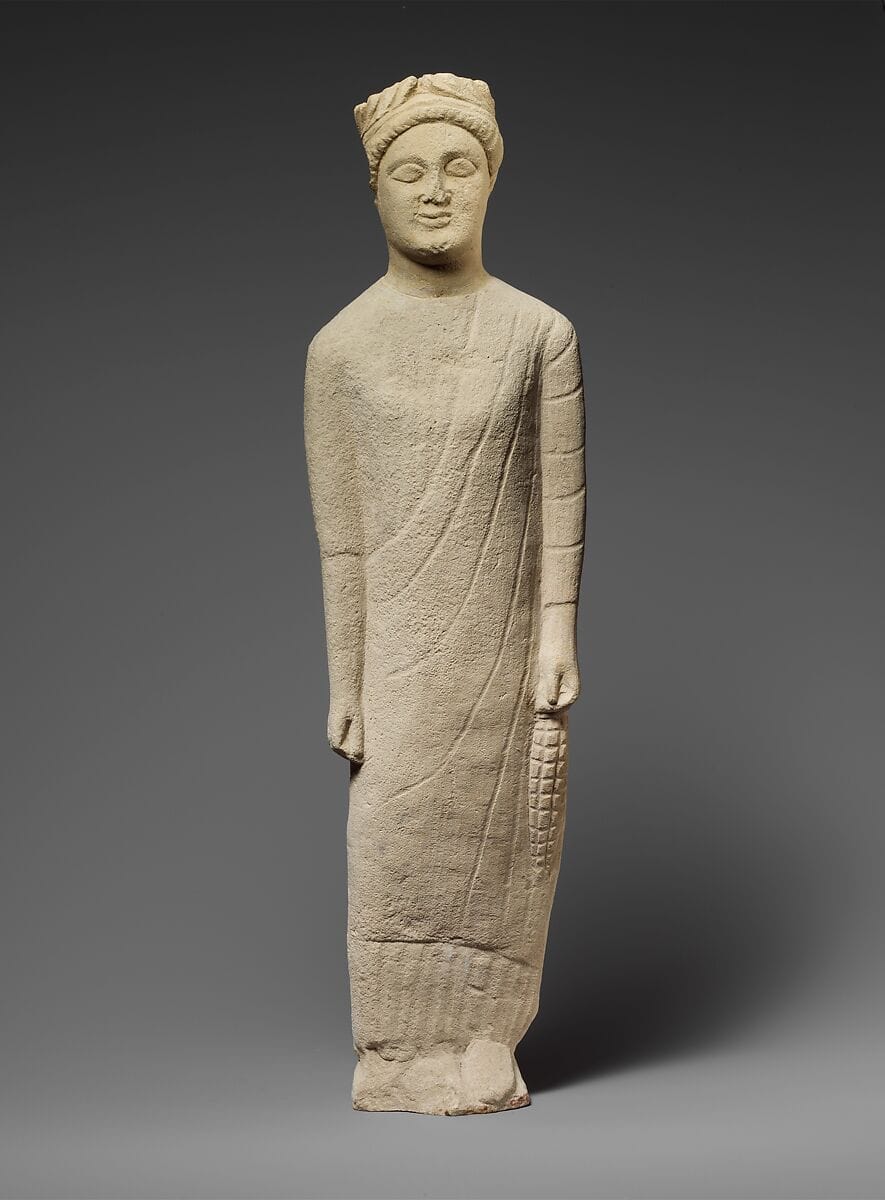
Limestone statuette of a beardless male votary with a wreath of leaves
Classical