
Archaic
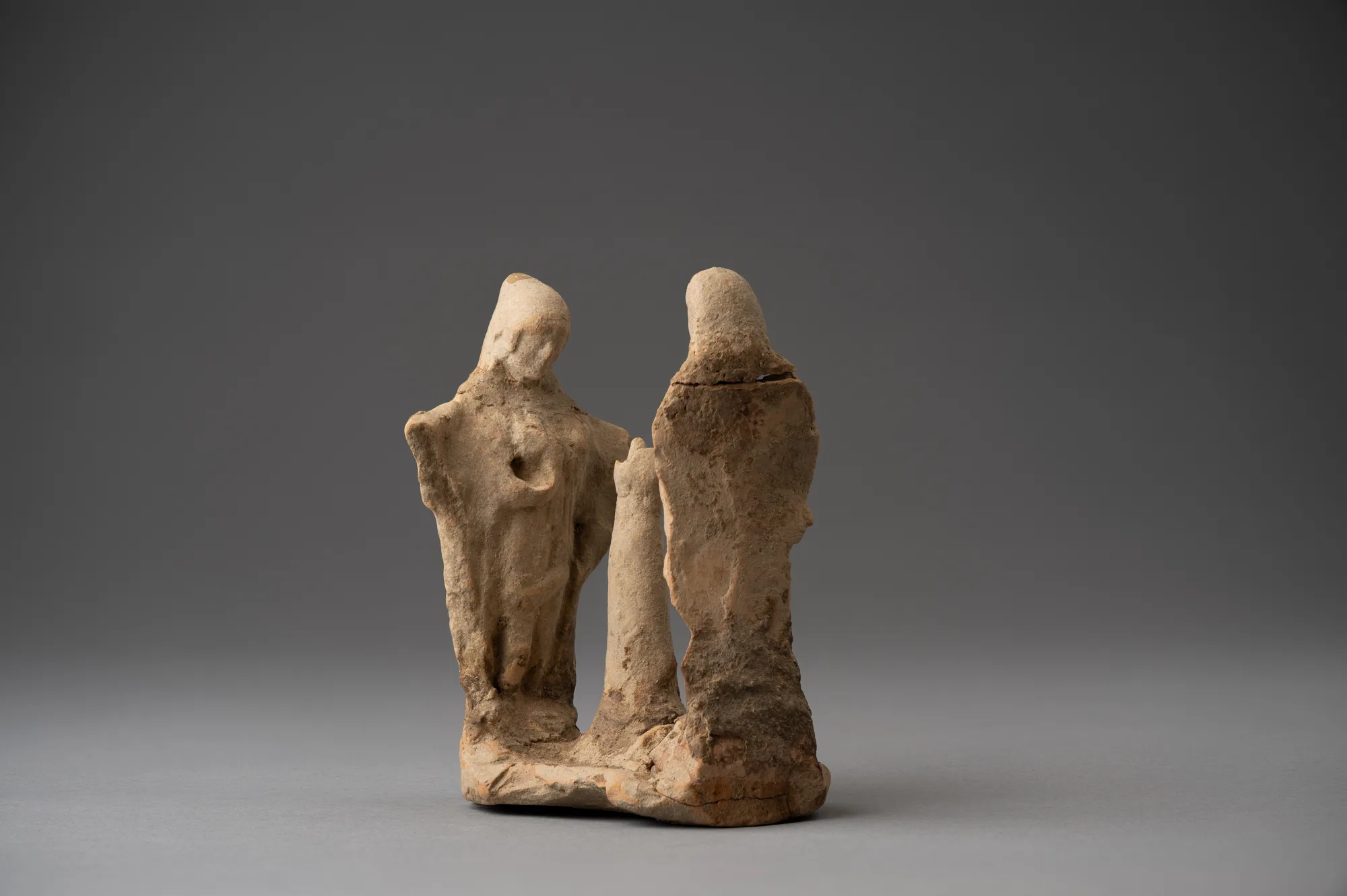
Two Veiled Figures from a Terracotta Ring-Dance Group, with the Stump of the Central Tree
Terracotta fragment of a Cypro-Archaic ring-dance group: two robed, veiled figures on a shared base facing a broken central tree or pillar.
Date
750 - 480 BC
Accession No.
STA-AR-007
Collection
Alexis Drakopoulos
Provenance
- 1965–1969, The Goodman Collection
- Alexis Drakopoulos, London
Cypro-Archaic, c. 750–480 BCE · Terracotta · Handmade
Two robed figures stand on a shared oval base, turned to face each other across a slender tapering shaft that breaks off at about the level of their chests. Both wear a veil or hood drawn over the head and falling to the shoulders; the long garment widens towards the foot and fuses with the base. The faces are modelled in profile, with brow, nose and chin marked. The left figure holds its arms bent in front of the body, and a clean circular socket opens in its chest where a hand or an attribute was once fixed; the right figure shows a small rounded projection at the breast. Both hands and the linking arms are lost. The pale buff clay is worn and patchily darkened with burial deposit, and a fine crack runs round the neck of the right-hand figure.
Commentary
The group is the surviving part of a ring dance, one of the standard sanctuary types of Iron Age Cypriot coroplastic art. The Metropolitan Museum's Cesnola catalogue defines the class as four or more male or female figures fixed to a round plaque and encircling a central flute-player, the musician in some groups replaced by a sacred tree [2]. Karageorghis files these groups under his Type III and notes how often a surviving example has lost figures and the arms that linked them [3]. At Kourion the Youngs found that a base preserving one or two dancers had originally carried eight [4]. Two figures and a broken centre are what a large fragment of such a ring looks like, and the shaft here, tapering and without any trace of a seated player, is better read as the foot of a tree or pillar than as a musician.
The closest complete parallel is British Museum 1903,1215.6, three women dancing round a stylised tree on a round base, H. 14 cm, from the collection of Robert Hamilton Lang and attributed to Idalion [1]. The women there wear the same long gown and drawn veil as this pair, and their outstretched lower arms are broken in the same way [1]. For the version with a musician at the hub, compare the Metropolitan's three male dancers round a double-flute player (74.51.1650, Cesnola Cat. 118) and the detached central flute-player Cat. 217 [2].
Dating rests on the type and technique. Ring-dance groups run from the end of the Cypro-Geometric period into the Classical [2][5], and the hand-built bodies with added heads belong to the snowman tradition of the Cypro-Archaic sanctuaries [4]. The careful profiles and the fall of the robes put this pair at the more finished end of the class, and together with the British Museum group, which is catalogued to c. 500–400 BCE [1], they suggest the sixth century or the years around 500 BCE as more likely than the eighth. Fourrier associates the hand-modelled dance groups stylistically with the workshops of Salamis in the east of the island [6]; that is a stylistic attribution, and this piece has no recorded find-spot.
Groups of this kind were dedicated in sanctuaries and later cleared into pits within the sacred precinct; they are almost never found in tombs [5]. Leriou reads them as lasting records of dances performed in the sanctuary, set down by the worshipper to stand in for the living ceremony [5]. The sex of the dancers is not certain. The veils, the long gowns and the projection at the breast of one figure match the female dancers of the British Museum group, but the scholarship treats headgear-based sexing of these figures as a convention [5].
The open question is what stood at the centre. A clay shaft of this form could be a tree, a pillar, or an aniconic image of the deity, and the stump preserves nothing that decides between them.
References
- 1.Kiely, T. Catalogue entry no. 077 (British Museum 1903,1215.6), in Cyprus: Crossroads of Civilizations (exhibition catalogue, Musei Reali, Turin), p. 279.
- 2.Karageorghis, V., J.R. Mertens and M.E. Rose. The Cesnola Collection of Cypriot Art: Terracottas. New York: The Metropolitan Museum of Art, p. 72, Cat. 118, and p. 127, Cat. 217.
- 3.Karageorghis, V. (1995) The Coroplastic Art of Ancient Cyprus IV: The Cypro-Archaic Period, Small Male Figurines. Nicosia: A.G. Leventis Foundation, Type III, pp. 132–141, pls. LXXVII–LXXXVIII.
- 4.Young, J.H. and S.H. Young (1955) Terracotta Figurines from Kourion in Cyprus. Philadelphia: University Museum, University of Pennsylvania, pp. 42, 53–55.
- 5.Leriou, A. (2017) 'The musician, the dancer and the priest: readdressing Cypro-Archaic ritual', in V. Vlachou and A. Gadolou (eds), TERPSIS: Studies in Mediterranean Archaeology in Honour of Nota Kourou. Brussels: CReA-Patrimoine, pp. 26–30.
- 6.Fourrier, S. (2007) La coroplastie chypriote archaïque: identités culturelles et politiques à l'époque des royaumes. Lyon: Maison de l'Orient, p. 29.
More from the Catalogue
Browse related objects
Horse and rider figurine
Archaic II
Seated female figurine of the dea gravida type
Archaic II
Terracotta rattle in the form of a pig
Hellenistic
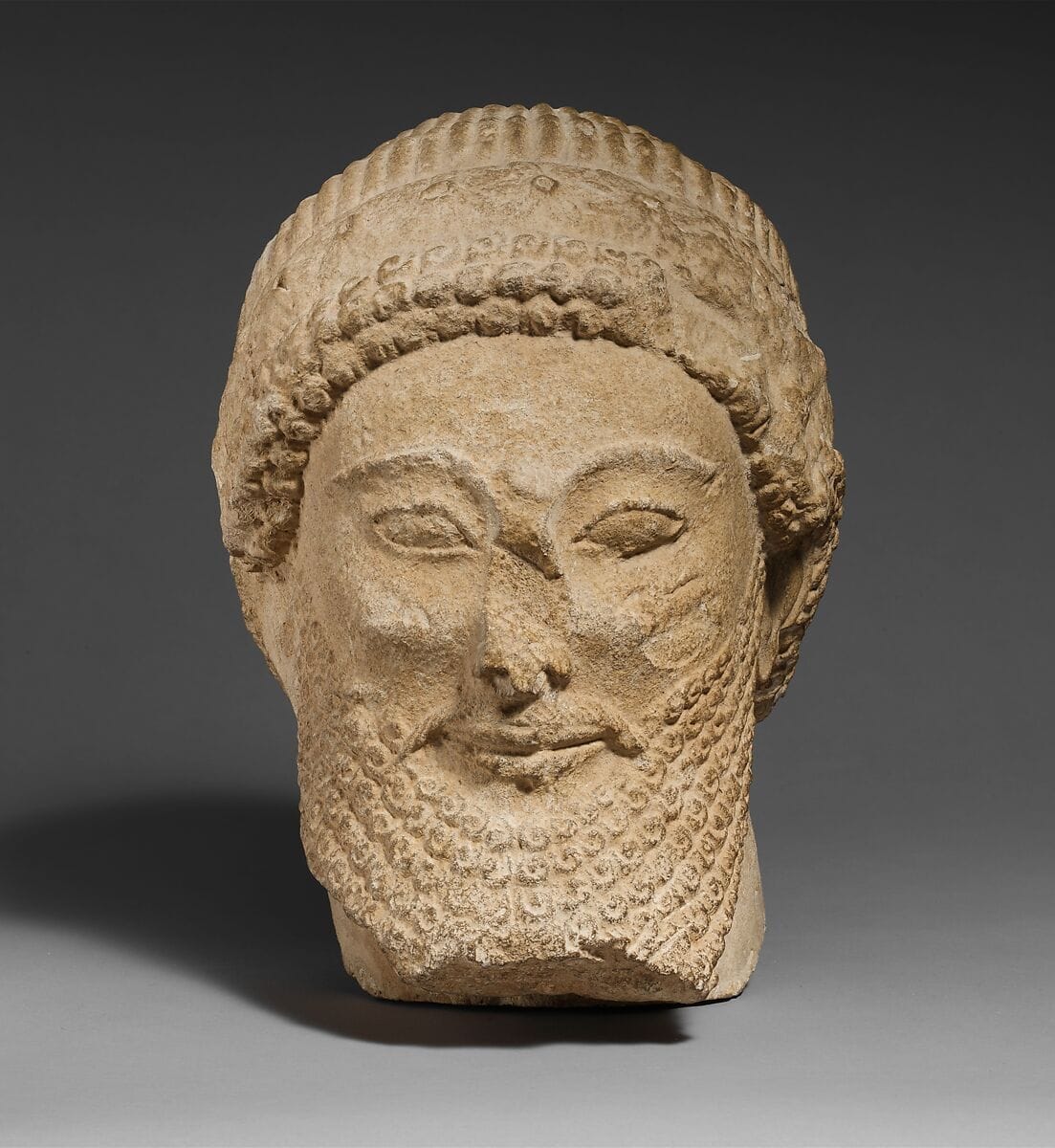
Limestone head of a bearded male with a wreath of flowers
Archaic II
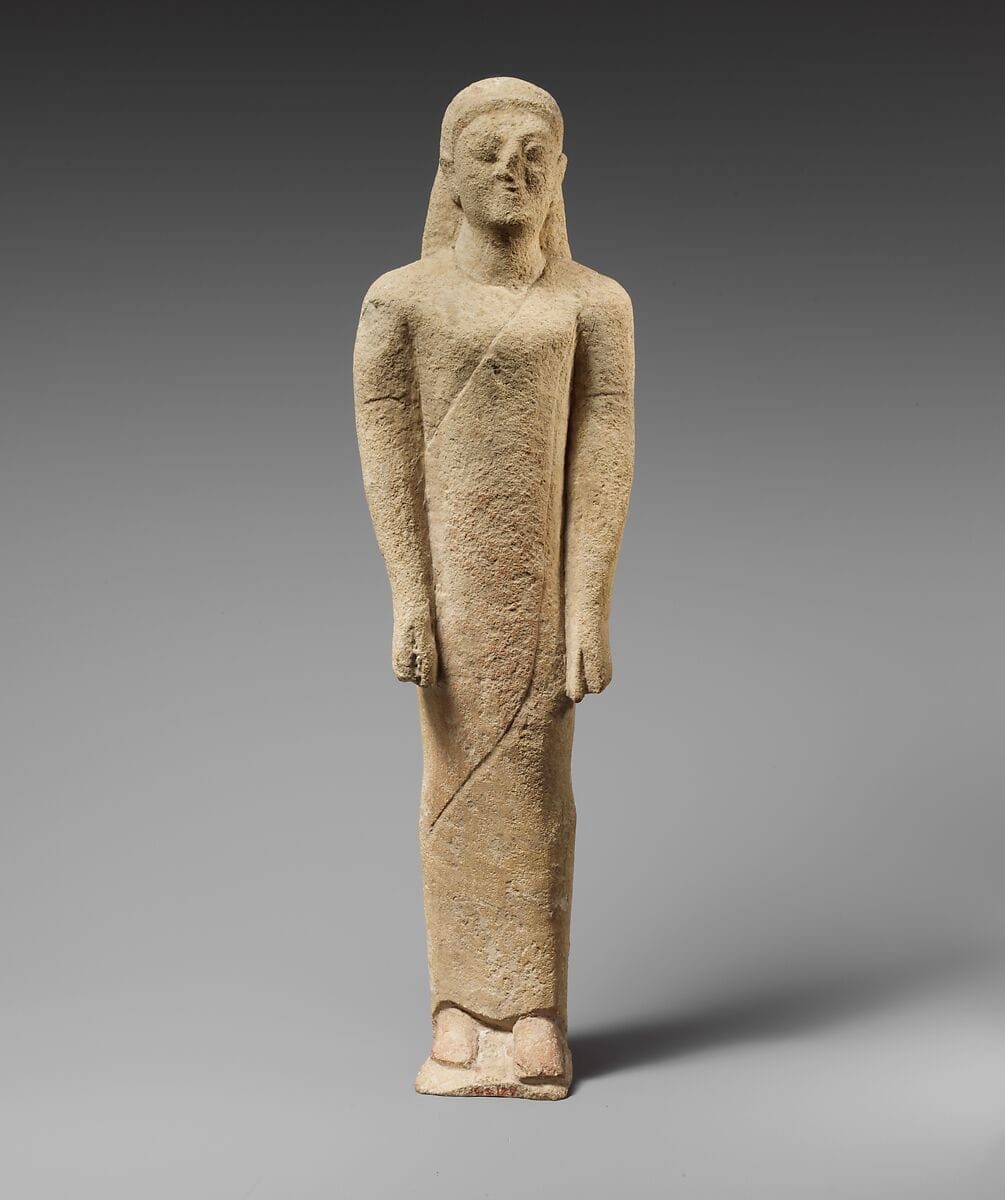
Limestone statuette of a beardless male votary in Greek dress
Archaic II
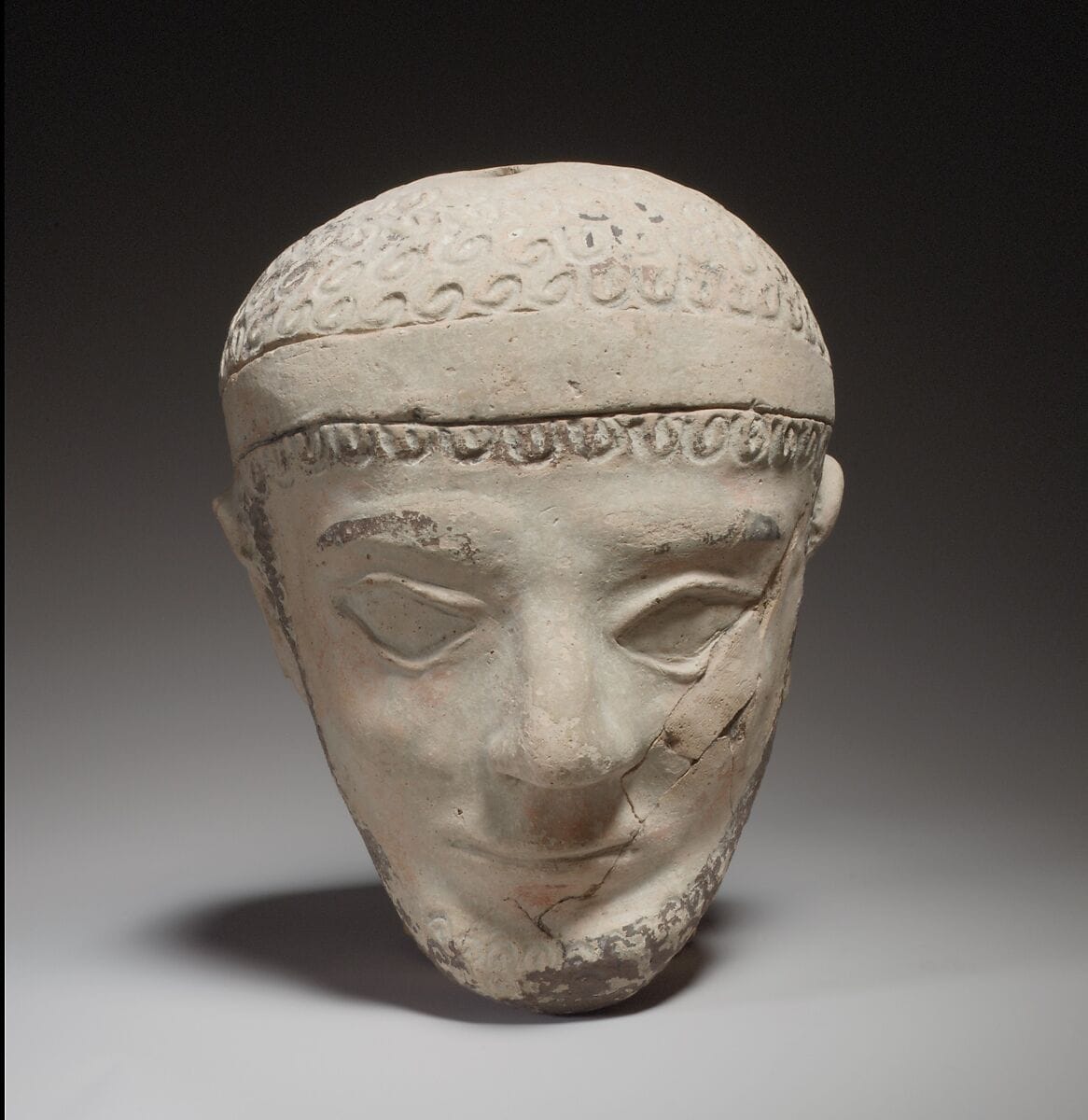
Terracotta head of a man
Archaic II
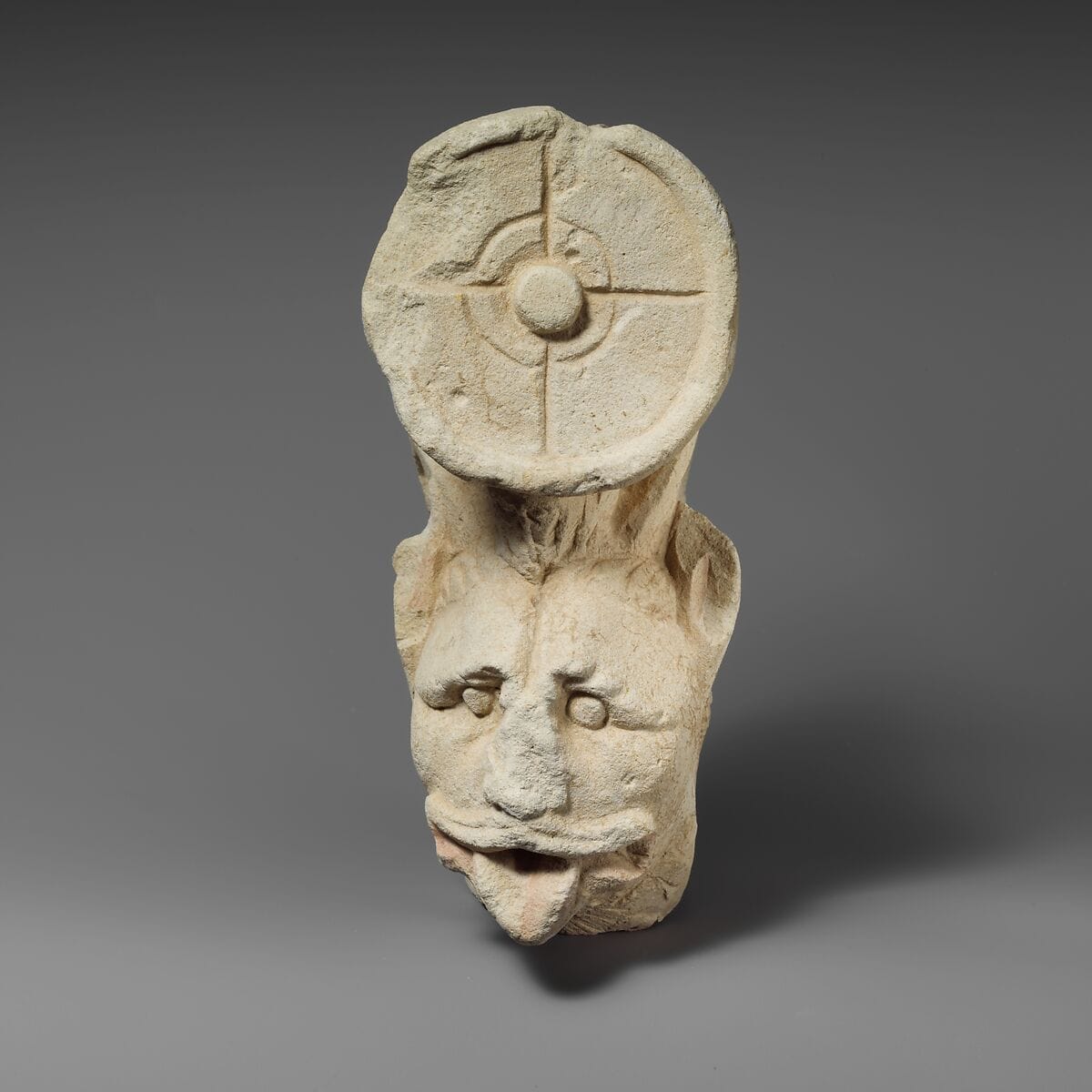
Fragment of a limestone throne (?) with the head of a horned lion
Roman
Head of a comic figurine
Hellenistic
Limestone statuette of a female votary of the kore type
Archaic II
Limestone head of Apollo
Hellenistic
Standing female flute player
Classical
Standing female figurine
Archaic II
Horse's head with harness
Archaic II
Limestone statuette of a mourning siren
Hellenistic
Standing female figurine
Archaic II
Terracotta statuette of Silenos (?) drinking
Hellenistic
Limestone head of beardless male votary with wreath of leaves
Hellenistic
Limestone statuette of a beardless male votary with a wreath of leaves
Classical