
Motifs of Cypriot Pottery
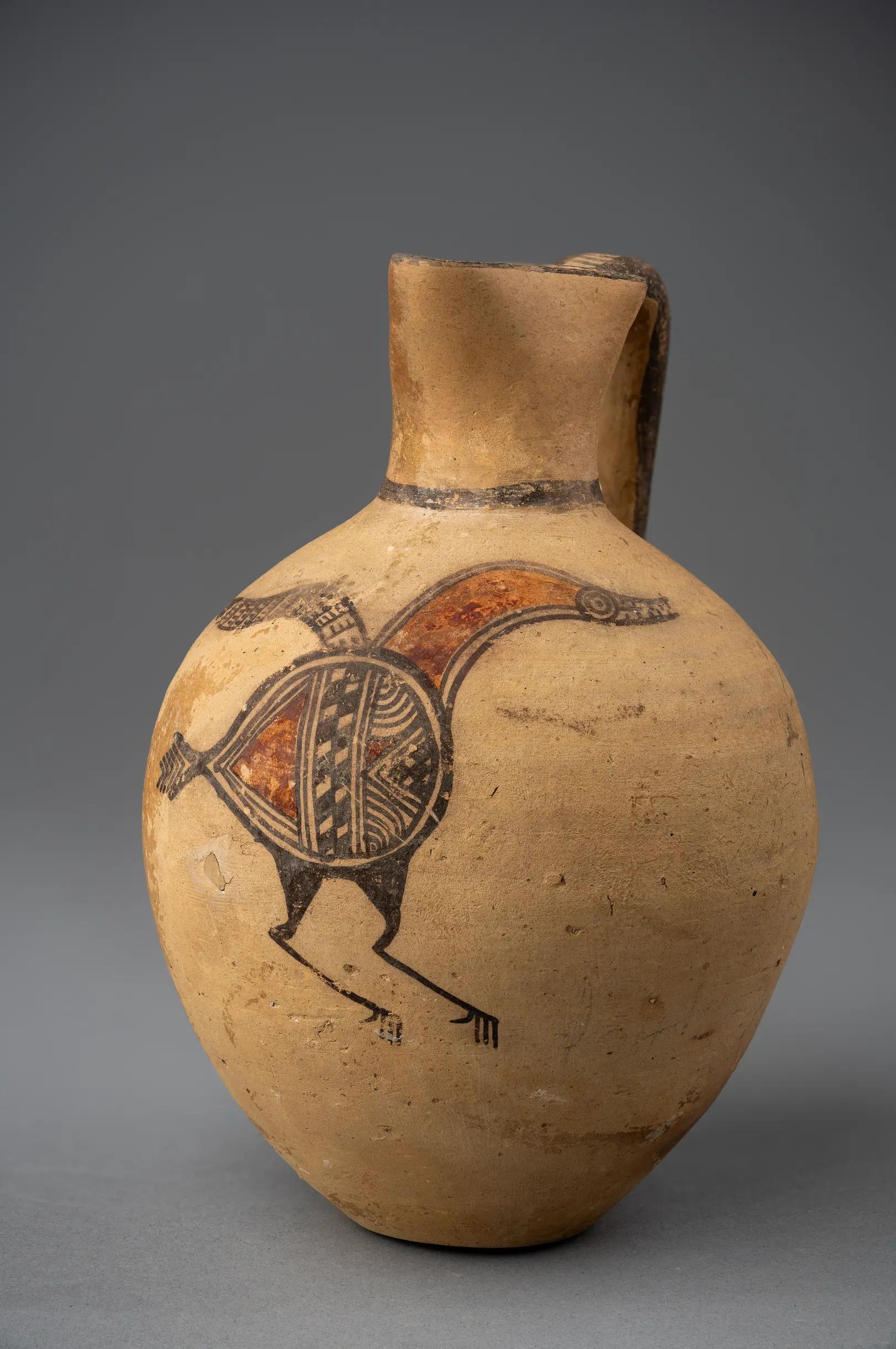
Circles, lattices, zigzags, lotus flowers and birds recur on Cypriot pots for centuries. This section explains how the decoration changed from the Neolithic to the Cypro-Archaic period, how to read the ornament on a vase, and what each of the main motifs looks like.
Decoration is the first thing most people notice on a Cypriot pot and one of the first things an archaeologist uses to date it. Most Cypriot ware names describe the surface finish or decoration of the vessels (Red Polished, White Painted, Bichrome, White Slip), because the surface is the most visible part of a pot and the part the potter varied most deliberately [3, p. 238]. Motifs are the next step down: the individual patterns and figures from which a painter or incisor built the decoration of a jug or bowl. The same motif can appear in different wares and centuries, so a motif alone rarely dates a pot. Its technique, its placing on the vessel and the company it keeps usually do.
From combing and incision to paint
The earliest decorated pottery on the island, in the later Neolithic, was either combed or painted. The upper levels of Khirokitia and Sotira-Teppes produced Combed Ware, with wavy bands dragged through the surface, while sites in the north such as Ayios Epiktitos-Vrysi used Red-on-White, red patterns painted on a white ground [2, pp. 26-27]. A Combed Ware sherd of the Sotira culture in the Drakopoulos collection carries a group of six or seven rippling lines through its red slip, all moving in step, as if pulled by one pass of a many-toothed comb. Red-on-White continued into the Chalcolithic, when the pottery of Erimi carried geometric, abstract and floral motifs [2, p. 32].
In the Early Bronze Age the dominant ware, Red Polished, was decorated mainly by incision. Linear motifs were cut before firing and filled with lime after firing, so that they stand out white against the red slip [1, p. 27]. The Drakopoulos Red Polished beak-spouted juglet shows the technique: its incised concentric circles, horizontal lines and hatched chevrons keep a crisp white filling against the red. Red Polished potters also modelled human figures, quadrupeds, birds, bucrania and snakes in relief or in the round; Karageorghis read the bucranium and the snake as religious symbols connected with life and death, an interpretation rather than a documented meaning [1, p. 27]. Paint returned with Middle Bronze Age White Painted ware, whose linear geometric patterns cover the whole surface, first in glossy red paint and later in matt black [1, p. 33]. A small White Painted III-IV amphora in the Drakopoulos collection is painted with chains of hatched lozenges, standing hatched triangles, bands and wavy lines, crossed by a vertical ladder running down the front.
In the Late Bronze Age the two leading wares took different routes. White Slip was painted in orange-red to black over its thick white slip, sometimes deliberately in two colours, while Base Ring was left plain or given relief bands and scrolls, often grooved to look like rope [1, pp. 36, 39]. A White Slip II bowl in the Drakopoulos collection has bands of lattice and hanging ladders painted in matt brown over the white slip. At the end of the period Proto-White Painted brought in Aegean painted decoration, and Cypro-Geometric pottery grew out of it in decoration as well as shape [1, pp. 53, 78].
Geometric ornament and the free field
For the Iron Age, John Myres divided White Painted pottery into three stages: an early transitional one, a geometric one with purely geometric ornament (about 1000 to 750 BC by his dating), and a late one in which lotus flowers, birds, animals and fully pictorial scenes joined the repertoire [4, pp. 57-58]. Einar Gjerstad saw the uniform early Iron Age style split during White Painted and Bichrome III into a circle style and a rectilinear style, fully separate by type IV. He placed the circle style in the west and north of the island and the rectilinear style in the east and south, where painters also favoured lotus buds and flowers, rosettes, water birds, quadrupeds and human figures [4, pp. 58-59]. Circles were not always drawn free-hand: Antonis Kotsonas attributes the groups of concentric circles on a Cretan copy of a Cypriot Black-on-Red jug to more than one pivoted multiple brush, a tool that paints several rings in a single turn [5, p. 169].
The last major development was the free-field style of Cypro-Archaic I and II, which grew up in eastern Cyprus in White Painted and Bichrome. The painter dropped the encircling bands and panels and set a single figure, or a small group, directly on the curved body of the pot, usually a jug with a trefoil rim. Favourite subjects were human figures, quadrupeds, birds (often with a fish) and stylized flowers [1, p. 93]. The bird jug at the top of this page is a Drakopoulos example, and a second, the Bichrome IV jug with a waterfowl catching a fish, shows a long-necked bird reaching down toward a fish. The article on Cypriot free-field art looks at the style in more detail.
Reading a decorated pot
Start with technique: incised, in relief, or painted, and if painted, in one colour or two. Then look at where the ornament sits. Before the free-field style, Iron Age painters usually framed their ornament in horizontal zones and bands [1, p. 93]. On the Hubbard amphora in the Cyprus Museum the painter divided the neck into panels by groups of vertical lines, and filled the panels with geometric patterns such as cross-hatching, chessboards and hatched triangles, or left them plain with a few free-hand circles [4, p. 59]. Large Bichrome IV amphorae from eastern Cyprus carry a frieze of lotus flowers alternating with buds on the shoulder, a motif of oriental origin that is common in Cypro-Archaic art [1, p. 91], and the Met's Bichrome IV kylix, 74.51.467, has a large stylized lotus in a panel on each side [1, p. 91]. A pot with no bands at all and one large figure on its body belongs to the free-field style. The Drakopoulos Large Bichrome IV jug with vertical circle systems carries a great circle system on each side, with small concentric-circle groups in the fields between, and the White Painted jug with painted eyes, chevron arrow and swastika sets two of the motifs below alone on its bare body.
The motifs
Each motif has its own entry. The geometric motifs are circles, wavy lines, zigzags, lattice and checkerboards, triple crossing lines, wavy hooks, arrows, the Maltese cross and the swastika. The plant motifs are lotus flowers and other plants. The figured decoration of the Cypro-Archaic period is covered under free-field art. The wares that carry these motifs are described under Types of Ware, and the vessels themselves under Pottery Shapes.
Motifs
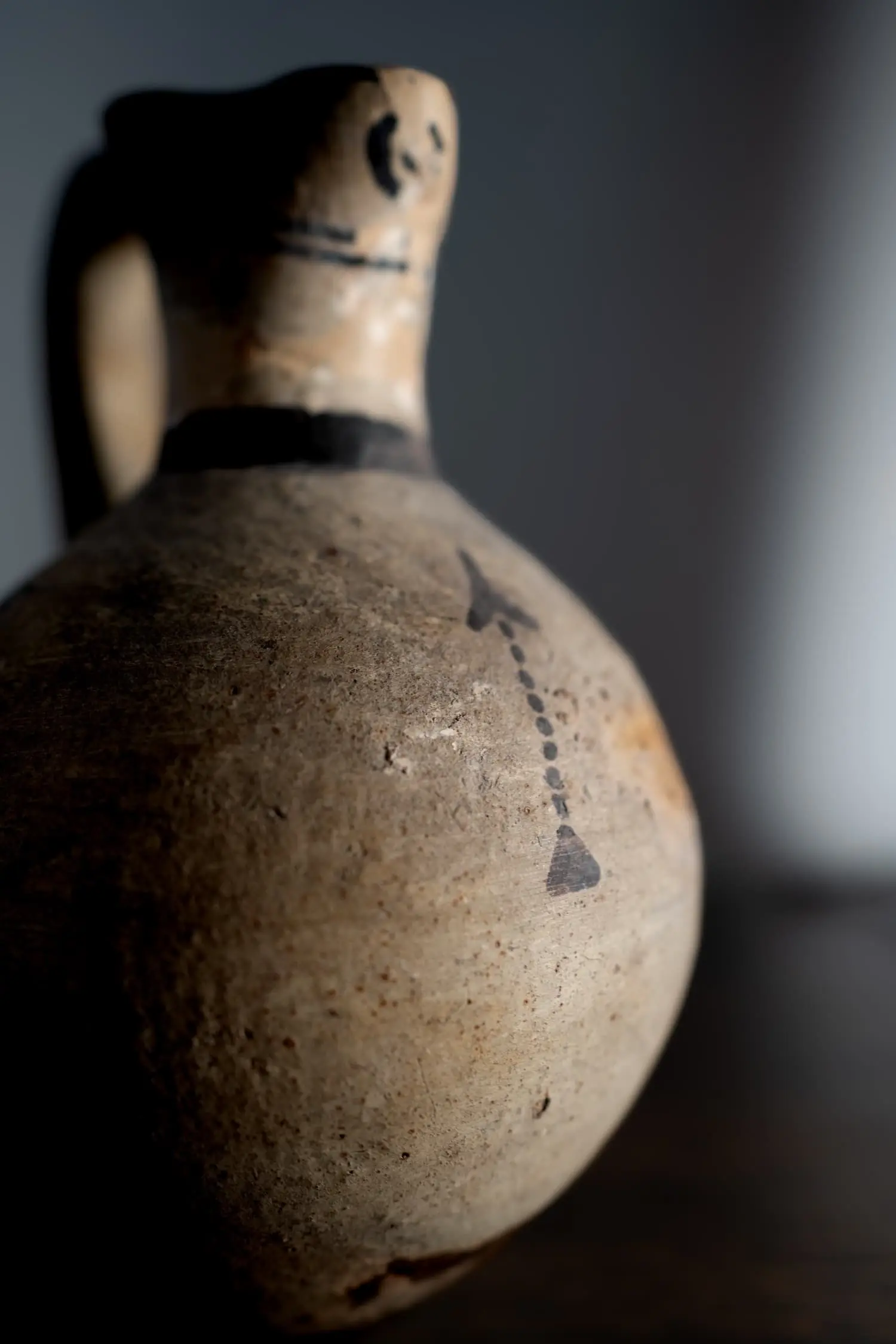
Arrows and Chevron Arrows on Cypriot Iron Age Pottery
The chevron arrow of Cypriot vase painting: a vertical chain of chevrons ending in a point, painted...
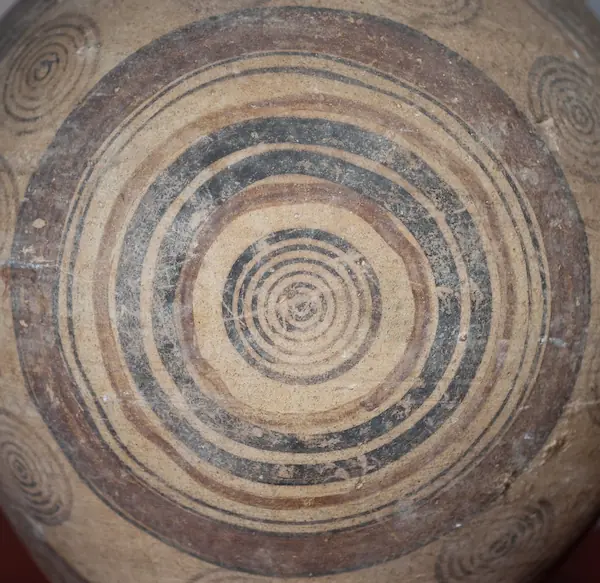
Free-Field Style: Birds, Bulls and Lotus on Cypro-Archaic Jugs
The free-field style of Cypriot Iron Age vase painting: a single figure set on the bare body of a...
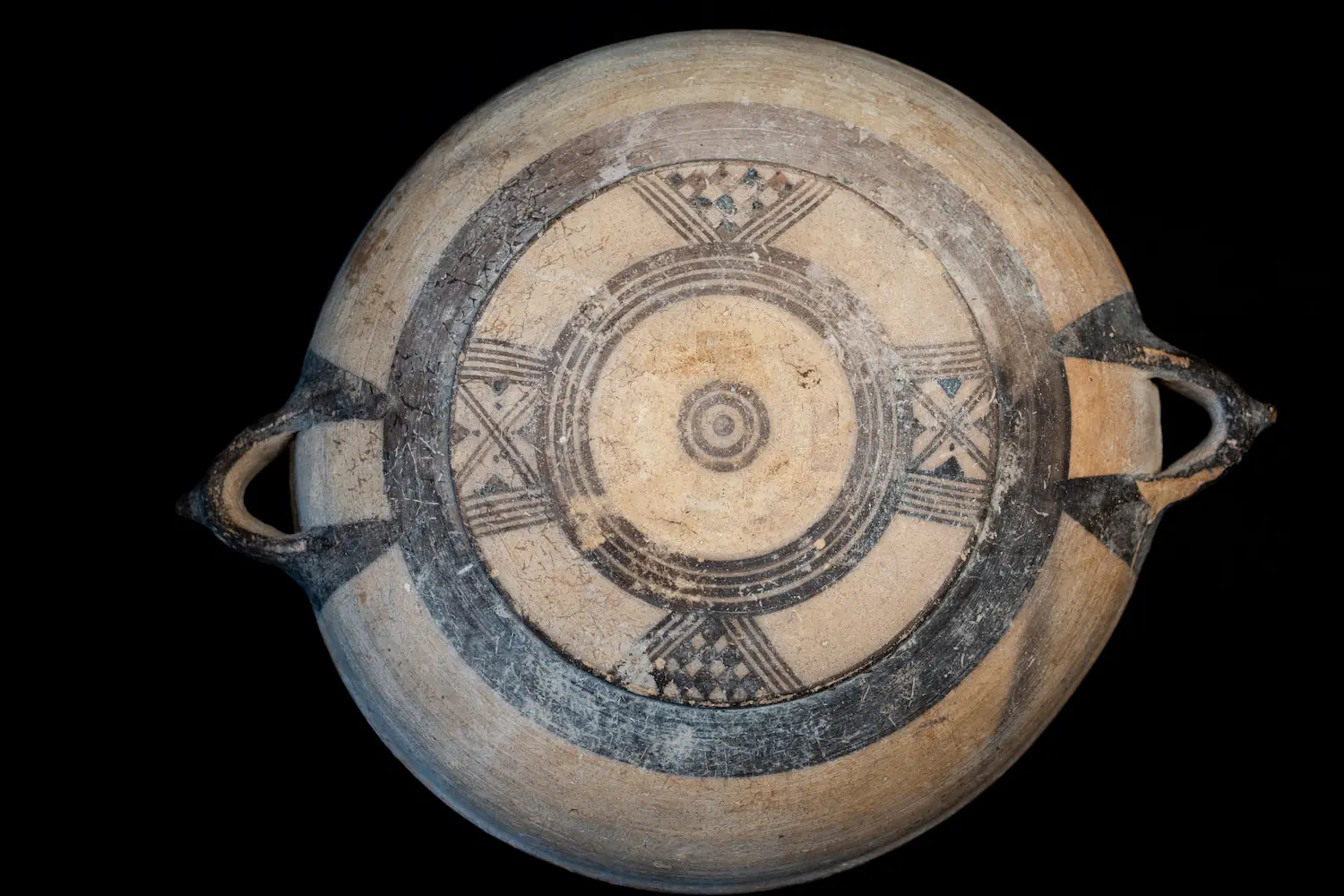
Lattice, Chequers and Checkerboards on Cypriot Pottery
Latticed triangles, latticed lozenges and black-and-white chequers on Cypriot pottery, from Middle...
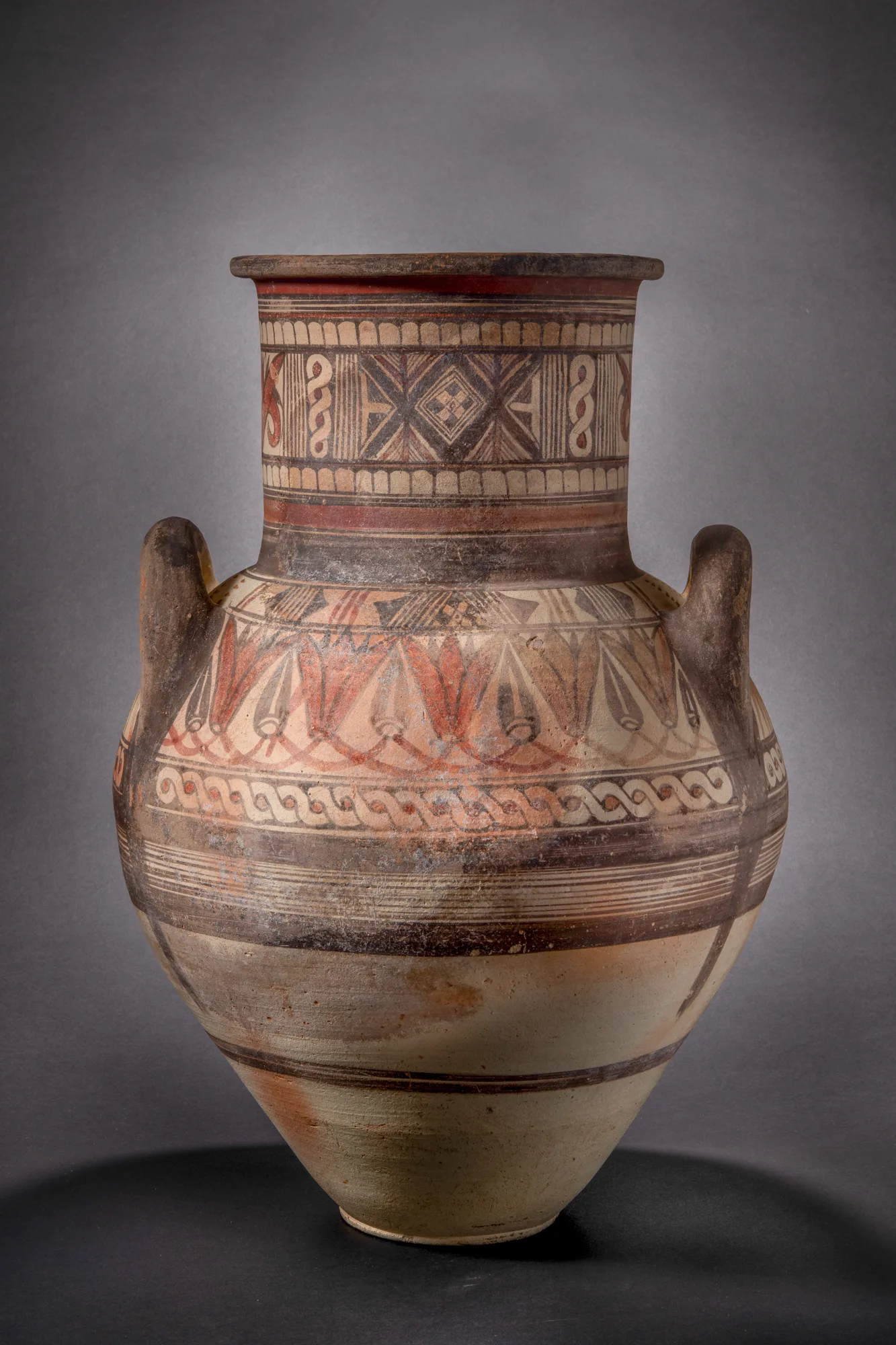
Lotus Flowers and Lotus Friezes on Cypriot Iron Age Pottery
The lotus on Cypriot vases: its arrival in Cypro-Geometric III, the Bichrome IV lotus-and-bud...
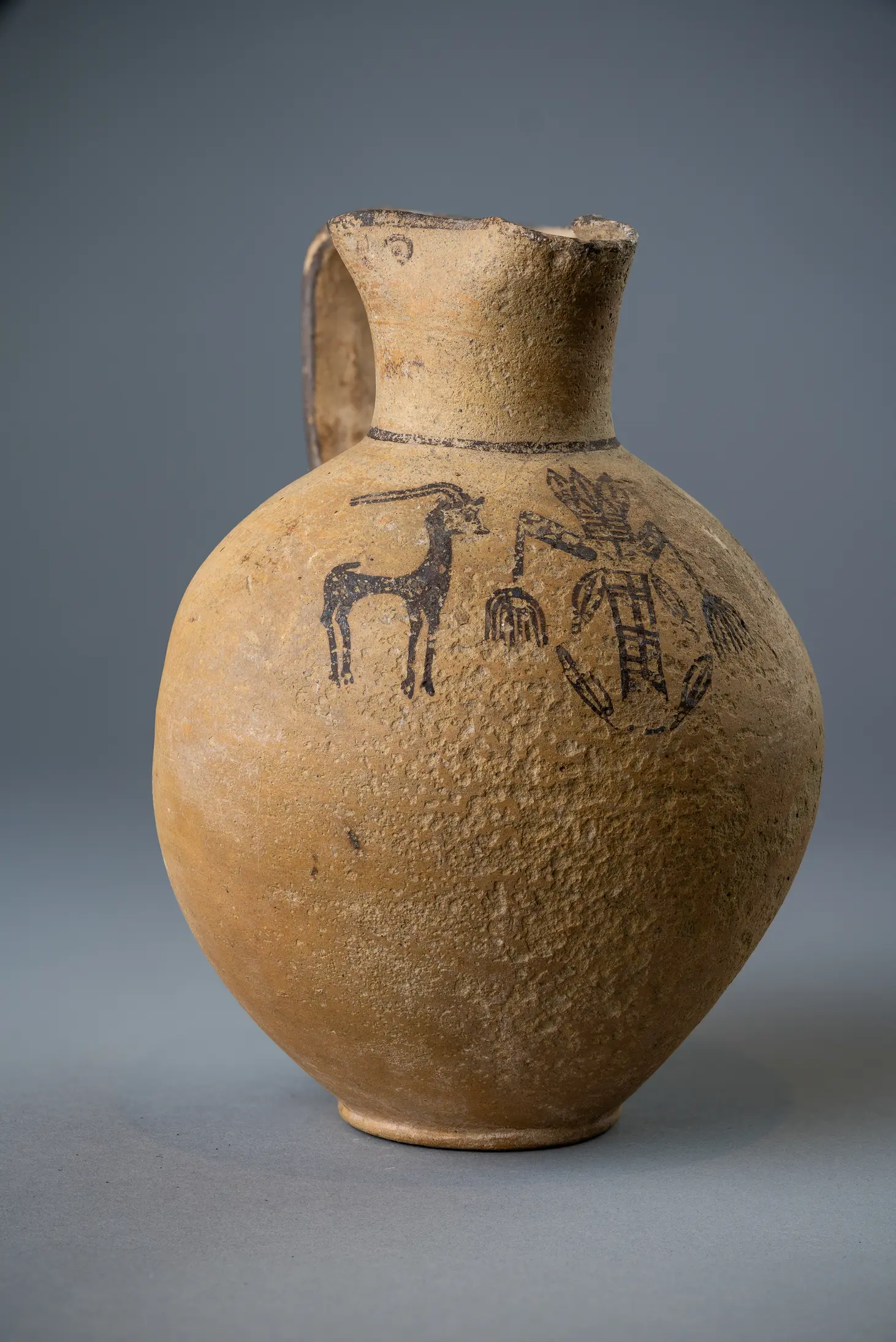
Plants, Trees and Palms on Cypriot Pottery
Trees, date palms, branches and the goat-and-tree or sacred-tree composition on Cypriot pottery,...
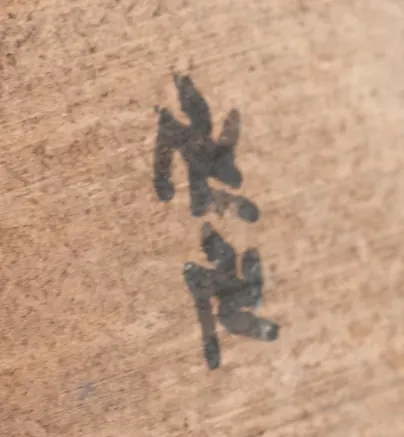
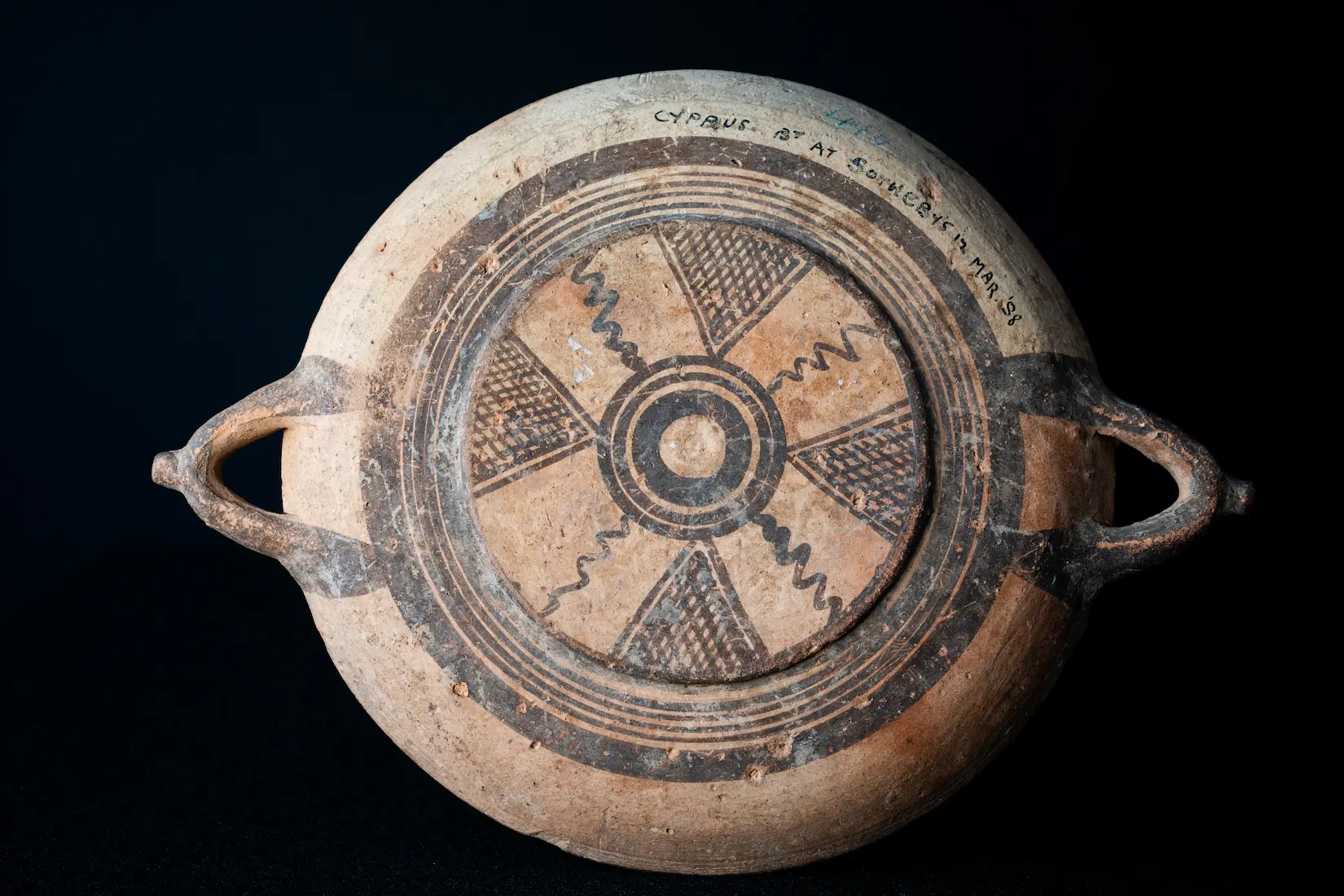
The Maltese Cross on Cypriot Pottery
The 'Maltese' cross of Cypriot vase painting: four triangles meeting at a point, painted on the...
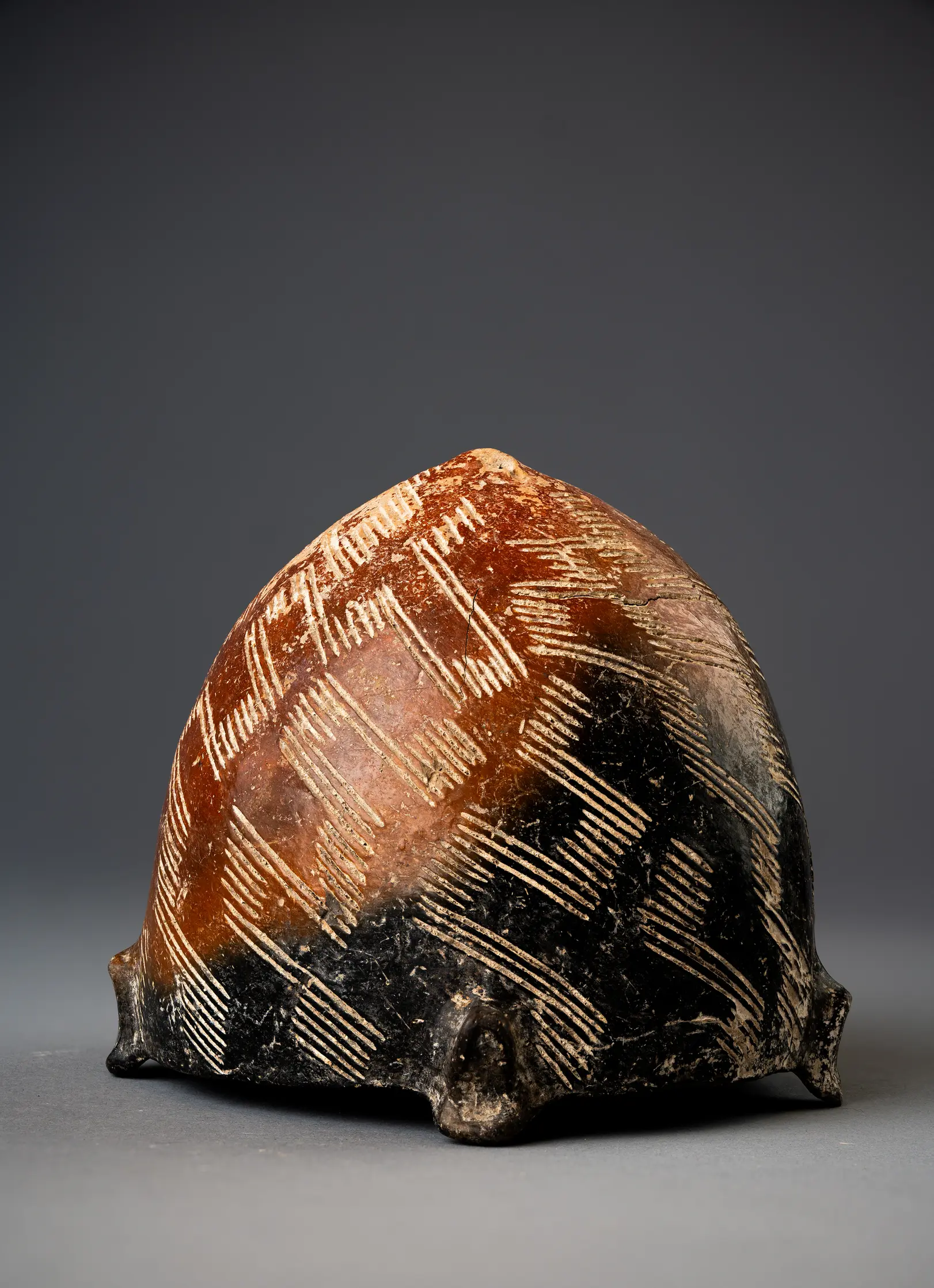
Triple Crossing Lines
Groups of parallel lines crossing on Cypriot pottery: the White Painted Cross Line Style of Middle...
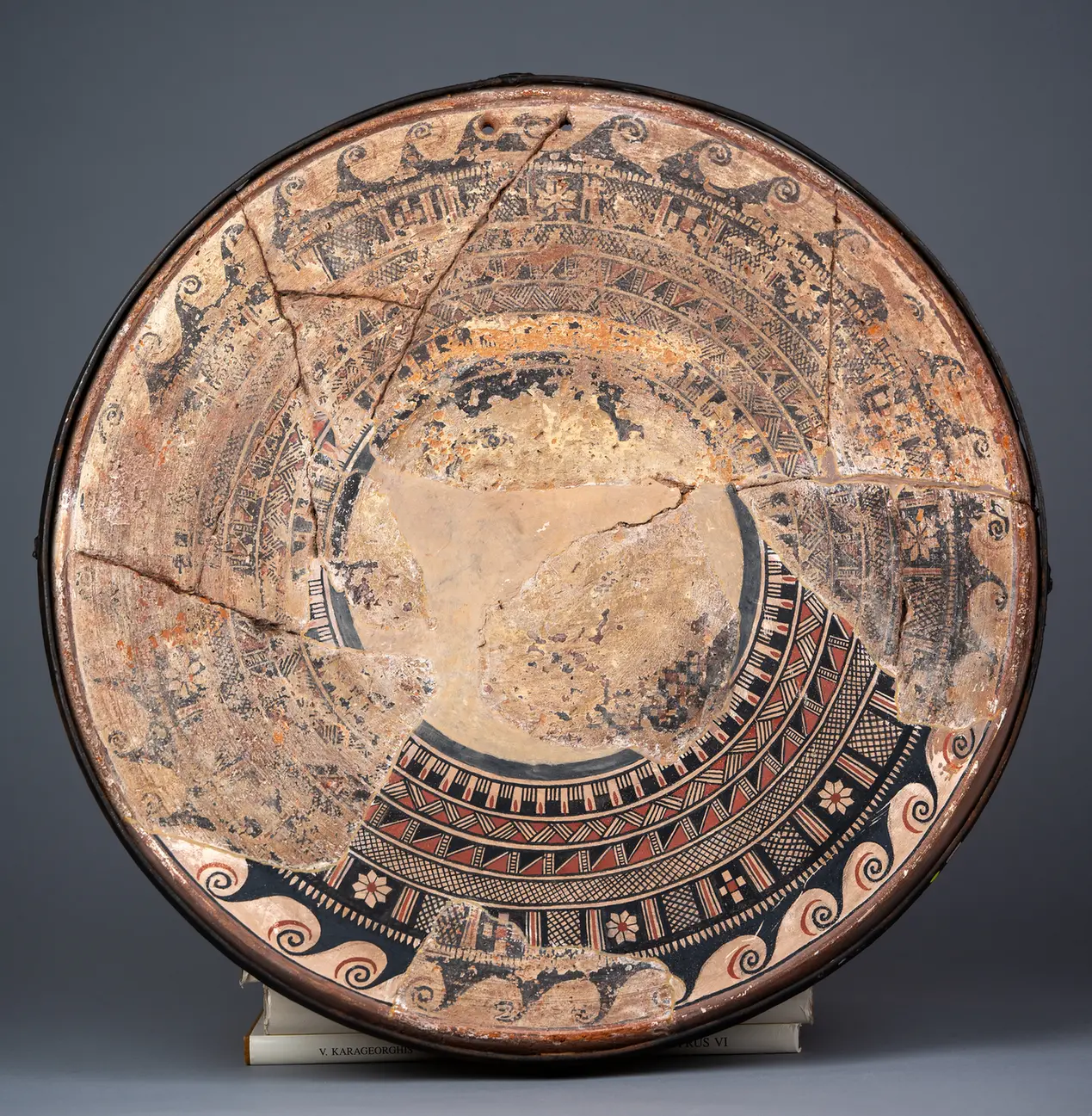
Wavy Hooks
Wavy lines that end in a hook or spiral on Cypriot pottery: Mycenaean hooked spirals at Enkomi, the...
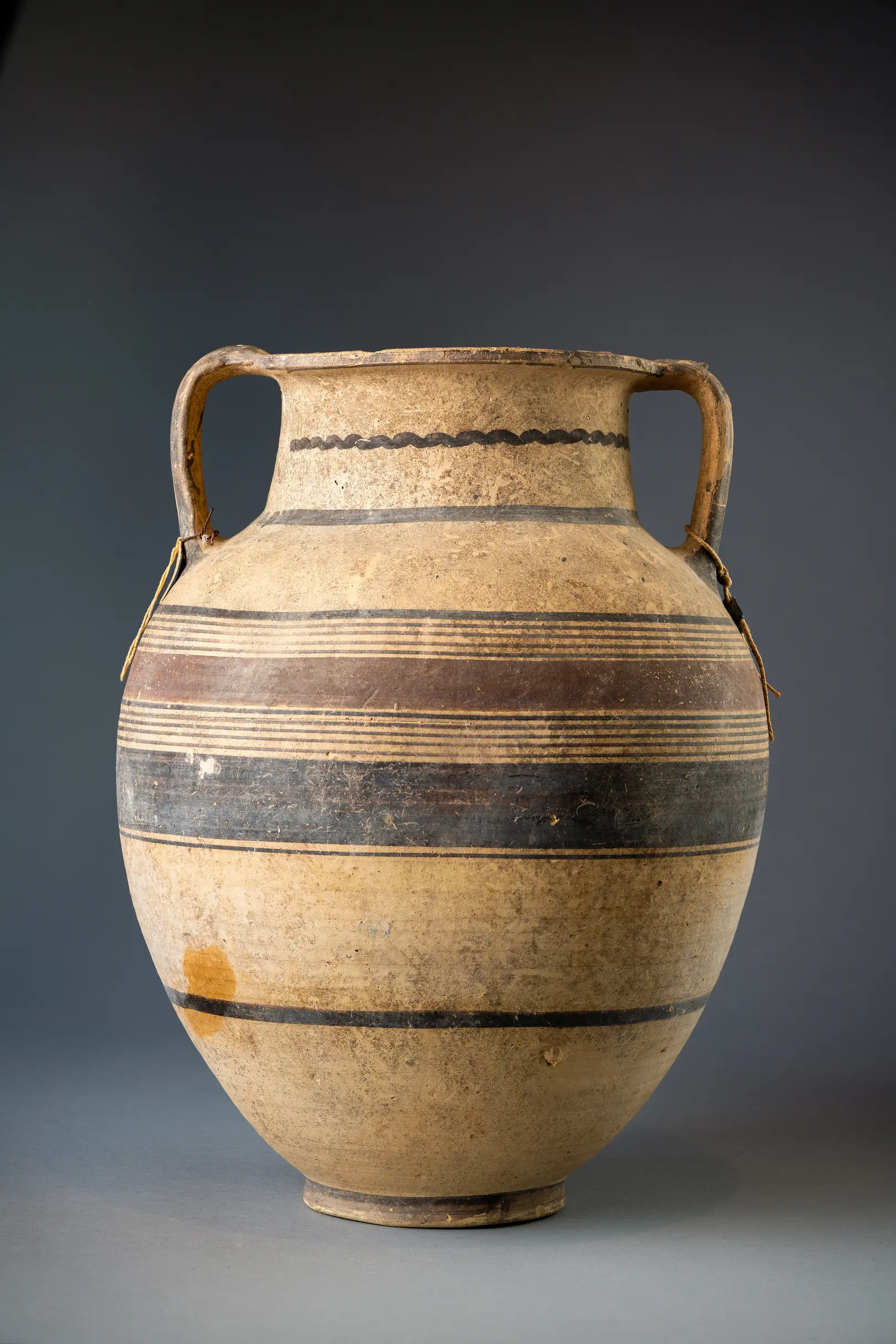
Wavy Lines
The wavy line on Cypriot pottery: incised on Red Polished, painted in the White Painted Wavy Line...
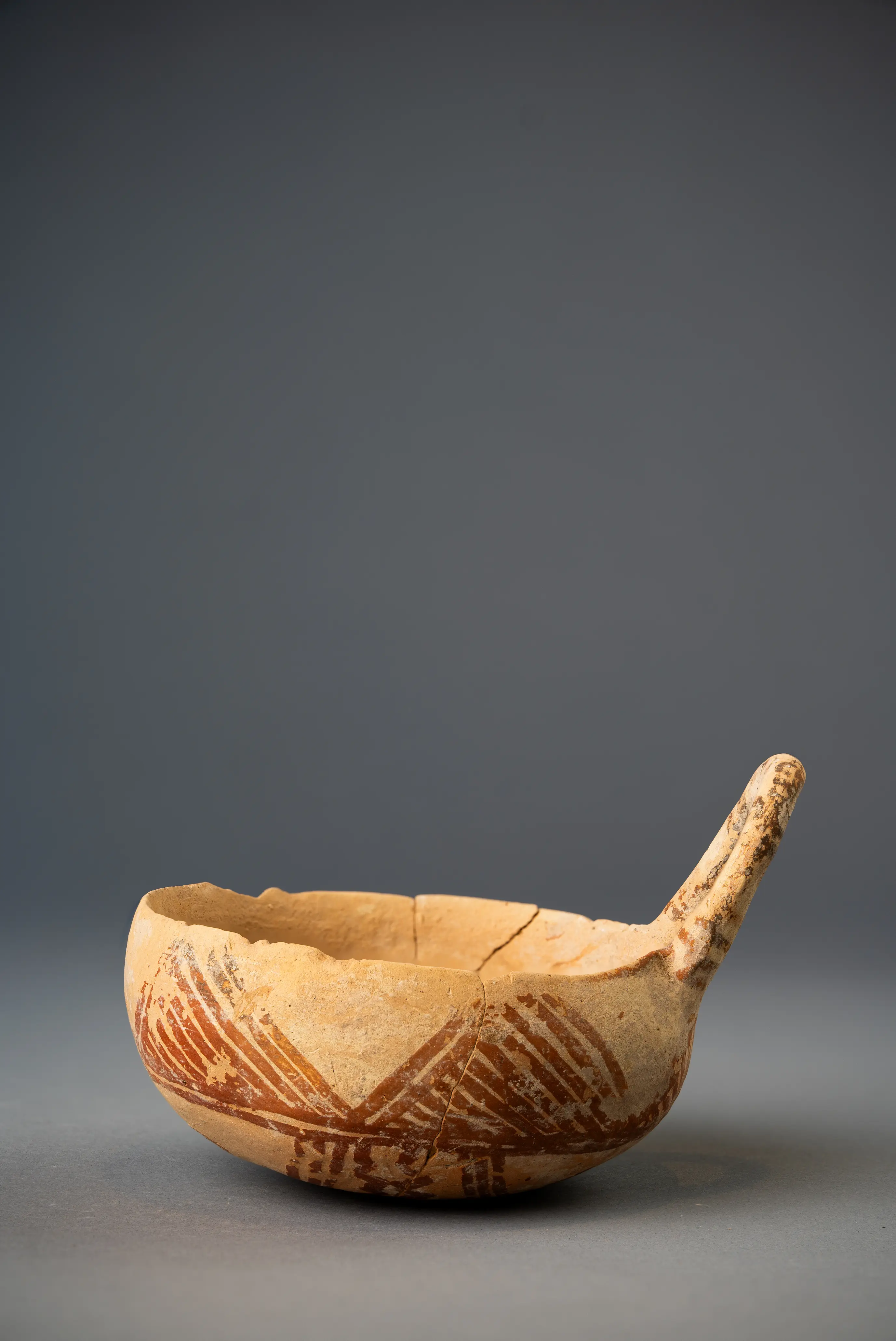
From the collection
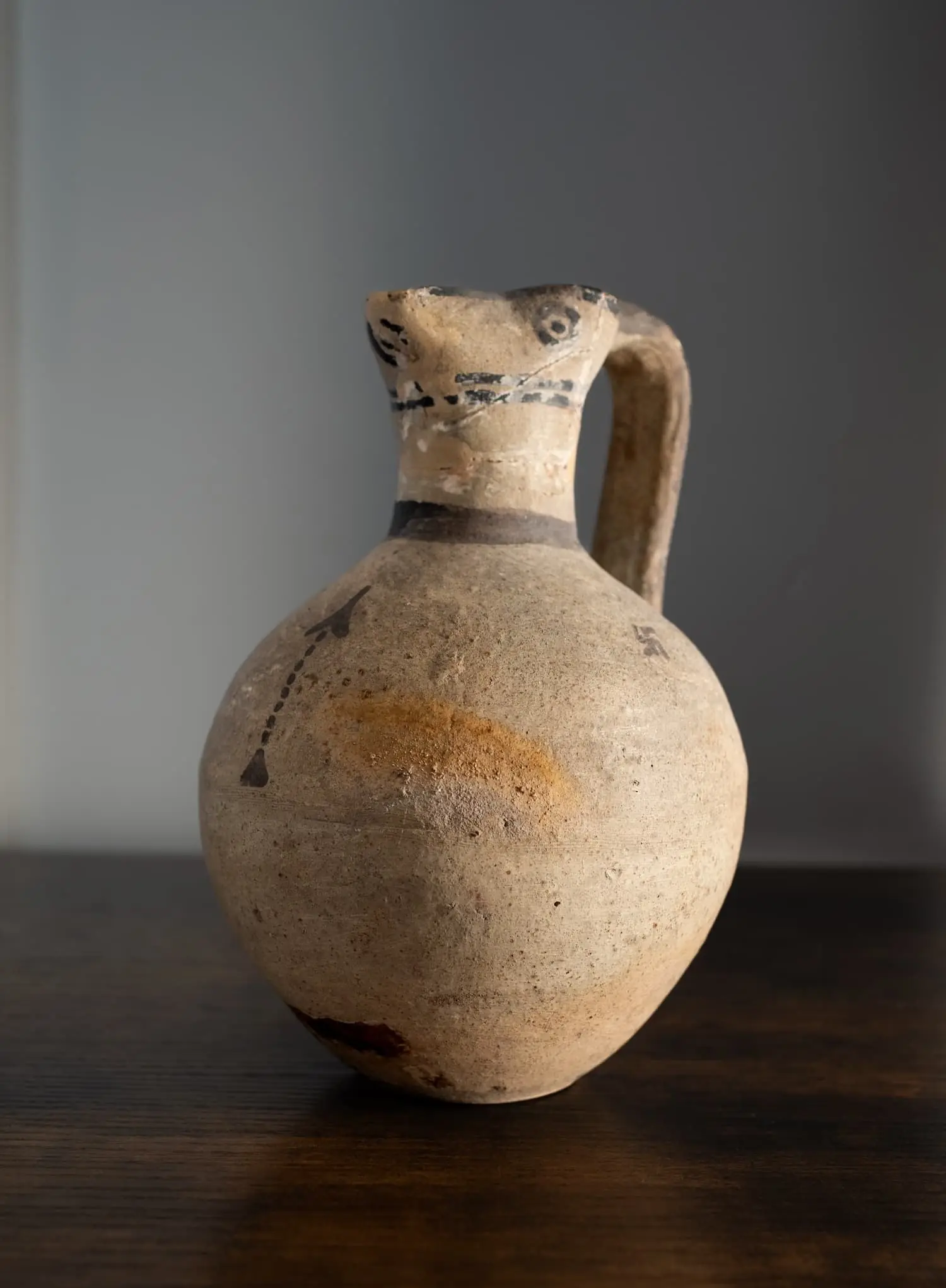 White Painted Jug with Painted Eyes, Chevron Arrow and SwastikaGeometric III · 850–600 BC
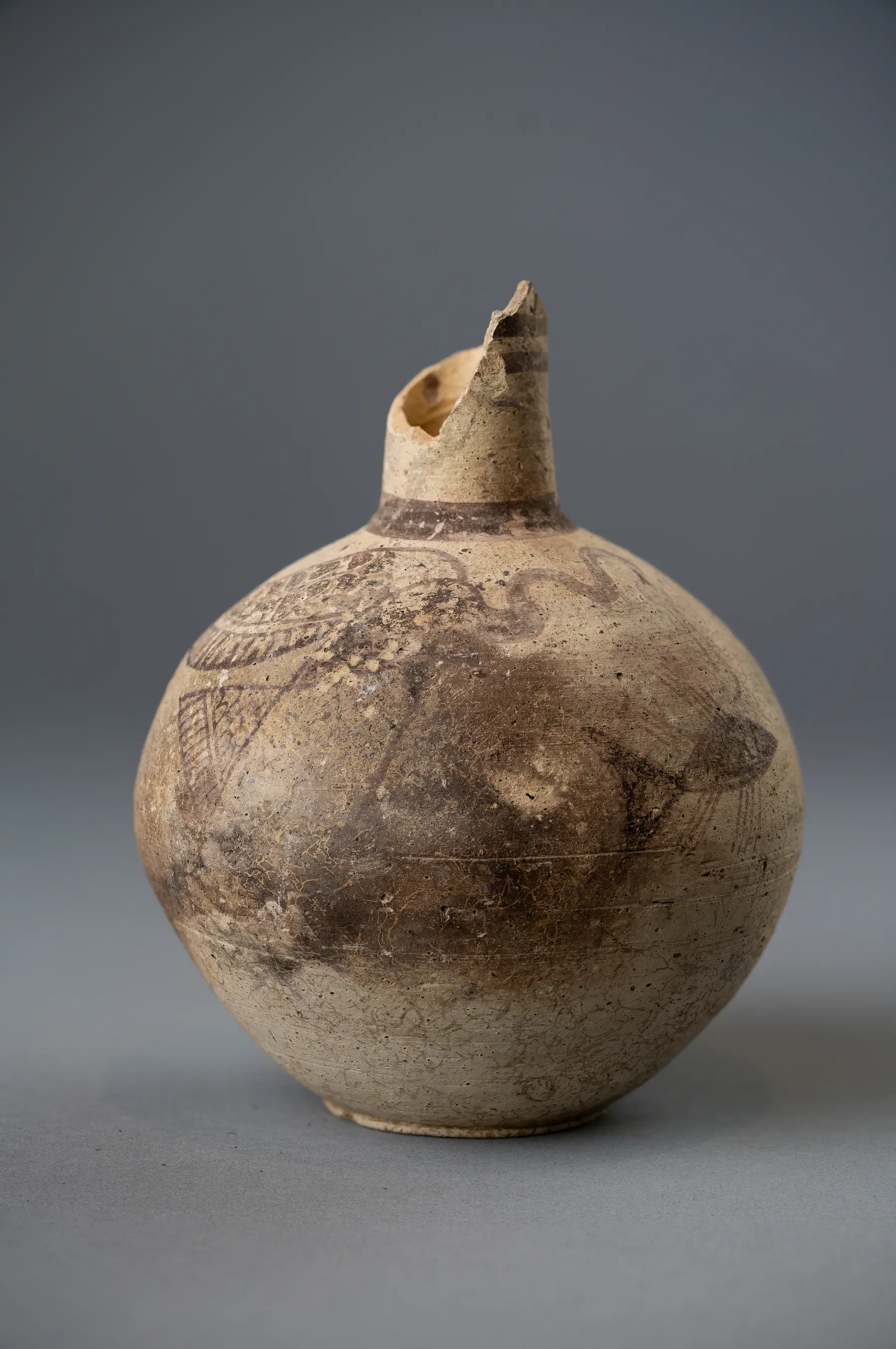 Bichrome IV Jug with a Waterfowl Catching a FishArchaic I · 750–600 BC
- Large Bichrome Plate from Salamis with a Wave Band and Rosette MetopesArchaic I · 700–550 BC
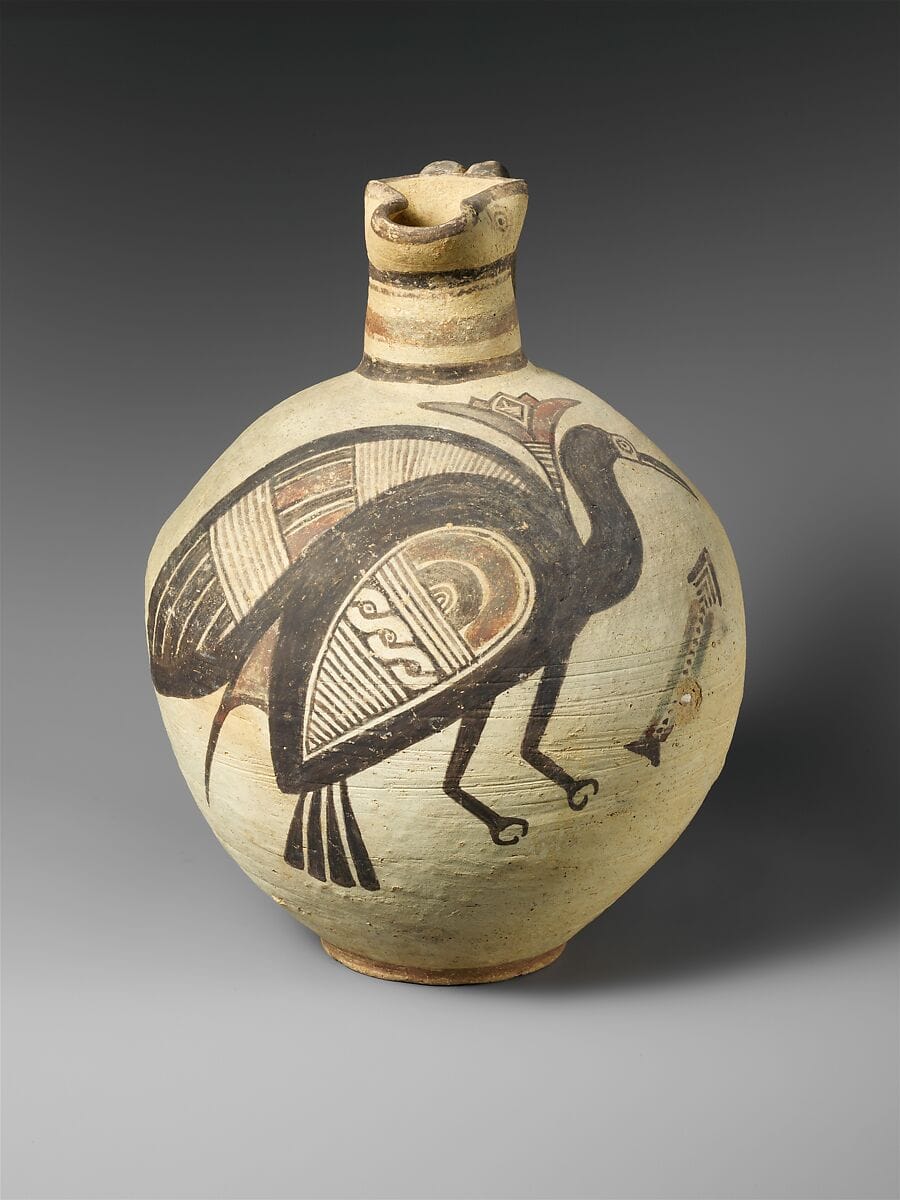 Terracotta jugArchaic I · 750–600 BC
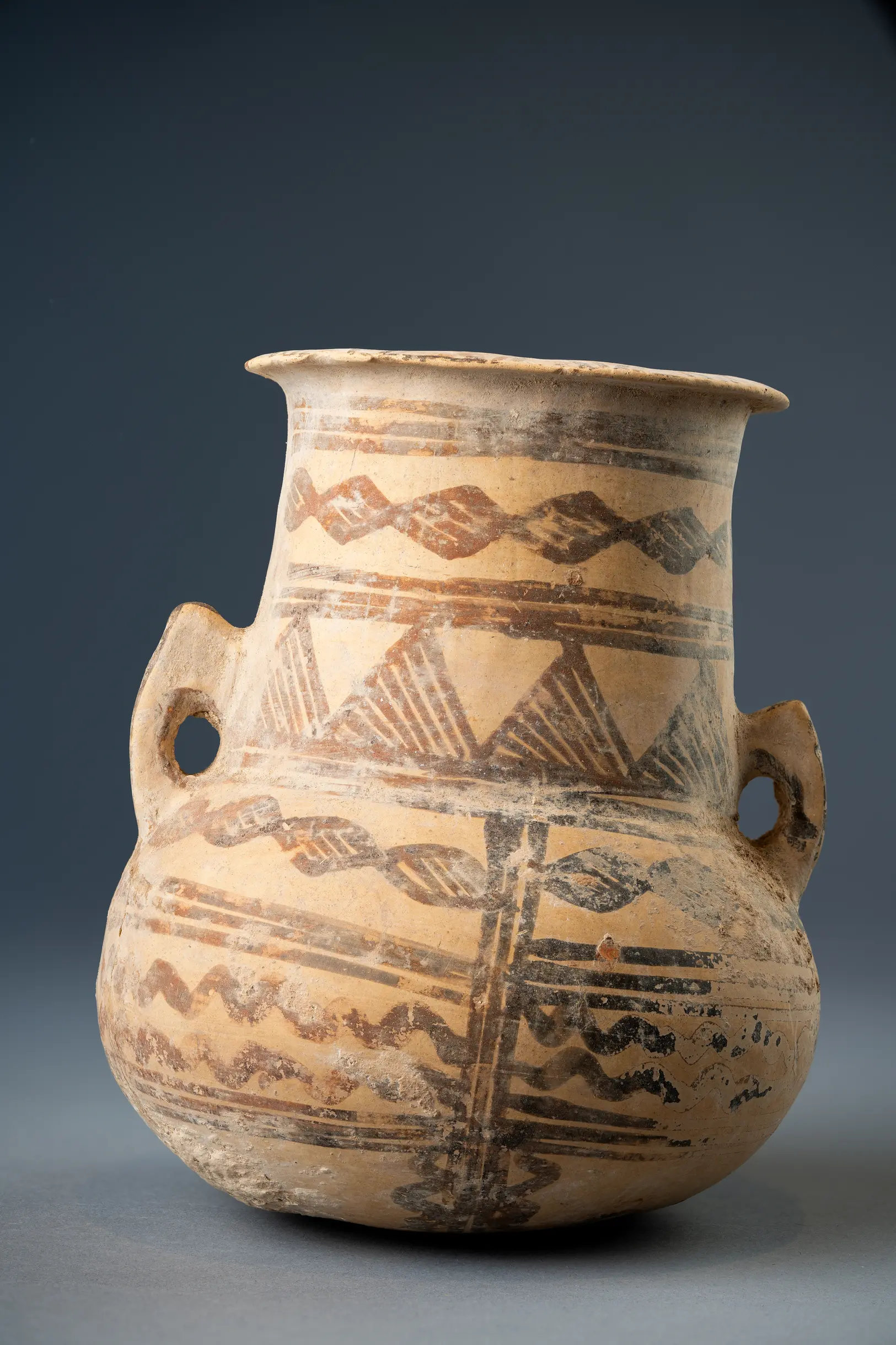 White Painted III-IV Amphora with Lozenge Chains and Hatched TrianglesMiddle Bronze Age II · 1850–1650 BC
- White Painted IV Trefoil Jug with a Wild Goat and a Composite Plant-like FigureArchaic I · 750–600 BC
- White Painted Plate with Latticed Triangles and Wavy Lines on the UndersideGeometric I · 1050–850 BC
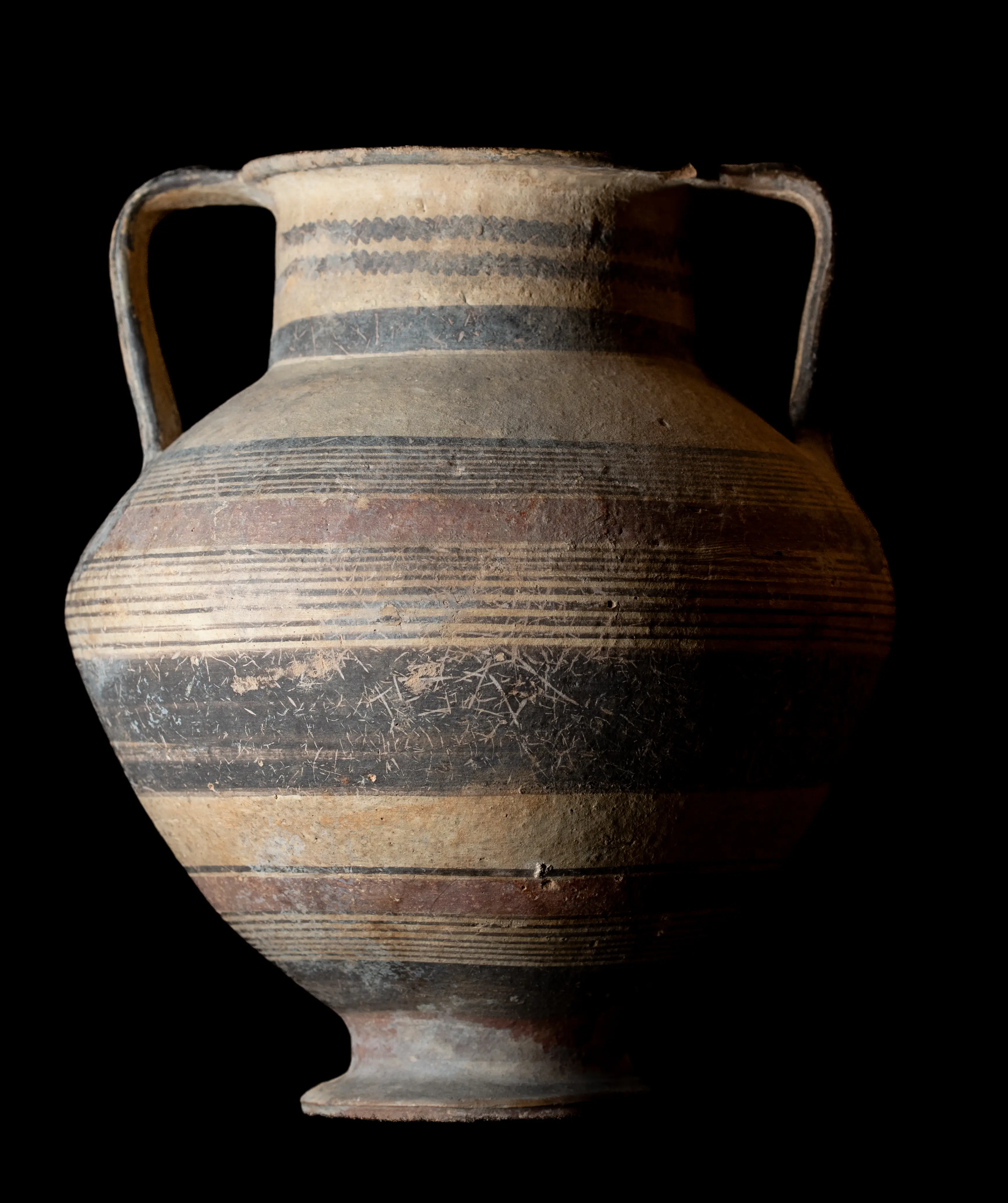 Bichrome Amphora on a Pedestal Foot with Wavy Lines on the NeckArchaic I · 750–600 BC
- Bichrome IV Amphora with a Lotus-and-Bud Shoulder FriezeArchaic I · 750–600 BC
- Bichrome IV Trefoil Jug with a Striding BirdArchaic I · 750–600 BC
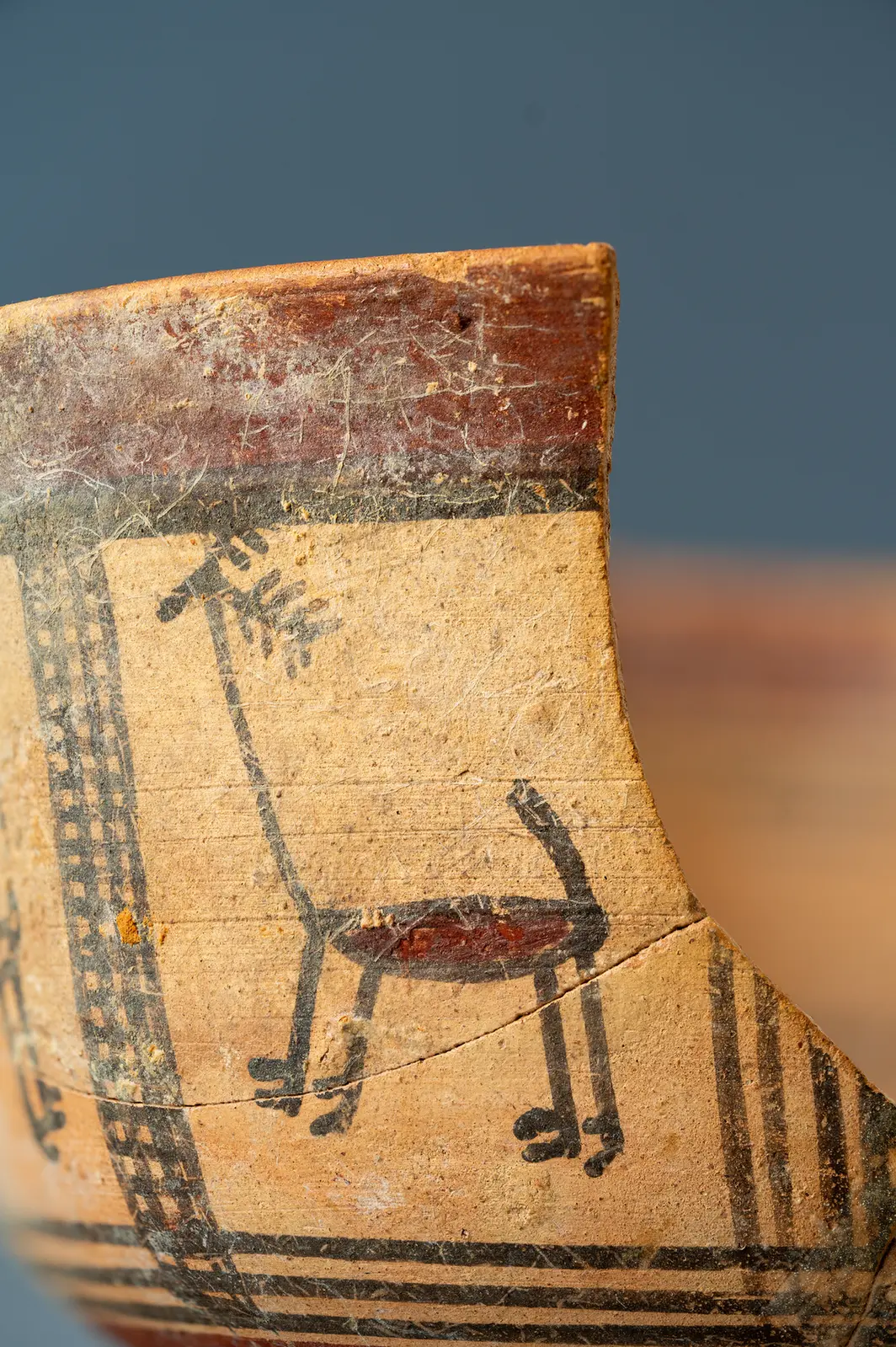 Bichrome Skyphos with Stags in MetopesArchaic I · 750–600 BC
- Black-topped Red Polished Tulip Bowl with Incised Hatched LatticeEarly Bronze Age II · 2300–2000 BC
and 39 more objects linked from these pages
References
- 1.Karageorghis, V. (2000). Ancient art from Cyprus: The Cesnola Collection in the Metropolitan Museum of Art. The Metropolitan Museum of Art.
- 2.Karageorghis, V. (1982). Cyprus: From the Stone Age to the Romans (Ancient Peoples and Places 101). Thames and Hudson.
- 3.Merrillees, R. S. (1991). The principles of Cypriot Bronze Age pottery classification. In J. A. Barlow, D. L. Bolger, & B. Kling (Eds.), Cypriot ceramics: Reading the prehistoric record (University Museum Monograph 74, pp. 237-240). The University Museum, University of Pennsylvania.
- 4.Dikaios, P. (1937). An Iron Age painted amphora in the Cyprus Museum. The Annual of the British School at Athens, 37, 56-72. https://doi.org/10.1017/S0068245400017974
- 5.Kotsonas, A. (2012). 'Creto-Cypriot' and 'Cypro-Phoenician' complexities in the archaeology of interaction between Crete and Cyprus. In M. Iacovou (Ed.), Cyprus and the Aegean in the Early Iron Age: The legacy of Nicolas Coldstream (pp. 155-181). Bank of Cyprus Cultural Foundation.