
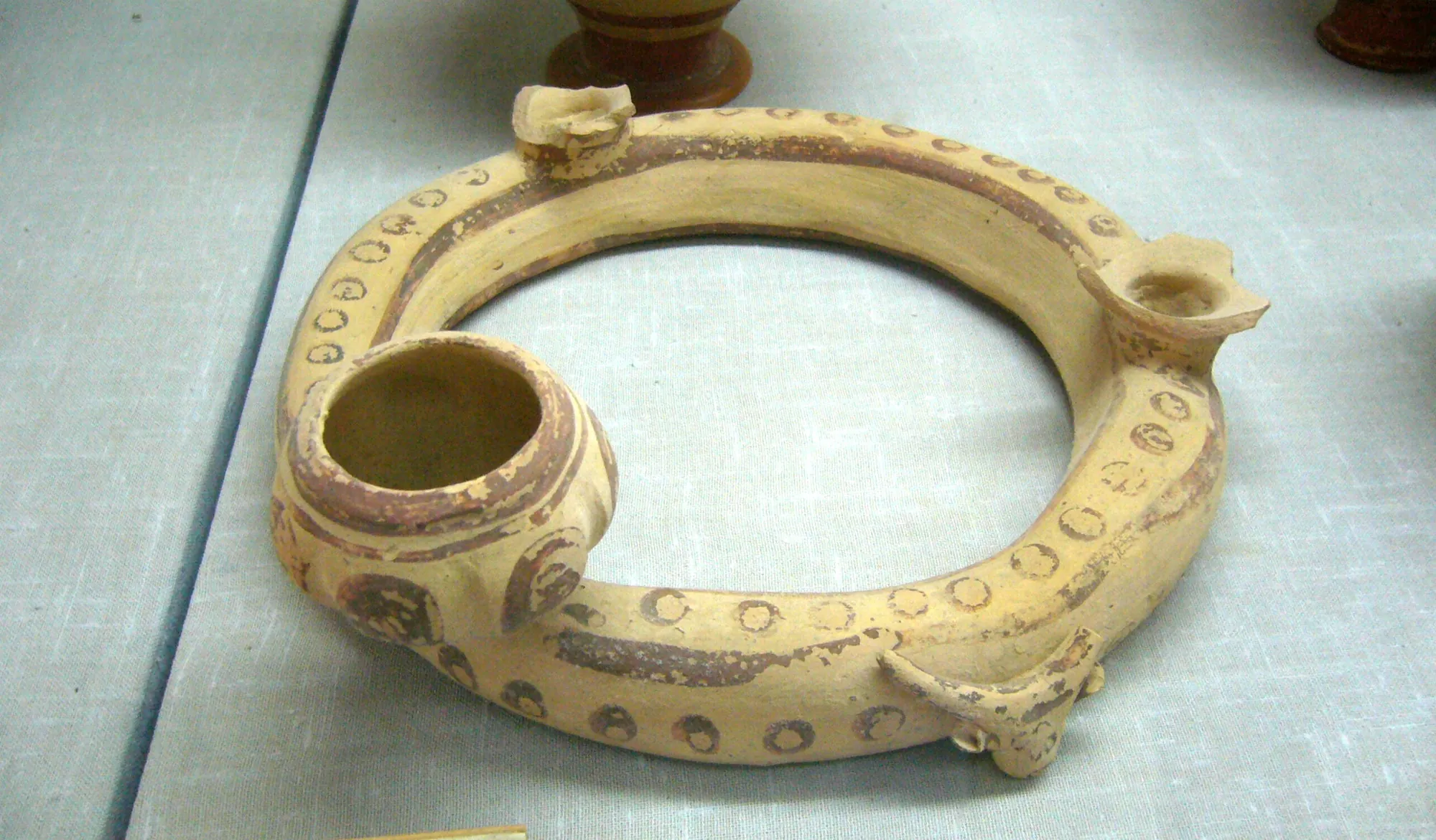
Contents
Maroni is a group of Late Bronze Age sites in the lower valley of the Maroni river, on the south coast of Cyprus in Larnaca District. At Maroni-Vournes, a low rise about 500 m from the sea, stood the Ashlar Building, one of the earliest buildings of cut stone on the island, and beside it a storehouse of the same size. On the shore below, at Maroni-Tsaroukkas, lay a cemetery of rich tombs, more buildings and an anchorage where ships stopped from the beginning of the Late Cypriot period. The settlement began about 1650 BC and was abandoned around 1200 BC. Nearly five hundred years later, from about 750 BC, farmers of the valley cleared part of the ruined Ashlar Building and used it as a sanctuary until about 200 BC [1, p. 145; 2, p. 214; 3, p. 739].
The lower Maroni valley
The Maroni river reaches the sea between Larnaca and Limassol; Khirokitia stands on its banks about 6.5 km upstream. Vournes, a low hill about 500 m from the south coast [4], lies on "the eastern edge of the coastal plain of the Maroni river valley" [1, p. 145]. Tsaroukkas lies about 500 m from Vournes, on the shore, with its anchorage just offshore [5, p. 298; 6, p. 279]. Tombs cut into the low coastal scarp at Tsaroukkas have been badly disturbed by erosion [5, p. 332]. Aspres, where a large Late Cypriot building has been excavated, lies about 400 m west of Vournes [7].
The Late Bronze Age sites do not form a single walled town. Survey has found Late Cypriot I and II material spread "over an area of up to c. 35 ha in and around the Maroni Vournes/Tsaroukkas area" [8]; earlier estimates of up to 25 ha rested, in the surveyors' words, "on precious little data" [5, p. 298]. The land is farmland. The excavators noted that the sites had escaped building and destruction because they were registered as an Ancient Monument early in the 20th century [5, p. 300].
In the next valley to the west, about 7 km away, lies the Late Bronze Age town of Kalavasos-Ayios Dhimitrios, beside the much older village of Kalavasos-Tenta. Tochni-Lakkia, a smaller coastal site, lies between them [9]. In the Iron Age the valley lay about halfway between the kingdoms of Amathus and Kition [3, p. 746].
Map of Cyprus
- Late Bronze Age
- Neolithic villages
- Iron Age kingdoms
- Ground above 200, 500, 1,000 m
Sites on this map
- 1Maroni
- 2Kalavasos-Ayios Dhimitrios
- 3Tochni-Lakkia (approx.)
- 4Khirokitia
- 5Kalavasos-Tenta
- 6Amathus
- 7Kition
Collectors and the British Museum
Maroni was known to collectors long before any excavation. A locality called "Zarukas" or "Tzarukas", the modern Tsaroukkas, "provided notable Mycenaean chariot kraters for collectors from the mid-nineteenth century onwards" [5, p. 297]. Luigi Palma di Cesnola dug tombs at Maroni, which he took to be ancient Marium; Marion in fact lay at Polis, in the far west of the island. Ferdinand Dümmler visited in 1885 and reported abundant Mycenaean sherds at the "rich cemetery of Tzarukas", D. G. Hogarth came in 1888, and John Myres visited Tsaroukkas and in 1894 bought Late Bronze Age objects from a villager [5, p. 297].
The British Museum's excavations on Cyprus began in 1892, when a bequest of £2,000 from Emma Turner was allocated to them. After Amathus (1893 to 1894), Kourion (1895) and Enkomi (1896), the Museum continued with public funds and decided to look only for sites with Mycenaean material. It dug at Maroni-Tsaroukkas in 1897, Hala Sultan Tekke in 1897 and 1898, and Klavdhia in 1899 [10, p. 28]. The work at Maroni was led by H. B. Walters [11]. The team "excavated at least 26 important LBA tombs at Maroni Tsaroukkas, and conducted tests in several areas nearby", and brought back some 90 or more Mycenaean vases or parts of vases and two Late Minoan III vases from Crete [5, p. 298].
The records were thin. The sketch map of the cemetery has no scale, an unclear north arrow and only a vague coastline and gully, so the exact place of the 1897 tombs was not known for nearly a century, and the finds cannot be assigned to their tombs [5, p. 298]. In 1980 J. Johnson gathered the Museum's Maroni material in Maroni de Chypre [12]. It showed a rich community of Late Cypriot I and II with strong links to the Aegean, but without tomb groups [5, p. 298]. Maroni, as a general provenance, "stands out in Cyprus as an important source of imported Late Helladic (LH) III A Mycenaean material" [5, p. 298]; one well-known piece is an early Mycenaean krater painted with fish, from Tomb 2 and now in the British Museum (C378) [13, p. 37].
Modern fieldwork
Gerald Cadogan began excavating at Vournes in 1981–82 for the British School at Athens and the University of Cincinnati [5, p. 298; 1, p. 145]. The main seasons ran from 1982 to 1989, and the results appeared as interim reports, "Maroni I" to "Maroni VI", in the Report of the Department of Antiquities, Cyprus from 1983 [14; 4]. Jan Driessen made the architectural study of the buildings [4]. Cadogan's own review of the Bronze Age site appeared in 2011 [15]; a final report has not yet been published.
Sturt Manning, who had worked on Cadogan's excavation, then turned to the wider valley. The Maroni Valley Archaeological Survey Project began with a preliminary season in 1990 and surveyed the fields around Tsaroukkas on foot in the following years [8; 16; 5, p. 301]. From 1993 the Tsaroukkas, Mycenaeans and Trade Project, directed by Manning and David Sewell, opened trenches over about 2 ha at Tsaroukkas and surveyed it by magnetometer and resistivity. It found two large rectilinear building complexes and relocated part of the 1897 cemetery, with tombs disturbed by the British Museum and by other robbers, ancient and modern [5, pp. 300–301; 17].
Underwater survey in 1995 and 1996 recorded the anchorage off Tsaroukkas [18], and a re-survey by Carrie Atkins and Manning in 2017 to 2019 added more anchors and pottery [6]. A later programme combined excavation, field survey and geophysics across the whole Late Bronze Age complex [19].
Phases
The dates below use the Late Cypriot (LC) phases. Short-lived samples from Kalavasos, Maroni and Apliki place Late Cypriot IIC, the time of the Ashlar Building, at about 1340/1315 to 1200 BC [20].
Phases
- Foundation (LC IA)about 1650 BC
Vournes is settled at or by the start of LC I. Ships already use the anchorage at Tsaroukkas.
- LC I to IIB (Vournes I and II)about 1650 to 1340 BC
Rich tombs at Vournes and Tsaroukkas; the sunken Basin Building and a first large building at Vournes.
- LC IIC (Vournes III)about 1340/1315 to 1200 BC
The Ashlar Building and the West Building, built over the older tombs and the Basin Building; buildings at Tsaroukkas.
- Abandonmentabout 1200 BC
Vournes is left without any sign of destruction.
- No occupationabout 1200 to 750 BC
Nearly five hundred years with no sign of use of the site.
- Sanctuaryabout 750 to 200 BC
Part of the ruined Ashlar Building becomes a shrine for the farms and hamlets of the valley.
- Late Roman church at Petreralate 6th to early 7th century AD
A separate site about 1 km south-east of the modern village.
The Ashlar Building and the West Building at Vournes
Older buildings and tombs beneath
Beneath the Ashlar Building lay "impressive LC II A–B tombs which had been built over (and into) during the LC II C period". They had been robbed, but they still held sherds of imported Mycenaean vases [5, p. 298]. Beside them were the Basin Building, a sunken structure that was later covered over, and a predecessor of the Ashlar Building [4, p. 193]. At the end of LC IIB these older tombs and buildings were sealed under a thick layer of plaster and stone chips, probably the waste from dressing the blocks of the new building on the spot. Tool marks run from one block across the next, so the faces were finished after the blocks were laid [4]. Building over the tombs of earlier generations has been read as a deliberate political act by the new rulers of the site [21].
The Ashlar Building
The Ashlar Building was built in two stages. Its core, of ashlar inside and out and meant to be seen from every side, measured about 12 by 21.5 m, or 258 m². North and East Wings were then added, doubling it to about 21 by 29.7 m, or 623 m² [4, p. 193]. In plan it is the tripartite building of Late Cypriot Cyprus, like the large buildings at Kalavasos-Ayios Dhimitrios and Alassa [4, p. 193]. The core is of calcareous sandstone ashlar; the East Wing is of mudbrick of local clay on stone footings, the North Wing of rough stone. Most of the cut stone was robbed in later times, and the stone footings show where it stood [4, pp. 193–194].
Driessen reconstructs a building of two storeys, "gleaming white" with its ashlar, entered perhaps through a pillared porch on the south-east side. Inside was a court about 7.3 by 7 m, like the court of Building X at Kalavasos, with a double staircase beside it [4, p. 193]. The North Wing held two matching suites, each with a main room, a corridor and two smaller rooms, which he reads as living quarters; the East Wing, a row of half-sunken rooms with a press and storage jars, was a workshop [4, p. 194].
In Driessen's view Maroni is one of the earliest such "power buildings" on Cyprus, dating to LC IIB–C, "and also has the earliest ashlar attested" on the island [4, p. 193].
The West Building
Across a street or court from the Ashlar Building stood the West Building, almost exactly the size of the Ashlar Building's core. It had four bays of ashlar pillars, and sherds of large storage jars show that it was probably a storehouse. It was first about 16 by 27 m and was later extended to about 36 m long [4, pp. 193–194]. Driessen sees it as a direct forerunner of the pillared storage hall at Kalavasos-Ayios Dhimitrios and of the storage building at Maa-Palaeokastro [4].
| Building | Phase | Size | Use |
|---|---|---|---|
| Basin Building | LC I–IIB | Not published in full | A sunken structure, covered over when the Ashlar Building was built |
| Ashlar Building, core | LC IIC | About 12 × 21.5 m (258 m²) | Court, staircase, rooms on two floors |
| Ashlar Building with North and East Wings | LC IIC | About 21 × 29.7 m (623 m²) | Living suites (North Wing); press and storage (East Wing) |
| West Building | LC IIC | About 16 × 27 m, later about 36 m long | Pillared storehouse |
Oil, cloth and metal
The buildings at Vournes, like those at Kalavasos and Alassa, held large stores and were "probably also involved in the production of olive oil, and perhaps wine and copper" [4, p. 194]. Loomweights were concentrated in two rooms of the North Wing, and channelled stones set high in the walls of the same suite were linked by Cadogan to dyeing or fulling cloth [4, p. 194]. Slag, spilled metal and pieces of ingots from Vournes II and III show metalworking on a small scale [2]. Its excavators suggest that the smelting may have been a public performance more than an industry [22; 4]. Among the things left in the building when it was abandoned were sunken storage jars, pieces of faience vessels, a cylinder seal, a complete Canaanite jar, bronze knives and tools, and an inscribed jar [4, p. 194].
The huge olive crusher that straddles the walls of the West Building belongs to a much later time, "probably not before the 3rd century BC", when the building was already a ruin [2, p. 215].
Writing at Vournes
Four clay vessels from Vournes carry inscriptions in the Cypro-Minoan script, and there are some 67 single signs marked on pottery or stone of LC I–II [1, p. 145]. The inscribed pieces cluster in the Ashlar Building. Cadogan, Driessen and Ferrara conclude that "the use of writing at Maroni-Vournes was, clearly, centralised within the Ashlar Building", probably for managing farm produce and workshops, and that writing may have begun here before it spread to Kalavasos-Ayios Dhimitrios [1, p. 161]. On writing in Bronze Age Cyprus more generally, see writing and literacy.
Maroni and Kalavasos
The Ashlar Building and Building X at Kalavasos-Ayios Dhimitrios are so alike that Driessen wonders "whether it was not the same people who simply left Maroni and constructed a new centre in the next valley" [4, p. 194]. Building X "seems a little later" than the Ashlar Building, and Cadogan, Driessen and Ferrara suggest that Kalavasos "may well have supplanted it and controlled both valleys for a time" [1, p. 161]. Other scholars have seen Maroni as the port of Kalavasos, or the two as neighbours of equal standing. The relationship between them is still debated.
Tsaroukkas: tombs, buildings and the anchorage
The 1897 cemetery lay at Tsaroukkas, on the shore. The Tsaroukkas project relocated part of it in the 1990s; the tombs it cleared had been disturbed by the British Museum's diggers and by robbers before and after them [5, p. 301]. Its trenches and geophysical survey also found two large rectilinear building complexes near the cemetery, which the excavators set out to connect with the tombs and with the Ashlar Building [5, pp. 300–301].
Offshore, the survey of 1995 and 1996 recorded 35 stone anchors [6, p. 284], and the excavators date the anchorage to LC IA, the beginning of the settlement [18]. The re-survey of 2017 to 2019 recorded 41 stone anchors, many of them not seen before, with 11 stone blocks and 270 sherds [6, p. 284]. Unfinished anchors and pottery of LC IA in the western part of the anchorage suggest that some of it was once dry land on the shore, now under water [6, pp. 278, 292].
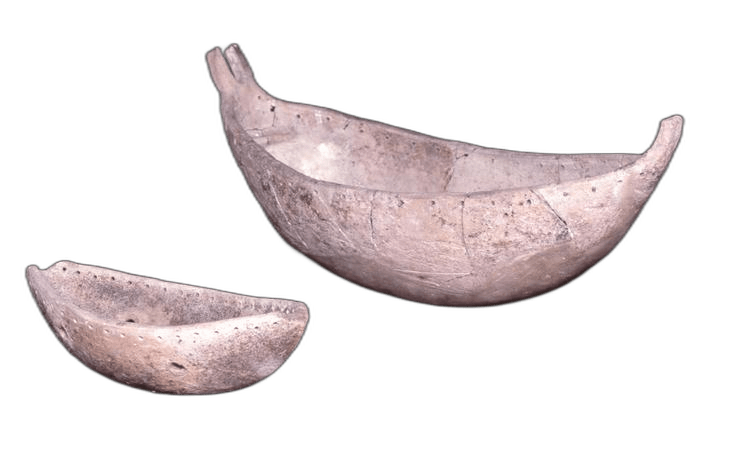 Beige Clay Model BoatLate Bronze Age I · 1650–1200 BCBritish Museum
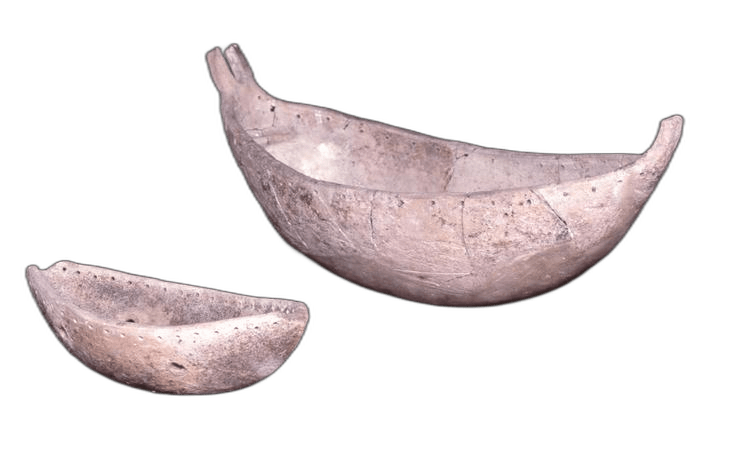 Terracotta Model BoatLate Bronze Age I · 1650–1200 BCBritish Museum
).webp) Bull figurine, broken from a vaseMiddle Bronze Age I · 2000–1650 BCAshmolean Museum
Bull figurine, broken from a vaseMiddle Bronze Age I · 2000–1650 BCAshmolean Museum
Finds from the 1897 tombs
The objects from the 1897 tombs went to the British Museum. The register records them only as from "Maroni"; most probably came from the Tsaroukkas tombs, but some may come from the trial pits nearby. They include the fine Cypriot pottery of the period, Base Ring and White Slip wares, together with imports and luxury goods. The Mycenaean vases for which Maroni is famous are discussed above; see also Mycenaean imports and local imitations.
Several Base Ring vessels in the shape of bulls came from the Maroni tombs, with Base Ring figurines of naked women and a White Painted rattle in the shape of an owl (see Base Ring bulls).
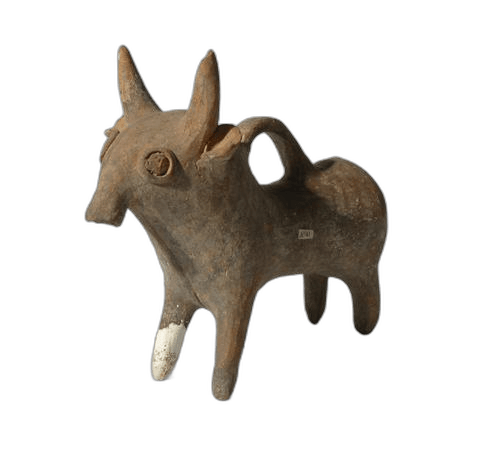 Base-Ring Bull RhytonLate Bronze Age II · 1450–1150 BCBritish Museum
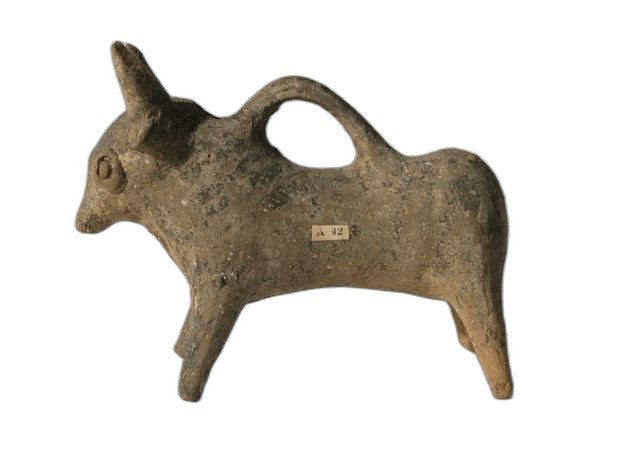 Base Ring Bull AskosLate Bronze Age II · 1425–1190 BCBritish Museum
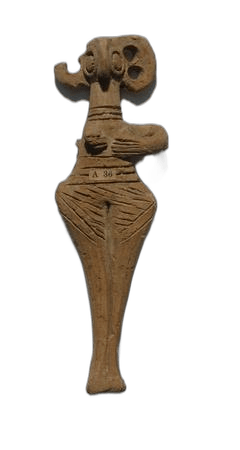 Base Ring Astarte FigurineLate Bronze Age II · 1450–1200 BCBritish Museum
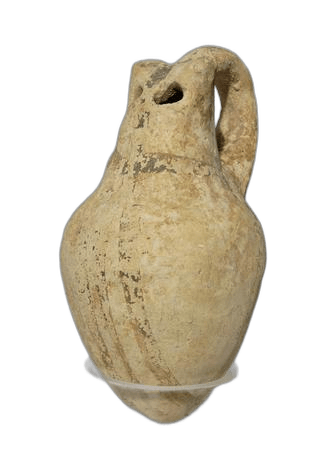 White Painted Owl RattleLate Bronze Age I · 1650–1500 BCBritish Museum
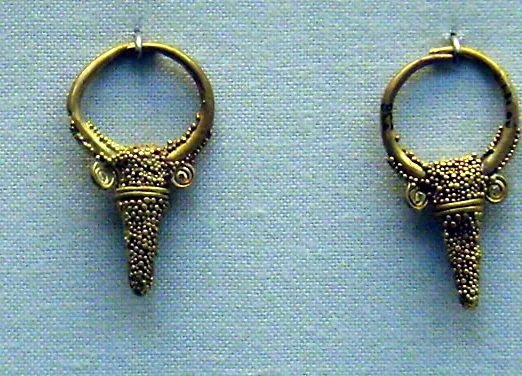
The richer tombs held small luxuries: core-formed glass bottles, gold funnels, an arm-shaped vessel of Red Lustrous ware, a jug of Cypriot Bucchero, and cylinder seals of stone.
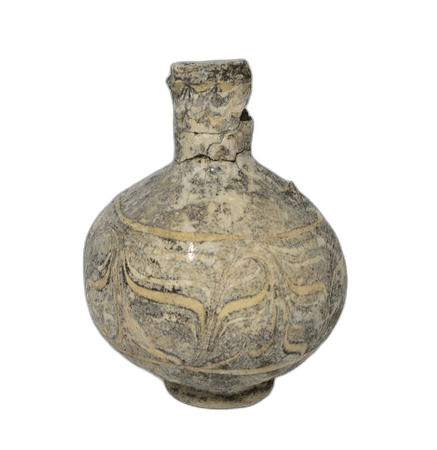 Feathered Glass BottleLate Bronze Age II · 1450–1200 BCBritish Museum
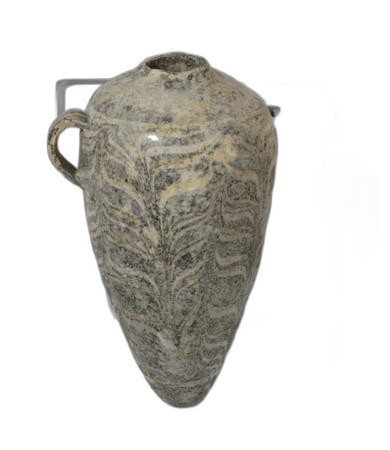 Glass Amphoriskos with Blue TrailsLate Bronze Age II · 1450–1200 BCBritish Museum
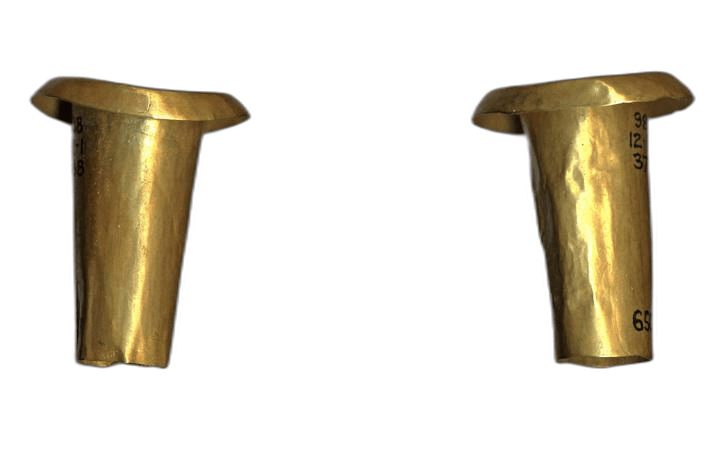 Gold Bottle FunnelLate Bronze Age II · 1450–1200 BCBritish Museum
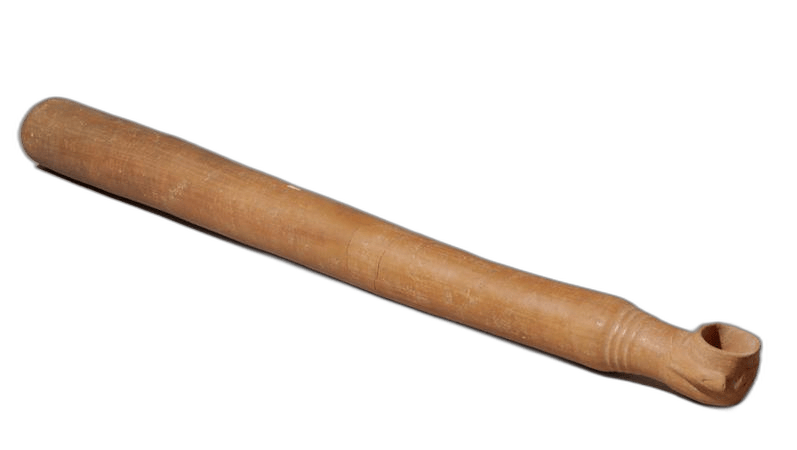 Red Lustrous Arm-shaped VesselLate Bronze Age II · 1450–1200 BCBritish Museum
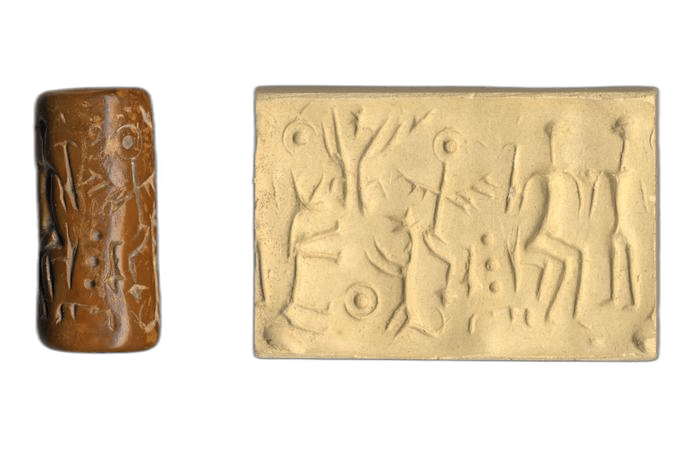 Sacred Tree Cylinder SealLate Bronze Age I · 1550–1375 BCBritish Museum
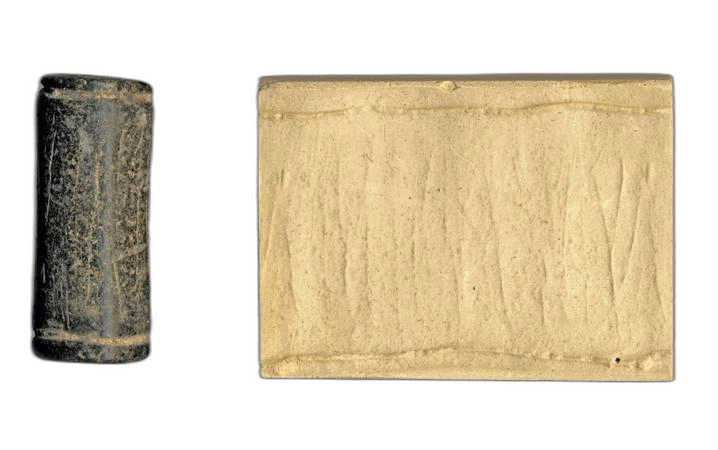 Cloritite Figurative Cylinder SealLate Bronze Age II · 1600–1200 BCBritish Museum
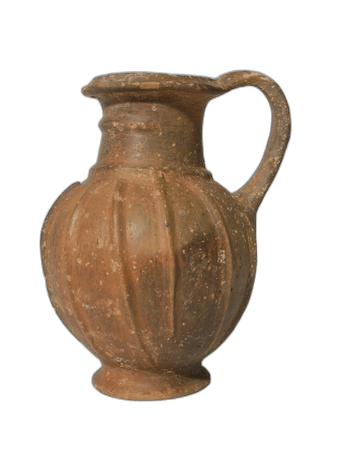 Cypriot Bucchero JugLate Bronze Age II · 1390–1100 BCBritish Museum
The end of the Bronze Age settlement
Vournes was "abandoned around 1200 BC without any sign of destruction" [3, p. 739]. Driessen notes that the Ashlar Building was abandoned before the end of LC IIC and that most of its contents were probably taken away [4, p. 194]. The surveys found no settlement anywhere in the lower valley after the Late Cypriot period until the Cypro-Archaic [8], and at Vournes there is "no indication of any occupation or use of the site for nearly 500 years" [3, p. 739].
The sanctuary in the ruins, about 750 to 200 BC
"From about 750 BC onwards, the central part of the deserted Late Cypriot II Ashlar Building was cleared out, refurbished, and used as a sanctuary by the population living on farms and in hamlets nearby" [2, p. 214]. Archaic settlement is known at Tsaroukkas, Aspres, Yialos, Vouni and Viklari, all within easy walking distance and most of them in sight of Vournes [2, p. 214; 8]. The shrine stayed in use, without any rebuilding that can be traced, until it was abandoned peacefully about 200 BC at the latest [2, p. 214].
The layout of the shrine
The worshippers used the Bronze Age walls. Only one new wall was built, to shut off the parts of the old building that were not part of the sacred enclosure [2, p. 214]. People came up to an open square on the south-east, facing the coast, and entered through a porch whose roof stood on a square pillar. A knee-high structure narrowing the doorway held complete Bichrome and Plain White juglets at its bottom. The excavators first took it for a child's cenotaph; Anja Ulbrich, who is publishing the sanctuary, reads it as a pit for offerings at the entrance, noting that no cenotaph is known from any of the more than 220 Cypriot sanctuaries of the period [2, p. 214].
Beyond lay an open court with a deep roofed porch along one side, a bench for offerings and an offering table made of two reused ashlar blocks. Two rooms were made at the back. One held the neck of a Bronze Age storage jar set in the floor as an offering pit [2, p. 214]; the other was the main cult room, with an altar, a sunken jar, ash scoops and lamps [2, p. 215].
Offerings and gods
The sanctuary has produced some 60,000 sherds and about 50 more complete vessels, mostly Cypriot, with about 70 limestone statuettes and 35 terracottas [2, p. 215]. The pottery is mostly Archaic, with less of the Classical and Hellenistic periods, and mostly open shapes such as bowls [2, p. 215]. Most of the statuettes date to the 4th and 3rd centuries BC. Among them are a goddess with a crown of plants, a Cypriot Pan with goat's horns and pan-pipes, a votary in a Macedonian hat carrying a duck or goose, a woman touching her breast, and a terracotta cockerel [2, pp. 215–216]. Ulbrich reads the images as those of a divine couple, a male god of herds and plants with a female partner, who granted the fertility of fields, pastures and livestock [3, p. 746; 2, p. 216]. The pottery is closest to that of Amathus, so the sanctuary probably lay in the territory of that kingdom, perhaps near its border with Kition [3, p. 746].
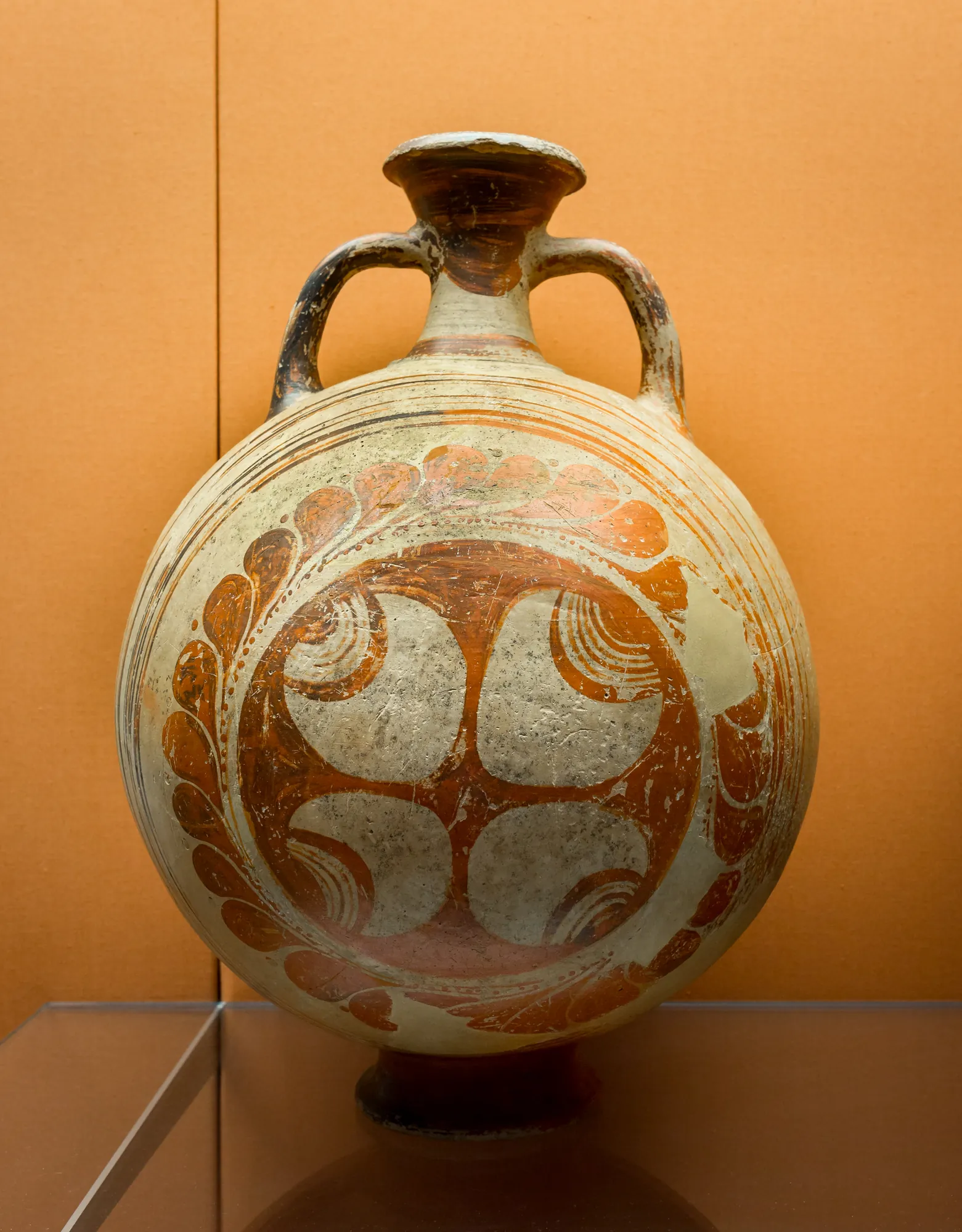
Elsewhere in the valley, survey at Aspres found a large Late Cypriot building reused in the early first millennium BC, and many basket-handled transport amphorae, perhaps from workshops at Amathus [7]. At Yialos on the coast a limestone statue of the Egyptian god Bes was found in 1977 [23; 8]. Pottery said to come from Maroni is also in older collections, such as the two kraters below from the Cesnola collection, whose findspots cannot be checked.
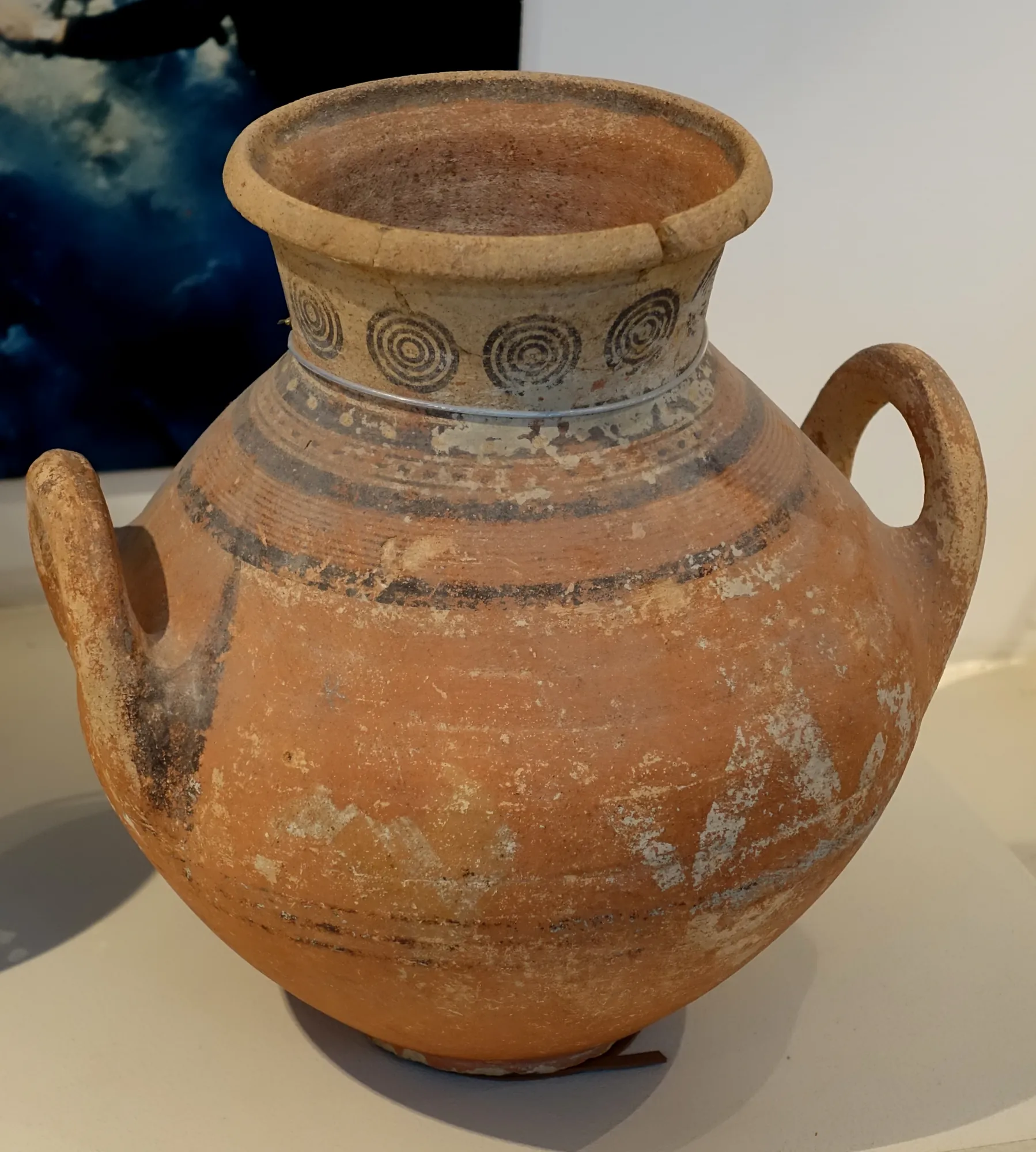
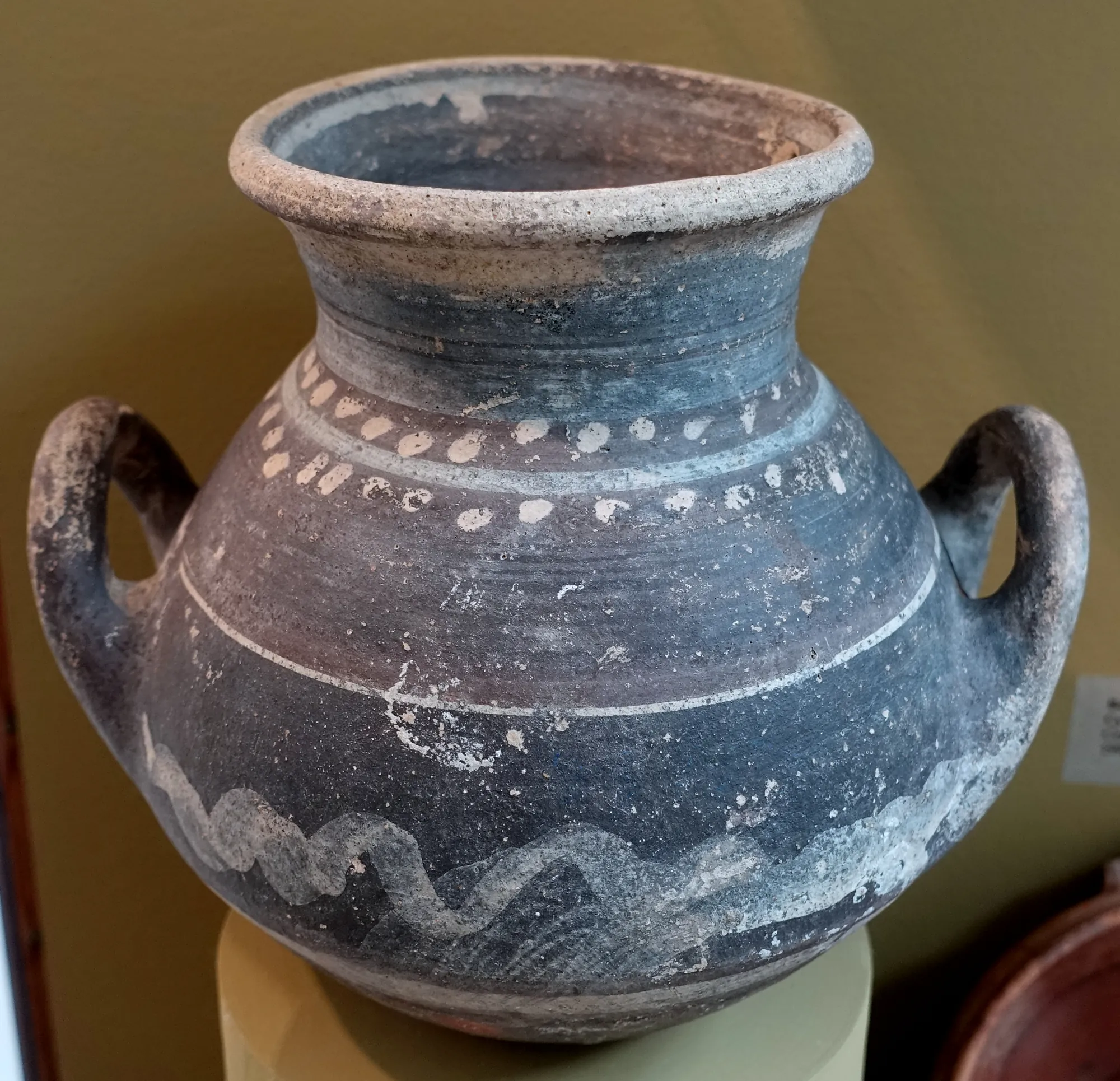
The valley in Roman times
After the sanctuary was abandoned, only a few finds of the 1st centuries BC and AD come from Vournes and Aspres [8]. In the late 6th and early 7th centuries AD a church stood at Maroni-Petrera, about 1 km south-east of the modern village. It was bulldozed in 1991 to clear the field, and the survey team carried out salvage excavations there until 1997 [8].
Visiting
The sites lie in farmland near Maroni village, and we know of no arrangements for visitors. Finds from the 1897 excavations are in the British Museum, London.
Finds from Maroni
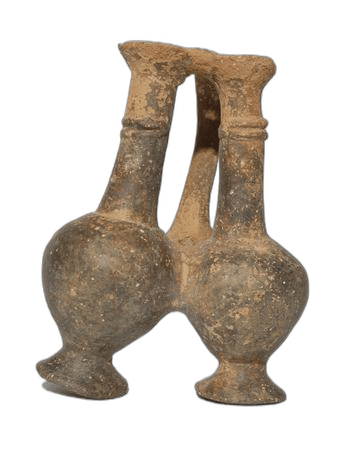 Base Ring Double JugletLate Bronze Age I · 1600–1450 BCBritish Museum
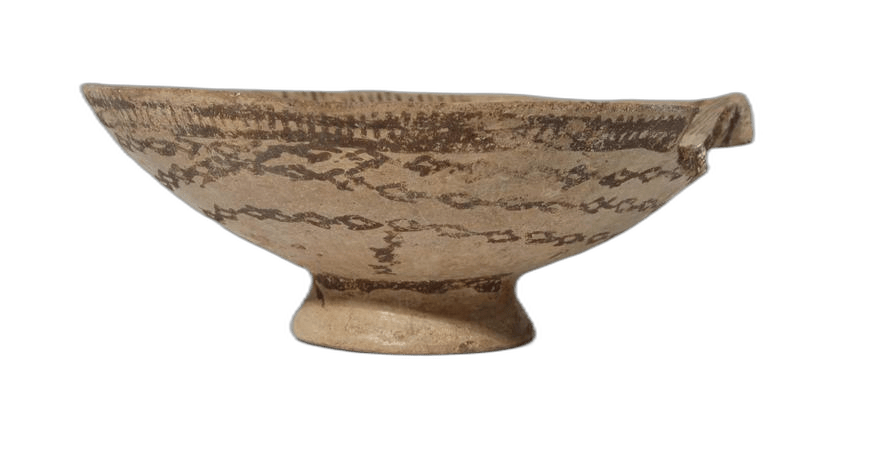 White Slip Bowl with Brown PaintLate Bronze Age II · 1425–1320 BCBritish Museum
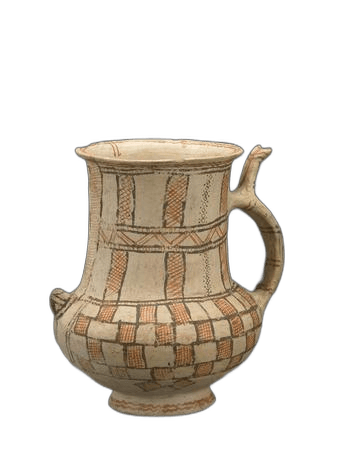 White Slip TankardLate Bronze Age I · 1650–1450 BCBritish Museum
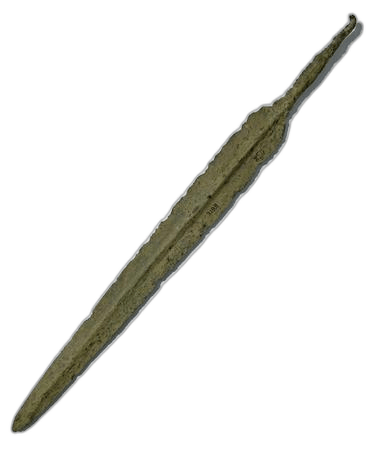 Bronze Angular Sword BladeMiddle Bronze Age III · 1750–1450 BCBritish Museum
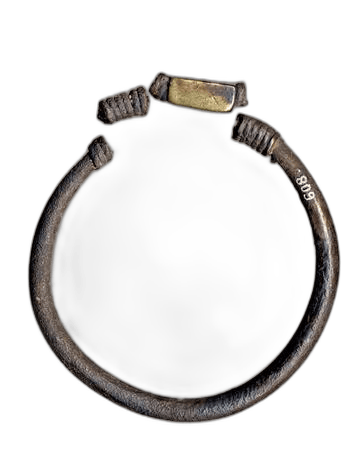 Twisted Silver and Gold BraceletLate Bronze Age I · 1650–1200 BCBritish Museum
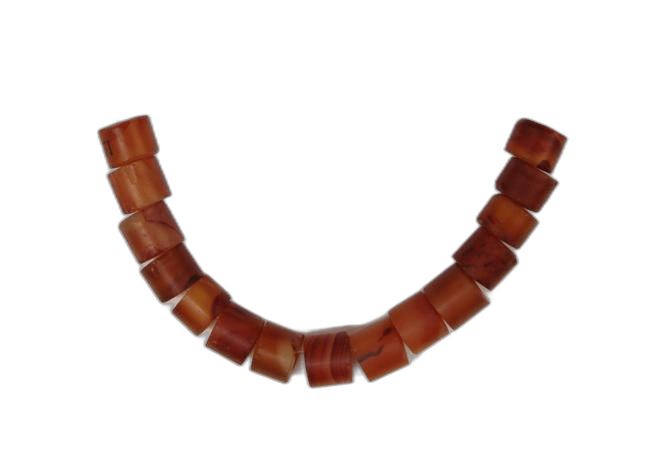 Cornelian Bead NecklaceLate Bronze Age I · 1650–1050 BCBritish Museum
- Base-Ring Bull RhytonLate Bronze Age II · 1450–1150 BCBritish Museum
- Base Ring Bull AskosLate Bronze Age II · 1425–1190 BCBritish Museum
- Base Ring Astarte FigurineLate Bronze Age II · 1450–1200 BCBritish Museum
- White Painted Owl RattleLate Bronze Age I · 1650–1500 BCBritish Museum
- Feathered Glass BottleLate Bronze Age II · 1450–1200 BCBritish Museum
- Bull figurine, broken from a vaseMiddle Bronze Age I · 2000–1650 BCAshmolean Museum
In the Drakopoulos collection
Pieces in the Drakopoulos collection of kinds found at this site. None of them comes from the site.
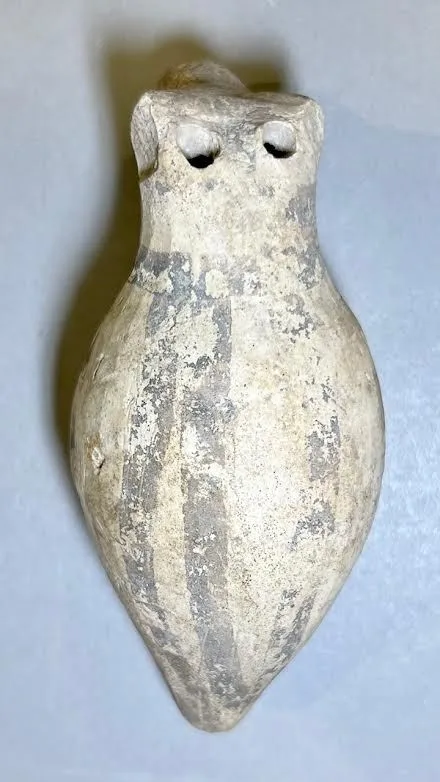 White Painted VI Owl-Headed RattleLate Bronze Age I · 1650–1300 BC
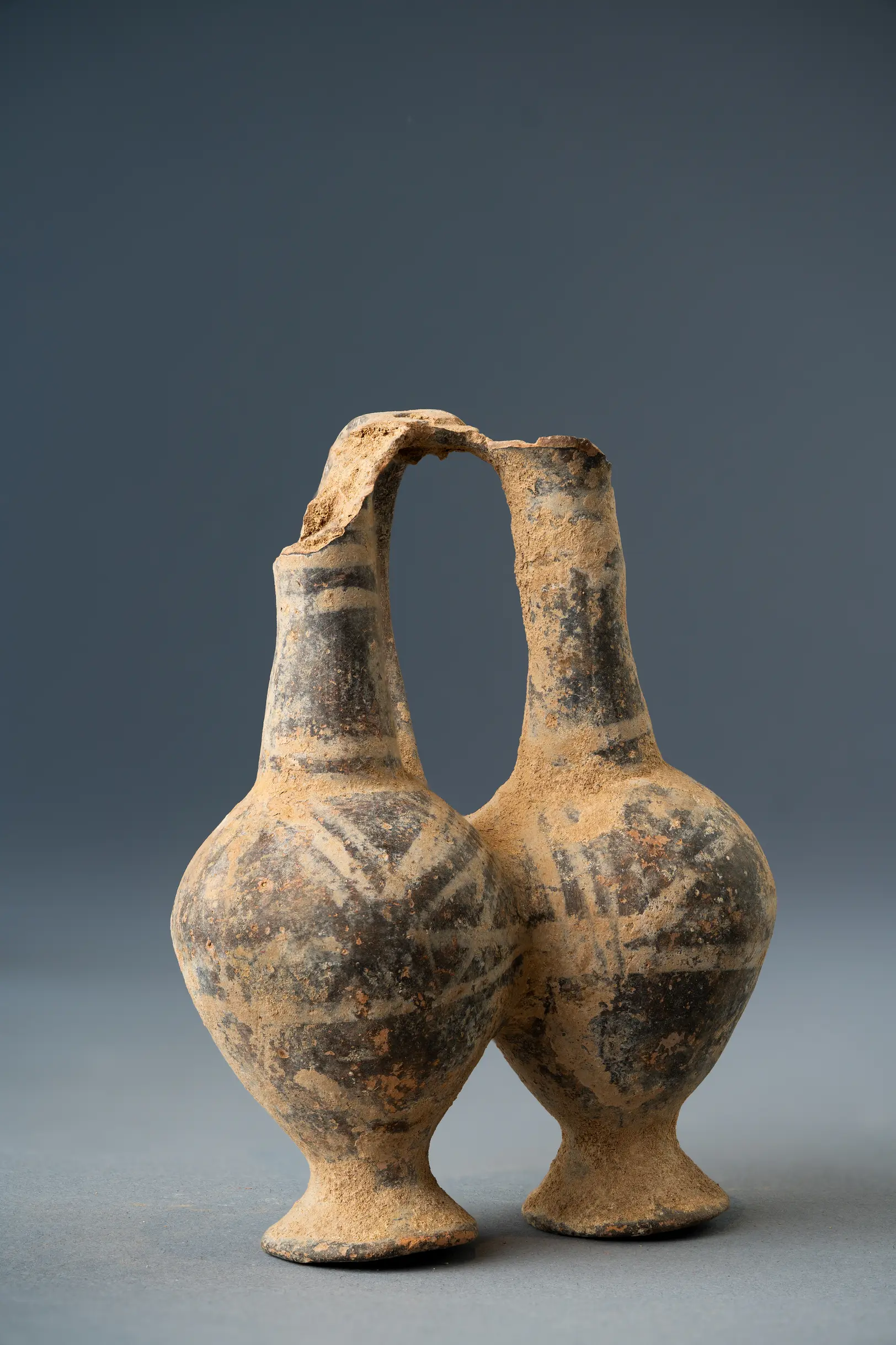 Base Ring II Double Juglet with White-Painted DecorationLate Bronze Age II · 1450–1200 BC
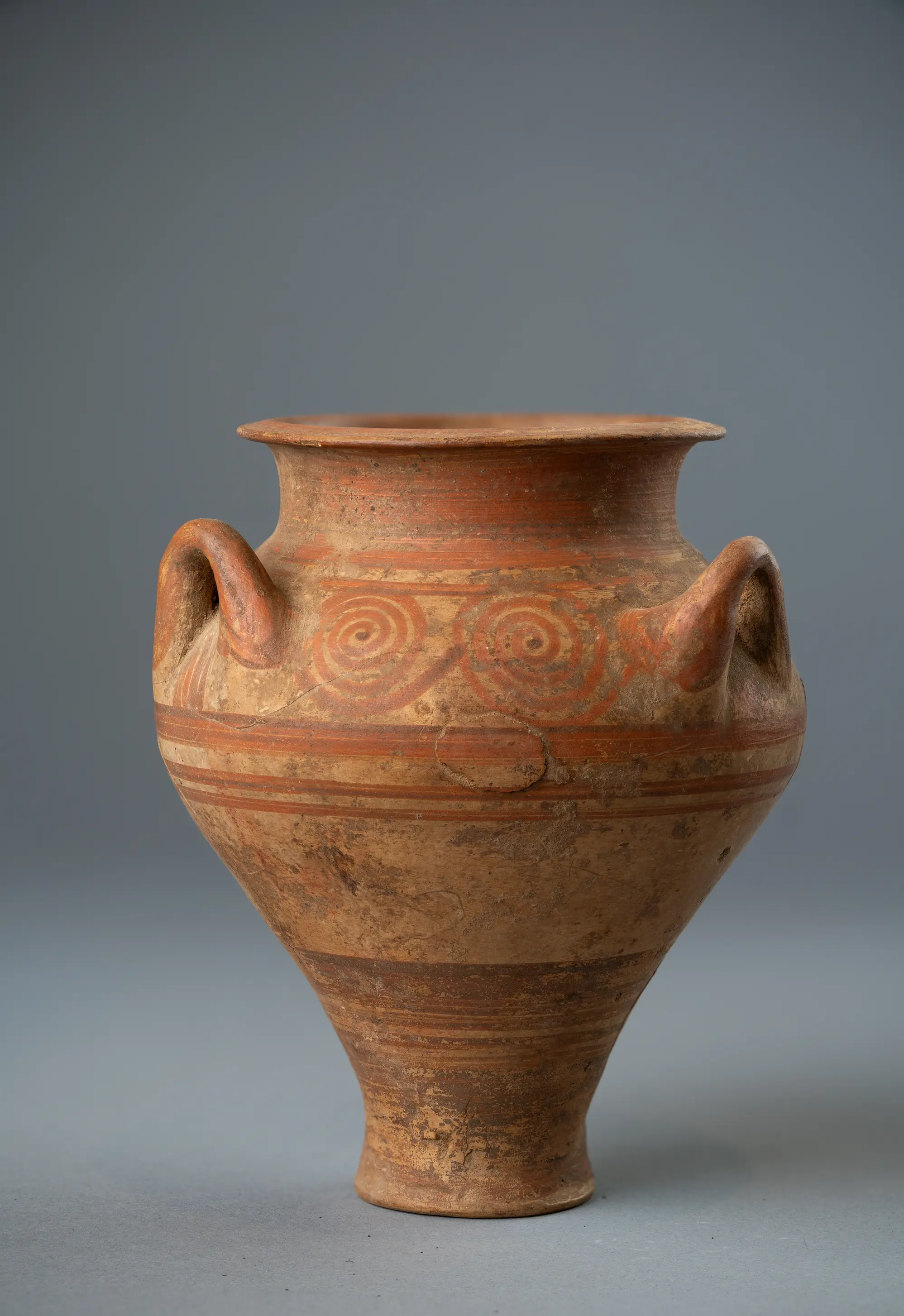 Cypriot Three-Handled Jar in the Mycenaean Style with Running SpiralsLate Bronze Age II · 1375–1300 BC
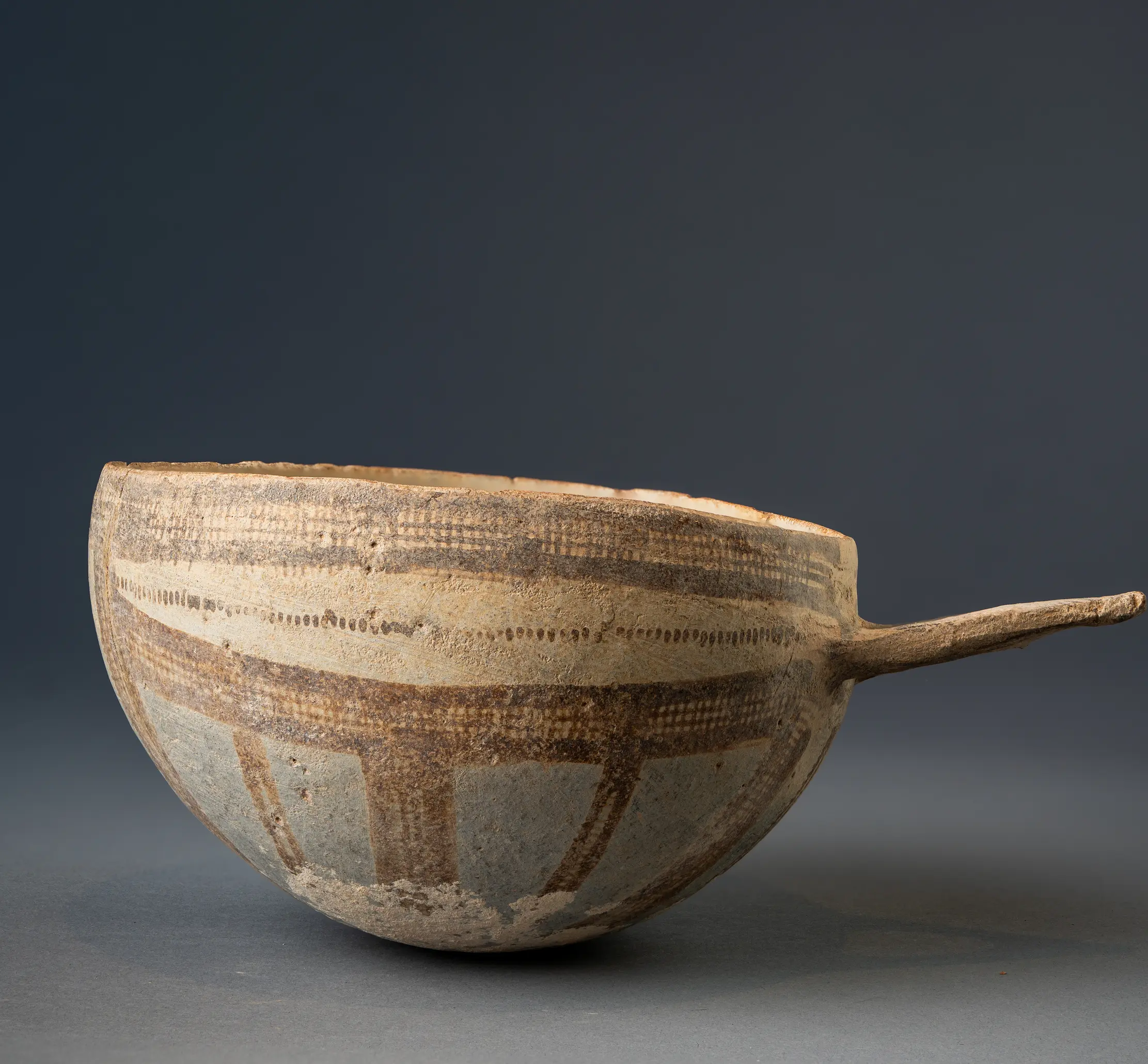 White Slip II Hemispherical Bowl with Wishbone HandleLate Bronze Age II · 1450–1200 BC
Nearby sites
- Psematismenos-Trelloukkas3.7 km
- Khirokitia-Vouni6.5 km
- Khirokitia6.6 km
- Kalavasos-Ayios Dhimitrios7.2 km
- Kalavasos-Tenta7.2 km
- Pyrgos-Mavroraki19 km
Straight-line distances.
References
- 1.Cadogan, G., Driessen, J., & Ferrara, S. (2009). Four Cypro-Minoan inscriptions from Maroni-Vournes. Studi Micenei ed Egeo-Anatolici, 51, 145–164.
- 2.Ulbrich, A. (2015). Maroni-Vournes beyond the Bronze Age: Investigating an Archaic to Hellenistic shrine. In C. F. Macdonald, E. Hatzaki & S. Andreou (Eds.), The Great Islands: Studies of Crete and Cyprus Presented to Gerald Cadogan, 214–218. Kapon Editions.
- 3.Ulbrich, A. (2011). The Archaic to early Hellenistic sanctuary at Maroni-Vournes. In A. Demetriou (Ed.), Proceedings of the Fourth International Cyprological Congress, Lefkosia, 29 April–3 May 2008, vol. A', 739–747. Society of Cypriot Studies.
- 4.Driessen, J. (2015). A power building at Maroni-Vournes. In C. F. Macdonald, E. Hatzaki & S. Andreou (Eds.), The Great Islands: Studies of Crete and Cyprus Presented to Gerald Cadogan, 192–197. Kapon Editions.
- 5.Manning, S. W., Monks, S. J., Steel, L., Ribeiro, E. C., & Weinstein, J. M. (1998). Late Cypriot tombs at Maroni Tsaroukkas, Cyprus. Annual of the British School at Athens, 93, 297–351.
- 6.Atkins, C., & Manning, S. W. (2022). Re-Survey of the Anchorage at Maroni Tsaroukkas, Cyprus: Defining and Viewing a Late Bronze Age Coastscape. Oxford Journal of Archaeology, 41, 278–302.
- 7.Kearns, C. (2022). The Rural Landscapes of Archaic Cyprus: An Archaeology of Environmental and Social Change. Cambridge University Press.
- 8.Manning, S. W., Manning, A., Tomber, R., Sewell, D. A., Monks, S. J., Ponting, M. J., & Ribeiro, E. C. (2002). The Late Roman Church at Maroni Petrera: Survey and salvage excavations 1990-1997, and other traces of Roman remains in the lower Maroni Valley, Cyprus. A. G. Leventis Foundation.
- 9.Andreou, G. M., Georgiou, A., Urban, T., Fisher, K. D., Manning, S. W., & Sewell, D. A. (2019). Reconsidering coastal archaeological sites in Late Bronze Age Cyprus: Tochni-Lakkia and the south-central coastscape. Bulletin of the American Schools of Oriental Research, 382, 33–69.
- 10.Kiely, T. (2012). The British Museum Excavations on Cyprus in the 1890s. In D. Pilides & N. Papadimitriou (Eds.), Ancient Cyprus: Cultures in Dialogue. Department of Antiquities, Cyprus.
- 11.Tatton-Brown, V. (Ed.). (2001). Cyprus in the 19th Century AD: Fact, Fancy and Fiction (Papers of the 22nd British Museum Classical Colloquium, December 1998). Oxbow Books.
- 12.Johnson, J. (1980). Maroni de Chypre (Studies in Mediterranean Archaeology 59). P. Åström.
- 13.Crouwel, J. H., & Morris, C. E. (1987). An Early Mycenaean fish krater from Maroni, Cyprus. Annual of the British School at Athens, 82, 37–46.
- 14.Cadogan, G. (1983). Maroni I. Report of the Department of Antiquities, Cyprus, 153–162.
- 15.Cadogan, G. (2011). Bronze Age Maroni: a review. Proceedings of the Fourth Cypriological Congress, Nicosia, 397–404.
- 16.Manning, S. W., Bolger, D. L., Swinton, A., & Ponting, M. J. (1992). Maroni Valley Archaeological Survey Project: preliminary report on the 1990-1991 seasons. Report of the Department of Antiquities, Cyprus, 271–284.
- 17.Manning, S. W., Collon, D., Conwell, D. H., Jansen, H.-G., Sewell, D., Steel, L., & Swinton, A. (1994). Tsaroukkas, Mycenaeans and Trade Project: preliminary report on the 1993 season. Report of the Department of Antiquities, Cyprus, 83–106.
- 18.Manning, S. W., Sewell, D., & Herscher, E. (2002). Late Cypriot IA maritime trade in action: Underwater survey at Maroni Tsaroukkas and the contemporary east Mediterranean trading system. Annual of the British School at Athens, 97, 97–162.
- 19.Manning, S. W., Andreou, G.-M., Fisher, K. D., Gerard-Little, P., Kearns, C., Leon, J. F., Sewell, D. A., & Urban, T. M. (2014). Becoming urban. Investigating the anatomy of the Late Bronze Age complex, Maroni, Cyprus. Journal of Mediterranean Archaeology, 27, 3–32.
- 20.Manning, S. W., Weninger, B., South, A. K., Kling, B., Kuniholm, P. I., Muhly, J. D., Hadjisavvas, S., Sewell, D. A., & Cadogan, G. (2001). Absolute age range of the Late Cypriot IIC period on Cyprus. Antiquity, 75, 328–340.
- 21.Manning, S. W. (1998). Changing Pasts and Socio-Political Cognition in Late Bronze Age Cyprus. World Archaeology, 30.
- 22.Doonan, R. C., Cadogan, G., & Sewell, D. (2012). Standing on ceremony: the metallurgical finds from Maroni-Vournes, Cyprus. In V. Kassianidou & G. Papasavvas (Eds.), Eastern Mediterranean Metallurgy and Metalwork in the Second Millennium BC, 48–57. Oxbow Books.
- 23.Karageorghis, V. (1978). Chronique des fouilles et découvertes archéologiques à Chypre en 1977. Bulletin de correspondance hellénique, 102.