
Late Bronze Age I
White Painted VI Owl-Headed Rattle
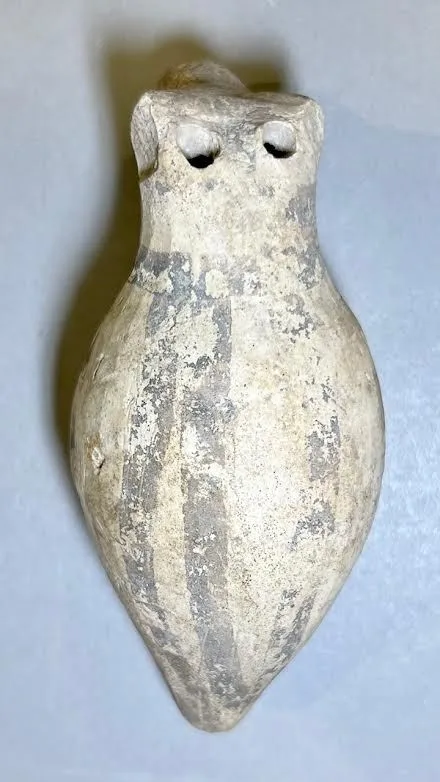
Hollow Late Cypriot clay rattle in the form of an owl, with pierced eyes, a pointed base and grey-black painted stripes on a cream slip.
Date
1650 - 1300 BC
Accession No.
STA-BA-005
Collection
Alexis Drakopoulos
Late Cypriot I–II, c. 1650–1300 BCE · White Painted VI ware · Handmade
A hollow, closed clay rattle modelled as a bird. The ovoid body swells at mid-height and narrows to a blunt point at the base. A short neck carries a flat-topped head, squared off at the front, with a slight point at each upper corner for the ears. Two round holes pierced side by side through the face make the eyes. A lump rising behind the crown is probably the root of the handle, seen end-on. The surface is a chalky cream slip, painted in matt grey-black: a band at the base of the neck and broad stripes that hang from it down the body towards the point. The paint is worn and patchy, and the slip is rubbed through in places, with a small chip on the left flank.
Commentary
The object belongs to a small and distinctive Late Cypriot class that Daisy-Kate Knox catalogues as type OZV, the "owl rattle" [1]. The type is defined by a hollow ovoid body with a pointed base, a short neck, a flat head with pointed ears and two pierced eyes, a strap handle from the back of the head, and loose pebbles sealed inside [1]. The body copies the small White Shaved dipper juglet, which was made around Enkomi and exported in quantity to the southern Levant [1, 5]. Most scholars classify the fabric as White Painted VI, although some museums label the same objects White Shaved [1]. Paint is normally limited to a band at the neck and pendant stripes on the body, which is exactly the scheme here [1]. The standard type drawing is in the Swedish Cyprus Expedition volume on Late Cypriot pottery [3].
Dating is less settled than the type. The British Museum dates its rattle from Enkomi Tomb 83A to Late Cypriot I [2], and the Metropolitan Museum and a published group of three rattles in Athens are catalogued the same way. Knox dates the type as a whole to "LC IIA–C?", with her own question mark [1]. A range from Late Cypriot I into Late Cypriot II covers both positions. Knox records 45 examples, of which 27 have no find-spot. Seventeen of the 18 with a known context come from tombs, mostly in eastern Cyprus, above all at Enkomi, and a few from tombs in the Levant [1].
The "owl" is a modern reading of the flat face, pierced eyes and ear points. The earliest descriptions call the head only "apparently" bird-like [1]. The old identification as a child's toy is now widely doubted. The fragile clay could not have stood up to hard play, and the tomb contexts suggest the sound had a funerary or protective purpose [1, 2]. Katerina Kolotourou counts clay rattles as the earliest musical instruments known from the island [4].
The best visual parallel is a British Museum rattle (1982,0726.12; H. 12.2 cm), which has the same grey-black stripes on a cream ground. The reference example from a documented tomb is British Museum 1897,0401.1178 (Walters C323), from Enkomi-Ayios Iakovos Tomb 83A [2]. A smaller rattle in the Michael C. Carlos Museum, Emory University (2004.054.036; 9.5 cm) is dated Late Cypriot IB.
Two points need checking on the object. First, whether it still rattles, which would confirm that the pebbles are sealed in a closed body. Second, the form of the handle, which the photograph shows only end-on. Its height has not been recorded.
References
- 1.Knox, D.-K. (2012) Making Sense of Figurines in Bronze Age Cyprus: A Comprehensive Analysis of Cypriot Ceramic Figurative Material from EC I–LC IIIA (c. 2300 BC–c. 1100 BC). PhD thesis, University of Manchester, pp. 167–171, 204–206, 302.
- 2.Pilides, D. and Papadimitriou, N. (eds) (2012) Ancient Cyprus: Cultures in Dialogue. Nicosia: Department of Antiquities, Cyprus, pp. 210–211, cat. 182.
- 3.Åström, P. (1972) The Swedish Cyprus Expedition IV:1C. The Late Cypriote Bronze Age: Architecture and Pottery. Lund: Swedish Cyprus Expedition, fig. XLI.14.
- 4.Kolotourou, K. (2005) Music and Cult: The Significance of Percussion and the Cypriote Connection. In Karageorghis, V., Matthäus, H. and Rogge, S. (eds), Cyprus: Religion and Society from the Late Bronze Age to the End of the Archaic Period. Möhnesee: Bibliopolis, p. 185.
- 5.Gittlen, B.M. (1981) The Cultural and Chronological Implications of the Cypro-Palestinian Trade during the Late Bronze Age. Bulletin of the American Schools of Oriental Research 241, pp. 49–59.
More from the Catalogue
Browse related objects
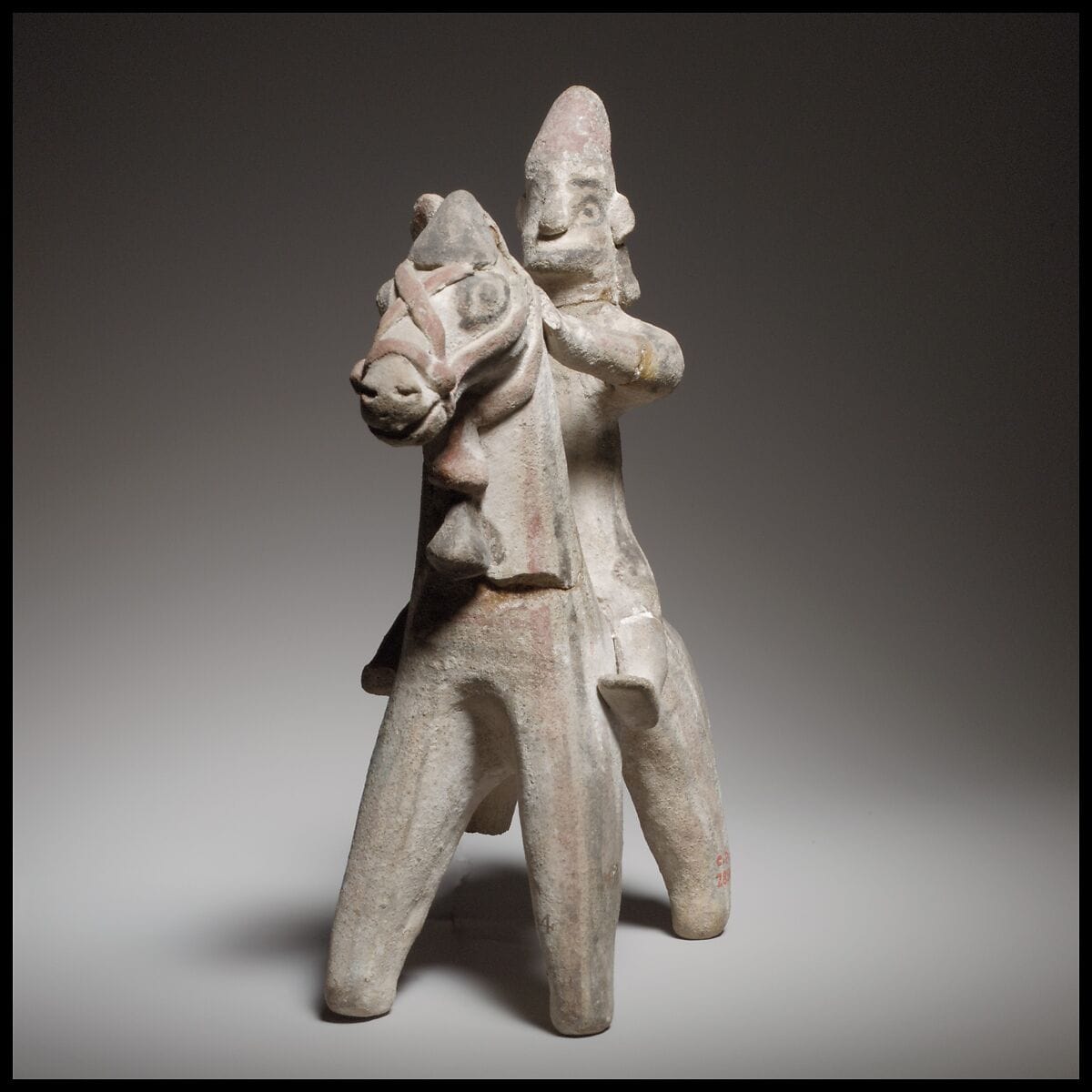
Horse and rider figurine
Archaic II
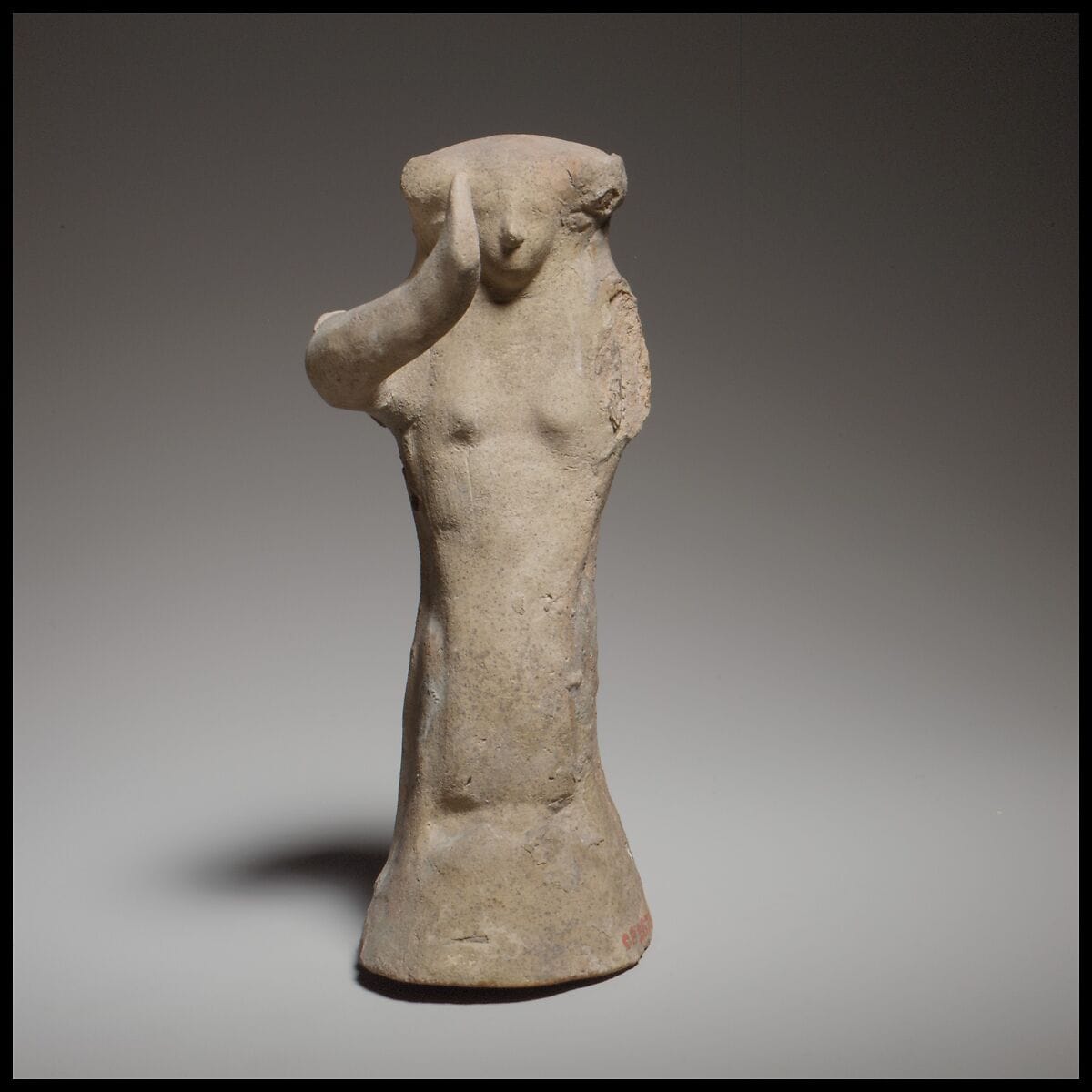
Seated female figurine of the dea gravida type
Archaic II
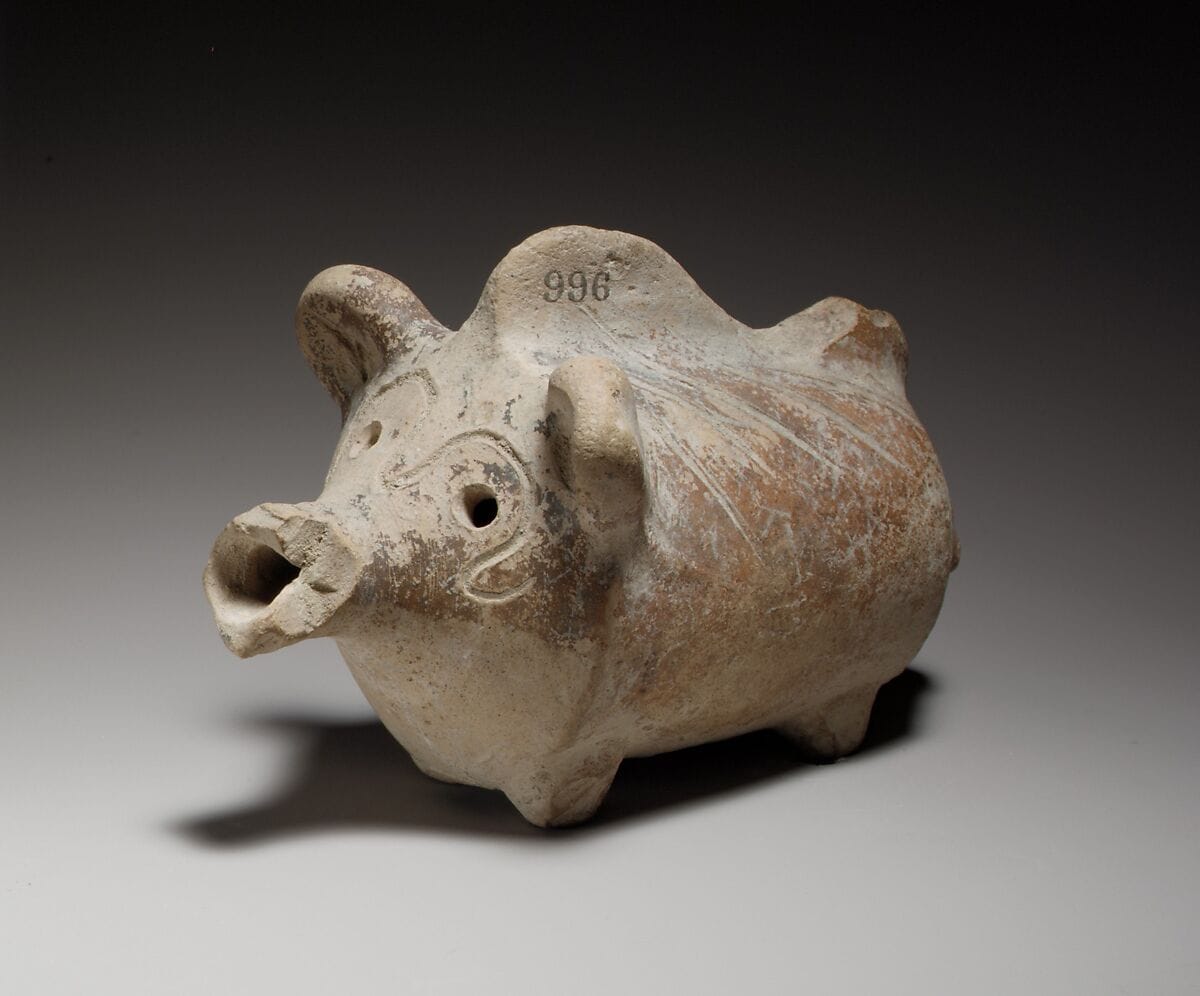
Terracotta rattle in the form of a pig
Hellenistic
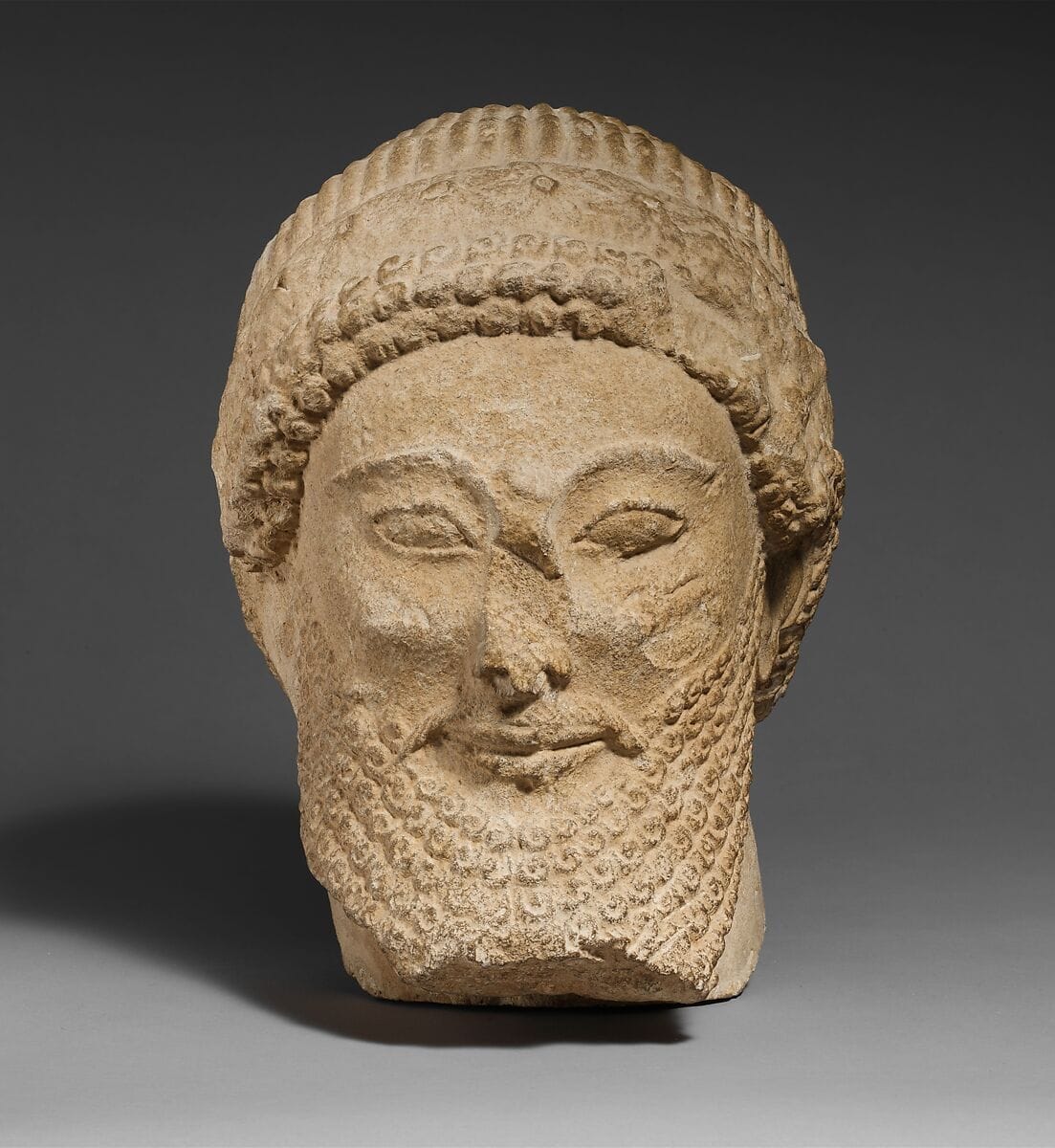
Limestone head of a bearded male with a wreath of flowers
Archaic II
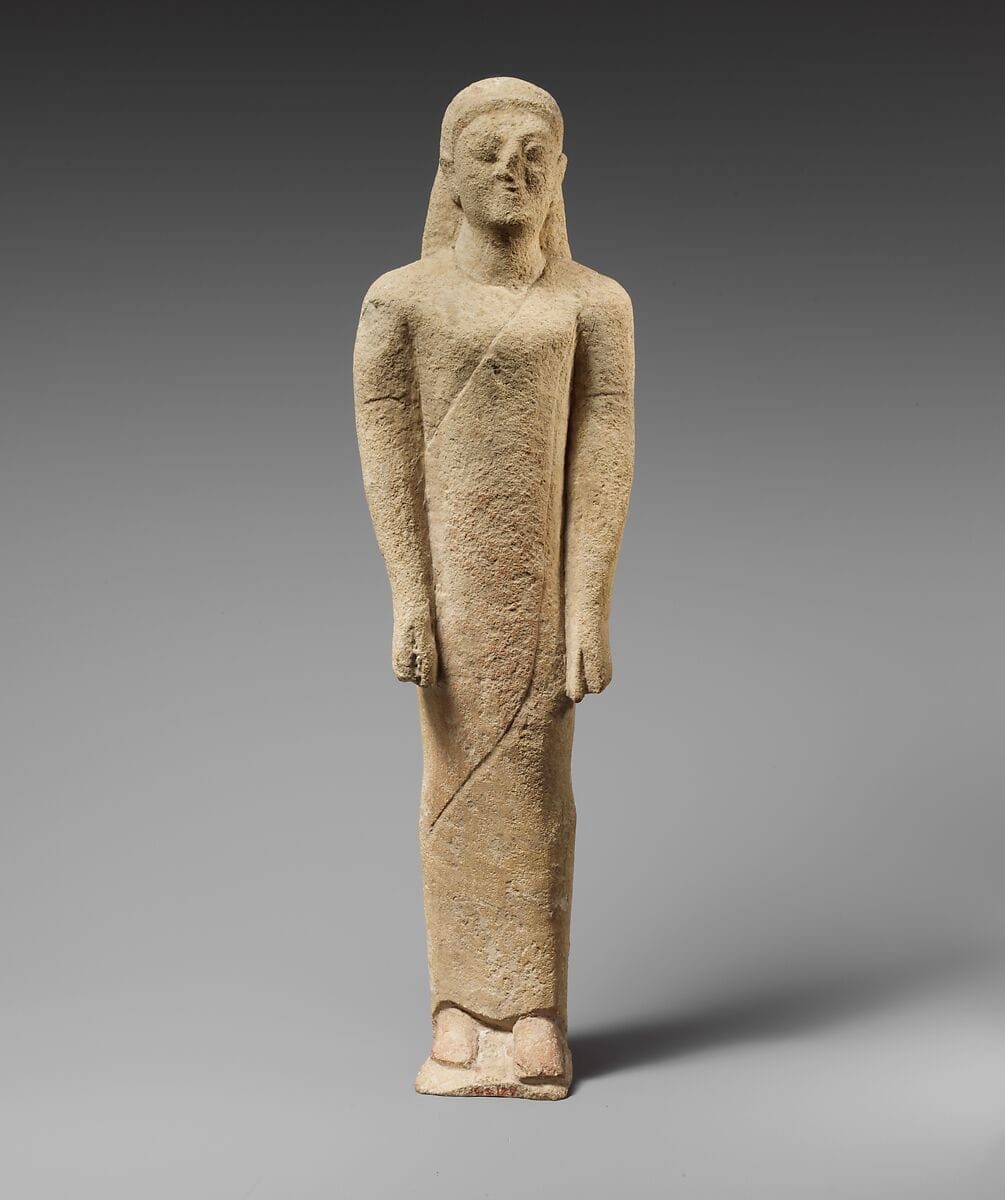
Limestone statuette of a beardless male votary in Greek dress
Archaic II
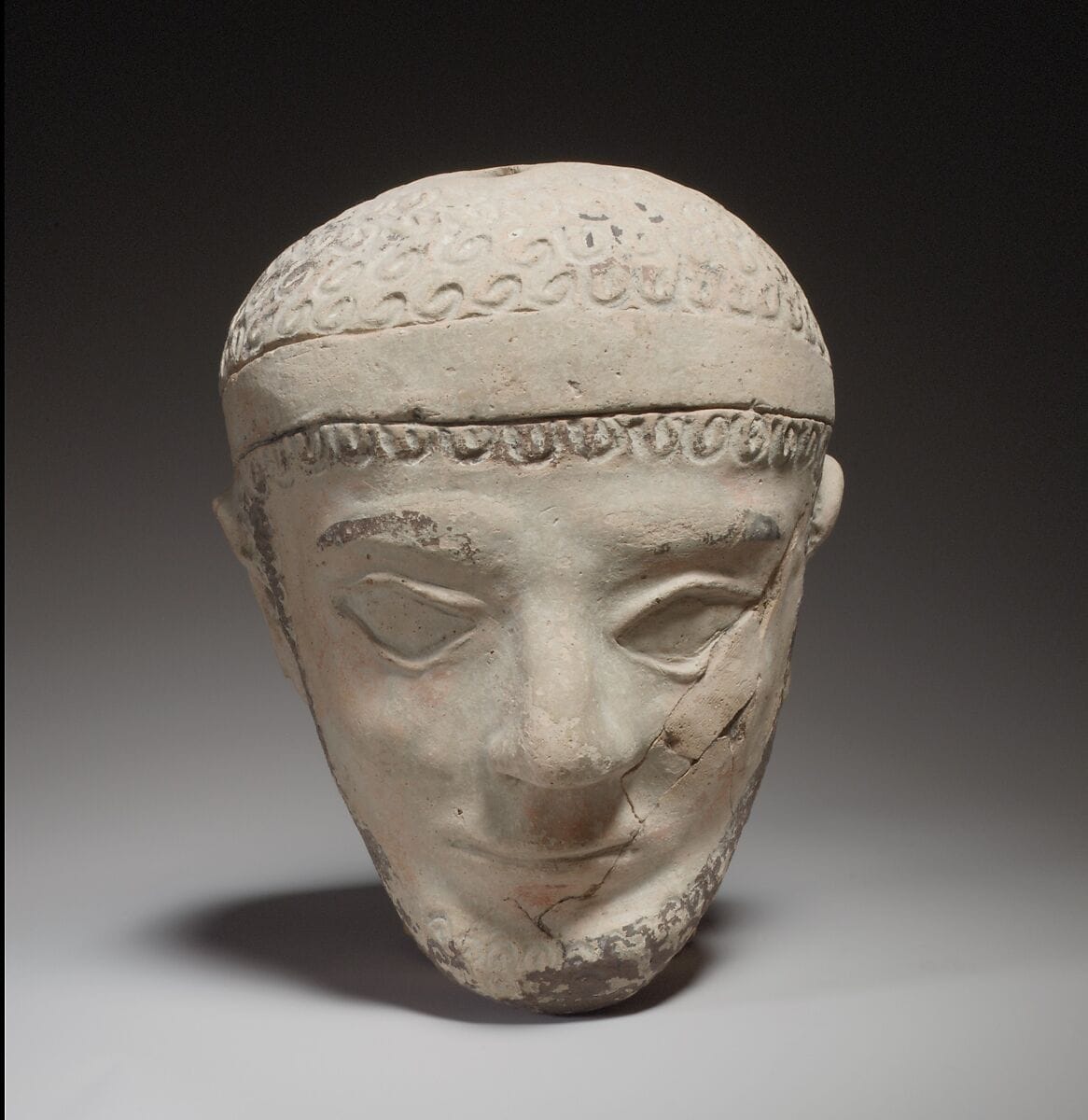
Terracotta head of a man
Archaic II
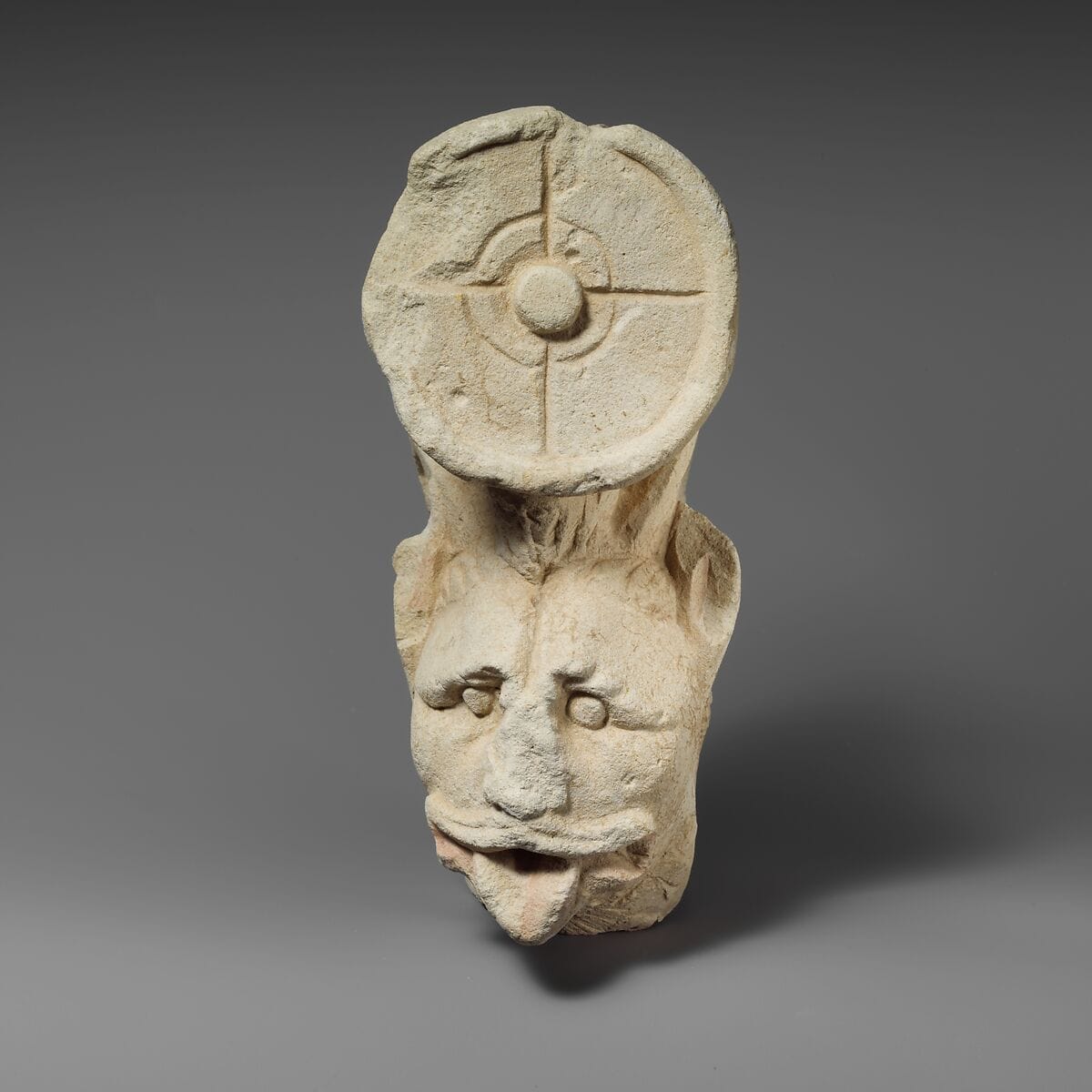
Fragment of a limestone throne (?) with the head of a horned lion
Roman
Head of a comic figurine
Hellenistic
Limestone statuette of a female votary of the kore type
Archaic II
Limestone head of Apollo
Hellenistic
Standing female flute player
Classical
Standing female figurine
Archaic II
Horse's head with harness
Archaic II
Limestone statuette of a mourning siren
Hellenistic
Standing female figurine
Archaic II
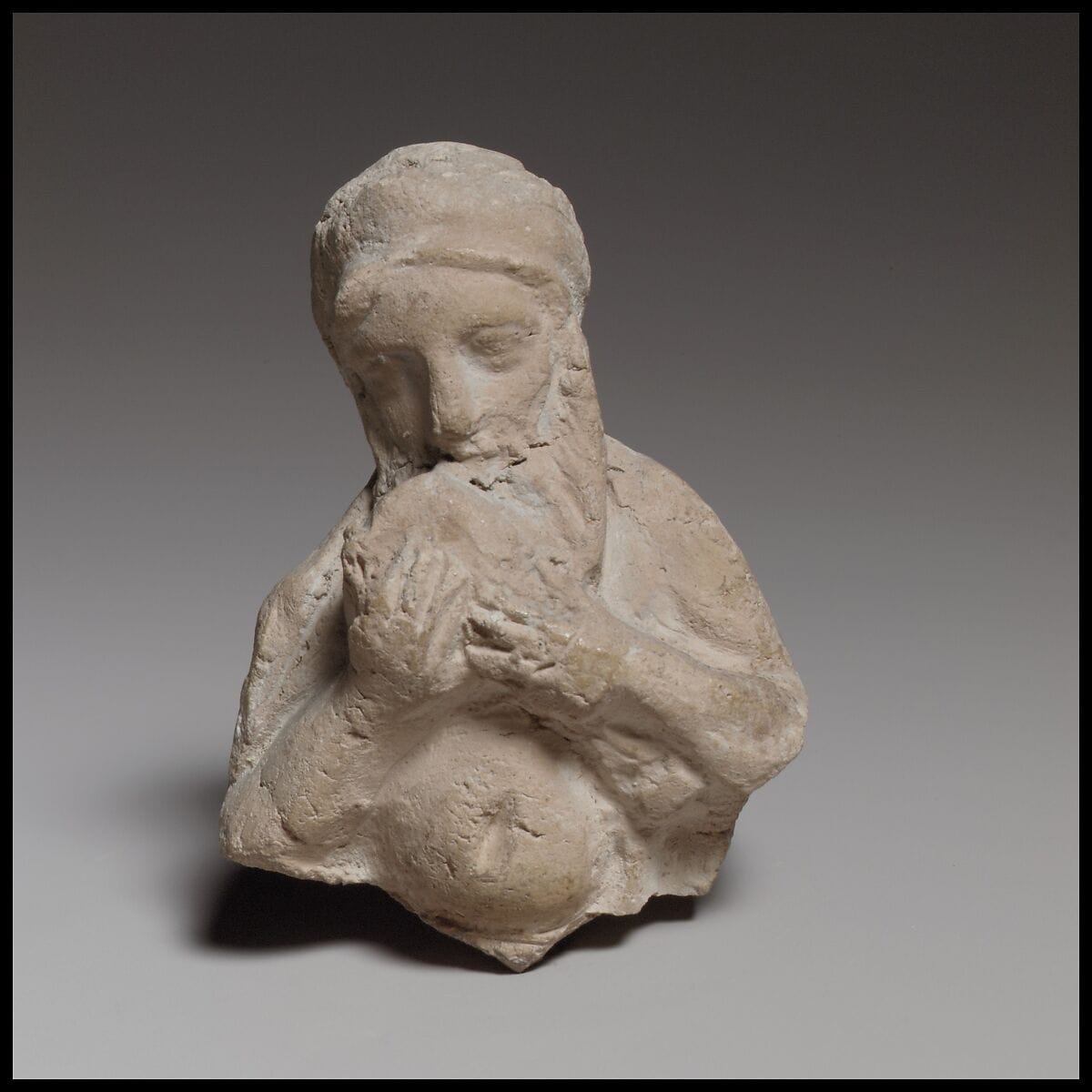
Terracotta statuette of Silenos (?) drinking
Hellenistic
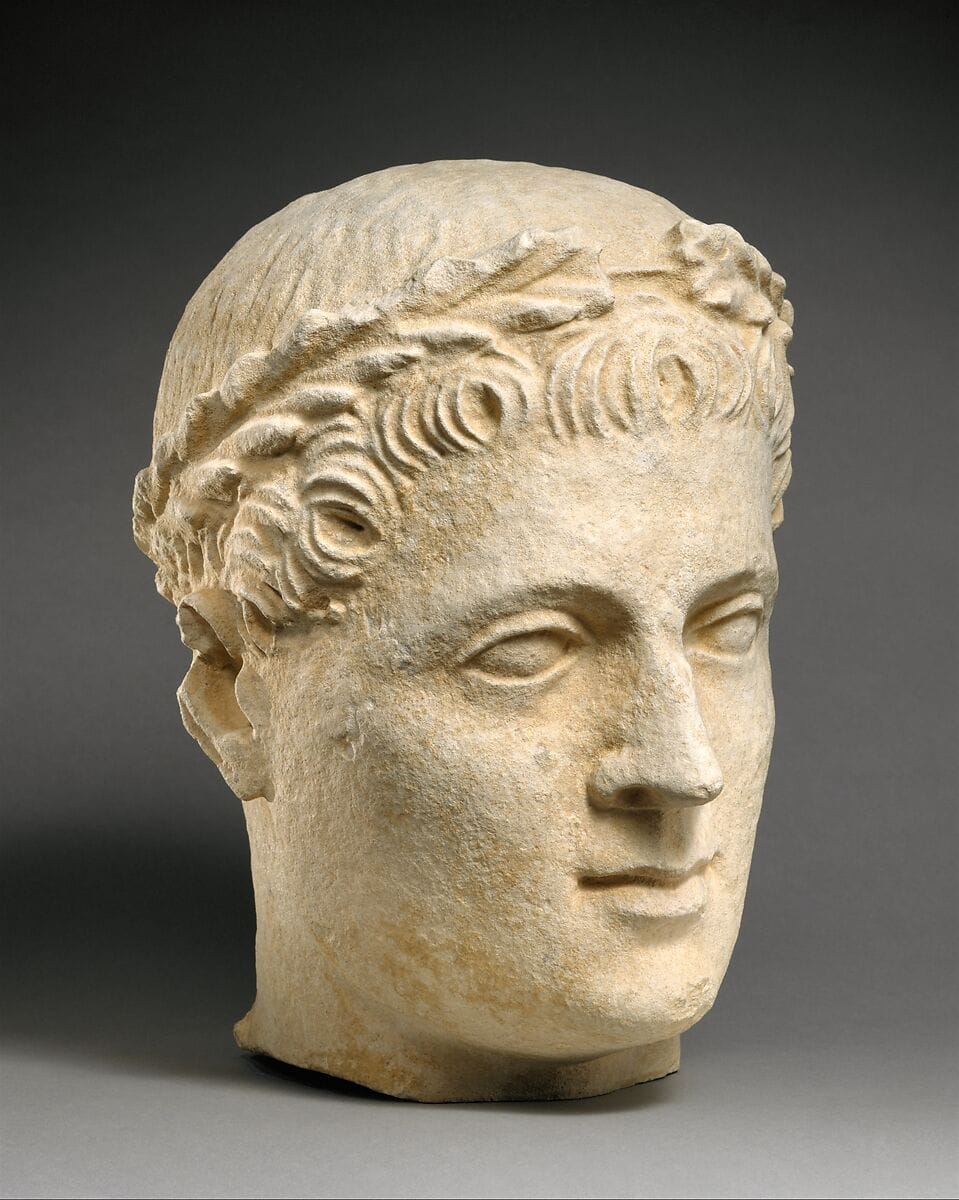
Limestone head of beardless male votary with wreath of leaves
Hellenistic
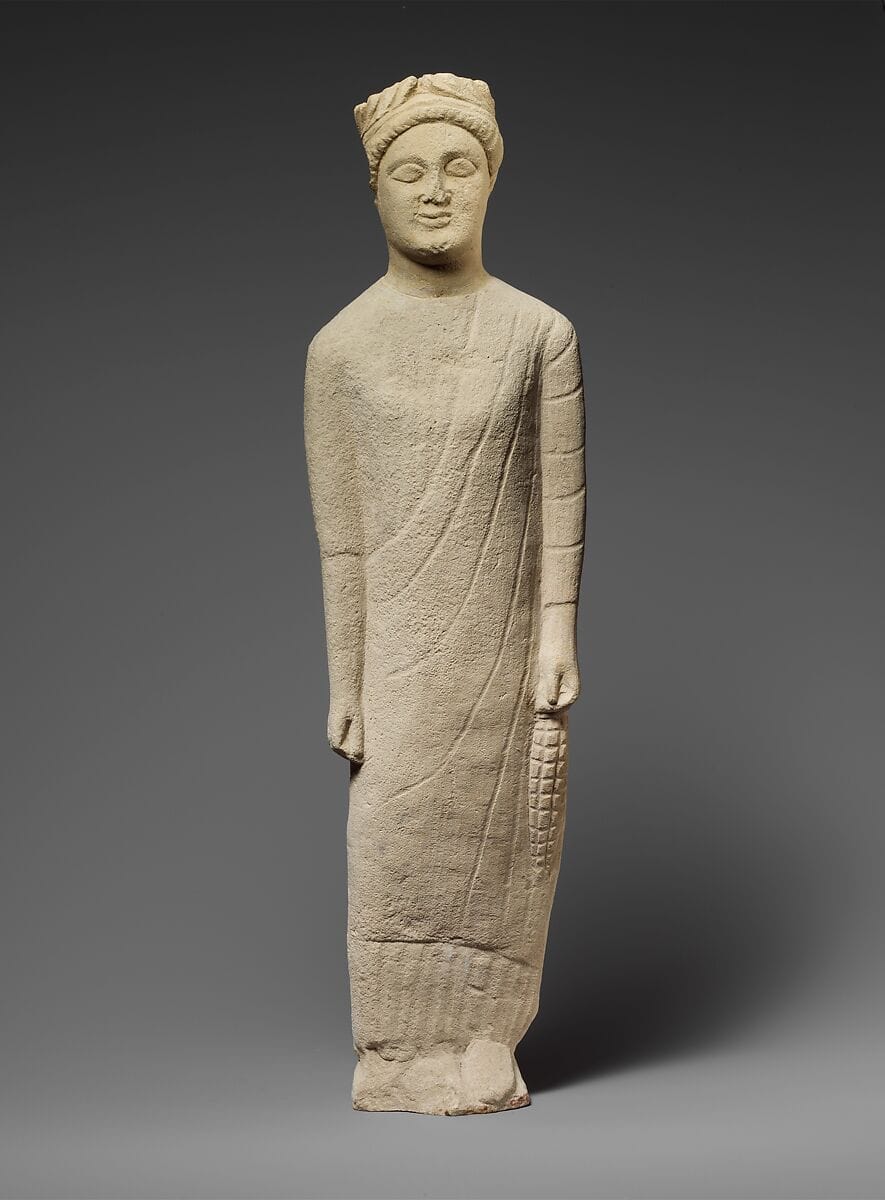
Limestone statuette of a beardless male votary with a wreath of leaves
Classical