
Reading path
Shapes and motifs
Once the wares are familiar, the next step is form and decoration, which cut across the ware names. This route begins with the shape families, from the bowl made without a break since the Neolithic to the painted jugs of the kingdoms. It then turns to the motifs, from Middle Bronze Age cross lines to the single floating figures of the Iron Age free-field style.
Intermediate · 10 steps · 1 hr 50 min
Start reading →Step 1 · Pottery · 4 min read
Pottery Shapes
Pottery classified by vessel form, whatever the ware, in ten shape families from bowls and jugs to composite vessels.
The classification of Cypriot pottery by vessel form rather than ware, grouped into ten shape families from bowls and jugs to composite vessels.
Step 2 · Pottery · 14 min read
Bowls
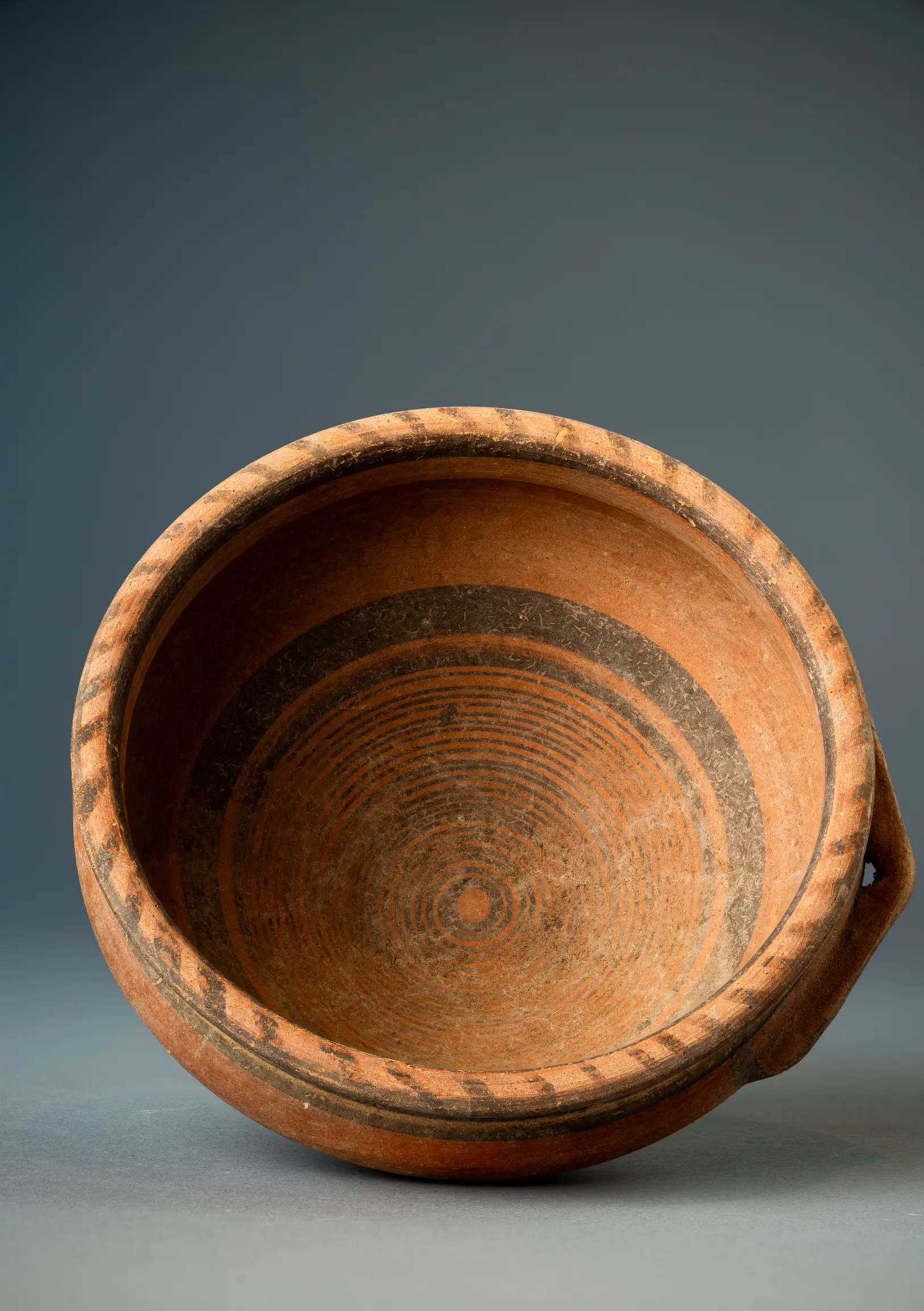
The one shape made without a break from the Neolithic to the Iron Age, and so the natural place to start.
The open vessel deeper than a plate and without a pouring neck, the one Cypriot pottery shape made without a break from the Neolithic to the Iron Age.
Step 3 · Pottery · 14 min read
Tulip Bowls and Cult Vessels
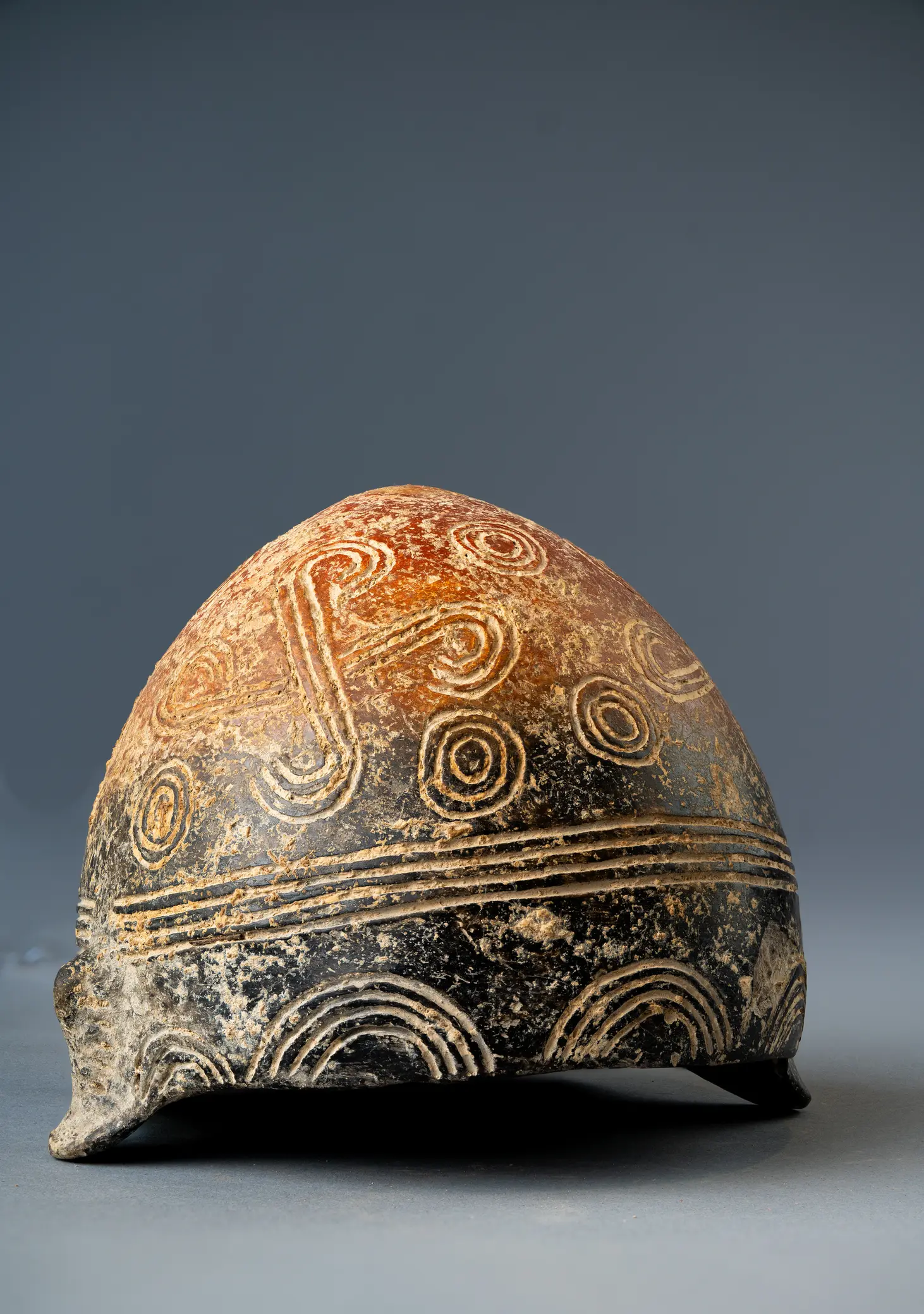
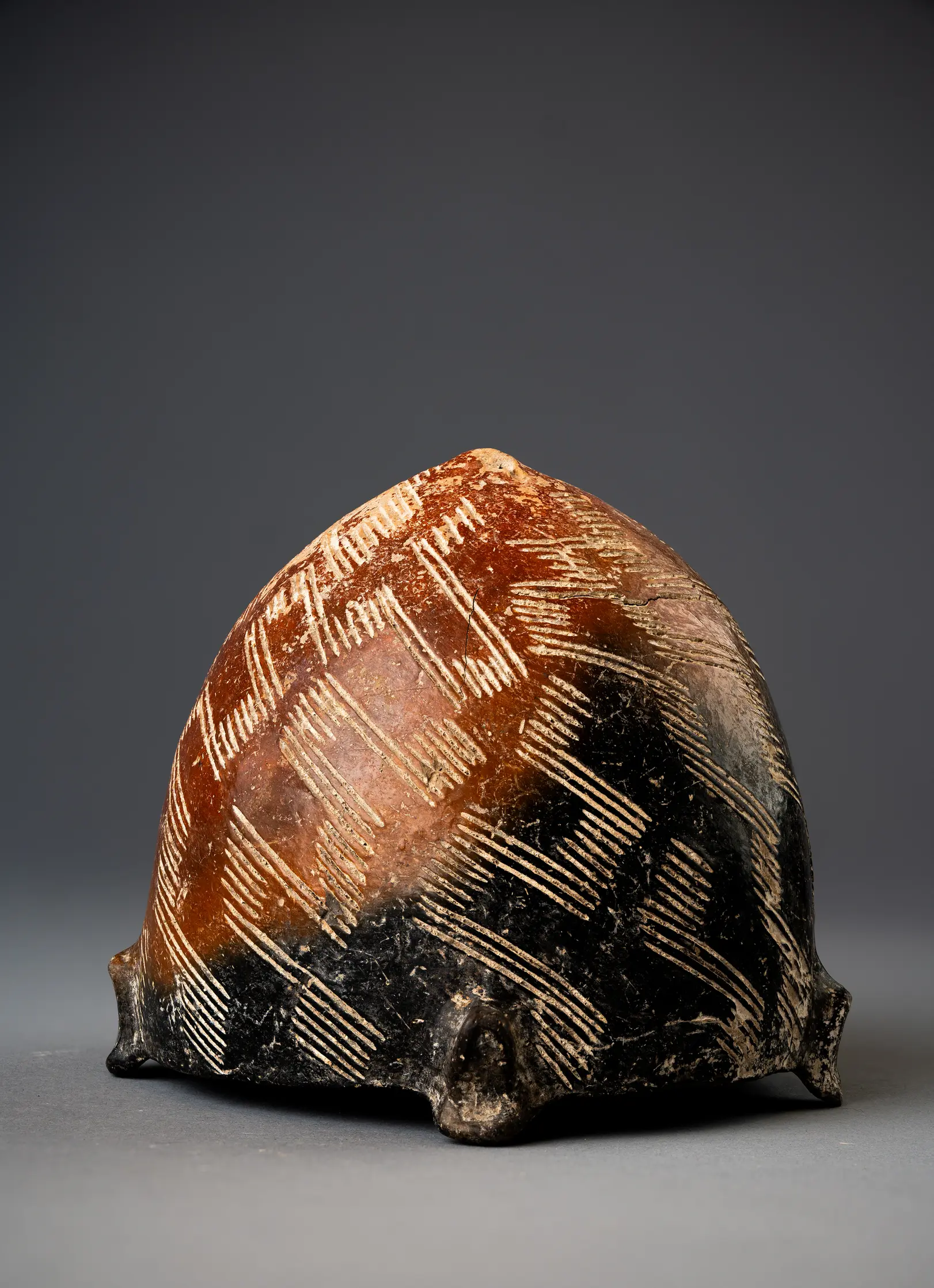
A special kind of bowl: deep, conical, black-topped Red Polished pieces of Early Cypriot I–II, known mostly from Vounous tombs.
Deep, conical, black-topped Red Polished bowls of Early Cypriot I–II, and their elaborate protome-rimmed form, known mostly from the tombs of Vounous.
Step 4 · Pottery · 13 min read
Jugs (Oinochoe)
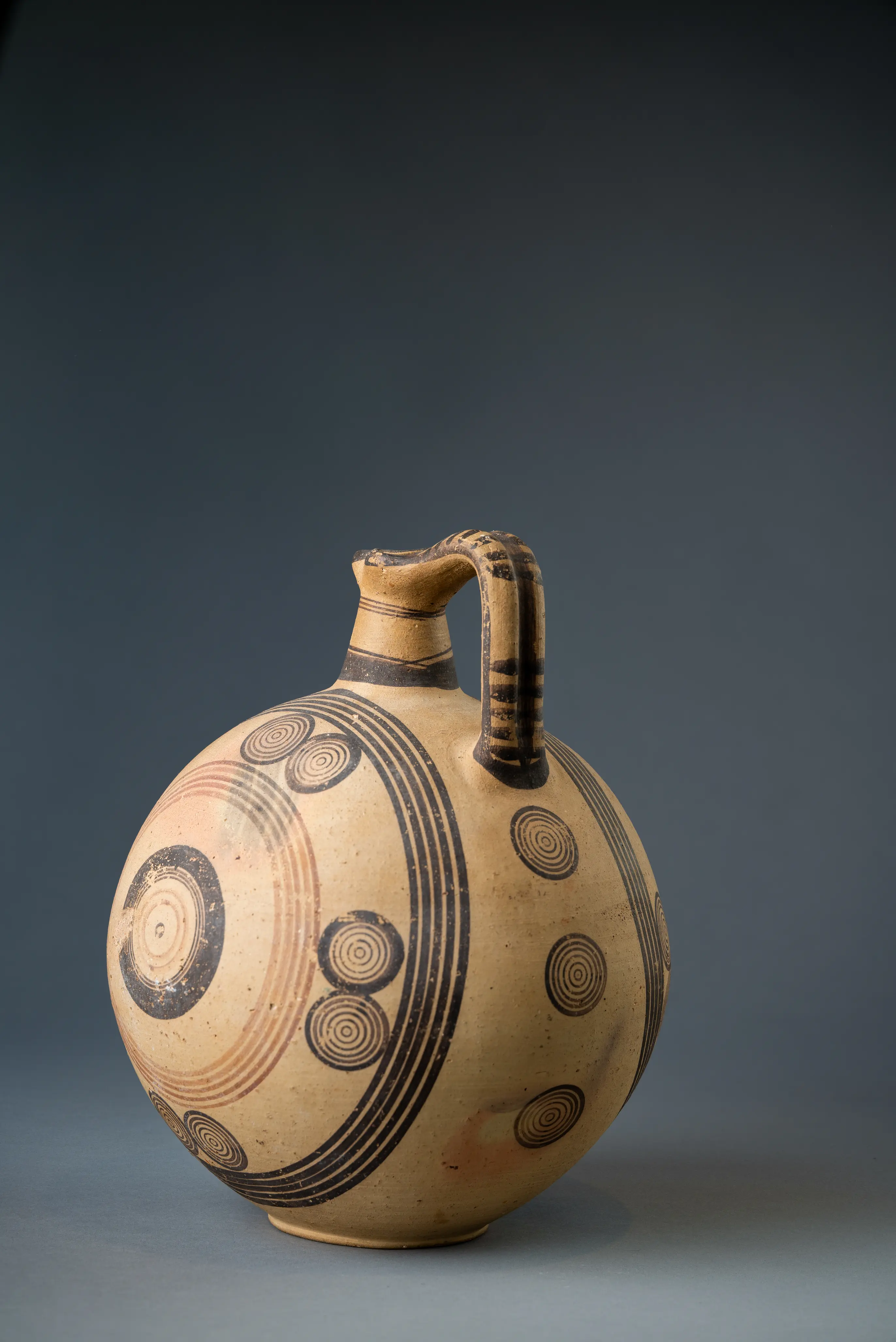
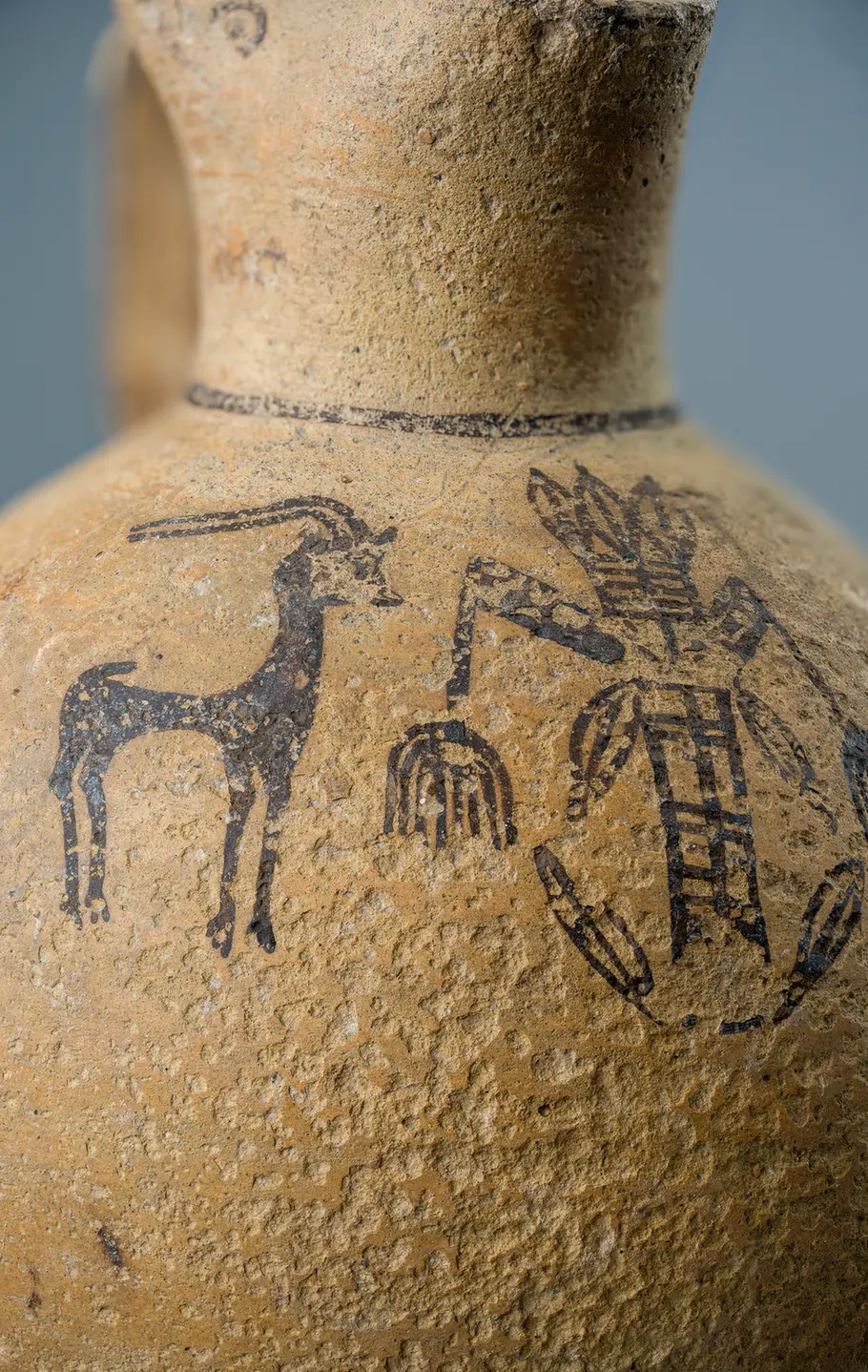
The Iron Age pouring jug or oinochoe, a painted wheelmade vessel made in regional workshops and exported widely.
The Iron Age Cypriot pouring jug or oinochoe, a painted wheelmade vessel for liquids made in regional workshops and widely exported around the Mediterranean.
Step 5 · Pottery · 14 min read
Amphora
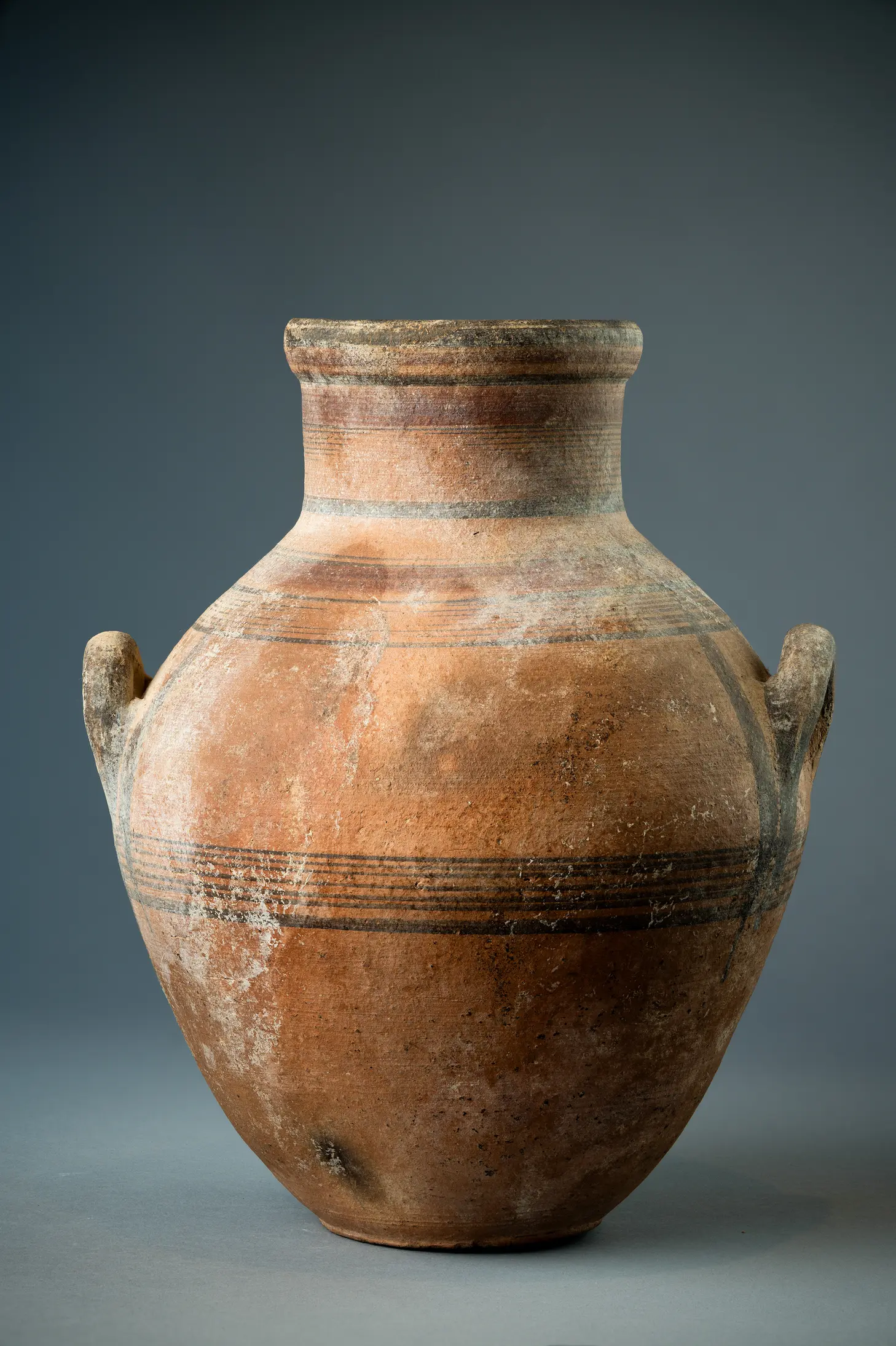
The two-handled jar, in belly-handled and vertical-handled painted series and as a basket-handled transport jar.
A closed jar with two opposed handles, made in Cyprus in belly-handled and vertical-handled painted series and as a basket-handled transport jar.
Step 6 · Pottery · 4 min read
Motifs of Cypriot Pottery
Now the decoration: how ornament moved from combing and incision to paint, and how to read a decorated pot.
The recurring patterns and figures painted, incised or modelled on Cypriot pottery, from Neolithic combing to the Cypro-Archaic free-field style.
Step 7 · Pottery · 8 min read
Triple Crossing Lines
An early painted motif: groups of lines crossing obliquely, the mark of the Middle Bronze Age White Painted Cross Line Style.
Groups of parallel painted lines laid obliquely so that they cross one another, the defining motif of the Middle Bronze Age White Painted Cross Line Style.
Step 8 · Pottery · 12 min read
Circles
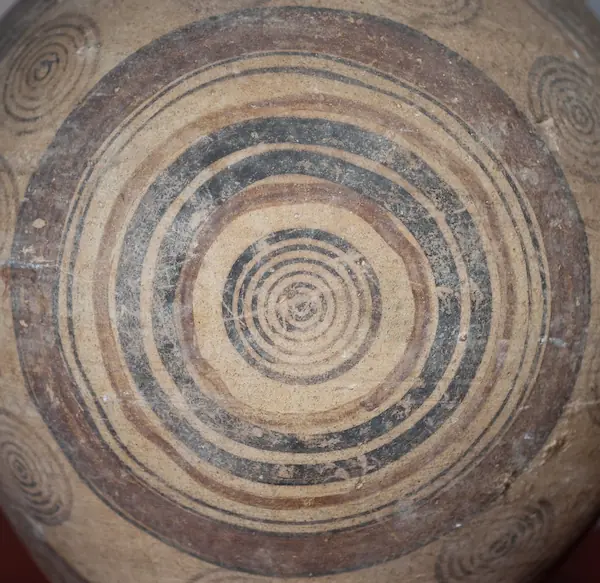
Concentric circles, disks, spirals and pendent semicircles, the leading geometric motif of Iron Age painted pottery.
Concentric circles, disks, spirals and pendent semicircles, the leading geometric motif of Cypriot Iron Age painted pottery and of Gjerstad's Western style.
Step 9 · Pottery · 9 min read
Lotus Flowers and Lotus Friezes on Cypriot Iron Age Pottery
The chief plant motif of Iron Age painted pottery, the lotus and lotus-and-bud frieze, of Egyptian and Phoenician derivation.
The lotus flower and lotus-and-bud frieze, the chief plant motif of Cypriot Iron Age painted pottery, of Egyptian and Phoenician derivation.
Step 10 · Pottery · 16 min read
Free-Field Style: Birds, Bulls and Lotus on Cypro-Archaic Jugs
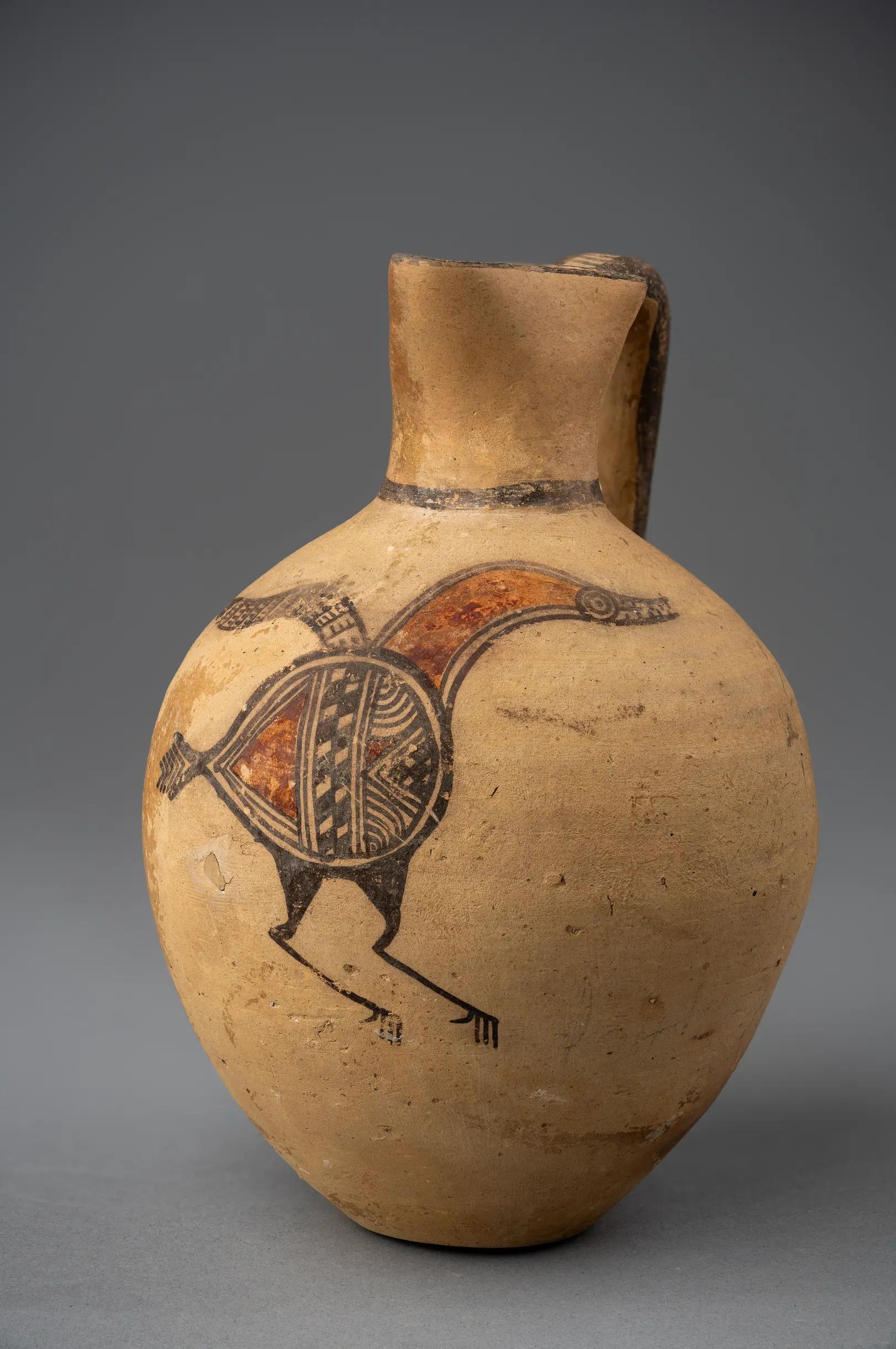
The route ends with a layout: a single figure or motif set on the bare body of a jug, usually opposite the handle.
A layout of Cypriot Iron Age vase painting in which a single figure or motif is set on the bare, unframed body of a jug, usually opposite the handle.
Other reading paths
- Start here: Cyprus in ten pagesOne page per period, from the island's first human visitors to the last Cypriot kings.
- Copper islandHow the Troodos ores shaped Cyprus, from hammered native copper to oxhide ingots and Roman mines.
- Reading Cypriot potteryHow to tell the island's main wares apart, from Red Polished to Black-on-Red.
- Gods, graves and offeringsHow Cypriots buried their dead and what they gave their gods, from house burials to sanctuaries.
- Cyprus and its neighboursEgypt, Ugarit, Crete, Mycenae, Phoenicia and the empires, in the order Cyprus came to know them.
- Everyday lifeHouses, food, cloth and health in the farming villages where most Cypriots lived.
- Figures and statuesFrom small Neolithic stone figures to the painted limestone votaries of the Archaic sanctuaries.
- Kingdoms of the Iron AgeHow the Cypriot city-kingdoms rose, wrote, fought, paid tribute and finally lost their kings.
- Collecting, looting and the lawHow Cypriot antiquities left the island, what changed in 1974, and what can be owned today.