
Reading path
Copper island
Copper runs through most of Cypriot history. This route follows the metal from the first cold-hammered objects of the Chalcolithic, through the furnaces and ingots of the Late Bronze Age, to the letters in which foreign courts wrote about Alashiya. It ends with the Roman province, still taxed for its copper.
Intermediate · 10 steps · 2 hr 25 min
Start reading →Step 1 · Chronology · 11 min read
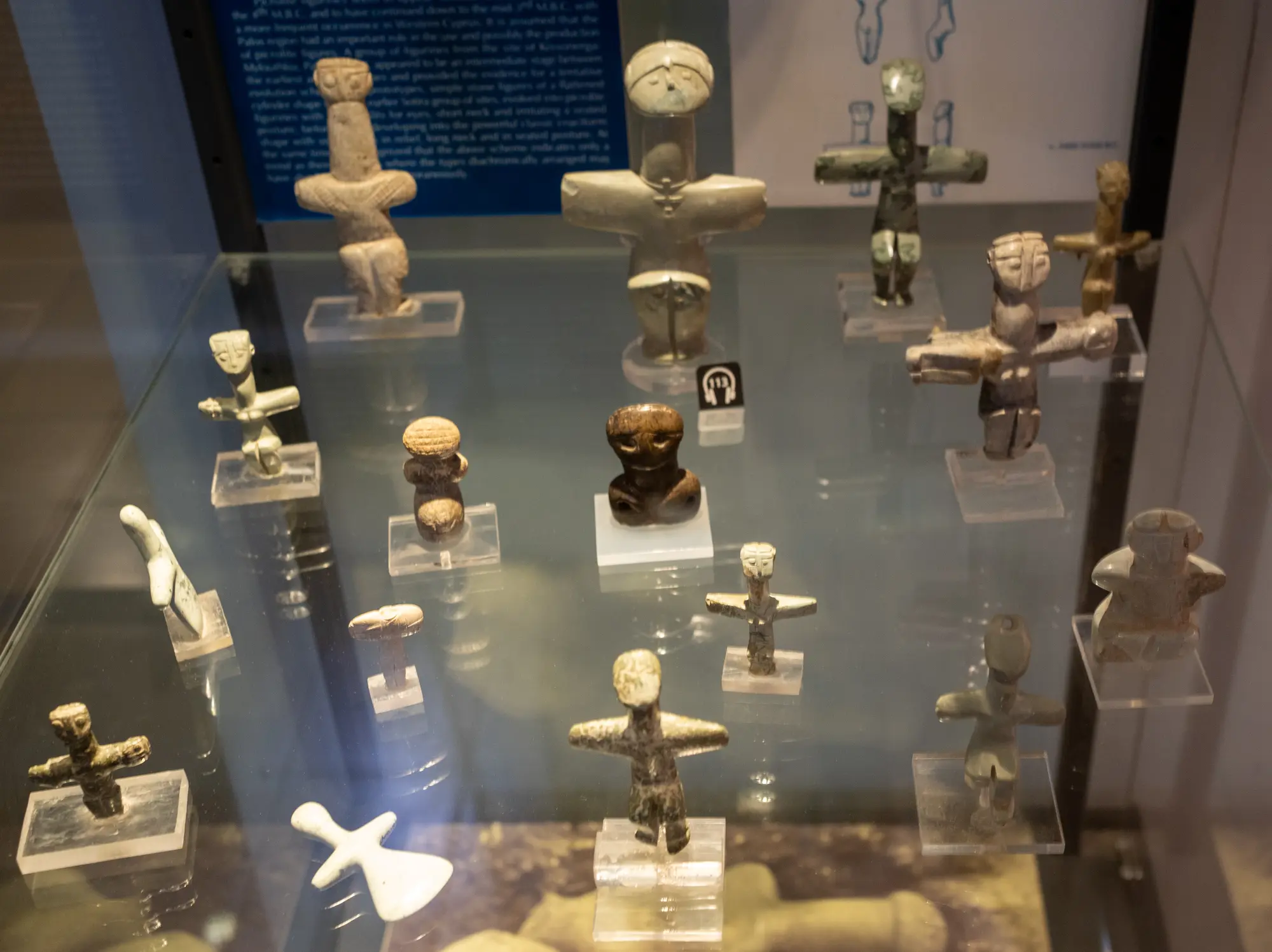
Chalcolithic Cyprus
Start at the beginning: circular villages in which the island's first small-scale copper working appears.
The period c. 3900–2500 BCE of circular villages, Red-on-White pottery, picrolite cruciform figures and the island's first small-scale copper working.
Step 2 · Tools & Technologies · 16 min read
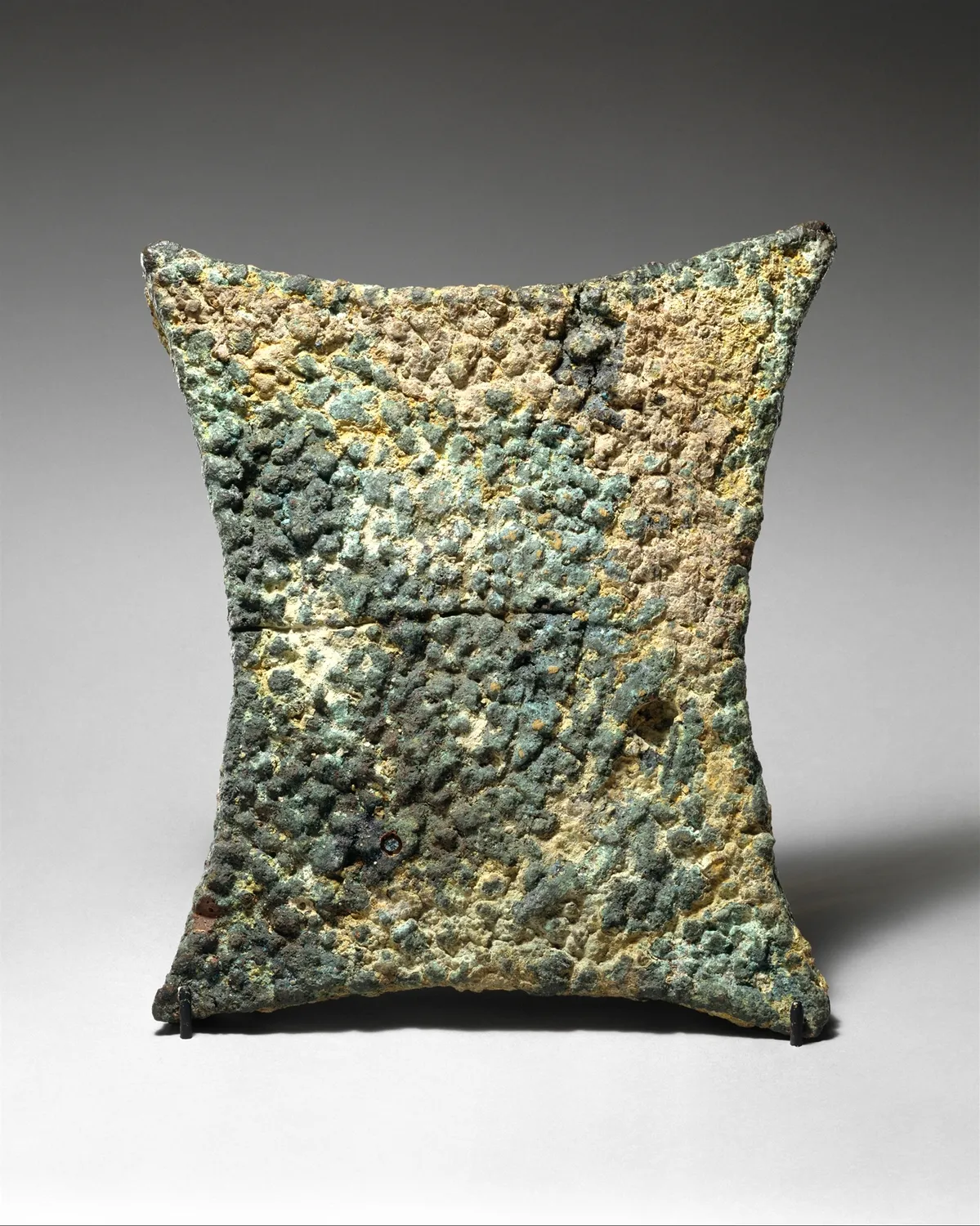
Copper Metallurgy in Ancient Cyprus
The core of the route: mining, smelting and casting the Troodos ores, from native copper to oxhide ingots and Archaic slag heaps.
The mining, smelting and casting of the Troodos sulphide ores, from hammered Chalcolithic native copper to Late Bronze Age oxhide ingots and Archaic slag heaps.
Step 3 · Tools & Technologies · 15 min read
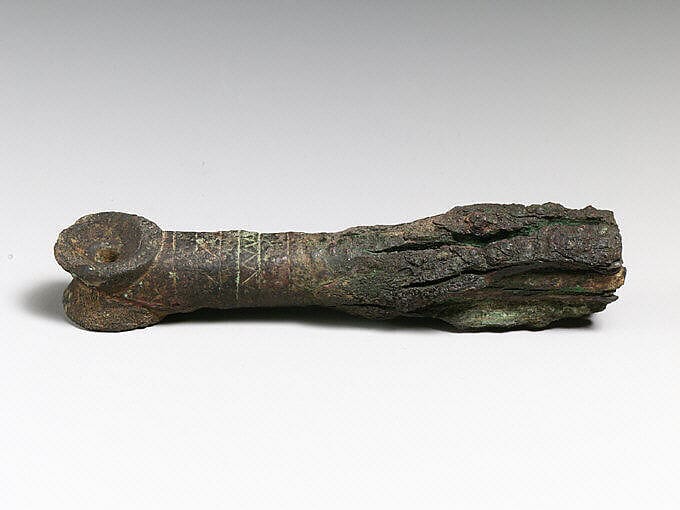
Gold, Silver, Tin, Arsenic and Iron in Ancient Cyprus
What else the smiths worked: arsenic, tin, gold, electrum, silver, lead and, by the 12th century BCE, iron.
The metals other than copper used by Cypriot smiths from the Philia facies to the 12th century BCE, including arsenic, tin, gold, electrum, silver, lead and iron.
Step 4 · Weapons & Armor · 16 min read
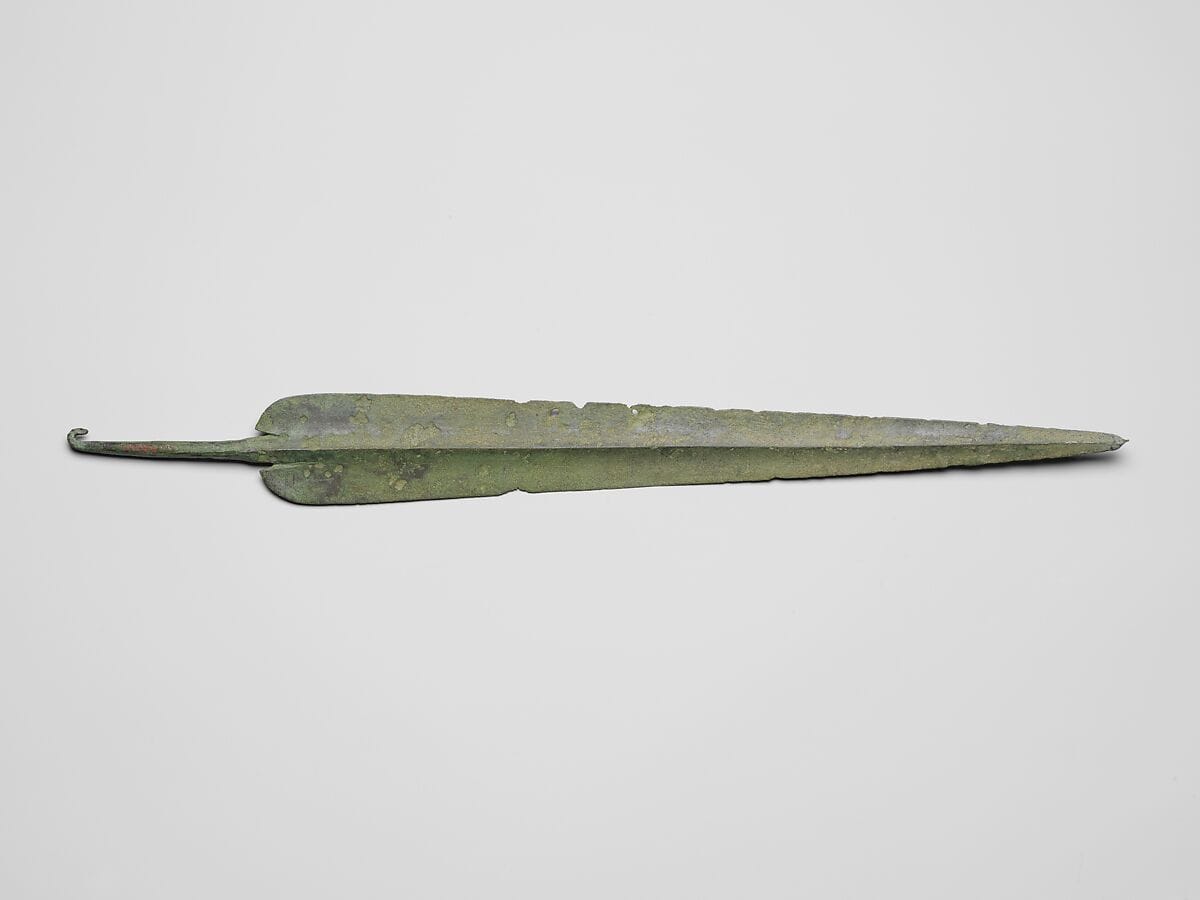
Weapons of Bronze Age Cyprus
Copper and bronze put to use as arms, from Philia hook-tang spearheads and riveted daggers to the Naue II swords of Enkomi.
The copper and bronze weapons of Bronze Age Cyprus, from Philia hook-tang spearheads and riveted daggers to the Naue II swords and greaves of Enkomi.
Step 5 · Chronology · 11 min read
Late Bronze Age Cyprus
The period as a whole, when copper exports made Cyprus an urban, literate trading power.
The Late Cypriot period, c. 1650–1050 BCE, when copper exports made Cyprus an urban, literate trading power before the crisis around 1200 BCE.
Step 6 · Cultures · 15 min read
Ugarit and the Levant
Across the water at Ugarit, where the palace archives mention Alashiya and Cypriot pottery turns up at Ras Shamra and Minet el-Beida.
The Syrian port kingdom of Ugarit and the wider Levantine coast, Cyprus's closest Bronze Age trading partners across the water.
Step 7 · Cultures · 17 min read
Egypt
Egypt as a partner in copper and prestige goods, and the New Kingdom's dealings with Alashiya.
Ancient Egypt, Cyprus's partner in copper, pottery and prestige goods from the Middle Kingdom to the Ptolemies, who annexed the island.
Step 8 · Cultures · 13 min read
Hittite Empire and Cyprus
An empire that claimed Alashiya as a tributary, yet left almost no material trace on the island.
The Late Bronze Age Anatolian empire that claimed Alashiya as a tributary but left almost no material trace on Cyprus.
Step 9 · Tools & Technologies · 16 min read
Seafaring and Ships in Ancient Cyprus
How the metal travelled: harbours, stone anchors, and the Cypriot cargo of the Uluburun wreck in a foreign ship.
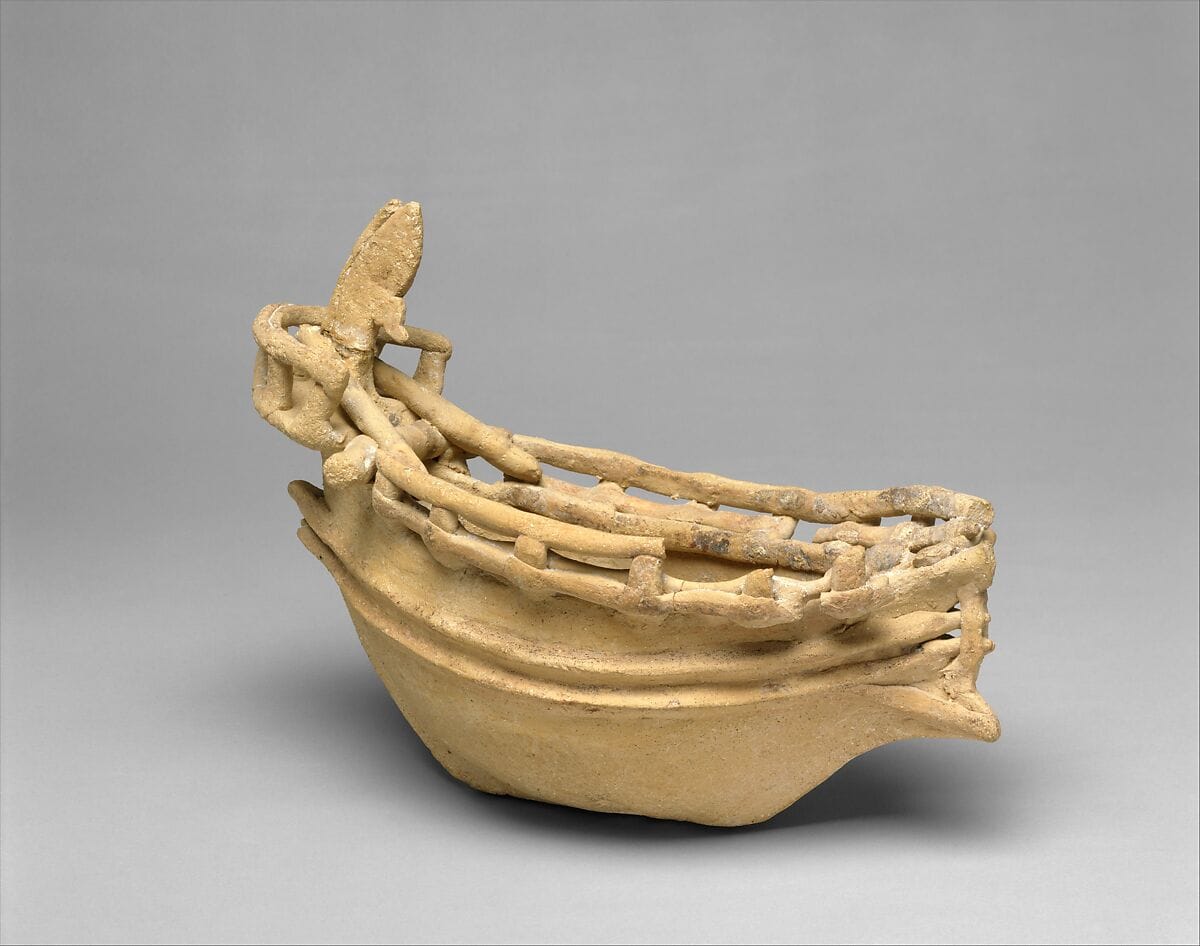
The evidence for boats and seafaring around Cyprus from the first crossings to the Classical period, from anchors, models and graffiti to wrecks and shipsheds.
Step 10 · Chronology · 15 min read
Roman Cyprus
The last chapter: a Roman province mined for its copper, governed from Nea Paphos and finally wrecked by earthquakes.
Cyprus as a Roman province from 58 BCE to the fourth century CE, governed from Nea Paphos, mined for copper, and finally wrecked by earthquakes.
Start with Chalcolithic Cyprus →
Other reading paths
- Start here: Cyprus in ten pagesOne page per period, from the island's first human visitors to the last Cypriot kings.
- Reading Cypriot potteryHow to tell the island's main wares apart, from Red Polished to Black-on-Red.
- Shapes and motifsBowls, jugs and amphorae, and the circles, lotuses and single figures painted on them.
- Gods, graves and offeringsHow Cypriots buried their dead and what they gave their gods, from house burials to sanctuaries.
- Cyprus and its neighboursEgypt, Ugarit, Crete, Mycenae, Phoenicia and the empires, in the order Cyprus came to know them.
- Everyday lifeHouses, food, cloth and health in the farming villages where most Cypriots lived.
- Figures and statuesFrom small Neolithic stone figures to the painted limestone votaries of the Archaic sanctuaries.
- Kingdoms of the Iron AgeHow the Cypriot city-kingdoms rose, wrote, fought, paid tribute and finally lost their kings.
- Collecting, looting and the lawHow Cypriot antiquities left the island, what changed in 1974, and what can be owned today.