
Contents
In November 1979 the Republic of Cyprus received word that the apse of the Panagia Kanakaria, a church outside the village of Lythrankomi in the Karpas peninsula, was bare. Its sixth-century mosaic, the Virgin enthroned with an adolescent Christ on her lap, an archangel beside them and a border of apostle medallions, had been prised off the wall at some point after the village's Greek Cypriot congregation was forced to leave in 1976 [1, p. 63; 2, p. 234]. Nine years later four fragments of it were sold in the free zone of Geneva airport to a dealer from Indianapolis, and the lawsuit that followed made the Kanakaria mosaics the best-known case of what this entry describes: the removal of icons, frescoes, mosaics and antiquities from the northern third of Cyprus after the Turkish invasion of July 1974, an area the Republic and the Church of Cyprus have not been able to protect since [3, p. 463]. The best-documented losses are ecclesiastical, cut from church walls and moved through Munich to buyers in western Europe and North America, but the looting also reached a registered private collection in Famagusta, the icon stores at Kyrenia and the cemeteries of the north. This entry follows the sites, the network, the court cases and the recoveries, then the argument over how much was taken. It is the counterpart of the entry on the legal export of Cypriot antiquities: the objects discussed here left without paper, because north of the line there was no longer anyone with the authority to issue it.
The north in 1974: what lay beyond the line
Turkey invaded on 20 July 1974. Some 200,000 Greek Cypriots were forced to leave their homes in the north, and the arrangements that followed moved the Greek population south and the Turkish and Muslim population north, leaving churches in the north, and mosques in the south, abandoned [4]. A Turkish Republic of Northern Cyprus was declared in 1983 and has been recognised by no state except Turkey [2, p. 234]. The occupied area is about 37 per cent of the island [5, p. 129], and it holds a large share of what Cypriot archaeology had spent the previous century excavating: the Late Bronze Age town of Enkomi, the city and royal cemetery of Salamis, the Bronze Age cemeteries of Lapithos on the north coast, the harbour town and castle of Kyrenia, and several hundred churches. Thomas Kline, an American lawyer who worked with the Republic and the Church for almost twenty-five years, summarised the result as "pervasive looting of churches, museums, private collections, and archeological sites" in the area kept beyond the reach of the government and the Church [3, p. 463].
The first outside observer had limited access. UNESCO appointed a Canadian restoration architect, Jacques Dalibard, as adviser on the cultural heritage of Cyprus in 1974; he inspected sites on both sides in 1975, but in the occupied area newly pillaged places such as the monastery of Antiphonitis could not be visited, and his report was never published [5, p. 131]. The Cyprus Ministry of Foreign Affairs later estimated that more than 550 Greek Orthodox churches and religious buildings in the north had been pillaged or destroyed, some converted to mosques, storehouses or barns [4]. Sophocles Hadjisavvas, a former Director of the Department of Antiquities, put the figure at some 500 churches ill-treated or deliberately destroyed, and described Enkomi and Salamis as lying neglected [5, p. 130].
From opportunism to organisation, 1974 to 1982
The pattern of the first decade was set out in 1989 by Ymenus van der Werff, general rapporteur of the Parliamentary Assembly of the Council of Europe, after a visit to the island. Most damage to immovable cultural property had occurred in the north and was the result of looting; the removal of the Kanakaria mosaics "was certainly an acrobatic feat", and the thefts were "evidently linked to the highly professional international market in illegally exported art". After "early opportunist raids during the unsettled period following 1974", he wrote, "more organised looting of selected targets seems to have taken place between 1977 and 1982" [5, p. 131].
One of the earliest recorded losses was a private collection. A Famagusta collector, Chr. Hadjiprodromou, had formed a large collection, mostly Chalcolithic painted pottery and stone figurines, which the Department of Antiquities registered in 1973. It began to be looted a year after the Turkish army occupied Famagusta, and it is believed that every item was stolen and exported. Because the collection was registered and numbered, pieces could be recognised when they surfaced: several appeared in Christie's London catalogue of Classical, Egyptian, Cypriot and Western Asiatic Antiquities for 27 April 1976, the owner claimed them at once, and others were offered through middlemen. The A. G. Leventis Foundation bought back what could be recovered and presented it to the Cyprus Museum, among it a seated cruciform figurine of light green picrolite, 7.3 cm high, Hadjiprodromou no. 889, now Cyprus Museum 1981/V-4/9 [6, pp. 54, 58]. The Chalcolithic picrolite figures that came back from London are of the same class as the picrolite figurines on display in the Cyprus Museum.
Church property gathered after 1974 was also not safe in store. Thousands of icons were taken from churches across the occupied area and kept in the medieval galleries of the museum at Kyrenia, on the sea [5, p. 130]. In 1981 the icon storeroom in Kyrenia's castle was burgled and hundreds of paintings disappeared; the Turkish Cypriot official accused of altering the inventory and substituting worthless icons for valuable ones was tried and not convicted [1, p. 213].
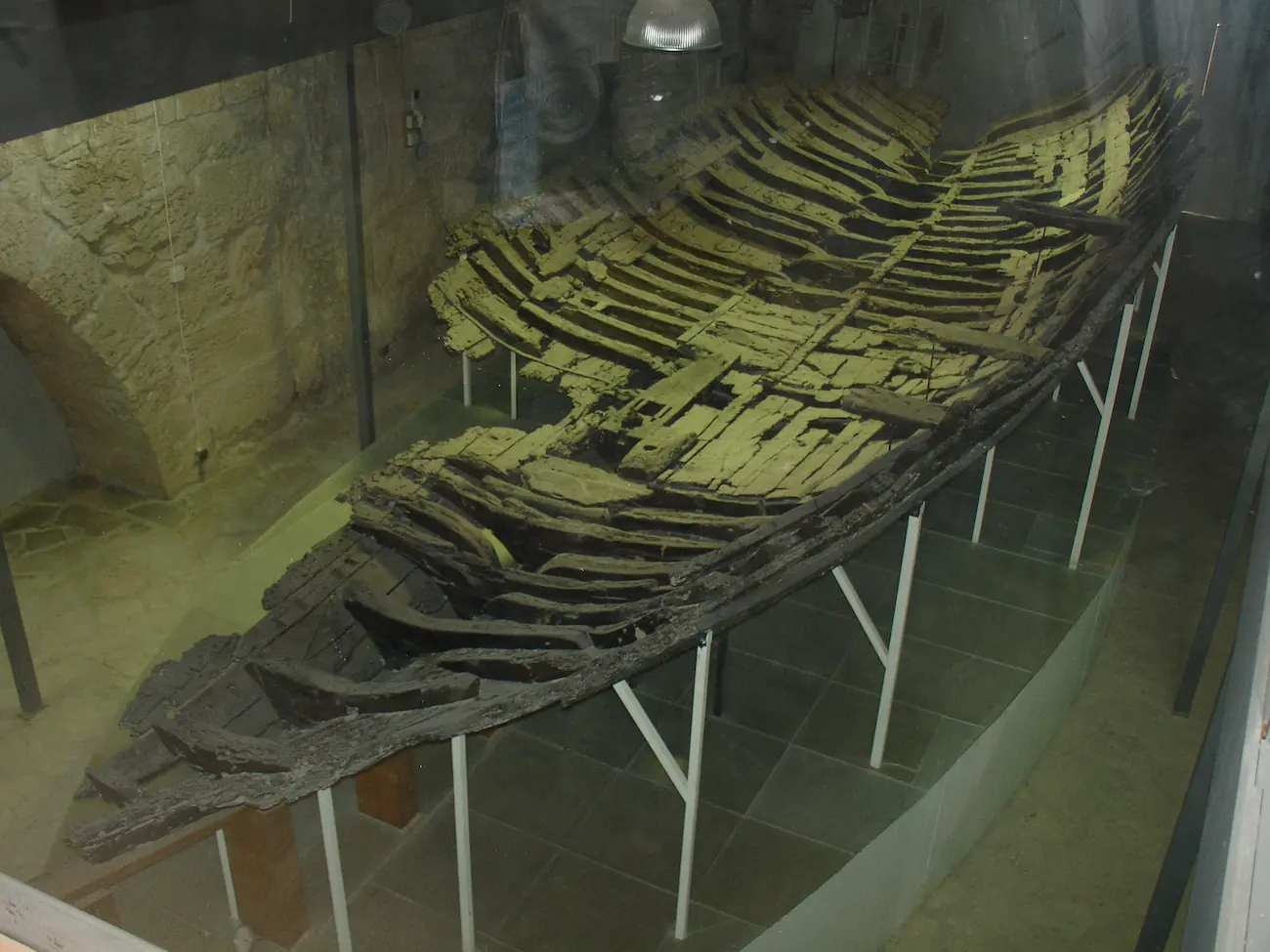
The name that runs through the church cases is Aydın Dikmen, a Turkish dealer based in Munich [7]. Marc Fehlmann calls him the mastermind of the Kanakaria theft and notes that he had been known since the 1950s for looting, smuggling and forging antiquities in Turkey [8, p. 145]; Michael Jansen described him as the "most active and influential international operator" in the occupied north [4]. Derek Fincham, drawing on Jansen and on the Dutch dealer Michel van Rijn, describes the organisation: agents who scouted sites and collected pieces, men who carried the equipment for stripping walls, a retired policeman who kept lookout, and a route from Cyprus to the Turkish mainland and on to apartments in Munich. Frescoes were faced with gauze and plaster, backed with stiff material and cut into sections; icons had identifying marks removed, large ones were sawn into two or four pieces for shipment, and some were disguised by being mounted in carved frames as holy doors [4]. The claim of military complicity rests on van Rijn, who wrote of the army's attitude that "the places are falling apart and anyway there are too many churches in Cyprus, so why not get rid of a few? But they warn us and we first take out the things that matter" [5, p. 130]. It should be read as his account.
The Lysi frescoes: bought with the owner's consent
The first major northern object to appear on the market after 1974 was a set of thirteenth-century murals from the dome and apse of a small chapel near Lysi, dedicated to St Themonianos (also given as St Euphemianos) [3, p. 463; 7]. They showed Christ Pantokrator surrounded by twelve angels, with the Virgin and St John the Baptist, and had been cut into 38 pieces, 26 of them from the dome [4]. In 1983 the London dealer Yanni Petsopoulos showed photographs to the Menil Foundation of Houston; Dominique de Menil then saw the fragments by candlelight in a Munich apartment, where Dikmen told her a contractor had found them under rubble in a derelict church in southern Anatolia and produced a forged Turkish export permit [4].
The Menil's response is the reason the case is cited in the due diligence literature. De Menil hired Herbert Brownell, a former United States Attorney General, who wrote to nine countries once part of the Byzantine Empire with photographs and an invitation to claim. Turkey, Lebanon and Cyprus replied; only Cyprus supplied documentary evidence of the church [4]. With the assent of the Department of Antiquities and the Church of Cyprus, which held title, the Menil paid Dikmen about $520,000, moved the fragments to London in January 1984, and in 1987 agreed with the Church to act as custodian for an initial fifteen years in return for conserving and displaying them [4]. The conservator, Laurence Morrocco, reassembled the dome without measurements beyond "the dubious ones supplied by the smugglers"; when he later saw the chapel he found fresco fragments on the floor among straw and sheep droppings [4]. The Menil built a $3 million chapel in Houston to show them. They returned to Cyprus in March 2012 and went on display in the Byzantine Museum in Nicosia [3, p. 463; 4]. Kline notes that the loan was applauded in the United States and controversial in Cyprus [3, p. 468], and the Menil paid the head of a looting network knowing he might go on working [4].
The Kanakaria mosaics and Autocephalous Church of Cyprus v. Goldberg
The Panagia Kanakaria began as a timber-roofed three-aisled basilica built about AD 500, and the apse mosaic was set shortly afterwards [2, p. 233]. It came through Iconoclasm because Cyprus lay outside effective imperial jurisdiction, and Anne Sullivan describes it as the only mosaic of the Theotokos to do so; the Christ was shown as an adolescent inside a mandorla, and ten apostle medallions of an original twelve framed the arch [2, p. 234; 1, pp. 62-63]. A. H. S. Megaw, Director of Antiquities under the colonial administration, and the restorer E. J. W. Hawkins published it in a Dumbarton Oaks monograph in 1977, with photographs of every figure taken after restoration work in the 1960s [9; 1, p. 61]. That publication made every fragment identifiable.
The church was used for worship until 1976, when the villagers were moved south; the mosaics were removed at some point between August 1976 and October 1979 and taken to Munich [2, p. 234; 7]. Three medallions, Paul, Luke and Philip, were so fragile that they may have been destroyed in the removal [1, p. 63]. On learning of the loss in 1979 the Republic notified UNESCO, the International Council of Museums and the Council of Europe, and Vassos Karageorghis, then Director of Antiquities, alerted the British Museum, the Louvre, Dumbarton Oaks, Christie's and Sotheby's [2, p. 237]. Two medallions resurfaced in 1984: Constantine Leventis, director of the Leventis Foundation, testified that they were returned through Petsopoulos, left in a Frankfurt warehouse for the Cypriot embassy in Bonn to collect [1, pp. 63, 76].
In June 1988 Peg Goldberg, an Indianapolis dealer in nineteenth- and twentieth-century art, was introduced in Amsterdam by an Indianapolis associate to Michel van Rijn, who offered her the mosaics. Over the weekend of 4 July she inspected four fragments in the free zone of Geneva airport, the Christ, the north archangel, and the medallions of St James and St Matthew, and bought them from Dikmen [7; 1, p. 63]. An Indianapolis bank lent $1,224,000. The documents shown to her included an export licence from the Turkish Cypriot administration, which that administration afterwards said was a fake; the bill of sale did not name the seller [2, p. 235]. Back in Indiana the fragments were reset by a conservator with no mosaic experience, and they were offered to the J. Paul Getty Museum for $20 million. Marion True, the Getty's curator of antiquities, declined and informed Cyprus [2, p. 236; 7].
The Church and the Republic sued in replevin. On 3 August 1989 Judge Noland of the Southern District of Indiana ordered the mosaics delivered to the Church [1, p. 98; 10]. Indiana law applied, because the buyer, her bank and the mosaics were in Indiana, and under Indiana law a thief cannot pass title, even to a good-faith buyer [2, p. 236]. The court found that the mosaics had been removed between 1976 and 1979 during the occupation, that the Church had never authorised their removal or sale, and that it did not regard the church as abandoned, since its congregation had been expelled and it intended to return [3, p. 464; 10]. On limitation, the court applied the discovery rule: time ran only from when Cyprus learned who held the mosaics, and a reasonable owner could not have found them earlier because they had been concealed [2, p. 236]. Going on to consider Swiss law in the alternative, it held that Goldberg would not have been a good-faith purchaser anyway, because she knew the pieces came from an occupied area, they were unique, the price was far below their value, the seller was unknown, the middlemen's reputations were known to her, and the deal was done within a week [2, p. 237]. The Seventh Circuit affirmed in 1990, in an opinion that called those who profit from such plunder "the lowest scoundrels" [2, p. 238; 10]. The case summary on the University of Geneva's ArThemis database sets out the procedure.
Patty Gerstenblith treats the case as the model of the first generation of American recovery suits, in which the owner bore the cost of litigation and much of the court's attention fell on whether the Church had searched diligently enough, a heavy burden for an institution with no access to its own churches [7]. Kline, who was lead counsel, points to a practical consequence: the trial identified the presumed smuggler, which let the Church and the Republic pursue him in Germany [3, p. 464].
Antiphonitis, Munich and the Dutch icons
The twelfth-century church of Christ Antiphonitis, in the Kyrenia district, was once part of a monastery, and its paintings included a Last Judgement and a Tree of Jesse. It was looted twice after 1974: the first time frescoes were cut from the walls; a later attempt brought down a section of wall and destroyed the painting on it [11, pp. 73-74]. In 1989 the consultant expert Robin Cormack listed "the remaining decoration of Antiphonitis" among the priorities for saving what was left in the north [5, p. 132].
Dikmen was arrested in Munich in October 1997, and police found antiquities in his apartment estimated at $30 million, including Cypriot frescoes, mosaics, icons and coins alongside pre-Columbian pottery and stolen paintings [7]. Among the Cypriot pieces were the Antiphonitis Last Judgement and Tree of Jesse [11, p. 74]. The German authorities had evidence for a charge of illegal possession, but the limitation period had run and he was released after a few months; neither the Turkish Cypriot nor the Turkish authorities have ever indicted him over Kanakaria or any other Cypriot object [8, pp. 145-146]. The Church and the Republic then sued in Germany for the objects. The question for the court was when each piece had left Cyprus [12, p. 34]. By Hadjisavvas's account the Munich Court of Appeal decided on 18 March 2014 to return 173 of the 246 objects seized to the Republic, asked for further proof of ownership for the rest though they too were Cypriot, heard expert evidence on the remaining 85 in December 2014, and proposed a settlement by February 2015 [5, p. 138]. Another account dates the return of the 173 objects to July 2013 [12, p. 34]; the sources do not agree. Efthymia Alphas of the Department of Antiquities records the repatriation from Munich as taking place in 2013 and 2015, 207 ecclesiastical and prehistoric objects in all, after a court case of almost twenty years [16, p. 36].
The Netherlands produced a parallel case. Four sixteenth-century icons of the apostles Peter, Paul, John and Mark from the Antiphonitis iconostasis, bought from Dikmen by a Dutch couple, were identified and seized in 1995 when the couple tried to sell them at Christie's. The Dutch courts found for the buyers on the ground of good faith; it was the first case in the Netherlands argued under the 1954 Hague Convention, which had not then been written into Dutch law. After the Netherlands enacted the Convention in 2007, Cyprus requested the icons again, and they were repatriated in September 2013 [12, p. 33]. Kline's verdict on the German and Dutch cooperation is that it was successful but required lengthy litigation [3, p. 468].
| Object | Church or place | How it resurfaced | Outcome |
|---|---|---|---|
| Hadjiprodromou collection (Chalcolithic picrolite figures and pottery) | Registered private collection, Famagusta | Christie's London, 27 April 1976; middlemen | Recovered pieces bought back by the Leventis Foundation, given to the Cyprus Museum (1981) |
| Icons in store | Kyrenia castle | Storeroom burglary, 1981 | Hundreds missing; accused official not convicted |
| 13th-century dome and apse frescoes | St Themonianos, Lysi | Offered to the Menil Foundation in Munich, 1983 | Bought with the Church's consent; loaned to Houston; returned March 2012 |
| Two apostle medallions | Panagia Kanakaria, Lythrankomi | Returned via a London dealer, 1984 | Back in Cyprus |
| Christ, archangel, St James, St Matthew | Panagia Kanakaria | Sold in Geneva to an Indianapolis dealer, July 1988 | Returned after judgment of 1989, affirmed 1990 |
| Frescoes, icons, mosaics, coins | Several northern churches | Seized from Dikmen in Munich, October 1997 | 173 of 246 objects ordered returned; further settlement proposed 2015 |
| Four iconostasis icons | Christ Antiphonitis | Consigned to Christie's, 1995 | Dutch courts found for buyers; returned September 2013 after 2007 Act |
Archaeological sites, museums and excavation archives
The antiquities side of the story is less well documented than the churches, partly because the objects are less individual: a cruciform figurine has no fresco scar to match.
The excavated sites passed out of the Department's control with their stores. Karageorghis, looking back in 2019 on the Department's excavations at Salamis between 1952 and 1974, wrote that had he waited to publish while the material sat in the museum at Famagusta, the Salamis necropolis would never have been published. Since 1999 the University of Ankara has excavated at Salamis, work he regarded as a breach of the international conventions on archaeological work in occupied territory [13, p. 31]. The royal tombs belong to the eighth and seventh centuries BC, the Cypro-Archaic period, and the story of their publication is told in the article on Karageorghis. Hadjisavvas, who sat for six years on the bicommunal Technical Committee on Cultural Heritage, reports that the Turkish Cypriot side refused his proposal for urgent work at Late Bronze Age Enkomi, even after a UN-commissioned technical assessment, on the ground that jurisdiction over Enkomi and Salamis had passed to Ankara University; the Neolithic settlement of Agios Epiktetos-Vrysi, on the committee's 2009 priority list, had seen no work either [5, p. 135]. He also recorded recent large-scale looting in the necropolis of Agia Irini in the north-west, which he saw himself [5, p. 132].
Van der Werff's expert adviser, Cormack, put part of the loss down to capacity. The Department of Antiquities in the south was better equipped to deal with climate, earthquakes and the pressures of development; in the north, inexperience, lack of expertise and lack of funds were "in part responsible for the losses of material which have occurred since 1974", archaeologists had been trained at Ankara in Ottoman and Classical antiquities with little knowledge of medieval Christian art, and the archaeologist in Famagusta lacked the library to catalogue the private collections [5, p. 132]. The Turkish Cypriot administration passed antiquities legislation of its own, which Hadjisavvas describes as contrary to the Republic's Antiquities Law [5, p. 131]. Fehlmann records that since 1986 it has banned the export of any object more than a hundred years old, while allowing private owners to keep collections registered by 1996, and that because it is not a recognised state it cannot ratify the UNESCO Convention or make agreements on the transfer of cultural property [8, pp. 146, 152].
How much was taken: the argument over numbers
The figures in circulation differ by an order of magnitude. The Cyprus police have estimated that as many as 60,000 cultural objects were removed and sent abroad after 1974 [4], and Hadjisavvas gives the same figure for ancient and medieval artefacts exported and sold [5, p. 130]. A reference work puts the church losses at some 20,000 icons and dozens of frescoes [11, p. 73].
Fehlmann rejects the 60,000 figure for archaeological material. Students on the cultural heritage management course at the Eastern Mediterranean University in Famagusta analysed every antiquities sale at Christie's and Sotheby's between 1988 and 2008: of 52,482 antiquities offered, 1,842 (4 per cent) could be identified as Cypriot, and 377 of those had an ownership history going back before 1970 [8, pp. 154-157]. Sixty thousand objects passing through the market, he argues, would have collapsed prices; a few thousand is the likelier figure for antiquities that left the north illegally, which "does not minimise nor eliminate the problem", since well-informed gangs regularly plunder sites in the north that the authorities do not know of, and are rarely caught [8, pp. 157-158]. His count covers two auction houses and archaeological material only, and says nothing about icons and wall paintings, where the church figures come from.
Two further disagreements run under the numbers. Turkish and Turkish Cypriot archaeologists, among them Müge Şevketoğlu, argue that the accusations traded over religious heritage have served each side's politics, and that the international embargo on fieldwork and on publishing results from the north has itself harmed the island's heritage by blocking rescue excavation there [14, pp. 143-144]. Samuel Hardy argues from the other direction that paying to recover stolen property creates a market for it: publicly documented church art that "could not have been sold to private collectors on the open market" became worth stealing once it could be ransomed back to the Republic [15]. Kline, for his part, recommends that Cyprus publish a public database of losses and "uncouple culture from politics" [3, pp. 468-469].
Law, agreements and the position today
The Republic ratified the 1970 UNESCO Convention in 1979, ratified the Second Protocol to the Hague Convention in 2001, and in the same year set up a police unit for stolen cultural property [8, p. 146; 2, p. 239]. Under the American implementing act of 1983 it became, in 1999, one of the first source countries to reach an agreement with the United States, beginning with an emergency agreement covering ethnological, that is ecclesiastical, material; a memorandum of understanding on archaeological material followed in 2002, was amended to include ethnological material, and was renewed in 2007 with coins added [3, p. 465; 8, pp. 146-147]. Recoveries continued case by case. Kline describes a settlement over six icons offered at a New York auction by a foundation that could show they had left Cyprus before April 1999, so that the agreements did not apply and the Church had to prove theft; and two silver gospel covers catalogued as coming from "Zodias" in Greece, recognised by the Metropolitan of Morphou as belonging to the Church of the Archangel in his boyhood village of Zodia in the occupied area, which the seller returned when shown the facts [3, pp. 466-467]. Single returns of this kind still happen; one recent case involved a Bronze Age vessel last recorded in Famagusta before 1974.
On the island, the leaders of the two communities created a bicommunal Technical Committee on Cultural Heritage in April 2008, with an advisory board of archaeologists, architects and art historians from both sides. It has restored or stabilised some twenty monuments, mostly churches and mosques, with about 5.3 million euros from the European Commission since 2012, and in 2010 it completed an inventory of 2,300 sites with technical assessments of the 121 most important in the occupied area, which remains unpublished because the two sides could not agree its wording [5, pp. 134-135]. Between 2005 and 2010 projects funded by USAID conserved, among others, the church of Panagia Pergaminiotissa at Akanthou and the mosaics of the Soli basilica [14, p. 144]. Looting did not stop with the cooperation. Two fragments of twelfth-century wall painting from the monastery of Panagia Apsinthiotissa near Kyrenia, donated by an anonymous Canadian collector who had bought them on the illicit market, were exhibited at the House of Lords in December 2014 [5, p. 133].
Documented export and the northern trade
The contrast with the lawful trade is in the paper. Northern objects travelled with documents that did not survive inspection: an export licence from an administration that later called it a fake, a forged Turkish permit, a cover story about an Anatolian contractor [2, p. 235; 4]. They could not carry anything better, since the only authority able to issue a licence, the Republic's Department of Antiquities, had no presence in the north, and the administration that did could not join the conventions that give an export permit international effect [8, p. 146]. Lawfully exported Cypriot antiquities carry a different kind of record: a museum accession number, a dealer's name, a Cyprus Museum sale, an export permit. The Metropolitan Museum's Chalcolithic picrolite figure, for instance, was bought in 1951 from the Paris and Geneva dealer Nicolas Koutoulakis; the British Museum's Red Polished tulip bowl from Vounous (1939,0217.3) was bought from James Stewart, who excavated the cemetery. In this site's own collection a large Bichrome amphora was sold from the Cyprus Museum's own Sales Register (no. SR 3477/65) and exported in 1969, and a Bichrome amphora comes from the Leto and Costakis Severis collection. These are the records that separate the material the collection is built on from the material described above, and how the island's lawful trade produced them is set out in the article on the Cyprus Museum saleroom and the article on private collecting.
The same logic runs through the recoveries. The Hadjiprodromou figurines came back because they had registration numbers; Kanakaria came back because Dumbarton Oaks had photographed every medallion in 1977; Lysi came back because Cyprus could show Brownell where the church stood. The practical conclusions for a buyer, that an object of a northern type with no history before 1974 needs particular care and that church material needs more, are drawn in the entry on collecting Cypriot antiquities today; the wider history is told in How Cyprus's Past Was Sold, the article on UNESCO 1970 and the article on provenance and provenience. The Church told the Indianapolis court in 1989 that it meant to re-establish its congregation at Lythrankomi when conditions allowed [10; 3, p. 464]. Kline, writing in 2012, described the church it would return to: a "huge scar" in the apse wall where the mosaic had been, and a building stripped of its icons [3, p. 464].
Objects on this page
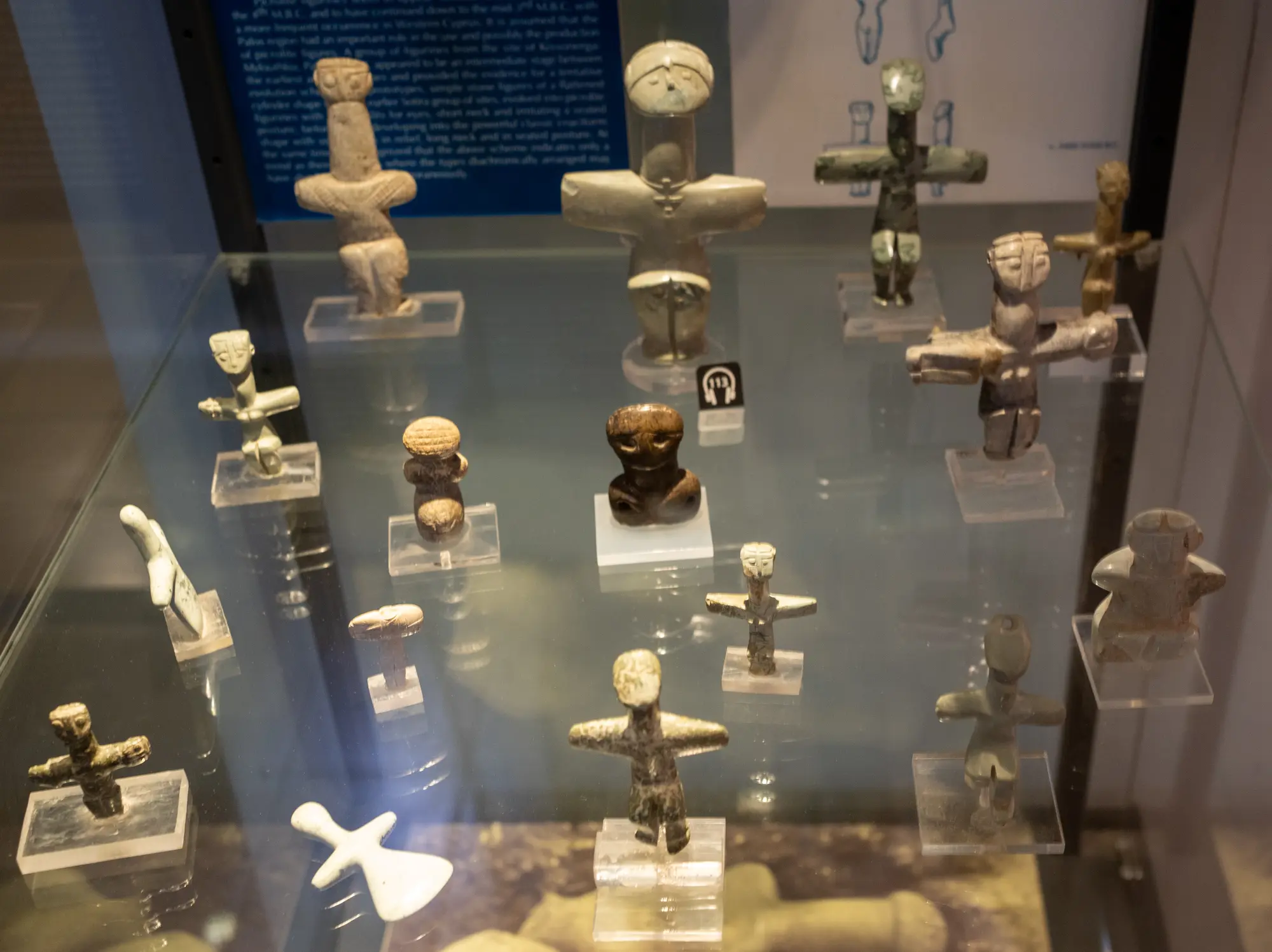 Assorted Picrolite FigurinesChalcolithic · 5500–2500 BC
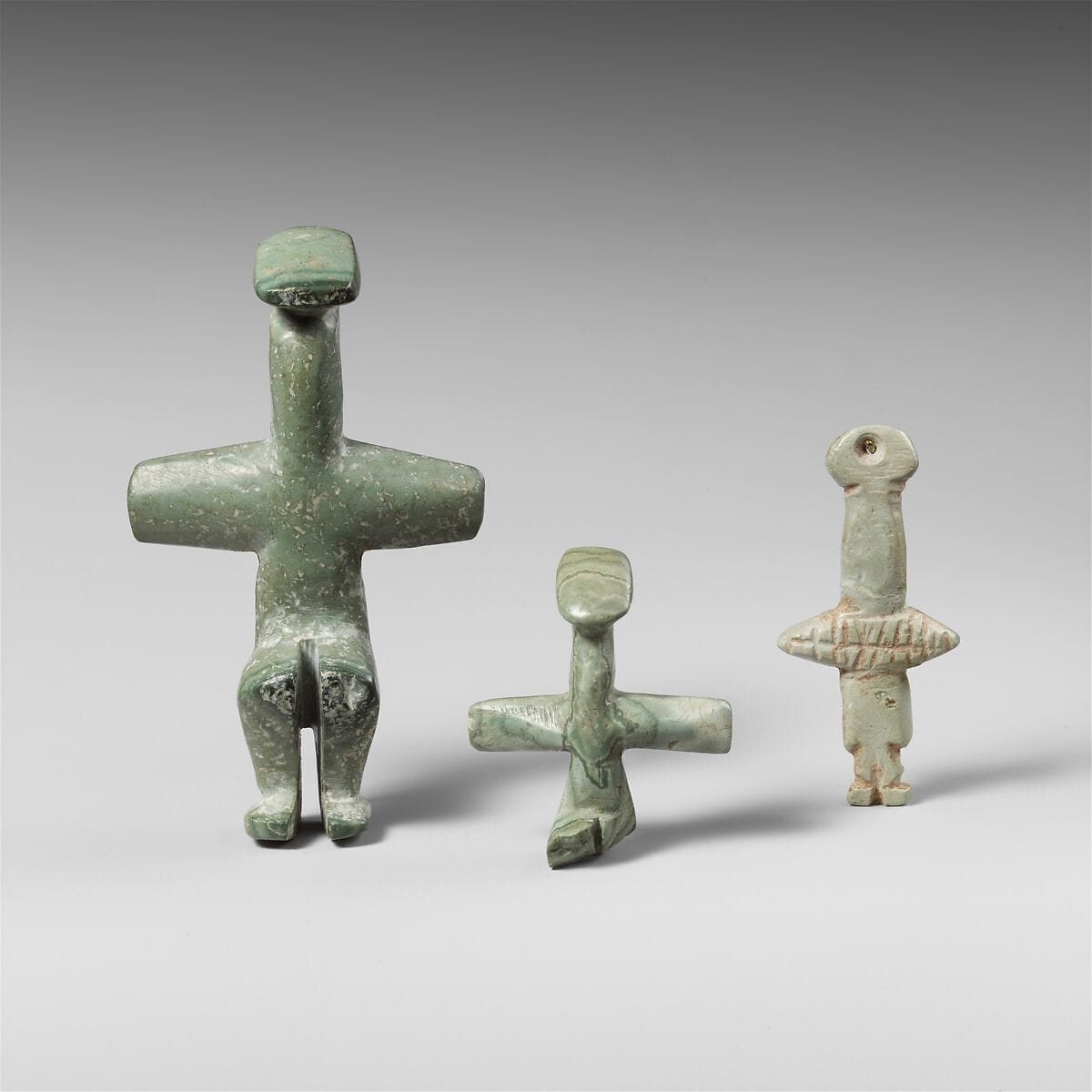 Picrolite figureChalcolithic · 3900–2500 BC
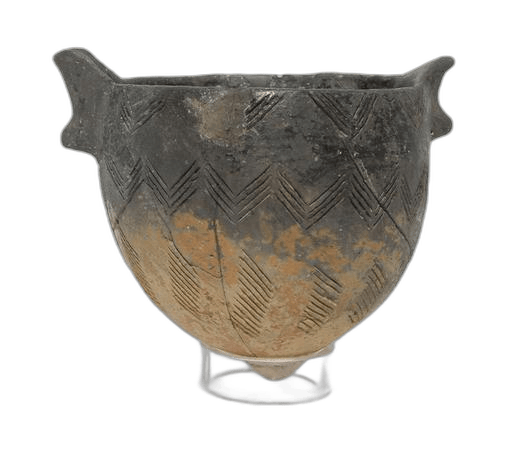 Red Polished Tulip BowlEarly Bronze Age II · 2300–2100 BC
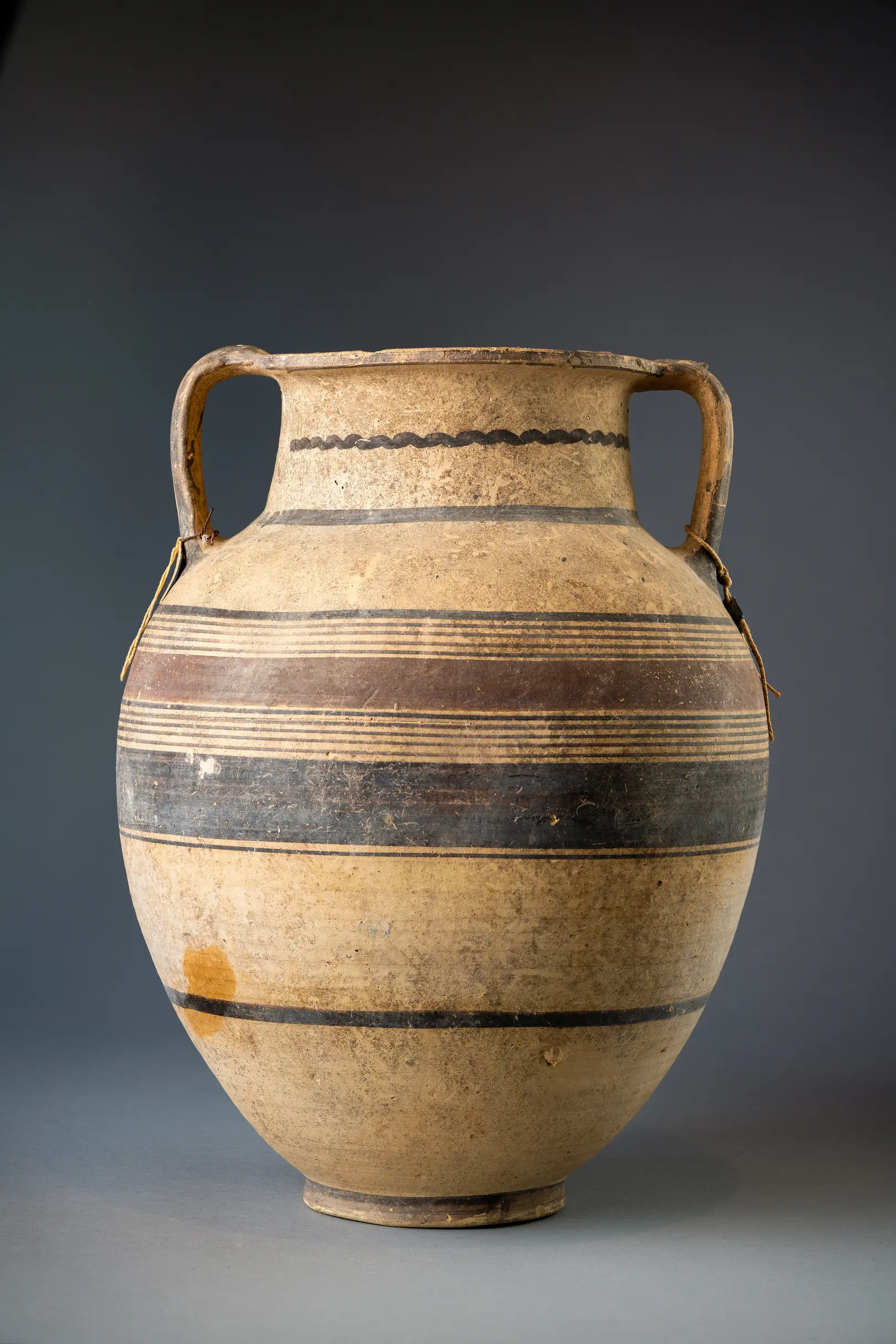 Large Bichrome Amphora with a Wavy Line on the NeckGeometric III · 850–600 BC
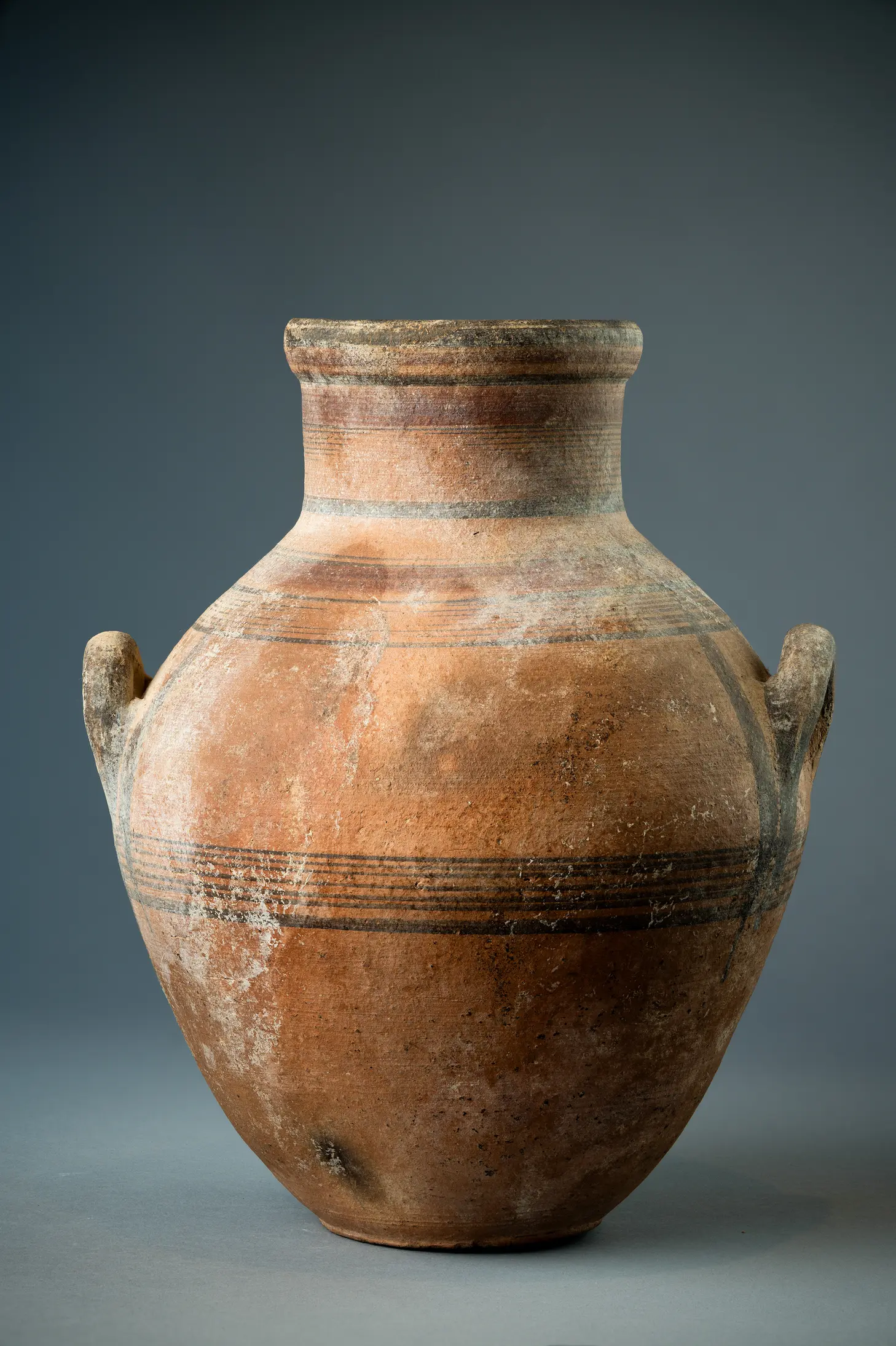 Bichrome IV Amphora with Shoulder Handles and Banded DecorationArchaic I · 750–600 BC
References
- 1.Hofstadter, D. (1994). Goldberg's angel: An adventure in the antiquities trade. Farrar, Straus and Giroux.
- 2.Sullivan, A. McC. (1991). Law and diplomacy in cultural property matters. Museum Management and Curatorship, 10(3), 219-243. https://doi.org/10.1080/09647779109515275
- 3.Kline, T. R. (2012). Confronting complexity in the preservation of cultural property: Monuments, art, antiquities, archives, and history. What can Cyprus teach us? Proceedings of the Annual Meeting (American Society of International Law), 106, 462-469. https://www.jstor.org/stable/10.5305/procannmeetasil.106.0462
- 4.Fincham, D. (2015). The rescue, stewardship, and return of the Lysi frescoes by the Menil Foundation. International Journal of Cultural Property, 22. https://doi.org/10.1017/S0940739115000120
- 5.Hadjisavvas, S. (2015). Perishing heritage: The case of the occupied part of Cyprus. Journal of Eastern Mediterranean Archaeology and Heritage Studies, 3(2), 128-140. https://www.jstor.org/stable/10.5325/jeasmedarcherstu.3.2.0128
- 6.Karageorghis, V. (1990). The A. G. Leventis Foundation and the cultural heritage of Cyprus. A. G. Leventis Foundation.
- 7.Gerstenblith, P. (2015). For better and for worse: Evolving United States policy on cultural property litigation and restitution. International Journal of Cultural Property, 22. https://doi.org/10.1017/S094073911500017X
- 8.Fehlmann, M. (2014). Looting and losing the archaeological heritage of Cyprus. In Ö. Çaykent & L. Zavagno (Eds.), Islands of the Eastern Mediterranean (pp. 144-170). Bloomsbury Academic. https://doi.org/10.5040/9780755608331
- 9.Megaw, A. H. S., & Hawkins, E. J. W. (1977). The Church of the Panagia Kanakaria at Lythrankomi in Cyprus: Its mosaics and frescoes. Dumbarton Oaks.
- 10.Autocephalous Greek-Orthodox Church of Cyprus v. Goldberg & Feldman Fine Arts, Inc., 717 F. Supp. 1374 (S.D. Ind. 1989), aff'd, 917 F.2d 278 (7th Cir. 1990).
- 11.Mirbagheri, F. (2010). Historical dictionary of Cyprus (Historical Dictionaries of Europe 69). Scarecrow Press.
- 12.Marangos, L. (n.d.). Beyond the destruction: Cultural diplomacy on the island of Cyprus. In K. Chalikias, M. Beeler, A. Pearce, & S. Renette (Eds.), The future of the past: From Amphipolis to Mosul. New approaches to cultural heritage preservation in the Eastern Mediterranean (pp. 31-38).
- 13.Karageorghis, V. (2019). Excavating at Salamis: 1952-1974. Reminiscences and remarks. In S. Rogge, C. Ioannou, & T. Mavrojannis (Eds.), Salamis of Cyprus: History and archaeology from the earliest times to late antiquity (pp. 25-31). Waxmann.
- 14.Şevketoğlu, M., Tuncel, R., & Şahoğlu, V. (2015). Protecting the cultural heritage of Cyprus: International laws and concerns. Journal of Eastern Mediterranean Archaeology and Heritage Studies, 3(2), 141-148. https://www.jstor.org/stable/10.5325/jeasmedarcherstu.3.2.0141
- 15.Hardy, S. A. (2021). Conflict antiquities' rescue or ransom: The cost of buying back stolen cultural property in contexts of political violence. International Journal of Cultural Property. https://doi.org/10.1017/S0940739121000084
- 16.Alphas, E. (2017). From a Bronze Age tomb in Cyprus to the estate of a gentleman in Sussex: Measures taken and problems faced in the investigations on the illicit trade of antiquities. In D. Pilides & M. Mina (Eds.), Four decades of hiatus in archaeological research in Cyprus: Towards restoring the balance (Kypriaka: Studies on Ancient Cyprus 2). Verlag Holzhausen; Department of Antiquities, Cyprus.