
Licence No. 7070: How Cypriot Antiquities Left the Island Legally
Between 1935 and 1978 the Cyprus government signed something like seven thousand licences to export antiquities, and the souvenir trade behind them ran back to Venetian times. The looting that shadows the subject is real, but it is mostly one catastrophe after 1974; most of what left the island left with a stamp on the crate.

Alexis Drakopoulos
June 13, 2026·Collecting · History · Archeology·17 min read


Share


Alexis Drakopoulos is a Greek Cypriot Machine Learning Engineer working in Financial Crimes. He is passionate about Archeology and making it accessible to everyone. About Me.
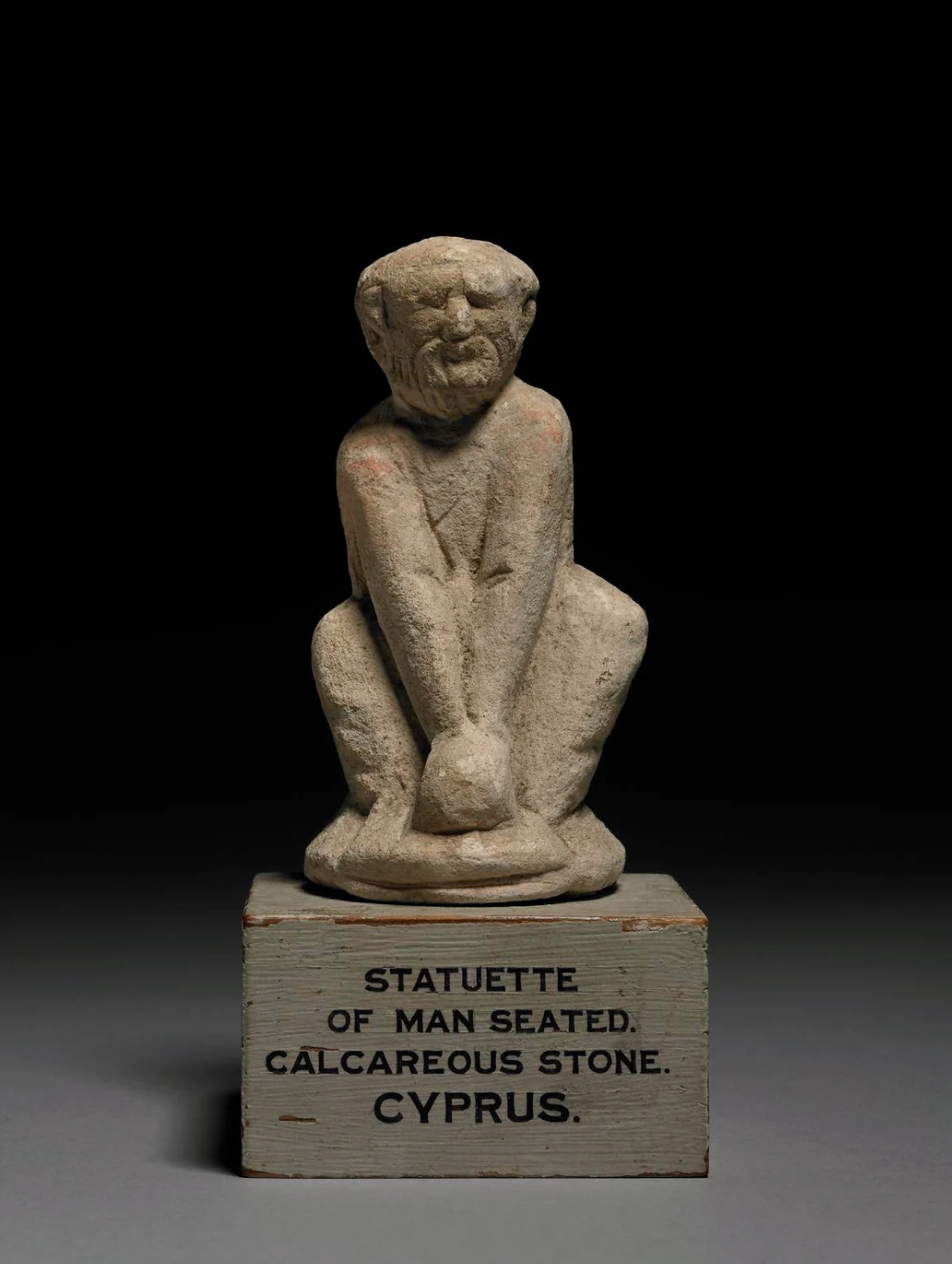
In 2009 the British Museum bought a small limestone figure of a seated man kneading a lump of clay, his hands pushed down between his ankles. It is 11.3 centimetres high and still carries traces of paint. The London dealer who sold it, Charles Ede Ltd, had picked it up at a house sale in Peckham, in south London, where the catalogue gave it no history beyond a single phrase: it came from a nineteenth-century collection, "possibly that of Cesnola" [1].
The guess was right, and proving it took the kind of work that leaves a paper trail of its own. Thomas Kiely, a curator at the museum, found the same figure in a photographic album of the Lawrence-Cesnola collection published in 1880, on plate 60 among other pieces dug or bought on Cyprus by Alessandro Palma di Cesnola, brother of the more notorious Luigi. From the album the trail ran to a saleroom: in 1888, in the third Cesnola sale at Sotheby's, lot 777 was a "statuette of a man seated, calcareous stone," filed under "Toys and Figurines." The annotated catalogue in the British Library named the buyer, Lieutenant-General Pitt Rivers, who paid a guinea for it and put it in his teaching museum in Dorset. That museum was broken up after the Second World War, and the potter drifted through private hands until it surfaced in Peckham [1].
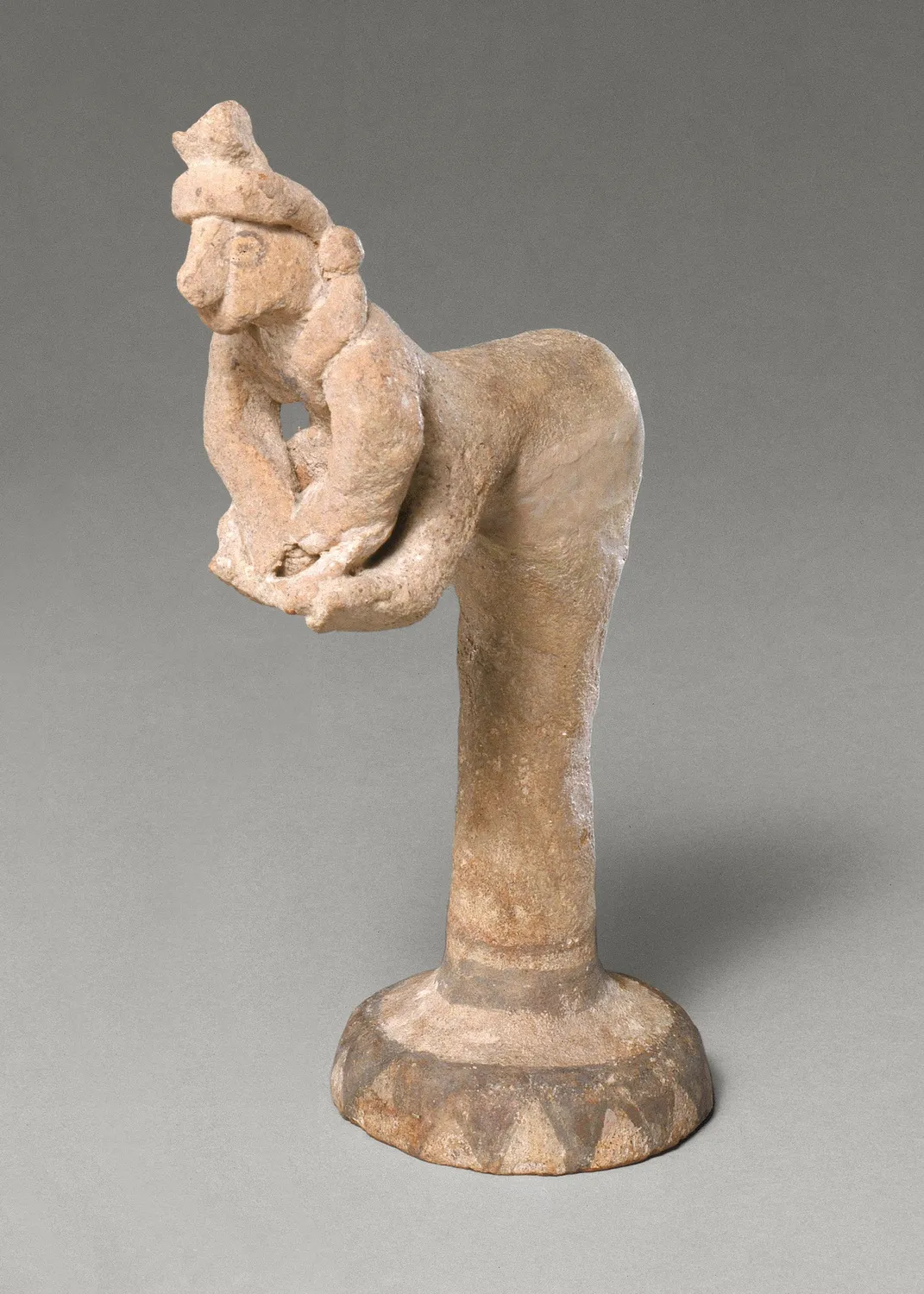
What the museum acquired was a Cypro-Archaic figure of a coroplast at his work and, attached to it, a documented chain of custody reaching back to the 1880s. The second thing was what made the purchase legal. A public museum bound by the 1970 UNESCO Convention cannot buy an antiquity that might have left its country of origin after that year, and the potter could be bought precisely because its history could be reconstructed past the line [1].
So a history is what licenses an object today. Cyprus has come to treat the absence of one as close to a confession: a Cypriot piece that cannot account for its past is assumed to be loot, smuggled from a tomb opened in the dark. That assumption is worth slowing down on, because for almost the whole stretch of time in which antiquities were leaving Cyprus, their departure was authorised: signed, stamped and numbered by the government of the day.
Exported like sacks of carob beans
Étienne de Lusignan, writing in 1572, already described Cypriot villagers opening underground chamber-tombs full of "anticaglie et cose preciose," one of which had lately yielded a near-intact stone "king." The commerce that grew from finds like these ran, in the words of one British survey of the island's tombs, on the principle that "antiquities from the graves were exported like sacks of potatoes or carob beans," a trade it traced "back to Venetian times" [18]. The comparison is exact. Carob was a bulk Cypriot crop shipped to Egypt on European vessels, and the antiquities rode the same boats.
By the early nineteenth century the mechanism was complete and entirely ordinary. In 1801 Edward Daniel Clarke recorded the Venetian consul Peristiani, who had "dug up above thirty idols" and sent them to the British ambassador at Constantinople; at Nicosia, Clarke added, "the goldsmiths part with such antiquities for a few paras" [2]. None of this was furtive. A French consular report of 1859 gave the end state plainly: "There is no collection of antiquities in Cyprus. Everything has been sold to the English, the French and the German travelers, as soon as they were discovered" [2]. What changed across the century was the scale. The legal position did not.
The diggers' decades
For the second half of the century Cyprus was one of the easiest places in the Mediterranean to take antiquities out of the ground and out of the country. The island was Ottoman until 1878, and the men doing the digging were mostly the foreign consuls at Larnaca, who enjoyed the protection of their flags and the indulgence of a distant administration. Luigi Palma di Cesnola, the American consul, was the most energetic. Working at Idalion, Kition, Golgoi and elsewhere through the 1860s and 1870s, he and his agents assembled tens of thousands of objects, more than thirty thousand of which went to the young Metropolitan Museum of Art in New York, where they remain the core of the Cypriot galleries [2]. Robert Hamilton Lang, a British bank manager and consul, sold his finds to the British Museum [1].
The law made this straightforward, and that is the part the modern presumption forgets. An Ottoman regulation of 1869 allowed digging under licence; the fuller law of 1874 declared buried antiquities state property but split each excavation's finds three ways, between digger, landowner and government, and then, in its thirty-second article, let the rest be exported with the minister's permission [5][17]. When the Ottomans reversed course in 1884 and banned export outright, Britain, by then administering the island, declined to apply the new law on the reasoning that it postdated the occupation, and kept the older, liberal one in force. So the consuls carried on digging and shipping, under a rule that expressly permitted it [17]. Cesnola was candid about the appeal: "The excitement of a digger can only be compared to that of a gambler" [2].
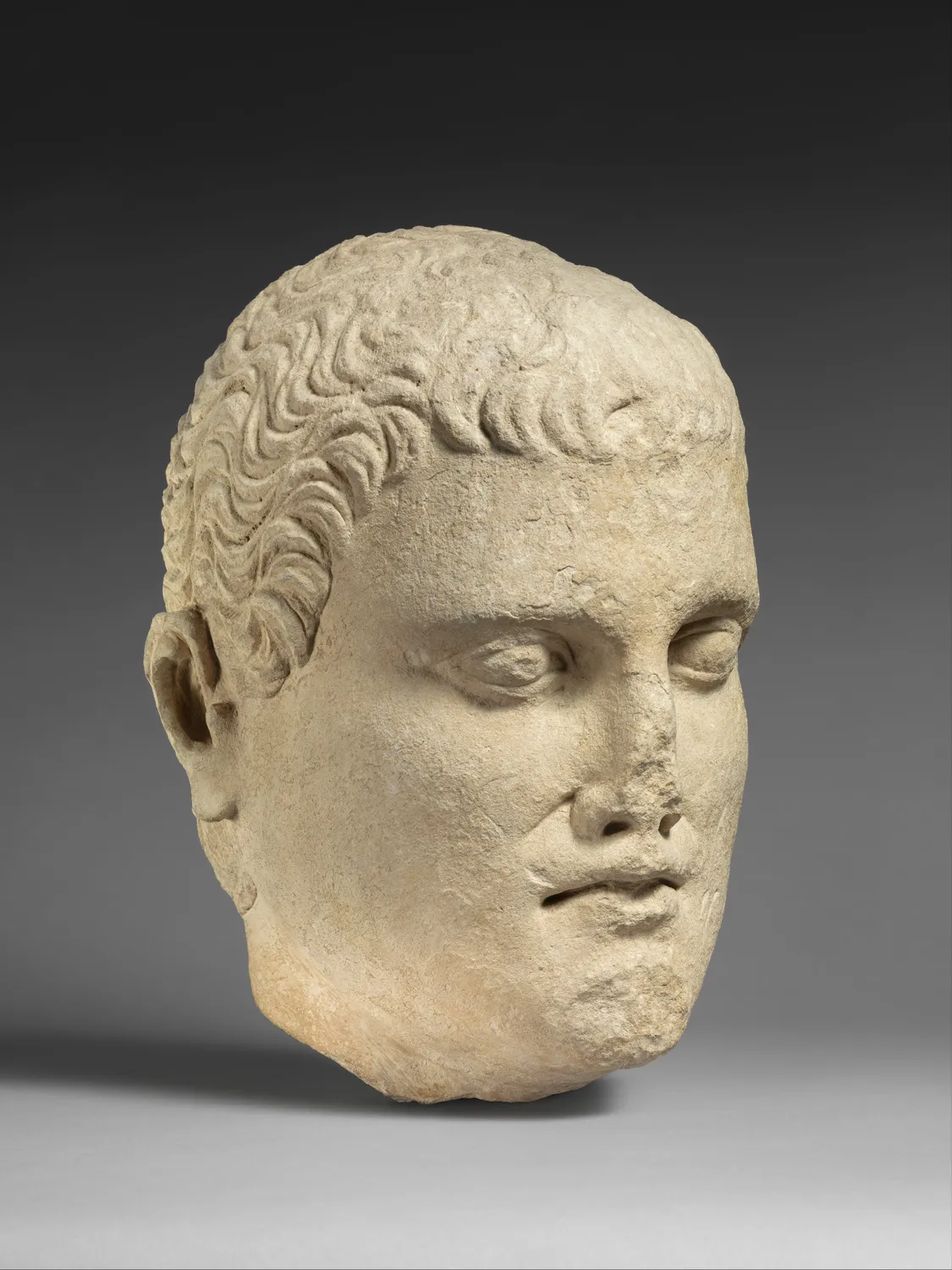
The organised British excavations ran on the same liberal split. When the British Museum dug the cemeteries at Amathus, Kourion and Enkomi in the 1890s, a third of the finds went to the Cyprus Museum and two-thirds came legally to London, where the Trustees then parcelled out "duplicates" to the Ashmolean, the Fitzwilliam, Dublin, Edinburgh, Leeds, Nottingham and a dozen other institutions [17]. A great deal of what sits in provincial museum cases across Britain arrived this way, by partage, with paperwork.
This is not to make the trade clean. The same consuls who dug legally often beat the customs house by trickery. Lang sold a seven-foot statue to an Austrian frigate whose sailors carried it past the guard under a sheet, "as a dead or drunken man," and shipped the Dali sculptures while his dragoman lured the watchman away [2]. Cesnola, told in 1871 that the American consul could not export, simply re-applied as the Russian consul, whose name the order did not mention, and had the crates on a schooner within hours [2]. The digging was lawful; the export duty was dodged. Dodging a customs charge, though, is a different thing from emptying a church, and the difference is the whole of what follows.
Keeping it on the island
Not everyone was shipping. Demetrios Pierides, a Larnaca-born scholar who came home in 1839, spent decades buying Cypriot antiquities for the express purpose of keeping them on Cyprus, at a moment when, as the catalogue of his collection later put it, "it was indeed very easy for foreign collectors and looters to export antiquities" [3]. There was no Cyprus museum to take such things in, so a handful of educated Cypriots held the material in their own houses until one existed. Pierides corresponded with Renan and Perrot, hosted Lang and the Cesnolas at his table, and was known to the German excavator Max Ohnefalsch-Richter simply as "le Savant Grec." His family kept collecting for five generations, and the house in Larnaca is the oldest private museum on the island. He sold abroad on occasion too: even the protective collector worked the market everyone else worked [3].
The pull toward home was political as well. By 1900 the Cypriot members of the colonial Legislative Council were pressing for "a law for keeping the antiquities in the island," and resenting the share the British Museum left behind. When it dug the rich tombs at Enkomi, one Cypriot wrote, the museum's gift to Nicosia "was contained in a box; a few unworthy objects, so as to be able to claim that the excavators had given something to our museum" [2].
When a protective law finally came, in 1905, it banned export without the High Commissioner's written permission [4]. The result was not the intended one. Ronald Storrs, governing in the 1920s, watched the embargo "encourage illicit digging and smuggling" while it "discouraged legitimate excavation by learned institutions" [2]. In the thirty years after 1905 only a single foreign mission worked on the island, where dozens had dug before [5]. Locking the doors had emptied the museums and fed the smugglers.
Seven thousand licences
The fix arrived in 1935. The British set up a Department of Antiquities, put one body in charge of licensing digs, running the museums and controlling export, and let private individuals keep collections on the condition that they declared them [4]. From that year the Department kept a register of "Objects and Collections Declared by Private Individuals," district by district, the Famagusta file of which survives in the state archives [12], and alongside it a numbered export-licence book. The numbers are the surprise. By January 1978 that book had reached 7070, the figure on the permit that sent a Cypriot named A. Strouthos abroad with sixty-two antiquities in a single consignment [13]. Between the Department's founding and the late 1970s the government had signed, by its own running count, on the order of seven thousand licences to take antiquities legally off the island.
Some collectors framed the licence and hung it on the wall. Among the objects in the Alexander Malios collection in Leipzig are four small pieces bought by an Englishwoman, Ethel Inman, in 1937 and 1939; she had the export permits framed and the antiquities chained directly to them, object and paper hanging together [13]. The Department did more than tolerate the trade. Its director, Vassos Karageorghis, described a Sales Register the Department kept of objects "available at nominal prices," which it used to "encourage exports to universities, museums, and similar institutions, for educational purposes" [14]. The state was itself, in a controlled way, in the business of sending antiquities abroad.
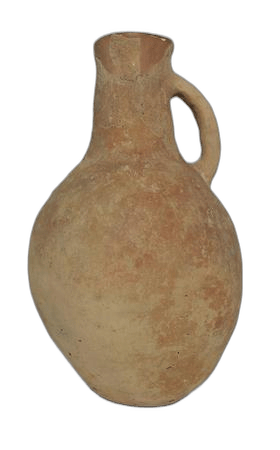
The licences name a recognisable class of collector. The zoologist and painter Desmond Morris built a large holding of Cypriot Bronze Age pottery on visits to the island and at American auctions; Dr Takey Crist, a Cypriot-American, gathered enough to open a small Cyprus museum in North Carolina; Leto and Costakis Severis assembled some 2,500 pieces; the American ambassador William Rex Crawford left in 1972 with an export licence for forty-two objects [13]. A Bronze Age Red Polished jug that surfaced at a London auction in 2014 carried its own licence: bought for eight Cyprus pounds from an authorised dealer in 1964 and exported on a permit dated 20 October 1964, which the Department could still match against its files fifty years later [4]. None of these objects is loot. Each left through the front door.
The internal market narrowed steadily all the same. A 1964 amendment vested every excavated find in the state outright, and forming a large new private collection became, in the words of one of Karageorghis's catalogues, "virtually impossible" thereafter [11]. The current law, Cap. 31, vests all antiquities in the Republic and defines an antiquity as anything made on the island before 1850 [15]; licensed export of private pieces continued until 1996, when it effectively stopped, and export today is granted only for exhibition or study [4]. What the law had worked toward across a century was a settlement, not a prohibition: collecting was legitimate to the precise extent that it was visible to the state.
The wound
The looting that gives the whole subject its bad conscience belongs mostly to a single event, and a recent one. Seven months after the Department finished registering the island's private collections, the Turkish invasion of July 1974 cut Cyprus in two and left more than a third of it, the museums at Famagusta and Kyrenia among them, beyond the reach of the authorities [6]. What followed is a different category from the licensed trade. Churches were stripped and tombs emptied. The sixth-century mosaics of the church at Lythrangomi, four panels of Christ, the archangel Michael and two apostles, were sawn from the apse between 1976 and 1979; when they appeared in a Geneva free port in 1988 an Indiana dealer bought them after the most cursory of checks, and the Church of Cyprus sued in an American court and won them back, in a judgment that has shaped due-diligence law ever since [7][8].
Collectors are in this part of the story on both sides. The thirteenth-century frescoes of a church near Lysi, also cut from their walls and smuggled to Munich, were bought in 1984 by the Menil Foundation of Houston, which took them knowing they belonged to the Church of Cyprus, conserved them at its own cost, showed them for twenty-five years, and sent them home in 2012 [8]. The private collection of Christakis Hadjiprodromou in Famagusta, some two thousand objects, was scattered in 1974, and only forty or fifty pieces were recovered. One of them, a little Middle Bronze Age terracotta cradle with an infant tucked into it, came back from Munich in 2015 [4][14]. The last sixty objects of the same affair, handled by the smuggler who had moved both the Lythrangomi mosaics and the Lysi frescoes, came home from Germany in 2024 [16].
This is what the 1970 line is really about in Cyprus. The UNESCO date is elsewhere an administrative convenience; here it sits next to a wound, so that an object which cannot show a history from before the early 1970s carries the strong implication, as Kiely puts it, that it "is the product of looting" tied to the island's division [1]. The implication is fair for ecclesiastical material, and for anything that looks as though it came from the north. As a blanket rule it is much weaker, and the numbers say so.
What the trade actually amounts to
When students at the Eastern Mediterranean University went through every antiquity sold at Christie's and Sotheby's worldwide between 1988 and 2008, they counted 52,482 lots, of which 1,842, four per cent, were identifiably Cypriot; 377 of those had a history reaching before 1970 [7]. Cypriot material is also cheap: Red Polished pottery goes for a few hundred pounds, a Cypro-Archaic limestone head rarely past ten thousand [7]. The Republic's recurring claim that sixty thousand objects were smuggled out of the north after 1974 cannot be squared with this. That volume would have flooded and collapsed the very market it was supposed to feed; a few thousand is the likelier figure, which is bad enough without the inflation [7].
Set that against the legal diaspora and the proportions invert. Cesnola alone removed more than thirty thousand objects [2]; the partage divisions sent two-thirds of a generation of British excavation to London and out across the provincial museums [17]; seven thousand export licences over four decades carried out an unknown but large multiple of seven thousand objects [13]; and beneath all of it ran three centuries of the souvenir trade. The legally exported total runs well into the tens of thousands; one investigation of the trade describes "a huge percentage of the island's cultural heritage" as having left this way [4]. The looted material is genuine and the post-1974 thefts are a real crime, but they are a minority of what is out there.
Even the looting resists the official story. During the 1963–73 conflict the Republic ran what its own director called a "silent accord," quietly licensing Greek Cypriots to buy antiquities that had in fact come from illegal digging, then closing the window with an amnesty that legalised those collections in December 1973 [6]. A share of the material later filed under "Turkish looting" was dug, within the government's own writ, by Greek Cypriots before the invasion. Karageorghis put the double truth in one sentence: some of the collectors of the 1960s "made a positive contribution by preserving within the Island objects which otherwise would have found their way to the illicit market," and "not all collectors, however, were scrupulous, as we know" [11]. Both halves are the point.
Boardman against Renfrew
The orphaned object sits at the centre of a long argument among archaeologists. Colin Renfrew of Cambridge held that anyone who buys an unprovenanced antiquity is "aiding, abetting, and sustaining the looting process": the market pays the looter, and the scholar who studies a looted object only launders it [9]. John Boardman of Oxford called this a "witch-hunt of collectors," and argued that "a low-level peddling of antiquities is quite inevitable," even useful, since it "disseminates educative material" and "satisfies the legitimate aspirations of collectors"; an object out of the ground, he maintained, still tells you most of what it knows [10].
Cypriot practice has mostly worked in the gap. Karageorghis held that "the right to export antiquities rests in the legal government of a country," and that the objects already gone were worth studying [14]. His estimate of their value was exact: pieces in private collections are "of much less value than those found in proper excavations," but "usually complete and of good artistic quality," and they fill in the range of a class of object once chronology has been fixed by proper digging [3]. With the Leventis Foundation behind him he spent thirty years cataloguing Cypriot material wherever it had ended up, the Cesnola collection in New York, the holdings in Stockholm, Berlin and Copenhagen, the private collections at home. The collections that behaved were drawn back into the record one volume at a time [3][11].
How an object earns its place
The honest collector's task follows from all of this, and it is duller than the headlines. The objects worth holding are the ones that can account for themselves: a piece with a documented history before 1970, or, for a collector on Cyprus, one entered on the Department's register [4][12]. These are the disciplines the public museums work under, and they are why a figure from a Peckham house sale could go to the British Museum while a fresh Red Polished jug with no story can honestly go nowhere.
What the absence of a story usually means, though, is not the dark tomb. The Leipzig curators who reassembled the Malios collection found that the lead seals and export numbers stamped on legally exported objects were "often removed largely for aesthetic reasons," and the permits themselves "often lost" [13]. A century of legal export produced an enormous population of objects that left lawfully and then, over decades in private hands, shed the paper that proved it. The unprovenanced jug on the market is far more likely one of those than a piece cut from a wall.
The work that closes the gap is document by document: a sale-catalogue annotation, an export licence signed by a curator in the 1950s, a photograph on a 1972 registration card [13]. It is the same work, run forward instead of back, that returned the potter to the British Museum. In a house in England the four small antiquities Ethel Inman carried home in the 1930s still hang on the wall, each chained to the framed government licence that let it travel. She thought the paper worth displaying beside the object. Ninety years on, that was the sound instinct: the licence is now worth more than the figures it came with.
References
- 1.Kiely, T. (2021). Tracing the 'diaspora'. In L. Bombardieri & E. Panero (Eds.), Cyprus: Crossroads of Civilizations. Musei Reali; DeArtcom.
- 2.Marangou, A. G. (2000). Life and Deeds: The Consul Luigi Palma di Cesnola 1832–1904. Nicosia: Popular Bank Cultural Centre. [incorporating R. Storrs, Orientations, 1937]
- 3.Karageorghis, V. (1973). Cypriote Antiquities in the Pierides Collection, Larnaca, Cyprus. Athens: Ekdotike Hellados / Pierides Foundation.
- 4.Alphas, E. (2017). From a Bronze Age tomb in Cyprus to the estate of a gentleman in Sussex: Measures taken and problems faced in the investigations on the illicit trade of antiquities. In D. Pilides & M. Mina (Eds.), Four Decades of Hiatus in Archaeological Research in Cyprus: Towards Restoring the Balance (pp. 30–43). Vienna: Holzhausen.
- 5.Pilides, D., & Papadimitriou, N. (Eds.). (2012). Ancient Cyprus: Cultures in Dialogue. Department of Antiquities, Cyprus.
- 6.Karageorghis, V. (1974). The illicit sale of Cypriot antiquities (letter from the Director of the Department of Antiquities). Antiquity, 48.
- 7.Fehlmann, M. Looting and losing the archaeological heritage of Cyprus (Chapter 8). Bloomsbury, DOI 10.5040/9780755608331.
- 8.Kline, T. R., and the panel on Cyprus and cultural property, Proceedings of the Annual Meeting (American Society of International Law), Vol. 106 (2012).
- 9.Renfrew, C. (2000). Loot, Legitimacy and Ownership: The Ethical Crisis in Archaeology. London: Duckworth.
- 10.Boardman, J. (2006). Archaeologists, collectors, and museums. In E. Robson, L. Treadwell & C. Gosden (Eds.), Who Owns Objects? The Ethics and Politics of Collecting Cultural Artefacts (pp. 33–46). Oxford: Oxbow Books.
- 11.Karageorghis, V. (Ed.). (2010). Cypriote Antiquities in the Phylactou Collection. Nicosia: A. G. Leventis Foundation.
- 12.Merrillees, R. S. (2014). George Basil Palma, chemist and collector of Cypriote antiquities in Famagusta, Cyprus, in the 20th century A.D. Cahiers du Centre d'Études Chypriotes, 44.
- 13.Gatzsche, A. (2023). From Cyprus to Leipzig: Provenance research. In E. Poyiadji-Richter (Ed.), Alexander Malios Collection, Vol. 1: Cypriot Antiquities. Leipzig: AMRICHA.
- 14.Interview with Dr. Vassos Karageorghis, Director of the Department of Antiquities of Cyprus. Journal of Field Archaeology (1983).
- 15.Cyprus: Cultural heritage management. In C. Smith (Ed.), Encyclopedia of Global Archaeology. Springer.
- 16.Department of Antiquities, Republic of Cyprus, repatriation announcements 2023–2024 (United States, 2023; Germany / Aydın Dikmen settlement, 2024; United Kingdom, 2024); reported in Cyprus Mail, Euronews and Greek City Times.
- 17.Tatton-Brown, V. (Ed.). (2001). Cyprus in the 19th Century AD: Fact, Fancy and Fiction. Papers of the 22nd British Museum Classical Colloquium, December 1998. Oxford: Oxbow Books. [incl. N. Stanley-Price, 'The Ottoman Law on Antiquities (1874) and the founding of the Cyprus Museum']
- 18.Jeffery, G. H. E. (1915). Rock-cutting and Tomb-architecture in Cyprus during the Graeco-Roman Occupation. Archaeologia, 66. (Read to the Society of Antiquaries of London, 17 December 1914.)