
Vassos Karageorghis (1929–2021): The Maker of Modern Cypriot Archaeology
For twenty-six years he ran Cyprus's antiquities and dug the Royal Tombs of Salamis, getting the find into print before the 1974 partition could bury it. He also catalogued the island's great private collections, most of them unprovenanced, and named the quiet policy behind them in his own books.
Alexis Drakopoulos
June 8, 2026·Archeology · History · Collecting·12 min read


Share


Alexis Drakopoulos is a Greek Cypriot Machine Learning Engineer working in Financial Crimes. He is passionate about Archeology and making it accessible to everyone. About Me.
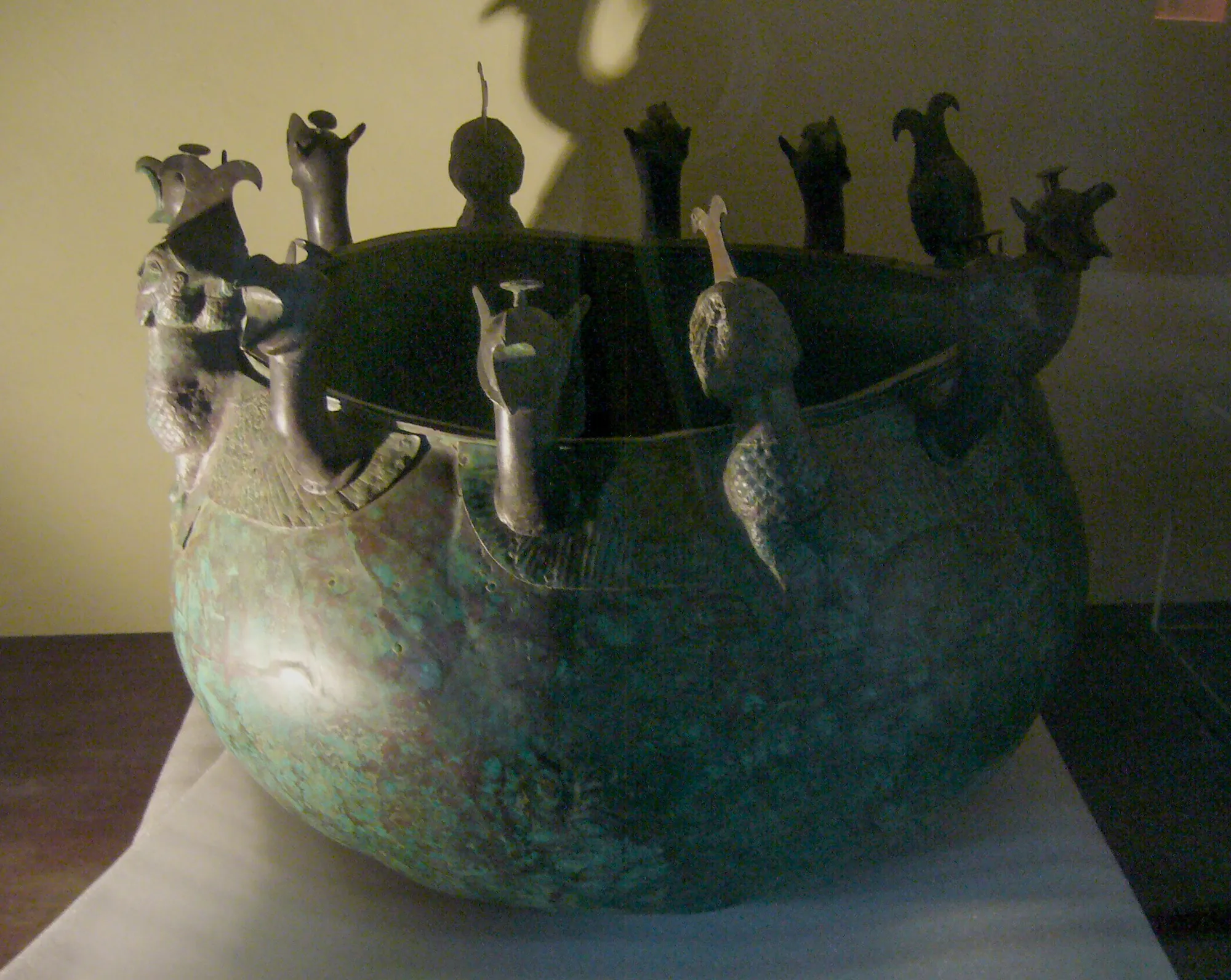
In the dromos, the ramped passage cut down to the Salamis tombs, the wood had rotted to nothing, but its shape survived in the soil. Where a chariot and the horses yoked to it had stood, the decayed timber left a stain in the packed fill, and Vassos Karageorghis lifted out of the dirt the impression of vehicles he could no longer touch. The horses had been killed at the tomb mouth; the bronze and gold fittings of their harness lay where the leather had perished. In the richest of the burials, Tomb 79, an iron tripod held a bronze cauldron ringed with eight cast griffin heads and four figures half bird and half man. Around it lay an ivory bed, a throne sheathed in carved ivory, iron fire-dogs, and a bundle of iron spits.[3]
He read the assemblage against the twenty-third book of the Iliad, the funeral of Patroclus, where Achilles cuts the throats of horses at the pyre and the mourners roast meat on spits over andirons. "Book 23," he wrote, "was for us a kind of Bible."[4] The dead of eighth-century Salamis had been sent off, it seemed, in close to the manner Homer described. The reading did what no Cypriot find had managed before: it lifted the island's archaeology out of what Karageorghis called "a local, provincial affair" and into Homeric archaeology, the sort that drew the eyes of Athens, London and Paris.[4]
From Trikomo to University College London
He had reached Salamis young, and by an unusually straight road. Born in 1929 at Trikomo, a village near the north-eastern coast, he grew up in a rural household of limited means, one of several children, and showed enough appetite for learning that the headmaster of the Pancyprian Gymnasium in Nicosia singled him out.[1] In 1948 he won, by open competition, a Cyprus Government scholarship to study in Britain, and its terms were exact: the award bound him to a future post in the island's Department of Antiquities.[1]
He read Classics at University College London and took his London doctorate in 1957 under Martin Robertson, sitting in rooms where Gordon Childe, Max Mallowan and Mortimer Wheeler lectured.[2] Wheeler marked him most. Karageorghis learned to dig at Wheeler's training excavation at Verulamium, and the lesson he kept was a rule about publishing, one that would later become the instrument of his authority. He returned to Cyprus in 1952, aged twenty-three, as Assistant Curator of the Cyprus Museum, and was sent almost at once to Salamis.[1]
The publication zealot
In 1963, aged thirty-four, he succeeded Porphyrios Dikaios as Director of the Department of Antiquities, the state body that since 1935 had held every excavation permit, museum and conservation laboratory on the island. He kept the office for twenty-six years.[1][14]
The rule from Wheeler hardened into a creed: an unpublished excavation is a negative contribution to archaeology.[1] He meant it literally, and he enforced it with the one lever the job handed him. Foreign expeditions were welcome, and he wanted as many of them as he could attract, on the reasoning that interest in Cyprus could be kept alive only by a generous permit policy.[2] But the permits carried conditions, and they could be revoked for slow publication. On one occasion he refused Basil Stewart a permit to dig until the long-overdue report on James Stewart's Cypriot excavations had reached printed proof.[2][18] He drove the Department's journal, the Report of the Department of Antiquities, Cyprus, into a serial that scholars abroad took seriously, and for some thirty years he wrote the annual "Chronique des fouilles" in the Bulletin de Correspondance Hellénique, the running record of everything turned up on the island.[1][14] District museums, conservation labs, a photographic service, a Department publishing list of sixty-odd titles followed.[14] Catling, who knew him, read the whole career as one campaign: to raise, by an enormous factor, the world's estimate of the material civilisation of Cyprus, which meant evangelising outside it, in lecture halls and conference rooms and, above all, in print.[1]
He did not run the Department from behind a desk. He and Jacqueline, the French-born scholar he married in 1953, who became the authority on the Cypriot Aphrodite, kept open house for visiting archaeologists in Nicosia; Einar Gjerstad, who had led the Swedish Cyprus Expedition of the 1920s, was a lifelong friend, and a photograph of the two of them arm in arm sits on the cover of his memoirs.[2] He was not universally easy. The tight grip on permits, and a salesmanship on Cyprus's behalf that some found relentless, made enemies; Catling, defending him, allowed that the methods "were to be misunderstood and unfairly criticized," and Eva Rystedt, editing the memoirs, hints at difficulties with colleagues that the book itself glides past.[1][2]
1974, and the line through his life's work
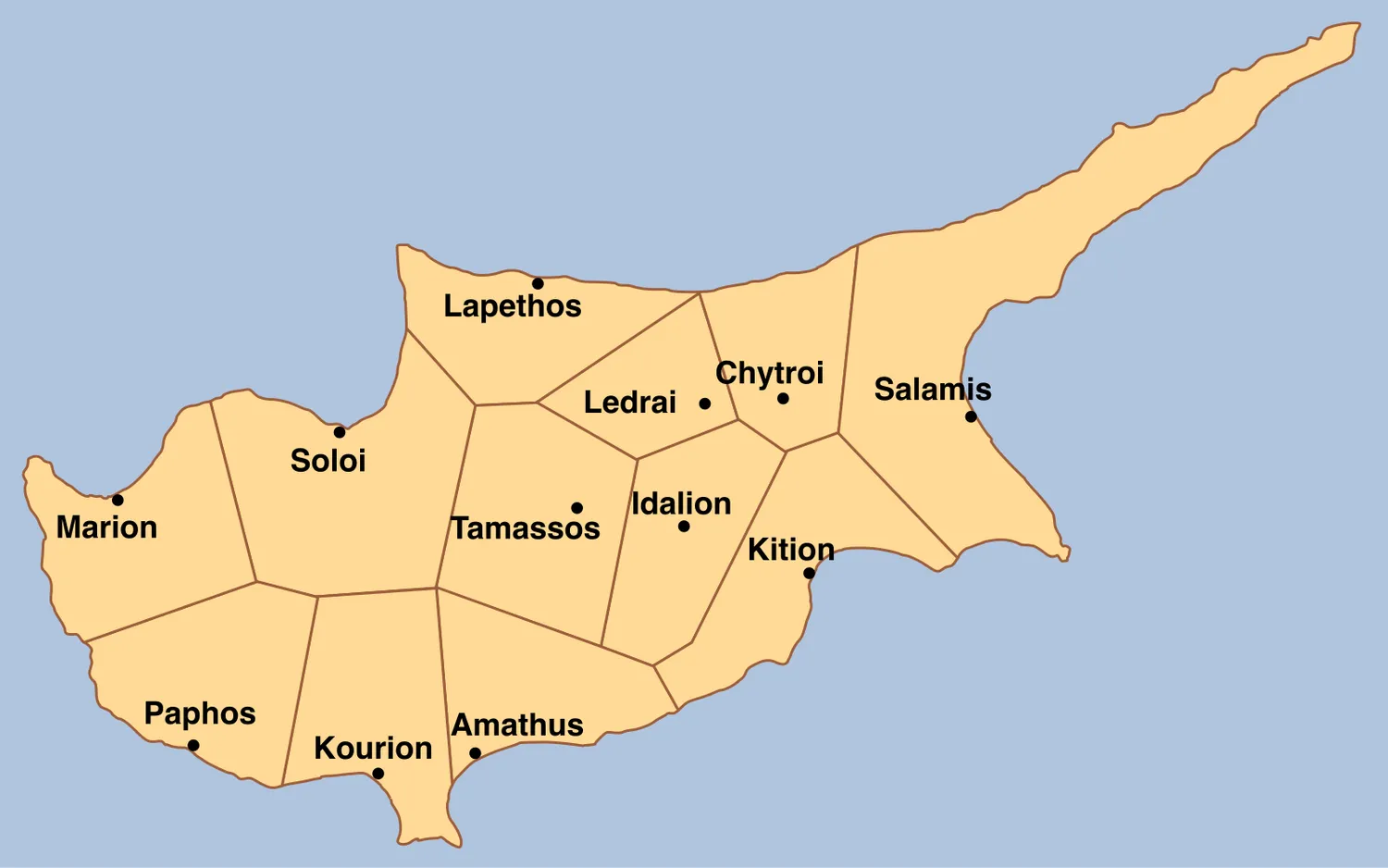
The campaign met an enemy it could not out-publish. In the summer of 1974 the Turkish military intervention split the island, and the line it drew swallowed Trikomo, where he was born, Enkomi, the Bronze Age city whose tombs had first drawn him to the region, and Salamis itself. "This dream," he wrote, "was destroyed in 1974."[4] Fieldwork in the north stopped, the monuments were left without the authorities that had guarded them, and over the years that followed the churches and sites of the occupied zone were stripped; one running estimate puts it at more than five hundred churches pillaged and some sixteen thousand icons, mosaics and frescoes carried off to the market.[14] His own work turned south and west: to Kition at Larnaca, to the fortified hill-towns of Maa and Pyla, short-lived defensive foundations of the crisis years around 1200 BC, and to the Iron Age cemetery at Palaepaphos-Skales, more than fifty tombs that Snodgrass praised for the "exemplary speed" of their publication.[16]
One stroke of timing he counted as luck rather than skill. The final volumes of the Salamis necropolis were finished and printed before 1974 closed the site off. The discovery that had made his name, and the country's, outlived the loss of the ground it came from, because he had got it onto paper in time.[4] At Kition he found something that owed nothing to Greece: a precinct of temples in continuous use for seven centuries, with copper-smelting workshops built hard against the sanctuary walls, industry and cult sharing a wall and a door. He read it as a religion of the forge, smith-gods guarding the island's copper, a goddess standing on a base shaped like an oxhide ingot.[5] In the Phoenician centuries the largest temple was rebuilt for Astarte in Tyrian dressed stone, and stood until Ptolemy I burned it after killing the last Phoenician king of Kition.[5]
How Cyprus became Greek, and the backlash that followed
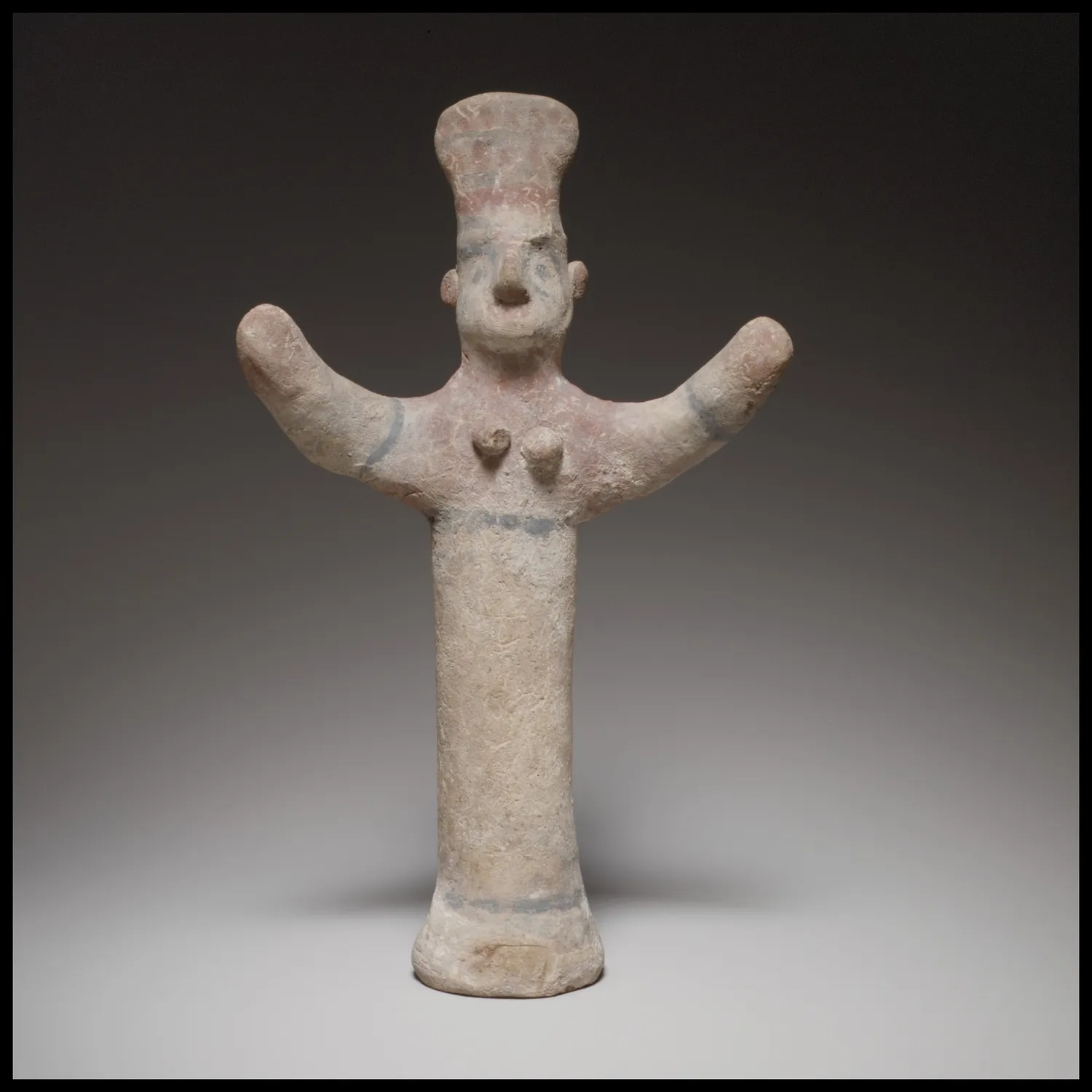
Karageorghis's boldest readings were never confined to one site. Across his career he assembled a single large argument about how Cyprus became Greek, and it became the most contested thing he ever wrote. After the Mycenaean palaces of mainland Greece collapsed around 1200 BC, he held, Achaean Greeks came to Cyprus as refugees and settlers, in waves through the twelfth and especially the eleventh centuries; they were "the catalyst" for the island's social and religious change, and the agents of a Hellenisation he judged more profound and lasting than most scholars would grant.[6][15] The evidence he gathered ran from locally made Mycenaean-style pottery and a new form of chamber tomb to figurines of a goddess with uplifted arms, Aegean weapons, and dressed-stone architecture, and on to the arrival of the Greek language itself: at Palaepaphos-Skales he excavated a bronze obelos, a spit of the kind once bundled into the Salamis tombs, this one inscribed in the Cypriot syllabary, the script the island used before the Greek alphabet, with the eleventh-century Greek name Opheltas.[6]
He did not hold the position unchanged. By 2000 he conceded a point his critics had pressed for a decade, that "the equation of pottery styles with ethnicity and population movements is no longer tenable," while keeping migration and Hellenisation at the centre, resting now on architecture and weapons rather than pots.[6] He revised the reading that had made his name, too: in his later writing he no longer thought the Salaminians had copied Homer, but saw both the poems and the tombs drawing on a single elite funerary fashion that ran across the Mediterranean.[4]
The concessions came under fire from the start. Susan Sherratt recast the Aegean-style pottery as a mark of trade and of local "import substitution on an industrial scale," not of incoming colonists; whatever Aegeans reached the island, she argued, came as economic migrants who assimilated rather than Hellenised.[8] In 2008 the archaeologists Peter Voskos and Bernard Knapp set out the revisionist case at length: continuity and hybridisation in place of crisis and colonisation, a new elite identity blended from Cypriot, Aegean and Levantine strands, with no conquering colonists in it.[7] Kevin Fisher showed that the dressed-stone and Cyclopean architecture Karageorghis called diagnostic predated any colonisation and pointed east, to the Levant.[10] And Anastasia Leriou read the Hellenisation story as a structure built partly for the present, one that hardened in the 1970s, in the years of partition, around scholars, Karageorghis among them, for whom a Greek Cyprus was more than a thesis.[9] The continuity school now holds the English-language field, though not all of it: the Greek language did arrive, and is hard to account for without some movement of Greek-speakers, and scholars such as Maria Iacovou accept Aegean immigrants while treating them as, at first, archaeologically almost invisible. Karageorghis built the maximalist version and lived to watch it taken apart in its strongest form.
The two museum empires
In 1989 he stepped down as Director and kept working for three more decades, and the same instinct that drove the colonisation argument, to gather everything Cypriot and get it into print, drove the last and most contested project of his life. Funded by the A.G. Leventis Foundation, he ran a campaign to re-display and catalogue Cypriot antiquities in the museums of the world; Leventis galleries opened at the British Museum, in Copenhagen, in Toronto and in Stockholm, with catalogues reaching the Louvre, the Metropolitan Museum, Berlin and Oxford.[14] That half of the record is an unambiguous good. It set Cypriot material, most of it properly excavated, in front of publics who had never given the island a thought.
A second cataloguing programme ran alongside it, and that one is where the case against him rests. He personally wrote or edited the catalogues of the great private collections of Greek Cyprus, the Pierides, the Severis, the Giabra Pierides, the Phylactou, books that recorded thousands of objects, intact and of high quality, and almost none of them with a find-spot. David Gill counted the silence: in the Severis catalogue roughly 98 percent of the objects carried no record of where they had been found, in the Giabra Pierides roughly 99 percent.[12] An object without a find-spot is, very often, an object dug illegally and sold quietly, and the standard argument in the field, made by Gill among others, is that to publish and authenticate such things raises their market value and pays for the next round of looting.[12]
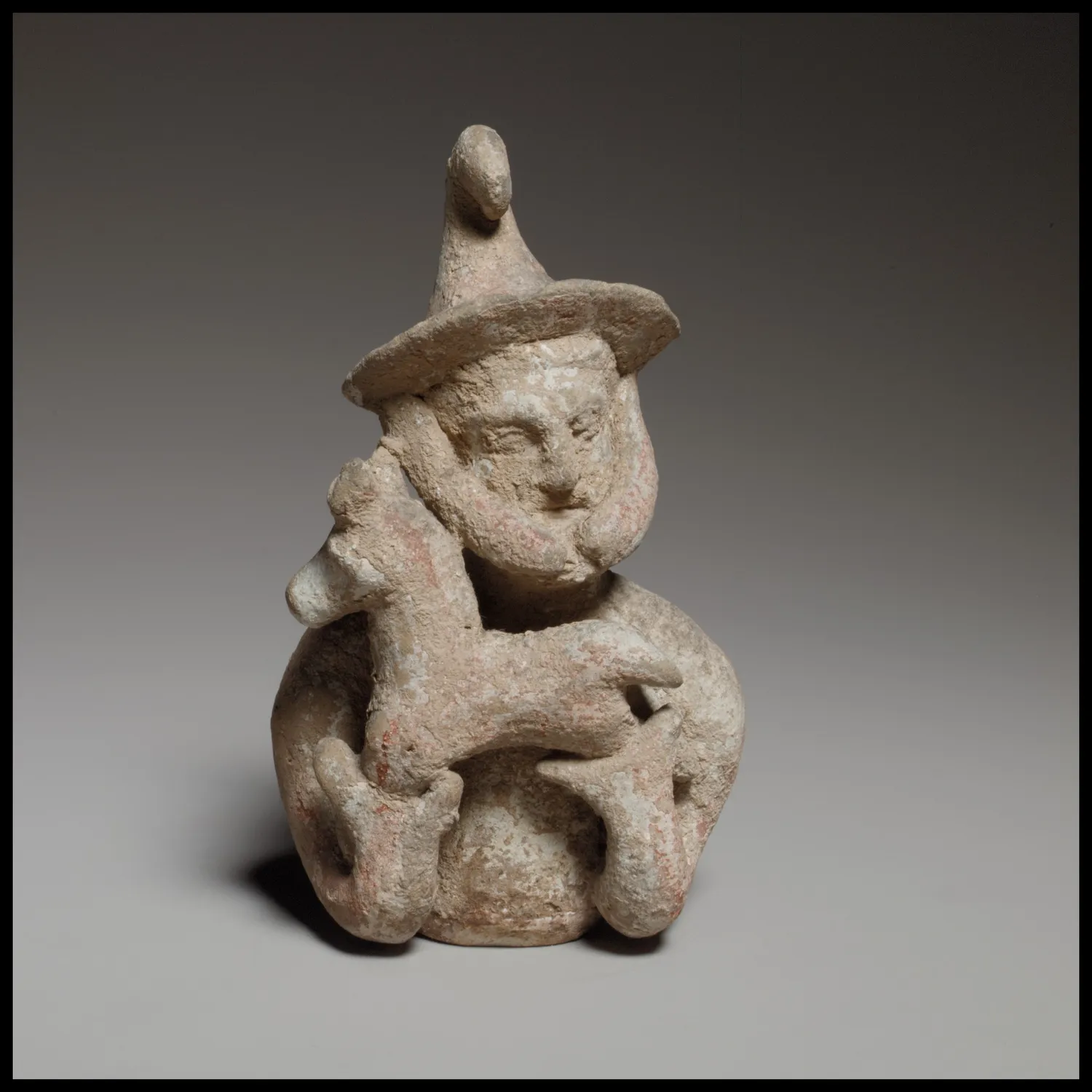
The evidence in the Cypriot case comes from an unusual place: Karageorghis himself. In the catalogues, and then in his memoirs, he described a quiet policy of the troubled years between 1963 and 1974, when intercommunal violence had pushed Turkish Cypriots into defended enclaves. The Department, he wrote, quietly let Greek Cypriots buy antiquities looted from those enclaves, on the reasoning that it kept the objects on the island, and a 1973 amnesty then made the resulting collections legal. In the Severis catalogue of 1999 he gave the arrangement a name. He called it the "silent accord."[11][2]
His own disclosures are what the controversy feeds on. In 2014 the researcher Samuel Hardy took those catalogues, applied a method first devised to measure the looting behind Cycladic figurines, and argued that the great majority of the objects in these state-sanctioned "salvage" collections appear to have been looted; worse for the official story, the pattern pointed to substantial Greek-Cypriot looting, complicating the account, which Karageorghis had helped write, in which Turkish Cypriots looted and Greek Cypriots rescued.[11] Hardy named him plainly, as the antiquities director when the collections formed and the common author of their catalogues.[11] His percentages rest on small, probabilistically coded samples, and are an argument rather than a count; but a later Director of Antiquities, Sophocles Hadjisavvas, was blunter about the material itself, calling it illegal antiquities from illicit excavations.[17]
Karageorghis answered in his own books, most directly in the preface to the Phylactou catalogue of 2010. Some collectors active in the troubled years, he wrote, had made "a positive contribution by preserving within the Island objects which otherwise would have found their way to the illicit market." He conceded the price: "It is true that the value of antiquities for which there is no provenance is diminished," but the objects were usually whole and good, and the catalogues had been welcomed by students of Cypriot archaeology, "especially by young scholars." The collectors' motive, as he cast it, was philopatria, love of country, the wish to keep Cypriot heritage on Cypriot ground.[13]
He died in December 2021, aged ninety-two. No source accuses him of dealing, forging, or lining his own pockets; the charge is narrower and harder to wave off, that in publishing the collections he lent the standing of scholarship to objects pulled from the ground without record, and that in writing the island's history he softened the share his own community had taken in the looting. The evidence for all of it sits in his books, set down in his own hand. "Not all collectors, however," he wrote in the last of those prefaces, "were scrupulous, as we know."[13]
References
- 1.Hector W. Catling, review of V. Karageorghis, A Lifetime in the Archaeology of Cyprus, Cahiers du Centre d'Études Chypriotes 39 (2009).
- 2.Vassos Karageorghis, A Lifetime in the Archaeology of Cyprus (Medelhavsmuseet, Stockholm, 2007), with a foreword by Eva Rystedt.
- 3.Vassos Karageorghis, Salamis: Recent Discoveries in Cyprus (Thames & Hudson, 1969).
- 4.Vassos Karageorghis, 'Excavating at Salamis: 1952–1974,' in Salamis of Cyprus (Nicosia, 2014).
- 5.Vassos Karageorghis, Kition: Mycenaean and Phoenician Discoveries in Cyprus (Thames & Hudson, 1976).
- 6.Vassos Karageorghis, with Joan R. Mertens and Marice E. Rose, Ancient Art from Cyprus: The Cesnola Collection in the Metropolitan Museum of Art (New York, 2000).
- 7.Peter Voskos and A. Bernard Knapp, 'Cyprus at the End of the Late Bronze Age: Crisis and Colonization or Continuity and Hybridization?', American Journal of Archaeology 112 (2008): 659–684.
- 8.Susan Sherratt, 'Immigration and Archaeology' (Acta Cypria, 1992).
- 9.Anastasia Leriou, 'Discussing Colonization in Archaeology: The Case of Hellenised Cyprus (Once More).'
- 10.Kevin Fisher, 'The Aegeanization of Cyprus … An Architectural Perspective.'
- 11.Samuel A. Hardy, 'Using Open-Source Data to Identify Participation in the Illicit Antiquities Trade: A Case Study on the Cypriot Civil War,' European Journal on Criminal Policy and Research (2014).
- 12.David Gill, Looting Matters (2008); D. W. J. Gill and C. Chippindale, American Journal of Archaeology (1993, 2000).
- 13.Vassos Karageorghis, Cypriote Antiquities in the Phylactou Collection (Nicosia, 2010), preface.
- 14.'In memoriam Vassos Karageorghis,' Cahiers du Centre d'Études Chypriotes (2021).
- 15.Vassos Karageorghis, Cyprus: From the Stone Age to the Romans (Thames & Hudson, 1982).
- 16.A. M. Snodgrass, review of V. Karageorghis, Palaepaphos-Skales: An Iron Age Cemetery in Cyprus (1985).
- 17.Sophocles Hadjisavvas, in N. Brodie, J. Doole and C. Renfrew (eds.), Trade in Illicit Antiquities: The Destruction of the World's Archaeological Heritage (Cambridge, 2001).
- 18.Judy Powell, Love's Obsession: The Lives and Archaeology of Jim and Eve Stewart (Wakefield Press, Kent Town, 2013).