
Archaic I
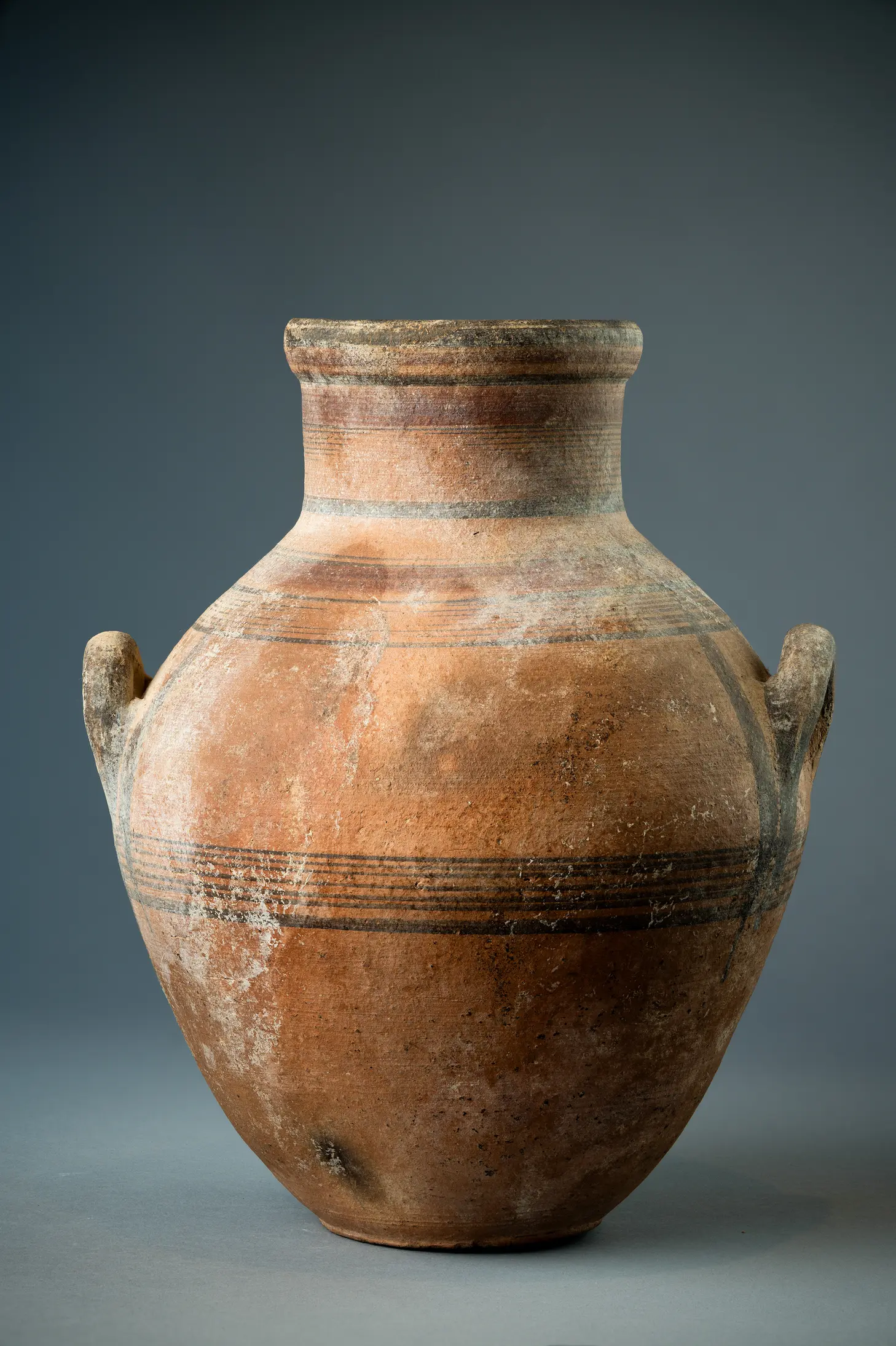
Bichrome IV Amphora with Shoulder Handles and Banded Decoration
Cypriot ovoid amphora with upright shoulder handles, painted in black and red bands on an orange-pink ground. Cypro-Archaic I, c. 750–600 BCE; 32 cm tall.
Date
750 - 600 BC
Accession No.
JAR-GE-001
Collection
Alexis Drakopoulos
3D Model
Provenance
- Before 1970, reported to come from the collection of Leto and Costakis Severis, Cyprus; exported from Cyprus before 1970
- 2023, Helios Gallery, London
- 2023–present, Alexis Drakopoulos, London
Cypro-Archaic I, c. 750–600 BCE · Bichrome IV ware · Wheel-made · H. 32 cm
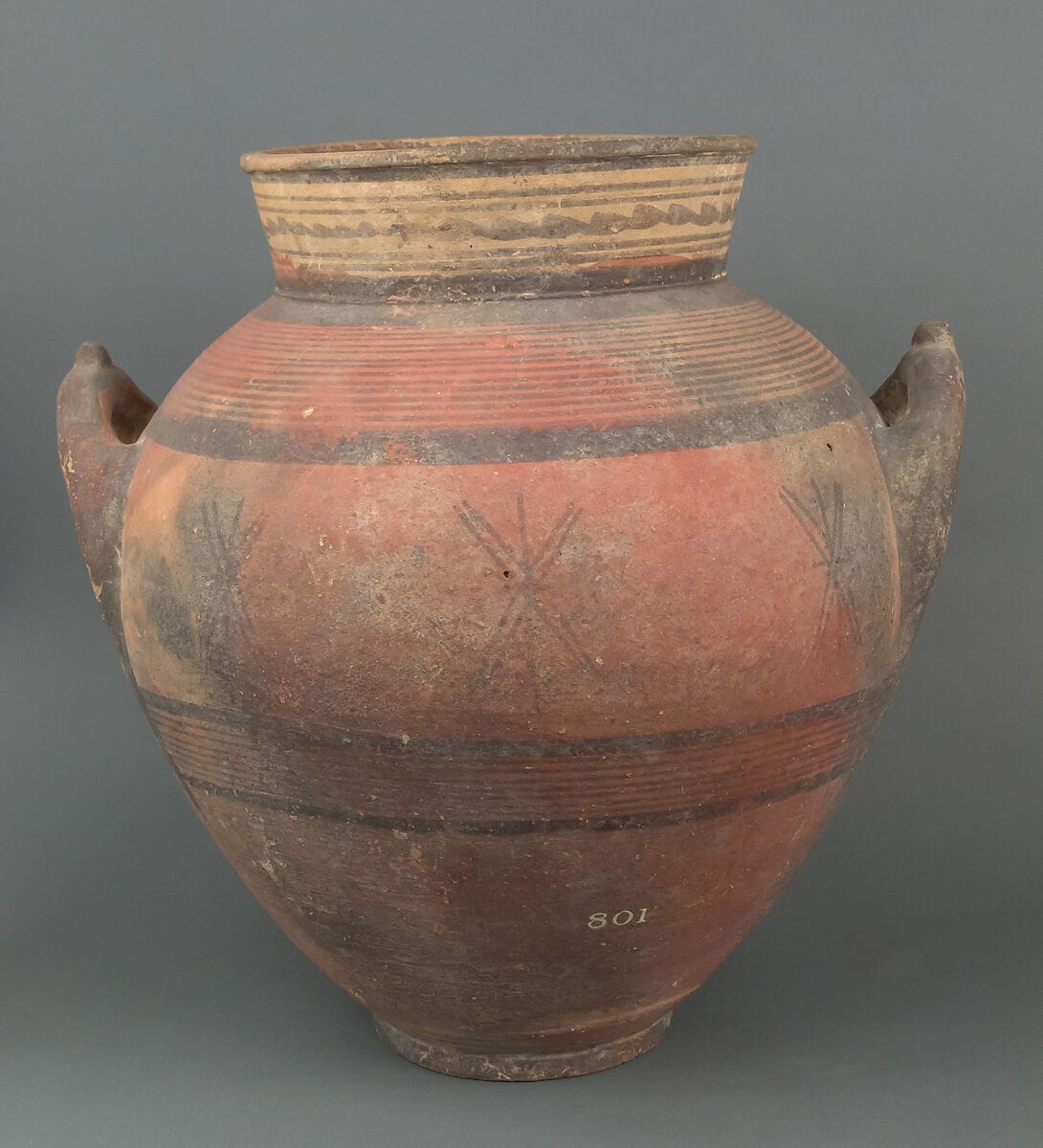
A broad ovoid amphora whose body swells to its widest just below the shoulder and tapers to a small, low base. The neck is a plain cylinder, flaring slightly, closed by a thick rolled rim. Two short upright loop handles stand on the shoulder, their tops flattened. The warm orange-pink surface is painted in matt black and a muted purplish red: bands at the rim and at the base of the neck, a zone of fine black lines with a red band on the upper shoulder, and a belt of six or seven close-set lines around the widest point. A single black stroke drops from the root of each handle across the belly band.
A thick white lime deposit from burial clings to the left side and shoulder. There is a dark pit or spall on the lower body at the left, and the paint is worn thin in places.
Commentary
The combination of matt black and matt red on a light, unslipped ground places the amphora in Bichrome ware. Gjerstad's system describes each vessel by ware, stage number and shape. In that system Bichrome runs through the whole Cypro-Geometric and Cypro-Archaic sequence, and its stage numeral matches the period: Bichrome III is Cypro-Geometric III, Bichrome IV is Cypro-Archaic I [1]. The handles sit on the shoulder, which puts the vessel in the shoulder-handled amphora family. This is distinct from the classes with handles running from rim or neck to shoulder [1].
Banded pots carry little dating information in their ornament, so the date has to come from the shape. Three features point to Cypro-Archaic I. The greatest width has moved up towards the shoulder, the neck is tall and nearly cylindrical, and the rim is thickened into a ring. The Severis collection has a clear case of shape overruling ornament. Of a Bichrome IV amphora with two opposed loop handles on the shoulder (cat. 199, H. 44 cm), the cataloguer notes that its decoration recalls the Cypro-Geometric III style, but the form is later and belongs to Cypro-Archaic I [3]. The same reasoning applies here. The closest parallel for size and scheme is an ovoid Cesnola amphora in the Metropolitan Museum (74.51.442, H. 31.5 cm), which has upright shoulder handles and black bands on a reddish body and is dated by the museum to Cypro-Archaic I [5]. Severis cat. 200 (LS 1471) [3] and a banded Bichrome IV amphora from Amathus Tomb 7 in the Medelhavsmuseet, Stockholm (A.007:006, H. 27 cm) [6], belong to the same class. The painter ignored the concentric circles of the western "circle style" and the lotus friezes of the eastern workshops [2], so the piece cannot be tied to a region on style.
The conventional span of Cypro-Archaic I, c. 750–600 BCE, is itself a scholarly convention. Gjerstad began the period at 700 and later at 725, and the now-standard 750 is a later revision [4]. A start in late Cypro-Geometric III cannot be excluded for a plain banded vessel.
At about a third of a metre tall, the amphora is a household storage jar for wine, oil or water. Intact examples of the class come almost entirely from chamber tombs, where they stood as containers for the goods and drink placed with the dead. No residue has been analysed, so its contents are unknown. The ground colour is warm enough that it could be taken for a thin red wash. If close inspection showed a burnished red slip, the ware would have to be reconsidered as Black-on-Red or Bichrome Red.
References
- 1.Gjerstad, E. (1948) The Swedish Cyprus Expedition IV.2: The Cypro-Geometric, Cypro-Archaic and Cypro-Classical Periods. Stockholm: Swedish Cyprus Expedition, chapter on the pottery (White Painted and Bichrome wares).
- 2.Gjerstad, E. (1948) The Swedish Cyprus Expedition IV.2. Stockholm: Swedish Cyprus Expedition, chapter on the pottery (the western circle style and the eastern style).
- 3.Karageorghis, V. (1999) Ancient Cypriote Art in the Severis Collection. Nicosia: Costakis and Leto Severis Foundation, cat. 199 (LS 1757) and cat. 200 (LS 1471).
- 4.Núñez, F.J. (2018) 'The beginning of the Cypro-Archaic I period: a revision proposal', in Beyond Cyprus (AURA Supplement 9). Warsaw, pp. 352–355.
- 5.The Metropolitan Museum of Art, New York, 74.51.442 (Cesnola Collection), terracotta amphora, Cypro-Archaic I, H. 31.5 cm, museum record.
- 6.Medelhavsmuseet, Stockholm, A.007:006, amphora of Bichrome IV ware from Amathus Tomb 7, Cypro-Archaic I, H. 27 cm, museum record.
More from the Catalogue
Browse related objects
Amphora
Archaic II
Amphora
Geometric I
Amphora
Archaic II
Amphora
Archaic I
Dinos
Archaic I
Amphoriskos
Geometric III
Amphoriskos
Archaic II
Limestone statuette of a boy holding an amphora
Hellenistic
Terracotta krater
Late Bronze Age III
Krater
Geometric I
Terracotta miniature amphora
Geometric III
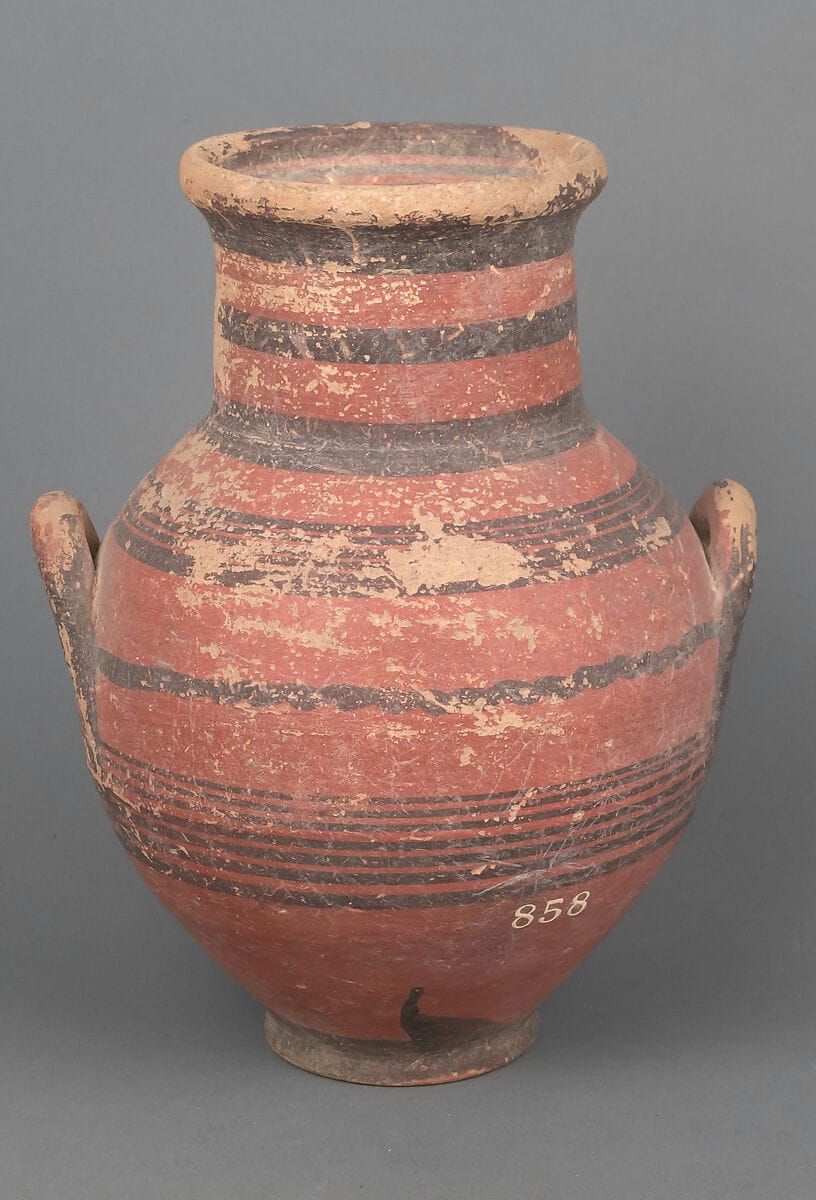
Amphora
Late Bronze Age III
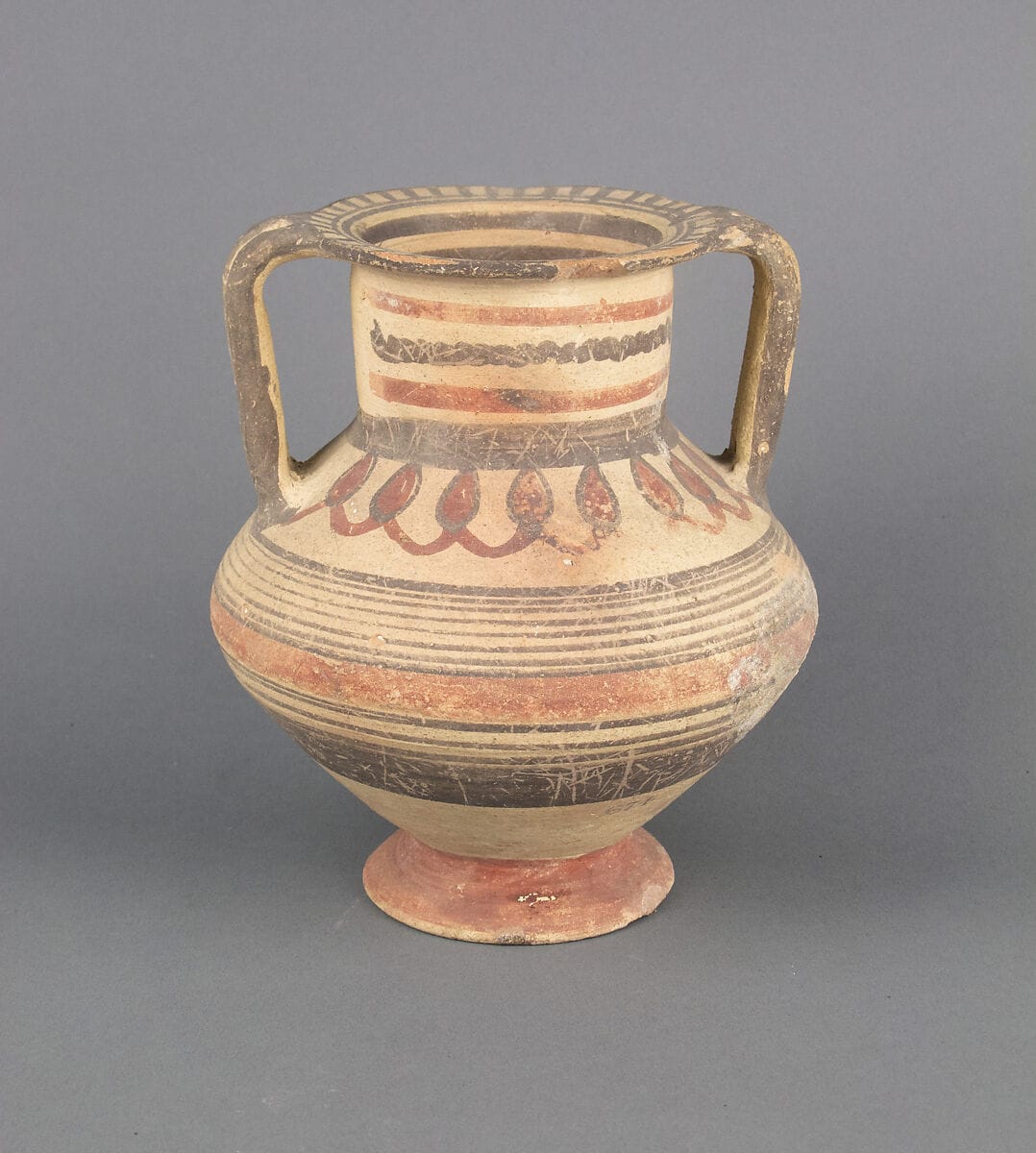
Amphora
Archaic II
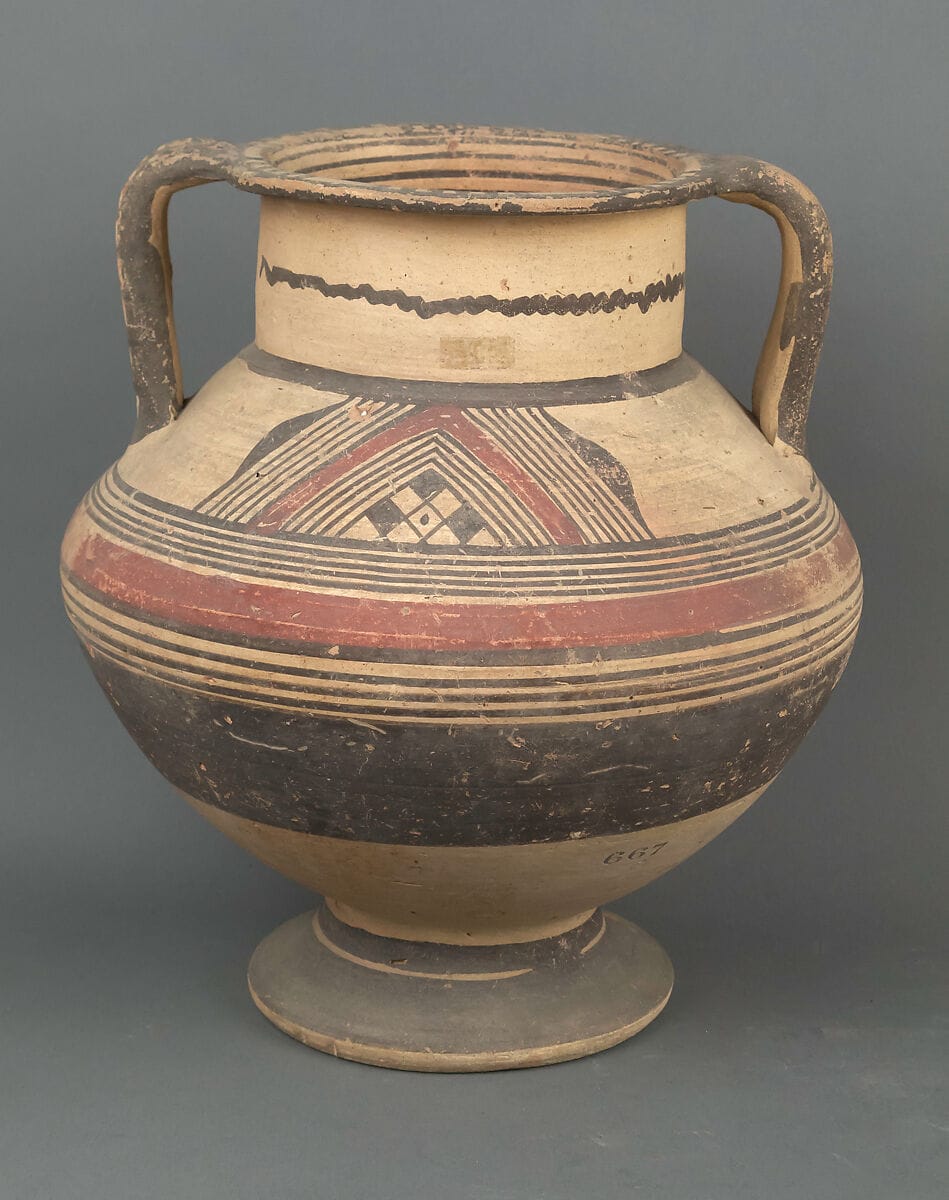
Krater
Late Bronze Age III
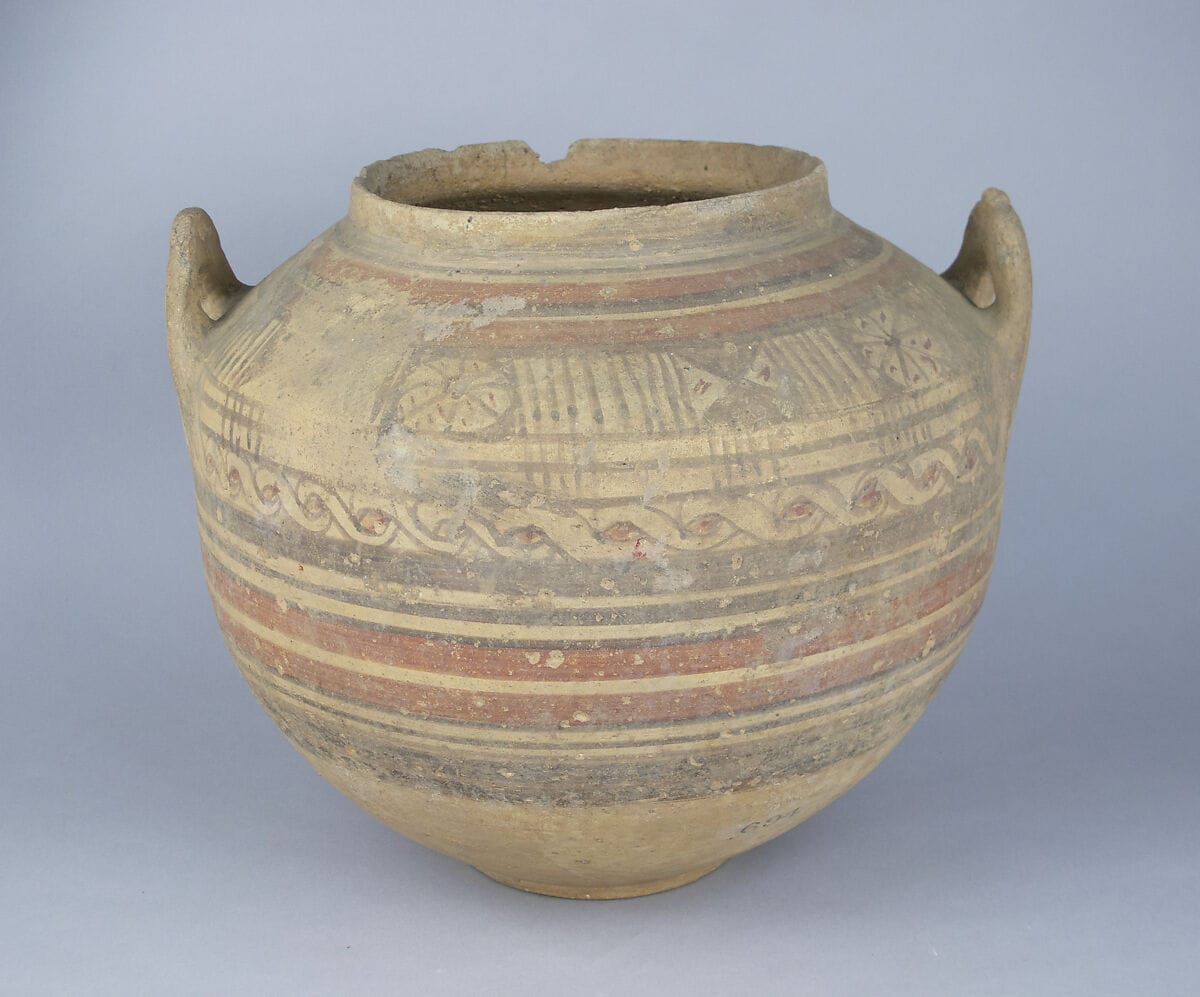
Dinos
Archaic I
Amphora
Archaic
Terracotta amphora
Middle Bronze Age II
Amphora
Bronze Age