Room 07 of 07 · Cypro-Classical and Hellenistic
Classical and Hellenistic Cyprus
Wreaths, temple boys and the mould: the last centuries of the kingdoms and the first of Ptolemaic rule.
In 480 BC the kingdoms of Cyprus were subjects of Persia. By 294 BC all of them were gone, and the island belonged to Ptolemaic Egypt. Between the two dates came Evagoras of Salamis, long wars with Persia and a turn towards Greek fashions whose depth scholars still argue over.
The collection's seven pieces from these centuries are small: two limestone heads, four terracottas and a clay oil bottle. They show the sanctuary tradition of the Archaic room carrying on, with Greek hairstyles and wreaths, and the mould taking over from the modelling hand. The chronology of the collection ends here.
Wreaths and a temple boy
In the fifth and fourth centuries, votaries in stone, men and women alike, adopt Greek hairstyles and almost always wear a wreath of leaves. The faces grow calmer, with heavy lids and a quieter smile, while the bodies stay frontal and flat-backed: Cypriot sculptors took from Greek sculpture what suited them.
These statues were painted, red on lips and borders and black on hair, with pigments that could all have come from the island. Little of the paint survives. Golgoi and Idalion, in central Cyprus, made small heads like these by the hundred. Painted limestone.
In focus
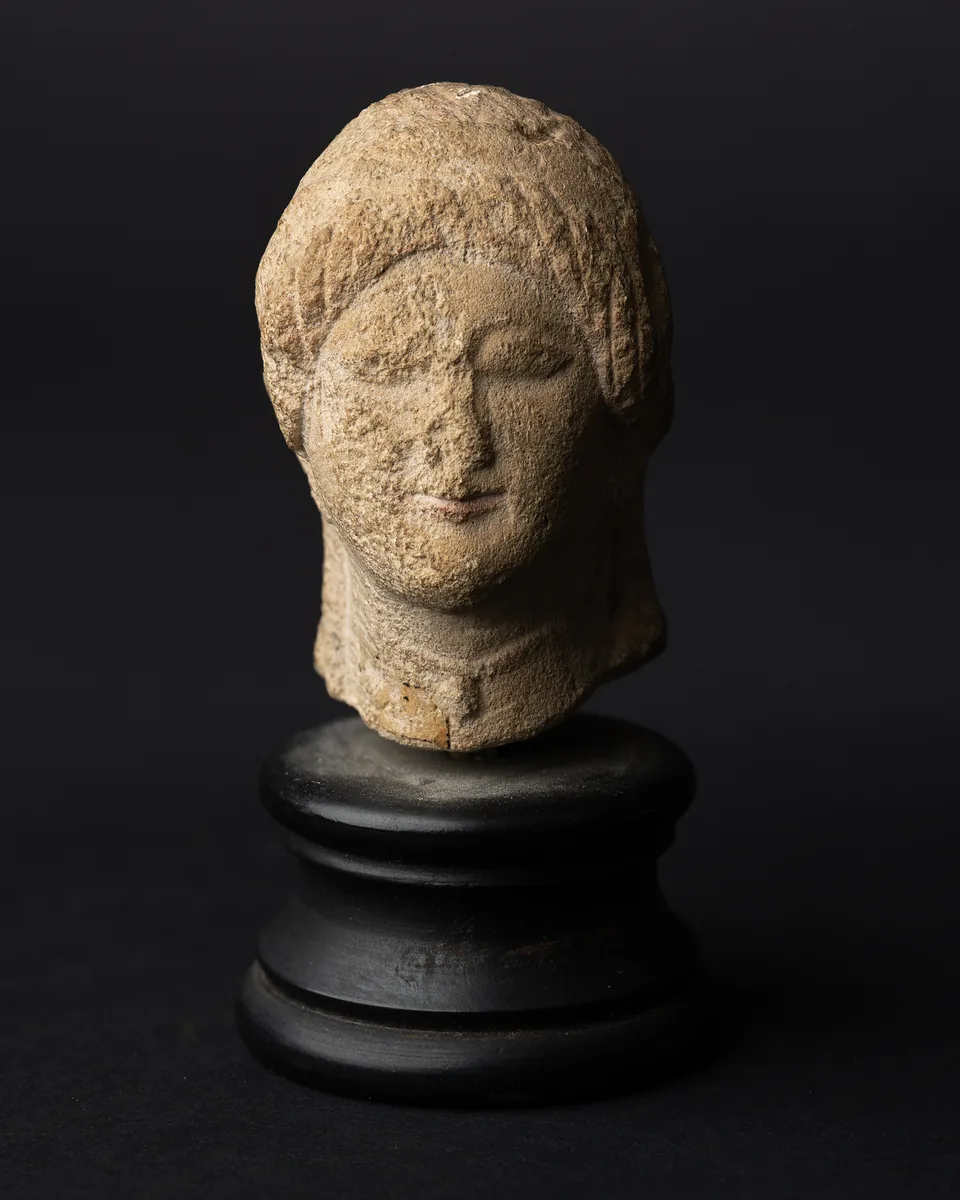
Limestone Head of a Votary with a Wreath
Cypro-Classical I, c. 475–400 BC
A thick rolled band above the forehead may be a worn wreath or a roll of hair, and whether the votary is a man or a woman is open. A faint pink on the lips may be ancient paint, like the red that survives on the lips of a wreathed head from Golgoi in the Louvre; magnification would settle it.
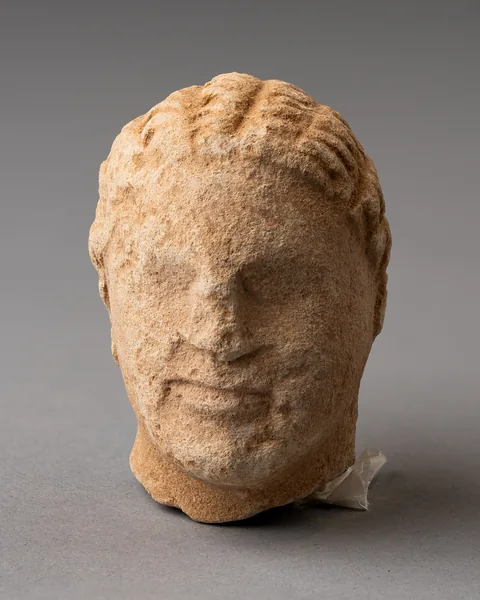
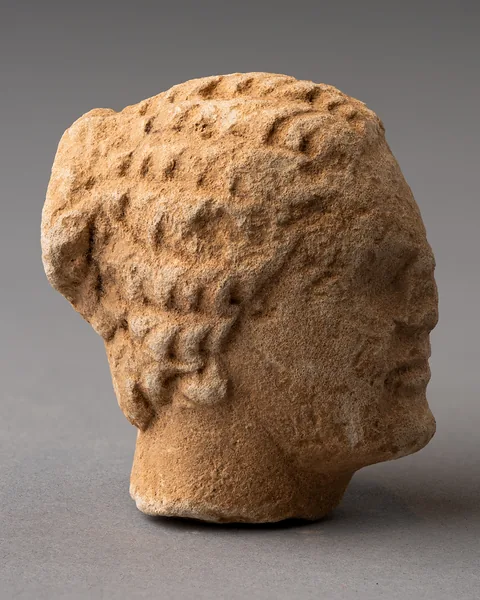
A temple boy
Short curls in tiers of commas and crescents cover the ears of this head, probably from a temple boy: a statuette of a seated child, dedicated in Cypriot sanctuaries from about 450 BC and often holding a bird or a small animal. Several dozen such heads are known from Golgoi alone. The round, childlike face favours that reading without proving it. Temple boys.
The same face, again and again
By the Classical period most Cypriot terracotta faces came from moulds. The body was still built by hand or on the wheel; the face was pressed from a mould and often painted, red for lips and ornaments. A mould used for long runs wears soft, which explains the blurred features of several pieces here.
Moulds let workshops turn out near-identical votives for two centuries or more, and that is why so many of these heads resist close dating or a sure reading of whom they show. At Kourion the moulded face arrived on riders around 510 BC, was standard by about 480 BC and stayed in use for some four centuries.
Four moulded figures
Red paint still fills the eyes and lips of the woman with a diadem. The veiled woman holds something small to her chest, most probably a flower. The bearded horseman has lost his horse at the hips; his cap and beard match a rider in the Metropolitan Museum said to come from the sanctuary of Apollo Hylates at Kourion. The small head with ringed eyes, soft from a worn mould, was probably a quick, inexpensive votive.
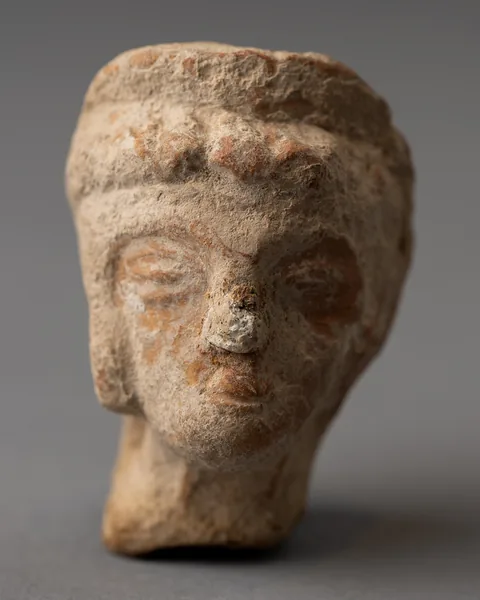 Quick lookMould-made Terracotta Head of a Woman with a Diadem and Painted Featuresc. 600–400 BC
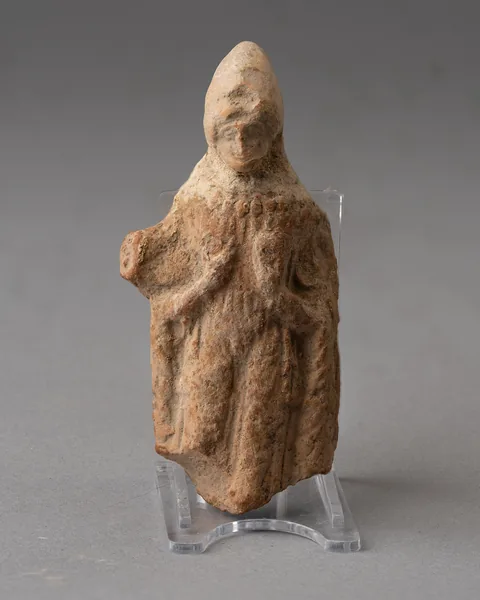 Quick lookMould-Made Figure of a Veiled Woman Holding a Flowerc. 550–450 BC
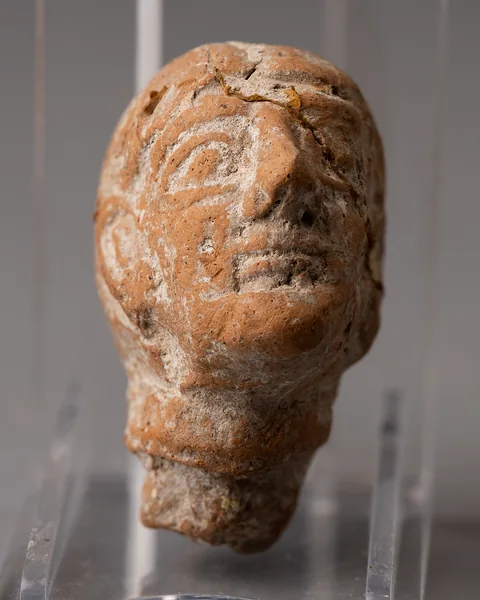 Quick lookSmall Terracotta Head of a Man with Ringed Eyesc. 600–300 BC
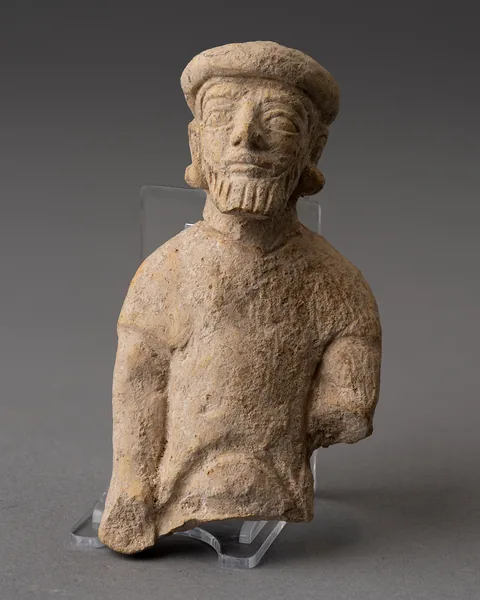 Quick lookUpper Body of a Bearded Horseman with a Mould-Made Face, Kourion Typec. 400–200 BC
A bottle for scented oil
The kingdoms ended, and burial went on. In Hellenistic tombs across the Mediterranean the small spindle-shaped unguentarium replaced the older oil flask as the standard gift to the dead, holding scented oil for preparing and honouring the body. The old idea that such bottles caught mourners' tears has no support. The collection's chronology closes with this plain clay bottle.
Plain ware · In focus
Fusiform Unguentarium
Early Hellenistic, c. late 4th–2nd century BC
Roughly finished, with the throwing ridges left unsmoothed along its body. A close parallel comes from Marion Tomb 9, excavated by the Swedish Cyprus Expedition and now in Stockholm, dated c. 325–150 BC.
The end of the chronology
Return to the masterpiecesThat is the last room. Each of the pieces below has a room of its own.
Back to the collection