
Hellenistic
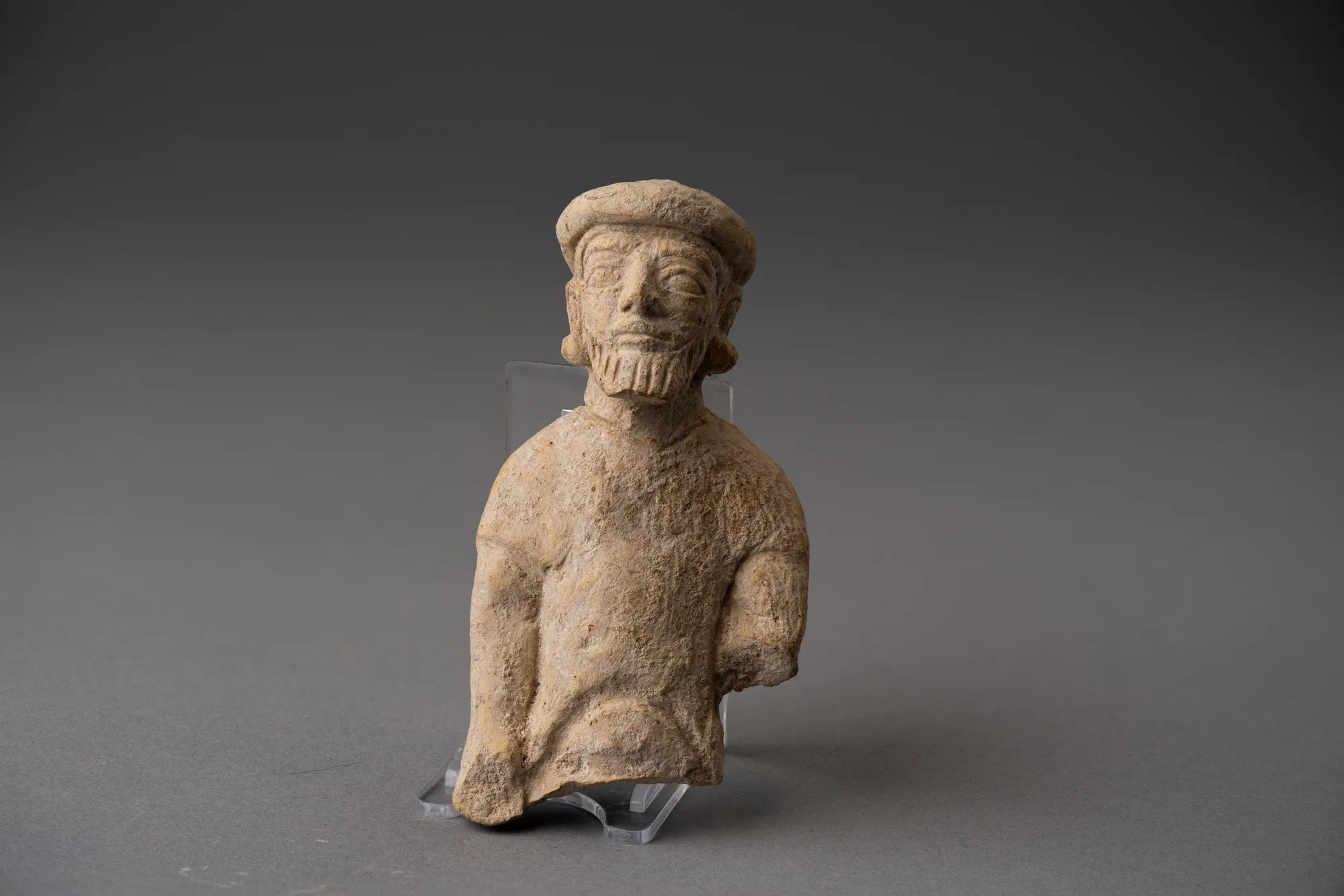
Upper Body of a Bearded Horseman with a Mould-Made Face, Kourion Type
Terracotta torso of a bearded rider with a mould-made face and brimmed domed cap, from a horse-and-rider group of Kourion type, c. 400–200 BCE.
Date
400 - 200 BC
Accession No.
STA-AR-009
Collection
Alexis Drakopoulos
Provenance
- 1965–1969, The Goodman Collection
- Alexis Drakopoulos, London
Late Cypro-Classical to Early Hellenistic, c. 400–200 BCE · Terracotta · Handmade body with mould-made face
The upper body of a bearded man, broken away at the hips. The face, pressed from a mould, is crisp and alert: heavy arched brows, large lidded eyes, a straight nose, a small mouth under a moustache, and a full beard rendered as a projecting block of short incised strands. Thick locks or lappets hang at either side of the face. He wears a low domed cap with a broad flattened brim, like a beret. The torso is a flat, broad slab with rounded shoulders; the arms, rolled by hand, hang at the sides; the right survives to the lower break, and the left is broken at the forearm. A shallow curved ridge crosses the lower torso just above the break. The pale buff surface is lightly pitted and shows no surviving paint. The fragment is mounted on a modern stand.
Commentary
Although the figure now reads as a standing bust, it is the rider from a horse-and-rider group. The arms hanging at the sides, the flat hand-built torso and the break at the hips, where the body sat astride the horse, match a well-defined late series of Cypriot riders. Metropolitan 74.51.1635 (Cesnola Cat. 285, H. 10 cm, said to come from the Sanctuary of Apollo Hylates at Kourion) is a handmade, solid horseman with a mould-made face, nude, bearded and preserved to the hips, both upper arms hanging at the sides, with an incised, sharply projecting beard and a domed cap whose wide flattened brim falls into lappets on the shoulders [1]. That description fits this piece closely, and the Metropolitan dates it to the Early Hellenistic period, late fourth to third century BCE [1]. Its companion, 74.51.1636 (Cat. 284, H. 9.5 cm), is the same format in a mitra headdress and is dated Cypro-Classical II, c. 400–310 BCE; 74.51.1784 (Cat. 286), a complete horse and rider of the early third century, shows how the group looked whole [1].
The technique supports the date. At Kourion the Youngs traced the moulded rider face from its introduction in the last quarter of the sixth century, around 510 BCE, to its dominance by about 480 BCE, after which a handmade body with a mould-pressed face remained the standard rider for some four centuries [2]. A moulded face therefore gives a date after c. 510 BCE, and the brimmed cap and the modelling of the beard place this rider in the later part of the sequence. The Metropolitan compares the face of Cat. 285 with the Youngs' Kourion mould 20 [1][2]; this face is of the same general kind, although it has not been matched to a specific mould.
The type descends from the Cypro-Archaic horse-and-rider votives classified by Karageorghis [3], which the Cesnola catalogue calls perhaps the most popular type of figurine in the Archaic period [4]. The later riders were dedicated above all at Kourion, where the sanctuary of Apollo Hylates yielded them in great numbers [2]. A Kourion workshop is therefore the most likely origin for this piece, though the Metropolitan describes the Kourion fabric as brick-red and somewhat coarse [4], and the pale fabric here leaves that attribution provisional. The object has no recorded find-spot.
References
- 1.Karageorghis, V., J.R. Mertens and M.E. Rose. The Cesnola Collection of Cypriot Art: Terracottas. New York: The Metropolitan Museum of Art, pp. 168–169, Cat. 284–286.
- 2.Young, J.H. and S.H. Young (1955) Terracotta Figurines from Kourion in Cyprus. Philadelphia: University Museum, University of Pennsylvania, pp. 90, 111–113, 206–207.
- 3.Karageorghis, V. (1995) The Coroplastic Art of Ancient Cyprus IV: The Cypro-Archaic Period, Small Male Figurines. Nicosia: A.G. Leventis Foundation, Type II(i).
- 4.Karageorghis, V., J.R. Mertens and M.E. Rose. The Cesnola Collection of Cypriot Art: Terracottas. New York: The Metropolitan Museum of Art, pp. 175, 257.
More from the Catalogue
Browse related objects
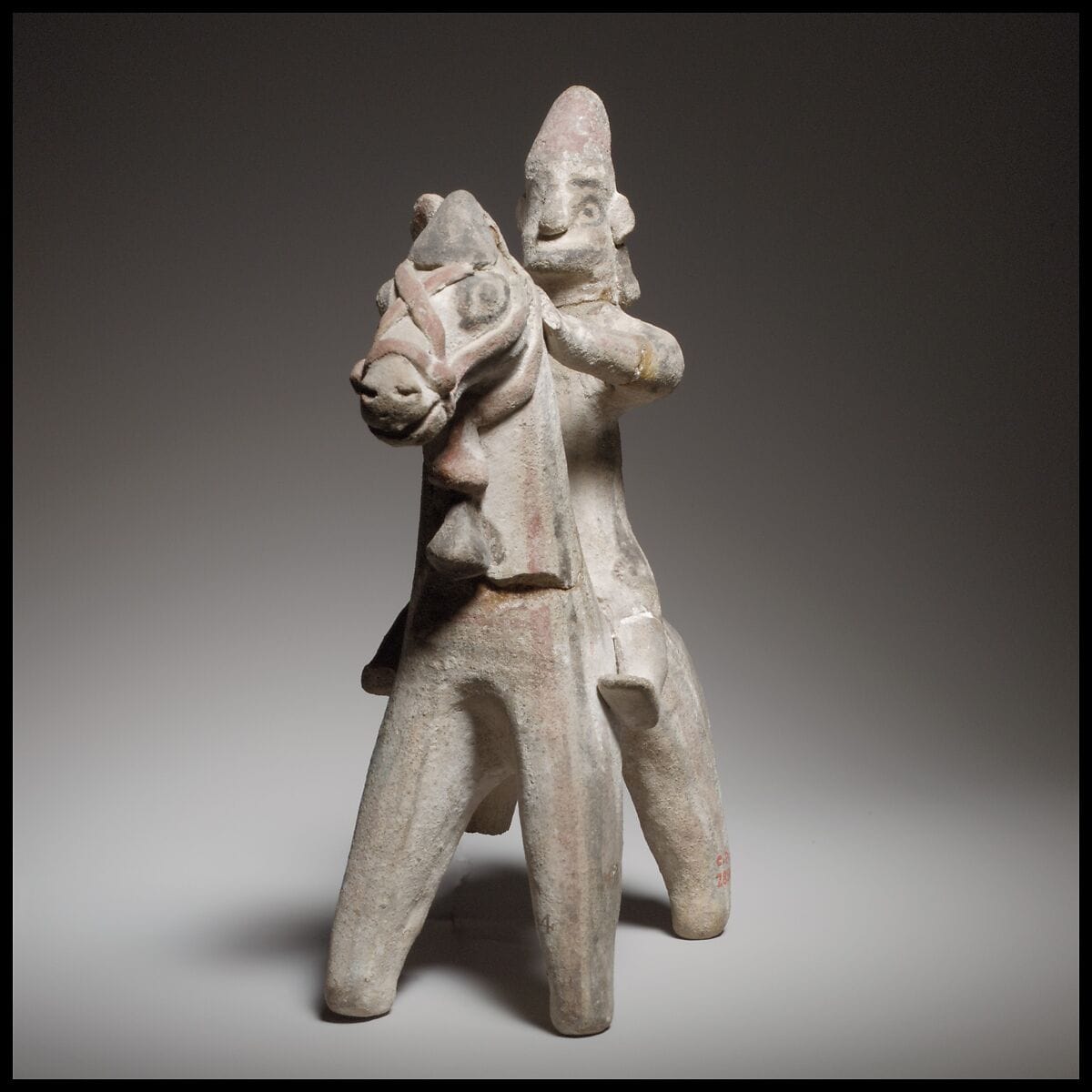
Horse and rider figurine
Archaic II
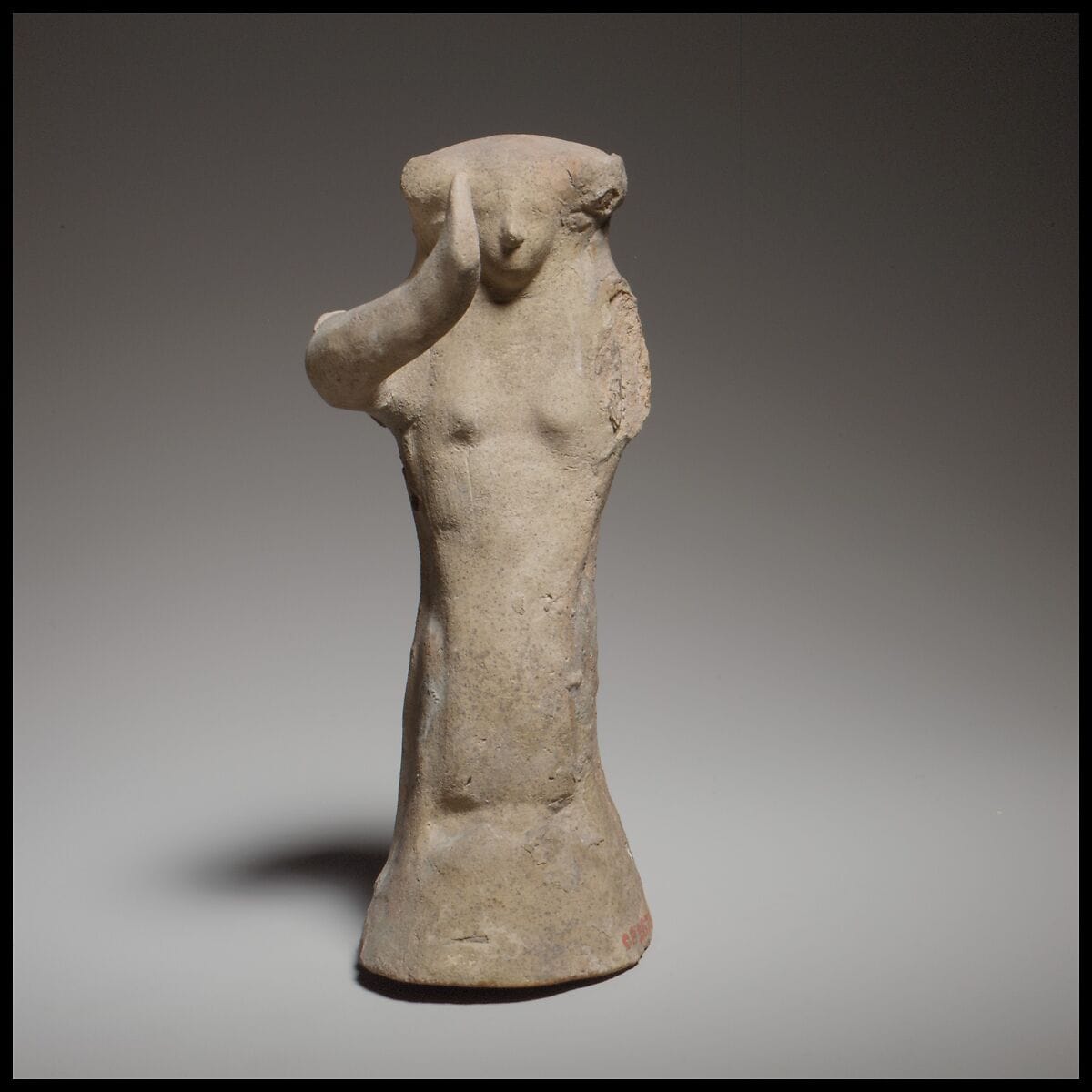
Seated female figurine of the dea gravida type
Archaic II
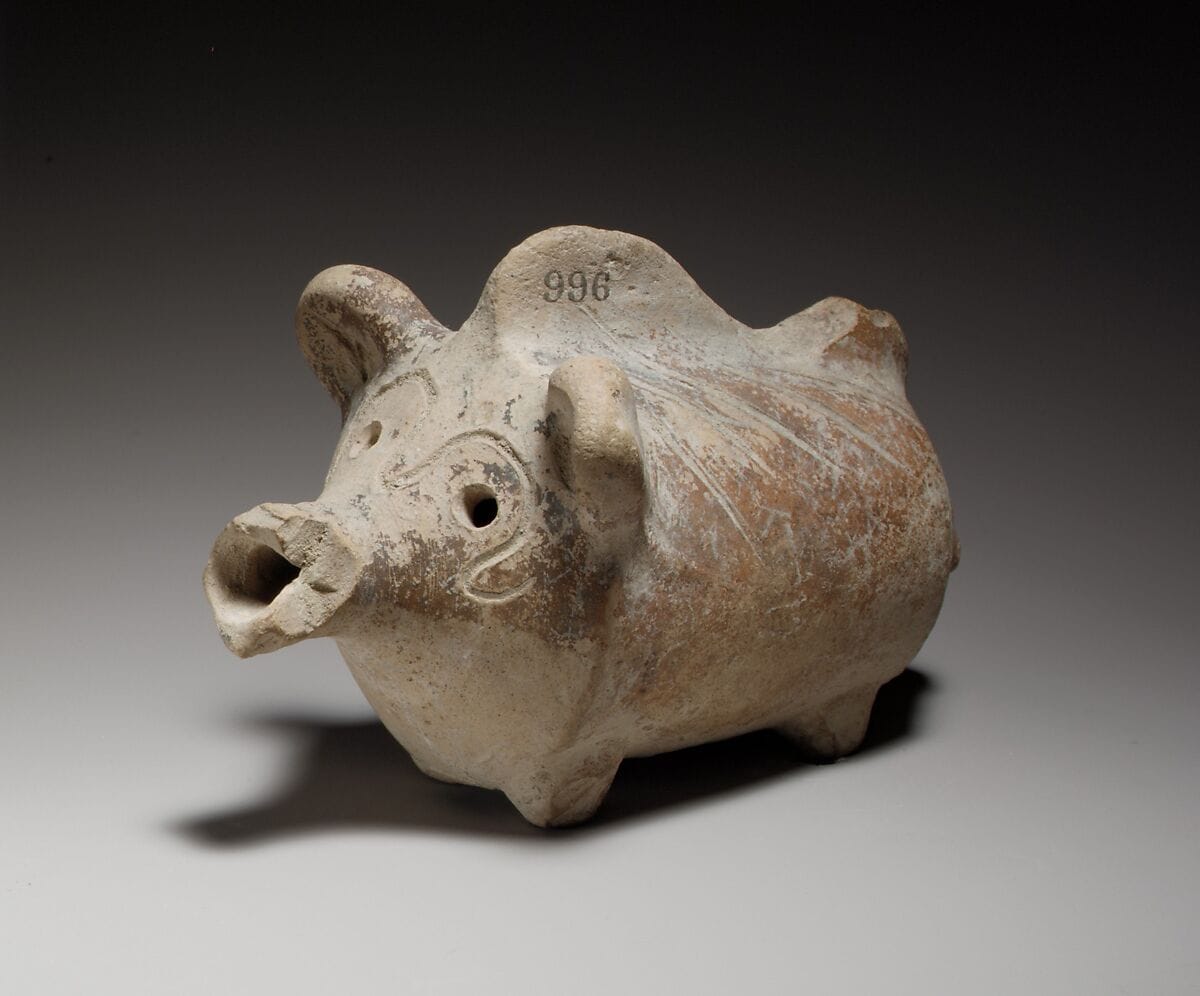
Terracotta rattle in the form of a pig
Hellenistic
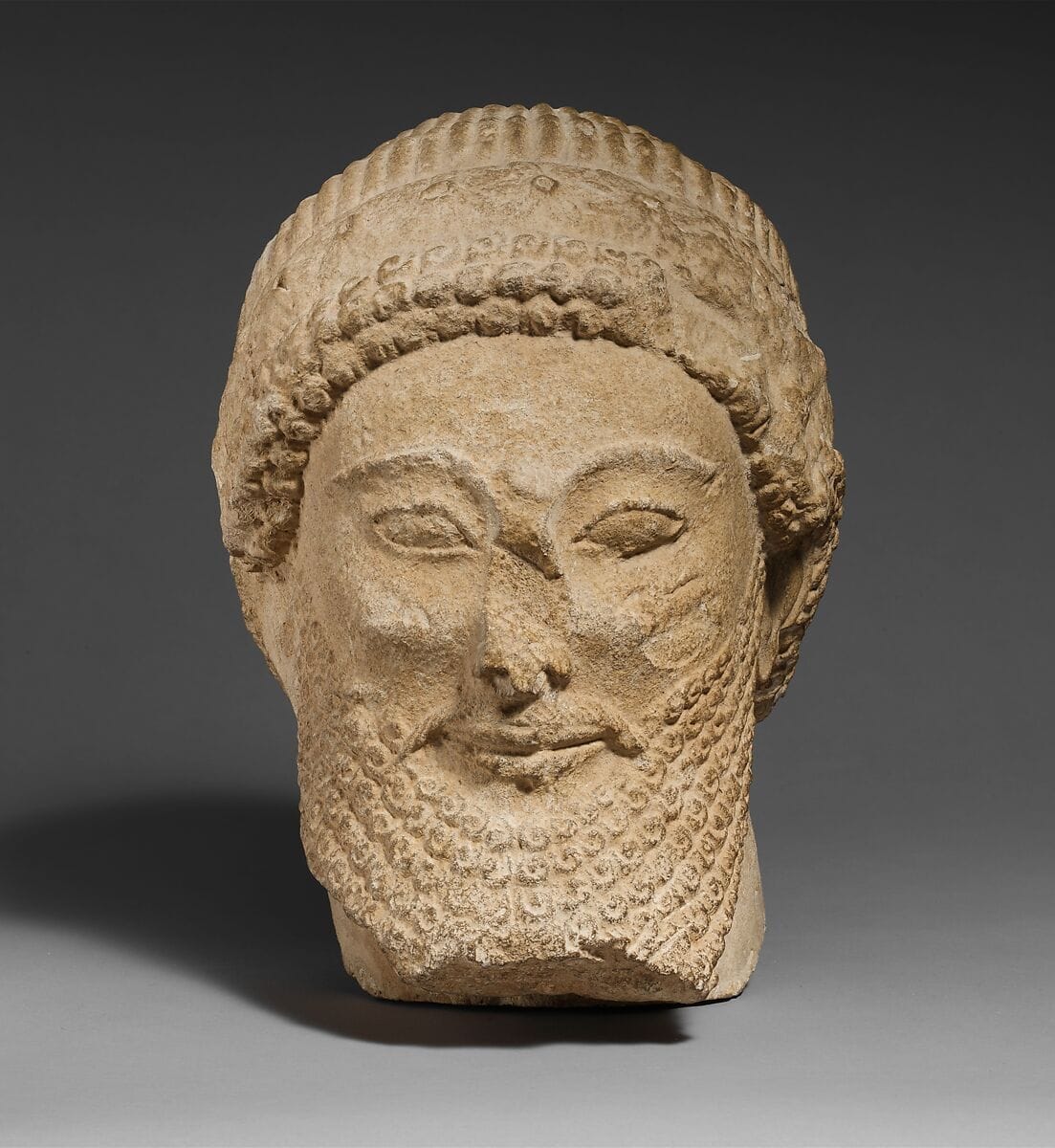
Limestone head of a bearded male with a wreath of flowers
Archaic II
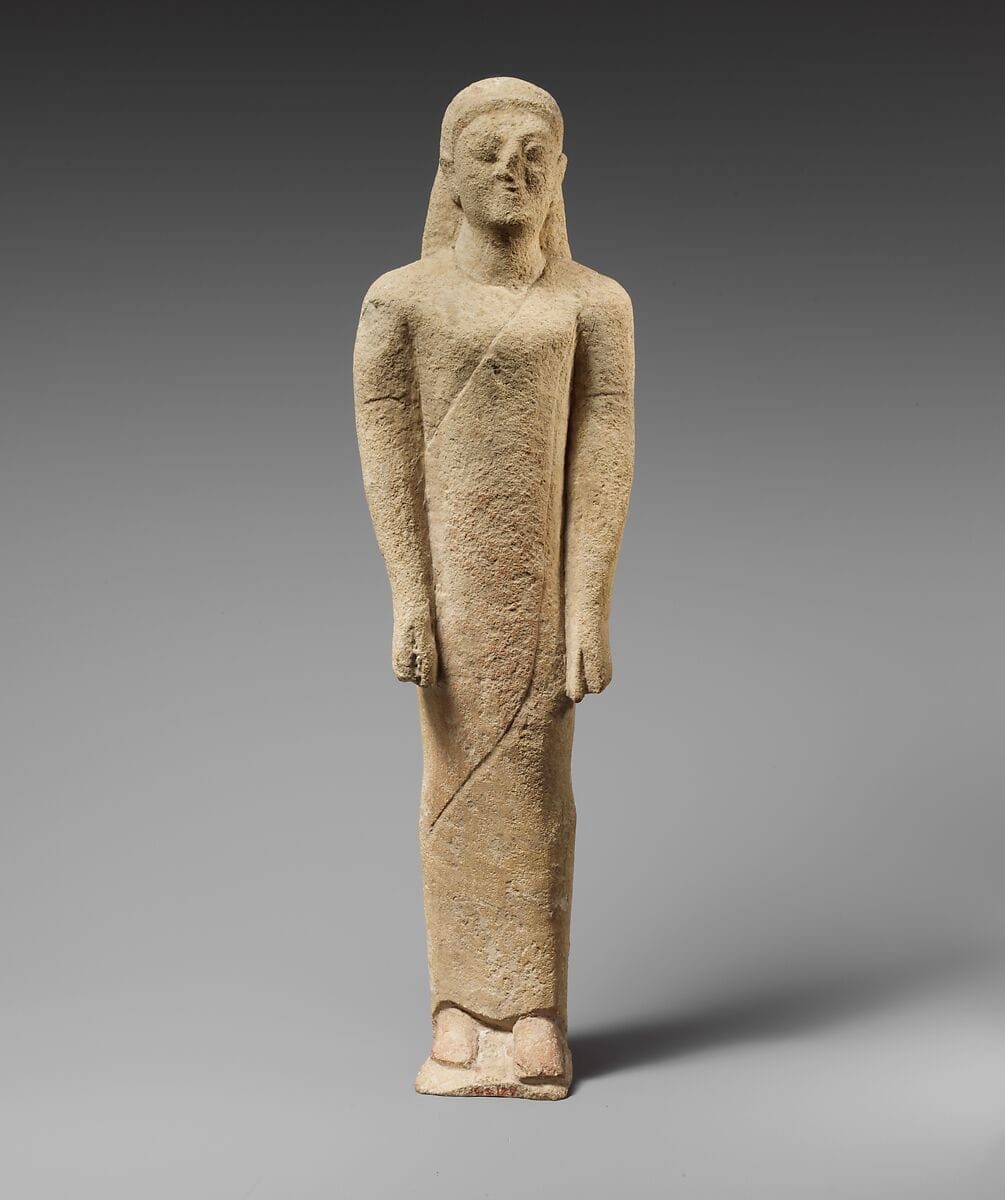
Limestone statuette of a beardless male votary in Greek dress
Archaic II
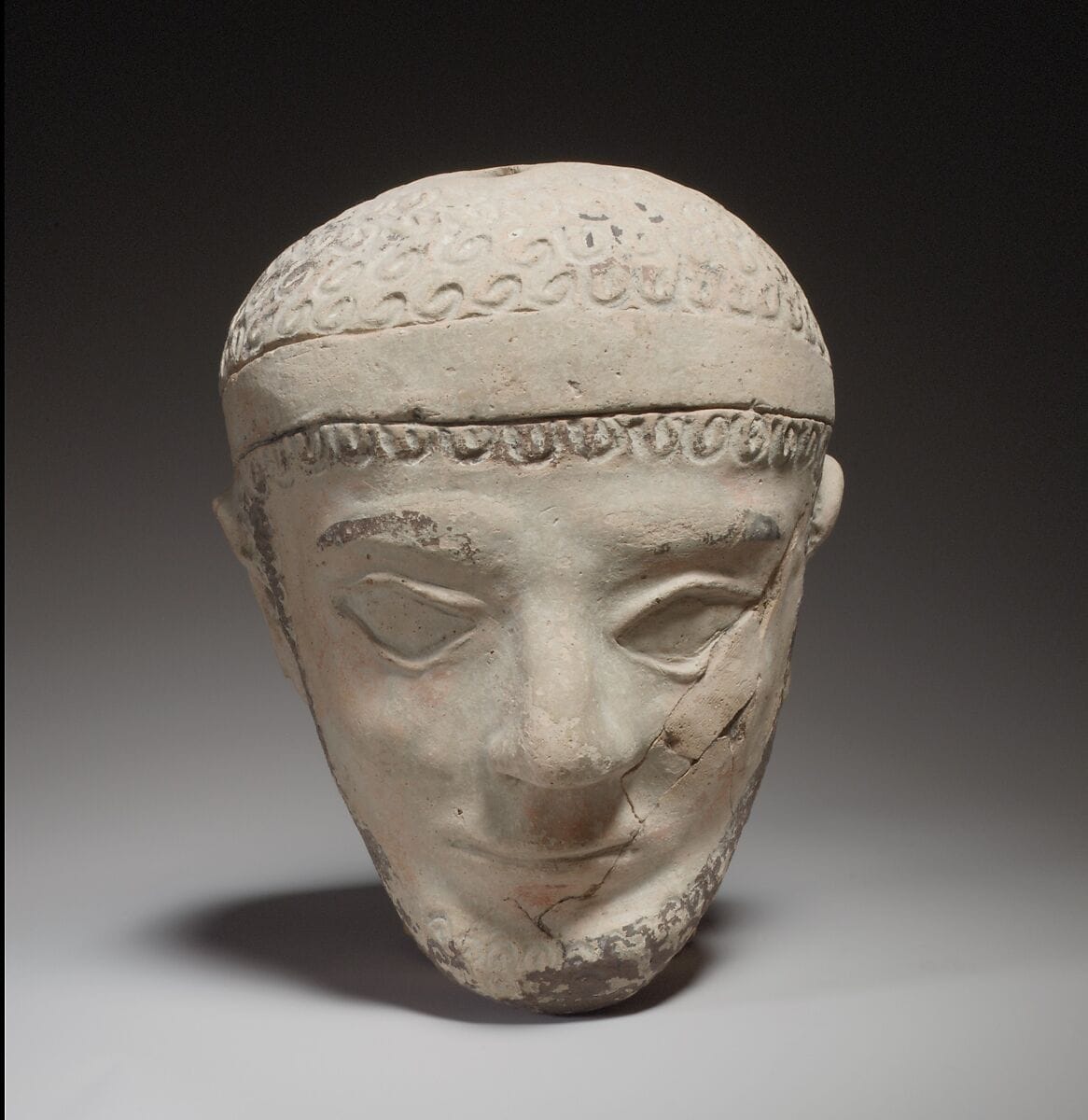
Terracotta head of a man
Archaic II
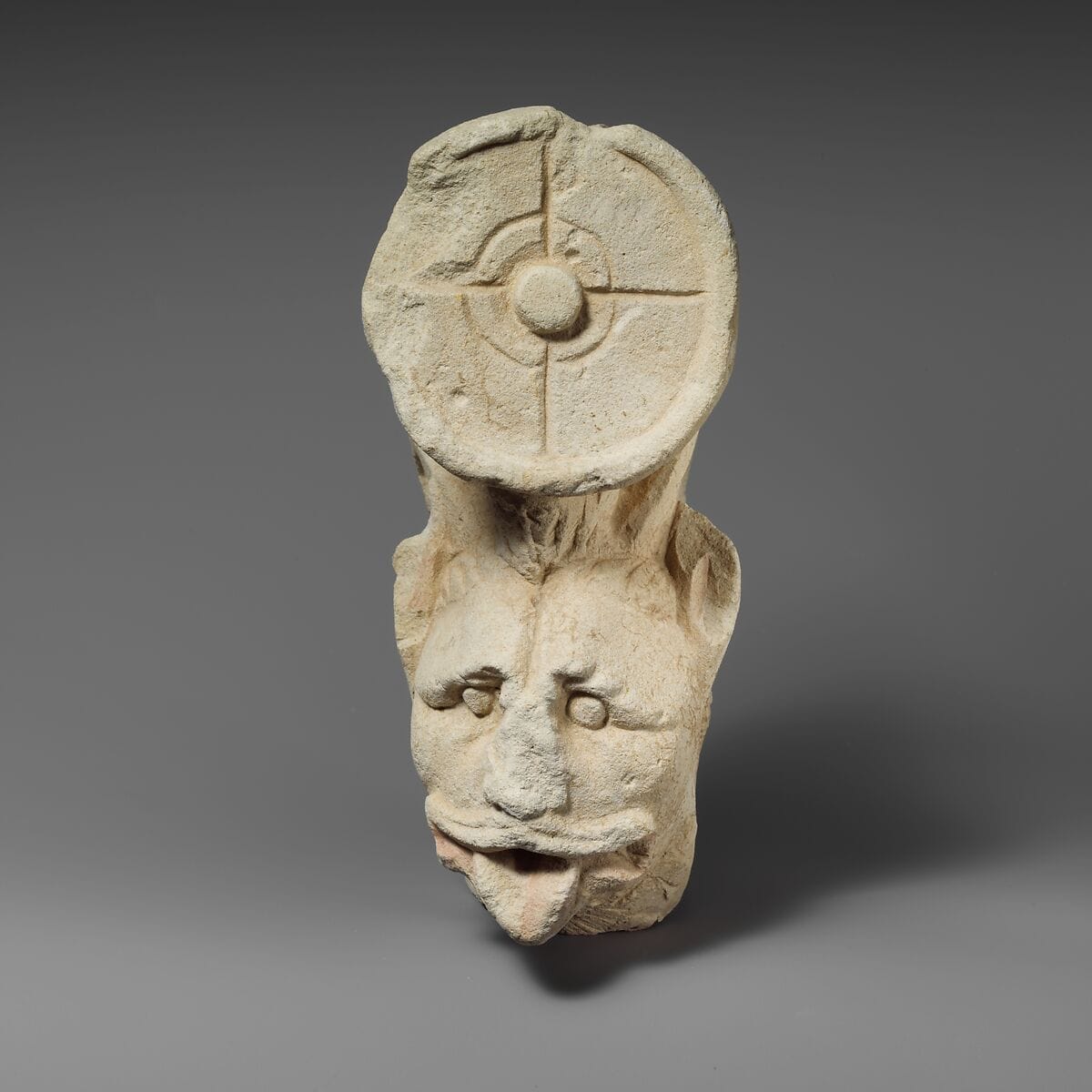
Fragment of a limestone throne (?) with the head of a horned lion
Roman
Head of a comic figurine
Hellenistic
Limestone statuette of a female votary of the kore type
Archaic II
Limestone head of Apollo
Hellenistic
Standing female flute player
Classical
Standing female figurine
Archaic II
Horse's head with harness
Archaic II
Limestone statuette of a mourning siren
Hellenistic
Standing female figurine
Archaic II
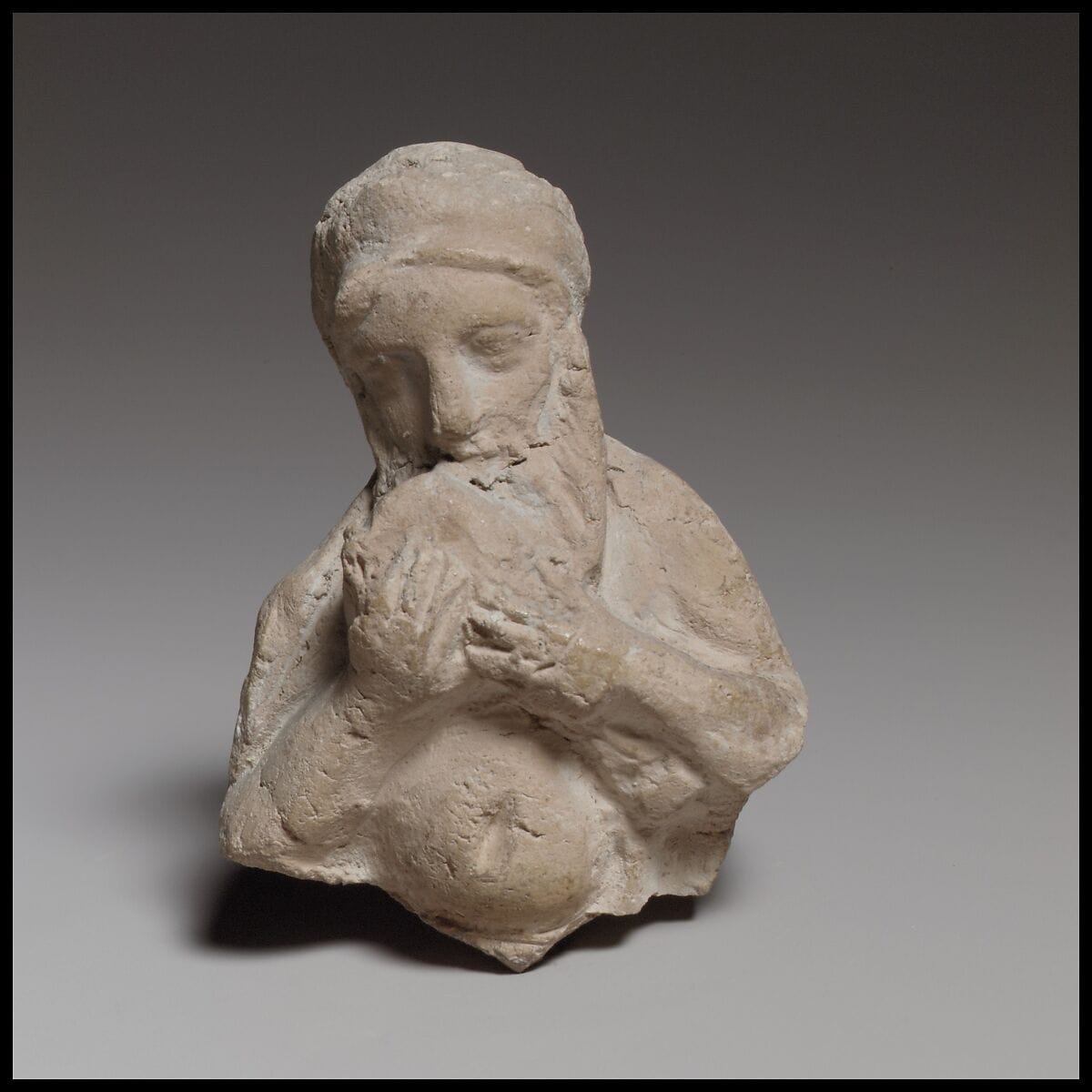
Terracotta statuette of Silenos (?) drinking
Hellenistic
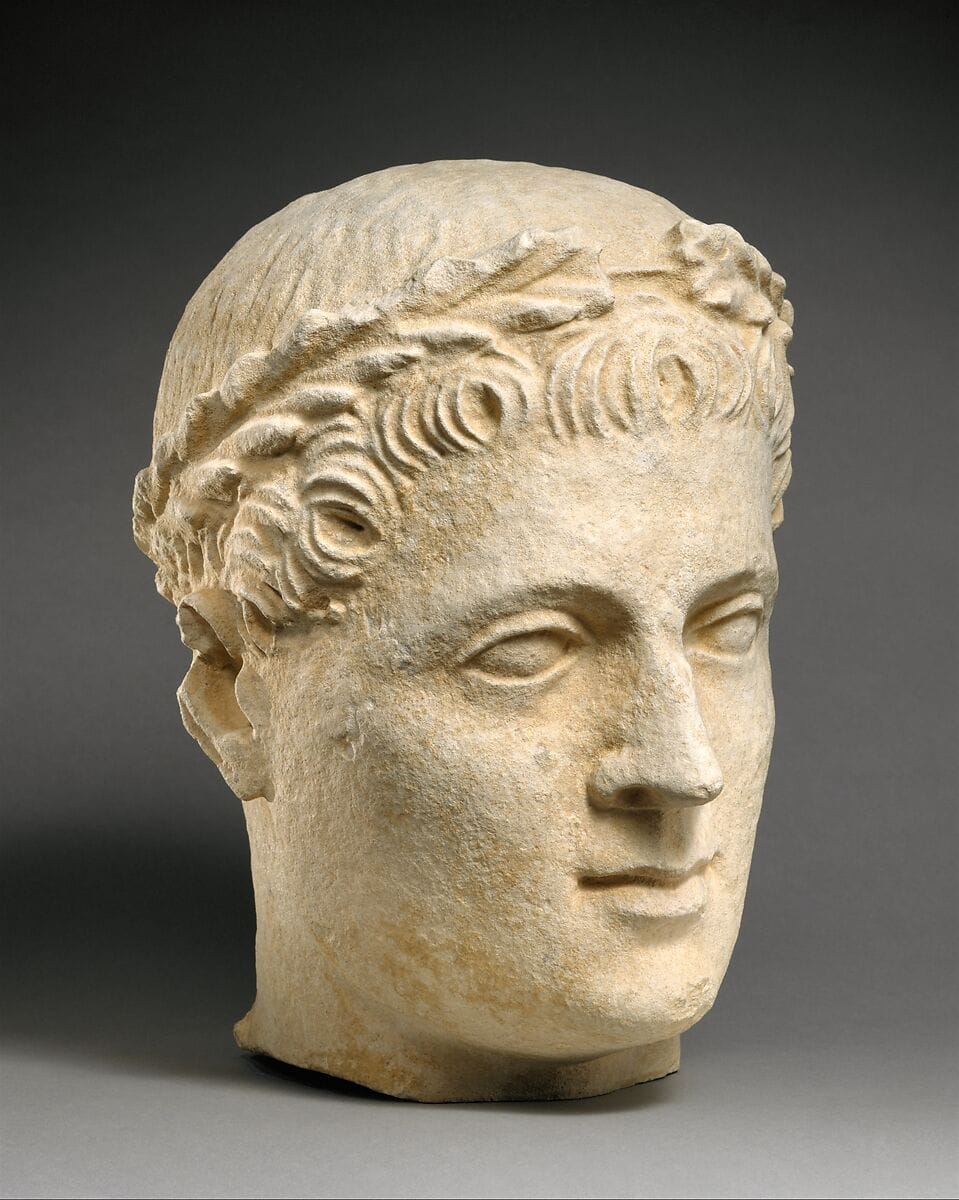
Limestone head of beardless male votary with wreath of leaves
Hellenistic
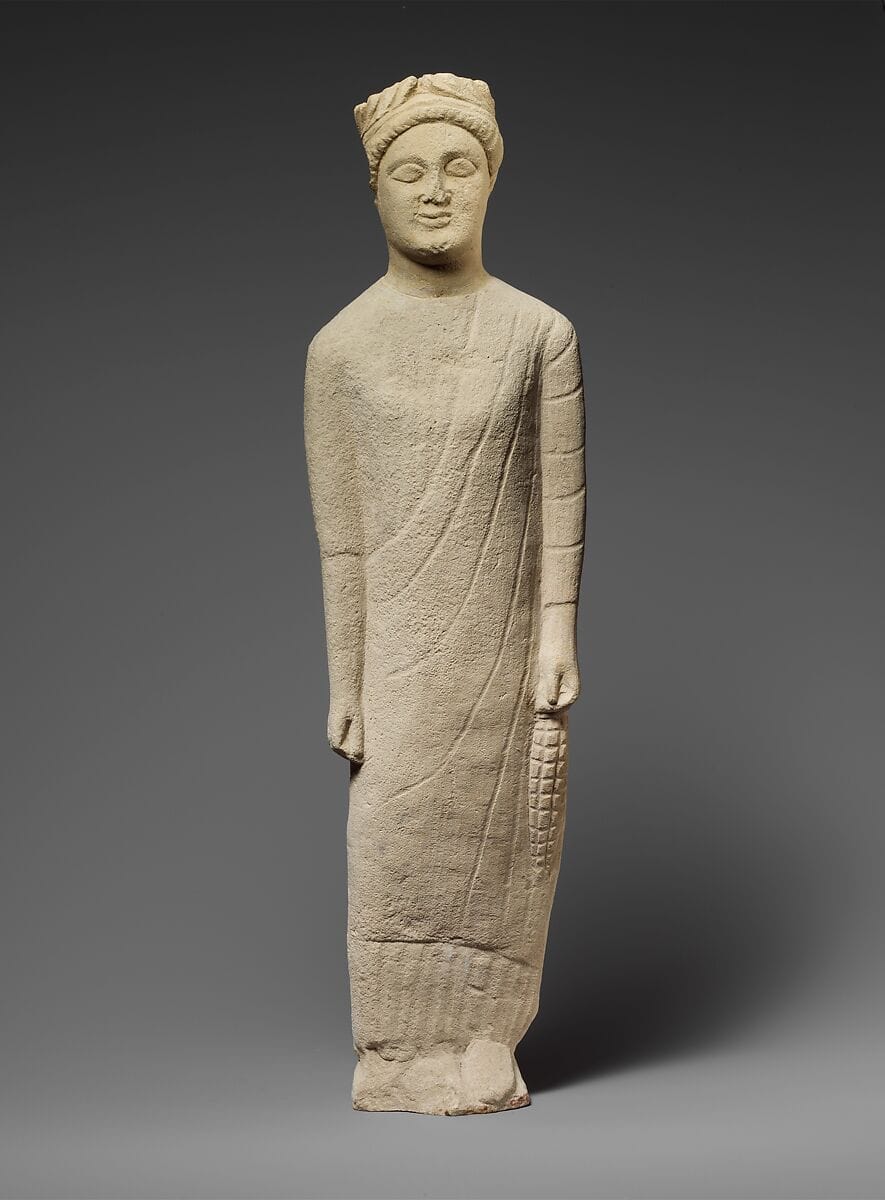
Limestone statuette of a beardless male votary with a wreath of leaves
Classical