
Archaic II
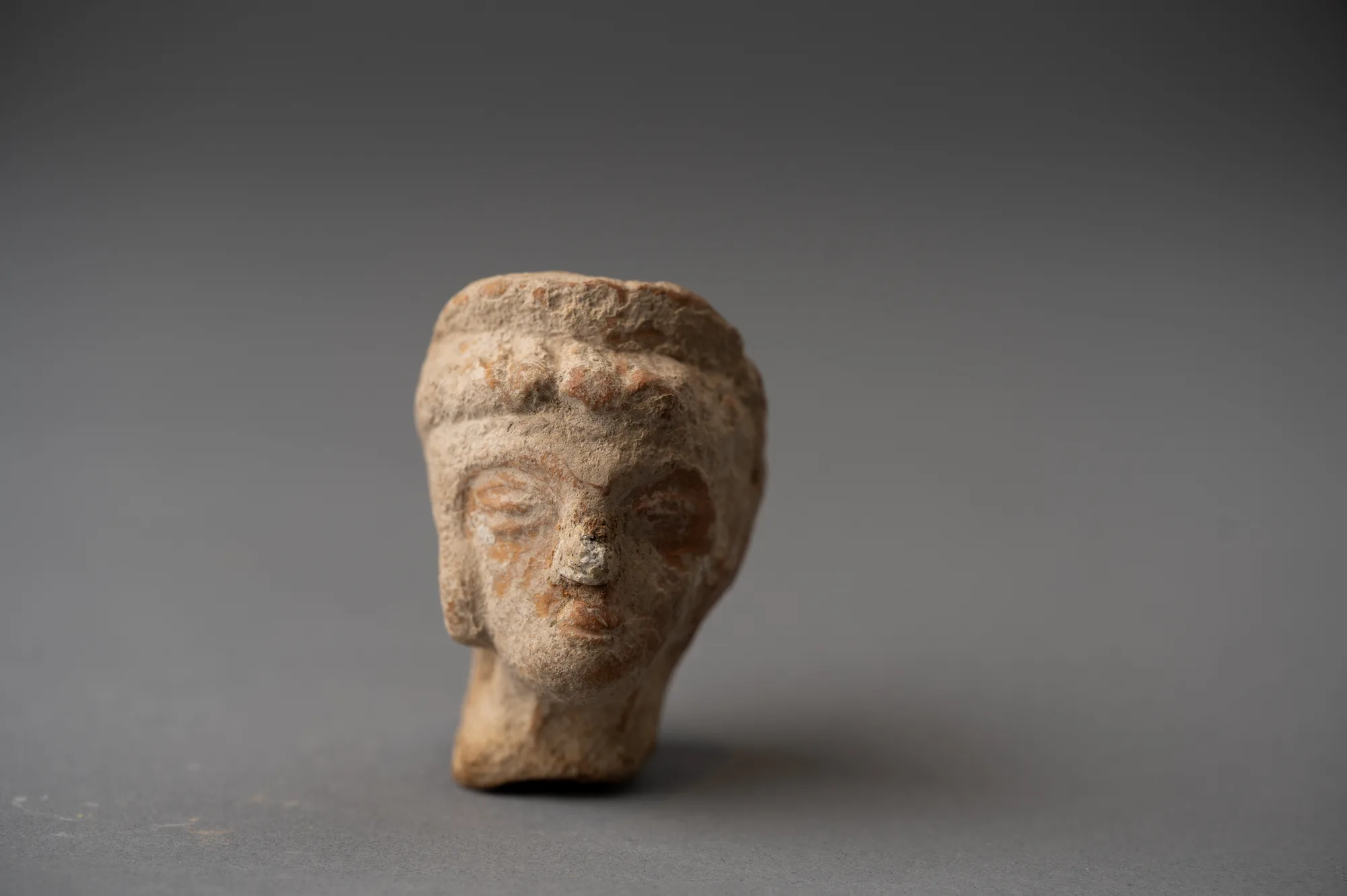
Mould-made Terracotta Head of a Woman with a Diadem and Painted Features
Small mould-made terracotta head of a woman wearing a beaded diadem, with red paint outlining the eyes and lips; Cypro-Archaic II to Cypro-Classical I.
Date
600 - 400 BC
Accession No.
STA-AR-011
Collection
Alexis Drakopoulos
Provenance
- 1960s–2025, The Goodman Collection (acquired 1965–1969)
- 2025–present, Alexis Drakopoulos, London
Cypro-Archaic II to Cypro-Classical I, c. 600–400 BCE · Terracotta · Mould-made, painted
A small terracotta head with a stump of neck, broken at the base of the neck. The face was pressed in a mould: an oval with a low forehead, a straight nose and a small, full mouth set above a rounded chin. A flat band crosses the forehead, and above it runs a row of raised bosses, which may be beads, rosettes or stylised curls. The top of the head is broken flat, so a taller headdress may be lost. Hair or a veil falls at either side of the face to the jaw.
Red paint survives well. It fills and outlines the almond-shaped eyes, colours the lips and touches the bosses of the diadem. Over the rest of the surface a pale ground remains in patches, and the tip of the nose is chipped white.
Commentary
The head belongs to a small figurine of a woman, most probably a votary. Moulds for faces and heads, a technique shared with the Phoenician coast, were in use in Cyprus by the Cypro-Archaic period and became common for the heads of small female figurines [2]. The figures were dedicated in large numbers in island sanctuaries and sometimes placed in tombs.
The band with a row of raised ornaments above the brow is the most useful feature for dating. A mould-made female head in the Louvre (AM 3732) wears a diadem of the same kind, decorated with vertical incisions, and is dated c. 600–580 BCE [3]. Painted mould-made heads of women continue well into the Classical period, however: a head of a female worshipper or priestess from the sanctuary at Achna in the British Museum (2009,5019.62), only 6.2 cm high, is dated 500–300 BCE [4]. The softness of this face, with its fuller lower cheeks and less emphatic smile, could favour the later part of the sequence, but the evidence is not strong enough to narrow the range beyond c. 600–400 BCE.
The painting follows the usual Cypriot practice on clay heads, where red is used for lips and for bands and ornaments of the headdress, and black or red for eyes and brows. A mould-made male head in the Metropolitan Museum (74.51.1445) shows the same division of colour, red on the lips and dark paint on the eyes [1]. Here only red survives, so the whole scheme may once have included black that has faded.
Regional coroplastic workshops, among them Idalion, Achna, Arsos and Kition, can be told apart by facial type and dress [5], but a detached head of this size does not carry enough to assign it to one of them. The face and the paint are those of the Cypriot mould-made tradition.
References
- 1.Karageorghis, V., Merker, G.S. and Mertens, J.R. (2016) The Cesnola Collection of Cypriot Art: Terracottas. New York: The Metropolitan Museum of Art, cat. 64 (74.51.1445).
- 2.Karageorghis, J. (1999) The Coroplastic Art of Ancient Cyprus V: The Cypro-Archaic Period, Small Female Figurines. B: Figurines moulées. Nicosia: A.G. Leventis Foundation.
- 3.Musée du Louvre, Paris, AM 3732, mould-made terracotta female head wearing a diadem with vertical incisions, Cyprus, c. 600–580 BCE (collection record).
- 4.British Museum, London, 2009,5019.62, head of a terracotta figurine of a female worshipper from Achna, 500–300 BCE (collection record).
- 5.Fourrier, S. (2007) La coroplastie chypriote archaïque: identités culturelles et politiques à l'époque des royaumes. Travaux de la Maison de l'Orient et de la Méditerranée 46. Lyon: Maison de l'Orient et de la Méditerranée.
More from the Catalogue
Browse related objects
Horse and rider figurine
Archaic II
Seated female figurine of the dea gravida type
Archaic II
Terracotta rattle in the form of a pig
Hellenistic
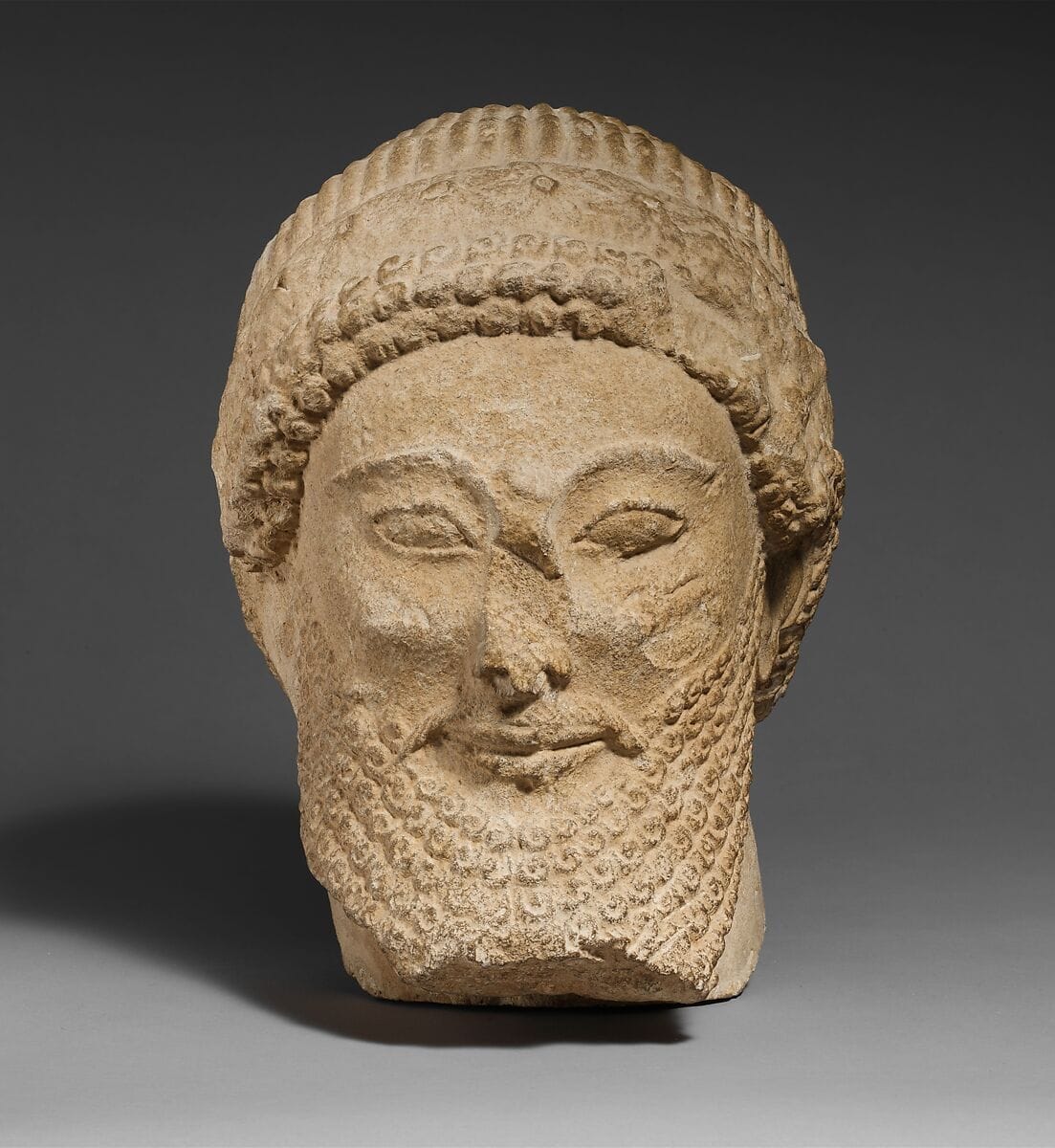
Limestone head of a bearded male with a wreath of flowers
Archaic II
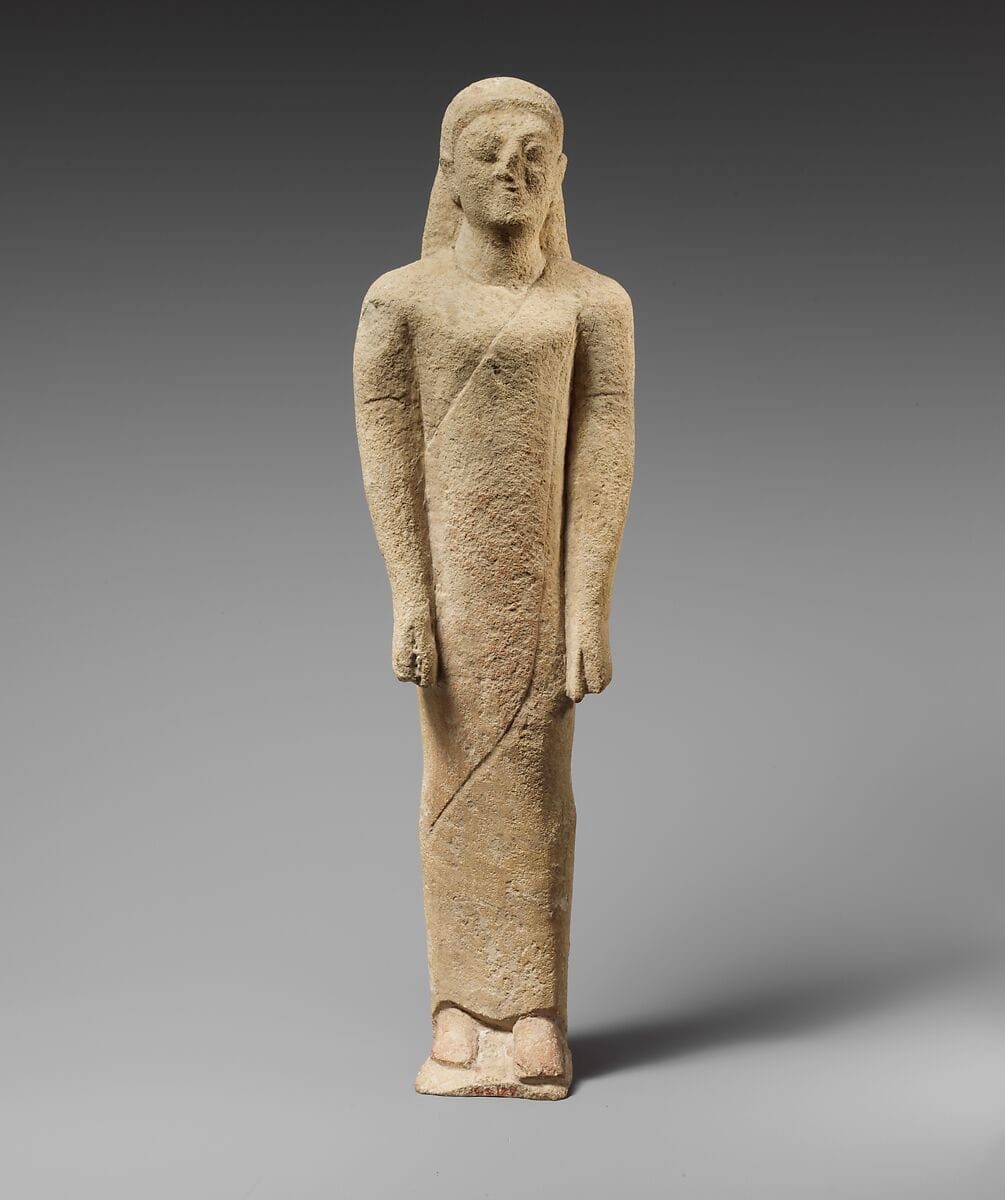
Limestone statuette of a beardless male votary in Greek dress
Archaic II
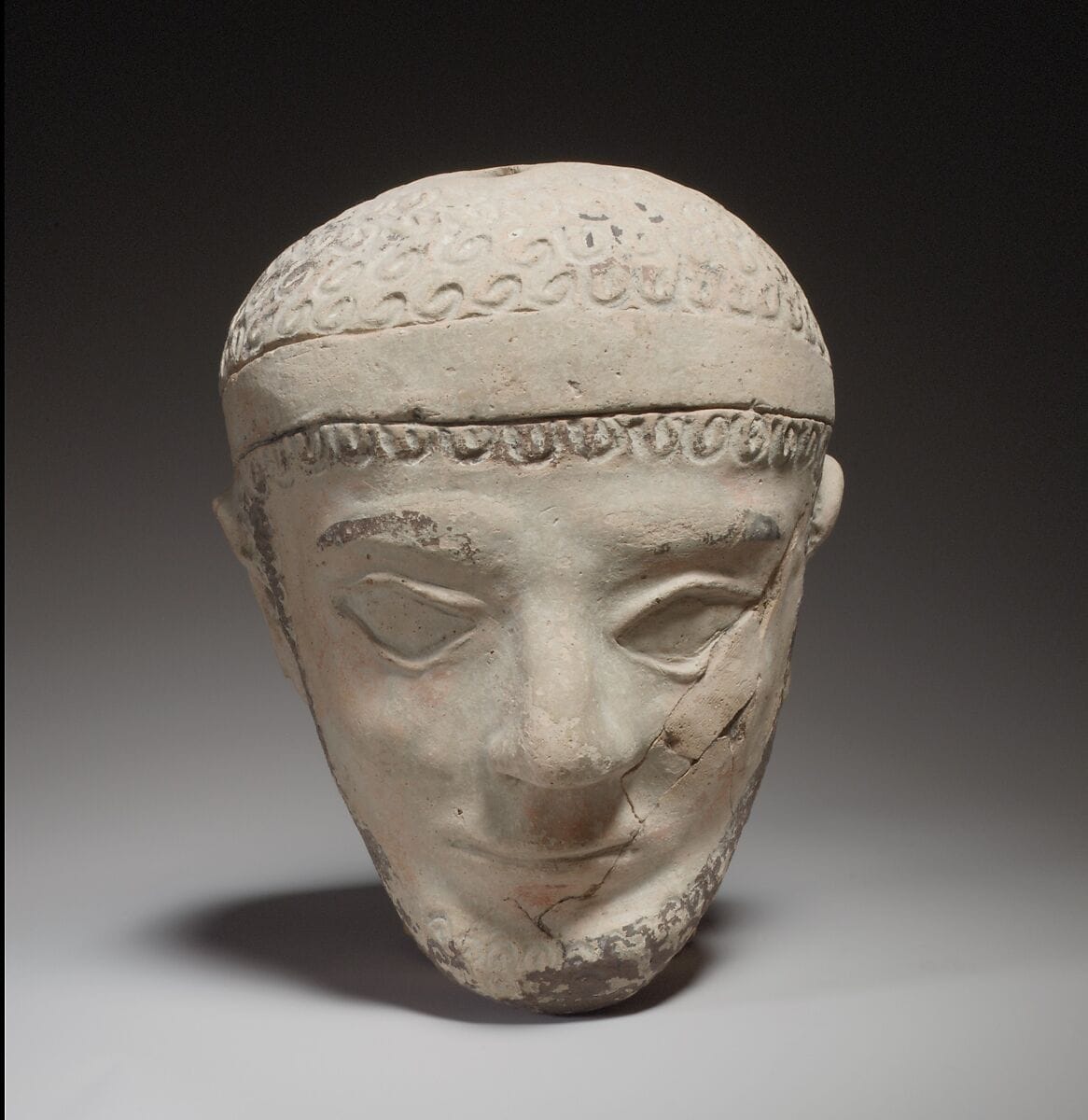
Terracotta head of a man
Archaic II
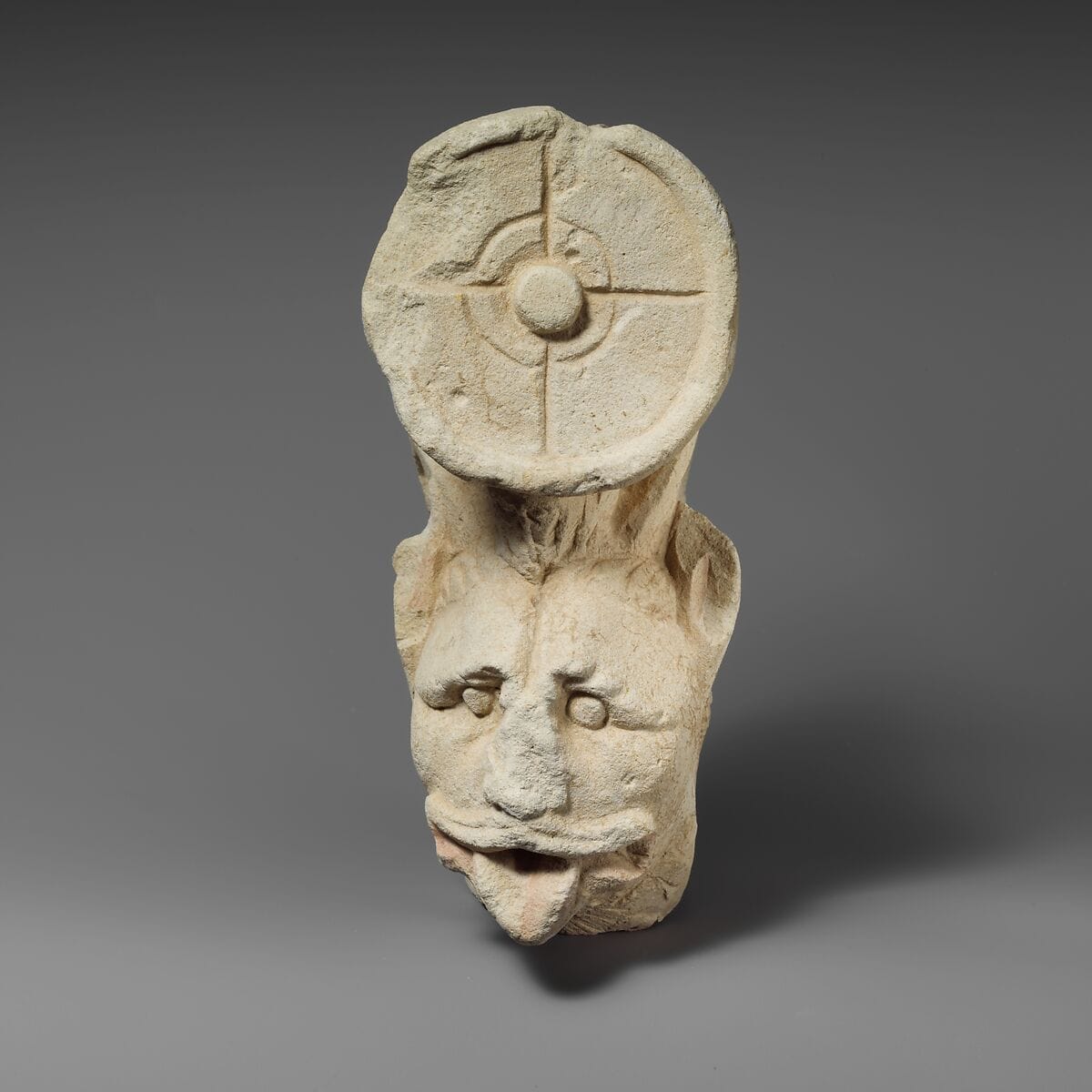
Fragment of a limestone throne (?) with the head of a horned lion
Roman
Head of a comic figurine
Hellenistic
Limestone statuette of a female votary of the kore type
Archaic II
Limestone head of Apollo
Hellenistic
Standing female flute player
Classical
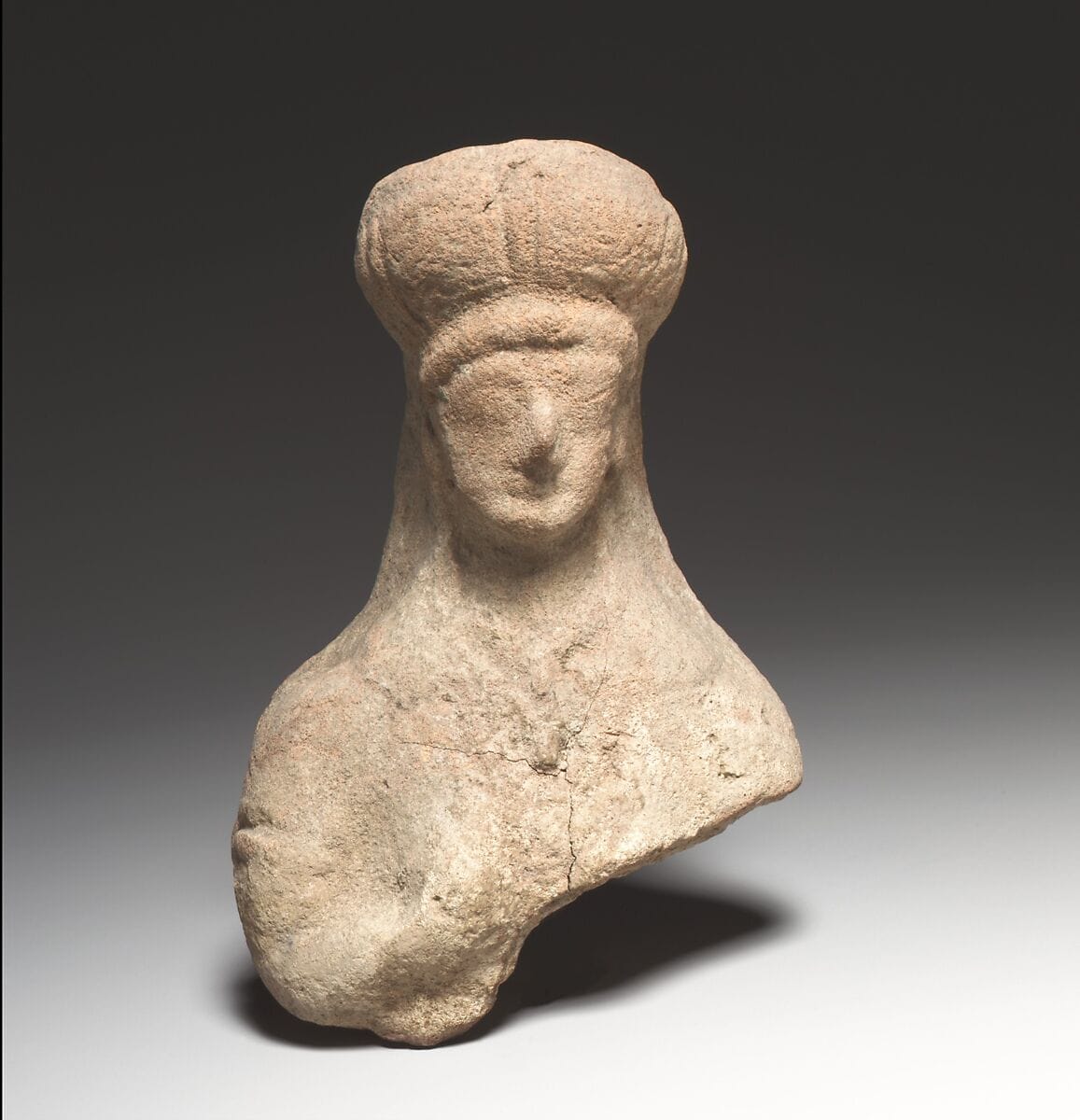
Standing female figurine
Archaic II
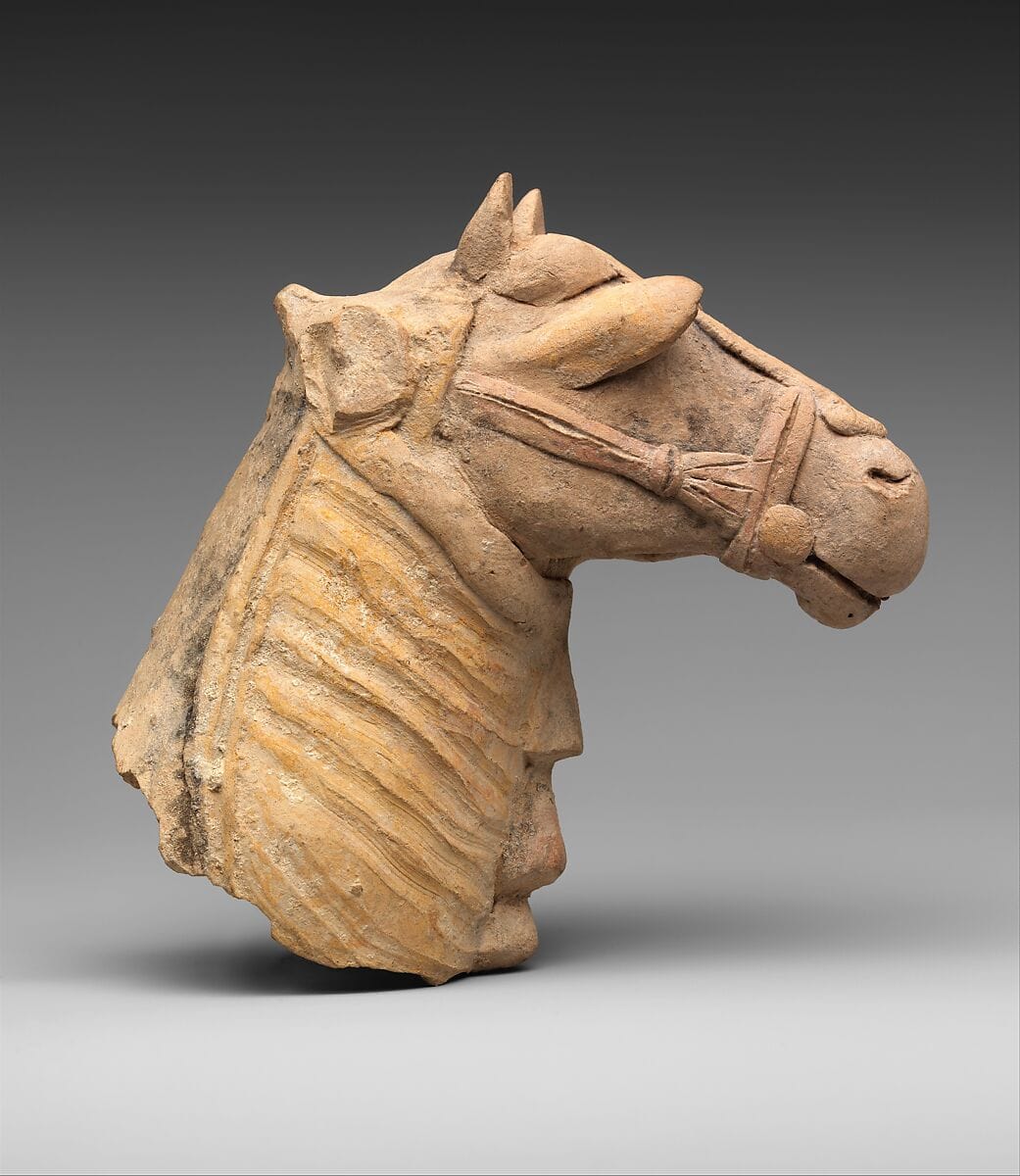
Horse's head with harness
Archaic II
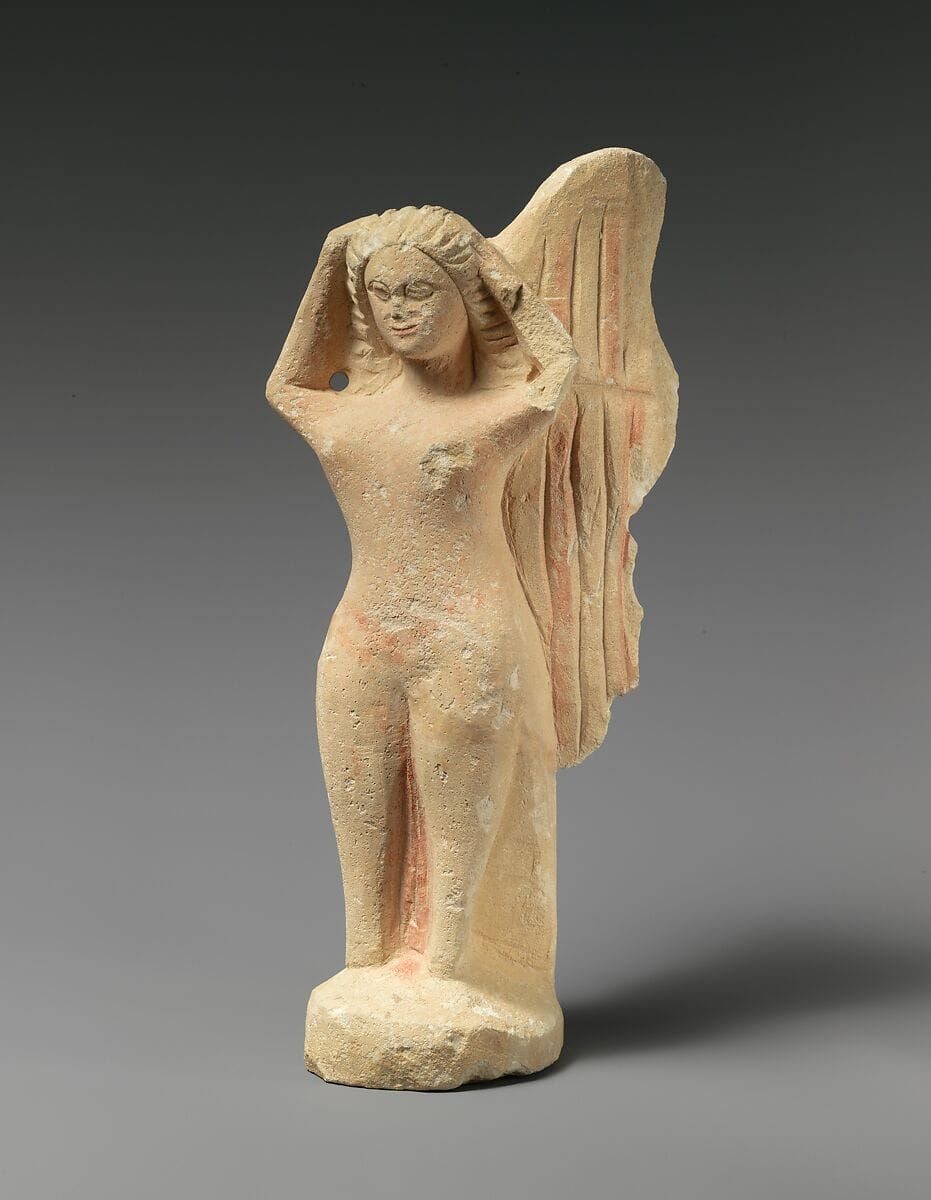
Limestone statuette of a mourning siren
Hellenistic
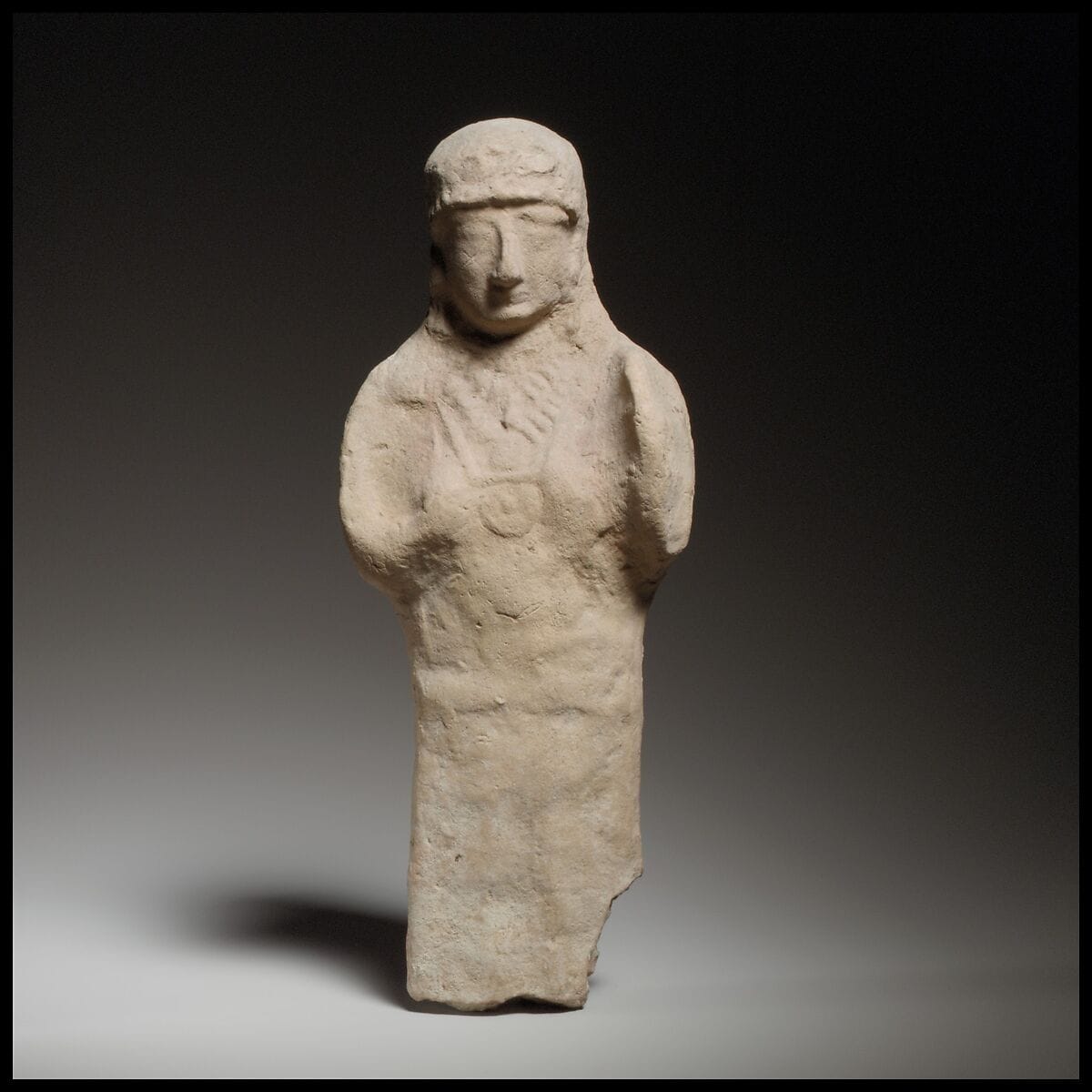
Standing female figurine
Archaic II
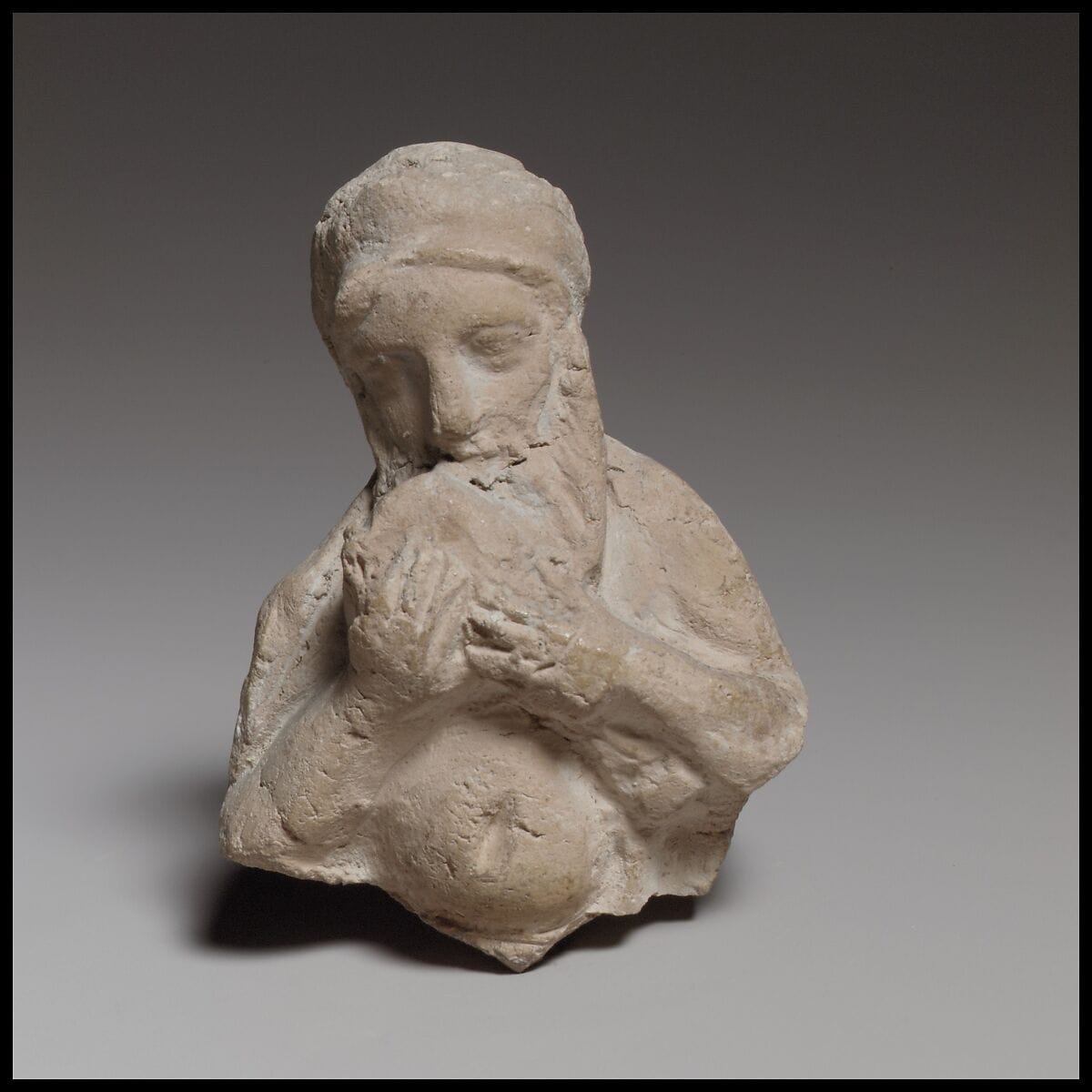
Terracotta statuette of Silenos (?) drinking
Hellenistic
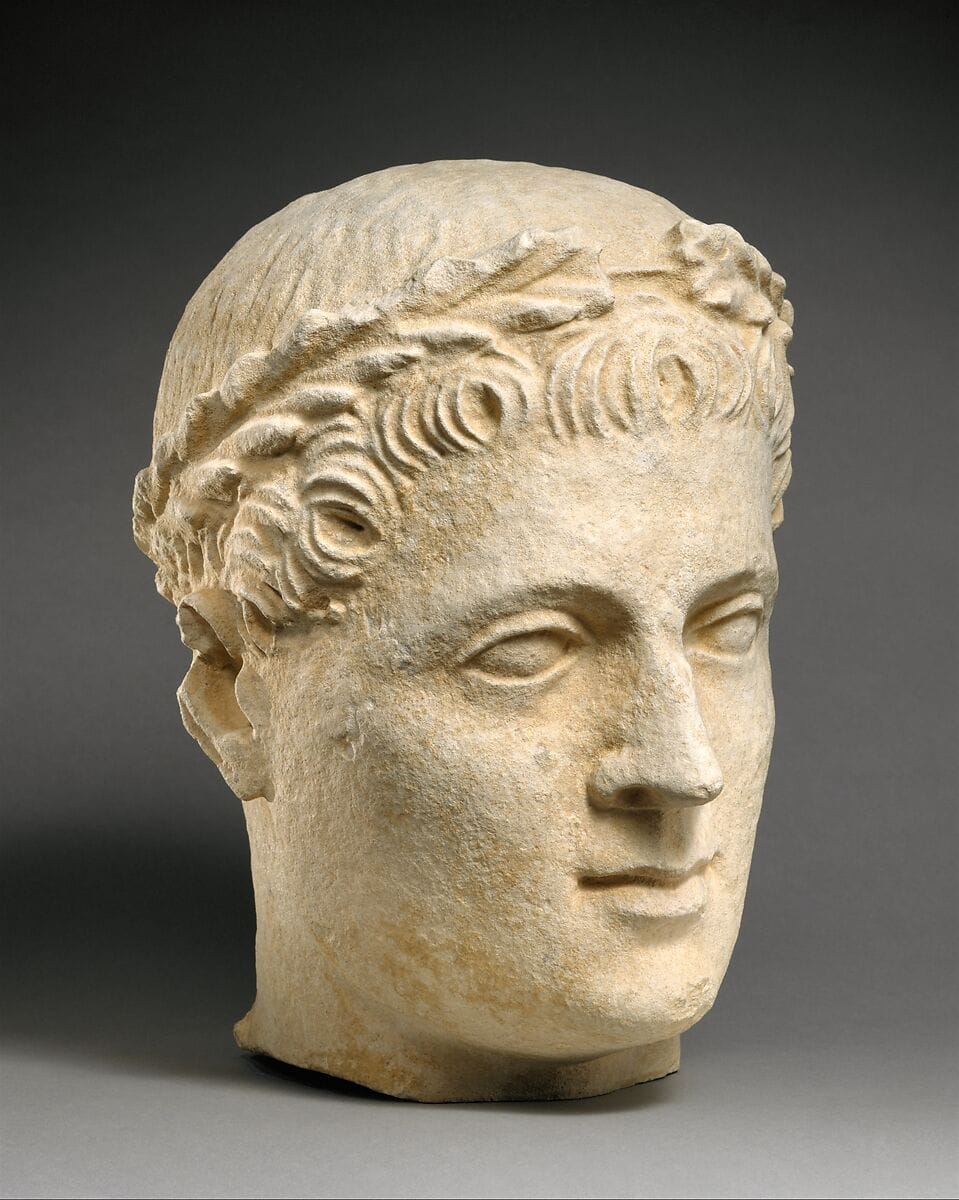
Limestone head of beardless male votary with wreath of leaves
Hellenistic
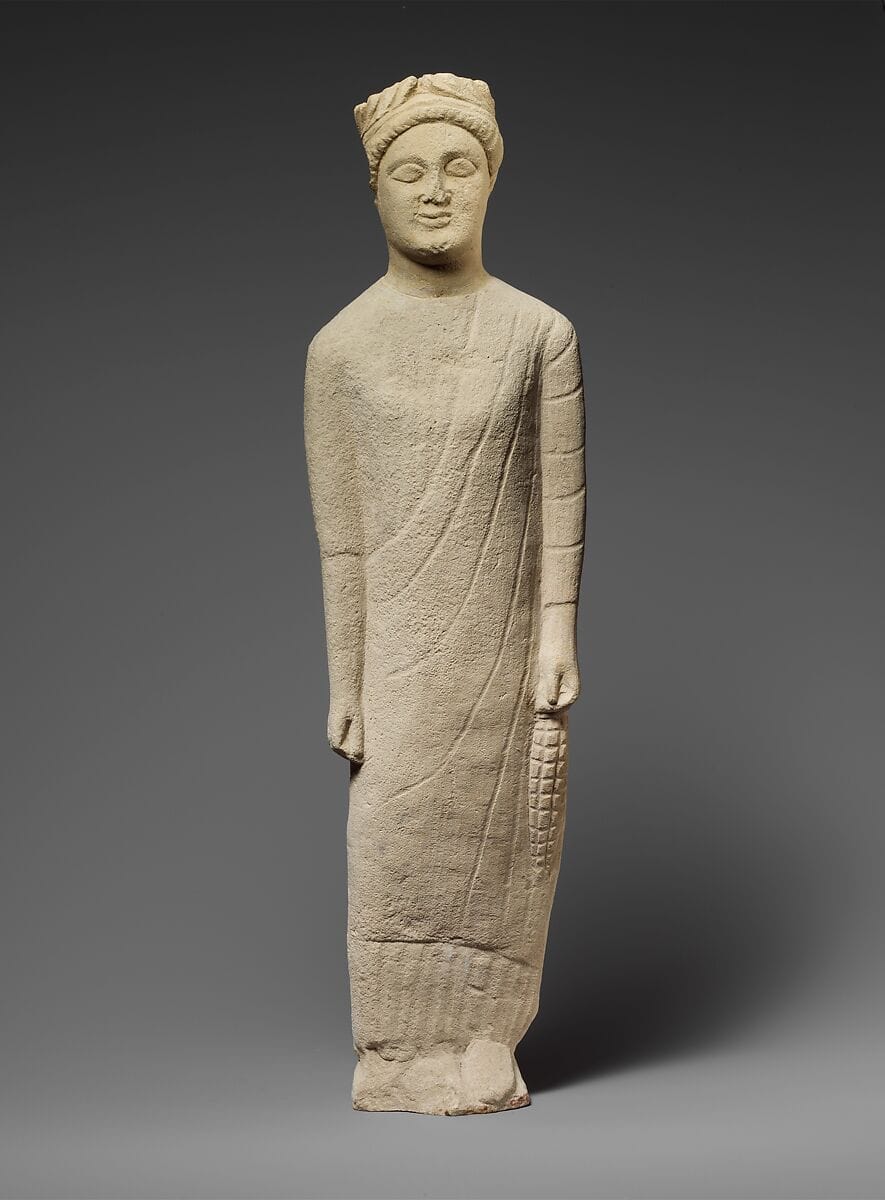
Limestone statuette of a beardless male votary with a wreath of leaves
Classical