
Early Bronze Age II
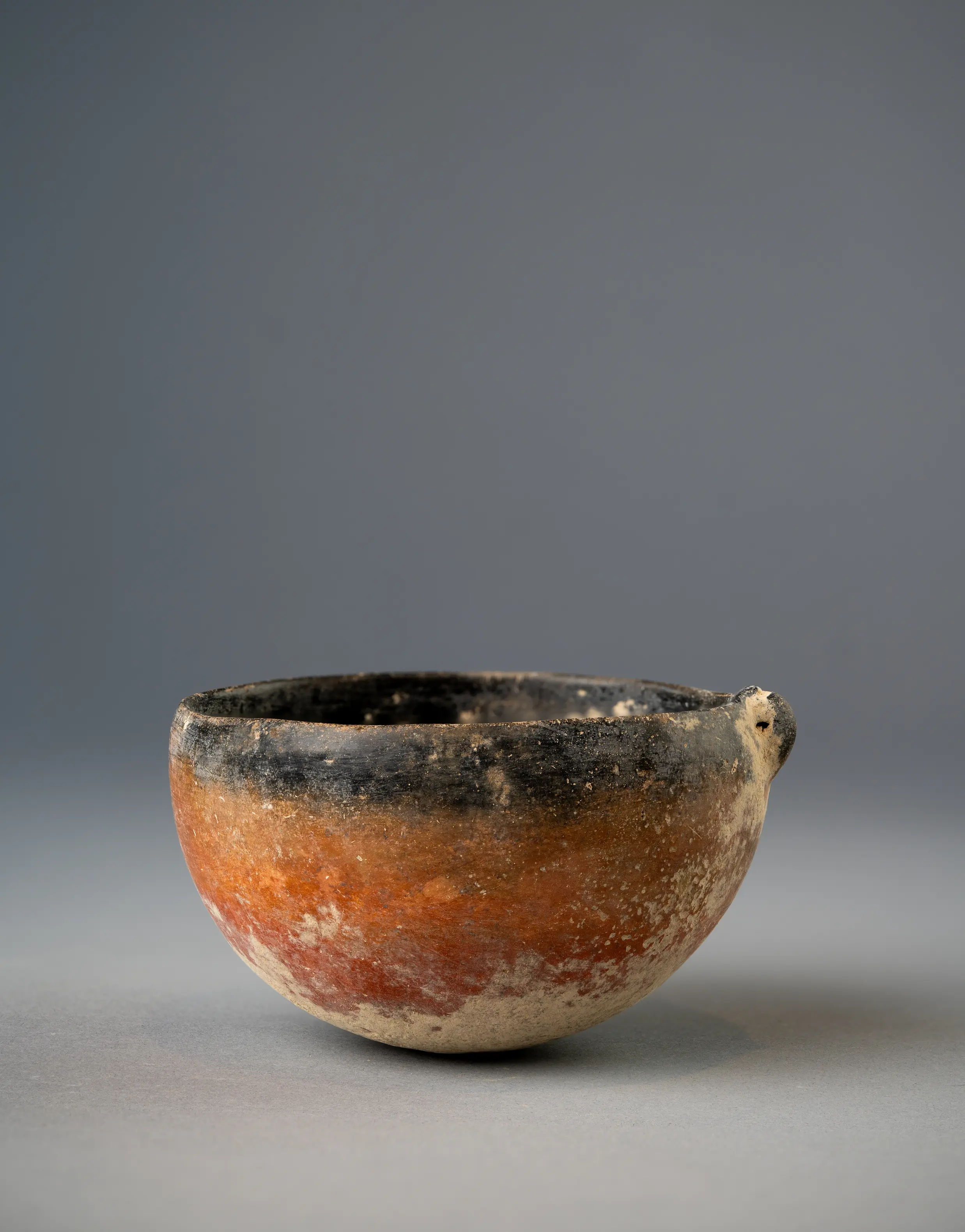
Black-topped Red Polished Bowl with Pierced Knob Lug
Hand-made Red Polished hemispherical bowl, black-topped by deliberate inverted firing, with a pierced knob lug at the rim. Early Cypriot II–Middle Cypriot I.
Date
2200 - 1900 BC
Accession No.
BWL-BA-011
Collection
Alexis Drakopoulos
Provenance
- 1965–1969, The Goodman Collection
- 2025–present, Alexis Drakopoulos, London
Early Cypriot II–Middle Cypriot I, c. 2200–1900 BCE · Red Polished ware, black-topped · Hand-made
A deep hemispherical bowl on a rounded base, with a plain rounded rim. A band of matt black encircles the rim and upper wall, and the interior is black as well. Below it the colour passes through a narrow brown zone into a lower body of orange and then deep red, where the polished slip survives best.
At the right a small knob lug rises from the rim, pierced horizontally. Much of the lower body and the underside are masked by a pale buff calcareous crust, which also clings to the lug and to the black zone in patches. These white areas are burial deposit and form no part of the decoration.
Commentary
The bowl belongs to the black-topped variety of the Red Polished knob-lug bowl, Stewart's Class XIII F2, the undecorated hemispherical bowl with a single lug at the rim [1]. Black-topped bowls of this plain kind appear in Early Cypriot tombs and continue into the Middle Cypriot period. A date in Early Cypriot II–Middle Cypriot I is the safest bracket for a piece without a recorded context.
The two-colour surface is the result of the firing. The bowl was fired, or cooled, mouth-down in ash, chaff or other fuel, so that the rim and interior were starved of oxygen while the exposed lower body stayed red. A Mössbauer study of Early Cypriot black-topped pottery showed that the black is caused by a higher proportion of reduced iron together with carbon in the surface, and that it penetrates below the surface, so it cannot be a painted coat [2]. The line between the two zones on this bowl is fairly level, which suggests the bowl was set carefully into its bed at a consistent depth. Black-topping had a long local history in Cyprus before the Bronze Age.
Close parallels are easy to find. A black-topped bowl from Bellapais-Vounous in the British Museum is described in almost the same terms: hemispherical on a rounded base, one pierced lug at the rim, orange-red below and black above, inside and out [3]. The Louvre holds a comparable one-lug red-and-black bowl from Vounous Tomb 57A [4], and a bowl from Dhali in the British Museum shows that the form was used in central Cyprus as well as on the north coast [5]. Morris illustrates a black-topped one-lug bowl of the same class [6].
Whether bowls like this were cups for drinking or dishes for small portions of food is not settled; Morris cautioned that the evidence for drinking is indirect [6]. The pierced lug suggests a cord for hanging or for a cover. Most complete examples come from chamber tombs. The find-place of this bowl is not recorded.
References
- 1.Stewart, J.R. (1962) The Early Cypriote Bronze Age. In The Swedish Cyprus Expedition IV.1A. Lund: Swedish Cyprus Expedition, Index of Types, Class XIII F.
- 2.Makundi, I.N., Waern-Sperber, A. and Ericsson, T. (1989) A Mössbauer Study of the Black Colour in Early Cypriote and Nubian C-Group Black-Topped Pottery. Archaeometry 31(1), pp. 54–65.
- 3.British Museum, London, inv. 1980,1126.4. Red Polished (Black Topped) hemispherical bowl with pierced lug, Bellapais-Vounous.
- 4.Musée du Louvre, Paris, inv. AM 2517. Coupe à une oreille percée horizontalement, Bellapais-Vounous, Tomb 57A no. 36.
- 5.British Museum, London, inv. 1868,0905.47. Black-topped Red Polished bowl with one pierced lug, Dhali.
- 6.Morris, D. (1985) The Art of Ancient Cyprus. Oxford: Phaidon, pp. 69–72, pl. 115b.
More from the Catalogue
Browse related objects
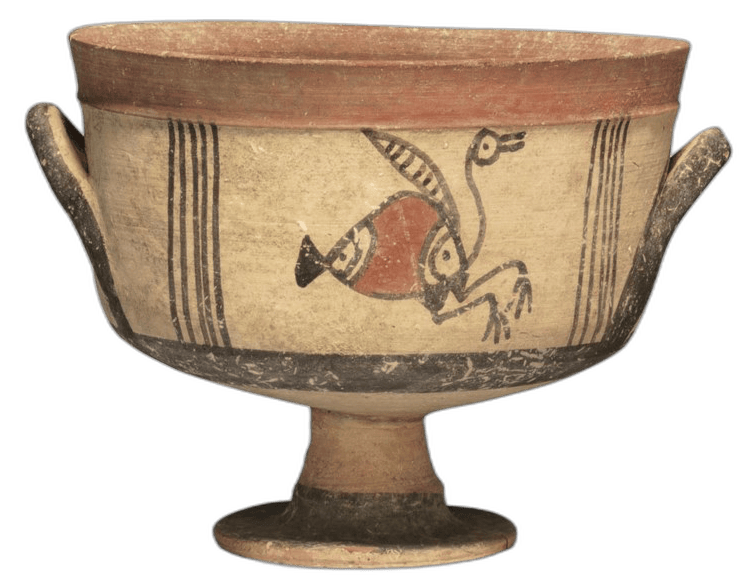
Bichrome Kylix with Bird Free Field Art
Geometric III
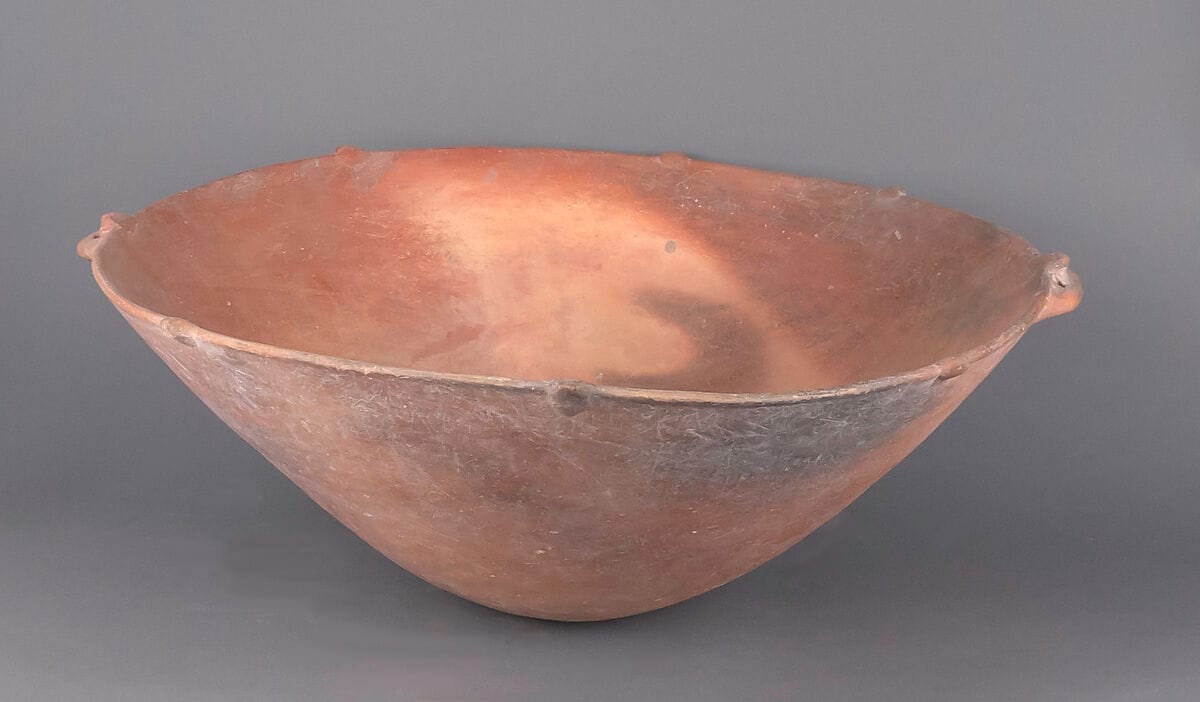
Milk bowl
Bronze Age
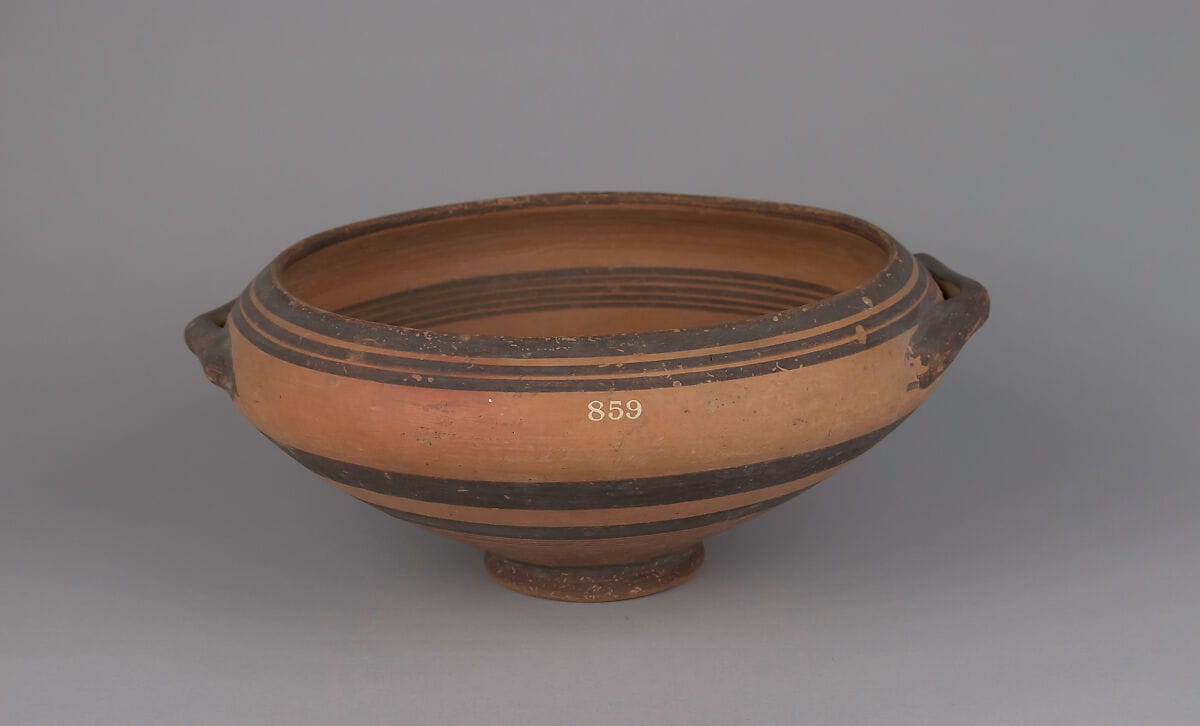
Bowl
Geometric III
Krater
Archaic I
Handle of a bowl
Bronze Age
Bowl
Geometric I
Bowl
Bronze Age
Terracotta bowl
Chalcolithic
Silver bowl
Archaic I
Alabaster bowl
Classical
Bronze phiale (libation bowl)
Archaic II
Bowl fragment, inscribed
Archaic II
Bowl
Bronze Age
Bowl
Archaic I
Bowl
Late Bronze Age II
Bowl
Geometric III
Terracotta footed bowl
Archaic I
Marble bowl fragment with Phoenician inscription
Classical