Room 01 of 07 · Late Neolithic
The Neolithic
Five sherds of the Sotira culture, the oldest pottery in the collection, c. 4500–3900 BC.
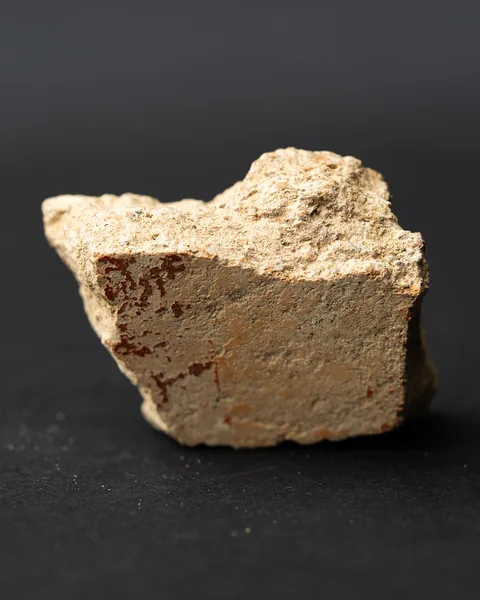
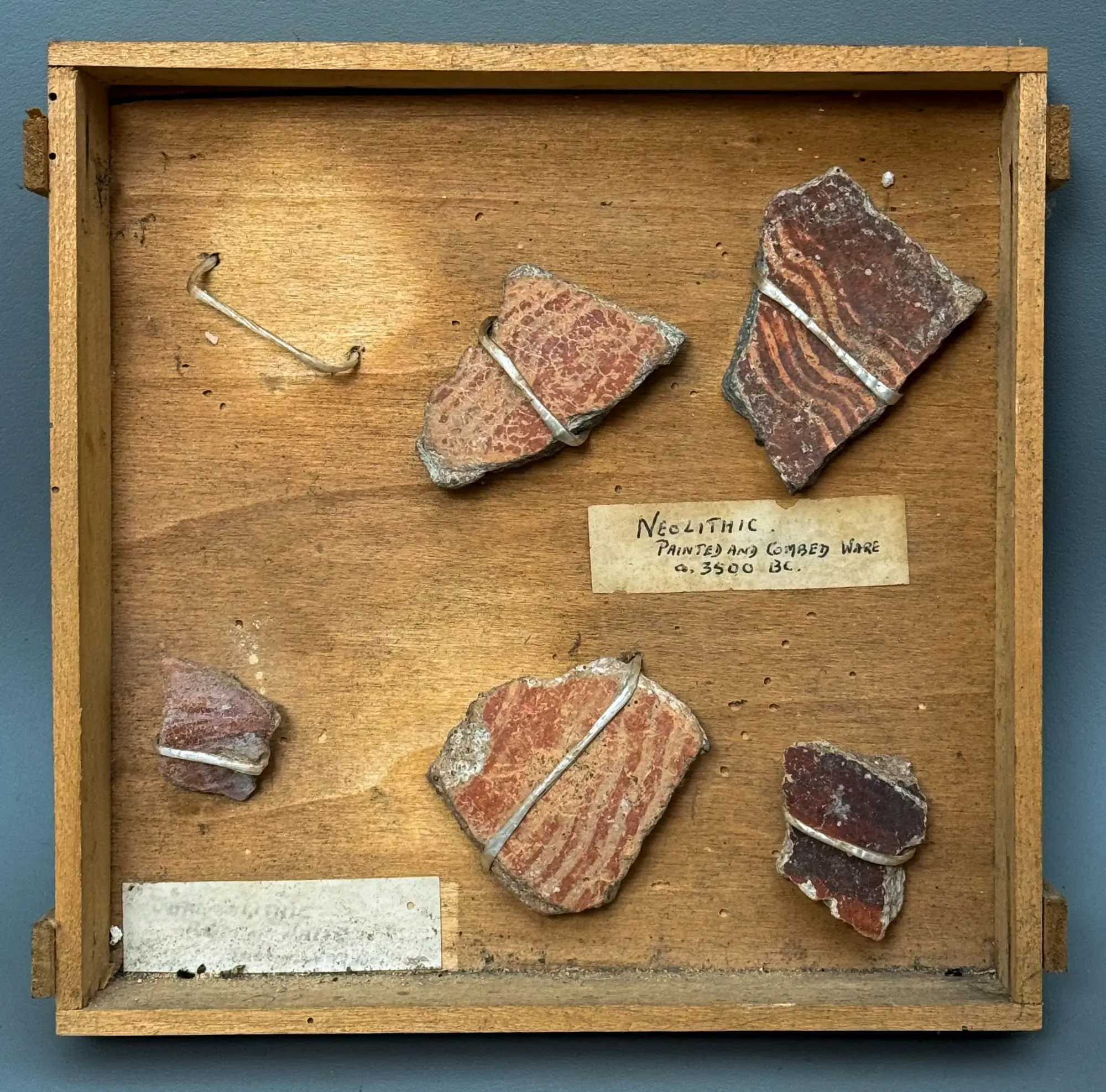
The collection opens with five broken pieces of pottery, small enough to share a box you could hold in two cupped hands. They belong to the Late Neolithic Sotira culture of southern Cyprus, c. 4500–3900 BC, and they came into the collection together, wired into a wooden Droste chocolate box by a judge of the Supreme Court of Cyprus.
A slip of paper in the box reads "Neolithic. Painted and combed ware. c. 3500 BC." That was the best date available when it was written, before radiocarbon dates were calibrated; the culture is now placed about a thousand years earlier. None of the sherds has a recorded find-spot. Combed pottery is most at home in the settlements of the south coast, so that is the likeliest source, and it is no more than likely.
Two kinds of pottery are here: Combed Ware, the decorated pottery of the south in this period, and the plain red wares that were the commonest pots of all.
Pulled through wet slip
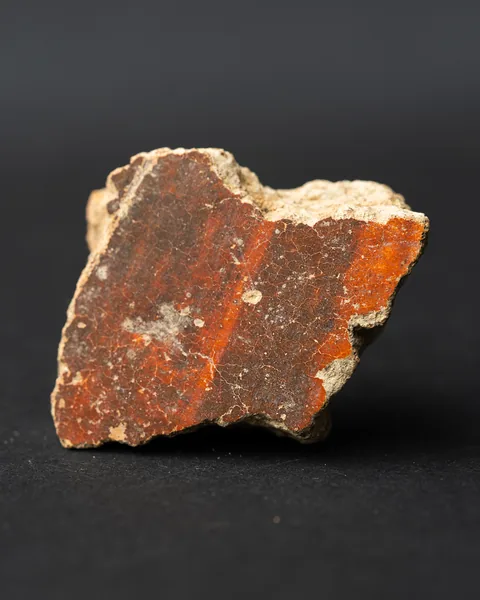
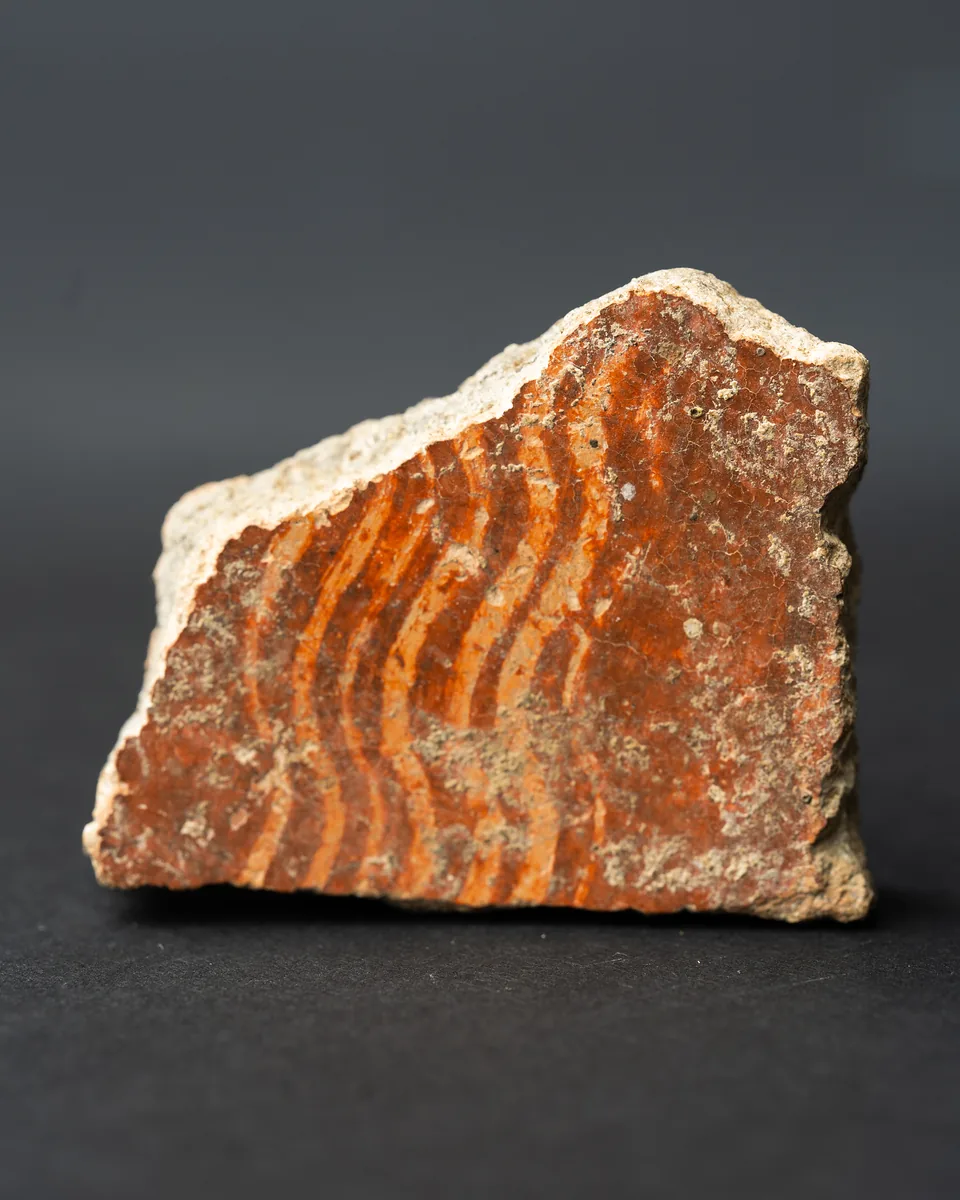
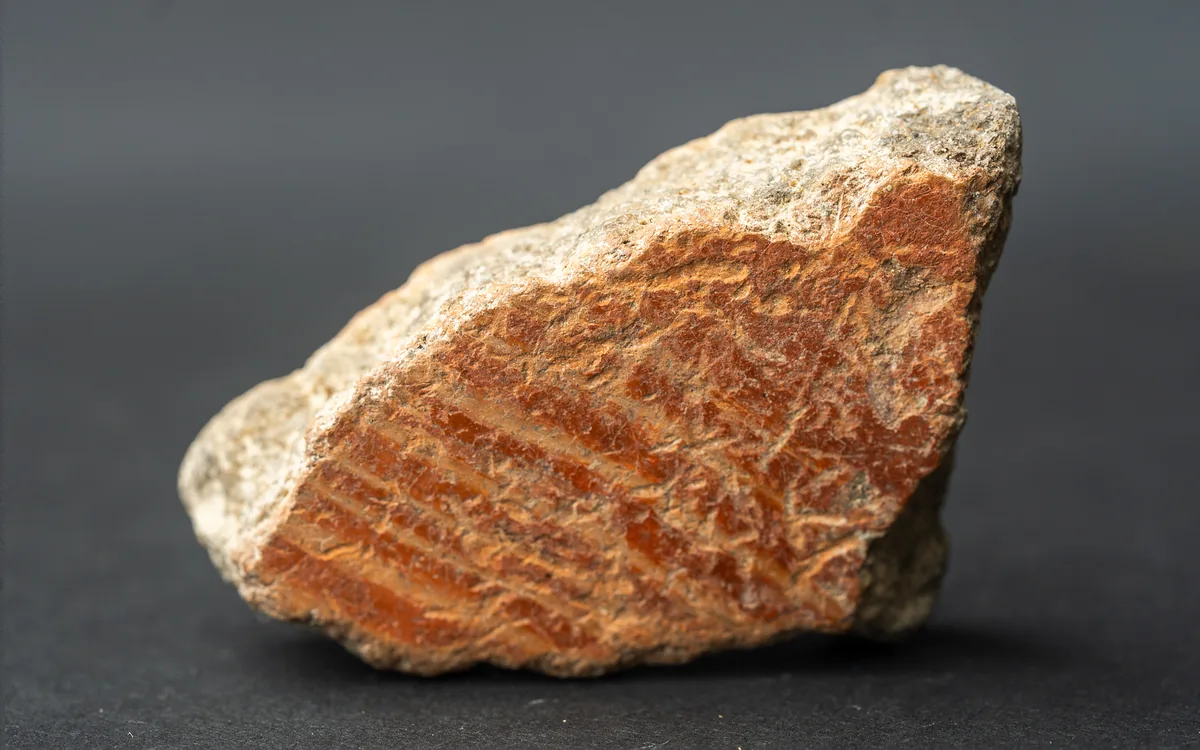
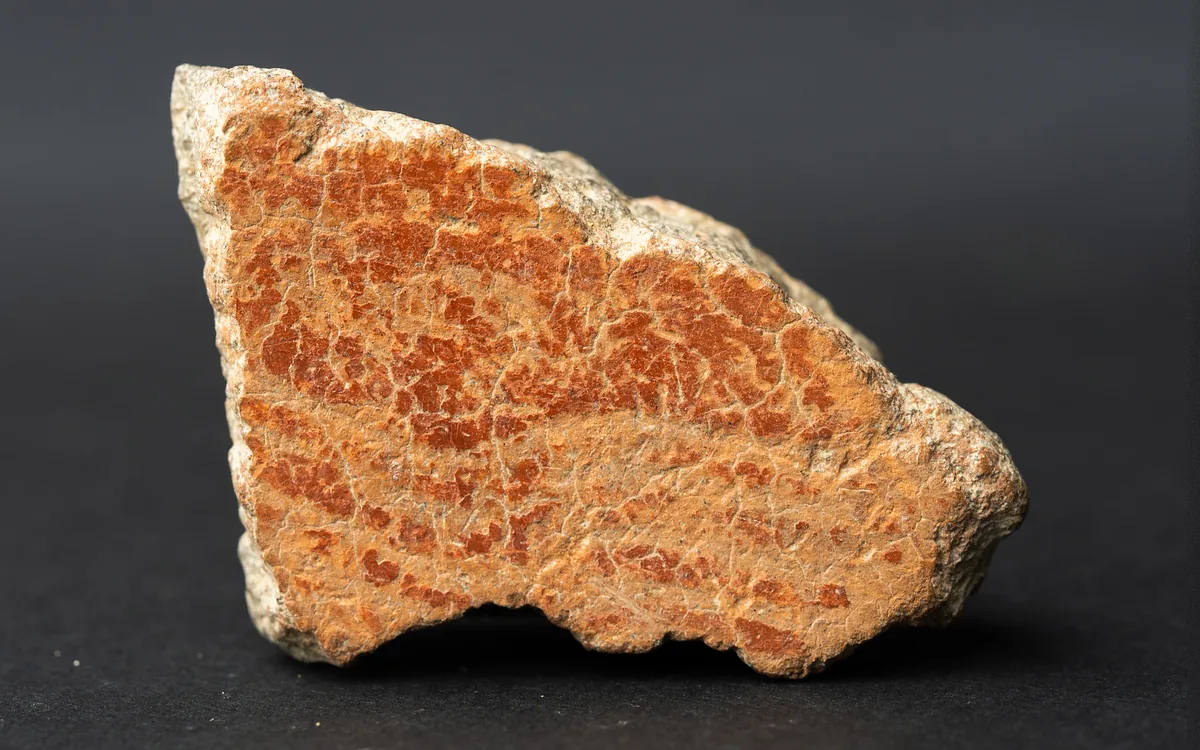
Combed Ware is made by taking colour away. The potter coated the vessel in a thick red slip and, while it was still wet, drew a toothed comb of shell, bone or reed across it, so that each tooth scraped a pale line down to the clay beneath. Bowls were combed inside and out, jugs on the outside only. All three sherds here are combed on both faces, or seem to have been where the surface is worn, so all three probably come from bowls.
Some combs had as many as eighteen teeth. At Sotira the finest wavy combing is commonest in the settlement's last phase. Then it stopped. Combing almost vanishes at the threshold of the Chalcolithic, which makes it one of the clearest dating signals in Cypriot prehistory.
In focus
Combed Ware Bowl Fragment with Multiple Wavy Bands
Late Neolithic (Sotira culture), c. 4500–3900 BC
The finest of the combed sherds in the collection. Six or seven pale lines ripple evenly across the red slip, as if drawn in one steady pass of a many-toothed comb. Dikaios regarded fine multiple wavy combing like this as the technical peak of the style, most frequent in Sotira's final phase. Its nearest parallel is a sherd from his own excavations at Sotira, now in the Medelhavsmuseet in Stockholm.
Straight bands and slanting ones
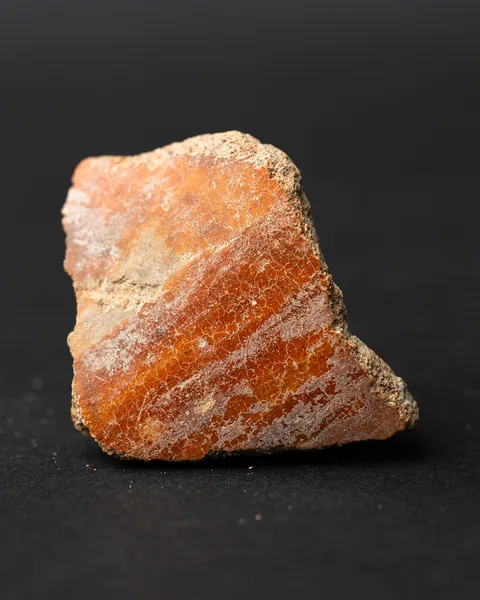
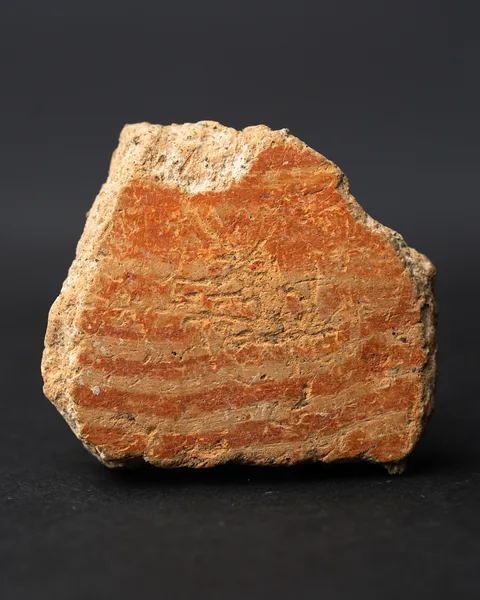
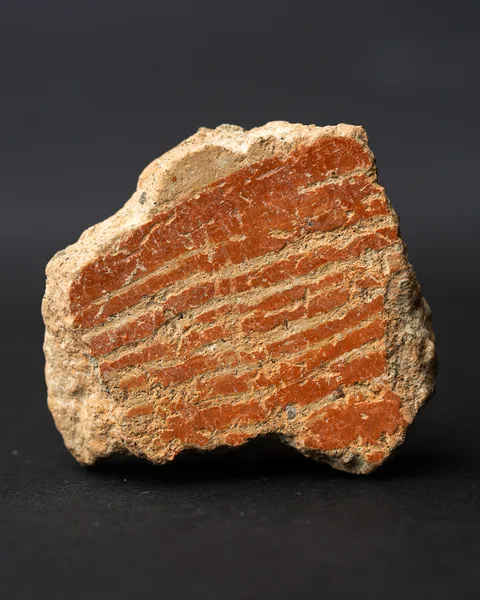
Two more bowl fragments from the same box. On one the bands run level on one face and slant on the other; the other is combed diagonally, its soft, low-fired slip crazed all over. Both have close parallels in the Ashmolean Museum, Oxford, among them a fragment from Sotira-Teppes.
The everyday red
The combed sherds are the ones collectors noticed. Everyday pots were plainer. At Sotira the commonest pottery in every phase was Red Lustrous ware, between a third and a half of everything found, undecorated and burnished to a shine. The excavator, Porphyrios Dikaios, doubted his own line between Red Lustrous and the thinner Red Slip, suspecting the second was only a variety of the first, and later scholars grouped the two together.
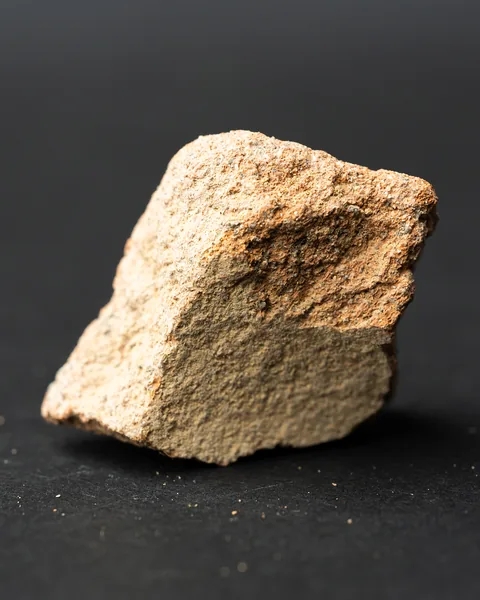
Both sherds here are slipped on one face only, which points to closed vessels such as jugs. They are also the least securely dated pieces in the room: plain red pottery carried on into the earliest Chalcolithic, so these two may be a few centuries younger than the combed bowls.
Fired in the open
Pottery of this period was fired at low heat in open bonfires. The Red Lustrous sherd shades in broad clouds from red to near black where it lay against fuel or smoke. The Red Slip sherd, the smallest in the box, carries its thin slip in streaks of tomato red and pale pink.