
Chalcolithic
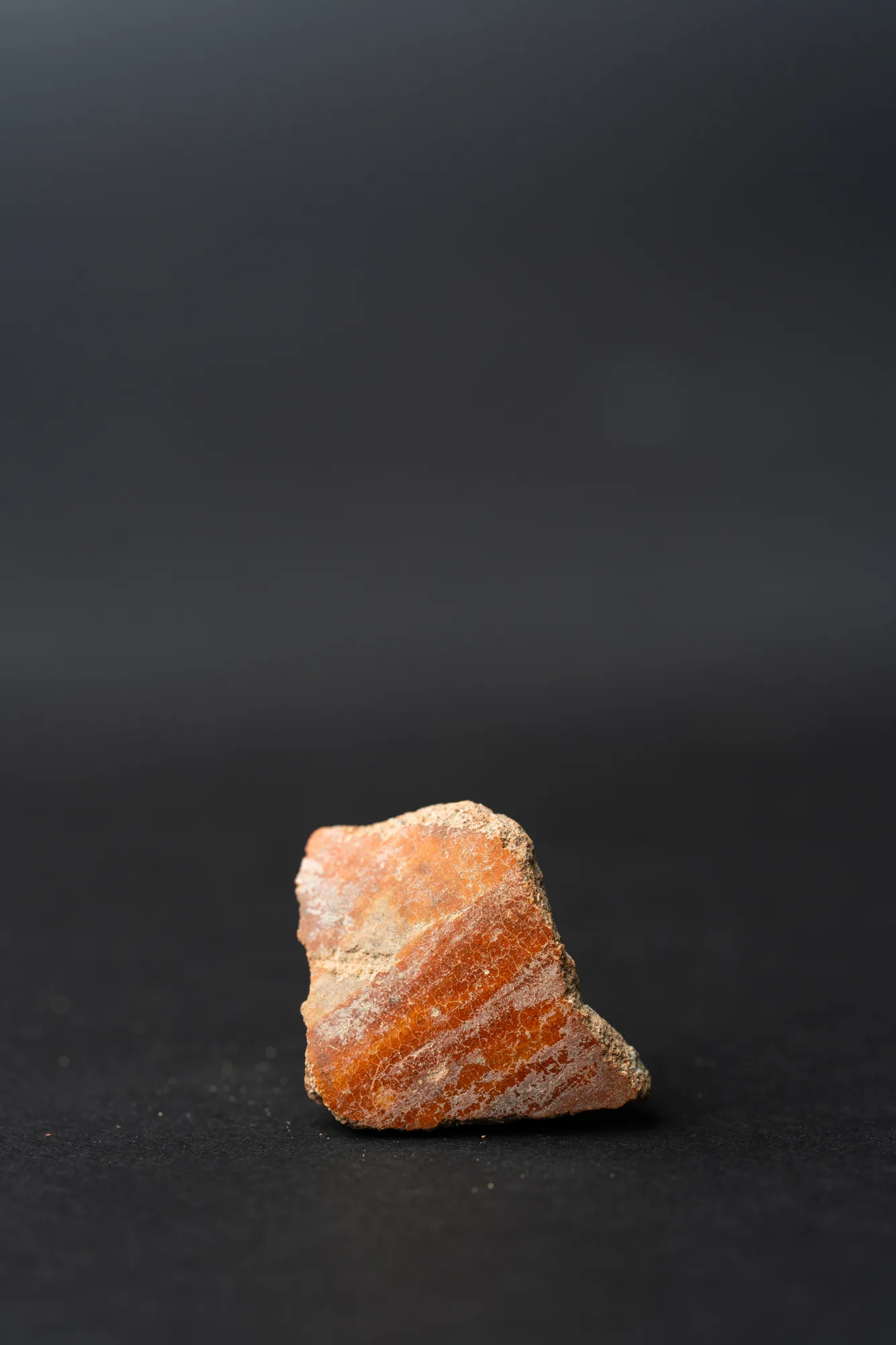
Red Slip Ware Body Sherd with Streaked Slip
Small handmade body sherd with a thin, streaky orange-red slip on one face, Red Slip ware of the Late Neolithic Sotira culture, possibly early Chalcolithic. Ex Griffith-Williams.
Date
4500 - 3500 BC
Accession No.
BWL-NE-005
Collection
Alexis Drakopoulos
Provenance
- c. 1938–1963, Judge G. C. Griffith-Williams (1893–1983), Nicosia; mounted with four other Neolithic sherds in a wooden Droste chocolate box, with a handwritten label reading "Neolithic. Painted and combed ware. c. 3500 BC." [5]
- Present, Alexis Drakopoulos, London
Late Neolithic (Sotira culture), probably; c. 4500–3900 BCE, possibly to c. 3500 BCE · Red Slip (Red Monochrome Painted) ware · Handmade
The smallest of the five sherds from the box, a compact, roughly pentagonal body fragment. The outer face is covered in a thin, translucent orange-red slip laid on in streaks, so that deeper tomato-red strips alternate with paler, almost pinkish ones, all running on a diagonal across the fragment. A fine crackle covers the slip, and whitish lime sits in the cracks and along one pale diagonal line. Towards the upper left the slip thins to a light orange wash over the buff body. The inner face is unslipped and pale sandy buff, with a faint orange tinge in one corner, and the broken edges show a light, gritty fabric.
Commentary
The streaked finish points to Red Slip Ware in Dikaios's terms, part of the red monochrome family of the Sotira culture that Clarke calls Red Monochrome Painted (RMP) [1, 2]. Clarke describes RMP slip as applied in broad brush strokes over the whole surface, "either evenly, as in Red Lustrous Ware, or in light streaks, as in Red Slip Ware" [2]. Dikaios treated Red Slip as probably a variety of Red Lustrous "with less thick red slip, which in some cases is a red wash or a slip of paler color" [1]. The thin, uneven orange film here fits that description closely.
The paler diagonal strips raise one alternative. Combed Ware was made by dragging a toothed tool through wet red slip to expose the pale body in parallel bands [1], and heavily worn combing can leave something like this. On this piece, though, the light strips are soft-edged and irregular in width, without the regular, parallel, sharp channels of the combed sherds from the same box, so a streaked slip is the better reading. Examination under raking light for scraped channels would settle it.
Slip on one face only suggests a closed vessel such as a jug, which in this period was slipped outside and left plain within, while bowls were normally slipped on both faces [1]. On a fragment this small the shape remains uncertain, and Clarke notes that some plain red sherds may come from the uncombed parts of combed vessels [2].
The date is the least secure element. Red Slip occurs at Sotira and in small quantities at Khirokitia, but Dikaios noted that it appears again at Erimi, "in more developed form and in greater quantity" [1], and Catling traced the red pottery of the Chalcolithic back to Neolithic roots [3]. A Red Slip sherd from Erimi in the Ashmolean, catalogued as Chalcolithic, has a similar streaky orange slip [4]; Sotira Red Slip fragments are illustrated by Dikaios [1, pl. 84]. The match in fabric with the combed Neolithic sherds it was kept with favours a Sotira-culture date of c. 4500–3900 BCE, with an early Chalcolithic date possible. The find-spot is unrecorded.
References
- 1.Dikaios, P. (1961) Sotira. University Museum Monographs. Philadelphia: University of Pennsylvania, pp. 188 ff. (Combed Ware), 200–202 (Red Lustrous and Red Slip Wares), pl. 84, pp. 228–231 (chronology).
- 2.Clarke, J. (2007) On the Margins of Southwest Asia: Cyprus during the 6th to 4th Millennia BC. Oxford: Oxbow, pp. 42–46, 118–120.
- 3.Catling, H. W. (1966) Cyprus in the Neolithic and Bronze Age Periods. Cambridge Ancient History, rev. ed., fascicle. Cambridge: Cambridge University Press, p. 21.
- 4.Ashmolean Museum, Oxford, AN1935.710.d: Red Slip sherd, Erimi, Chalcolithic.
- 5.Drakopoulos, A. (2026) The Judge, the Escape, and a Chocolate Box of Six-Thousand-Year-Old Sherds. ancientcyprus.com, /articles/the-judge-the-escape-and-the-chocolate-box.
More from the Catalogue
Browse related objects
Two Fragments of a White Painted Deep Bowl with Panel Decoration
Geometric III
Combed Ware Bowl Fragment with Parallel Bands
Neolithic
Combed Ware Bowl Fragment with Multiple Wavy Bands
Neolithic
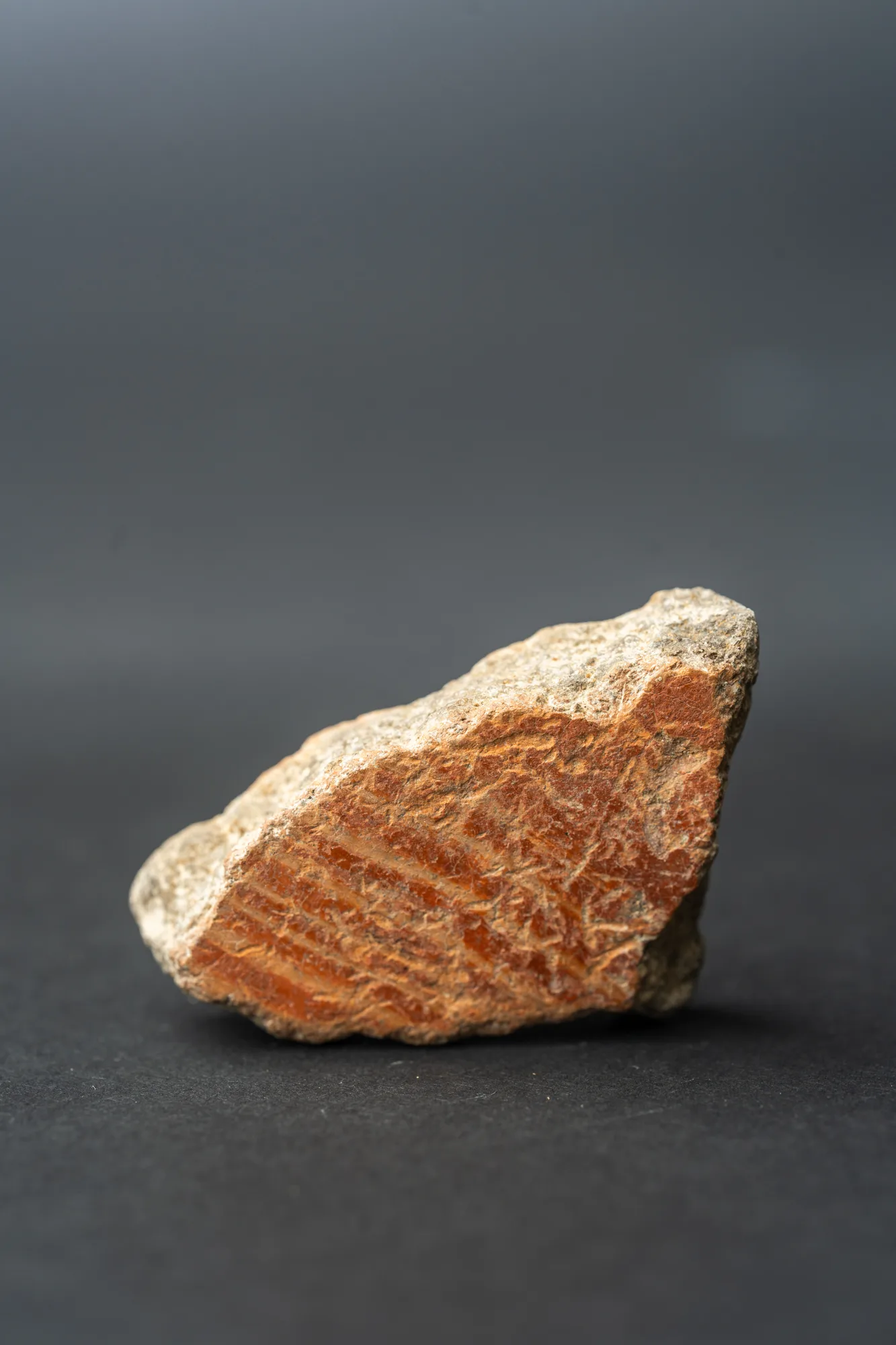
Combed Ware Bowl Fragment with Oblique Bands
Neolithic
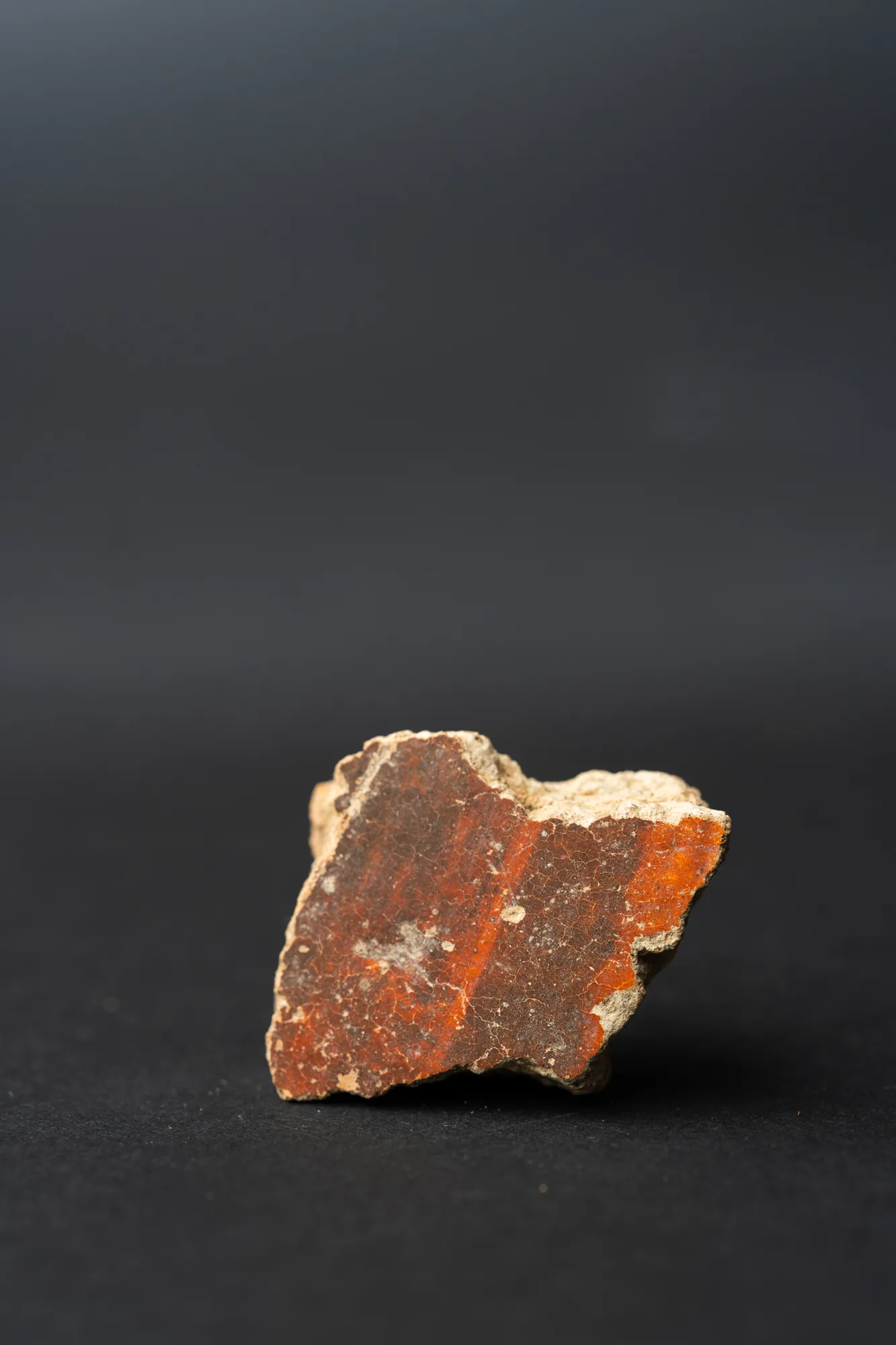
Red Lustrous Ware Body Sherd with Fire-Mottled Slip
Neolithic
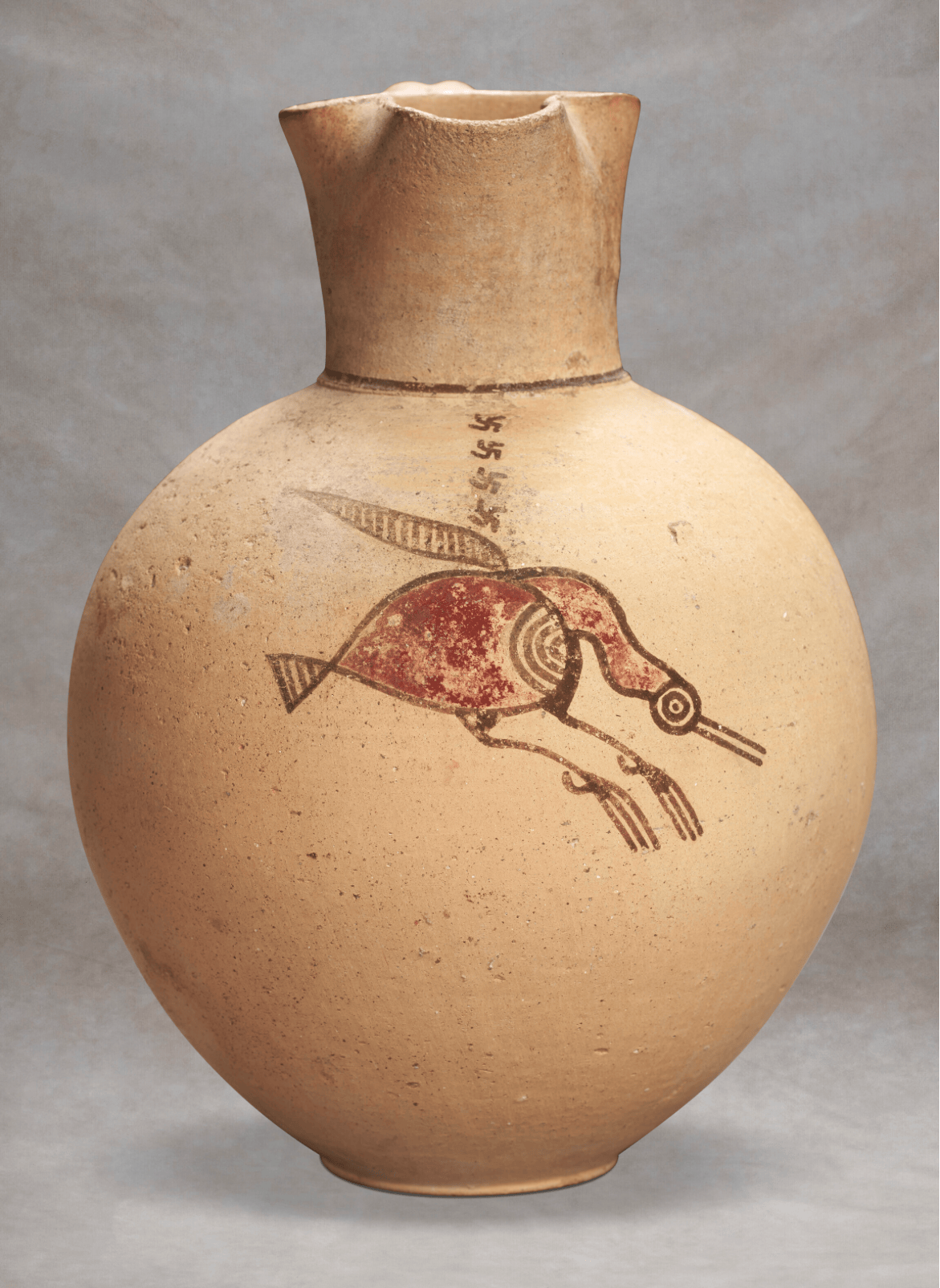
Bichrome Oinochoe
Archaic I
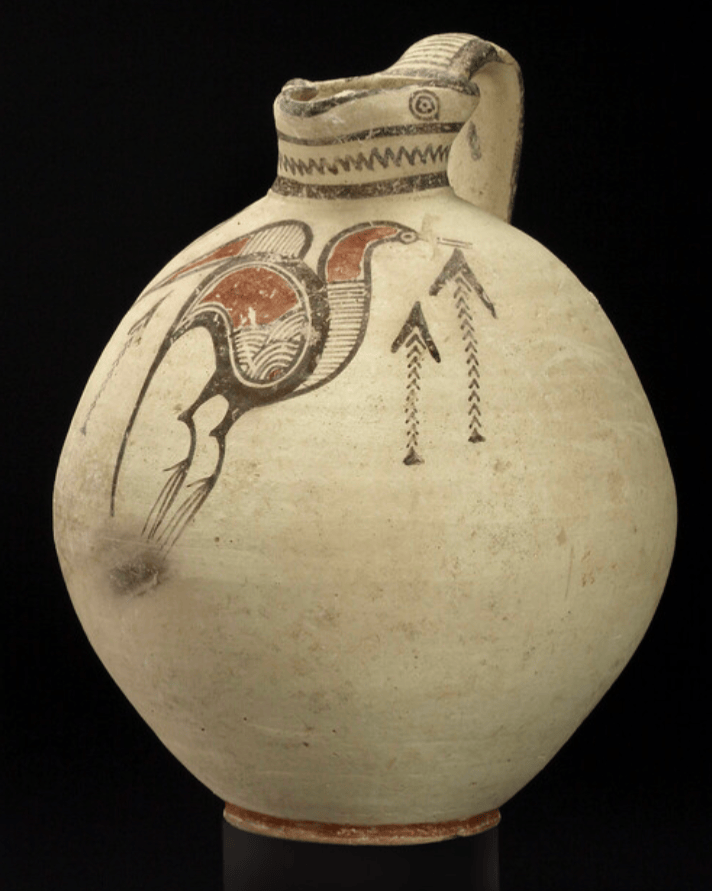
Free-field bichrome jug with image of an Ibis bird and reeds
Archaic
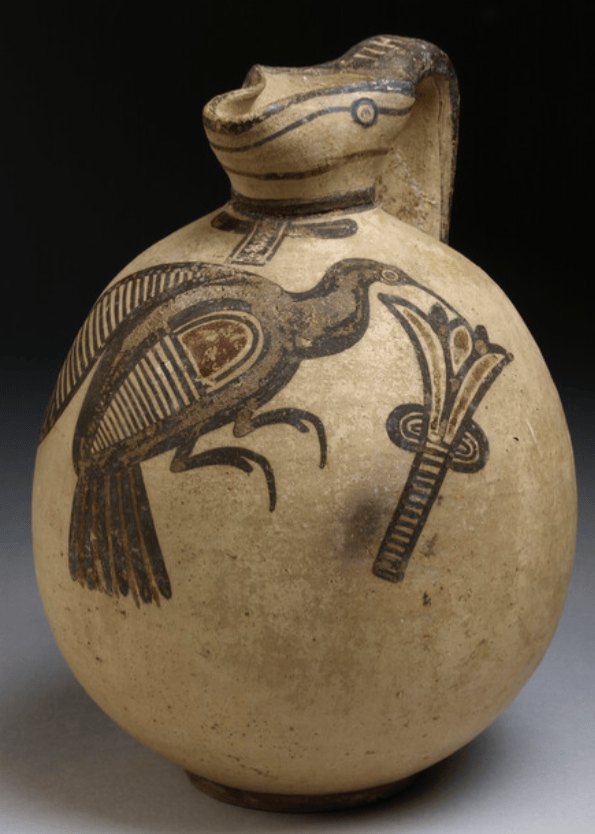
Squat bichrome jug in free-field style with image of bird picking a lotus flower
Archaic
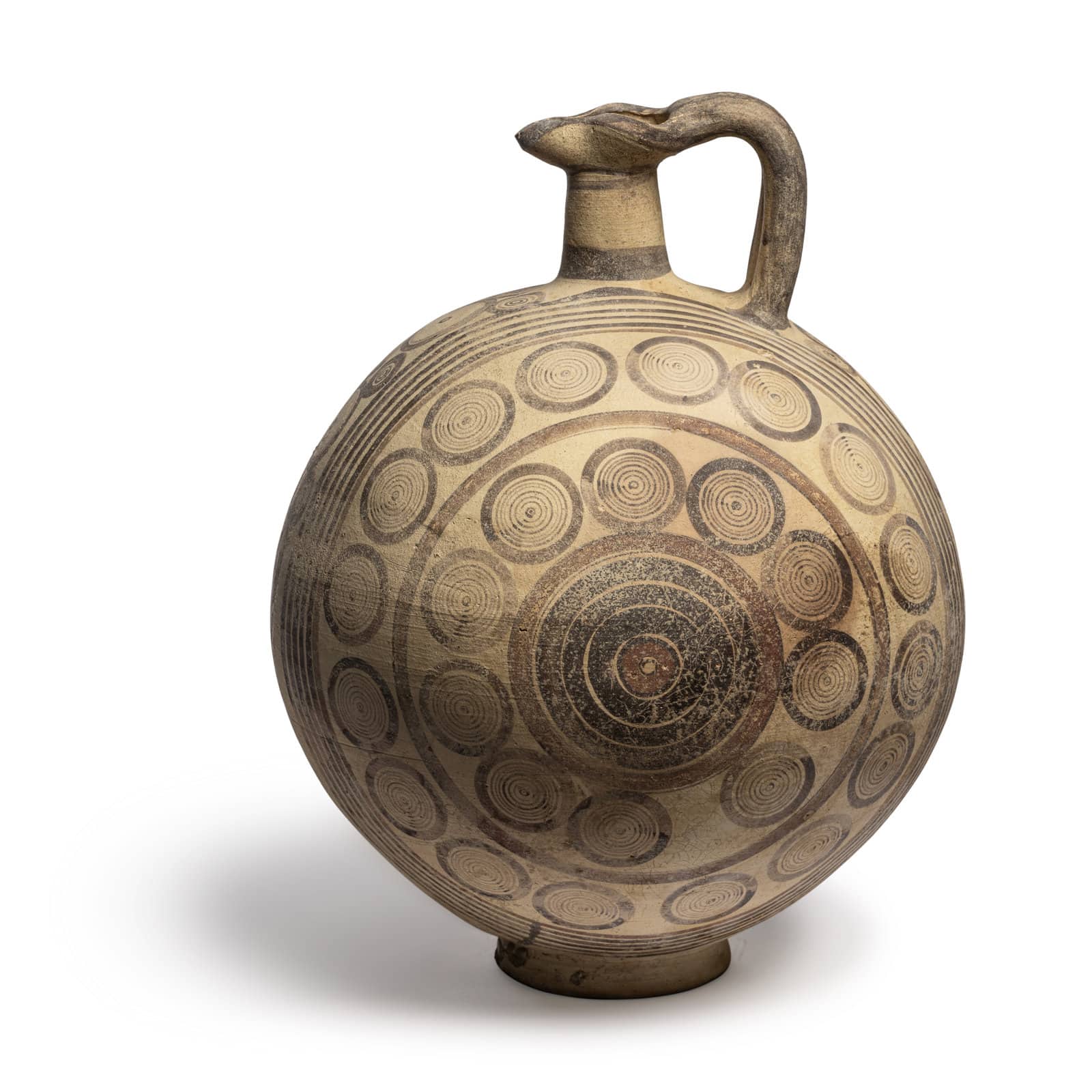
A Cypriot Bichrome-Ware Oinochoe Jug
Archaic I
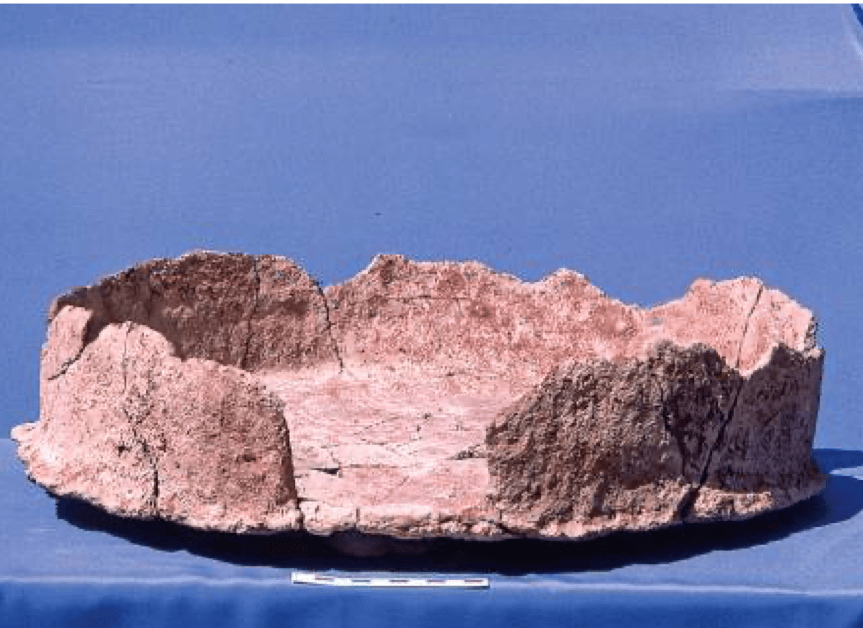
Flanged-base Tray
Chalcolithic
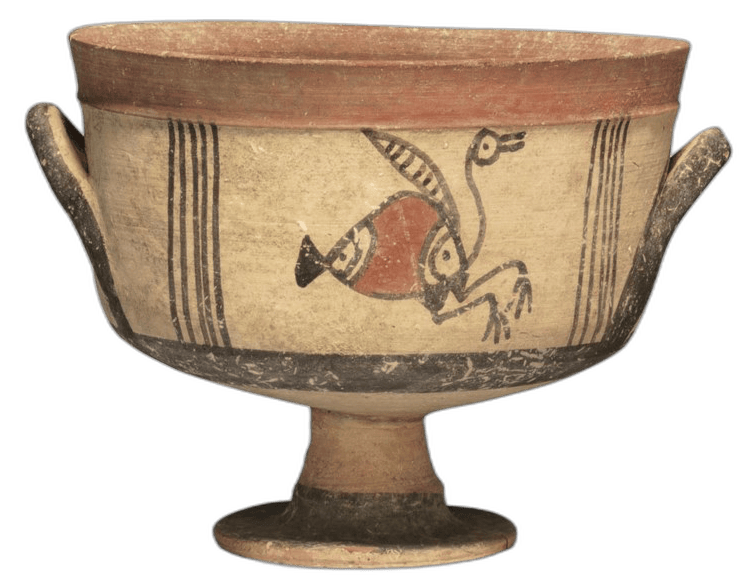
Bichrome Kylix with Bird Free Field Art
Geometric III
Oinochoe with Free Field Bird
Archaic I
Small Oinochoe with Free Field Bird
Archaic I
Red Polished Shrine
Middle Bronze Age I
Black-On-Red Geometric Jug Sherd
Geometric II
Bichrome Jug
Geometric
Bichrome Juglet
Geometric
Bichrome Oinochoe
Geometric