The Middle Bronze Age
An island drawn into a wider sea
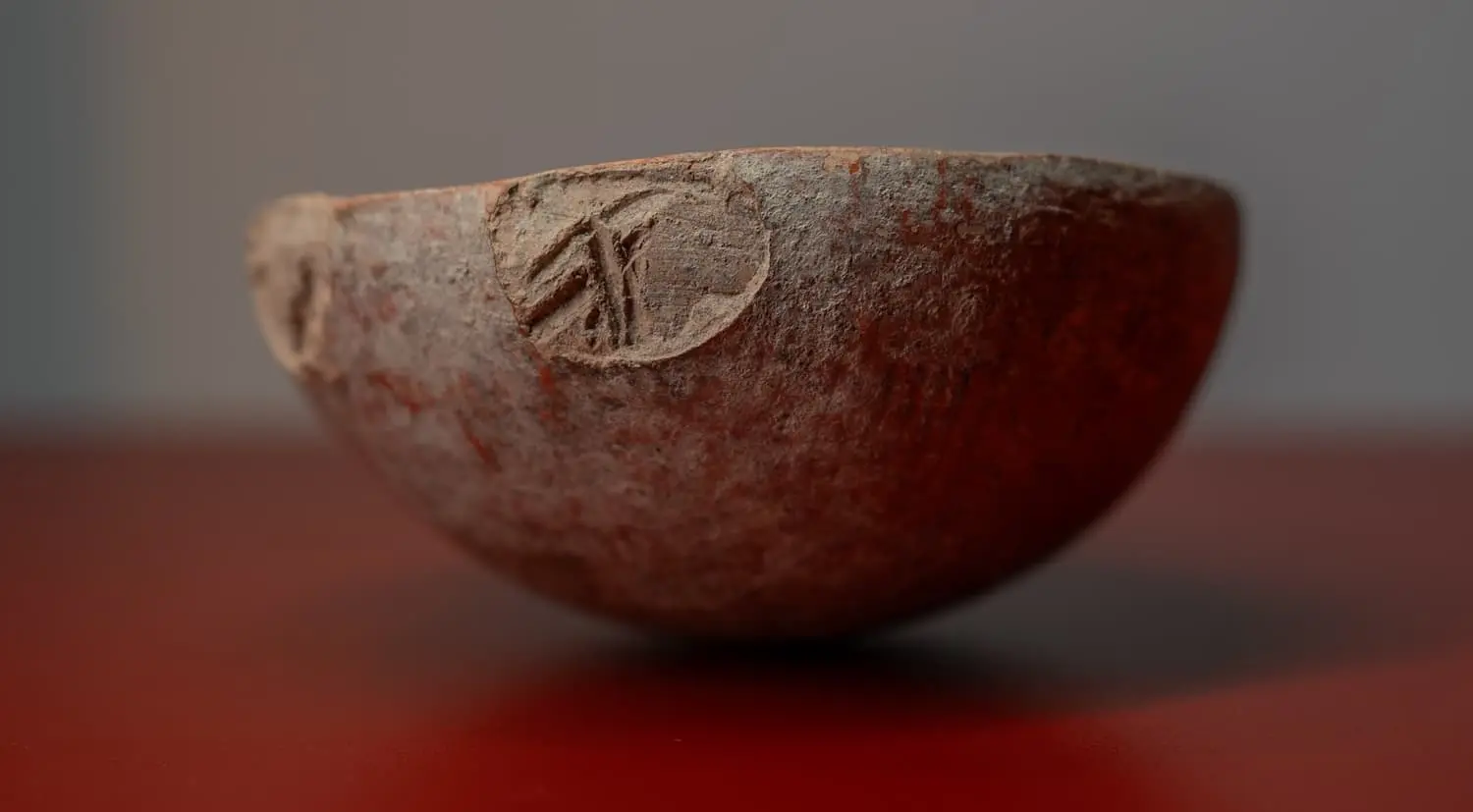
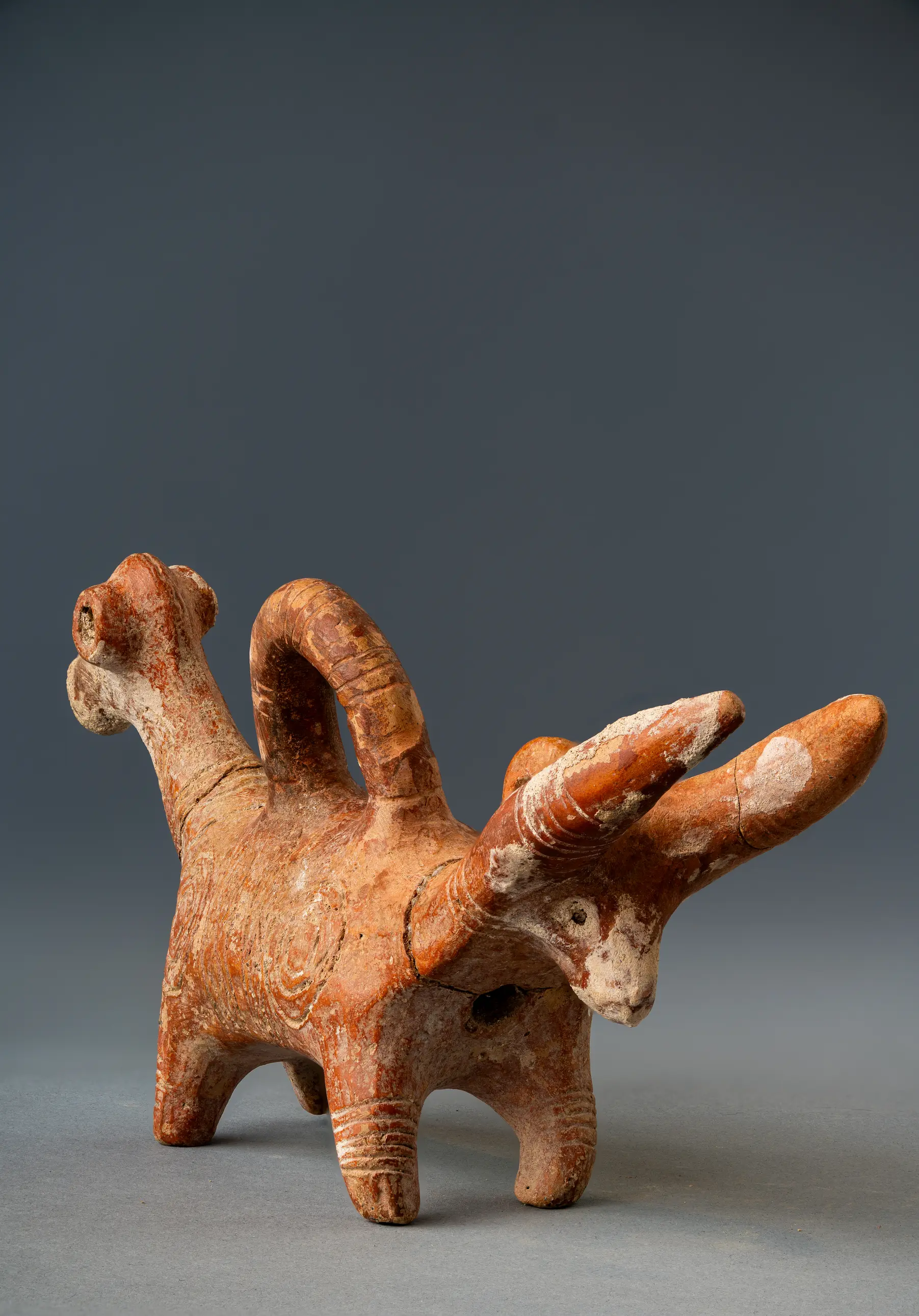
1900 – 1650 BCThe Middle Bronze Age on Cyprus, the Middle Cypriot period in the archaeologist's terms, runs roughly from 1900 to 1650 BC. On the surface it can look like a quiet continuation of what came before. The villages are still small, the dead are still buried in the same kinds of rock-cut chamber tombs that families had used for generations, and the potter's wheel has not yet arrived. Red Polished ware, the burnished red-brown pottery that had defined the Early Bronze Age, is still being made and still being placed with the dead. Hold one of these vessels and very little seems to have changed.
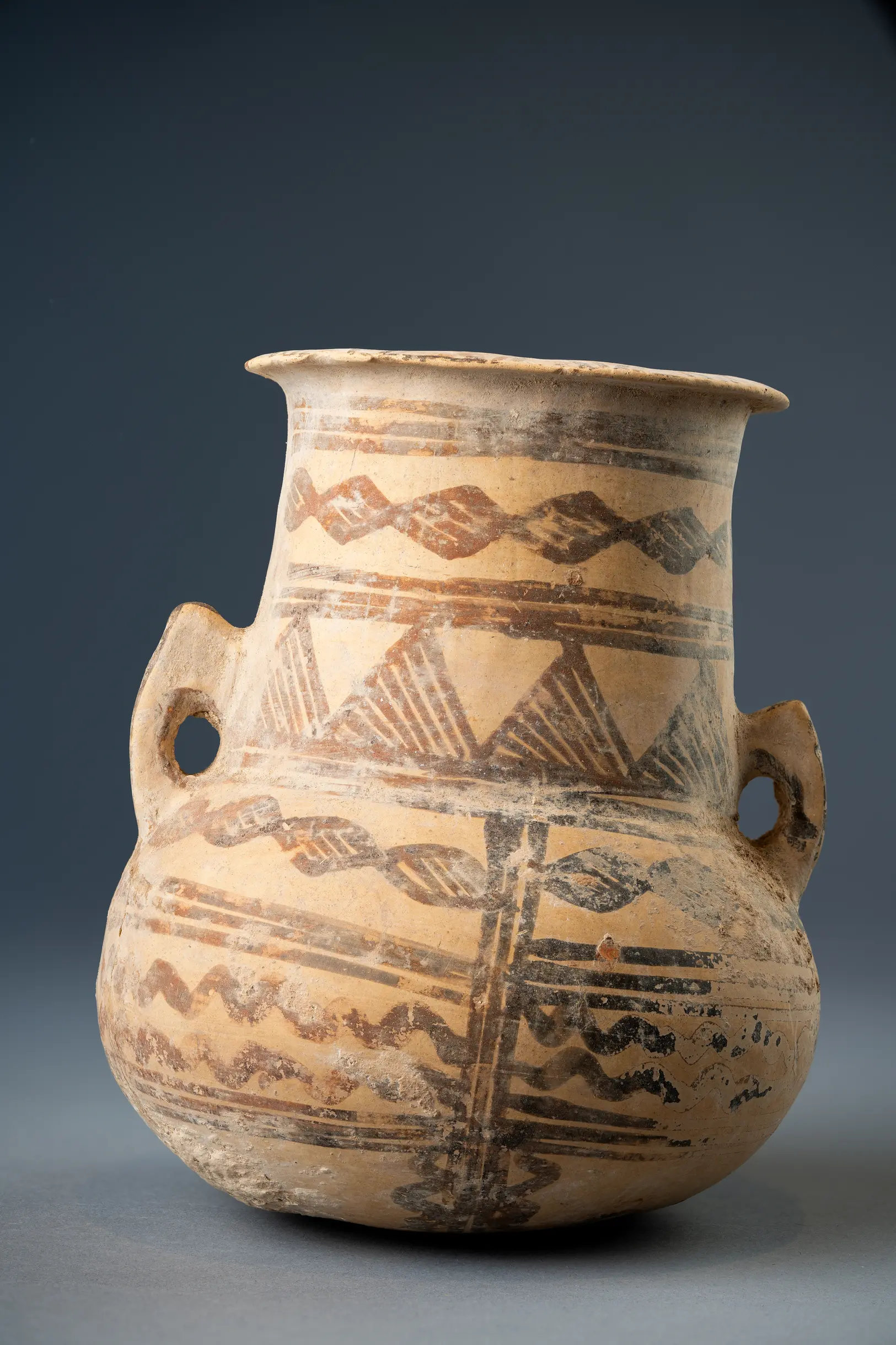
Look more carefully and the period turns out to be one of slow, consequential reorientation. A new pottery tradition emerges, White Painted ware, decorated with dark geometric patterns over a pale surface, and over the course of these centuries it gradually overtakes the older red. Some settlements grow more substantial, and a number are fortified, very likely in response to tensions within the island as much as any threat from beyond it. And in the cuneiform archives of distant cities, a name begins to appear that scholars widely identify with Cyprus: Alashiya, a source of copper. The metal that gives the Bronze Age its name was buried in the island's hills, and during these centuries that fact begins, quietly, to matter to the rest of the eastern Mediterranean.
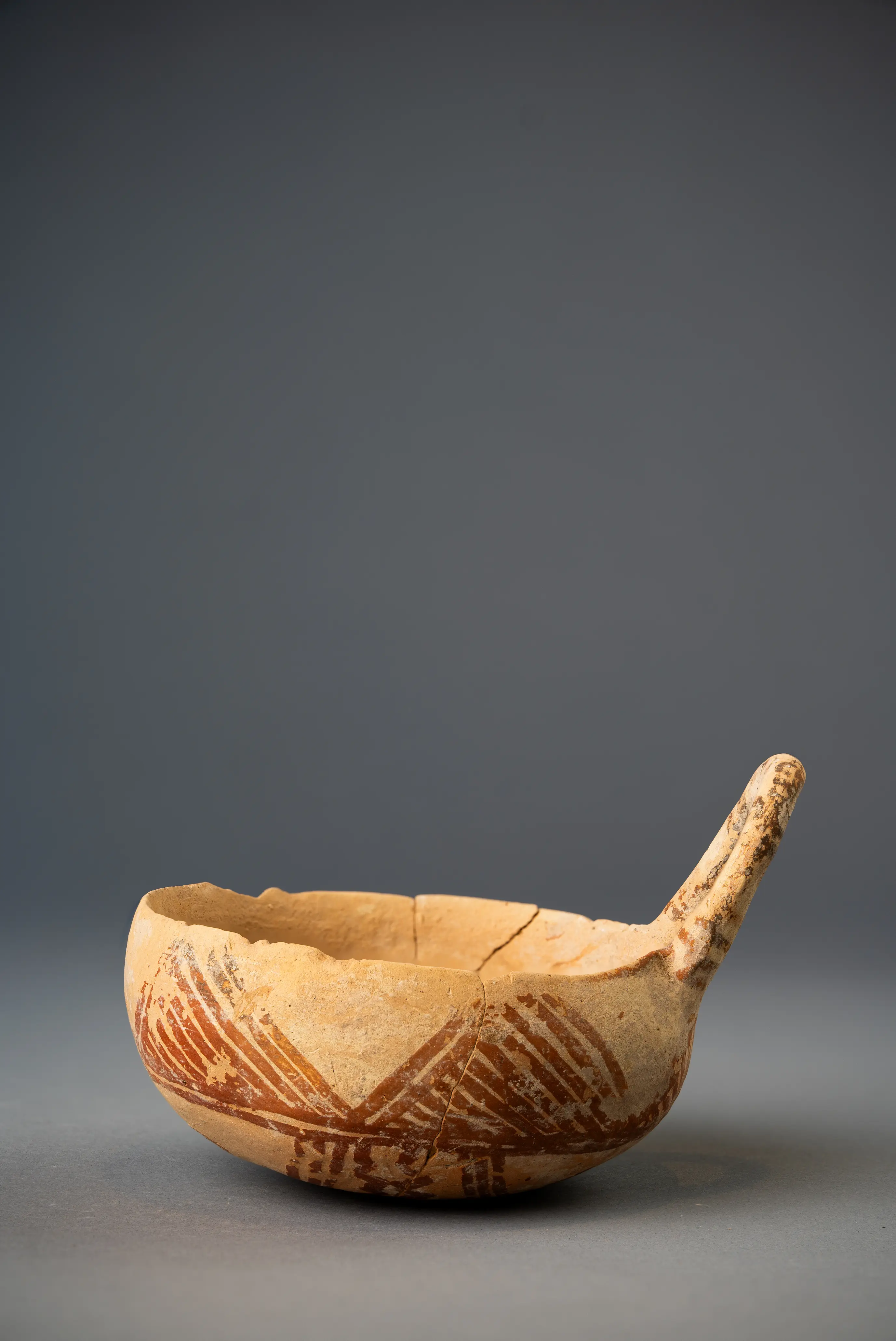
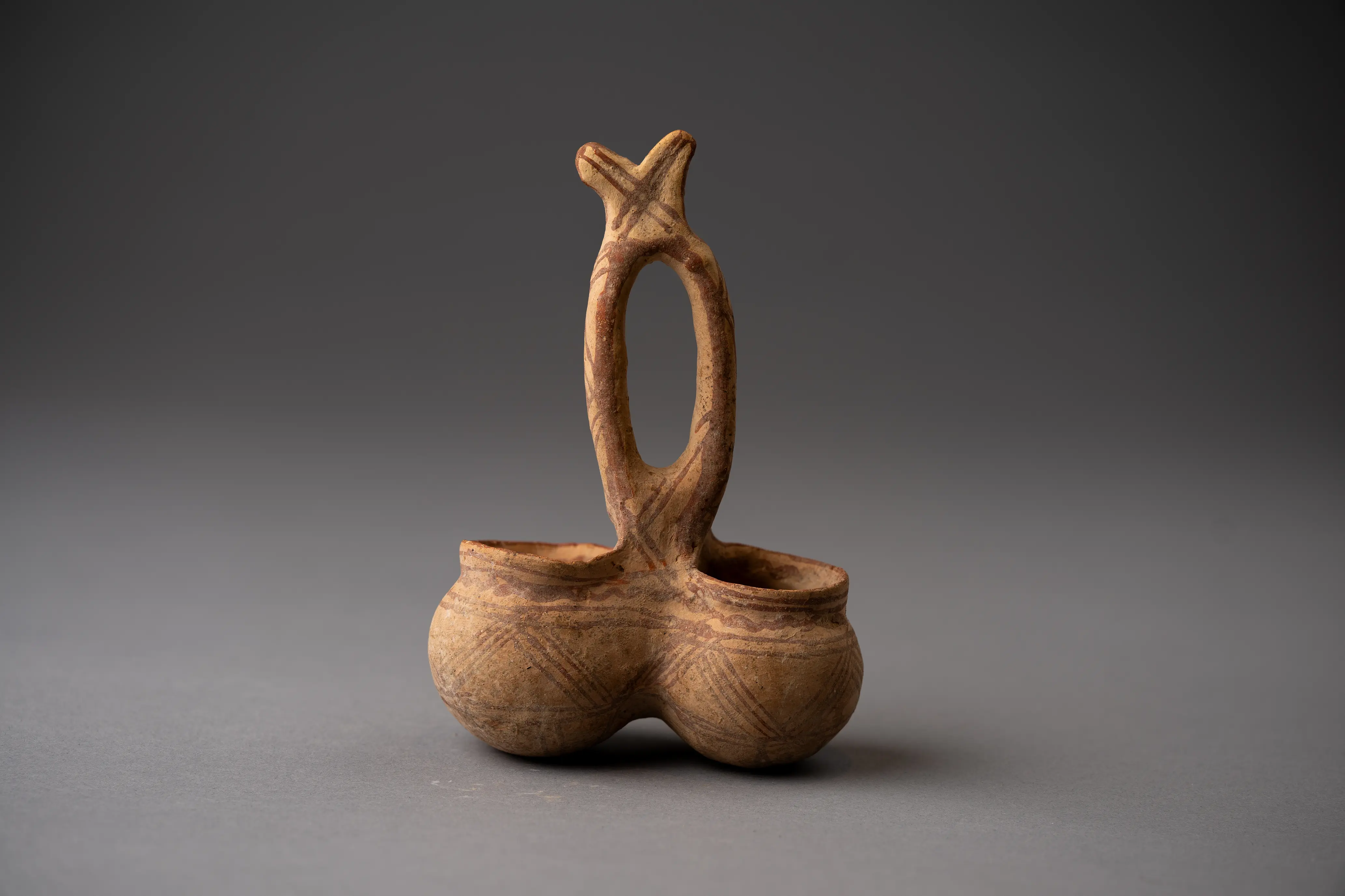
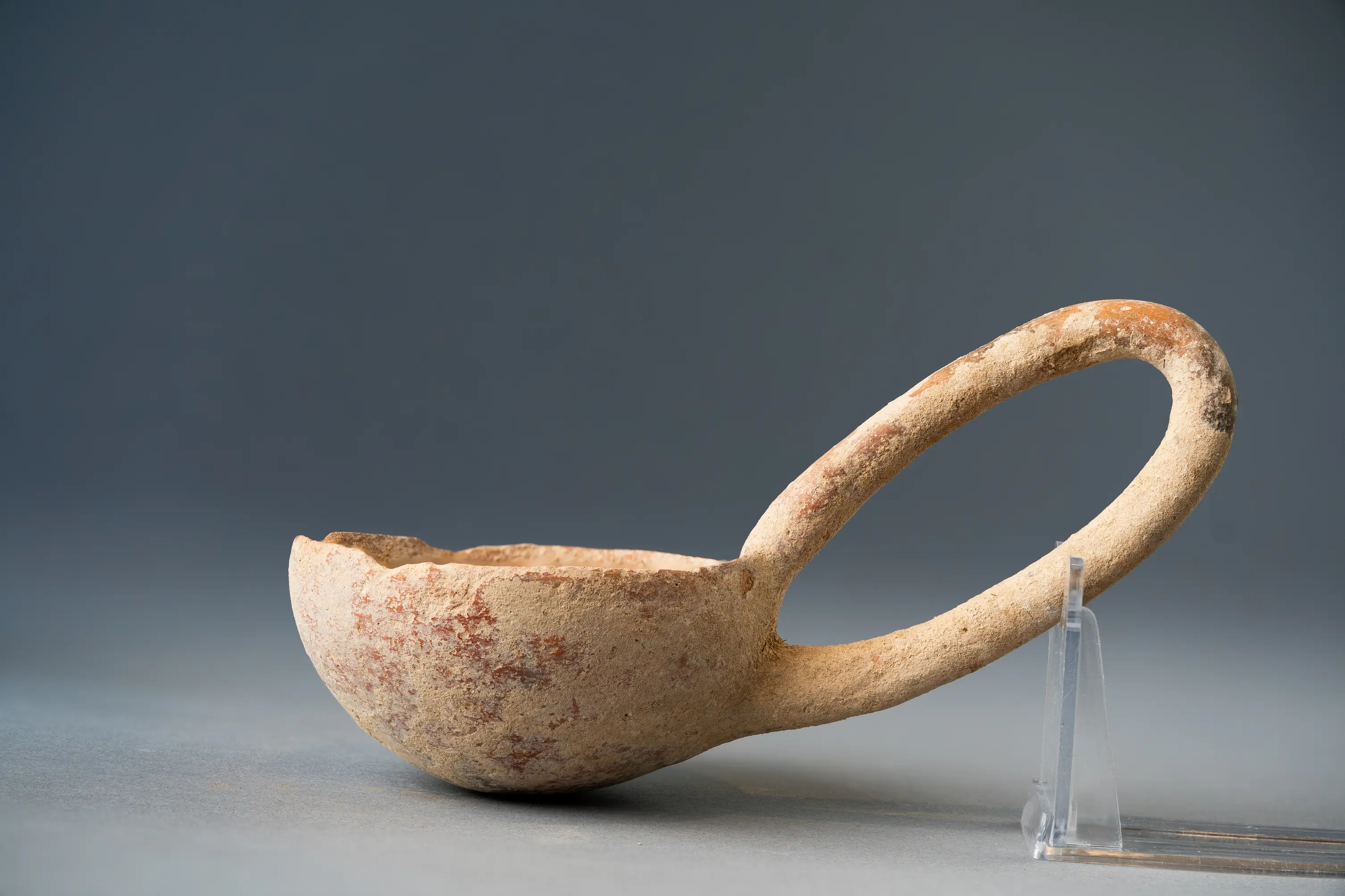
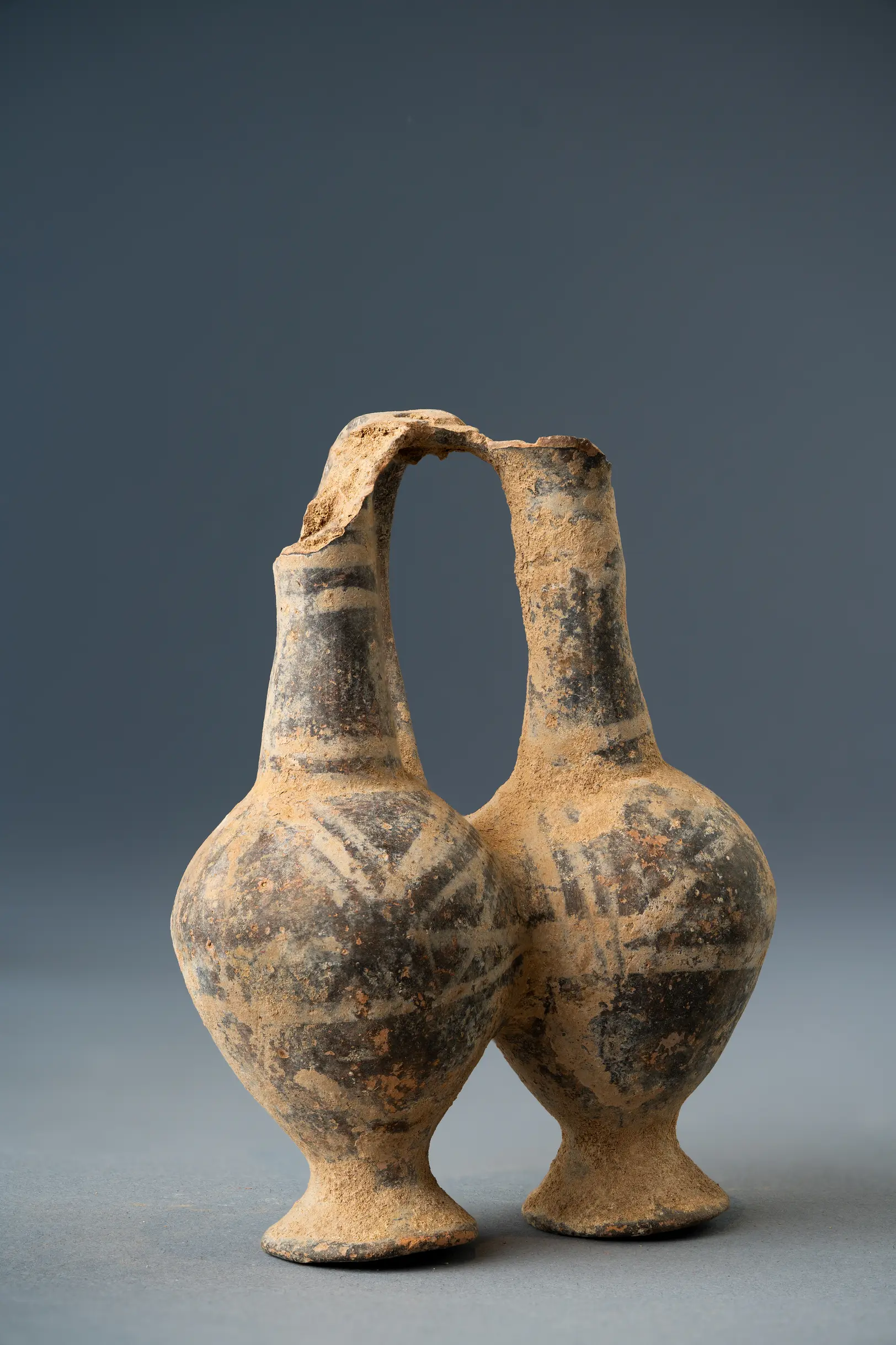
The collection holds around eight vessels from this period. They are domestic and funerary objects, bottles and bowls, a jar and a jug, the continuing red wares alongside the first of the painted ones. None is a grand statement; that is rather the point. These are the things a Middle Cypriot household used, valued, and finally carried into the tomb. They belong to the moment just before the island stepped fully onto the international stage, when the routes that would later carry Cypriot copper across the sea were only beginning to be drawn.
In this section
Crossroads
For most of its earlier history Cyprus had looked inward. The Early Bronze Age communities of the north coast and the central plain traded with one another, buried their dead with elaborate Red Polished pottery, and left almost no trace in the records of their neighbours. The Middle Bronze Age is when that begins to change. The shift is incremental and easy to miss in any single object, but across the period the island is gradually pulled into the trading world of the eastern Mediterranean, and the things it made start turning up beyond its own shores.
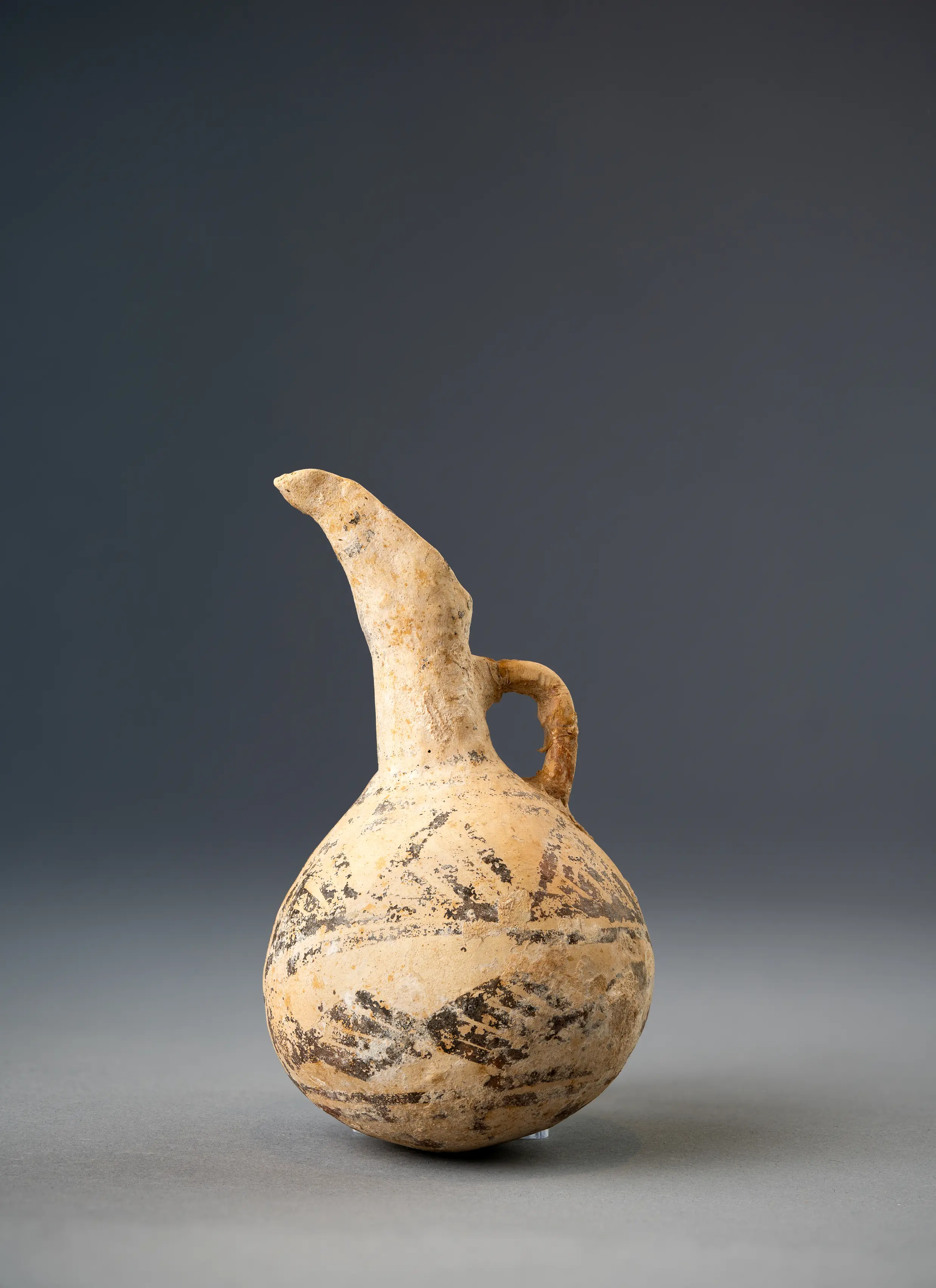
The clearest signal of change inside Cyprus is a new kind of pottery. White Painted ware, built by hand from red or brown clay, coated in a pale slip, and painted with black or dark brown geometric designs, appears early in the period and steadily gains ground on the older Red Polished tradition. Both wares continue side by side for generations, the burnished red and the painted pale, and the collection's Middle Cypriot vessels sit on exactly that threshold. Some of these pots served daily life, holding water, oil, or grain in the house; many of the same forms were also placed in chamber tombs, where they accumulated by the dozen as families reopened the same burial chambers over decades. The line between domestic and funerary is genuinely blurred here. A bowl used at a hearth and a bowl left with the dead could be the same kind of bowl.
Beyond the island the stakes were rising. Nineteenth-century BC cuneiform tablets from Mari on the Euphrates refer to copper from a land called Alashiya, a name that the great majority of archaeologists and historians now accept as the Bronze Age term for Cyprus. Imported objects from Crete, Anatolia, Syria, and Egypt begin to reach the island, and Cypriot pottery begins, modestly, to travel out. Several settlements were fortified during these centuries, a development scholars often read as evidence of competition and unrest within Cyprus rather than invasion from outside. The full apparatus of an export economy, the harbour towns and the centralised control of copper, belongs to the Late Bronze Age that follows. But the Middle Cypriot period is where the foundations are laid, and the unassuming vessels in this gallery were made by people standing at that crossroads, whether or not they knew it.
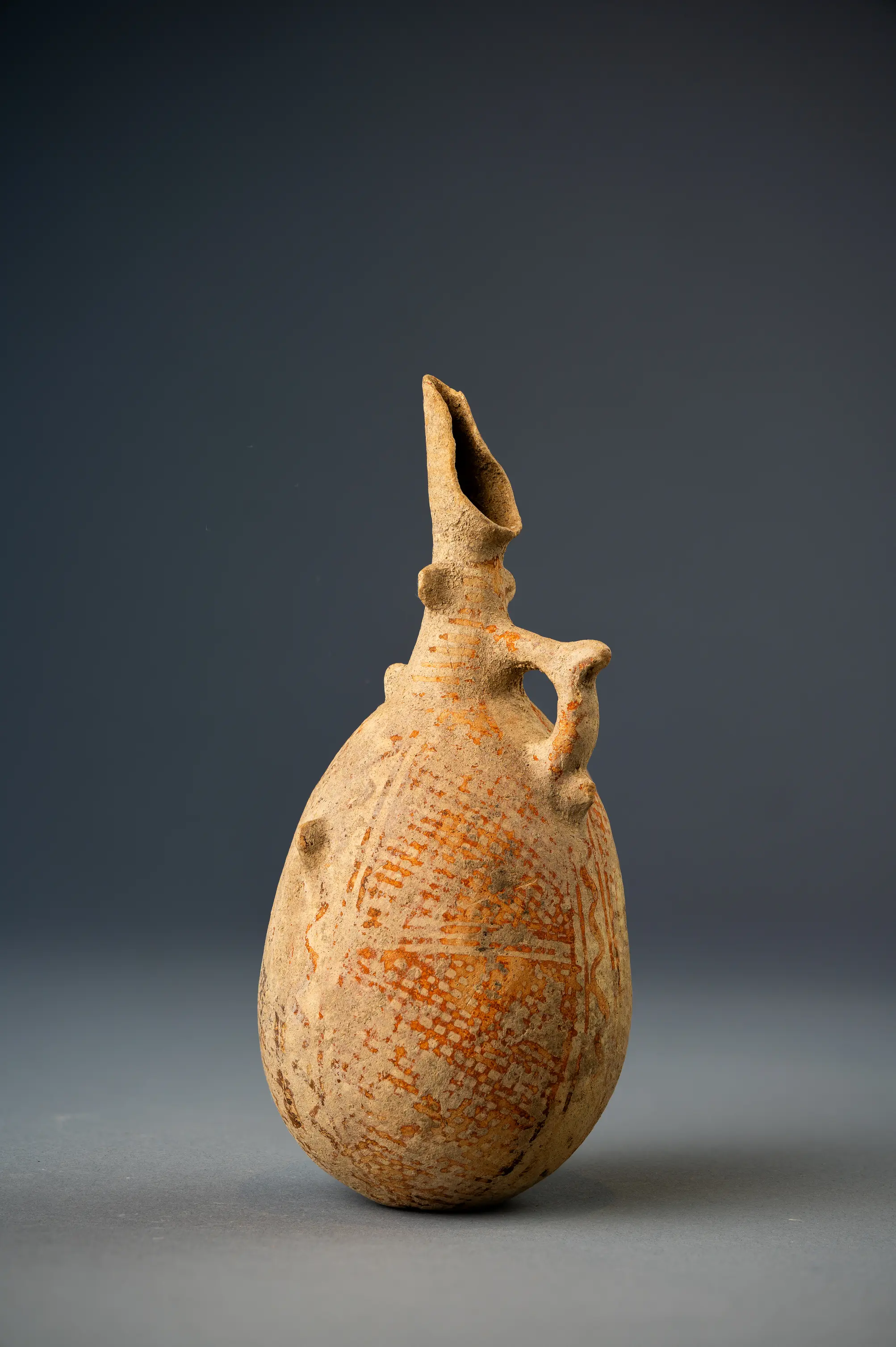
1900 BC – 1600 BC
White Painted Ware Bottle
White Painted Ware Bottle.
Provenance:
- Goodman Collection, 1960s - 2025
- 2025 - Present, Alexis Drakopoulos, London, UK
Red & White: Vessels of a Changing Island
Middle Cypriot Red Polished and early White Painted vessels, the burnished red of an older tradition meeting the painted pale of a new one. Domestic and funerary pottery from an island beginning to feel the pull of the wider sea.