The Late Bronze Age
The island the great kings called Alashiya
1650 – 1050 BCFor roughly six centuries, from about 1650 to 1050 BC, Cyprus stopped being a quiet island on the edge of things and became one of the engines of the eastern Mediterranean. Archaeologists call this stretch the Late Cypriot period. The kings of Egypt, Hatti, Babylon and Ugarit knew it by another name: Alashiya, the land that sent copper. The two are not certainly the same place, and a careful scholar still says "probably" when equating them. But the case is strong, and it rests on something more durable than philology. It rests on metal.
Cyprus sat on copper. The pillow lavas wrapped around the Troodos foothills carried sulphide ores that Cypriot miners and smelters learned to work at scale, and the island's name has been bound up with the metal ever since, through Latin cuprum back to a root that the Greeks and Romans associated with Cyprus itself. In the thirteenth century BC, at the height of the trade, copper left the island in a standardised form that has become the signature of the age: the oxhide ingot, a slab of roughly thirty kilograms cast with four protruding handles, shaped so a man could carry it on his shoulders or lash it to a pack animal. Lead-isotope work pioneered by Noel and Zofia Stos-Gale traced ingots found across the sea, from shipwrecks to Sardinia, back to Troodos ores. The metal in those slabs is, in a real sense, the island speaking.
This is the period that gives us the great cosmopolitan port-towns, Enkomi in the east and Kition in the south-east among them, where ashlar buildings, sanctuaries and metalworking quarters sat beside harbours that faced Ugarit on the Syrian coast. Goods and ideas moved both ways. Mycenaean pottery arrived from the Aegean and was buried in Cypriot tombs; Cypriot potters answered with their own wares and their own imitations. And here, uniquely on the island, scribes began to write, in a still-undeciphered script we call Cypro-Minoan, adapted from the Linear systems of Crete.
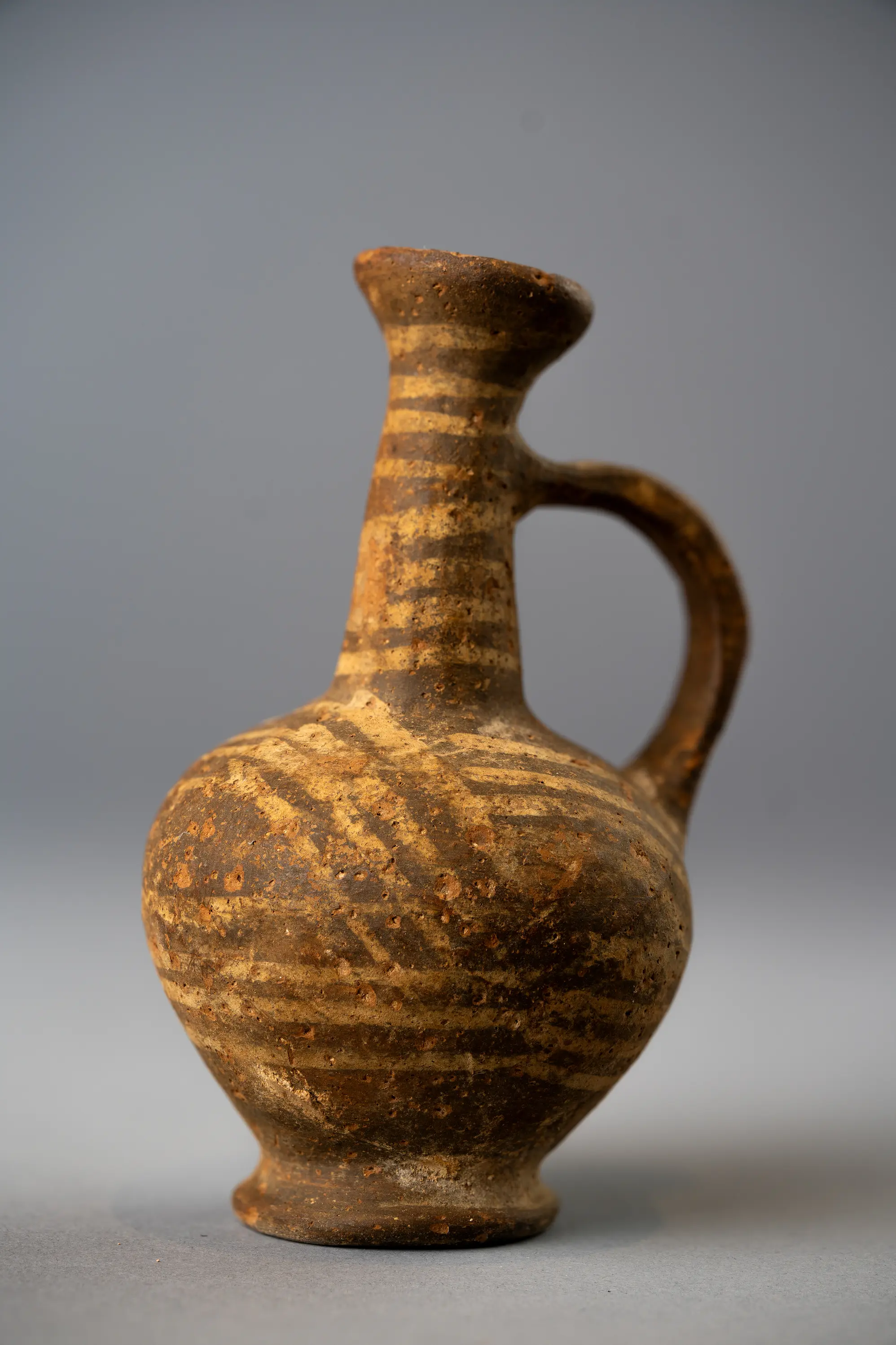
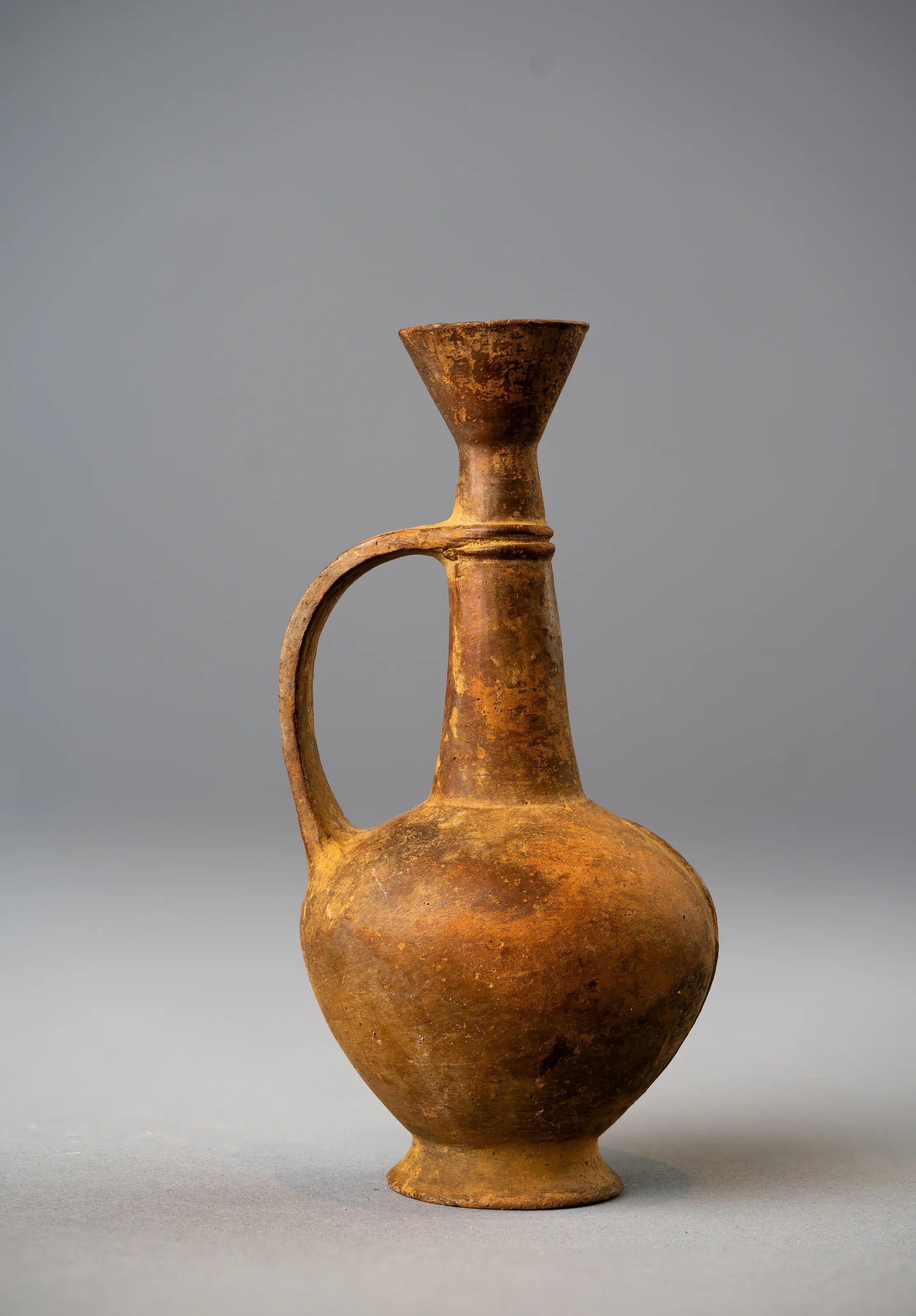
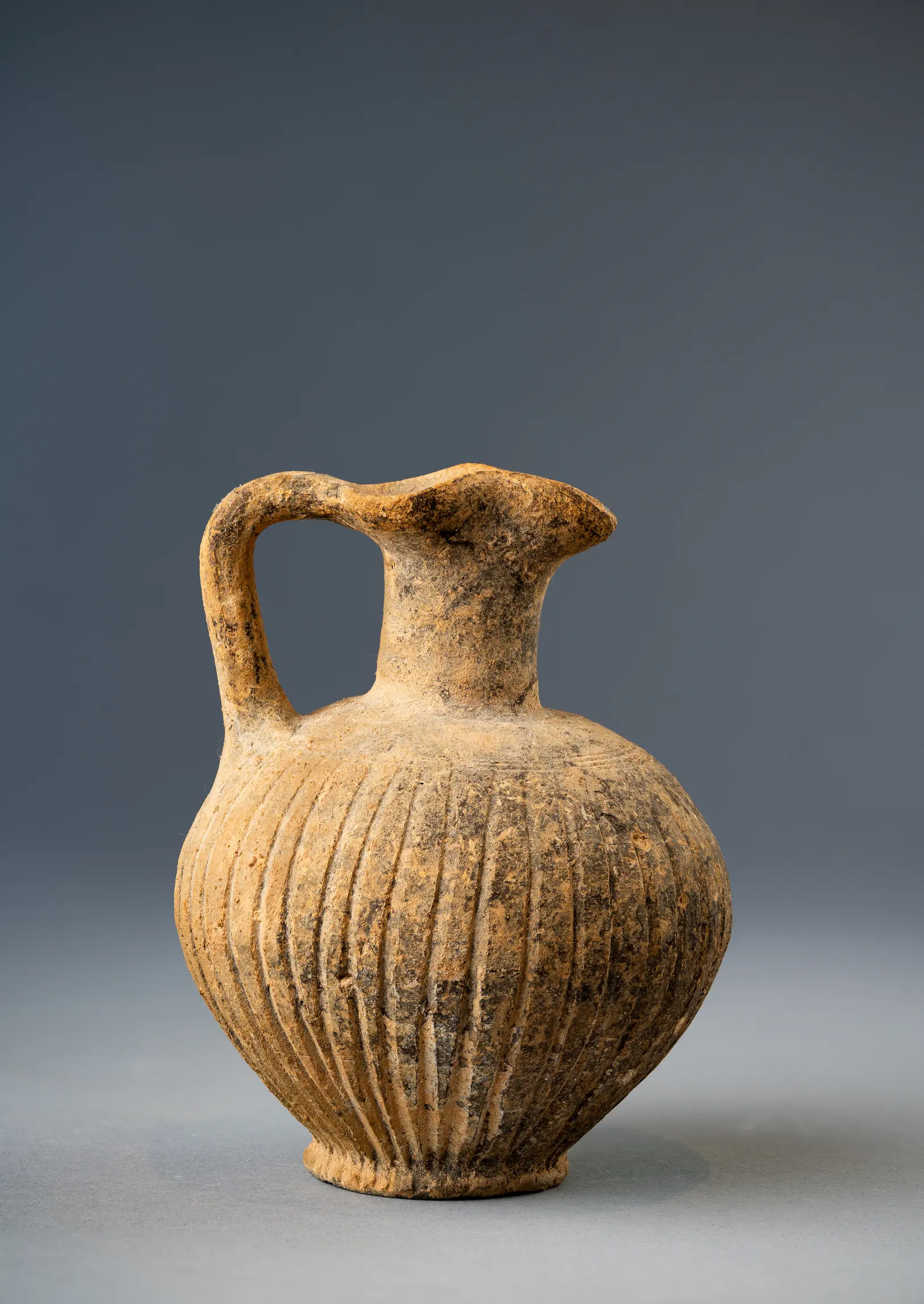
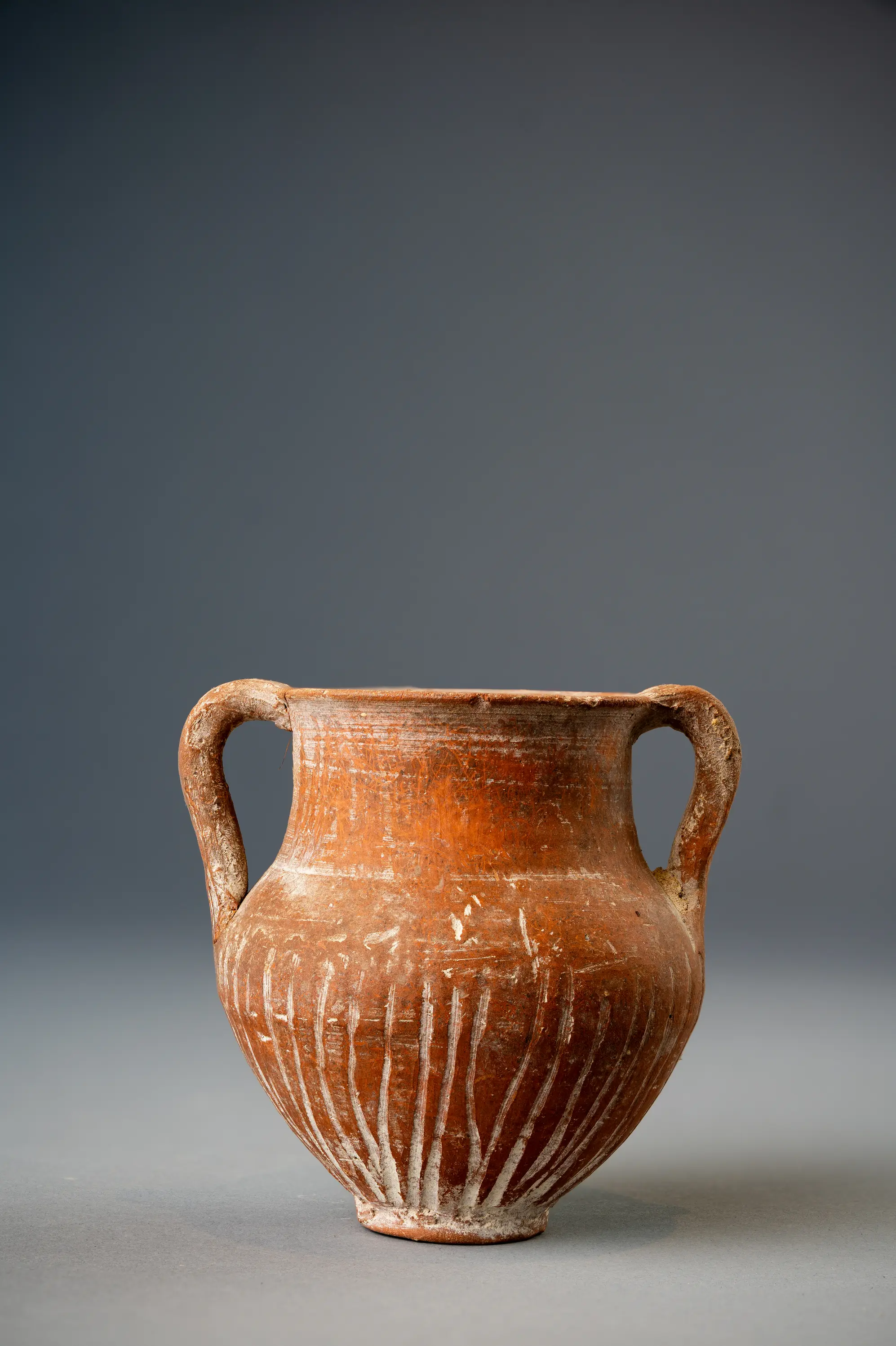
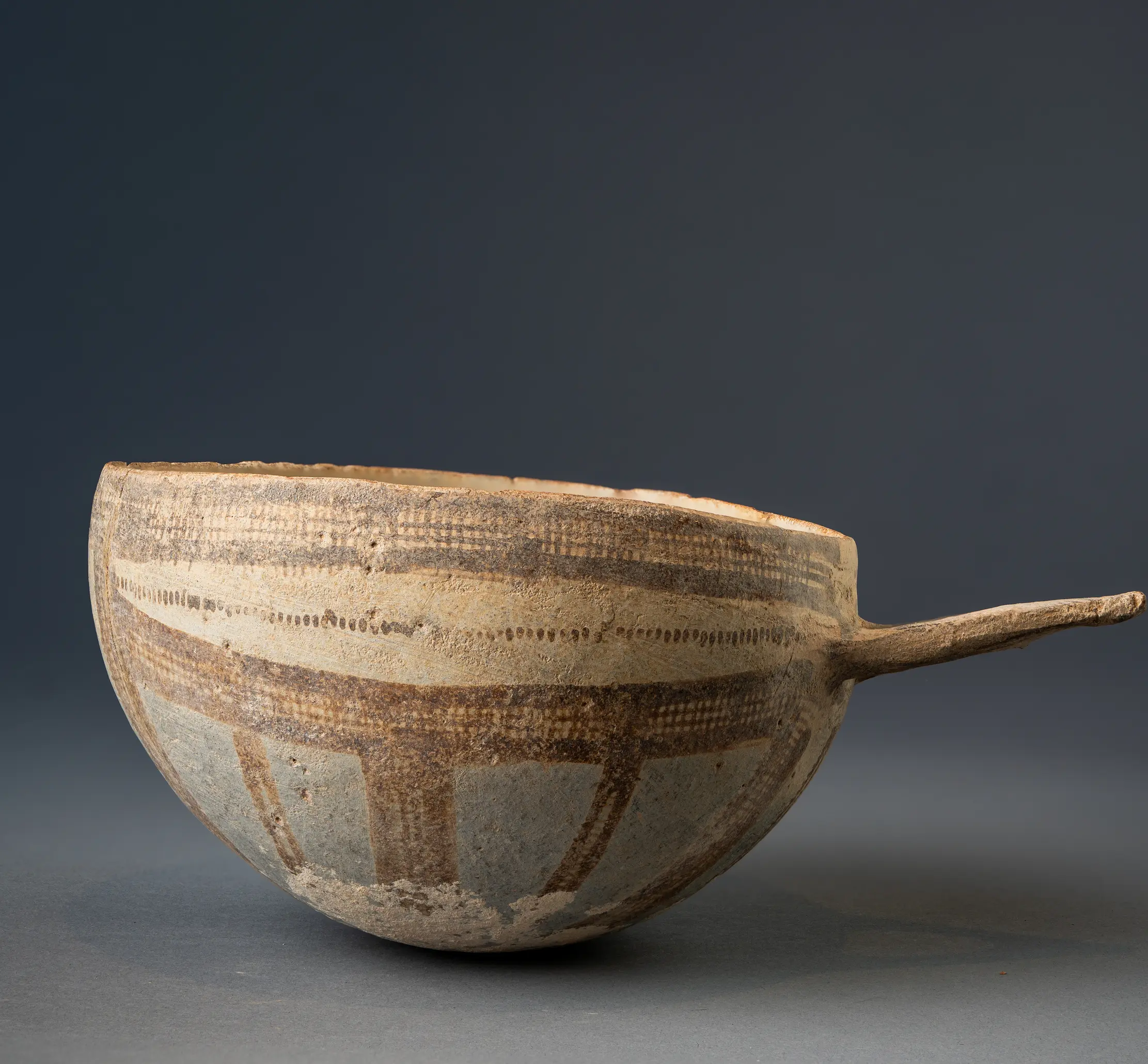
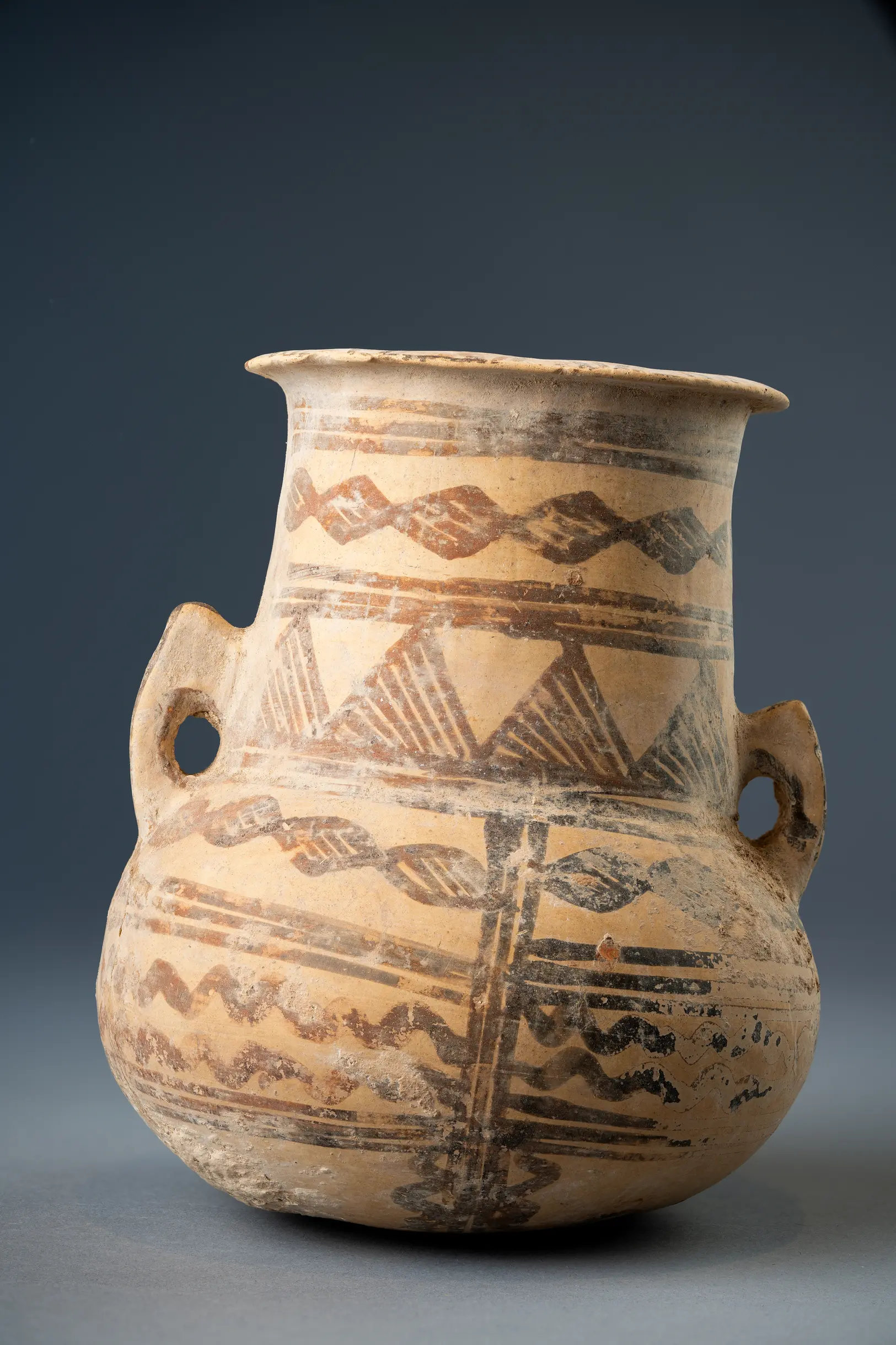
The collection holds about six pieces from this era, all of them ceramic, all of them in the wares that made Cypriot pottery a recognised brand across three continents: White Slip "milk bowls", Base Ring jugs and a bowl, a Mycenaean-style jar, and White Painted ware. They are modest objects beside the gold and ivory the same tombs sometimes held. But they are the objects that actually travelled, the ones an Egyptian or a Canaanite would have recognised on sight as Cypriot. Held together, they let you handle the Bronze Age as ordinary people did: pouring, drinking, storing, offering.
In this section
The Island of Copper
Sometime in the fourteenth century BC, a king wrote to the Pharaoh of Egypt. The letter, baked into a clay tablet and recovered from the diplomatic archive at Amarna, opens with the courtesies of one great king to another and then gets to business: a shipment of copper, talents of it, with a request for silver, ivory and other goods in return. The sender styled himself king of Alashiya. Across a handful of these letters, scholars count something like 897 ingots dispatched to Egypt in not much more than thirty years, on the order of twenty-five tonnes of metal. No other place in the correspondence is so single-mindedly about copper. That, more than any inscription naming Cyprus directly, is why most archaeologists place Alashiya on this island.
The copper trade did not run through one capital but through a network of harbour-towns strung along the south and east coasts. Enkomi, near the modern Famagusta bay, has yielded more oxhide ingots and more Cypro-Minoan documents than anywhere else on the island, which makes it the best candidate for the hub of the metal economy and the place where writing first took hold. Kition, beneath modern Larnaca, grew into a walled town with monumental sanctuaries and copper-working set right against the temples, so that smelting and worship shared a precinct. These were genuinely international places. A Cypriot trader at Enkomi could see Ugarit's hinterland in his mind's eye; the two coasts were a day's sail and a tightly entangled pair of economies.
What survives in quantity, and what fills this gallery, is the pottery that moved alongside the metal. Cypriot fine wares of the Late Bronze Age were exported so widely, and copied so often, that they function almost as a trademark of the island across the Late Bronze world: White Slip and Base Ring above all, with White Painted and the Mycenaean-style pieces rounding out the repertoire. Each tells a slightly different story about how the island lived, drank, traded and prayed in the age of Alashiya.
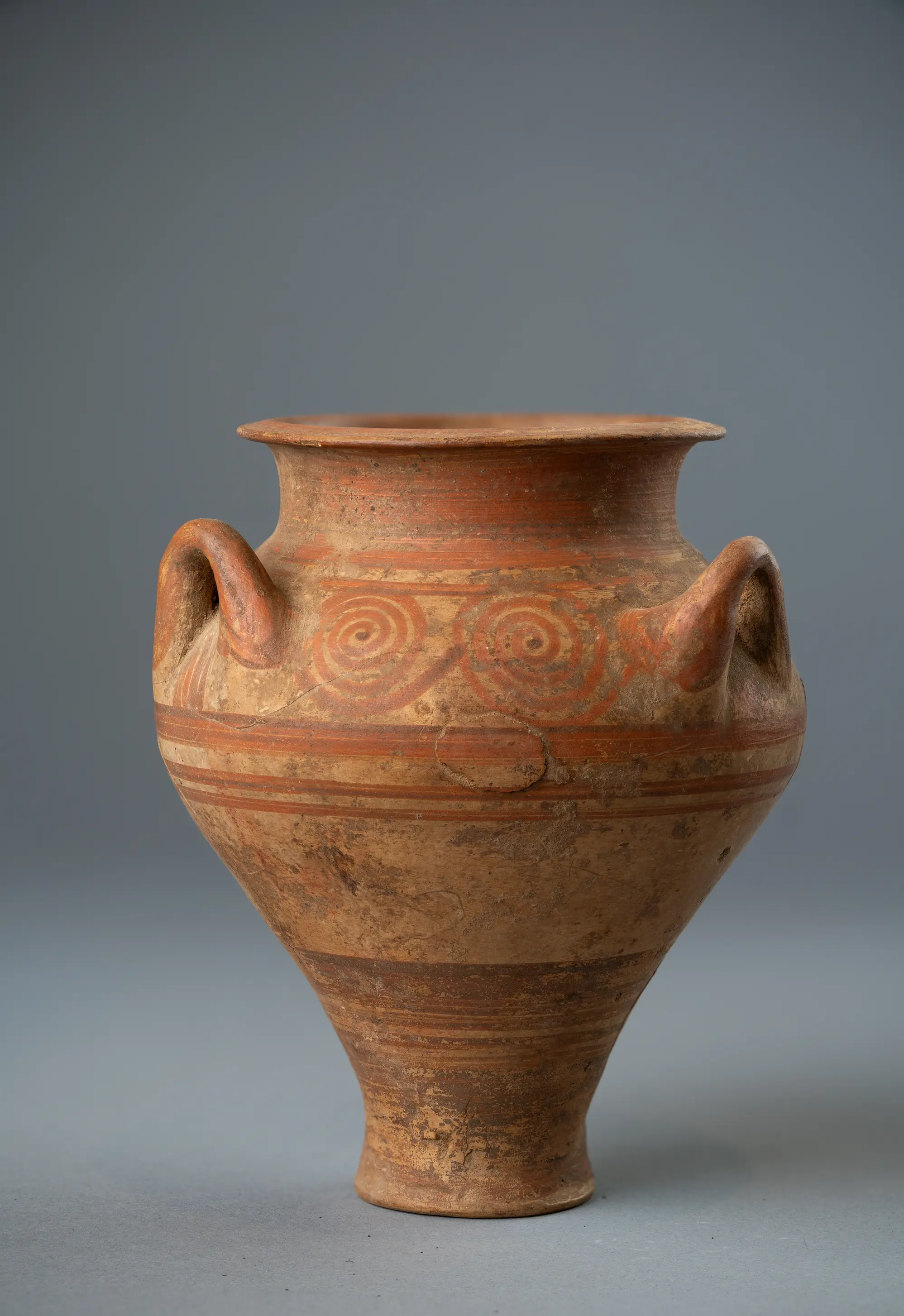
1400 BC – 1050 BC
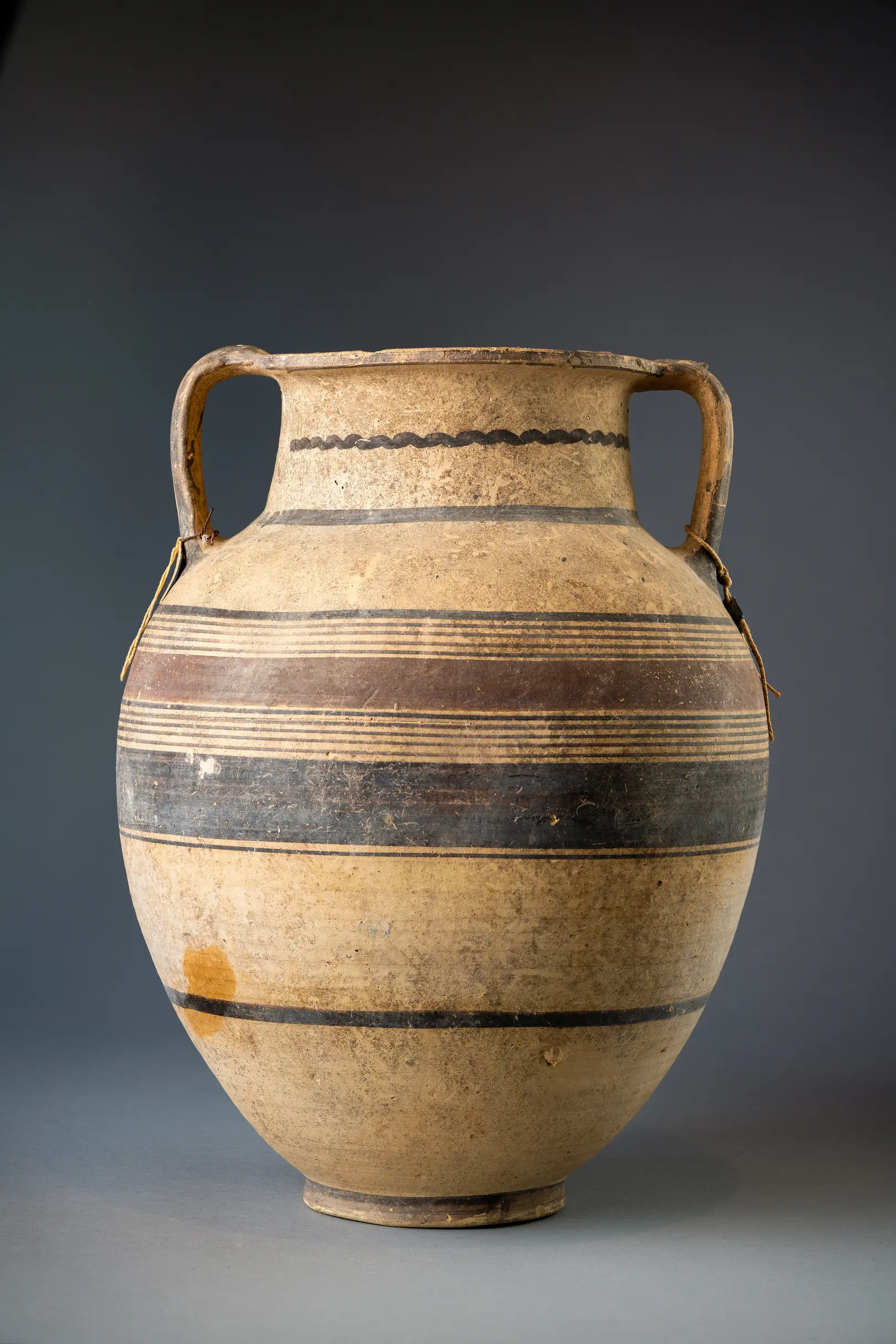
Mycenaean Style Jar
Mycenaean or Agean style jar, likely from islands and a Cypriot import. Said to be found in Cyprus.
Provenance:
- Goodman Collection, 1960s - 2025
- 2025 - Present, Alexis Drakopoulos, London, UK
1600 BC – 1450 BC
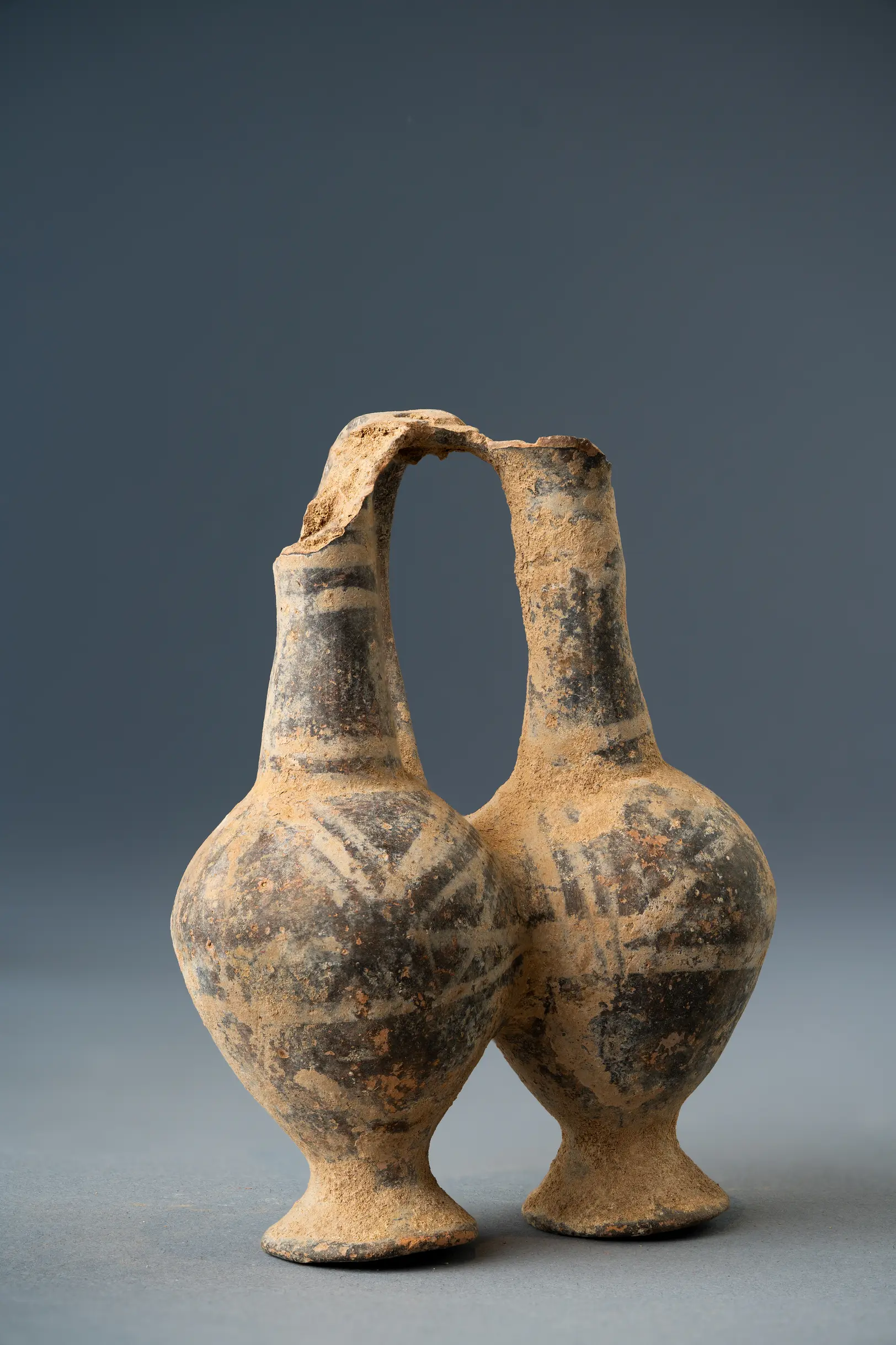
Base Ring Double Juglet
Base Ring Double Juglet.
Provenance:
- Goodman Collection, 1960s - 2025
- 2025 - Present, Alexis Drakopoulos, London, UK
Wares of the Late Cypriot Age
The fine pottery of Alashiya: White Slip "milk bowls", Base Ring jugs and a bowl, a Mycenaean-style jar, and White Painted ware. The everyday objects that travelled the Bronze Age sea-lanes and carried the island's name with them.