Room 05 of 07 · Cypro-Geometric
The Cypro-Geometric Period
After the Bronze Age: the potter's wheel, the painted plate and the first Black-on-Red.
The Cypro-Geometric period, c. 1050–750 BC, is sometimes described as a dark age after the fall of the Late Bronze Age cities. Its pottery gives no support to the idea. Cypriot potters took up the fast wheel for their painted fine wares, invented the flat two-handled plate and, around 900 BC, began to make Black-on-Red, which was soon travelling across the eastern Mediterranean. The city-kingdoms of the next period took shape in these centuries.
Several of the twenty pieces here are dated to the hinge between this period and the next, c. 850–600 BC, and hang in this room because it is where their wares begin. Excavations in the Levant and radiocarbon dates from Megiddo have loosened the old neat sequence of stages, and the line between Geometric and Archaic pottery is softer than the labels suggest; some of these pieces may well be Archaic.
Plates with their best side down
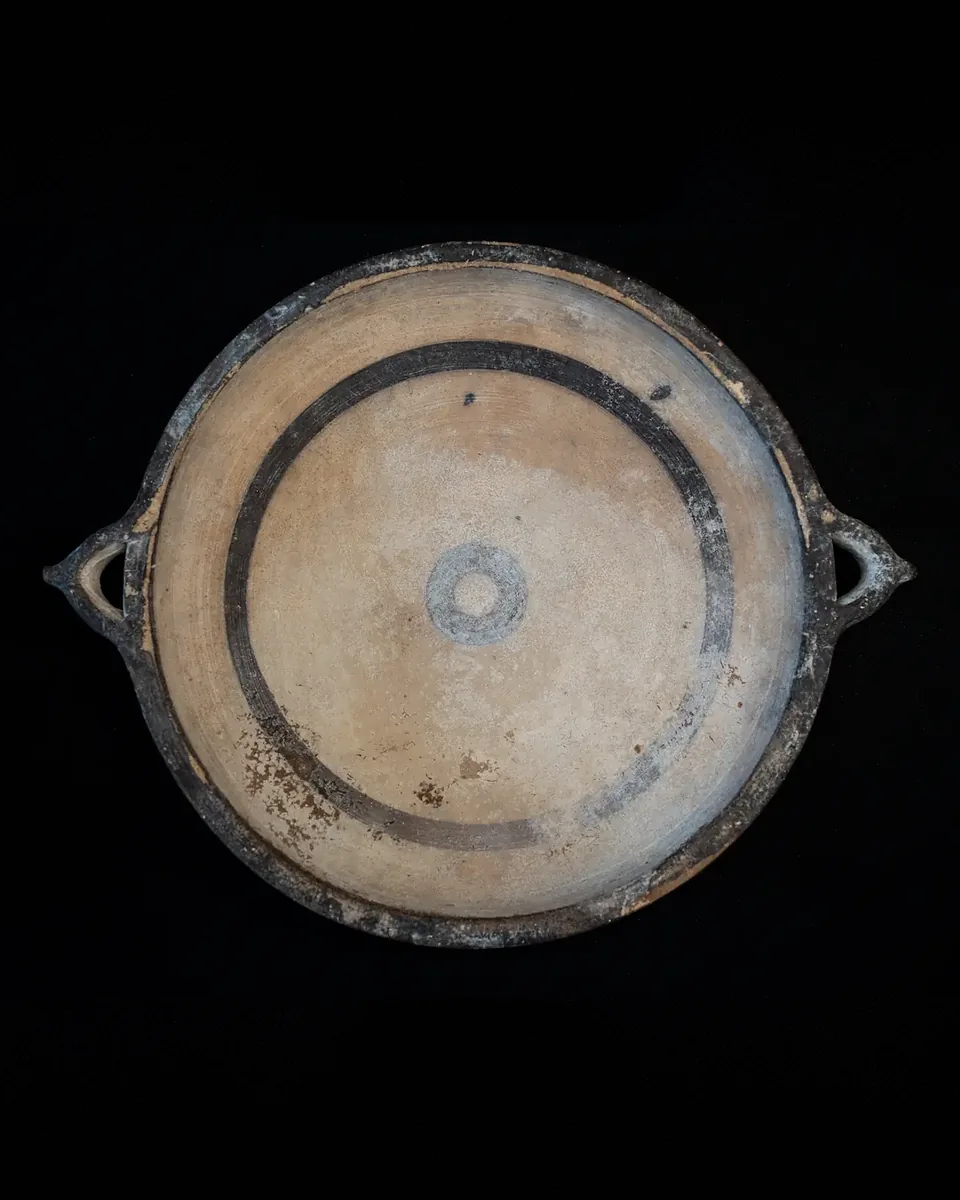
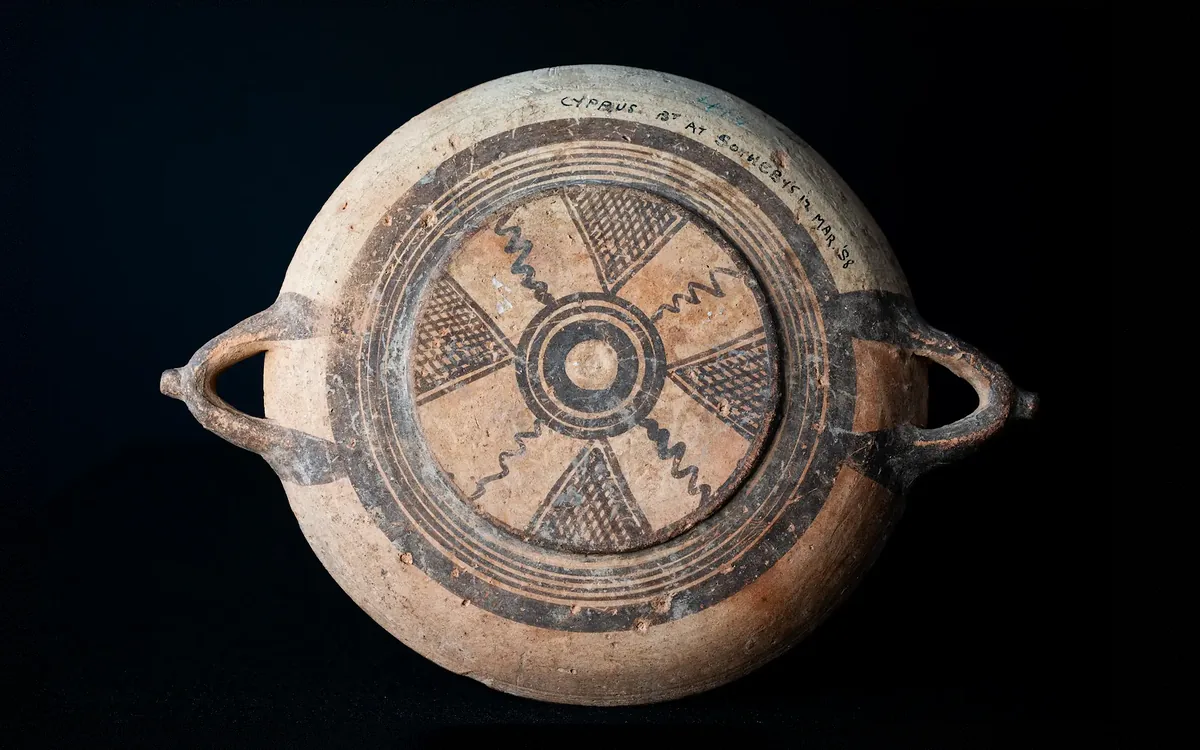
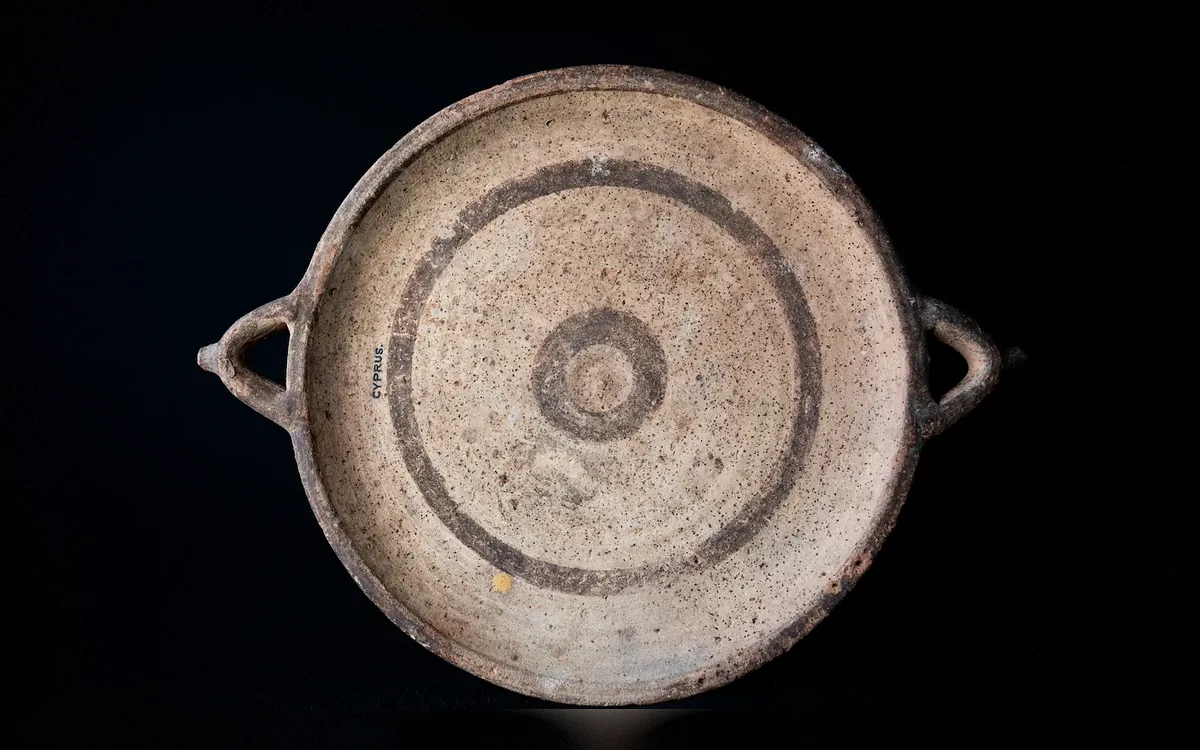
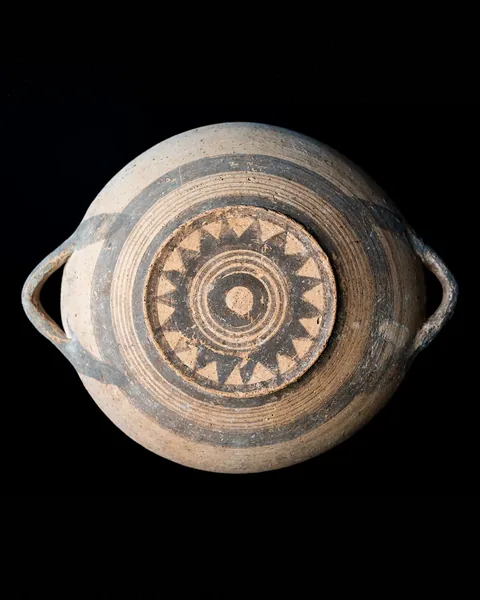
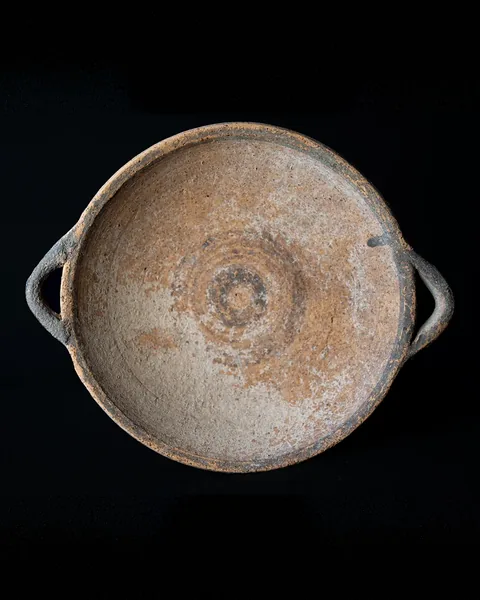
The flat plate with two handles is a Cypriot invention, essentially limited to this period. Its finest painting is on the underside, to be seen when the plate was turned over or stood on edge; the suggestion that plates hung by their handles is unproven. Over the period the decoration moves from latticed triangles towards concentric circles, which gain ground in the ninth and eighth centuries.
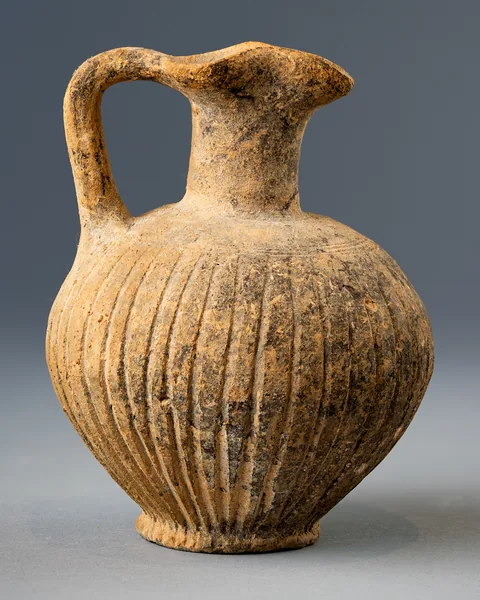
Beside the plates stand two Bucchero pots, fluted and grooved in imitation of metal vessels. Bucchero is a borrowed name, taken from Etruscan black ware, and it covers two unrelated Cypriot classes. An old label once filed one of these jugs in the Late Bronze Age; its trefoil mouth and channelled flutes belong to the Iron Age.
In focus
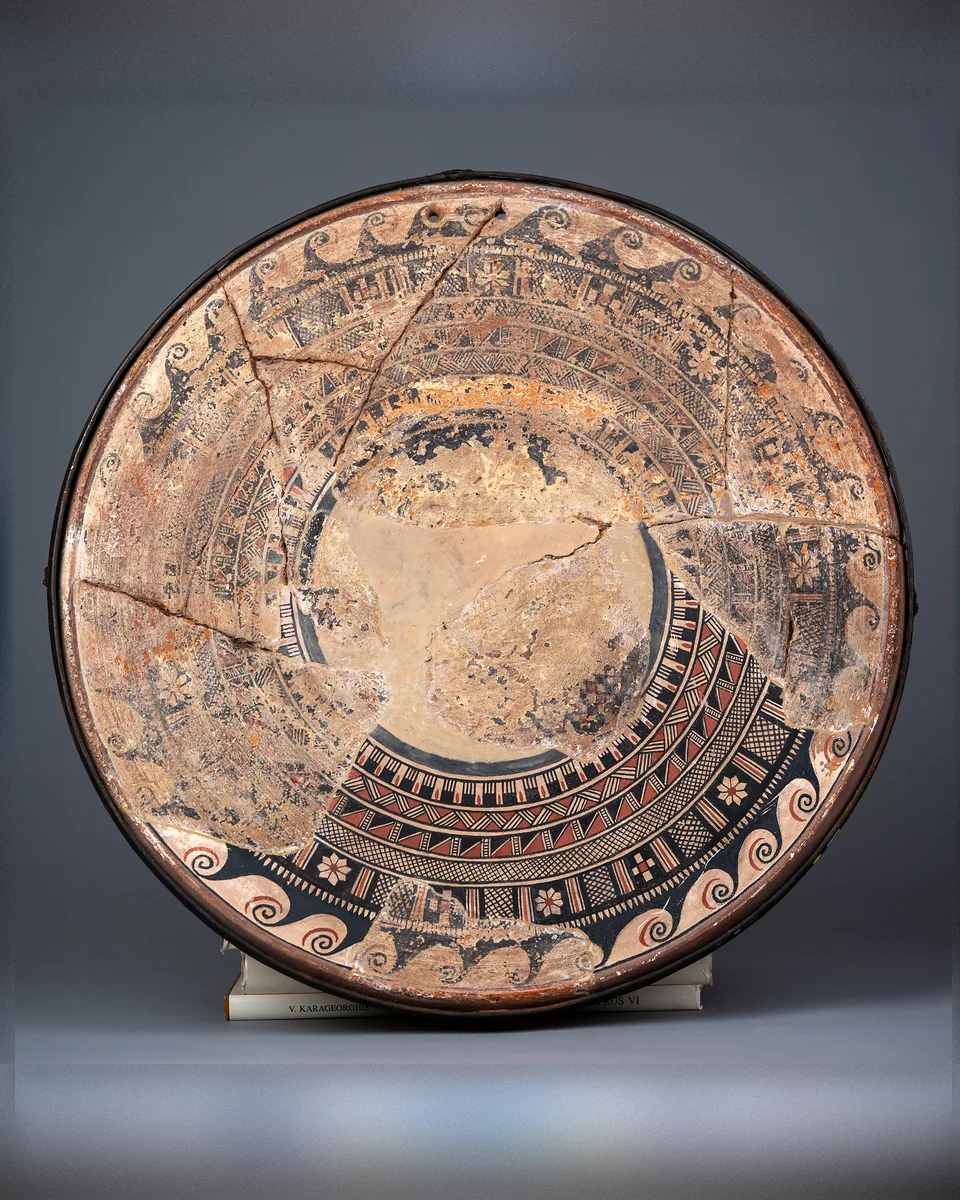
Large White Painted Plate with Knobbed Handles and a Four-Armed Cross on the Underside
Cypro-Geometric I–II, c. 1050–850 BC
A serving plate at the top of the size range, with knobbed handles below the rim. Its underside is divided into four arms like the spokes of a wheel: two hold chequered triangles set point to point, and two a crossed panel with small hatched and solid triangles. A Cesnola plate in the Metropolitan Museum, 37.9 cm across, is painted underneath in the same way. One handle has been broken at both roots and rejoined.
Two plates and an amphoriskos
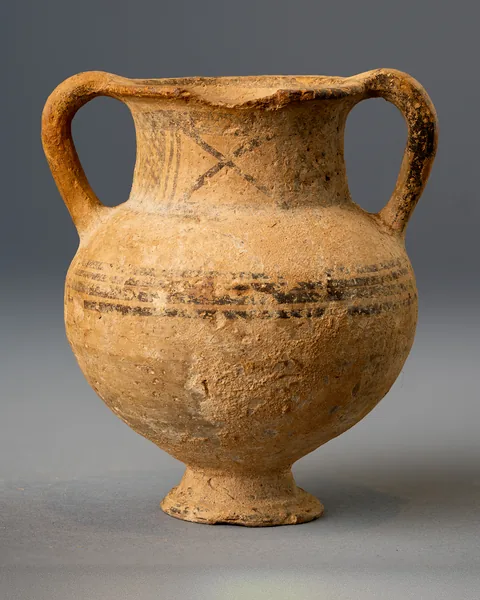
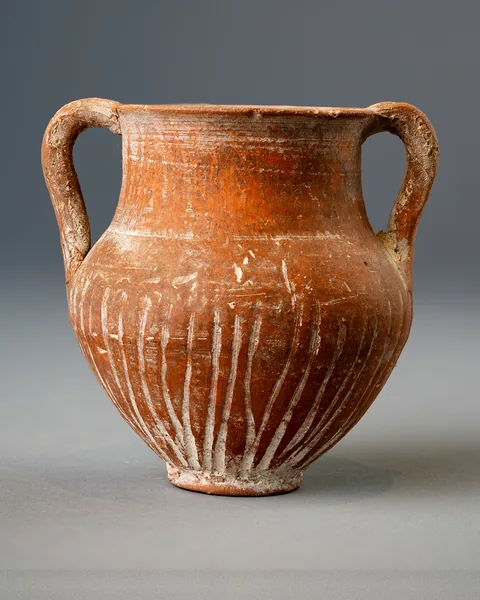
An old ink note under the rim of the latticed plate appears to read "CYPRUS Bt AT SOTHEBYS 12 MAR", with a year that cannot be made out: a London sale not yet identified. The sawtooth-star plate may be later, from the eighth-century transition to the Archaic period. The small amphoriskos on its conical foot held oil or another liquid; almost every intact example of the type comes from a chamber tomb.
Clay made to look like metal
Close-set vertical flutes on the black jug imitate a ribbed metal vessel; a similar jug in Vienna was bought from the excavator and dealer Max Ohnefalsch-Richter. On the red amphoriskos a pale deposit picks out the grooves, and whether that white was put there on purpose is an open question.
A red ware for export
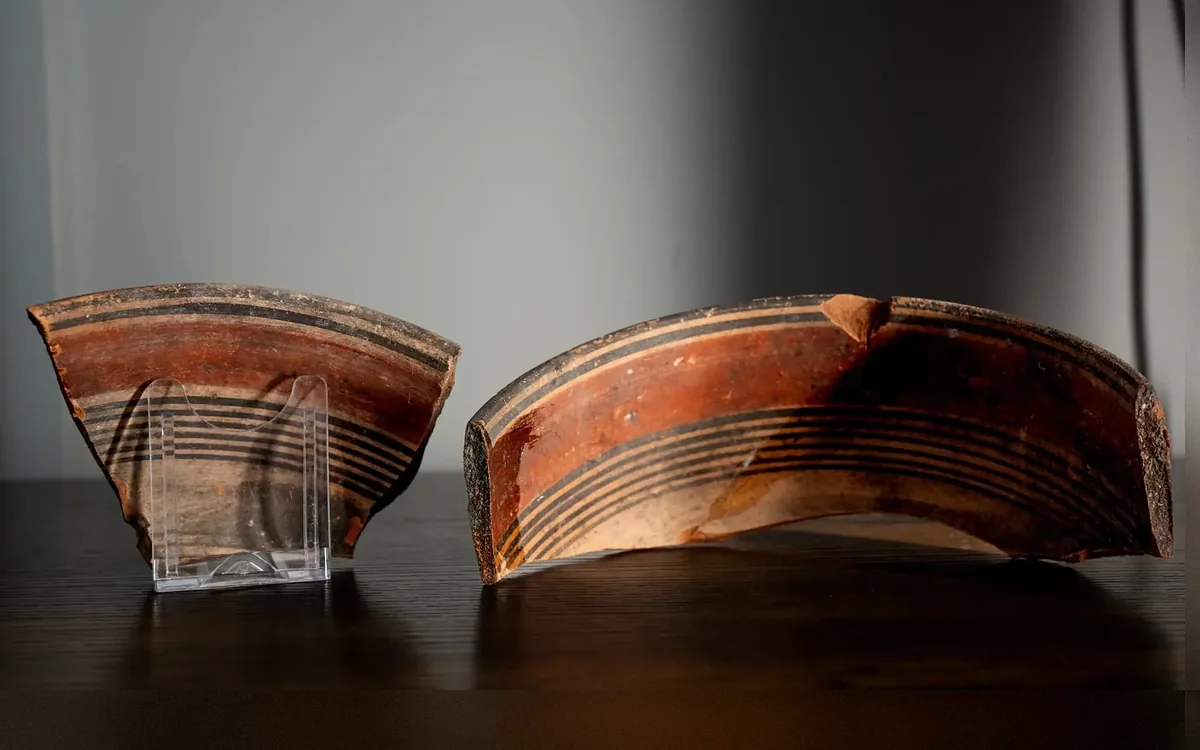
Black-on-Red is glossy red-slipped pottery painted in black, above all with compass-drawn concentric circles. It was long called Cypro-Phoenician, as if Phoenicians had made it. It is Cypriot. Production began around 900 BC, with Paphos the leading exporter. The small juglets travelled to the Levant, Egypt, Cilicia and the Aegean, probably full of perfumed oil, though no residue analysis of one has yet been published to confirm it.
The ware is scarce in Phoenicia itself, which undercuts the idea that Phoenicians carried it. Nor does a pot tell us the origin of the trader who sold it or the person buried with it. The origins of Black-on-Red.
Juglets and bowls
The ringed juglet shows the ware at its brightest: a heavy black ring round a reserved red field with a small bull's-eye at its centre, the slip still lustrous. The deep bowl has a shape Einar Gjerstad called "of entirely Cypriote tradition", its lifted handle copying metal. The miniature juglet, 6 cm high and missing its neck, has the squat body of the ware's earliest juglets.
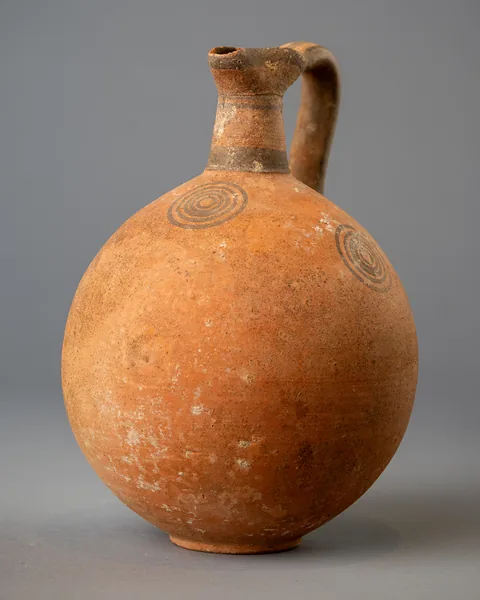 Quick lookBlack-on-Red Globular Trefoil Jug with Concentric Circlesc. 850–600 BC
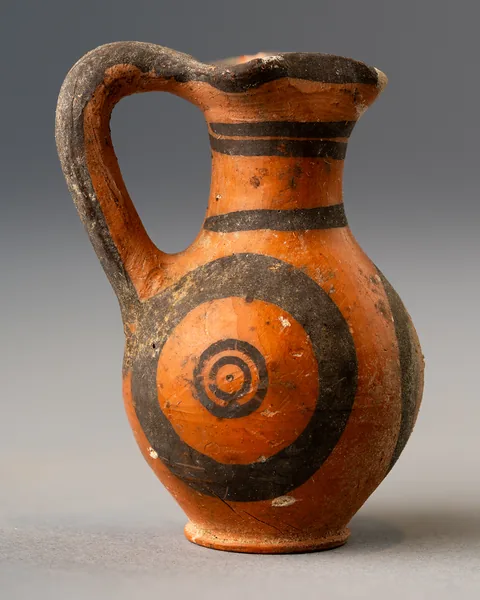 Quick lookBlack-on-Red Trefoil-Mouthed Juglet with Ringed Circlesc. 850–600 BC
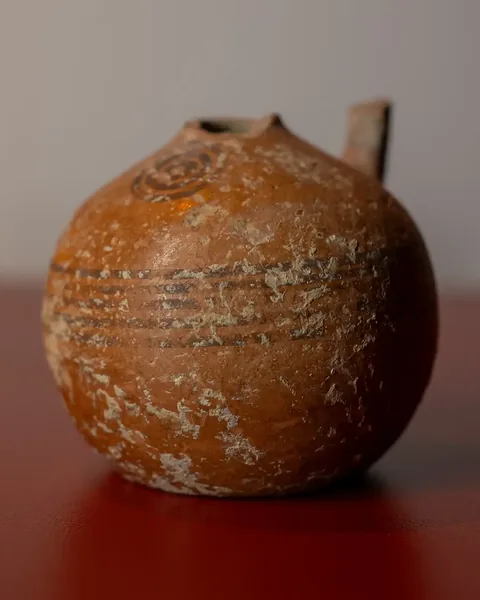 Quick lookMiniature Black-on-Red Globular Jugletc. 850–600 BC
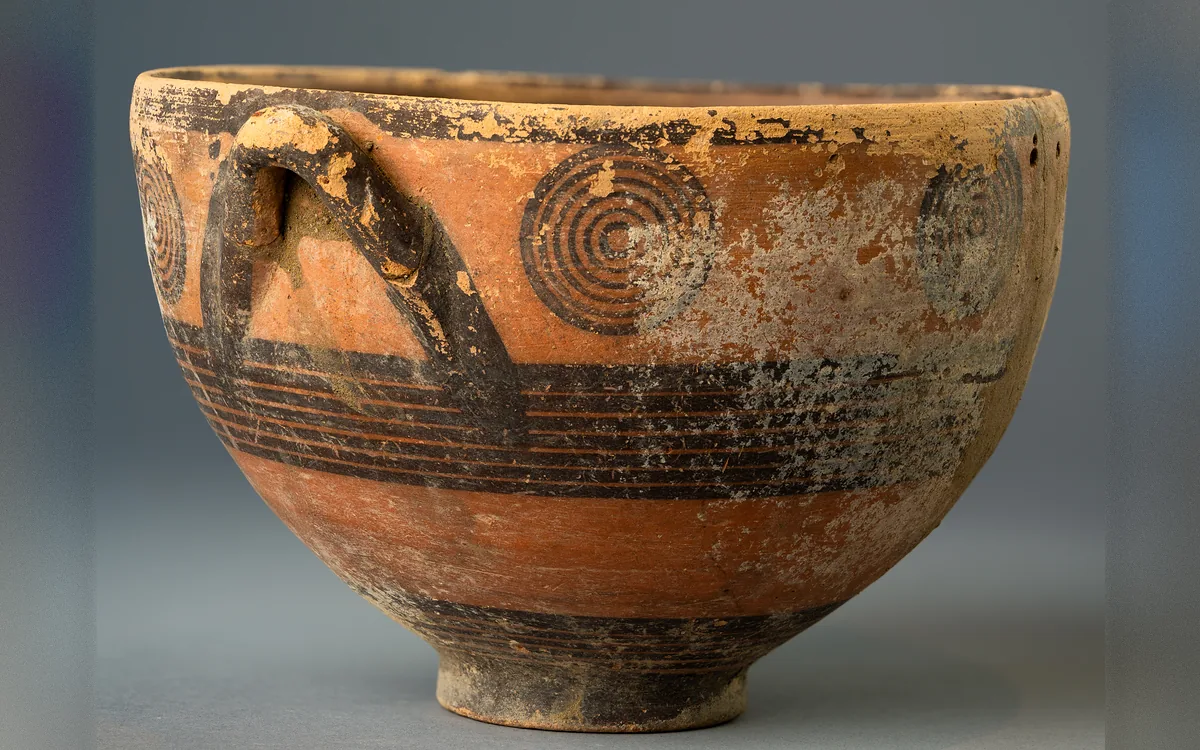 Quick lookBlack-on-Red Deep Bowl with Concentric Circles below the Rimc. 850–600 BC
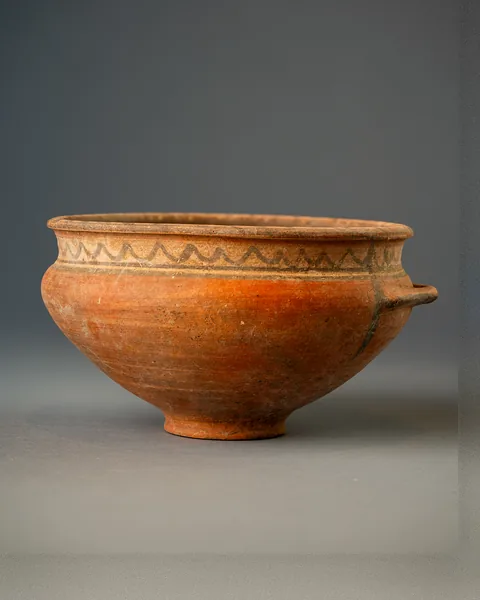
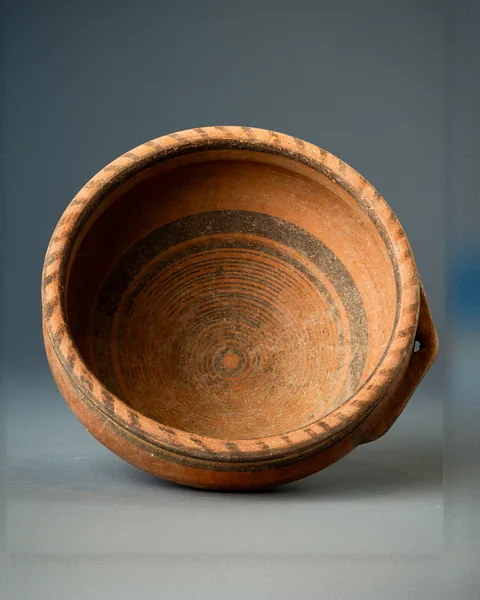 Quick lookBlack-on-Red One-Handled Bowl with Wavy-Line Rimc. 850–600 BC
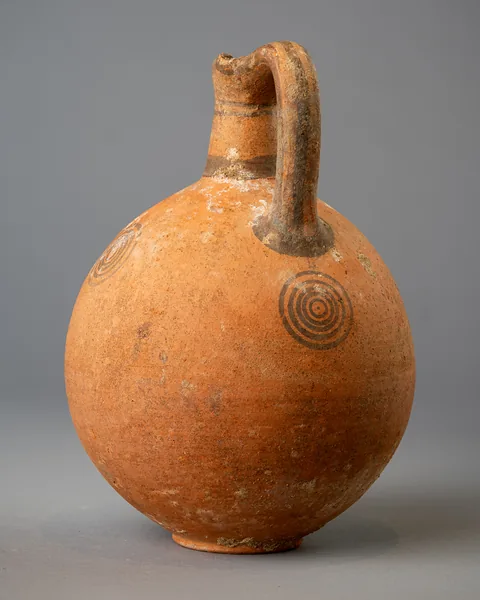
Eyes, arrows and a second colour
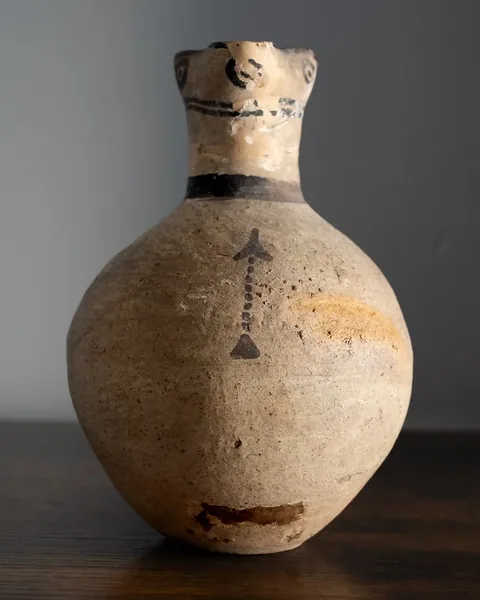
White Painted jugs of the ninth and eighth centuries often carry almost nothing: an eye on either side of the pinched mouth, so that the spout becomes a face, and a single sign floating on the bare body. The signs come from a small stock, a chevron arrow, a dotted cross, a swastika (an ancient geometric sign with no connection to its modern use). Whether the eyes were meant to protect is unknown. Later painters gave the same arrow to their birds.
Add red to White Painted and you have Bichrome: the same pale clay and black paint with a second earth colour, fired together. In this period Bichrome is still built on a grid of bands and circles. The pictures come in the next room.
Faces on the spout
The jug with eyes and an arrow has a close parallel in the Metropolitan Museum, dated to Cypro-Geometric III: eyes on the mouth, and a chevron arrow flanked by swastikas. On the dotted-arrow juglet the grey clouding is modern, left by a house fire. The two bowl fragments carry two East Asian characters in ink, not yet read, which suggest they once passed through a collection in East Asia. Swastikas on Cypriot pottery.
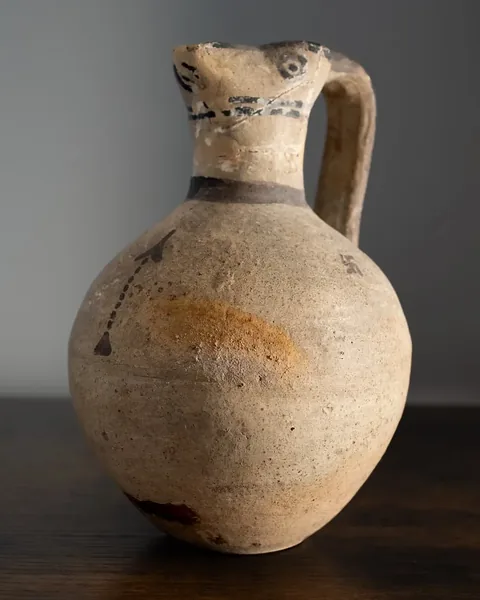 Quick lookWhite Painted Jug with Painted Eyes, Chevron Arrow and Swastikac. 850–600 BC
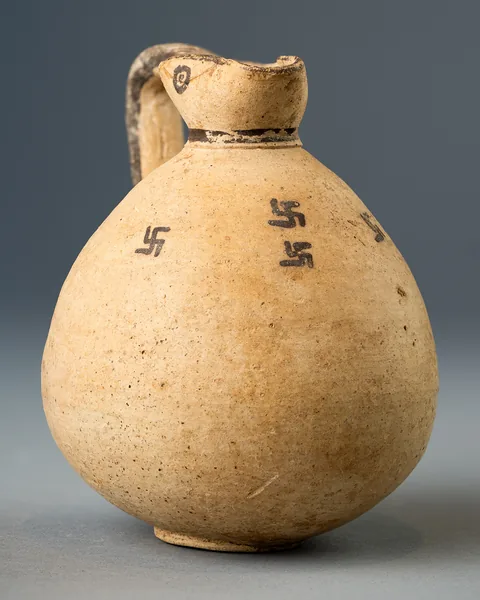 Quick lookWhite Painted Trefoil Jug with Painted Eyes and Swastikasc. 850–600 BC
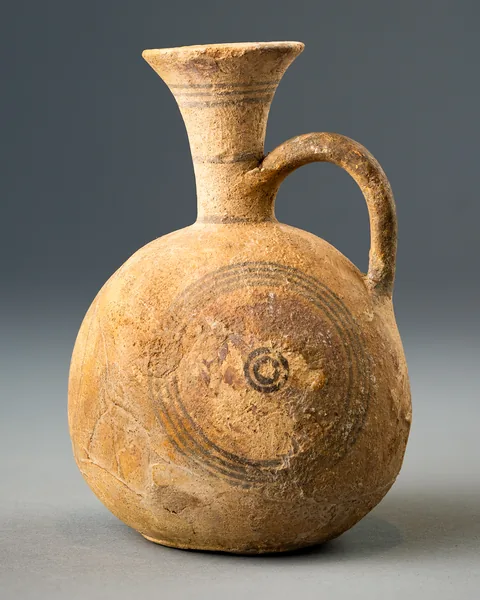 Quick lookWhite Painted Juglet with Funnel Mouth and Side Circlesc. 850–600 BC
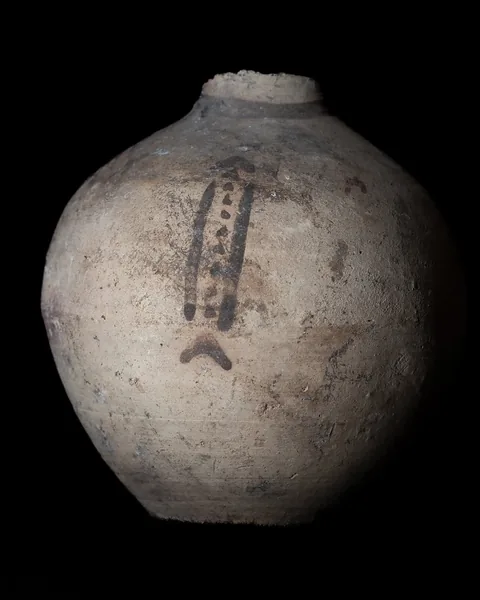 Quick lookWhite Painted Juglet with a Dotted Arrowc. 850–600 BC
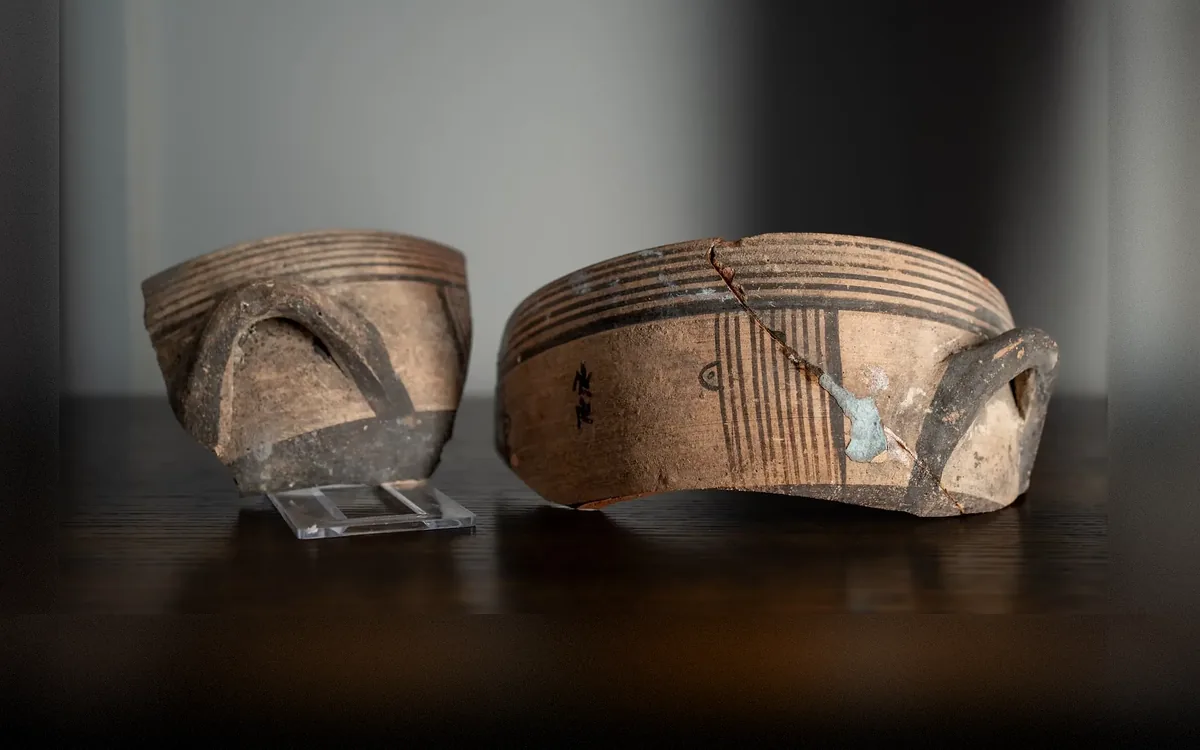 Quick lookTwo Fragments of a White Painted Deep Bowl with Panel Decorationc. 850–600 BC
In focus
Large Bichrome Amphora with a Wavy Line on the Neck
Cypro-Geometric III–Cypro-Archaic I, c. 850–600 BC
A large Bichrome amphora, 42 cm high, with a wavy line round the neck. On its shoulder is an inked Cyprus Museum sales register number, S.R. 3477/65, and a lead export seal still tied on with string: the jar left Cyprus through the legal channel by which the Department of Antiquities sold surplus objects. A parallel in Stockholm was bought from the Cyprus Museum the same way in 1953. Its own parallels make an early Archaic date the likelier. How the Cyprus Museum sold antiquities.
A barrel, a bowl and a pair of horns
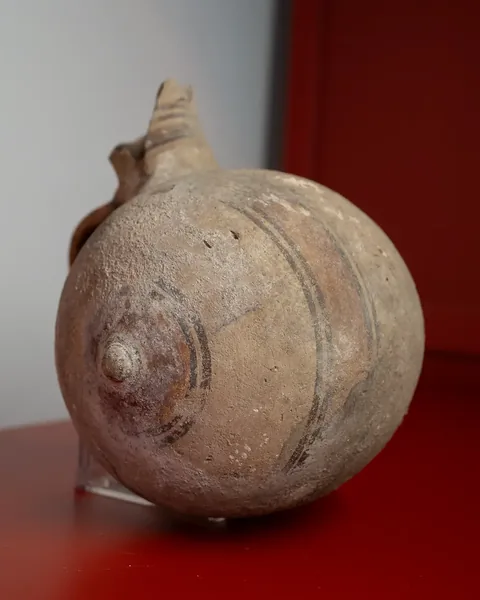
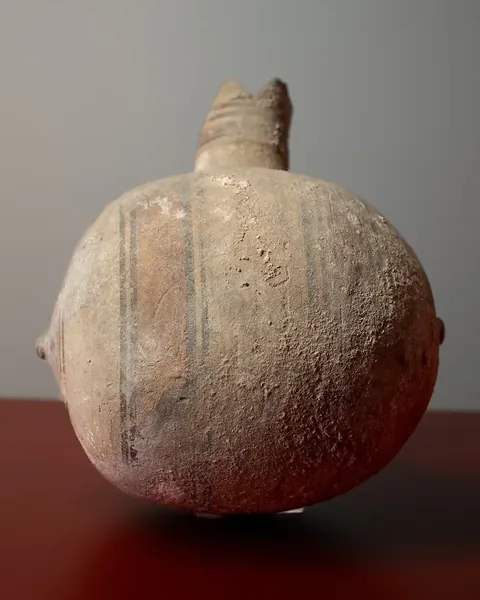
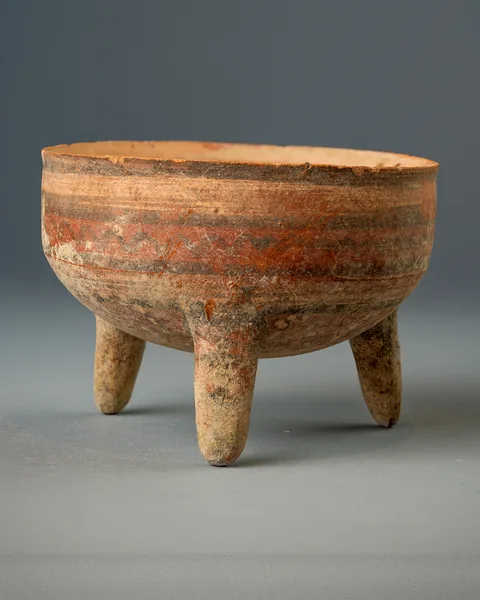
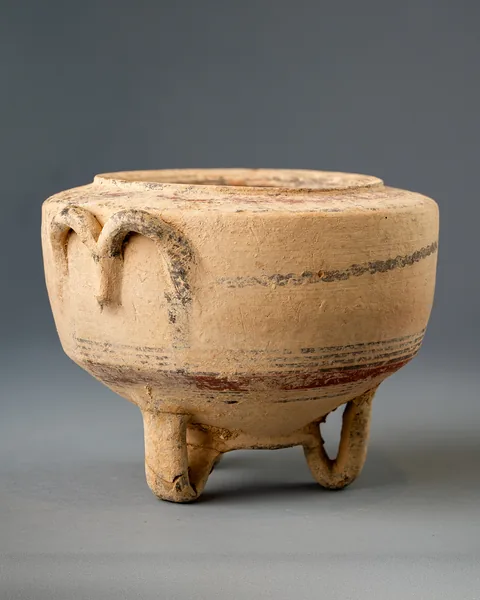
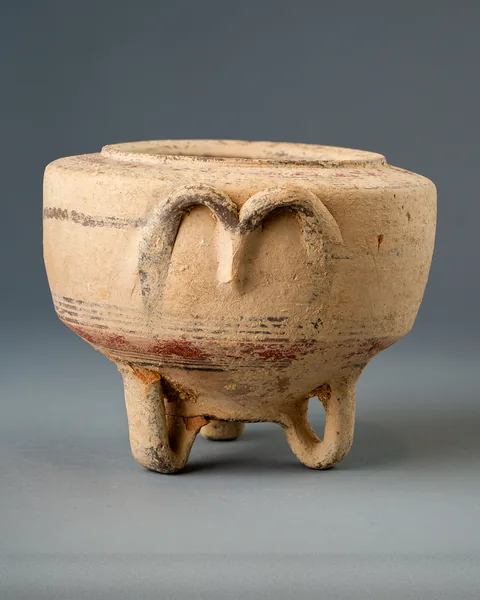
The barrel jug lies on its side like a small cask bound with hoops, a red disc framed in black at each end; its short, full body puts it early, and the shape lengthens in later Bichrome. The tripod jar has double-loop handles that look like pairs of horns, perhaps a distant descendant of the modelled animal heads on earlier tripod bowls. Nothing in the clay says whether they belong to a bull, a goat or a mouflon.