
Middle Bronze Age I
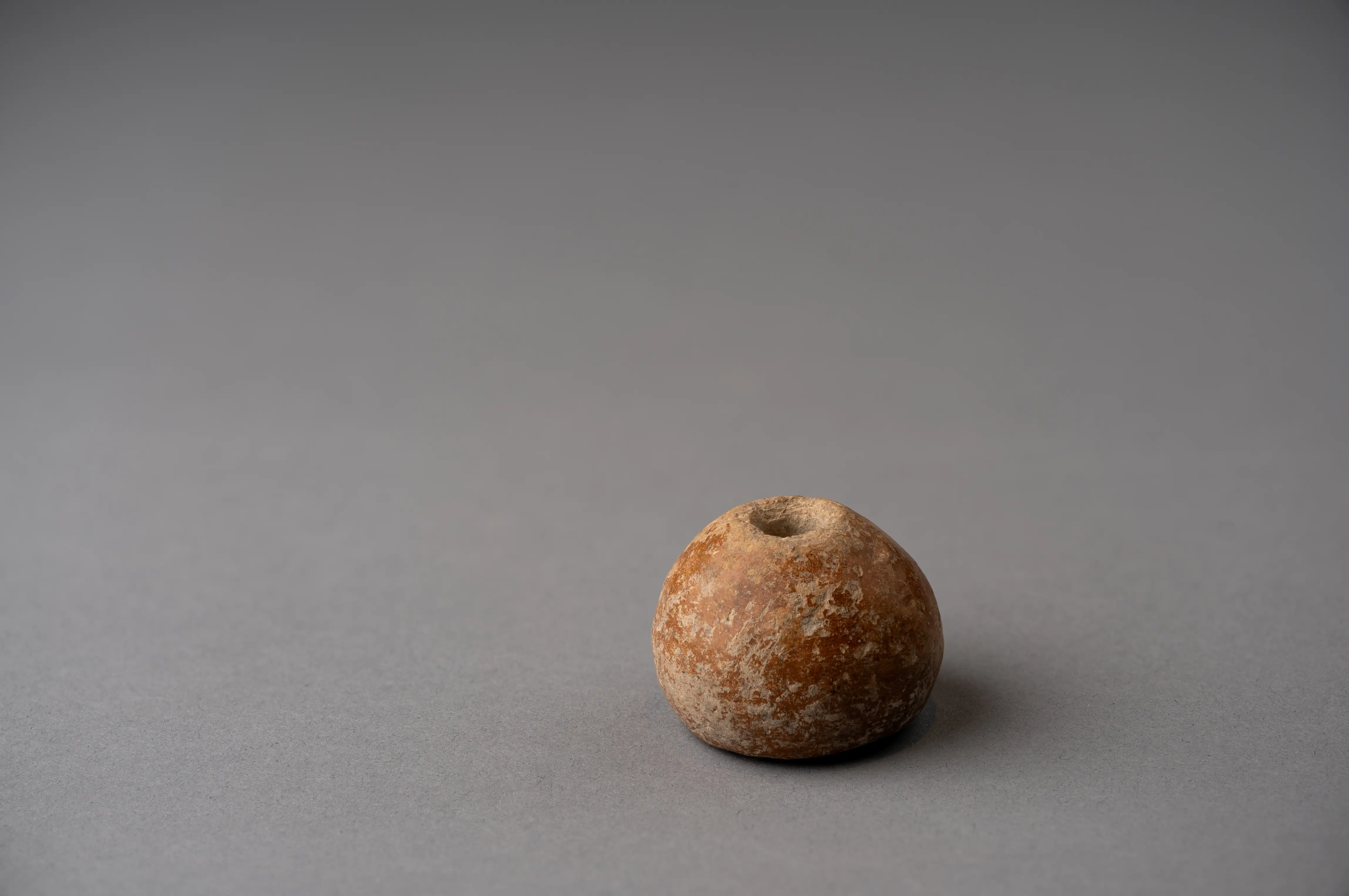
Plain Red Polished Spindle Whorl
Undecorated rounded clay spindle whorl with traces of red slip and burial crust, Early to Middle Cypriot, c. 2000–1650 BCE.
Date
2000 - 1650 BC
Accession No.
TOL-BA-003
Collection
Alexis Drakopoulos
Provenance
- 1965–1969, The Goodman Collection
- 2025–present, Alexis Drakopoulos, London
Early to Middle Cypriot, c. 2000–1650 BCE (approximate) · Probably Red Polished ware · Handmade
A squat, rounded spindle whorl with a flat underside and a wide perforation at the top, its rim slightly worn. The profile swells smoothly from the base to a gently domed crown, with no incised decoration on the photographed side. The surface is a warm red-brown over a buff body, with patches of deeper red that look like the remains of a slip, perhaps once polished. A whitish calcareous crust is spread in flecks and patches across the visible surface, the usual deposit of long burial. The whorl is intact.
Commentary
Clay spindle whorls were made in Cyprus from the Philia facies onward, c. 2500 BCE, mostly in the same fabrics as contemporary pottery, above all Red Polished ware [1][4]. The red slip surviving on this piece places it in that Red Polished tradition, and its rounded conical-hemispherical shape is one of the standard forms of the class [1][5].
Plain whorls are harder to date than decorated ones. Karageorghis notes that decorated examples belong mainly to the Early and Middle Cypriot periods and undecorated ones tend to date "to the end of the Middle and the Late Cypriot periods", when clay whorls gave way to stone, bone and ivory [1]. The rule is not absolute. The Cesnola Collection at the Metropolitan Museum of Art includes an undecorated Red Polished whorl (74.51.916) dated Early Cypriot III to Middle Cypriot II [1]; the Cyprus Museum holds a plain conical clay whorl (W 12) dated to the Middle Cypriot period [2]; and a plain globular whorl from Nitovikla Tomb 2 in the Medelhavsmuseet, Stockholm (N. 002:026b), comes from a Middle Cypriot III burial. The closest match for this piece's appearance is a whorl from Alambra in the British Museum (1884,1210.138), described as possibly Red Polished "but now very worn with only traces of a red slip" and dated broadly within the Early and Middle Cypriot periods; any incised decoration it once carried is now too worn to read as a pattern. A date between about 2000 and 1650 BCE is therefore likely, with a Middle Cypriot date most probable, but the range should be treated as approximate.
The Alambra whorl weighs 122 g, a weight suited to coarse thread; weight is the best guide to what a whorl spun, and this piece has not yet been weighed. Whorls were fitted low on the spindle with the broad end upward [1][3], and the unphotographed base and far side of this piece may yet carry faint incision. Undecorated clay whorls continued to be made in Cyprus long after the Bronze Age, so the attribution here rests on the red slip and the shape alone; we know of no excavated context for the piece.
References
- 1.Karageorghis, V. (2016) The Cesnola Collection of Cypriot Art: Terracottas. New York: The Metropolitan Museum of Art, p. 33 (Cat. 37) and p. 254 (Commentary 2, Early–Late Cypriot Spindle-whorls).
- 2.Buchholz, H.-G. and Karageorghis, V. (1973) Prehistoric Greece and Cyprus: An Archaeological Handbook. London: Phaidon, p. 182, no. 1848.
- 3.Webb, J.M. (2002) New evidence for the origins of textile production in Bronze Age Cyprus. Antiquity 76, pp. 364–371.
- 4.Swiny, S., Rapp, G. and Herscher, E. (eds) (2003) Sotira Kaminoudhia: An Early Bronze Age Site in Cyprus (CAARI Monograph 4). Boston: American Schools of Oriental Research, p. 438.
- 5.Crewe, L. (1998) Spindle Whorls: A Study of Form, Function and Decoration in Prehistoric Bronze Age Cyprus (SIMA-PB 149). Jonsered: Paul Åströms Förlag.
More from the Catalogue
Browse related objects
Axehead
Early Bronze Age I
Bronze rod tripod
Late Bronze Age III
Basalt tripod vessel or mortar
Bronze Age
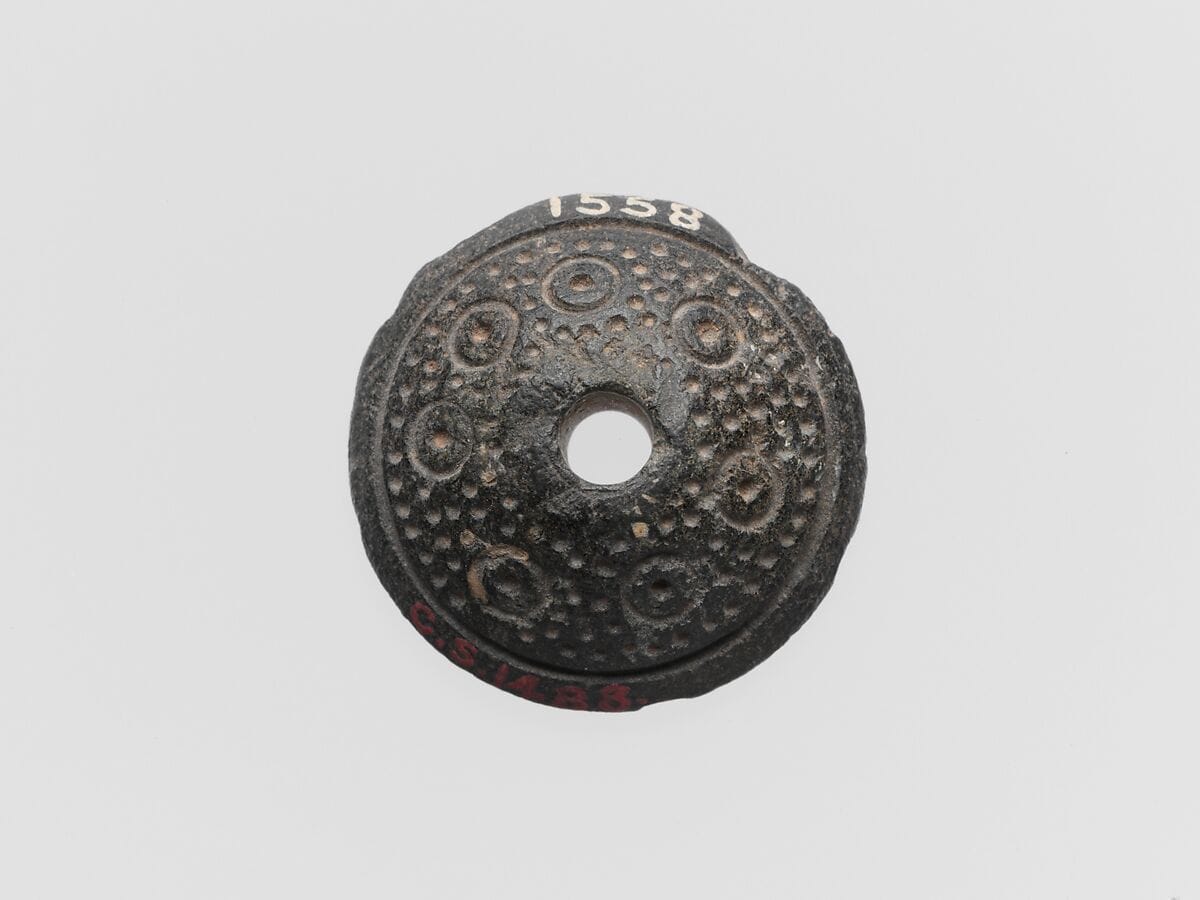
Chlorite spindle whorl
Late Bronze Age III
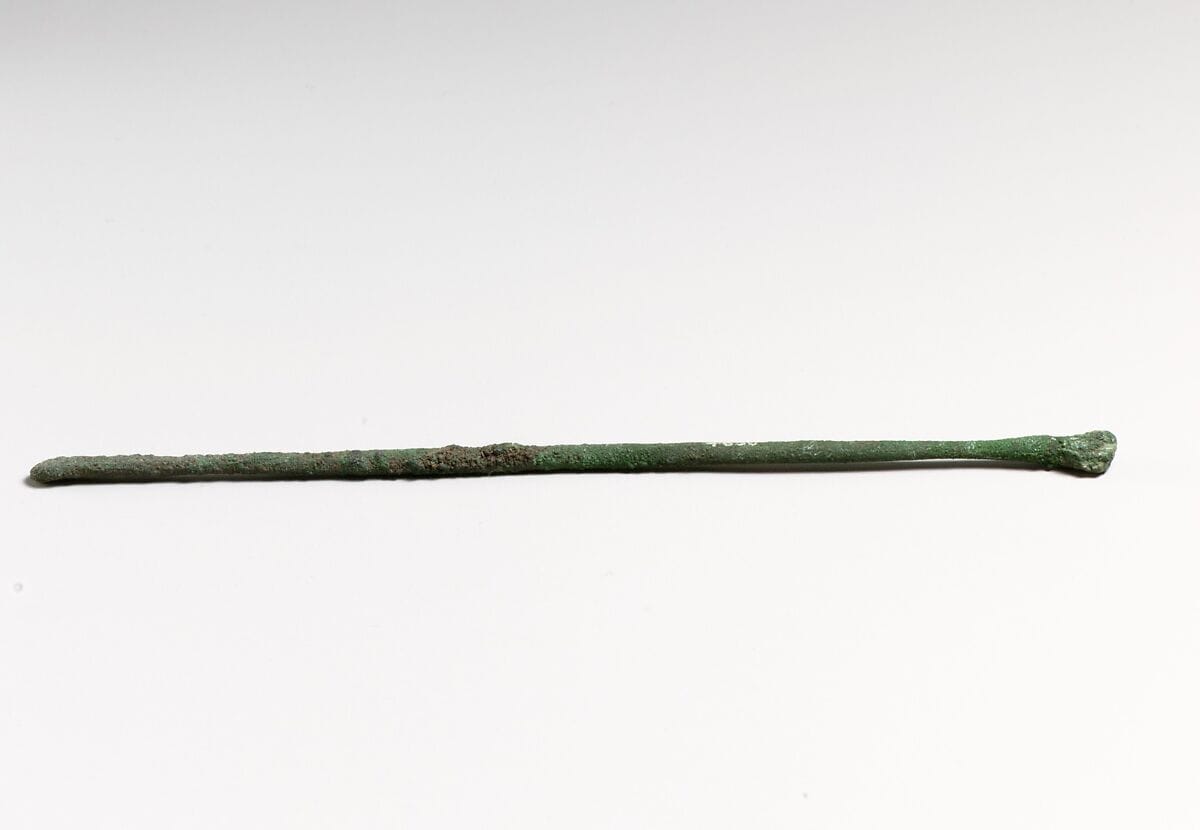
Spoon probe
Bronze Age
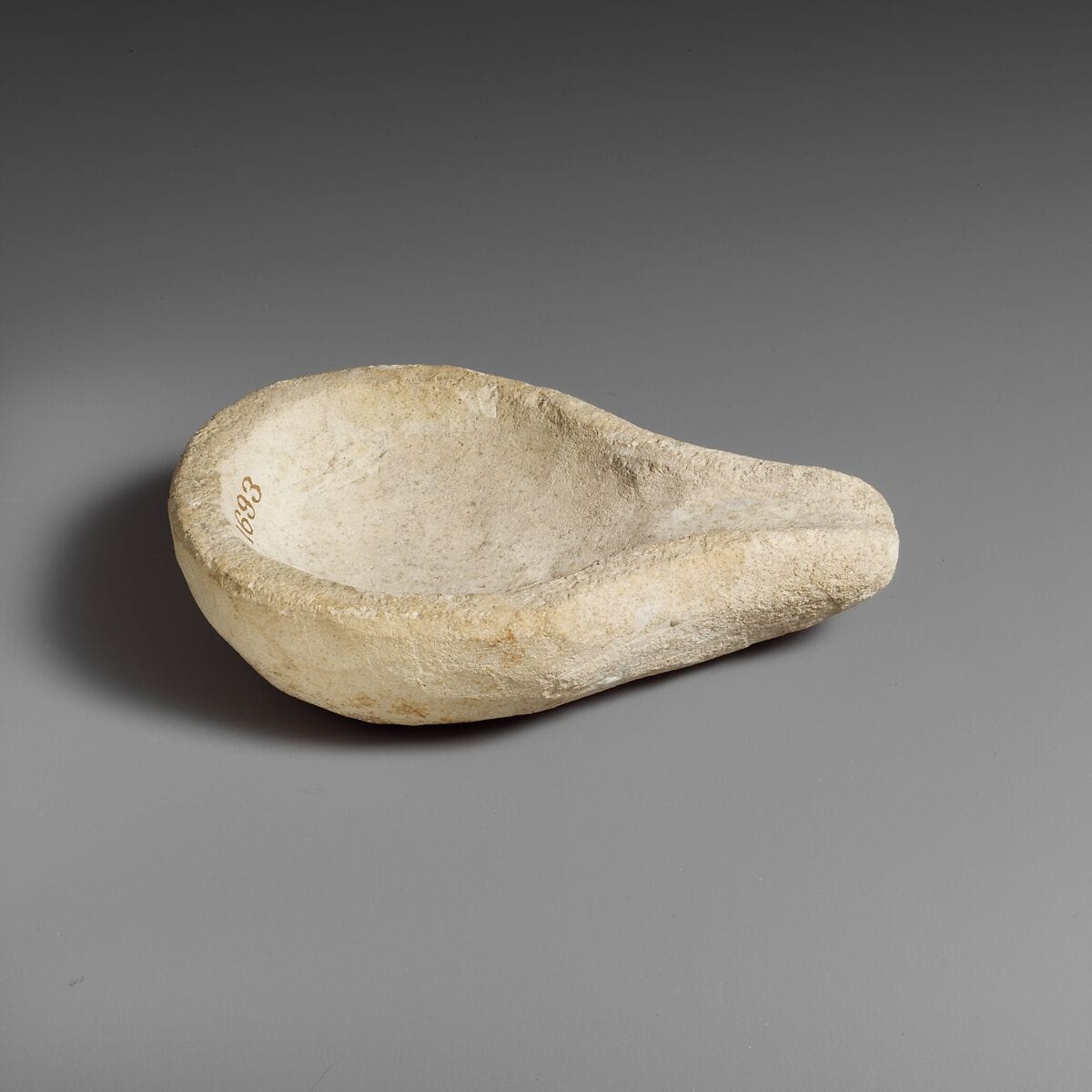
Limestone saucer lamp
Classical
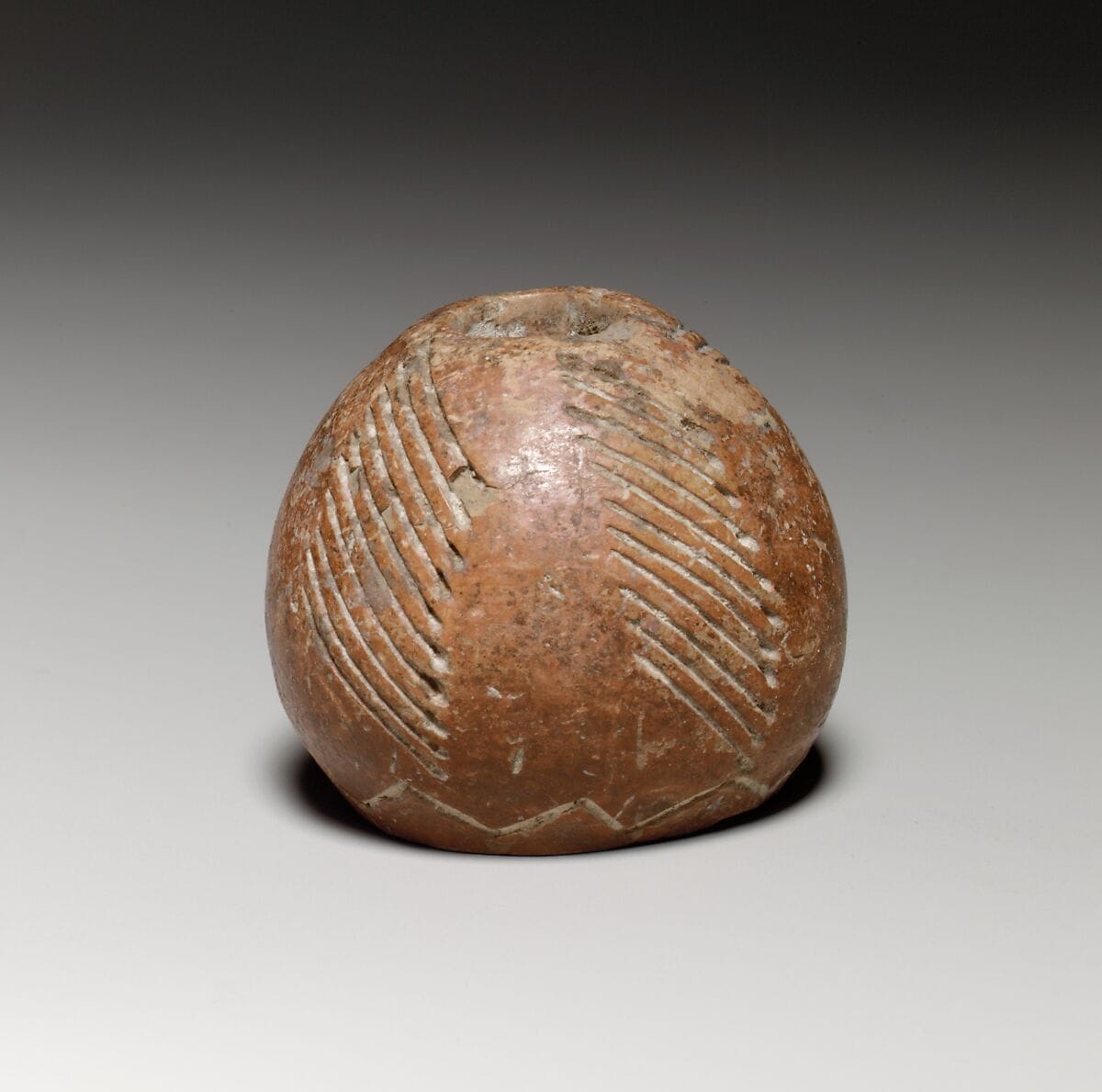
Terracotta conical-hemispherical spindle-whorl with flat base
Middle Bronze Age I
Needle
Bronze Age
Toilet box
Bronze Age
Bronze saucer-shaped lamp
Archaic II
Hinge
Bronze Age
Torch-holder
Classical
Terracotta saucer-shaped lamp
Classical
Bone spindle whorl
Late Bronze Age II
Limestone altar
Classical
Awl
Bronze Age
Shepherd's crook
Bronze Age
Copper alloy razor
Middle Bronze Age II