
Early Bronze Age III
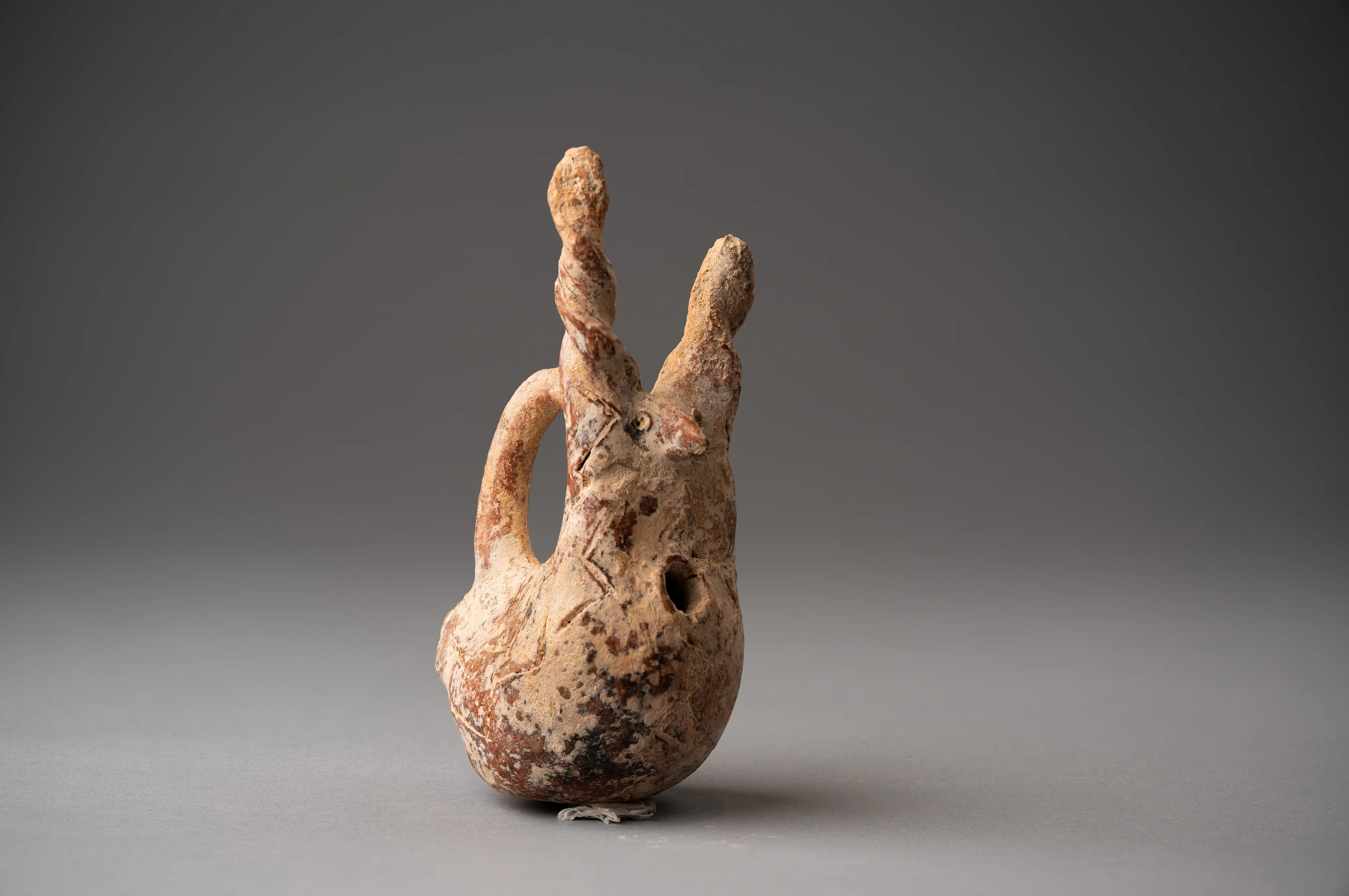
Zoomorphic Askos with a Horned Head, probably Red Polished
Small handmade animal askos with a globular body, head-to-back strap handle and two upright horns, one twisted. Probably Red Polished, heavily worn. c. 2100–1750 BCE.
Date
2100 - 1750 BC
Accession No.
STA-BA-002
Collection
Alexis Drakopoulos
Provenance
- 1965–2025, The Goodman Collection (acquired 1965–1969)
- 2025–present, Alexis Drakopoulos, London
Early Cypriot III–Middle Cypriot, c. 2100–1750 BCE (uncertain) · Red Polished ware (probable) · Handmade, incised
A small closed vessel with a globular body on a rounded, slightly pointed base, a stub of a tail at the rear, and a short neck rising at the front into an animal head. Two tall projections stand upright from the head: the left is twisted like a rope and ends in a knob, the right is plain and tapering. A pointed snout or ear juts to one side, and the eye is a single punched hole. A thick strap handle loops from the back of the head down to the rear of the body. A round hole opens on the front of the body below the head. The pale buff surface keeps only patches of red-brown slip under heavy wear and encrustation, through which faint incised crossing lines and chevrons can be traced on the body and neck.
Commentary
The form is that of a small animal askos: a closed body, an animal head and neck at the front, and a handle running from the back of the head to the body. That handle arrangement is the standard one on Early and Middle Cypriot animal vessels, as on the Red Polished bull askos in the Fitzwilliam Museum, GR.132c.1908 [3]. The closest parallel for the overall shape, a compact globular body with an animal head and basket handle, is a Middle Cypriot White Painted askos with a cervid head from Dali in the Louvre, N III 3352, 13 cm high [2]. The ware of this piece is probably Red Polished, judging from the remaining red slip and the incised lines, but the surface is too worn for certainty, and the pale, mottled fabric may point to a workshop outside the north coast, where the clays are softer and the incision finer.
The two upright projections read as horns, which makes the animal a horned beast: goat, ram or ibex are all possible, and the species cannot be fixed. The single twisted horn beside a plain one is unusual. Red Polished modellers did use twisted horns for rams, as on a ram protome from Vounous Tomb 117 in Birmingham, described by Karageorghis as having "twisted horns curving backwards and to the sides" [1], but a matched pair would be expected.
The piece has previously been catalogued as a rattle figurine. That label is unproven. Knox's corpus of Bronze Age Cypriot figurines finds that the only rattles known from the island in this period are the Late Cypriot owl-shaped rattles of White Painted VI, such as British Museum 1897,0401.1178 from Enkomi [4] [5]. Those have a cream painted surface, a pointed body and a flat-topped owl head, and share nothing with this vessel beyond small size. We know of no Red Polished rattle. Loose soil or a broken fragment inside a small-mouthed vessel is a more ordinary cause of any sound, so unless a sealed clay pellet can be shown inside, the object is best described as an askos.
The date is broad. A handmade, incised animal vessel with a head-to-back handle belongs to the askos family of Early Cypriot III and the Middle Cypriot period, roughly 2100–1750 BCE in calibrated terms [6], and the worn surface does not allow a tighter placement. There is no recorded find-spot.
The object is described as heavily damaged, and the horns in particular should be examined for breaks, restoration or later attachment, as should the blotchy encrustation. Until that examination is made, the identification, date and function given here remain provisional.
References
- 1.Karageorghis, V. (1991) The Coroplastic Art of Ancient Cyprus I: Chalcolithic–Late Cypriote I. Nicosia: A. G. Leventis Foundation, p. 162, no. 13(b), pl. CXVI:3 (Birmingham Museum and Art Gallery 68.43), and p. 261.
- 2.Musée du Louvre, Paris, N III 3352, White Painted askos with cervid head and basket handle, Middle Cypriot (2000–1600 BCE), from Dali (Idalion); 13 × 11.5 × 8.2 cm.
- 3.Fitzwilliam Museum, Cambridge, GR.132c.1908, Red Polished bull-headed askos with basket handle from the back of the head to the body, end of Early Cypriot.
- 4.Knox, D. (2012) Making Sense of Figurines in Bronze Age Cyprus. PhD thesis, University of Manchester, pp. 167–171, 302.
- 5.British Museum, London, 1897,0401.1178, owl-shaped rattle, White Painted VI, from Enkomi Tomb 83A, Late Cypriot I.
- 6.Manning, S. W. (2013) 'Appendix: A New Radiocarbon Chronology for Prehistoric and Protohistoric Cyprus, ca. 11,000–1050 Cal BC', in A. B. Knapp, The Archaeology of Cyprus: From Earliest Prehistory through the Bronze Age. Cambridge: Cambridge University Press, 485–533.
More from the Catalogue
Browse related objects
Amphoriskos
Archaic I
Askos in the form of a bird
Middle Bronze Age II
Askos
Middle Bronze Age II
Limestone votive vase fragment
Classical
Terracotta bil-bil
Late Bronze Age II
Terracotta zoomorphic askos (vessel)
Middle Bronze Age II
Amphoriskos
Archaic II
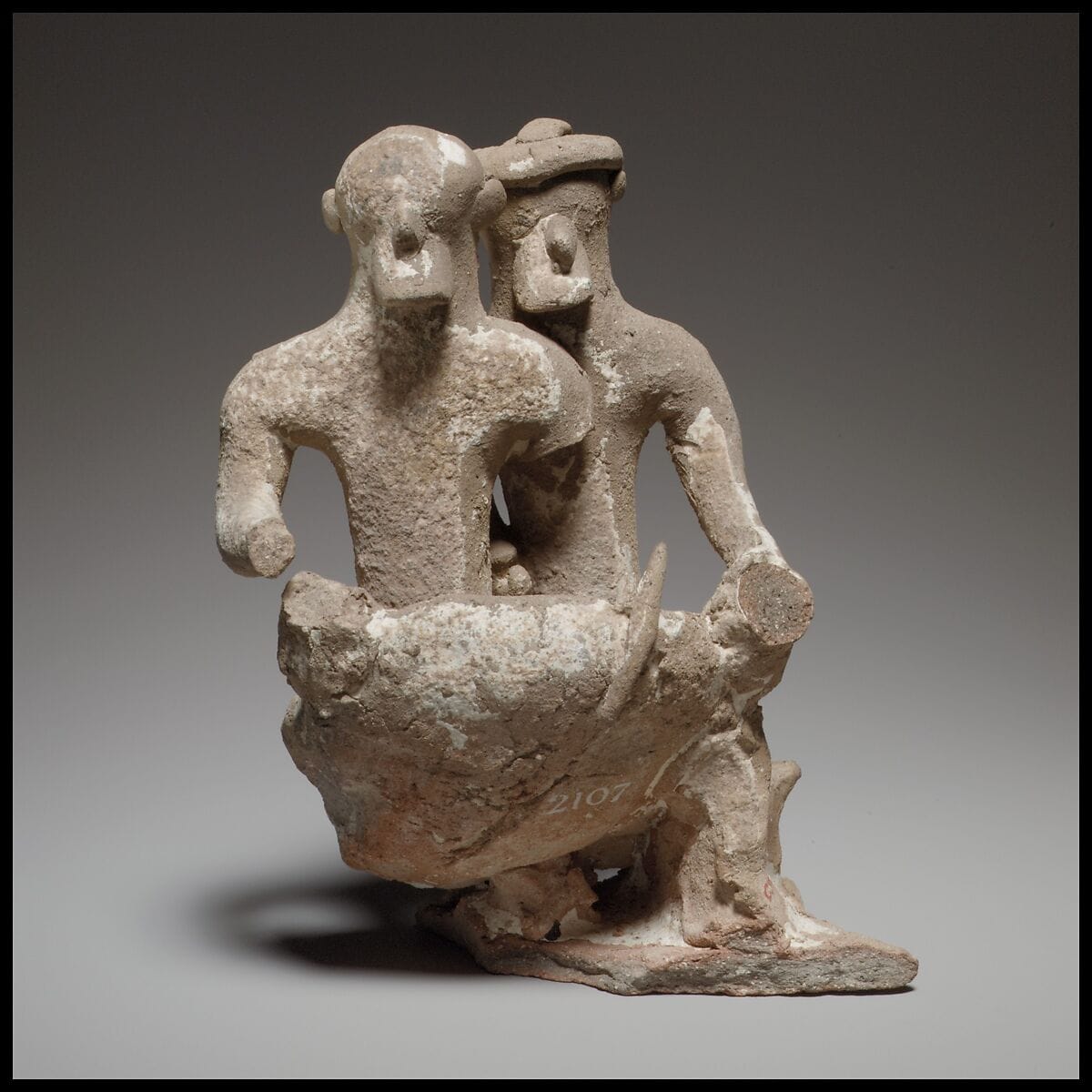
Model of a chariot with driver
Geometric II
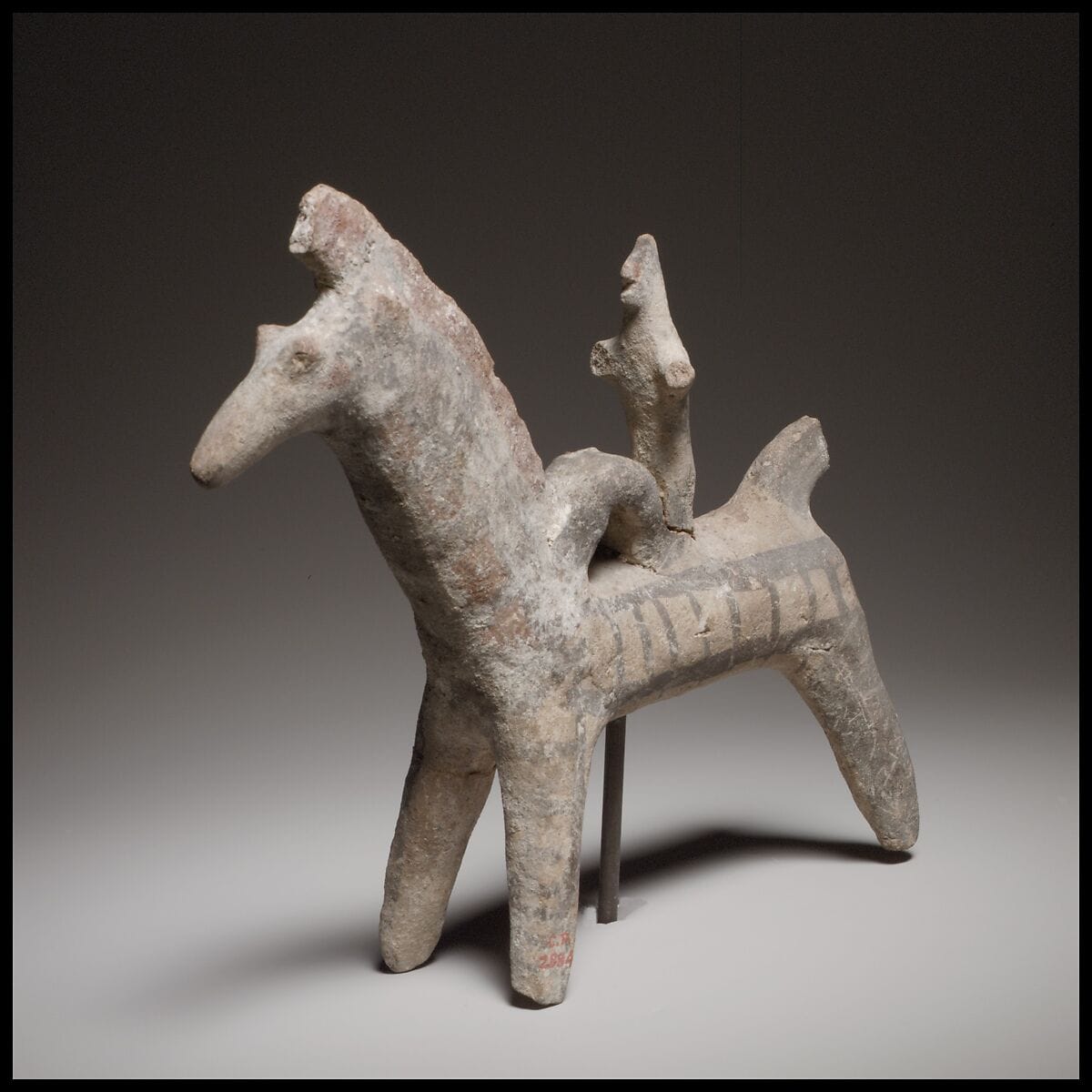
Horse and rider
Archaic I
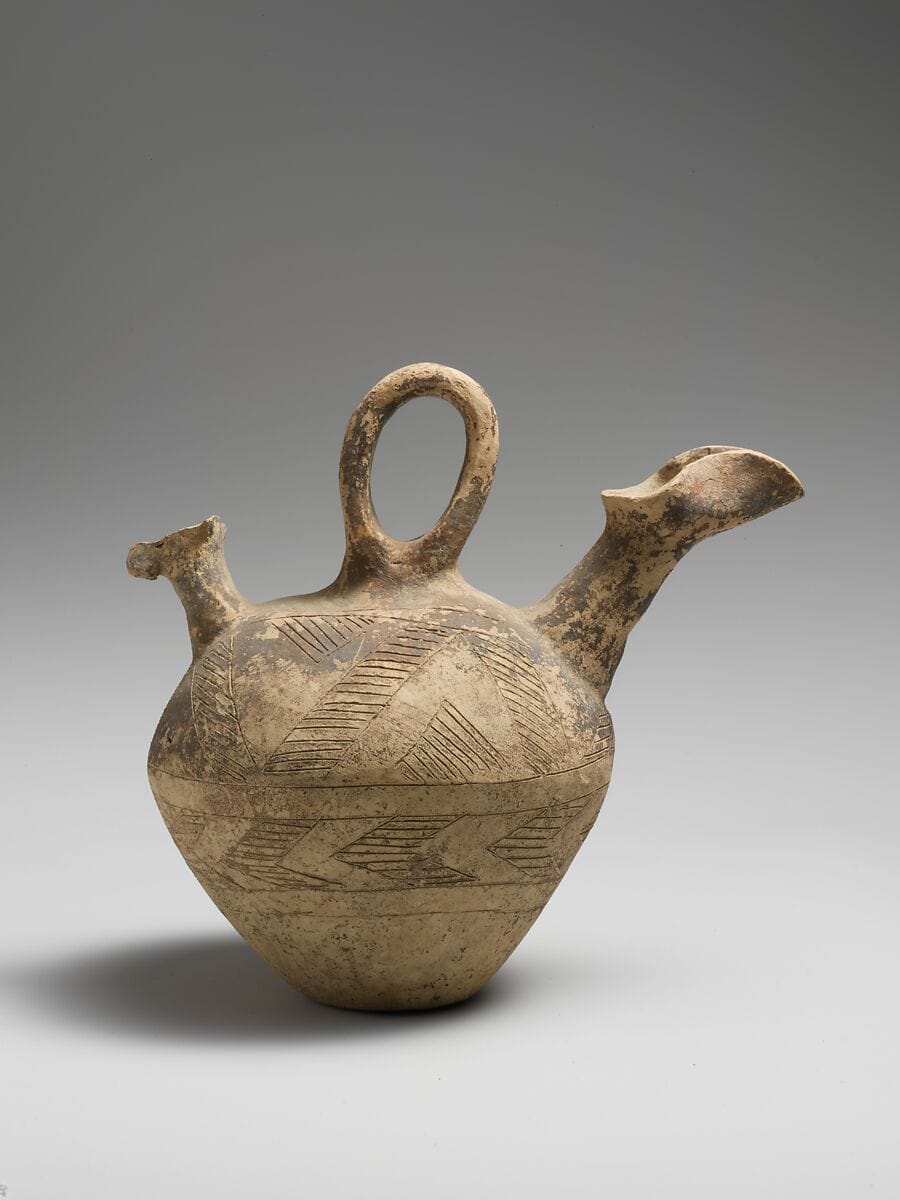
Terracotta zoomorphic askos (vessel)
Middle Bronze Age III
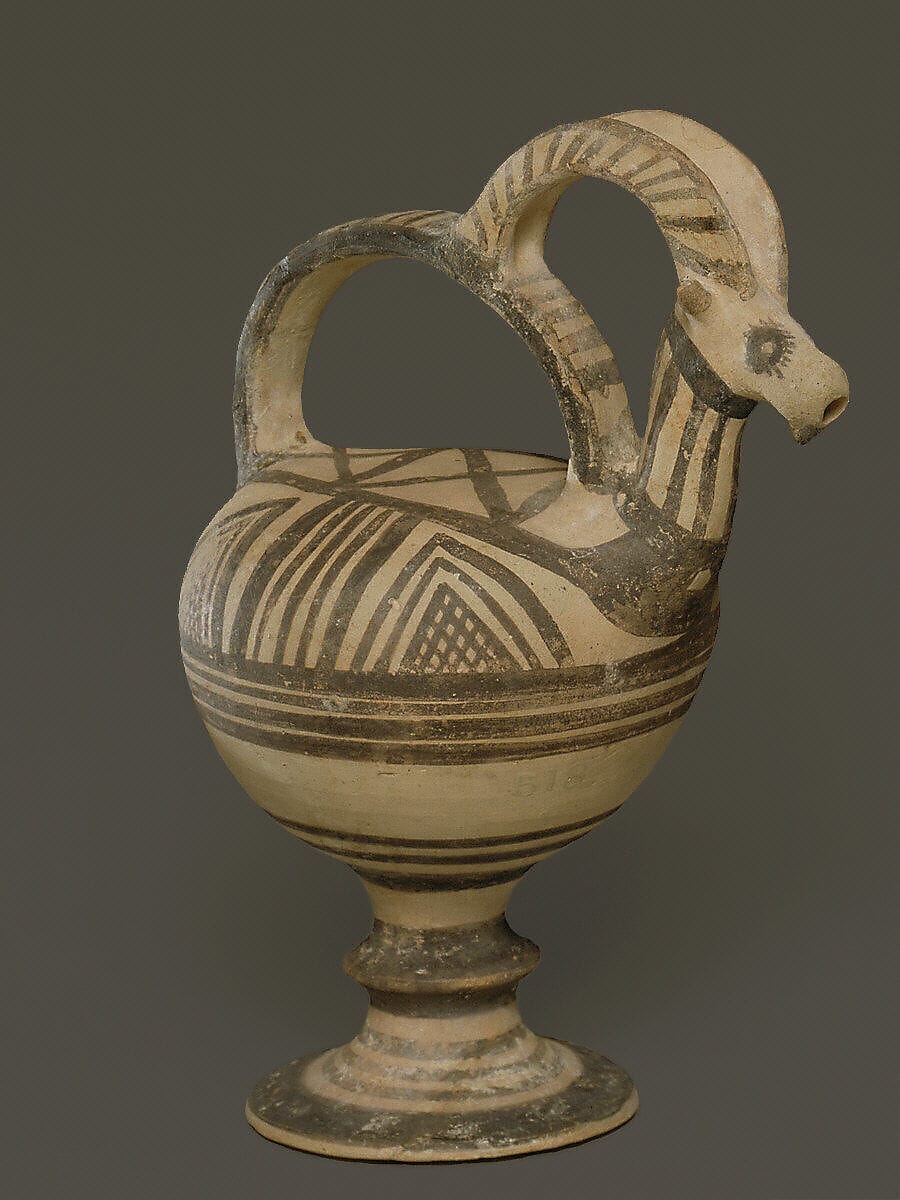
Terracotta trick vase
Geometric I
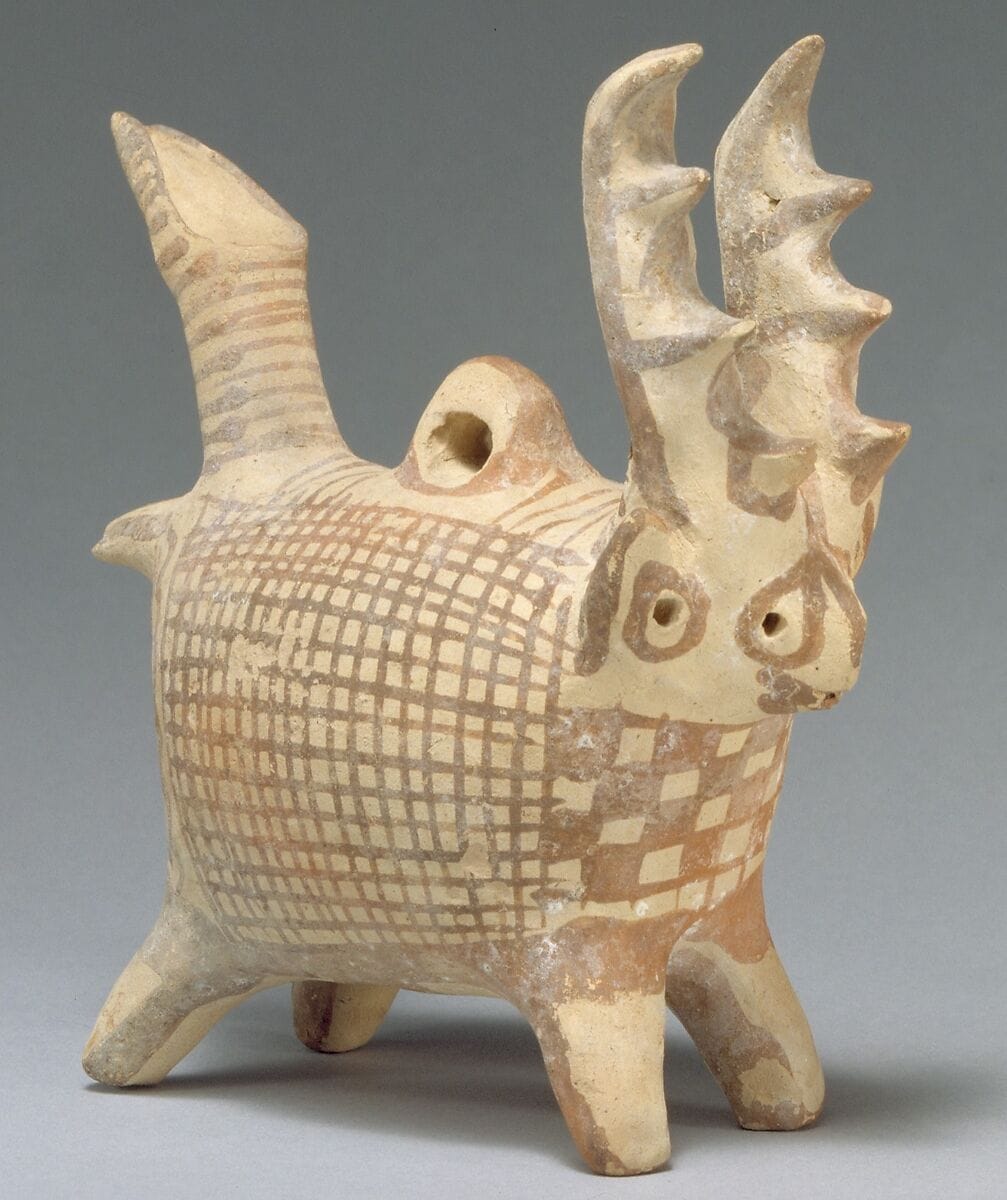
Terracotta zoomorphic askos (vessel) with antlers
Middle Bronze Age III
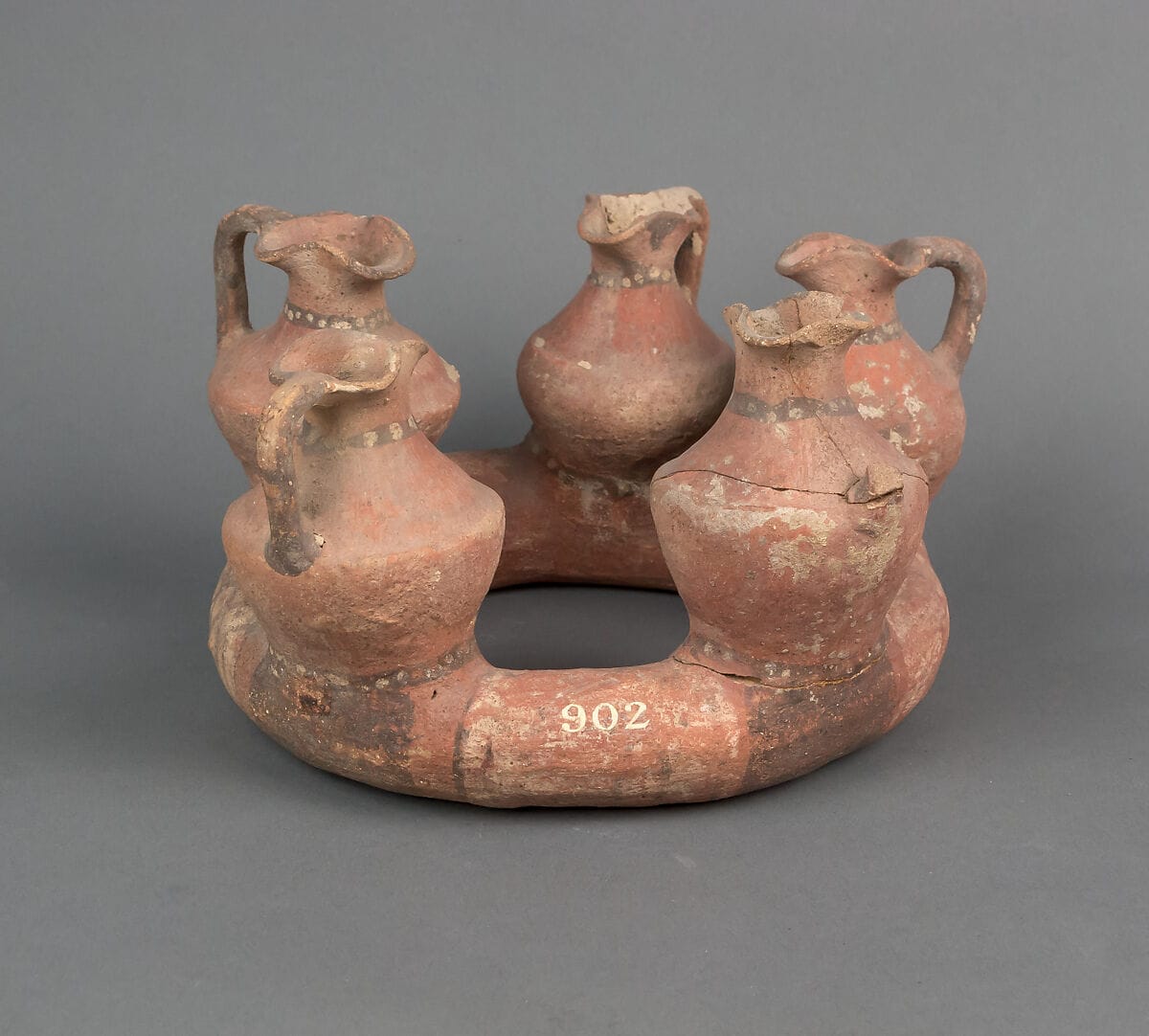
Ring-kernos
Archaic II
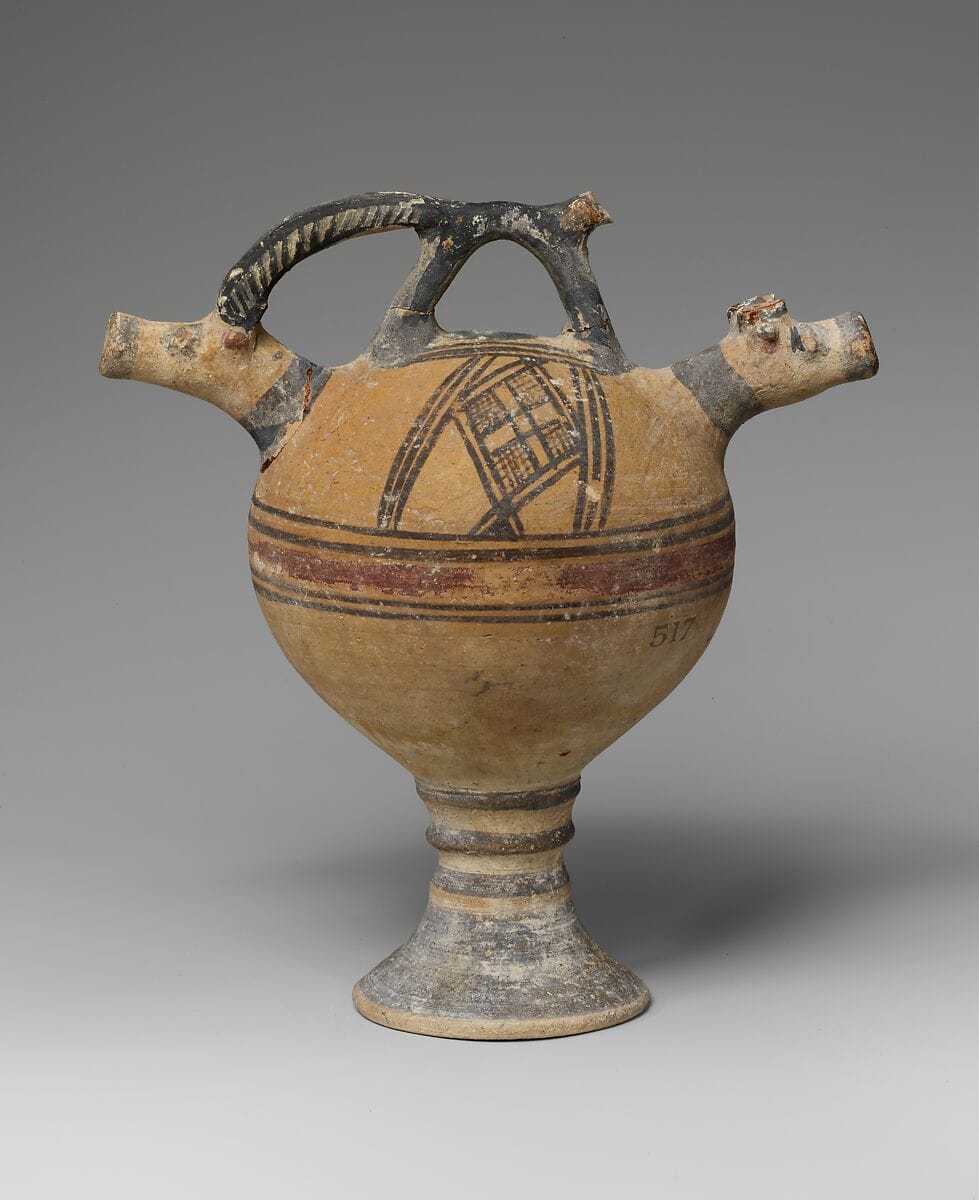
Terracotta vase on a high foot with two goats' heads in relief
Geometric I
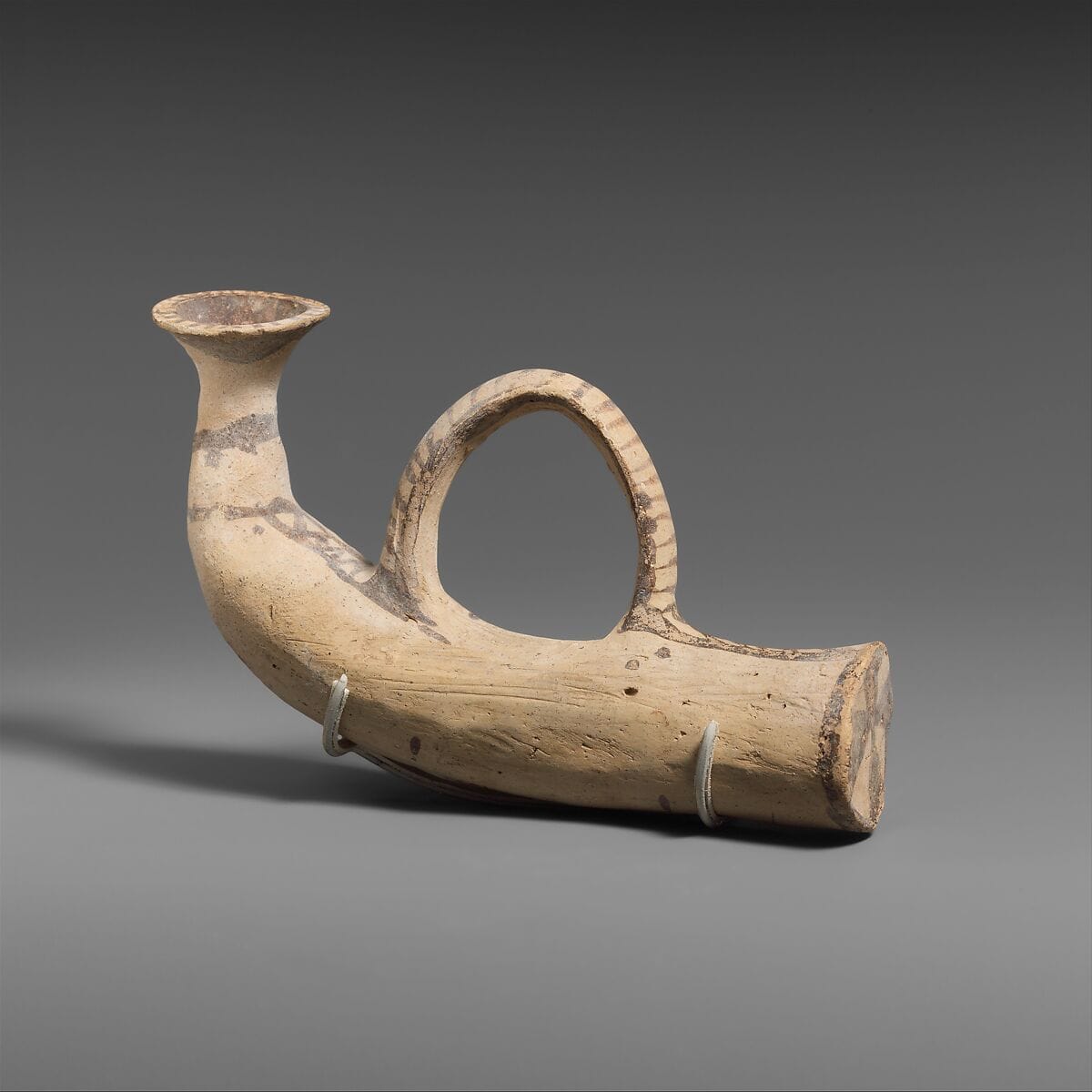
Terracotta vase in the shape of a horn
Geometric I
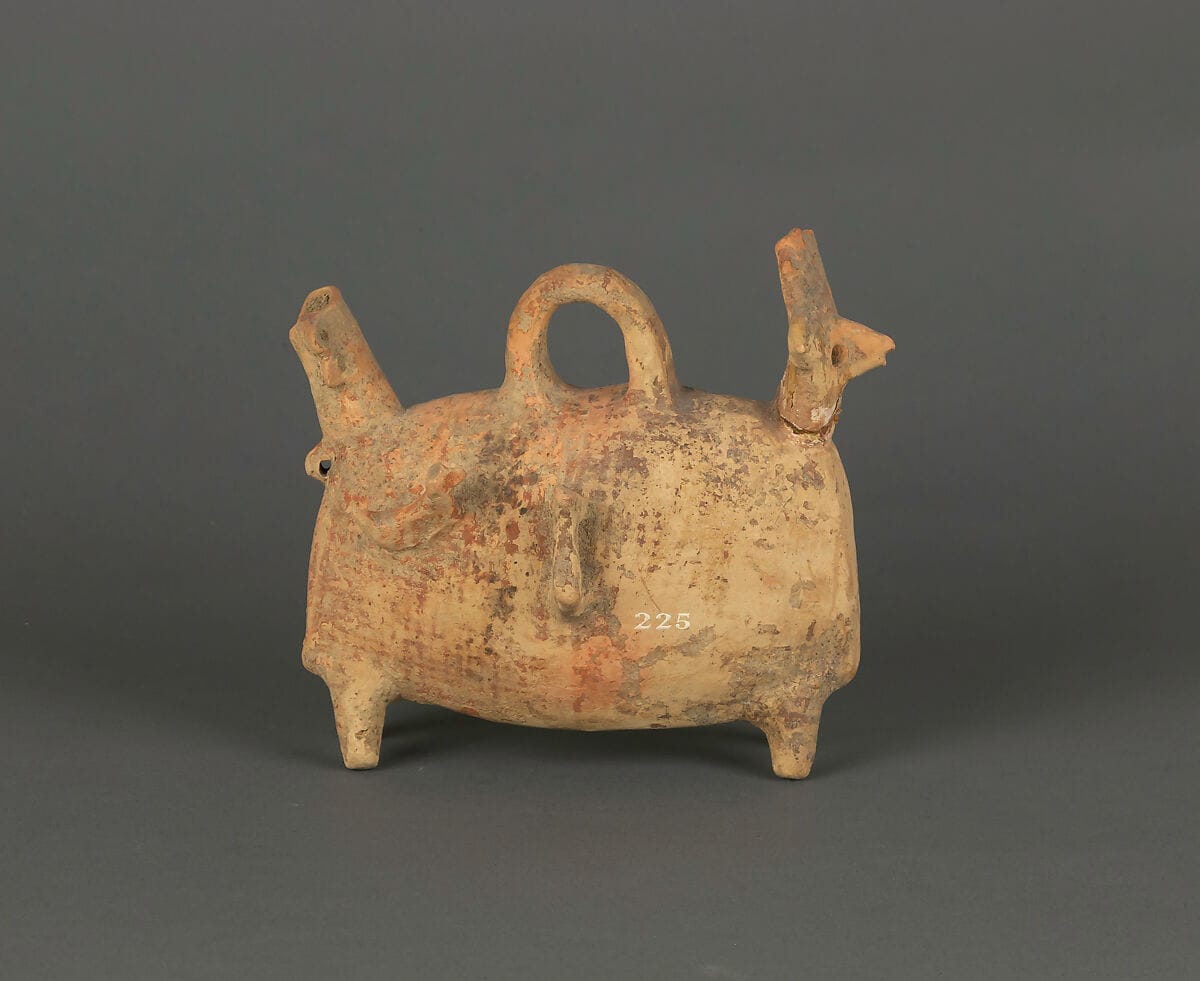
Askos in the form of an animal
Middle Bronze Age II
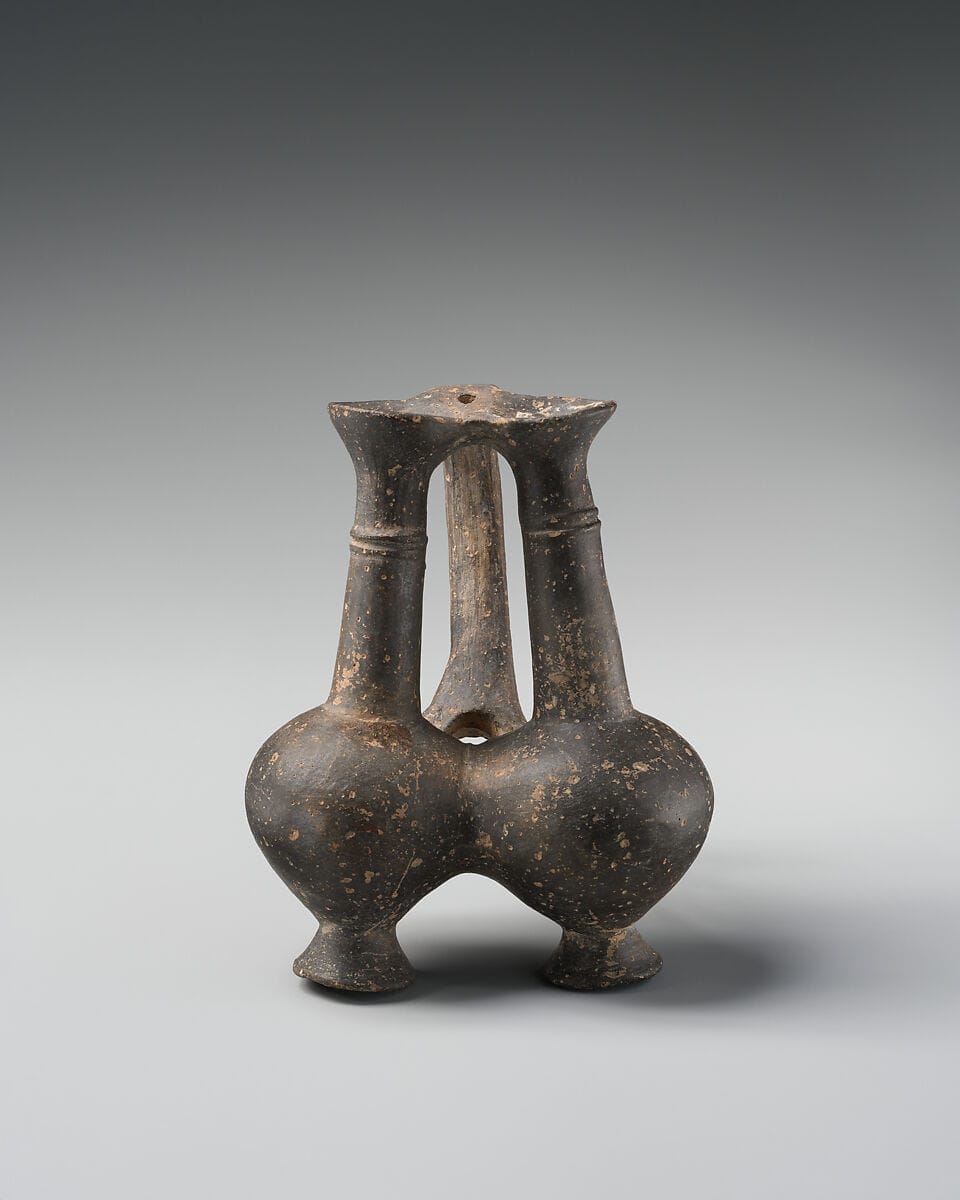
Terracotta double bil-bil
Late Bronze Age I
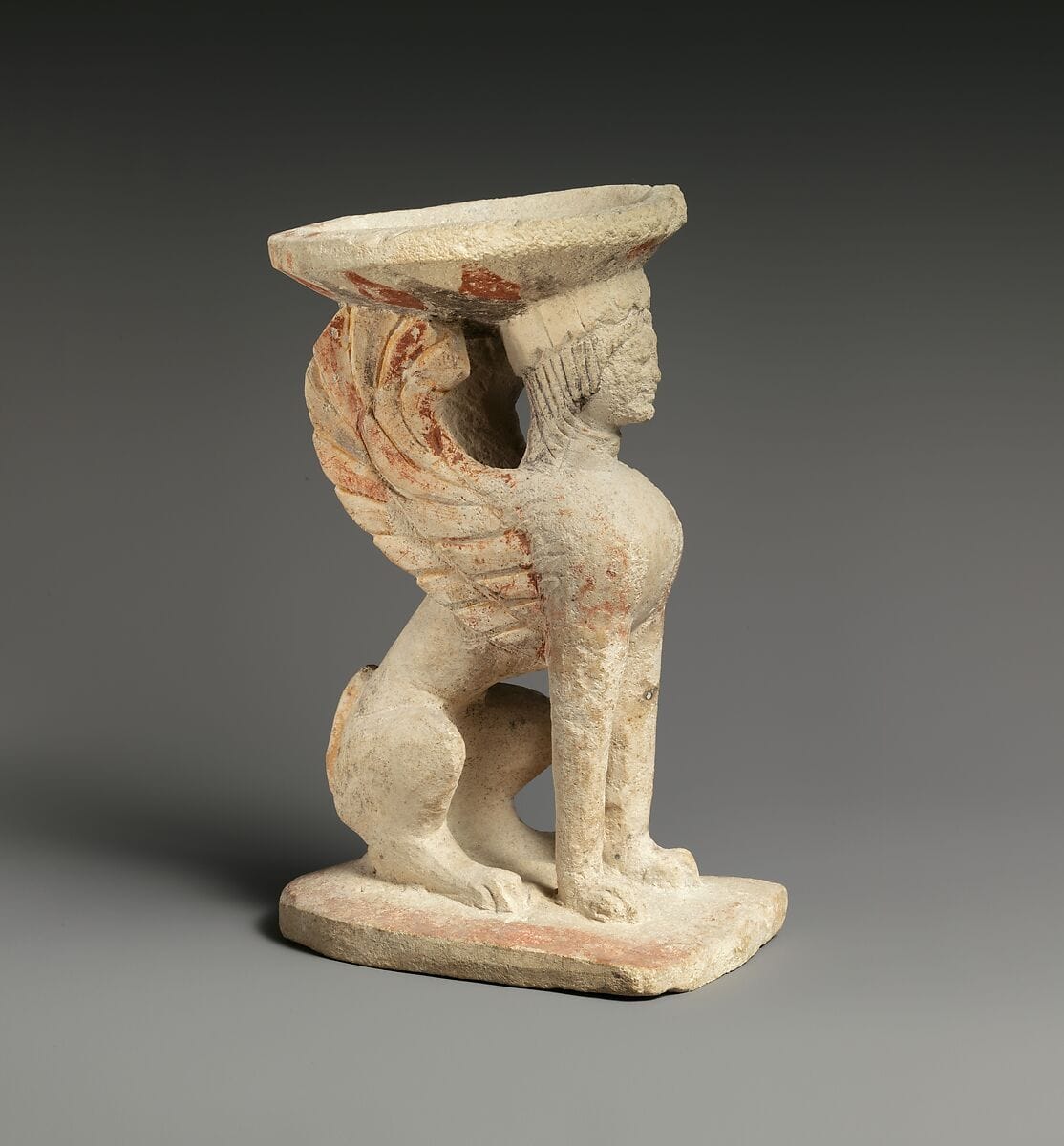
Limestone thymiaterion (incense burner)
Classical