
Early Bronze Age III
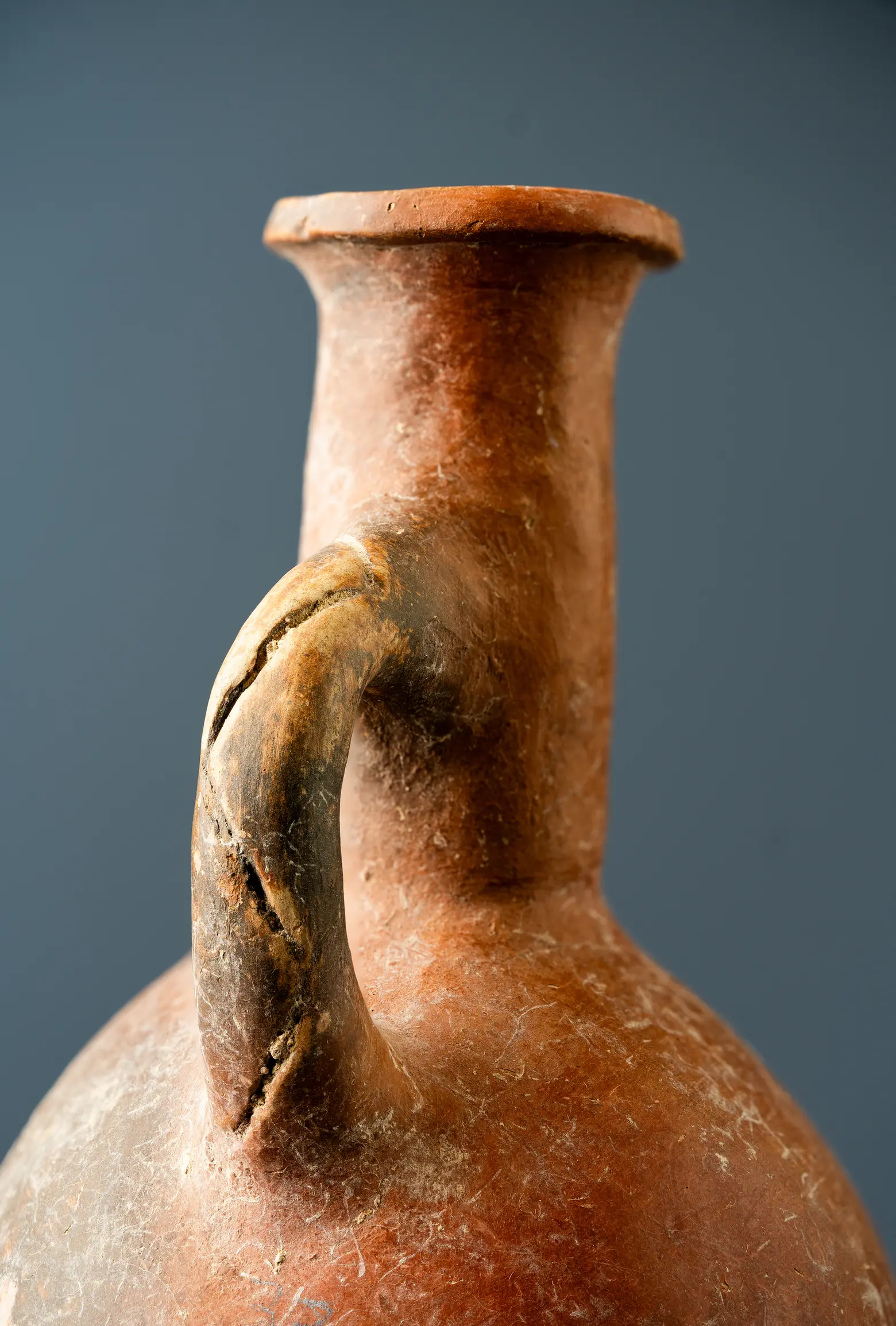
Plain Red Polished Jug
Undecorated handmade Red Polished jug with spherical body, tall neck, thickened rim and handle from mid-neck, Cyprus, c. 2100–1800 BCE.
Date
2100 - 1800 BC
Accession No.
JUG-BA-012
Collection
Alexis Drakopoulos
Provenance
- 1965–2025, The Goodman Collection (acquired between 1965 and 1969)
- 2025–present, Alexis Drakopoulos, London
Early Cypriot III to Middle Cypriot I/II, c. 2100–1800 BCE · Red Polished ware · Handmade
An undecorated jug with a spherical body on a rounded base, shown here on a modern stand. The tall, wide neck is cylindrical and flares slightly to a thickened, flat-topped rim. A heavy handle of rounded section springs from the middle of the neck and descends to the shoulder.
The orange-red slip covers the whole vessel and keeps a low burnish. A fine web of white root-marks and a thin lime film cover the surface, and a grey firing cloud darkens the shoulder beside the handle. The handle is split along its outer face by a long, irregular fissure that follows its length; small losses of slip mark the shoulder.
Commentary
Plain Red Polished jugs of this kind were made in large numbers alongside the incised and relief-decorated wares and are the ordinary liquid containers of Early and Middle Cypriot households and tombs [1]. The shape, with a spherical body, a tall neck, a heavy rim and a handle attached to the neck rather than to the rim, finds a close parallel in a plain Red Polished III jug from Lapithos Tomb 313B in Stockholm, found in a Middle Cypriot I context [3]. A Red Polished jug in the British Museum of the same Early Cypriot III to Middle Cypriot I bracket, with a lower, depressed globular body, offers a broader comparison [4].
The fully rounded base places the piece within the round-bodied production that Brown and Catling associate with Early Cypriot III and later [2]. Plain jugs changed little over time, so the date must be left broad: Early Cypriot III to Middle Cypriot I/II, roughly 2100–1800 BCE on the radiocarbon chronology [5]. The rounded base means the jug would have rested in a hollow in the floor, in a stand, or against other vessels.
The fissure along the handle is the one point needing examination. It could be a crack that opened in firing, a crease left where the potter folded or joined the clay of a strap handle, or an old break that has been mended. The irregular edges and the dark staining inside the split suggest an old feature, perhaps original to the making, but only close inspection can settle it.
References
- 1.Stewart, J.R. (1962) The Early Cypriote Bronze Age. The Swedish Cyprus Expedition IV.1A. Lund: Swedish Cyprus Expedition.
- 2.Brown, A.C. and Catling, H.W. (1975) Ancient Cyprus. Oxford: Ashmolean Museum, p. 27.
- 3.Medelhavsmuseet, Stockholm, L.313B:069: plain Red Polished III jug from Lapithos, Tomb 313B, Middle Cypriot I.
- 4.British Museum, London, 1978,0719.2: Red Polished jug with depressed globular body, Early Cypriot III to Middle Cypriot I.
- 5.Manning, S.W. (2013) 'Appendix: a new radiocarbon chronology for prehistoric and protohistoric Cyprus, ca. 11,000–1050 Cal BC', in Knapp, A.B., The Archaeology of Cyprus: From Earliest Prehistory through the Bronze Age. Cambridge: Cambridge University Press, pp. 485–533.
More from the Catalogue
Browse related objects
Bichrome Oinochoe
Archaic I
Free-field bichrome jug with image of an Ibis bird and reeds
Archaic
Squat bichrome jug in free-field style with image of bird picking a lotus flower
Archaic
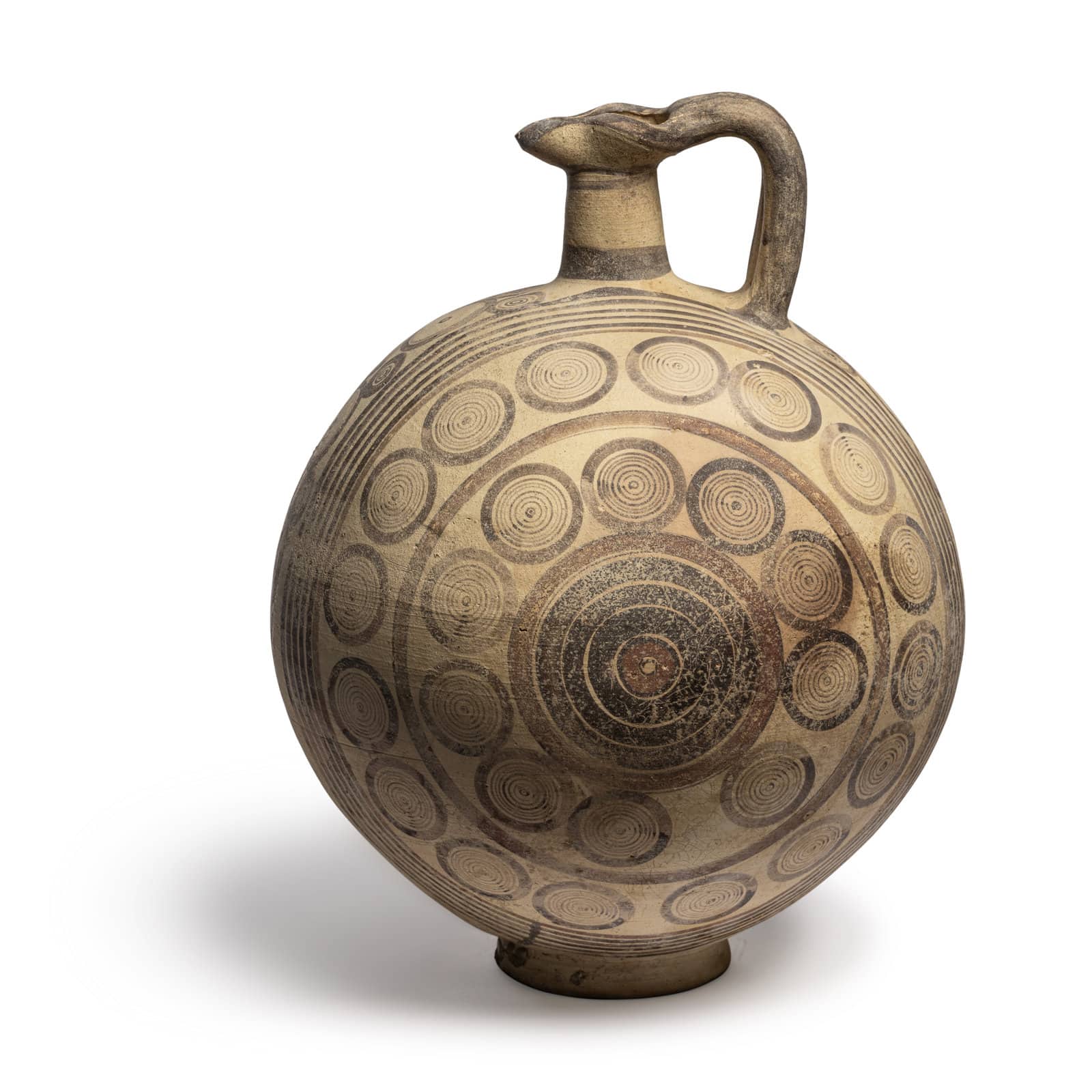
A Cypriot Bichrome-Ware Oinochoe Jug
Archaic I
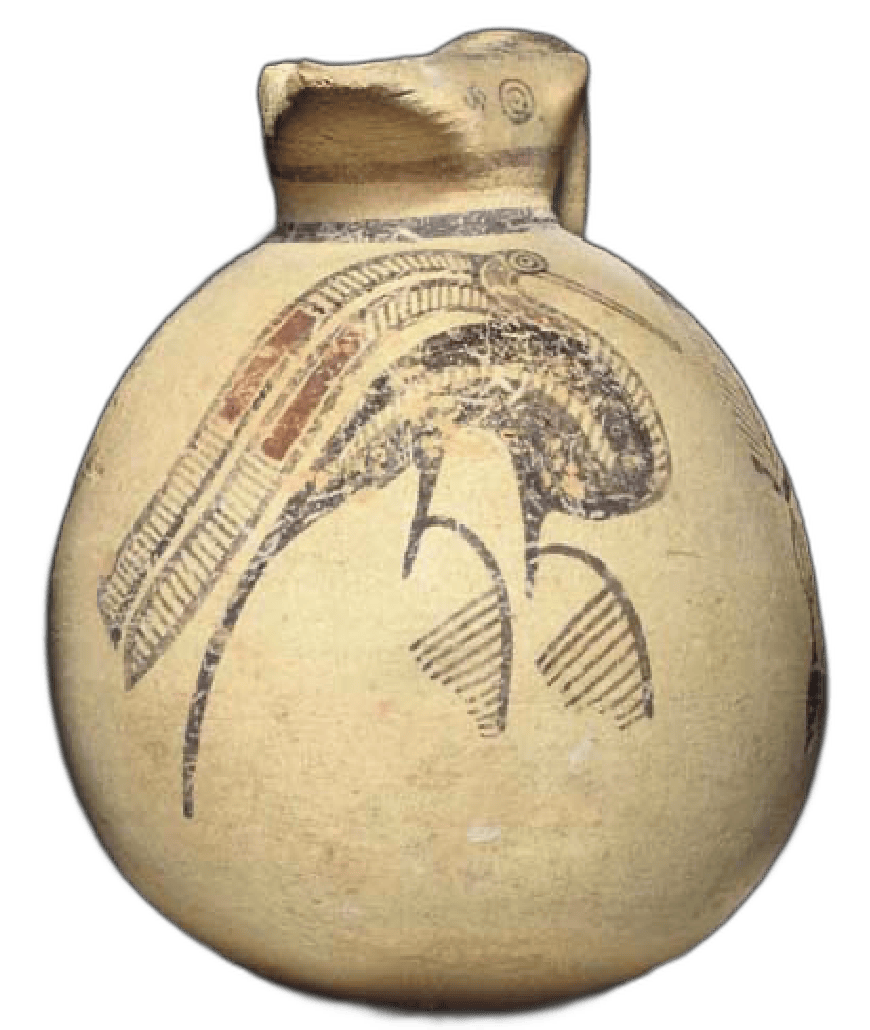
Oinochoe with Free Field Bird
Archaic I
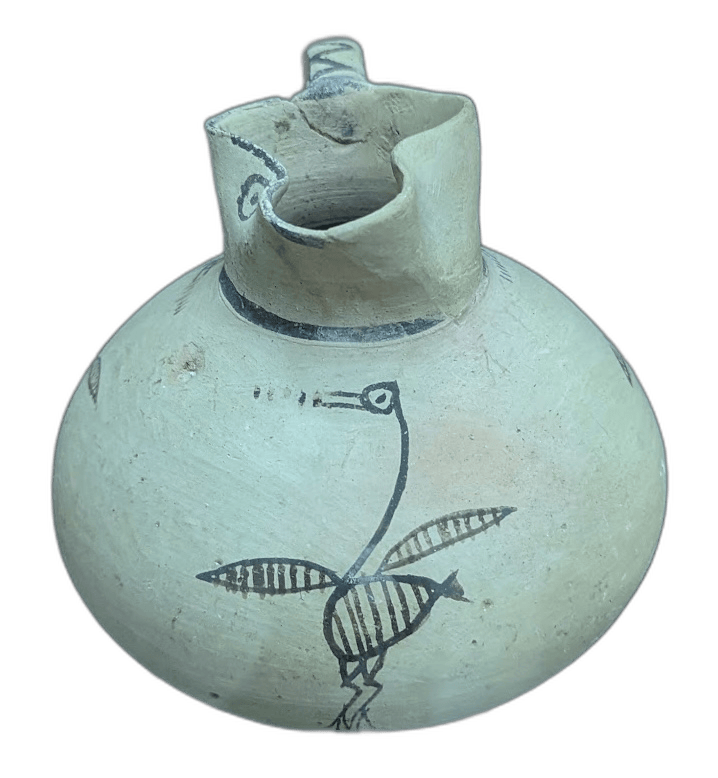
Small Oinochoe with Free Field Bird
Archaic I
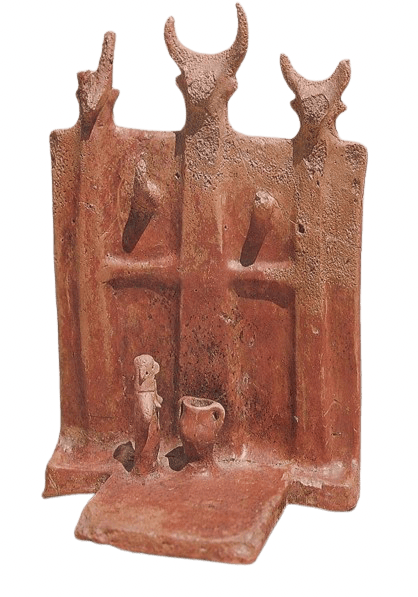
Red Polished Shrine
Middle Bronze Age I
Black-On-Red Geometric Jug Sherd
Geometric II
Bichrome Jug
Geometric
Bichrome Juglet
Geometric
Bichrome Oinochoe
Geometric
Juglet
Archaic II
Oinochoe
Geometric III
Jug
Archaic I
Juglet
Archaic I
Jug
Geometric I
Terracotta jug
Early Bronze Age I
Juglet
Geometric I