
Early Bronze Age III
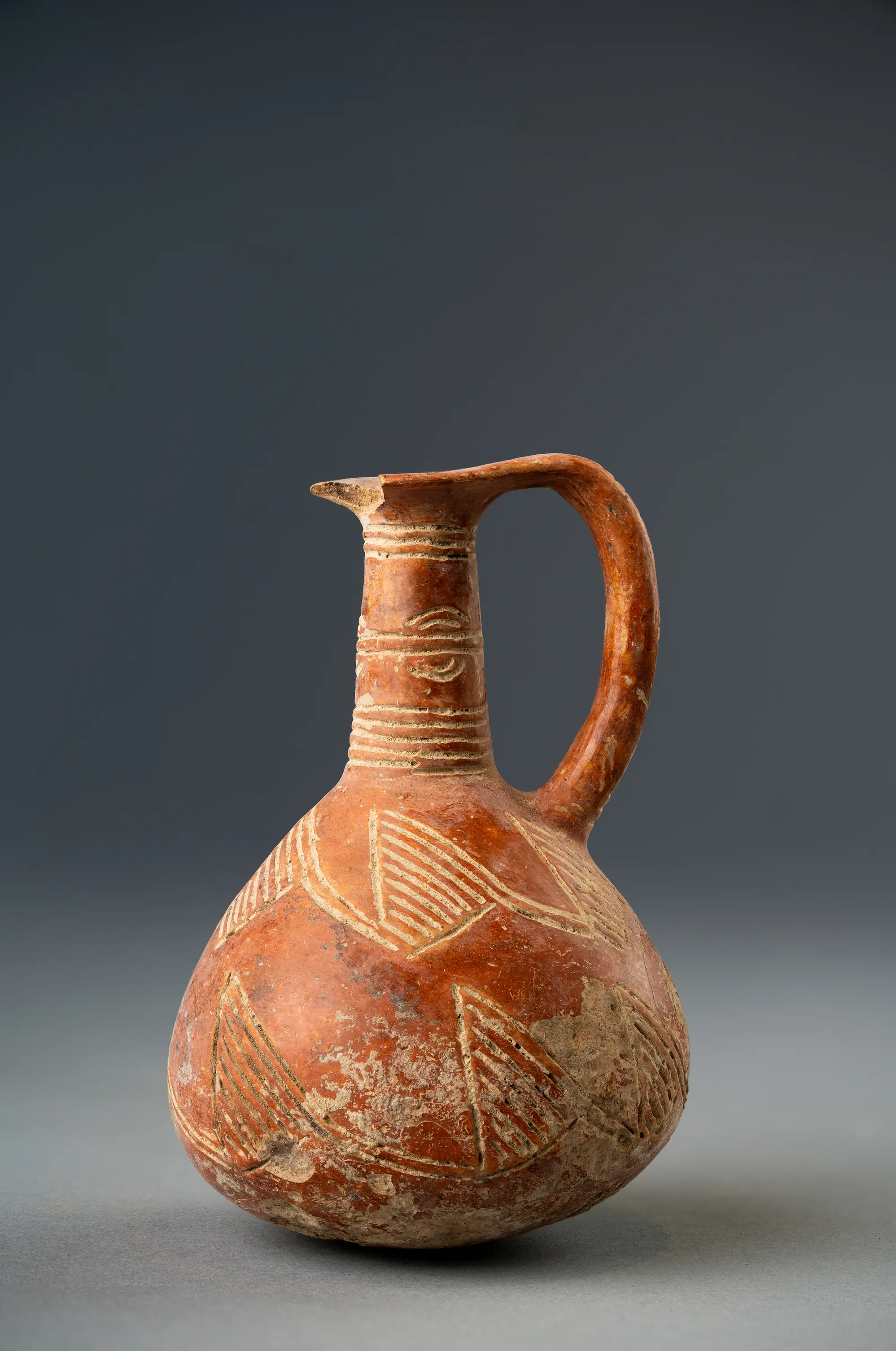
Red Polished Juglet with Hatched Triangles
Small handmade Red Polished gourd-shaped juglet with a pinched beak mouth, incised with two registers of hatched triangles, Cyprus, c. 2100–1800 BCE.
Date
2100 - 1800 BC
Accession No.
JUG-BA-009
Collection
Alexis Drakopoulos
Provenance
- 1965–2025, The Goodman Collection (acquired between 1965 and 1969)
- 2025–present, Alexis Drakopoulos, London
Early Cypriot III to Middle Cypriot I/II, c. 2100–1800 BCE · Red Polished ware · Handmade
A small juglet with a pear-shaped body swelling low to a rounded base, a narrow cylindrical neck and a mouth drawn out at the front into a short, pinched beak. A strap handle leaves the back of the rim, arches level with it and drops to the shoulder. The orange-red slip was burnished to a soft sheen and survives best on the neck and upper body.
The incised decoration is filled with white. The body carries two registers of large hatched triangles, the upper pendant from the shoulder and the lower standing upright, each triangle outlined by incised lines. The neck is ringed with groups of horizontal lines, and between them sit two small lens-shaped marks, one above the other. The lower body has lost much of its slip and is patched with lime encrustation; the tip of the beak is worn.
Commentary
The piece belongs to the Red Polished family of handmade, slipped and burnished pottery that dominated Cyprus in the Early and earlier Middle Bronze Age. Its pear-shaped profile corresponds to the gourd juglet of Stewart's typology [1], the class to which the British Museum assigns a Red Polished III juglet from Ayia Paraskevi decorated with hatched lozenges [3]. The small pinched beak links it to the oblique-mouthed juglets found in the north-coast cemeteries, such as a juglet from Vounous Tomb 65 in the Louvre with incised line groups and lozenges [5]. Hatched triangles set in opposed registers, the motif that organises this piece, also appear on a Middle Cypriot jug in the Michael C. Carlos Museum [4].
The round base places the juglet after the flat-based vessels of Early Cypriot I and within the fully round-bodied production that Brown and Catling identify with Early Cypriot III [2]. The combination of gourd body, beaked mouth and a hatched-triangle scheme in place of the heavy concentric circles favoured in the north-west suggests a date in Early Cypriot III to Middle Cypriot I/II. On the radiocarbon chronology this corresponds to roughly 2100–1800 BCE [6]. Without a find context the bracket cannot be narrowed: Red Polished decoration changed slowly, and the same grammar of hatched triangles and line groups persisted across several generations of potters.
Small juglets of this size held modest quantities of liquid, and the pinched mouth gives a controlled pour. Whole examples come overwhelmingly from chamber tombs, where they were placed with the dead alongside larger jugs and bowls. We know of no residue analysis specific to the class, so the contents remain unknown.
The two lens-shaped marks on the neck are the least usual feature. They sit between the ring bands where a potter would more often place a zigzag or a short hatched band. Reading them as eyes, which would turn the neck into a face, is tempting but unsupported: we know of no close parallel among published juglets of this type, and they may simply be a decorative filler.
References
- 1.Stewart, J.R. (1962) The Early Cypriote Bronze Age. The Swedish Cyprus Expedition IV.1A. Lund: Swedish Cyprus Expedition.
- 2.Brown, A.C. and Catling, H.W. (1975) Ancient Cyprus. Oxford: Ashmolean Museum, p. 27.
- 3.British Museum, London, 1888,0927.25: Red Polished III gourd juglet with incised hatched lozenges, from Ayia Paraskevi.
- 4.Michael C. Carlos Museum, Emory University, Atlanta, 2004.054.013: Middle Cypriot jug with incised triangles.
- 5.Musée du Louvre, Paris, AO 17534: Red Polished juglet with oblique mouth and incised decoration, from Vounous, Tomb 65.
- 6.Manning, S.W. (2013) 'Appendix: a new radiocarbon chronology for prehistoric and protohistoric Cyprus, ca. 11,000–1050 Cal BC', in Knapp, A.B., The Archaeology of Cyprus: From Earliest Prehistory through the Bronze Age. Cambridge: Cambridge University Press, pp. 485–533.
More from the Catalogue
Browse related objects
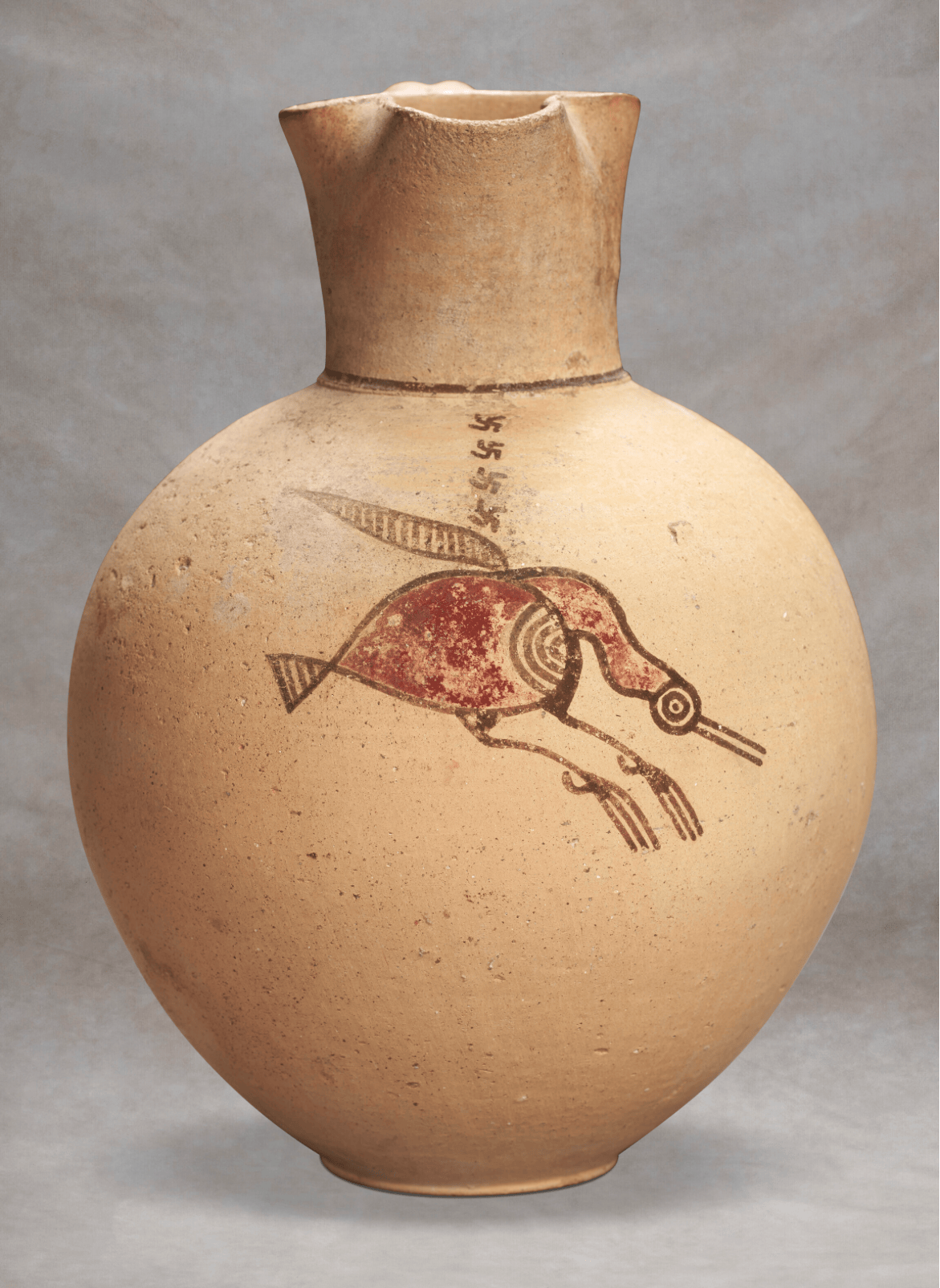
Bichrome Oinochoe
Archaic I
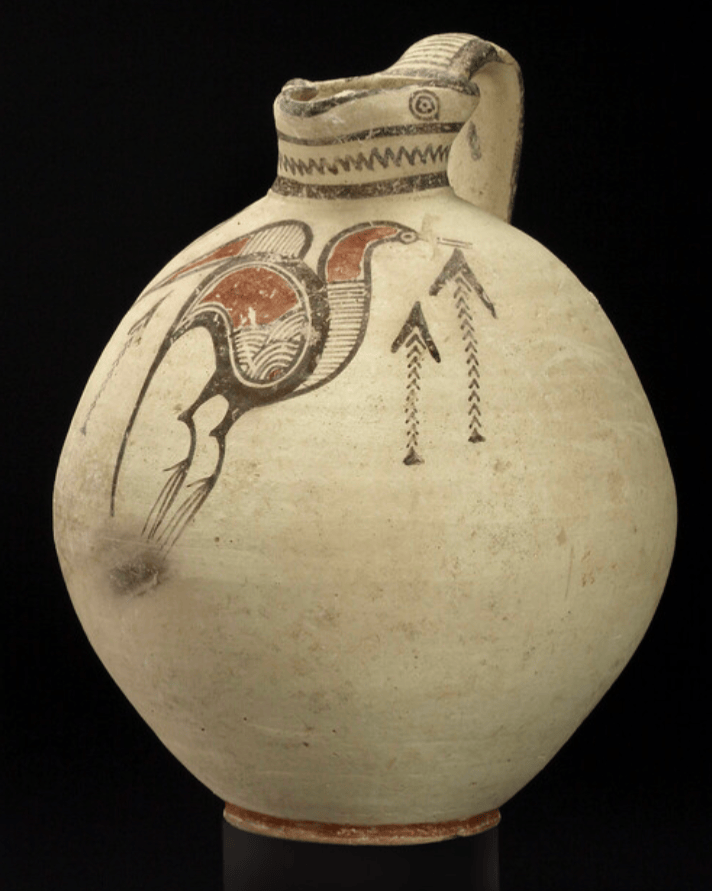
Free-field bichrome jug with image of an Ibis bird and reeds
Archaic
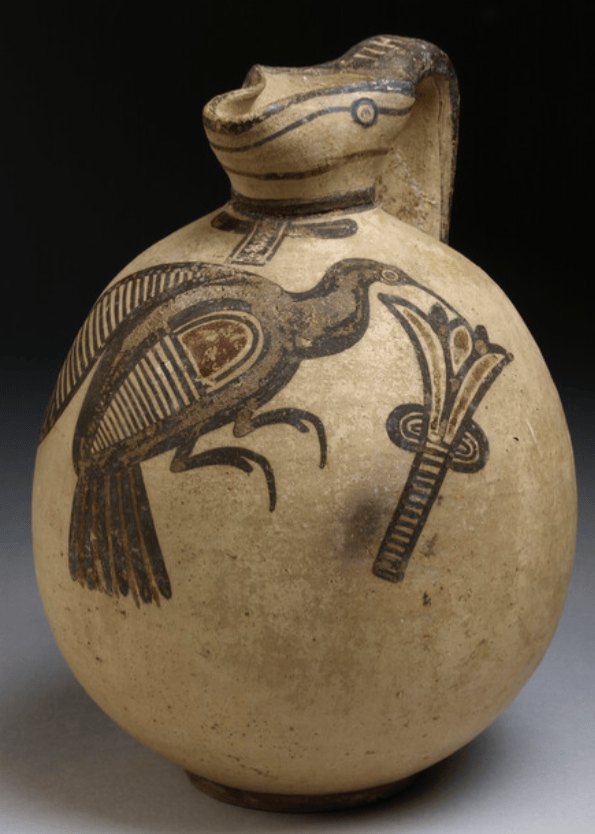
Squat bichrome jug in free-field style with image of bird picking a lotus flower
Archaic
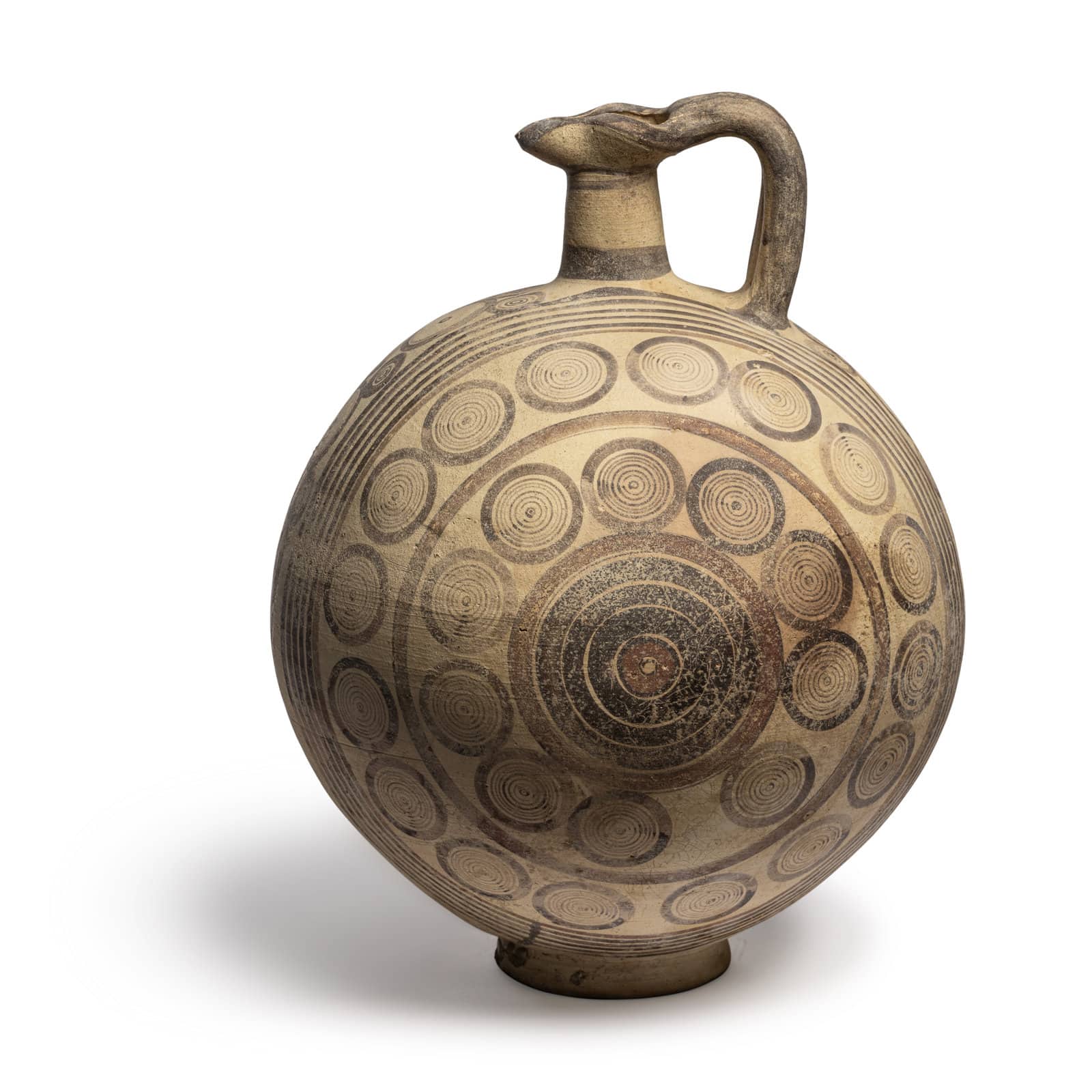
A Cypriot Bichrome-Ware Oinochoe Jug
Archaic I
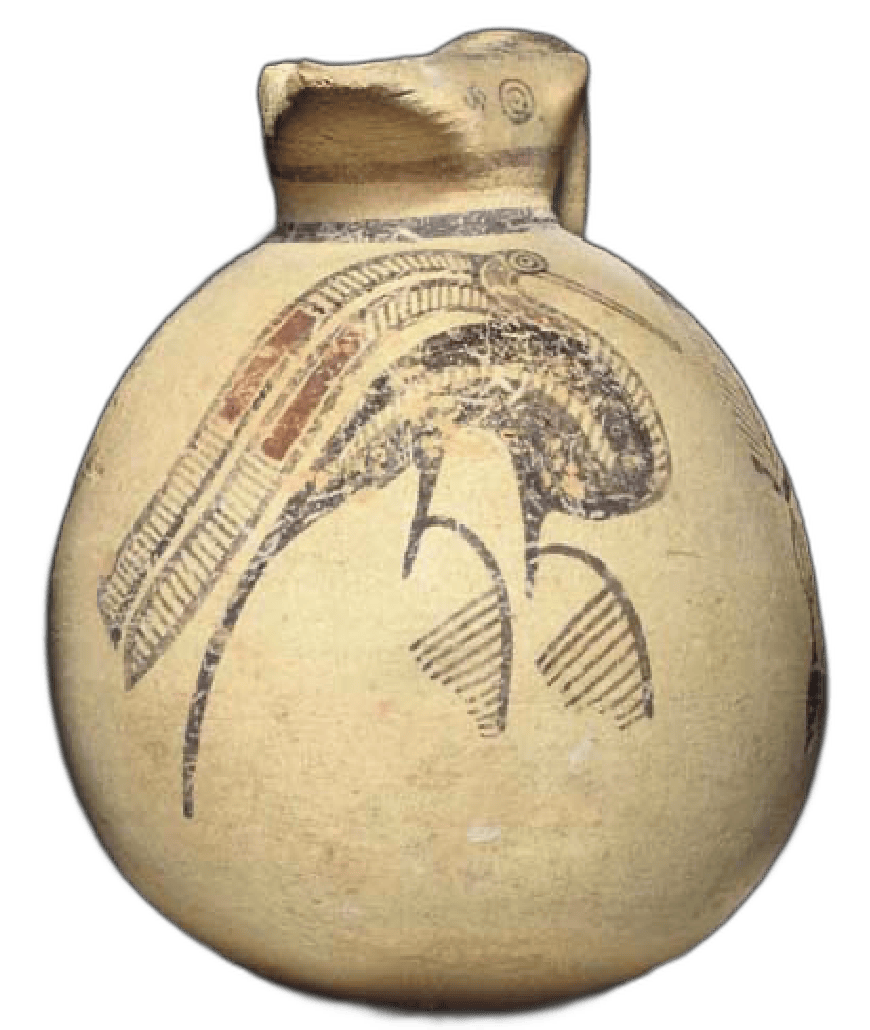
Oinochoe with Free Field Bird
Archaic I
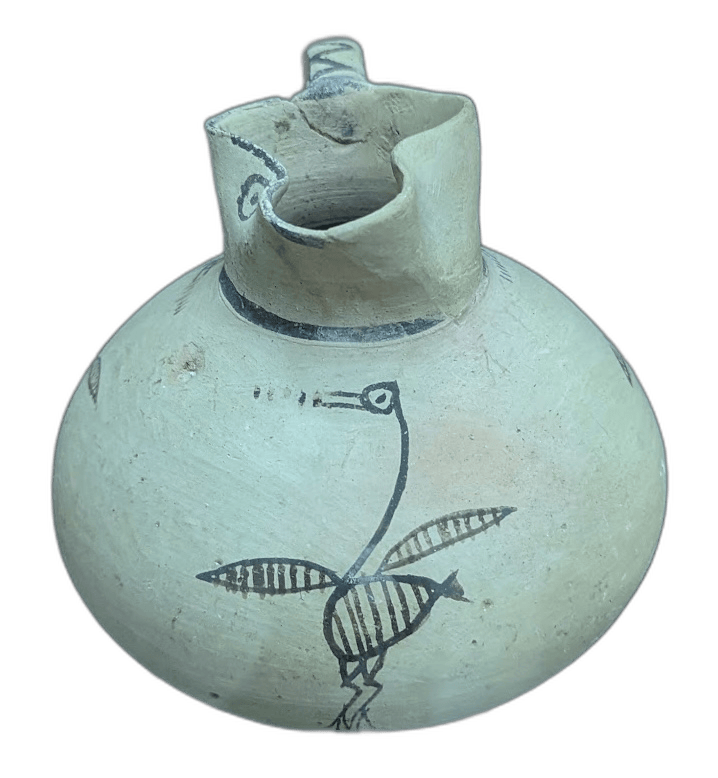
Small Oinochoe with Free Field Bird
Archaic I
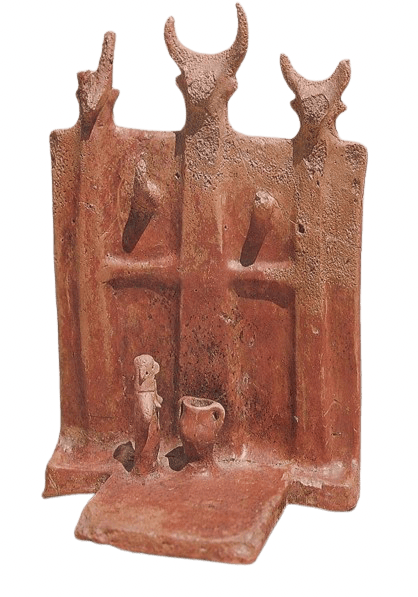
Red Polished Shrine
Middle Bronze Age I
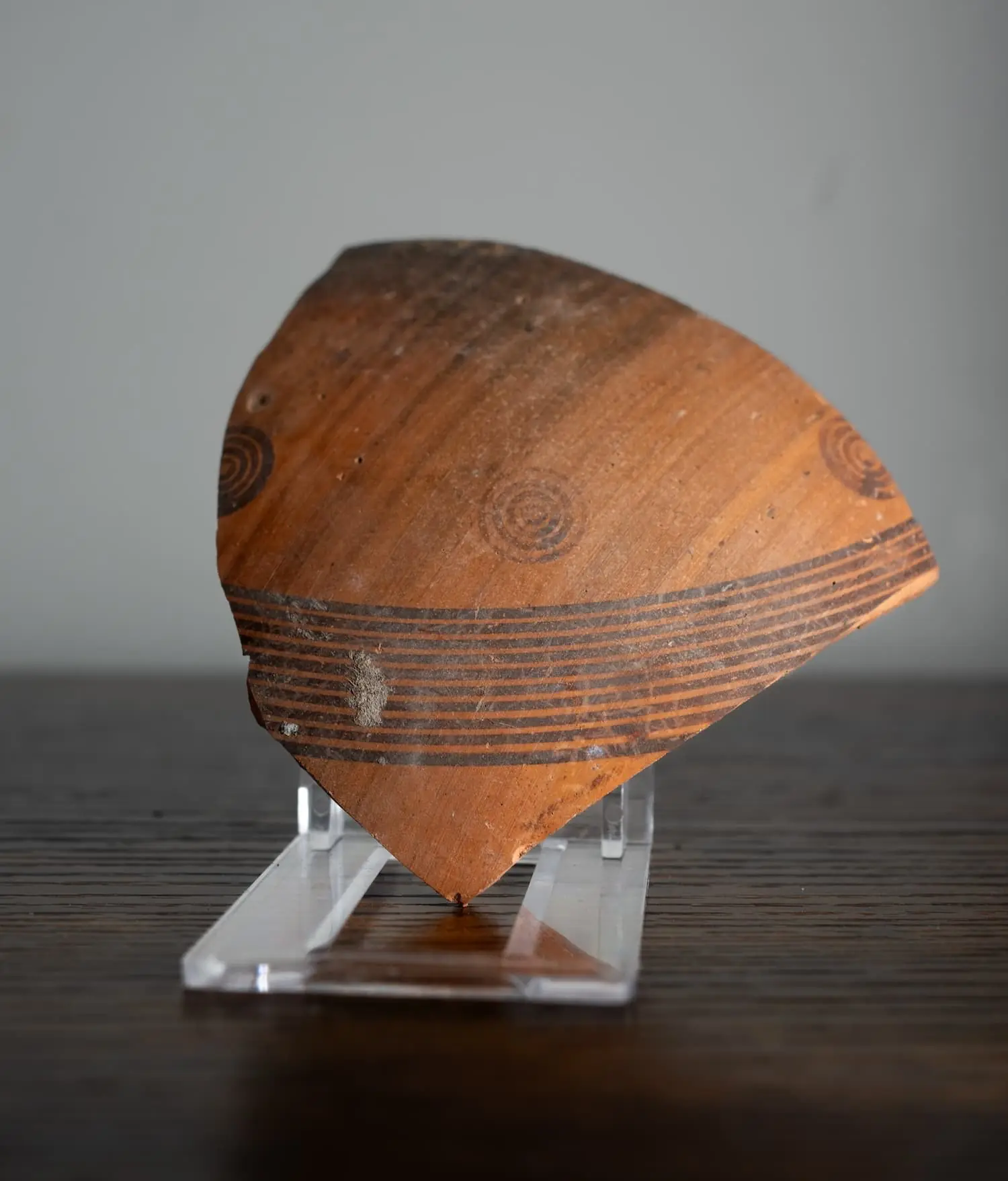
Black-On-Red Geometric Jug Sherd
Geometric II
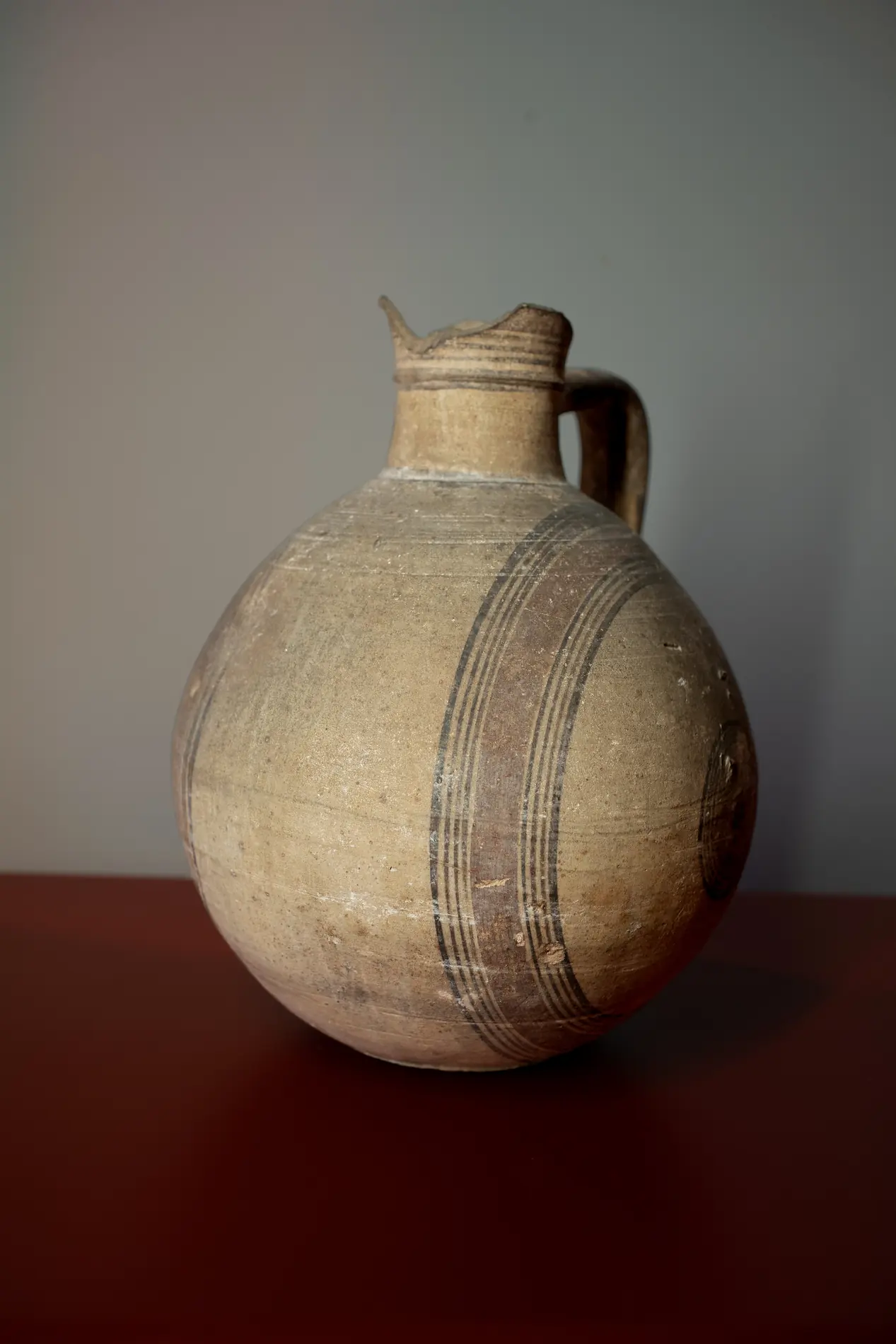
Bichrome Jug
Geometric
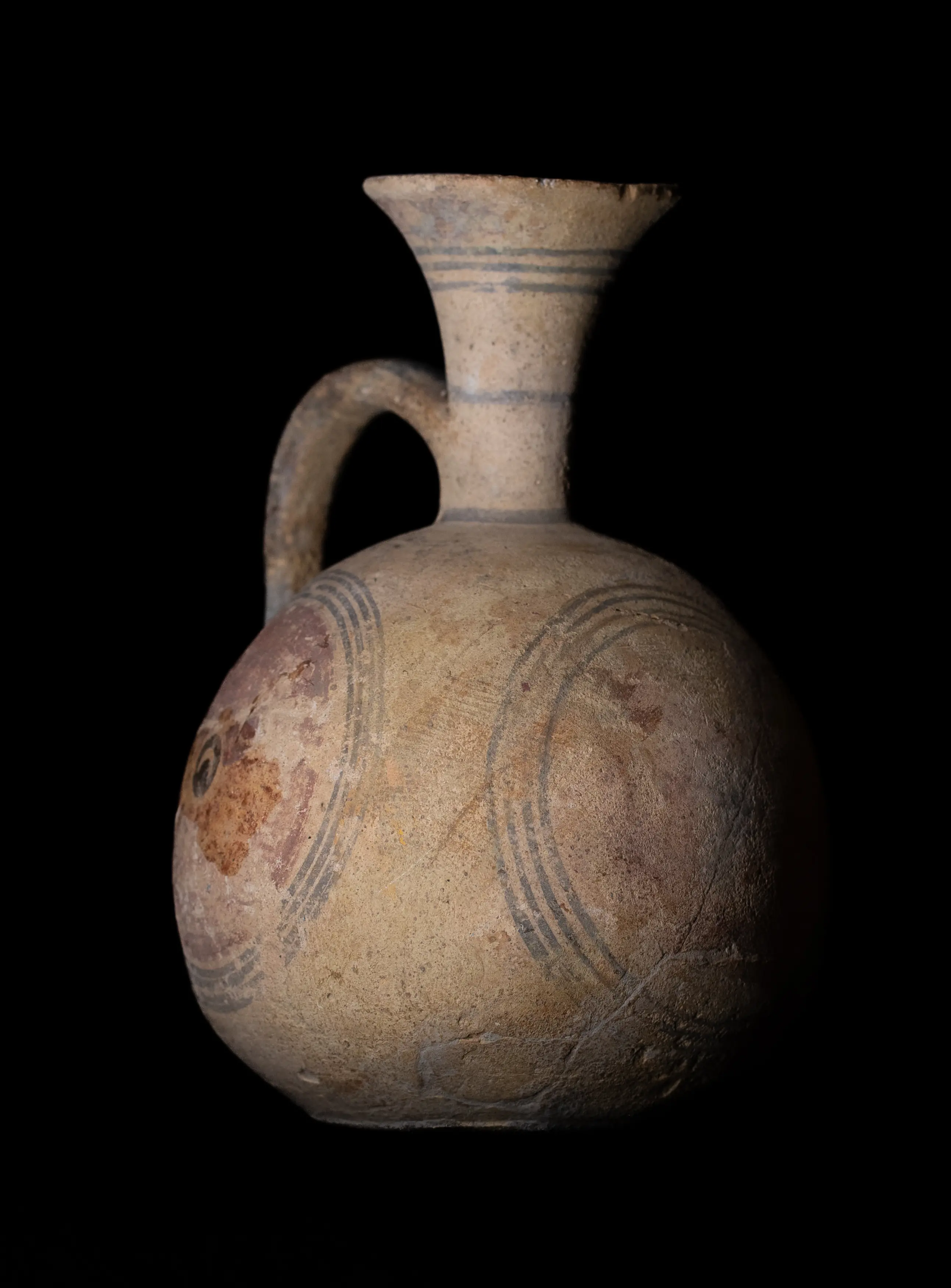
Bichrome Juglet
Geometric
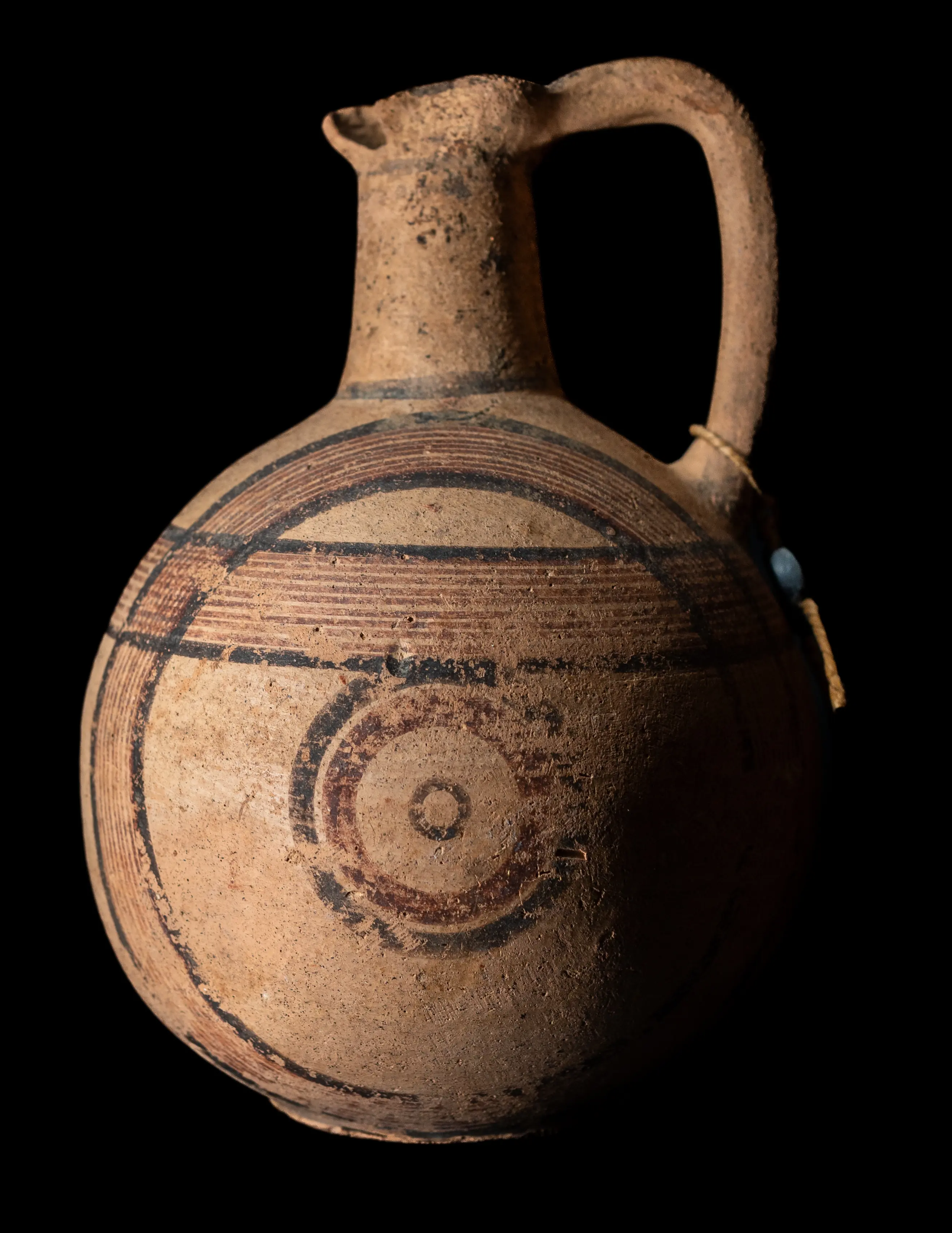
Bichrome Oinochoe
Geometric
Juglet
Archaic II
Oinochoe
Geometric III
Jug
Archaic I
Juglet
Archaic I
Jug
Geometric I
Terracotta jug
Early Bronze Age I
Juglet
Geometric I