
Archaic I
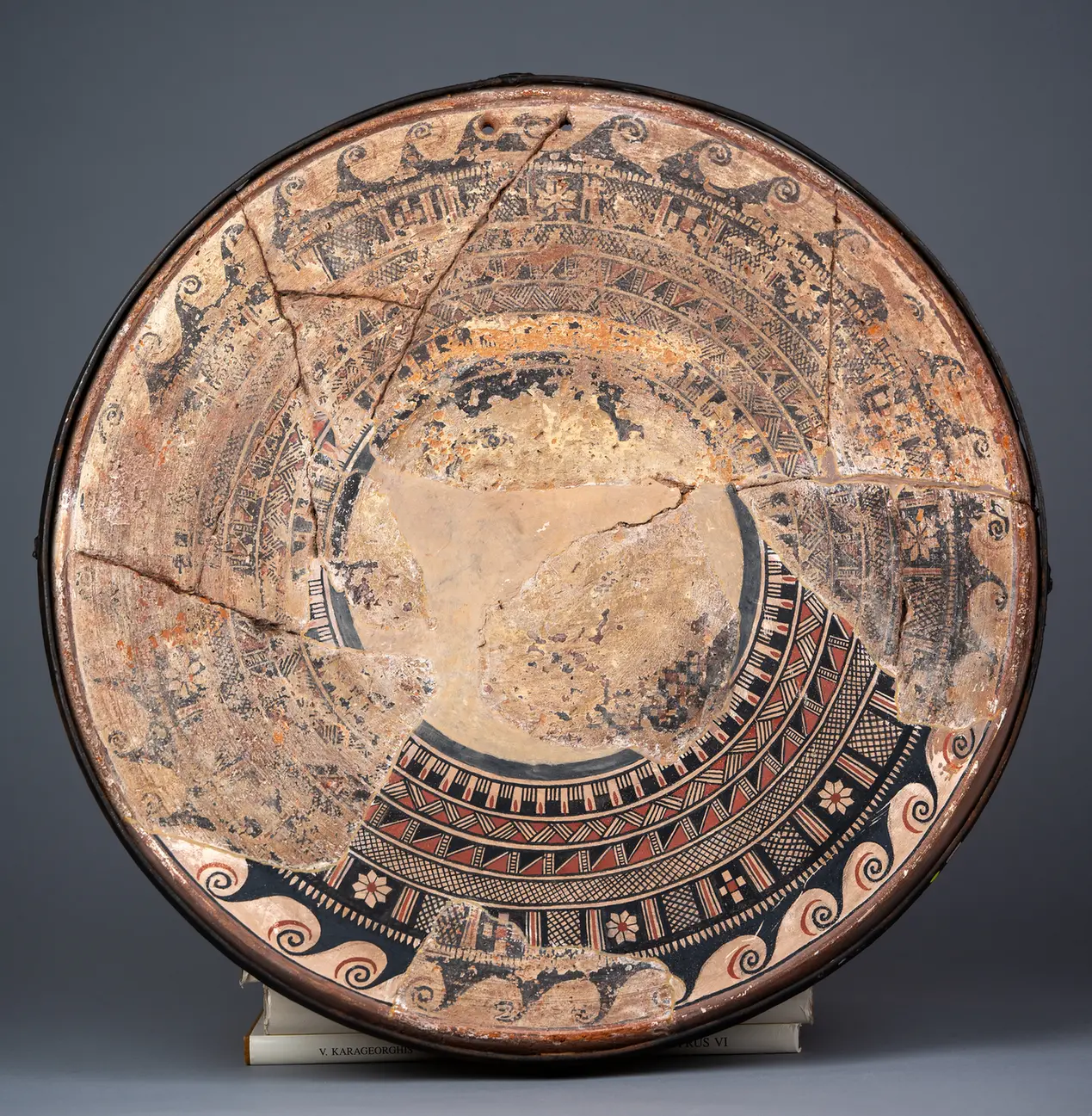
Large Bichrome Plate from Salamis with a Wave Band and Rosette Metopes
A 53 cm Bichrome plate of the Salamis workshops, painted with a wave band, rosette metopes and zoned ornament around a lost figured tondo, 7th to early 6th century BCE.
Date
700 - 550 BC
Accession No.
DSH-AR-001
Collection
Alexis Drakopoulos
Provenance
- 1960s–2009, James Alfred Brew collection, London
- 29 April 2009, Bonhams, London, lot 339
- Private collection
- Galerie Cahn, Basel
- 2025, TimeLine Auctions (offered 4 March 2025, lot 39)
- 2025–present, Alexis Drakopoulos, London
Cypro-Archaic I–II, c. 700–550 BCE · Bichrome ware, Salamis production, eastern Cyprus · D. 53 cm
A very large, shallow plate painted in black and red on a pale ground in concentric zones. At the rim runs a wave band of breaking crests, each curl set with a red dot. Inside it is a frieze of metopes in which eight-petalled rosettes alternate with chequer and cross-hatched panels, then narrower bands of dog-tooth, lattice and hatched triangles. A broad black ring frames the central tondo, which once held a figured scene; a single painted eye survives from it. The plate is reassembled and held in a modern iron rim band, and two suspension holes are pierced near the rim.
Commentary
The plate belongs to the Bichrome ware of the Salamis workshops on the east coast. Both sales catalogued it as Cypriot Bichrome ware, dated to the 7th–6th century BCE [1] and to c. 750–600 BCE [2]. Its condition is straightforward. It has been reassembled from large fragments and fitted with an iron band at the rim. The 2025 description records that it is repaired and partly restored with a fresh painted extension of the existing design [2]; this is the bright lower sector of the main view, and the rest of the ornament is ancient. The tondo is largely filled with plaster.
The lost tondo explains the scheme of the whole plate. Every zone is arranged to frame a central image, and the surviving eye shows that the image was figured. The 2009 catalogue recorded traces of a face in the tondo, with an eye, ear and hair [1], which agrees with what remains today. Gjerstad observed that the vases of eastern Cyprus relied on figured decoration while the west favoured geometric ornament, especially concentric circles, and Reyes found that the distinction still holds [6]. A painted head or figure set in a field of dense ornament fits the eastern tradition to which Salamis belongs.
The ornament is at home in the Salamis necropolis. In Cellarka Tomb 105, a built tomb of a wealthy Salaminian, Karageorghis found large and medium amphorae painted in Bichrome IV, dated 700–600 BCE, together with a Bichrome IV jar and lid richly decorated with rosettes and linear motifs [3]. The rosette had a long history in Salaminian Bichrome, going back to an eleventh-century jug from the town whose body carries bichrome rosettes within concentric circles [4]. Gjerstad places the guilloche and rosette pattern among the ornaments that enter Cypriot pottery in Cypro-Archaic I, and notes that rosettes were often set in a metope decoration [5]. The same device of rosettes in rectangular panels appears on a Bichrome V footed bowl in the Pierides collection [9].
Bichrome plates are well known from tomb groups, including a Bichrome IV plate from Stylli near Salamis [7] and a Bichrome V plate from Amathus [8]. Those examples measure 9.5 and 15.7 cm. At 53 cm this plate is a display piece on a far larger scale, and the two holes near the rim show that it was meant to hang. The crowded zoning, the dog-tooth and the hatched triangles belong to the later stages of Bichrome IV and the transition to Bichrome V, which places the plate in the 7th or early 6th century BCE.
The plate belonged to the artist and teacher James Alfred Brew, who taught at British services schools in Cyprus and Hong Kong between 1960 and 1970 and bought antiquities on the island in those years. In 2004 he recalled part of his collection from a long loan to the Ashmolean Museum to keep at home, and after his death in 2008 the pieces in his house were sold at Bonhams in 2009 [1].
References
- 1.Bonhams, London, Antiquities, 29 April 2009, lot 339.
- 2.TimeLine Auctions, Antiquities, 4 March 2025, lot 39.
- 3.Karageorghis, V. (1969) Salamis: Recent Discoveries in Cyprus. New York: McGraw-Hill, pp. 125–127, pls. 64–68 (Cellarka Tomb 105).
- 4.Karageorghis, V. (1969) Salamis: Recent Discoveries in Cyprus. New York: McGraw-Hill, colour pl. I (Bichrome I jug with rosettes, Salamis Tomb I, 144).
- 5.Gjerstad, E. (1948) The Swedish Cyprus Expedition, Vol. IV, Part 2: The Cypro-Geometric, Cypro-Archaic and Cypro-Classical Periods. Stockholm: The Swedish Cyprus Expedition, chapter on ceramic influences from the East (guilloche and rosette metopes in Cypro-Archaic I).
- 6.Reyes, A. T. (1994) Archaic Cyprus: A Study of the Textual and Archaeological Evidence. Oxford: Clarendon Press, p. 107.
- 7.Medelhavsmuseet, Stockholm, St. 017:032: Bichrome IV plate from Stylli, Tomb 17, Cypro-Archaic I, D. 9.5 cm.
- 8.Medelhavsmuseet, Stockholm, A. 002:037: Bichrome V plate from Amathus, Tomb 2, D. 15.7 cm.
- 9.Karageorghis, V. (1985) Ancient Cypriote Art in the Pierides Foundation Museum. Larnaca: Pierides Foundation, cat. no. 170.
More from the Catalogue
Browse related objects
Flanged-base Tray
Chalcolithic
Terracotta plate
Geometric I
Basalt mortar or plate
Late Bronze Age II
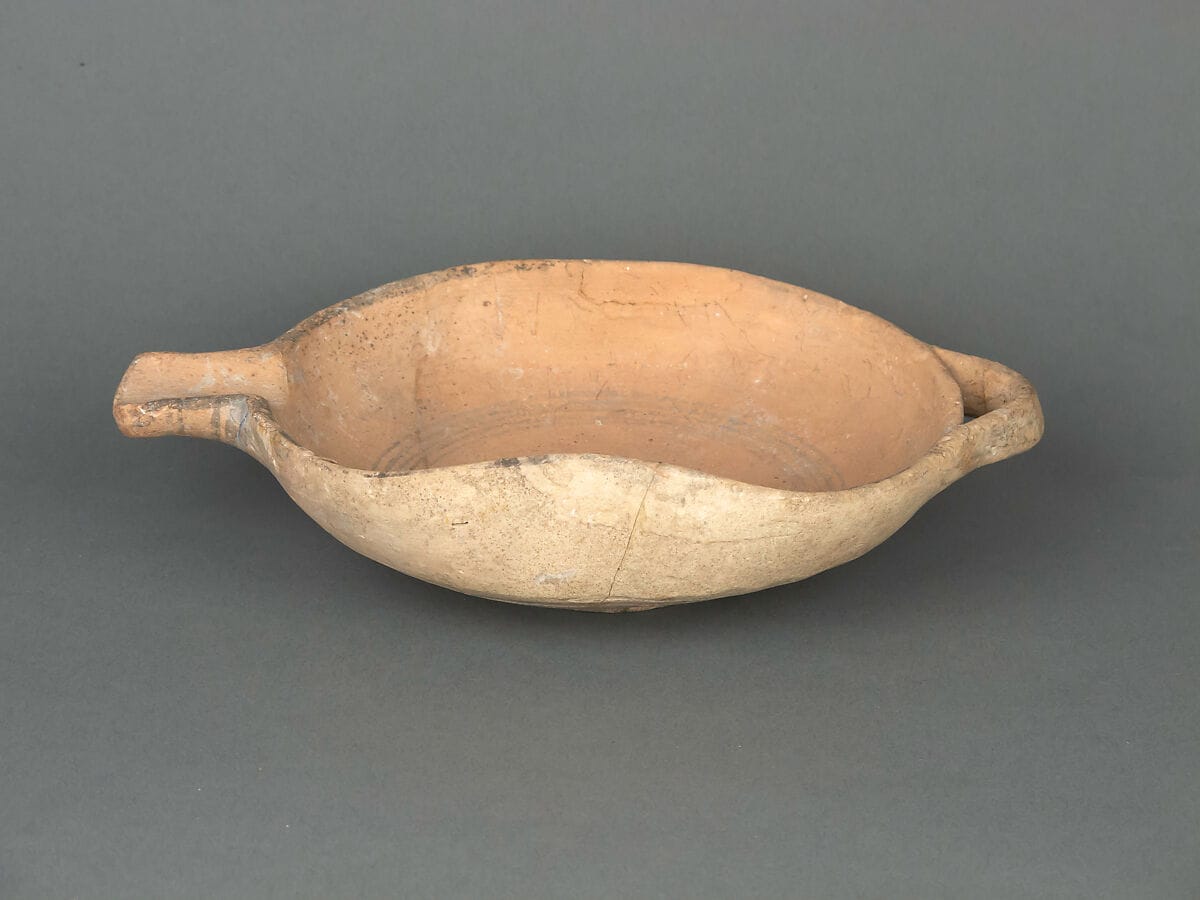
Plate
Geometric I
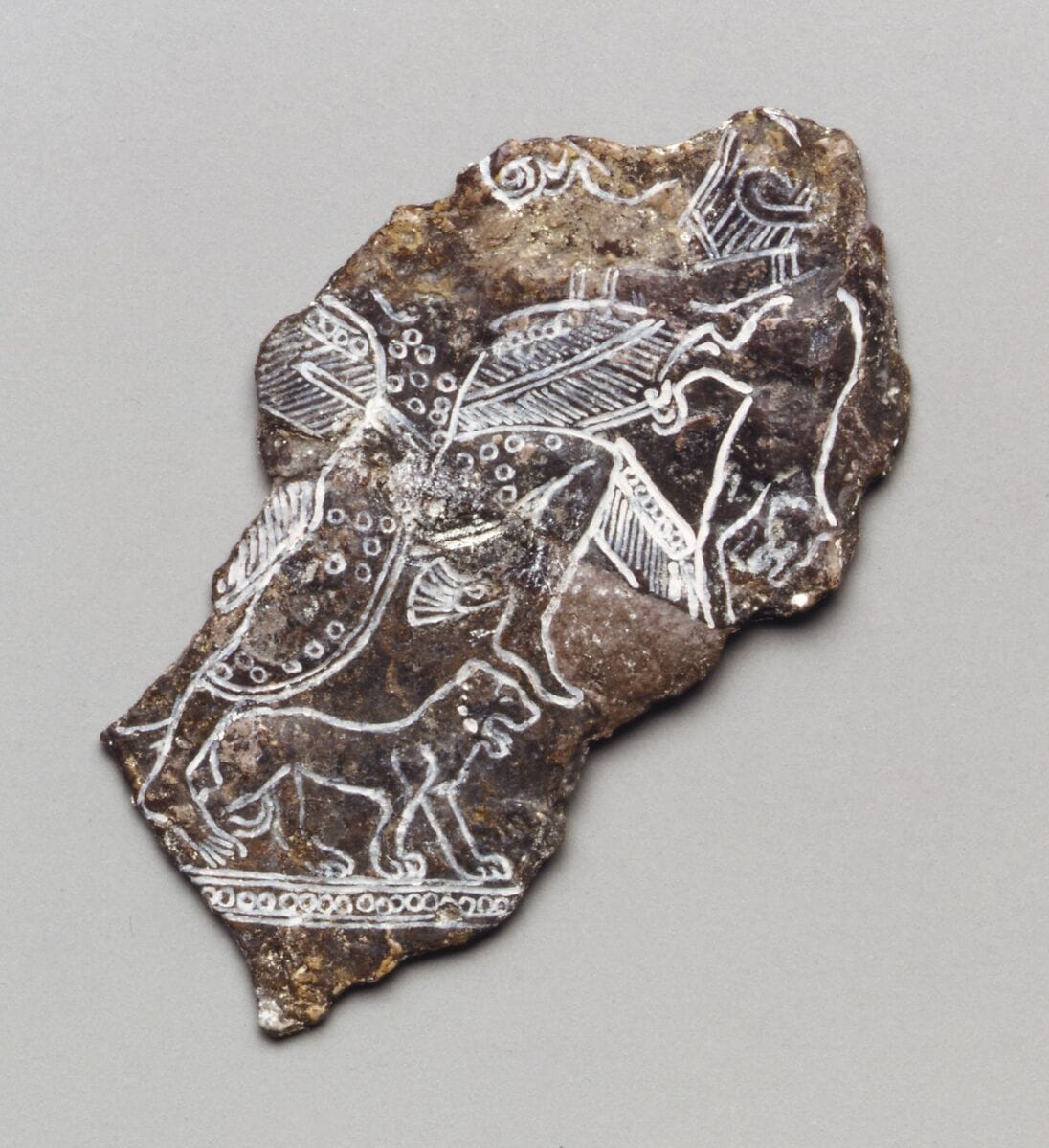
Fragment of a silver bowl
Archaic I
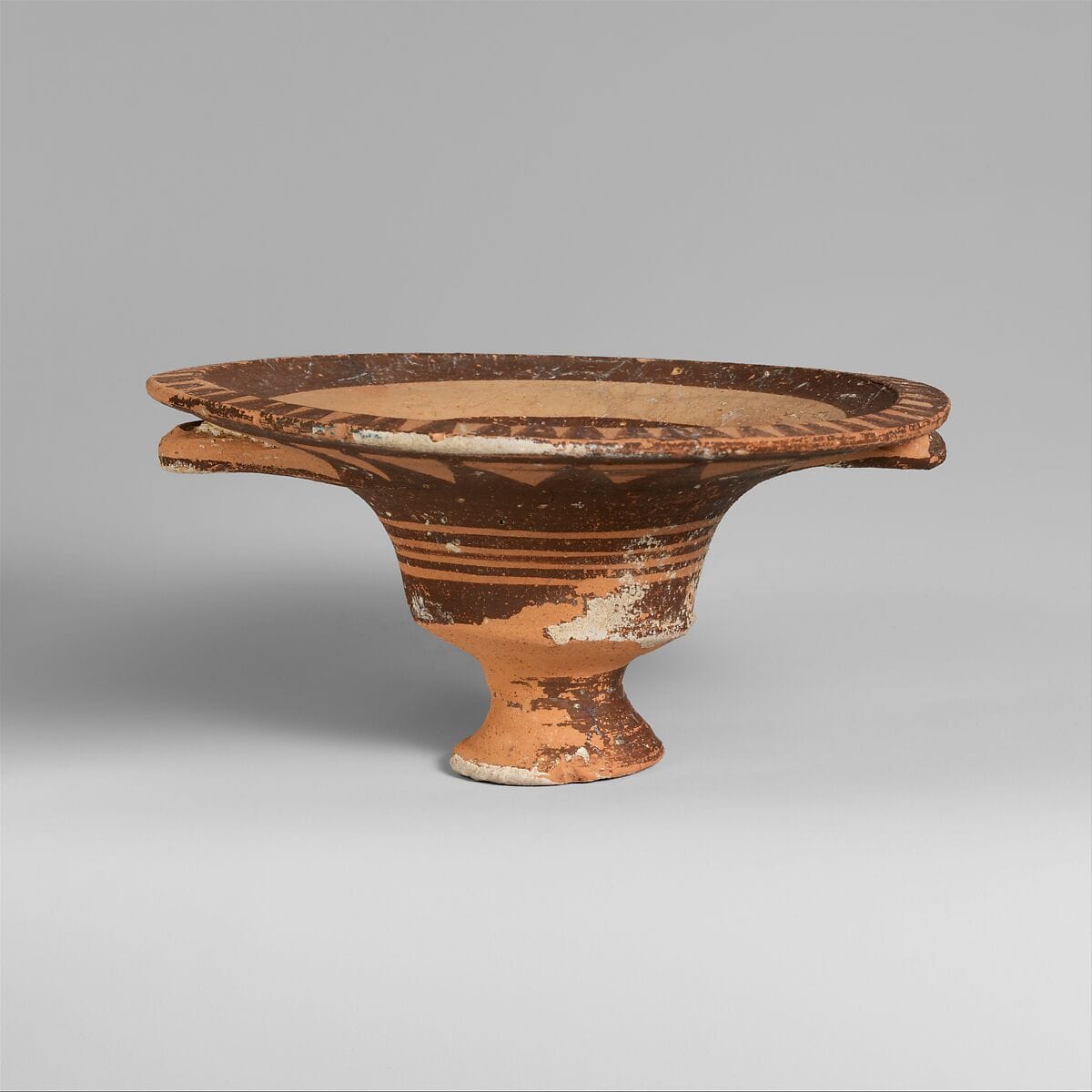
Terracotta stemmed dish with two handles
Geometric I
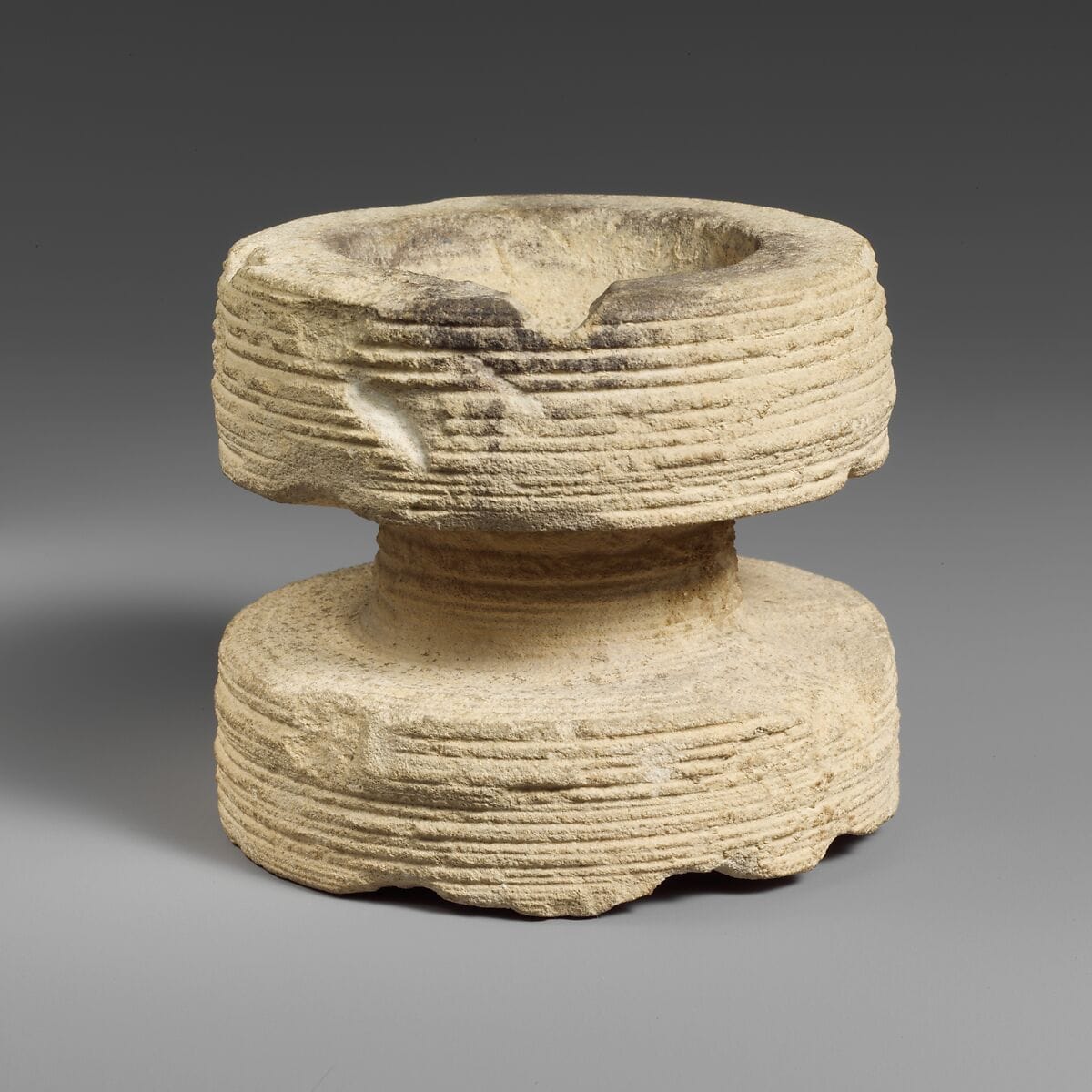
Circular limestone incense burner
Bronze Age
Phiale
Classical
Plate
Archaic I
Vesicular basalt mortar or plate
Late Bronze Age II
Plate
Archaic I
Plate
Geometric I
Terracotta plate with horned handles
Geometric II
Gabbro mortar or plate
Late Bronze Age II
Andesite mortar or plate
Late Bronze Age II
Plate
Geometric I
Plate
Archaic I
Lid of a bowl with knob
Archaic