
Archaic I
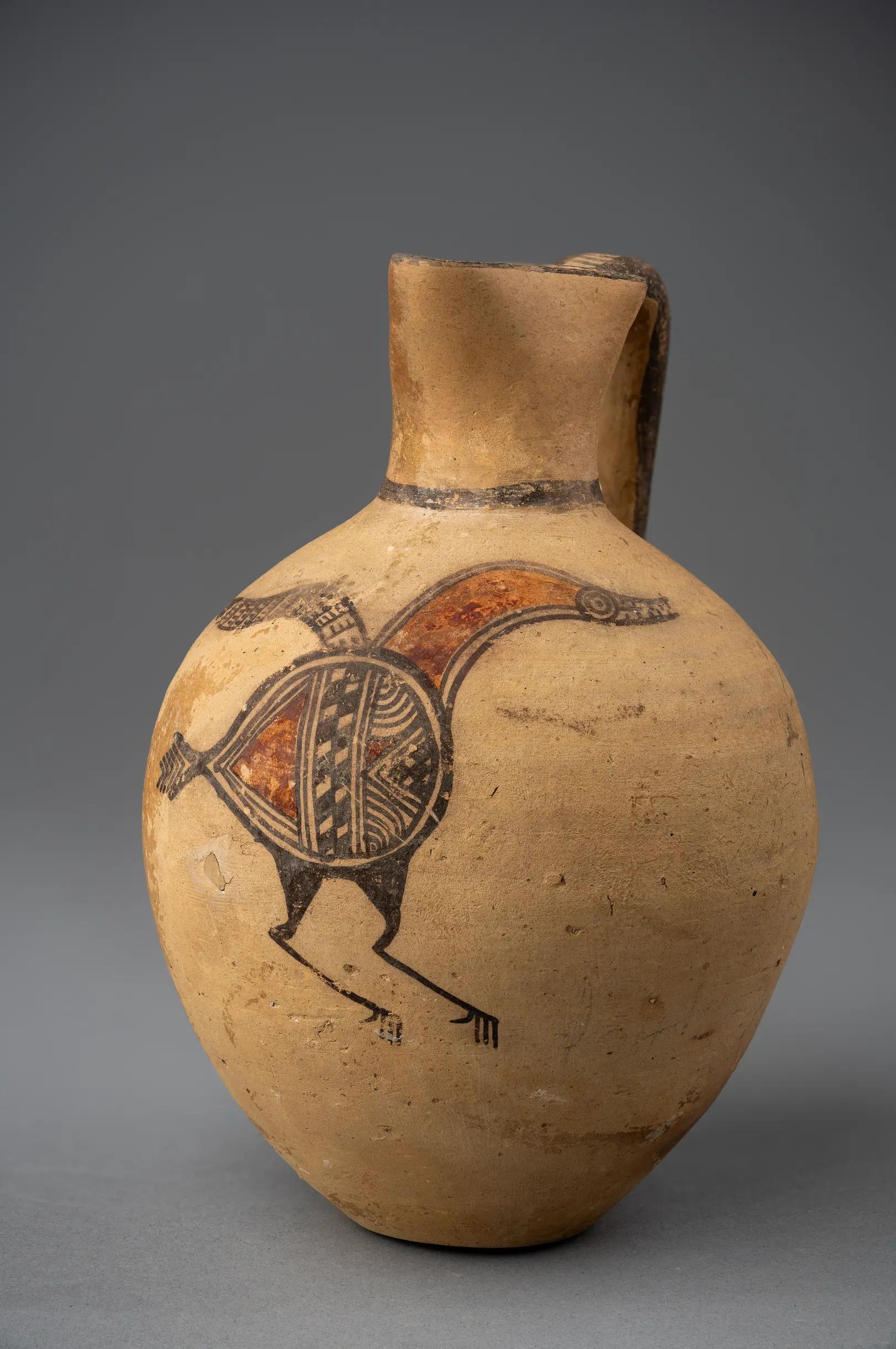
Bichrome IV Trefoil Jug with a Striding Bird
Cypro-Archaic Bichrome IV trefoil jug with a single free-field bird with a segmented disc body; ex-Lawrence-Cesnola (1883) and ex-Pitt-Rivers, Farnham.
Date
750 - 600 BC
Accession No.
JUG-AR-003
Collection
Alexis Drakopoulos
Provenance
- 1876–79, excavated in Cyprus by Alessandro Palma di Cesnola
- 1881–83, Lawrence-Cesnola Collection
- 1 June 1883, Sotheby, Wilkinson and Hodge, London, lot 277
- 1883–1900, Lt-Gen. Augustus Henry Lane Fox Pitt-Rivers; displayed in Room IV of his museum at Farnham, Dorset, from 8 August 1896
- 1900–1975, by descent in the Pitt-Rivers family, to George Pitt-Rivers (d. 1966) and then Stella Pitt-Rivers
- 24 February 1975, Sotheby's, London, lot 168
- 1975–76, Charles Ede Ltd, London (stock no. E4614)
- From May 1976, Private collection, Chicago
- 2016, Harlan J. Berk Ltd, Chicago
- 2016–18, Charles Ede Ltd, London
- 2018–c. 2024, Private collection, Surrey
- c. 2024–25, Charles Ede Ltd, London; exhibited TEFAF Maastricht 2025
- 2025–present, Alexis Drakopoulos, London
Cypro-Archaic I, c. 750–600 BCE · Bichrome IV ware · Wheel-made · H. 19 cm
A wheel-made trefoil jug with an ovoid body, a short, wide neck and a pinched mouth, the strap handle rising from the rim to the shoulder, painted with a ladder pattern and ending on the body in a painted hook. A black band marks the base of the neck; otherwise the pale buff ground is left open for a single bird on the side opposite the handle.
The bird strides to the right. Its body is a large circle divided into segments of chequer, hatching, concentric arcs and solid red, with a pointed rear ending in a small splayed tail. The long neck, filled with red, curves up and forward to a head with a large ringed eye and an open, toothed beak. A small cross-hatched wing rises from the back as a separate plume. The legs are thin and angled, with splayed, comb-like feet. The black is worn on the lip and handle and the surface has minor chips.
Commentary
This is a Bichrome IV pinched-mouth jug of the kind Gjerstad grouped among his trefoil-jug types, with a short neck and ovoid body, a family of shapes he illustrated in fig. XXXIV [1]. Gjerstad noted that the free-field style was used above all on pinched-mouth jugs [1], and the bird was its most frequent subject [4]. The ware, shape and composition place the jug in Cypro-Archaic I, c. 750–600 BCE [1][2].
The painter built the bird from a compass-drawn disc and then filled it like a shield, alternating chequer, hatching, arcs and red in wedge-shaped fields. The same principle of a body subdivided into red and hatched quarters recurs across the bird jugs of the period [3]. The wing set apart from the back as a free-standing plume recalls one feature of the "Salamis bird" that Caubet isolated in a Bichrome IV group attributed to a workshop in eastern Cyprus, although that type has a short neck and short legs, unlike the long neck and wading legs here [3]. The open, toothed beak and bull's-eye are common free-field conventions. As with most of these birds, no species can be named [4].
Among published parallels, three Cesnola jugs in the Metropolitan Museum are closest. 74.51.507 (H. 20.2 cm) has a round, patterned body with a long neck and splayed legs, and 74.51.501 (H. 28.1 cm) shows a larger bird of the same build [7]; 74.51.503 (no. 160) belongs to a bird-and-lotus group probably painted in a single workshop [2]. This jug omits the lotus and all filling ornament, a pure single-motif composition.
The jug has an unusually well documented modern history. It appears, reversed, on plate 13 of the 1881 album of Alessandro Palma di Cesnola's finds [5], and it was sold in the Lawrence-Cesnola sale at Sotheby's in 1883 as lot 277, together with a larger jug painted with a horse-like animal [6]. General Pitt-Rivers's manuscript catalogue sketches both jugs in colour under that lot and records this one as "a bird flying", 7½ inches high, matching its present height of 19 cm [8]. The jug stayed with Pitt-Rivers and his heirs for more than ninety years before reappearing at Sotheby's in 1975 [9]. No find-spot was recorded for it, so its origin within Cyprus is unknown. Jugs of this class were used for pouring, and complete examples come mostly from tombs.
References
- 1.Gjerstad, E. (1948) The Swedish Cyprus Expedition IV.2: The Cypro-Geometric, Cypro-Archaic and Cypro-Classical Periods. Stockholm: The Swedish Cyprus Expedition, Bichrome IV section and fig. XXXIV.
- 2.Karageorghis, V., Mertens, J.R. and Rose, M.E. (2000) Ancient Art from Cyprus: The Cesnola Collection in The Metropolitan Museum of Art. New York: The Metropolitan Museum of Art, pp. 108 and 116, no. 160.
- 3.Caubet, A. (2005) 'Le lotus, le tilapia et le rouget barbet', Cahiers du Centre d'Études Chypriotes 35, pp. 89–97.
- 4.Morris, D. (1985) The Art of Ancient Cyprus. Oxford: Phaidon, pp. 226–229.
- 5.Lawrence-Cesnola Collection: Cypriot Antiquities Excavated by Major Alexander Palma di Cesnola 1876–79 (1881), pl. 13 (image reversed).
- 6.Sotheby, Wilkinson and Hodge (1883) The Lawrence-Cesnola Collection of Cypriote Antiquities. London, 1 June 1883, lot 277.
- 7.The Metropolitan Museum of Art, New York, collection records 74.51.507 and 74.51.501 (Cesnola Collection).
- 8.Pitt-Rivers, A.H.L.F. Catalogue of Objects Acquired by General Pitt-Rivers, vol. 1 (manuscript), p. 241, entry for 1883 sale lot 277.
- 9.Sotheby's (1975) Antiquities. London, 24 February 1975, lot 168.
More from the Catalogue
Browse related objects
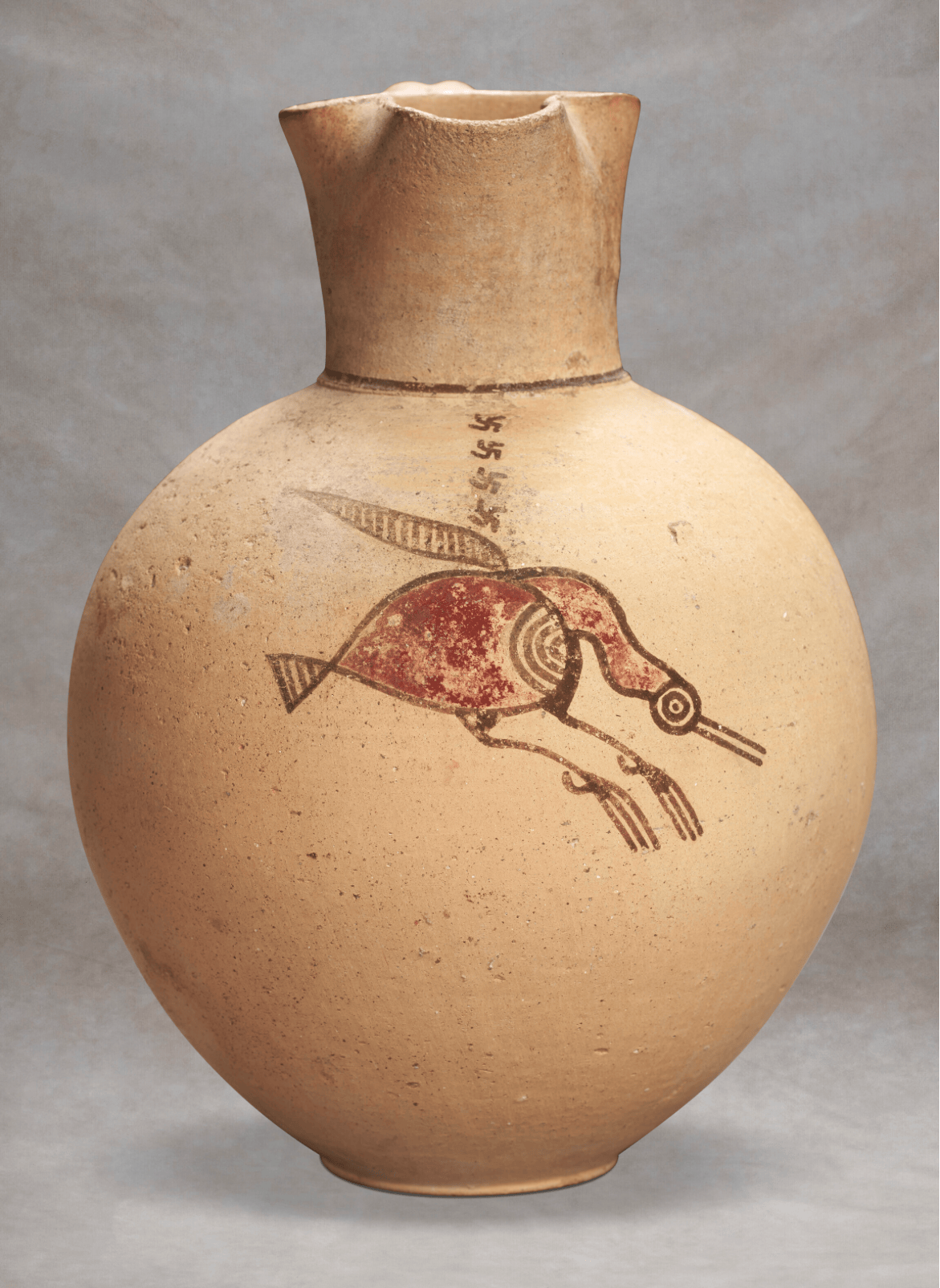
Bichrome Oinochoe
Archaic I
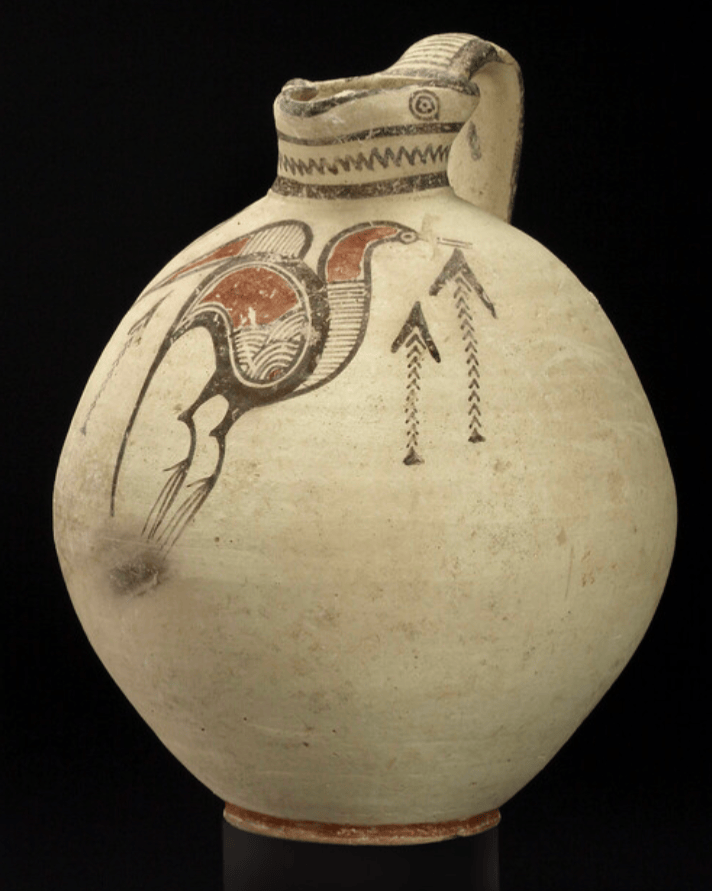
Free-field bichrome jug with image of an Ibis bird and reeds
Archaic
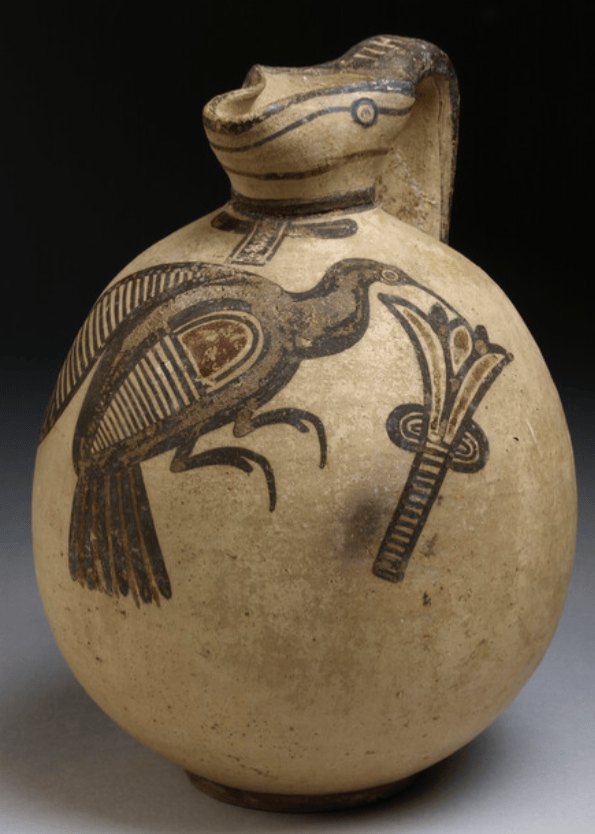
Squat bichrome jug in free-field style with image of bird picking a lotus flower
Archaic
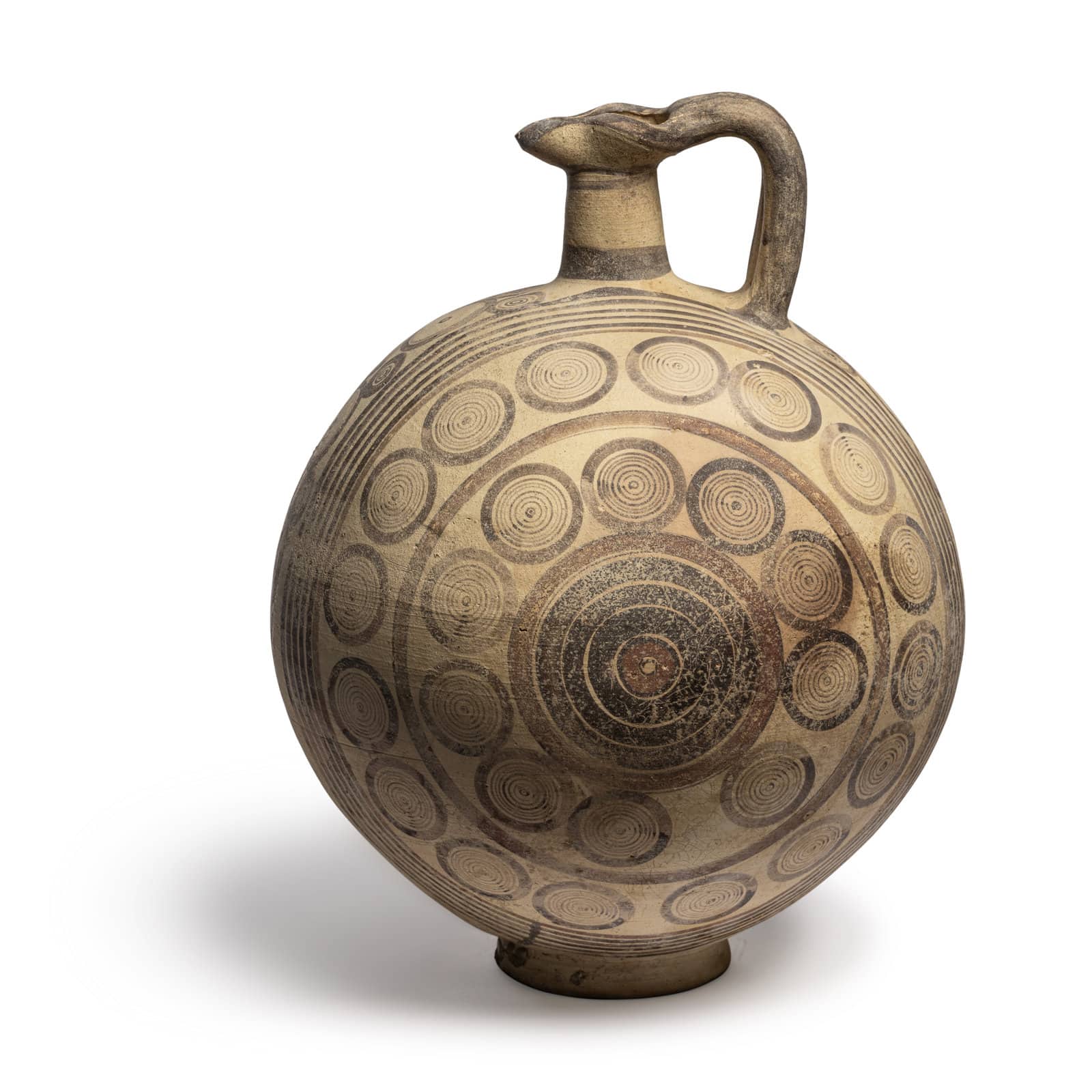
A Cypriot Bichrome-Ware Oinochoe Jug
Archaic I
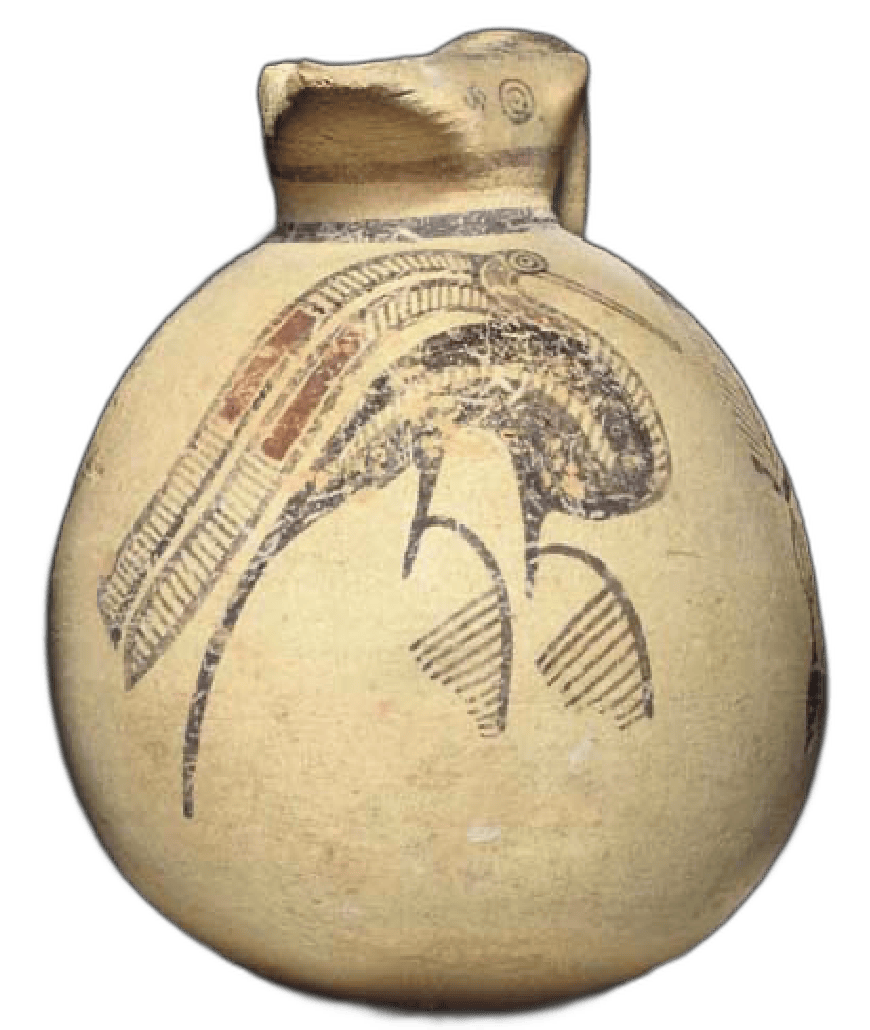
Oinochoe with Free Field Bird
Archaic I
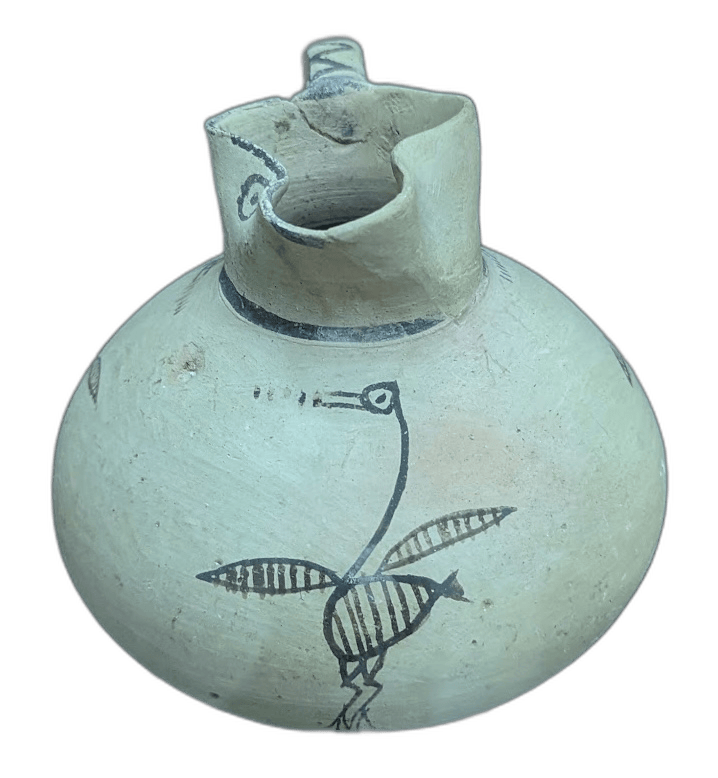
Small Oinochoe with Free Field Bird
Archaic I
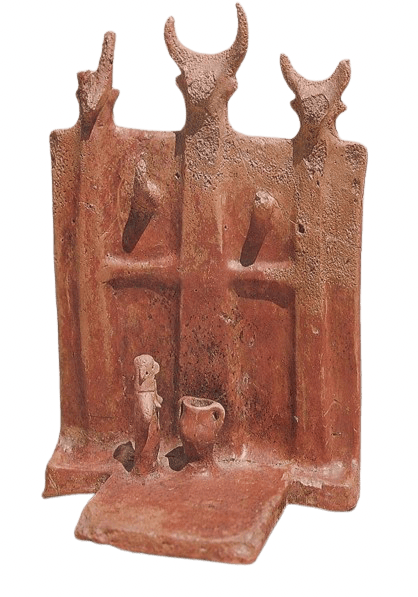
Red Polished Shrine
Middle Bronze Age I
Black-On-Red Geometric Jug Sherd
Geometric II
Bichrome Jug
Geometric
Bichrome Juglet
Geometric
Bichrome Oinochoe
Geometric
Juglet
Archaic II
Oinochoe
Geometric III
Jug
Archaic I
Juglet
Archaic I
Jug
Geometric I
Terracotta jug
Early Bronze Age I
Juglet
Geometric I