
Archaic
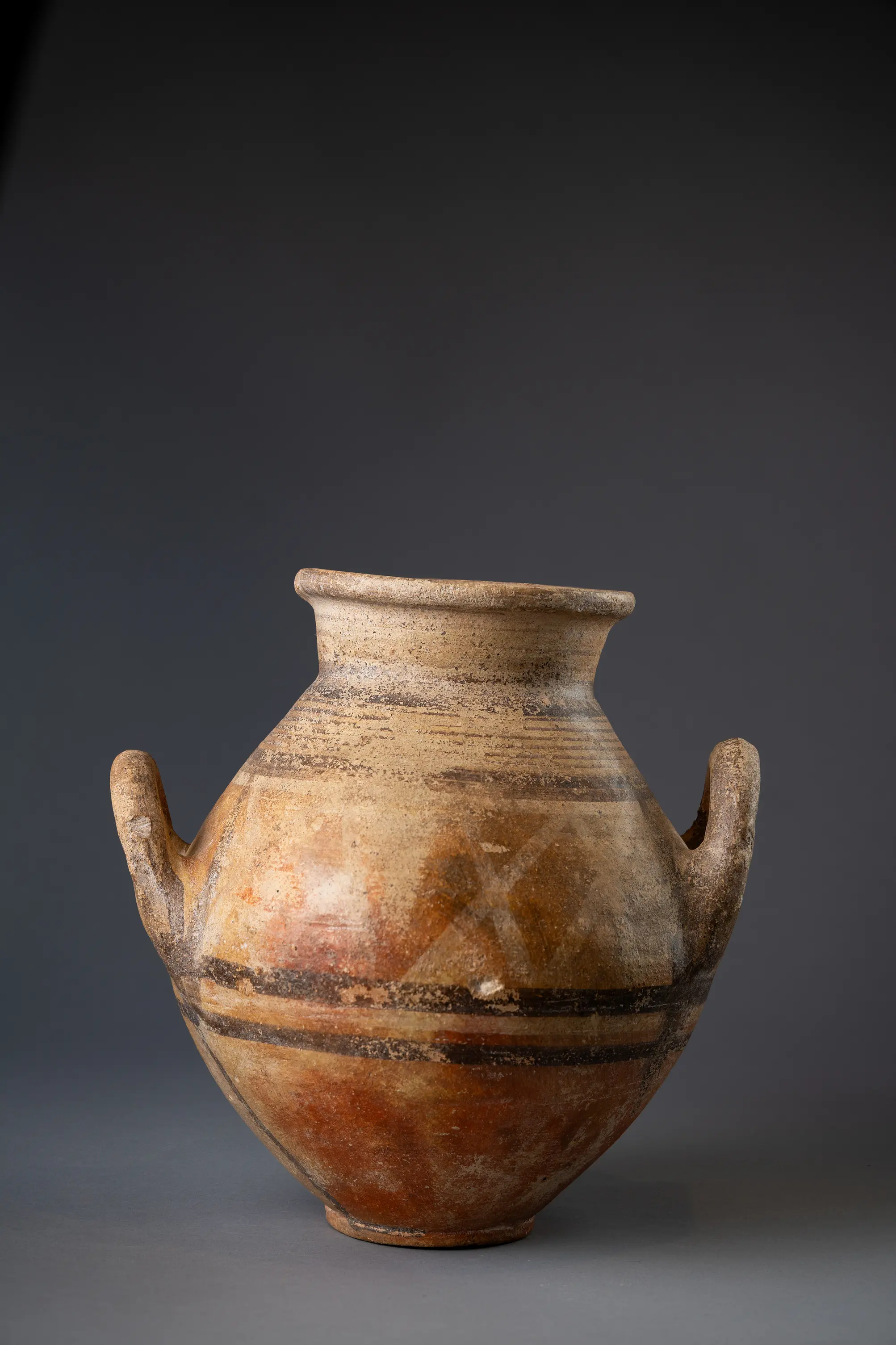
Red-Slipped Amphora with Pale Crosses on the Shoulder, probably Bichrome Red Ware
Cypriot amphora with upright shoulder handles, red slip, black belts, white-dotted neck band and large pale crosses on the shoulder; probably Bichrome Red ware, Cypro-Archaic.
Date
750 - 480 BC
Accession No.
JAR-GE-008
Collection
Alexis Drakopoulos
Provenance
- Said to have been in a private collection, United States, from the 1980s
- 2024, Omnia Auction
- 2024–present, Alexis Drakopoulos, London
Cypro-Archaic I–II, c. 750–480 BCE (most likely Cypro-Archaic I) · Probably Bichrome Red ware · Wheel-made · H. 29 cm
A two-handled amphora with an ovoid body that tapers steeply to a low ring base. The short, flaring neck ends in a thick rolled rim. Two upright loop handles are set on the widest part of the body and rise like a pair of ears. The surface is covered with a red to orange slip, deepest on the lower body and fading to buff on the neck and shoulder. A black band marks the base of the neck. An earlier description records a row of small white dots on this band; they cannot be made out in the present photographs. Below it, a group of fine black lines rings the upper shoulder. Between the handles, large pale X-shaped crosses are laid over the red ground, and a double black belt runs below the handles. A single black stroke descends from one handle root over the lower body.
The slip is patchy and flecked with white calcareous deposit. There are small losses to the paint of the belly belt and minor chips at the rim and handles.
Commentary
The shape is the shoulder-handled amphora of the Cypro-Archaic period: an ovoid body with its greatest width set high, a short neck with a rolled rim and a pair of vertical loop handles on the shoulder. The Cesnola amphora in New York, 74.51.442, has the same handle arrangement and a banded scheme in black on a reddish body, and is dated to Cypro-Archaic I [1].
The ware is harder to fix. A red slip decorated in black is the Black-on-Red technique. When white is added to it, Gjerstad called the result Bichrome Red, a ware he divided into stages beginning with Bichrome Red I (IV) in Cypro-Archaic I [2]. Later work has argued that the ware started somewhat earlier than his scheme allows [3]. White is the diagnostic colour, and it is also the least durable, so it often survives only as faint traces. If the row of white dots recorded on the neck band is confirmed, it would be a well-attested Bichrome Red device. A juglet of Bichrome Red I (IV) ware in the Severis Collection has "dots in white paint" applied on the neck bands [4], and a Cesnola amphoriskos in New York has a band of white dots at the neck [5]. A larger Bichrome Red I (IV) amphora in the Severis Collection combines black and white bands on a red ground [4].
The pale crosses on the shoulder are unusual. We know of no close published parallel for large white saltires on the shoulder of an amphora of this type. They may be applied white paint in the same technique as the dots. They may also be areas where the red slip has worn or fired unevenly, although their regular geometry argues against pure chance. The matt, rather dry look of the slip, without the burnished lustre typical of good Black-on-Red, leaves open whether the ground is a true slip or a red wash over a light fabric. On present evidence Bichrome Red is the most likely identification, with Bichrome IV on a reddish ground as the alternative.
Either reading places the vessel in the Cypro-Archaic period, c. 750–480 BCE, and the restrained ornament of bands, dots and simple crosses suits the first stage of Bichrome Red better than the more richly decorated second stage. Like most complete amphorae of the period it probably comes from a chamber tomb, where it held liquids or foodstuffs.
The piece needs examination under magnification and ultraviolet light to establish whether the white crosses and dots are original paint, later deposit or modern retouching.
References
- 1.The Metropolitan Museum of Art, New York, 74.51.442 (Cesnola Collection). Amphora with shoulder handles and black bands, Cypro-Archaic I, H. 31.5 cm (museum record).
- 2.Gjerstad, E. (1948) The Swedish Cyprus Expedition IV.2: The Cypro-Geometric, Cypro-Archaic and Cypro-Classical Periods. Stockholm: Swedish Cyprus Expedition, pp. 73–76 (Bichrome Red ware).
- 3.Smith, J.S. (ed.) (2009) Documenting Cyprus. Boston: American Schools of Oriental Research, pp. 239–240.
- 4.Karageorghis, V. (2010) Ancient Cypriote Art in the Severis Collection. 2nd ed. Nicosia: A.G. Leventis Foundation, nos. 181 (LS 811) and 207 (LS 1396).
- 5.The Metropolitan Museum of Art, New York, 74.51.847 (Cesnola Collection). Amphoriskos with concentric circles and a band of white dots at the neck, Cypro-Archaic I (museum record).
More from the Catalogue
Browse related objects
Amphora
Archaic II
Amphora
Geometric I
Amphora
Archaic II
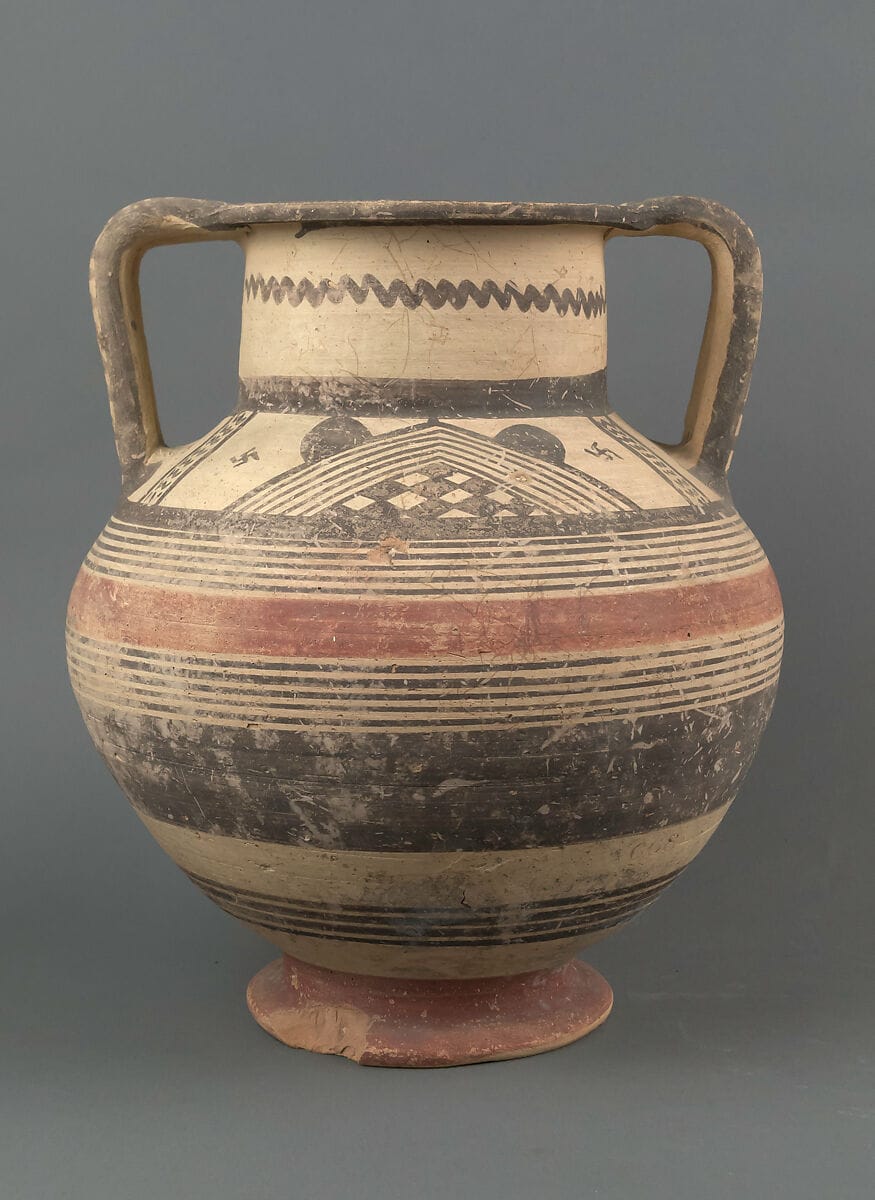
Amphora
Archaic I
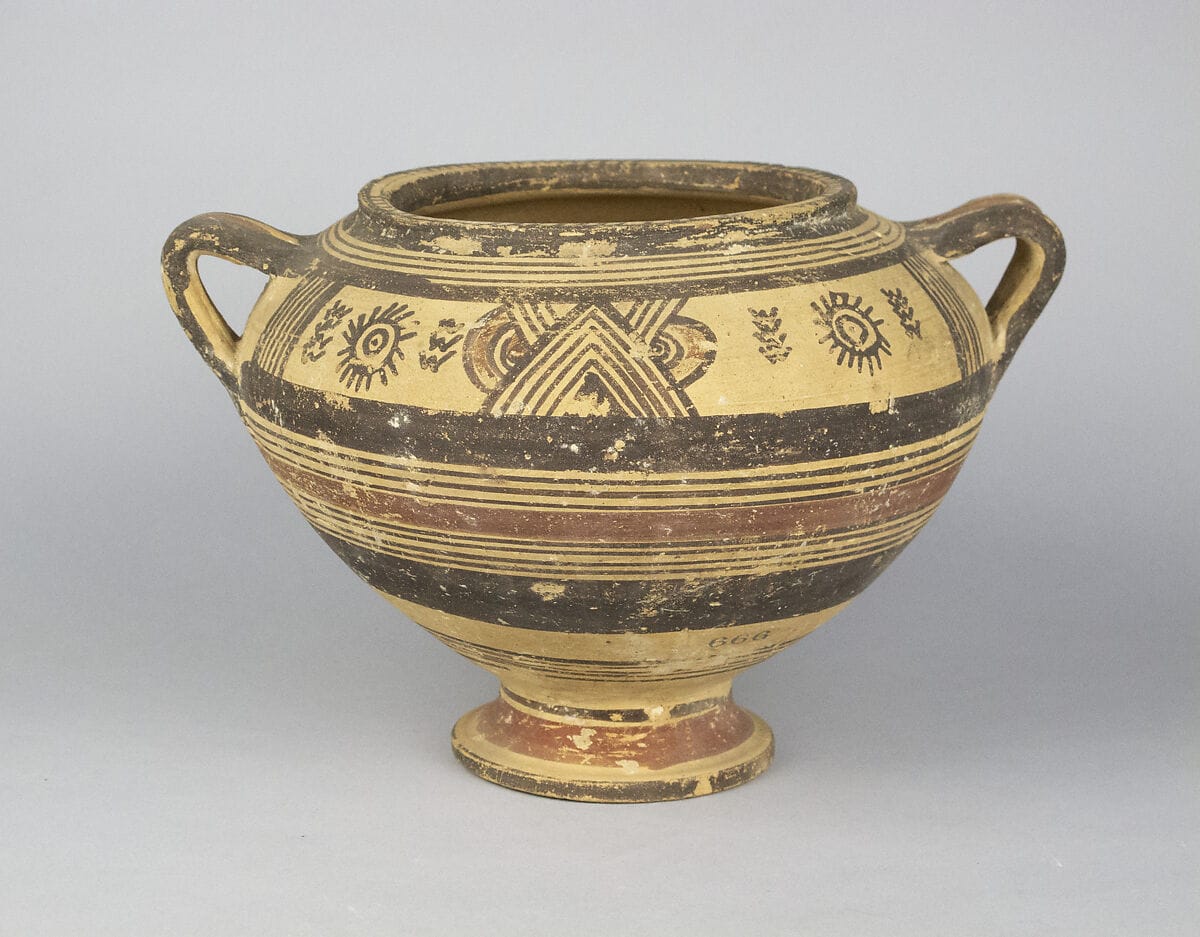
Dinos
Archaic I
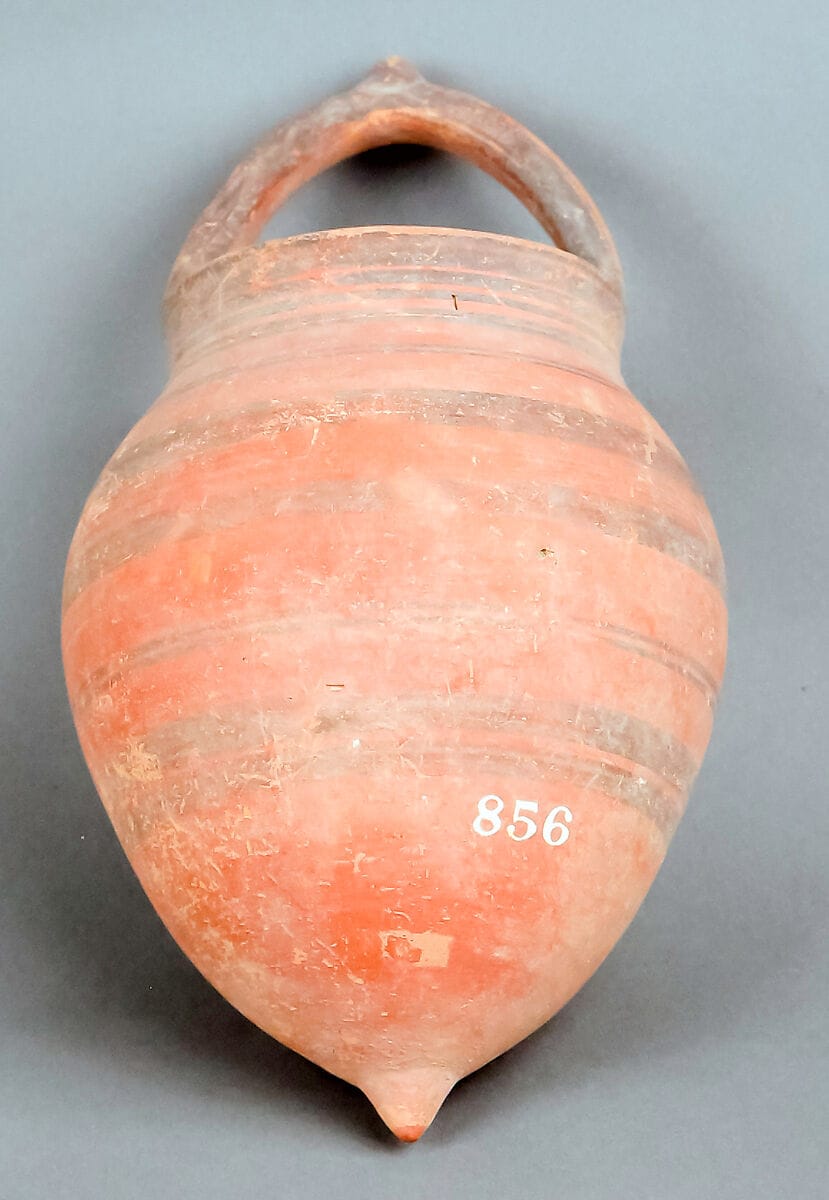
Amphoriskos
Geometric III
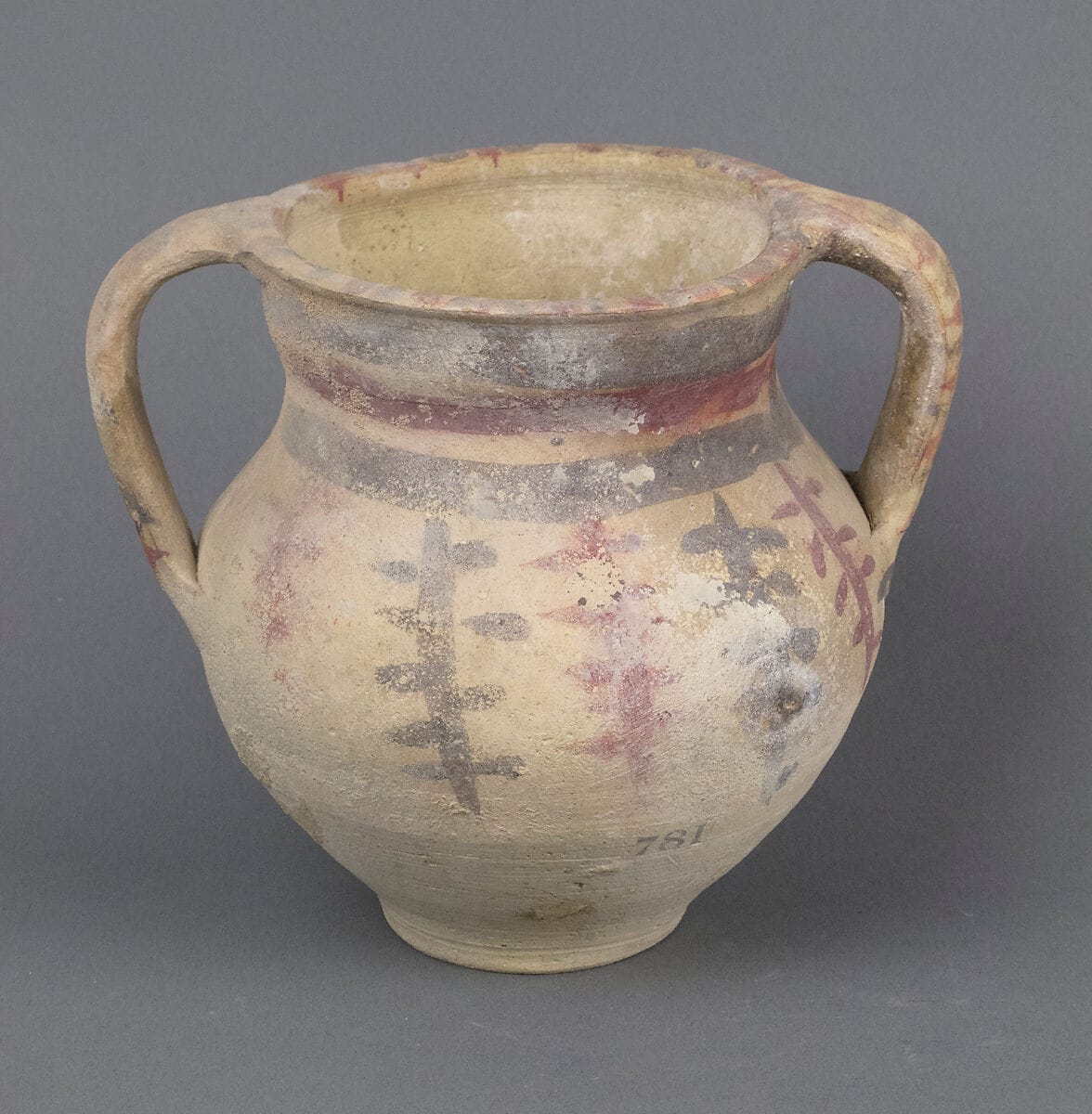
Amphoriskos
Archaic II
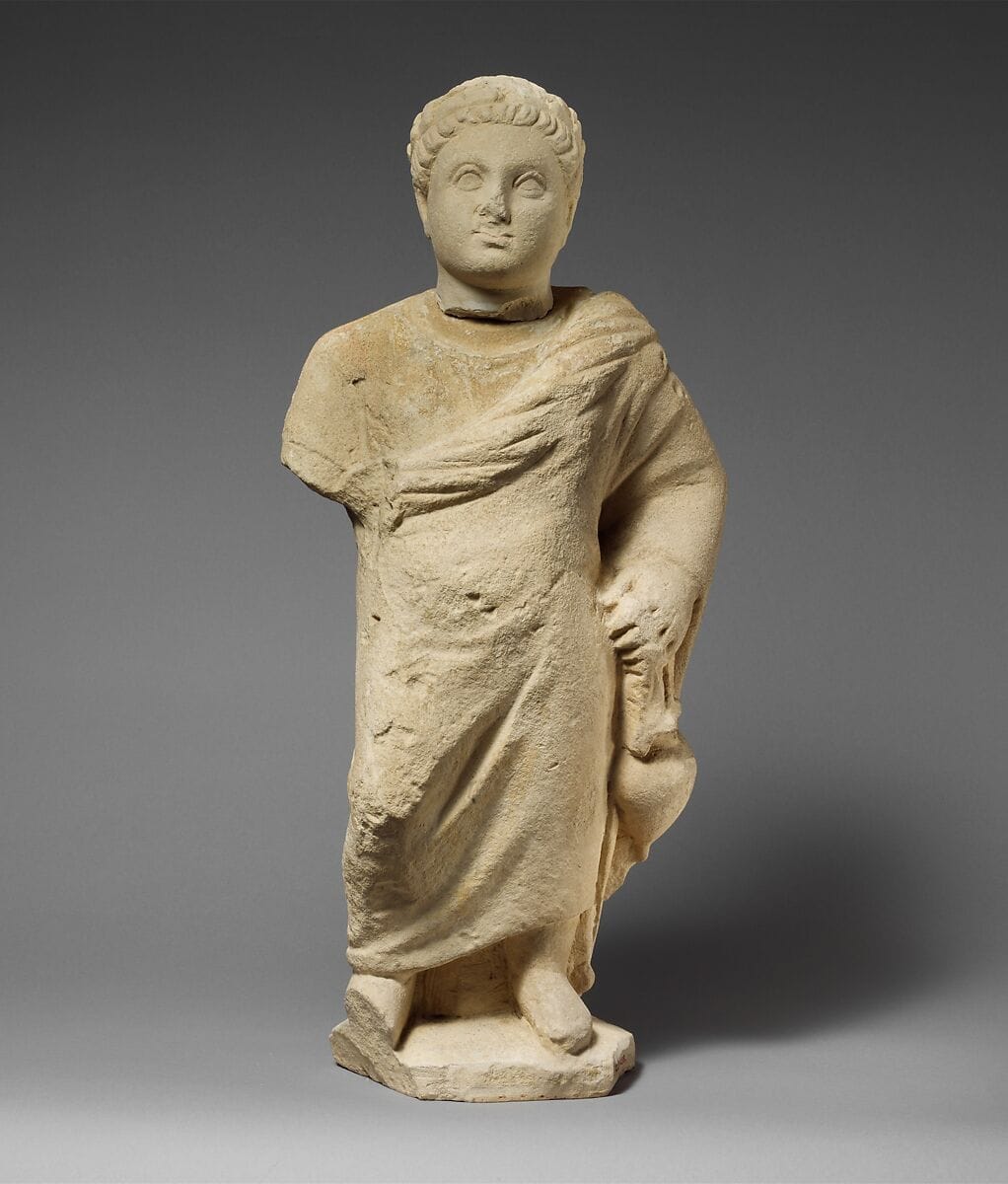
Limestone statuette of a boy holding an amphora
Hellenistic
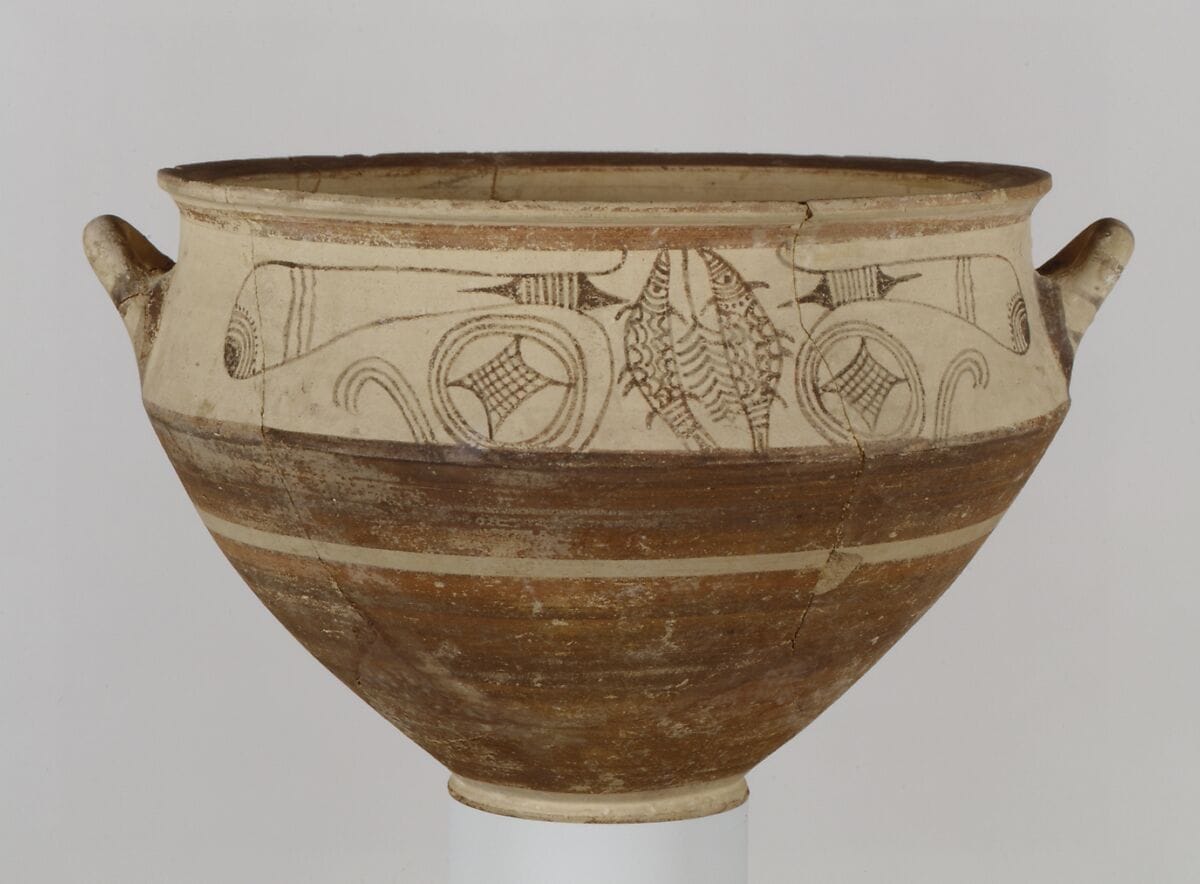
Terracotta krater
Late Bronze Age III
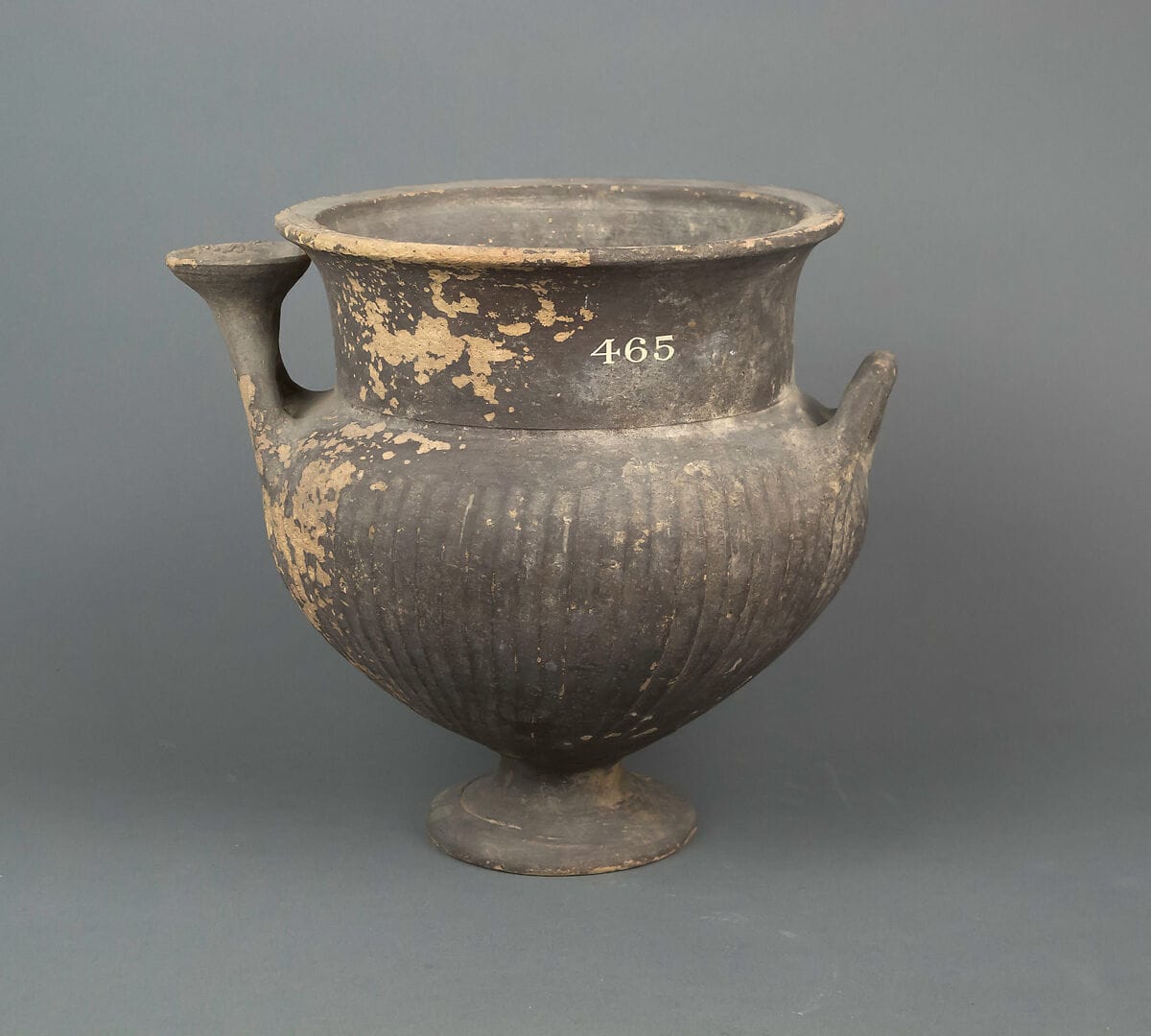
Krater
Geometric I
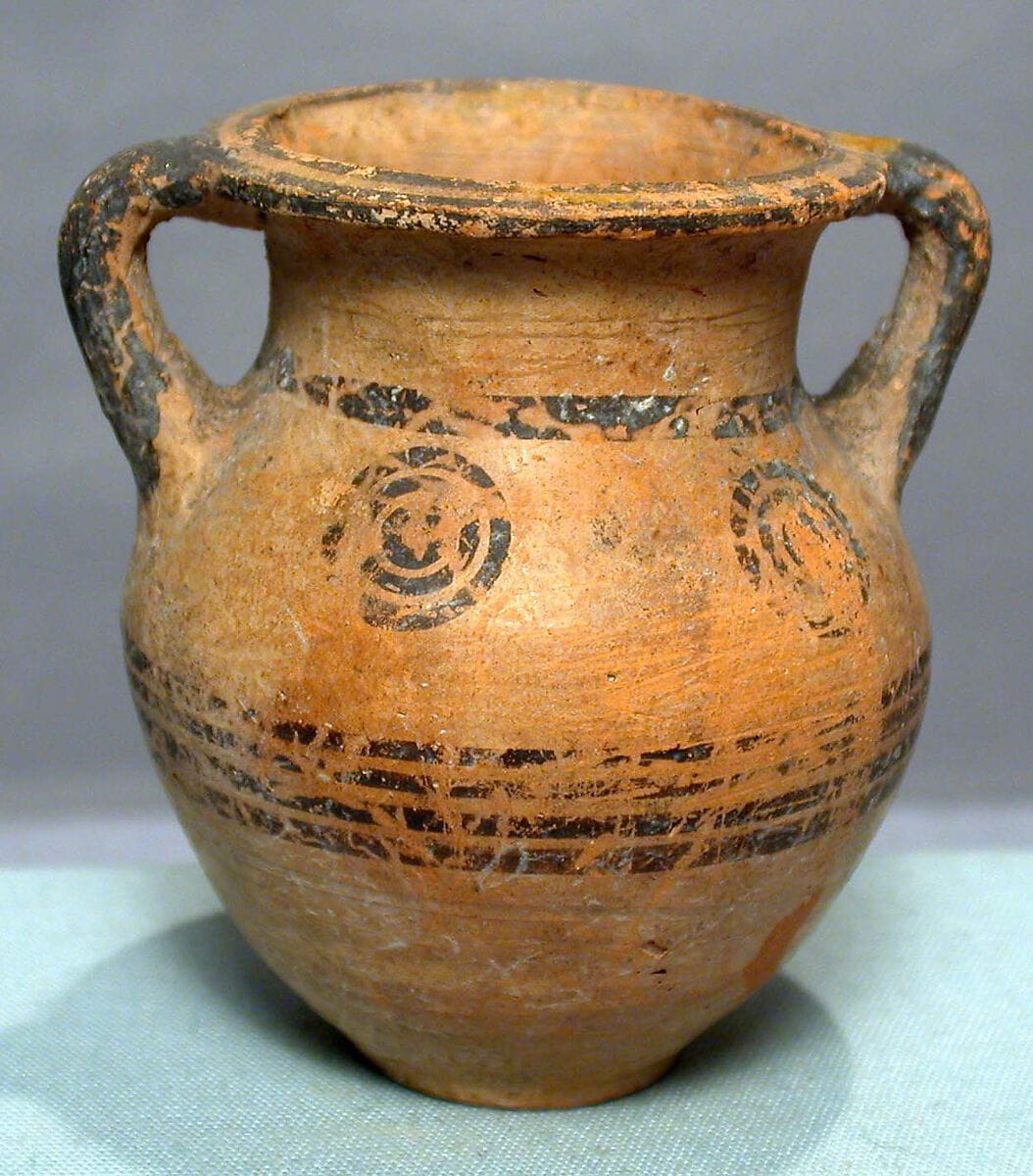
Terracotta miniature amphora
Geometric III
Amphora
Late Bronze Age III
Amphora
Archaic II
Krater
Late Bronze Age III
Dinos
Archaic I
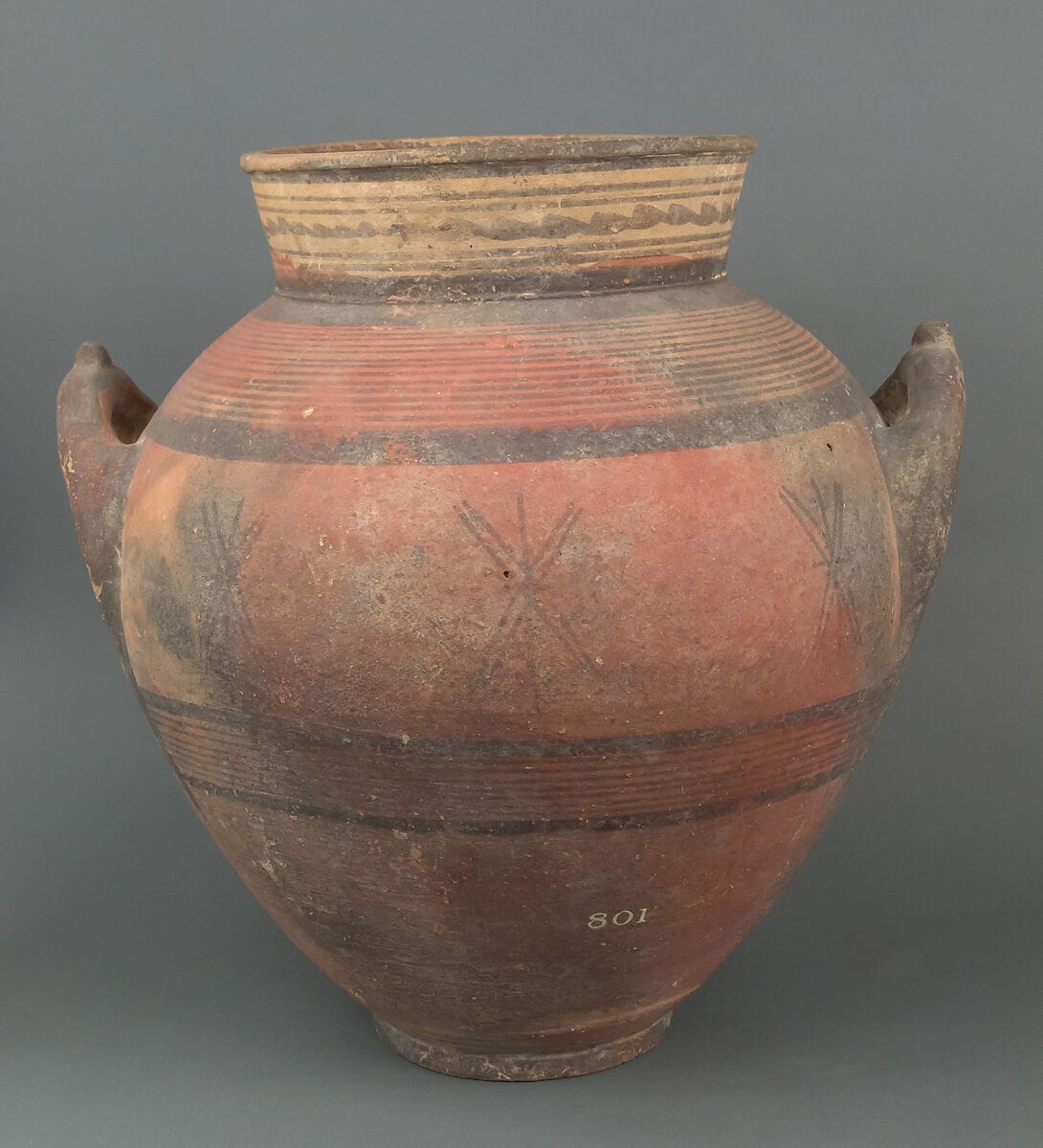
Amphora
Archaic
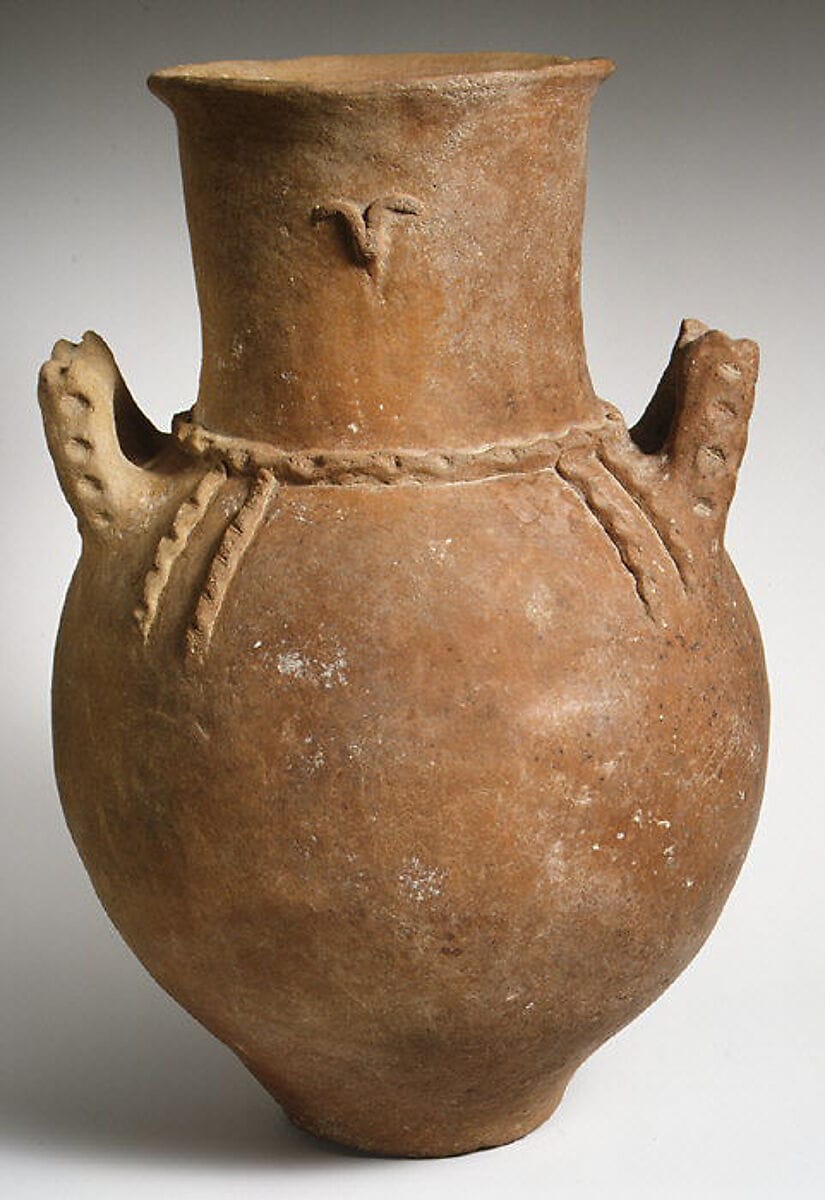
Terracotta amphora
Middle Bronze Age II
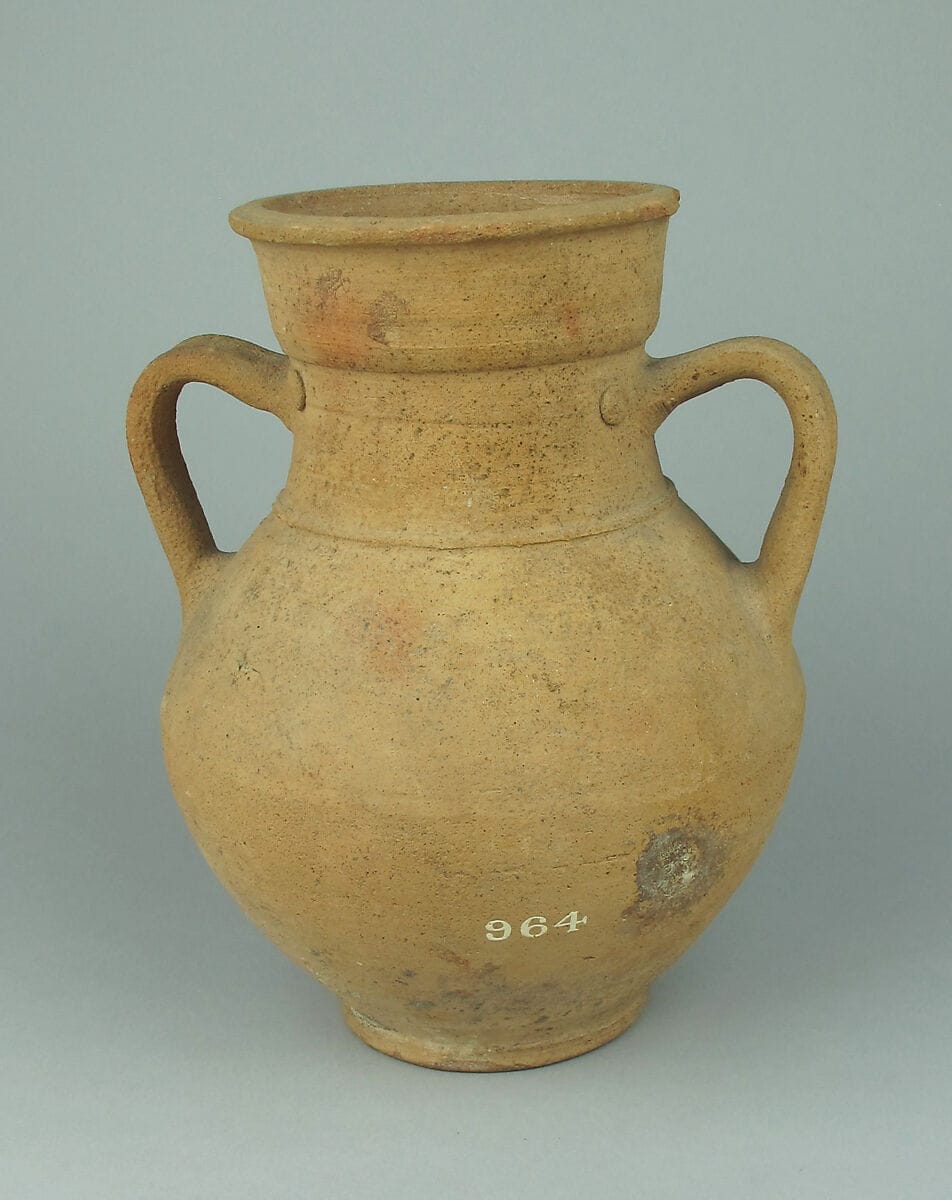
Amphora
Bronze Age