
Archaic I
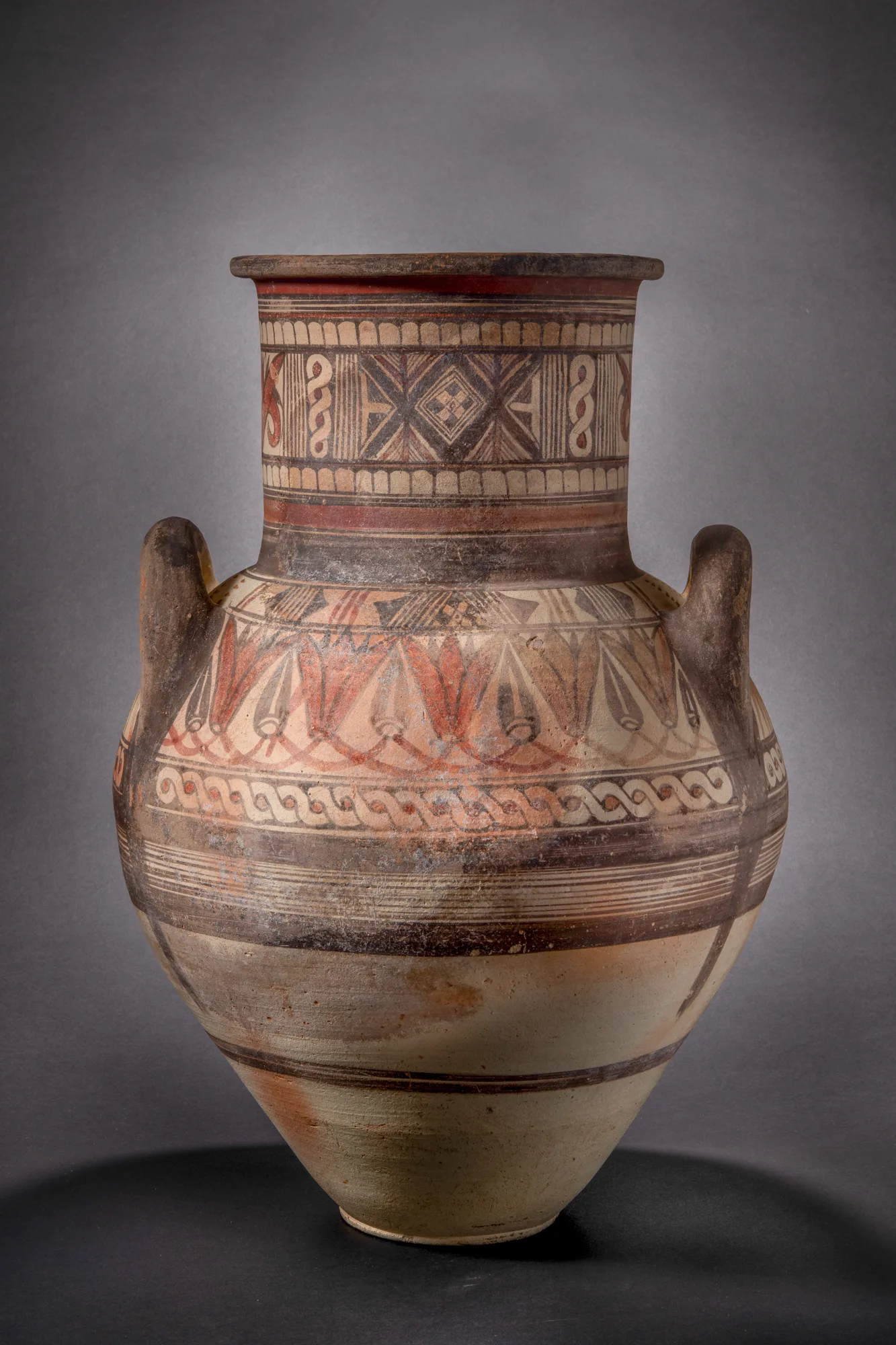
Bichrome IV Amphora with a Lotus-and-Bud Shoulder Frieze
Large Cypro-Archaic I Bichrome IV amphora with panelled neck metopes, a pendent lotus-and-bud shoulder frieze and a cable band, of the eastern Cypriot tomb class.
Date
750 - 600 BC
Accession No.
JAR-AR-002
Collection
Alexis Drakopoulos
Provenance
- 11 November 1926, Sotheby & Co., London, lot 23 (illustrated on pl. III)
- From 1926, Zachariades (the buyer at the 1926 sale)
- Until 1974, Edward Varley Kayley (1900–1974)
- 1974–2024, by descent in his family
- 4 July 2024, Bonhams, London, lot 139
- 2024–25, ArtAncient, London
- 2025–present, Alexis Drakopoulos, London
Cypro-Archaic I, c. 750–600 BCE, probably 7th century · Bichrome IV ware · Wheel-made
A large two-handled amphora with an ovoid body, widest at the shoulder and tapering to a low ring foot. The tall neck widens slightly to a heavy, flat, out-turned rim. Two thick loop handles rise from the shoulder toward the neck, each with two dark strokes running down the body from its lower root. The pale buff surface is painted in matt brown-black and brick red. The neck is framed above and below by rows of short vertical strokes. On one face its central panel holds a St Andrew's cross laid over concentric lozenges around a small latticed lozenge; on the other, a red volute flower with a lozenge heart. Both are flanked by columns of running S-spirals and ruled line-panels. On the shoulder hangs a frieze of lotus flowers alternating with buds, dark-outlined and washed with red and brown. Beneath the handles, a red rayed triangle fills the gap. A cable band follows, then close-set fine lines between broad bands. The lower body is left plain buff, crossed by two widely spaced bands.
Commentary
The shape is Gjerstad's Bichrome IV "Amphora 2": an amphora with handles on the shoulder, the body widest at or just below the shoulder, and a cylindrical or slightly widening neck with a flat, out-turned rim [1]. Bichrome is White Painted technique with a second colour added, matt red beside the dark paint, and the numeral IV places it in Gjerstad's fourth ceramic stage, Cypro-Archaic I, c. 750–600 BCE [1]. In this stage the neck becomes the main ornamental field, divided into panels of geometric and floral ornament, as it is here [1].
The decoration follows a formula that the Metropolitan Museum's catalogue sets out for the class: large Bichrome IV amphorae, common in the east of the island, with a shoulder frieze of lotus flowers alternating with buds on each side and lotus flowers in panels alternating with geometric motifs on the neck [2]. The Met amphora 74.51.972, from the Cesnola Collection, H. 80.3 cm and said to be from Ormidhia, is the closest published parallel. It shares the overall scheme: a shoulder frieze of lotus flowers alternating with buds, a neck of lotus and geometric panels, and a plain, banded lower body [2]. The Pierides Foundation Museum in Larnaca holds three more of the series, nos 154–156, between 58.5 and 80.7 cm high, all with panelled necks and stylised lotus [3]. The Cyprus Museum amphora 1935/B 2009 (H. 47.5 cm, archaeological context unknown) replaces the lotus chain with sphinxes flanking a lotus, the figured variant of the same Eastern style, and a related Cyprus Museum amphora with a lotus frieze and neck panels is dated around 600 BCE [4].
The lotus is the Egyptian water-lily as it reached Cyprus through Phoenician and Levantine metalwork, ivories and textiles. On this amphora it has become pattern: the flowers and buds are drawn to a template and coloured alternately, and they hang from the border like a fringe. Gjerstad's "Eastern style", with its floral and rectilinear ornament, is a regional tendency in his material, set against the circle-based decoration more common in the west and north of the island [1].
The fully developed lotus chain, the tall, near-cylindrical neck and the concentration of ornament on the upper third of the pot all belong to mature Cypro-Archaic I. A date in the 7th century BCE is likely, though the class cannot be dated more closely without a tomb context.
Vessels of this size were storage jars that ended their use in chamber tombs. The painted amphorae of this class seem to have stayed on the island: the Cypriot pottery that travelled overseas in these centuries was mostly small juglets for oil and perfume. What these amphorae held, whether wine, oil or grain, has not been established by residue analysis for the class. The find-spot of this example is unknown.
Provenance
The jar's recorded history begins in London. On 11 November 1926 Sotheby & Co. sold it as lot 23, "A Diota ... decorated in red and black ... on the shoulders a broad band of lotus flowers above a narrow band of guilloche", illustrated on Plate III of the catalogue [5]. The cataloguer's "Kition fabric" names a ware and gives no find-spot. The buyers' list printed at the back of the catalogue records the buyer as Zachariades, who bought all four of the sale's large two-handled jars; the list gives a surname and nothing more [5].
When the jar left Zachariades is unknown. By 1974 it belonged to Edward Varley Kayley (1900–1974), and after his death it stayed in his family until it was sold at Bonhams, London, on 4 July 2024 [6]. It passed through the London gallery ArtAncient and entered the Drakopoulos Collection in January 2025. You can trace the 1926 sale yourself in the catalogue's own pages.
References
- 1.Gjerstad, E. (1948) The Swedish Cyprus Expedition IV.2: The Cypro-Geometric, Cypro-Archaic and Cypro-Classical Periods. Stockholm: Swedish Cyprus Expedition, pp. 44–53, figs XXXV.14–15.
- 2.Karageorghis, V., Mertens, J. R. and Rose, M. E. (2000) Ancient Art from Cyprus: The Cesnola Collection in the Metropolitan Museum of Art. New York: Metropolitan Museum of Art, no. 143 (Met 74.51.972).
- 3.Karageorghis, V. (1985) Ancient Cypriote Art in the Pierides Foundation Museum. Larnaca: Pierides Foundation, nos 154–156.
- 4.Pilides, D. and Papadimitriou, N. (eds) (2012) Ancient Cyprus: Cultures in Dialogue. Nicosia: Department of Antiquities, Cyprus, p. 236, nos 230–231.
- 5.Sotheby & Co. (1926) Catalogue of Egyptian, Greek, Roman and Cypriot Antiquities, &c. Sale, London, 11–12 November 1926, lot 23, pl. III, with the printed list of buyers' names.
- 6.Bonhams (2024) Antiquities. Sale, London, 4 July 2024, lot 139.
More from the Catalogue
Browse related objects
Amphora
Archaic II
Amphora
Geometric I
Amphora
Archaic II
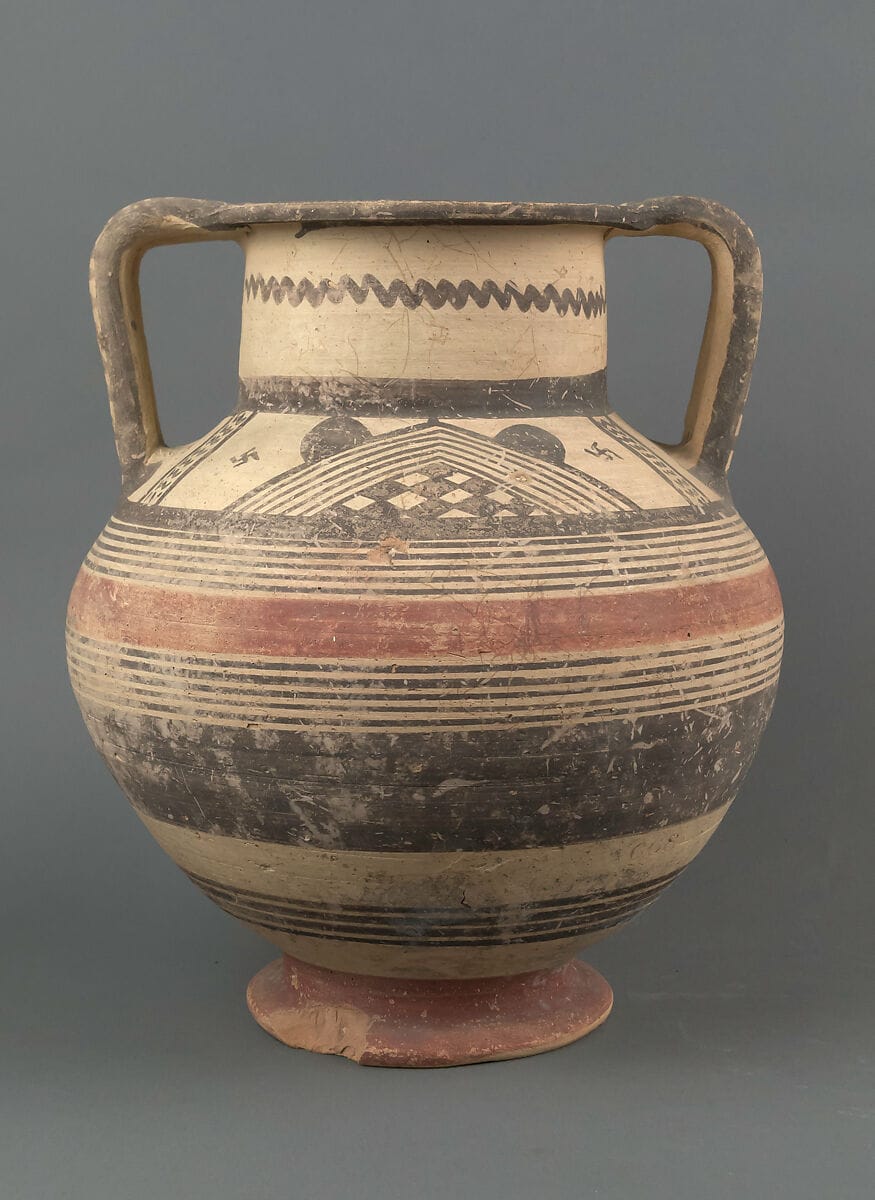
Amphora
Archaic I
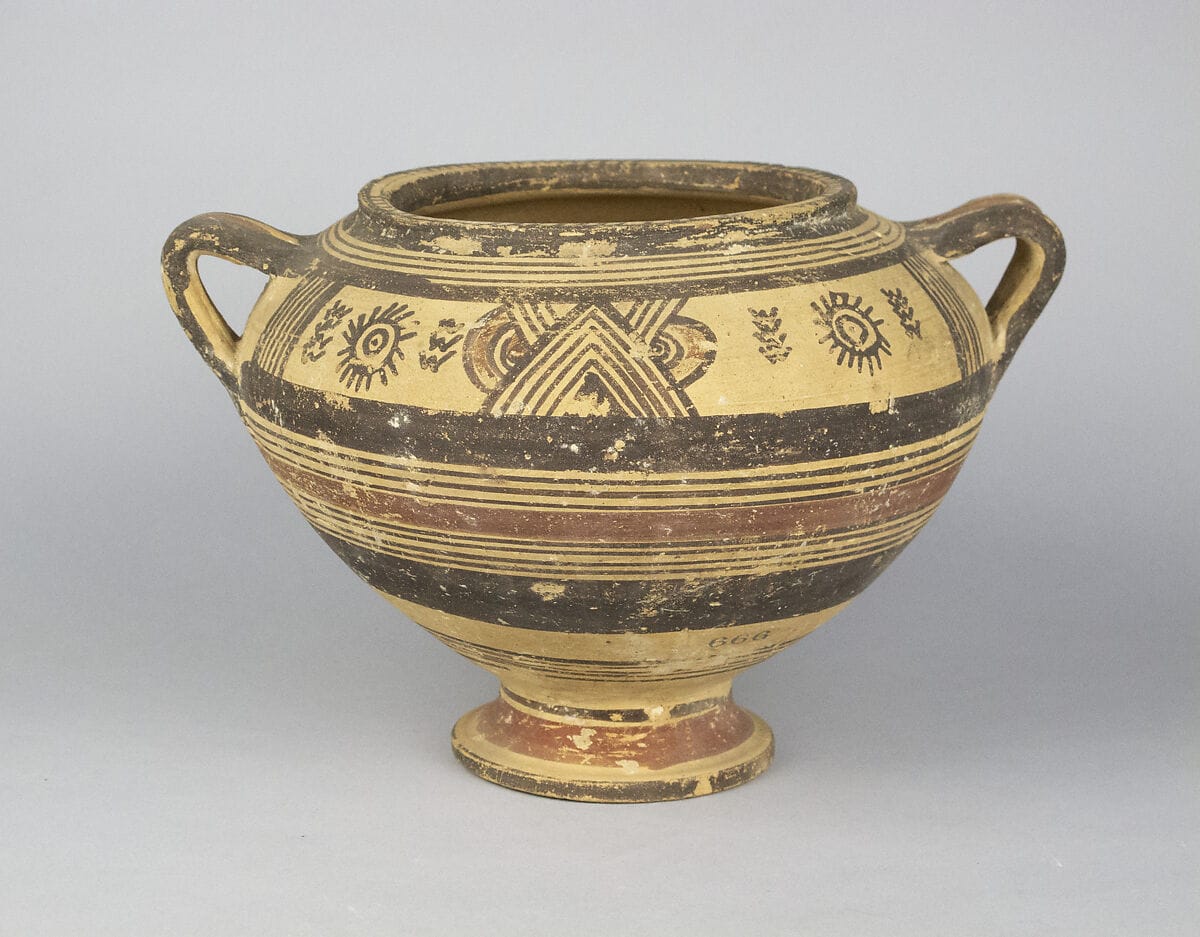
Dinos
Archaic I
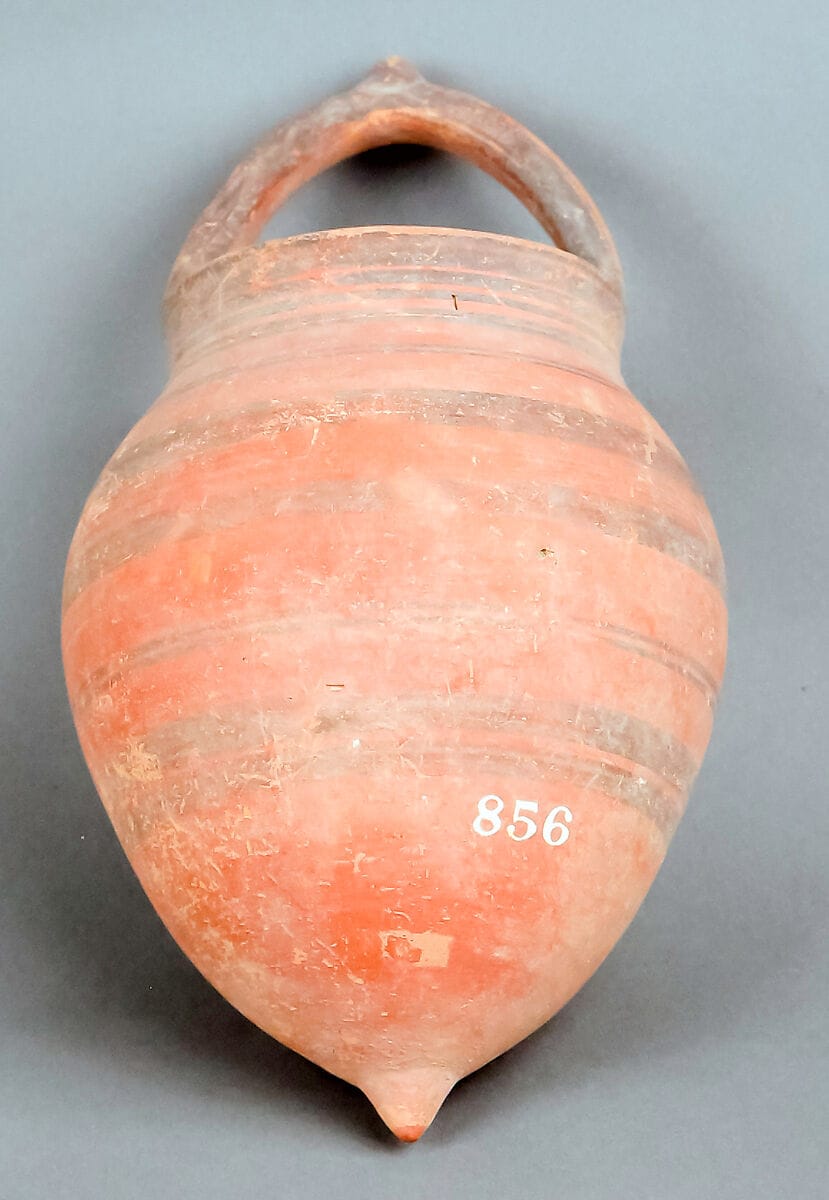
Amphoriskos
Geometric III
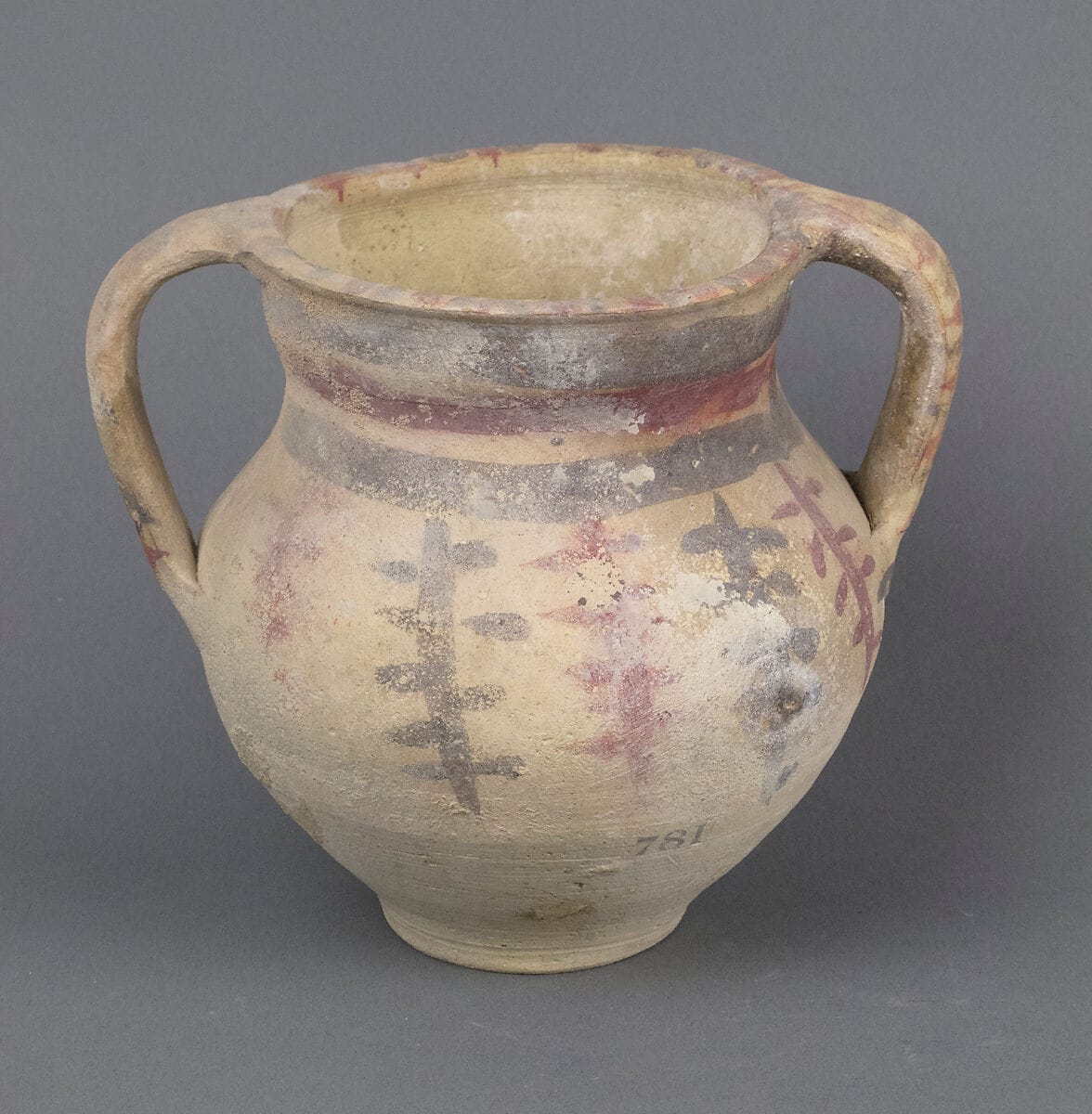
Amphoriskos
Archaic II
Limestone statuette of a boy holding an amphora
Hellenistic
Terracotta krater
Late Bronze Age III
Krater
Geometric I
Terracotta miniature amphora
Geometric III
Amphora
Late Bronze Age III
Amphora
Archaic II
Krater
Late Bronze Age III
Dinos
Archaic I
Amphora
Archaic
Terracotta amphora
Middle Bronze Age II
Amphora
Bronze Age