
Early Bronze Age III
Red Polished Beak-Spouted Juglet with Incised Circles
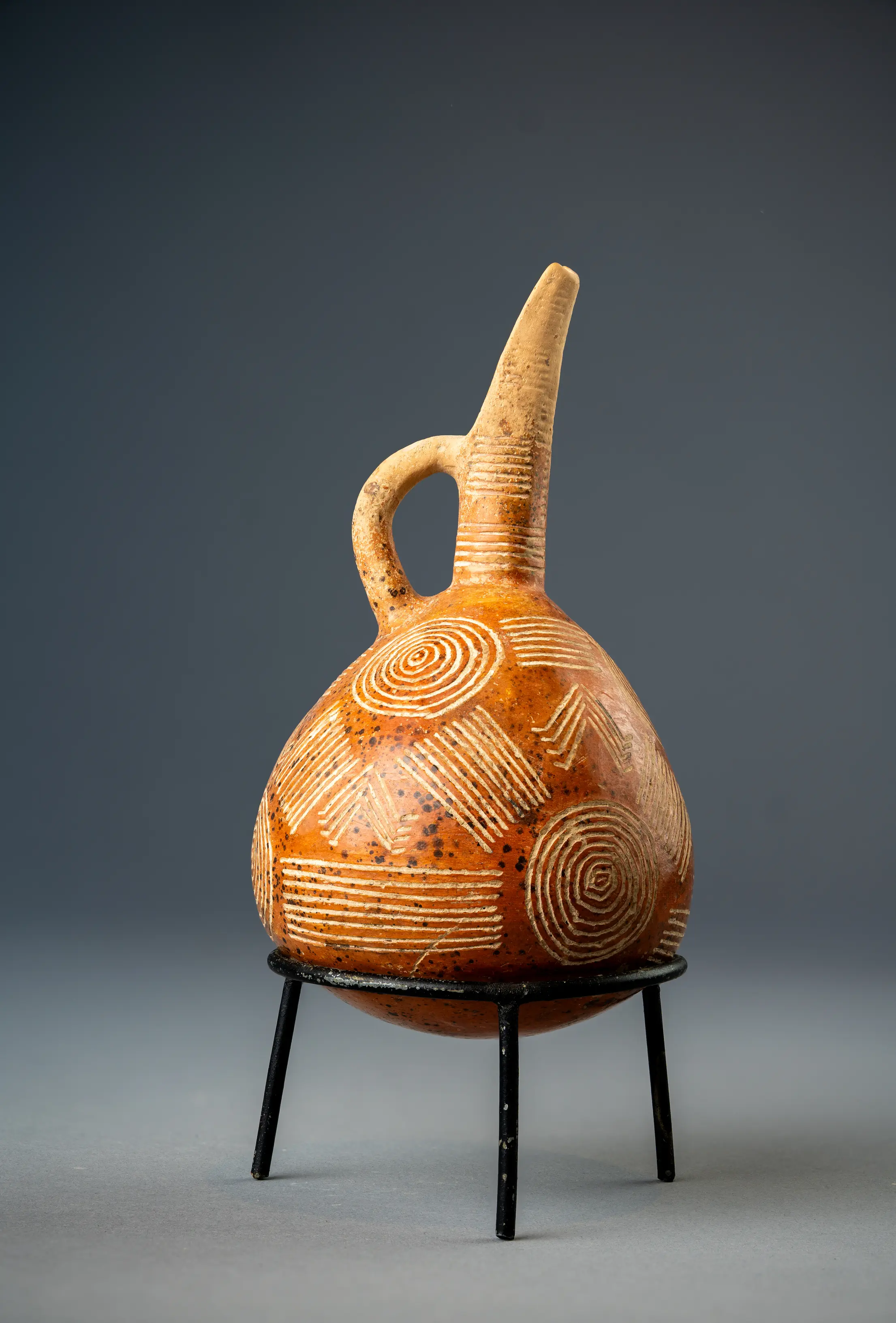
Handmade Red Polished juglet with a tall cutaway beak spout, incised concentric circles, hatched chevrons and line panels. Cyprus, c. 2100–1850 BCE.
Date
2100 - 1850 BC
Accession No.
JUG-BA-005
Collection
Alexis Drakopoulos
Provenance
- 1965–2025, The Goodman Collection (acquired 1965–1969)
- 2025–present, Alexis Drakopoulos, London
Early Cypriot III to Middle Cypriot I, c. 2100–1850 BCE · Red Polished ware · Handmade, incised and white-filled
A small juglet with a pear-shaped body swelling to a heavy, rounded base, from which a narrow neck rises into a long, tapering beak cut away obliquely at the tip. A slender loop handle springs from the upper neck, just below the beak, and drops to the shoulder. The body carries a burnished orange-red slip flecked with small dark spots. Its surface is divided into free, loosely arranged fields: large concentric circles, one drawn as a tight spiral, sit between blocks of horizontal lines and bands of hatched chevrons that zigzag around the shoulder. The neck is ringed with groups of close horizontal grooves. The incisions are broad and deep, and the white filling stands out crisply against the red. The upper neck, beak and handle are a pale buff, without the red surface of the body and lower neck.
Commentary
The piece belongs to the incised Red Polished ware of the later Early Bronze Age. It was built by hand, slipped, burnished and decorated with incisions filled with a white paste. The round base places it after the flat-based vessels of the earlier Early Cypriot phases; fully round-bodied pots are characteristic of Early Cypriot III and later [1]. Its decorative grammar, with concentric circles set against panels of parallel lines and hatched zigzags, is the standard vocabulary of Red Polished III, the island-wide phase that runs from Early Cypriot III into the Middle Cypriot period. On current radiocarbon reckoning that places it roughly between 2100 and 1850 BCE [7]. Red Polished is hard to date closely without a tomb group, and this juglet has no recorded find-spot, so the range is deliberately broad.
The shape is a juglet with a cutaway beak spout. Morris illustrates the beaked or cutaway-spouted jug in incised, relief-decorated and plain Red Polished versions, including an incised example (his pl. 65a), and notes that such spouts were a Bronze Age fashion that did not survive into the Iron Age [2]. Stewart's corpus remains the framework for classifying these small jugs [6]. Close relatives in public collections include a juglet with oblique mouth and incised line groups from Vounous Tomb 65 in the Louvre (AO 17534) [4] and a Red Polished III juglet from Ayia Paraskevi in the British Museum (1888,0927.21), decorated, like this one, with concentric circles alternating with bands of parallel lines [5].
Heavily drawn concentric circles are one of the marks of the workshops of Deneia and Lapithos in the north-west, whose cemeteries have released great numbers of vessels into collections worldwide [3]. The motif was also used elsewhere, at Ayia Paraskevi near Nicosia for instance, so the juglet can be described as in a style associated with the north-western workshops, without a secure attribution to any one site.
Small juglets like this were used for pouring modest quantities of liquid, and the narrow, pointed spout suits controlled dispensing. Whole examples survive mostly from chamber tombs, where they were placed with the dead alongside larger jugs and bowls. We know of no residue analysis for vessels of this type, so their contents remain unknown.
One open question concerns the pale colour of the neck and handle. It may result from wear of the slip or from uneven firing, but it could also mark a repaired or reconstructed spout.
References
- 1.Brown, A.C. and Catling, H.W. (1980) Ancient Cyprus. Oxford: Ashmolean Museum, p. 27.
- 2.Morris, D. (1985) The Art of Ancient Cyprus. Oxford: Phaidon, pp. 48, 54–55, pl. 65a.
- 3.Webb, J.M. (2010) 'The ceramic industry of Deneia: crafting community and place in Middle Bronze Age Cyprus', in Bolger, D. and Maguire, L.C. (eds) The Development of Pre-State Communities in the Ancient Near East: Studies in Honour of Edgar Peltenburg. BANEA 2. Oxford: Oxbow, pp. 173–174.
- 4.Musée du Louvre, Paris, AO 17534: Red Polished juglet with oblique mouth, Vounous Tomb 65.
- 5.British Museum, London, 1888,0927.21: Red Polished III juglet with concentric circles and bands of parallel lines, Ayia Paraskevi.
- 6.Stewart, J.R. (1962) The Early Cypriote Bronze Age. Swedish Cyprus Expedition IV.1A. Lund.
- 7.Manning, S.W. (2013) 'A new radiocarbon chronology for prehistoric and protohistoric Cyprus', in Knapp, A.B. The Archaeology of Cyprus. Cambridge: Cambridge University Press, pp. 485–533.
More from the Catalogue
Browse related objects
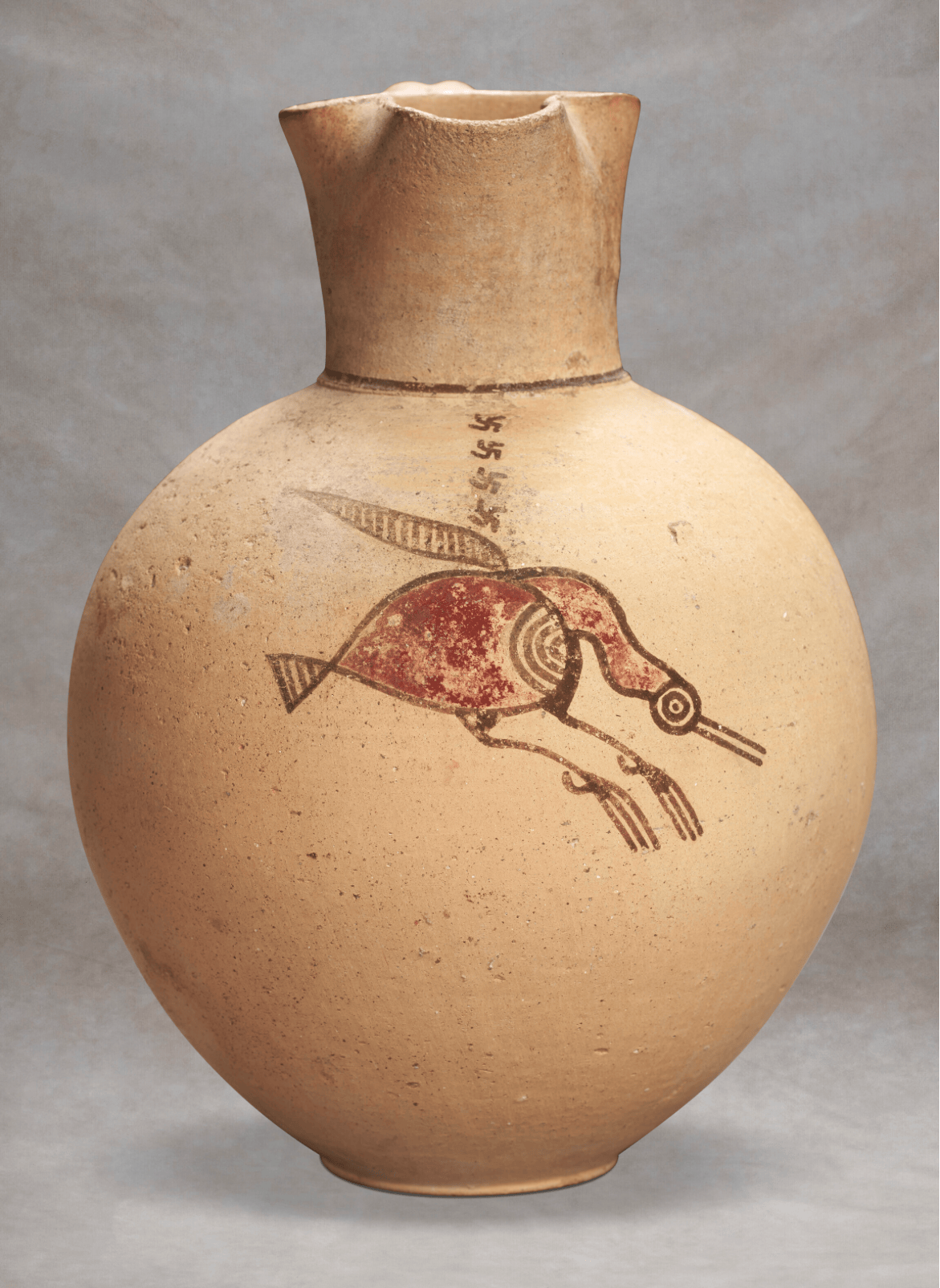
Bichrome Oinochoe
Archaic I
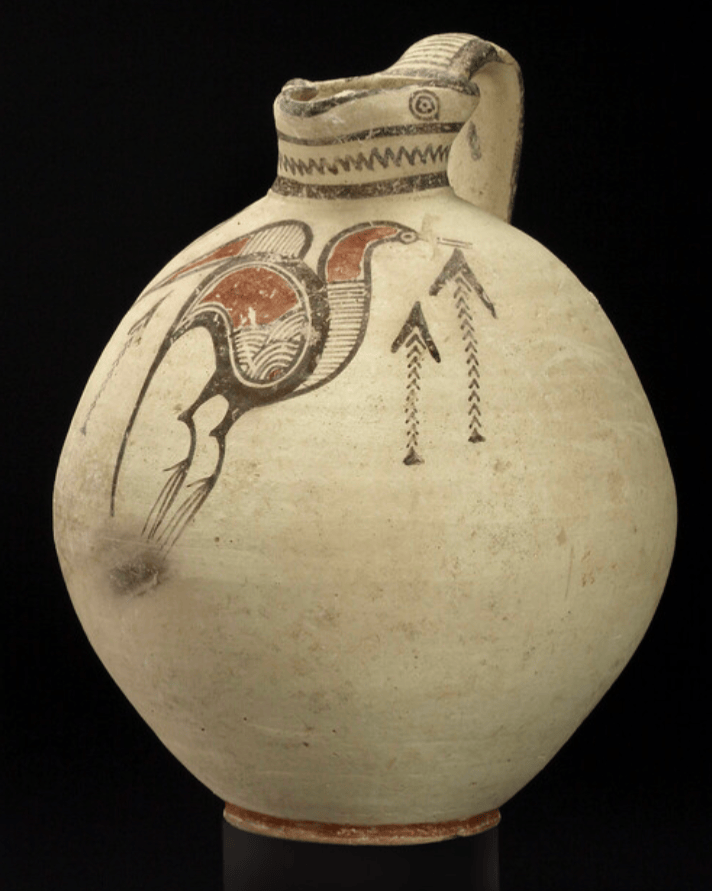
Free-field bichrome jug with image of an Ibis bird and reeds
Archaic
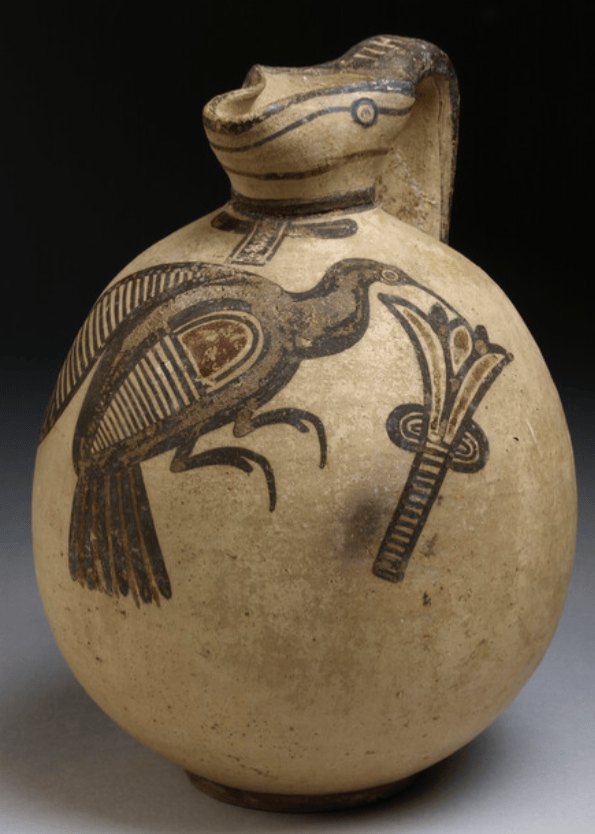
Squat bichrome jug in free-field style with image of bird picking a lotus flower
Archaic
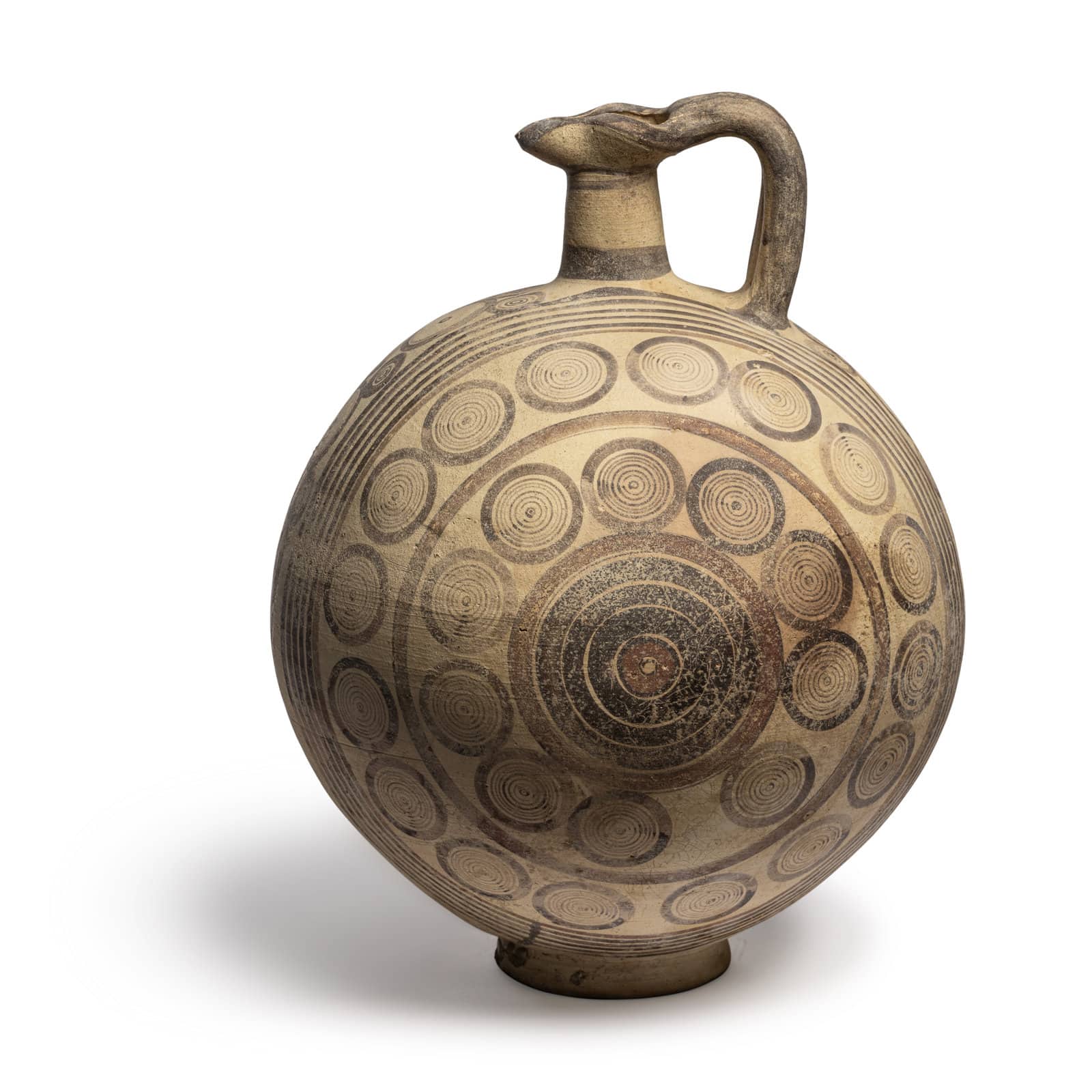
A Cypriot Bichrome-Ware Oinochoe Jug
Archaic I
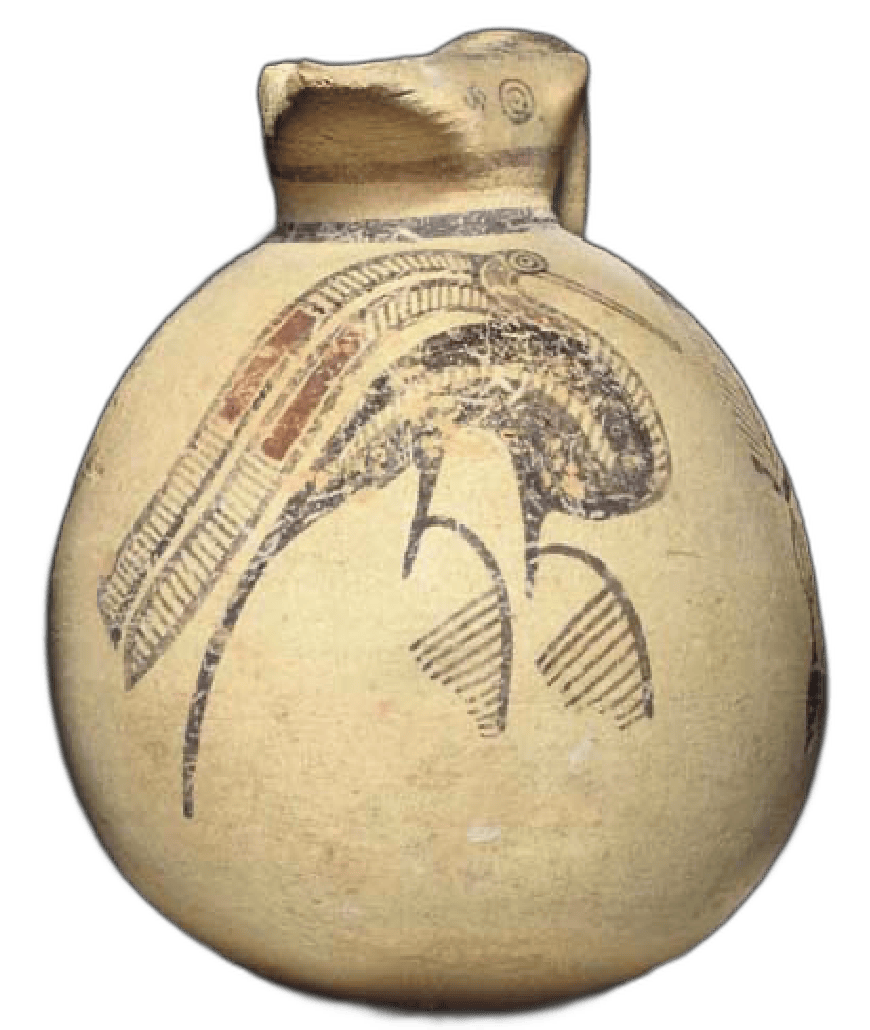
Oinochoe with Free Field Bird
Archaic I
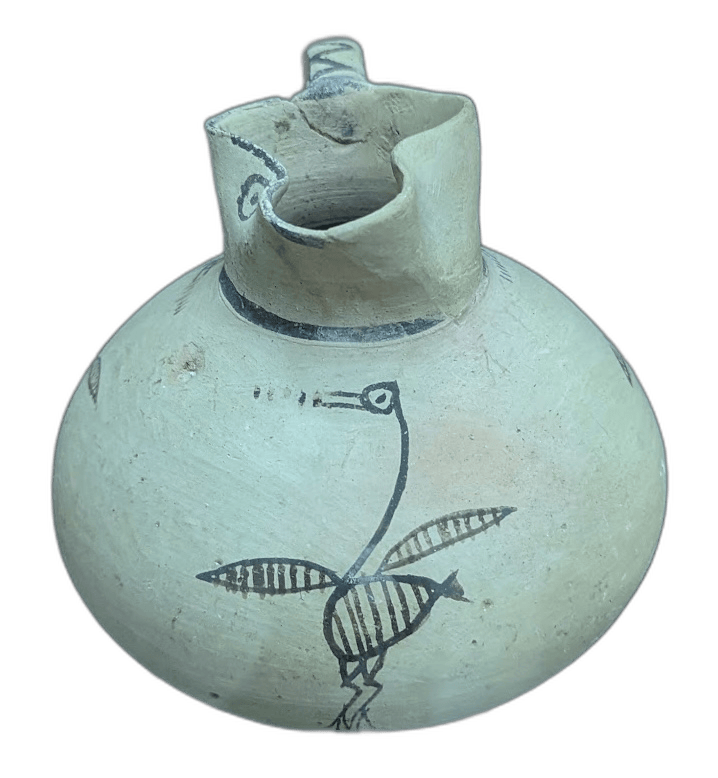
Small Oinochoe with Free Field Bird
Archaic I
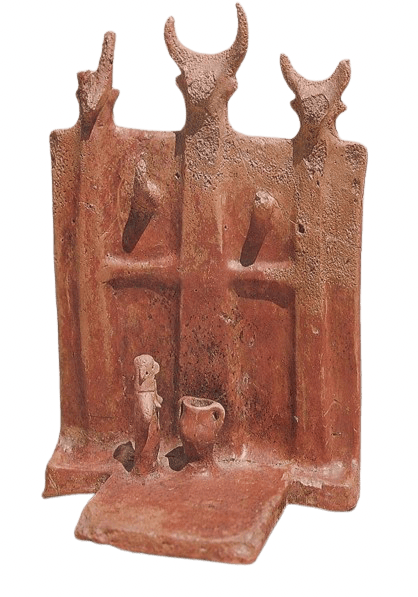
Red Polished Shrine
Middle Bronze Age I
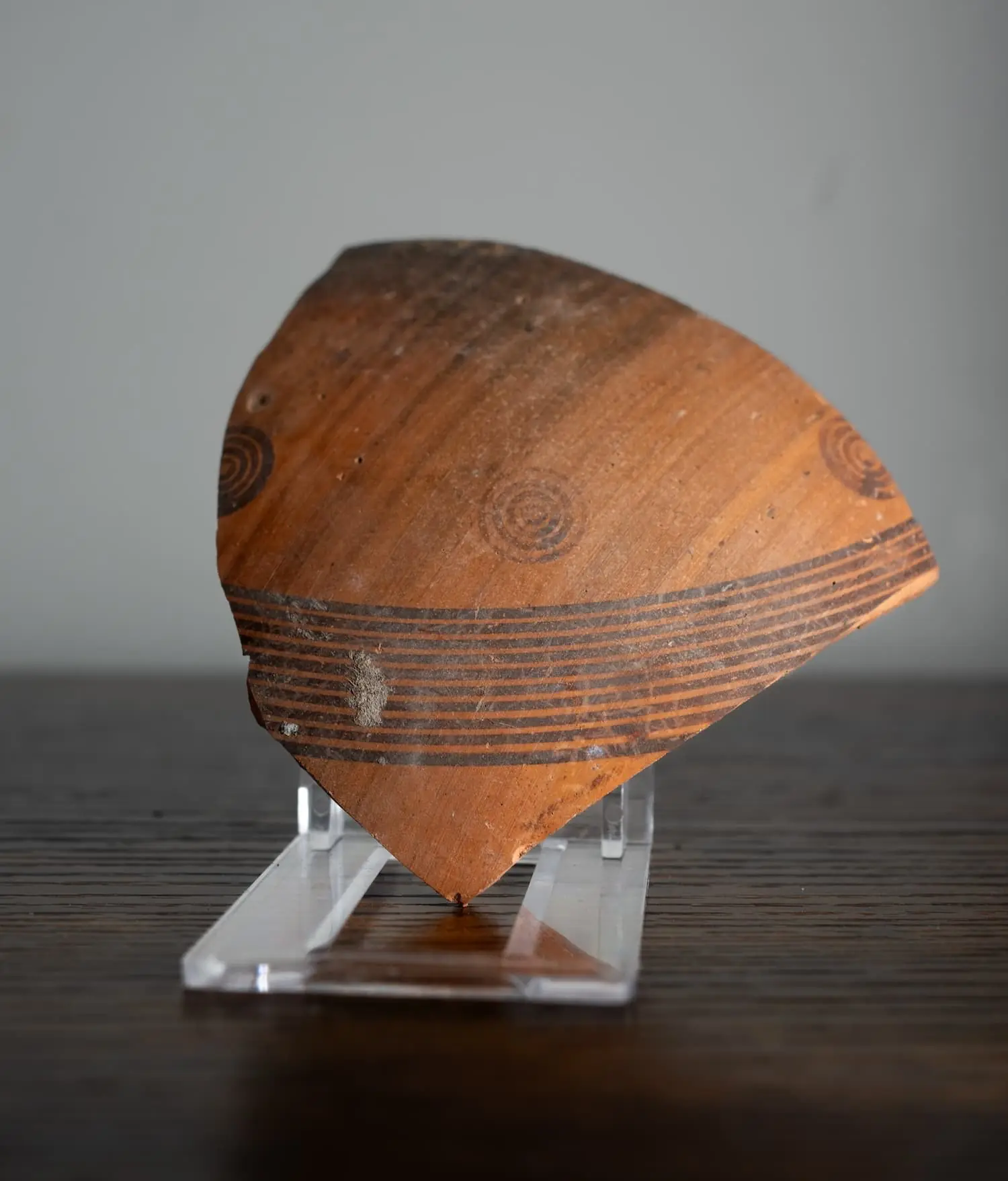
Black-On-Red Geometric Jug Sherd
Geometric II
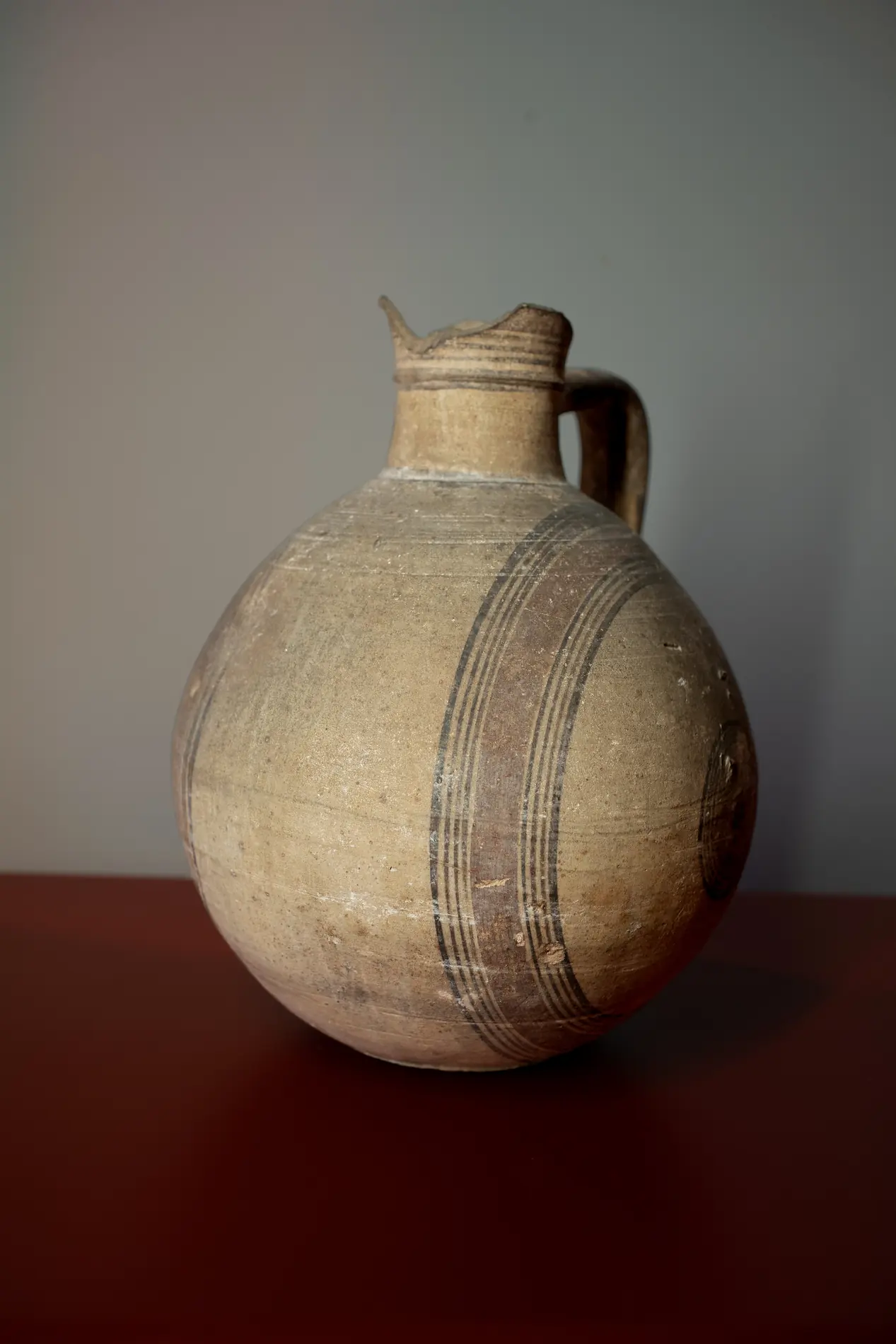
Bichrome Jug
Geometric
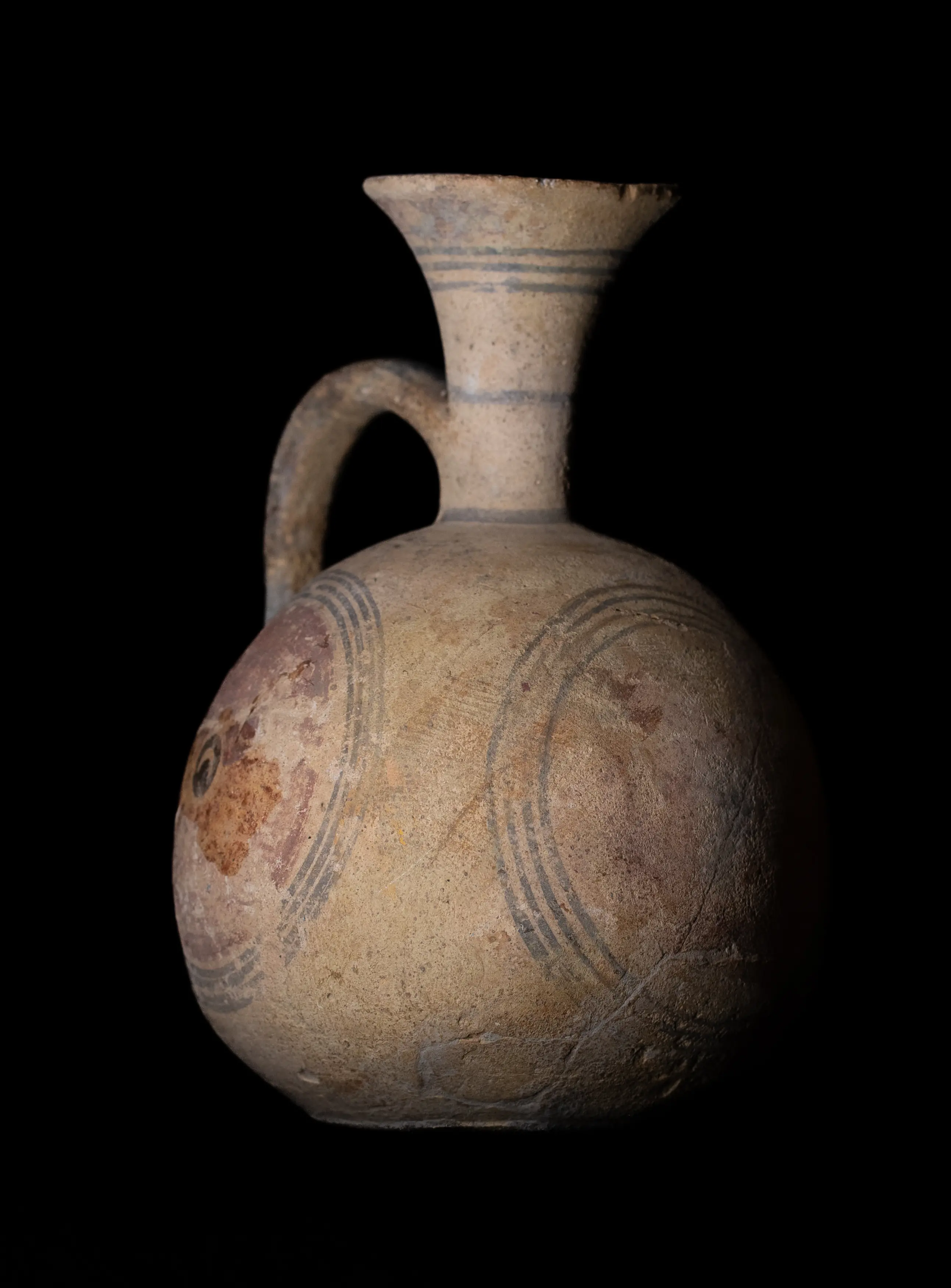
Bichrome Juglet
Geometric
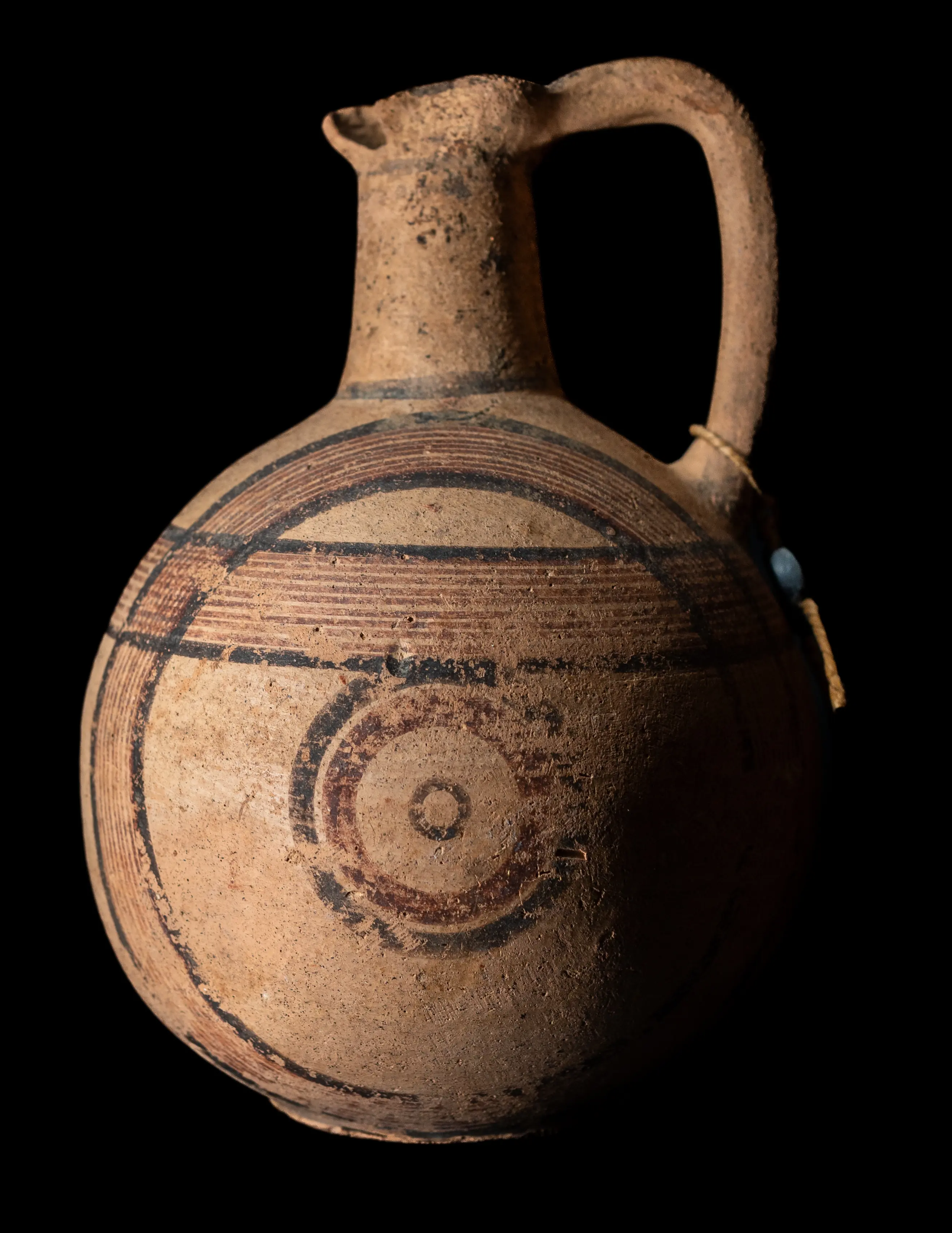
Bichrome Oinochoe
Geometric
Juglet
Archaic II
Oinochoe
Geometric III
Jug
Archaic I
Juglet
Archaic I
Jug
Geometric I
Terracotta jug
Early Bronze Age I
Juglet
Geometric I