
Early Bronze Age III
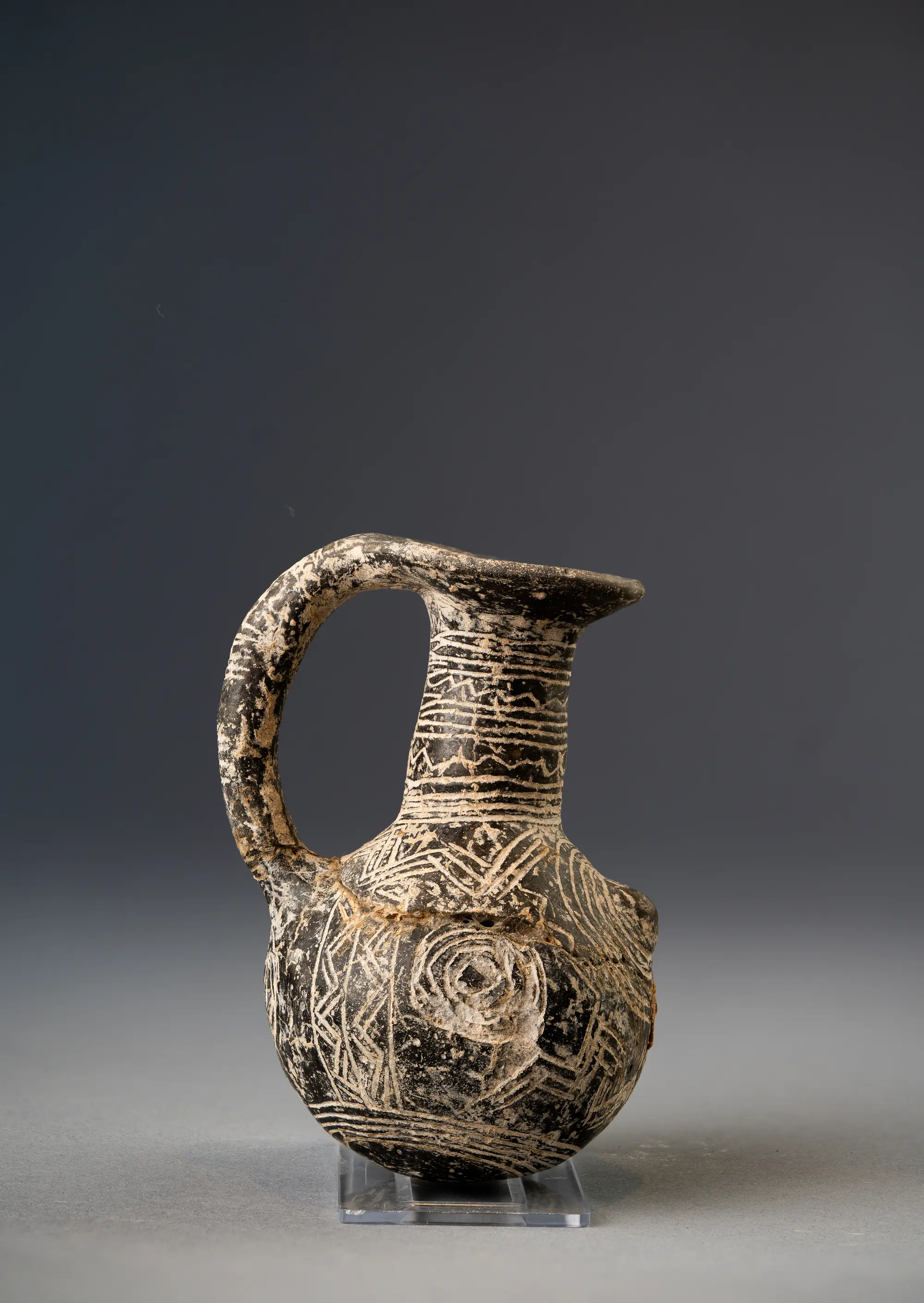
Black Polished Juglet with Incised Decoration and Circled Bosses
Small handmade Black Polished juglet with white-filled incised zigzags, ladder bands and bosses ringed by concentric circles; Early to Middle Cypriot, c. 2100–1850 BCE.
Date
2100 - 1850 BC
Accession No.
JUG-BA-001
Collection
Alexis Drakopoulos
Provenance
- c. 1965–2025, The Goodman Collection (acquired 1965–1969)
- 2025–present, Alexis Drakopoulos, London
Early Cypriot III to Middle Cypriot I, c. 2100–1850 BCE · Black Polished ware · Handmade, incised and white-filled
A small handmade juglet with a round base, a squat globular body and a tall, slightly flaring neck that opens into a wide mouth, drawn forward at the front into a shallow pouring lip. A thick loop handle rises from the rim and drops to the shoulder. The surface is a burnished grey-black, worn to a soft sheen, with incisions packed with white. On the neck, bands of close horizontal lines alternate with running zigzags. The shoulder carries hatched chevrons, and the body is divided by vertical ladder bands and long curving lines. Small bosses at the widest point are each ringed by incised concentric circles.
The juglet has been broken and mended around the upper body. An ochre-coloured join runs round the shoulder, and a loss over one of the bosses is filled in the same material. Lime deposits fleck the handle.
Commentary
The black-fired, burnished surface and dense white-filled incision place this juglet in Black Polished ware, the dark relative of Red Polished. The difference between the two lies in firing: Black Polished was fired in a reducing atmosphere, so the iron-rich slip turned black instead of red. Brown and Catling describe a "completely black fabric" that was popular in Early Cypriot III, used for vessels that are "nearly always small and invariably have incised patterns" [1]. Morris adds that Black Polished pieces are much rarer than their red equivalents [2]. This juglet fits that description on every count: it is small, fully incised, and its decoration uses the standard vocabulary of the period, with ladder bands, zigzags, hatched chevrons and concentric circles.
The date rests on shape and ware. Flat bases of the earlier Early Cypriot phases gave way to fully round-bodied vessels in Early Cypriot III [1], and this juglet has no standing surface at all. Black Polished is concentrated in Early Cypriot III but continues into the Middle Cypriot period, as a Black Polished III juglet in the British Museum classed as Middle Cypriot I–II shows [6]. A range of about 2100–1850 BCE is the fairest bracket for a piece without a find-spot. Ware labels within this family are broad, and the Early Cypriot typology set out by Stewart [7] was built from tomb groups of known context, which this vessel lacks.
The closest comparisons are small dark-fired juglets with the same proportions. A Cesnola juglet in the Metropolitan Museum has a similar flaring mouth, a lug on the shoulder and chevrons on the neck [4]. An excavated Black Polished juglet from Lapithos Tomb 313A in Stockholm comes from a securely Early Cypriot III tomb [5]. The raised bosses ringed with circles are less common, and they fit the taste for modelled additions found in north coast and north-western workshops. Black Polished is far more common at Deneia than at other sites, and some Black Polished forms occur only there [3]. Black Polished vessels are also known from the Lapithos cemeteries on the north coast, as the Stockholm juglet shows [5]. A workshop in that north-western sphere is likely, but we know of no evidence that ties this juglet to a particular cemetery.
Juglets of this size held small amounts of liquid, perhaps oil or a prepared liquid, though no residue work on Black Polished vessels has confirmed their contents. Most surviving examples come from chamber tombs, where they were placed with the dead alongside larger Red Polished vessels. Whether the black finish carried a meaning distinct from red, or was simply a prized fine finish for small vessels, is still an open question.
References
- 1.Brown, A.C. & Catling, H.W. (1980) Ancient Cyprus. Oxford: Ashmolean Museum, p. 27.
- 2.Morris, D. (1985) The Art of Ancient Cyprus. Oxford: Phaidon, p. 23.
- 3.Webb, J.M. (2010) 'The ceramic industry of Deneia: crafting community and place in Middle Bronze Age Cyprus', in D. Bolger & L.C. Maguire (eds), The Development of Pre-State Communities in the Ancient Near East: Studies in Honour of Edgar Peltenburg. BANEA Publication Series 2. Oxford: Oxbow, pp. 174–184.
- 4.Metropolitan Museum of Art, New York, 74.51.1239 (Cesnola Collection). Small dark-fired incised jug with flaring mouth and shoulder lug, H. 10.6 cm.
- 5.Medelhavsmuseet, Stockholm, L.313A:061. Black Polished juglet from Lapithos Tomb 313A, Early Cypriot III, H. 7.7 cm.
- 6.British Museum, London, 1936,1016.2. Black Polished III juglet with cutaway spout and incised bands, Middle Cypriot I–II, H. 8 cm.
- 7.Stewart, J.R. (1962) The Early Cypriote Bronze Age. The Swedish Cyprus Expedition IV.1A. Lund: Swedish Cyprus Expedition.
More from the Catalogue
Browse related objects
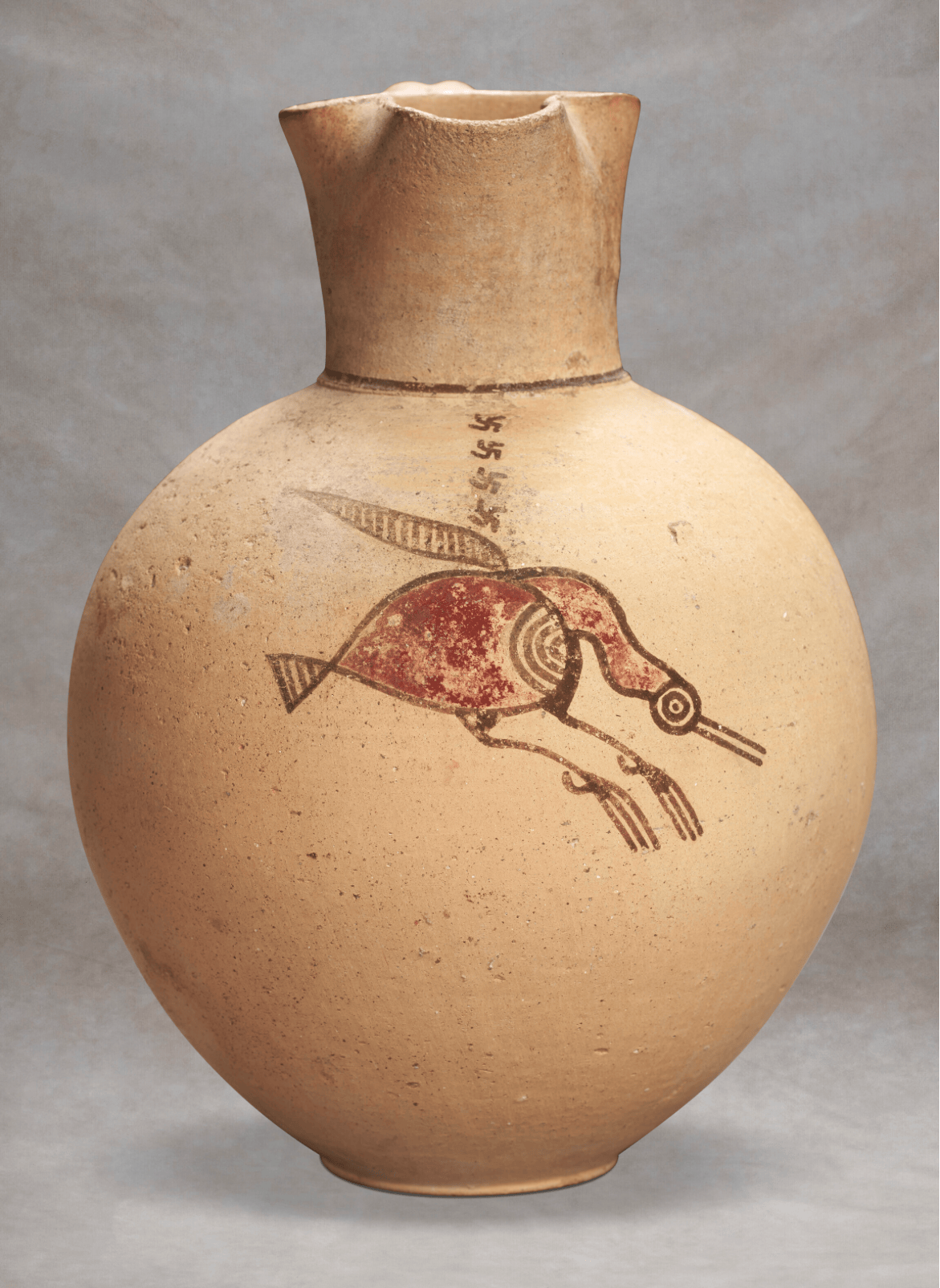
Bichrome Oinochoe
Archaic I
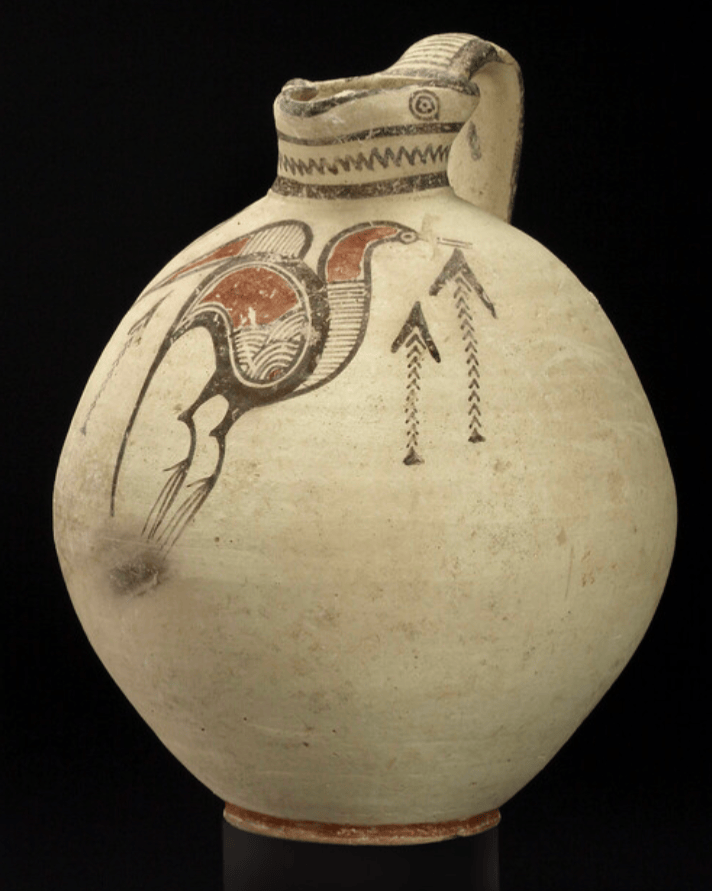
Free-field bichrome jug with image of an Ibis bird and reeds
Archaic
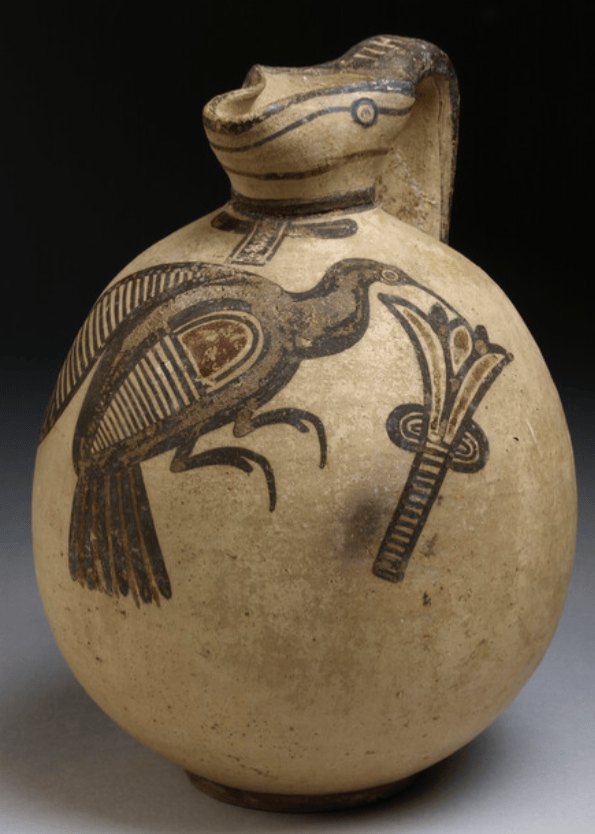
Squat bichrome jug in free-field style with image of bird picking a lotus flower
Archaic
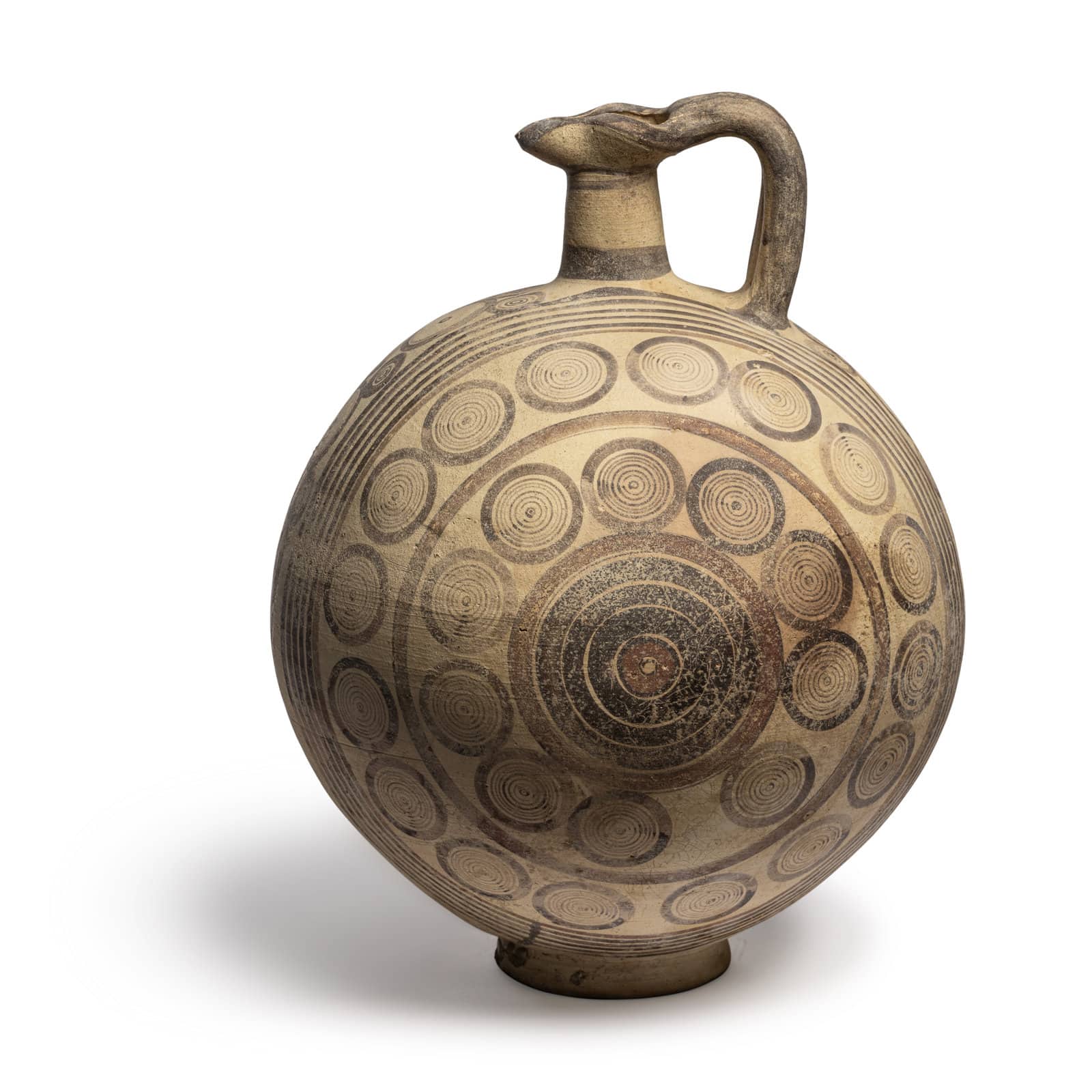
A Cypriot Bichrome-Ware Oinochoe Jug
Archaic I
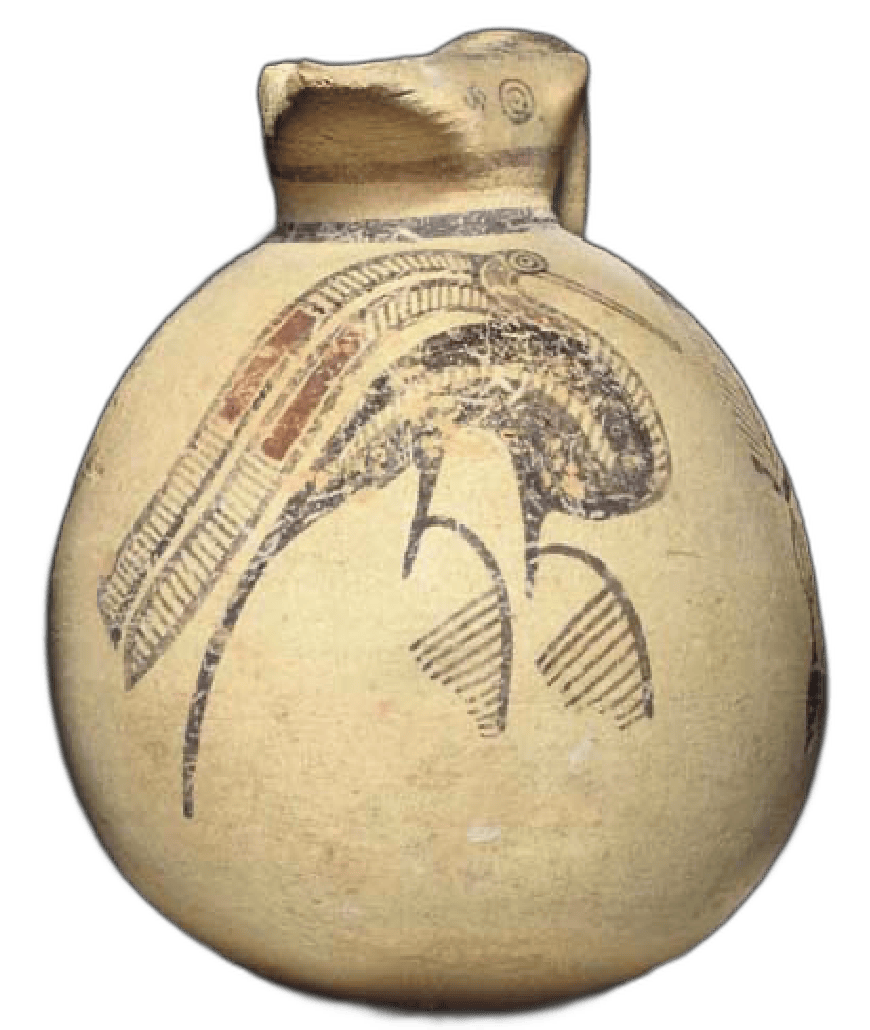
Oinochoe with Free Field Bird
Archaic I
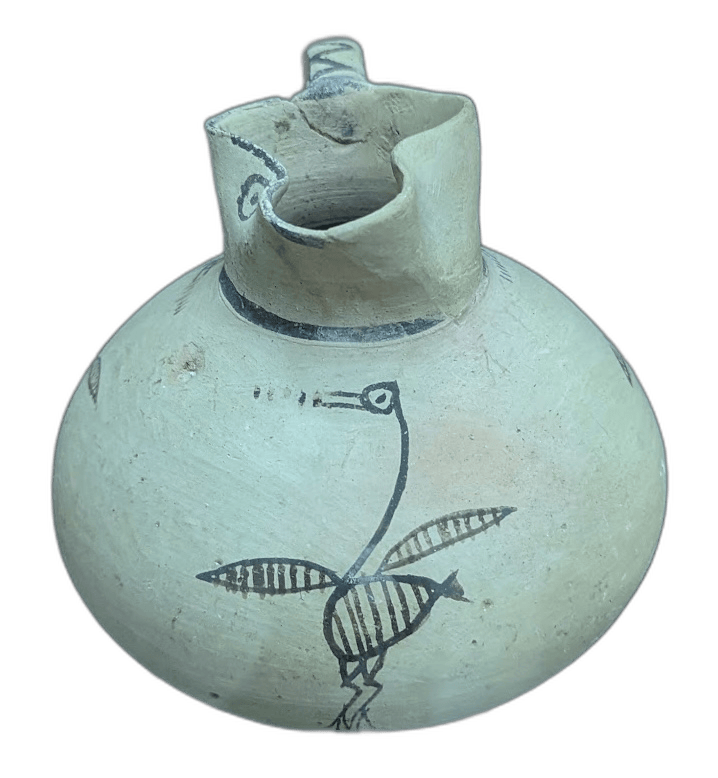
Small Oinochoe with Free Field Bird
Archaic I
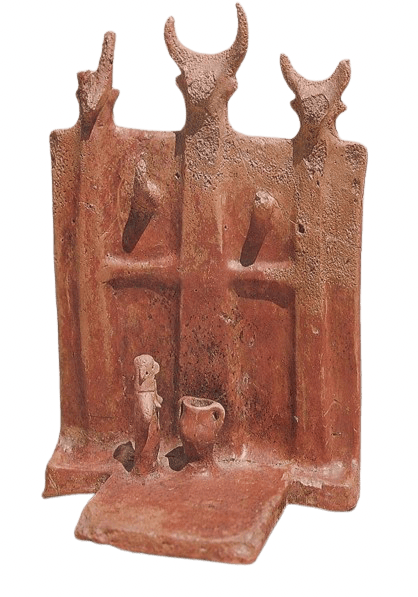
Red Polished Shrine
Middle Bronze Age I
Black-On-Red Geometric Jug Sherd
Geometric II
Bichrome Jug
Geometric
Bichrome Juglet
Geometric
Bichrome Oinochoe
Geometric
Juglet
Archaic II
Oinochoe
Geometric III
Jug
Archaic I
Juglet
Archaic I
Jug
Geometric I
Terracotta jug
Early Bronze Age I
Juglet
Geometric I