
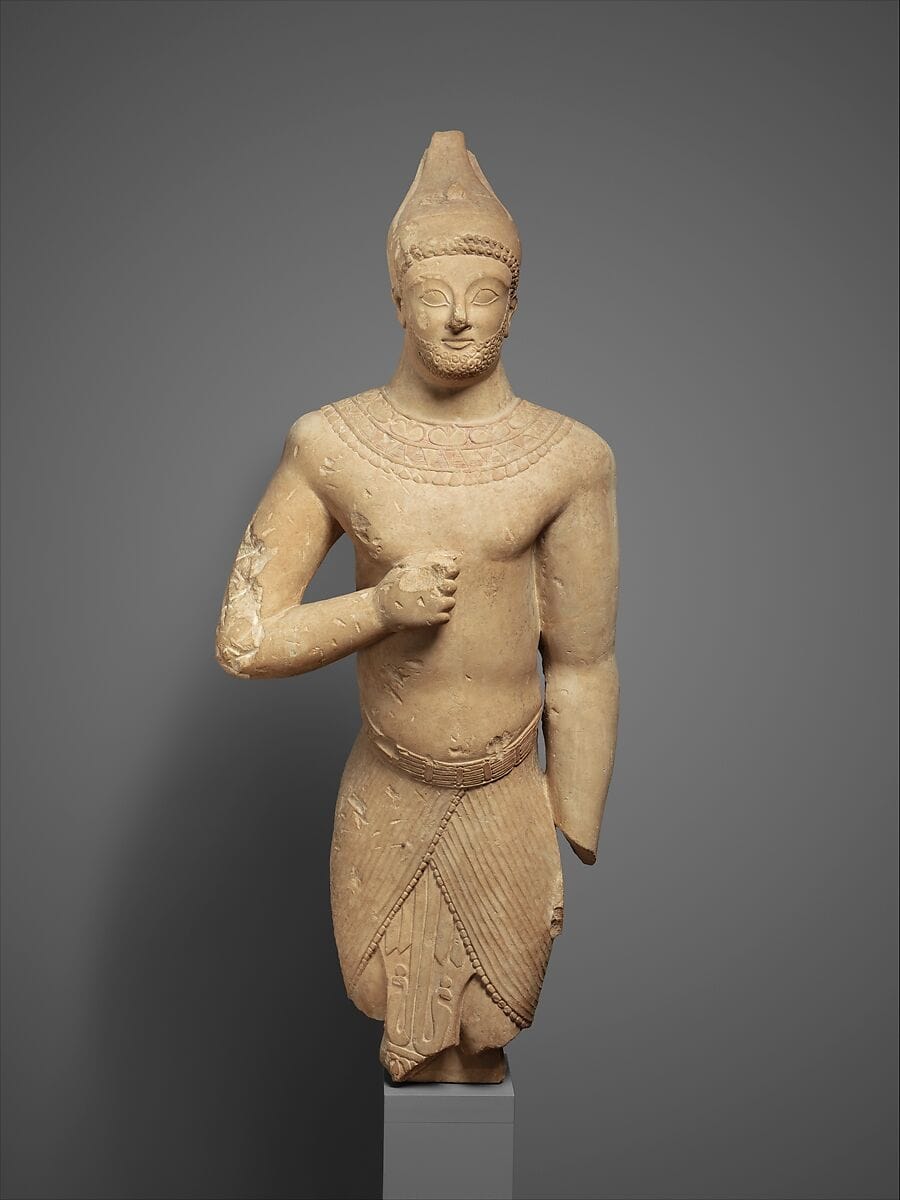
Archaic II
Limestone male figure in Egyptian dress
The figure wears the double crown of Egypt with the uraeus (sacred asp) in front, a three-row pectoral, a fringed kilt whose central panel is decorated with two uraei, and a link belt. He probably represents and was dedicated as a worshiper; his pose, with one arm bent across the chest, is typical of such figures. Remarkably, Egyptian sculpture was not imported into Cyprus. However, Egyptian influence on the island began in the Late Bronze Age (ca. 1600–1050 B.C.) and was reinforced by Phoenician imports. Only after Egypt took control of Cyprus in about 570 B.C. did details such as the double crown appear in sculpture. 51 1/4 × 22 × 12 in., 264 lb. (130.2 × 55.9 × 30.5 cm, 119.7 kg)
Date
550 - 525 BC
Accession No.
74.51.2472
Collection
Metropolitan Museum of Art
Provenance
- Sanctuary of Golgoi-Ayios Photios
References
- Doell, Johannes. 1873. Die Sammlung Cesnola. no. 43, p. 18, pl. II.9, St. Petersburg: L’Académie Impérial des Sciences.Perrot, Georges and Charles Chipiez. 1885. Histoire de l'Art dans l'Antiquité. t. 3, Phénicie, Cypre. pp. 526-30, fig. 358, Paris: Hachette.Myres, John L. 1914. Handbook of the Cesnola Collection of Antiquities from Cyprus. no. 1363, New York: The Metropolitan Museum of Art.Gjerstad, Einar. 1948. The Swedish Cyprus Expedition: The Cypro-Geometric, Cypro-Archaic, and Cypro-Classical Periods, Vol. 4(2). pp. 99-100, Stockholm: The Swedish Cyprus Expedition.Karageorghis, Vassos, Joan Mertens, and Marice E. Rose. 2000. Ancient Art from Cyprus: The Cesnola Collection in The Metropolitan Museum of Art. no. 182, p. 117, New York: The Metropolitan Museum of Art.Lightfoot, Christopher S. 2000. "The New Cypriot Galleries at The Metropolitan Museum of Art." Minerva, 11(3): pp. 19-20, fig. 7.Faegersten, Fanni. 2003. The Egyptianizing Male Limestone Statuary from Cyprus: a study of a cross-cultural eastern Mediterranean votive type. no. 21, p. 347, fig. 5, pls. 6.1, 26, Lund, Sweden: The Historical Museum at Lund University.Stylianou, Andreas and Patrick Schollmeyer. 2007. "Der Sarkophag aus Golgoi." Dynastensarkophage mit szenischen Reliefs aus Byblos und Zypern: Der Sarkophag aus Amathous als Beispiel kontaktinduzierten Wandels, 2. p. 220 n. 213, Mainz am Rhein: Philipp von Zabern.Hermary, Antoine and Joan R. Mertens. 2013. The Cesnola Collection of Cypriot Art : Stone Sculpture. no. 60, pp. 45, 59, 73-4, Online Publication, New York: The Metropolitan Museum of Art.Sørensen, Lone Wriedt. 2017. "True to type? Archaic Cypriot male statues made of limestone." Proceedings of the Danish Institute at Athens, VIII. pp. 66-67, fig. 10, Denmark: Aarhus University Press.Faegersten, Fanni and Carolina Lopez-Ruiz. 2023. "Beyond “Volute Capitals”: Materials, Meaning, and Adaptations of a Phoenician Motif." Journal of Eastern Mediterranean Archaeology and Heritage Studies, 11, (2-3): pp. 244-45, figs, 12-13.
More from the Catalogue
Browse related objects
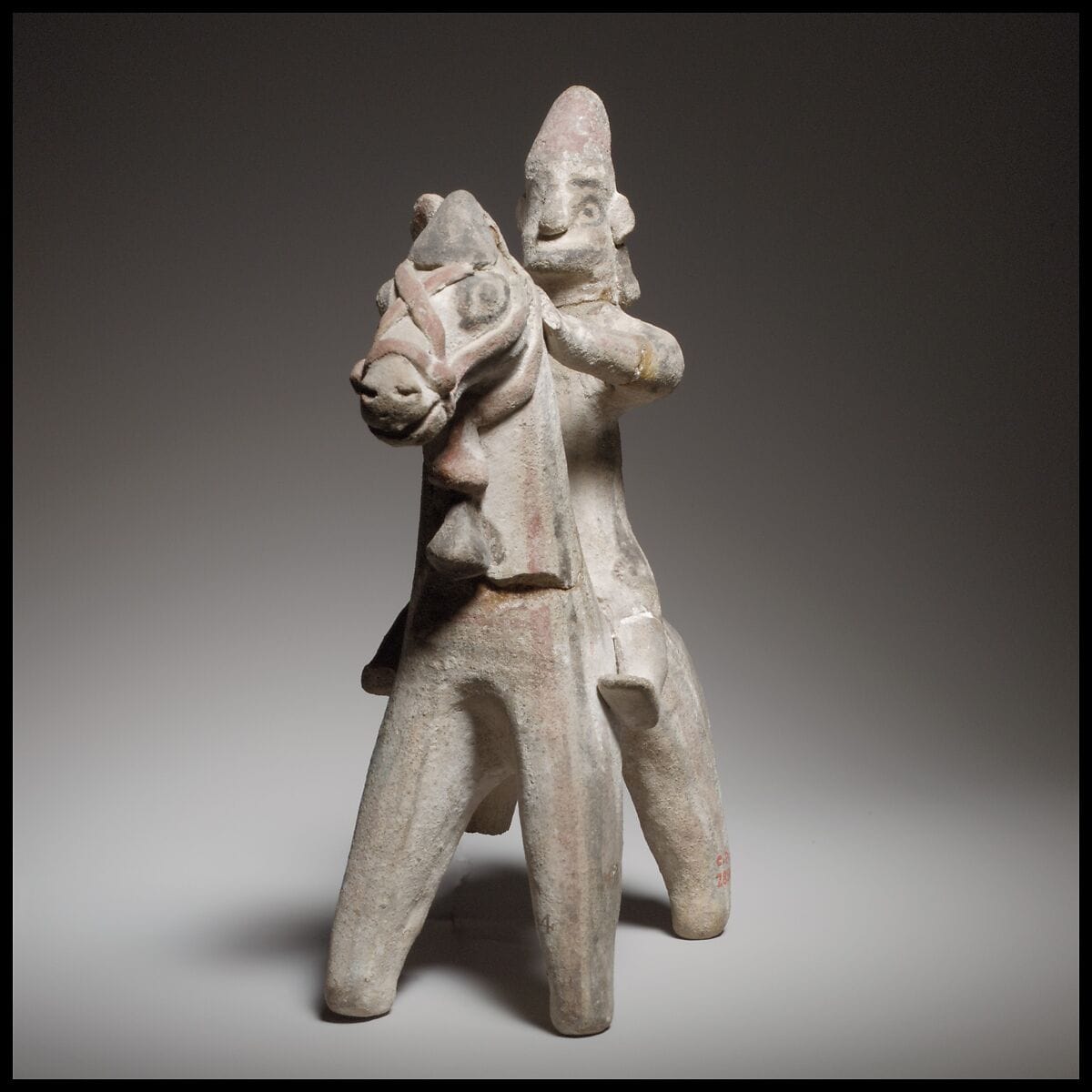
Horse and rider figurine
Archaic II
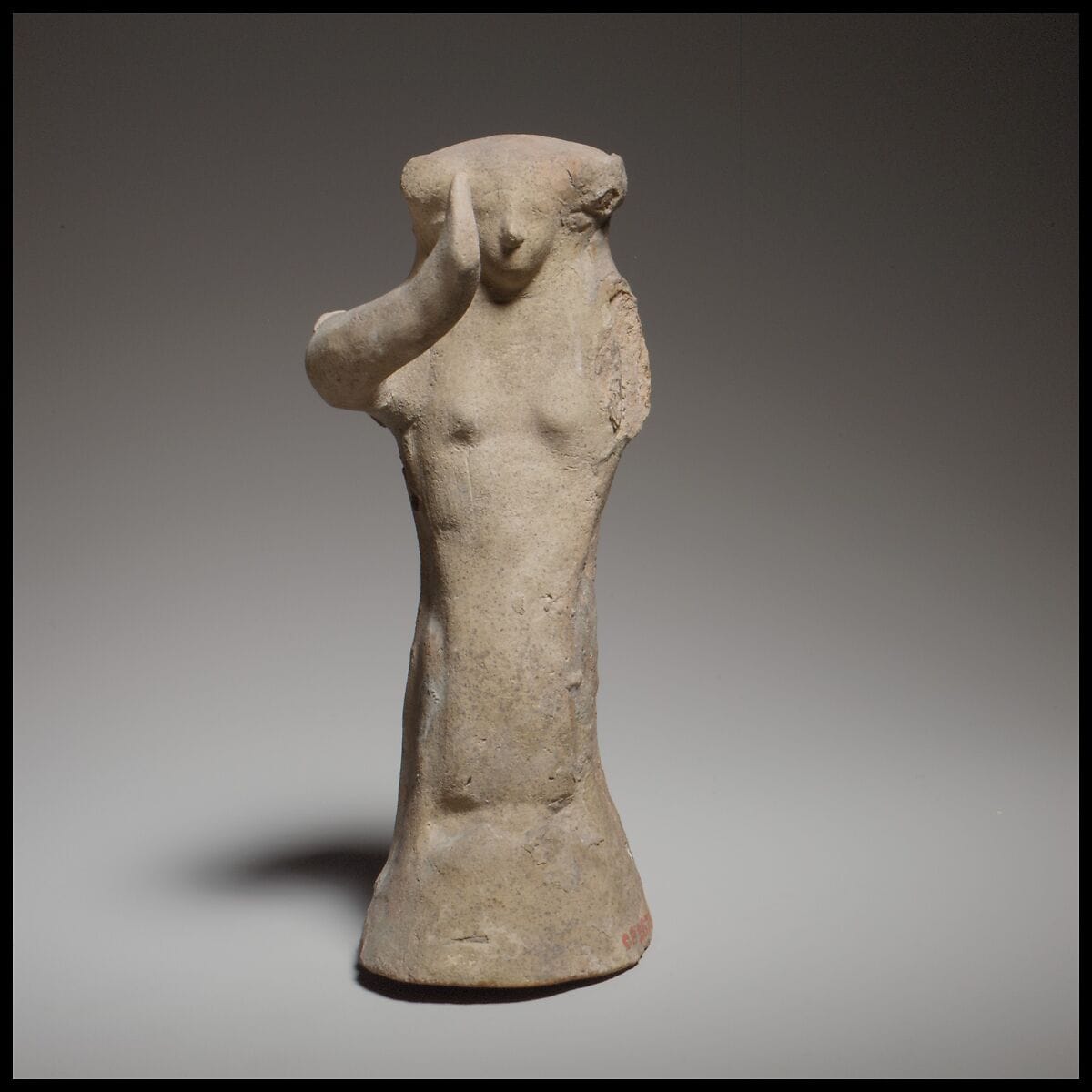
Seated female figurine of the dea gravida type
Archaic II
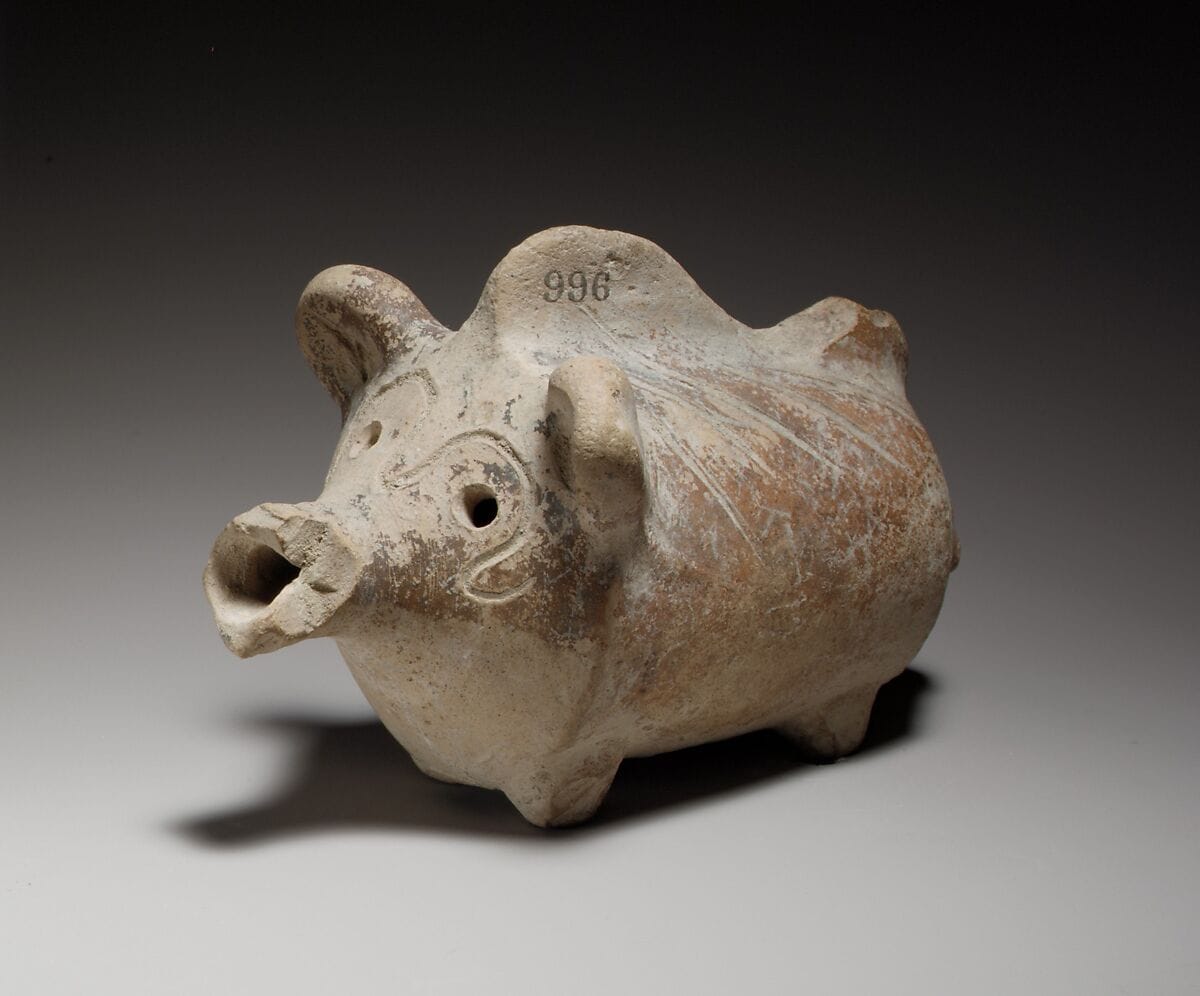
Terracotta rattle in the form of a pig
Hellenistic
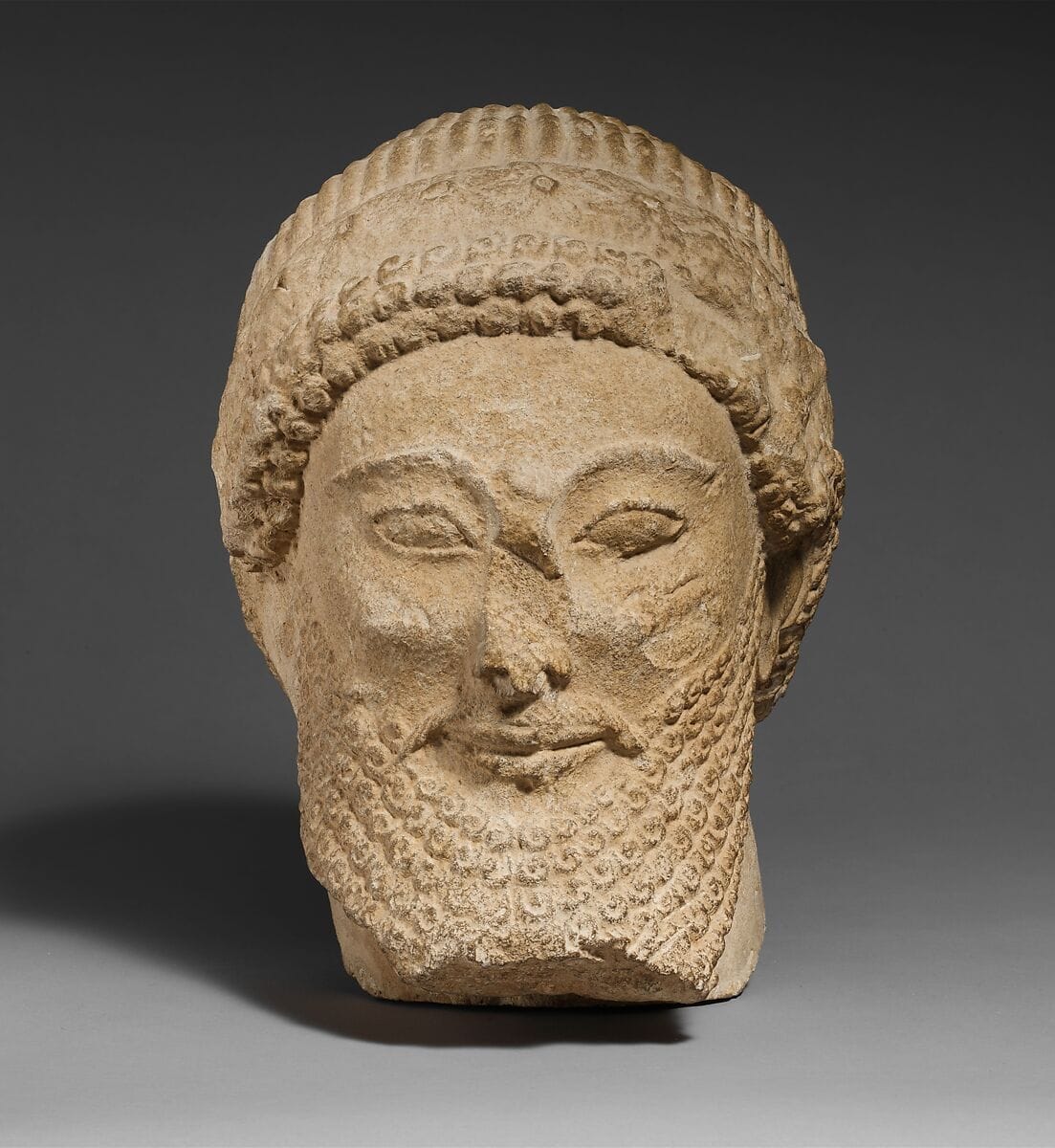
Limestone head of a bearded male with a wreath of flowers
Archaic II
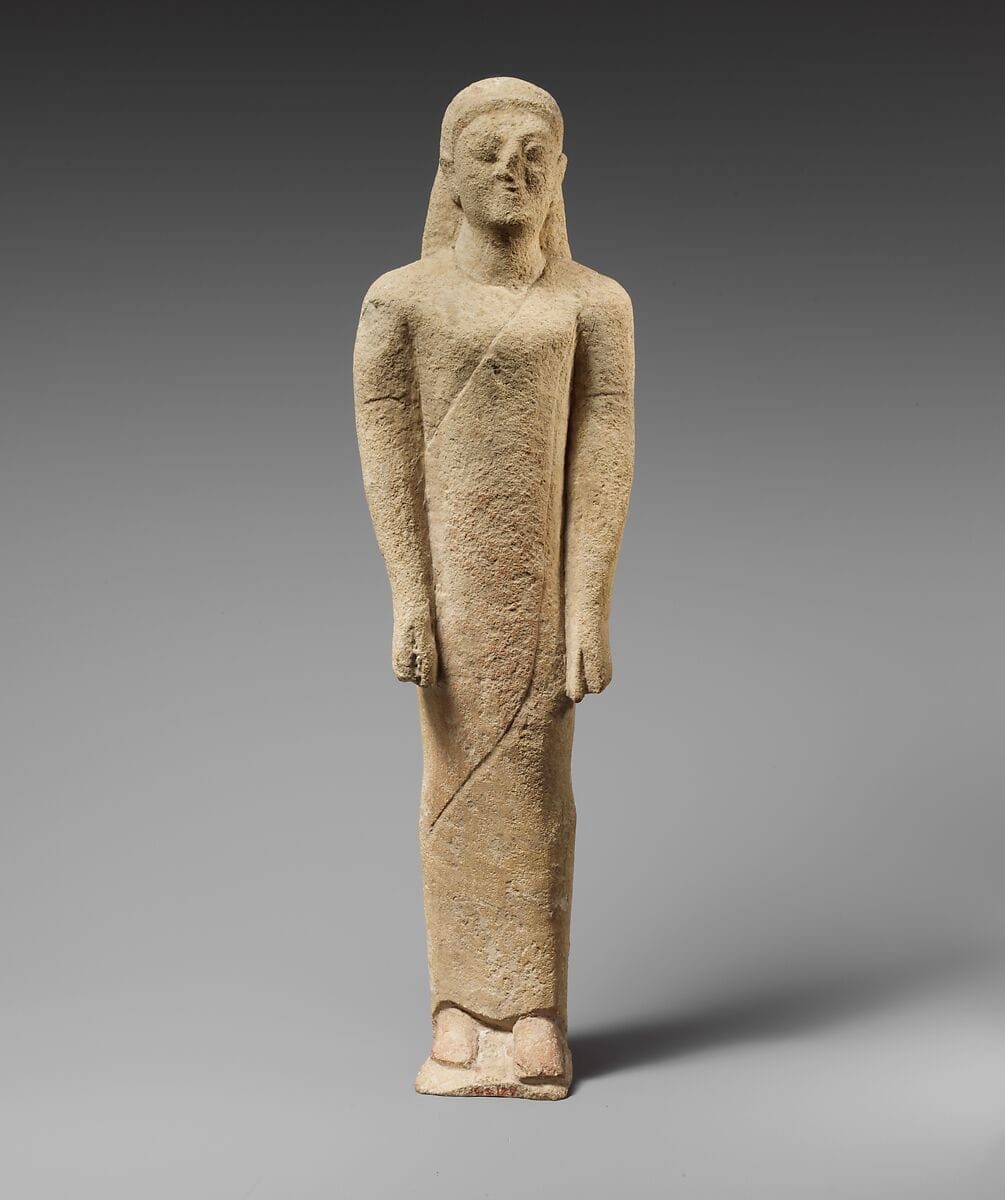
Limestone statuette of a beardless male votary in Greek dress
Archaic II
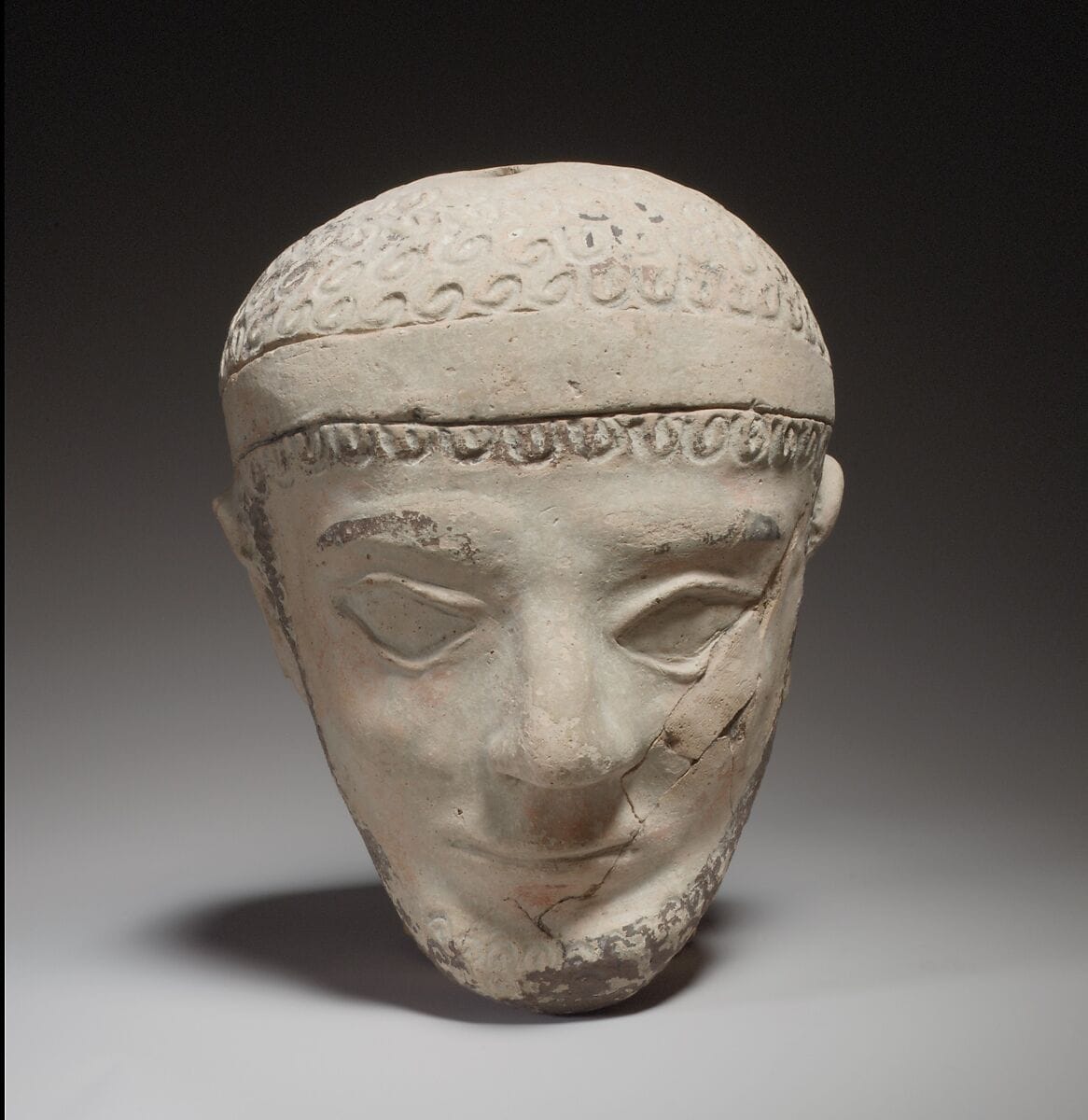
Terracotta head of a man
Archaic II
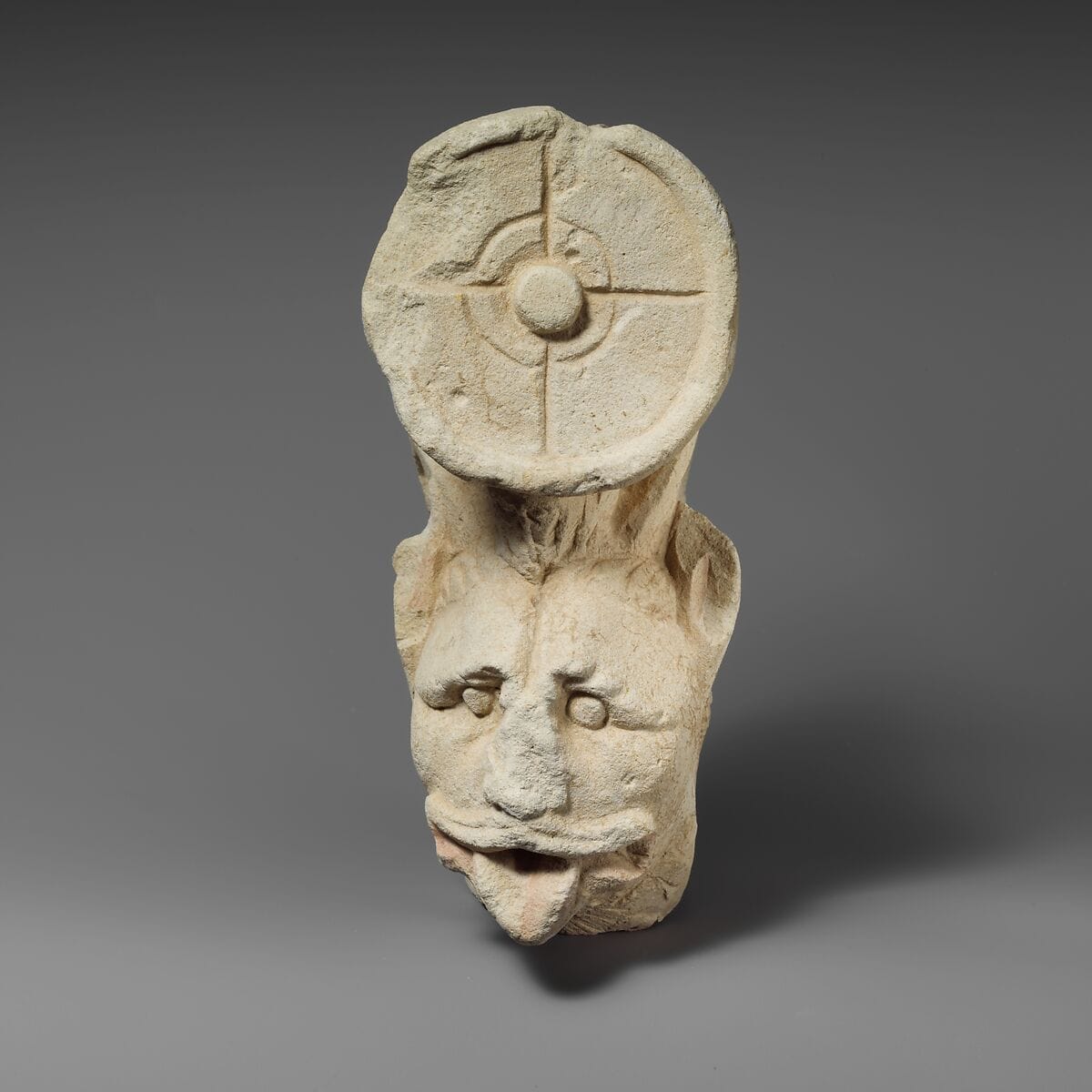
Fragment of a limestone throne (?) with the head of a horned lion
Roman
Head of a comic figurine
Hellenistic
Limestone statuette of a female votary of the kore type
Archaic II
Limestone head of Apollo
Hellenistic
Standing female flute player
Classical
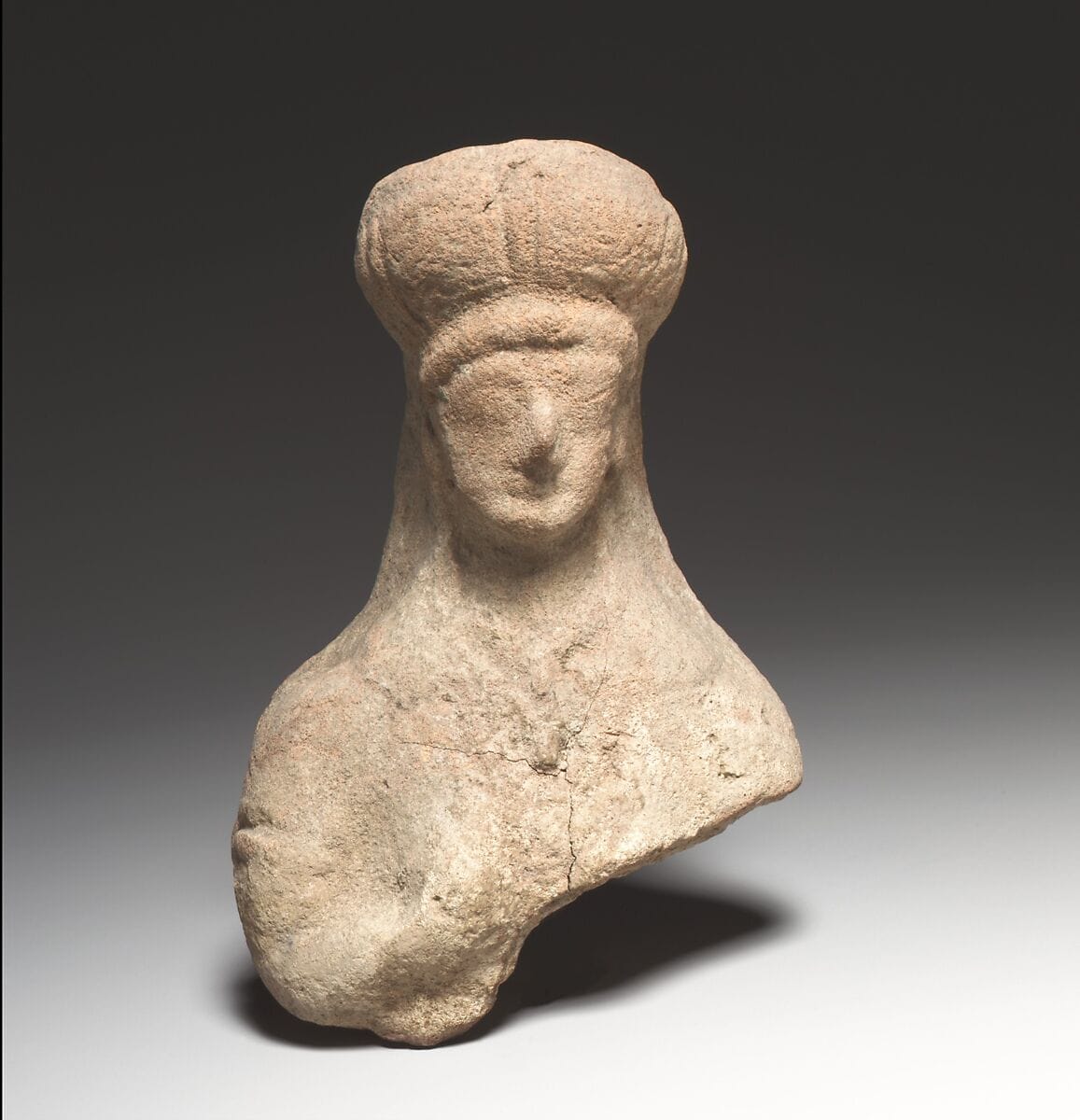
Standing female figurine
Archaic II
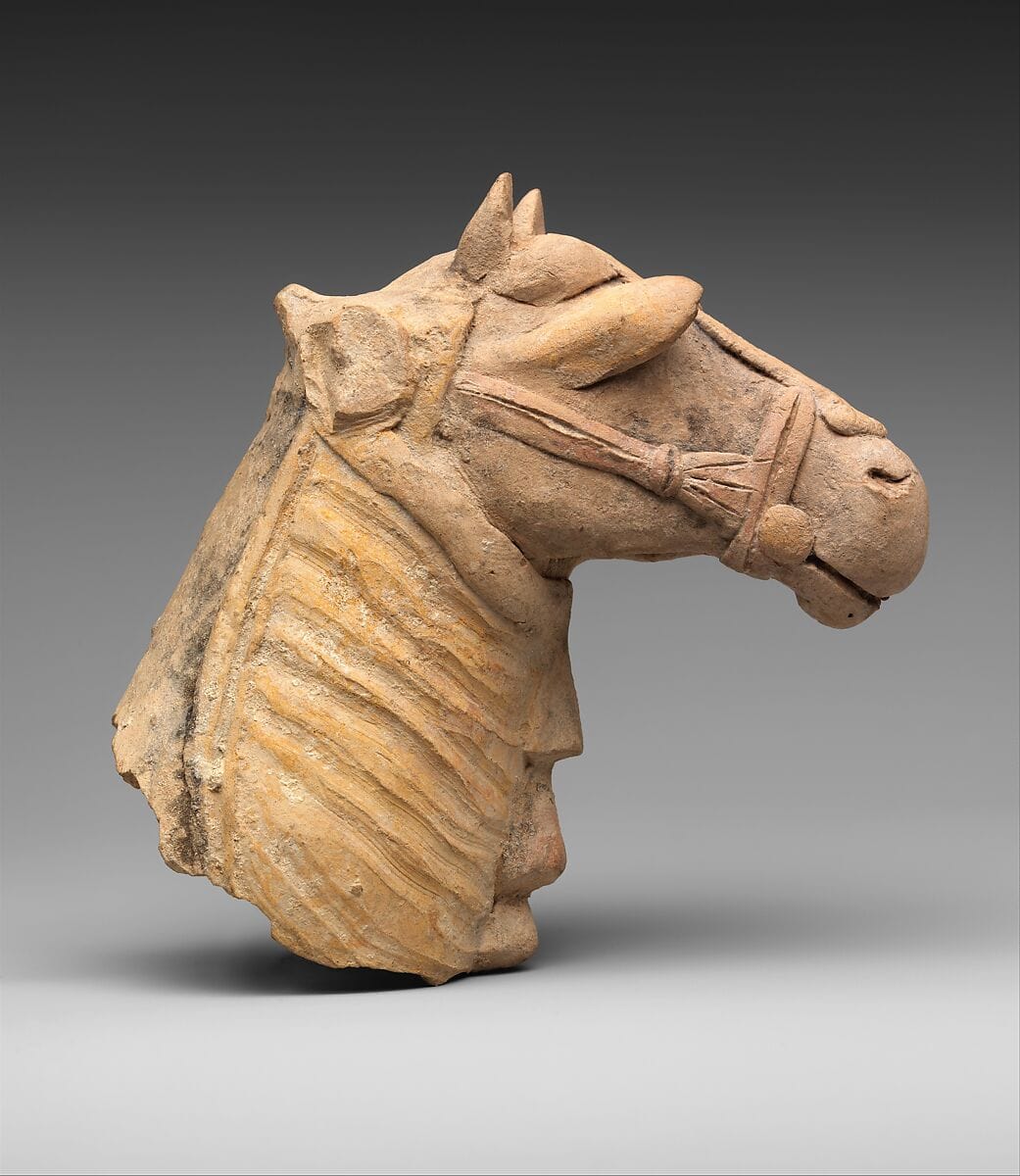
Horse's head with harness
Archaic II
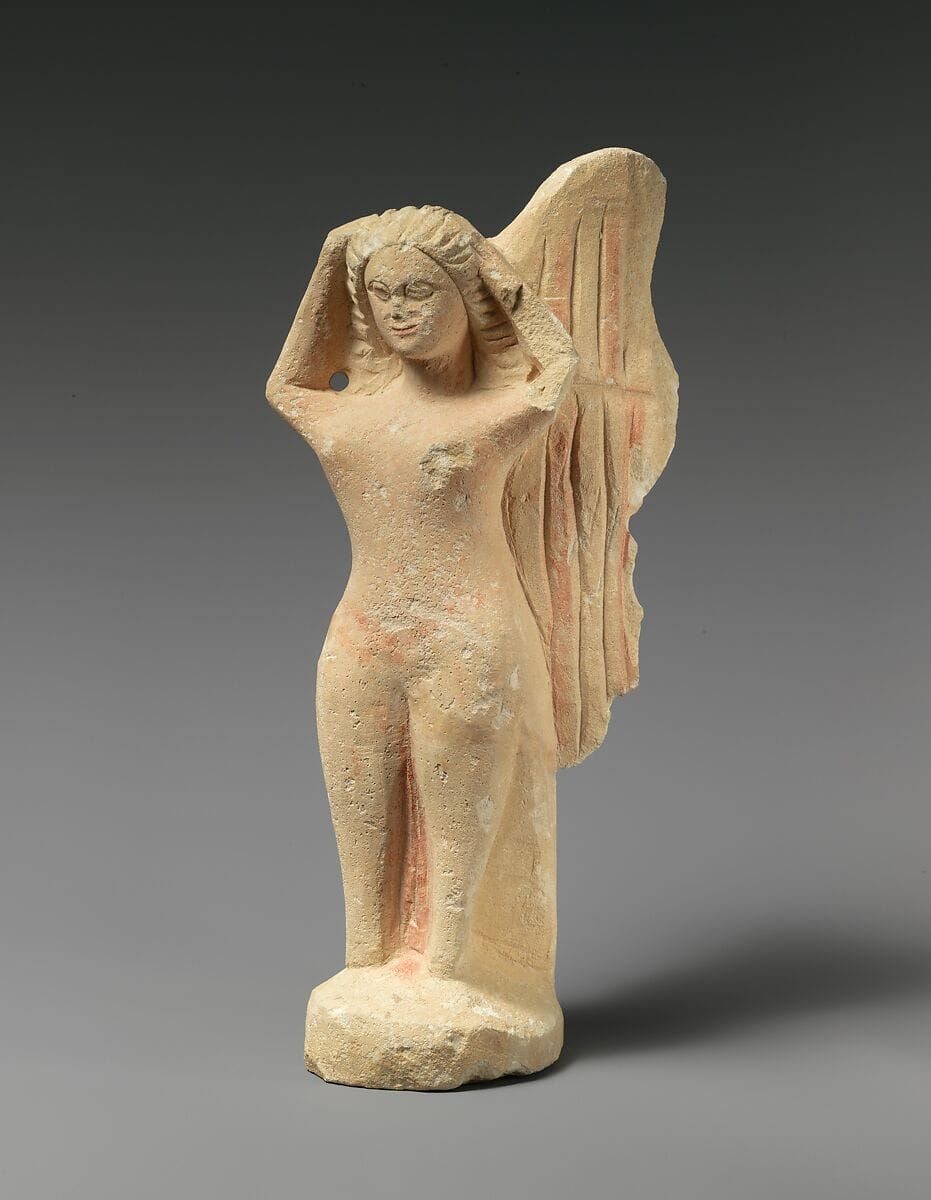
Limestone statuette of a mourning siren
Hellenistic
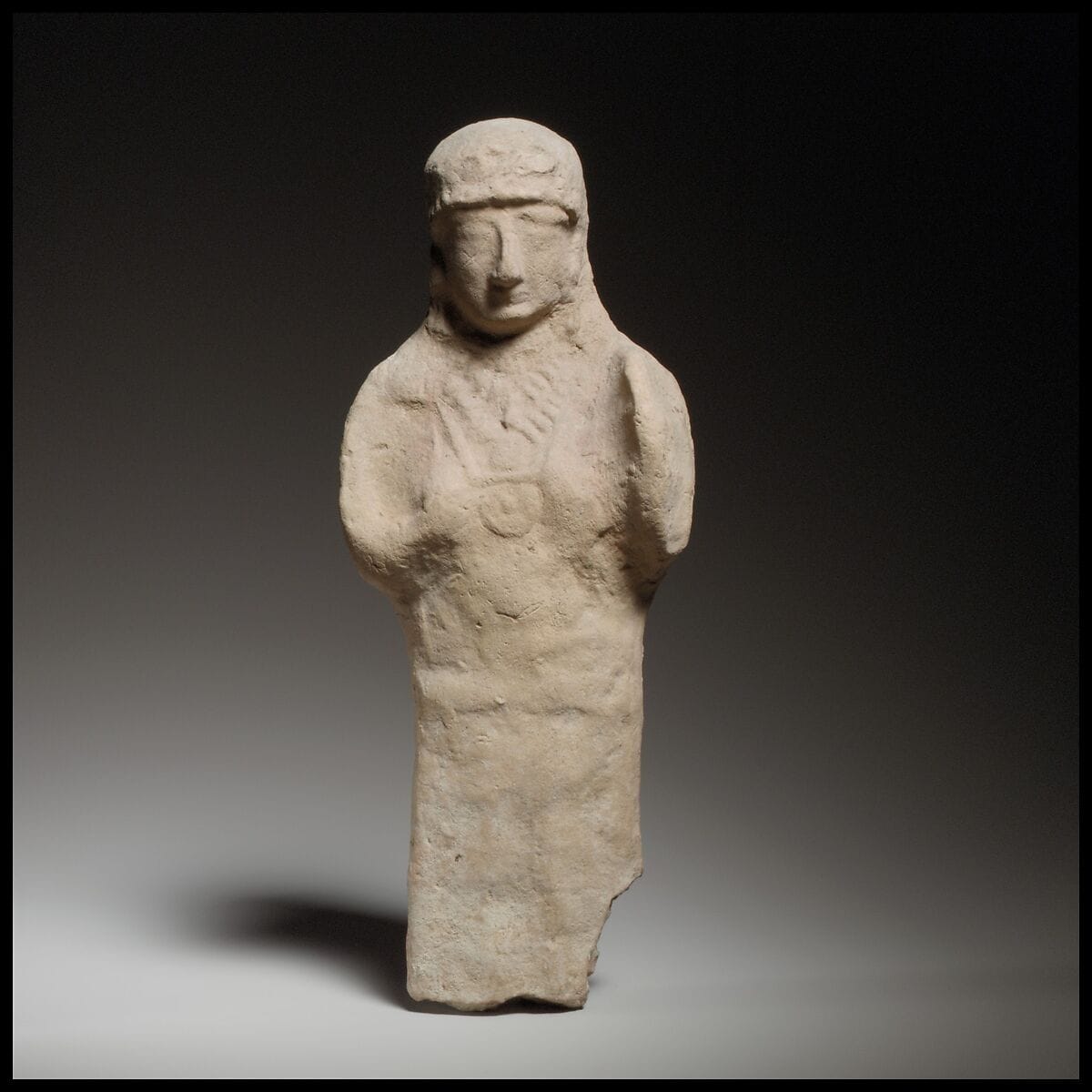
Standing female figurine
Archaic II
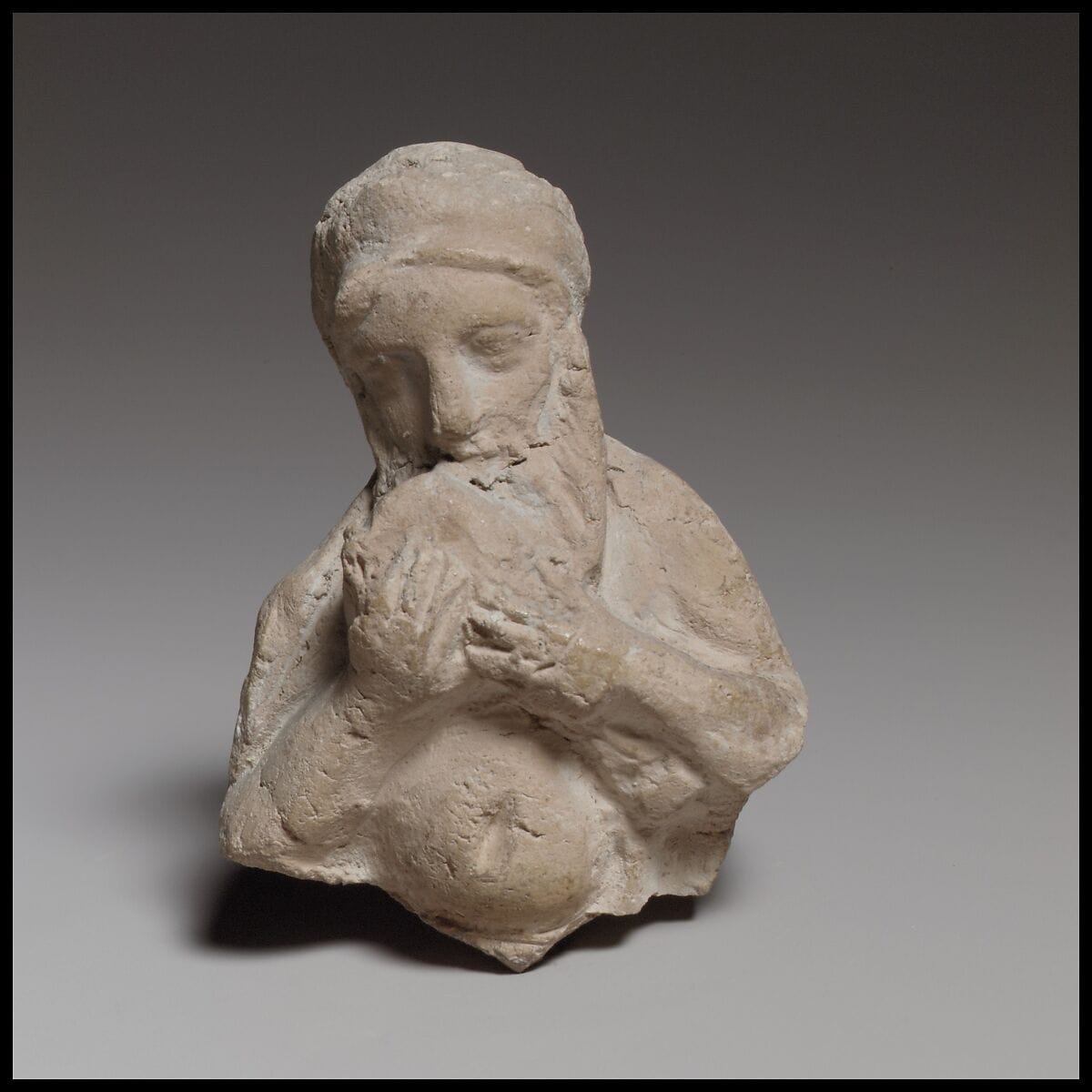
Terracotta statuette of Silenos (?) drinking
Hellenistic
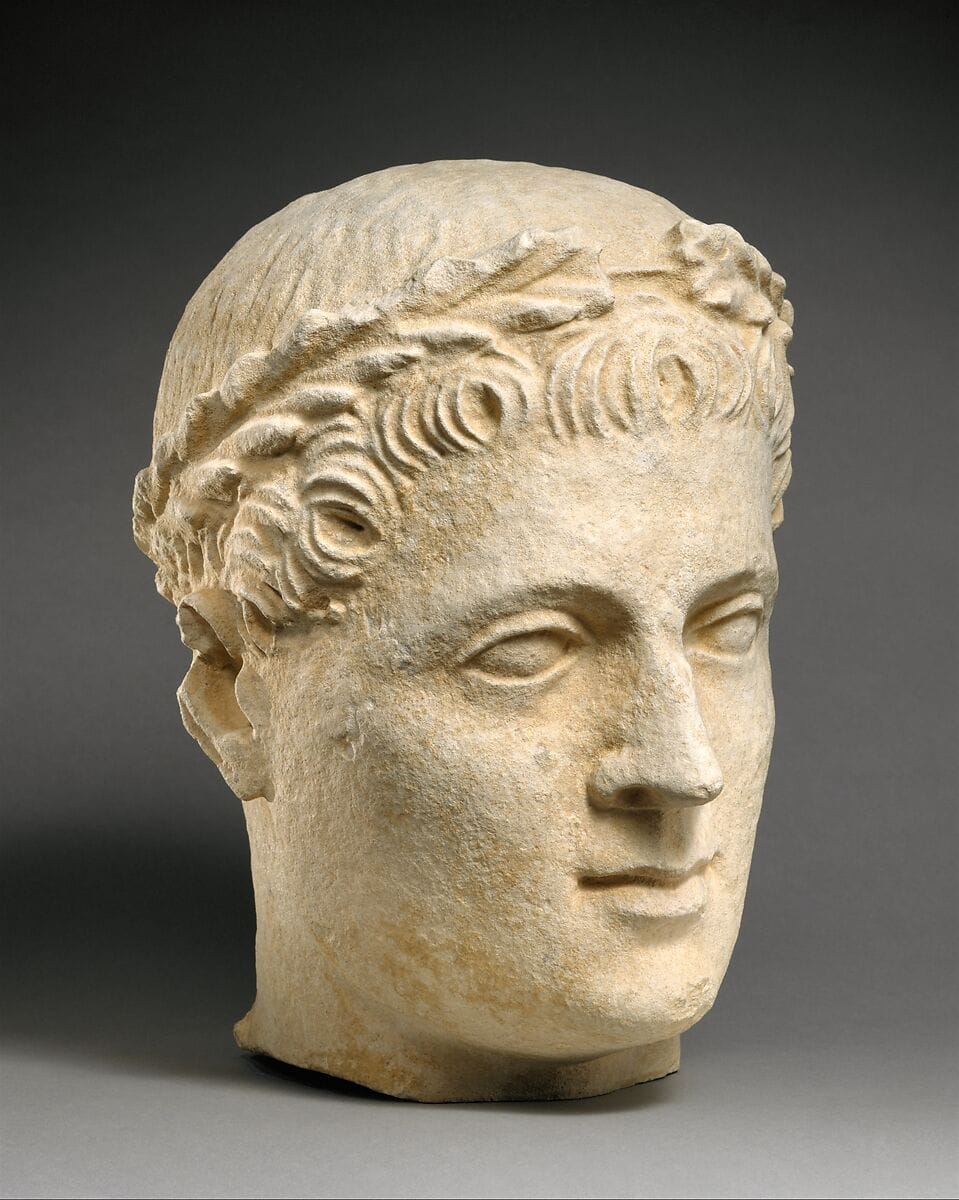
Limestone head of beardless male votary with wreath of leaves
Hellenistic
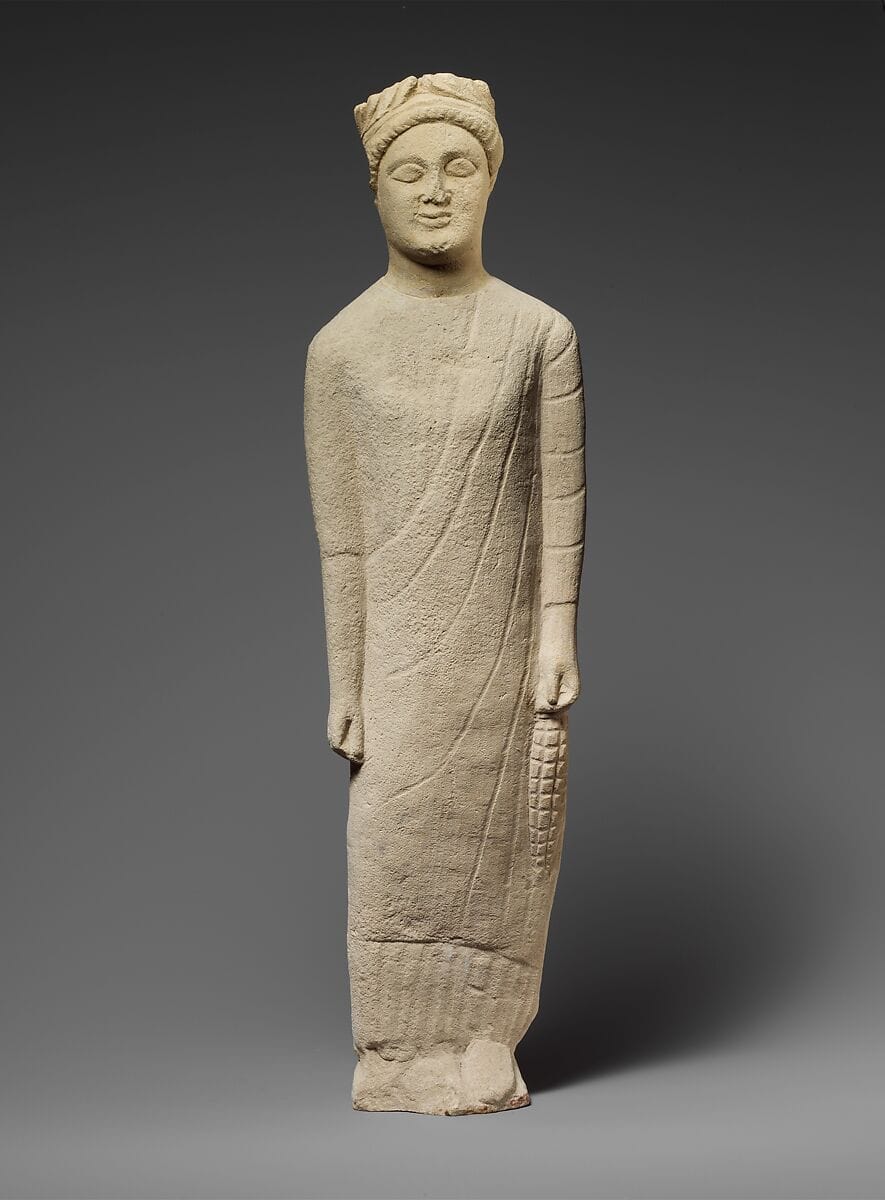
Limestone statuette of a beardless male votary with a wreath of leaves
Classical