
The Price of Rough Metal
A Phoenician silver bowl was worth its weight as scrap until a French consul bought it off the goldsmith's bench. The trade that emptied Cyprus's tombs in the nineteenth century ran on Cypriot hands and foreign titles, and on a price that decided whether a find reached a museum or the crucible.

Alexis Drakopoulos
June 9, 2026·History · Collecting · Archeology·9 min read


Share


Alexis Drakopoulos is a Greek Cypriot Machine Learning Engineer working in Financial Crimes. He is passionate about Archeology and making it accessible to everyone. About Me.
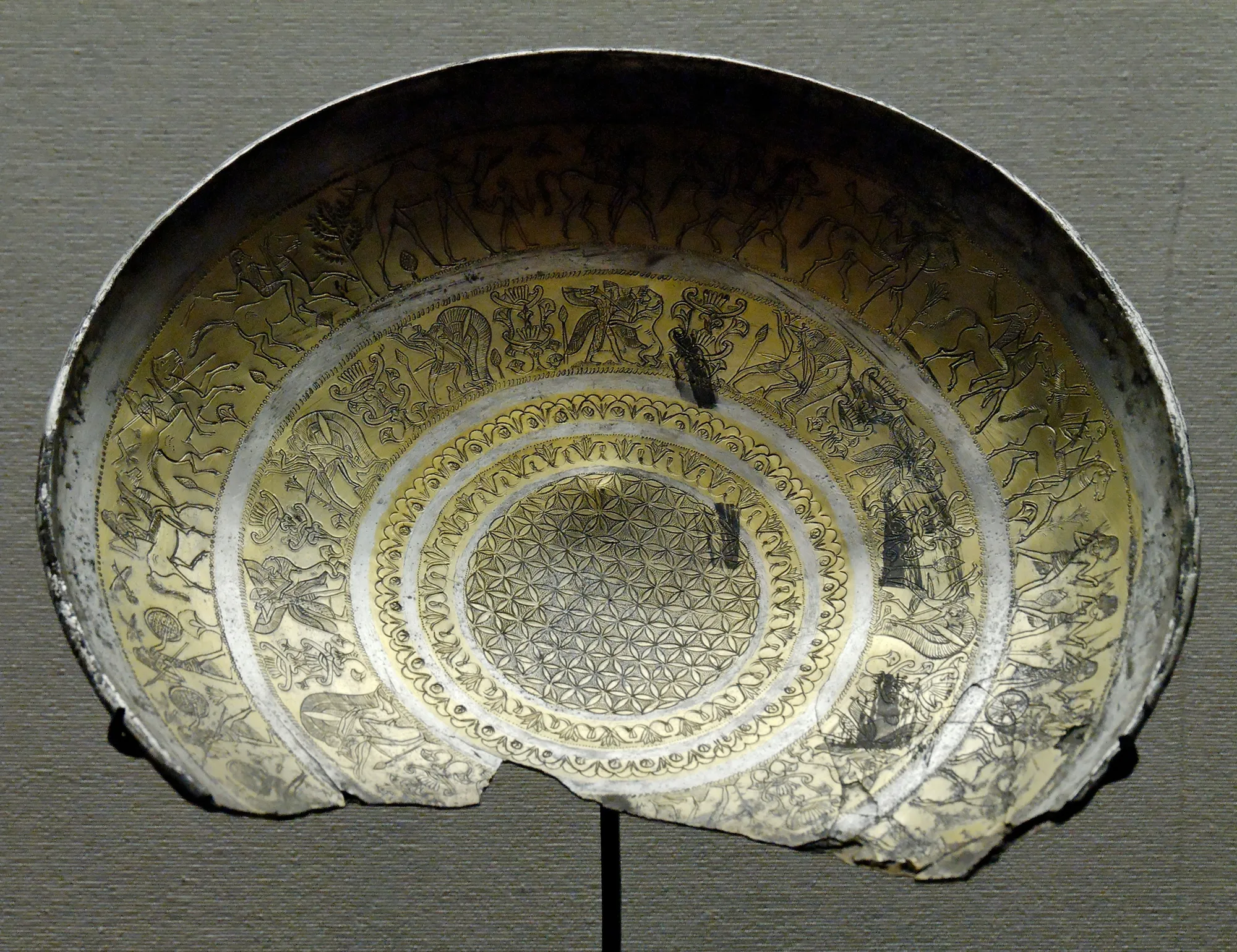
In 1832, peasants near the village of Episkopio turned up a bronze statue while working their fields. Afraid of what the Ottoman authorities might make of the find, they broke it into pieces and sold the metal as scrap, in Nicosia and in Larnaca, for a hundred drachmas the lot. The head they kept back, smuggled out, and sold on its own. [1]
This was ordinary. Thirty years earlier the traveller Edward Clarke had reported that the goldsmiths of Nicosia would part with antiquities "for a few paras", the smallest coin then in circulation. [1] A Cypriot bronze or a Cypriot silver, in the wrong shop on the wrong morning, was worth its weight and nothing else. That floor price, the value of an object reduced to its raw metal, sat under the whole nineteenth-century trade in Cypriot antiquities. Everything above it was a calculation of how far above it a given thing could be pushed, and by whom.
The chain of hands
The trade had a single address. Larnaca, the port the Europeans called the Scala, held the customs house, the commercial court, and the foreign consular corps, and its commerce was, in Robert Merrillees's phrase, "virtually monopolised" by a small, wealthy community of Catholic merchant families of French, Genoese, Maltese, Venetian and Syrian descent, who also supplied most of the consuls. [2] For most of those men the line between consul and merchant did not exist; the title over the door belonged, as often as not, to the man with goods in the warehouse behind it. The French scholar Annie Caubet calls the island's whole foreign enterprise "une archéologie des consuls", an archaeology run by men who were collectors and traders first. [3]
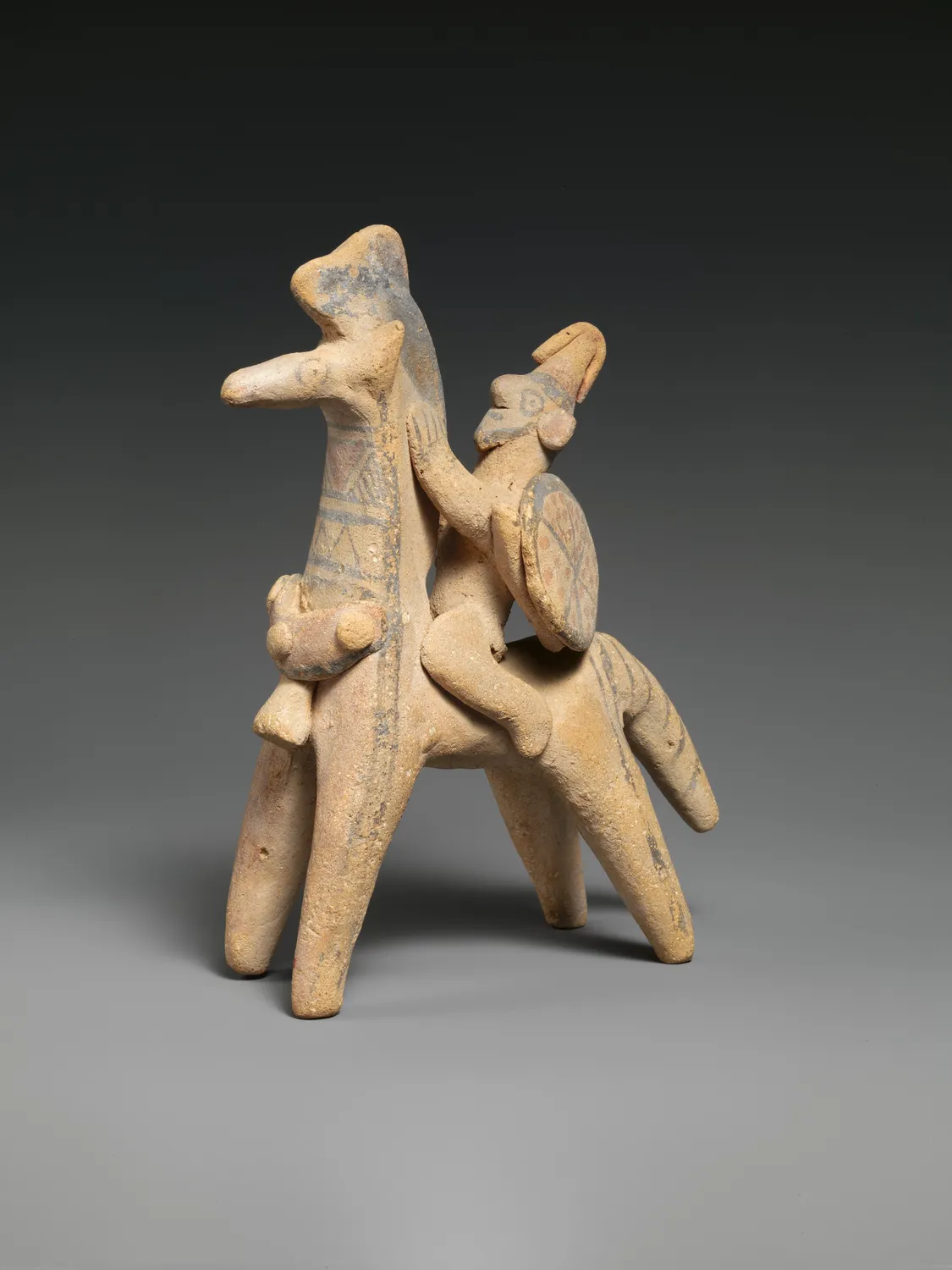
By the 1860s one of the goods was antiquities, and the supply chain had a fixed shape. A villager turned up a tomb while ploughing; a small company of diggers stripped the cemetery; the finds passed to a foreman or a middleman, and from him to a consul or a traveller in Larnaca, who shipped them abroad. [4] Export was managed by subterfuge when the law restricted it at all. Luigi Palma di Cesnola, the American consul and much the most famous of these men, kept a private rule for it, in French: such things are done, but not spoken of. [1]
The volume could be hard to credit. After heavy rain in 1868 washed broken pottery out of the ground at Dali, the site of ancient Idalion, villagers who had lost their crops to locusts and owed their taxes regardless went at the tombs in force. Robert Hamilton Lang, who ran the Imperial Ottoman Bank's branch at Larnaca and was buying, remembered the consuls' houses turning "like earthenware shops", the pieces "counted by tens of thousands, and the tombs opened by thousands". [2]
What made this an industry and not a nuisance was the spread between what a find cost at the bottom and what it fetched at the top. A digger earned a fixed daily wage, two piastres in Lang's gangs, a shilling in Cesnola's, with anything he found bought from him on top at a rate the foreman and the workmen settled between them. [1][5] Lang once paid four pounds ten for a gold coin of the Evagorean kings of Salamis, and General Fox gave him eighty pounds for it on sight, the object multiplying eighteenfold in value in a single pass from one hand to the next. [1] The peasants, the record of his dealings runs, "sold him items for next to nothing", and "it was the price that indicated the final destination of the object". [1] Lower down the chain the same arithmetic could remake a life: five young men digging at Dali in the hope of a shilling or two a day came on a hoard that brought them about eight hundred pounds. [6]
When the find was metal, weight set the price even where the crucible did not get it. Henry Rider Haggard, the novelist, passing through in 1887, bought a bronze bowl near Karavas for a small sum from the man who had dug it up; the coins that had been inside it the finder had already sold, for three hundred pounds, "their value by weight". [7]
Knowing the value
The villagers in this market knew exactly what they were handling. They learned the work and the prices fast. Lang found them digging "in large companies", so practised at reading the ground and so "knowing in the value of the pieces" that he had to label his own finds by cemetery, because the diggers mixed material from different sites to cloud a buyer's judgement. [2] In 1880 a gang at a Larnaca site salted it with archaic vases and let Max Ohnefalsch-Richter, the German excavator, dig them out and publish them as found in place; it was, the archaeologist Salomon Reinach observed, "the first, but not the last, time that the workers managed to trick" him. [6] They could also decline to sell. At Marion in 1889 the traveller David Hogarth tried to buy a piece from its finder and got nowhere, the owner "would neither permit a near inspection nor sell his treasure". [6] Cypriot houses kept collections of their own, off the market entirely.
The men who did the finding seldom kept their names on what they found. Cesnola "seldom directed his excavations in person", by Hogarth's account; the digging, and much of the buying out in the villages, was done by his dragoman Besbes, "a pure Greek, smart and cunning", who also supplied the improbable tomb-depths that went into Cesnola's published book. [1] At Dali the two rival gangs were run by a Greek Cypriot, Hadgi Georgi Styllis, "the famous villager from Dali", and a Turkish Cypriot called Hasan, "attached to the American Consulate". Antiquities were one of the few trades in which the island's two communities worked the same ground without friction. [1][6] The work carried its own unease: one of Cesnola's Curium foremen, Theocharis Koutsocheris, is remembered crossing himself and whispering a prayer each time he had to go down into a tomb. [8]
You want temples
None of this was quite illegal. The Ottoman antiquities règlement of 1874, the working law for most of the period, declared that everything found underground belonged to the state and then split it three ways: a third to the government, a third to the finder or excavator, a third to the owner of the land, with export allowed at the minister's discretion. [9] When Britain took the island in 1878 its first high commissioner, Sir Garnet Wolseley, banned private digging outright, and the ban had lapsed within the year. [9] The rule meant to govern the outflow had, in working practice, licensed it, and the men who understood it best treated the find-share as an opening rather than a wall.
Ohnefalsch-Richter, the man the salted vases had fooled, made the most complete career of anyone out of the trade. He had arrived in 1878 as a press photographer, taught himself to dig, and within a few years held every position in the market at once: licensed excavator for one client, the government's official overseer of another man's dig, and, throughout, a private dealer selling his own share of the finds across Europe. [7][10] By paying a landowner in advance for his statutory third, he could arrange for two-thirds of everything a dig produced to fall to whoever was financing it. [10] What he sold, he sold to order. Under oath in a Larnaca courtroom in 1886 he set out his method plainly: "You want glasses, I give you a piece with glasses, you want pottery, I give you a piece where pottery is to be found... you want temples, I give you temples." [11] A Vienna curator's later verdict was that he had been "a good customer of Cypriot tomb-robbers, exactly like Cesnola". [12]
The people at the foot of the chain did no better, in the end, than the objects passing through their hands. Hadgi Georgi Styllis, Lang's "chiefly my man" and the finder of the Dali tablet that had first pulled Lang into the work, [1] ended in prison for debt and died near the tombs he had spent his life emptying. [8] In 1897 a man who signed himself "superintendent of the British excavations", Antonio Grigori, wrote that he had been out of work for months and asked for "five or six pounds". [6] The island had taught a generation of Cypriots to find tombs and priced their labour at a shilling, and once the consuls and the permits thinned out it had no further use for them.
The goldsmith's bench
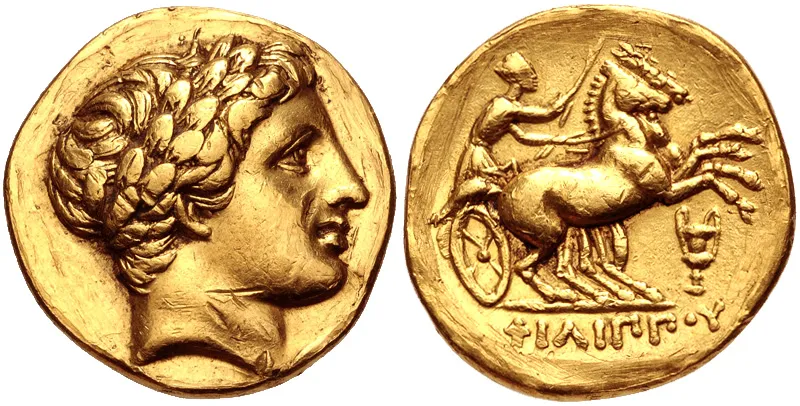
The objects fared worst where they sat closest to the floor. In 1870 Cesnola's diggers found close to a thousand gold staters of Philip and Alexander packed inside a bronze vessel, and in the scramble as the coins spilled the vessel was, in Cesnola's own words, "stupidly damaged... beyond repair". [8] What came through came through largely by who reached it first. The cheapest hands on the island were also the most destructive: when no collector was within reach, the town goldsmiths did to silver and bronze what the Episkopio villagers had done in 1832, and weighed the result out as scrap. The loss to knowledge, in the modern reckoning, is "immeasurable and irretrievable". [7]
The most famous rescue from a goldsmith's bench is also the one with least behind it. The story has the French consul Eugène Tastu and the numismatist Félicien de Saulcy stepping into a Larnaca shop in 1850, at the moment a Phoenician silver bowl was being cut up for melting, and buying it for the price of its metal. The bowl, worked in registers of figures, is in the Louvre, catalogued as AO 20135. [1]
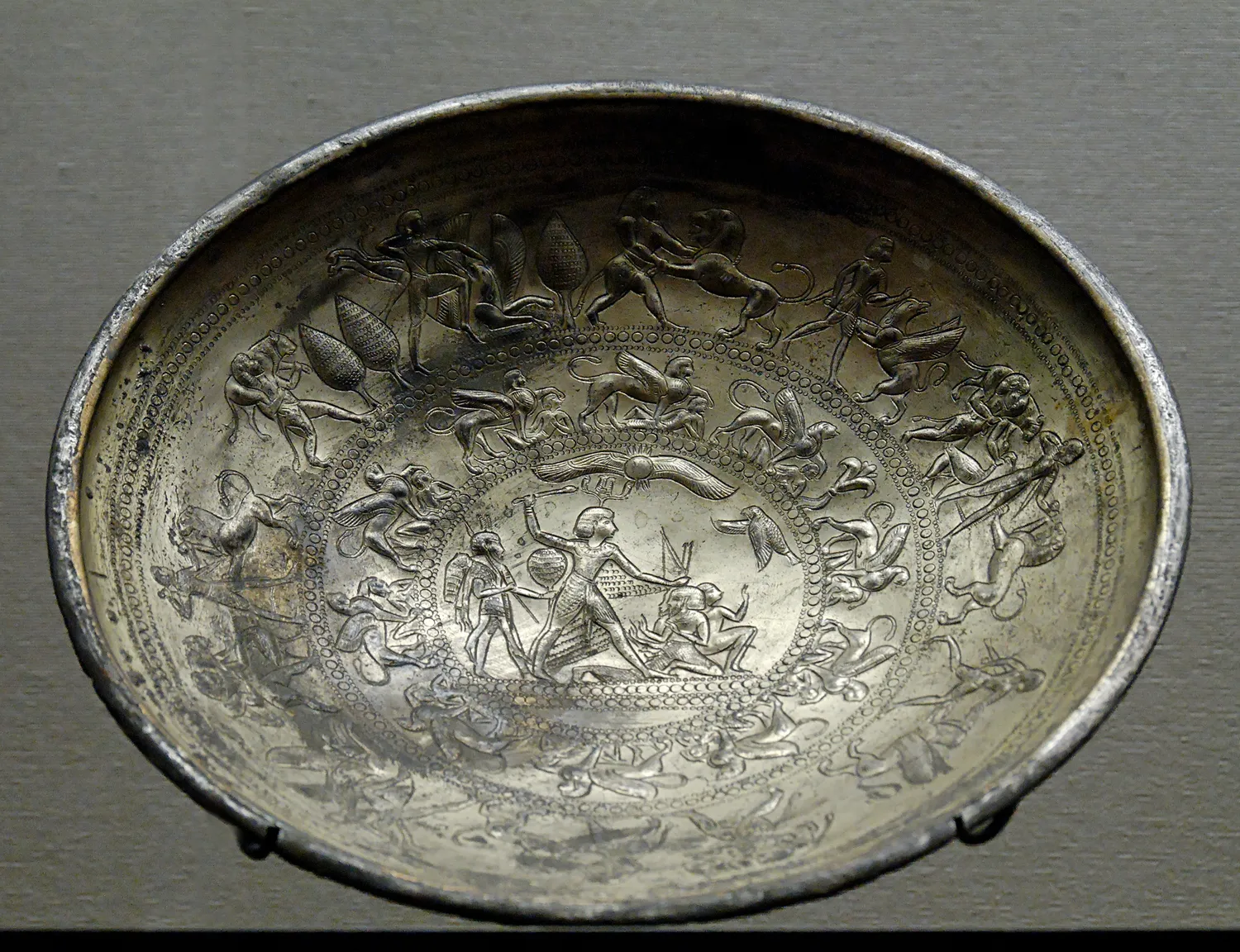
In 2016 Robert Merrillees went back to the sources, and the scene fell apart in his hands. Saulcy's own diary says nothing of Tastu, or of a bowl. The detail of the goldsmith caught mid-cut traces to a book that Georges Perrot and Charles Chipiez published in 1885, thirty-five years after the event it describes. [13] The bowl is genuine, and it is in Paris. The rescue may never have happened.
References
- 1.Life and Deeds: The Consul Luigi Palma di Cesnola, 1832–1904. Documentary biography compiling nineteenth-century sources.
- 2.Merrillees, R. S. (2001). Chapter on T. B. Sandwith and the Larnaca milieu, in V. Tatton-Brown (ed.), Cyprus in the 19th Century AD: Fact, Fancy and Fiction (Papers of the 22nd British Museum Classical Colloquium, December 1998). London: British Museum.
- 3.Caubet, A. (2012). Une archéologie des consuls. Cahiers du Centre d'Études Chypriotes 42.
- 4.Tatton-Brown, V. (ed.) (2001). Cyprus in the 19th Century AD: Fact, Fancy and Fiction (Papers of the 22nd British Museum Classical Colloquium, December 1998). London: British Museum.
- 5.Cesnola, A. P. di (1882). Salaminia (Cyprus), preface. London: Trübner & Co.
- 6.Kyriakou, N. Chapter in Contested Antiquity: Archaeological Heritage and Social Conflict in Modern Greece and Cyprus (New Anthropologies of Europe).
- 7.Kiely, T., & Merrillees, R. S. (2012). The Archaeological Interests of Samuel Brown and his Circle of Acquaintances in Late 19th Century Cyprus. Cahiers du Centre d'Études Chypriotes 42.
- 8.Cesnola, L. P. di (1877). Cyprus: its Ancient Cities, Tombs and Temples. London: John Murray.
- 9.Stanley-Price, N. (2001). Chapter on the Cyprus Museum and the Ottoman antiquities law, in V. Tatton-Brown (ed.), Cyprus in the 19th Century AD (BM Classical Colloquium), pp. 289–294.
- 10.Recke, M. (2012). Deutschland und das antike Zypern (on Max Ohnefalsch-Richter as excavator and dealer). Cahiers du Centre d'Études Chypriotes 42.
- 11.Fivel, L. (1996). Ohnefalsch-Richter vendeur d'antiquités chypriotes (1895). Cahiers du Centre d'Études Chypriotes 25.
- 12.Die Sammlung zyprischer Antiken im Kunsthistorischen Museum (1999). Vienna: Kunsthistorisches Museum.
- 13.Merrillees, R. S. (2016). Re-examination of the de Saulcy / Tastu silver bowl (Louvre AO 20135). Cahiers du Centre d'Études Chypriotes 46, pp. 25–30.