
Archaic I
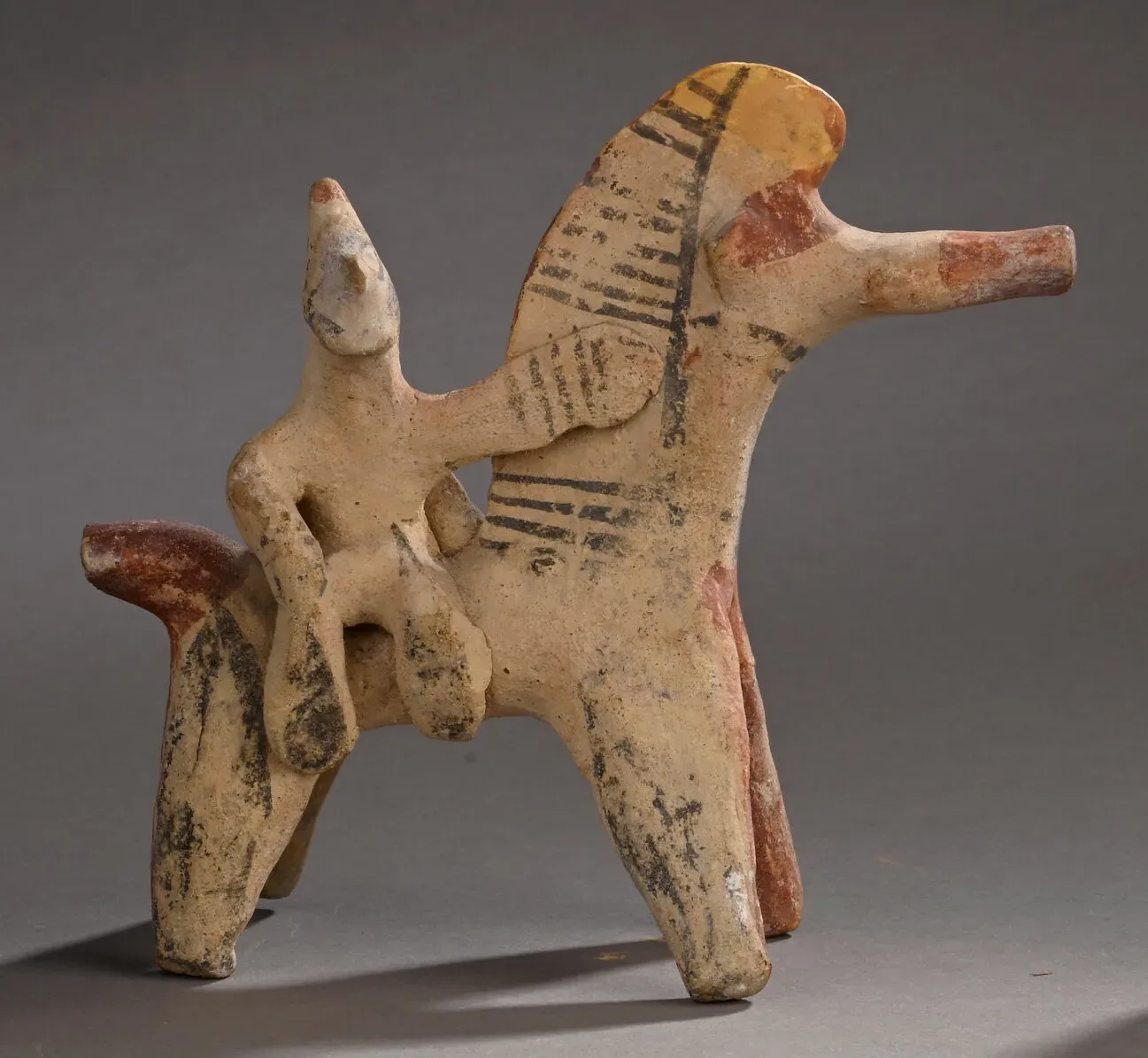
Handmade Horse and Rider with a High Painted Crest
Cypro-Archaic I handmade terracotta horse and rider, the horse with a tall blade-like crest barred in black, red-tipped muzzle and a rider in a conical cap.
Date
750 - 600 BC
Accession No.
STA-AR-018
Collection
Alexis Drakopoulos
Cypro-Archaic I, c. 750–600 BCE · Terracotta, pale buff slip with black and red paint · Handmade, solid
A horse and rider modelled by hand in a pale buff clay. The horse stands on four long tapering, splayed legs. Its neck rises steeply into a tall, flat, blade-shaped crest that curves forward over the head, painted with a ladder of short black bars and washed yellow-cream at the top. The long tubular muzzle projects almost horizontally and is tipped with red; red also marks the chest, the far foreleg and the short tail, which projects straight back. Black splashes run down the legs. The rider is a small columnar figure perched well back, with a pointed conical cap tipped with red, a pinched nose and a slab-like left arm laid flat along the crest to grip the mane. Two drop-shaped appendages, painted black, hang against the near flank. Surface worn, with some loss of paint.
Commentary
Handmade solid horse-and-rider figures are the most common male votive type of Cypro-Archaic Cyprus, catalogued by Vassos Karageorghis as Type II(i) of his small male figurines [1]. The Metropolitan Museum catalogue calls the horse and rider "perhaps the most popular type of figurine" of the period and notes that horses were a status symbol of the aristocratic elite [2]. They were dedicated above all in sanctuaries of male gods; at the sanctuary of Apollo Hylates at Kourion, riders and chariot groups make up almost the whole of a deposit of some two thousand statuettes [3]. They also occur as grave goods. The technique, a columnar body with pinched features and painted detail, is the same "snow-man" technique that Gjerstad defined for Cypro-Archaic figures in general [4].
Within the class, this piece belongs with the larger, more elaborate figures of Karageorghis's sub-type II(i)a, attributed to Cypro-Archaic I: the horse is tall and long-legged, the neck high and arched, and the forelock is exaggerated into a prominent crest [1]. The closest published comparison is Metropolitan Museum 74.51.1768 (Cesnola Collection, said to be from Ormidhia; H. 18.7 cm), whose rider sits near the rump and stretches forward to touch the mane, on a horse with a long neck and high forelock [2]. A rider in the Museum of Fine Arts, Boston (151891, Cypro-Archaic I) and Louvre AM 236, with red on the horse and on the rider's cap, show the same palette of black and red on a pale ground. The more compact, stockier horses with a taller rider that dominate Cypro-Archaic II are a later development. A date of about 750–600 BCE is therefore proposed.
The rider's seat is the open question. Both drop-shaped appendages hang on the near side of the horse. If they are the two legs, the figure is a side-saddle rider, Karageorghis's sub-type II(i)d, a variant sometimes linked to women or dignitaries [1]; if one of them is the right arm hanging down, the rider sits astride in the usual way. The far side, not photographed, should settle this. The high crest is a fragile member on figures of this kind, and its join with the neck should be checked for old repair.
Provenance
This figure is no longer in the Drakopoulos Collection. It entered the collection only briefly: it was then found to have been stolen in the wake of the Turkish invasion of 1974, and it has been returned to Cyprus.
References
- 1.Karageorghis, V. (1995) The Coroplastic Art of Ancient Cyprus IV: The Cypro-Archaic Period, Small Male Figurines. Nicosia: A.G. Leventis Foundation.
- 2.Karageorghis, V., Mertens, J.R. and Rose, M.E. (2004) Ancient Art from Cyprus: The Cesnola Collection in The Metropolitan Museum of Art. Terracottas. New York: The Metropolitan Museum of Art, p. 61 (cat. 99) and p. 257.
- 3.Young, J.H. and Young, S.H. (1955) Terracotta Figurines from Kourion in Cyprus. Philadelphia: University Museum, University of Pennsylvania.
- 4.Gjerstad, E. (1948) The Swedish Cyprus Expedition IV:2. The Cypro-Geometric, Cypro-Archaic and Cypro-Classical Periods. Stockholm: Swedish Cyprus Expedition, pp. 100–101.
More from the Catalogue
Browse related objects
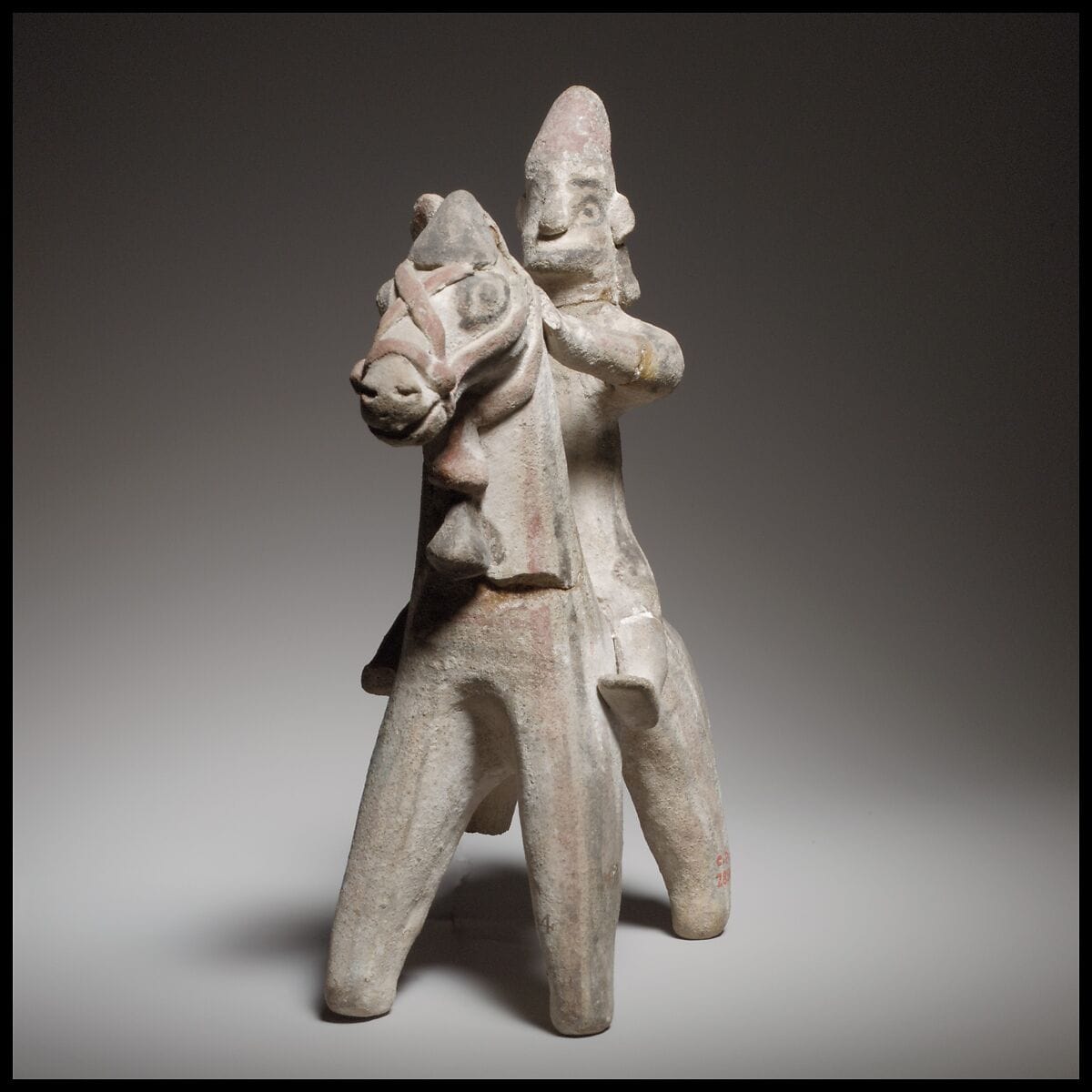
Horse and rider figurine
Archaic II
Seated female figurine of the dea gravida type
Archaic II
Terracotta rattle in the form of a pig
Hellenistic
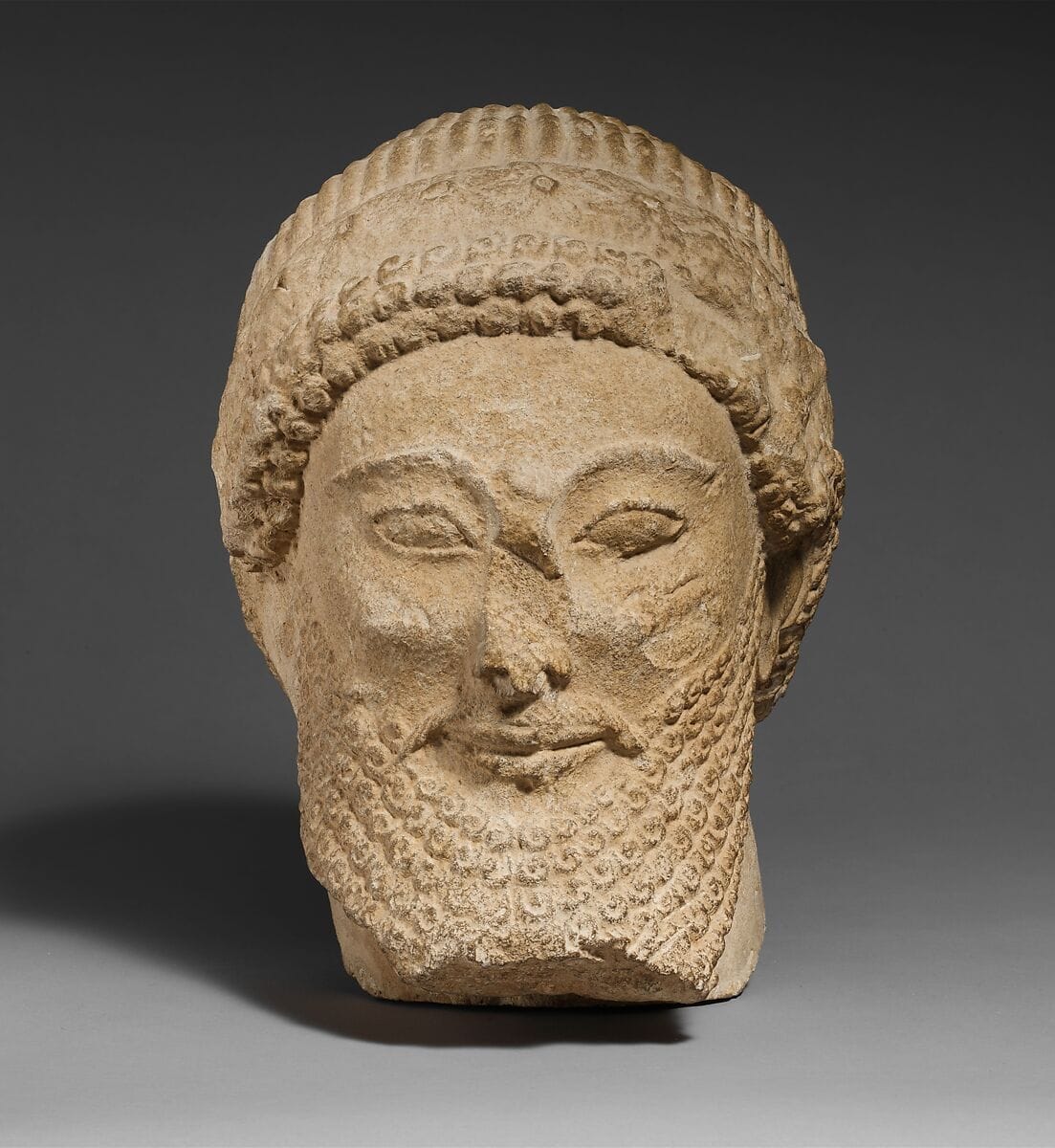
Limestone head of a bearded male with a wreath of flowers
Archaic II
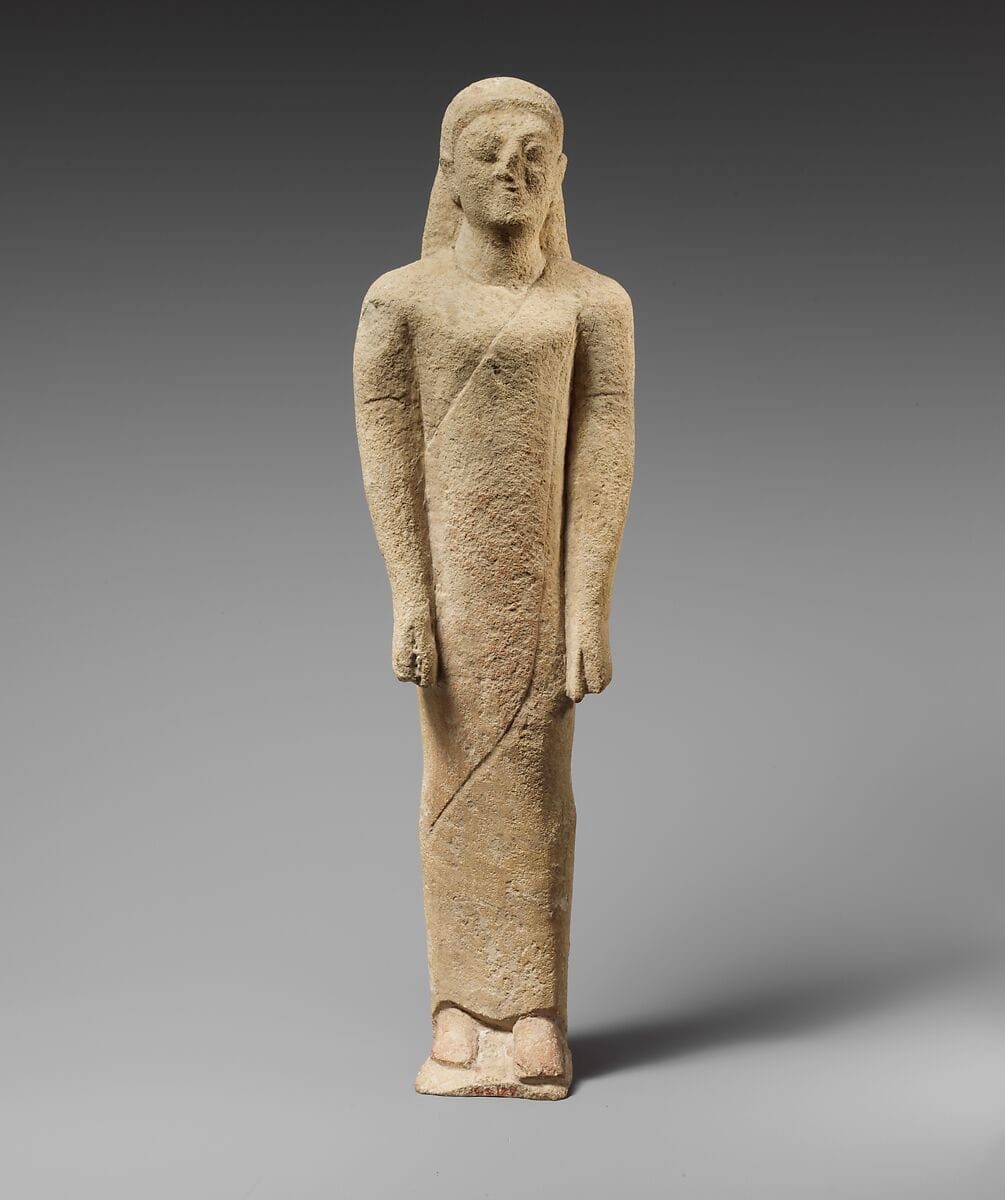
Limestone statuette of a beardless male votary in Greek dress
Archaic II
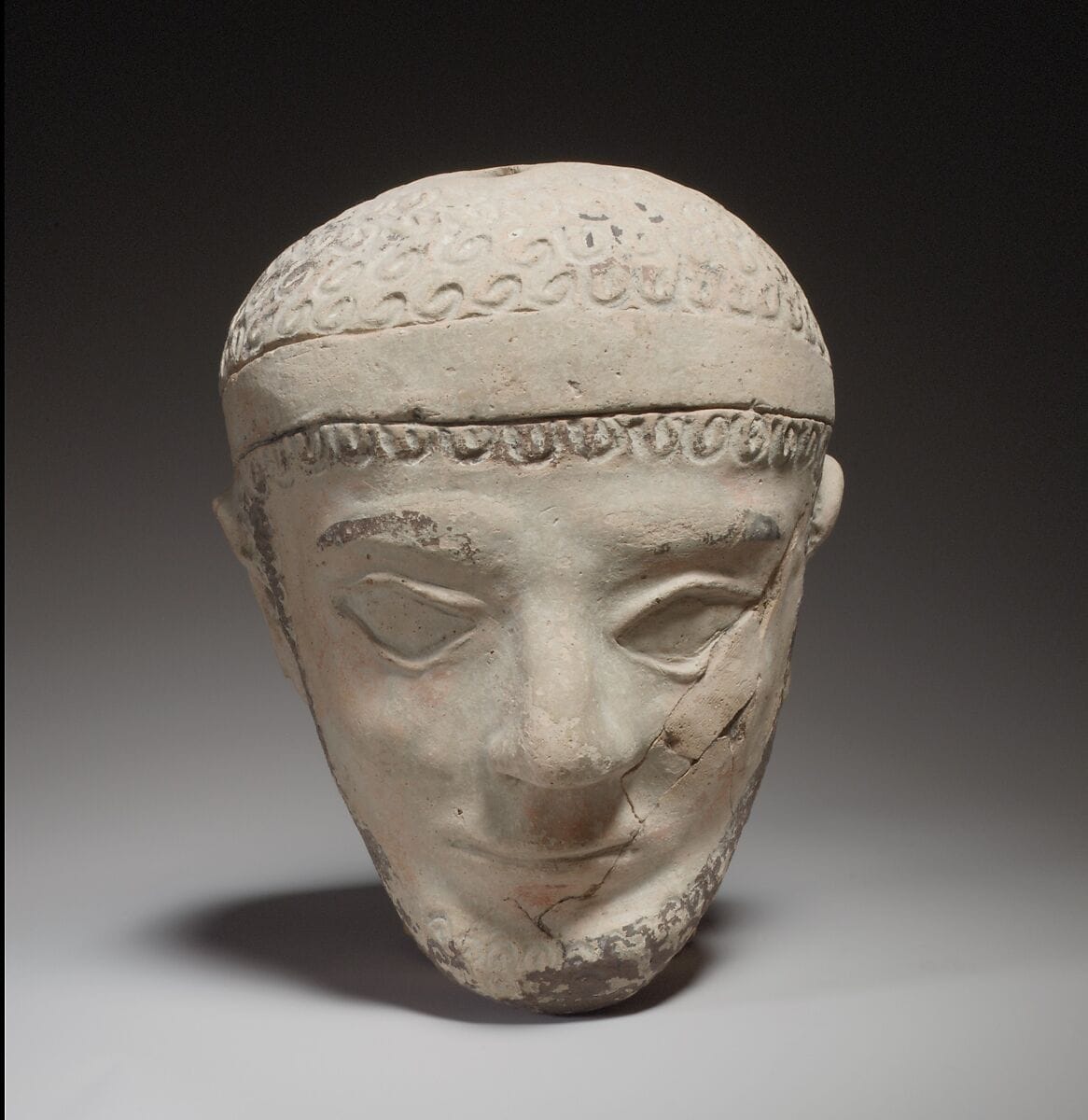
Terracotta head of a man
Archaic II
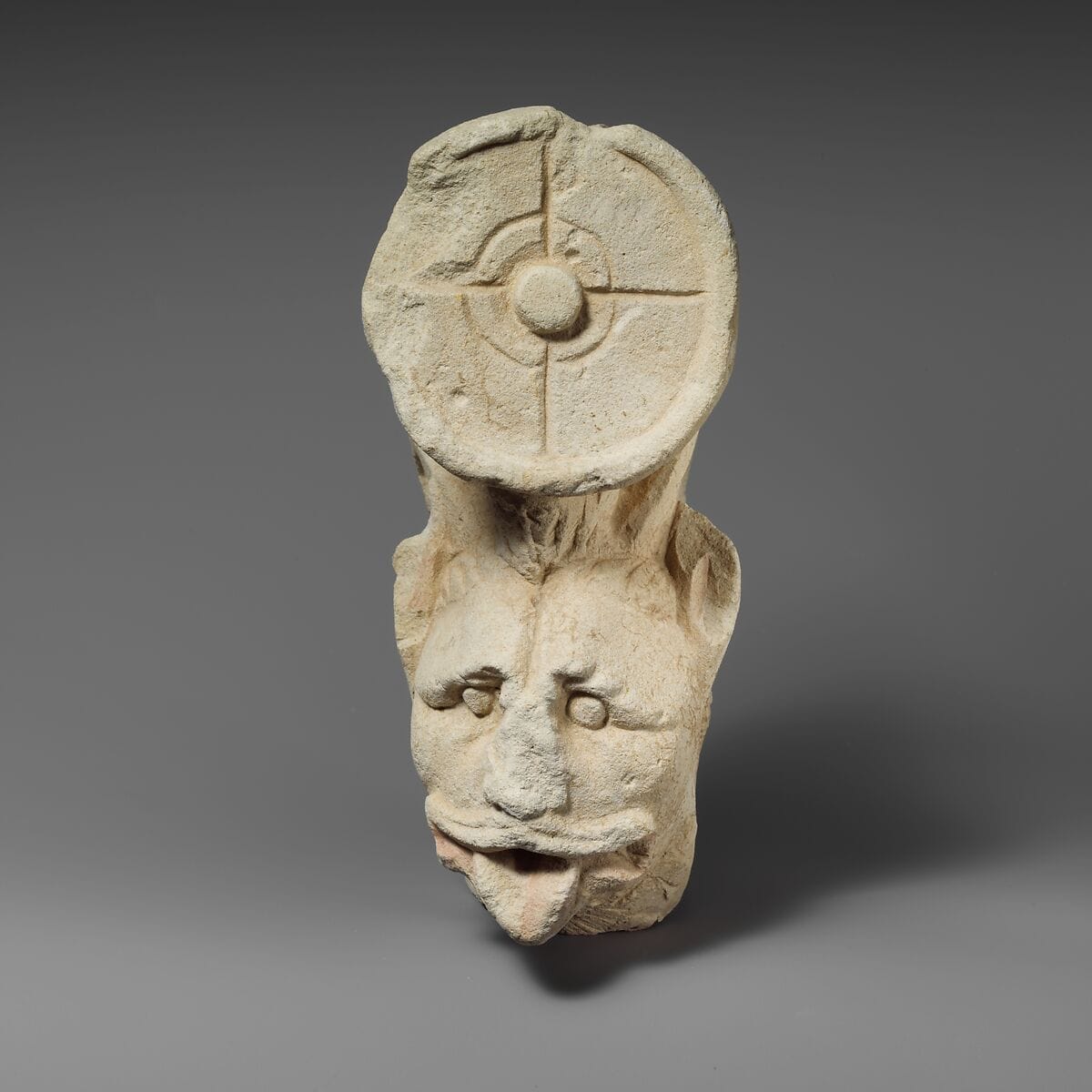
Fragment of a limestone throne (?) with the head of a horned lion
Roman
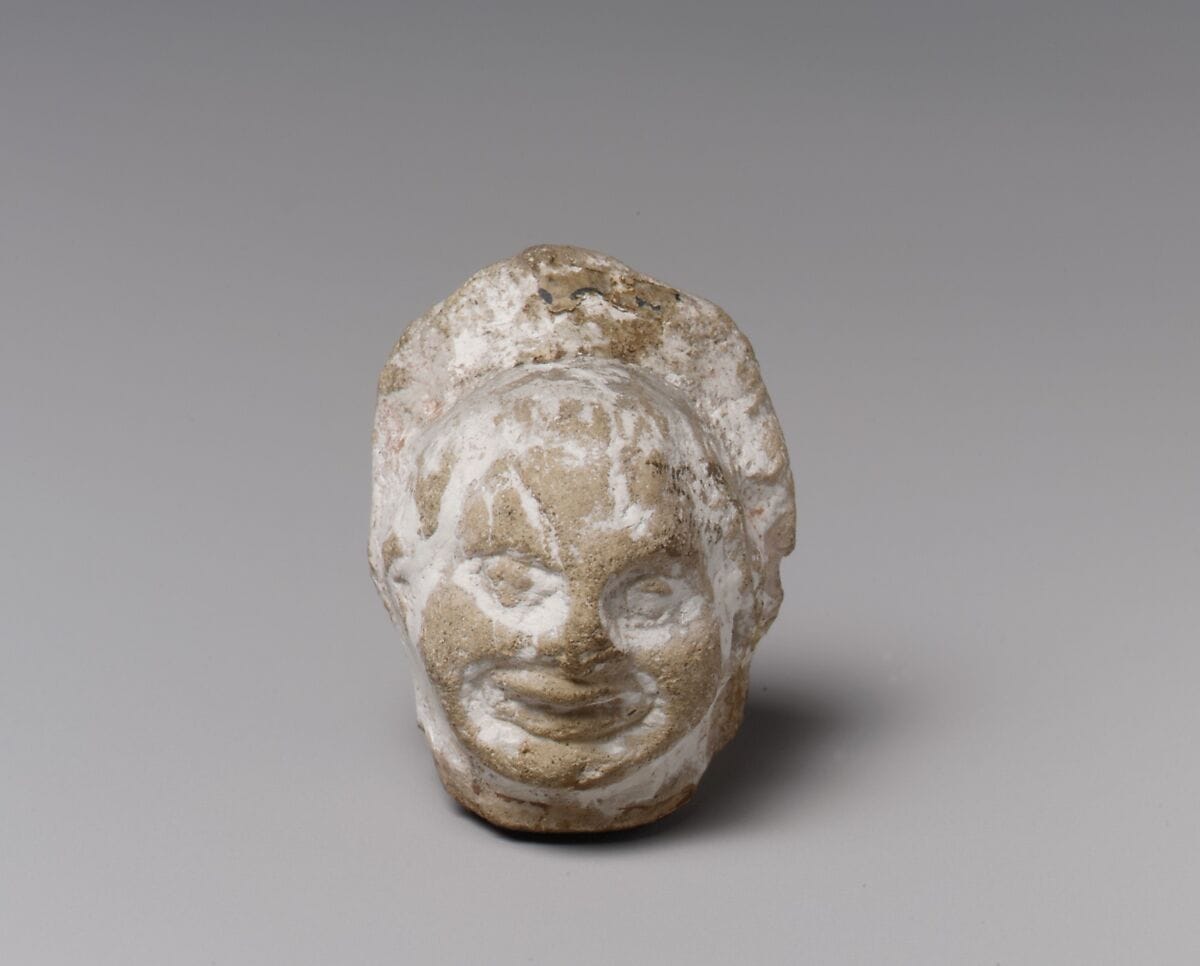
Head of a comic figurine
Hellenistic
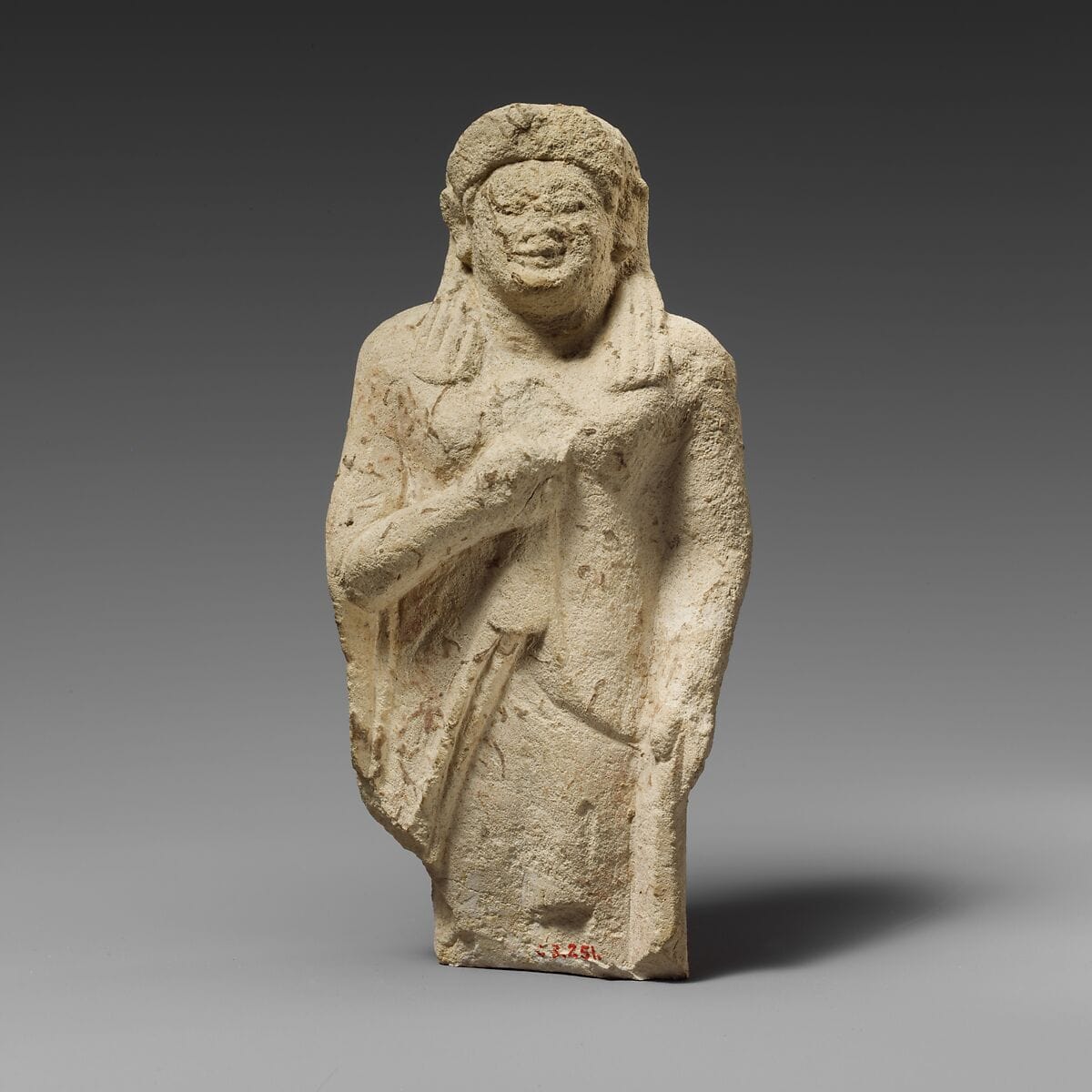
Limestone statuette of a female votary of the kore type
Archaic II
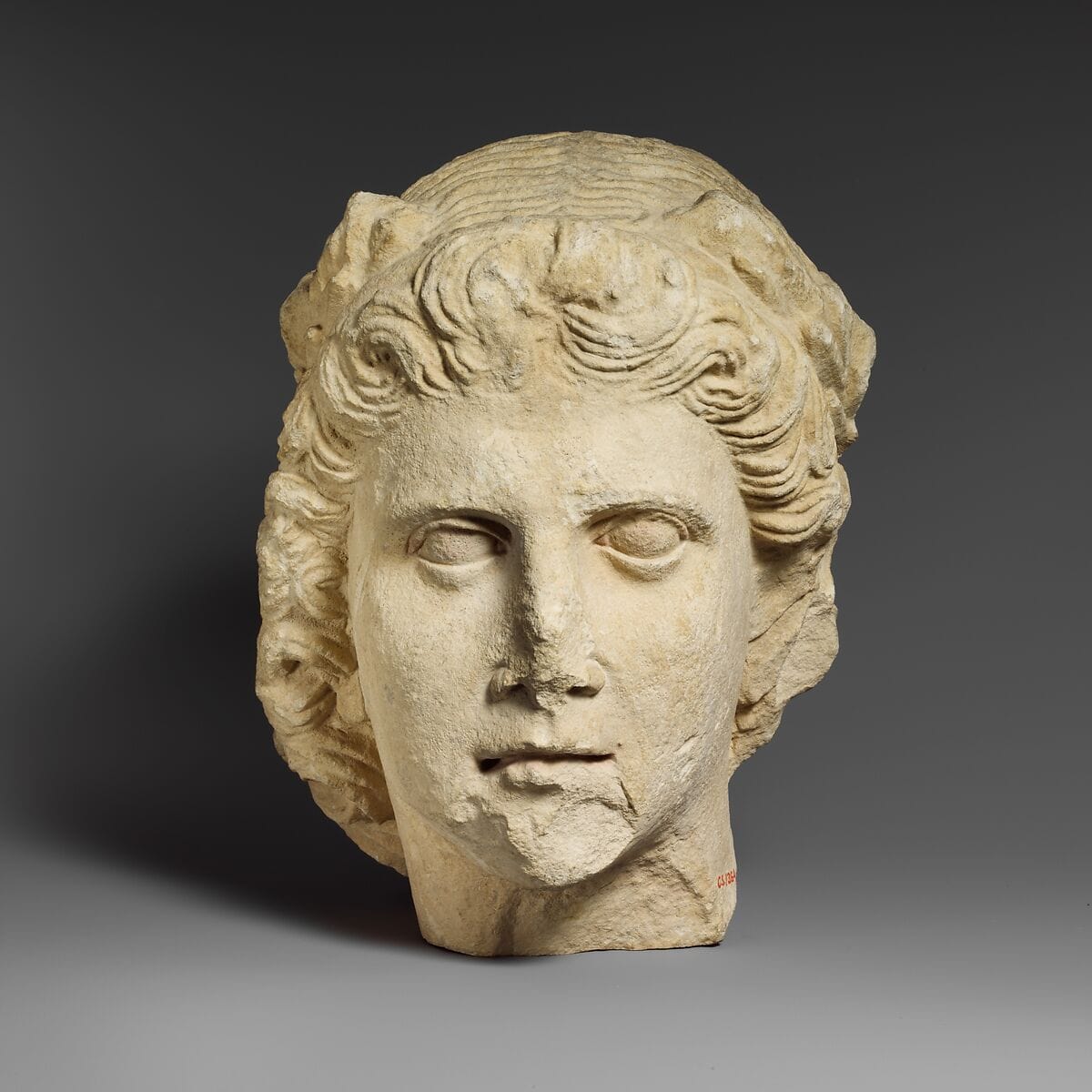
Limestone head of Apollo
Hellenistic
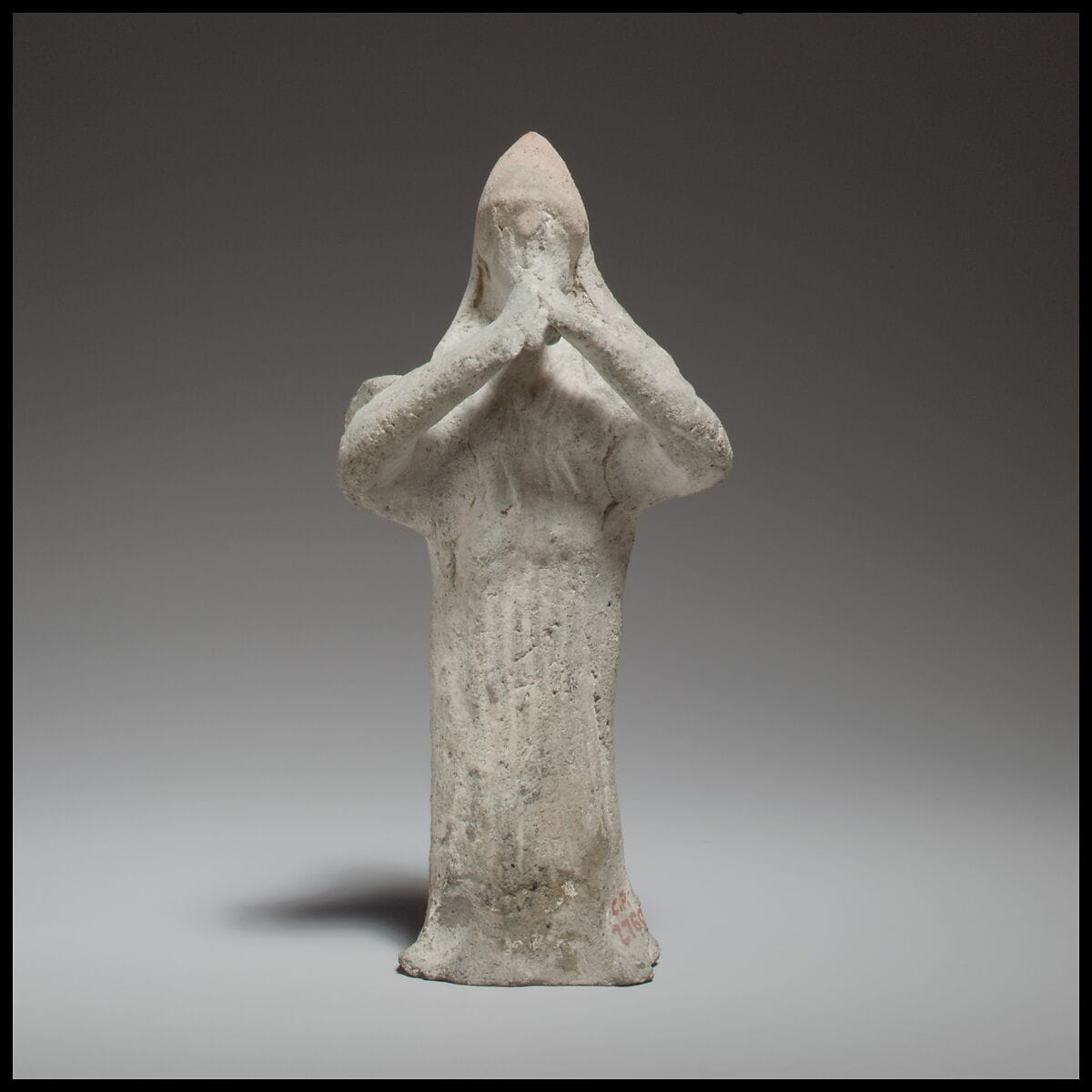
Standing female flute player
Classical
Standing female figurine
Archaic II
Horse's head with harness
Archaic II
Limestone statuette of a mourning siren
Hellenistic
Standing female figurine
Archaic II
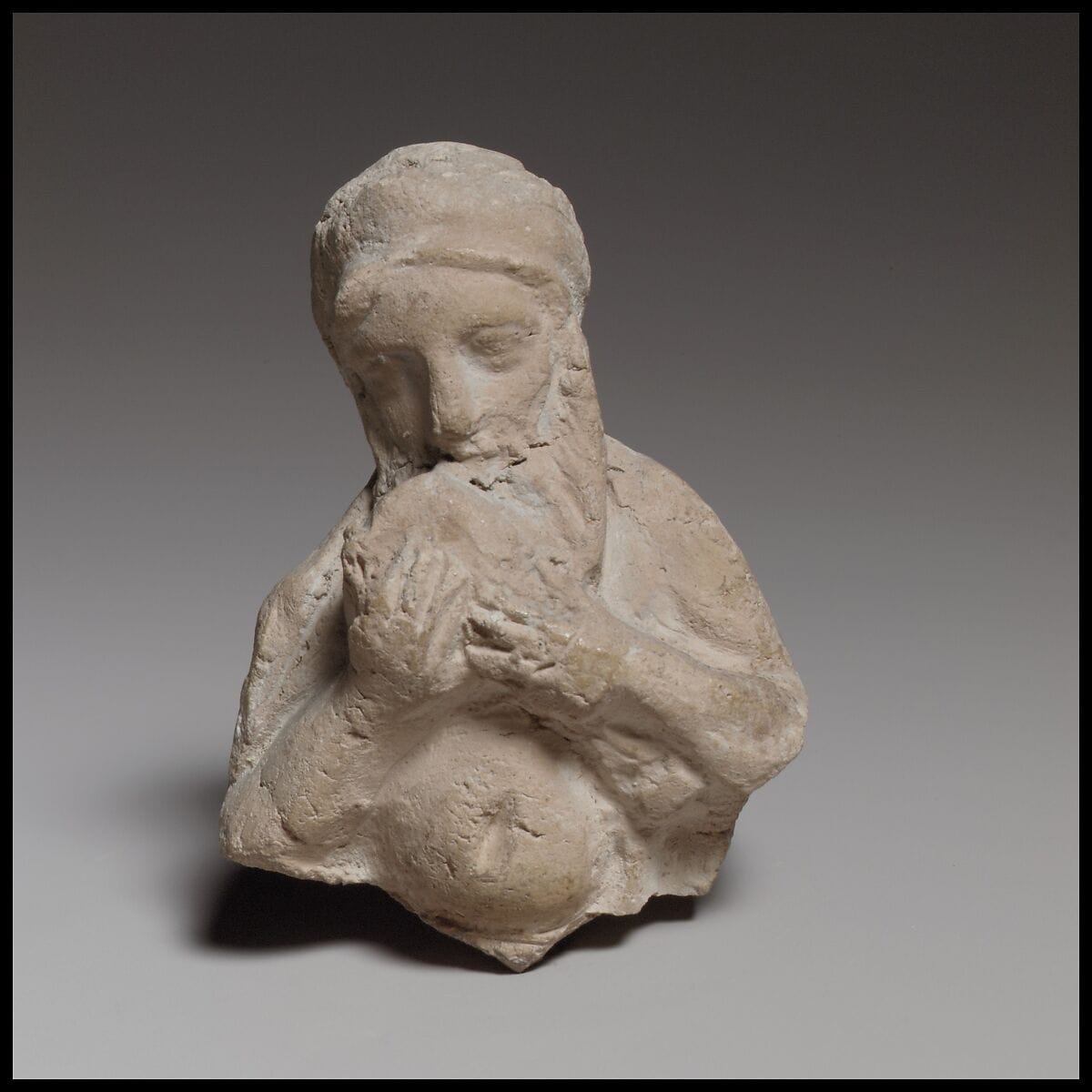
Terracotta statuette of Silenos (?) drinking
Hellenistic
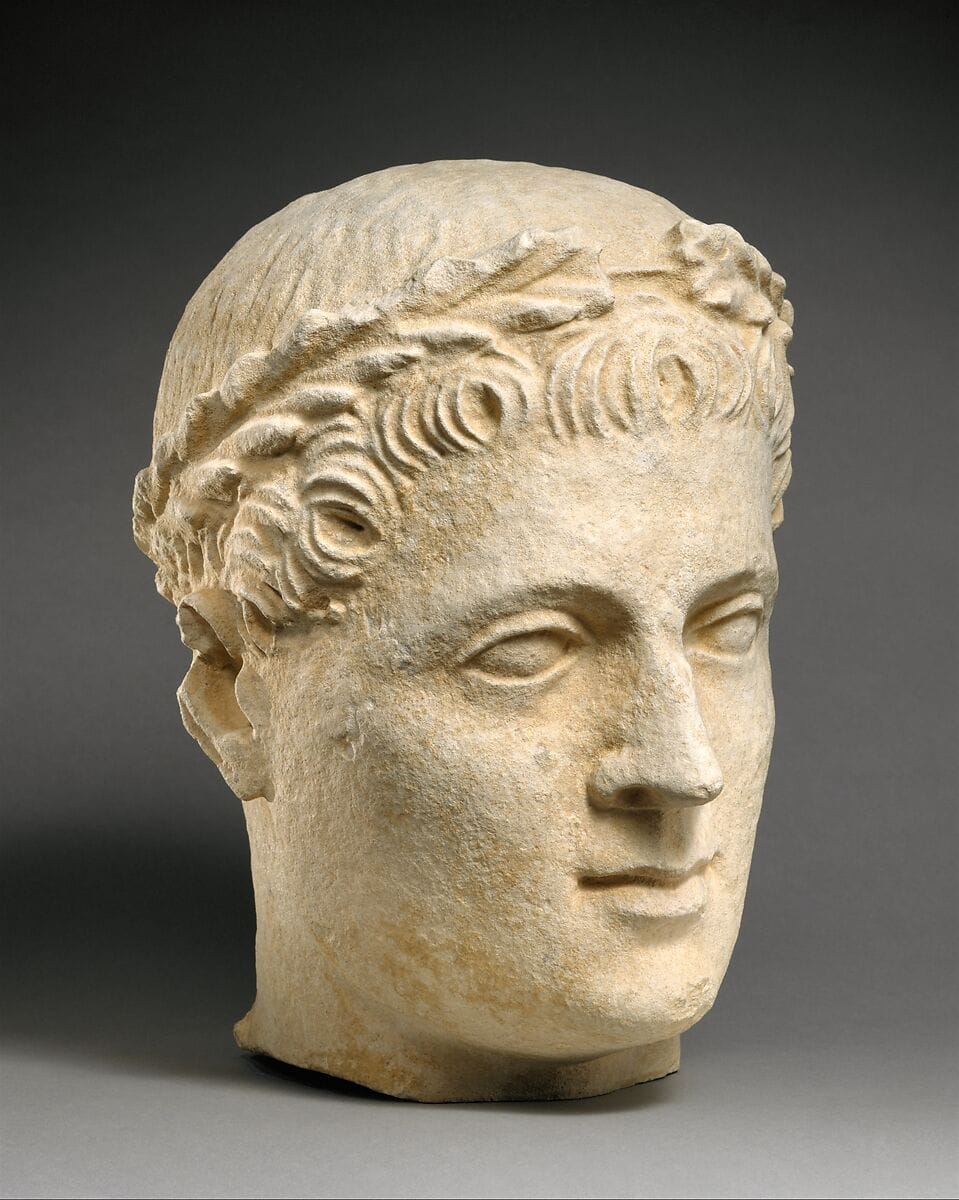
Limestone head of beardless male votary with wreath of leaves
Hellenistic
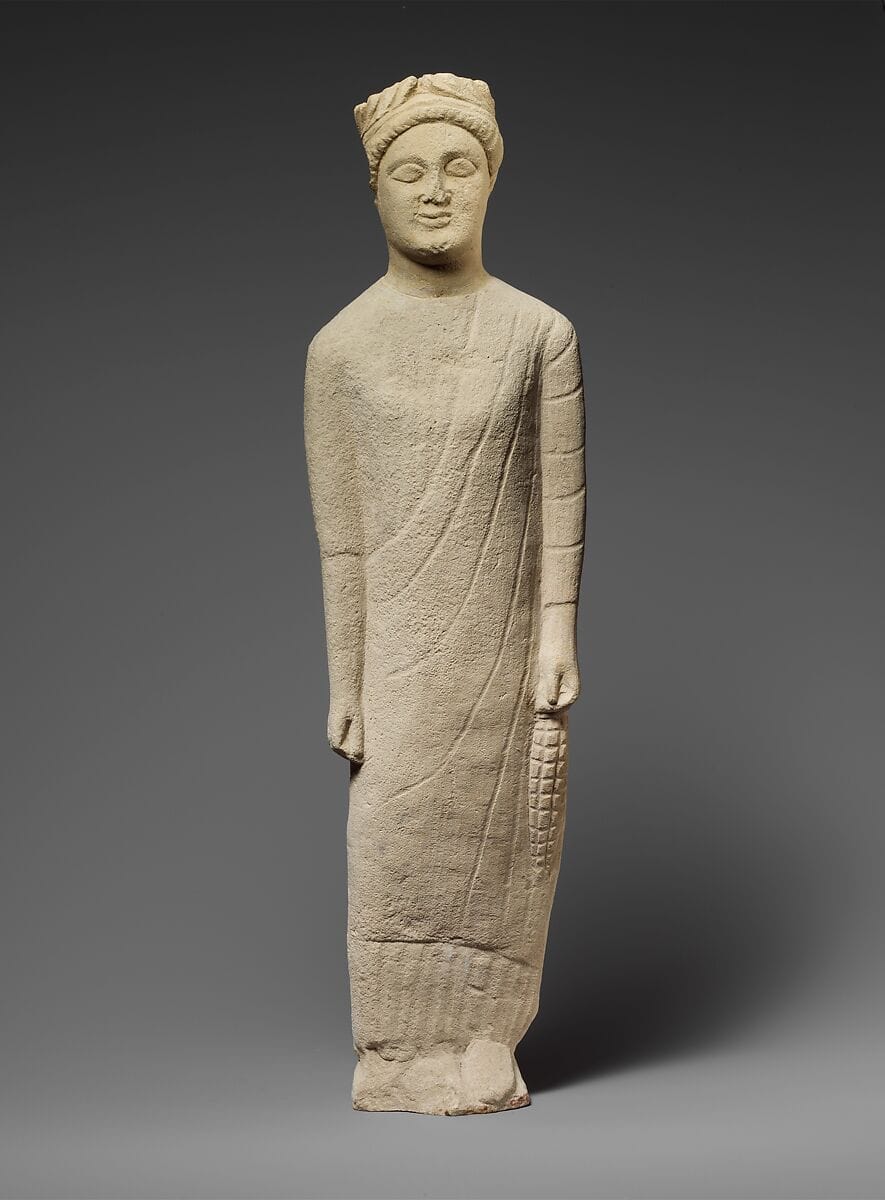
Limestone statuette of a beardless male votary with a wreath of leaves
Classical