
Archaic II
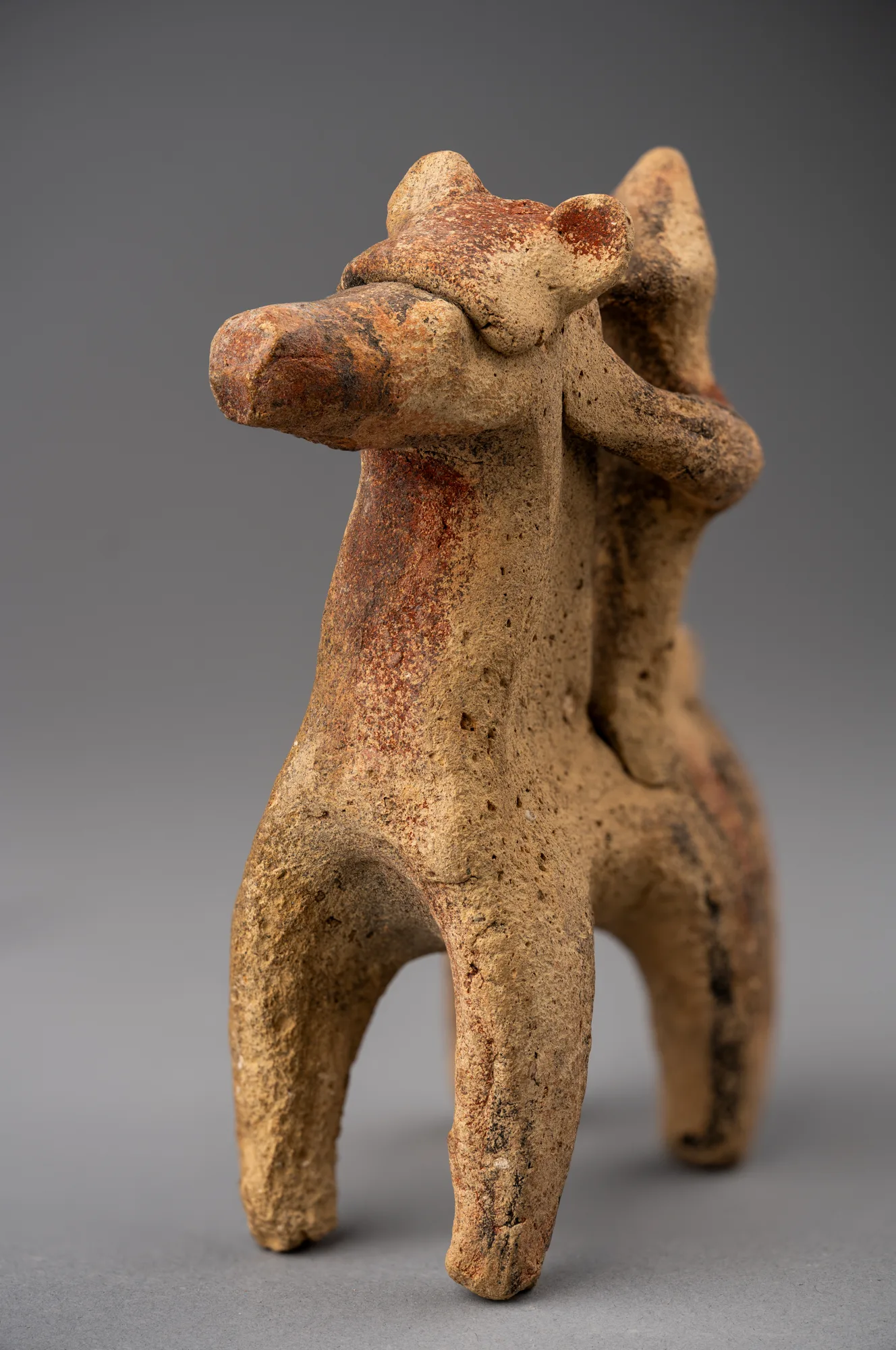
Horse and Rider Figurine with a Painted Star on the Neck
Handmade Cypriot terracotta horse and rider in red and black paint; the rider in a pointed cap clasps the horse's head. Cypro-Archaic, 6th century BCE.
Date
600 - 480 BC
Accession No.
STA-AR-008
Collection
Alexis Drakopoulos
Provenance
- 1965–1969, The Goodman Collection
- Alexis Drakopoulos, London
Cypro-Archaic, probably Cypro-Archaic II, c. 600–480 BCE · Terracotta with red and black paint · Handmade
A small horse stands on four tapering, slightly splayed legs, its body a thick bar of clay ending in a short upturned stub of tail. The neck rises as a broad flat plank and turns sharply forward into a long blunt muzzle. Two flattened pellets form the ears, with a raised knob of forelock between them. The rider sits well back on the horse, a thin upright figure in a tall pointed cap, both arms reaching forward to clasp the horse's head. Red paint covers the horse's muzzle, ears, the front of the neck and the chest, with patches on the rider's arms and body; black lines run down the legs and flanks, and on the near side of the neck a star of crossing black strokes survives. The buff surface is pitted and carries patches of white encrustation.
Commentary
This is a handmade, solid horse-and-rider figurine of the kind Karageorghis classifies as his Type II(i), the commonest male votive type of the Cypro-Archaic sanctuaries [1]. The Metropolitan's Cesnola catalogue calls the horse and rider perhaps the most popular type of figurine in the period, and reads it as a statement of status, since horses belonged to the aristocratic elite [2]. The figure is built in the snowman technique that Gjerstad defined from the Swedish excavations: body parts rolled and pinched by hand, features added as pellets, detail laid on in paint [3].
The proportions point to the later Archaic form. The large Cypro-Archaic I riders have long, elegantly arched necks and tall triangular forelocks, as on Metropolitan 74.51.1774 (Cesnola Cat. 98), whose forelock is described as large, flat and triangular [2]. Here the horse is compact, the neck a short slab and the forelock reduced to a knob, while the rider stands nearly as tall as the horse's head. That combination matches the standard Cypro-Archaic II riders. Metropolitan 74.51.1779 (Cesnola Cat. 103, said to come from a tomb at Alambra, H. 15.7 cm) has a relatively large rider seated near the rump in a conical headdress, and Metropolitan 74.51.1776 (Cat. 102) shows the same gesture of both arms extended to touch the top of the horse's head [2]. Both are dated c. 600–480 BCE [2]. An earlier date within the seventh century cannot be excluded for a piece as simply made as this one, and the Louvre's rider AM 236, placed at the Cypro-Geometric III to Cypro-Archaic I transition, uses the same red-and-black scheme on horse and cap [5].
The painted star on the neck is unusual among the published examples we have compared. It may render a harness ornament or be purely decorative; the painted collars, bridles and ladder bands of other riders show that painters used the neck as a field for trappings [2].
Figurines of this type were dedicated in sanctuaries, most often of male gods; at the Sanctuary of Apollo Hylates at Kourion riders and chariot groups make up the great majority of the terracotta votives [4]. They also occur as grave goods, as the tomb find-spots recorded for several Cesnola examples show [2]. This piece has no recorded find-spot, and the plain buff fabric does not by itself fix a regional workshop.
References
- 1.Karageorghis, V. (1995) The Coroplastic Art of Ancient Cyprus IV: The Cypro-Archaic Period, Small Male Figurines. Nicosia: A.G. Leventis Foundation, Type II(i).
- 2.Karageorghis, V., J.R. Mertens and M.E. Rose. The Cesnola Collection of Cypriot Art: Terracottas. New York: The Metropolitan Museum of Art, p. 61, Cat. 98; pp. 63–64, Cat. 102–103; p. 257.
- 3.Gjerstad, E. (1948) The Swedish Cyprus Expedition IV:2. The Cypro-Geometric, Cypro-Archaic and Cypro-Classical Periods. Stockholm: Swedish Cyprus Expedition, pp. 100–101.
- 4.Young, J.H. and S.H. Young (1955) Terracotta Figurines from Kourion in Cyprus. Philadelphia: University Museum, University of Pennsylvania.
- 5.Musée du Louvre, Paris, AM 236, horse and rider (cavalier), Cypro-Geometric III to Cypro-Archaic I, H. 14.5 cm (collection record).
More from the Catalogue
Browse related objects
Horse and rider figurine
Archaic II
Seated female figurine of the dea gravida type
Archaic II
Terracotta rattle in the form of a pig
Hellenistic
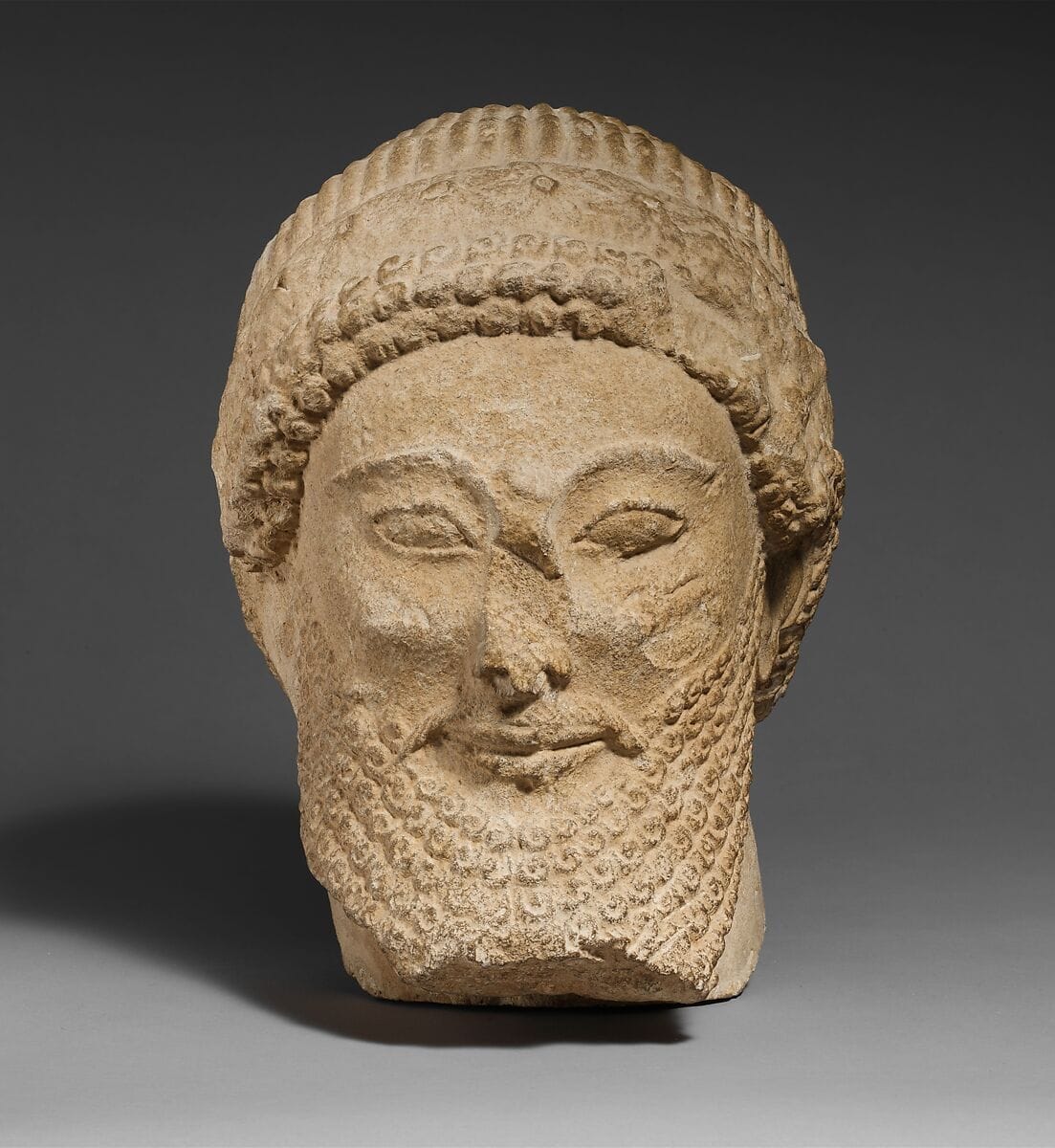
Limestone head of a bearded male with a wreath of flowers
Archaic II
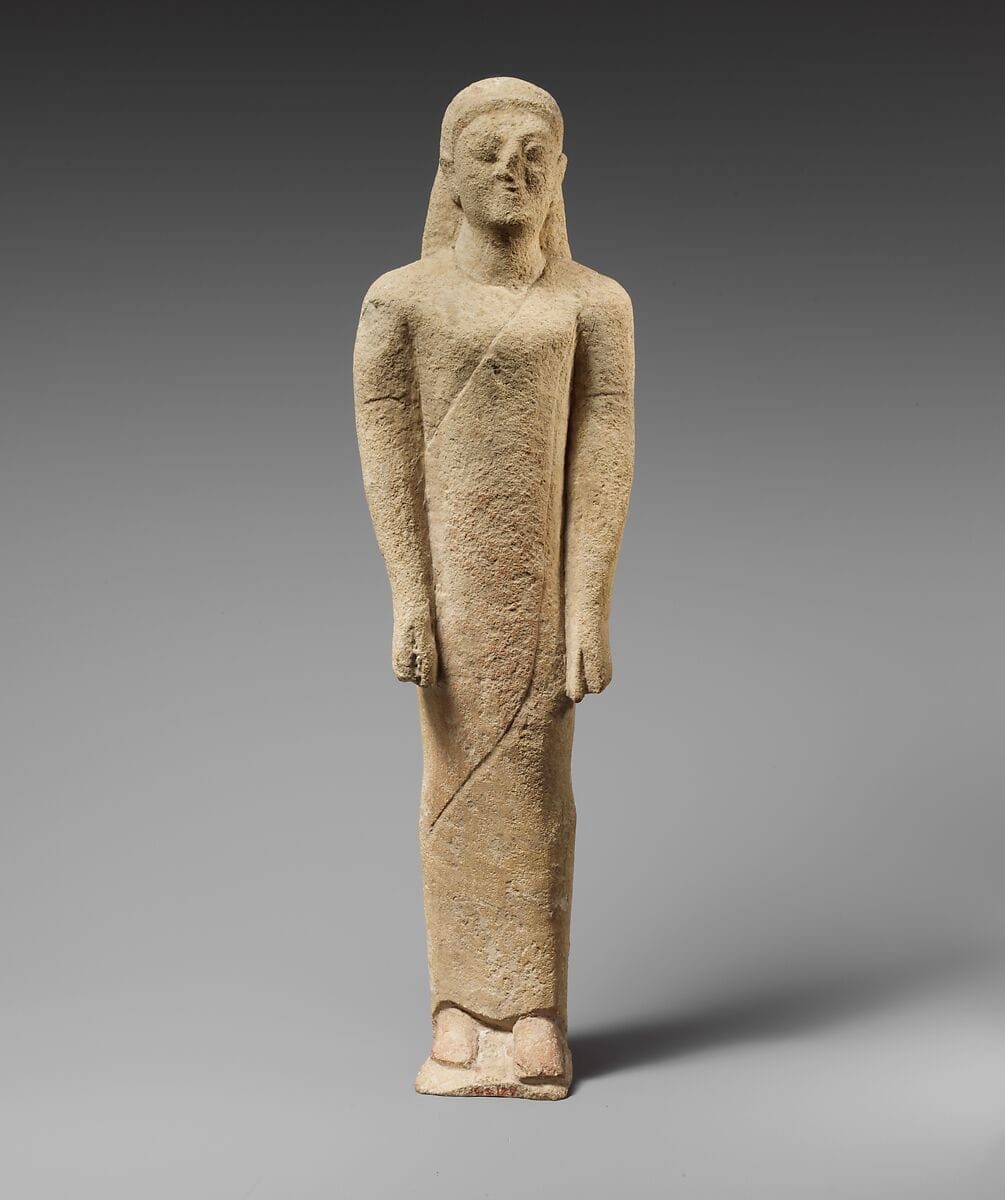
Limestone statuette of a beardless male votary in Greek dress
Archaic II
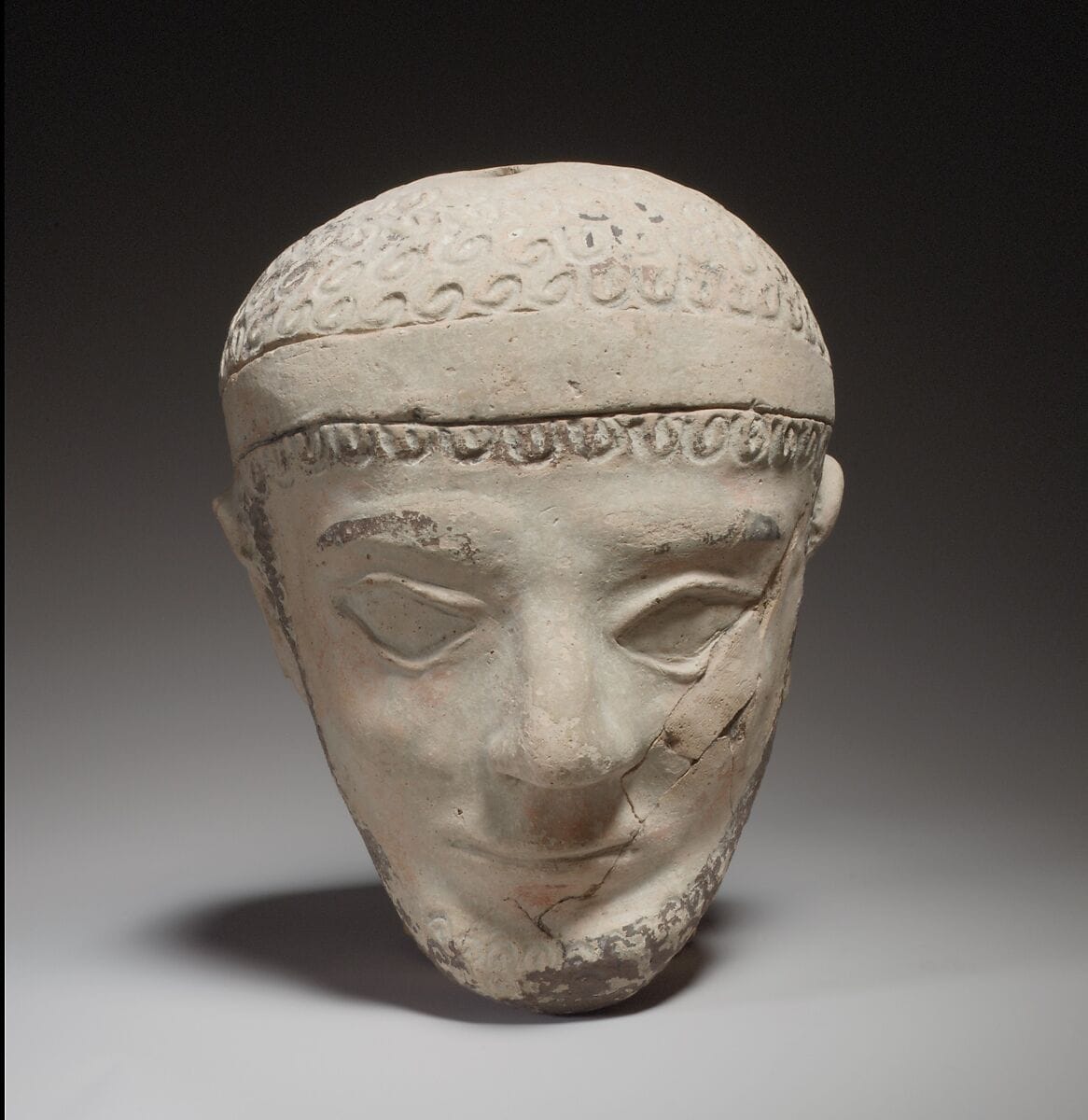
Terracotta head of a man
Archaic II
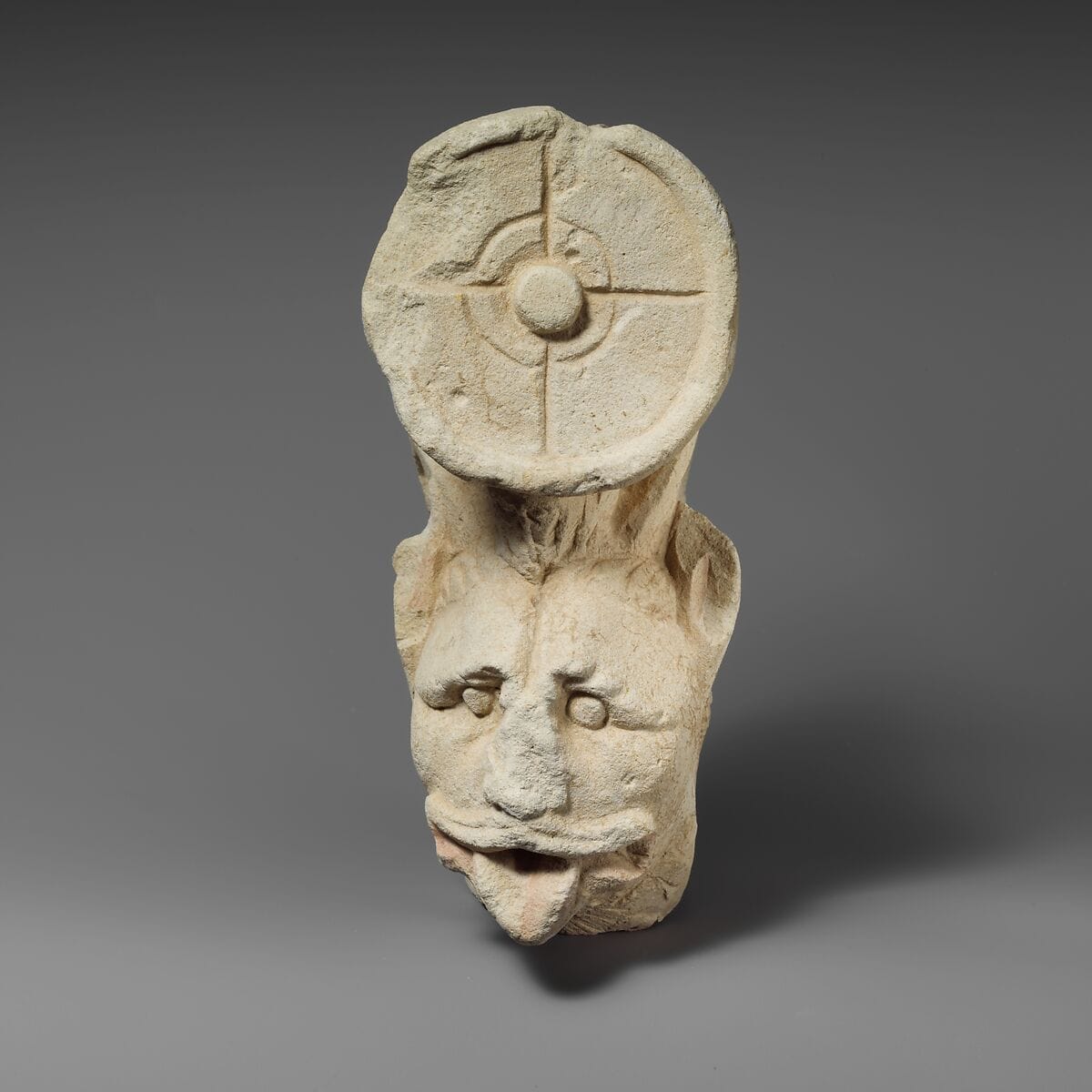
Fragment of a limestone throne (?) with the head of a horned lion
Roman
Head of a comic figurine
Hellenistic
Limestone statuette of a female votary of the kore type
Archaic II
Limestone head of Apollo
Hellenistic
Standing female flute player
Classical
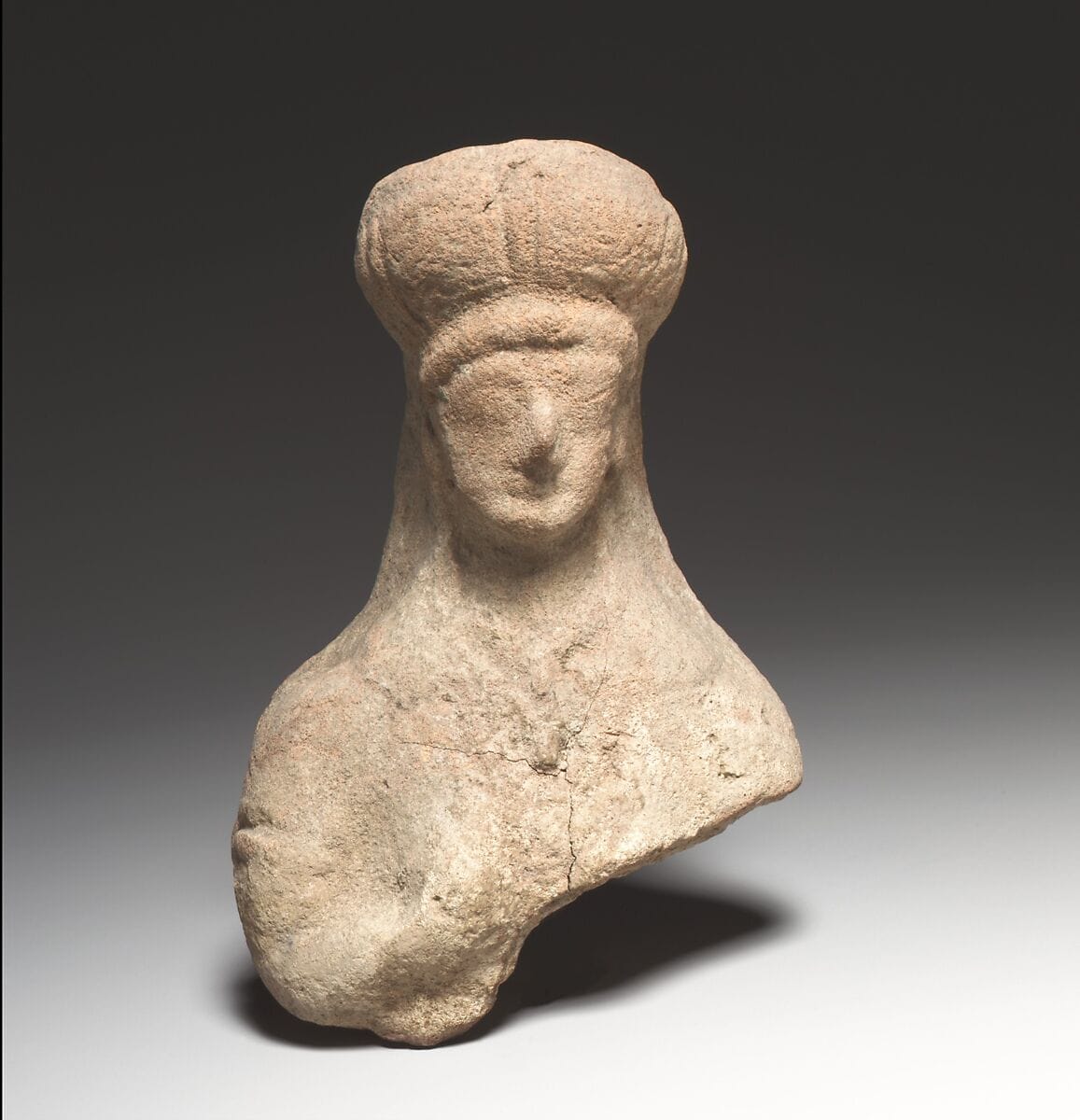
Standing female figurine
Archaic II
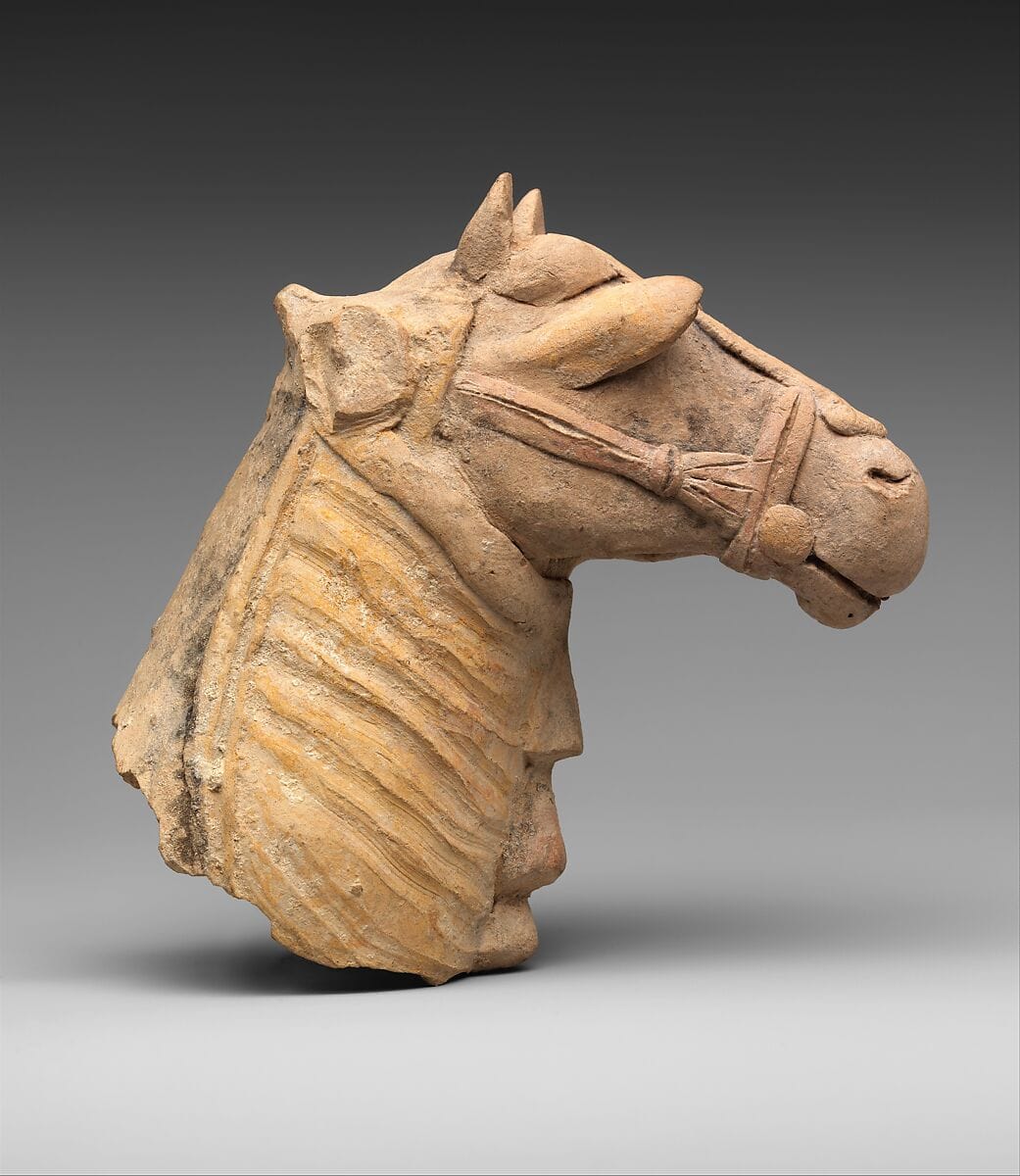
Horse's head with harness
Archaic II
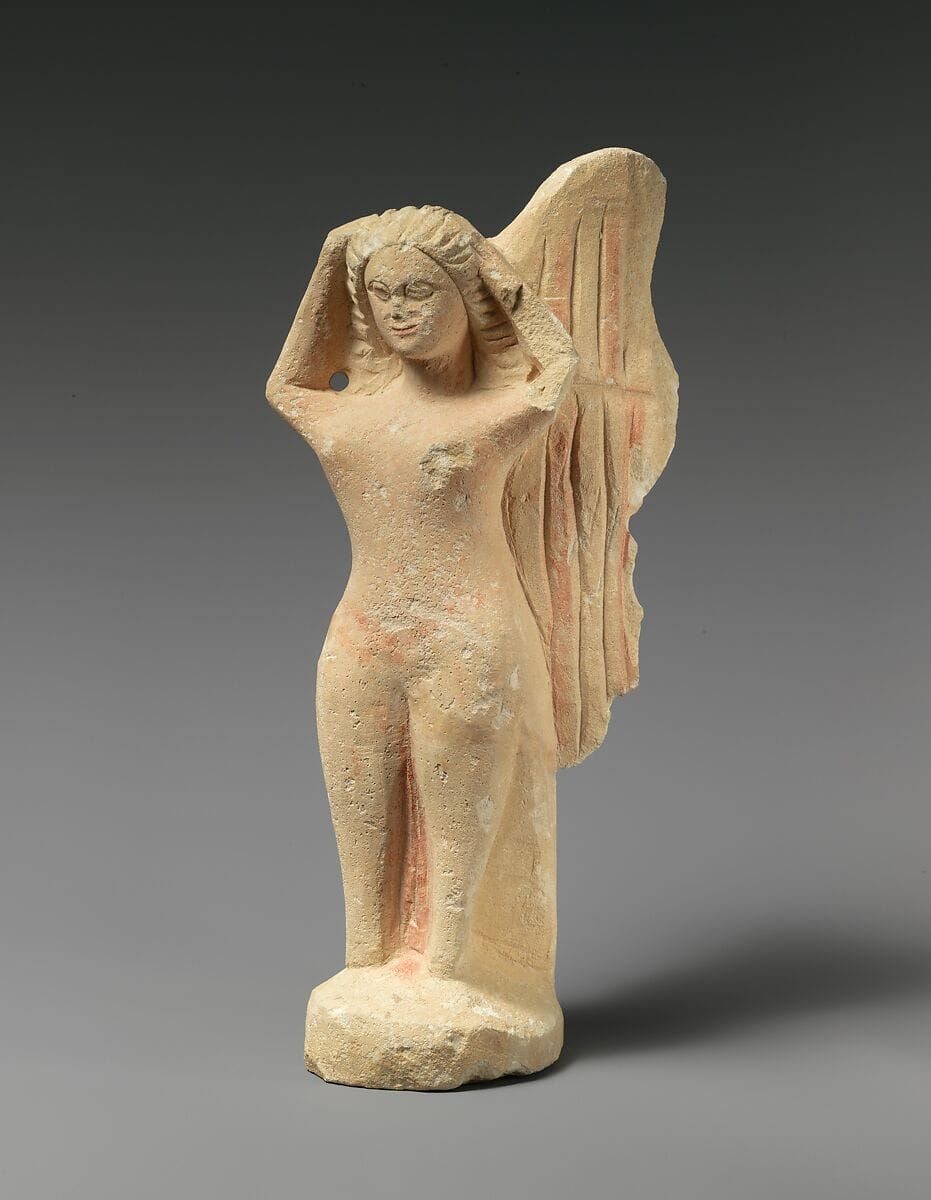
Limestone statuette of a mourning siren
Hellenistic
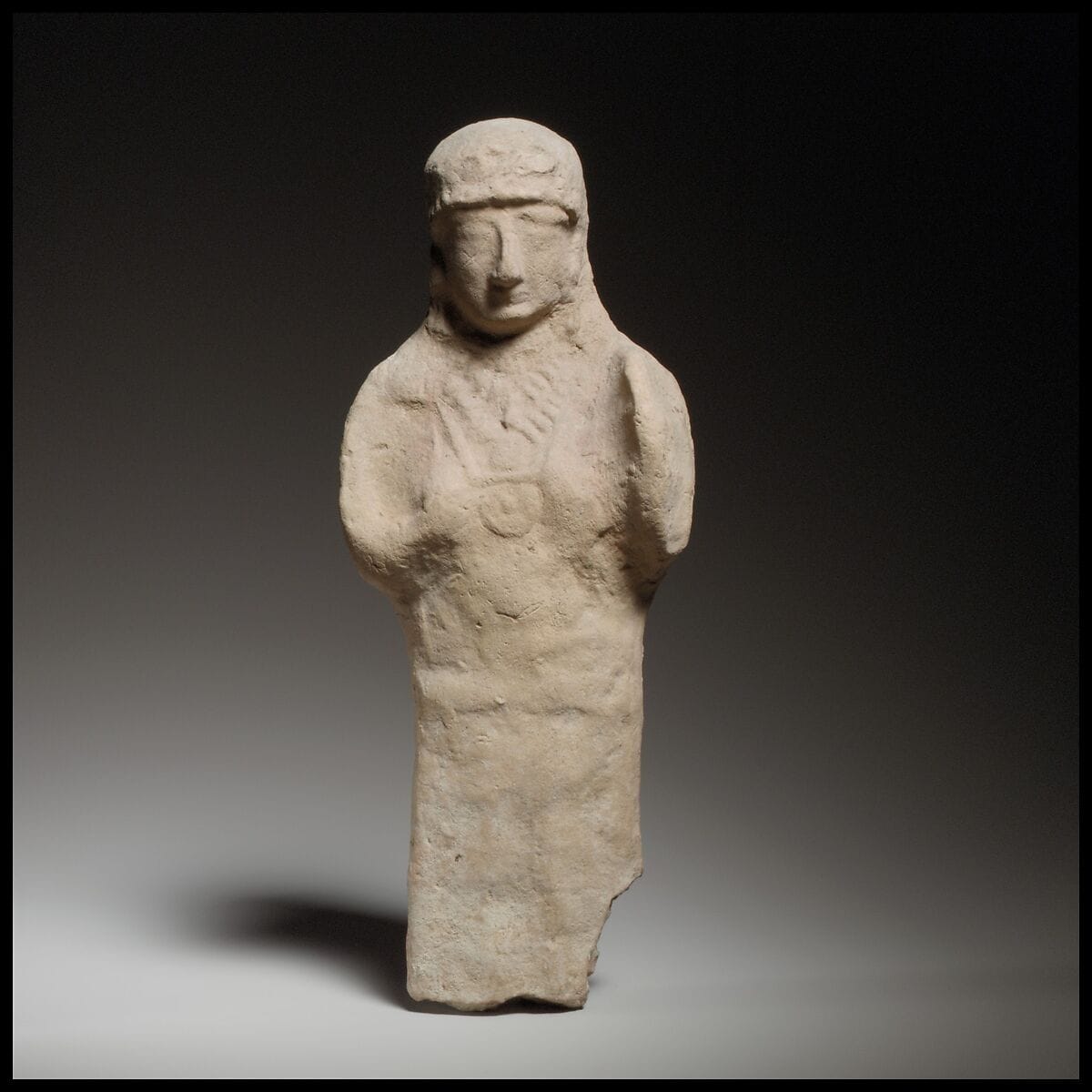
Standing female figurine
Archaic II
Terracotta statuette of Silenos (?) drinking
Hellenistic
Limestone head of beardless male votary with wreath of leaves
Hellenistic
Limestone statuette of a beardless male votary with a wreath of leaves
Classical