
Middle Bronze Age I
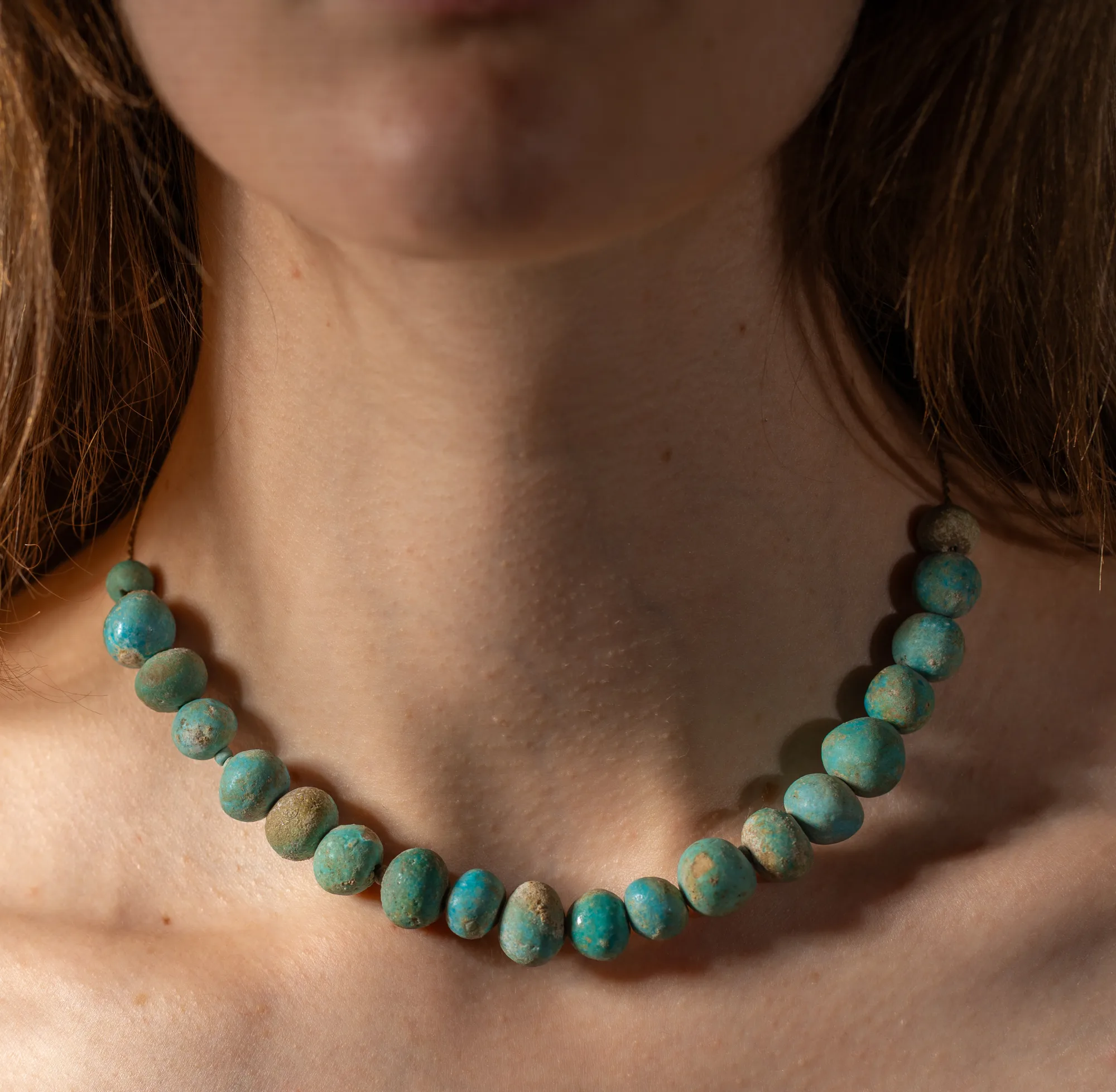
Necklace of Globular Faience Beads
About two dozen turquoise-glazed globular faience beads of Middle Cypriot type with small spacers, restrung on a modern gold chain.
Date
2000 - 1650 BC
Accession No.
JWL-BA-001
Collection
Alexis Drakopoulos
Provenance
- 1957–1969, American private collection, formed in Cyprus; brought to the United States in 1969
- 1997, by descent to a private collection, Lake Worth, Florida
- By 2026, Drakopoulos Collection of Cypriot Antiquities
Middle Cypriot type, c. 2000–1650 BCE · Faience (glazed quartz composition) · Modern stringing on a gold-coloured chain
About two dozen beads, globular to slightly flattened, of assorted sizes and not quite regular in outline, several lumpy or faintly faceted, as if shaped by hand. Between some of them sit very small ring beads used as spacers. The glaze is a strong turquoise to blue-green, dried to a matte, clouded surface, with buff, olive and grey-green weathering spreading over parts of several beads; two or three have turned almost wholly olive-buff. One large bead has a chip that exposes a pale whitish core.
The beads are strung, in no ancient order, on a fine modern gold-coloured chain with a clasp.
Commentary
The beads belong to the plain globular type, Åström's first class of Cypriot Bronze Age faience beads and the commonest by far; he observed that in the Middle Cypriot period apparently only the plain variety occurs [2]. "Faience" here means a glazed body of crushed quartz. Paste and early glass can look much the same, and Åström himself cautioned that "we cannot be sure that they are all made of faience" [2]. Only a section under magnification would settle the material of each bead.
Beads of this form fill Middle Cypriot tombs. Lapithos Tomb 201A produced 413 globular beads, 6–17 mm across, now strung as two necklaces [1]; a string from Lapithos Tomb 806A in Philadelphia, originally of 24 beads and now 22, combines large plain globular beads of about 1.1 cm with small squat spacers, much as this one does [6]; Middle Cypriot III necklaces from Ayios Iakovos have beads of 0.8–1.6 cm [7]; and a Kalopsidha string of 43 beads is in the Ashmolean (AN1896-1908 C.339) [5]. The size and mix of this necklace sit comfortably within that range. The published view since Stewart is that Early and Middle Cypriot faience beads were imported, most probably from Egypt or the Levant [3]; a Cretan source and local manufacture have both been argued, but no workshop or waster has been found on the island [1]. The globular bead was made and worn all around the eastern Mediterranean, "of shapes found throughout the Near East" in Foster's words [4].
The date rests on two things: the type, which is Middle Cypriot in its commonest form but continued into the Late Bronze Age, and the history of the string, which was acquired in Cyprus in the 1950s or 1960s. The beads have no recorded find-spot, and none of them can be tied to a particular tomb. The range c. 2000–1650 BCE should be read as the date of the type in Cyprus.
The state of the glaze is the open question. Excavated Cypriot globular beads are usually white or grey, with only traces of green; at Lapithos 201A glaze survives on only a few dozen of the beads [1], and the Philadelphia string is white paste with traces of green glaze [6]. Most beads here keep a strong turquoise. Favourable burial conditions could explain this, but the beads could also be Egyptian or Levantine, a mixed assemblage from the market, or consolidated in modern times. Close examination for glaze running over chipped edges, and for any stone or glass beads among the faience, would help.
References
- 1.Webb, J.M. (2018) Lapithos Tomb 201. A singular Middle Bronze Age burial assemblage. In L. Hulin, L. Crewe & J.M. Webb (eds), Structures of Inequality on Bronze Age Cyprus: Studies in Honour of Alison K. South. Nicosia: Åström Editions.
- 2.Åström, P. (1972) The Late Cypriote Bronze Age: Other Arts and Crafts. The Swedish Cyprus Expedition IV:1C. Lund, pp. 62–65, 131–133.
- 3.Stewart, J.R. (1962) The Early Cypriote Bronze Age. The Swedish Cyprus Expedition IV:1A. Lund, p. 280.
- 4.Foster, K.P. (1979) Aegean Faience of the Bronze Age. New Haven: Yale University Press, pp. 60, 75.
- 5.Pilides, D. & Papadimitriou, N. (eds) (2012) Ancient Cyprus: Cultures in Dialogue. Nicosia: Department of Antiquities, Cyprus, cat. 196.
- 6.Penn Museum, Philadelphia, object 248109 (field no. 32-27-387), necklace from Lapithos Tomb 806A, excavated by B.H. Hill, 1932.
- 7.Medelhavsmuseet, Stockholm, inv. A.J. 012:042 and A.J. 006:154, necklaces from Ayios Iakovos Tombs 12 and 6 (Middle Cypriot III); Swedish Cyprus Expedition collection records.
More from the Catalogue
Browse related objects
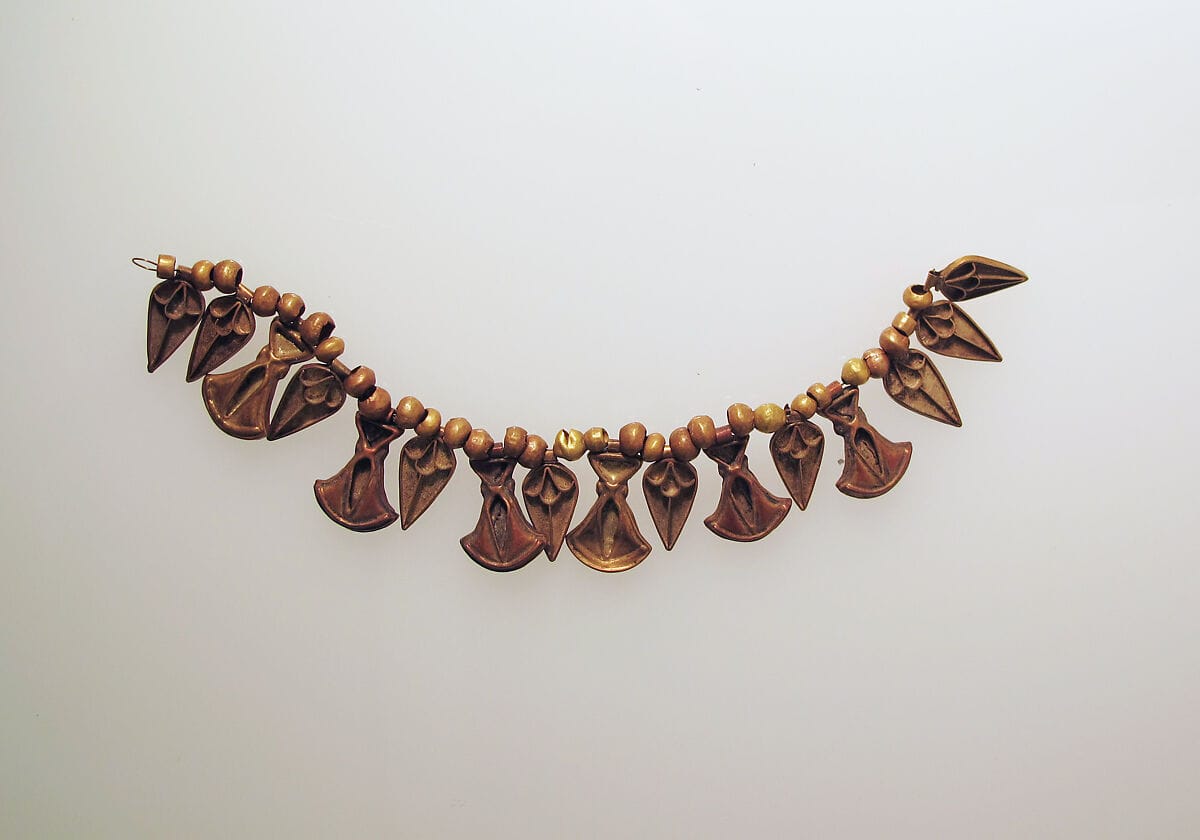
Bead pendant, with lotus flowers
Bronze Age
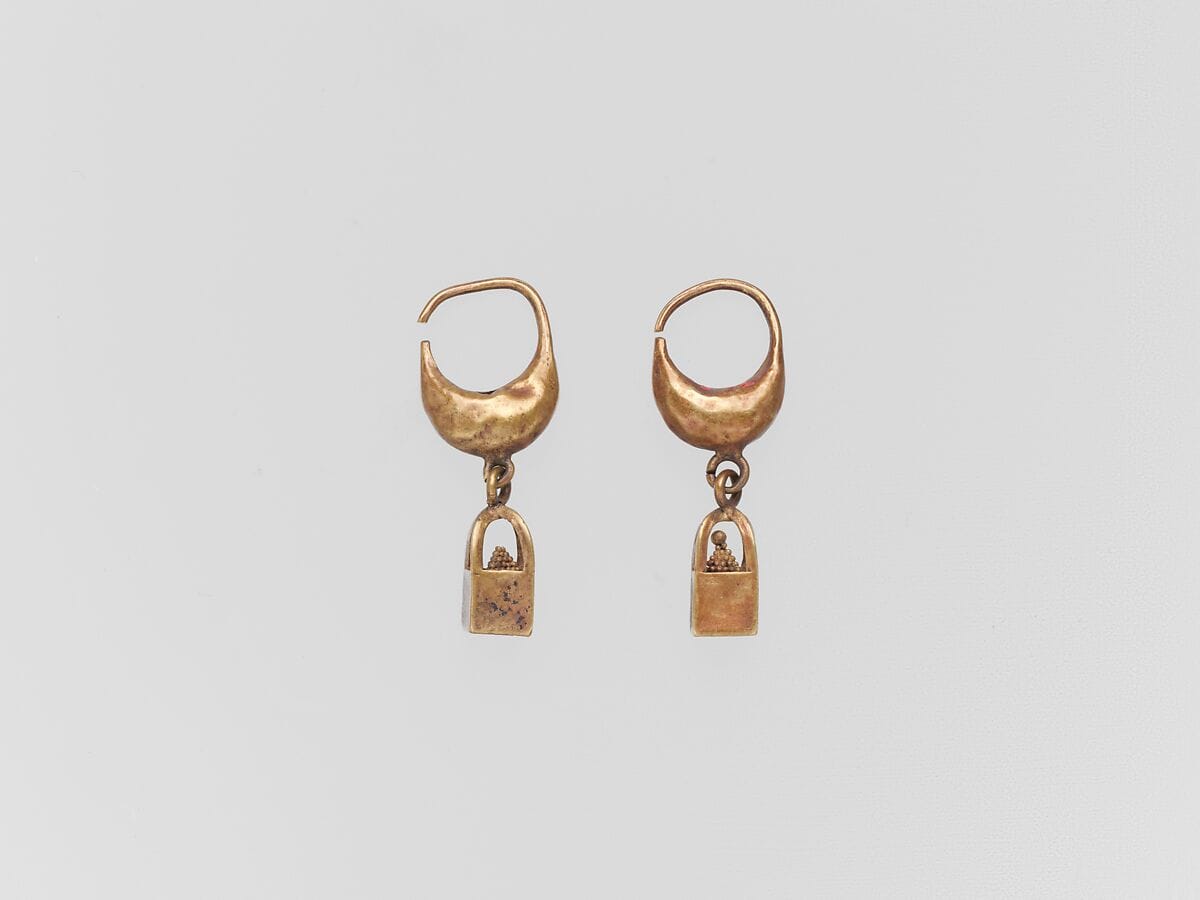
Gold earring with cage and ball pendant
Archaic II
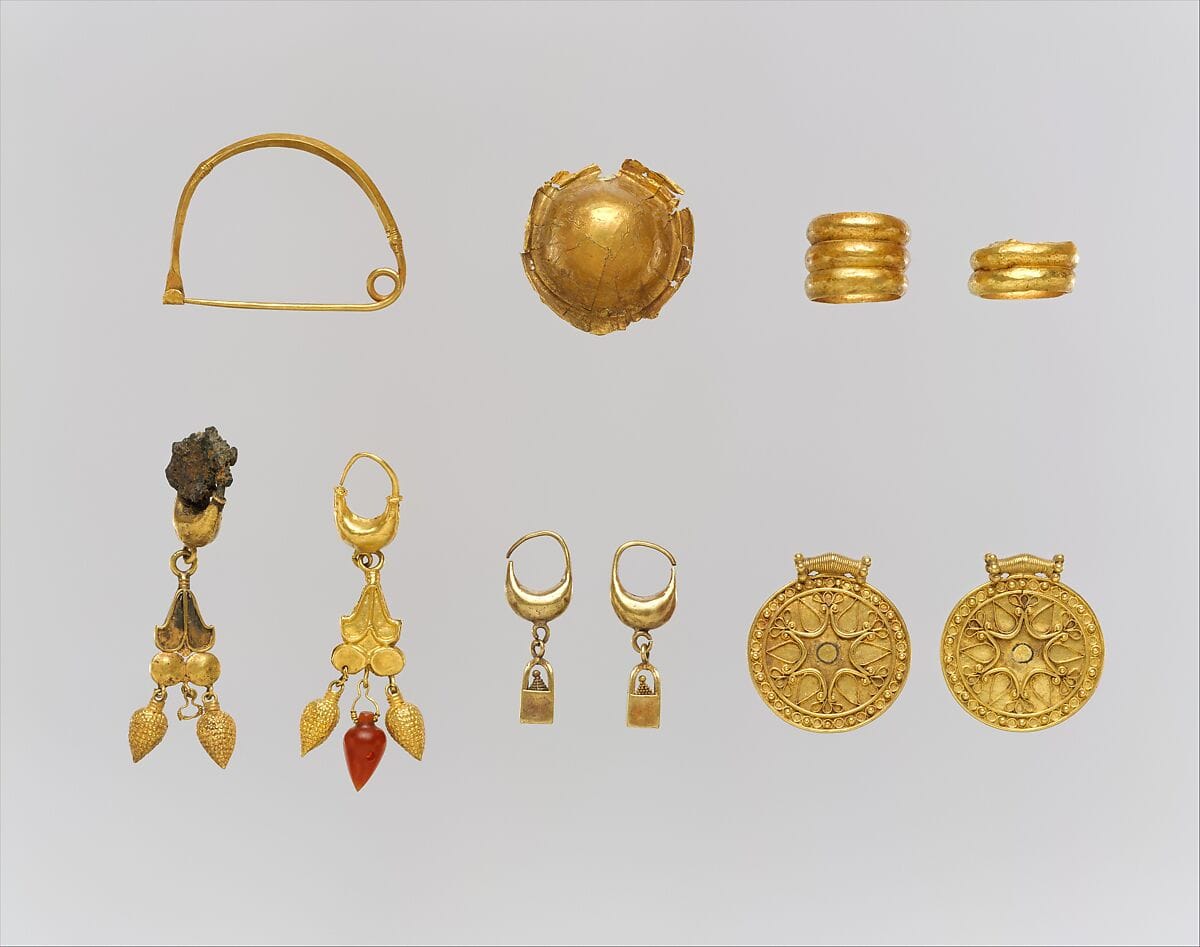
Gold roundel of bulbous form
Late Bronze Age II
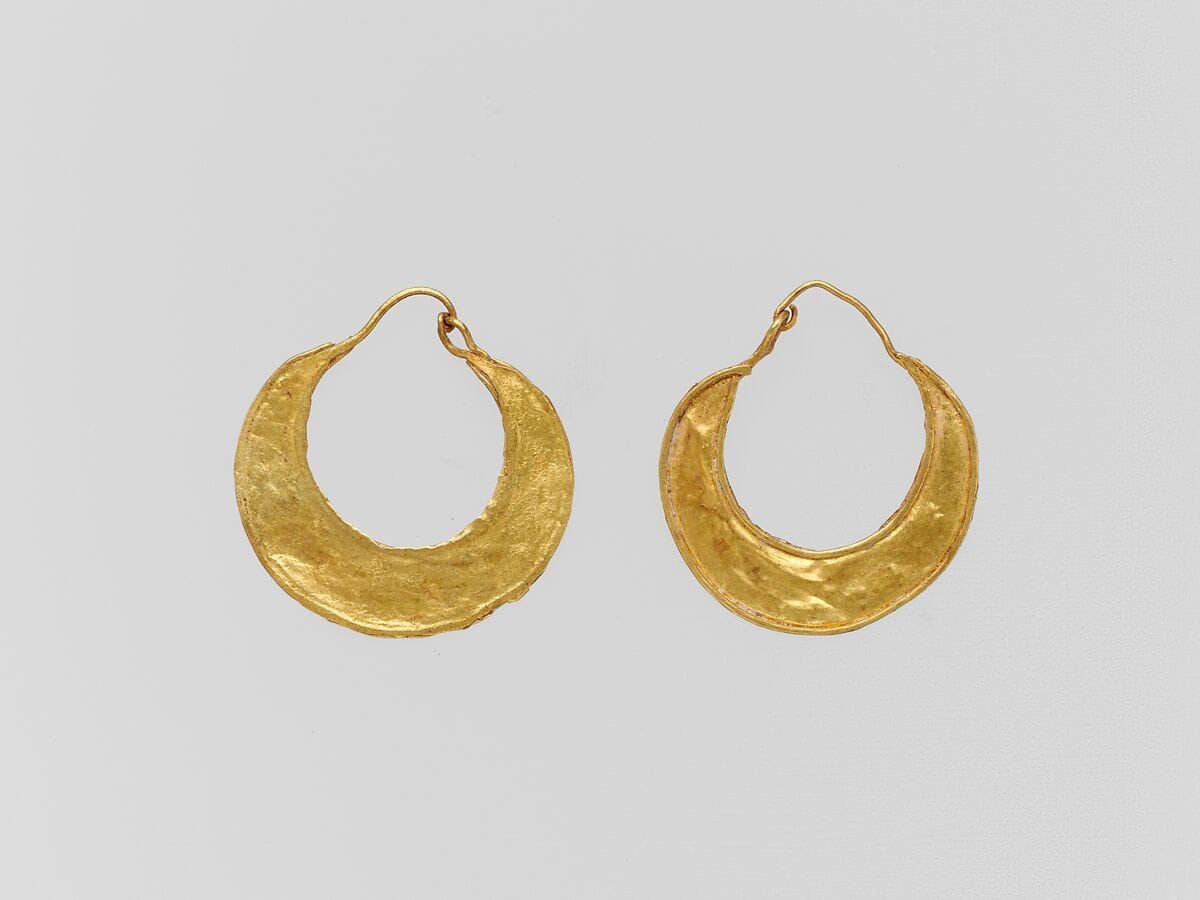
Gold crescent-shaped earring
Classical
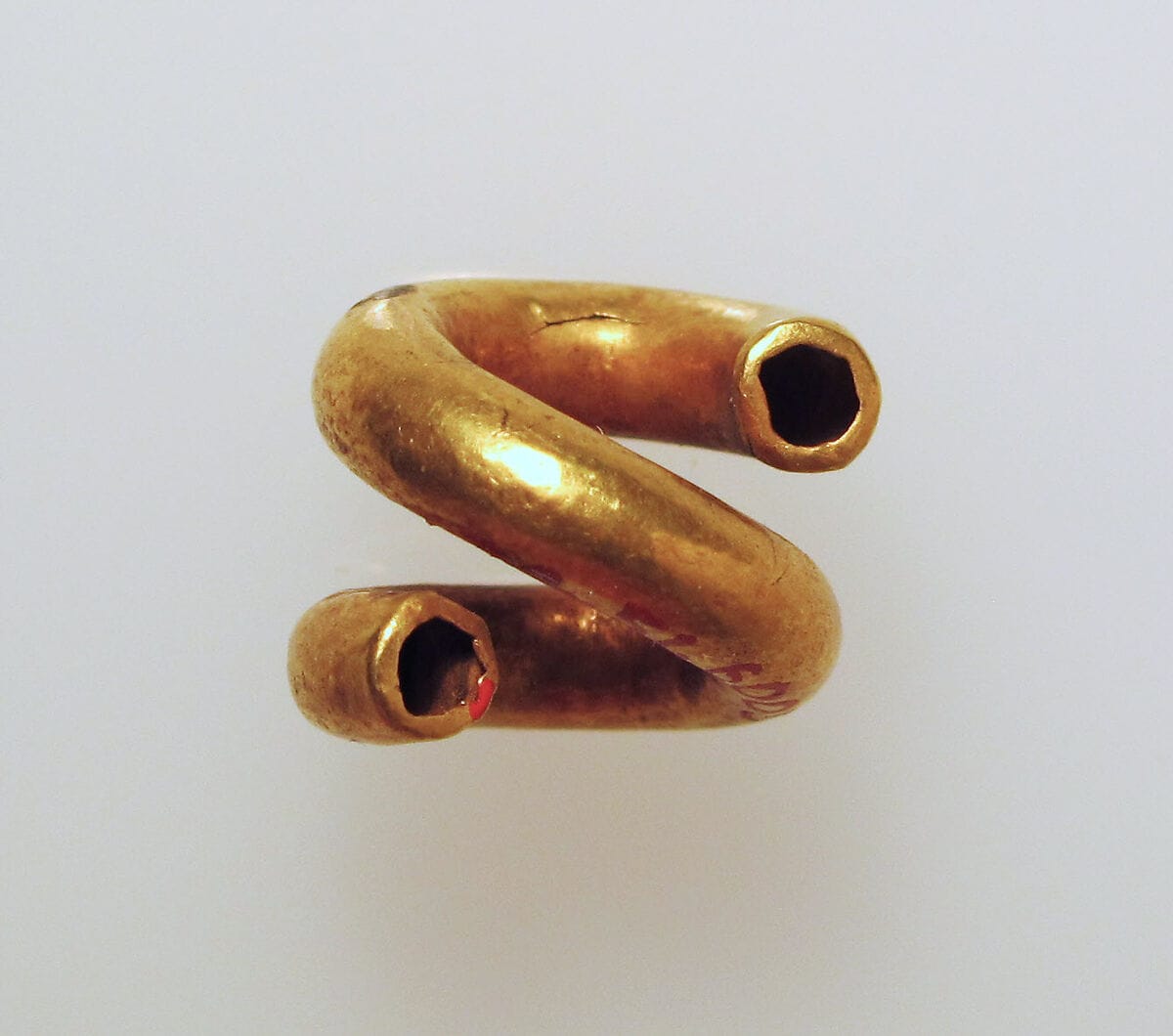
Gold and copper alloy spiral
Archaic II
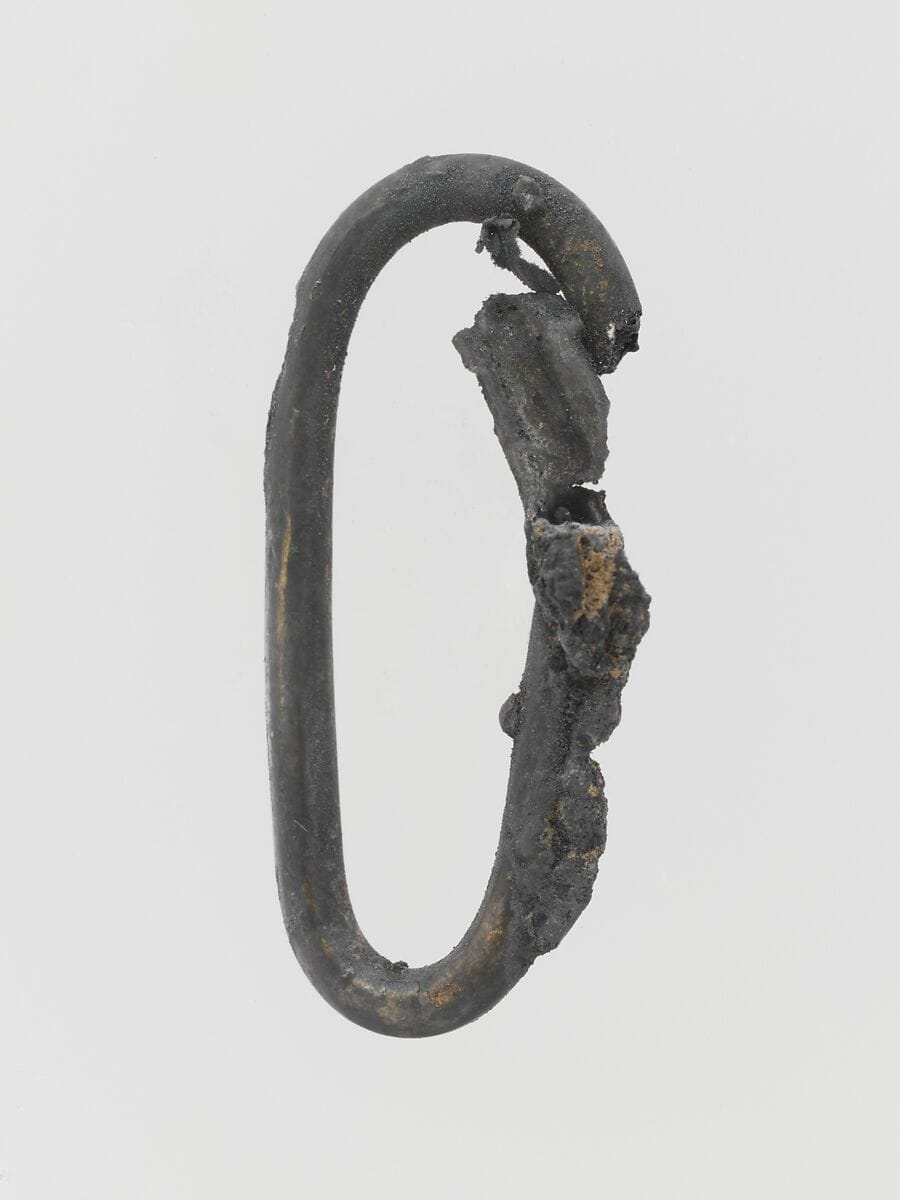
Silver spiral
Late Bronze Age II
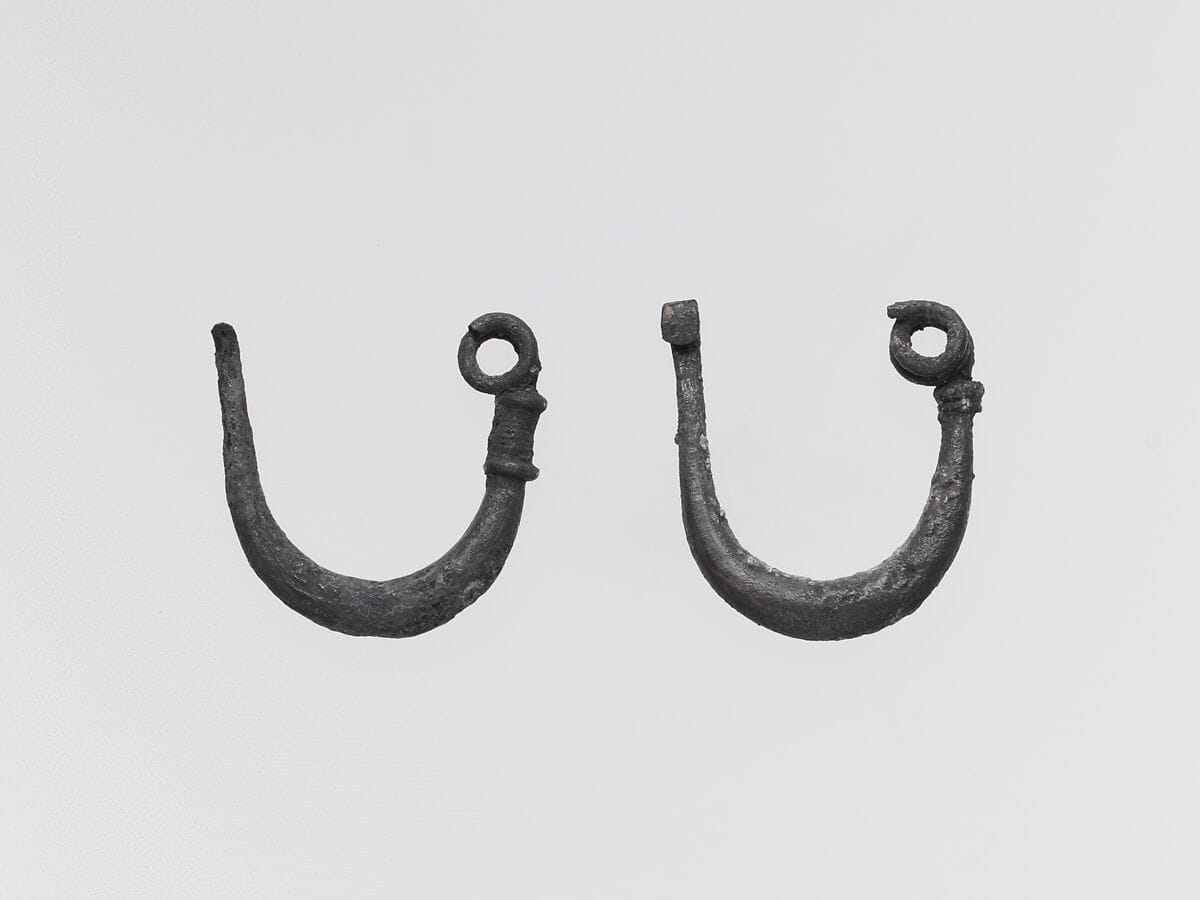
Two silver fibulae (safety pins)
Archaic II
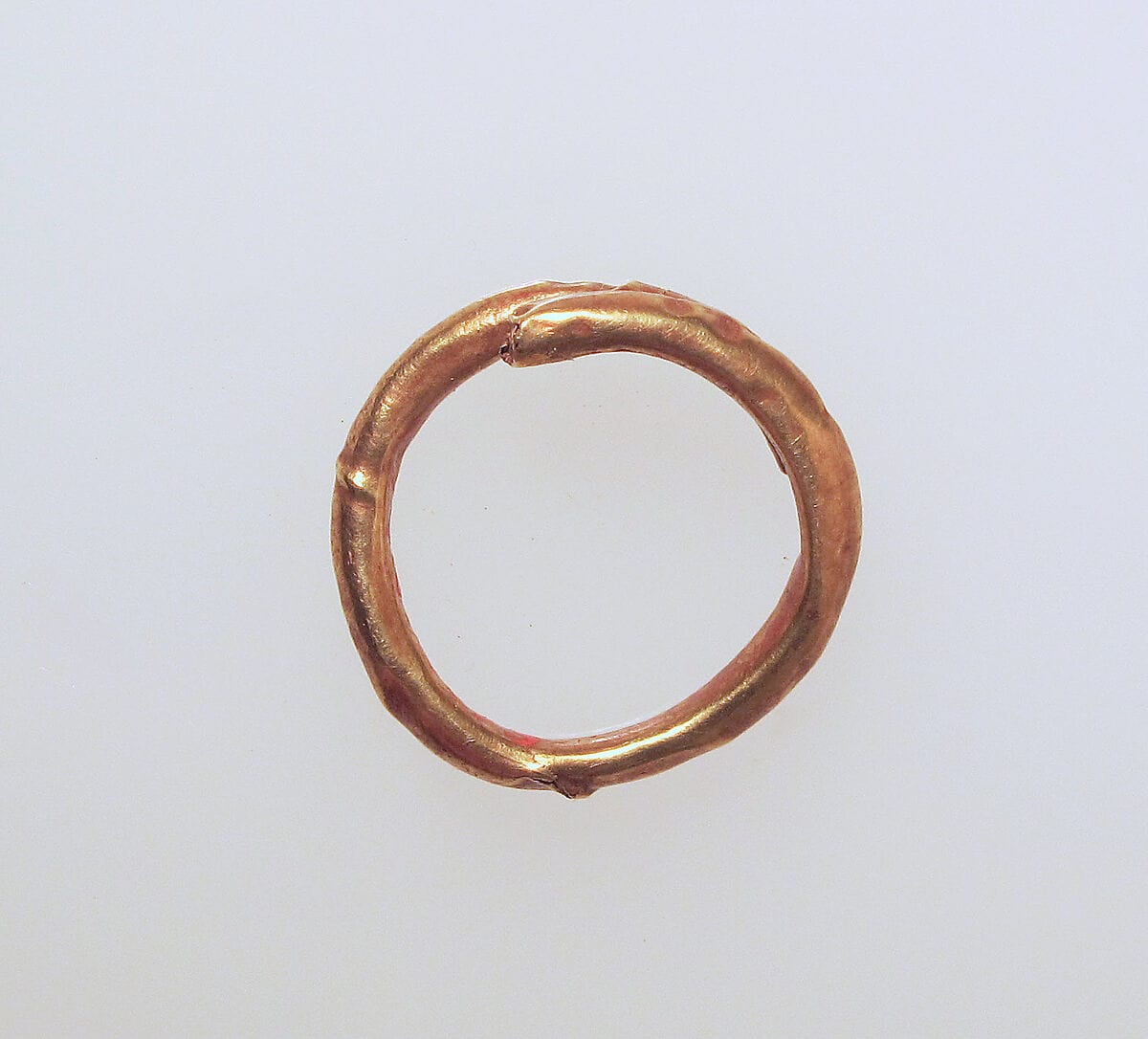
Earring or spiral
Bronze Age
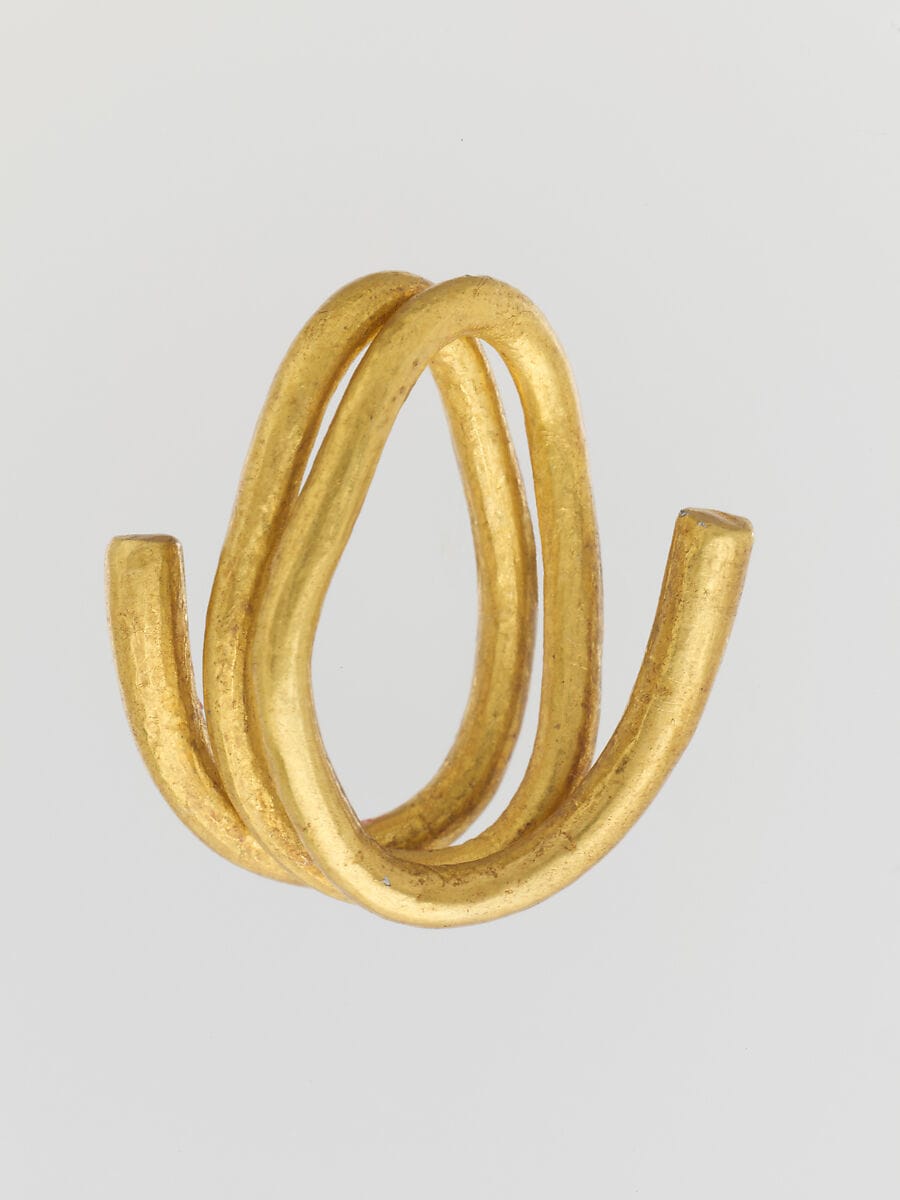
Gold spiral
Late Bronze Age II
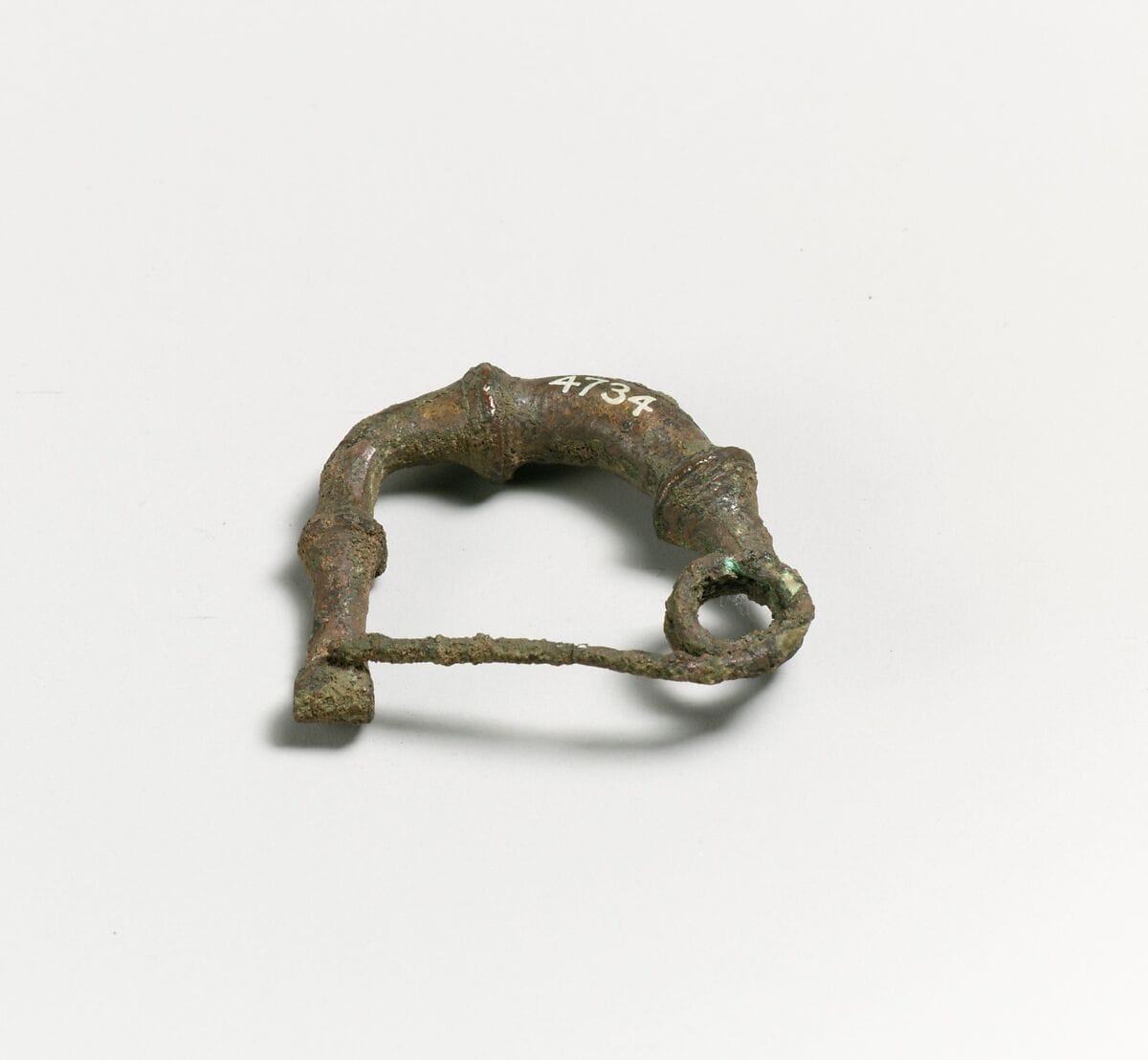
Fibula
Bronze Age
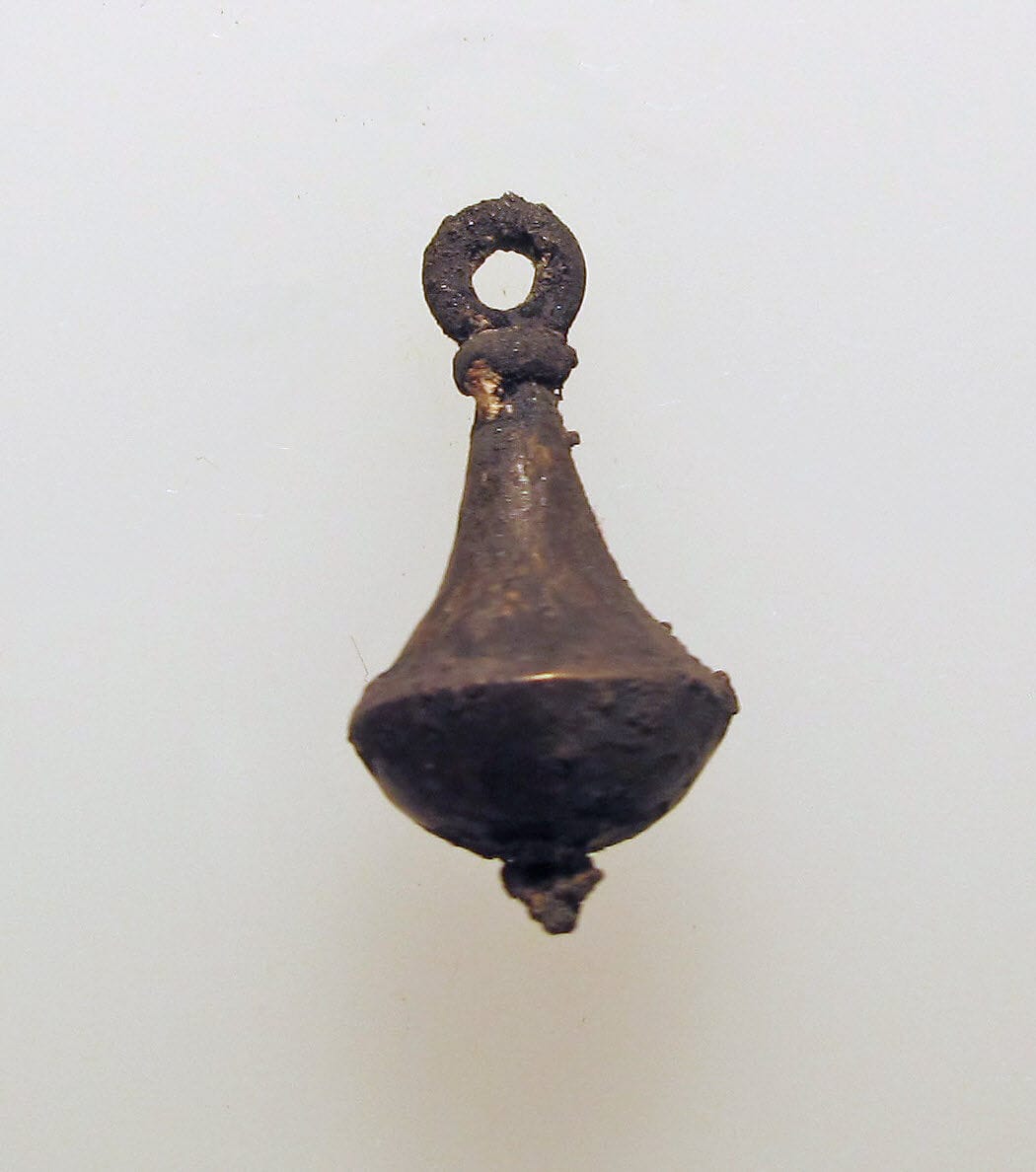
Pendants, nail head, from earrings
Bronze Age
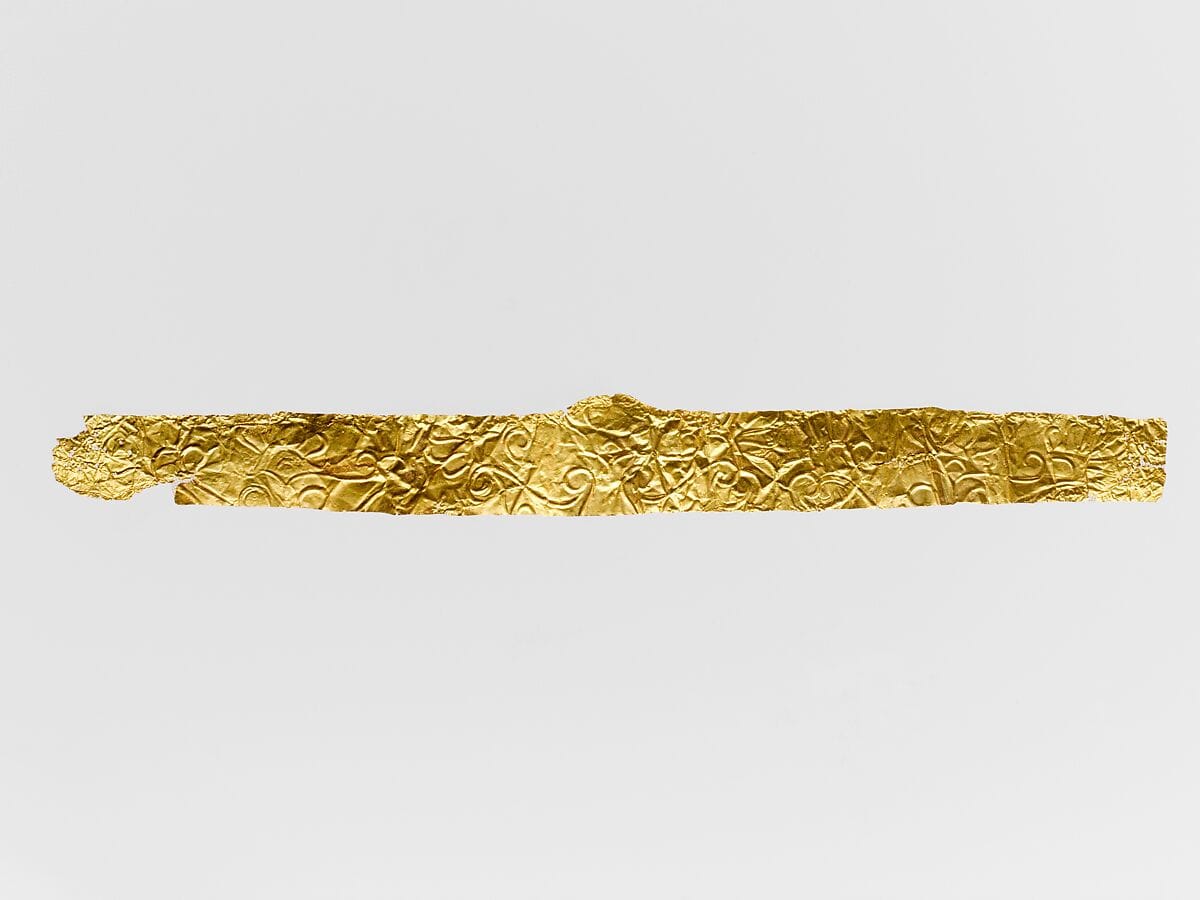
Gold diadem
Classical
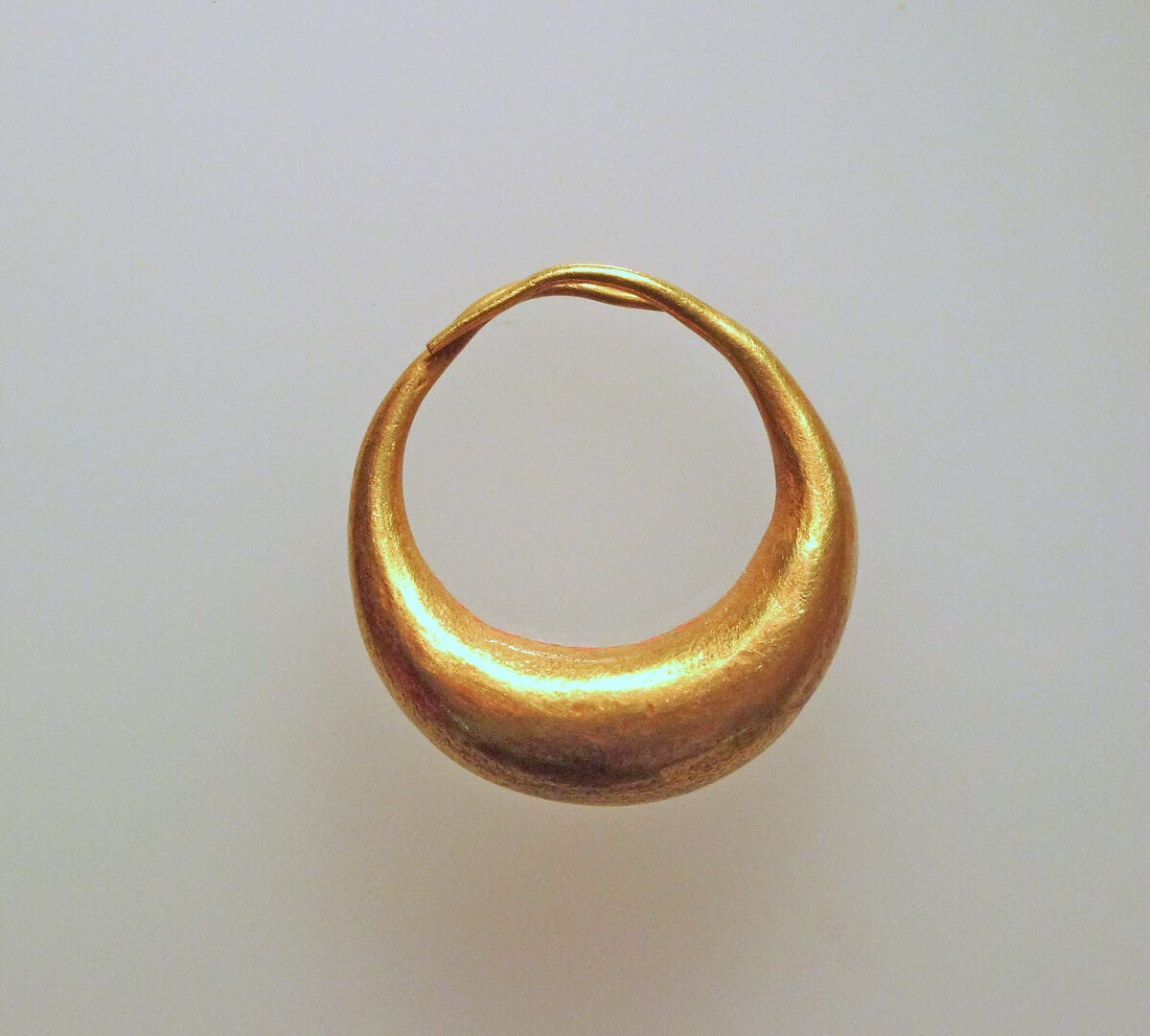
Earring of simple form
Bronze Age
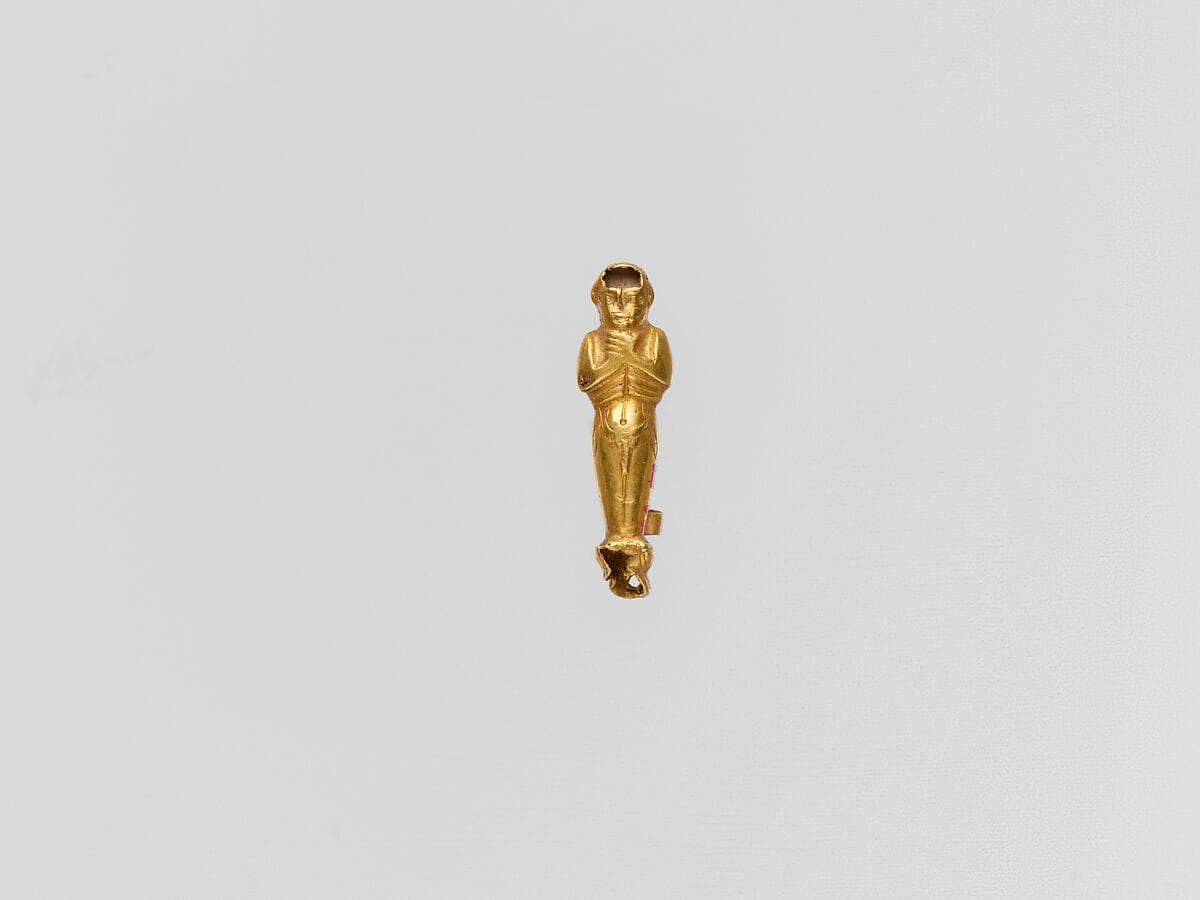
Gold pendant capsule in the form of a male figure
Classical
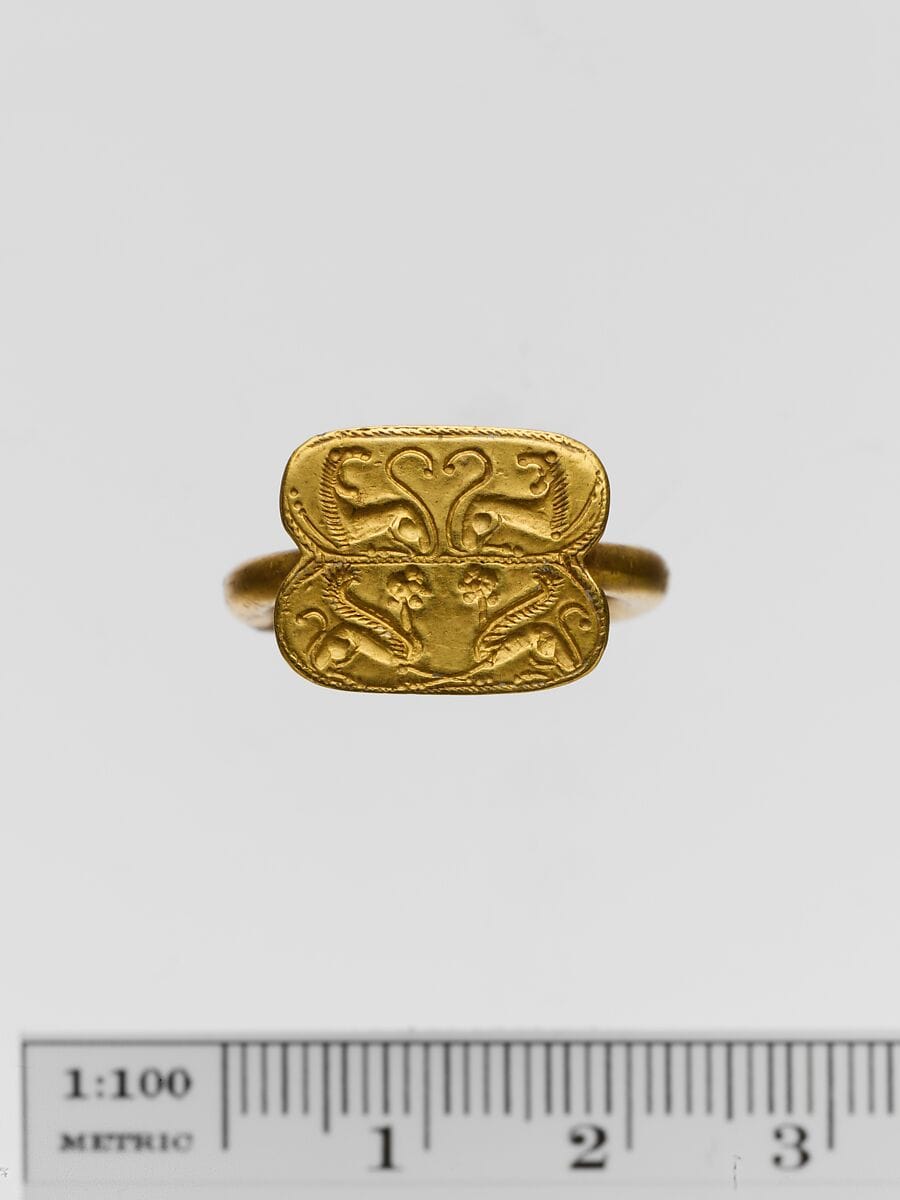
Gold ring
Archaic II
Pendant with geometric ornament
Bronze Age
Gold necklace
Late Bronze Age II
Pendant in the form of a fish
Bronze Age