
Geometric I
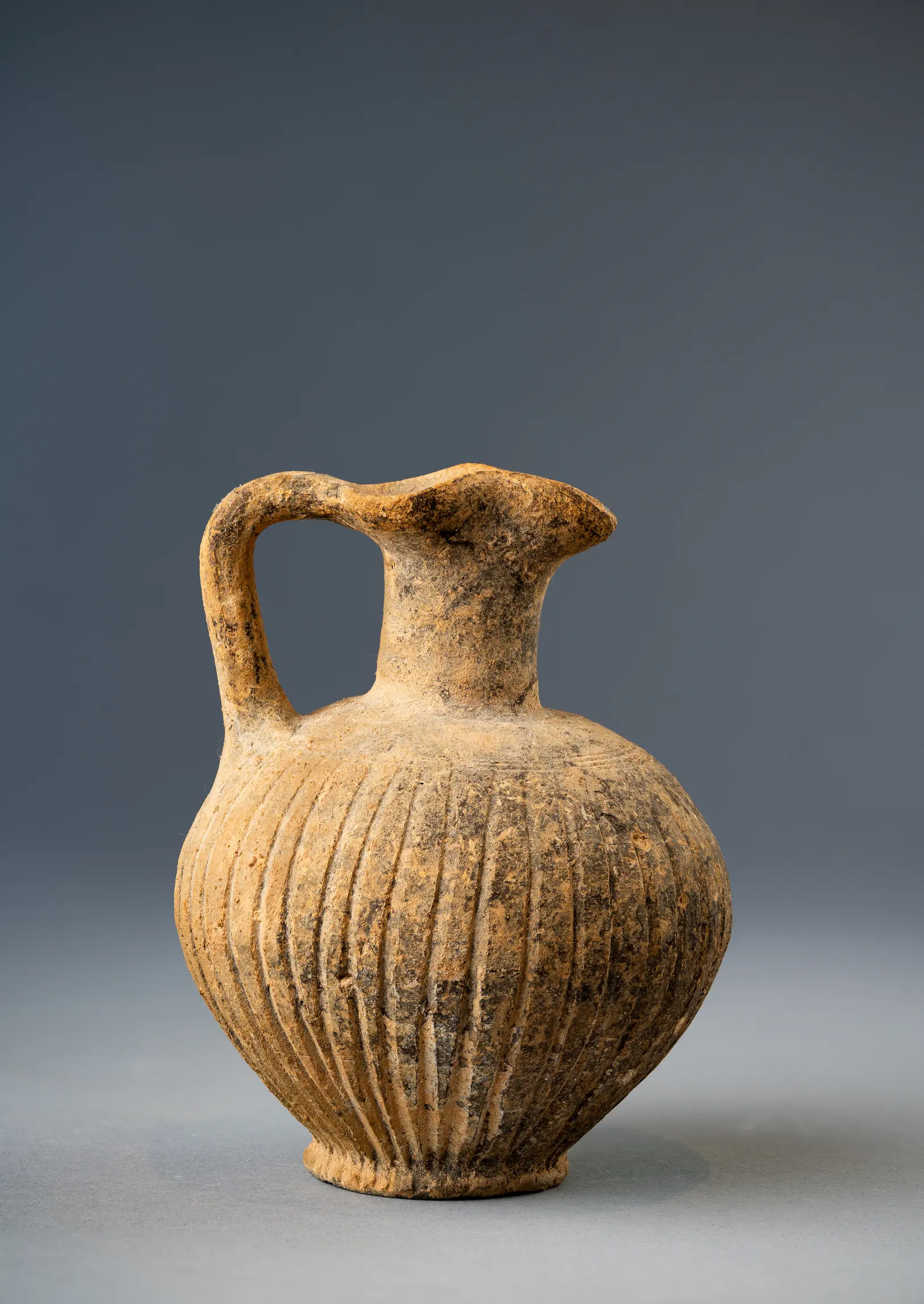
Black Slip Bucchero Jug with Trefoil Mouth and Fluted Body
Small globular Cypriot jug with a pinched trefoil mouth and vertically fluted body, in Early Iron Age Black Slip Bucchero ware.
Date
1050 - 850 BC
Accession No.
JUG-BA-019
Collection
Alexis Drakopoulos
Provenance
- 1965–1969, The Goodman Collection
- 2025–present, Alexis Drakopoulos, London
Cypro-Geometric I–II, c. 1050–850 BCE · Black Slip (Bucchero) ware · Probably wheel-made
A small globular jug on a low, slightly flaring ring foot. A short cylindrical neck rises to a pinched trefoil mouth, its front lobe drawn forward into a pouring lip, and a flat strap handle loops from the rim down to the shoulder. The shoulder is ringed with fine horizontal grooves. Below them the whole body is cut with close-set vertical flutes, each a shallow channel with a rounded ridge between, running down to the foot; they are spaced by eye and drift slightly as they descend. The surface is now a mottled buff and grey-brown: the dark slip survives in patches, darkest in the channels and on the lower body, and has worn away over the ridges and the neck. Light earth deposits remain in the grooves. The vessel appears intact.
Commentary
The shape and treatment identify the jug as Black Slip Bucchero, the Early Iron Age class in which a dark-slipped jug or amphora is fluted or grooved all over in imitation of ribbed metal vessels. The old name "Cypro-Bucchero" borrows the Etruscan word for a black ware and has no real connection with it [3]. Gjerstad's Swedish Cyprus Expedition typology divides the class into Black Slip I and II and places it in the Cypro-Geometric period [4]. At Kourion-Kaloriziki the Black Slip Bucchero I jug is among the commonest offerings in the Cypro-Geometric I tombs [1].
The collection record had placed the jug in the Late Bronze Age. A ribbed, handmade Bucchero does exist in the Late Cypriot period, as an offshoot of Base Ring ware that appears in Late Cypriot IIB and becomes more common in Late Cypriot III [6]. Those jugs usually have a round, upright mouth and raised, pinched ribs in the hard Base Ring fabric [5]. The trefoil mouth, the channelled rather than applied fluting, and the fine grooves on the shoulder of this piece belong to the Iron Age class.
Fixing the date more closely within the Iron Age depends on the foot. At Palaepaphos-Skales the excavators assigned jugs with a conical, splaying foot to Black Slip I Bucchero and jugs with a ring base to Black Slip II Bucchero [2]. By that criterion this jug, with its low ring foot, would fall in Black Slip II and in Cypro-Geometric II. Museums apply the division less strictly. The Kunsthistorisches Museum, Vienna, types its globular trefoil jug with fluted body on a flared foot (IV 4524, H. 15 cm, bought from Max Ohnefalsch-Richter) as Black Slip I while dating it 950–850 BCE, and the Penn Museum records jugs of this form from Lapithos Tombs 59 and 62 (10101 and 295466) under both Black Slip I and II; Penn 89688, from Lapithos Tomb 63, is catalogued as Black Slip II. A date between c. 1050 and 850 BCE covers both readings.
Black Slip Bucchero jugs are overwhelmingly tomb finds. Their size suits pouring oil or wine at the grave, and the fluting reproduces the look of a metal jug at a fraction of the cost. Desmond Morris published a red "Bucchero-style" jug with ring base and pinched spout (H. 17.2 cm) that shares the same elements in a red fabric [3].
How far the grey-brown patches are the remains of an originally black slip, and how far they reflect uneven firing, can only be judged by examining the surface directly. We know of no record of the tomb or site from which the jug came.
References
- 1.Benson, J.L. (1973) The Necropolis of Kaloriziki. Studies in Mediterranean Archaeology 36. Göteborg: Paul Åström, pp. 13–14, 21–23.
- 2.Karageorghis, V. and Raptou, E. (2016) Palaepaphos-Skales: Tombs of the Late Cypriote IIIB and Cypro-Geometric Periods (Excavations of 2008 and 2011). Nicosia, pp. 47, 52.
- 3.Morris, D. (1985) The Art of Ancient Cyprus. Oxford: Phaidon, pp. 43, 45, pl. 40b.
- 4.Gjerstad, E. (1948) The Swedish Cyprus Expedition IV:2. The Cypro-Geometric, Cypro-Archaic and Cypro-Classical Periods. Stockholm: Swedish Cyprus Expedition.
- 5.Gilboa, A. and Yasur-Landau, A. (eds) (2020) Nomads of the Mediterranean: Trade and Contact in the Bronze and Iron Ages. Studies in Honor of Michal Artzy. Leiden: Brill, p. 106.
- 6.Åström, P. (1972) The Swedish Cyprus Expedition IV:1D. The Late Cypriote Bronze Age: Relative and Absolute Chronology, Foreign Relations, Historical Conclusions. Lund: Swedish Cyprus Expedition.
More from the Catalogue
Browse related objects
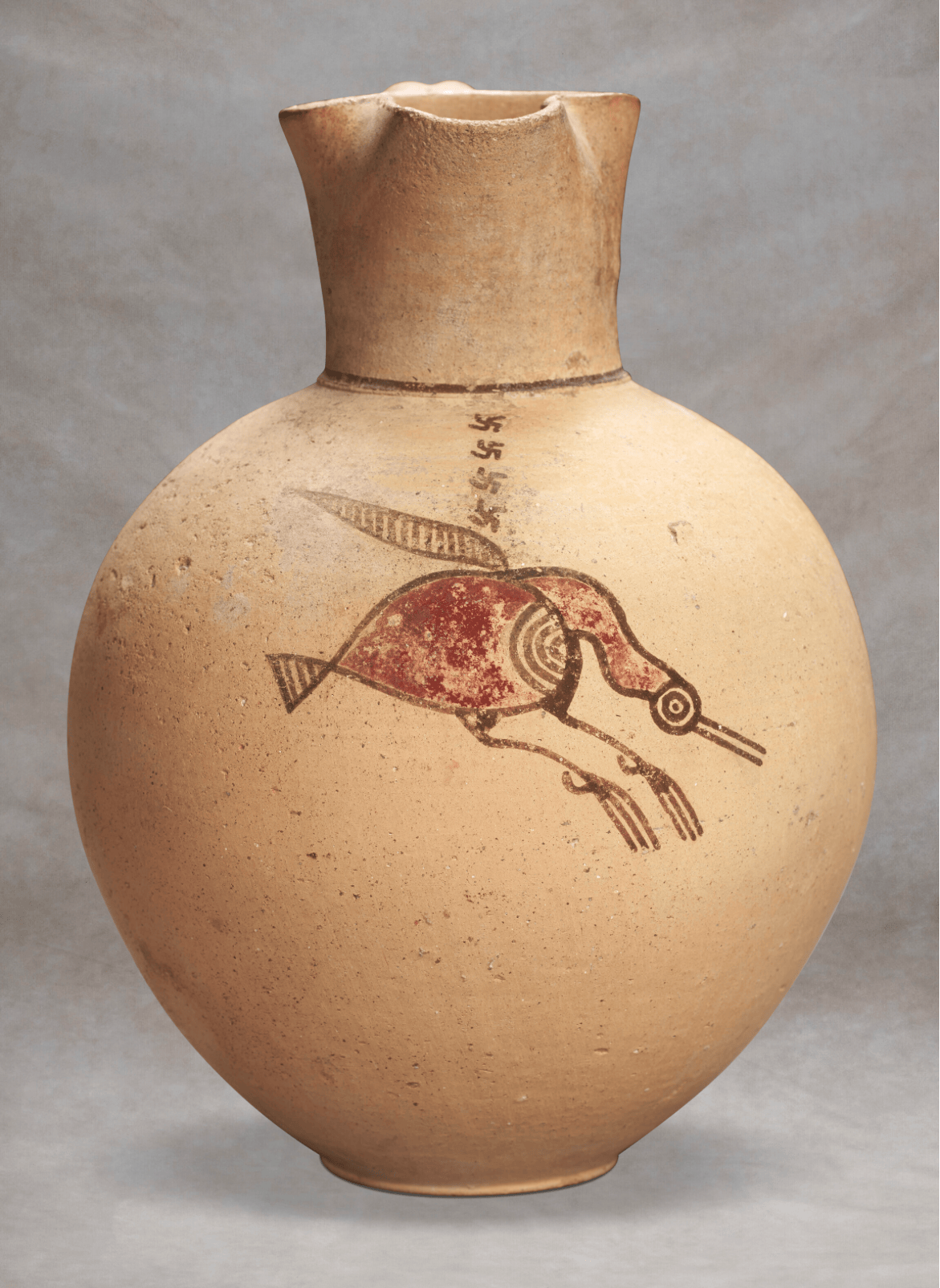
Bichrome Oinochoe
Archaic I
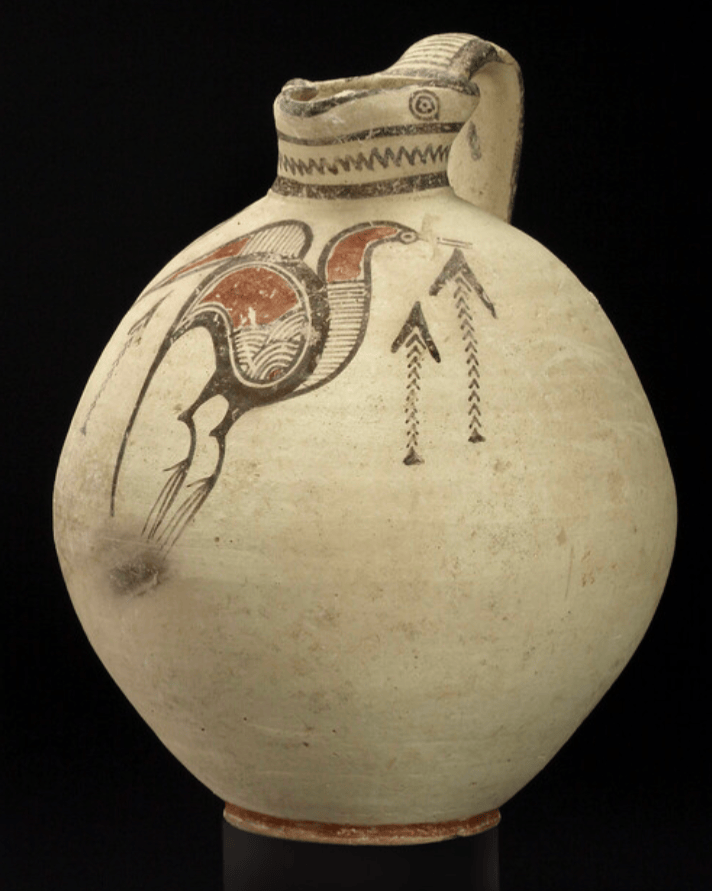
Free-field bichrome jug with image of an Ibis bird and reeds
Archaic
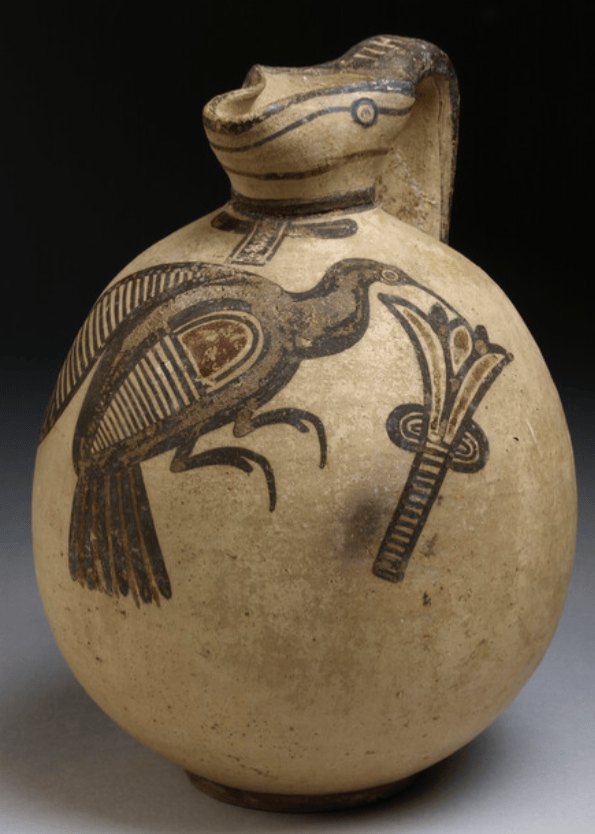
Squat bichrome jug in free-field style with image of bird picking a lotus flower
Archaic
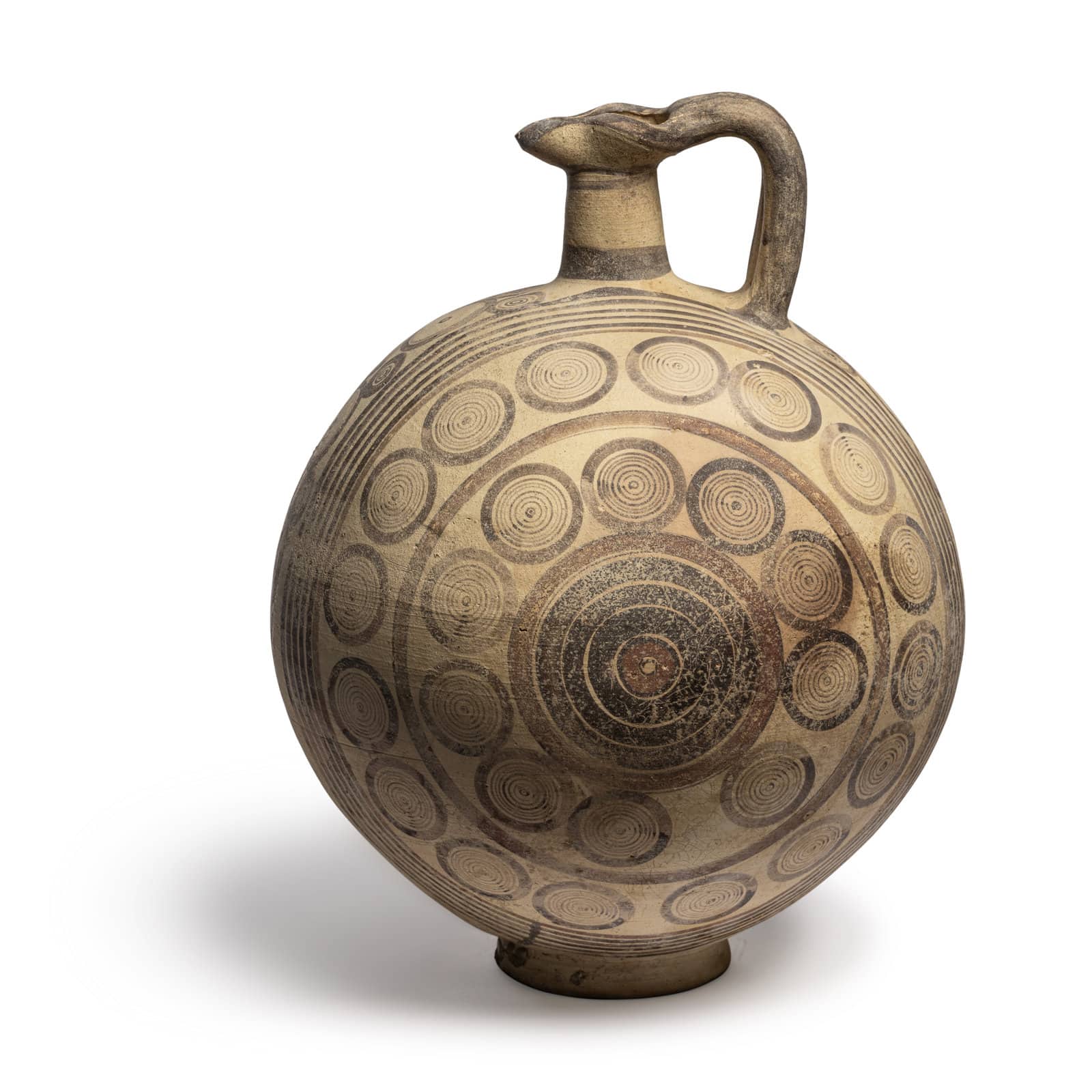
A Cypriot Bichrome-Ware Oinochoe Jug
Archaic I
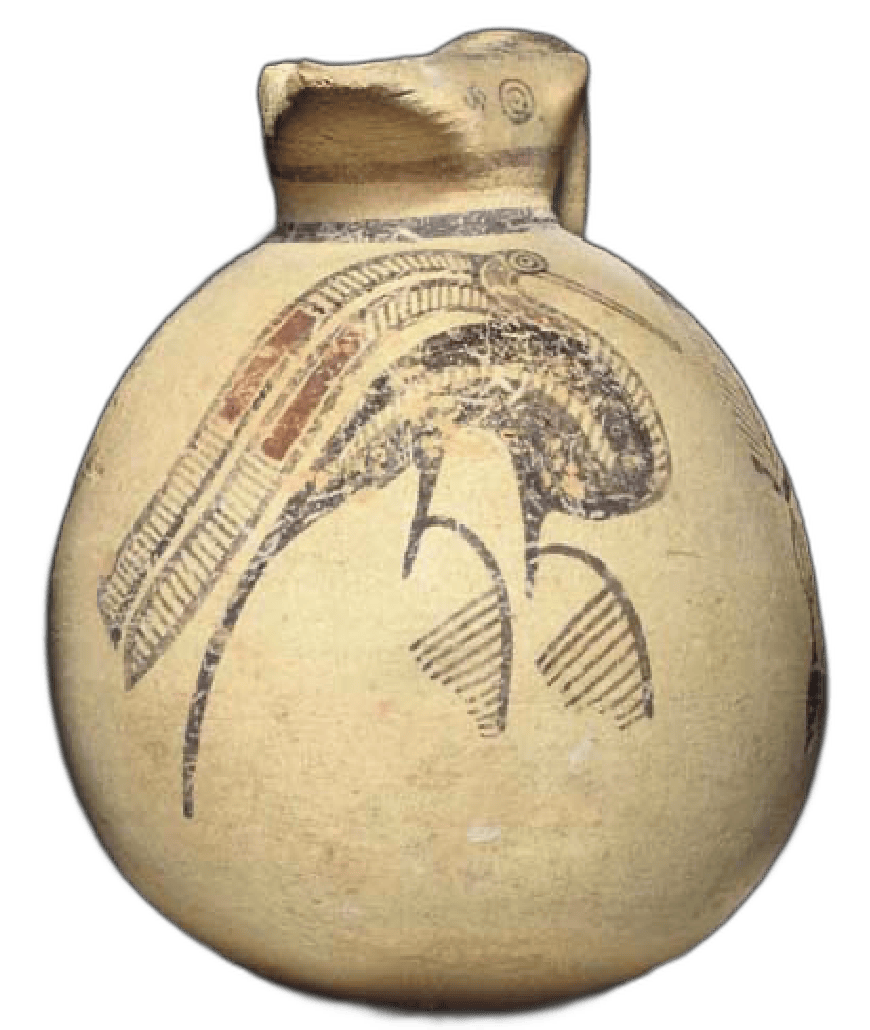
Oinochoe with Free Field Bird
Archaic I
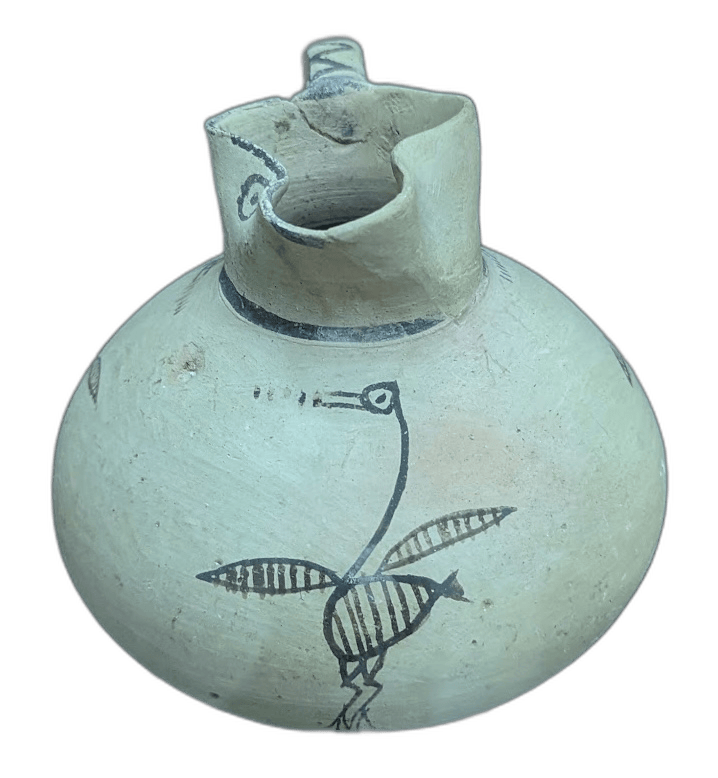
Small Oinochoe with Free Field Bird
Archaic I
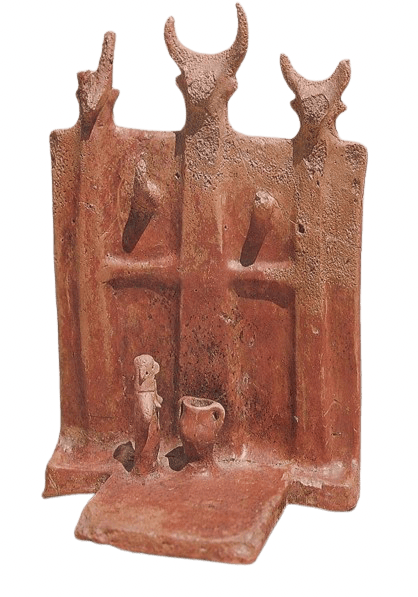
Red Polished Shrine
Middle Bronze Age I
Black-On-Red Geometric Jug Sherd
Geometric II
Bichrome Jug
Geometric
Bichrome Juglet
Geometric
Bichrome Oinochoe
Geometric
Juglet
Archaic II
Oinochoe
Geometric III
Jug
Archaic I
Juglet
Archaic I
Jug
Geometric I
Terracotta jug
Early Bronze Age I
Juglet
Geometric I