
Late Bronze Age II
Base Ring II Bilbil Juglet with White-Painted Bands
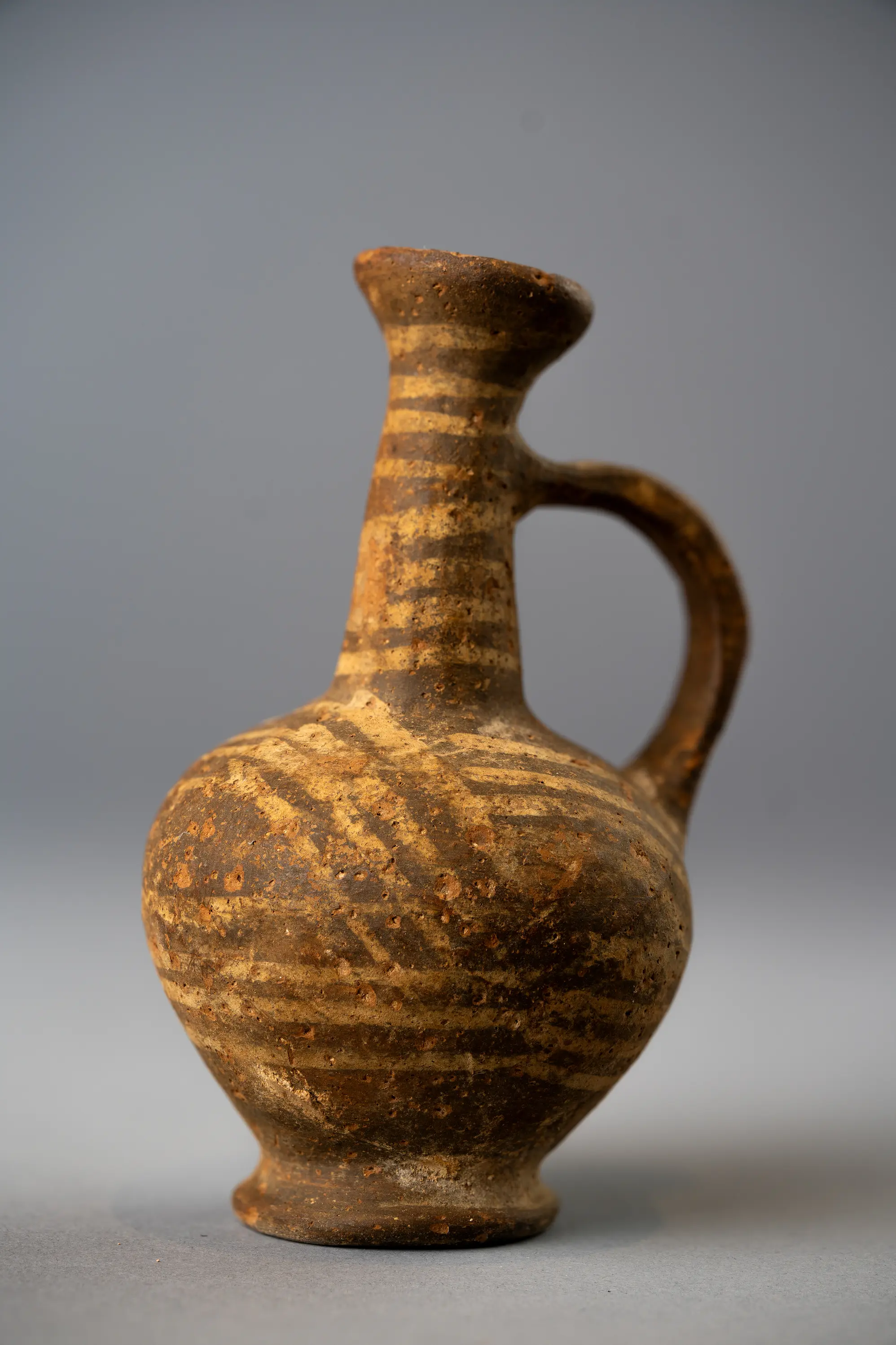
A red-brown Base Ring II juglet of the bilbil shape from Late Bronze Age Cyprus, painted in white with neck bands and oblique body stripes.
Date
1450 - 1200 BC
Accession No.
JUG-BA-016
Collection
Alexis Drakopoulos
Provenance
- 1965–1969, The Goodman Collection
- 2025–present, Alexis Drakopoulos, London
Late Cypriot IIA–IIC, c. 1450–1200 BCE · Base Ring II ware · Handmade
A small juglet of the bilbil shape. The body is a squat, slightly pear-shaped globe set on a short splaying ring foot. From it rises a tall, tapering neck that opens into a flared, dished rim. A round-sectioned handle springs from the middle of the neck and drops to the shoulder. The fabric has fired a warm red-brown, patchily darker, with a matt surface. Over it the potter brushed white paint freely: close horizontal bands ring the neck, and on the body oblique groups of lines sweep diagonally across the shoulder before settling into horizontal bands around the belly and lower body. The strokes vary in width and spacing. The surface is pitted all over with small craters and orange flecks, probably from lime inclusions that have burst, and the paint is worn in places.
Commentary
Base Ring is the fine handmade ware of Late Bronze Age Cyprus: hard, thin-walled and dense enough to ring when tapped. Its standard typology is Åström's in the Swedish Cyprus Expedition volumes, which divides it into Proto Base Ring, Base Ring I with relief ornament, and Base Ring II with white-painted ornament on a matt surface [1]. This juglet has no relief decoration and is painted in white, so it belongs with Base Ring II. That style is conventionally dated c. 1450–1200 BCE (Late Cypriot IIA–IIC). Base Ring I and II overlap by several decades and partly represent regional workshops, so the label names a decorative style and gives only an approximate date [3][4].
The shape is the bilbil, the most widely exported Cypriot pot of its age. Base Ring II juglets reached Syria, the southern Levant and Egypt in large numbers [2]. Close parallels in museum collections include a white-painted Base Ring jug from the Cesnola Collection in the Metropolitan Museum (74.51.1131, H. 16.2 cm), with the same horizontal neck bands and oblique body stripes [5]; a Base Ring II bilbil from Minet el-Beida, the port of Ugarit, in the Louvre (AO 14906, H. 14.1 cm); and a juglet from el-Amarna in the Ashmolean (AN1922.102, H. 12 cm), which shows these vessels in use in Egypt in the mid-14th century BCE.
The usual Base Ring surface is dark grey to black, and this juglet has fired red-brown. Oxidised, reddish Base Ring is well recorded [3], and the colour is a result of firing conditions within the same ware.
What bilbils held is still debated. Merrillees argued that the juglet turned upside down resembles an opium-poppy capsule and that the shape advertised opium [2]. Residue studies of most juglets have found aromatic plant oils and no opium [7]. One sealed Base Ring II juglet in the British Museum (1981,1218.53) did yield trace amounts of the opium alkaloids papaverine and thebaine within a residue made up mainly of degraded plant oil [6]. The most cautious reading is that bilbils were small containers for scented or medicinal oils, some of which may have contained poppy products. The narrow neck and flared lip suit pouring an oil a few drops at a time.
The find-spot of this juglet is unknown. The shape and decoration are found across the island, so its workshop cannot be located.
References
- 1.Åström, P. (1972) The Swedish Cyprus Expedition IV:1C. The Late Cypriote Bronze Age: Architecture and Pottery. Lund: Swedish Cyprus Expedition, pp. 137–198.
- 2.Merrillees, R.S. (1968) The Cypriote Bronze Age Pottery Found in Egypt (SIMA 18). Lund: Paul Åströms Förlag.
- 3.Vaughan, S.J. (1991) Material and technical characterization of Base Ring ware. In Barlow, J.A., Bolger, D.L. and Kling, B. (eds) Cypriot Ceramics: Reading the Prehistoric Record. Philadelphia: University Museum.
- 4.Morris, D. (1985) The Art of Ancient Cyprus. Oxford: Phaidon, p. 31.
- 5.Karageorghis, V. (2000) Ancient Art from Cyprus: The Cesnola Collection in The Metropolitan Museum of Art. New York: The Metropolitan Museum of Art, p. 54.
- 6.Smith, R.K., Stacey, R.J., Bergström, E. and Thomas-Oates, J. (2018) Detection of opium alkaloids in a Cypriot base-ring juglet. Analyst 143(21), pp. 5127–5136.
- 7.Chovanec, Z., Bunimovitz, S. and Lederman, Z. (2015) Is there opium here? Analysis of Cypriot Base Ring juglets from Tel Beth-Shemesh, Israel. Mediterranean Archaeology and Archaeometry 15.
More from the Catalogue
Browse related objects
Bichrome Oinochoe
Archaic I
Free-field bichrome jug with image of an Ibis bird and reeds
Archaic
Squat bichrome jug in free-field style with image of bird picking a lotus flower
Archaic
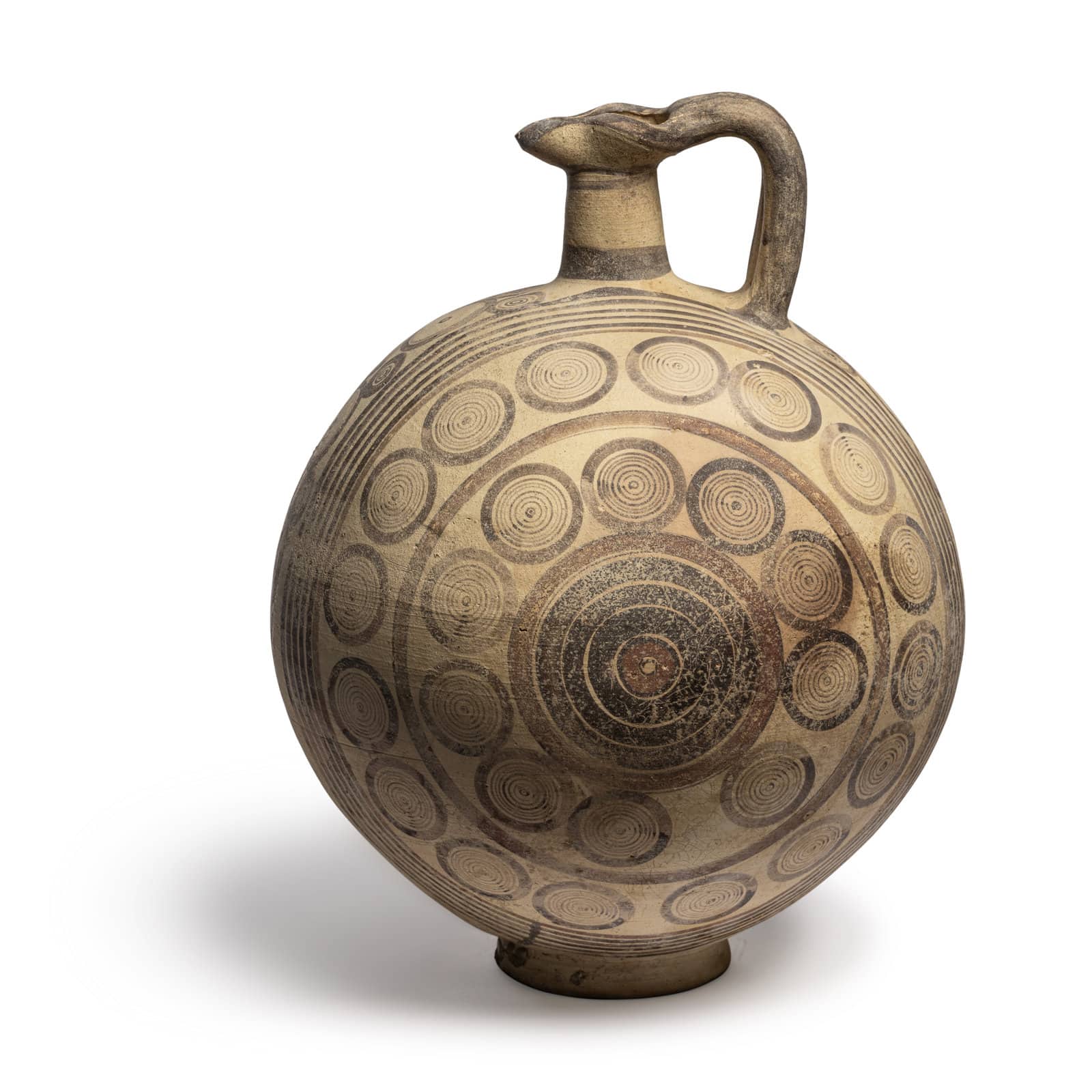
A Cypriot Bichrome-Ware Oinochoe Jug
Archaic I
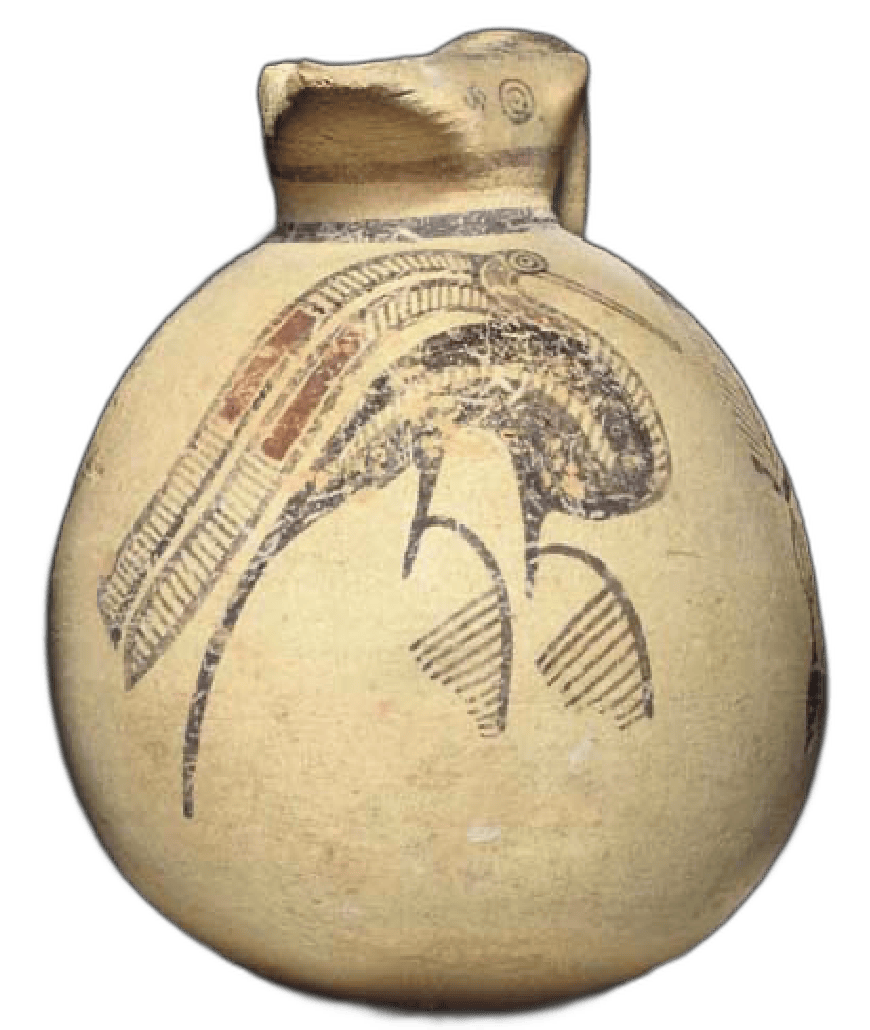
Oinochoe with Free Field Bird
Archaic I
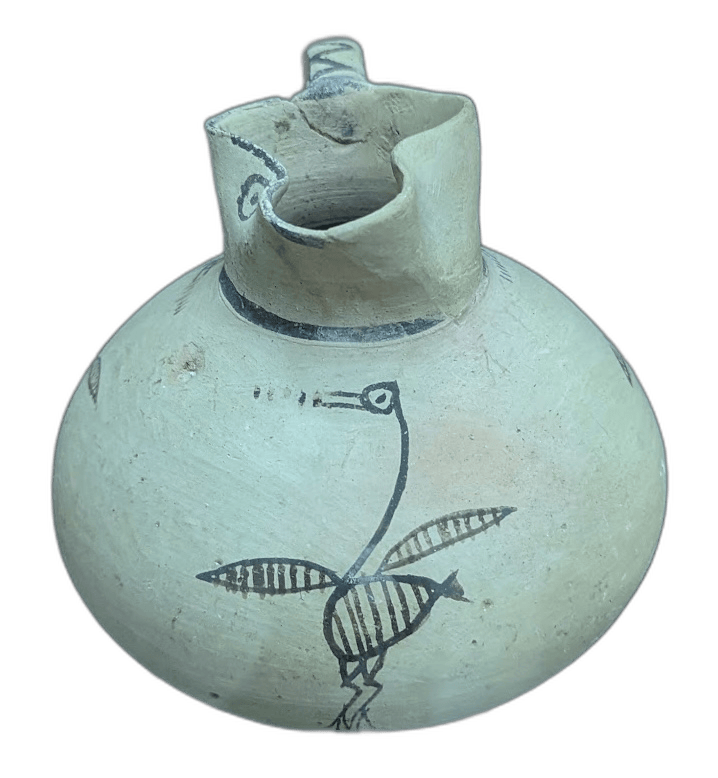
Small Oinochoe with Free Field Bird
Archaic I
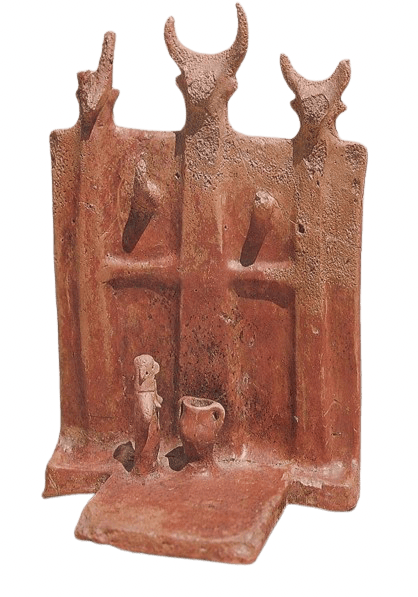
Red Polished Shrine
Middle Bronze Age I
Black-On-Red Geometric Jug Sherd
Geometric II
Bichrome Jug
Geometric
Bichrome Juglet
Geometric
Bichrome Oinochoe
Geometric
Juglet
Archaic II
Oinochoe
Geometric III
Jug
Archaic I
Juglet
Archaic I
Jug
Geometric I
Terracotta jug
Early Bronze Age I
Juglet
Geometric I