
Geometric III
Bichrome Barrel Jug with Circled End-Knobs
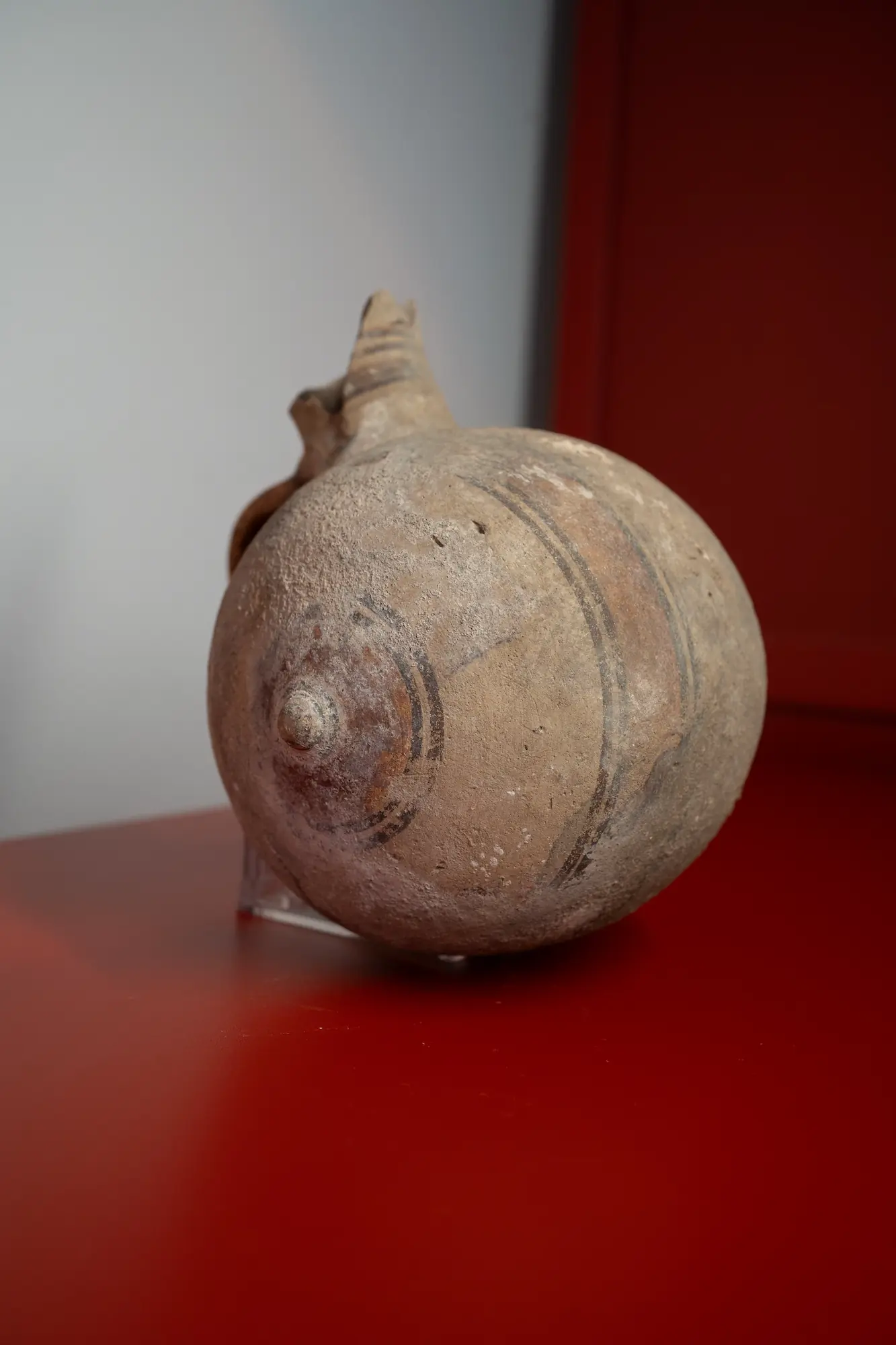
Cypro-Geometric Bichrome barrel jug with a short rounded body, red-and-black circles around the end-knobs and hoop-like bands; rim and handle lost, heavy lime crust.
Date
850 - 750 BC
Accession No.
JUG-GE-018
Collection
Alexis Drakopoulos
3D Model
Provenance
- Alfred Boucher collection, France
- By descent in the Boucher family, France, until 2024
- 2024–present, Alexis Drakopoulos, London
Cypro-Geometric, probably CG III, c. 850–750 BCE · Bichrome ware · Wheel-made · H. c. 18 cm (as preserved)
A barrel-shaped jug: a short, rounded body thrown to lie on its side, with a small knob at the centre of each closed end. A narrow neck rises from the upper face; its rim is broken away, and the handle survives only as a stump. The neck carries fine dark bands.
Around each end-knob the painter laid a wide disc of red, now patchy, framed by black concentric rings. Across the curved body run vertical groups of black lines with a red zone between them, so that the pot reads like a small cask bound with hoops. The pale buff surface is heavily encrusted with lime, and the paint survives unevenly, strongest around the knobs and on one side of the body.
Commentary
The barrel jug is one of the most characteristically Cypriot shapes of the Iron Age. Its body was thrown on the wheel and closed at both ends, often with a small knob or nipple at the centre of each end, and then set on its side with a neck added to the top. In its small juglet form it was exported widely to the Levant, where it is one of the markers of Cypriot contact in the tenth and ninth centuries BCE [2].
Gjerstad's typology gives the best guide to date. The body grows longer through the sequence: in Type III it is "more elongated than in Type II" [1, p. 47], in Type IV "usually more elongated than in Type III" [1, p. 51], and in Type V "still more elongated", almost spindle-shaped [1, p. 53]. This jug has a short, full body, closer to a sphere than to a bobbin, and on that basis it belongs early in the series, in Bichrome II or III. We have given it a Cypro-Geometric III date, c. 850–750 BCE, while noting that a somewhat earlier or slightly later date cannot be excluded on shape alone.
The decoration fits this reading. Concentric circles centred on the end-knobs, with bands wrapped round the body, are the standard ornament of Cypro-Geometric barrel jugs. The Medelhavsmuseet in Stockholm has a Bichrome II barrel jug with side nipples, SHM 17946:0016, with a similarly rounded body. The Metropolitan Museum's Bichrome barrel jug 74.51.495, from the Cesnola collection, is dated by the museum to Cypro-Geometric III. For contrast, a much larger White Painted V barrel jug in Stockholm, SHM 17946:0074, of Cypro-Archaic II date, has the long, drawn-out body of the late series and seventeen concentric circles on each end. Later Bichrome IV barrel jugs in the Cesnola collection move on to free-field pictorial decoration [3].
Barrel jugs were containers and pourers for liquids. The heavy lime crust on this piece is typical of objects that have lain for a long time in a tomb, although where it was found is not known.
References
- 1.Gjerstad, E. (1948) The Swedish Cyprus Expedition, Vol. IV, Part 2: The Cypro-Geometric, Cypro-Archaic and Cypro-Classical Periods. Stockholm: The Swedish Cyprus Expedition, pp. 47, 51, 53. (Page numbers follow the digitised text, which is not paginated like the printed volume.)
- 2.Gilboa, A. (2012) Cypriot barrel juglets at Khirbet Qeiyafa and other sites in the Levant: cultural aspects and chronological implications. Tel Aviv 39, pp. 5–21.
- 3.Karageorghis, V. (2000) Ancient Art from Cyprus: The Cesnola Collection in the Metropolitan Museum of Art. New York: The Metropolitan Museum of Art.
More from the Catalogue
Browse related objects
Bichrome Oinochoe
Archaic I
Free-field bichrome jug with image of an Ibis bird and reeds
Archaic
Squat bichrome jug in free-field style with image of bird picking a lotus flower
Archaic
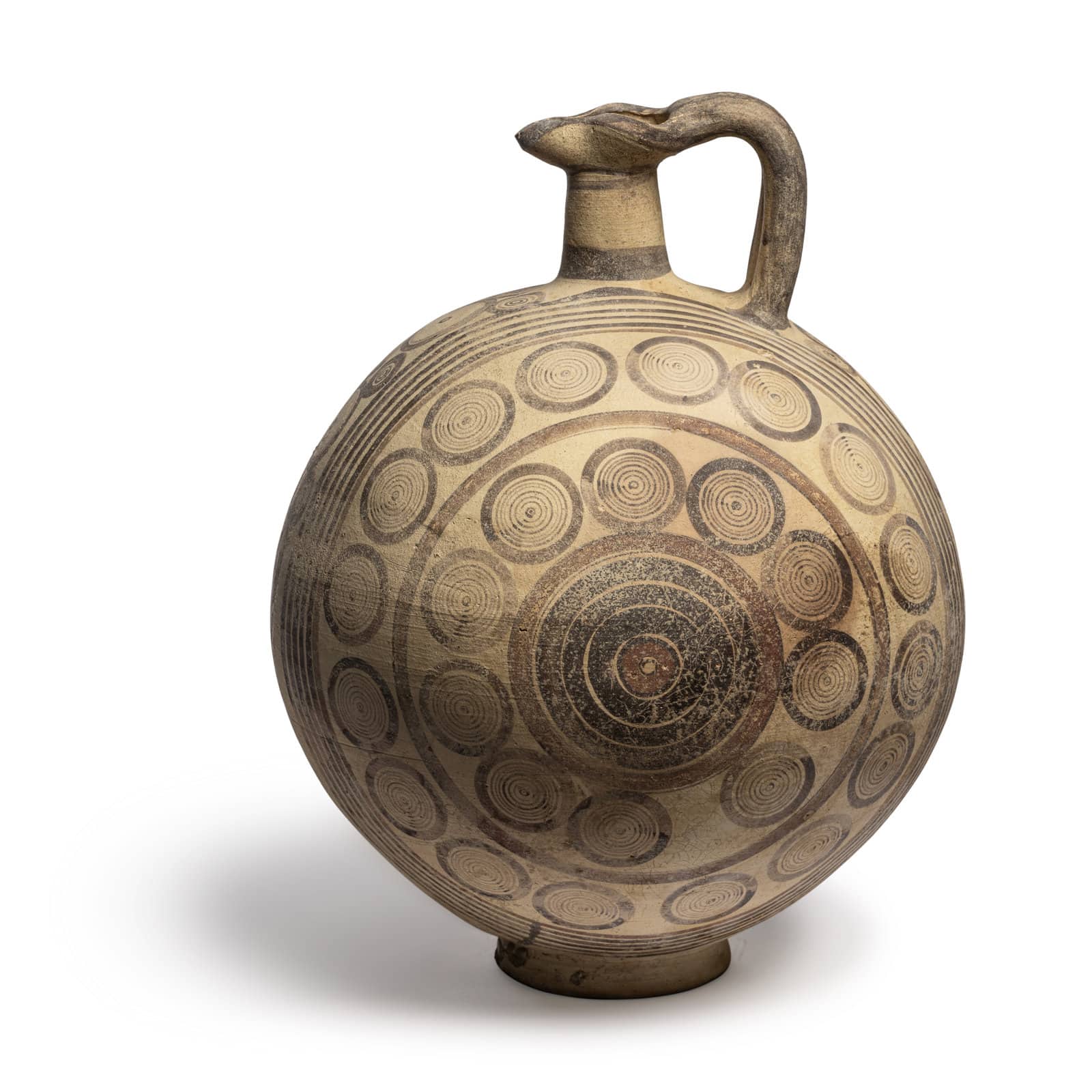
A Cypriot Bichrome-Ware Oinochoe Jug
Archaic I
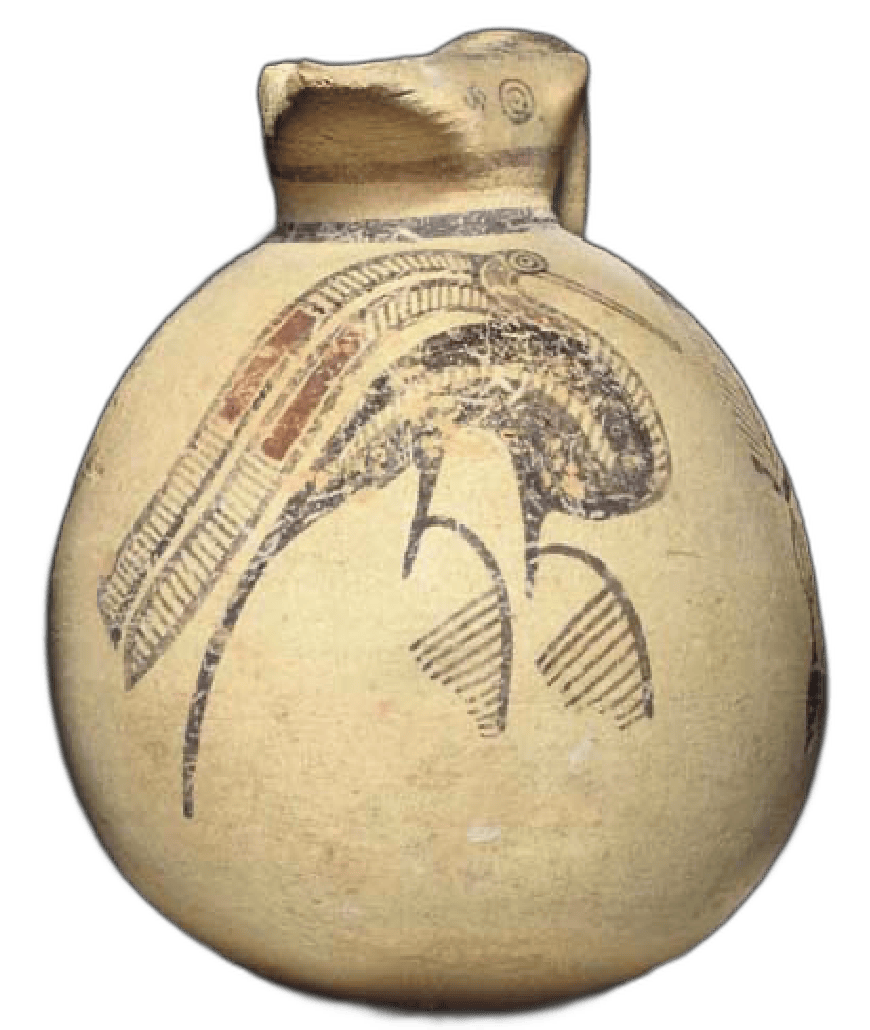
Oinochoe with Free Field Bird
Archaic I
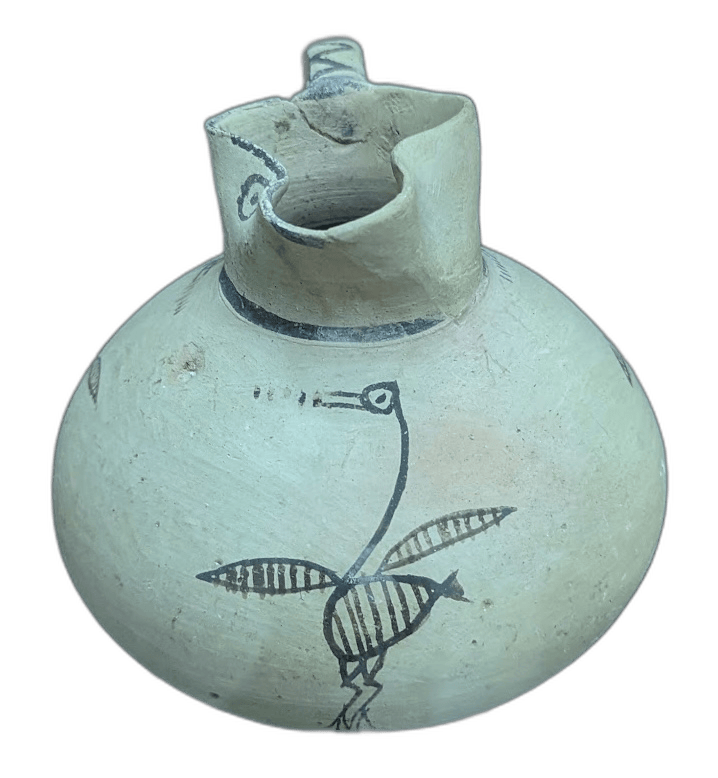
Small Oinochoe with Free Field Bird
Archaic I
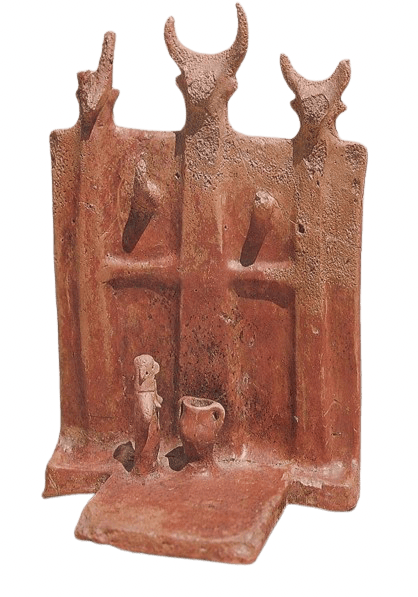
Red Polished Shrine
Middle Bronze Age I
Black-On-Red Geometric Jug Sherd
Geometric II
Bichrome Jug
Geometric
Bichrome Juglet
Geometric
Bichrome Oinochoe
Geometric
Juglet
Archaic II
Oinochoe
Geometric III
Jug
Archaic I
Juglet
Archaic I
Jug
Geometric I
Terracotta jug
Early Bronze Age I
Juglet
Geometric I