
Archaic
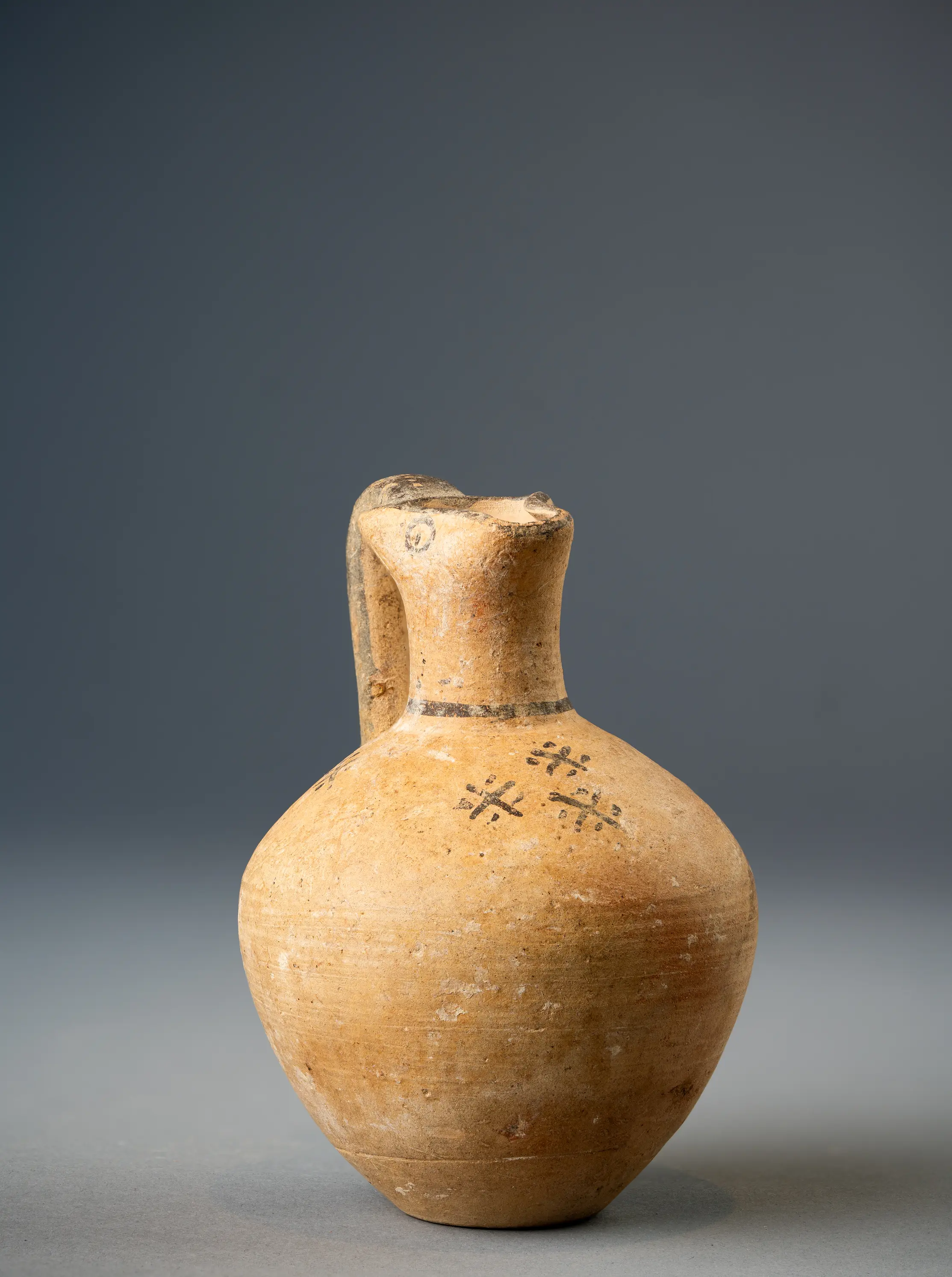
White Painted Trefoil Jug with Painted Eyes and Dotted Crosses
Small White Painted trefoil jug with painted eyes on the mouth and three dotted-cross signs on the shoulder, Cypro-Archaic I–II.
Date
750 - 480 BC
Accession No.
JUG-GE-008
Collection
Alexis Drakopoulos
Provenance
- 1965–1969, The Goodman Collection, formed in Cyprus
- 1969–2025, retained in the Goodman Collection
- 2025–present, Alexis Drakopoulos, London
Cypro-Archaic I–II, c. 750–480 BCE · White Painted IV–V ware · Wheel-made
A small jug with a full, rounded shoulder that tapers to a narrow base, giving the body a pear-like profile. The neck is short and cylindrical, the mouth pinched into a trefoil, and a strap handle, painted dark, runs from the rim to the shoulder. On each side of the mouth the painter placed an eye, a small circle with a dot at its centre, so that the spout reads as a face. A single dark band circles the base of the neck. On the shoulder opposite the handle float three small signs arranged in a triangle, each made of crossing strokes with dots set among them. The rest of the pale buff body is left plain, and strong throwing ridges run round the lower half. One lobe of the mouth is chipped.
Commentary
The jug is White Painted, dark matt paint on a light ground, and the shape is a trefoil-mouthed jug of the Cypro-Archaic series. Its slim, tapering body and plain field fit Gjerstad's Types IV and V, where pinched-mouth jugs carry sparse ornament placed freely on the shoulder [1, pp. 51–53]. The ware could belong to either type; nothing on this piece clearly separates them, so a range of c. 750–480 BCE is the honest date.
Two features give the piece its character. The first is the pair of eyes on the mouth. Painted eyes beside the spout are a recurring convention on Cypriot trefoil jugs of the late Geometric and Archaic periods; a Bichrome IV free-field jug in the Cyprus Museum has "an 'eyelet' ... painted on either side of the spout" [2], and the British Museum's White Painted oinochoe 1905,1206.8 carries a pair of eyes on the mouth with small stock motifs on the body [3]. The eyes turn the mouth into a face without adding any other animal or human feature, and there is no firm evidence that they had a protective meaning.
The second is the group of dotted crosses. Studying the painted pottery of Salamis, Georgiadou and Dikomitou-Eliadou list "the dotted cross" among small motifs that are "often very small and appear individually in panels or as supplementary ornaments", mainly in Bichrome ware [4]. At Tarsus in Cilicia dotted crosses appear beside a bird on fragments of an imported Cypriot Bichrome jug [5]. Here the motif is used on its own, three times, as the only body ornament. It links the jug to the eastern repertoire around Salamis, though the piece has no recorded findspot and could have been made elsewhere on the island.
A jug of this kind would have served at table or in the tomb as a pourer for water, wine or oil. Compared with the busy circle-style jugs of the same period, it shows how far a Cypriot painter could reduce decoration: two eyes, a neck band and three small signs.
References
- 1.Gjerstad, E. (1948) The Swedish Cyprus Expedition IV.2: The Cypro-Geometric, Cypro-Archaic and Cypro-Classical Periods. Stockholm: Swedish Cyprus Expedition, pp. 51–53.
- 2.Bombardieri, L. & Panero, E. (eds) (2021) Cyprus. Crossroads of Civilizations. Exhibition catalogue. Turin: Musei Reali, cat. 094, p. 288.
- 3.British Museum, London, 1905,1206.8. White Painted oinochoe with eyes on the mouth. Collection online record.
- 4.Georgiadou, A. & Dikomitou-Eliadou, M. (2022) The Iron Age pictorial pottery of Salamis within and beyond. In G. Bourogiannis (ed.), Beyond Cyprus: Investigating Cypriot Connectivity in the Mediterranean from the Late Bronze Age to the End of the Classical Period (AURA Supplement 9). Athens, pp. 335–348, p. 344.
- 5.Goldman, H. (1963) Excavations at Gözlü Kule, Tarsus III: The Iron Age. Princeton: Princeton University Press, p. 245, no. 1044.
More from the Catalogue
Browse related objects
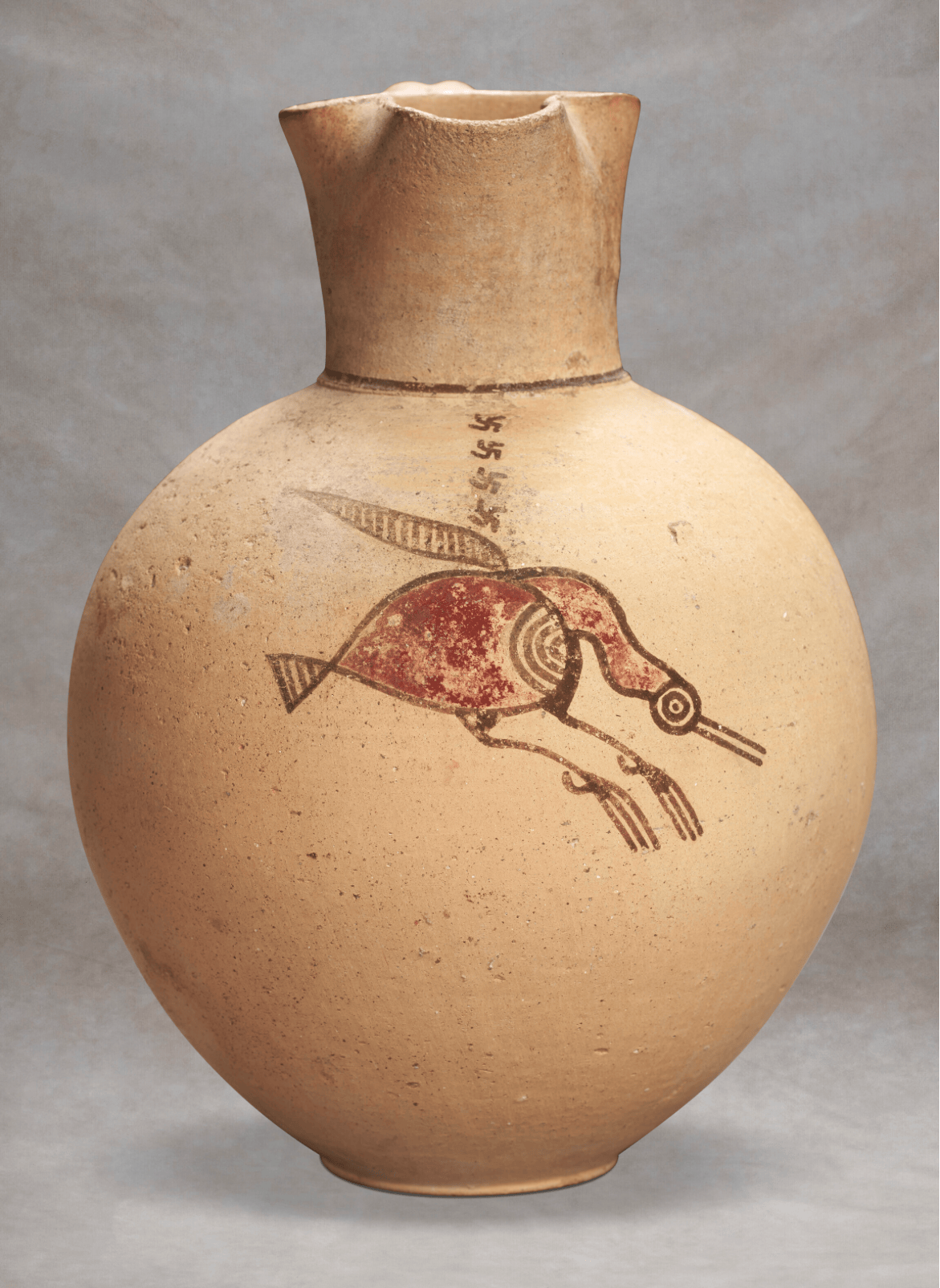
Bichrome Oinochoe
Archaic I
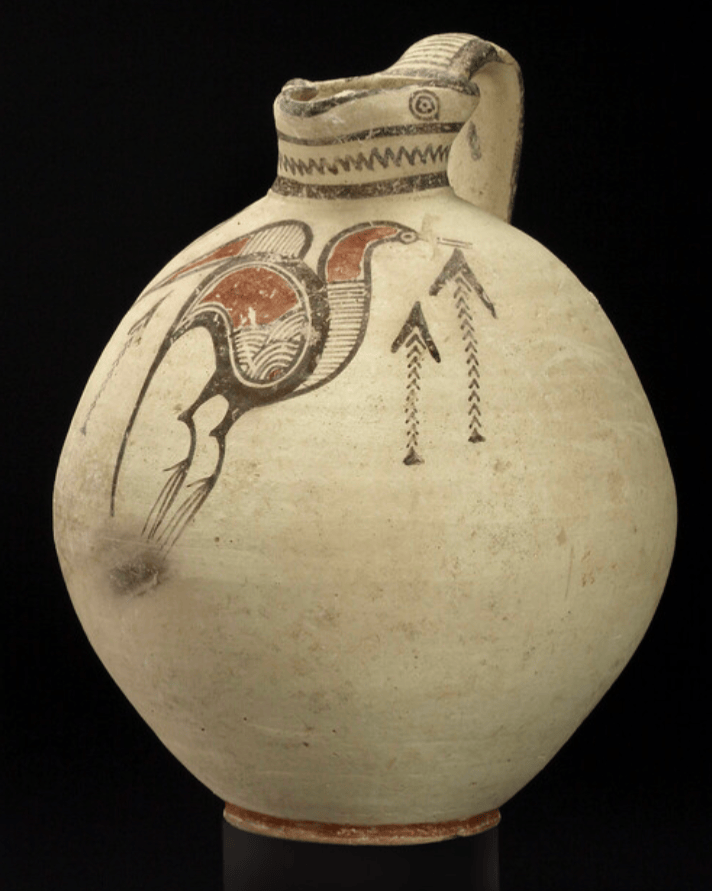
Free-field bichrome jug with image of an Ibis bird and reeds
Archaic
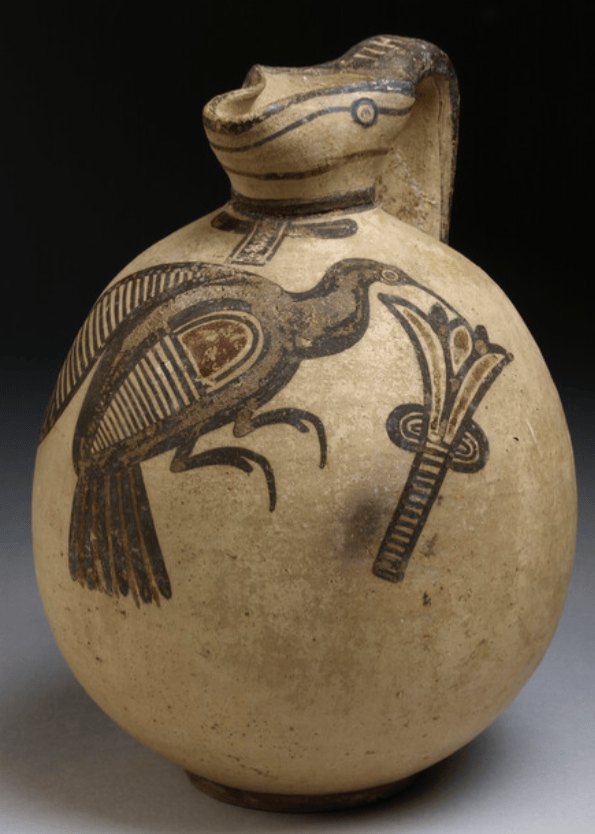
Squat bichrome jug in free-field style with image of bird picking a lotus flower
Archaic
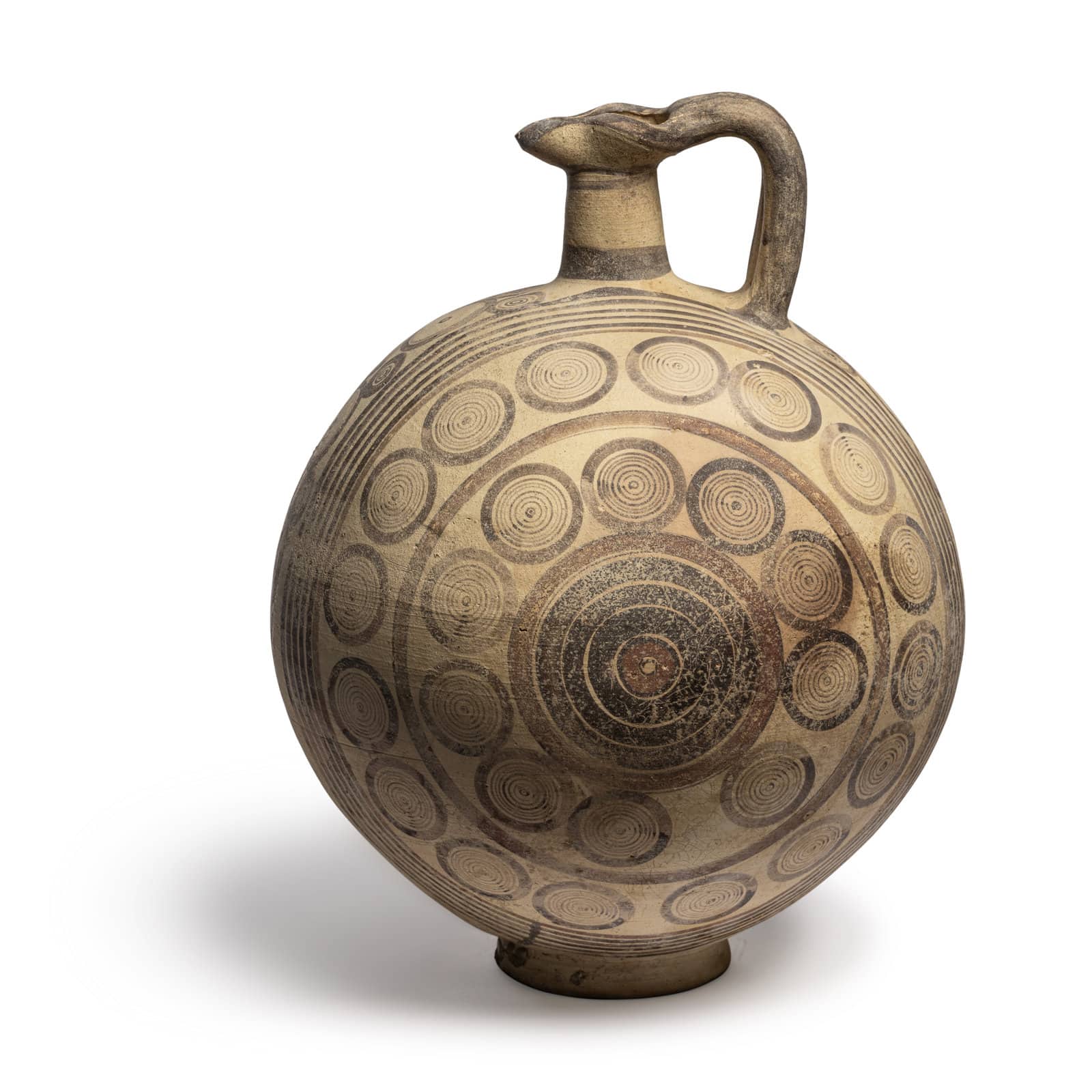
A Cypriot Bichrome-Ware Oinochoe Jug
Archaic I
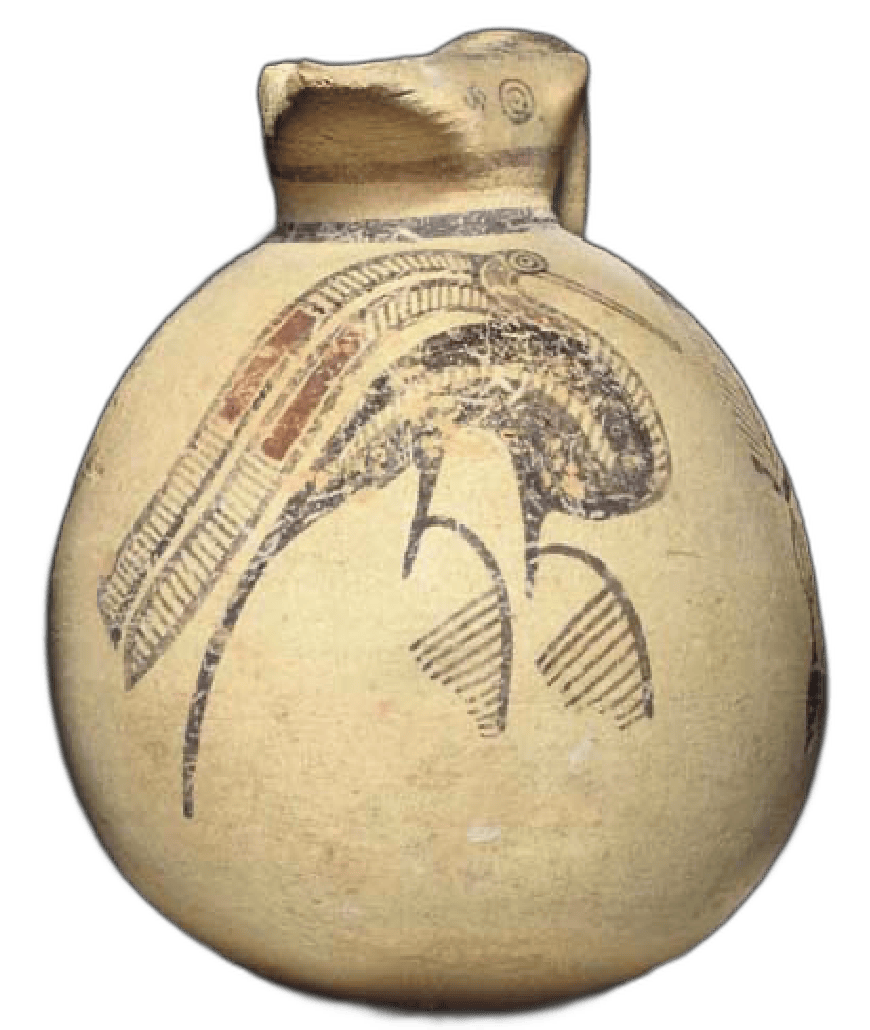
Oinochoe with Free Field Bird
Archaic I
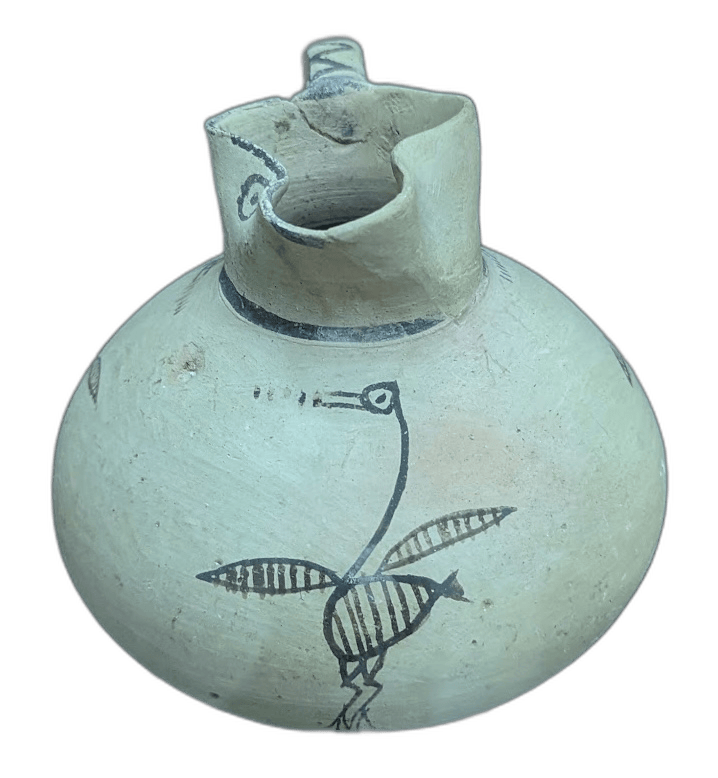
Small Oinochoe with Free Field Bird
Archaic I
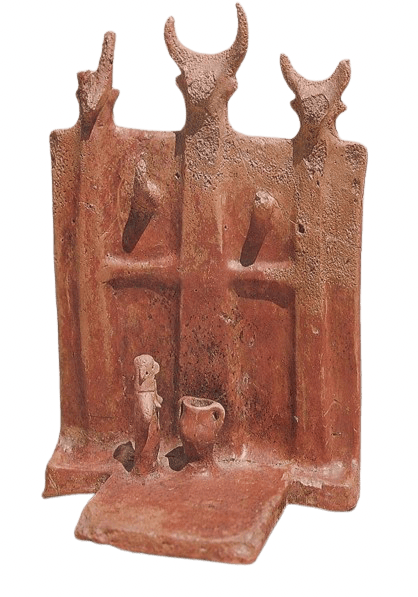
Red Polished Shrine
Middle Bronze Age I
Black-On-Red Geometric Jug Sherd
Geometric II
Bichrome Jug
Geometric
Bichrome Juglet
Geometric
Bichrome Oinochoe
Geometric
Juglet
Archaic II
Oinochoe
Geometric III
Jug
Archaic I
Juglet
Archaic I
Jug
Geometric I
Terracotta jug
Early Bronze Age I
Juglet
Geometric I