
Archaic I
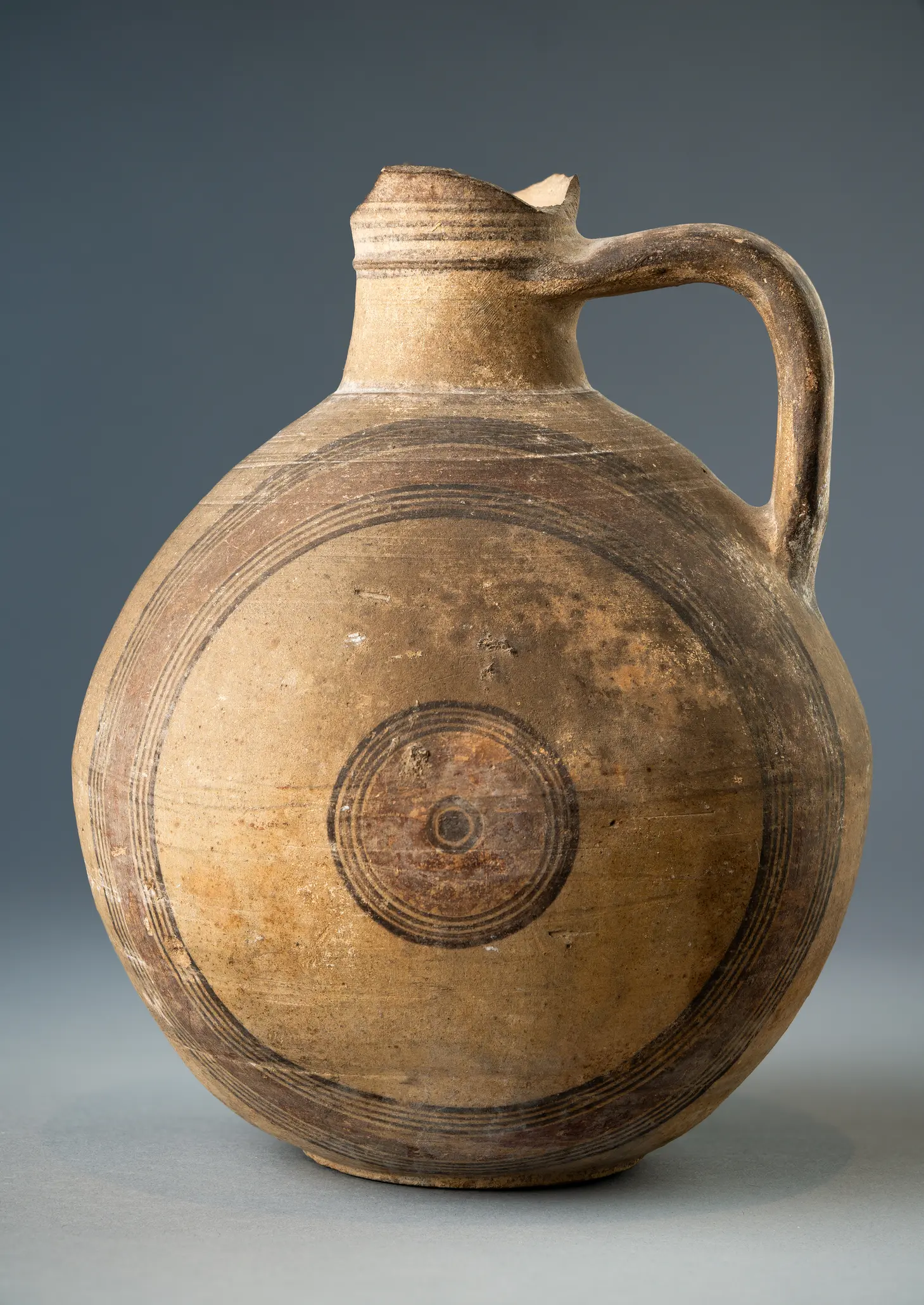
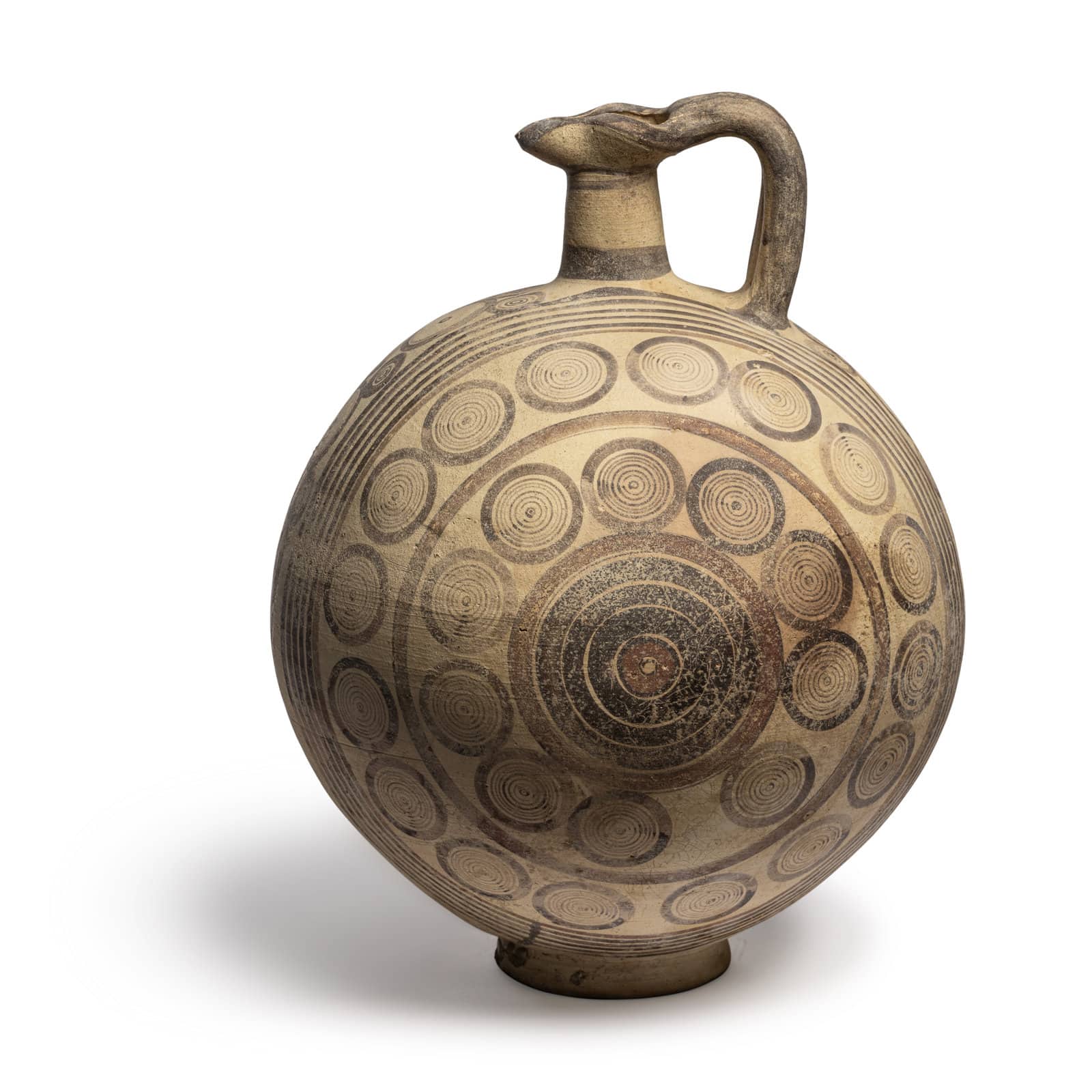
Globular Jug with a Vertical Circle System, Bichrome IV or White Painted IV
Cypro-Archaic I globular jug with one large vertical circle system on the side; the brownish bands may be faded red (Bichrome IV). Mouth broken.
Date
750 - 600 BC
Accession No.
JUG-GE-004
Collection
Alexis Drakopoulos
3D Model
Provenance
- Alfred Boucher collection, France
- By descent in the family until 2024
- 2024–present, Alexis Drakopoulos, London
Cypro-Archaic I, c. 750–600 BCE · Bichrome IV or White Painted IV ware · Wheel-made
A broad globular jug on a low base, with a short, slightly tapering neck and a strap handle that springs from just below the rim and drops to the shoulder. Part of the rim is broken away beside the handle, so the original form of the mouth is uncertain. Fine painted rings circle the top of the neck, and strong throwing ridges run round the shoulder and body.
The visible side is filled by one large vertical circle system. Its outer frame is a set of broad brownish bands alternating with thin black lines; at the centre, set well apart from the frame, is a small target of fine rings around a brown-filled disc with a dark dot. The field between frame and centre is left plain. The buff surface is worn and blotched with brown staining, heaviest on the upper body.
Commentary
The globular body and short neck match the jugs of Type IV in Gjerstad's system, the Cypro-Archaic I phase of the painted wares [1, p. 51], and the single vertical circle system on the side belongs to what he called the Western or circle style [1, p. 52]. The jug is simpler than the collection's circle-style jugs JUG-GE-001 and JUG-GE-002: there are no small circle groups in the interspaces and no heavy ring around the centre, only a wide frame and a small target with a large reserved field between them. The effect is close to the barrel jugs of the same period, whose ends carry exactly this kind of target, transferred to a round-bodied pouring jug.
The ware name is not yet settled. The broad bands of the frame read purplish or reddish brown against the black of the thin lines, which suggests a red paint that has faded or discoloured in burial, and so Bichrome IV. If inspection in raking light finds no red pigment, the jug is White Painted IV, in which the same circle scheme also occurs. Either way the date is the same, Cypro-Archaic I, c. 750–600 BCE.
The excavated Bichrome IV globular jug no. 6 from Stylli, with "black and red vertical circles on body", gives the type in a tomb context [2]. A globular jug in the Cleveland Museum of Art, 1916.2005, has the same arrangement of a large vertical circle system on each side [3], and the British Museum oinochoe 1894,1101.286 from Amathus shows the vertical circles in White Painted ware [4]. The Walters Art Museum jug 48.2347 is a Bichrome example of the circle style with a pinched spout [5]. The jug has no recorded find-spot.
References
- 1.Gjerstad, E. (1948) The Swedish Cyprus Expedition IV.2: The Cypro-Geometric, Cypro-Archaic and Cypro-Classical Periods. Stockholm: The Swedish Cyprus Expedition, pp. 51–52.
- 2.Gjerstad, E., Lindros, J., Sjöqvist, E. and Westholm, A. (1935) The Swedish Cyprus Expedition II: Finds and Results of the Excavations in Cyprus 1927–1931. Stockholm: The Swedish Cyprus Expedition, p. 201, no. 6.
- 3.Cleveland Museum of Art, 1916.2005. Globular jug with vertical circles on the sides, Cypro-Archaic. Online collection record.
- 4.British Museum, London, 1894,1101.286. White Painted oinochoe from Amathus with vertical concentric circles, Cypro-Archaic II. Online collection record.
- 5.Walters Art Museum, Baltimore, 48.2347. Bichrome jug with pinched spout, Cypro-Archaic I. Online collection record.
More from the Catalogue
Browse related objects
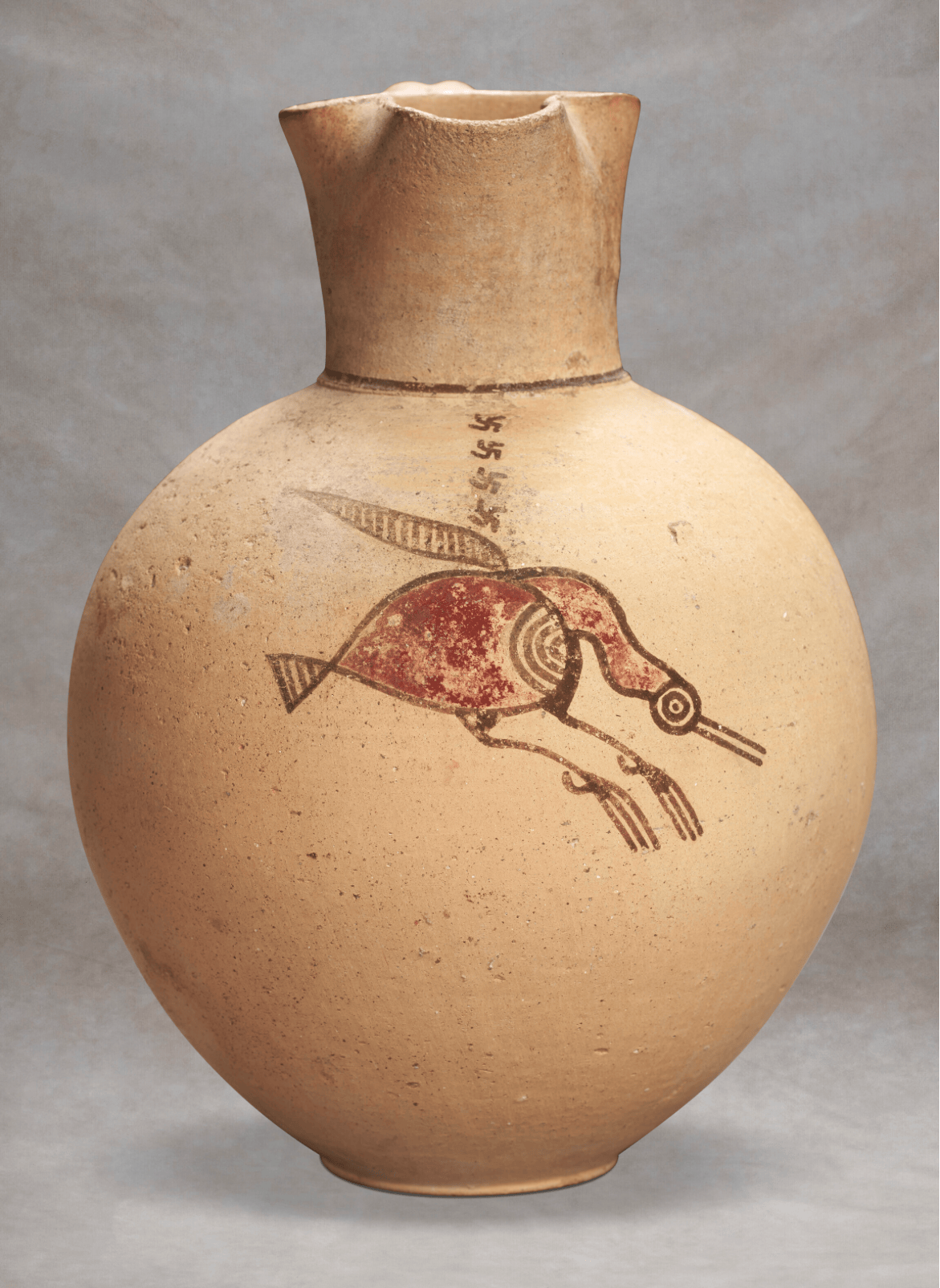
Bichrome Oinochoe
Archaic I
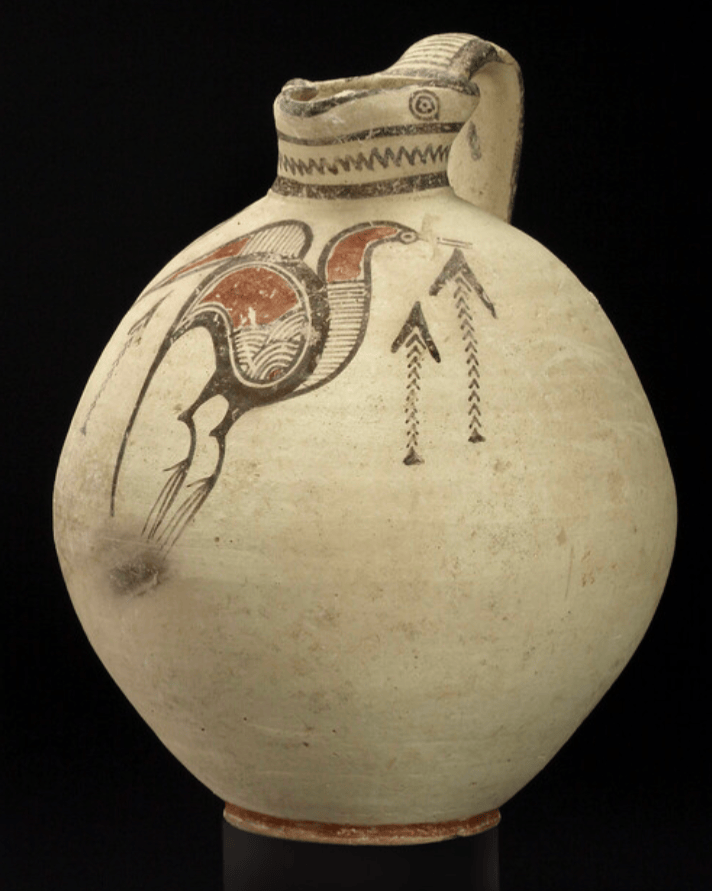
Free-field bichrome jug with image of an Ibis bird and reeds
Archaic
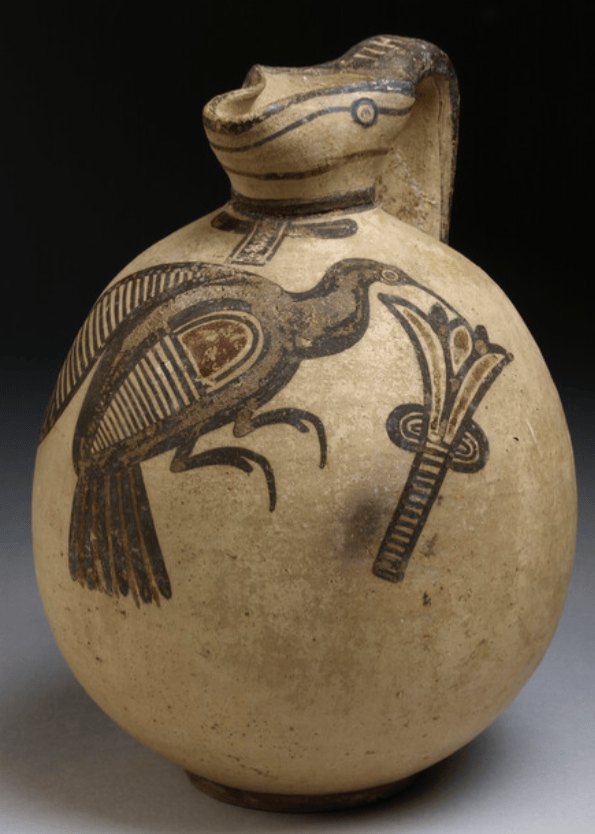
Squat bichrome jug in free-field style with image of bird picking a lotus flower
Archaic
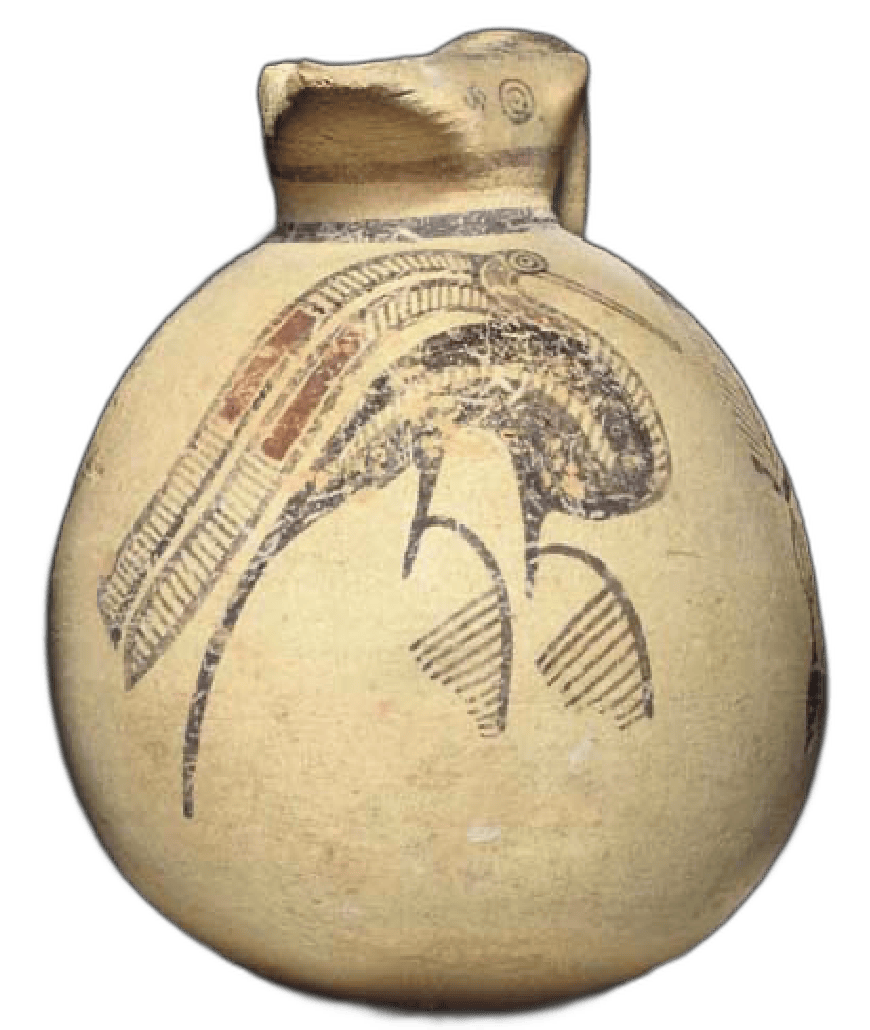
A Cypriot Bichrome-Ware Oinochoe Jug
Archaic I
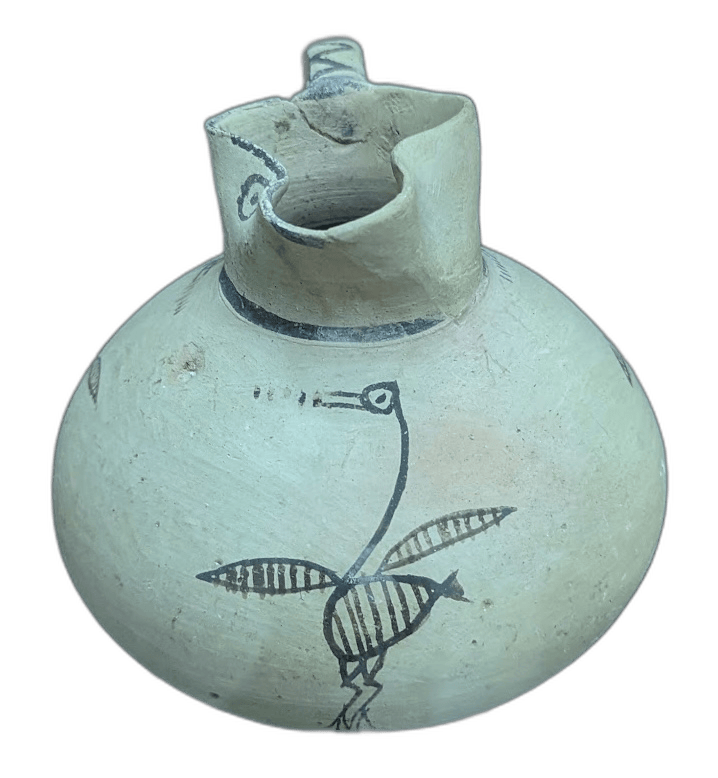
Oinochoe with Free Field Bird
Archaic I
Small Oinochoe with Free Field Bird
Archaic I
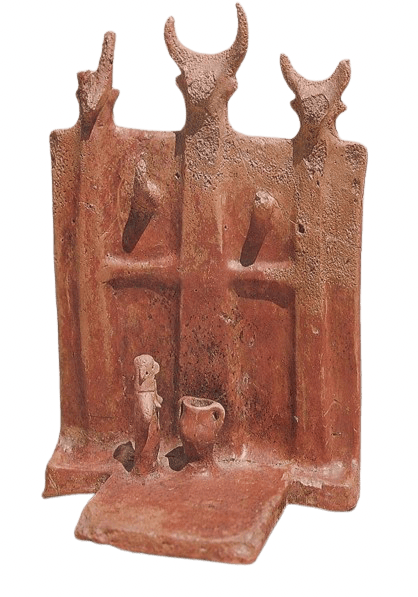
Red Polished Shrine
Middle Bronze Age I
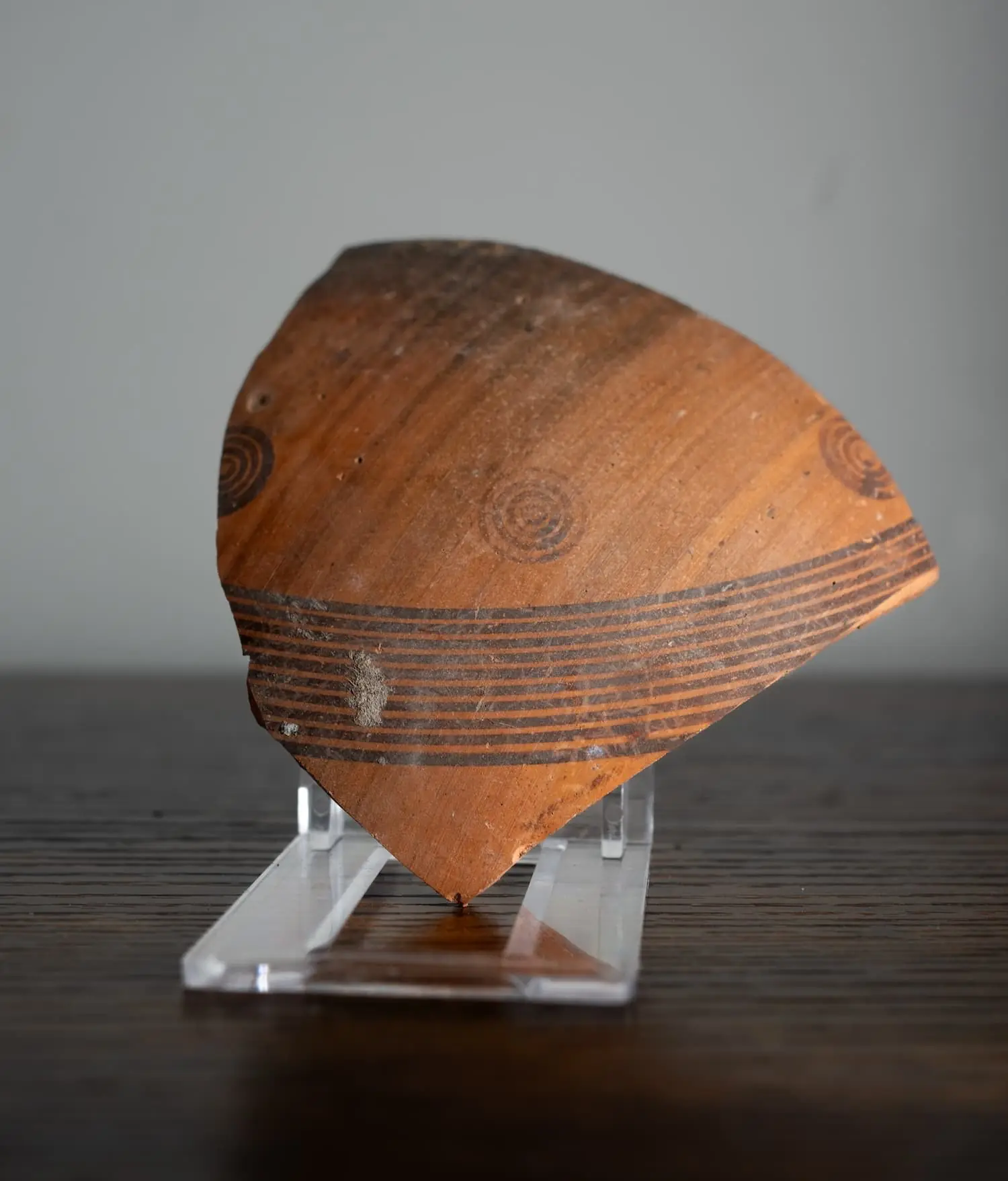
Black-On-Red Geometric Jug Sherd
Geometric II
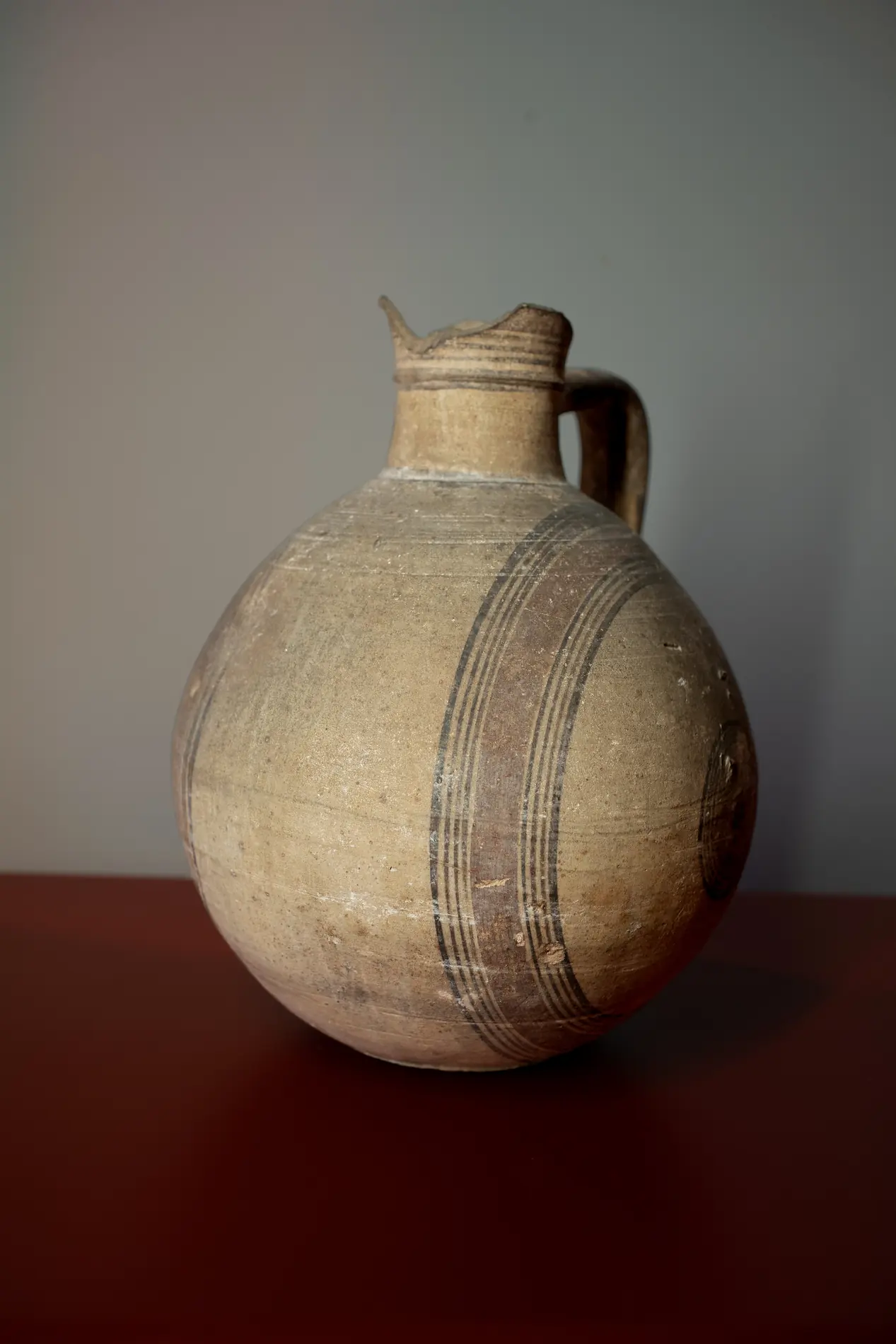
Bichrome Jug
Geometric
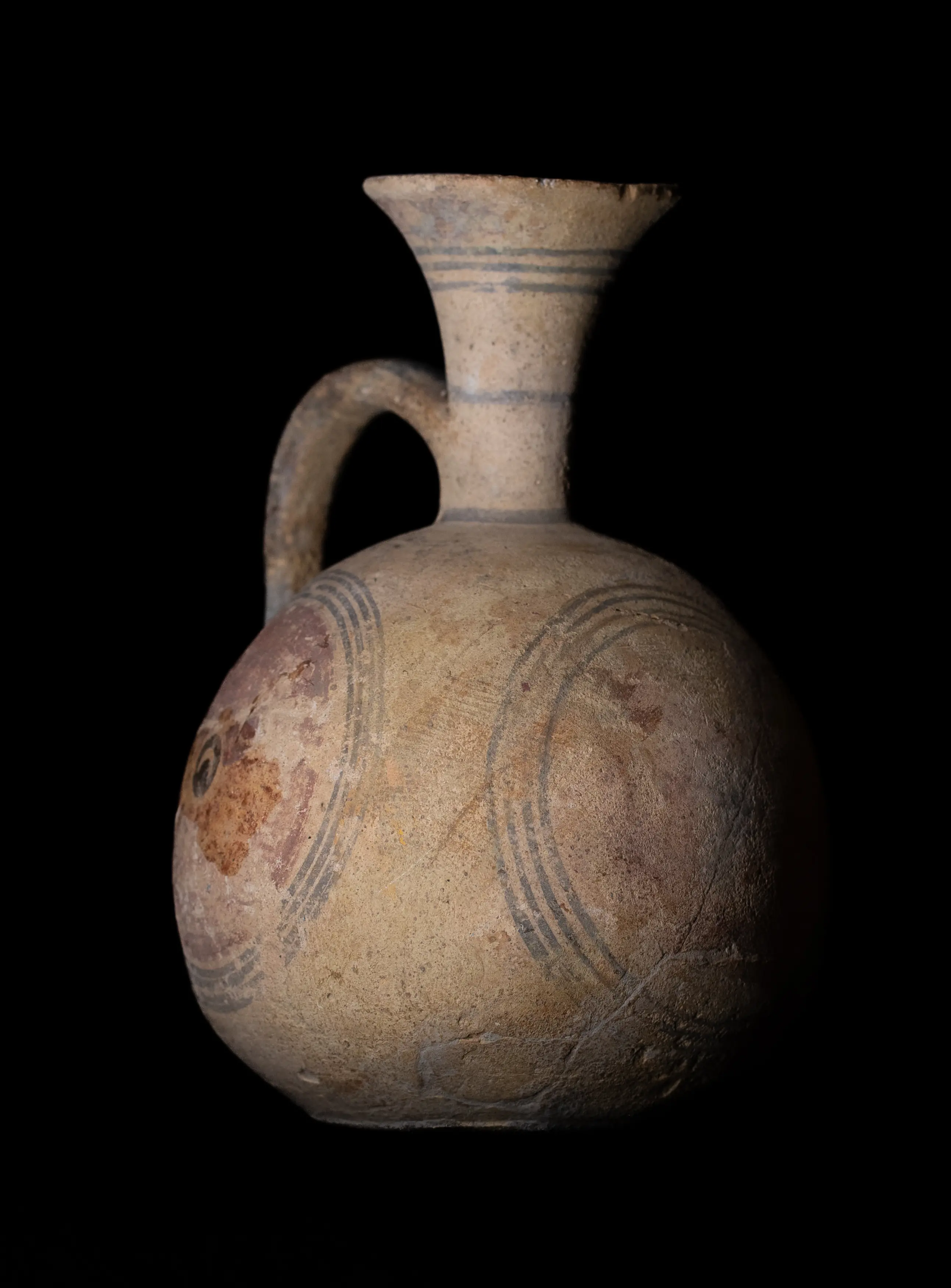
Bichrome Juglet
Geometric
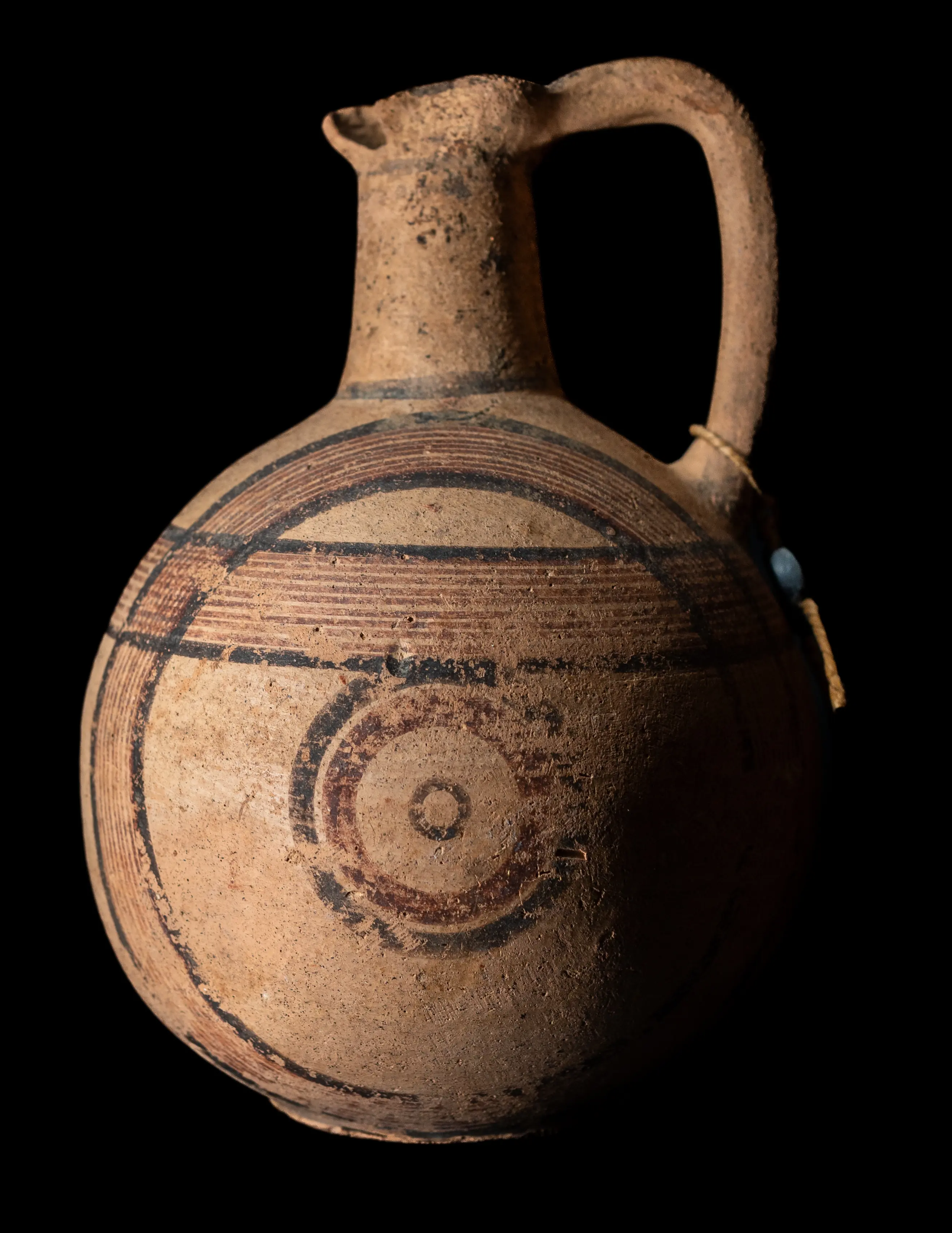
Bichrome Oinochoe
Geometric
Juglet
Archaic II
Oinochoe
Geometric III
Jug
Archaic I
Juglet
Archaic I
Jug
Geometric I
Terracotta jug
Early Bronze Age I
Juglet
Geometric I