
Archaic I
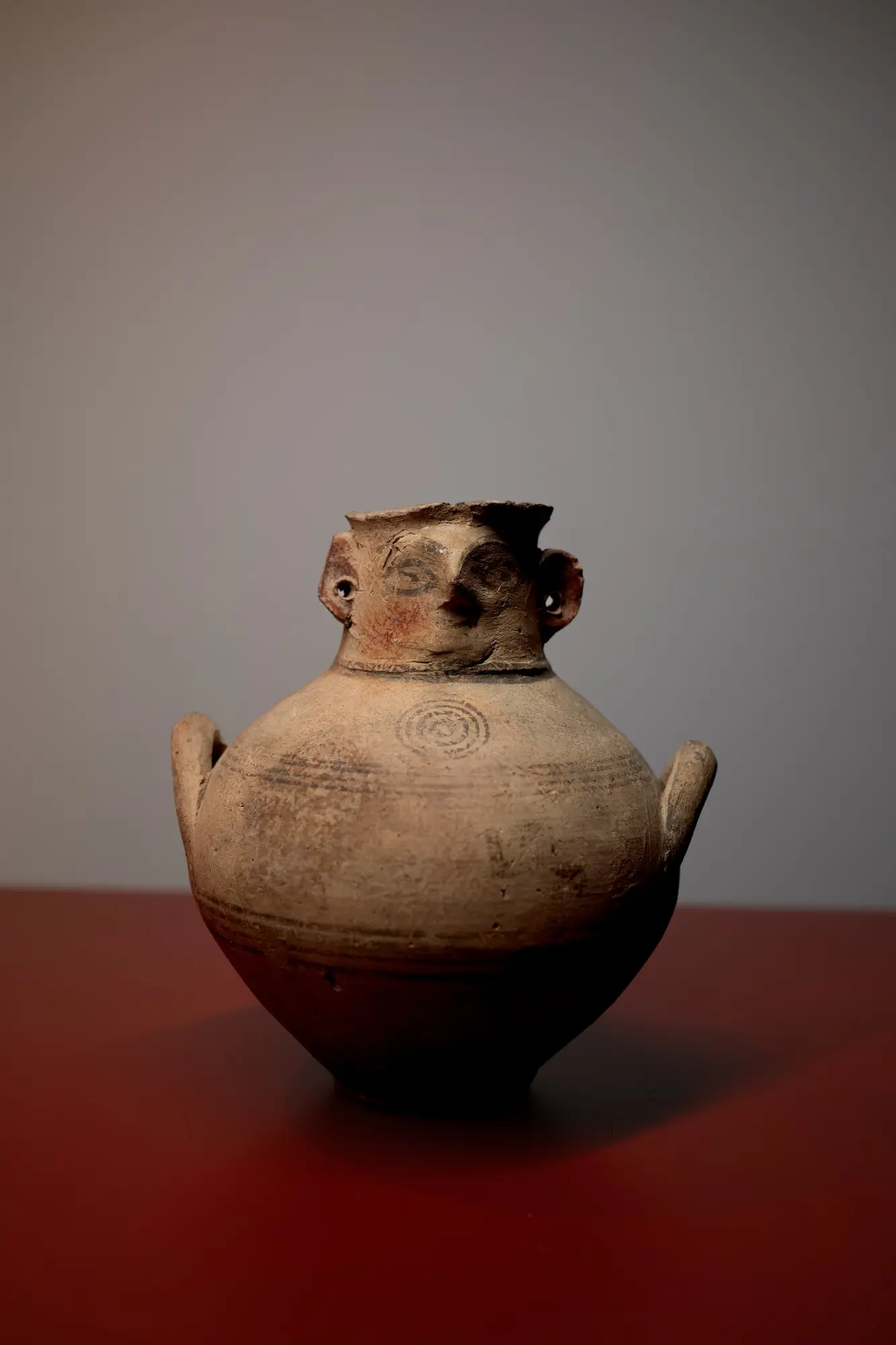
Bichrome IV Face-Neck Jar of the Kourion Type
Small Cypro-Archaic Bichrome IV jar whose neck is modelled as a human face with painted ringed eyes and pierced red ears, of a type known from the Kourion region.
Date
750 - 600 BC
Accession No.
JAR-AR-001
Collection
Alexis Drakopoulos
3D Model
Provenance
- By 1990, France
- 11 November 1990, Hôtel des Ventes de Coulommiers, lot 141
- 1990–2024, Private collection, Paris
- 11 March 2024, Rennes Enchères Bretagne, lot 214
- 2024–present, Alexis Drakopoulos, London
Cypro-Archaic I, 7th century BCE (range c. 750–600 BCE) · Bichrome IV ware · Wheel-made body, hand-modelled features
A small squat jar with a globular body on a low ring foot, two short loop handles set at the widest point and turned upward. The short, wide neck is modelled as a human head. A pinched, prominent nose projects from the front; the eyes are painted as concentric rings with a central bar beneath arched brows, and a single short stroke stands for the mouth. Two round ears are applied at the sides, each pierced through and painted solid red; a smear of the same red lies on the figure's right cheek. A dark band marks the base of the neck like a collar, and directly beneath the chin a single set of concentric circles hangs on the shoulder. Groups of fine dark bands circle shoulder and lower body, and a worn painted motif on the belly is no longer legible. The rim is chipped all round.
Commentary
The jar belongs to a small, tightly defined group of Cypro-Archaic face-neck vessels that Vassos Karageorghis recorded from the Kourion region in the 1970s and called hydriae. In 1974 the Cyprus Museum registered two of them: 1974/II-13/12 (H. 31 cm), with a partly modelled face, painted eyes, brows and mouth, and ears in relief that are perforated; and 1974/IV-29/4 (H. 33 cm), with large brows meeting in a triangle between the eyes and small concentric circles on the shoulder [1]. In the same entry he mentions an earlier White Painted IV face-neck hydria from the same region [1]. A year later he published a third, 1975/IX-29/3, a Bichrome IV vessel only 17 cm high, "from the region of Kourion, of a style represented by several other specimens from the same region", its neck "shaped in the form of a human face with facial features painted or rendered in relief", and dated it to the 7th century BCE [2]. This jar combines the pierced relief ears of the first, the shoulder circles of the second and the ware and small scale of the third.
The term hydria is conventional for the group. A Greek hydria has a third, vertical handle at the back; the photographs of this piece show only the two side handles, so the shape is better described as a small jar or amphoriskos of the type Karageorghis called hydriae.
The ware is Bichrome IV in Gjerstad's sense: matt dark paint on a pale buff ground with added red, here confined to the ears and cheek [3]. In Gjerstad's system the fourth stage of the White Painted and Bichrome sequence corresponds to Cypro-Archaic I, c. 750–600 BCE [3]. Karageorghis's 7th-century date for the closest published parallel narrows that range [2]. An earlier catalogue entry on this site dated the jar to the Cypro-Geometric period; neither the ware nor any of the dated parallels supports that.
The face is assembled from the potter's ordinary geometric repertoire. The eyes are the same concentric circles that decorate Cypro-Archaic jugs and amphorae, and the circle under the chin repeats them as a pendant. The pierced ears may have carried real earrings of metal or thread, as the ears of some Cypro-Archaic terracotta and limestone heads did, though nothing survives to prove it.
A related but distinct habit turned jug necks into heads, sometimes with modelled arms holding a small juglet. A Bichrome Red II (V) jug in Vienna, KHM V 1111 (H. 29 cm, Cypro-Archaic II, 6th century BCE, acquired from Cesnola in 1869), shows the later development of that line [4]. The Kourion jars stay closer to the pot: the face is the neck itself, with no body or limbs.
Every registered example of the type that Karageorghis knew came from the Kourion area, which points to a local workshop tradition. That is an attribution of type, and the jar's own find-spot is unknown. Its use is equally uncertain. Like most complete Cypro-Archaic vessels it probably survived in a tomb, and its small size suits oil or scented liquid, but no residue analysis exists for the group.
References
- 1.Karageorghis, V. (1975) Chronique des fouilles et découvertes archéologiques à Chypre en 1974. Bulletin de correspondance hellénique 99, p. 809, nos 17–18, figs 18 and 20.
- 2.Karageorghis, V. (1976) Chronique des fouilles et découvertes archéologiques à Chypre en 1975. Bulletin de correspondance hellénique 100, p. 841, item c, fig. 4.
- 3.Gjerstad, E. (1948) The Swedish Cyprus Expedition IV.2: The Cypro-Geometric, Cypro-Archaic and Cypro-Classical Periods. Stockholm: Swedish Cyprus Expedition, pp. 44–53.
- 4.Bernhard-Walcher, A., Dembski, G., Gschwantler, K. and Karageorghis, V. (1999) Die Sammlung zyprischer Antiken im Kunsthistorischen Museum / The Collection of Cypriote Antiquities in the Kunsthistorisches Museum, ed. W. Seipel. Vienna: Kunsthistorisches Museum, p. 117, no. 42 (inv. V 1111).
More from the Catalogue
Browse related objects
Amphoriskos
Archaic I
Askos in the form of a bird
Middle Bronze Age II
Askos
Middle Bronze Age II
Limestone votive vase fragment
Classical
Terracotta bil-bil
Late Bronze Age II
Terracotta zoomorphic askos (vessel)
Middle Bronze Age II
Amphoriskos
Archaic II
Model of a chariot with driver
Geometric II
Horse and rider
Archaic I
Terracotta zoomorphic askos (vessel)
Middle Bronze Age III
Terracotta trick vase
Geometric I
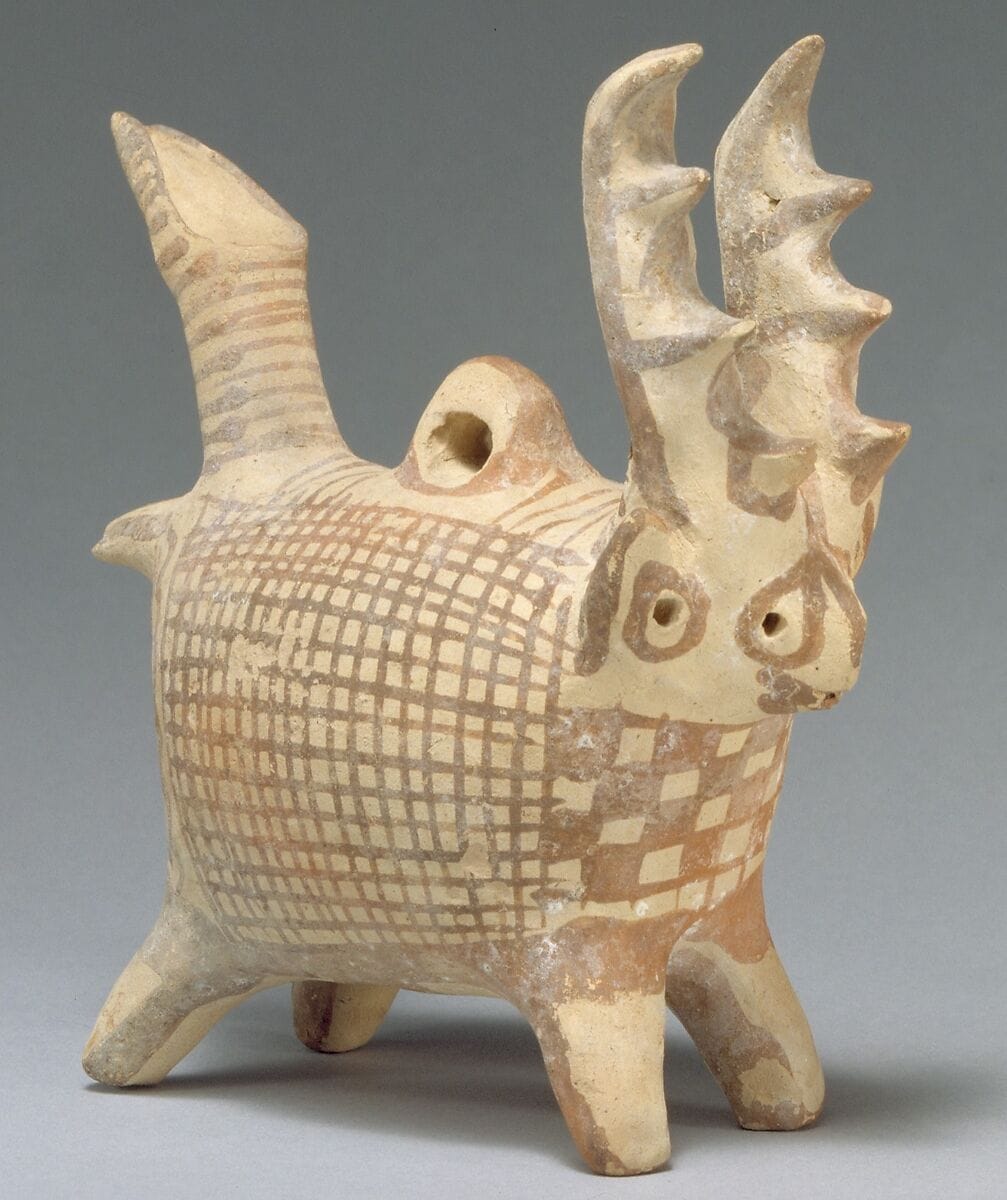
Terracotta zoomorphic askos (vessel) with antlers
Middle Bronze Age III
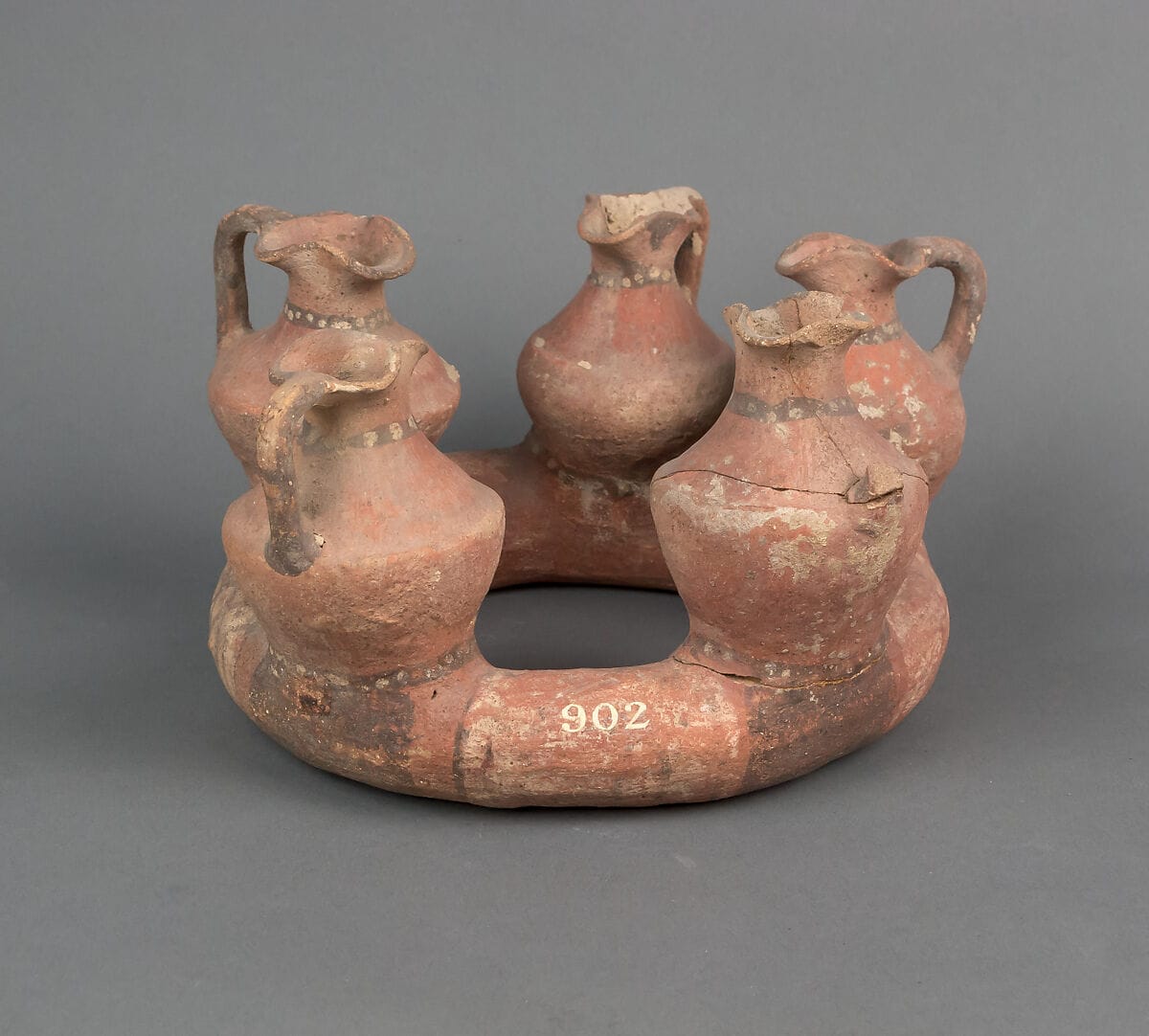
Ring-kernos
Archaic II
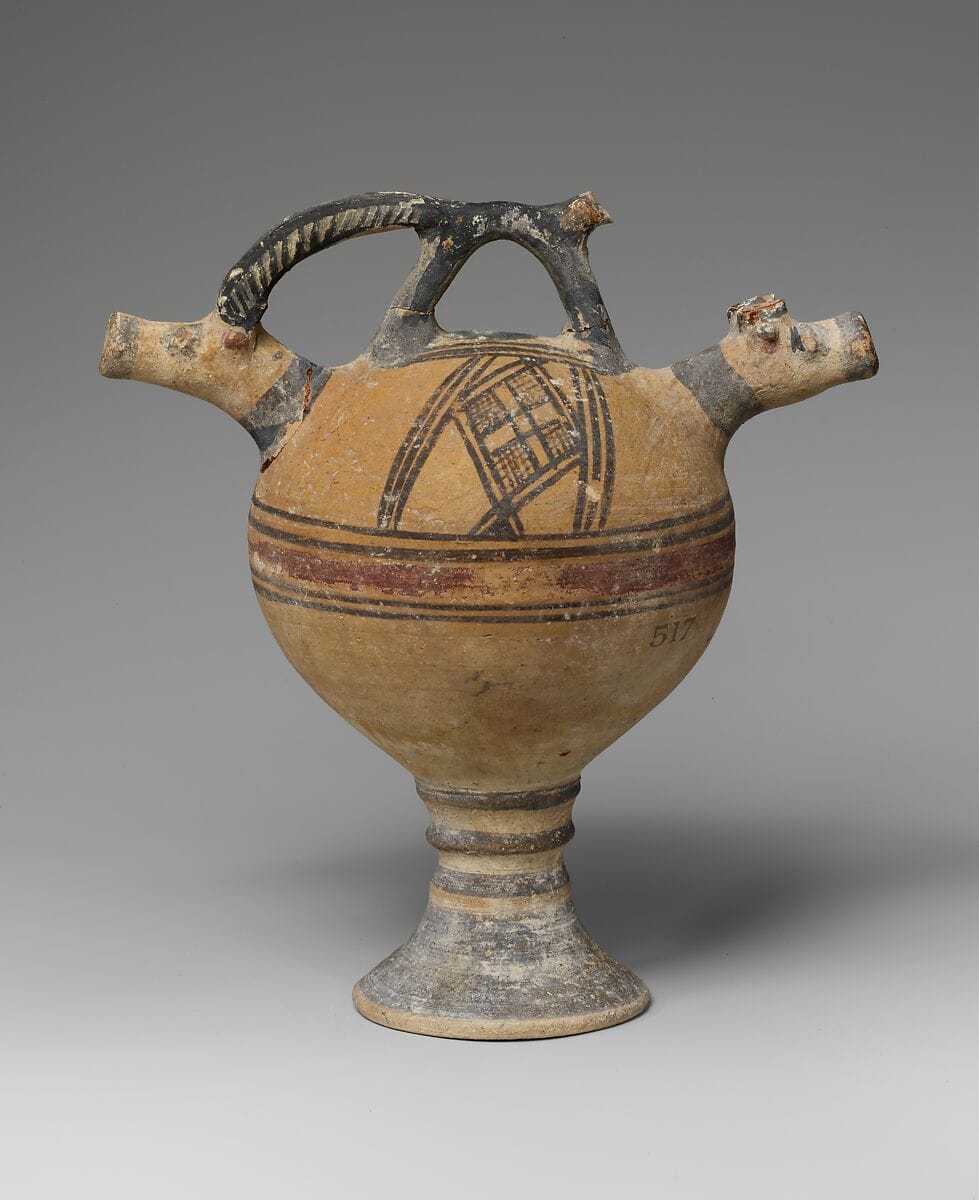
Terracotta vase on a high foot with two goats' heads in relief
Geometric I
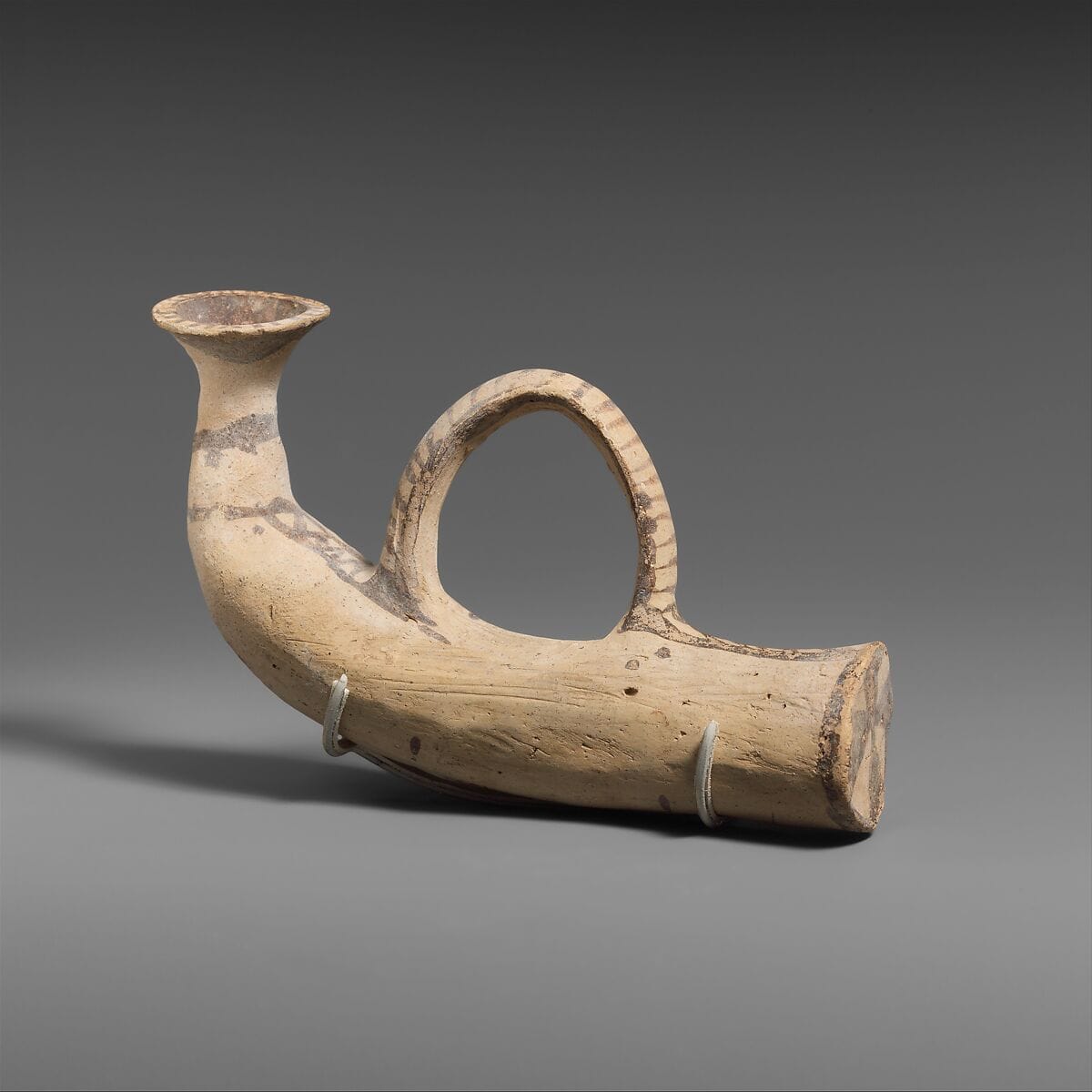
Terracotta vase in the shape of a horn
Geometric I
Askos in the form of an animal
Middle Bronze Age II
Terracotta double bil-bil
Late Bronze Age I
Limestone thymiaterion (incense burner)
Classical