
Archaic I
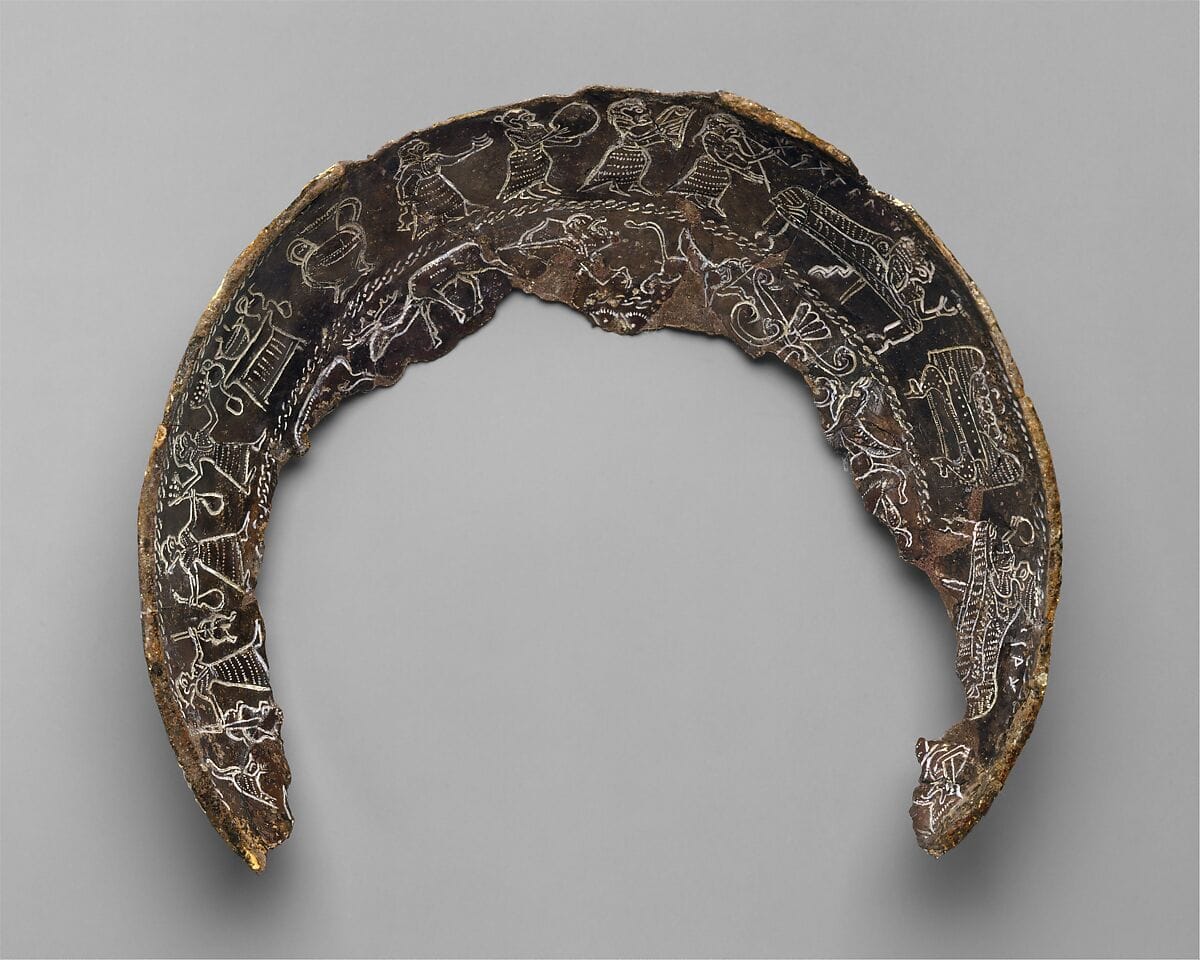
Fragmentary silver bowl
The focus of the banquet scene in the outer frieze is an offering table with a bowl probably filled with fruit. It is flanked by two reclining figures. On the right is a figure wearing an Egyptian crown, above whom an inscription may signify "king." Behind him appears a flute player. On the left of the table is a "queen" with an Egyptian wig, above whom are letters that certainly include the prefix "Cypro-" and give her name or title, perhaps Kypromedousa, "protectress of Cyprus." Behind her, from right to left, come three musicians, a large amphora, a table with vases and ladles, and three women bearing offerings: bowls, the legs of sheep or goats, and trussed geese. The banquet iconography, combining Egyptian and Phoenician features, indicates that the bowl would not have been a temple dedication. diameter 6 7/8 in. (17.5 cm)
Date
710 - 675 BC
Accession No.
74.51.4557
Collection
Metropolitan Museum of Art
Provenance
References
- Myres, John L. 1914. Handbook of the Cesnola Collection of Antiquities from Cyprus. no. 4557, New York: The Metropolitan Museum of Art.Matthäus, Hartmut. 1985. Metallgefässe und Gefässuntersätze der Bronzezeit, der geometrischen und archaischen Periode auf Cypern: mit einem Anhang der bronzezeitlichen Schwertfunde auf Cypern, Prähistorische Bronzefunde, Abteilung II Bd. 8. cat. 424, pp. 161-2, 376, pl. 34, 424; 35, 424, München: Beck.Karageorghis, Vassos. 1999. "A Cypriot Silver Bowl Reconsidered: I The Iconography of the Decoration." Metropolitan Museum Journal, 34: pp. 14-19, fig. 1.Hendrix, Elizabeth. 1999. "A Cypriot Silver Bowl Reconsidered: II. The Technique and Physical History of the Bowl." Metropolitan Museum Journal, 34: pp. 21-30, figs. 4-5, 9-15.Neumann, Gunter. 1999. "A Cypriot Silver Bowl Reconsidered: III. The Inscription." Metropolitan Museum Journal, 34: pp. 33-34.Karageorghis, Vassos. 1999. "A Cypriot Silver Bowl Reconsidered: I. The Iconography of the Decoration." Metropolitan Museum Journal, 34: pp. 14-19, fig. 1.Karageorghis, Vassos, Joan Mertens, and Marice E. Rose. 2000. Ancient Art from Cyprus: The Cesnola Collection in The Metropolitan Museum of Art. no. 307, pp. 188-9, New York: The Metropolitan Museum of Art.Hermary, Antoine. 2000. "Déesse plutôt que reine? A propos d' une coupe en argent de la collection Cesnola." Cahier du Centre d' Études Chypriotes, 30. pp. 67-77.Karageorghis, Vassos. 2003. "Heroic Burials in Cyprus and Other Mediterranean Regions." Ploes : sea routes : interconnections in the Mediterranean, 16th-6th c. BC : proceedings of the international symposium held at Rethymnon, Crete, September 29th-October 2nd, 2002, Professor Nicholas Chr. Stampolidis and Vassos Karageorghis, eds. p. 343, fig. 6, Crete: A.G. Leventis Foundation.Karageorghis, Vassos. 2006. Aspects of Everyday Life in Cyprus: Iconographic Representations. no. 115, pp. 140-2, Nicosia: Foundation Anastasios G. Leventis.Satraki, Anna. 2013. "The Iconography of Basileis in Archaic and Classical Cyprus: Manifestations of Royal Power in the Visual Record." Bulletin of the American School of Oriental Research, 370: fig. 2, pp. 127-28.Aruz, Joan and Michael Seymour. 2016. Assyria to Iberia : Art and Culture in the Iron Age pp. 229-31, fig. 3, New York.Karnava, Artemis and Massimo Perna. 2020. Inscriptiones Graecae, Inscriptiones Cypri, XV 1, 1. no. 119, pp. 48-49, Berlin/ Boston: Walter de Gruyter & Co.
More from the Catalogue
Browse related objects
Amphora
Archaic II
Amphora
Geometric I
Amphora
Archaic II
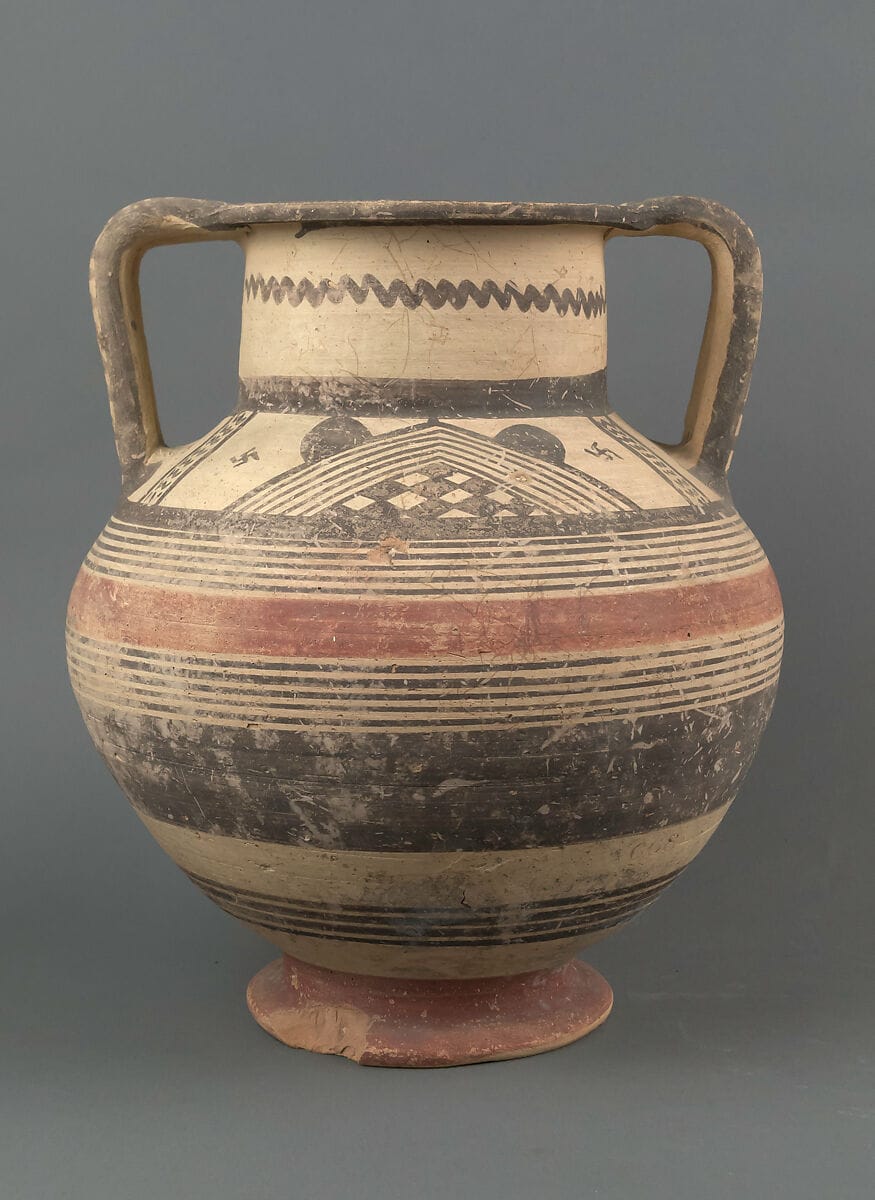
Amphora
Archaic I
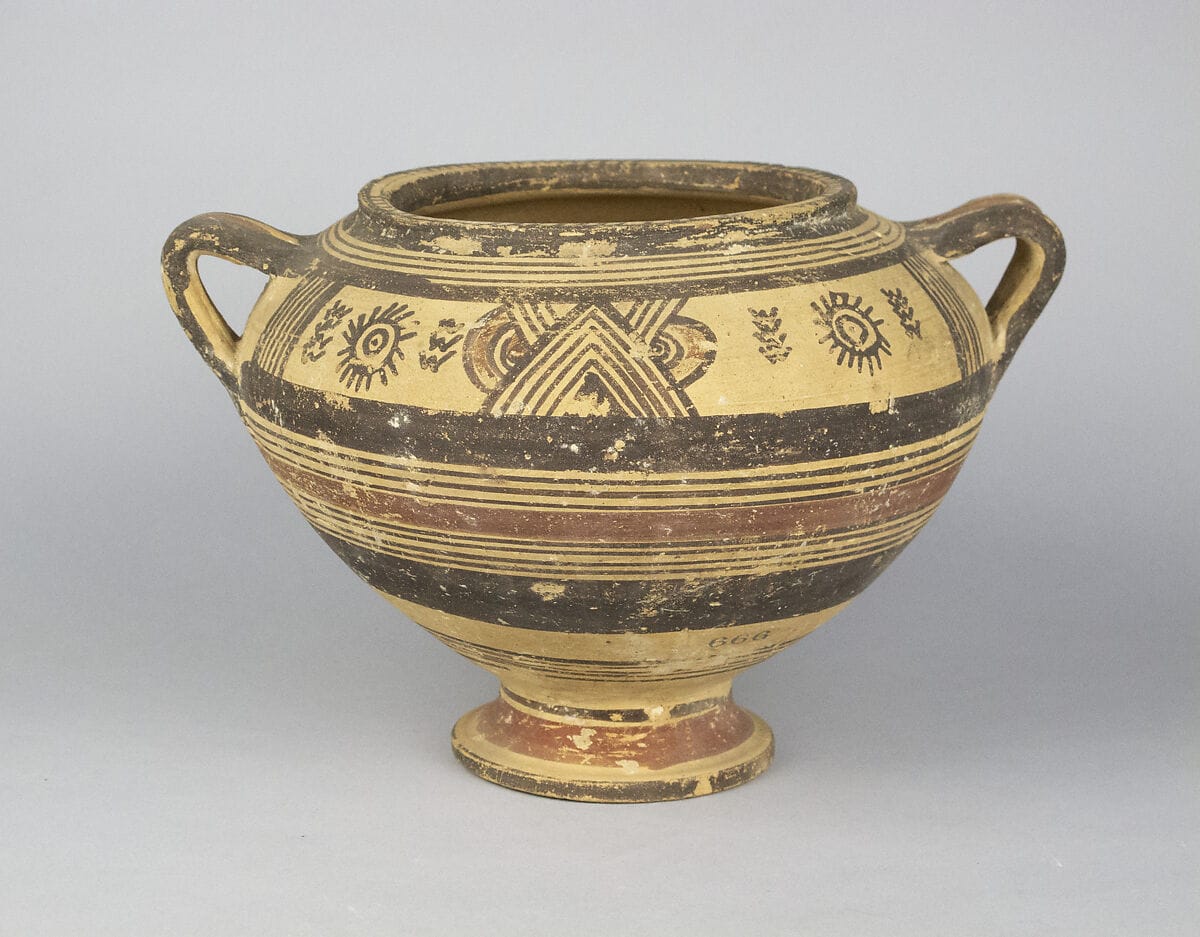
Dinos
Archaic I
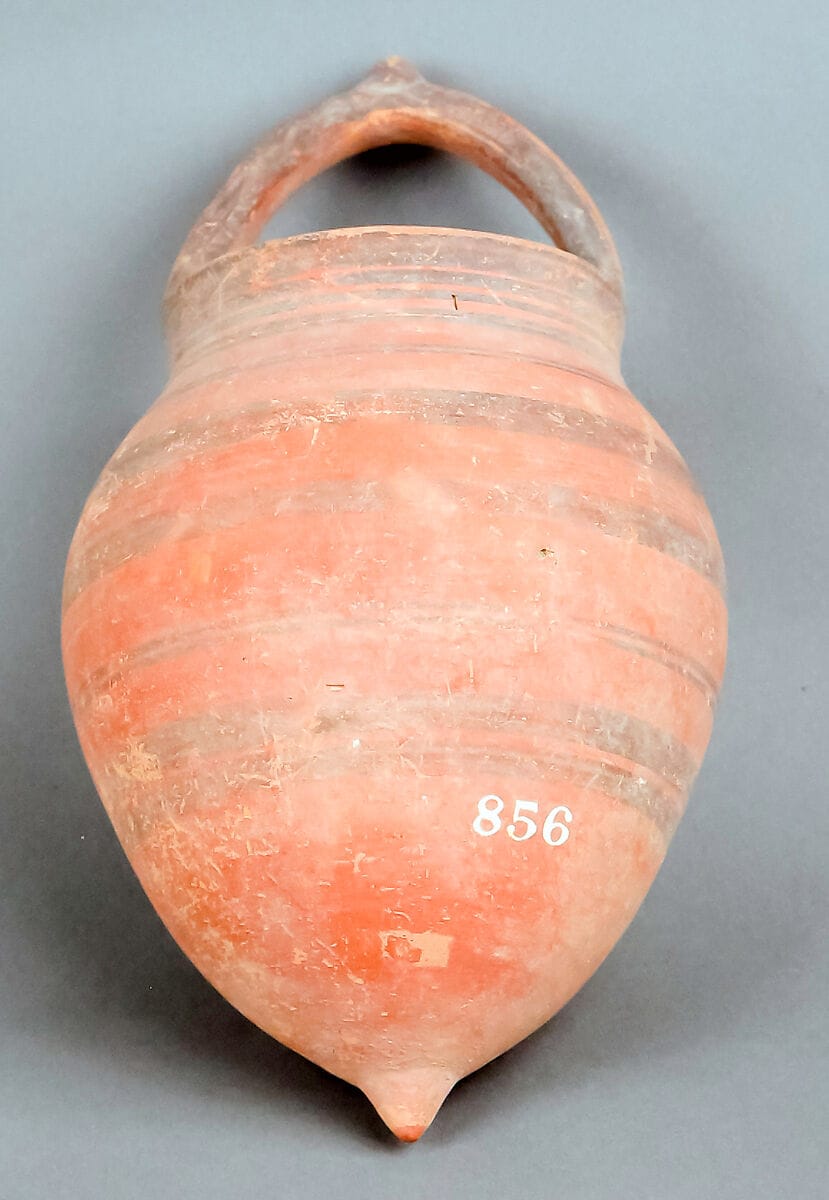
Amphoriskos
Geometric III
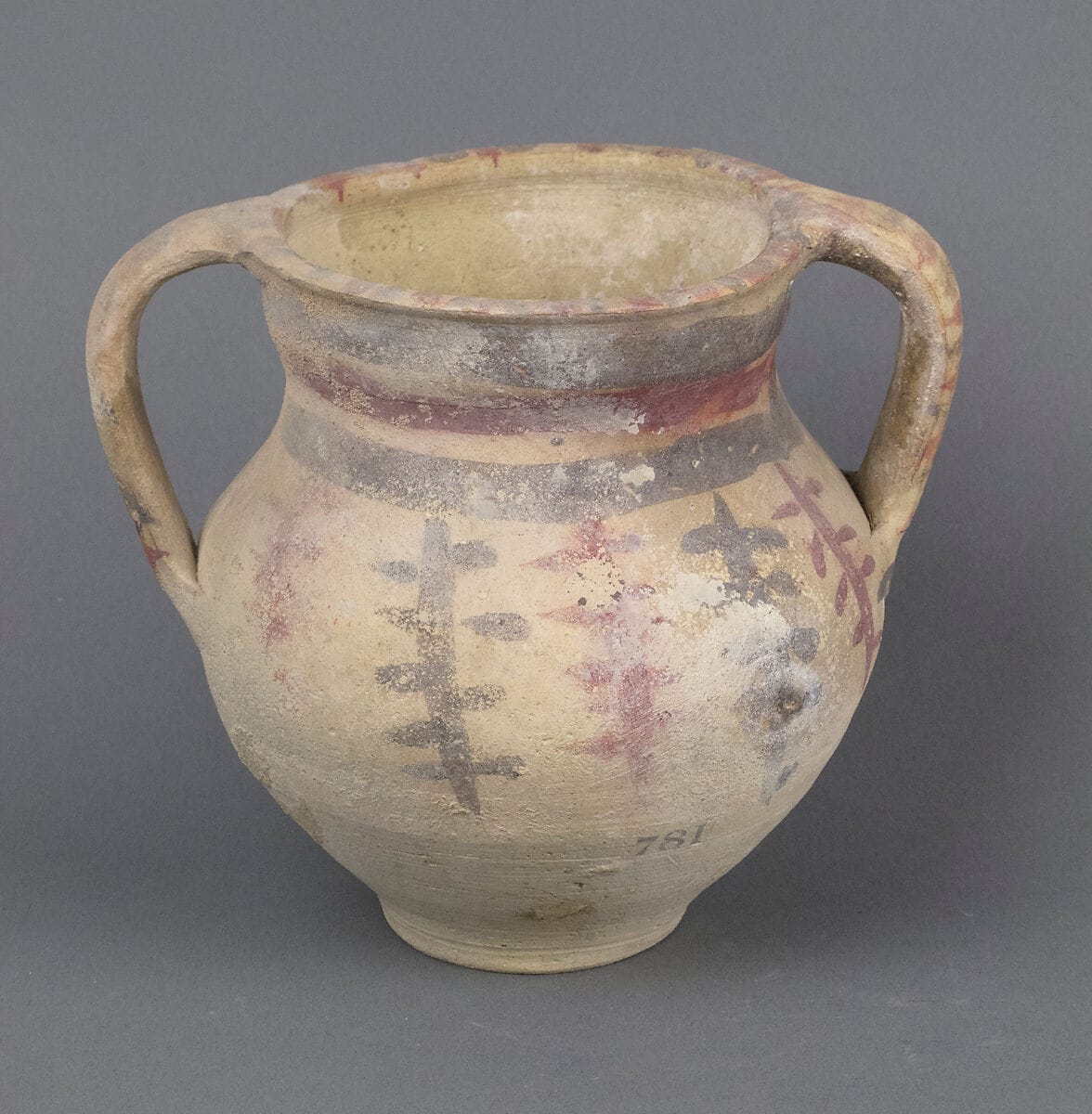
Amphoriskos
Archaic II
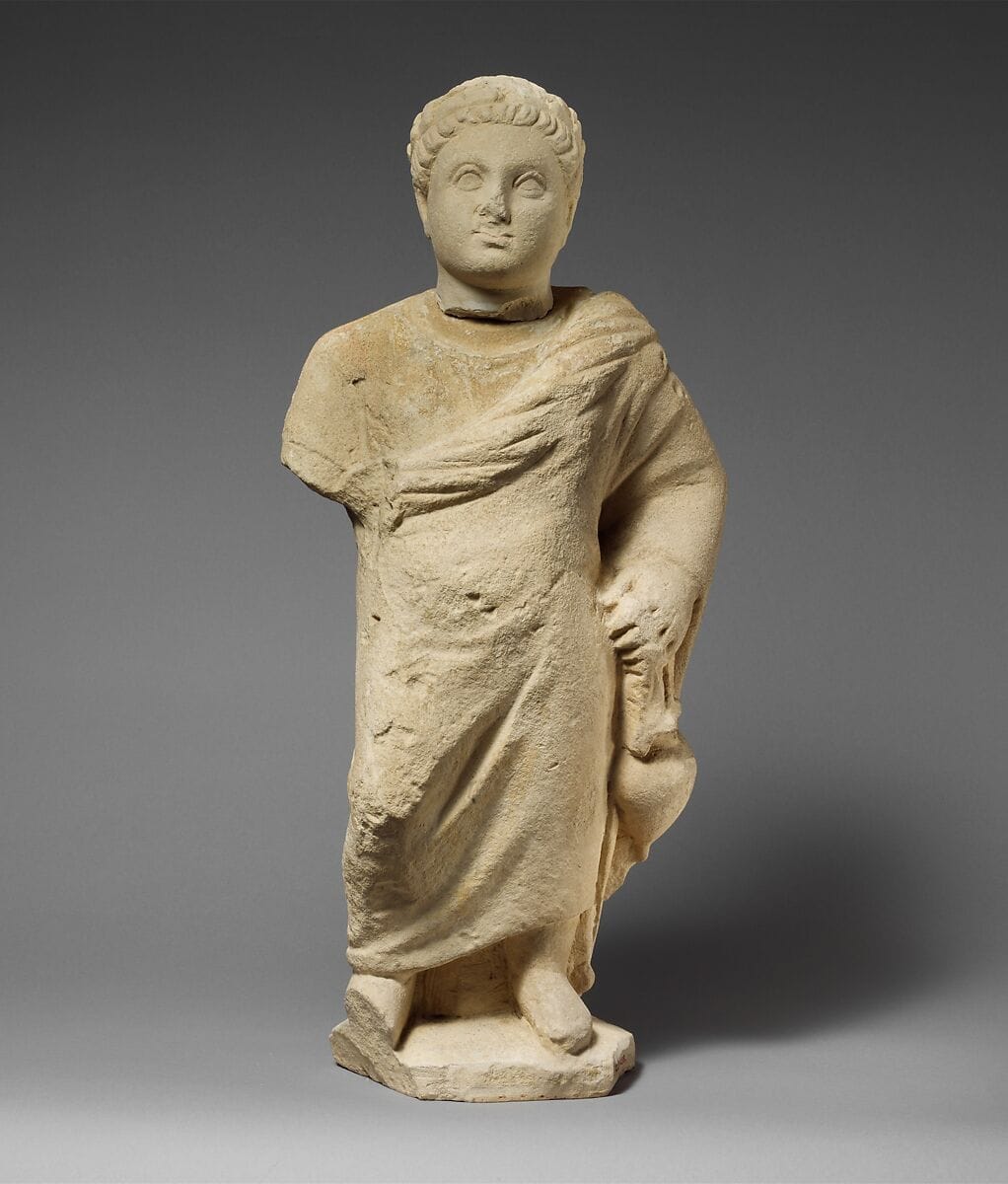
Limestone statuette of a boy holding an amphora
Hellenistic
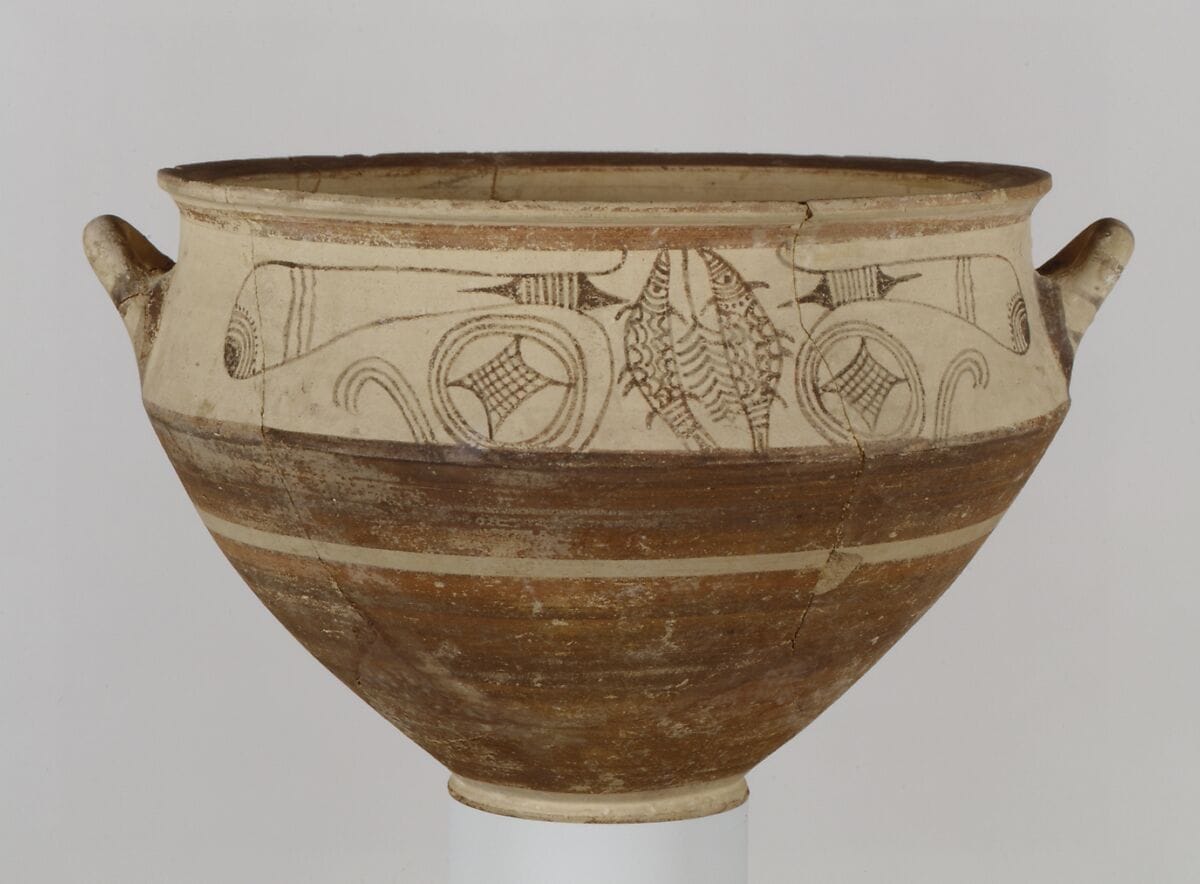
Terracotta krater
Late Bronze Age III
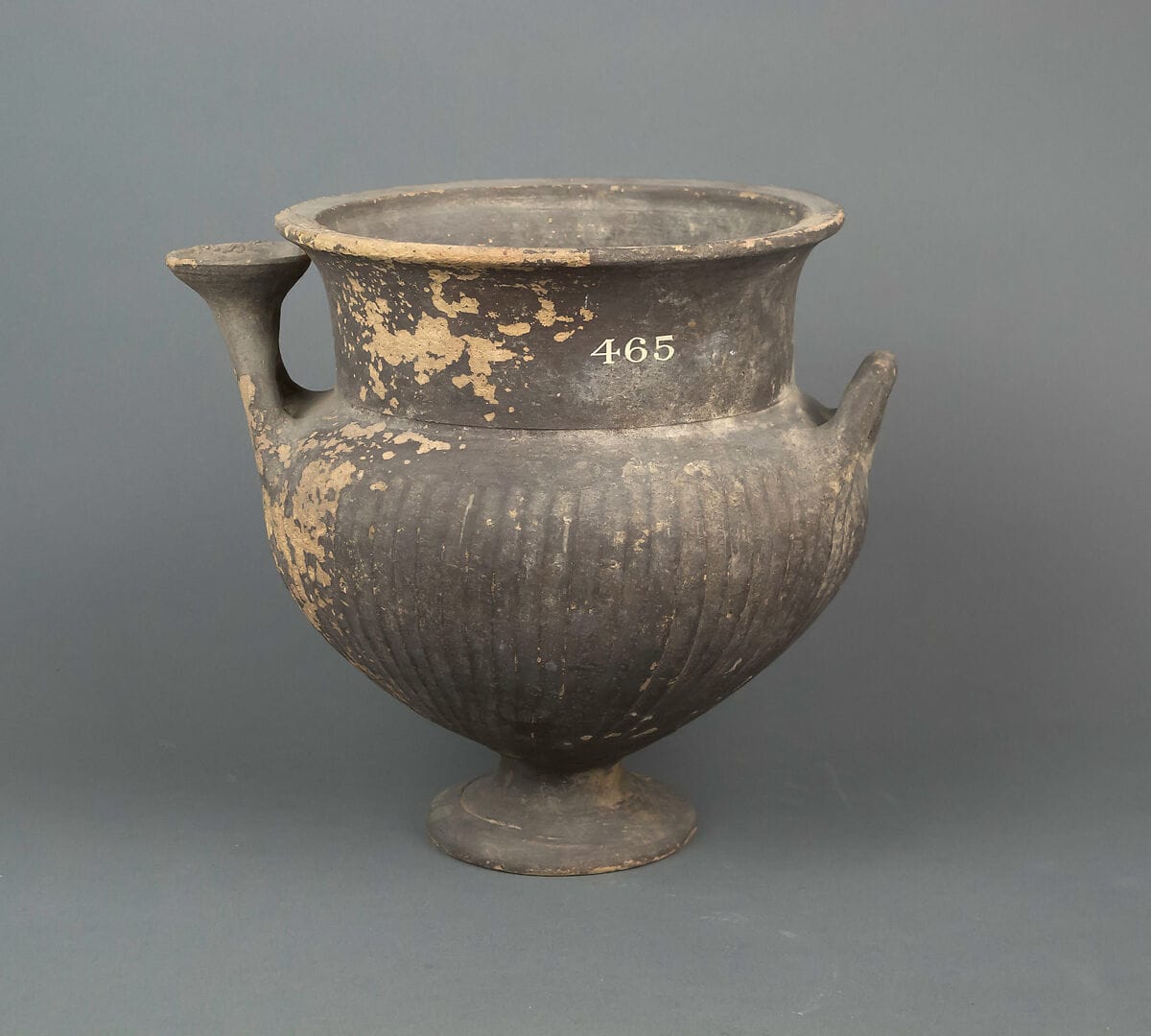
Krater
Geometric I
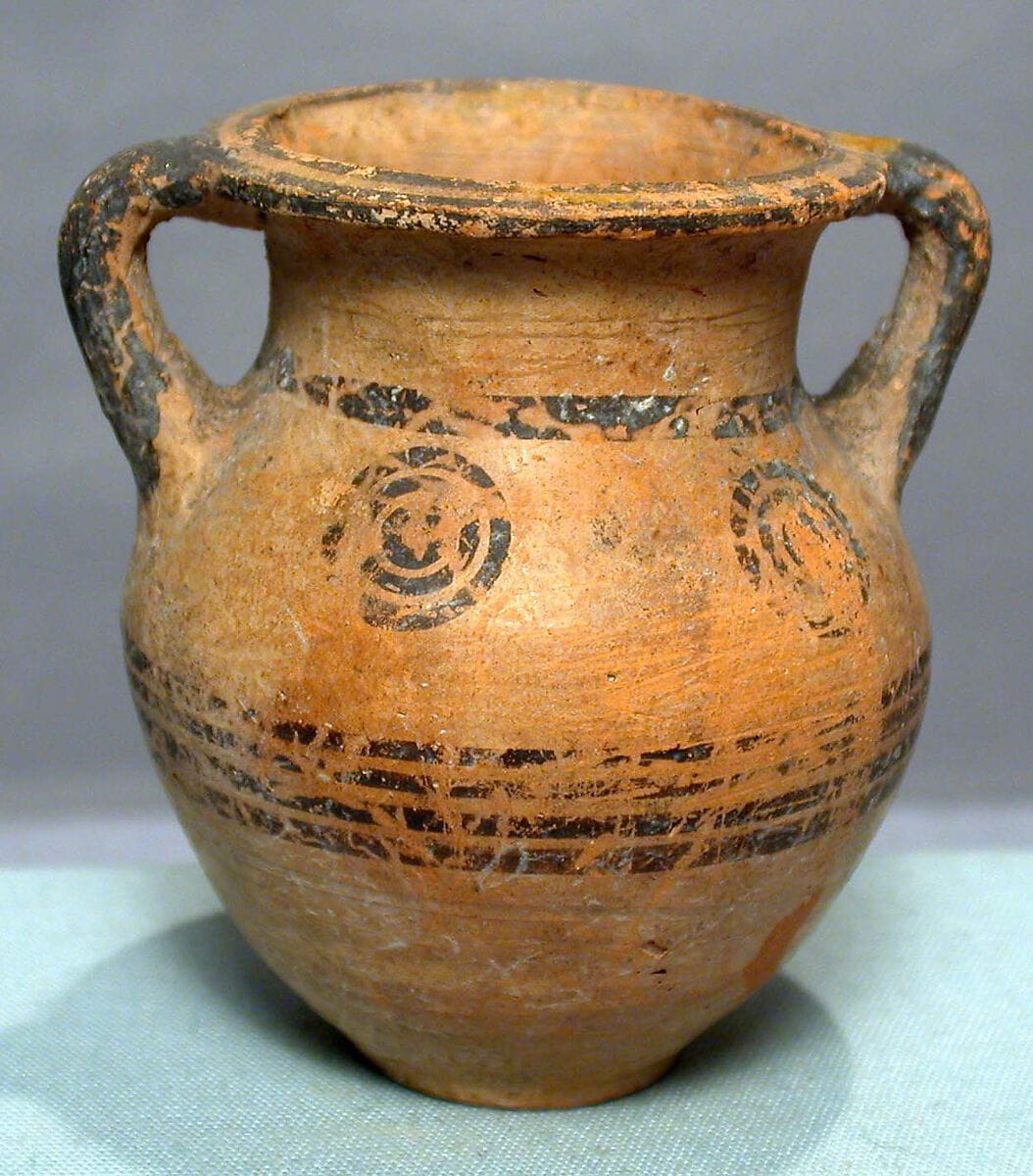
Terracotta miniature amphora
Geometric III
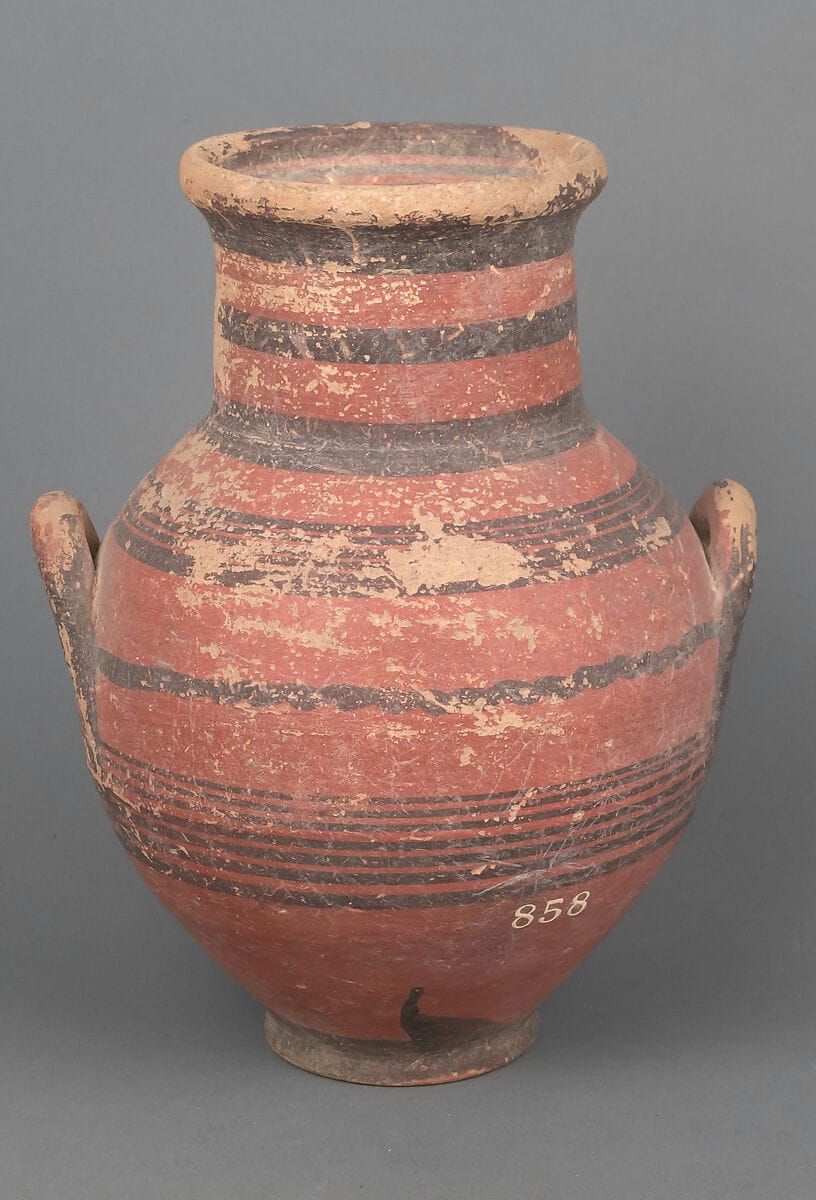
Amphora
Late Bronze Age III
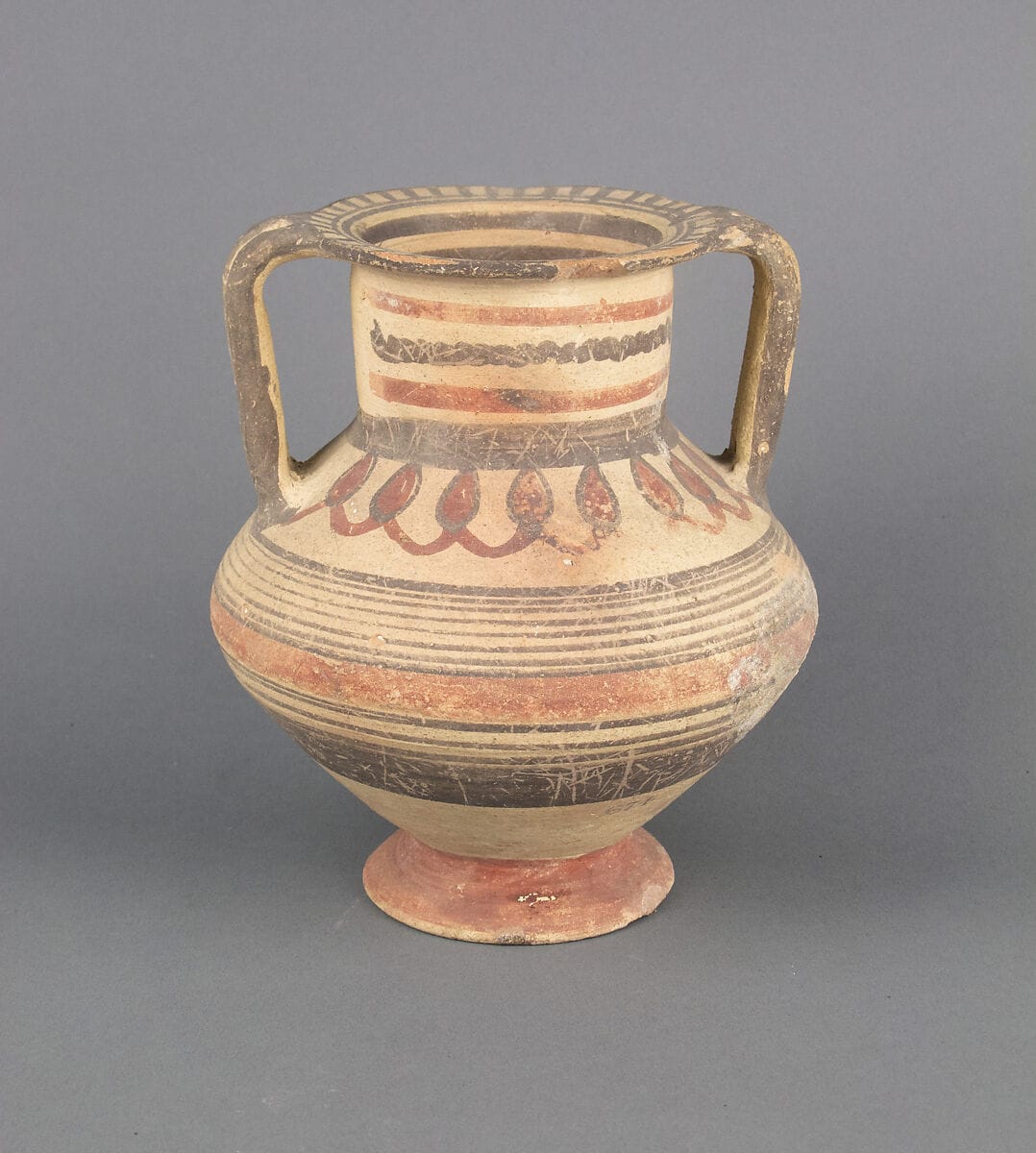
Amphora
Archaic II
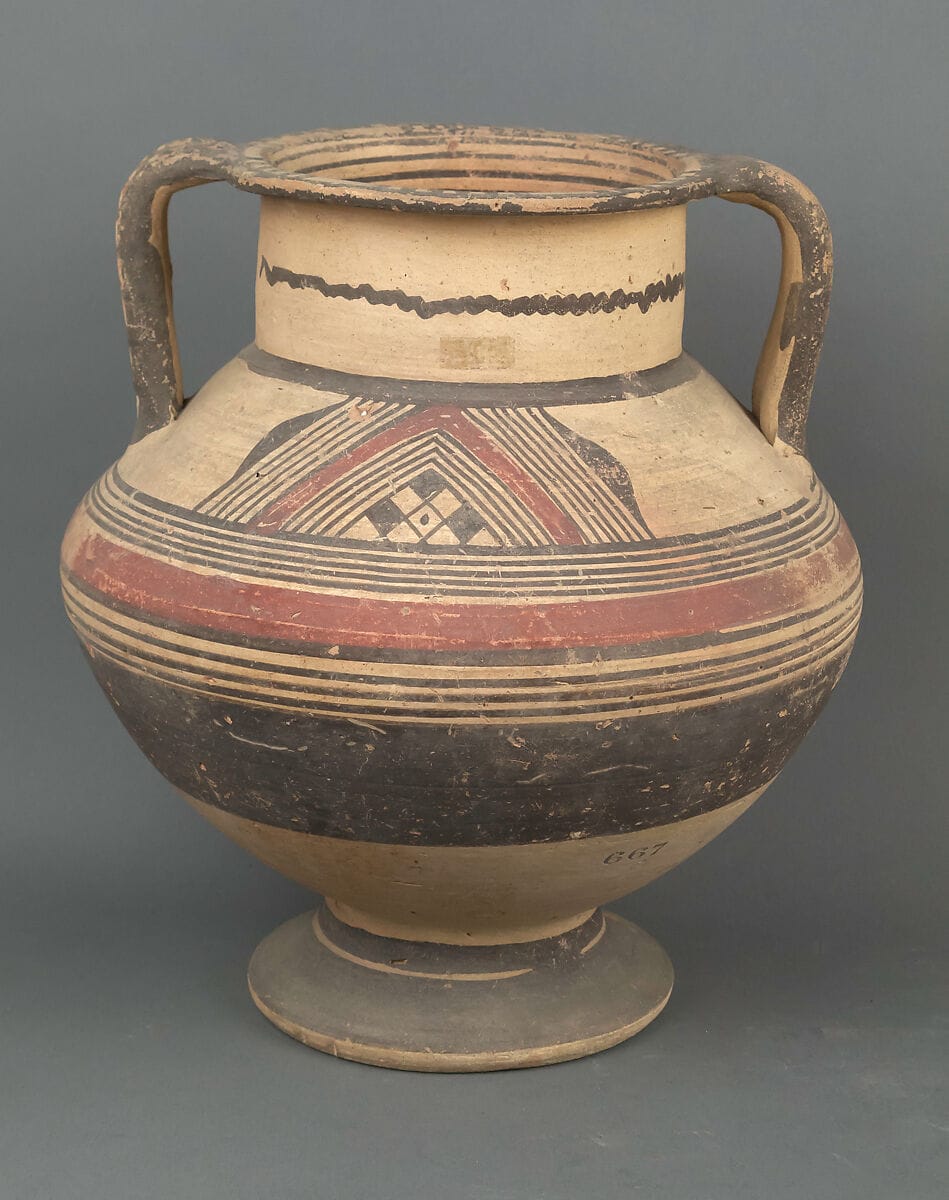
Krater
Late Bronze Age III
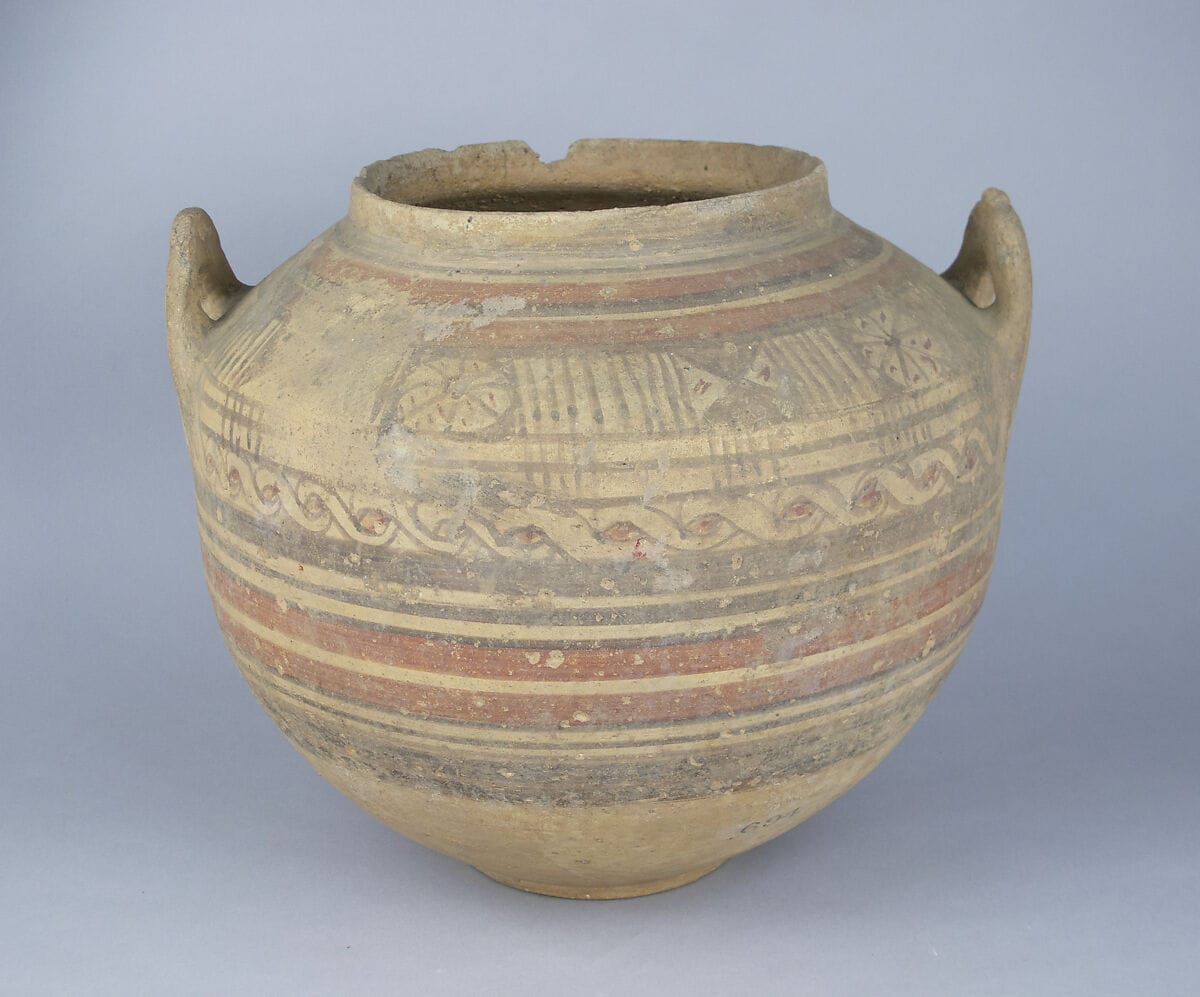
Dinos
Archaic I
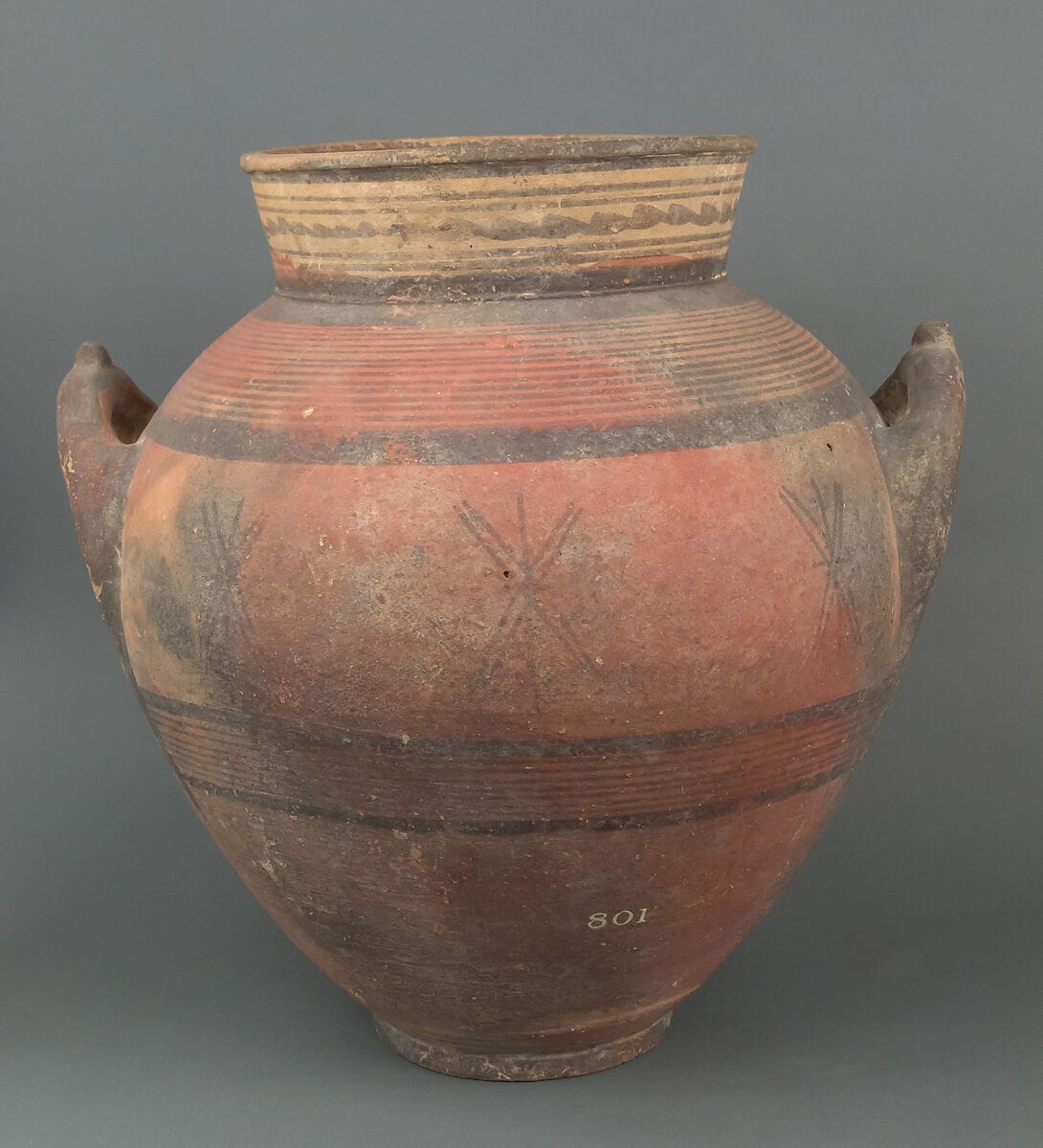
Amphora
Archaic
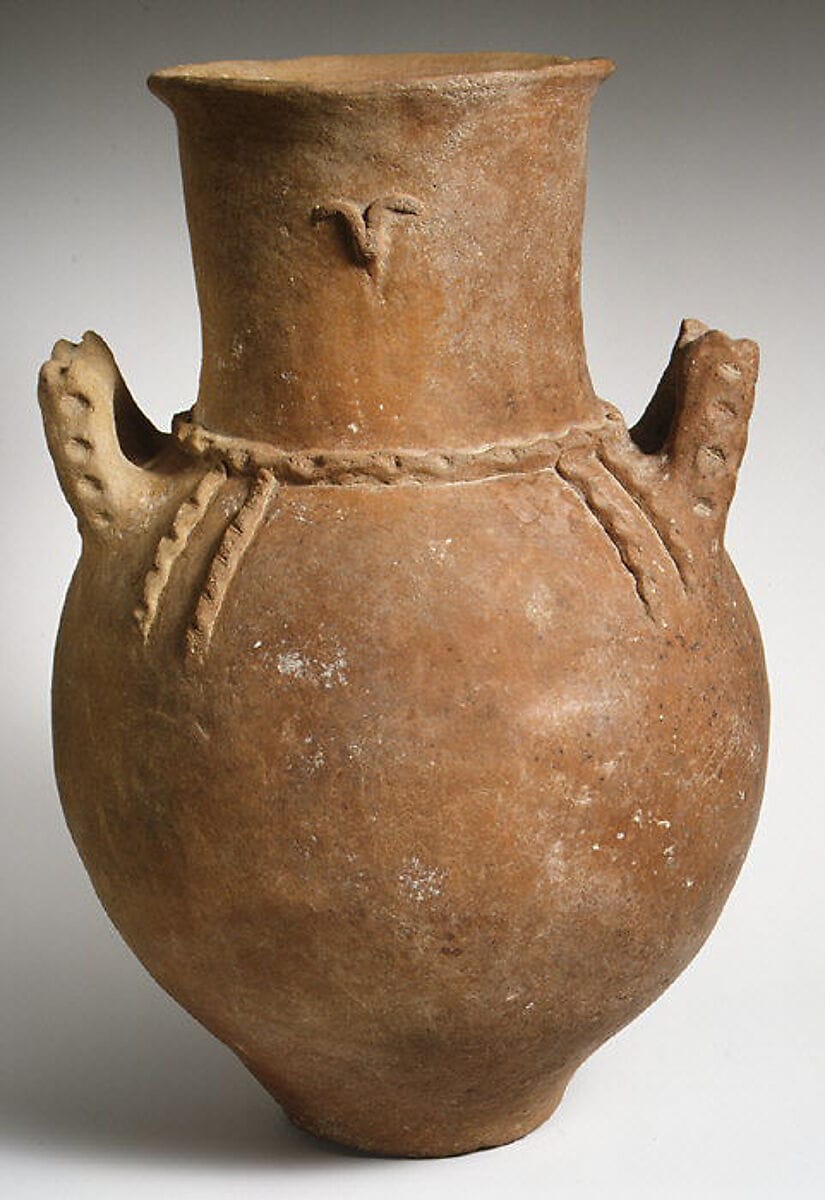
Terracotta amphora
Middle Bronze Age II
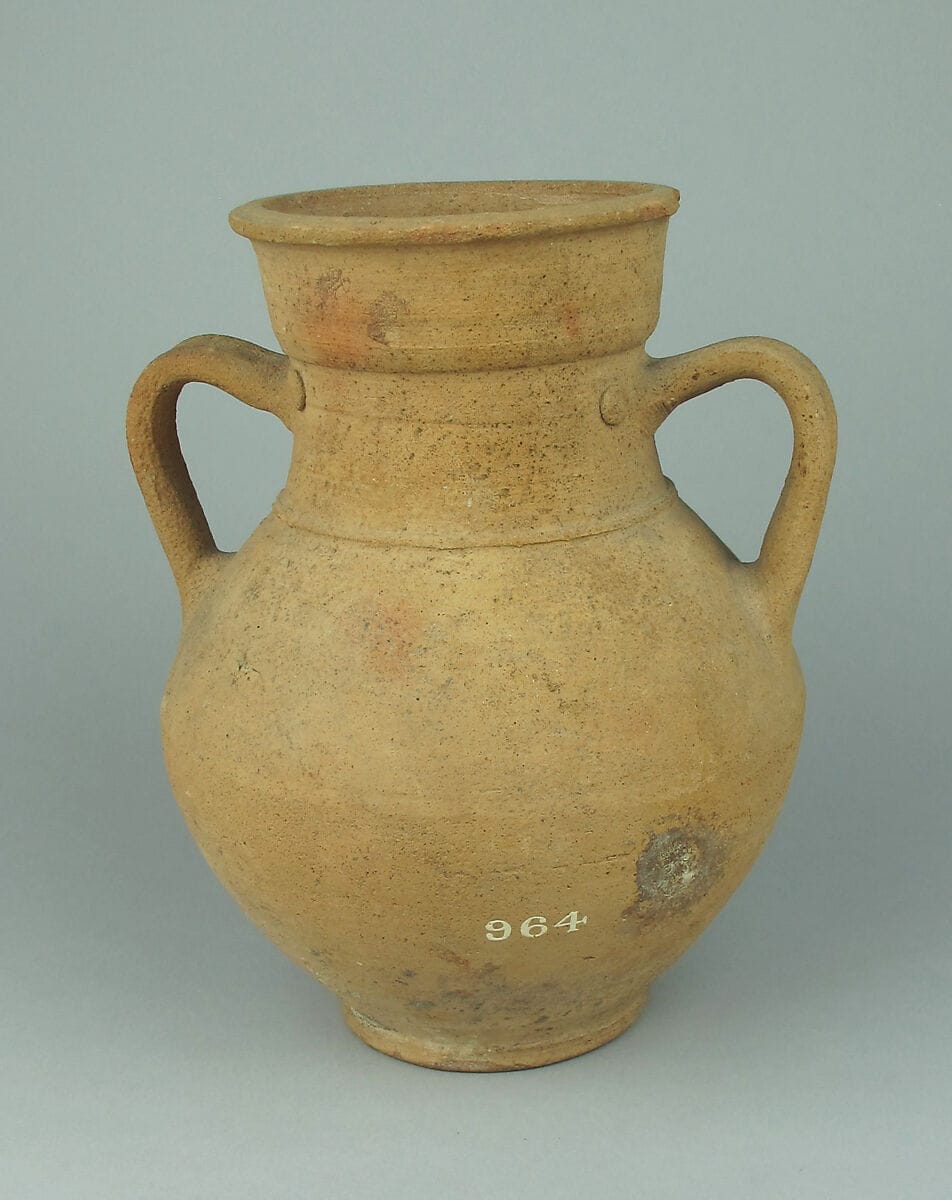
Amphora
Bronze Age